June Remembered: Postcards From Maine

1 Comment

June Remembered: Postcards From Maine

In Brooklin, Maine

June was named by the Romans in honor of Juno, their goddess of marriage and eternal youth. And, in Maine, the month is true to those sentiments: June is a time for marriages and for youthful states of mind. Astronomically, summer begins at June's solstice, the 21st. Weather-wise, however, it’s not that simple here: spring is short and summer always begins suddenly and gloriously at some unpredictable time in June. We find out that summer has returned when we forget winter and begin to feel younger by just looking out the window.

In June, the fallow fields here seem to erupt with wild flowers overnight.
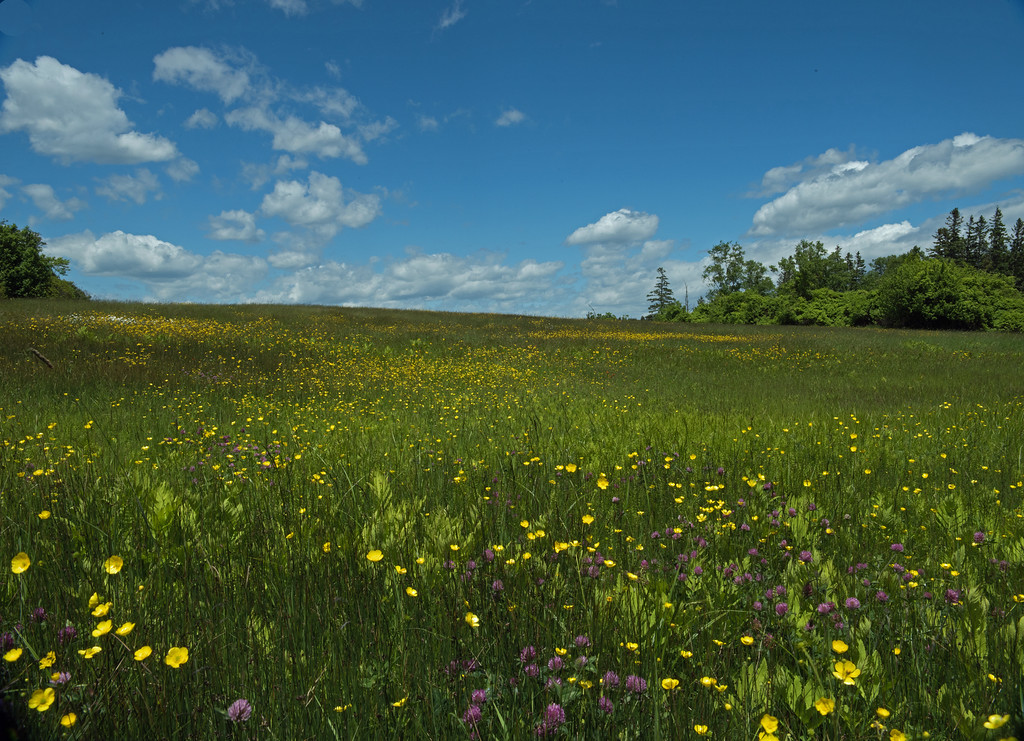
Among these are luminous wild Lupines (“Lew-Pins”), a signature legume here that ancient peoples cultivated for its edible beans.

Bashful Wild ("Blue Flag") Irises can be found hiding among other flowers and grasses in the fields.

The June gardens burst with early-blooming perennials and annuals, including startling red-orange Poppies and soothing magenta Peonies. 

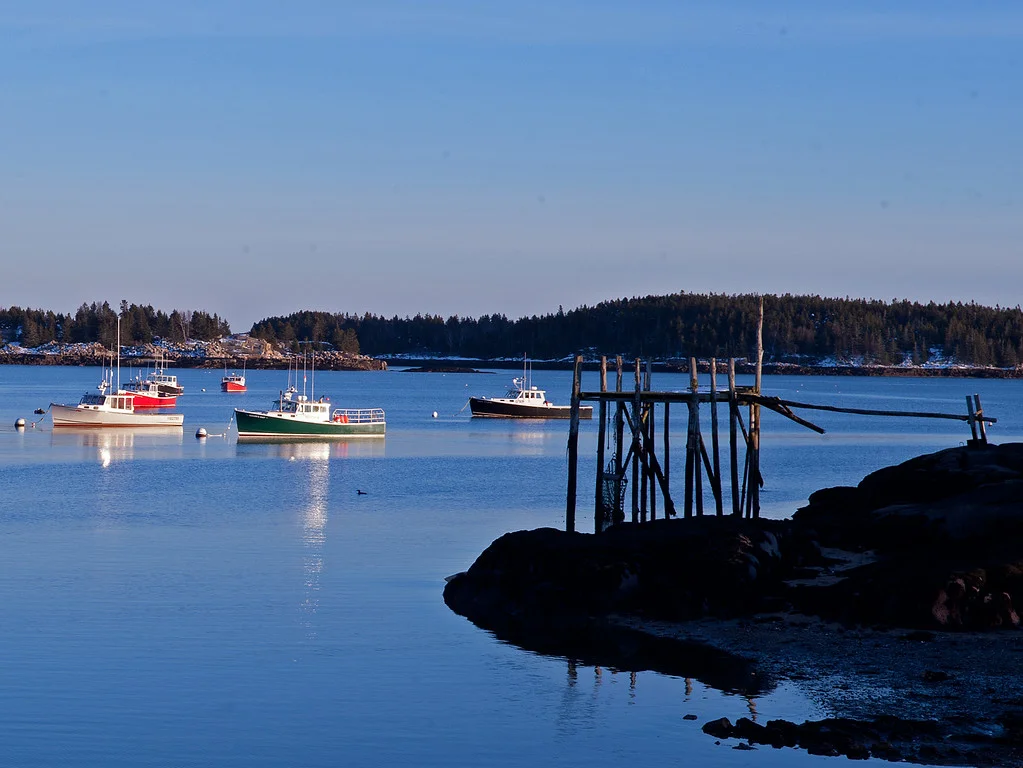
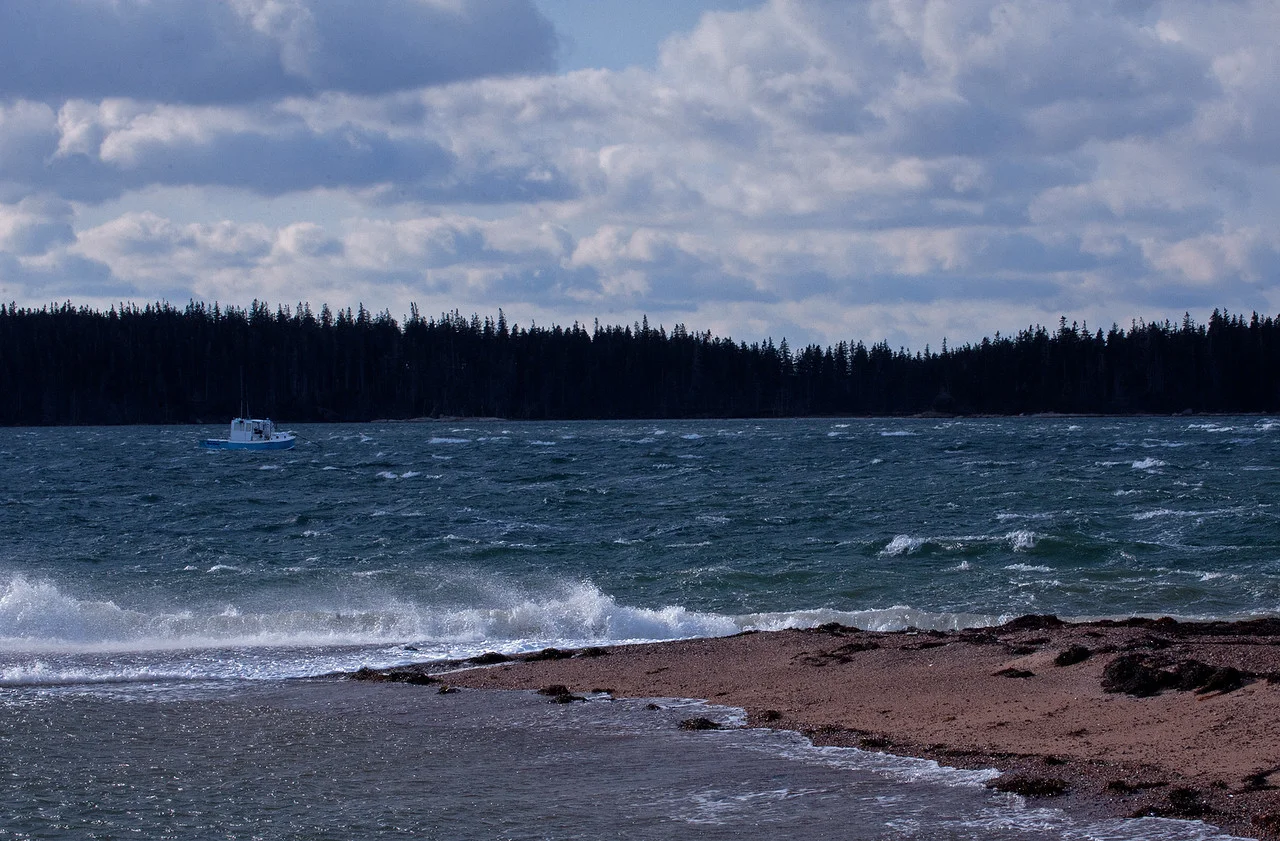
June is when sailboats are loosed upon the clear waters of Brooklin’s Great Cove to hunt for wind in sun and fog.

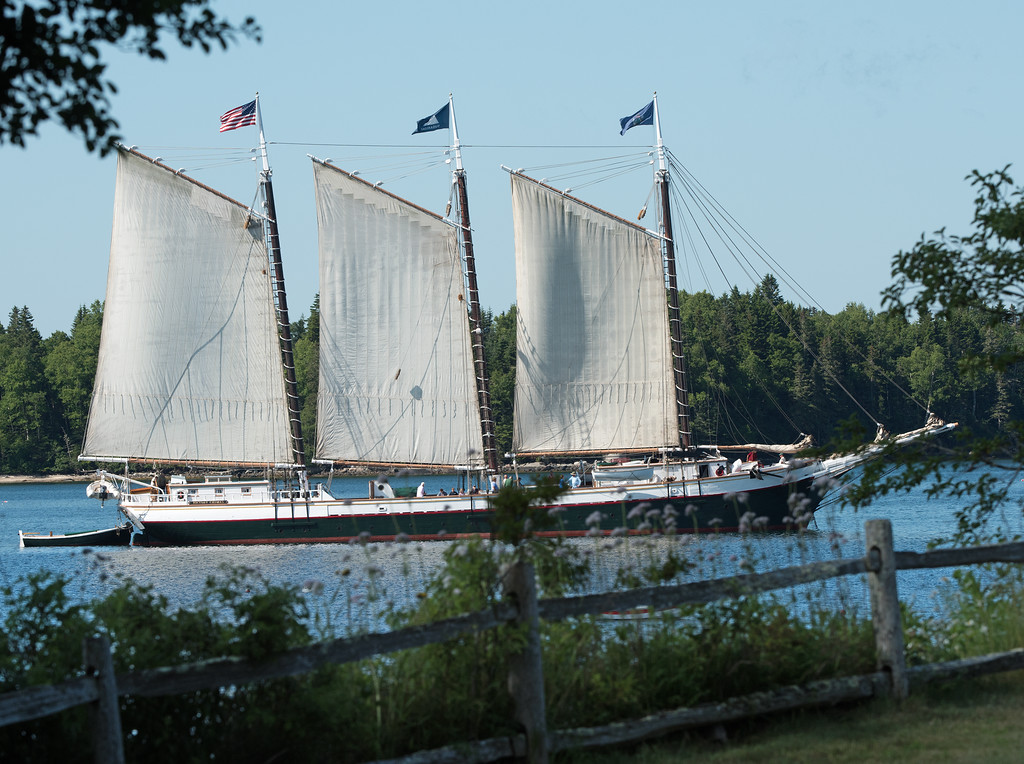
Picturesque schooners begin to arrive in the Cove in June. Ironically, the business of these sparkling windjammers is taking well-off summer tourists sightseeing. This is quite different from the desperately hard and dangerous journeys that schooners originally took around here. In their time, these ships’ holds and decks often were overloaded with granite, coal, wood, and other commodities; they sailed in all seasons, and, sometimes, they were covered in grime and ice. But not today.
After terrestrial winter vacations, many lobster boats are returned to their element in June to work the sea hard for six months or so.

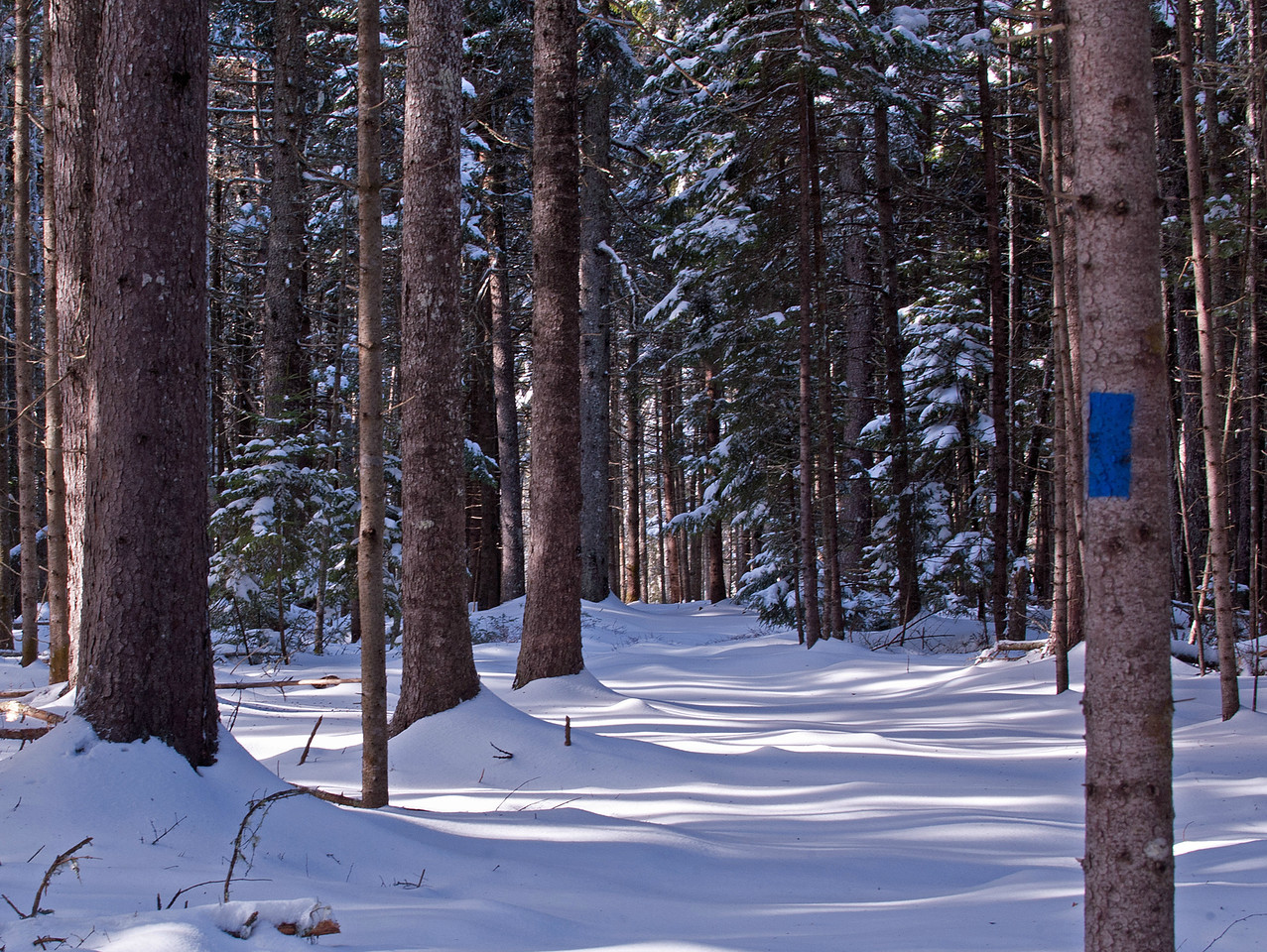
By about mid-June, the big deciduous trees are in full leaf and their branches reach out to each other, creating a high canopy over the woods. Where once full sun lit up the trails, there now is dappled light that dances to the wind’s tunes. One can find serenity here just by being still and letting it seep in.

June also is when Black Bears discover and destroy bird feeders. We’ve come to rationalize this as nature’s way of letting us know that it’s time to stop feeding our feathered friends so that they can concentrate on propagating wild flowers and gulping insects.

It's also the time when White Tail Does give birth well within the woods, where they hide and nurse their fawns two to three times a day.

And there’s much more to June. The short virtual tour of moments that we'll use to help us remember the month can be viewed by clicking the link below.  We recommend that your initial screening be a full-frame slideshow.  (To make that happen, click on the Slideshow button [>] above the featured [largest] image on the gallery page to which the link will take you.)  Here's the link:

https://leightons.smugmug.com/Maine/Out/June-Postcards-From-Maine/i-KcQrTZ5

Cheers,

Barbara and Dick

1 Comment

A Fishing Tale

2 Comments

A Fishing Tale

In Harford County, Maryland, June 10, 2016

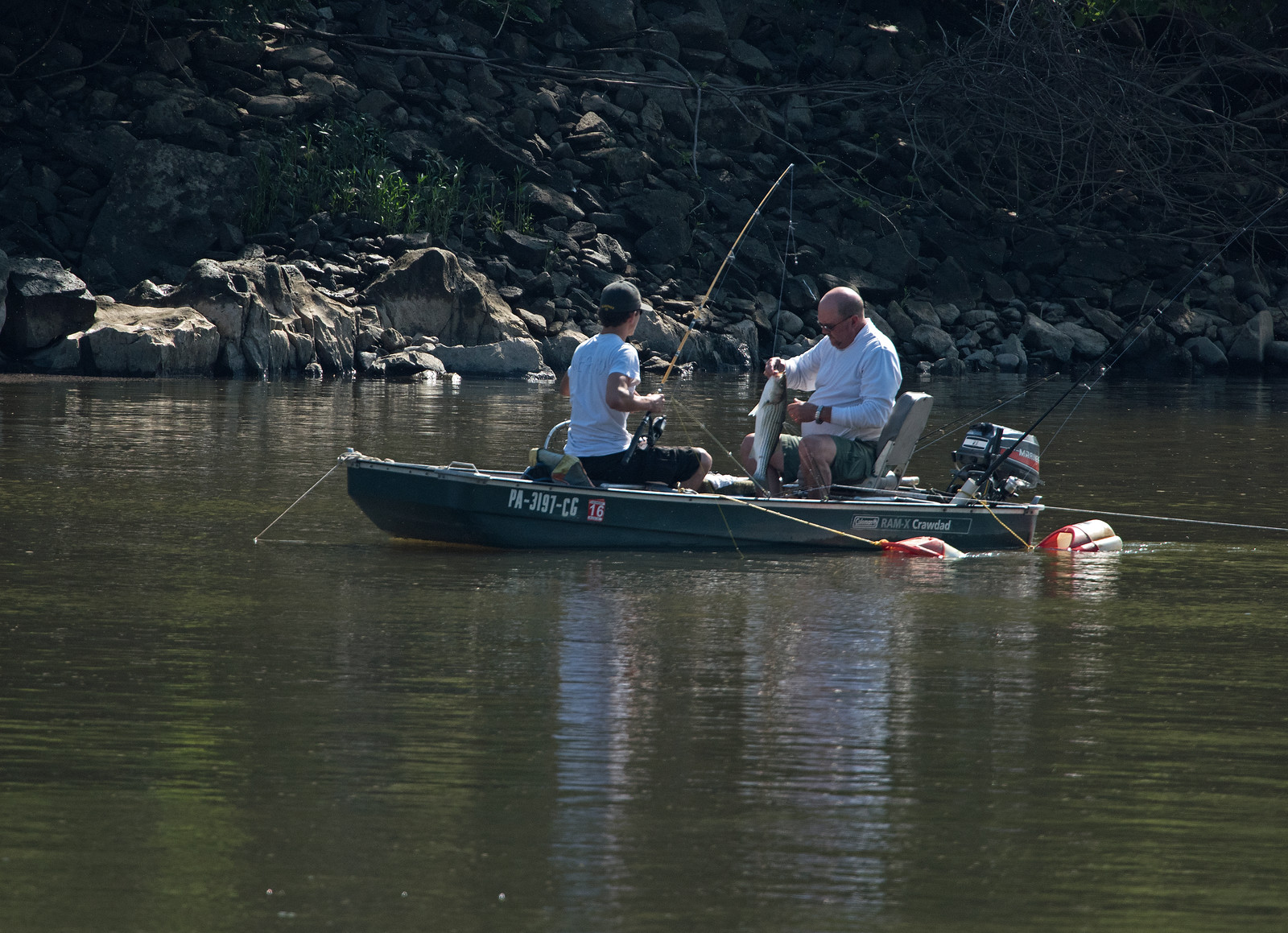
We’re at the base of the Conowingo Hydroelectric Dam, which spans the Susquehanna River near the Maryland-Pennsylvania border. Fish swimming up the River are blocked here by the Dam, except when the fish ladders are working; fish swimming down the River get sucked into the Dam’s turbines and are spit out on the other side, dazed or dead.

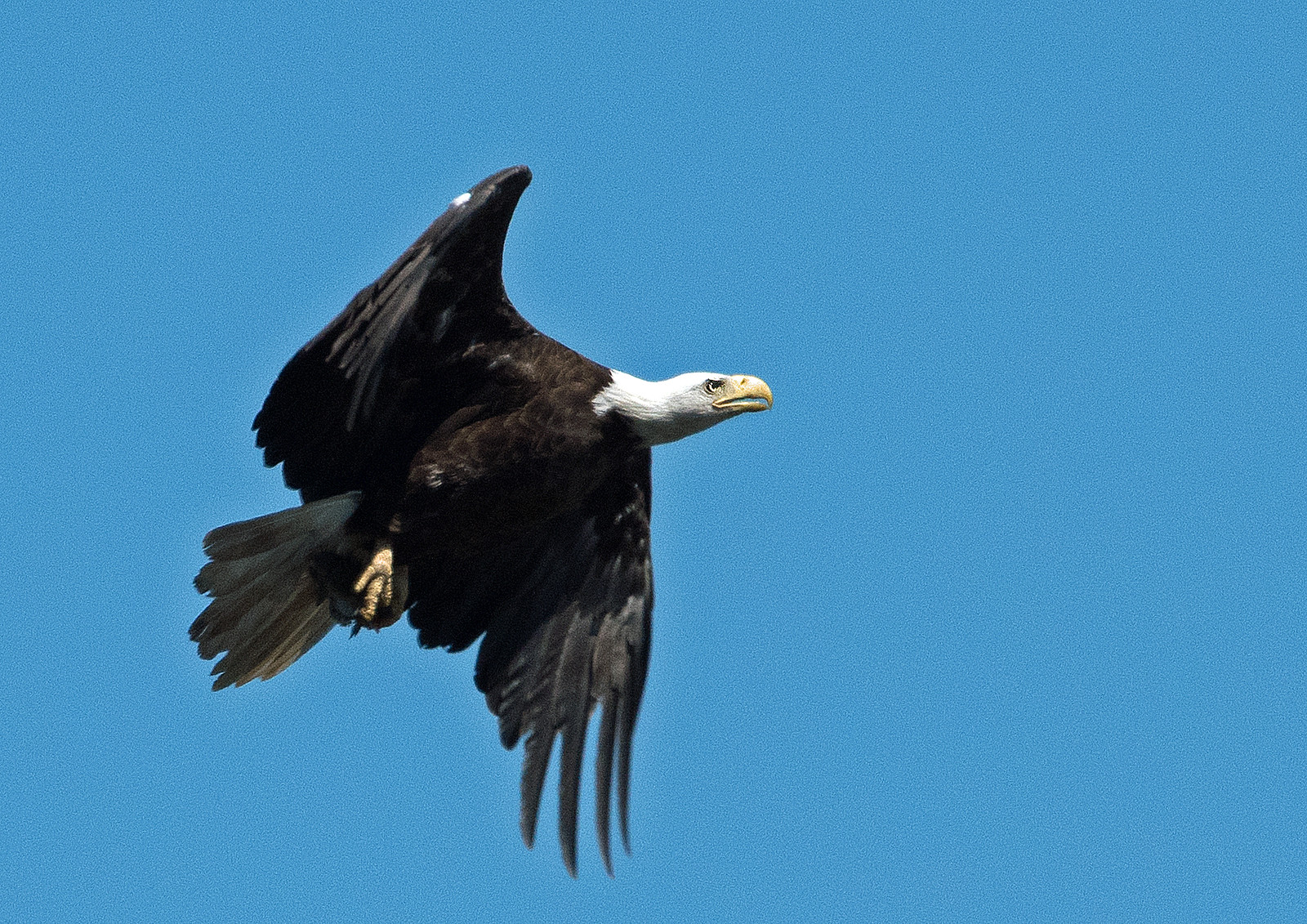
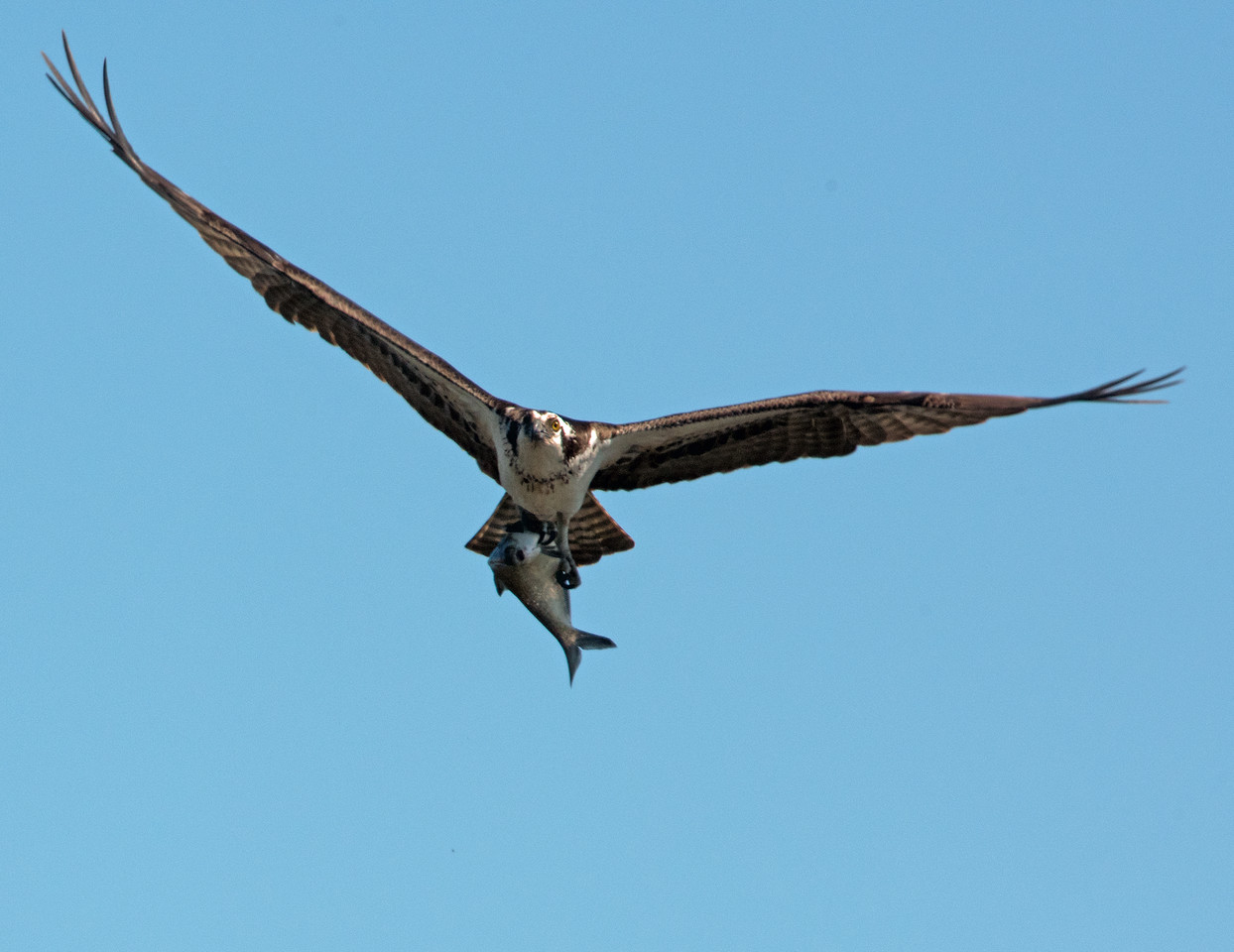
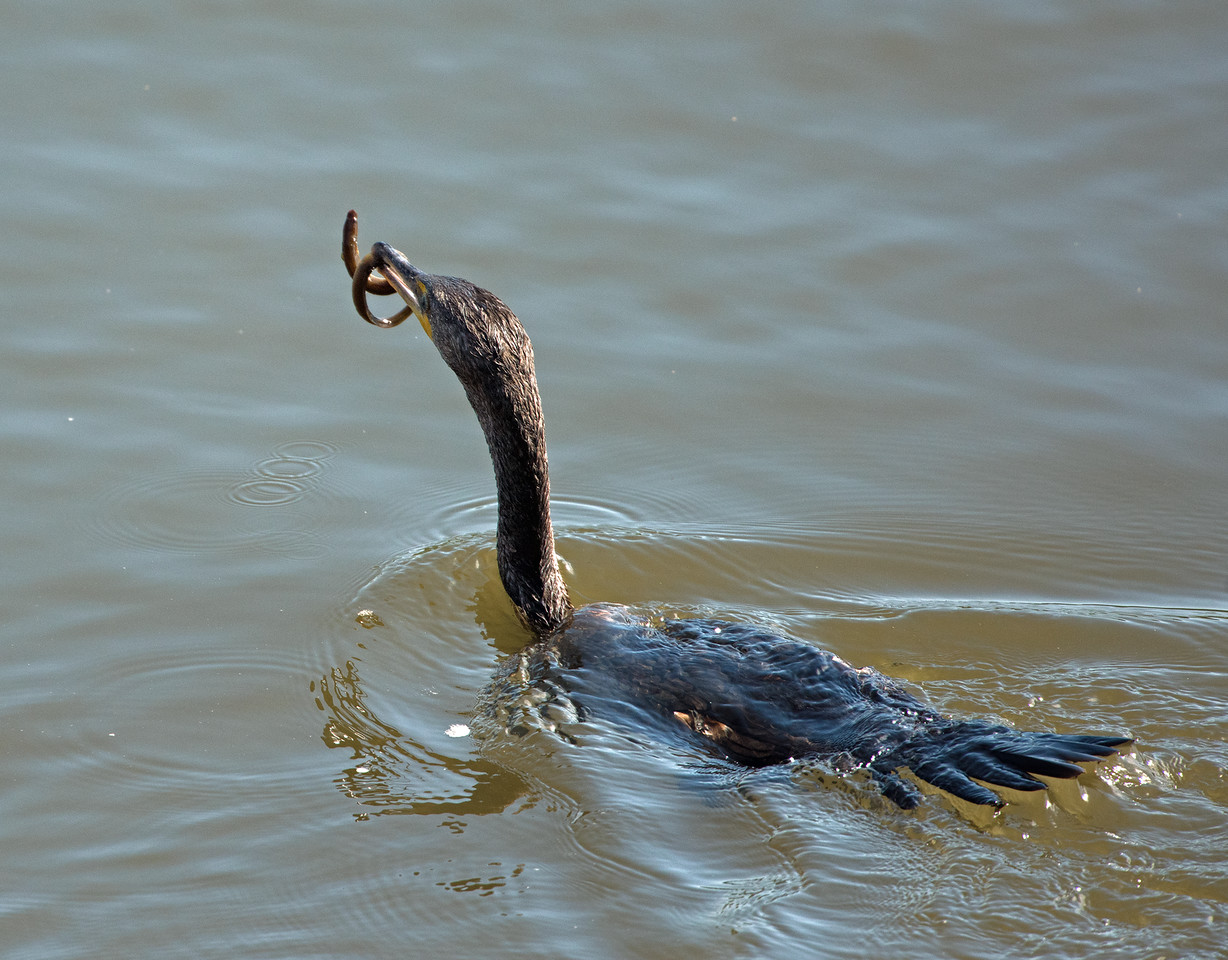
Fish predators wait for the fish on the downstream side of the Dam, where we wait. We focus on the Bald Eagles, Ospreys, Great Blue Herons, and Double-Crested Cormorants, each of which has its favored mode of hunting.  

The Eagles often perch in the big trees on the ridge above the River, where they are virtually hidden in summer.  It’s hard for an Eagle to hide completely, however: its wing span can exceed seven feet (that’s a professional basketball center rotated 90 degrees) and It can weigh up to 14 pounds.

Bald Eagles tend to circle above their scaly prey, swoop down, pluck the fish neatly from the water, and then arc upward. They can reach up to 99 miles an hour in a dive.

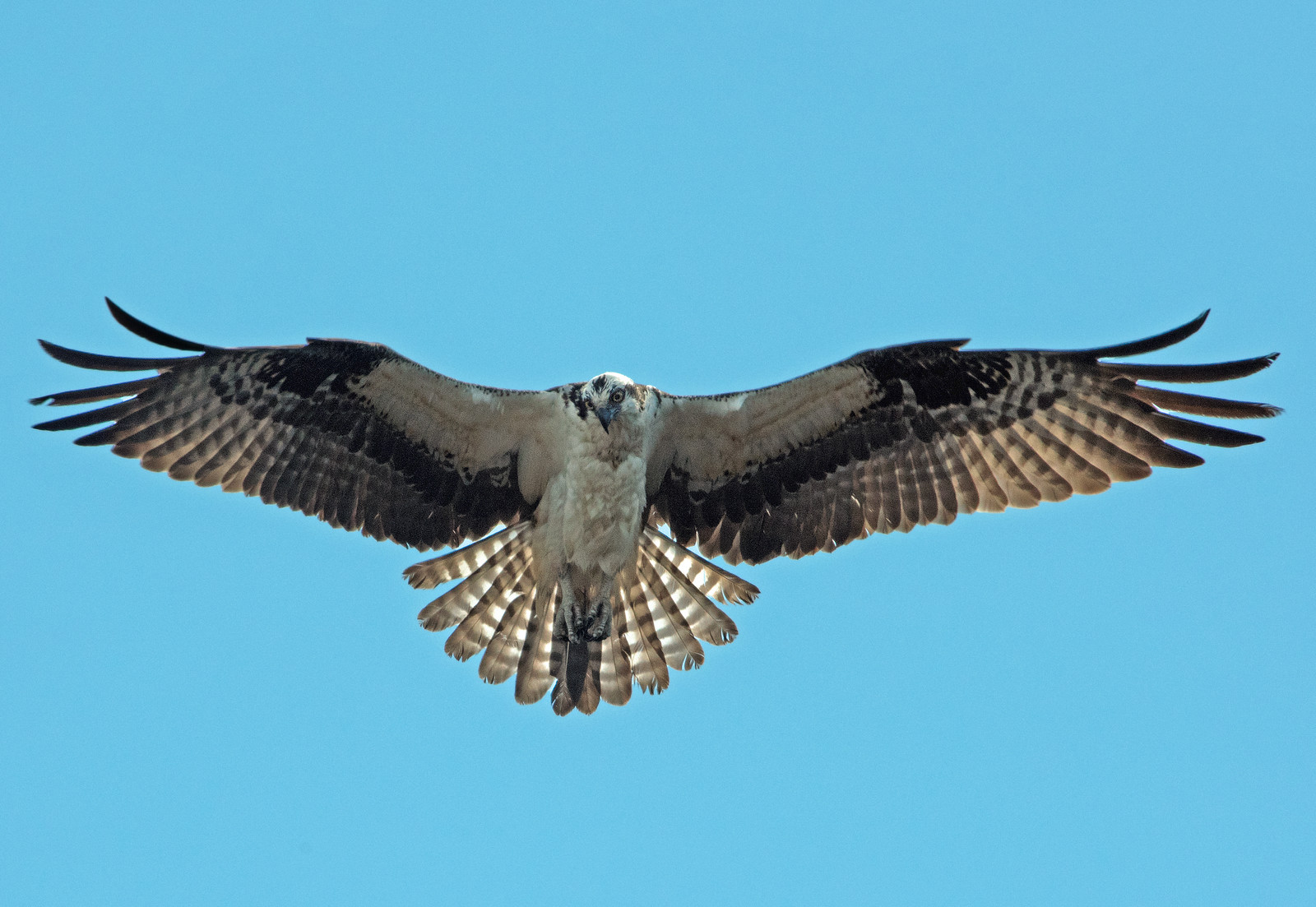
The Ospreys usually take their meals to nests outside the area, where the Eagles can’t steal from them. An Osprey is mostly wings – it weighs only about three pounds, but its angled wings can span up to six feet. It sometimes hunts by the circle-and-pluck method like an Eagle; however, an Osprey often hovers like a helicopter high above the water, tips over and power dives straight down, head first until the last second.  This bird can reach up to 80 miles-a- hour this way, knock a big fish silly, disappear under the water while gripping it, swim up with its wings, and fly off with the prey.

Great Blue Herons also can pluck a fish from deep water while flying or while briefly floating like a duck, but usually that prey is a dead or dying fish on the surface.  These birds, for the most part, fish from a still stance in shallow waters. They can reach four feet in standing height, weigh almost eight pounds, and have a wingspan of over six-and-one-half feet.

A standing Great Blue that sees a nearby fish will coil its long neck, slowly move its spear-shaped head toward its unsuspecting prey, and then strike like a snake into and below the water.  As often as not, it will emerge from the imploded water with an amazed fish in its sharp beak.

Unlike the others, a Double-Crested Cormorant usually swims below the surface after its prey, using powerful webbed feet and, sometimes, its wings. This prehistoric-looking bird’s bright blue eyes pierce the murky depths and its hooked and serrated beak can grab and hold not only slippery fish, but ultra-slippery eels.

The Cormorant can weigh up to five-and-one-half pounds, be almost three feet long, and have a wingspan of up to four feet.

The waters below Conowingo Dam contain larger predators than those mentioned here, but these are far from self-sufficient and much less interesting.

For full-size versions of these and a few other images, click the link below.  We recommend that your initial screening be a slideshow.  (To make that happen, click on the Slideshow button [>] above-and-to-the-right of the featured image on the gallery page to which the link will take you.)  Here's the link:

https://leightons.smugmug.com/Maryland/A-Fishing-Tale-June-7-13-2016/i-qv9X6Pt

Cheers,

Barbara and Dick

2 Comments

Blue Sky Returns to Blue Water

7 Comments

Blue Sky Returns to Blue Water

In Brooklin, Maine, on May 31 and June 1, 2016

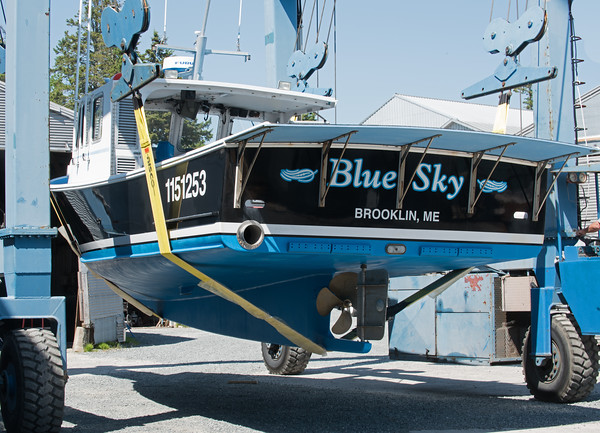
Blue Sky is a fine-looking fishing vessel.  She spends her winters on land here, sailing the snow while her owners enjoy the warmer climes of Florida. 

In June, however, Blue Sky is reintroduced to the wild where she belongs, an interesting process that is the focal point of today’s Journal entry.  But first, some background. 

Neighbors Sandy and John White own and run Blue Sky. They and an additional crew member fish for lobsters off the boat. As such, they’re part of Maine’s vaunted lobster industry.

According to state data for 2015, Maine fishermen brought in – “landed” -- over 121 million pounds (live weight) of the delicious crustaceans, which was worth more than $495 million.

As for Blue Sky, she was Maine-built in 2004 at the RP Boat Shop; she’s 35 feet long; almost 14 feet wide, and her gross weight is 20 tons, according to her registration data. 

Getting a vessel of Blue Sky's size to the water is not a job for the local AAA towing service.  However, it is a job that is not unusual in coastal Maine towns, where big boats traveling down Main Streets don’t generate many gawkers.

There are several ways to get a commercial fishing vessel into the water.  Blue Sky is taken by a hefty Mack truck cab trailing a large-load boat cradle in which the vessel nests.

It’s just a short ride from Blue Sky's winter site to the sophisticated launching equipment of the famous Brooklin Boat Yard at Center Harbor.  (The Yard is owned and run by John’s brother, Steve. There’s interesting history here: the brothers are the sons of Joel and Allene White. Joel, who died in 1997, was the nationally- acclaimed naval architect who started the Yard; Allene, who continues to live here, was a locally-acclaimed newspaper columnist. Joel, in turn, was the son of E.B. ["Andy"] White, Brooklin’s most famous author, and Katherine White, respected Editor of Fiction for the New Yorker. E.B. and Katherine are buried in the Brooklin Cemetery.)  

Back to Blue Sky as she enters the Brooklin Boat Yard:  one of the better makes of motorized boat hoists (a Marine Travelift®) is driven over. It straddles the boat on the trailer bed and the hoist’s heavy-duty slings are slipped under her. The slings are raised to lift her slowly out of her cradle. Then, the suspended boat is driven by the hoist to a nearby slip between two hoist-tracked piers that jut into the clear waters of Eggemoggin Reach.

Big boats need to be launched from this slip at high tide, but the tide was fairly low when Blue Sky arrived in the afternoon.  Therefore, she was suspended over the incoming water like a huge jewel displayed on a simple necklace. There she remained overnight.

At about 7 a.m. the following morning, Blue Sky was lowered into the high tide; Sandy and John boarded her; the slings were relaxed, and John reversed her out of the slip.

She swung to port, veered around Chatto Island, and traveled the very short distance to her mooring in Naskeag Harbor at the end of our peninsula.

That was the easy part.  Soon, 800 lobster traps will need to loaded, launched, and tended regularly. But Sandy and John don’t seem to be daunted.

For larger and additional images of Blue Sky’s return, click the link below.  We recommend that your initial screening be a full-frame slideshow.  (To make that happen, click on the Slideshow button [>] above-and-to-the-right of the featured image on the gallery page to which the link will take you.)  Here's the link:

https://leightons.smugmug.com/Maine/Windjammers-and-Other-Boats/Blue-Sky-Returns-to-Blue-Water/n-sPNgMs/

Cheers,

Barbara and Dick
7 Comments

Postcards From Maine: May Remembered

1 Comment

Postcards From Maine: May Remembered

In Hancock County

May is when spring sweeps through here like a luminous green fog.  Leaf buds are liberated; grasses arise from the dead, and still waters become canvases for reflected impressionism.

Faster waters share their wild beauty with those who don't mind a cold embrace. 

Unseen Spring Warblers, deep within thickets, trill arpeggios and then briefly appear to take a bow or, sometimes, sing an encore.

The flowering trees wear pink, white, and purple flourishes; quince, always outrageous, parades in orange.

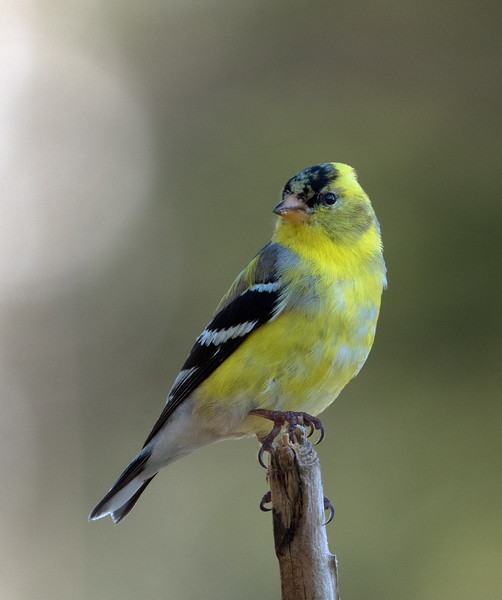
Male goldfinches turn yellower and yellower like oil lamps slowly lighting up.

A Muskrat glides silently in a lily pond where Green Frogs and Painted Turtles suddenly appear by slight of nature’s hand.

A Male Red-Winged Blackbird guards his small kingdom in the marshes, loudly challenging all who come near; his much-different-looking mate quietly does the hard work of building their nest.

A Red Squirrel eyes a Garter Snake slithering quickly out in the open, going from one dark hiding place to another.

Lobster boats are maneuvered slowly into the cove at high tide; smaller craft speedily cleave low tide, sending tremors through calm waters.

The lowering tide reveals an elegant undersea palace once owned by a royal urchin.

May’s special days are honored by some in special ways: a mother works on Mothers’ Day; folk art flies on Memorial Day.

And more. The full virtual tour of moments that we'll use to help us remember May can be viewed by clicking the link below.  We recommend that your initial screening be a full-frame slideshow.  (To make that happen, click on the Slideshow button [>] above-right the featured [largest] image on the gallery page to which the link will take you.)  Here's the link:

https://leightons.smugmug.com/Maine/Out/May-Postcards-From-Maine/i-jdV2hL4

Cheers,

Barbara and Dick

1 Comment

The Claim Jumper

Comment

The Claim Jumper

In Brooklin, Maine

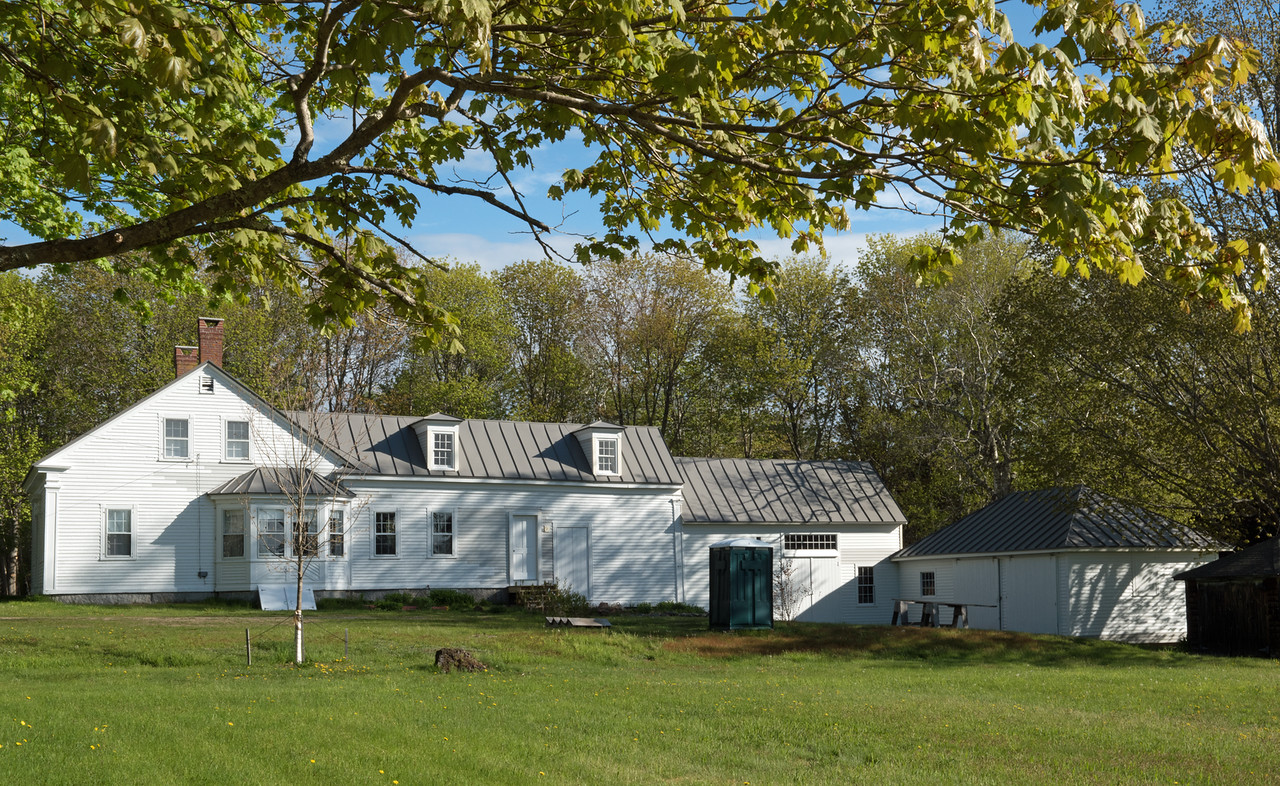
They’re reinvigorating one of the attractive old connected houses here -- new tin roof, white paint, inside work – but there’s a slight problem.

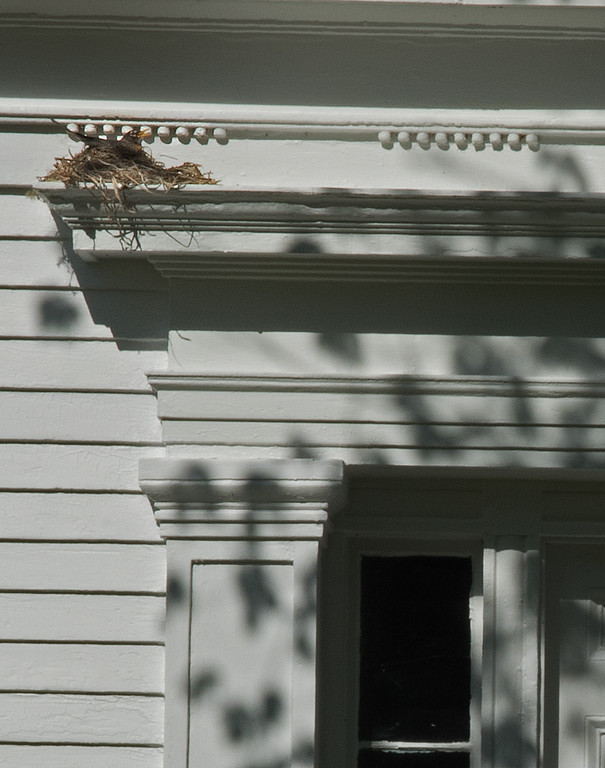
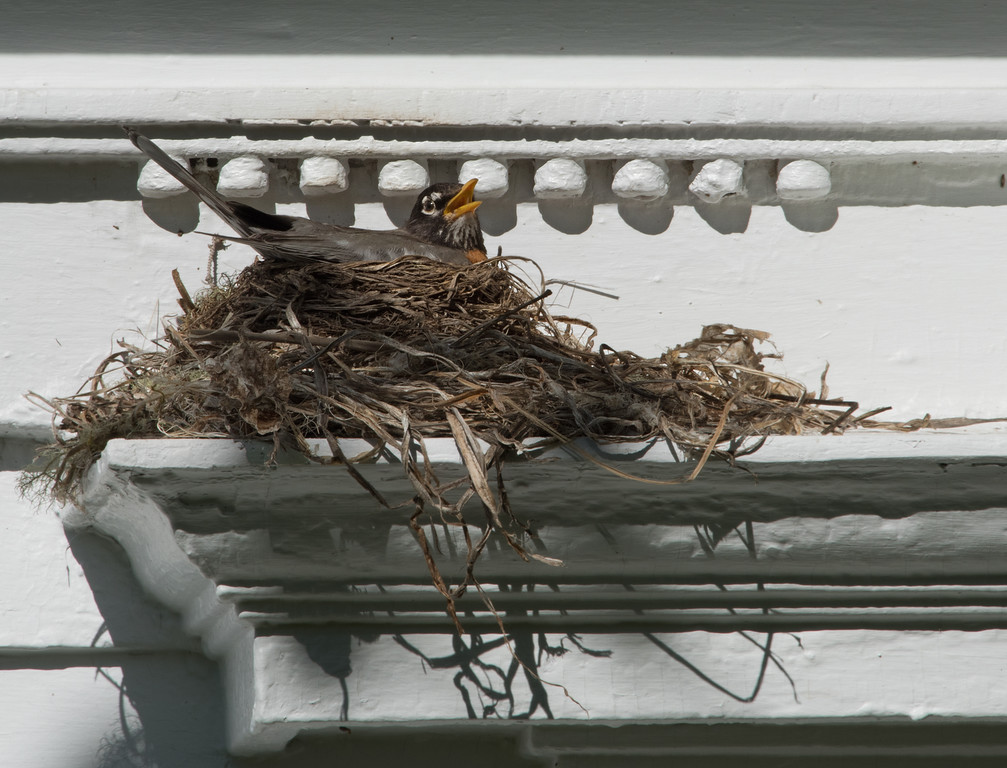
One of our socially mobile residents has decided that the spiffy restoration will be a better environment to raise her young than the places that those of her kind usually can afford. She’s laid claim to the place with a notice right above the front door.  But you have to look closely.

There she sits defiantly, on the entablature below some of the old dental molding.  Home sweet home for a while.

Thanks to eagle-eyed Rich Hilsinger for pointing her out.  (Or is that robin-eyed Rich …?)

Those who want larger versions of these images can click on this link for the gallery:

https://leightons.smugmug.com/Maine/Out/The-Uninvited-Guest/

Cheers,

Barbara and Dick

Comment

The Reluctant Migrant

Comment

The Reluctant Migrant

Trenton, Maine

A mystery is unfolding here at Bar Harbor Airport.  One of the many Canadians who entered the United States this winter refuses to go back north, even though all of his fellow migrants apparently did so long ago.  He even still wears his winter finery while the temperatures poke into the 70’s here lately.  No one has seen anything like it.

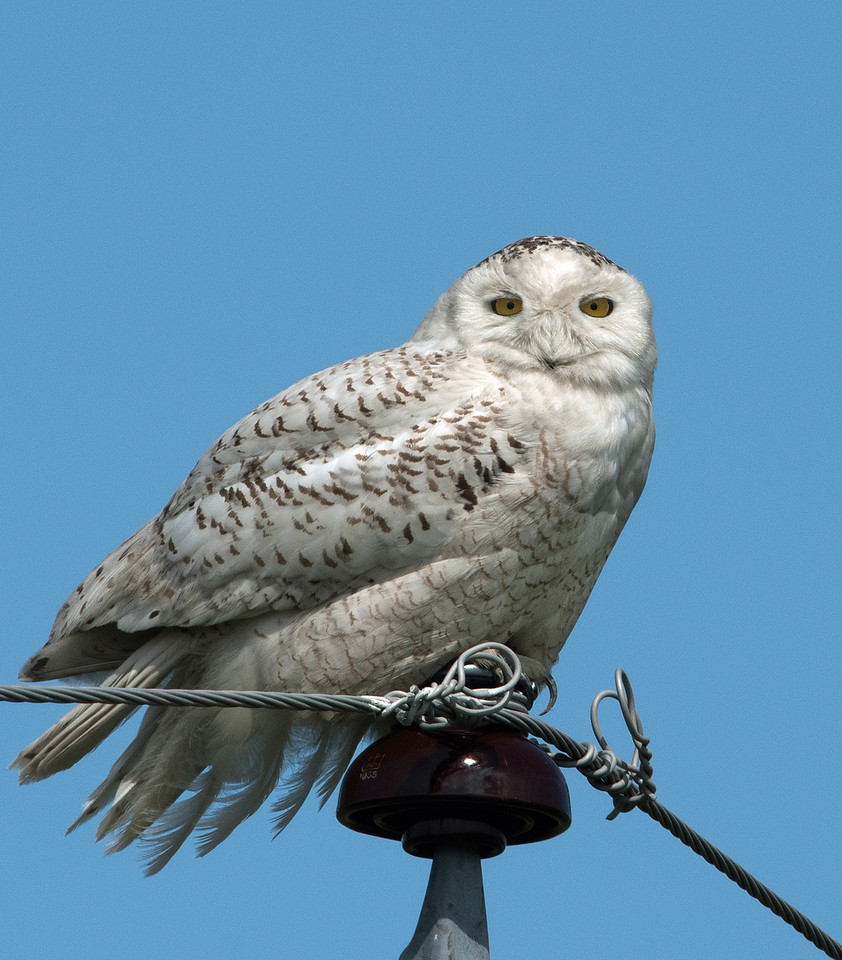
He’s a young male Snowy Owl, whom we’ll call Bubo for short. (The scientific name for Snowies is Bubo scaniacus.) As do many owls, Bubo spends most of his days sleeping or watching the world go by with slow turns of his head.  But, unlike other owls, Bubo is not inconspicuous. 

Snowies aren’t comfortable in dense foliage; they come from tundra country where there are no trees.  They’re happy to sit (and nest) on the ground or perch on a fence post or utility pole that will give them a wide vista.  When the snow disappears and the sky is blue, it’s not hard to see a Snowy – they seem to flare light. Here's Bubo "hiding":

But Bubo couldn’t care less. His problem is that, in the past few years, there have been too many Snowies up north competing for territories.  He and many of his younger colleagues have been forced to spend their winters in the United States, where U.S. birders find them delightful.

Bubo doesn't find the attention that he is getting delightful.  However, he seems to be unfazed (if not bored) by it, even though it is world-wide. (Some local birders, including Mary Alley and Michael Good, keep regular tabs on Bubo; they report his continuing unusual status to the world at large through the Cornell Lab’s E-Bird Alert System.)

For those who want to see a few more images of Bubo, click on the link below.  We suggest that you use the Slideshow function to see him full-screen.  Here’s the link:

https://leightons.smugmug.com/Birds/The-Reluctant-Migrant/

Cheers,

Barbara and Dick

Comment

Postcards From Maine: April Remembered

1 Comment

Postcards From Maine: April Remembered

In Hancock County, Maine

April here is full of tantalizing promises of good things to come. Millions of buds dot our leafless deciduous trees; migratory birds and fish return as our earliest tourists, and many of our wild residents are changing into their spring clothes and doing some courting.  However, although it’s spring according to the celestial calendar, it’s not spring as advertised in lower latitudes.

Except for the blooming of a few daffodils and a forsythia bush here and there, April in Down East Maine is a meteorological grab bag: many cool-to-cold days, especially on the coast where the winds come to play; some gloomy days, some spectacularly beautiful days, and the rest somewhere in between; some fog and rain, and a little snow (as late as April 26 this year). In short, April is the beginning of a tunnel of anticipation that ends in the splendor of Maine’s summer and fall.

April’s delights include the return of the Ospreys. These sleek fish hunters glide and hover high above our waters on five- and six-foot wings while calling to each other with sharp “chereeks”; they plunge in full power dives, outstretched talons first, hitting the water and their prey with tremendous force. They often disappear below the surface before they emerge with a tightly-gripped fish that never knew what hit it.

On the other end of April’s wildlife spectrum here, the insects begin to emerge and the Warblers begin to return to eat them.  These small birds that flit and sparkle among the branches are best seen before those branches sprout leaves.  (However, that’s not to say that they are easy to see in April; you often can hear them singing from the depths of a leafless tree or bush and spend half an hour straining your eyes without seeing a feather.)

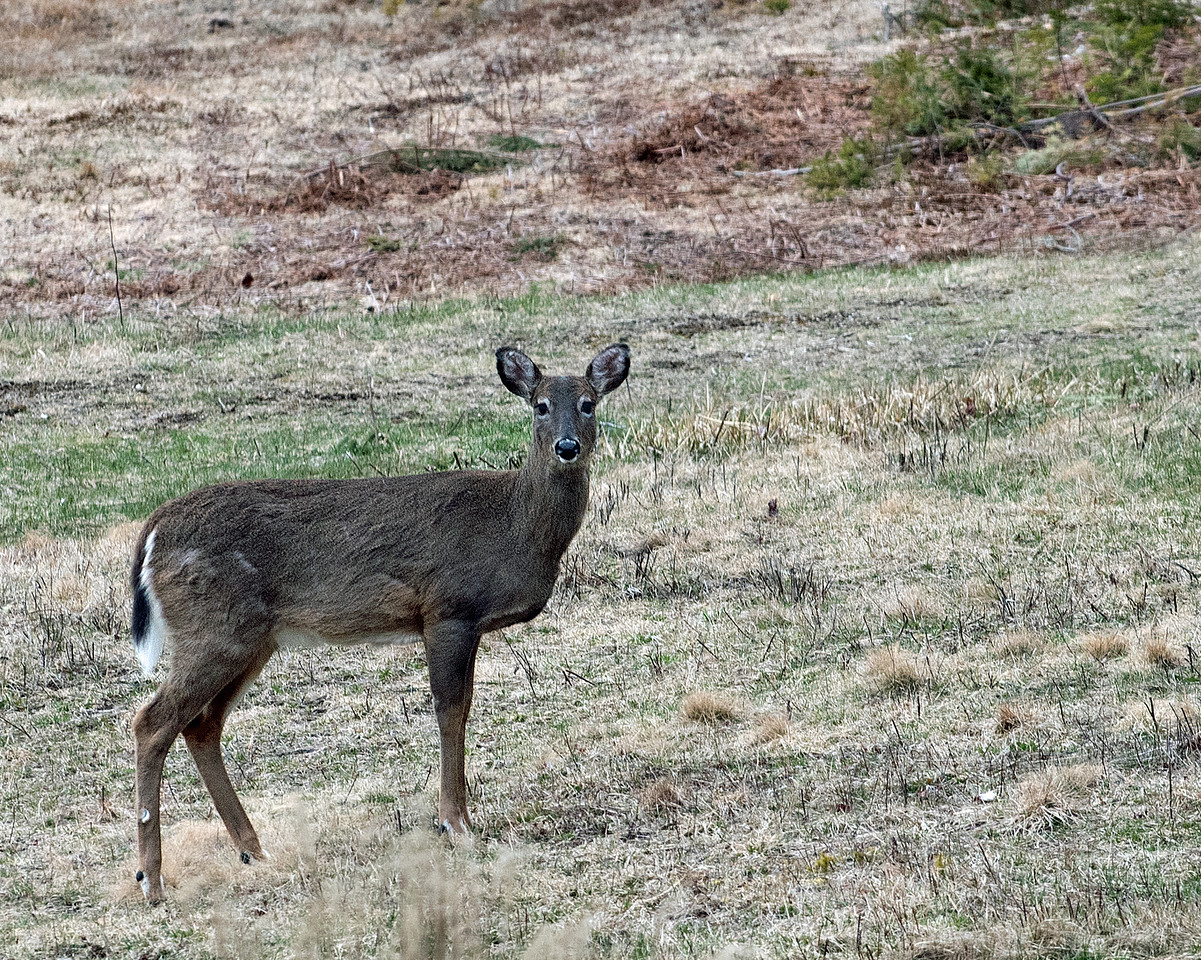
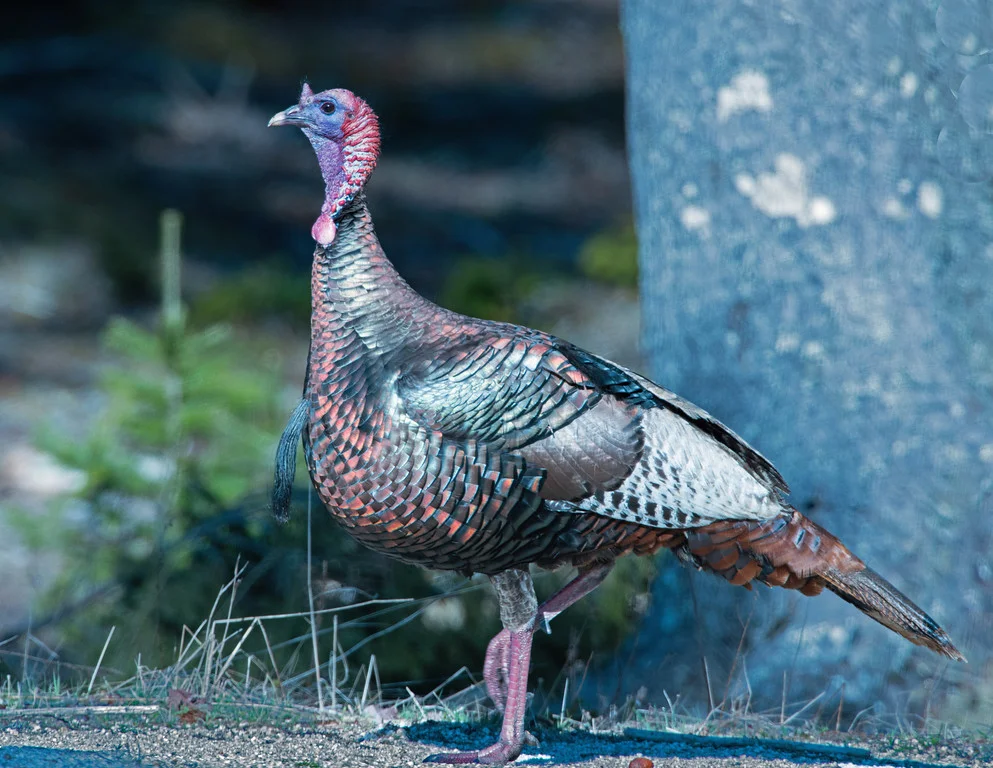
White-Tailed Deer and Wild Turkeys are among our full-time residents that change in April.  The month is when the deer shed their thick, gray winter coats for lighter, russet-colored summer attire with no underfur. During the process, they can look a bit shabby.

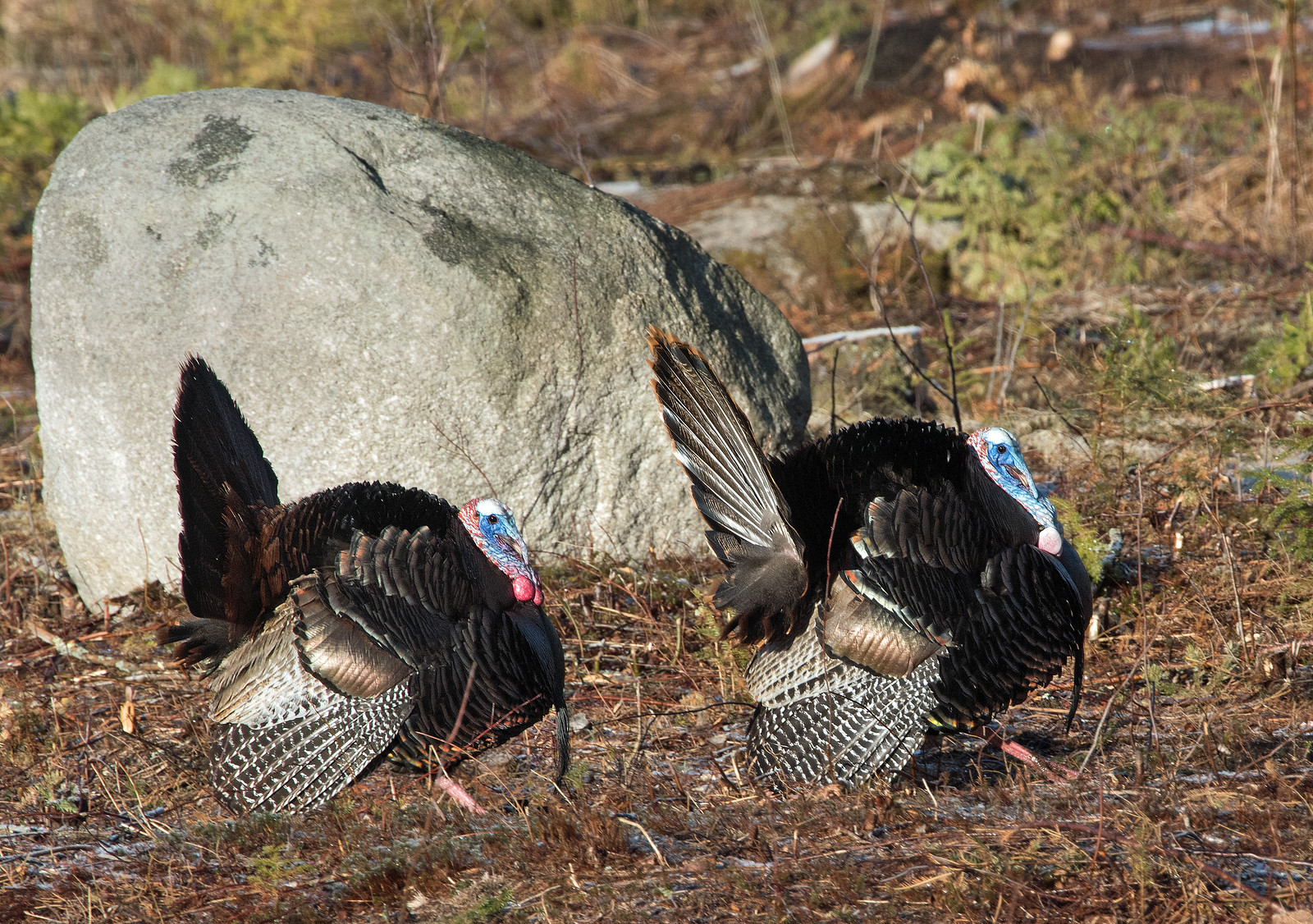
On the other hand, April is when the adult male turkeys are at their sartorial finest in performing their strut-and-rut routine.  These Toms put on a bizarre fashion parade for the hens, moving slowly back and forth while dragging their wings on the ground, then turning around and doing it again, all the while pumped up like a fan-tailed Sumo wrestler in an iridescent suit.  (For a more detailed description of turkey strutting, see the Journal entry of April 18, below.)

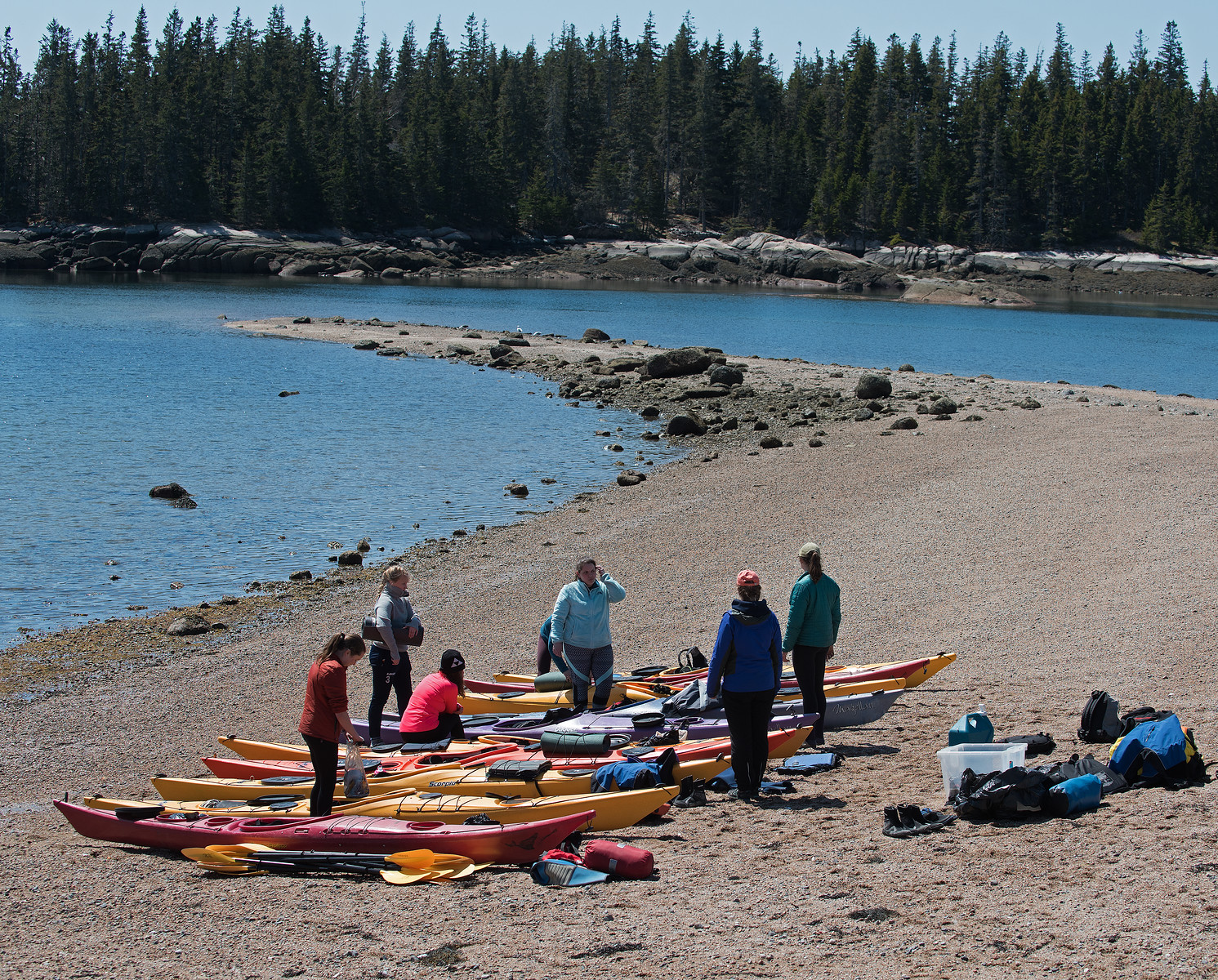
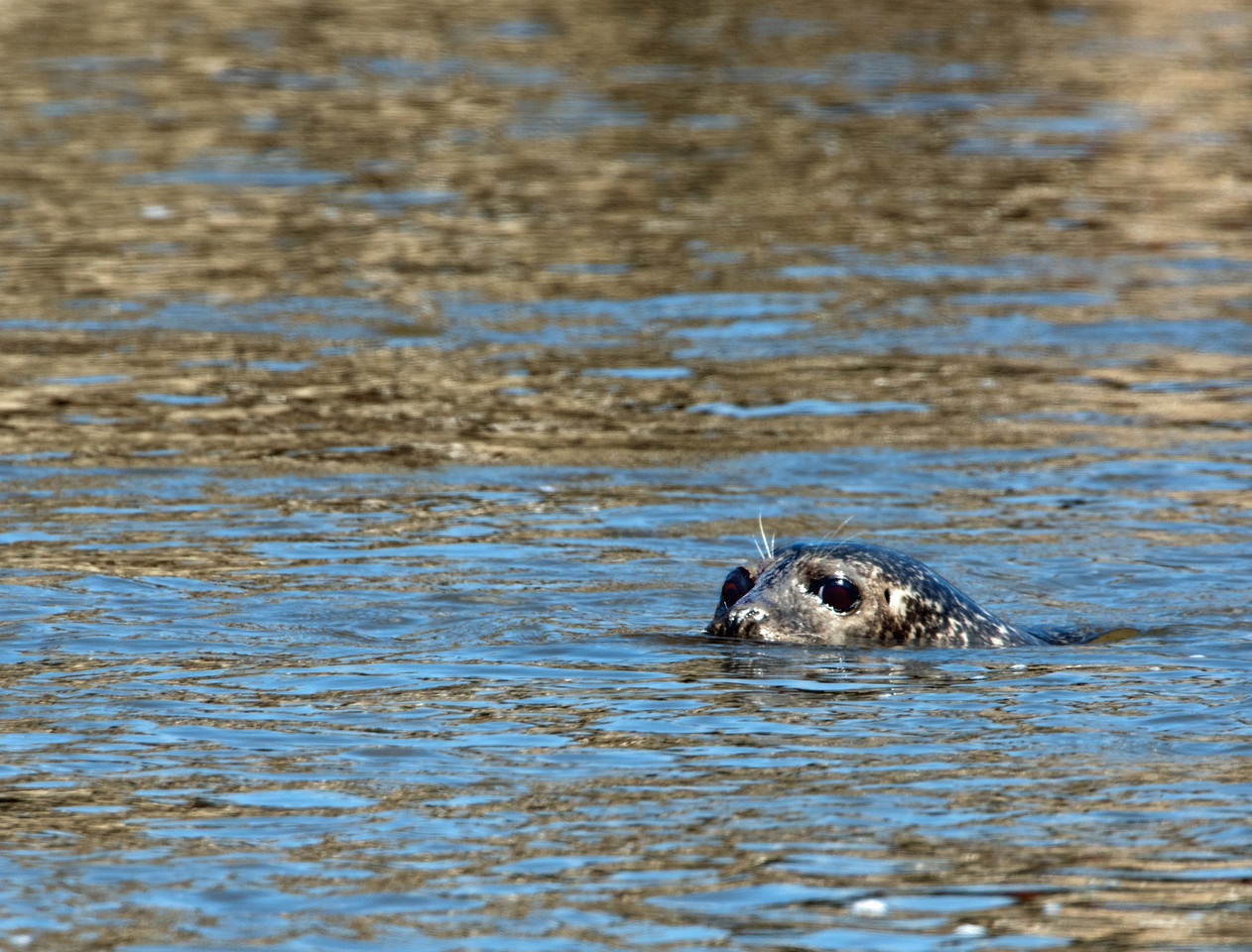
One of the few other colorful April sights is the emergence of that hardy species known as the Early Bird Kayakers. Local paddling classes begin late in the month and cater to a crowd that doesn’t worry about sitting an inch above 48-degree water on a chilly day.  This amuses other local mammals, including Harbor Seals.  

If you want to take the whole 60-second virtual tour of moments that we'll use to remember April, click the link below.  We recommend that your initial screening be a full-frame slideshow.  (To make that happen, click on the Slideshow button above the featured [largest] image on the gallery page to which the link will take you.)  Here's the link:

https://leightons.smugmug.com/Maine/Out/April-Postcards-From-Maine/n-gVPVjL/

Cheers,

Barbara and Dick

1 Comment

On the Matter of Male Strutting

Comment

On the Matter of Male Strutting

It’s the time of the year when certain ugly natives of America strut what they consider to be their male magnificence. We’re not talking about political candidates, by the way. We have in mind the Wild Turkey Toms that are roaming our woods and fields trying to herd harems of hens or fighting other Toms for the right to do so.  The hens also are ugly, but not to the Toms, which puff and strut in the females’ periphery, eagerly awaiting the telltale flutter that signals a hen’s readiness for him to do what he has to do for the survival of the species and his own blood pressure.

Which brings us to the ugly, but necessary, subjects of snoods, wattles, caruncles, and breast beards.  Research has indicated that Wild Turkey hens are influenced to volunteer for harem duty by the size of a Tom’s snood. The snood is a fleshy bump above the beak when the Tom is not showing off; when he gets into a romantic mood and starts to strut, the snood gets engorged and lengthens into a red organ that droops down over the beak. 

Strutting Tom

Strutting Tom

The snood is just one part of the fleshy display of a strutting Tom that only a female Wild Turkey would consider handsome.  He has wattles on his neck and throat and these are covered by blood-sensitive bumps (caruncles), which also get engorged into a wrinkled red mass.  At the base of the neck are two “major caruncles” that inflame into red, testicle-like objects. The face and forehead of the Tom in spring is an eerie blue; a large ear hole punctures the side of his face. On top, he sports a gray or white head crown.

The truly magnificent aspect of the display of a strutting Tom has to do with his feathers, many of which are iridescent.  Depending on the light, these can gleam bronze, black, green, gray, and white.  When strutting, the Tom puffs out his breast feathers into two enormous mounds; centered between those breasts is one or more “beards” – specialized feathers that hang down like a Scottish sporran.

The Wild Turkey Strut begins with the Tom puffing himself out to almost twice his size, making a big bird bigger.  (Toms can be almost four feet long and usually weigh up to 24 pounds, although there have been some found weighing well over 30 pounds.)

While puffing out his chest, the strutting Tom flares his tail feathers (rectors and coverts) into a large fan, raises his back and body feathers, opens his wings slightly, and drags his primary wing feathers on the ground as he steps slowly.  It's not unusual to see contests with two to five Toms strutting their stuff in the neighborhood of one or more hens, which often pay no attention.  

Once impregnated, the hens scratch out a nest on the ground in protected parts of the woods and incubate their eggs, which often produce poults before the end of April. 

If you want to see a few more (larger) images on this subject, click the link below.  We recommend that your initial screening be a full-frame slideshow.  (To make that happen, click on the Slideshow button above the featured [largest] image on the gallery page to which the link will take you.)  Here's the link:

https://leightons.smugmug.com/Birds/Wild-Turkey-Strutting/

Cheers,

Barbara and Dick

Comment

Survival of the Fittest

Comment

Survival of the Fittest

In Hancock County, Maine, on April 3, 2016

It’s a cloudy Sunday in Stonington Harbor. It's also cold for an April afternoon (35 degrees Fahrenheit), with ripping winds of up to 12 knots that numb our cheeks. We're putting up with some discomfort to try to identify what at first appears to be pieces of red jetsam moving on the incoming tide toward a pier float, where a few people are huddled.

It soon becomes apparent that we’re watching fishermen swimming slowly on their backs in rubberized immersion suits, also known as survival or exposure suits. (These garments also are called Gumbies by some, for reasons that are apparent.)  We’ve come upon one of the drills offered on weekends in harbors along the coast to allow commercial fishermen to satisfy Coast Guard and State safety training requirements.

Commercial fishing is one of the most dangerous occupations in the United States. According to the federal Bureau of Labor Statistics, it is the most lethal occupation when viewed by the number of fatalities; and, according to those same statistics, most fatalities occur when fishing off the East Coast.  (Fishing off Alaska is second.) The primary causes of such deaths are major vessel mishaps in rough and cold waters (breakups, rollovers, etc.) and fishermen falling or being dragged into the sea.

Under the regulations, a commercial fisherman is one who seeks and sells “fish,” which are defined as fin fish (e.g., swordfish), mollusks (clams and scallops), and crustaceans (lobsters and crabs).  Judging by the talk on the float, our swimmers are mostly lobster and scallop fishermen and it appears that they are of both sexes (although Gumby suits make such determinations educated guesses).

Based on Internet advertising, the cost of Coast Guard-approved Immersion suits ranges between about $400.00 and $600.00. Most appear to be of the one-size-fits-all variety, which makes smaller people more Gumby-like.

Federal requirements for the use of such suits and other more expensive survival equipment are keyed to fishing in dangerously “cold water,” which is defined as water that has a monthly low temperature average of below 59 degrees.  Thus, depending on where you are and when you are there, you may not be subject to the cold water regulations.  However, if you’re fishing in Maine, you’re in such cold water all year.

Cold water robs the body of heat 32 times faster than cold air. Hypothermia is the danger: the colder the water in which one is immersed, the quicker the muscles and organs begin to cease functioning until there is unconsciousness and the lungs and heart stop; death comes as a relief.  Immersion suits, which are designed to keep survivors "comfortably" on their backs with heads out of the water, can provide hours of protection during which a rescue may be made.

Today, the reported temperature of the water here is 38 degrees.  The medical data show that, in waters between 30 and 40 degrees, swimmers without immersion suits can expect to be exhausted or unconscious within 15 to 30 minutes of their being immersed and dead within 30 to 90 minutes. Getting out of the water into a raft would increase survival chances 15 percent.

If you want to see a few more (larger) images on this short, 10-second subject, click the link below.  We recommend that your initial screening be a full-frame slideshow.  (To make that happen, click on the Slideshow button above the featured [largest] image on the gallery page to which the link will take you.)  Here's the link:

https://leightons.smugmug.com/Maine/Out/Survival-of-the-Fitest/

Cheers,

Barbara and Dick

Comment

Postcards From Maine: March Remembered

2 Comments

Postcards From Maine: March Remembered

In Hancock County

For some old-timers here, March is the time to check their Christmas wreathes to see if there is any green left that needs to be used up; if so, April will do fine to take down those decorations.  No sense being wasteful.

Our March contains no dazzling clouds of pink and white Japanese Cherry blossoms to distract us. Instead, we get displays of every kind of weather and a few subtle stirrings of a Spring that will come when it’s ready.

Nonetheless, March this year was more than enough for those who are willing to take their beauty where they find it.  One place we found it was in the perfect clarity that occurs when a low sun eases through a very cold day to light up a working harbor.

There also were unexpectedly warm days of sepia light when jackets and sweaters were peeled off while walking the graceful curves of country lanes. There was March snow, but not like last year’s revenge of the Winter Witch.  This year, we had a designer snow of about six tailored inches of white purification.

During all this, the Canada Geese returned in their arrow-head flights and American Robins swarmed the fields; the male American Goldfinches began to blush yellow and grow black caps; Purple Finches appeared like large raspberries on drab bushes, and all the birds showed signs of surging hormones.

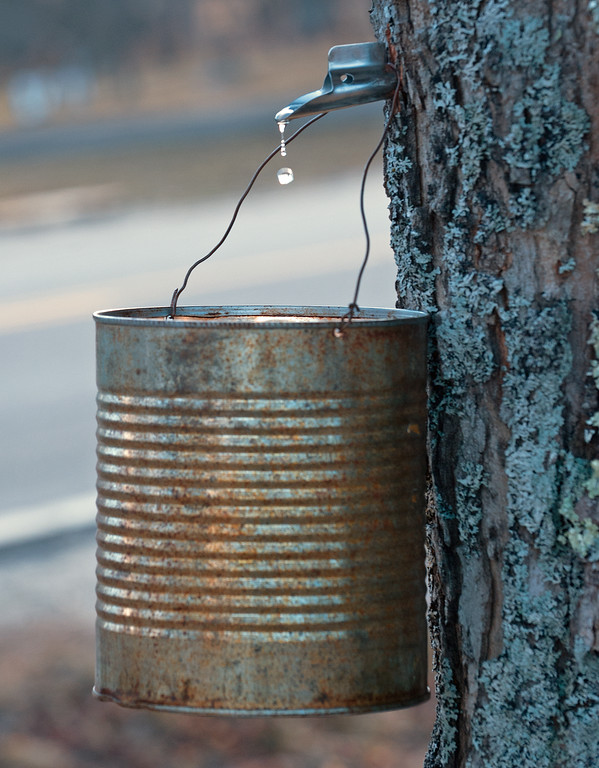
The Maple Trees did their own surging, surrendering their precious Spring sap drop by drop through embedded spiles (taps).  (Maine ranks third among the states in maple syrup production, after Vermont and New York, but the Canadian provinces are the really big producers.)

The surging continued with the annual March migration of American Eels (Anguilla rostrata) in their Elver phase.  Except for dark eye dots and a spinal cord, these young eels are transparent; hence, they’re commonly called Glass Eels.  They’re usually between three and four inches long at this time and almost invisible to predators. 

They were spawned south of Bermuda in the Sargasso Sea by parents that grew up mostly in North American east coast fresh water lakes, rivers, and streams. By some instinct that is not fully known, the Elvers swim to their dead parents’ fresh water origins.  Once there, they have to run a gauntlet of Fyke (“Fick”) funnel nets set by fishermen near the mouths of these waters.  (Some fisherman use less efficient dip nets.)

These eels are valuable at this young stage, usually selling for over $1000.00 per pound.  (Their daily price yesterday was $1200.00 per pound in Ellsworth.)  Elvers caught here usually are air-freighted live to Asia, where they are raised to maturity in aqua farms and then sold as a delicacy.  (They’re the only aquaculture species that has to be caught in the wild, which is one of the reasons why they are expensive.) Those that survive the nets, ospreys, eagles, and other predators here spend years maturing in our fresh waters and then, as 20-inch, nontransparent adults, they get a mysterious feeling and swim off to the Sargasso Sea to spawn.

A different form of migration occurs here on March 17, St. Patrick’s day, when the Irish and the Irish-at-Heart can return to another liquid source: the Irish Pub beneath the Brooklin Inn, both run by neighbor Chip Angell. The day was celebrated here differently by neighbor Jean Fuller with one of her more enigmatic road banners -- a pink flamingo wearing an Irish buckled top hat, dancing on green shamrocks! (Irish dandy Oscar Wilde probably would have loved the paradoxes.)

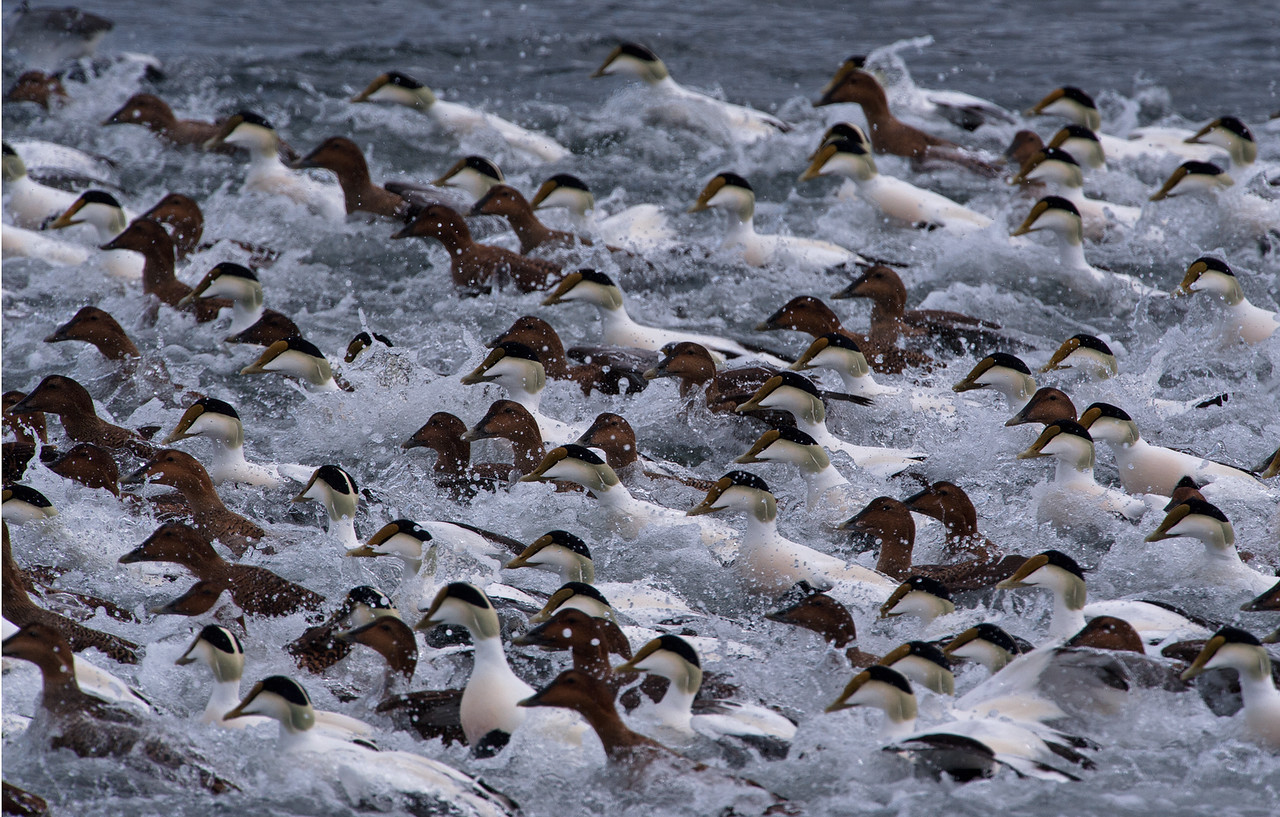
Speaking of enigmas, we studied Common Eiders during March and were puzzled by some of their behavior when they weren’t aware that we were watching. Hundreds of these large ducks would float into fast-moving water, intentionally get caught in the current, and then return to calm waters by collectively churning the water with their big webbed feet and “swimming” with their wings in the water; then, they would repeat the process three and four times.  They didn’t attempt to eat from the churned bottom.  (Gulls would dive into the churn to eat, but the Eiders would eat before or much later.)  Any theories as to what was happening?

If you want to take the whole 60-second virtual tour of moments that we'll use to remember March, click the link below.  We recommend that your initial screening be a full-frame slideshow.  (To make that happen, click on the Slideshow button above the featured [largest] image on the gallery page to which the link will take you.)  Here's the link:

https://leightons.smugmug.com/Maine/Out/March-Postcards-From-Maine/

Cheers,

Barbara and Dick

2 Comments

Postcards From Maine: February Remembered

Comment

Postcards From Maine: February Remembered

In Hancock County, Maine

February usually is when we relieve our growing winter boredom with reassuring thoughts of spring.  This year, however, things were not that simple.  We experienced such a weather smorgasbord in February that we were a bit distracted by competing thoughts of increasing climate instability.

Fortunately, we had a healthy share of blue skies over the fields,woods, and waters. But, we had snow, including a storm that blanketed the landscape in 11 inches of crunchiness, which turned to ice. Then, there was fog and sea smoke that made it impossible to see that landscape. And, we had rain and wind that washed the snow and ice away, including a thunder and lightning howler that attacked out of the Atlantic with tree-toppling gusts of  up to 50 miles per hour. 

The February precipitation turned larger streams into torrents, the moon and other factors caused extraordinarily high and low tides, and some mysterious intruder whirled Mother Nature's thermostat wildly -- our temperatures during February ranged from below zero (with winds making it feel colder) to almost 60 degrees Fahrenheit (with hiking making it feel warmer).

The Romans named this month after Februa, the bright festival for purification by water. On the other hand, before adoption of the Roman name, the Old English name for the month was Solmonath (“mud month”).  It occurs to us now that these are not inconsistent concepts.

February’s calendar, itself, is season-conscious. It contains Groundhog Day, brought originally to this country by German immigrants who had the curious notion that hedgehogs could predict the end of winter weather and the more curious notion that groundhogs could do as well as hedgehogs in that regard. This year (and often), February contains Ash Wednesday, the day that begins the countdown to Easter for many Western Christians. For Saxons, that time of the year was the time to celebrate Eastra, the rejuvenating goddess of spring. At the end of February this year (and every other fourth year), there’s a Leap Day added to the month to re-synchronize our seasonal gears with our imperfect Gregorian solar calendar.

Perhaps the most popular day of February is an adaptation of the Roman spring festival of Lupercalia. According to some histories, that celebration was renamed by early Christians in honor of a saint who was martyred by the Romans for performing banned marriages. The saint was Valentinus, whom many lovers -- married and not -- now honor unconsciously with hearts and flowers.

On the coast here, February also is a time to watch the antics of Common Eiders before they soon return to the open North Atlantic.  They’re the largest ducks native to North America and hundreds, sometimes thousands, of them seek winter shelter in our bays.  (The simplistic, but preferred, descriptor for such congregations of these and other ducks is a “paddling.”)

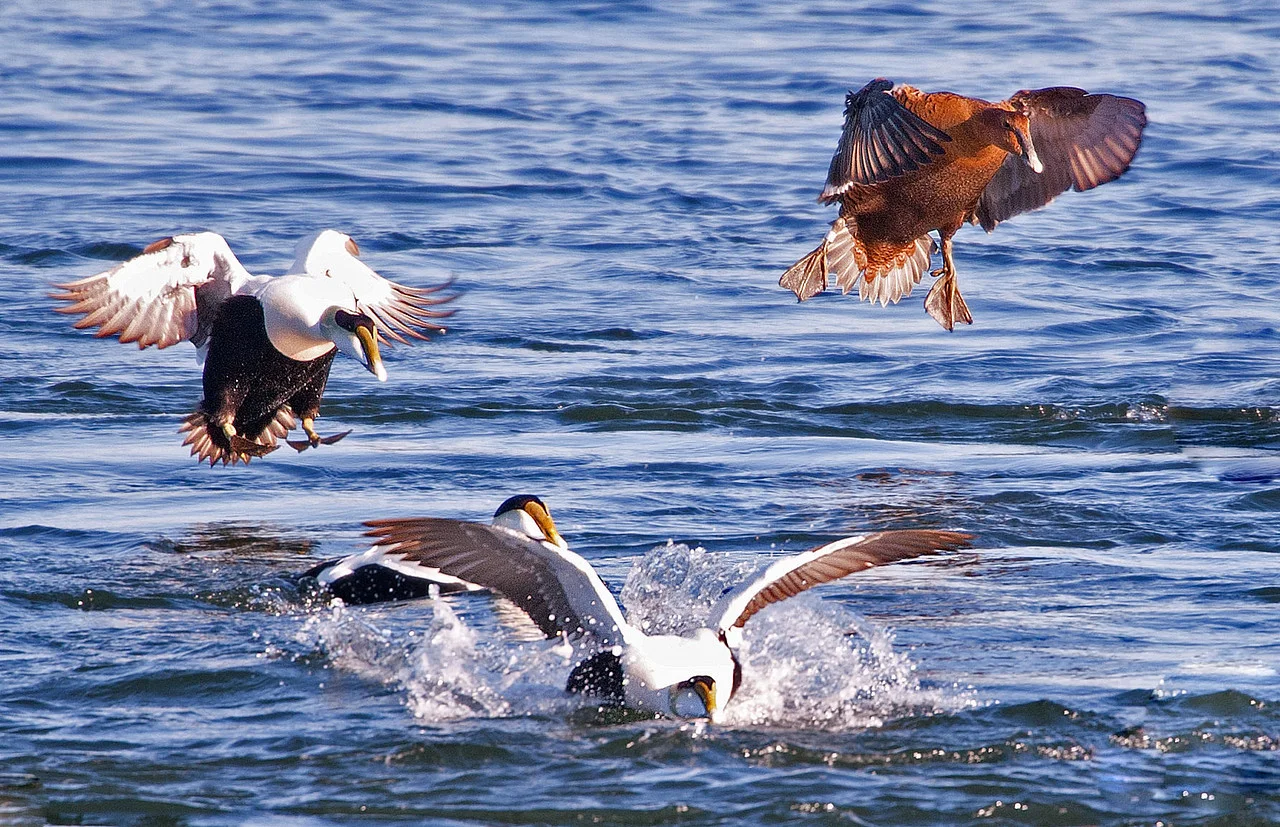
The male Common Eider is rogue-like in appearance, except for one silly feature.  He sports a white cape over black wings and black lower body.  He also wears a hooded black mask, below which is his large bill.  That bill is the silly feature -- it looks like a nose wrapped in a hot dog bun. Nonetheless, these Common Eider drakes and their handsome auburn hens are impressive flyers that can reach speeds of up to 70 miles per hour.  Unfortunately, many of them need more training in the landing department.  They sometimes perform Kamikaze landings when they get over their crowded paddling: they just curve their wings into air brakes and let gravity do what gravity does -- including causing crash-landings onto their wildly scattering relatives.

While in their paddling, Common Eiders dive for crustaceans and mussels, crushing and tearing the former with their powerful bills and swallowing the latter whole to be digested later with the help of unimaginable stomach juices. 

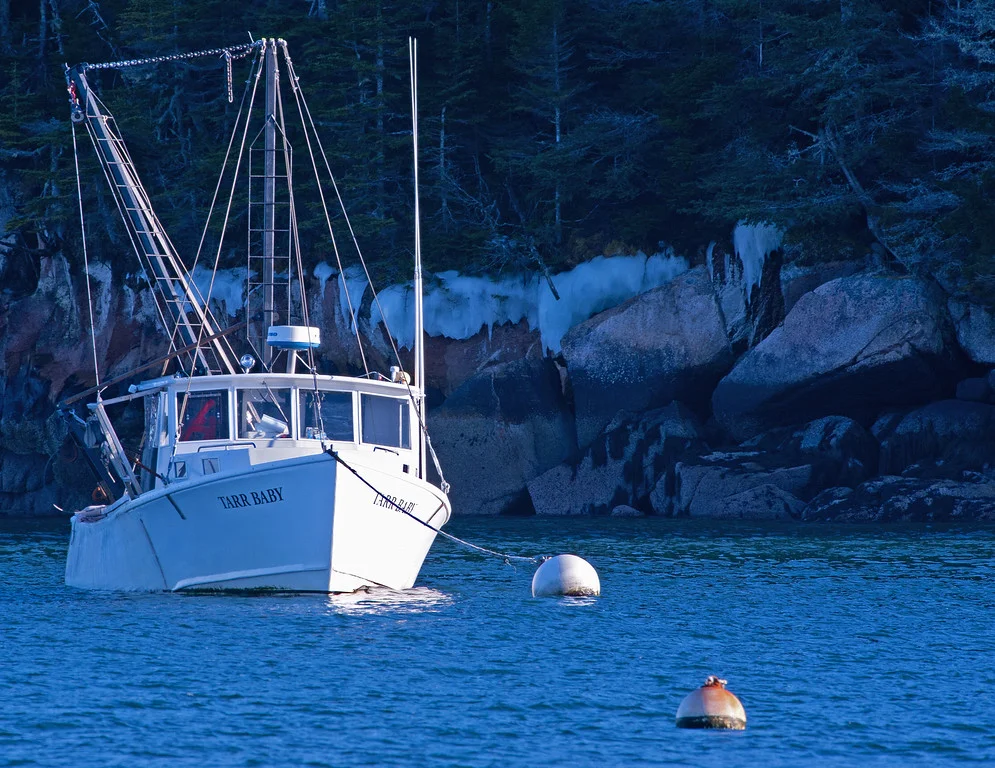
Speaking of shellfish, February often is the time when some scallop fishermen choose to scuba dive for the delicious mollusks in difficult areas that cannot be dredged.  Fortunately for us, one of those brave souls is neighbor Dave Tarr, who dives for these delicacies off his scalloping and lobstering boat, Tarr Baby.  That’s often a 50-foot dive into coffee-black depths that sometimes are below freezing. A few hours after Dave’s icy dive, however, we also dive -- into a sizzling dinner of the freshest and sweetest sautéed scallops ever eaten. (Now that's a meal that can cause us to postpone worrying about climate change until at least after desert.)

If you want to take the whole 60-second virtual tour of moments that we'll use to remember February, click the link below.  We recommend that your initial screening be a full-frame slideshow.  (To make that happen, click on the Slideshow button above the featured [largest] image on the gallery page to which the link will take you.)  Here's the link:

https://leightons.smugmug.com/Maine/Out/Postcards-From-Maine-Feb/

Cheers,

Barbara and Dick

Comment

The Storming Snow and Shining Dawn

Comment

The Storming Snow and Shining Dawn


In Hancock County, Maine

We don't remember snowstorms well.  We think that we do; but, when it snows again, we realize that our memory is a leaking bucket.  Small, wonderful sensations eventually dry up there and must be restored in real time. 

The tingling feeling of being alive in a snow storm while Mother Nature celebrates with crystal confetti is especially difficult to remember over time. 

We invite you to join us visually on a short walk in a snowstorm.  We hope that it revitalizes your winter senses, especially your awareness of the splendid vividness that falling snow can bring to familiar things that never were fully appreciated.   

You're also invited to share the wonderful sensation of awakening early on a fine day after an 11-inch snowstorm.  This is when the dawn light gradually turns pale fields into a brightness that would be too intense to bear were it not for the soothing blue sky and the dark spruces looking like chocolate sundaes dolloped with great gobs of whipped cream.   

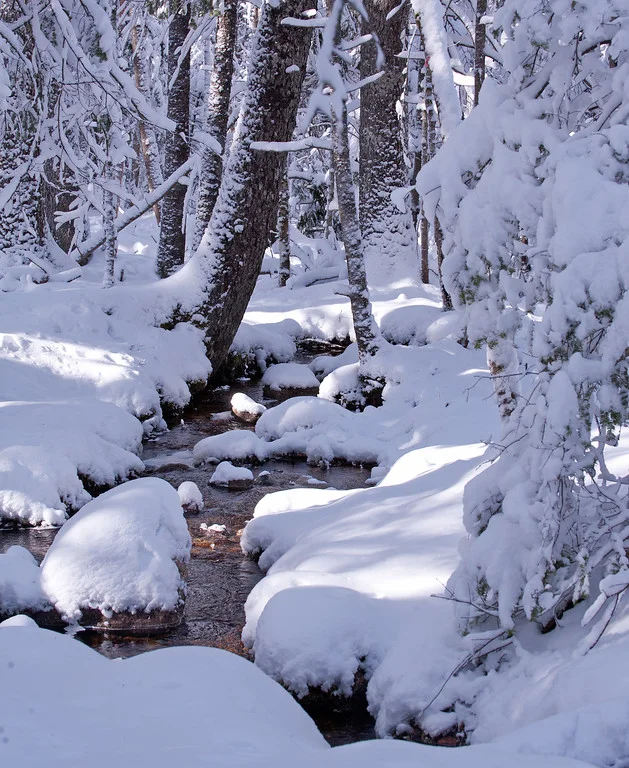
We’re compelled to go out again, this time into the sunshine.  But we go where few humans will go in this cold, short-lived fairyland.  We visit tall trees wearing snow-striped pants, meandering streams glistening within snowy banks, bright red winterberries peeking out of their encrusted bushes, the graceful sweeps of snow on cove shores, and more.

For additional images that may evoke forgotten (or unknown) winter sensations, click on the link below for about a one-minute virtual tour.  As usual, we recommend that your initial tour be in Slideshow mode to see the images in full screen.  Here’s the link:

https://leightons.smugmug.com/Maine/Out/A-Down-East-Snow-Storm/

Cheers,

Barbara and Dic

Comment

Patience Is a Laughing Matter in Maine

Comment

Patience Is a Laughing Matter in Maine

In Ellsworth, Maine

Some people “from away” have trouble imagining what we in Down East Maine possibly could do during cold and snowy winter evenings; some don’t have that trouble – they imagine us shivering around wood stoves in dark rooms.  These people apparently are not aware of the rich tradition here of community art and education.

This week’s Hancock County newspaper, The Ellsworth American, lists in small type two pages of area events, ranging from a lecture on Snowy Owl migration; to classical and popular music; to art workshops; to community theater presentations of contemporary authors, Shakespeare, and Gilbert and Sullivan, plus much more.   The quality of many of these presentations often is extraordinary.  For example, see the December 14 Post on The Bagaduce Chorale, below.

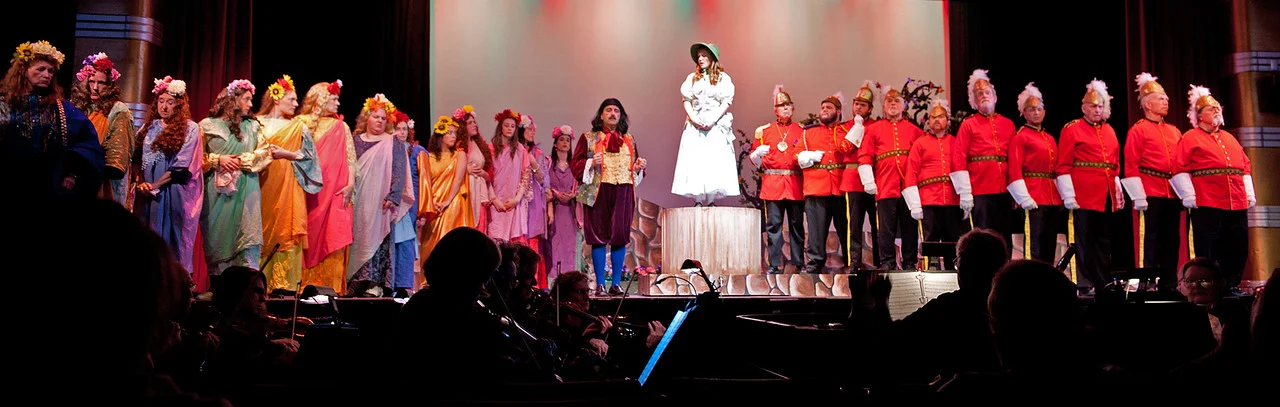
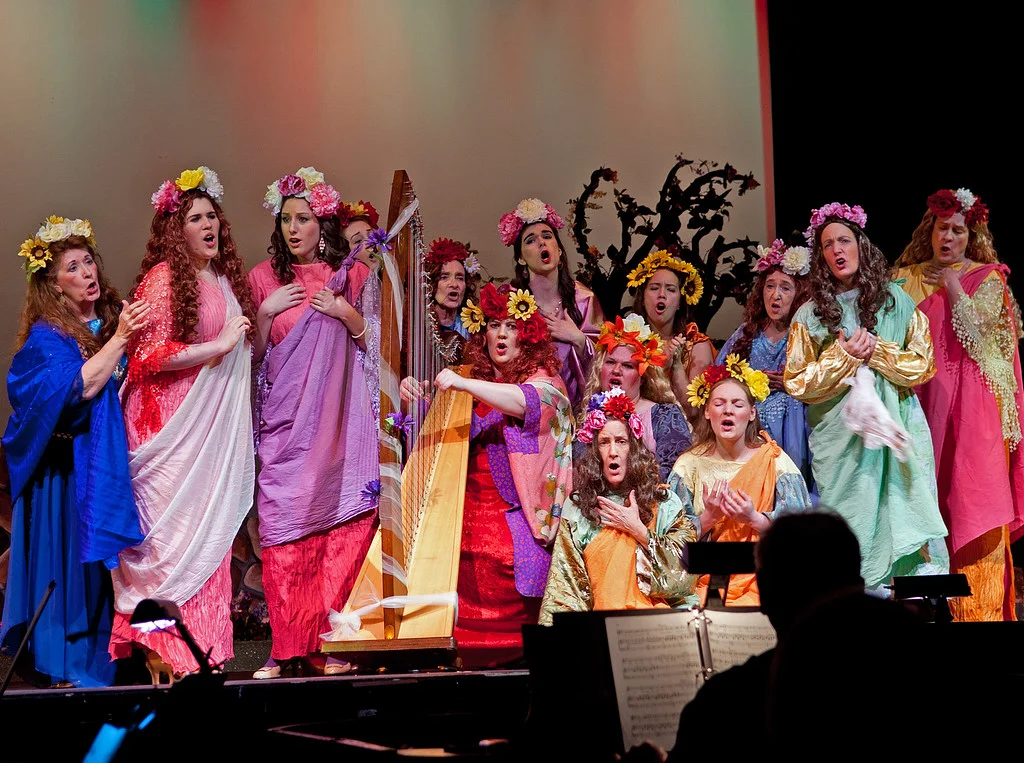
We attended a particularly robust production of Gilbert and Sullivan’s Patience yesterday afternoon/evening at Ellsworth’s Grand Theater; the performance will be repeated next Friday, Saturday, and Sunday.  We recommend it .  Some may be tempted to  take a libretto – this is Gilbert and Sullivan, after all, where the audience is machine-gunned by clever words.   But, in good productions such as this, reading the words means missing some of the over-the-top actions and expressions of the players.

The Maidens

The Maidens

Patience is a zesty, sometimes hilarious, 19th Century operetta (also called Bunthorne’s Bride) that eviscerates the false poets and foppish aesthetes of the Victorian era – and, if you listen closely, even those of today.  This is the 40th annual production of the authors' works by The Gilbert & Sullivan Society of Maine. 

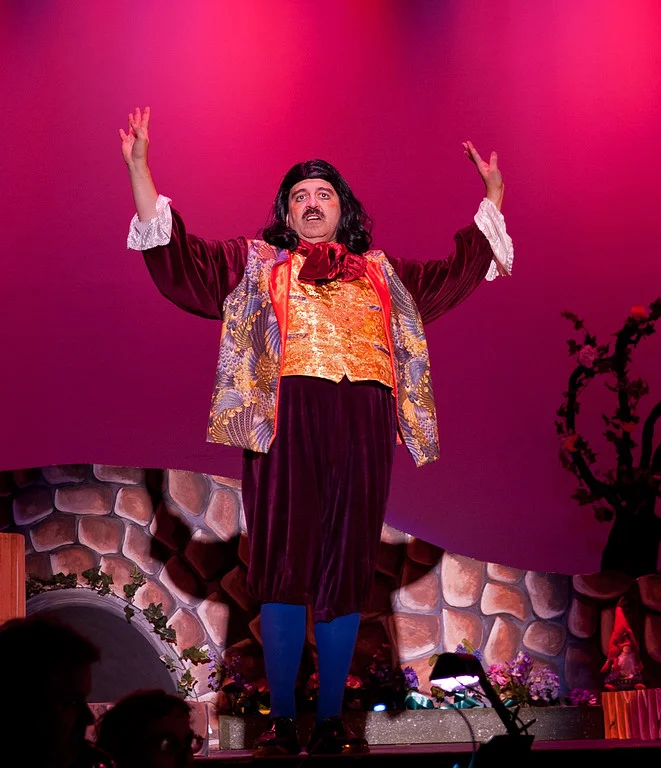
Reginald Bunthorne

Reginald Bunthorne

Most of the Society players have significant experience, but also have “day jobs” or are retired.  For example, the plastic-faced Roland Dube masterfully plays Reginald Bunthorne, the “fleshy” and conniving “poet” at the center of Patience.  Mr. Dube has been playing a wide variety of community theatre for 33 years, and also is a mathematics teacher in a Bangor elementary school. 

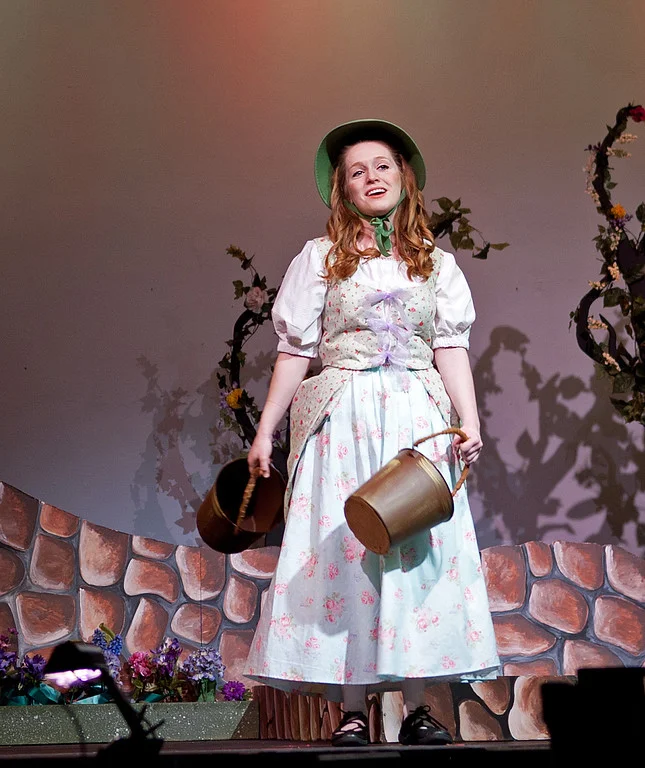
Patience

Patience

The attractive Molly Abrams delivers a wonderful Patience, the sought-after but “lowly” milkmaid.  Ms. Abrams is a classically trained bel canto who recently graduated from the University of Maine at Orono; she’s already made a number of significant appearances in this country and Europe and, judging by her beautiful voice, has a bright future. 

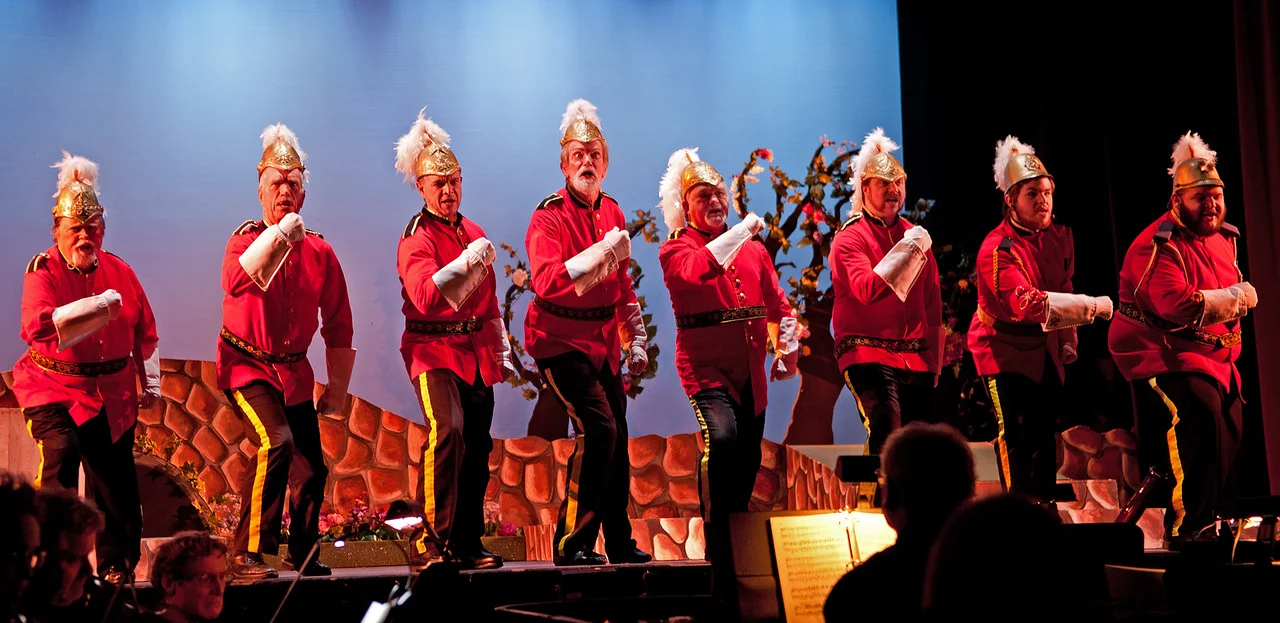
There also are cast members who have retired from their day jobs, but have never retired from the music world.  For example, neighbor David Porter, who plays one of the maiden-seeking Dragoons in Patience, was a professor at the University of Georgia (as was his singing wife, Jean); David also gives community lectures on mushrooms and other fungi. 

We can’t wait for next year’s production by The Gilbert & Sullivan Society of Maine (which plays primarily in Hancock County): The Pirates of Penzance.

The Dragoons

The Dragoons

For the wonderful cast of Patience and those of you who are Gilbert and Sullivan devotees, below is a link to images of many of the scenes in Patience, which we recommend be played in Slideshow mode.  Here's the link:

https://leightons.smugmug.com/Maine/Out/Gilbert-Sullivans-Patience/

Cheers,

Barbara and Dick

Comment

Postcards From Maine:  January Remembered

Comment

Postcards From Maine: January Remembered

In Hancock County, Maine

Some romantics like to believe that the Romans named January after Janus, the mythical two-headed god of beginnings, transitions, and ends, whose name is derived from the Latin word for “door.”  Most experts, however, say that the month was named after the warlike goddess of the Roman Empire, Juno, the mythical mother of Mars and Vulcan.  Being more romantic than expert, we like to think conceptually of January as the optimists' entrance into the yearly cycle -- a time of renewal and hope.

Our new year’s optimism can be vastly increased when the cycle begins with a beautiful snowstorm that has the sense to stop just after it has healed the landscape’s scars under about six inches of purity.   

We got only one of these lovely storms in January, and it was not until mid-month.  For some of us, its beauty was tempered a bit by increasing anxiety over our warming (and less stable) climate.  The new year's first real snow was delayed by temperatures approaching 50 degrees in early January; moreover the snow was melted in about a week by the return of unseasonably warm weather.  "Balmy" January days have their benefits, especially in terms of outdoor work; but, they don't "feel right" in a place where the air is expected to be cold enough to sharpen the mind and clarify the eye. 

We did have several cuttingly-cold days with angry winds that attacked out of the north.  They frenzied the usually calm cove waters, disrupted electric power, and reminded us that Mother Nature can throw a wicked tantrum. 

Nonetheless, our few days of good January snow did create an opportunity for those of us who try to de-clutter our lives with a little natural solitude: walking a snowy trail deep into tall woods; listening to the crunch of our boots while they make the only human tracks for acres; then, standing absolutely still, absorbing the forest's profound silence.

Or not.  We also can be walking in those very same woods in January and have our hearts stopped when the ground beside us erupts explosively in loud whooshes and high-pitched shrieks.  As we catch our breath, the nestled wild turkeys that we almost stepped on helicopter in every direction.

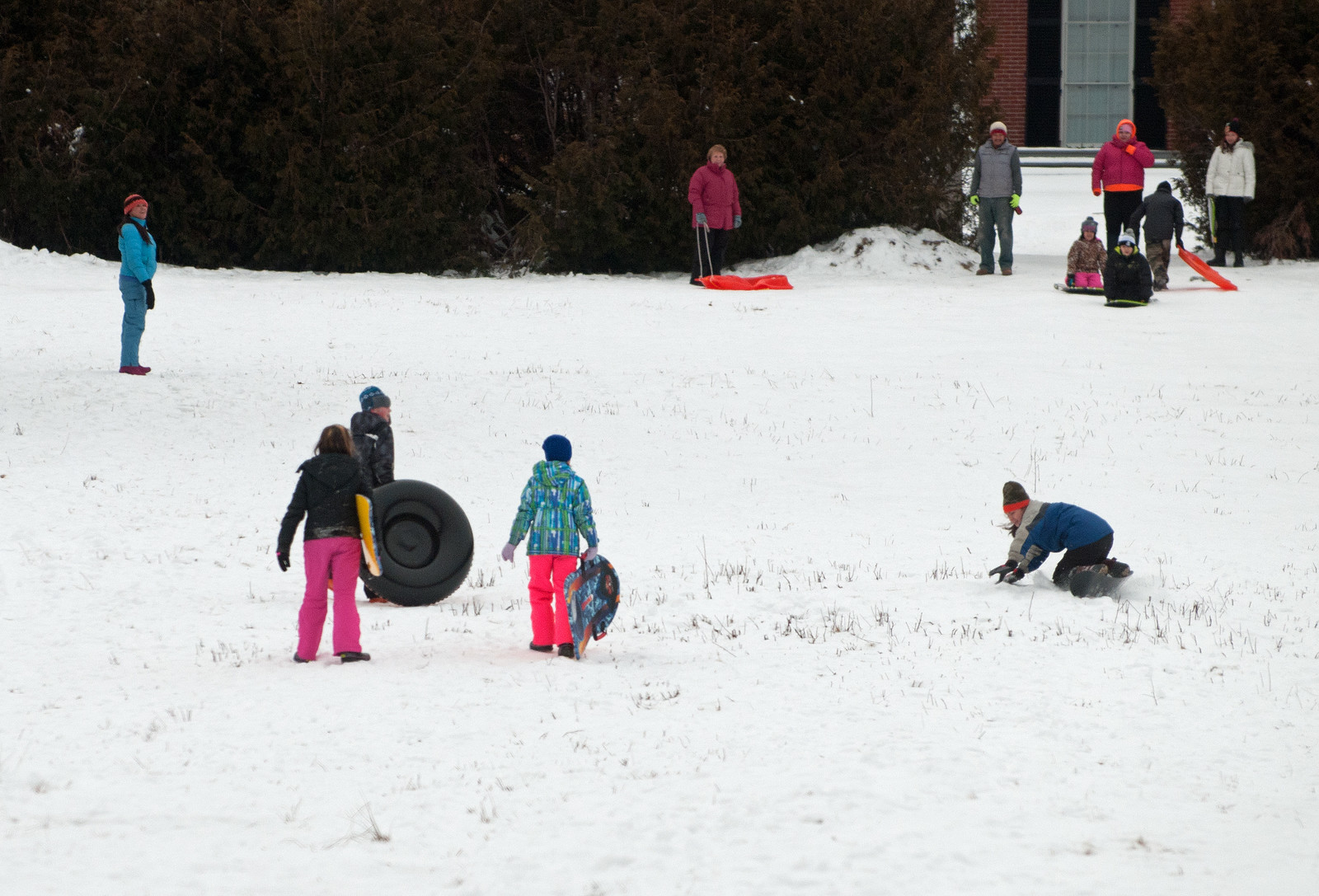
The January woods also can resonate with the mechanical snarls of chain saws and other machinery that work the frozen trails.  The snow-covered hills in towns can echo the laughs and screams of children sledding down hills.  In cold country such as this, there also usually are plenty of inside activities, especially musical presentations, lectures, and local ice hockey games. 

Due to January's unusually mild interludes,  lake ice in this area apparently was not thick enough to safely support ice fishing.  If and when it is, we also may hear another "natural" local phenomenon:  loud music coming from portable shelters out on a frozen lake, where  the spirits may be conjured by certain beverages and trout may be pulled out of a dark hole. 

Perhaps best of all for those who are visually oriented is the low, sometimes syrupy, late light of January that can transform familiar sights into something bordering on splendid.  The sun's most dramatic gesture, however, is when, while departing our rocky shores, it runs a lingering finger down the sea's blushing face.

If you want to take the whole 90-second virtual tour of moments that we'll use to remember January, click the link below.  We recommend that your initial screening be a full-frame slideshow.  (To make that happen, click on the SLIDESHOW button above the featured [largest] image on the gallery page to which the link will take you.)  Here's the link:

https://leightons.smugmug.com/Maine/Out/JanuaryRemembered/

Cheers,

Barbara and Dick
 

Comment

Return of the Vikings

1 Comment

Return of the Vikings

In Brooklin, Maine

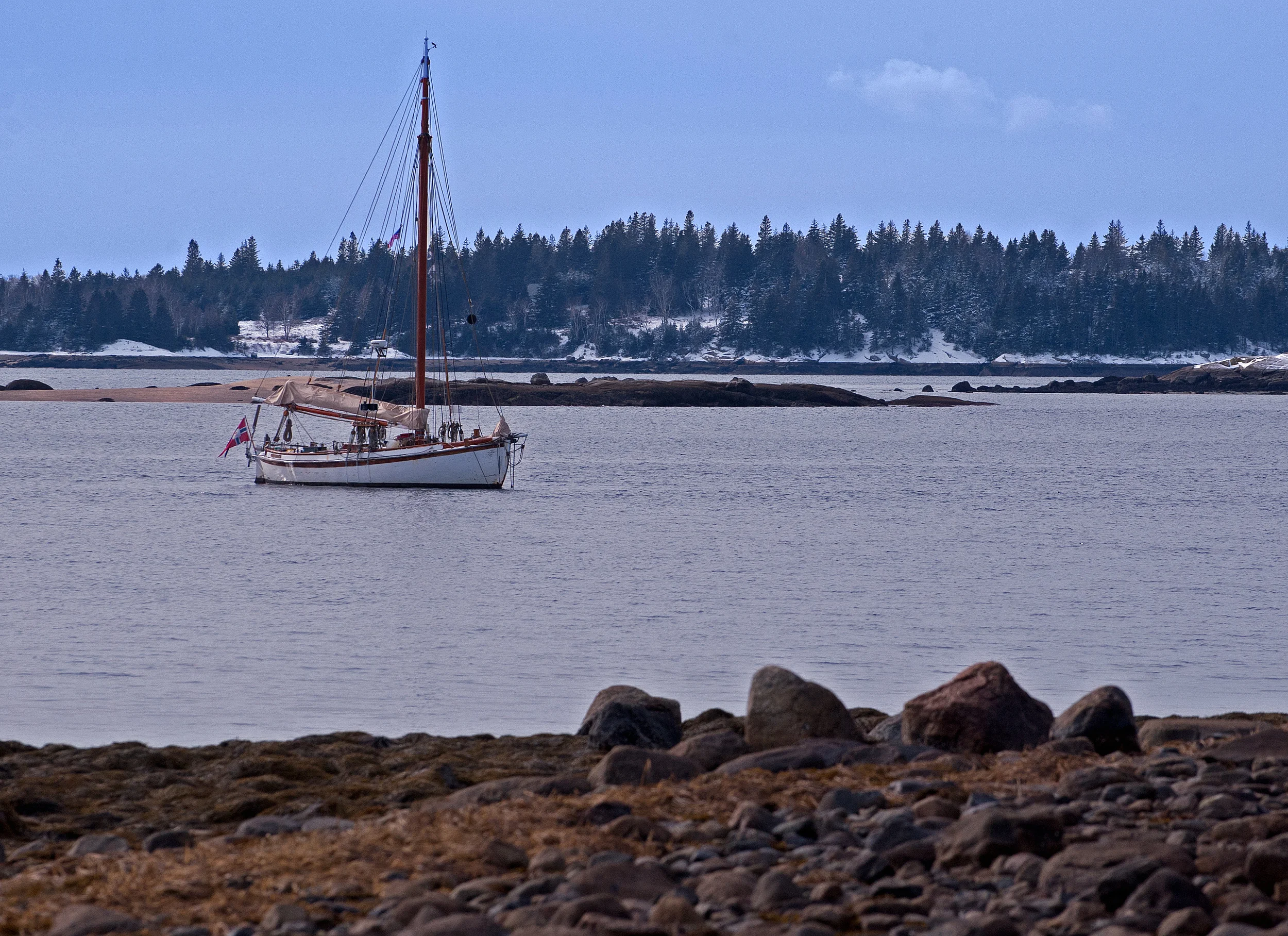
It was a cold, windy, and wet evening at the end of December when thecutter Flekkerøy slipped mysteriously through the dark into Great Cove to wait out a winter storm.  We never actually saw the sailboat’s crew, but neighbor Jon Wilson contacted them by radio and found out that Klara Emmerfors and Bjørnar Berg were comfortable below deck; they had left their home port in Norway last summer and were on the way to celebrate the New Year with Klara’s sister, who was flying in from Europe for a rendezvous in nearby Rockland, Maine.  (See posting of December 29, below.)

When the storm was gone, so was the Flekkerøy, but the possibility of a return visit to meet some Brooklinites was left open.   Last Friday, on a very cold afternoon that preceded a snow storm, the Great Cove residents’ electronic jungle drums came alive: “Flekkerøy is coming into the Cove”; “… just in time for the storm.”  The young Scandinavian adventurers (now known affectionately around here as “the Vikings”) had returned unannounced. 

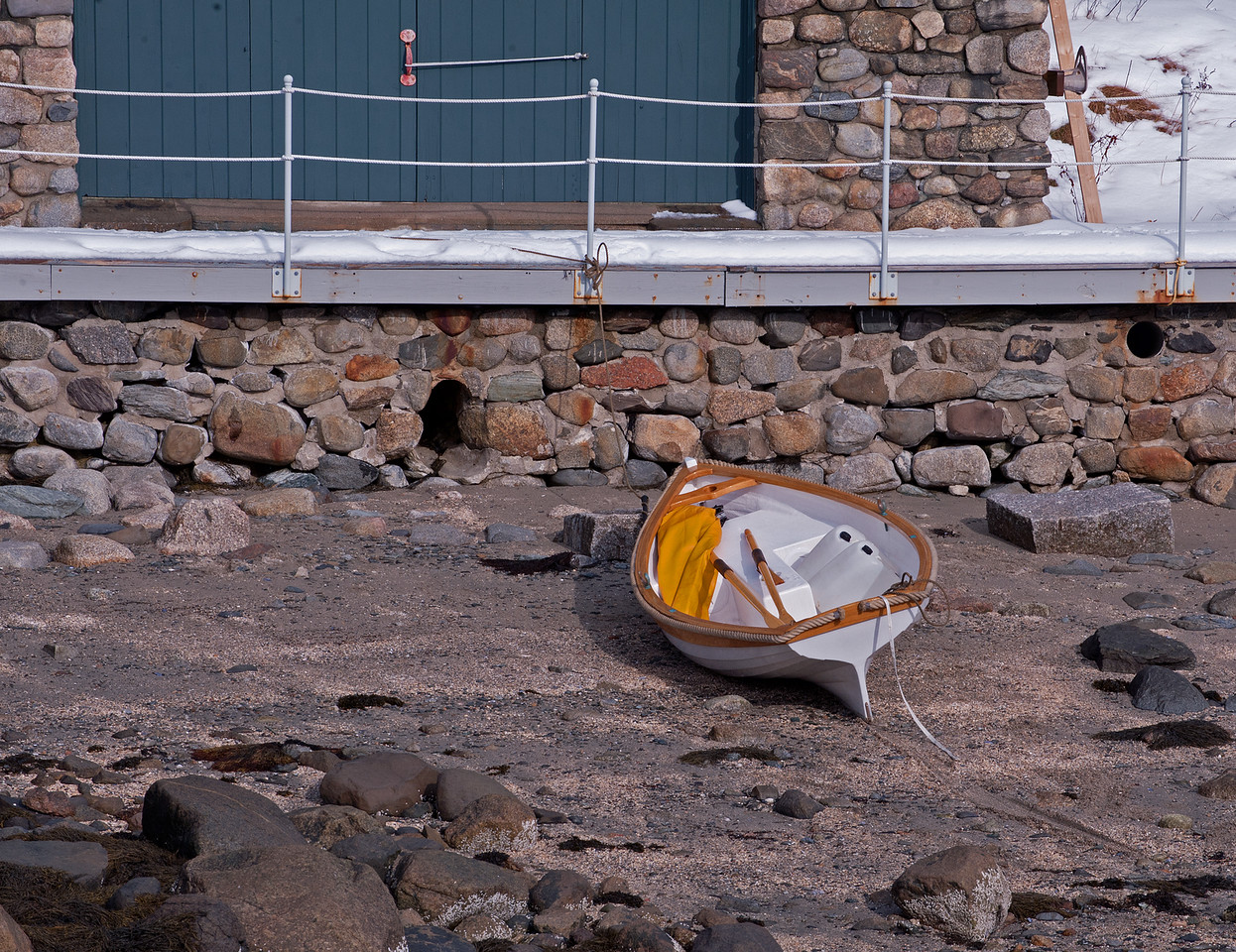
On Sunday, Klara and Bjørnar rowed their graceful dinghy through whitecaps and came ashore just below the WoodenBoat School boat house.  (Seeing a small wooden boat tied up to the snow-covered walkway there in January was a pleasing incongruity.)  The Vikings breakfasted with Jon and his wife, Sherry Streeter, who both arranged a short-notice welcoming pot luck dinner for them. 

Sherry and Jon graciously hosted the dinner last night, where we learned the rest of the story.  Bjørnar is Norwegian, Klara is Swedish.  Their 40-foot cutter is a 1936 former Norwegian harbor pilot boat built for heavy-duty seafaring.  They took the “Viking route” here:  Norway to Iceland, to Greenland, to Labrador and then through the Canadian Maritimes to Down East Maine.    

When they could, Klara and Bjørnar sailed Flekkerøy and didn’t use the motor.  They went through “a big storm” between Iceland and Greenland, but never felt that they were in real trouble.  They have had no problems buying diesel fuel and food along the way, but getting enough potable water sometimes has been a challenge.  Their diesel heater kept the cabin cozy in the coldest times.  Klara’s sister celebrated New Year’s on board the Flekkerøy, where she stayed for a cold week.  

The Vikings have no specific plans for returning to Norway any time soon.  They intend to sail around the New England coast and stop into Boston and Mystic,  if the harbors there aren’t completely iced in.  Other than that, they’ll wait for inspiration to decide where to make their next landing.

For a few more images of Klara, Bjørnar, and  Flekkerøy, , click the following link:

 https://leightons.smugmug.com/Maine/Out/The-Vikings-Return/

Cheers,

Barbara and Dick

1 Comment

Winds, Skidders, and Forwarders

Comment

Winds, Skidders, and Forwarders

In Brooklin, Maine

The first winter storm of the new year hit us with sheering rain and screaming winds on Sunday, January 10th.  It swooped in over the dark Atlantic Ocean from the southwest, hitting Naskeag Peninsula with repeated haymaker gusts that reached 60 miles an hour, according to some reports.

At about 5:30 p.m. that Sunday -- just as the Green Bay Packers were reversing momentum on the Washington Redskins -- TVs and lights suddenly went dark on the Peninsula and elsewhere along the Down East coast.  The power lines had been compromised, probably by large spruces and balsam firs being blown down. 

In about 15 seconds, our all-house (12 kw) generator kicked in, electrically respirating us so that we could – strangely – watch football in FedEx Stadium from the middle of a storm in Maine, with the sound of a groaning generator as background.   (It should be pointed out that many Mainers, by choice or circumstance, don’t have generators and are usually quite comfortable hunkering down in bad weather within the warmth of a wood stove and the light of kerosene lamps, candles, and/or flashlights.)

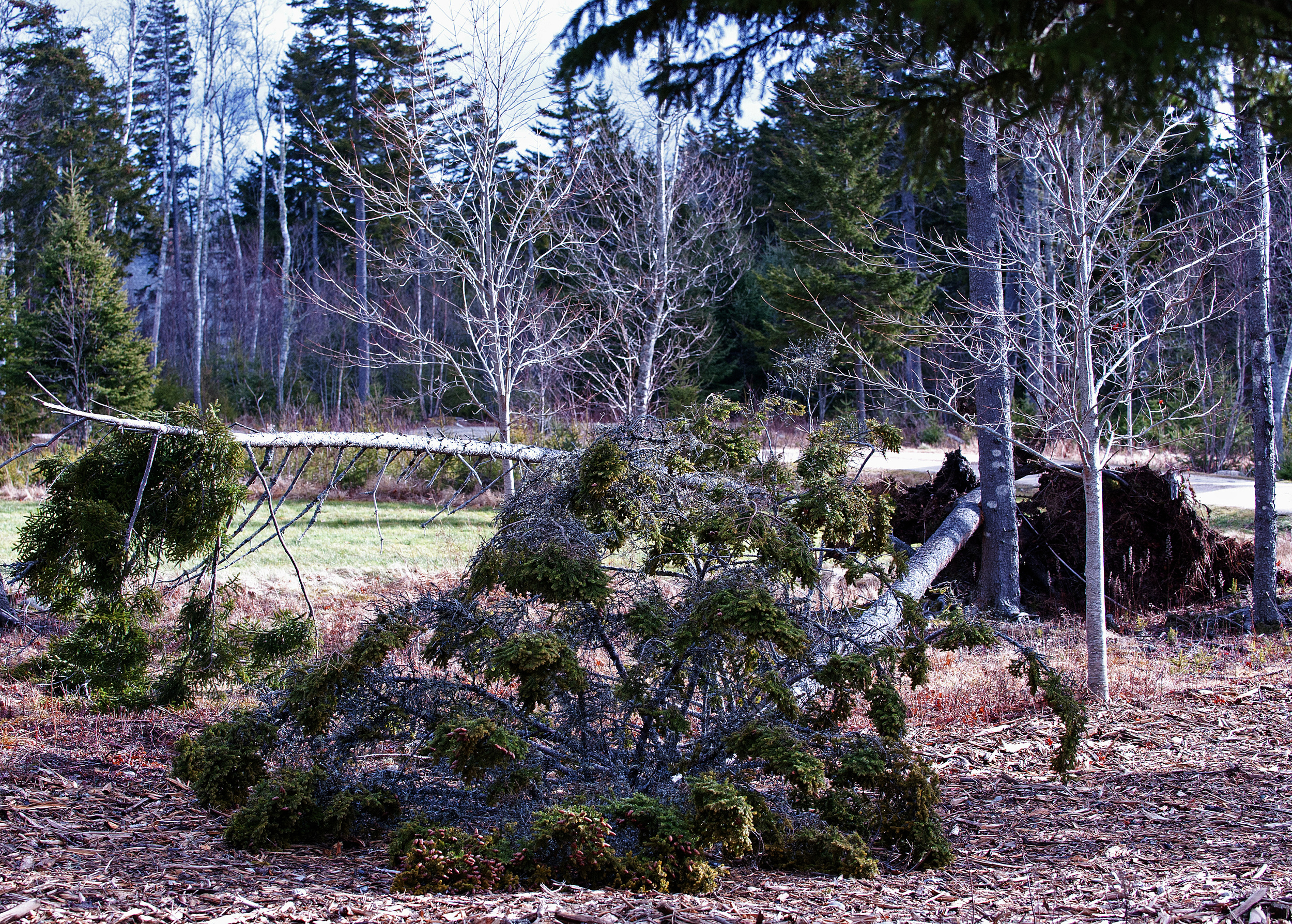
Although the football game was a good one, other sounds and sights made for an edgy Sunday night in our tree-bordered, largely-glass house.  From what little we could see, our big spruces and firs were being bowed in the gusts.  What we heard from them was not encouraging:  every now and then, there was a wrenching of twisted wood, like the sound of a celery stalk being ripped aggressively from its heart; following that, there sometimes was a crashing “whump.”    

When Monday dawned, our generator was still groaning, ripped branches were everywhere, and four 60-to-80-foot conifers were down within 50 feet of the house, one across our driveway.  Many other big trees suffered the same fate on our property and on the rest of the Peninsula.  Our house remained under the intensive care of the generator until the wee hours of Tuesday, but the blow-downs got immediate attention. 

This takes us to the “Skidders and Forwarders” part of this story, which is interesting in its own light.  We’ve had “woodscapers” on hand almost every business day for the past three months and likely will have them here at least through January.  We’re in the middle of a woods program overseen by neighbor forester Si Balch and implemented by Dave Ireland’s Woodland Restoration, Inc., out of Seal Cove, Maine.  They’ve been thinning our trees and bushes and creating a few trails. 

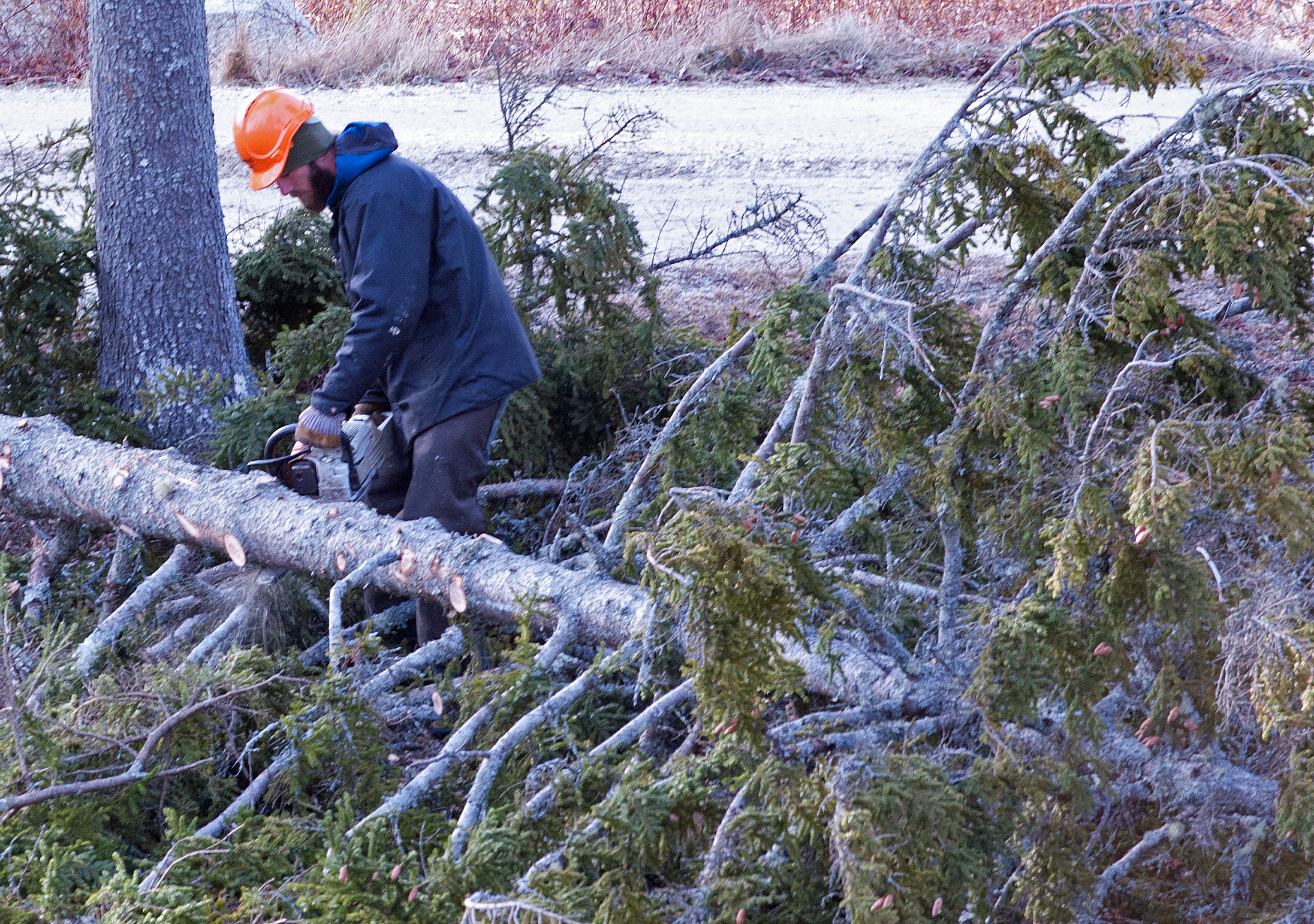
On that Monday morning, one of the woodscapers quickly de-limbed the nearby downed trees with one of his chain saws, cut them into 12-and-a-half foot logs for the mill, and hauled them away to join others in one of the log piles around the property. 

We’ve been doing “low-impact tree harvesting,” which requires either the use of horses or special mechanized equipment.  We chose the latter, which can be fascinating if you’re interested in utilitarian devices. 

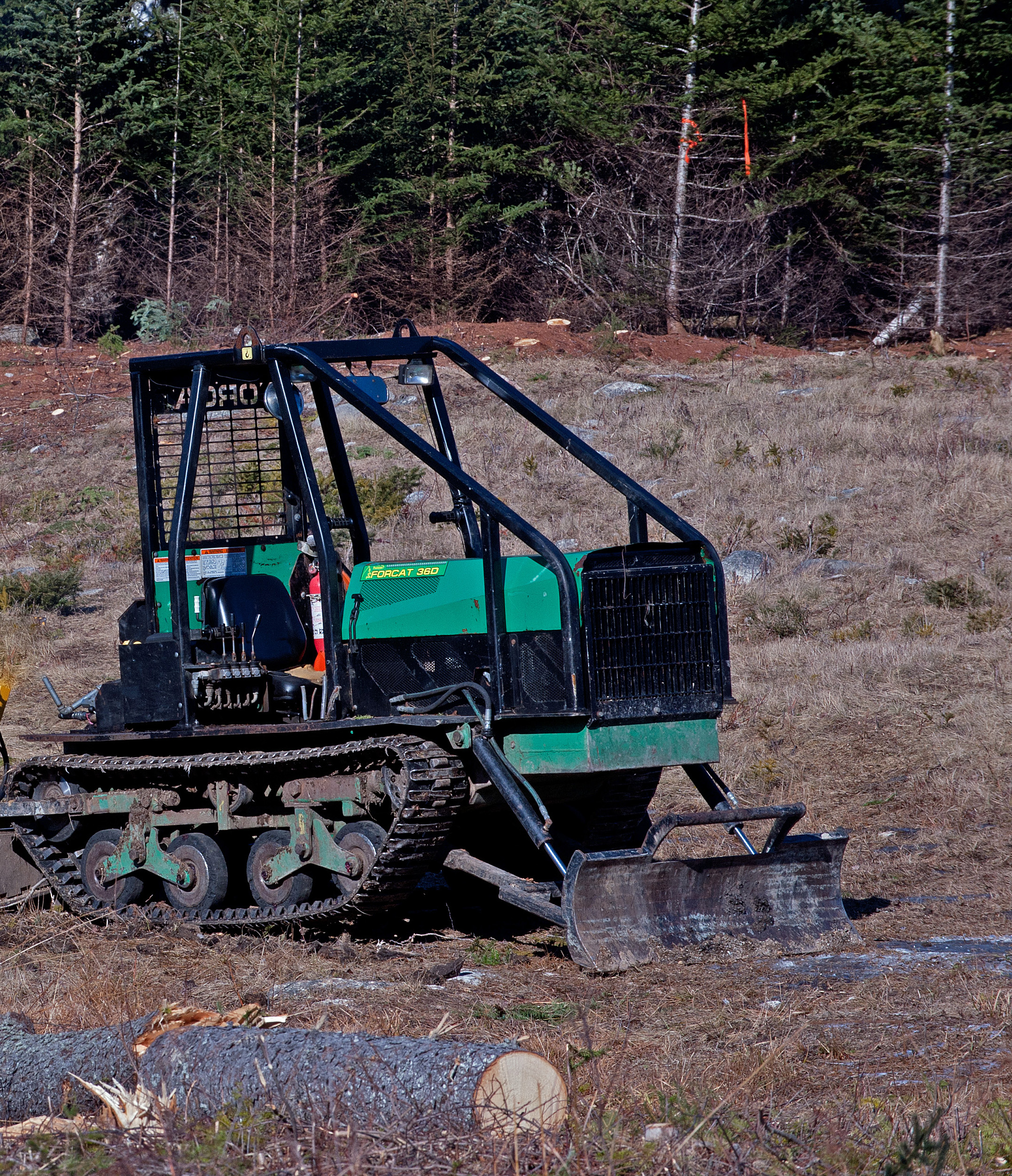
Many landowners on and near the Maine coast no longer use their woods as a cash crop to be clear-cut twice a century by commercial loggers.  Those clear-cutters use heavy tractors (“skidders”) to drag groups of cabled logs through the woods, turning the forest floor into something that looks like a bombing target until the wild raspberries eventually come to begin the healing process. 

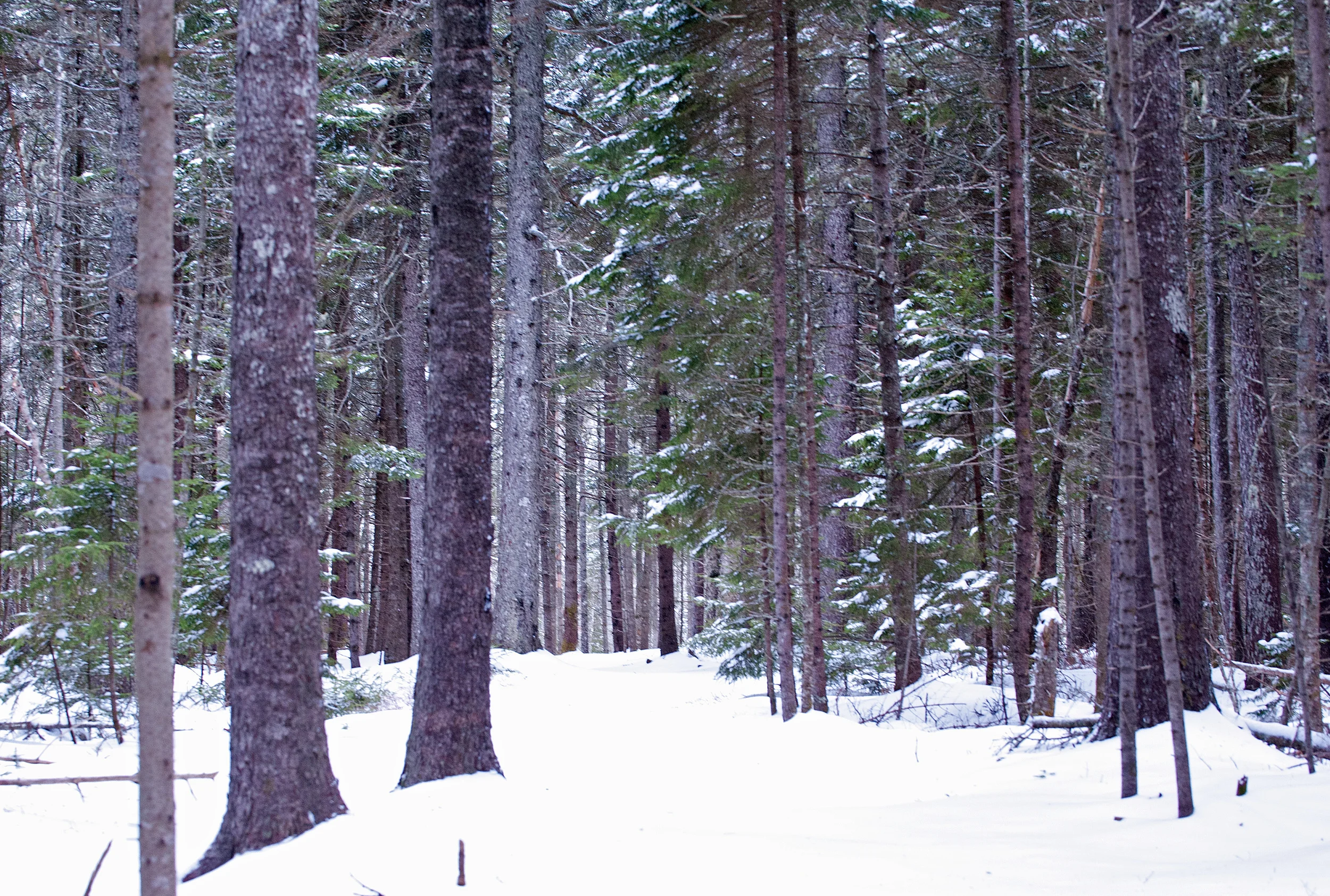
Low-impact harvesting is good for landowners who want to have their cake and eat it too; that is, for those who want to keep a functional forest that will attract wildlife and provide human pleasure, yet also want to remove trees to sell, foster better growth, or merely for aesthetic reasons.  Woodscapers now can use special equipment that can remove individual specimens with minimal harm to other trees and forest floors.   (Of course, many landowners here -- including conservation trusts -- may prefer to just leave their woods alone, allowing trees to live, drop, and rot as Mother Nature deems fit.)

Skidder

Skidder

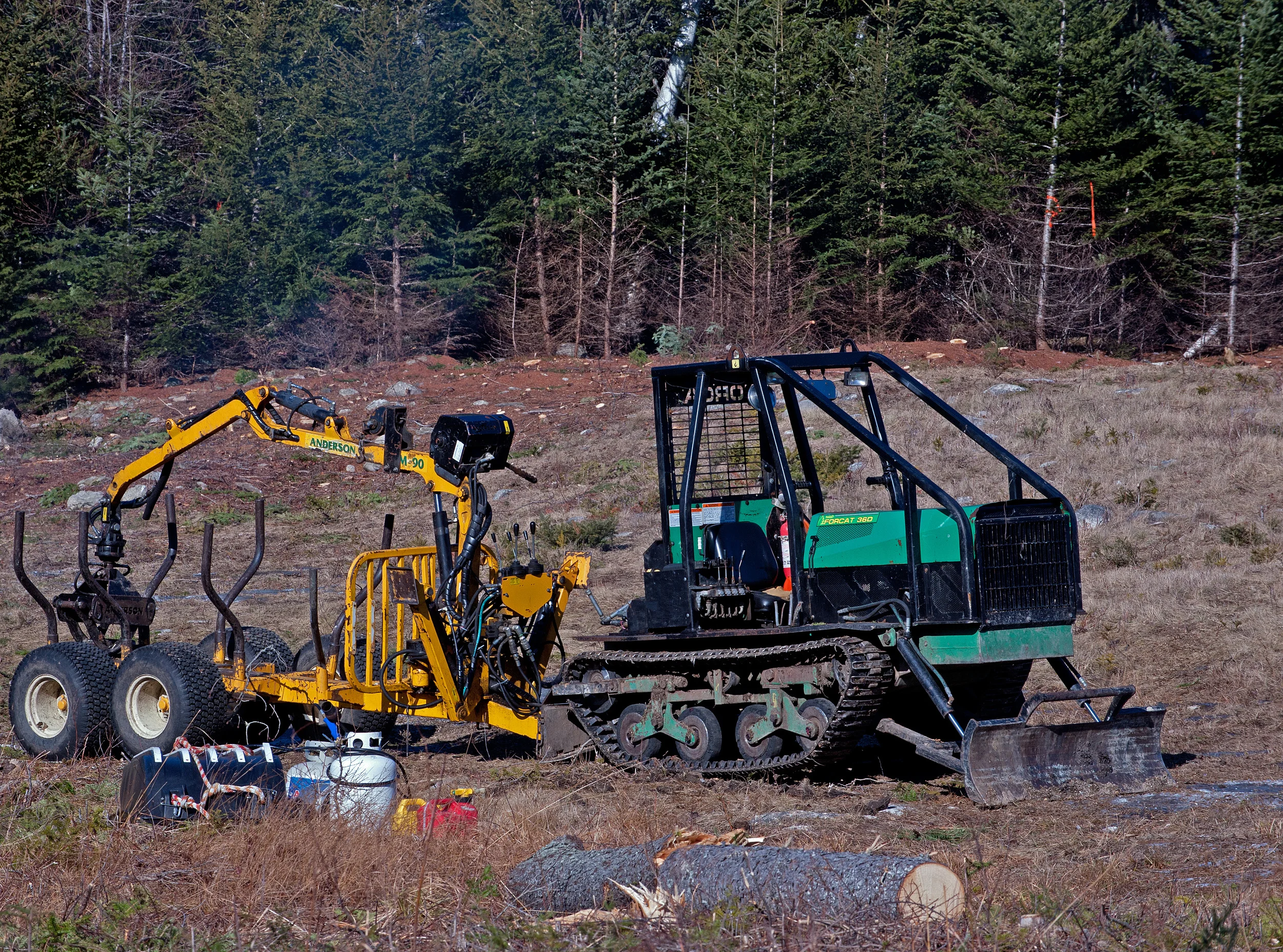
Now to the interesting part:  the three low-impact vehicles that are working our woods, which are remarkable things.   (Coincidentally, all were made by companies headquartered in Quebec, Canada.)  The hardest working vehicle here is a small (2,770-pound) Forcat 2000 skidder made by Berfor, a division of RadTechnologies.  It travels and spins on 10-inch-wide tracks and has only a 2.3-pound-per-square-inch ground impact, which arguably is better than a 1,600-pound draft horse with all its impact concentrated through four legs.  The Forcat can be used as a cable-winching logger that drags trunks through the woods, but we’re not doing that here.

Forwarder

Forwarder

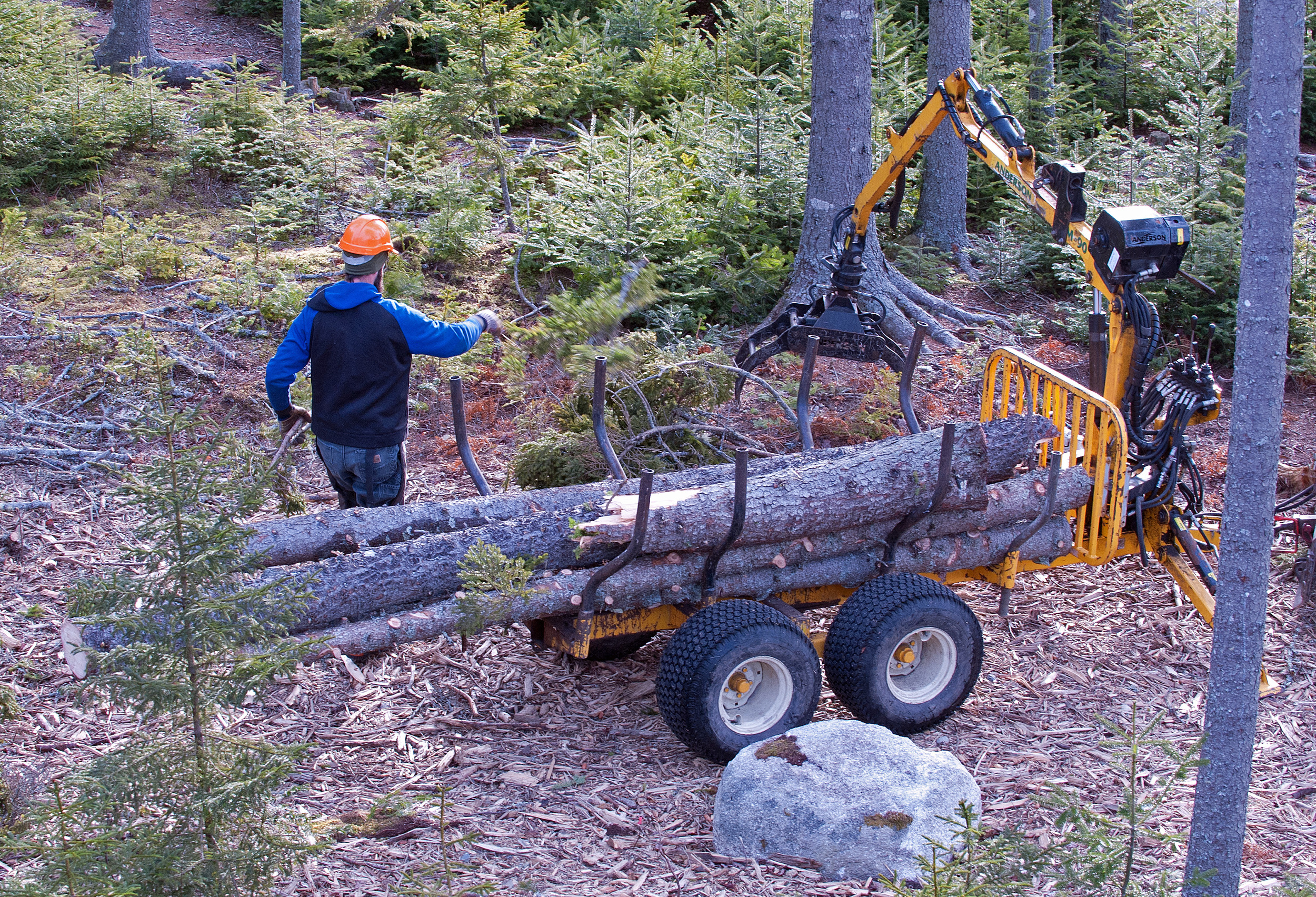
The skidder here usually pulls one of two wheeled “forwarders” (also known as log loaders), which are made by The Anderson Group.  These forwarders contain hydraulic grapples that can swing 360 degrees to pick up logs and brush and drop them into their iron-cradled beds.  The extraordinarily maneuverable smaller forwarder has a load capacity of 10,000 pounds; the larger one has a 32,000-pound capacity.

The skidder and smaller forwarder were enough to handle the blow-downs near our house, although several trips were made that Monday morning.  They continue to do their mighty work each day as we wonder when the second winter storm will arrive.

If you want to see a few more images on these subjects, click on the following link:

https://leightons.smugmug.com/Maine/5-Back-Road/Winter-Storms-January-1011-201/i-gSkDfCZ

Cheers,

Barbara and Dic

Comment

Postcards from Maine:  December Remembered

4 Comments

Postcards from Maine: December Remembered

In Hancock County, Maine

We didn’t have a snow storm here until December 29 – almost the New Year.  Prior to that, we had a Carolina December, including a sunny Christmas Day in the 60s.  A balmy December has its conveniences, but it just didn’t seem right. 

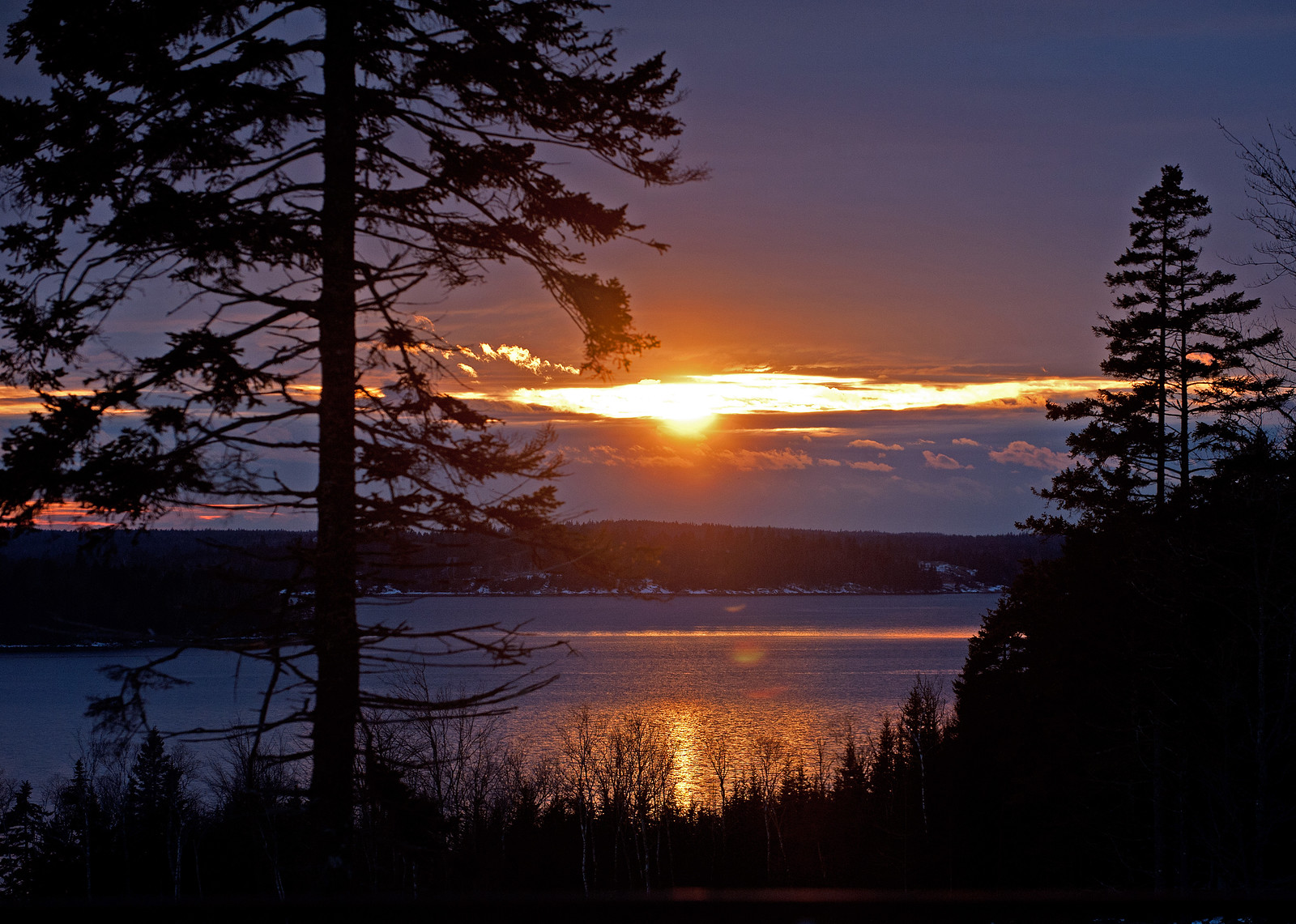
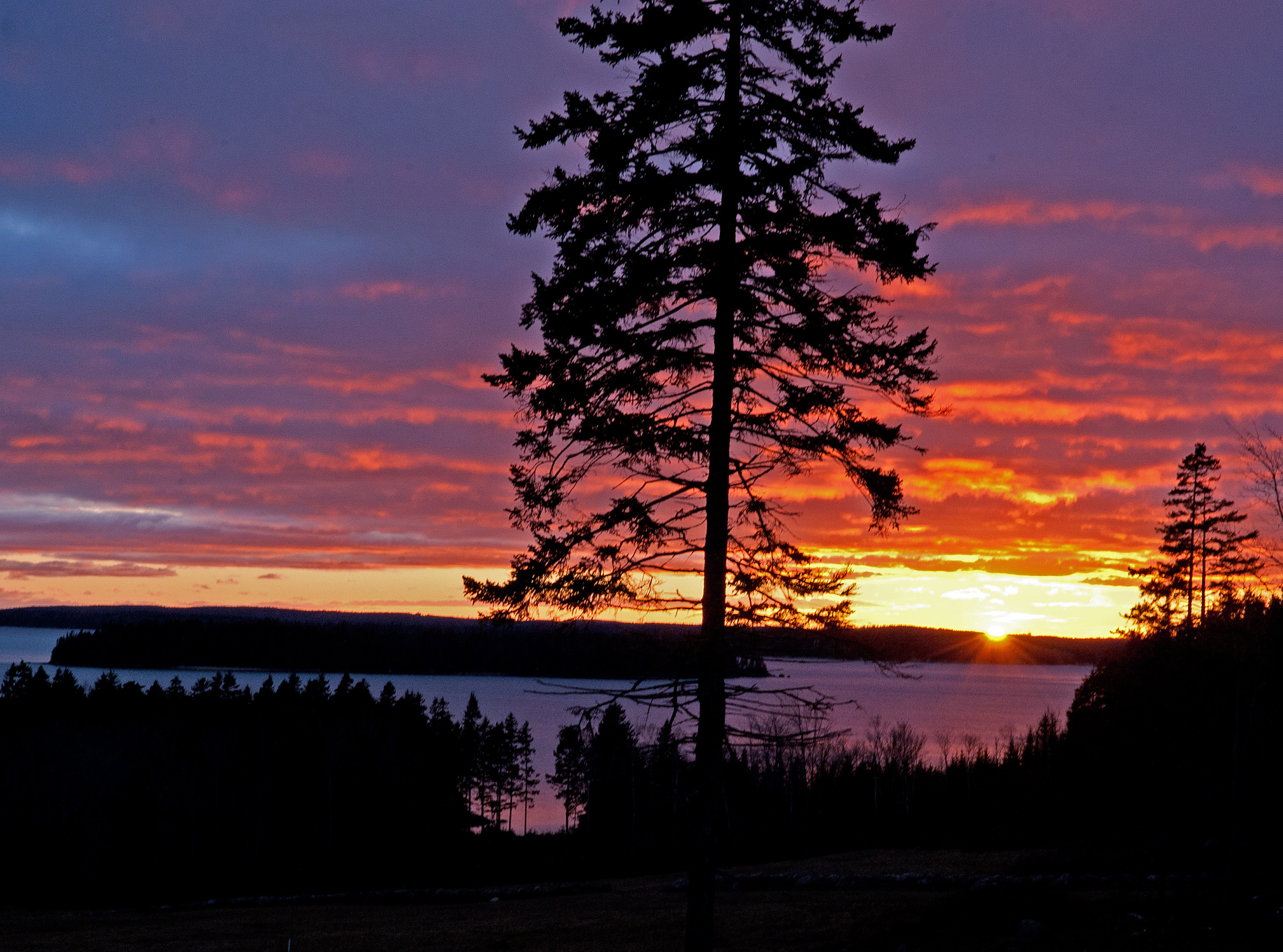
Nonetheless, December was well worth remembering.  We had the usual spectacular winter sunsets over Eggemoggin Reach. 

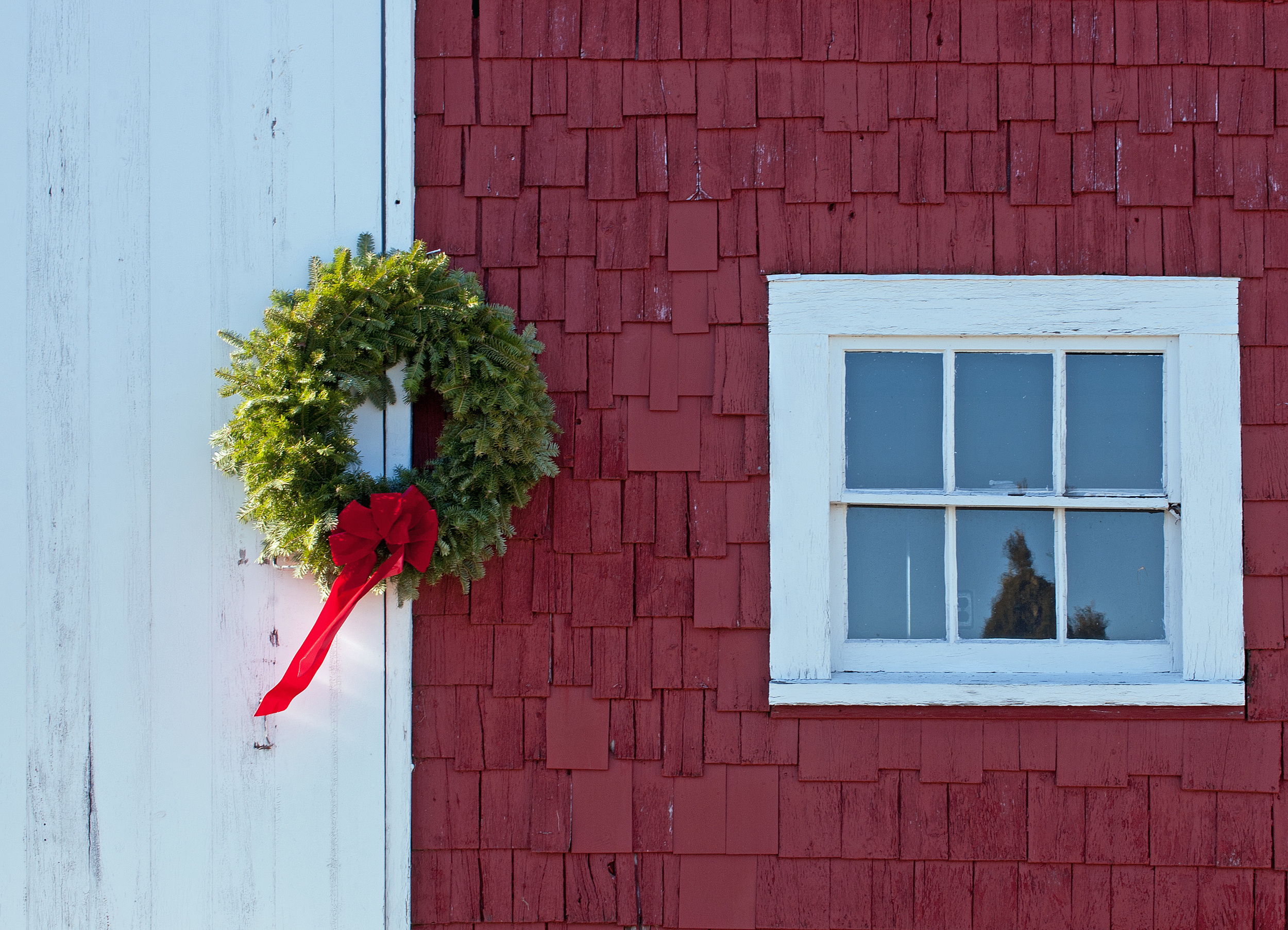
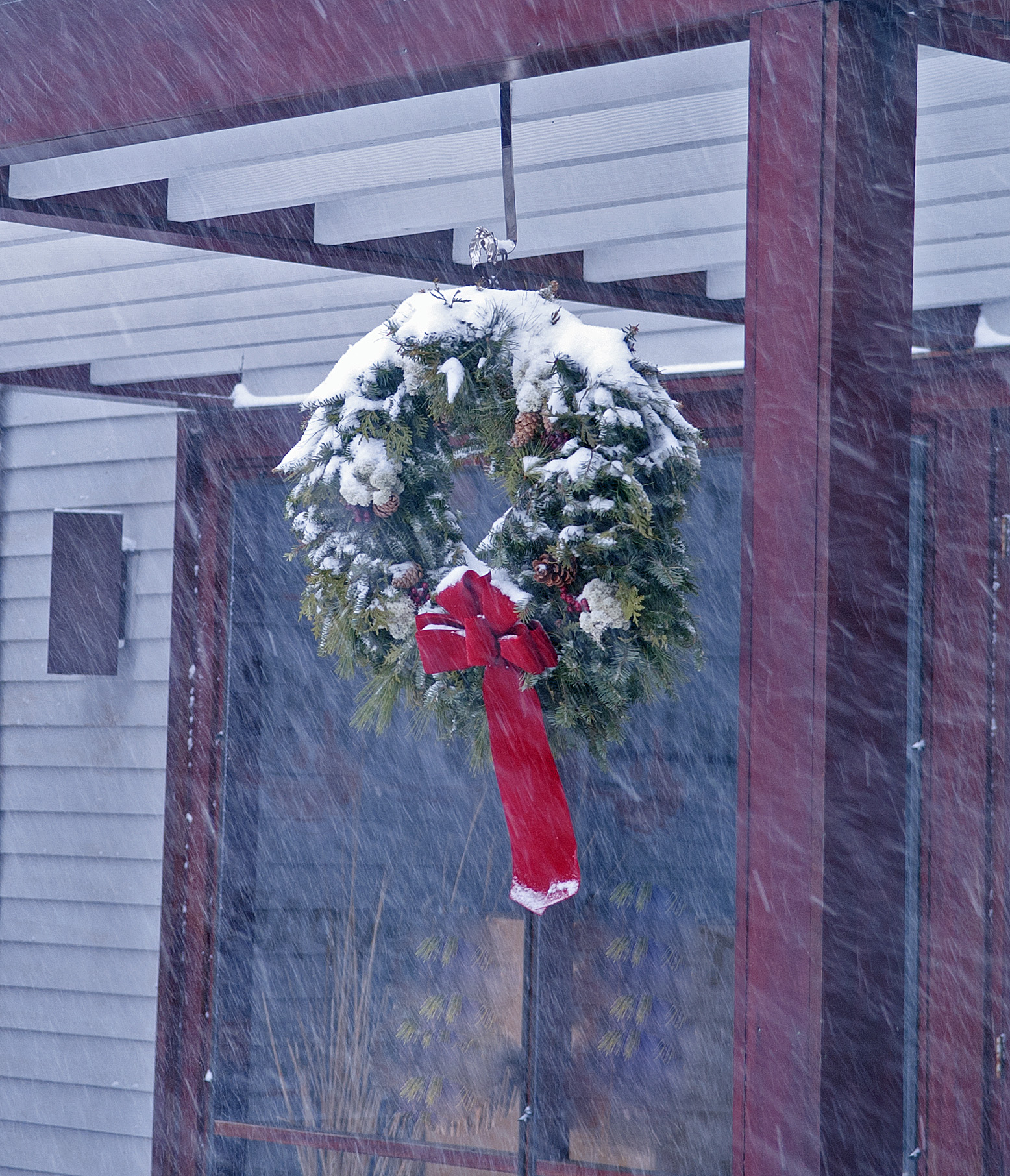
Christmas wreaths were hung on houses and barns when we expected to see them, helping to create a holiday spirit and contribute to Maine’s economy.  (Maine is the leading state in producing balsam fir wreaths.)

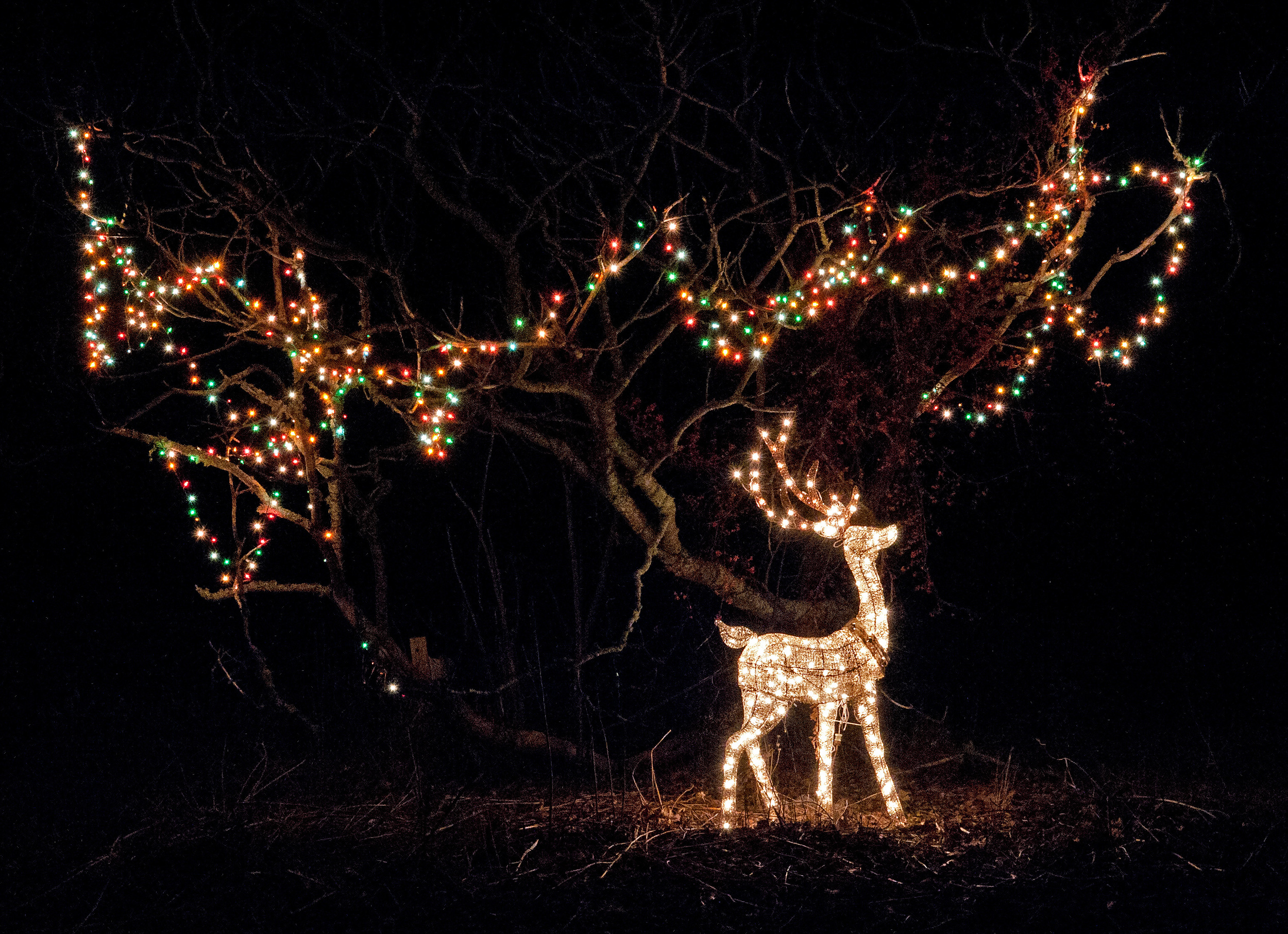
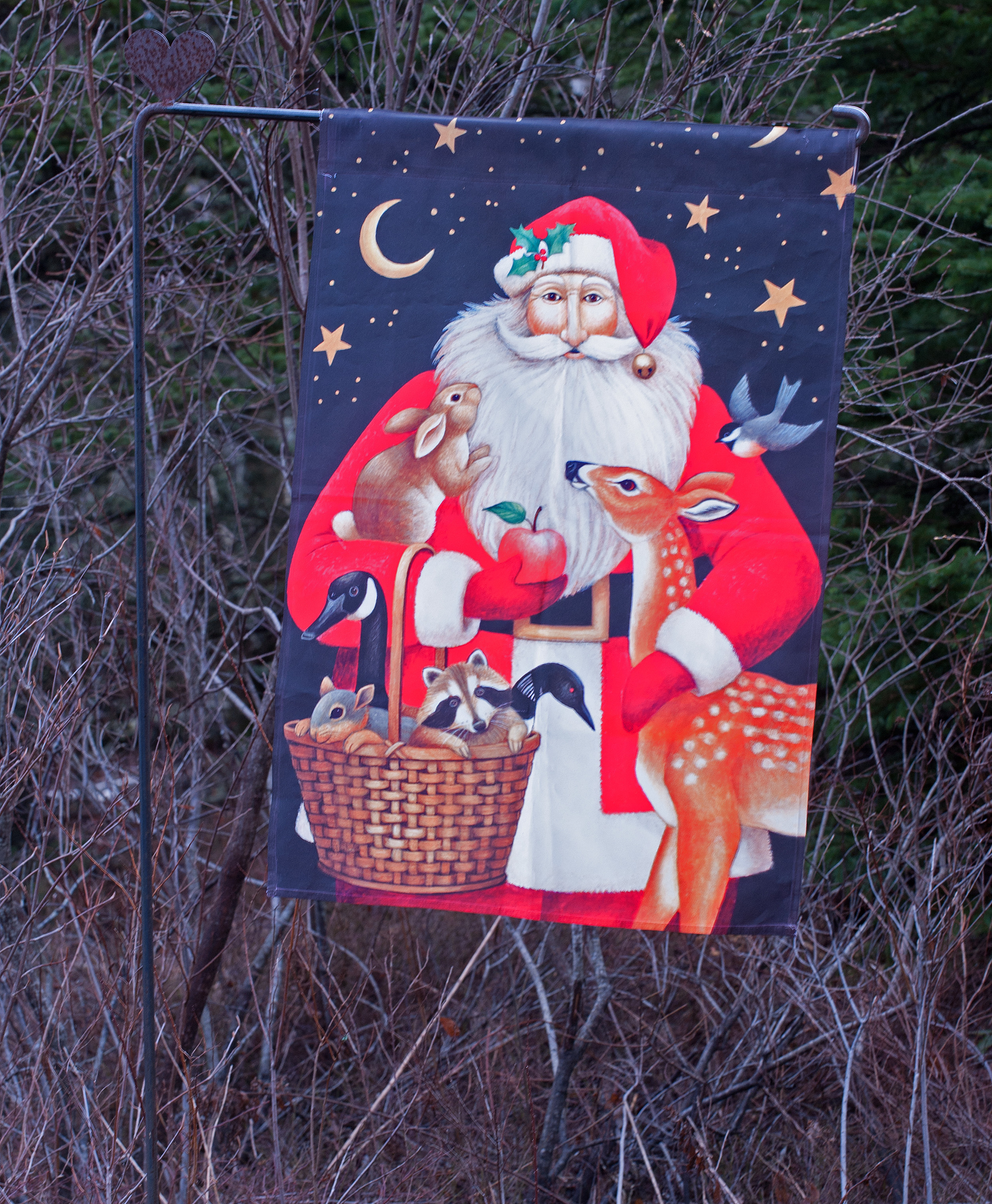
Holiday lights and seasonal oddities also appeared in timely fashion on lawns, homes, and even in the fields.  Some were elegant, including the ever-changing banners displayed by our neighbor Judith Fuller at the end of her wooded driveway for the benefit of travelers on Naskeag Point Road.

Speaking of travelers, the Common Eiders returned on schedule in December.  These are North America’s largest ducks and thousands of them left the open Atlantic and came into local bays to avoid an open water winter.  It’s not unusual to see paddlings of hundreds of Eiders floating, feeding, or flying near a pond or stream outflow where ice won’t form.  (We also had a surprise visit to Great Cove from a hardy couple on a sailboat trip from Norway; this was the subject of our prior posting below.)

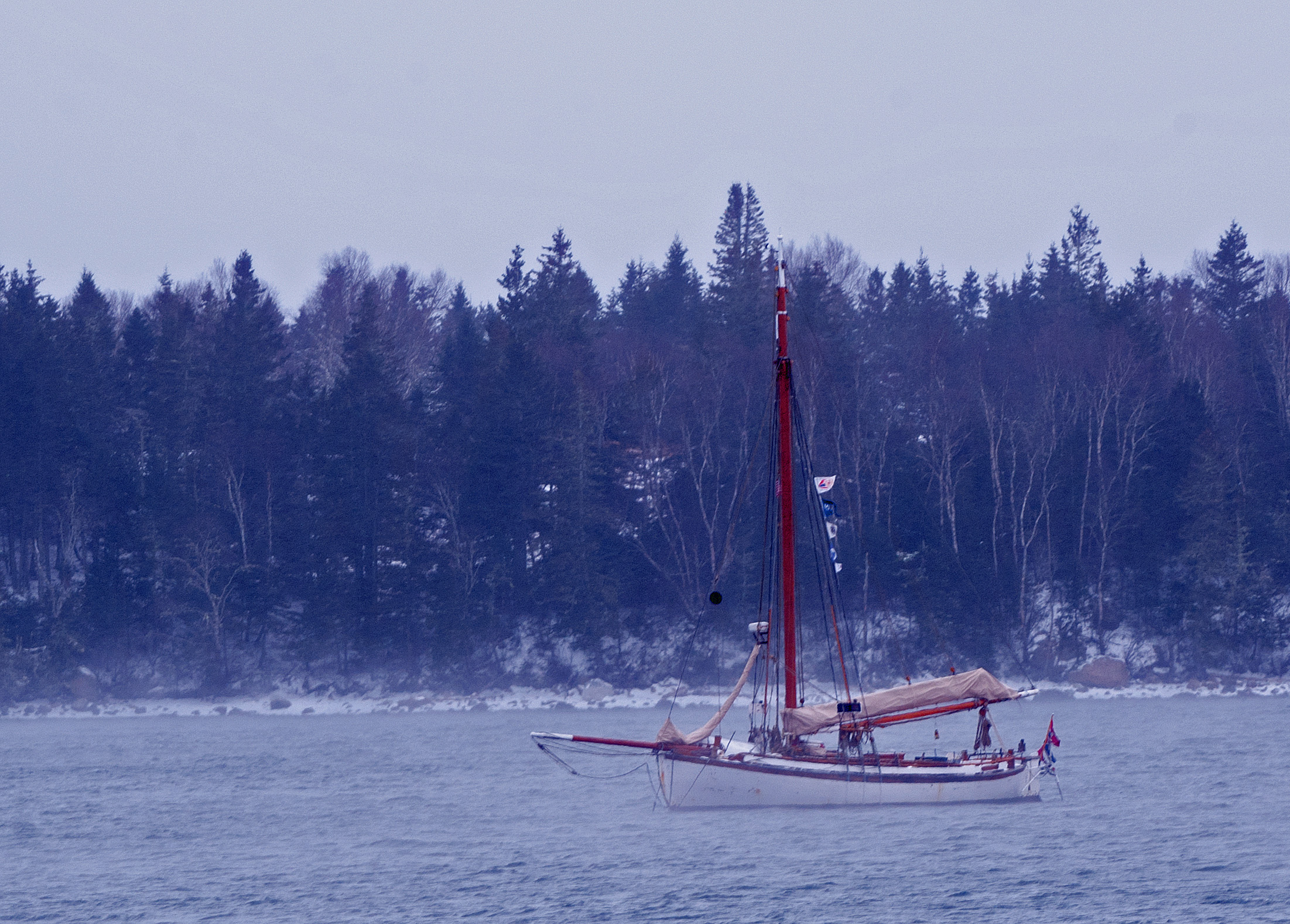
Most boats here have been hauled out of the cold waters.  December was the month that many lobster boats finished their season and became landmarks -- looming large on frames in driveways and back yards, their colored lobster traps neatly stacked nearby. 

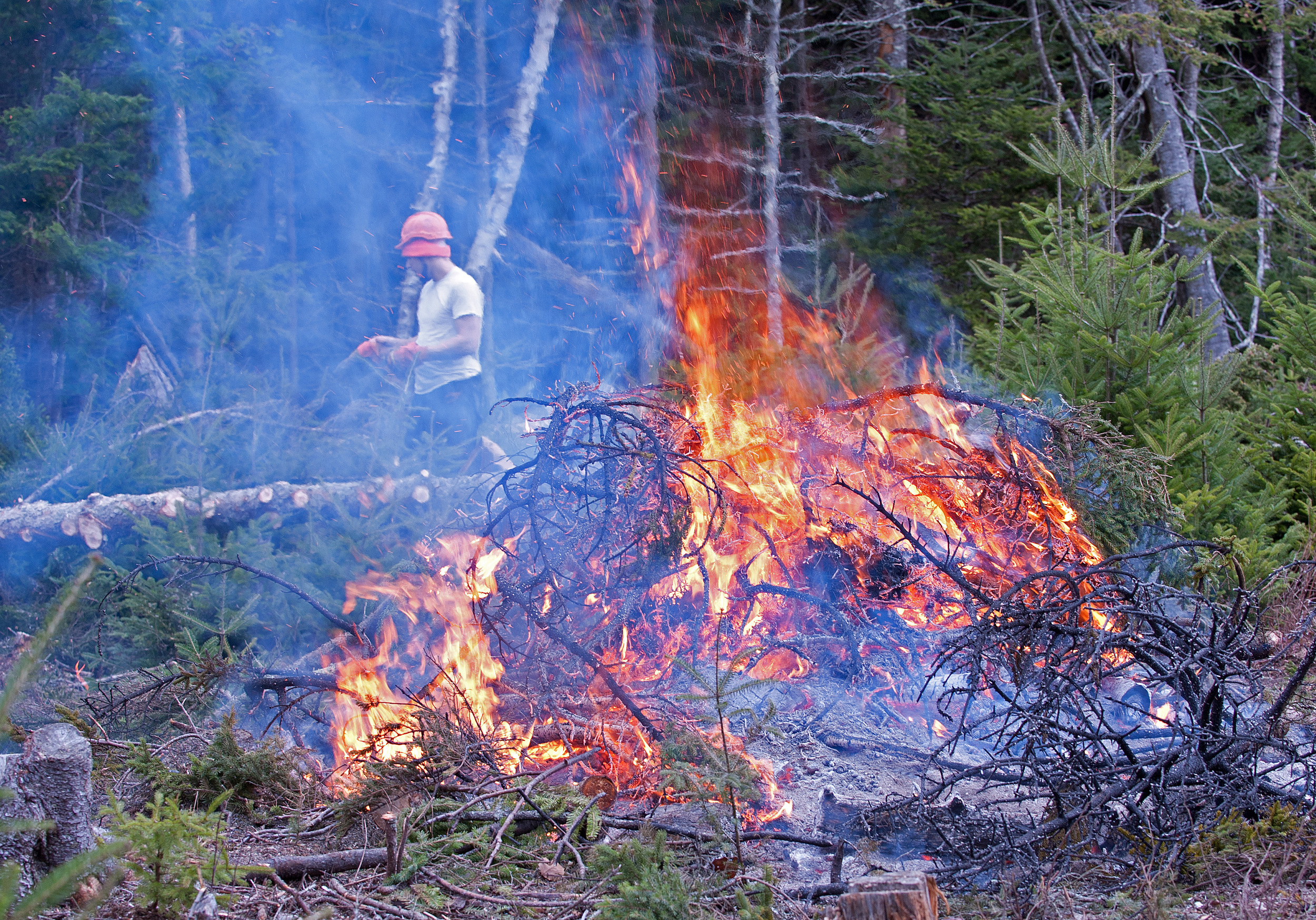
December also is the traditional time here for work in the woods when the ground is supposed to be frozen and the bugs are dead.  Well, the scheduled tree and brush cutting and burning was begun on time, but the ground was not nearly frozen for most of the month.  Woodsmen needed tracked vehicles to avoid doing too much damage to wet land.

On the other hand, December’s unseasonal warmth and wetness added a beauty to the winter woods.  Streams leapt and chortled, reflective vernal pools formed, and mosses and lichens produced pockets of brilliant green luminescence that was buried in the snow when it finally came.

The snow that finally blanketed the fields and woods has returned us to some seasonal sense, perhaps presaging a “normal” New Year, whatever that is these days.

Dec 10.jpg

We have more images of December that we’ve chosen to refresh our recollections later.  If you want to see them, click the link below.  We recommend that your initial screening be a full-frame slideshow.  (To make that happen, click on the SLIDESHOW button above the featured [largest] image on the gallery page to which the link will take you.)  Here's the link:

https://leightons.smugmug.com/Maine/Out/Remembering-December/

Here's wishing everyone a Happy New Year,

Barbara and Dick

4 Comments

The Curious Incident of the Cutter in the Night

6 Comments

The Curious Incident of the Cutter in the Night

At Great Cove, Brooklin, Maine

Sherlock Holmes was not the only one to experience and solve a mystery involving a curious incident in the nighttime.

On the cold and rainy night of December 27, we looked out our window and saw two lights moving slowly in the middle of Great Cove, where the wind was about 15 knots, judging by the pervasive whitecaps.  One of those lights was white and well above the other, which was green.  We later learned from our neighborhood Cove group emailings that some of our neighbors on the Cove also were watching at this time.  We all got out our binoculars and spotting scopes to try to pierce the gloom.

We discovered to our surprise that a two-person crew in oil slicks was anchoring a cutter of about 40 feet in length (give or take five feet).  The sea was very choppy, the rain was shearing in, and the temperature was descending from 20 degrees.  We had seen her mast top and starboard navigation running lights.  Something very unusual was happening. 

Soon, the boat’s lights went out and all was blackness as only blackness can be on a rainy winter night in Great Cove.  Were they bunking down?  Were they in trouble?  Was there to be a clandestine meeting with another vessel?  Who were they?  It seemed unlikely that anyone from around here would be sailing on a freezing December night.


The next morning dawned partly sunny, but cold.  The cutter was still there and several of us went to the shore independently to photograph her.  The boat had a strange pennant, similar to the Norwegian flag, but was too far out to decipher its foreign-looking name.  Neighbor Dollie Gansz identified the pennant as one from a Norwegian Yacht Club. 

The boat’s dinghy was on deck, but no one was topside.  Concern was expressed about the condition of the crew and inquiries were made as to how to get a boat out there to check on them.  (Most of the boats around here are hardscaped in storage or driveways.)

Neighbor Jon Wilson emailed the Sail Cutter Club Colin Archer, headquartered in Norway, asking about the boat and attaching a photograph.  He got a quick response, indicating that the cutter was the Flekkerøy, a member of the club and a traditional Norwegian pilot boat.  The club vice president knew and identified the man and woman who were on board.  The Flekkerøy  left Norway this summer, visited Iceland, went through a sea storm on the way to Greenland, and then proceeded to Labrador, before coming down here.

With this information, Jon was able to radio the Flekkerøy while she sat in the Cove with the weather getting nasty again.  The friendly two-person crew spoke English and said that things were “very comfortable below.”   Once the weather cleared, they intended to head for nearby Rockland, Maine, to celebrate New Year’s Eve with the woman’s sister.  After that, they had no solid plans and were not especially intending to head south for warmer climes.

They had hoped to leave for Rockland today, but we got our first snowstorm last night and this morning, followed by sleeting rain.  While ice began to form on the Cove, these courageous cold world wanderers decided to stay comfy below for a while longer.   Maybe they’ll get out tomorrow.

Jon invited the two sailors to return to Great Cove, where we all hope to meet them in the New Year and celebrate their adventures.  They didn’t say no.

Cheers,

Barbara and Dick

6 Comments

The Sounds of Winter

Comment

The Sounds of Winter

In Blue Hill, Maine

The beauty of December on the Blue Hill Peninsula is a secret that is well kept by those who would rather not spend this special time with hordes of strangers.  The beauty is not only in the sights of a rocky coastline and timbered hills in the often golden winter light.  It’s also in the sounds that can be heard here. 

It’s the Christmas and winter solstice season – the historic time in Western cultures for music that ranges from the silly to the sublime. And, this area has a strong heritage of musical excellence, with no shortage of accomplished singers and other musicians.  This evening, some of those musicians will treat us to the sublime.

The Bagaduce Chorale

The Bagaduce Chorale

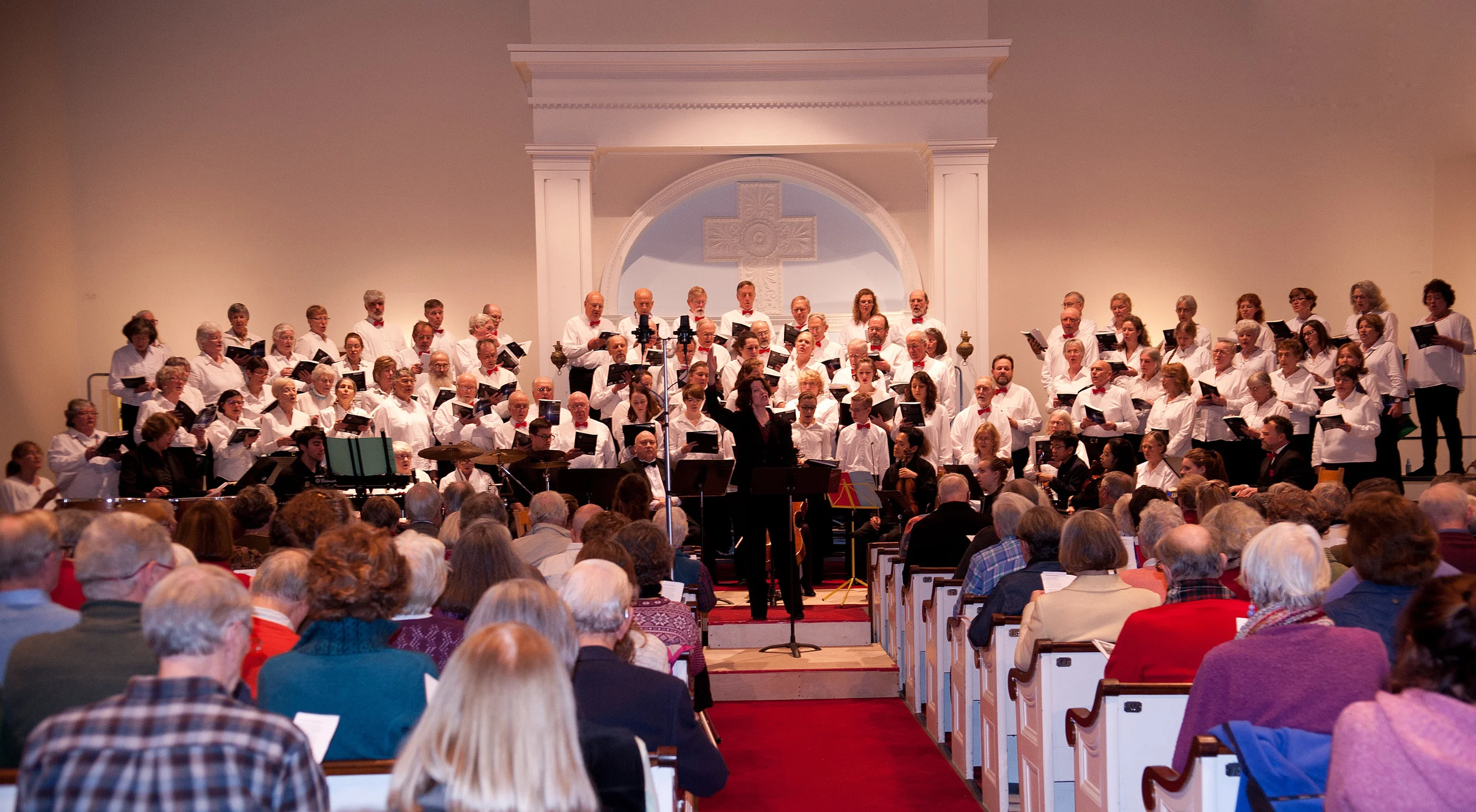
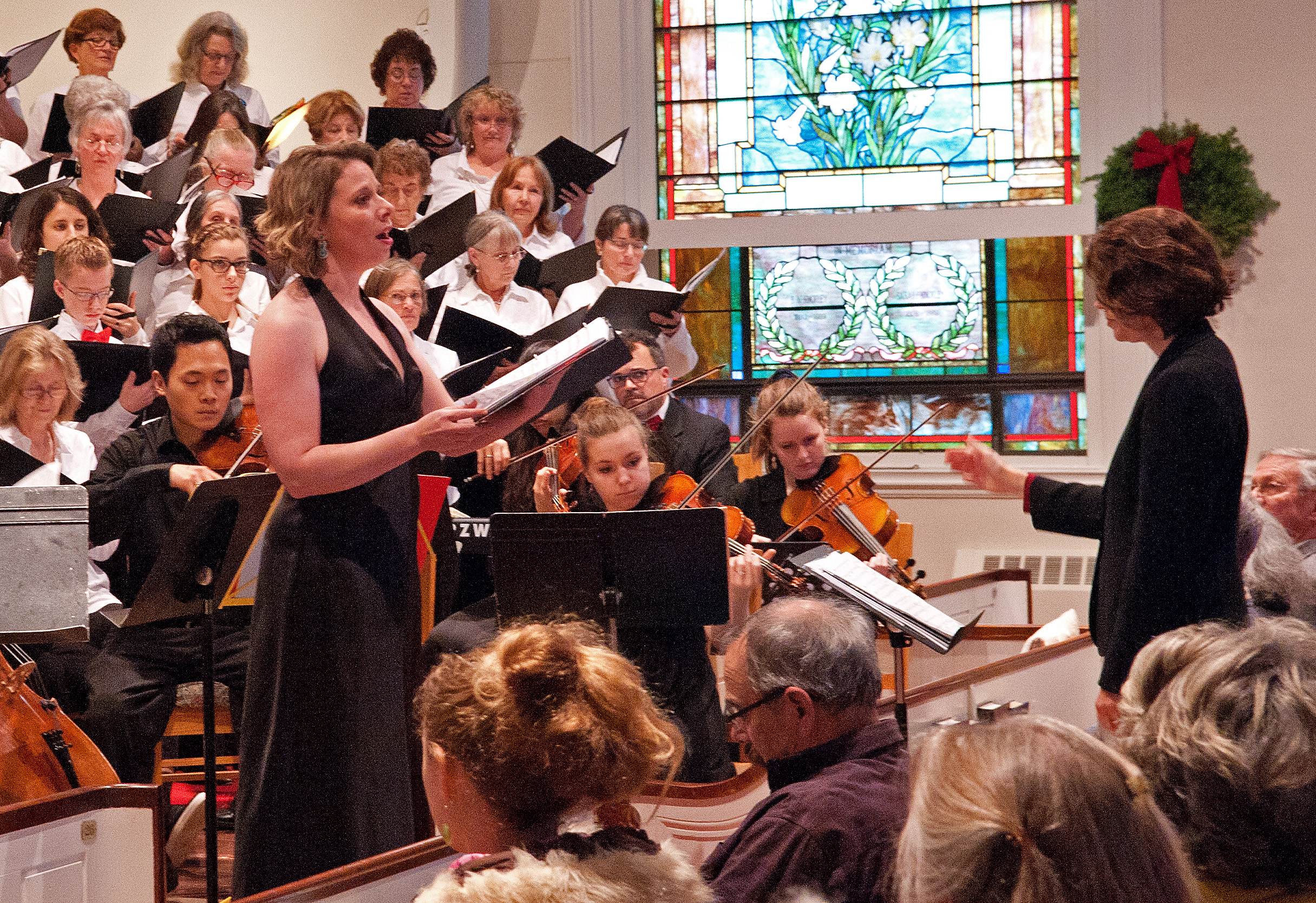
We’re packed into the First Congregational Church on Tenney Hill to hear one of the three performances of the winter program of The Bagaduce Chorale, which is named after a nearby river.  The regionally renowned Chorale has almost 100 audition-tested singers who perform only two programs a year, one in winter and other in spring.  Much of the rest of the time, the Chorale rehearses. 

Bronwyn Kortge

Bronwyn Kortge

The Chorale Director is Bronwyn Kortge, one of the most animated and engaging conductors you’ll ever see. The Chorale's piano accompanist is the accomplished Douglas Beck.  Other accompanists are added as a program requires.

The two-and-one-half-hour program mostly contains contemporary choral works.  It begins with six movingly beautiful pieces that glorify love and peace in the broadest sense: Festival Gloria by Craig Courtney (2014); Winter’s Peace by John Purify (2012); Sanctus by Randall Johnson (2011); Serenity by Ola Gjeilo (2012); Christus Natus Est by Cecilia McDowall (2002-2003), and This Christmastide by Donald Fraser with lyrics by Jane McCulloch (1988).

Men Only Sing

Men Only Sing

After an intermission, there is an audience sing-along, which Ms. Kortge begins with a performance reminiscent of the old Victor Borge comedy/music routines. 

Facing the audience, Ms. Kortge takes on the persona of a football referee.  When she wants the audience, alone, to sing part of a piece, she crouches and juts out both her arms straight toward the attendees; when she wants the Chorale to sing alone, it’s one arm shot backward behind her, pointing to the Chorale while still facing the audience; for women only, it’s a dainty primping of the hair; for men only, it’s an Arnold Schwarzenegger biceps flex with both arms swiftly curled up to make muscles.  Thus, while we laugh, Ms. Kortge energetically directs everyone in the room in a uniquely rollicking version of Twelve Days of Christmas.  Then, everyone together sings moving versions of Silent Night and Hark the Herald Angels Sing.

Next is the principal work of the program:  Stella Natalis (Birth Star) by Karl Jenkins with some lyrics by his wife, Carol Barratt (2009).  This 12-movement piece celebrates winter, the sleeping child, peace, and thanksgiving in varying rhythms and texts. In addition to Ms. Barratt's lyrics, the texts contain poetry, parts of the Old Testament, references to Hindu gods, and even Zulu words. 

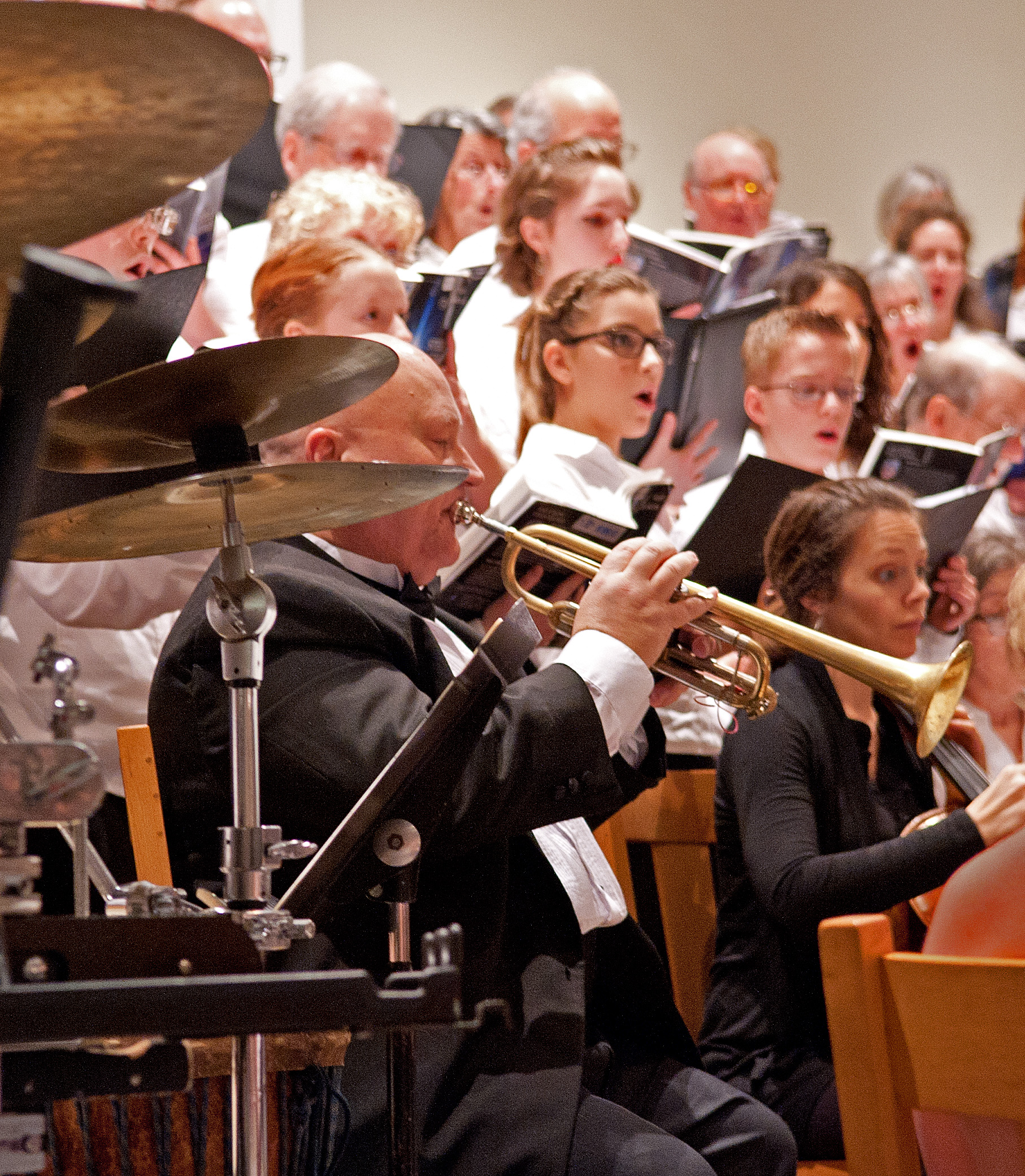
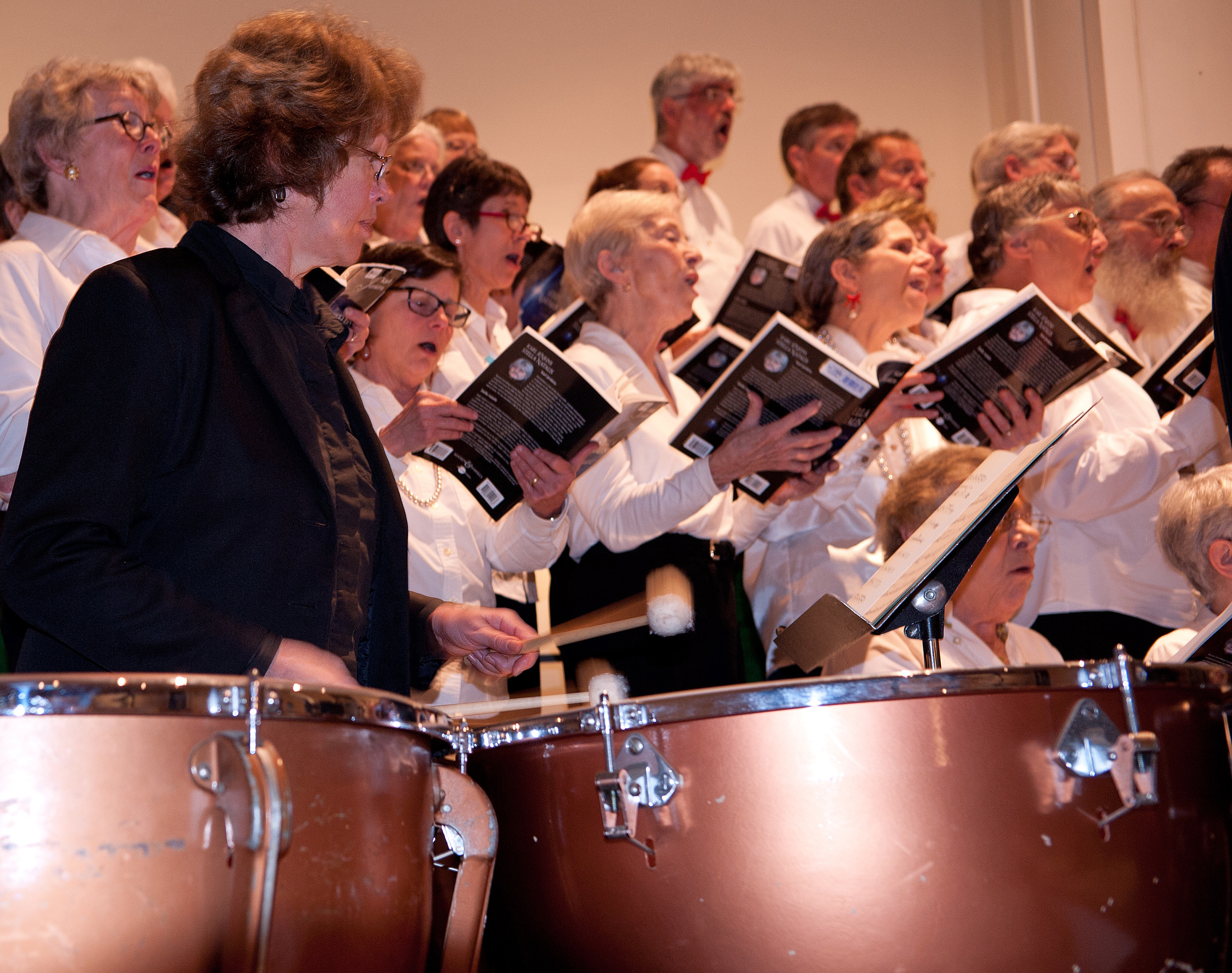
Stella is held together by intricate and wide-ranging soprano passages, sung beautifully by Anne Leonardi-Merchant, an accomplished Maine soloist.  It’s also peppered with very difficult trumpet and cornet trills and fanfares, played with great authority by William Whitener, co-principal trumpeter of the Bangor Symphony.  Some movements are filled with war-like percussion, led resoundingly by Lynette Woods on tympani.  Throughout, the voices of the Chorale surge in and out, sometimes a soothing incoming tide, sometimes a crashing surf of words and sentiments.

After Stella Natalis’s final “Amen,” the Chorale gets a rousing, standing ovation.  Prior members of the group are then invited to join the Chorale in singing Peter Lutkin's benediction, The Lord Bless and Keep You (1900), as a parting hymn before we go out into a starry night.

You can see more images of The Bagaduce Chorale’s excellent winter performance by clicking the link below:

https://leightons.smugmug.com/Maine/Out/Bagaduce-Chorale-Christmas/

Cheers,

Barbara and Dick


Comment

Postcards From Maine:  November Remembered

Comment

Postcards From Maine: November Remembered

In Hancock County, Maine (Except as Noted)

November began and ended with anachronisms.  November 1st reached an unseasonable 60 degrees (F) in plentiful sun.  This apparently confused a number of insects and animals into thinking spring had sprung. 

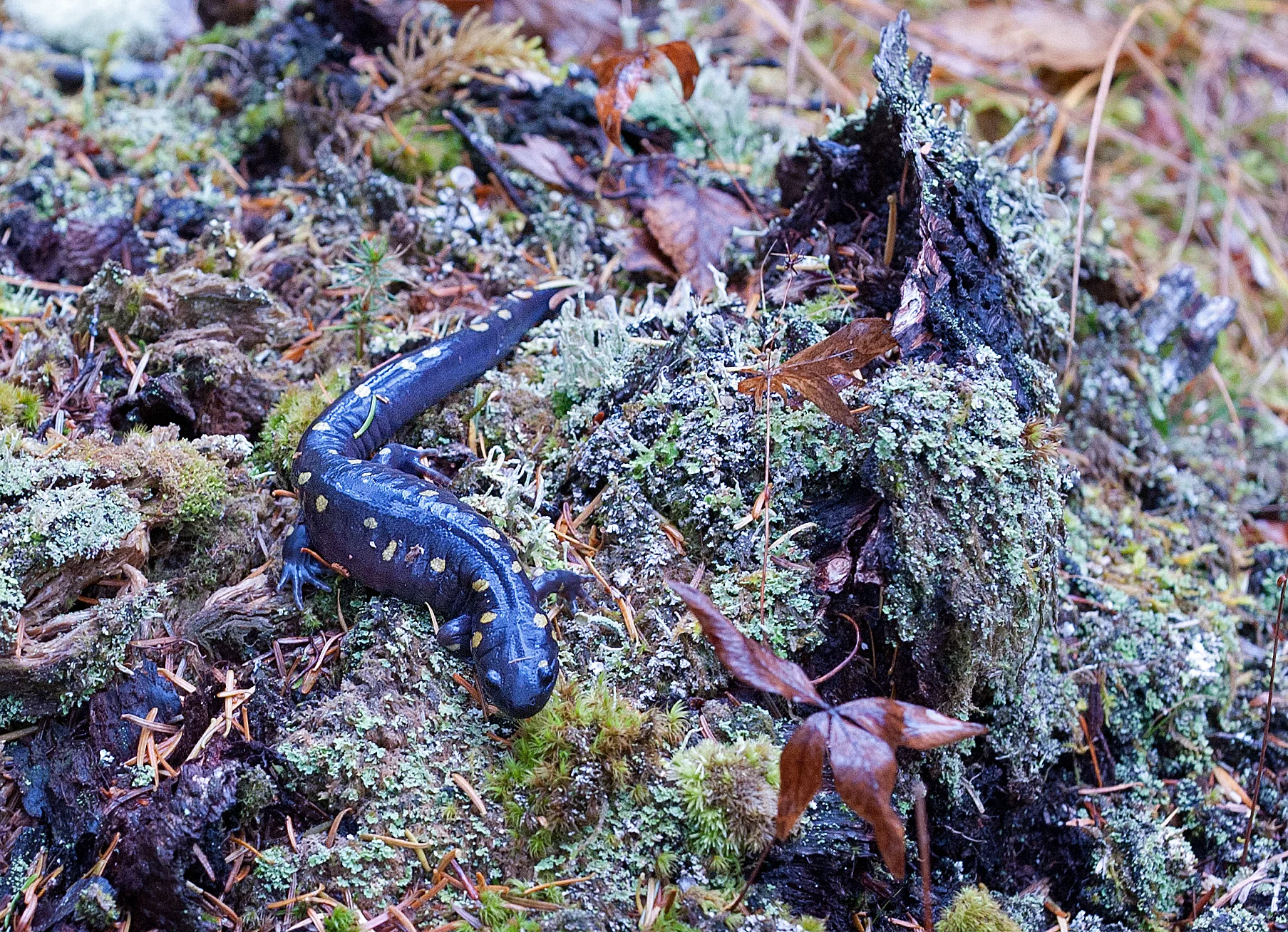
Spotted Salamander

Spotted Salamander

That day, among other sightings, we saw a Spotted Salamander taking a daytime crawl over a nearby mossy bog. This nocturnal amphibian should have been hibernating or at least waiting until dark to venture forth in late autumn.

If we were Roman centurions who associated salamanders with fire, we might have been pleased to think that we had seen an omen for a warm November.   And, we would have been correct:  This year's November here was unusually mild, unlike last year’s, which was a snow-filled howler.

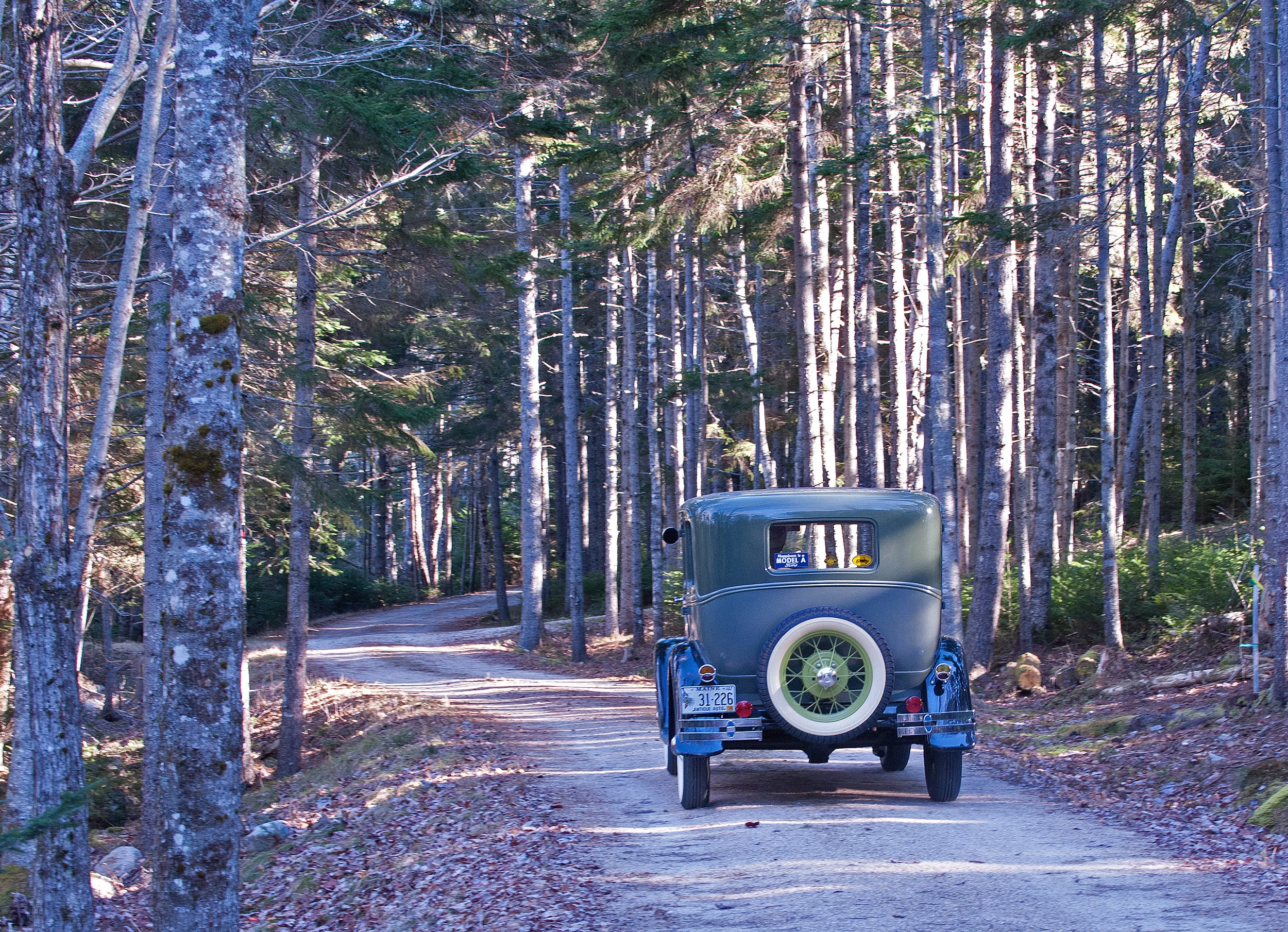
1930 Model A Ford

1930 Model A Ford

On the sunny but chilly last day of November, we were walking on a lane that curves through the woods near where we saw the salamander.  The landscape along this lane is almost timeless.  There is nothing there that will go out of style; it could have been any number of country roads 100 years or more ago – or at least 85 years ago. 

We heard a sound unlike the sounds we usually hear in the November woods and then, around a curve, came a beautifully restored 1930 Model A Ford, looking like it belonged here.  It did.  It was driven by Richard Hero, one of our ridge neighbors, who was making sure that his magnificent vehicle kept running.    

Between the beginning and end of November, three traditional events occur.  First, of course, is Thanksgiving.  Up here, it not only is a reminder of our blessings and a time for turkey dinners, it's a time to debate whether the reintroduction of Wild Turkeys in Maine in the 1970s has been too successful or whether that numerous bird should replace the Black-Capped Chickadee as the state bird.

Wild Turkeys are the largest game birds in North America; hunting them is supposed to be the major control against their overpopulation, but the birds seem to be winning. 

Which brings us to the second traditional November event in Maine:  Deer Season, which is taken seriously up here.  It is not unusual to go to the local general store for groceries and see dead bucks awaiting state tagging in the beds of hunters' pickup trucks.  (Notice to those with sensitivities about this:  one of the images in the gallery that is linked below is of this common November sight.)

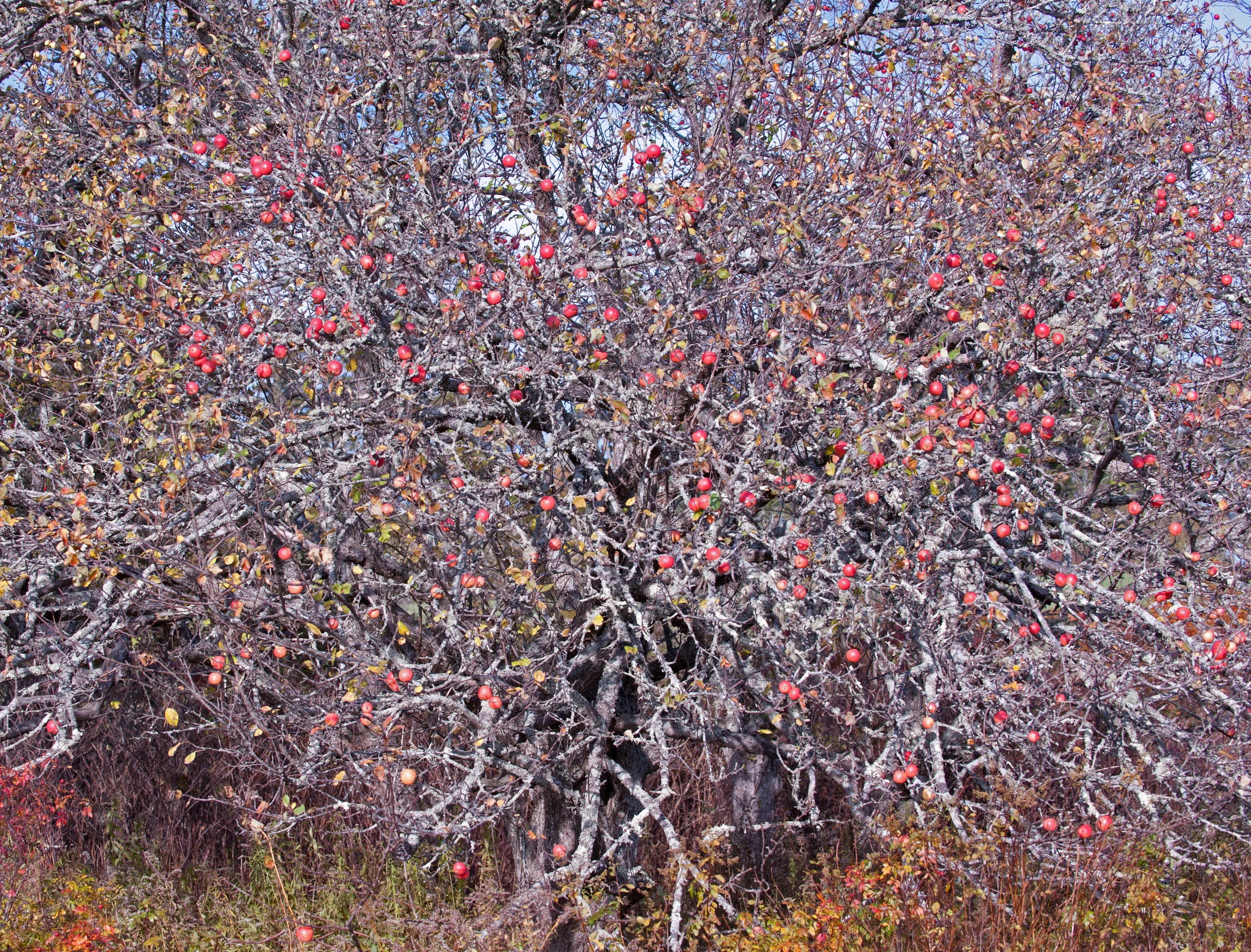
The third traditional event is apple pressing for cider-making.  This year has been an extraordinarily good one for producing apples on cultivated and the many wild apple trees, perhaps because of the warmer temperatures following a hard winter last year.  Although most of the leaves of these trees have dropped, many of the apples are holding on to their branches desperately, creating an impressionistic effect.

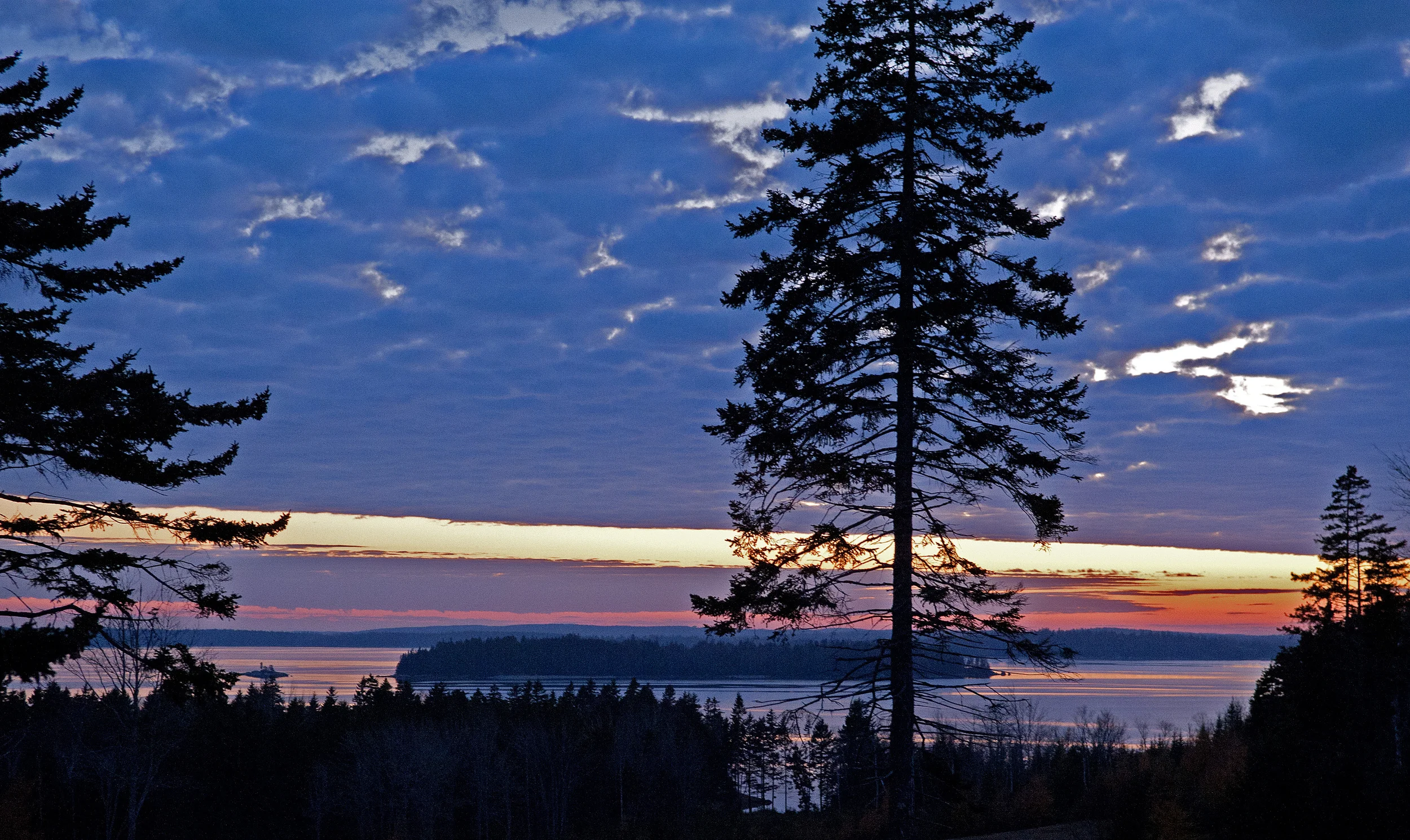
Finally, we should note that, in Maine, November usually is the beginning of spectacular cold month sunsets.  The month did not fail us this year.

Sunset Over the Reach

Sunset Over the Reach

(By the way, we probably should have titled this Journal entry "Postcards Mostly From Maine."  We made three significant out-of-state trips in November, each of which is a separate Virtual Tour in the Journal.  One image from each of these trips has been included in this collection of November moments that we want to remember.)

You can see all of the images of our November moments by clicking the link below.  We recommend that your initial screening of the images be a full-frame slideshow.  (To make that happen, click on the SLIDESHOW button above the featured [largest] image on the gallery page to which the link will take you.)  Here's the link:

https://leightons.smugmug.com/Maine/Out/Postcards-November/

Cheers,

Barbara and Dick

Comment