Comment

In the Right Place: Tongue-Lashings

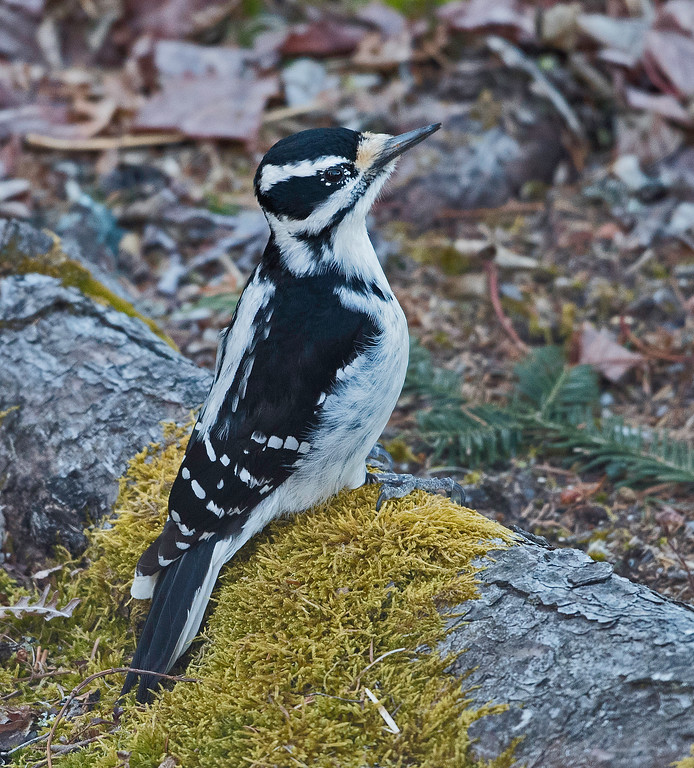
This little bit of female fluff lives up to her name: Downy Woodpecker.
i-XrHqtj7-XL.jpg

Males are virtually identical except for a red taillight in the back of their heads:

DSC_3007_edited-1-X2.jpg

One of the amazing features of woodpeckers is their highly-adapted tongue, which has fascinated scientists (including Leonardo da Vinci) for centuries. Woodpecker tongues are huge in proportion to the birds’ heads, in which they’re coiled like circular springs and act like shock absorbers when the birds are hammering. When the birds are not hammering, their tongues can be extended into a crevasse where the appendages’ barbed ends spear insects. (Brooklin, Maine)

Comment

Comment

In the Right Place: Seeing Red

There’s something different going on in many of our Blueberry fields this year. The new leaves should be green in the Spring, at least not as red as they are now. (This image was taken April 23.) According to experts, the most likely cause of this “red tinging” is the unusual lengthy cold temperatures during this year’s first four months.

i-RDMz3xz-XL.jpg

The tinge is expected to fade into green as temperatures climb (unless there also is a disease, which does not seem to be the case). In the meantime, we’re enjoying a reminder that, in the Fall, the fields will (or should) turn even deeper reds than these, as the plants start to nod into dormancy and their pigments (anthocyanin and carotenoids) are synthesized. (Brooklin, Maine)

Comment

1 Comment

In the Right Place: One for All and All for One

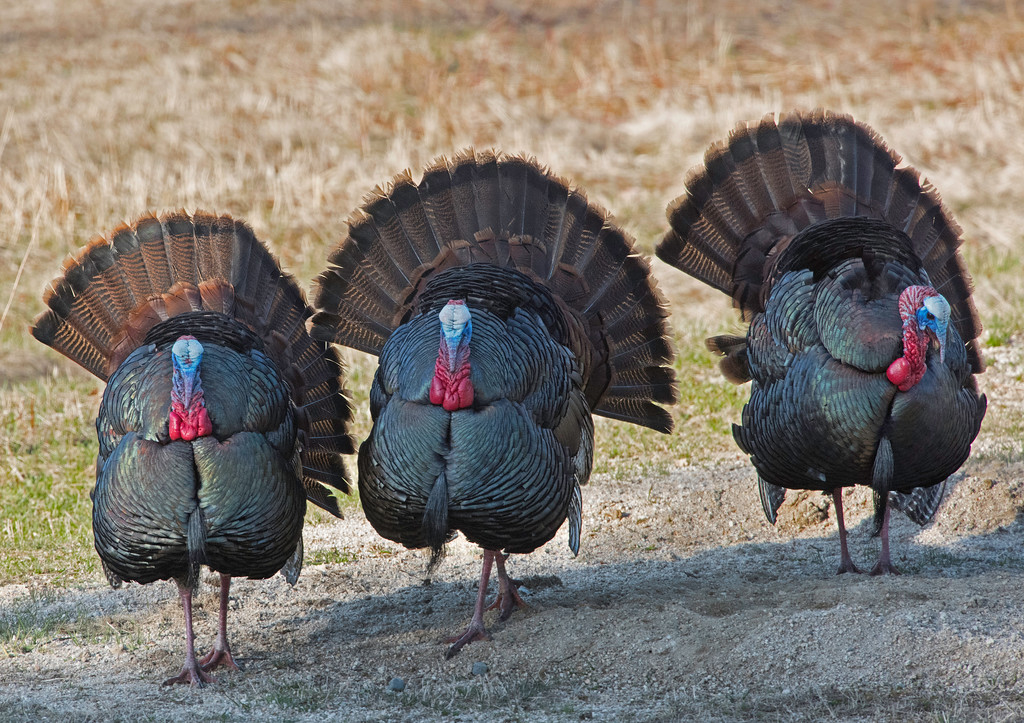
We thought we saw a rare Triple-Tailed-Tom yesterday morning, as this non-doctored image indicates:

i-W7gbc4f-XL.jpg

But, it was just those Old Boys playing Three Musketeers again for a Hen who couldn’t care less:

i-4SMT5Pw-XL.jpg

They tried to keep her still by singing "Girl of My Dreams" as a trio, but she was having none of it.

i-dFWrDCr-XL.jpg

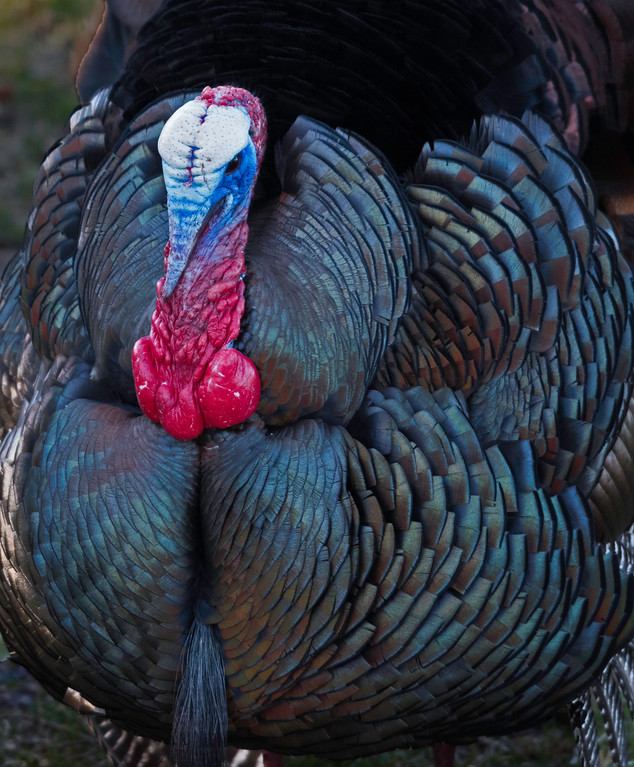
You have to admit, though, that the Boys' makeup and costumes are fantastic (even in the literal sense):

i-wbHW2NQ-XL.jpg

(Brooklin, Maine)

1 Comment

Comment

In the Right Place: Waiting

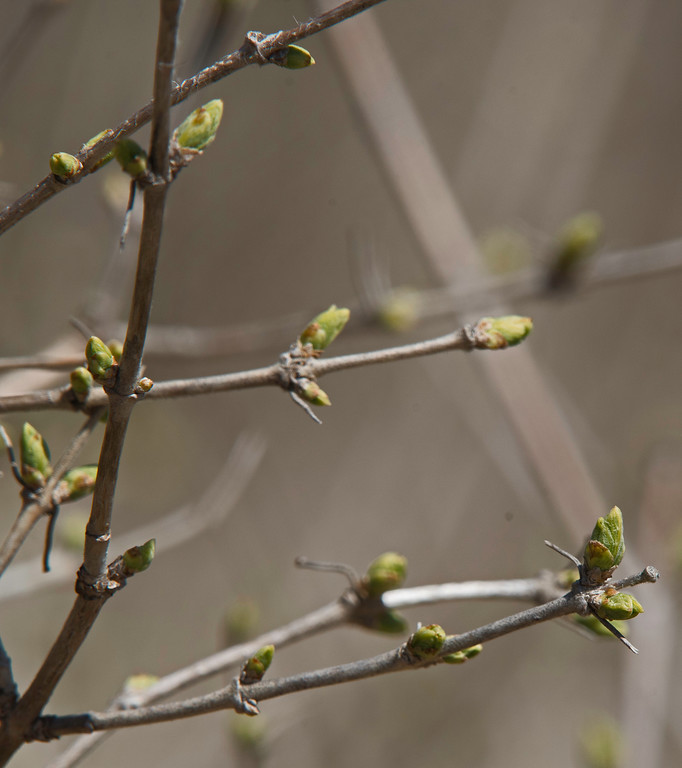
Our deciduous trees and bushes are filigreed with millions of buds -- a dull haze that is just about to explode into green. We watch and wait impatiently.

i-dSPzKHq-XL.jpg

Here's a closeup:

i-skCSKTM-XL.jpg

(Brooklin, Maine)

Comment

Comment

In the Right Place: Unconnected Dots

The Gulf of Maine reportedly contains more islands than all the islands of the other east coast states combined. There appear to be at least 4,600 Maine islands, including 15 unbridged ones with year-round human populations; many private, summer residence islands; a varying number of islands on which sheep are the only full-time residents; a growing number of nature preserve islands, and some islands consisting of granite ledges that appear only at lower tides.

i-2kccjg3-X2.jpg

After the American Revolution, Massachusetts owned the islands as public land until the Missouri Compromise of 1820, when Maine was lopped off Massachusetts as the 23rd state. Thereafter, Maine began auctioning its islands to interested persons. Happy Earth Day! (Brooklin, Maine)

Comment

Comment

In the Right Place: Change

Greening is the beginning of Spring, and some of it finally is starting to happen in the fields around here. We’re not the only ones to notice, as you can see.

i-GZPJ7fT-XL.jpg

Nonetheless, it’s still unseasonably cool. When this image was taken, at 7:11 this morning, the temperature was 37 degrees (F). It probably will peak today about 10 degrees higher, if it stays sunny. A few seconds later, we saw why these are called White-Tailed Deer.

i-DdS38PD-XL.jpg
i-BgFGpSL-XL.jpg

(Brooklin, Maine)

Comment

Comment

In the Right Place: The Remedy

Yesterday, the depressing weather we’ve been having reminded us that we were overdue for our regular mental tune-up. We went to our favorite place to poke around under our hood: a roiling stream in the dark woods, where the water's shapes and music are constantly changing and the smell of damp moss rises like incense.

i-VBNrjbv-XL.jpg

The old gray cells are working a lot better today. (Brooklin, Maine)

Comment

Comment

In the Right Place: Size Doesn't Matter

This guy is just a little bigger than a credit card, about the weight of two pennies, and has the courage of a lion when it comes to protecting his territory.

Gold 1.jpg

He’s too small to be King of the Forest, but he’s just right to be a Golden-Crowned Kinglet. (His mate is virtually identical, but without the touch of red-orange in her golden crown.)

Gold 2.jpg

Many GCKs are full-time residents here, braving the cold and eating seed and dormant insects. They have evolved a curious feature: each of their tiny nostrils is protected by a single feather, perhaps warming the incoming air. (Brooklin, Maine)

Comment

Comment

In the Right Place: A Newtonian Moment

Fungi are full of interesting tricks. Take these Red-Belted Polypores (Fomitopsis pinicola), for example. Their shelf-like appearance on trees places them in a group called “Shelf Fungi” or “Bracket Fungi.” The undersides of their colorful “conks” have small tubes containing their reproductive spores.

Polypore 2.jpg

Shelf fungi position themselves the way they do so that their tubes are pointed downward to allow gravity to help disseminate their spores. But, when the dead or dying host tree falls – here’s the neat trick – these fungi slowly reposition themselves on the now-horizontal tree to, once again, take advantage of gravity. This “positive geotropism” often results in a fungus “shelf” becoming a fungus “pretzel.”

Polypore 1.jpg

Thanks to neighbor Dr. David Porter for guidance on geotropism. (Brooklin, Maine)

Comment

Comment

In the Right Place: Pardon Me

Despite days of driving rain and freezing nights, the Skunk Cabbages’ flower-containing spears (“Spathes”) are breaking through the ice-skimmed bog waters, bringing us some of the first Spring color.

Spathe 1.jpg

By summer, the Skunk Cabbage will be a regal, shade-producing canopy for smaller wildlife:

Spathe 2.jpg

The plant’s name is uncharitable, but descriptive; it has bad breath when it flowers or is bruised. But, that’s why the plant has survived for centuries: that odor is very pleasant to bees and other pollinators and obnoxious to larger animals that might crush it. (Brooklin, Maine)

Comment

Comment

In the Right Place: The Blackbird That Is Not

Common Grackles are back, looking for summer real estate and significantly increasing the noise level in our trees and marshes. Their strange name comes from its Latin root, “Gracula,” which is thought to have been coined to imitate one of the sounds made by the birds.

i-BTHSTJg-L.jpg

Many call these birds “Blackbirds”; however, in the right light, the males can glow with iridescent hues of purple, blue, and bronze. Grackles apparently will eat anything that looks like it has nutrients, including smaller birds and parts of food-caked wrappers. (Brooklin, Maine)

Comment

Comment

In the Right Place: Doin' What Ya Gotta Do

This is a Spotted Salamander apparently after its so-called “Big Night” breeding frenzy. Warming temperatures, melting ice, and reproductive urges have gotten these and other species of salamanders on the move this week – virtually always at night –  heading toward vernal pools and shallow streams, where they swarm while laying eggs and sperm.

RJL_5232_edited-1-XL.jpg

Concerned humans with flashlights have their own Big Nights, giving the marching amphibians a hand crossing roads and assisting the state in surveying the little troopers. (Brooklin, Maine)

Comment

Comment

In the Right Place: Staying Trim

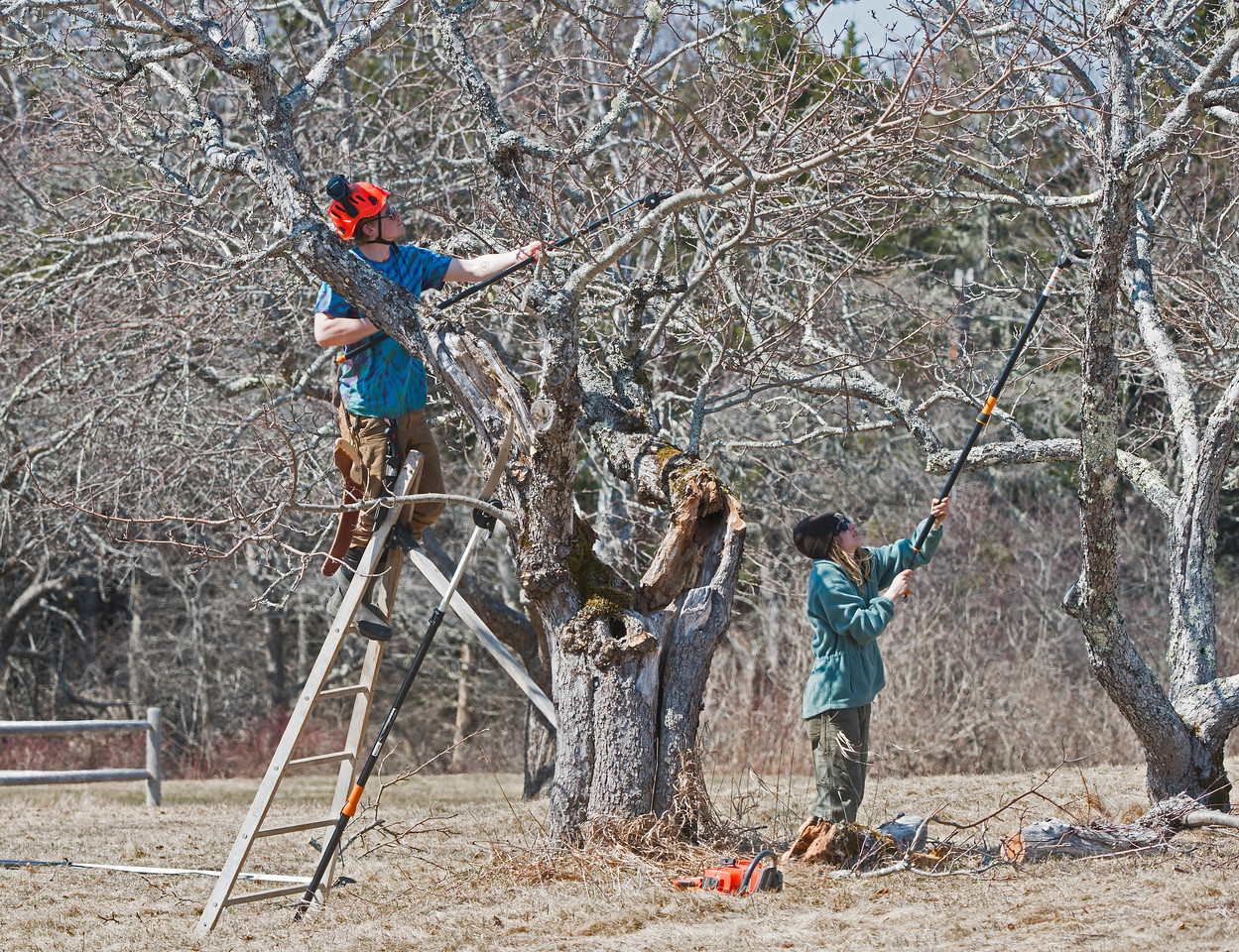
It’s apple tree pruning time. There are many centuries-old apple trees around here that are kept just for their appearance. Gnarly is a good look in Maine. The apples from these “just love ‘em” trees are not harvested for fruit or cider; they fall to the ground and feed the wildlife.

i-VdF8qRc-X2.jpg

That’s not the way it was in the first half of the 1500’s when the apple tree – not a native -- originated in Maine, according to historians. Those original trees were planted on our offshore islands by roving European fisherman who wanted to create a renewable fruit supply for their visits. (Brooklin, Maine)

Comment

Comment

In the Right Place: Plant Identification

We have here the uncommon Eastern Buoyberry Bush (Lobsteris belowus), a hardy species found mostly in coastal areas. This plant blooms flamboyantly and can withstand cold and wet conditions. It also is resistant to deer and Japanese Beetles.

i-T52kXZc-XL.jpg

(Brooklin, Maine)

Comment

Comment

In the Right Place: Change

Please forgive us for posting too many images from this location, but there are good spirits here. It’s one of the places where we go to try to understand how light constantly changes what we see and to remind ourselves that there’s always more of anything (or anyone) to see.

i-K65vxKr-XL.jpg

We’re looking at Acadia National Park from Brooklin across Blue Hill Bay on a fine, winter-colored day last week. This ever-changing view is just as alluring in spring, summer, fall, fog, rain, snow, and moonlight. (Brooklin, Maine)

Comment

Comment

In the Right Place: Sunny Sonny

This is the sharp-bowed Sonny, the 91-foot sloop that we’ve been watching being built by the Brooklin Boat Yard. She's now out in the fresh air.

Sonny 01.jpg
Sonny 02.jpg

She came out into the daylight yesterday to get her huge mast and boom installed while other work continues.

Sonny 03.jpg

Sonny is now snuggled next to the main BBY building and probably will be launched into Eggemoggin Reach for trials in late April or May.

Sonny 04.jpg
i-bMbVc7v-XL.jpg
Sonny 05.jpg

This high-performance cruiser will harbor in Providence, Rhode Island. (Brooklin, Maine)
Comment

Comment

In the Right Place: Happenings

i-hbcNc56-XL.jpg

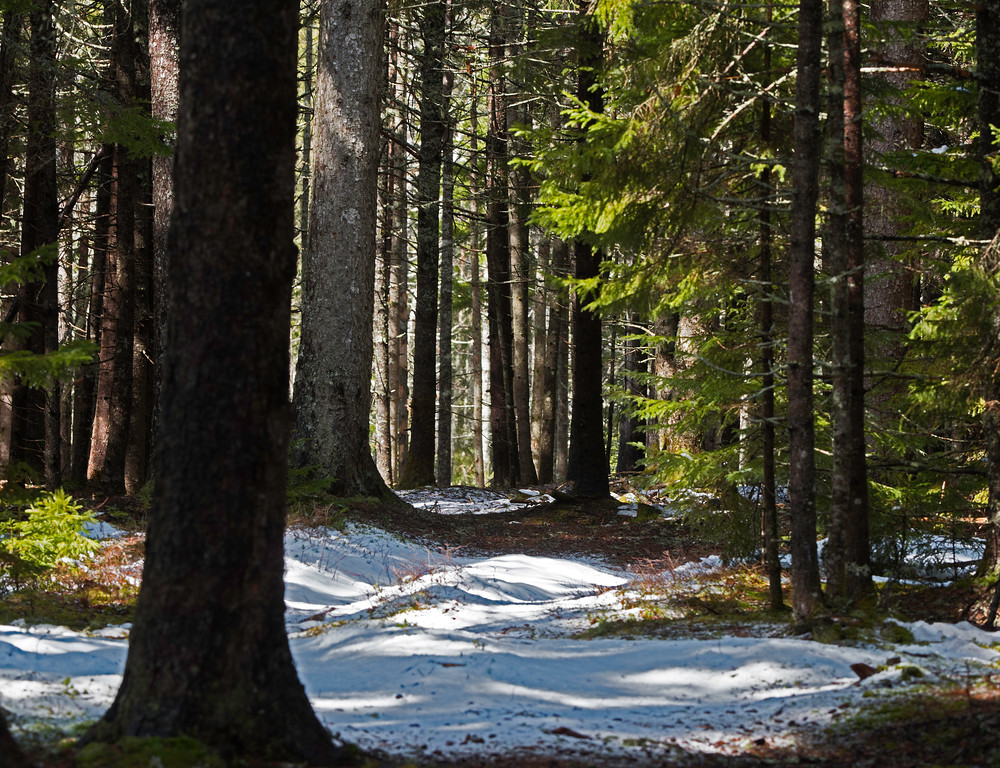
The wooded trails still are dappled with snow and it’s a bit nippy for a Spring morning, but change has arrived.

The higher-angled light makes the clean air sparkle, the buds hugging the red maple branches appear in the distance as a wine-colored mist, and the songs of thrushes are heard.

i-hc2Gf6K-XL.jpg


(Brooklin, Maine)

Comment

Comment

In the Right Place: Imagination

At first, we saw nothing different in the marsh pond. Then, about 200 feet out, a sinewy shadow moved the wrong way. A solitary Canada Goose was low in the water, amid floating branches, slowly lifting its long-necked head to watch us. Something was wrong.

i-nj9HkST-XL.jpg

Migrating Canada Geese are like traveling Nuns: they usually visit in active pairs or larger groups. This one was alone, still, and appeared to be hiding. That afternoon, the Goose was gone. Like many morning walk stories, the ending of this one is left to our imagination. (Brooklin, Maine)

Comment

Comment

In the Right Place: Insurgency

It’s snowing as we speak and has been doing so since yesterday afternoon, with occasional interruptions of rain to disrupt the process. Greening fields and budding gardens that had finally come out from under their snow rugs earlier in the week are now being covered again.

i-XwLgnkx-XL.jpg

It seems that the weather gods have realized that they were hoodwinked when we traded our greenhouse gasses to them for their clean air. Nonetheless, we don’t expect their current insurgency to amount to much. (Brooklin, Maine)

Comment