Comment

In the Right Place: Rubs

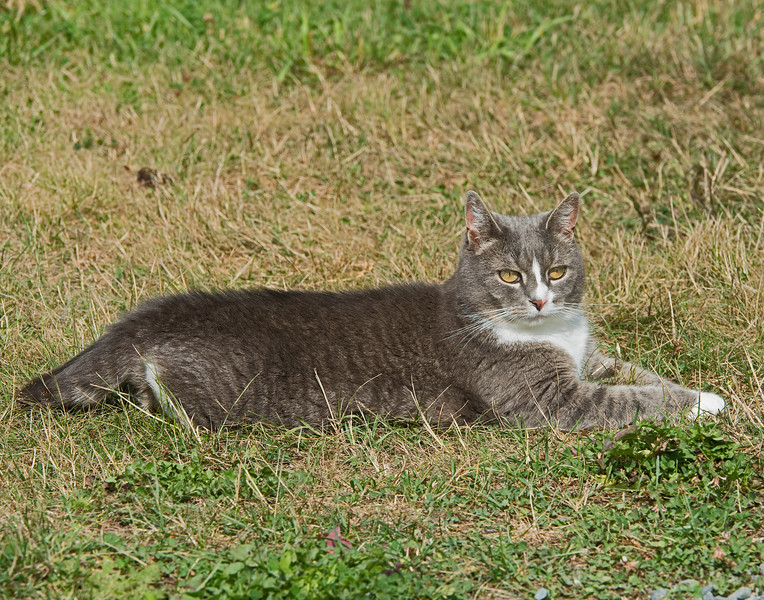
Being a Master Harbor Cat can be grueling. Take Jethro here, for example; he’s the MHC for Great Cove Harbor. We interviewed him on August 1, a cat holiday celebrated as the beginning of Intense Summer.

Jethro 01.jpg

He says that he’s proud of his record for keeping the WoodenBoat School’s Boat House and Pier secure from terrorist rodents. He also shrugs off the fact that he’s sacrificed his body to countless male and female sailors who needed a rub for luck and safety.
Jethro 02.jpg

“It’s a tough life,” he says, “but some feline’s got to do it."

Jethro 03.jpg

(Brooklin, Maine)

Comment

Comment

In the Right Place: Windjammer Watch IX

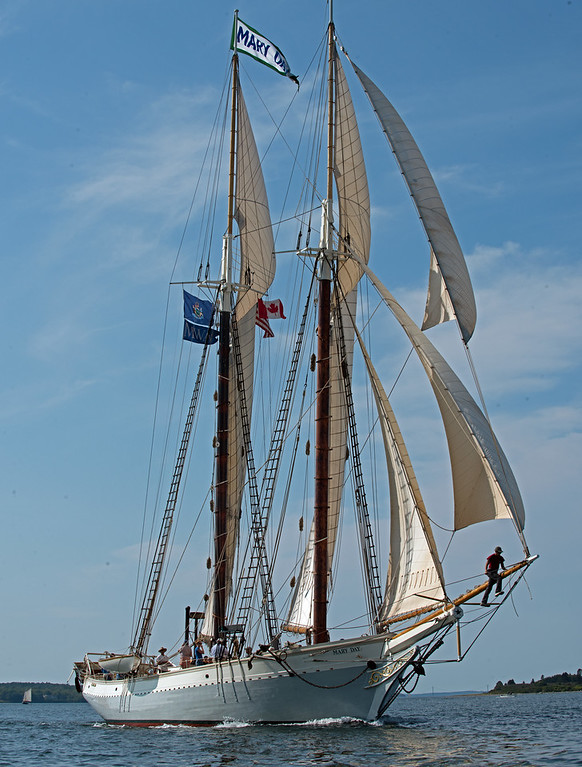
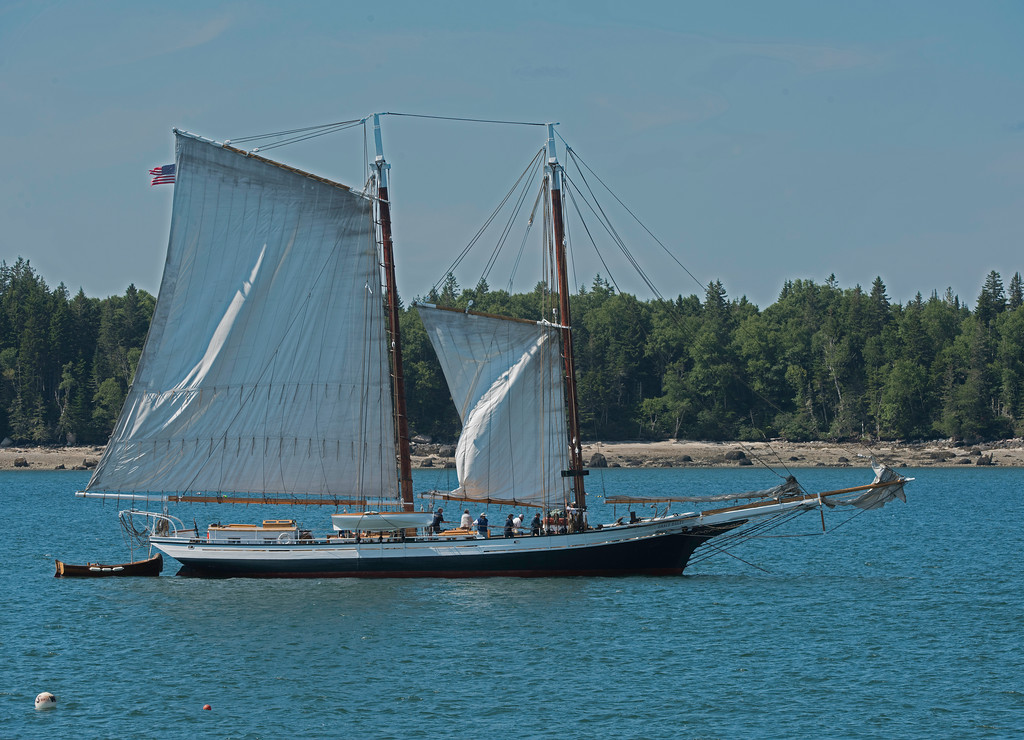
It’s yesterday morning; we’re watching the schooner Mary Day departing Great Cove and entering a fog bank in Eggemoggin Reach. Her sails pick up some of the sun that’s attacking the fog, but she soon disappears in the mull.

MD 01.jpg

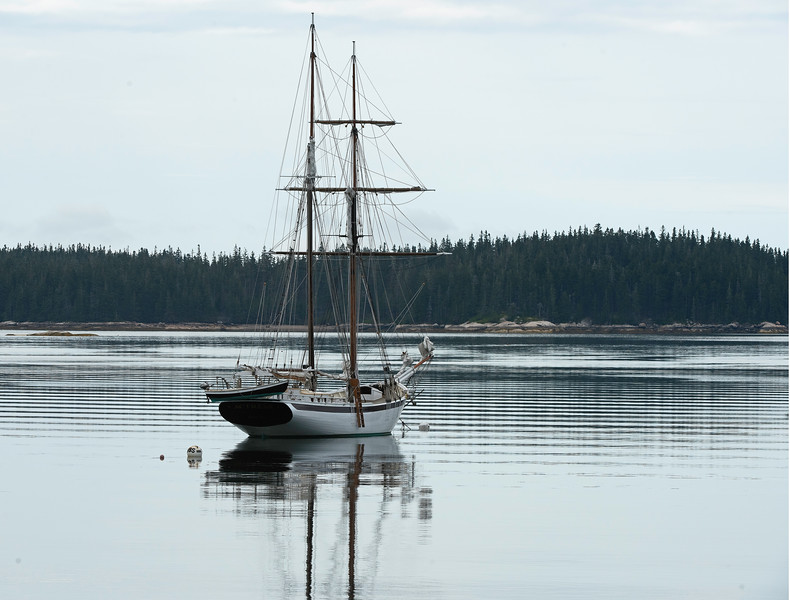
Mary is a 125-foot schooner with classic mercantile coastal cruiser lines, but she was built in 1962 just for vacation cruises. (She has heat in every cabin!) She’s a frequent visitor to the Cove and always a welcome sight. Here's another image from our extensive file on her:

MD02.jpg

(Brooklin, Maine)

Comment

July Postcards From Maine

1 Comment

July Postcards From Maine

July was the beneficiary of good June weather. The woods and streams were lush most of the month, but we did get more fog than we'd like. Nonetheless,  the fog turns our lanes and gardens into a dream-like fantasy. Toward the end of the month when the fog and overcast let up, we finally could see the spectacular (almost full) moon rise.

July 01.jpg
July 06.jpg

July is when summer wildflowers reestablish residence here. They're ruled from the fields by Queen Anne's Lace. The Royalty is tended by commoners, including pink Crown and purple Cow Vetch. The wild Day Lilies come early in the month and the Golden Rod reveals itself toward the  month's end. Meanwhile, the native Fragrant Water Lily flowers and pads are at their prime in the marsh ponds.

July 07.jpg
July 12.jpg

July also is when the domestic flowers in the many gardens here begin to peak. Of course there are pink Roses. But there also are blue-purple Liatris, yellow ornamental Sunflowers, red Cosmos, blue and white Lacecap Hydrangeas, multi-colored Honeysuckle hybrids, and many more garden delights.

July 13.jpg
July 18.jpg

Our visiting and resident animals seem to know that they can relax here in our part of "Vacationland." Great Blue Herons with six-foot wingspans are overhead and in the marshes; Red Squirrels and Porcupines seem to do a little less damage as they enjoy some time off; Broad-Winged hawks hunt from treetops; Ruby-Throated Hummingbirds hunt among the Bee Balm; male Red-Winged Blackbirds stand guard as the much smaller females take baths on lily pads, and Painted Turtles build apartment complexes for themselves.

July 19.jpg
July 22.jpg
July 25.jpg

The return of the Monarch Butterflies has been high on our July checklist since these insects started to be threatened by, among other things, lack of milkweed (the only thing their caterpillars eat). But, return they did this year. They laid eggs on the milkweed and their striking yellow, black, and white caterpillars were soon munching the plant leaves. Also returning were the dazzling 12-Spotted Skimmer Dragonflies.

July 26.jpg
July 29.jpg

As with the Monarchs, keeping tabs on the coastal schooners and fishing vessels is part of our July checklist.  The schooners visit our Great Cove where their passengers can visit the famous WoodenBoat School campus. Below, we see the Brigantine Actress reflecting herself and the schooners Stephen Taber (under sail) and Tree of Life (anchored) in the Cove. Below them, the fog is lifting in our Naskeag Harbor to reveal the fishing vessel Colby & Bryce.

July 30.jpg
July 33.jpg

Of course, there are many smaller, recreational boats that ply our waters or just pose in them, including this assortment:

July 34.jpg
July E.jpg

Finally, July contains Independence Day and Brooklin is famous for its July 4th parade, band music, and food and games at the Town Commons, which we reported on in a separate post. But here, as a reminder, is Old Glory leading the parade marching up Naskeag Road:

July 38.jpg

(Brooklin, Maine; all images taken in July 2018)


1 Comment

Comment

In the Right Place: Bobbing

Greater Yellowlegs Sandpipers such as this one are regular visitors to Great Cove in the summer. They’re shy and, as they fly away, they curse in the foulest of bird language, judging from the raucousness of their expletives.

YL 01.jpg

They do sometimes perform comedic routines, however:  They’ll wade slowly up to their boney knees in the Cove; then, they’ll run erratically here and there after zipping fish; then, they’ll stop in consternation and bob their little heads repeatedly like a pump handle.

YL 02.jpg

Can you guess which is larger, the Greater Yellowlegs or Lesser Yellowlegs Sandpiper?  Okay, that was too easy. But, can you imagine the plain Yellowlegs Sandpiper that is greater than the Lesser and lesser than the Greater? Well, there are no plain Yellowlegs in this bird family – you’re born into it either Greater or Lesser. (Brooklin, Maine)

Comment

Comment

In the Right Place: Glitter

Last night the sky over Naskeag Harbor was clear and the moon's glitter path was bright. The  moon was a “waning gibbous moon.”

i-7WDb2ZG-X2.jpg

That is, it was waning because it’s in the process of appearing smaller and smaller to us after our July 27 full moon and it was gibbous because it was humped/distorted, showing us less that a full circle, but more than the quarter moon that it soon will be. (Brooklin, Maine)

Comment

Comment

In the Right Place: Charitable

We got a break in the weather yesterday and the sun shone most of the day. This was especially lucky for us, because we had purchased tickets for Open Garden Day, a “rain or shine” event in Northeast Harbor, Maine. The public was “invited” – for $45.00 a head ($40.00 for advance sale tickets) – to tour the grounds of six gorgeous private properties that have remarkable gardens. Below is part of “The Playhouse” property overlooking Somes Sound:

Garden.jpg

The Day was sponsored by the Garden Club of Mt. Desert for the benefit of various charities and was well worth the price for those who love first class landscaping in spectacular settings. We plan to do a major posting about this Garden Day when we get a chance. (Brooklin, Maine)

Comment

Comment

In the Right Place: Dreamy

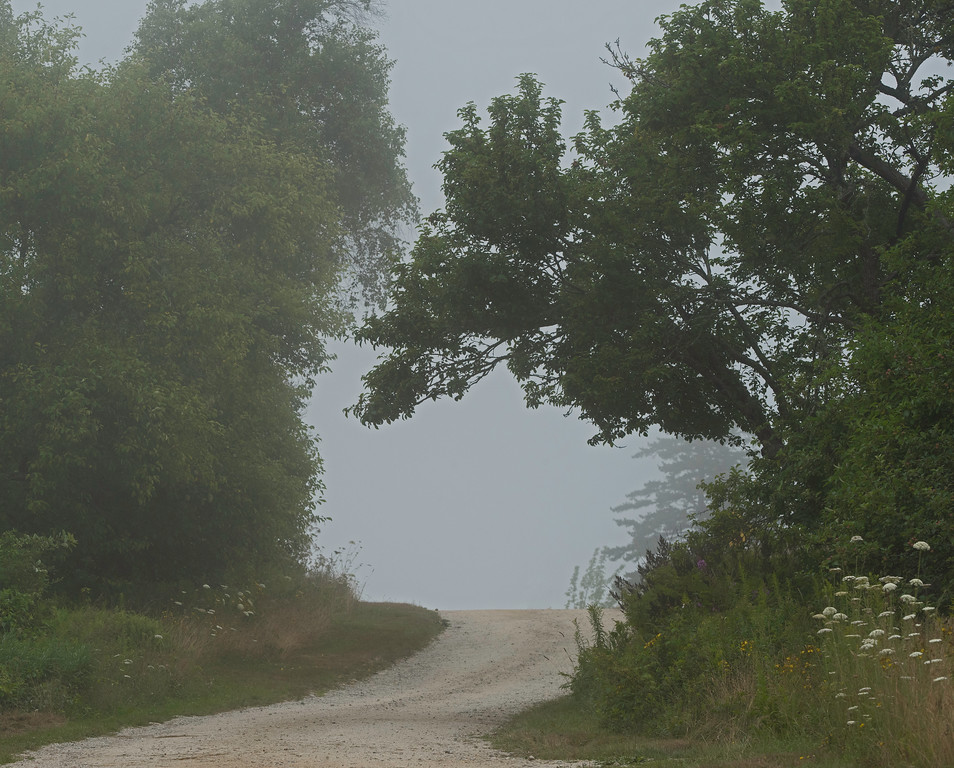
The sun broke through for a few hours yesterday afternoon, but then the fog counterattacked – and it remains in occupation of Great Cove as we speak. We’re hoping for a break later today. However, we still get out to walk through the dreamy summer landscape on country lanes such as this one:

Fog B.jpg

(Brooklin, Maine)

Comment

Comment

In the Right Place: Character

We’ve had a week of fog and rain, but this morning the sun is trying to ride to our rescue. As you can see, there was hand-to-hand combat between the fog and the sun in Barbara's garden early this morning.

i-fRcGN4f-XL.jpg

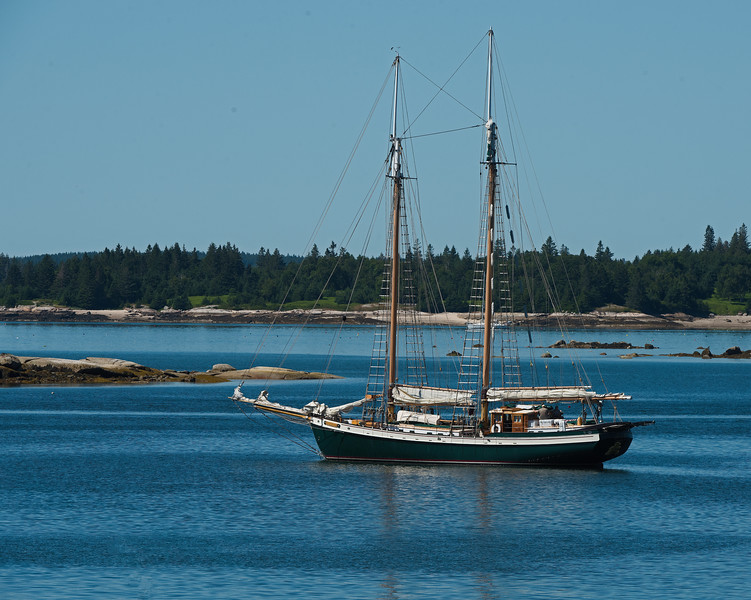
At times like this, you sometimes can get unique glimpses of Maine character. For example, a few days ago, the fog won the battle and swallowed the nicely-sheered Colby & Bryce, one of our hard-working fishing vessels that can’t be confused with a yacht. Here she is just before disappearing:

Fog A.jpg

As we speak, the garden battle is raging, and the sun appears to be winning. But you never know what will happen weather-wise around here. (Brooklin, Maine)

Comment

Comment

In the Right Place: Song

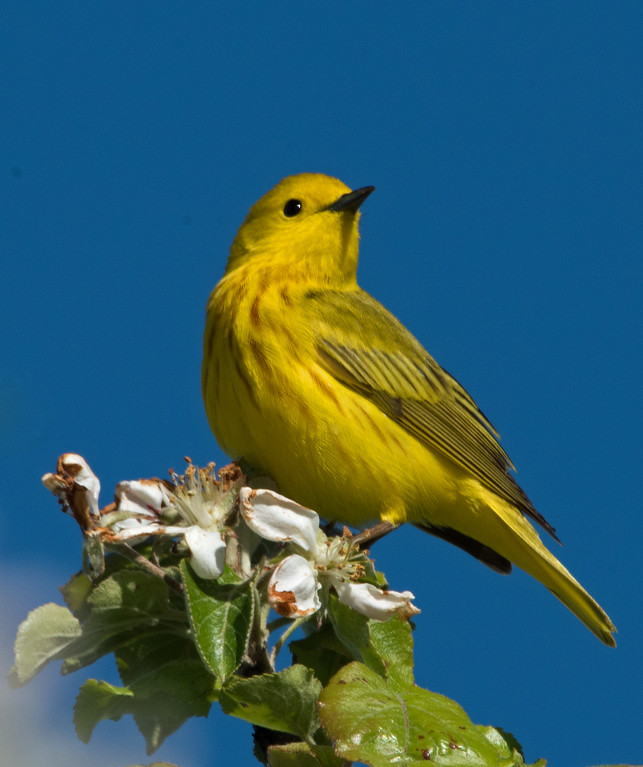
It’s raining as we speak and we’ve had dreary weather most of the week. We need a reminder that it’s summer in Maine, and this Yellow Warbler will do nicely.

RJL_5523_edited-2-XL.jpg

He’s a summer resident who usually is much easier to hear than to see, and therein lies a problem.

RJL_5413 edit 1-XL.jpg

My Peterson Guide says his song sounds like “tsee-tsee-tsee-tsee-titi-wee” or “weet weet weet tsee-tsee wew.” My Sibley Guide says it’s “sweet sweet sweet ti ti ti to soo” or “swee swee swee ti ti ti swee.” The anthropomorphic Cornell Lab of Ornithology says it’s “sweet sweet sweet I’m so sweet.” And, I don’t agree with any of them. I wonder how those authorities would describe a Beethoven symphony. (Brooklin, Maine)

Comment

Comment

In the Right Place: Pert

We’ve been having a lot of fog lately, which prompts us to play games such as watching sailboats disappear into the dreaminess and predicting where they’ll reappear.

Fog 02.jpg

Here, Crackerjack has caught a breeze and heads eagerly into Great Cove’s oblivion. She’s a pert 12 ½-foot Haven with red sails and green hull; and, she seems to enjoy teaching WoodenBoat School students to sail. (Brooklin, Maine)

Comment

Comment

In the Right Place: Fishers Wanted

Porcupines are pariahs here; we have too many. Which means that we don’t have enough fishers, and by that we don’t mean lobstermen. We mean the weasels that are to porcupines what wolves are to deer. The fisher is an unrelenting predator that immobilizes porcupines by biting their faces and then ripping their unprotected stomachs open (not a G-rated movie).

i-jhrcZHH-XL.jpg

Uncontrolled porcupines can do considerable damage to the trees, especially in winter when their diet turns to bark. In the spring and summer, however, their low popularity rating seems to improve a point or two when they eat many fruits, nuts, and buds, while doing their best to look cute.

i-CkHGpMz-XL.jpg

This fellow has been visiting us off and on this summer. He eats clover like a rabbit and shows why he was given the name Porcupine, which means “spiny pig,” according to its Latin origins. (Brooklin, Maine)

Comment

Comment

In the Right Place: Windjammer Watch VIII

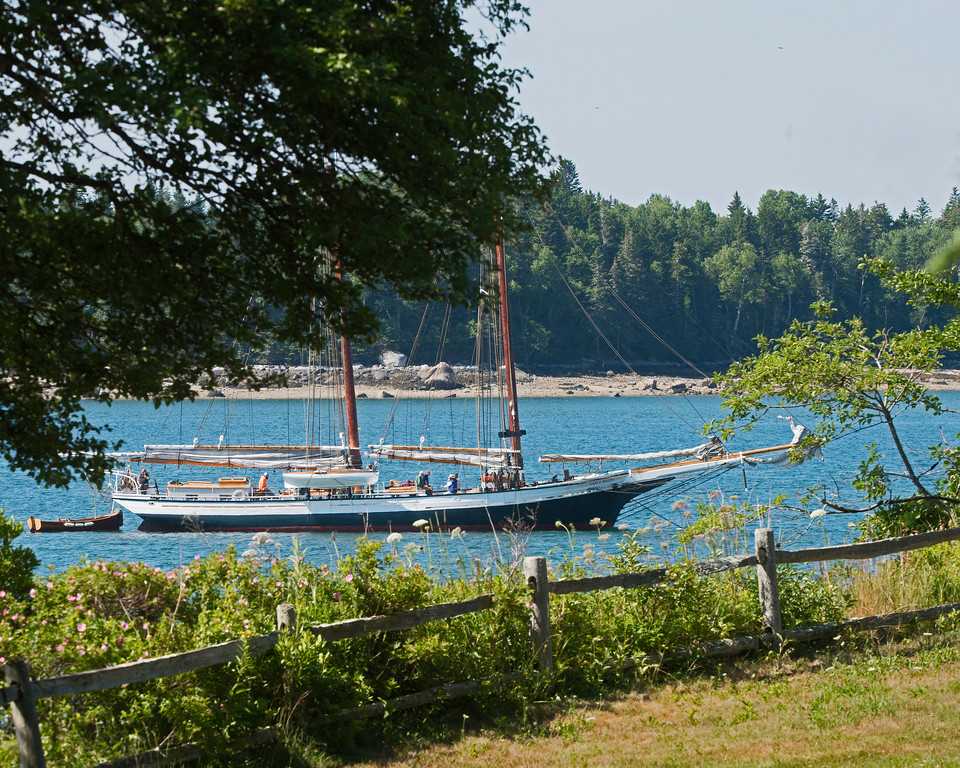
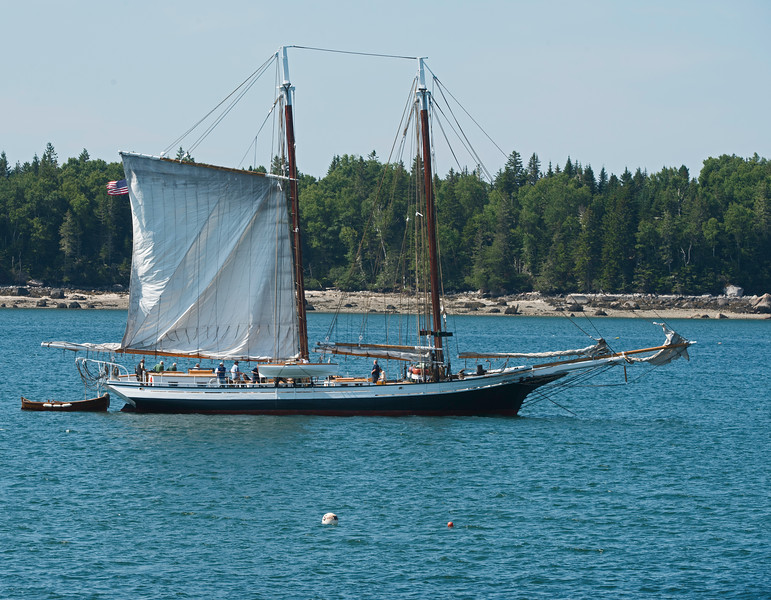
Two handsome schooners came into Great Cove on July 18 and left the following morning. The first was the sleek, low-slung 120-foot J&E Riggin out of Rockport, Maine. She was launched in 1927. 

WW8-3.jpg

The second schooner to visit that day was the 91-foot Tree of Life out of Newport, Rhode Island, a luxuriously-appointed cruiser. She was launched in 1991 and has sailed the world.

WW8-2.jpg

Here's the Riggin again that morning, as she was anchored just outside the swing of the Friendship Sloop Belford Gray at her mooring:

WW8.jpg

The Riggin left the Cove under motor power and the Tree was still anchored when we had to leave the Cove; hence, both images are only “stick shots” (no sails up). (Brooklin, Maine)

Comment

Comment

In the Right Place: Royalty

Adult Monarch Butterflies are arriving from the south and their caterpillars (larva) are emerging from the first eggs laid here this year. Judging from last year and this summer so far, the Monarchs are making a comeback from reduced populations.

Monarch 03.jpg

Monarch Butterflies will take nectar from a wide variety of flowers. However -- and here is a big part of the problem -- in the caterpillar stage, they can only eat milkweed leaves and the habitat for that unpopular weed has been shrinking. Here are some caterpillars seen yesterday eating milkweed:

Monarch 01.jpg

Some reports say that this insect was named a “Monarch” because it is the king of beauty as far as butterflies go. Others say that it received that title to honor King William III of William and Mary fame. In any case, this butterfly is special and so is our neighbor Sherry Streeter who cultivates milkweed to help save the Monarchs. The caterpillars shown above are on Sherry’s plants.

Monarch 09.jpg

(Brooklin, Maine)


Comment

Comment

In the Right Place: Balms Away!

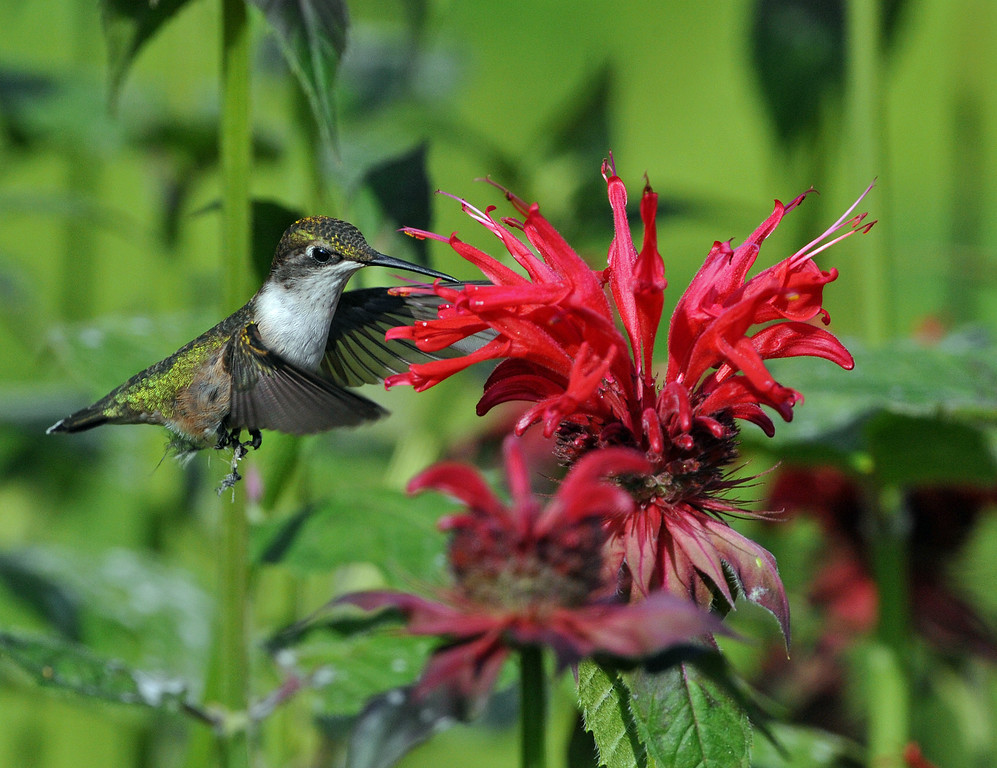
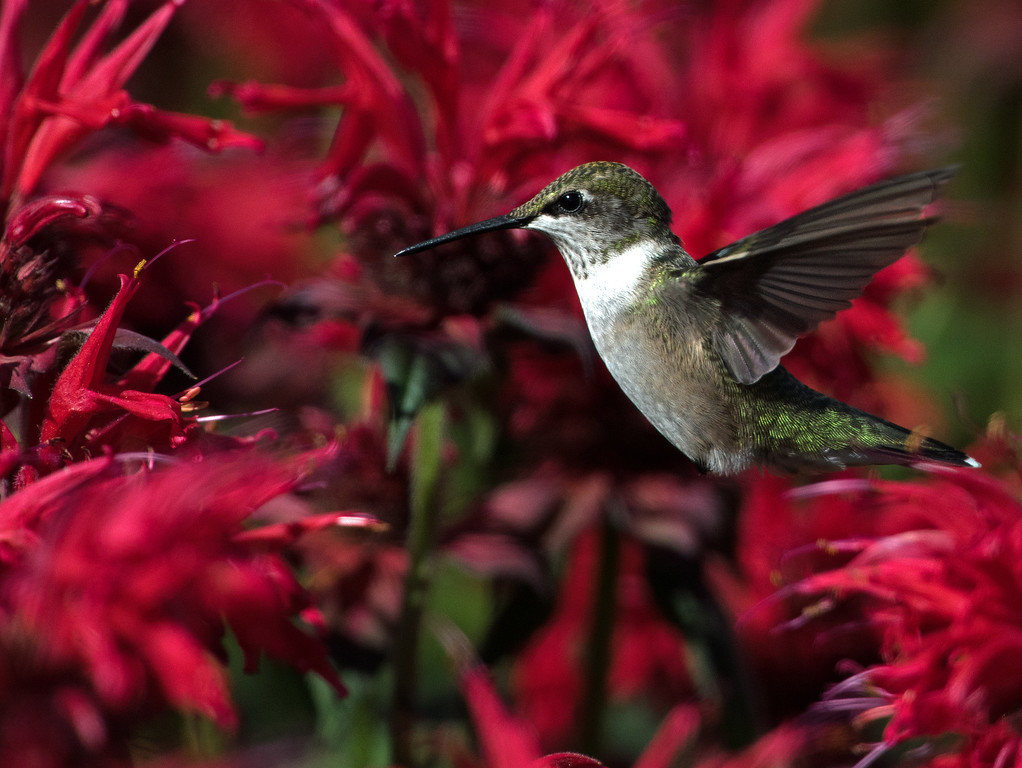
We’re thinking that maybe Bee Balm should be renamed Bee Bomb. It erupts in the garden in an explosion of red (sometimes purple) bursts and does not calm the bees, butterflies, hummingbirds, and other pollinators, as a balm would.

A.jpg

It makes pollinators crazy with desire to collect all that nectar while it lasts. Female Ruby-Throated Hummingbirds, abandoned by the males after mating, abound in our Bee Balm Patch:

Balm 02.jpg

Many Honey and Bumble Bee species feed there and are difficult to tell apart. We're guessing that this is a Northern Amber Bumble Bee (Bombus borealis):

Balm 06.jpg

This Eastern Black Swallowtail Butterfly is one of many butterflies competing in the patch:

Balm 05.jpg

The Bee Balm plant (Monarda) is native to Northeast America. It was used by Native Americans here for medicinal purposes and its flowers were steeped by them into a tea. When English tea was boycotted by America's colonists after their Tea Party, many Bostonians switched to Bee Balm tea, which they called Oswego Tea. 

Balm 07.jpg

(Brooklin, Maine)

Comment

Comment

In the Right Place: Windjammer Watch VII

The 118-foot Grace Bailey visited Great Cove late July 17 and left the next morning. She was built in 1882 for Edwin Bailey, who named her after his daughter.

Grace 01.jpg

 She was renamed Mattie in 1906 after being rebuilt then. She was rechristened with her original name in 1990, when she was fully restored.


Grace 04.jpg

Grace has been a National Historic Landmark since 1992 and is now one of four surviving wooden-hulled, two-masted schooners that engaged in coastal commerce.   

Grace 05.jpg

She hails from Camden, Maine, and remains one of the fastest windjammers afloat.(Brooklin, Maine)

Comment

Comment

In the Right Place: Spotty

This common dragonfly is causing confusion. It is officially named the 12-Spotted Skimmer Dragonfly, due to the total number of brown spots on the wings of each member of the species.

Spot 01.jpg

Many people prefer to count white spots on wings, however, and they call the insect a 10-spotted skimmer. Those in this 10-spot crowd apparently have not yet discovered that only adult males of this species have white wing spots, hence they have no name for the females and young. Compare the flying female above with the resting adult male below.

Spot 03.jpg

(Brooklin, Maine)

Comment

In the Right Place: Tiny Miracles

2 Comments

In the Right Place: Tiny Miracles

Sometimes, a tiny miracle occurs just when the fog lifts off a still sea. The world seems to turn flat – a silver plate of reflected and often connected images. During such a moment in Great Cove a few days ago, the Brigantine Actress seemed to reach down through the stillness and lightly touch the Dory Wild Rose:

Reflect 01.jpg

Dinghies and Skiffs slowly swung in the slight breeze and tide:

Reflect 03.jpg

A brief beam of sunlight found the Catboat Shenaniganz:

Reflect 04.jpg

The sun disappeared again and the Concordia Free Spirit waited in silvered calm:

02.jpg

The Belford Gray, a Friendship Sloop, pointed out to the retreating fog in Eggemoggin Reach:

Reflect 02.jpg

Actress remained sitting while the incoming tide wrinkled the water around her:

Reflect 05.jpg

(Brooklin, Maine)

2 Comments

Comment

In the Right Place: Tatting


Queen Anne’s Lace, an edible wild carrot plant, is starting to sweep across our fields in white waves.

Lace 06.jpg

However, similar – but poisonous – plants also are blooming in some of those fields: Water Hemlock, which has fairly recently caused fatalities in Maine and elsewhere, and Poison Hemlock, which is most famous for killing Socrates a while ago. Check the stems before you pick any lacy white flowers to eat or display. Queen Anne’s Lace has a hairy stem; Water and Poison Hemlock do not, nor do the other white lacy plants (Cow’s Parsley, Cow’s Parsnip, etc.).

Lace 05.jpg

Of course, Queen Anne’s Lace does have a bit of a bloody history. It apparently was named after a legend about the Queen pricking her finger while tatting lace, thereby ruining the lace with a drop of royal blood. As you know, many Queen Anne’s Lace flowers have a central red or purple floret “ruining” their white purity. (Brooklin, Maine)

Comment

Comment

In the Right Place: Run and Spin

The Catboat was developed for and by American sailing fishermen at least 200 years ago, but it was preserved from extinction by modern recreational sailors who love its maneuverability and stability.

Cat 01.jpg

Typically, a Catboat has one, often unstayed, mast set as forward in the boat as practicable. It is a low and wide boat, with a beam (greatest width) that’s usually one half the hull’s length – a bulge originally created for a substantial ballast of stones. Catboats also often sport an oversized (“barn door”) rudder and a centerboard keel that can be removed in shallow water.

Cat 02.jpg

There are many unsupported theories about how this boat got its name. The leading one is that the boat got a reputation for tacking and turning as quickly and gracefully as a cat can run and spin; hence, the single mast without standing rigging (“unstayed”) also is said to be “cat-rigged.”

Reply to Fran: The pictured boat is Shenaniganz, a very small (16-foot) traditional Cat in the WoodenBoat School fleet. It was designed by Fenwick Williams, a noted Catboat architect of the last century, and built in 1983 by Maynard Lowery of Tilghman Island, Maryland. (Brooklin, Maine)

Comment

Comment

In the Right Place: Hiding

This is a bird that lives up to its name and hides in the darker parts of the woods, where it spends its day creating flute notes that would make Mozart jealous.

i-3SMbt4p-XL.jpg

On first seeing this silhouette, a black belt birder probably would ask: “What was the color of this bird’s tail and does it flick that tail a lot?” I would reply: “Rusty/rufous and yes.” The birder would nod her head, smile, and say: “Good Looking Hermit Thrush you got there!”

RJL_7393-Edit-XL.jpg

If only I could distinguish a Hermit Thrush from a Wood Thrush in the two seconds before the bird darts back into the shadows. (Brooklin, Maine)

Comment