Comment

In the Right Place: Action

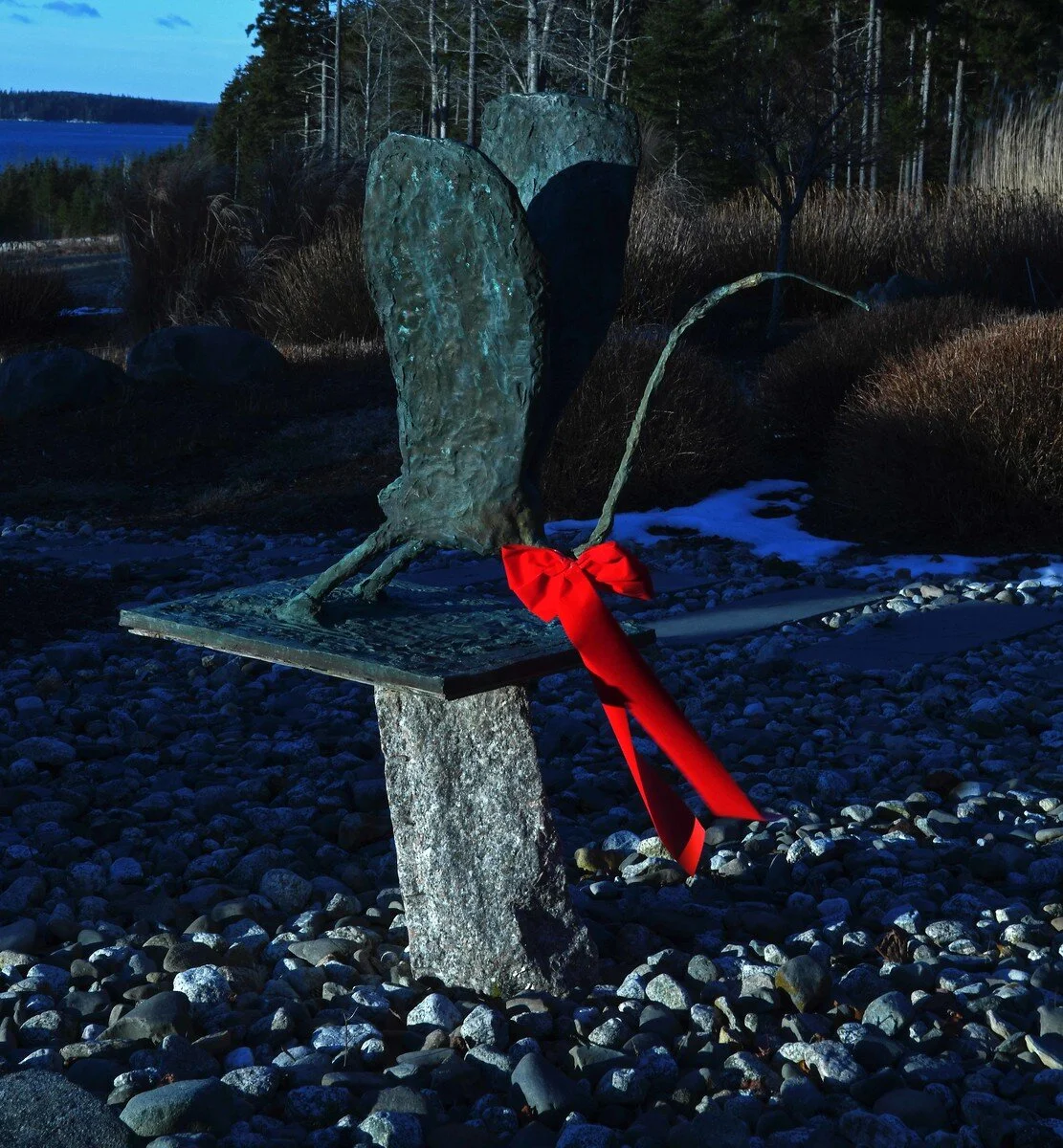
Here we see a bronze bird taking off at dawn on the day before Christmas. He’s known to us as Edwin, for reasons that will become apparent, and he dresses up only for the Christmas season.
1.jpg

The “aliveness” in this bird’s rising is a thrill to see in all weather conditions, but especially in low winter light. Thus, this is the time to take a moment and praise the artist who sculpted this statue: Edwin Gamble (1922-2006). He named it “Egret” when he created it in 1966.

Gamble spent many summers in Maine and eventually moved with his family to Topsham, where he was easy to recognize in his red truck that had “ylwlegs” vanity plates. (Birders, of which he was one, had no trouble translating that abbreviation into “yellowlegs” [sandpipers].)

Among other things, Gamble is known as one of the foremost sculptors of shorebirds in abstract action-form. Keep your eye out for his works, which are on display in Maine museums, public places, and a few galleries. (Brooklin, Maine)

Comment

Comment

In the Right Place: Lucky

We recently took this exceedingly rare image of the Abominable Snowman near the southern junction of Naskeag and Back Roads. We suspect, based on the circumstantial evidence and two stiff eggnogs, that he burgles houses while posing as a Santa’s helper.

6.jpg

Perhaps only those people who are indigenous to the Himalayan Mountains will understand our excitement. The Abominable Snowman (also called The Yeti) has been a god-like legend there for ages. “He” is a portent of great danger to be avoided. (His gender is abominably apparent, since he disdains clothes, but we took our image from a discreet angle.)

Those legends go back a long time. Alexander the Great, after he conquered Yeti territory, reportedly demanded that his soldiers capture the abominable creature and bring it to him for inspection. But, apparently, the creature was too smart for them and they never saw him. But not for us! Consider yourself lucky to have this invaluable image. (Brooklin, Maine)

Comment

1 Comment

In the Right Place: Appreciations

Whether you’re religious, irreligious, or sometimes both, this is a time to appreciate good music of all dimensions, no matter where your spirit compass is pointing. And, when it comes to offering good choral music, our regional Bagaduce Chorale has been among the best for more than 40 years.

3.jpg

The Chorale, directed by Bronwyn Kortge, gave its always-much-anticipated Christmas Concert yesterday in Bar Harbor and the day before in Blue Hill. The Concert exceeded its high expectations and deserves a bit of praise. The images here are from the performance at the First Congregational Church of Blue Hill.

4.jpg

As has become usual, the Choral was accompanied by the excellent professionals and students of the GEM Orchestra and the ECMI Youth Chorale. For the curious: those acronyms stand for the Gaining Experience Through Mentoring Orchestra and the Ellsworth Community Music Institute Youth Choral. (As with Maine’s many Native American settlers, we think long, hard-to-say, descriptive names are okay.)

Speaking of apt names, here’s Noelle Hanson of Trenton, Maine:

1.jpg

She and the other members of the ECMI Youth Chorale were located to the right of the GEM Orchestra, with the Bagaduce Chorale above them:

2.jpg


A much-deserved standing ovation followed the performance:

5.jpg

(Blue Hill, Maine)

1 Comment

Comment

In the Right Place: Winter Sailing

Yesterday we had a beautiful winter solstice, the shortest day and longest night of the year. We also had a bonus as the sun was approaching its annual lowest point in the sky at noon: We had a waning crescent solstice moon that was barely visible in the glare of a bright day that was made brighter by a thin carpet of snow.

A.jpg

In fact, we originally couldn’t find that moon in the bright sky as it sailed over the Atlantic. But then, we heard “Pssst – look there!” A friendly spruce tree pointed it out for us, as you can see from the image above. Once we found it, we put a bigger lens to work:

B.jpg

In pre-Christian times, the winter solstice was celebrated religiously as Yule Time, when the energy of the moon god caused the rebirth of the sun. The word “solstice” is from the Latin for “stopped sun.” (Brooklin, Maine)

Comment

Comment

In the Right Place: The Third Law

Clear, cold, mostly northwest air and a thin layer of glistening snow this week seem to have enhanced the brightness of the few colors in our winter landscape, especially the colors on houses. Perhaps that mutuality was meant to be.

3.jpg

Above, we see a light green door that seems more vibrant now that it’s not competing with the nearby maple leaves. Below, we see what is called “The Red House” here, seemingly shouting “look at me now!”, even though it’s vacant in the winter.

4.jpg

By the way, if you’re worried about the potential danger of slippery snow at home entrances and sharp icicles over front doors, relax. Back and side doors usually are used for friendly winter visits here, and wet boots often are taken off just after entering. (Newton’s third law of conversation states that relaxing in warm socks stimulates good talk. That’s Nancy Newton, not Sir Isaac.) (Brooklin, Maine)

Comment

Comment

In the Right Place: Contentment

It’s cold here as we speak late this morning (16F with a 4F wind chill), but there’s no significant wind to induce pain. Yesterday morning, it was just as cold, but there were wind gusts of up to about 20 miles per hour coming off the sea and creating ghosts from the powdery snow on the field:

1.jpg

It was beautiful, but too cold for softies like us to stay out long. By dusk yesterday, however, it was only cold again and the deer dined al fresco in contentment where the snow once blew:

7.jpg

(Brooklin, Maine)

Comment

Comment

In the Right Place: Ageing Issues

Yes, it’s strange, but apparently true: When you’re an old and bent apple tree; and, when your enzyme juices can’t flow well enough for you to drop all of your apples; and, when you think that no one is watching – you organize your senior community into a conga line dance (one-two-three kick right; one two three kick left) and try to shake those little devils off.

2.jpg

Well, maybe it’s our biology that’s a little bent, but note the apples still in the trees in the image above. taken Monday (December 16). In fact, note these apple tree images, taken yesterday.:

5.jpg

Some of those little devils appear to think that, if you’re future is to rot, it’s better to rot in the air than on the ground. (Brooklin, Maine)

Comment

Comment

In the Right Place: Little Mysteries

It snowed a bit last night (no more than a sneeze, really), but a fine snow is drifting down as we speak – so fine that you can’t see it in the image below, which was taken a few minutes ago.

2.jpg

Snoopy got more snow yesterday than we did as he waited for it alongside Naskeag Road. The late Judith Fuller’s road banners are still appearing there, thanks to her family.

121819.jpg

It’s one of those enjoyable little mysteries that we‘ve come to expect as we turn the corner on our way down to the Harbor and look to see whether a new banner has gone up yet. (Brooklin, Maine)

Comment

Comment

In the Right Place: Winter Wonder

If you want to keep some color in your garden during a Maine winter, you can’t go wrong with cultivated Heather. It remains colorful, has a fascinating texture, and – perhaps most important – the deer seem to hate it. Cultivars of Heather come in a variety of colors, but our favorite is the one shown here, which turns dark red in winter and is stunning in snow.

i-2S88qnh-X3.jpg

In its uncultivated form, Heather is a hardy native of the rocky and windy heaths of Scotland, where it is common and its twigs were once used for making brooms. Hence, its scientific name is Calluna vulgaris, from the Greek verb kallune, to brush or clean, and the Latin word vulgaris, meaning common. Its English name, Heather, is thought to be a transliteration of the Scottish word for heath, haeddre. (Brooklin, Maine)

Comment

Comment

In the Right Place: Torment and Temptation

Here on the Down East coast, it seems that we have a fourth dimension. But, it’s often hard to take that additional dimension – weather – for granted the way we do the other three.

Last night, under a bright moon in a clear sky, we had wind gusts coming off the sea in excess of 35 miles per hour. As we speak, it’s a beautiful, calm December day that is tempting us to come hither. Yesterday, especially in the morning, we had rain that came down harder than can be explained by gravity. It was being tormented by strong wind gusts that regularly whipped water that wanted to fall vertically into water that had to fly horizontally. In Naskeag Harbor, the strong winds frenzied the flood tide there, as you can see in the image below (taken through heavy rain). Fortunately, no damage was done in the Harbor, as far as we could tell.

5.jpg

That was not the case a short distance up Naskeag Road yesterday, as you can see below. That Road had to be closed in part because several courageous conifers were slayed in the onslaught; they fell across the Road onto power and communication lines, with the usual consequences for the connected neighbors.

6.jpg
7.jpg

The wind also drove the rain onto windows and filtered the views:

2.jpg

Rain chains worked overtime:

4.jpg

As the wind abated and the rain tapered into a drizzle, familiar spruce trees and winterberry stalks appeared elegant in the soft light:

3.jpg

But now? Now it’s time to relent to the temptation to walk in the woods. (Brooklin, Maine)

Comment

Comment

In the Right Place: Super

From where we stood, last night’s full moon seemed to bubble up from the sea behind Acadia National Park like a huge, molten cannonball:

2.jpg

As it rose, it became a blinding searchlight sweeping Blue Hill Bay:

3.jpg

When it reached high orbit, we could see that it had become our old, scarred companion again:

4.jpg


This moon was historic for two reasons. First, it was the last full moon that we’ll see in this troubled decade (2010-2019). Second, it also was a Supermoon; that is, it was a full moon that was at its closest orbital point to earth. Thankfully, this December moon didn’t live up to two of its historic Native American names: the Full Snow Moon and the Full Storm Moon. (Brooklin, Maine)

Comment

Comment

In the Right Place: Hairy Experiences

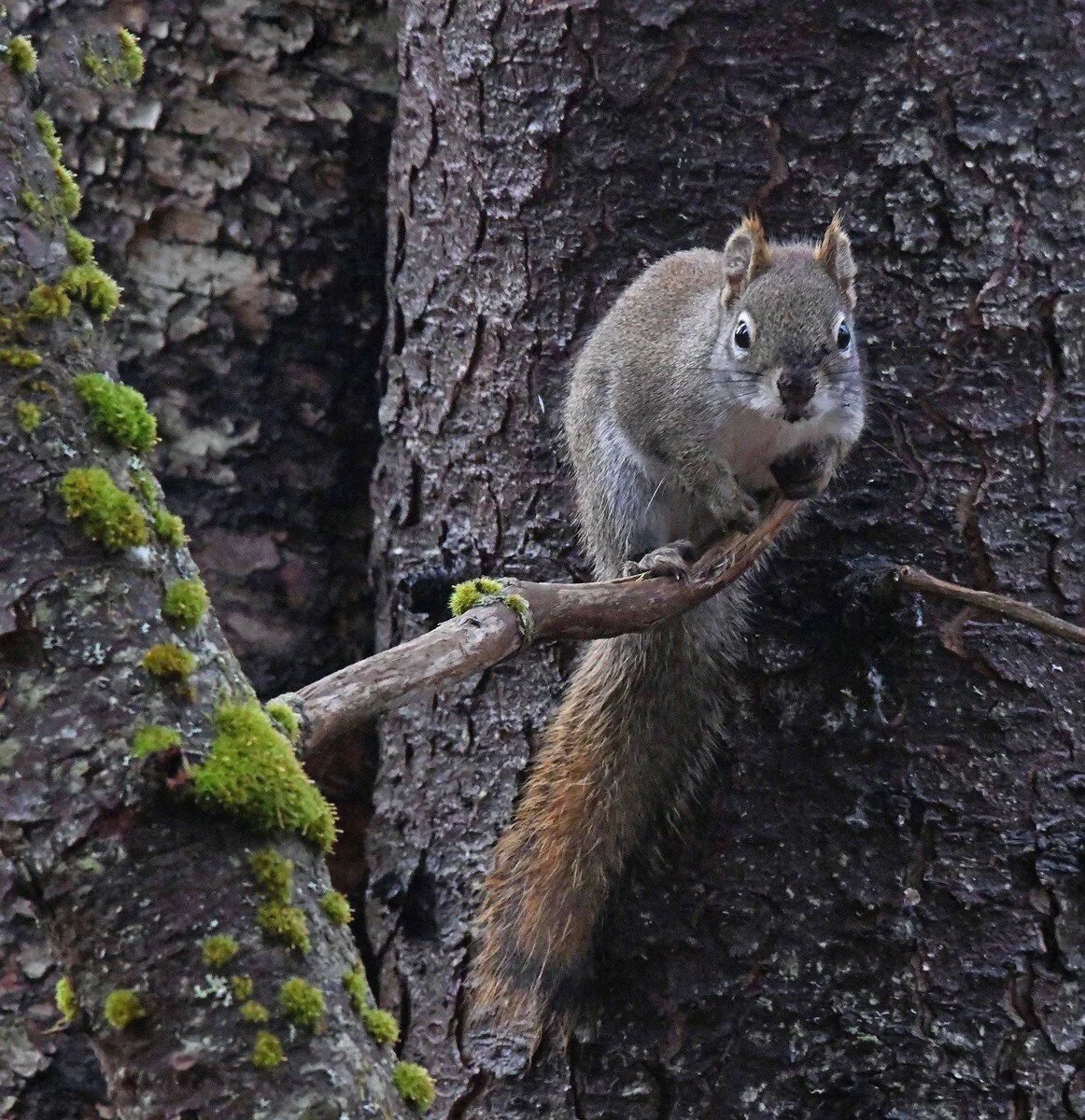
It looks like our Red Squirrels have finally finished their fall molt. Their namesake color appears only on the tails of their thicker gray winterwear.

4.jpg

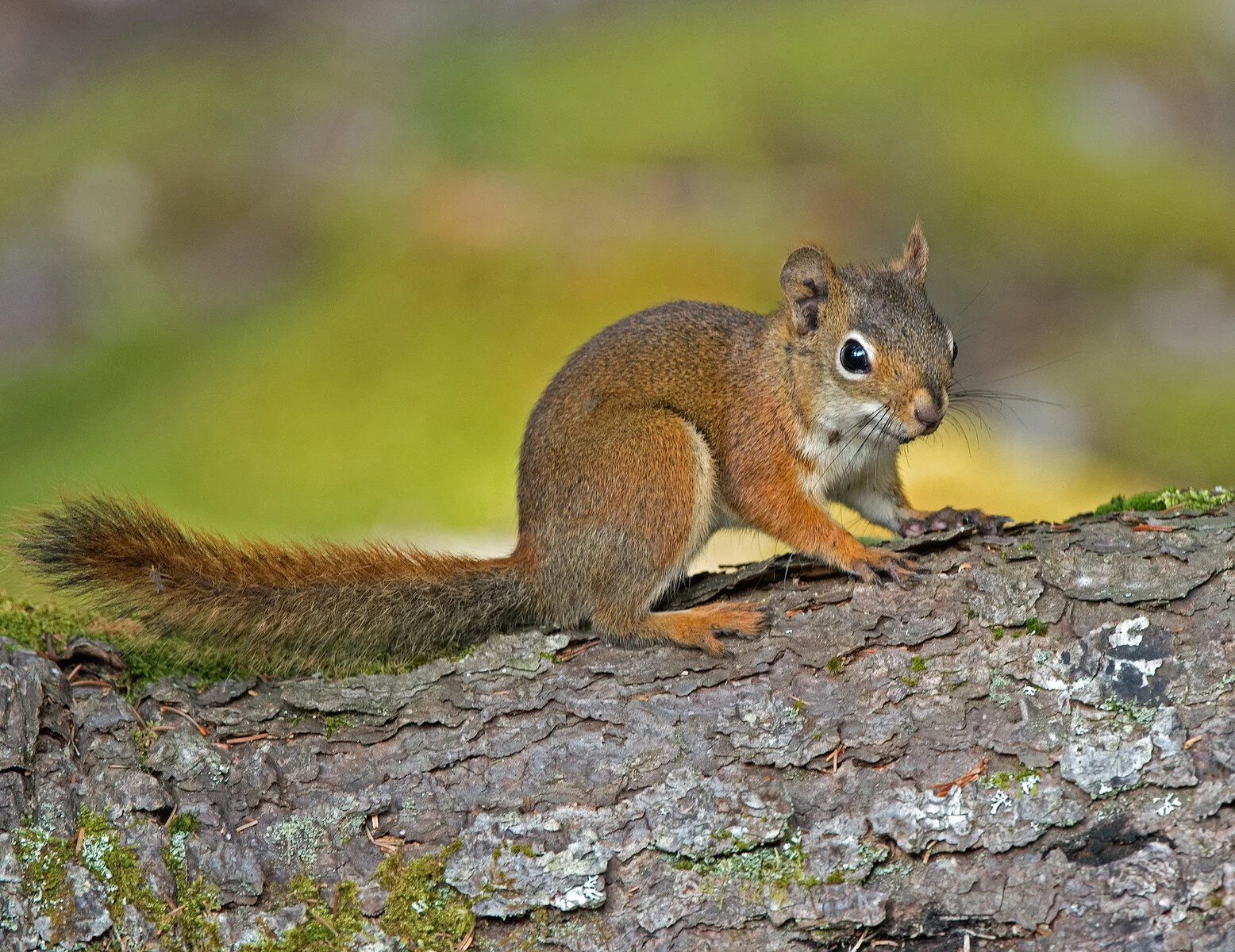
These little squirrels will molt again in the spring and gradually return to their greatly variable reddish-orange-brown colors by summer. Their bellies will remain white or cream-colored all year, however. The image above of one of our now-gray neighbors was taken on Tuesday (December 10), while the image below of the then-reddish one was taken in August:

3.jpg

As with many other winter-foraging mammals, the coats of Red Squirrels have insulating double layers. Longer and thicker guard hairs on the outside protect against the severities of the winter environment, especially water, wet snow, and wind; short and thin hairs on the inside trap air between the two layers, where it warms. (Brooklin, Maine)

Comment

Comment

In the Right Place: Choices

The woods are alive with the sound of water. This image, taken yesterday, is of a stream that can be a trickle or even a memory in the summer woods.

i-HJZf6HN-X3.jpg

A Monday/Tuesday overnight storm here dumped a near record 1.4+ inches of precipitation on us, according to the weather data. Yesterday evening’s rain added to the accumulation, while today’s freezing weather may ice-up the considerable pooled water in the woods. We’re not sure whether we should start building an ark or get out our ice skates. (Brooklin, Maine)

Comment

Comment

In the Right Place: Quality

This is the Brooklin General Store during yesterday evening’s rain and fog, which eventually became a howling storm. Most people will not be able to see the odd beauty hidden in this scene. But many residents here have seen and felt it.

#1.jpg

When returning to Brooklin down the Blue Hill peninsula at night, we travel mostly dark, winding roads. Suicidal deer live along those roads, as do night-strolling porcupines that look like moving potholes. When you add fog, rain, ice, and/or snow to the mix, it takes concentration, at the least, to get to Brooklin on a winter’s night.

But, as you pass the shadowy Brooklin Cemetery on your left, you can see the welcoming lights of the General Store ahead and think of the friendly neighbors in there. That’s when you can get that sense of warm relief – that “Finally-Back-Home” feeling – and see and feel the beauty. It’s probably part of a quality of life quest. (Brooklin, Maine)

Comment

Comment

In the Right Place: Seeing Red

We seem to be seeing fewer Northern Cardinals this winter, and now is the leafless time to see the startlingly red males, such as this one.

#4.jpg

The males’ plumage is as bright as the vestment of a Roman Catholic Cardinal, hence the species’ name. The female doesn’t wear a bright vestment, but she does wear lipstick when she reaches sexual maturity:

#3.jpg

Juvenile Cardinals have gray-black beaks:

#1.jpg

You might wonder whether the male Cardinal’s bright winter cloak is a case of evolution going wrong, but researchers have discovered that female Cardinals will select the brightest of their suitors to mate. It seems that the females know that the brighter the red of the male, the healthier he likely will be. (Brooklin, Maine)

Comment

Comment

In the Right Place: Mostly True

Here, we’re watching the alchemy of dusk change the sea in Great Cove into hammered silver. We’re looking southwest through one of the two passages into the island-sheltered Cove. The moment lasted about a minute on Thursday (December 5).

#2.jpg

In the background, slightly right of center, we can barely see Champlain Mountain rising like a blue whale above and well behind the islands in Eggemoggin Reach.  The mountain is on Isle au Haut (“High Mountain Island”), about 11 miles out in the Atlantic. That island was “discovered” and named in 1604 by French explorer Samuel de Champlain, perhaps the best of the original European explorers of North America. The mountain, of course, was named in his honor.

Oldtimers here tell us that, when Champlain Mountain disappears from our view during the day, it’s going to rain or snow. In our experience, that’s true most of the time. (Brooklin, Maine)

Comment

1 Comment

In the Right Place: Machine Guns

Here we have a Black-Capped Chickadee complaining about being watched, or the cold, or a Chickadee’s hard life. Chickadees are a half ounce of complaints.

#3.jpg

They get their family name from those complaints, which sound like a kazoo playing “chick-a-dee!”, or “chick-a-dee-dee!”, or “chick-a-dee-dee-dee!”, and so forth. The more “dees” at the end, the more annoyed or alarmed the bird is; when a hawk is around, they’re virtual “dee” machine guns.

#3A.jpg

There are seven native species of Chickadee in North America, but the Black-Capped one is our most common, which may be why it’s our state bird. For such a small creature, it does well during our often-frigid winters (when it stores and eats seeds), as well as during our lush summers (when it eats mostly insects). (Brooklin, Maine)

1 Comment

Comment

In the Right Place: Glee

Our marsh and field ponds are mostly iced-in now with a thin meringue of the latest snow. From a distance, they look placid, if not moribund. When we get close, however, we see that the snow is a diary of the hectic night before, with many comings and goings of furry neighbors as big as deer and as small as squirrels and voles.

i-9LV9WKd-X3.jpg

The ice breathes, heaves. groans and, sometimes, issues a “CRACK!” as loud and startling as an unexpected rifle shot. We’re hoping that the river otters come again this year to belly slide and remind us that glee is still possible. (Brooklin, Maine)

Comment