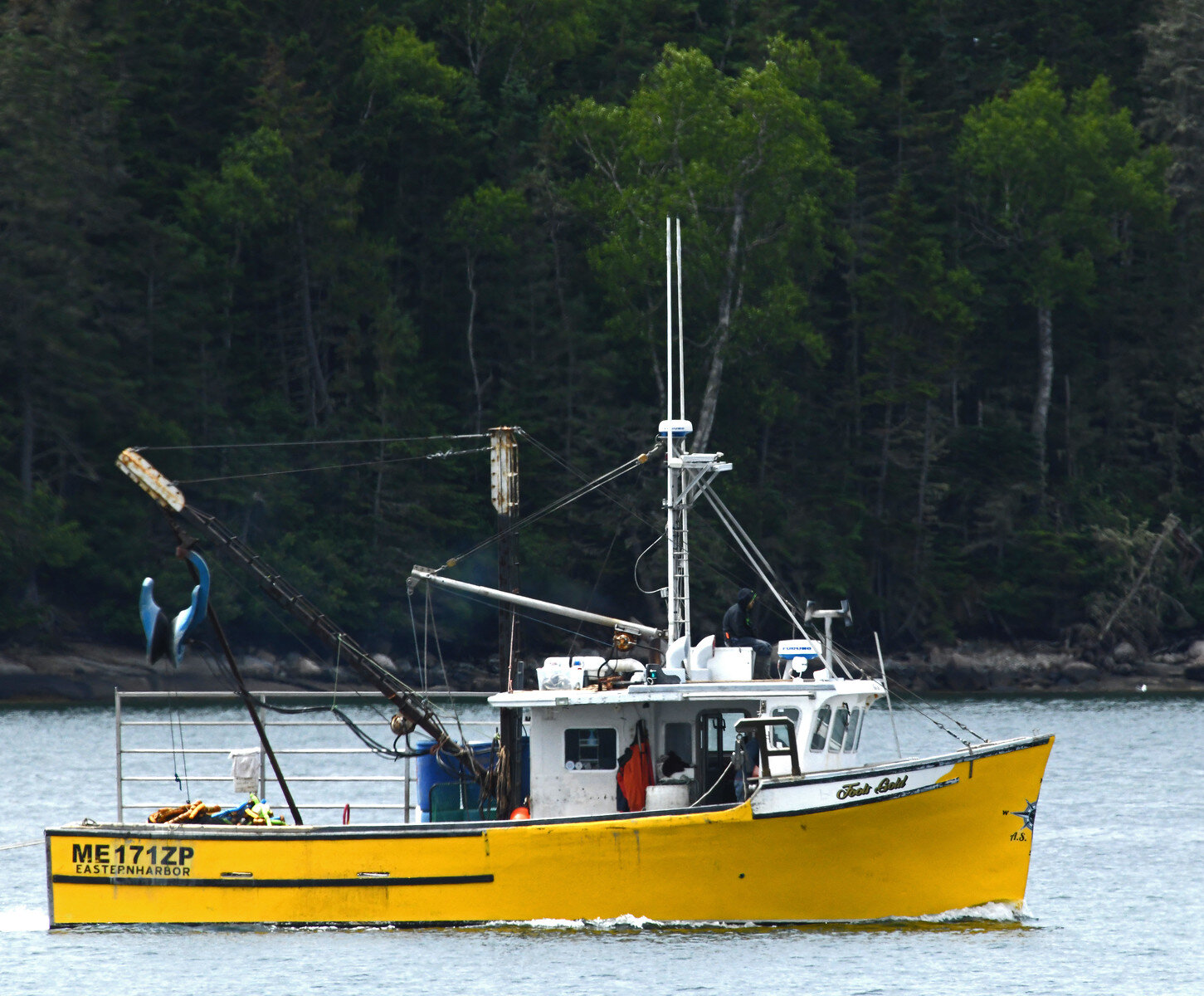
Fool’s Gold is a “purse-seiner,” which is an unusual word worth considering for a few seconds because there’s a good New England part to this story.
In the 14th Century, before real pockets were invented, there were “purses” within which valuables were carried – usually cloth or leather pieces that could be “pursed” shut with an imbedded drawstring. There also were “segnes” (later spelled “seines” and pronounced “sanes”); they were and still are fish nets.
Here’s the good part, according to historical reports: In 1826, one or more fishermen in the Rhode Island fishery put together the two concepts of a drawstring purse and a trawling net. The first “purse-seine” was created there to catch menhaden (pogeys), about 15-inch-long fish often used for lobster bait. The purse-seine type of net is now used worldwide to catch big and little fish.
A purse-seine is designed to capture all or most of a school of fish. When the school is found, the fishermen deploy a large seine (net) out of their vessel’s stern to descend like an underwater curtain that will encircle as much of the school as they can. Fishermen spread out their seine for encirclement nowadays by using an outboard motored skiff or the fishing vessel, itself.