Comment

In the Right Place: Clearing the Air

What has the face of a hawk, the fuzziness of a bumblebee, the wings of a dragonfly, the tail of a lobster, the length of a cockroach, and the hovering ability of a hummingbird?

Right! It’s the Clearwing Hummingbird Moth (Hemaris thysbe), which is part of the Hawkmoth family (Sphingidae). They have been very active this month. Here we see one sipping nectar from our catnip flowers (Nepeta cataria) on August 24.

H-3.jpg

Below, we see one pollinating the last of the milkweed flowers (Asclepias) on August 12:

H-2.jpg

The clear parts of this species’ wings occur when these moths discard some of their wing scales early in life, perhaps as a camouflaging feature. However, other species of Hummingbird Moths do not have see-through wings. (Brooklin, Maine)

Comment

Comment

In the Right Place: What's Wrong With This Picture?

Yes, that’s the Osprey Nest that we’ve been monitoring. No, that’s not an Osprey in it. We’re looking at a thief in action yesterday morning.

A.jpg

The nest has become mostly an eating and resting platform for the Osprey youngsters that were raised there. Their parents drop a fish into the nest for them from time to time and they come by to snack and maybe take a nap or just ponder Osprey mysteries.

Much of the time, the fledged youngsters are self-teaching themselves to fish and – just as important – what to do with a fish once they have caught it. (In the beginning, they sometimes kept a just-caught fish in the talons of both feet, rather than transferring it to one foot, the way their parents do.  When they tried to land on a branch or even a flat surface with a live, slippery fish in both feet, they became a slapstick comedy act.)

B.jpg

While the Osprey youngsters are fishing, the more aggressive of our Herring Gulls, such as this one, sneak onto the nest with an eye to the sky, grab part of any fish there, and flee. We wonder what would happen if one or more of the Osprey homeowners saw a gull in their bed.

Leighton Archive Image

Leighton Archive Image

Often, Ospreys will eat a fish in an open area and gulls will gather around, but keep their distance; the dining Ospreys seem to completely ignore their presence. Clearly, the raptors are the dominant species. (Brooklin, Maine). See also the image in the first Comment space.

Comment

Comment

In the Right Place: High Times

Wednesday (August 26) was what many think of as the iconic Maine summer day here. Clouds were surfing a blue sky; the temperatures were in the high 60s to low 70’s; dry and cool sea breezes were sweeping in like waves, and the incense-like scent of Autumn was rising from the browning fields. (Full Disclosure: not all summer days here are as good as Wednesday was. Don’t tell anyone.)

A.jpg

We like to go to Amen Ridge here on special days to record the view of Cadillac Mountain across Blue Hill Bay in Acadia National Park. As you can see from the above image, taken at about Noon Wednesday, the tide was low, the sand bars were connecting, and Cadillac was brooding about when Acadia will open fully after the plague.

Cadillac Mountain is 1,529 feet high and, being on Mount Desert Island, it is surrounded by water. It’s also the highest point on the North Atlantic Coast. Thus, the mountain often attracts fascinating weather. Compare this cloud attack on her from roughly the same view on August 18:

B.jpg

(Brooklin, Maine)

Comment

Comment

In the Right Place: Swamped

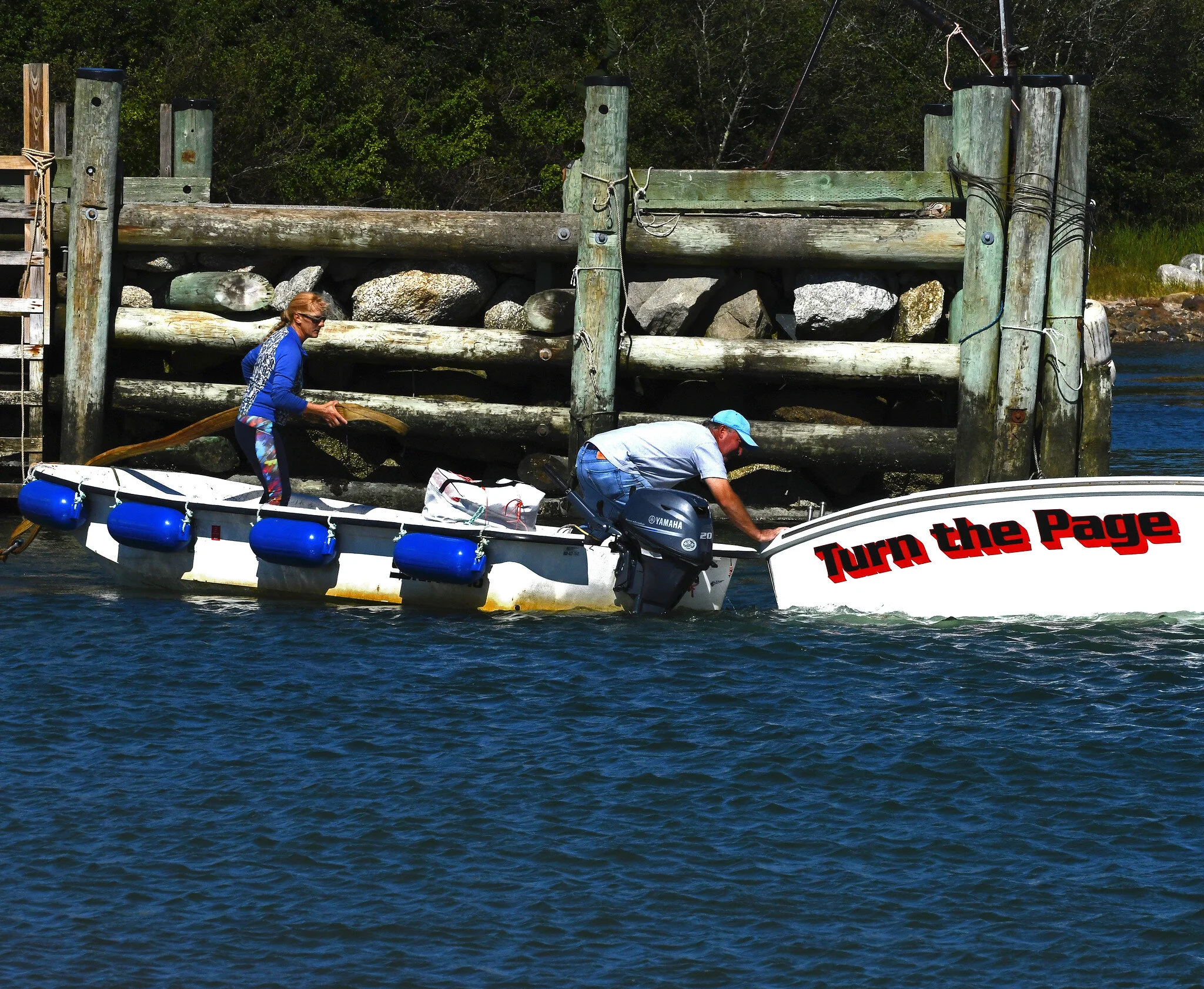
Yesterday, the Fishing Vessel Turn the Page tragically hit a rock in Eggemoggin Reach and opened a gash on her bow below the waterline. Her captain, who suffered a head injury in the incident, barely made it to lower water in Naskeag Harbor and the help of fishermen here.

Turn the Page, out of Sedgewick (Benjamin River), Maine, was beached here in low tide. However, the boat then was swamped by the incoming tide, as you can see here. The captain reportedly was taken to the hospital for observation while local resources and fishermen continued with her recovery.

1.jpg

With the help of local fishermen from the Fishing Vessel Blue Sky, a series of lines from the A.H. Marine Company boom truck were hooked to Turn the Page to bring her in farther – long lines to reach her and more sturdy ones as she was pulled closer to the beach and had to be dragged over the bottom.

4.jpg

She was pulled high enough up on the beach to where she could be trucked away. Last night or this morning, she reportedly was craned onto a large trailer and taken to a shipyard.

17.jpg

The loss of a vessel this way, even if not permanent, is heartbreaking for her owner, our fishing community, and those who respect what they do.

15.jpg

(Brooklin, Maine; thanks to expert photographer Werner Gantz for the heads-up and reporting on this event.)

Comment

Comment

In the Right Place: Dappled

Barbara pruned her roses down in June, after their first bloom. The second bloom has started to appear with robust flowers. The recent rains have helped and often dappled our roses with rain drops, one of the garden’s great visual pleasures.

R-1.jpg

The image that you see above, taken August 22, is of a small rose that has reached its most beautiful growth stage – between being a bud and being fully open. Its commercially known as the Oso Easy® Italian Ice® Rose.

The image below, taken yesterday, of an aromatic climbing rose fully open and highly fragrant. It’s commercially named after the famous English gardener and landscaper: the Gertrude Jekyll Rose®.

R-2.jpg

Despite their names, as Juliet told her boyfriend: “A rose by any other name would smell as sweet.” (Brooklin, Maine)

Comment

Comment

In the Right Place: Tides of Joy

Yesterday, the incoming tidal surf at Blue Hill Reversing Falls was challenged by a group of paddleboarders and kayakers. Some of the surfers won – for a while:.

1.jpg

Some lost – after a while::

2.jpg

Perhaps more interesting than these talented paddlers is the geological rarity in which they were surfing. According to some researchers, Maine is the only state that contains this type of powerful whitewater that reverses with the tides; and, we have eight such locations in our State.

Leighton Archive Image

Leighton Archive Image

This type of falls occurs when the bedrock forms an inclined channel of just the right width and depth between two bodies of water, at least one of which is strongly tidal. There also must be just the right height difference between the two bodies of water to produce fast surges in both the rising and falling tides. (archive images):

Apparently, during the last Ice Age, Maine’s protruding coast was under a glacier cover longer than the coasts of southerly states. The moving ice here scoured much of our coast down to its granite bedrock, deposited boulders, and had a furious meltdown via rivers and other waterways that gouged geologic anomalies seen nowhere else.

Leighton Archive Image

Leighton Archive Image

(Brooklin, Maine)

Comment

Comment

In the Right Place: Awareness

Yesterday, I was hidden behind a curtain of cattail leaves at our pond, which is at the base of our sloping North Field. I was after wood duck, but saw only one bedraggled mallard within three hours. However, just as I decided to pack up and leave, our smallest and cutest white-tailed deer fawn came dancing down the hill with his mother about 30 feet behind. (Sex assumed.)

2.jpg

He occasionally would rest and casually look around. She seemed annoyed that he wouldn’t stay close.

1.jpg

They were not aware of my presence at first; they often were in their iconic head-down nibbling position in the uncut vegetation. The fawn’s fading camouflage spots seemed still able to break up his shape a bit among the Queen Anne’s lace and emerging daisy fleabane. The doe’s coat was starting to thicken and turn winter gray.

5.jpg

As soon as I clicked my first “shoot,” Mom’s ears went up and she assumed her frozen alert position. By the second shot, both mother’s and son’s ears and eyes were focusing in my direction. After several quick shots and Mom’s snort, they were gone. They probably never saw me.

3.jpg
4.jpg

Deer don’t see as well as we do during the day, but they have a much wider field of vision (less of a blind spot) and they see better at night, when it’s more important. Deer hear sounds around them much better than we do, especially low frequencies. Those huge, sound-scooping, swiveling ears are very good direction-finding devices. (Brooklin, Maine)

Comment

Comment

In the Right Place: Troubles

Here, we’re in Naskeag Harbor yesterday afternoon, as fishing vessels come to and go from the bait hut where fishermen can buy bait and fuel going out and sell their lobster catch coming back:

1.jpg
4.jpg

These are troubled times for the fishermen, some of whom are pulling their traps out of the water and getting ready to end their season early. Here’s the Fishing Vessel Ghost pulling its traps in Great Cove on Thursday (August 20):

3.jpg
2.jpg

The Maine lobster industry has been caught in a confluence of adverse consequences. It got damaged by China’s tariff retaliation to President Trump’s trade war with that large lobster customer. (Last month, President Trump promised a bailout for the fishermen, but it has not materialized as far as we can tell.)

The Covid 19 plague has depleted restaurant and cruise ship businesses, where lobster was a popular dish. Warming Maine waters have provoked many lobsters to move out from coastal territories to colder, deeper seas. And, on the horizon, additional fishing restrictions to protect right whales likely will go into effect soon.

Fishing for a livelihood is not easy, but it is picturesque:

7.jpg

(Brooklin, Maine)

Comment

Comment

In the Right Place: Farewell Flowers

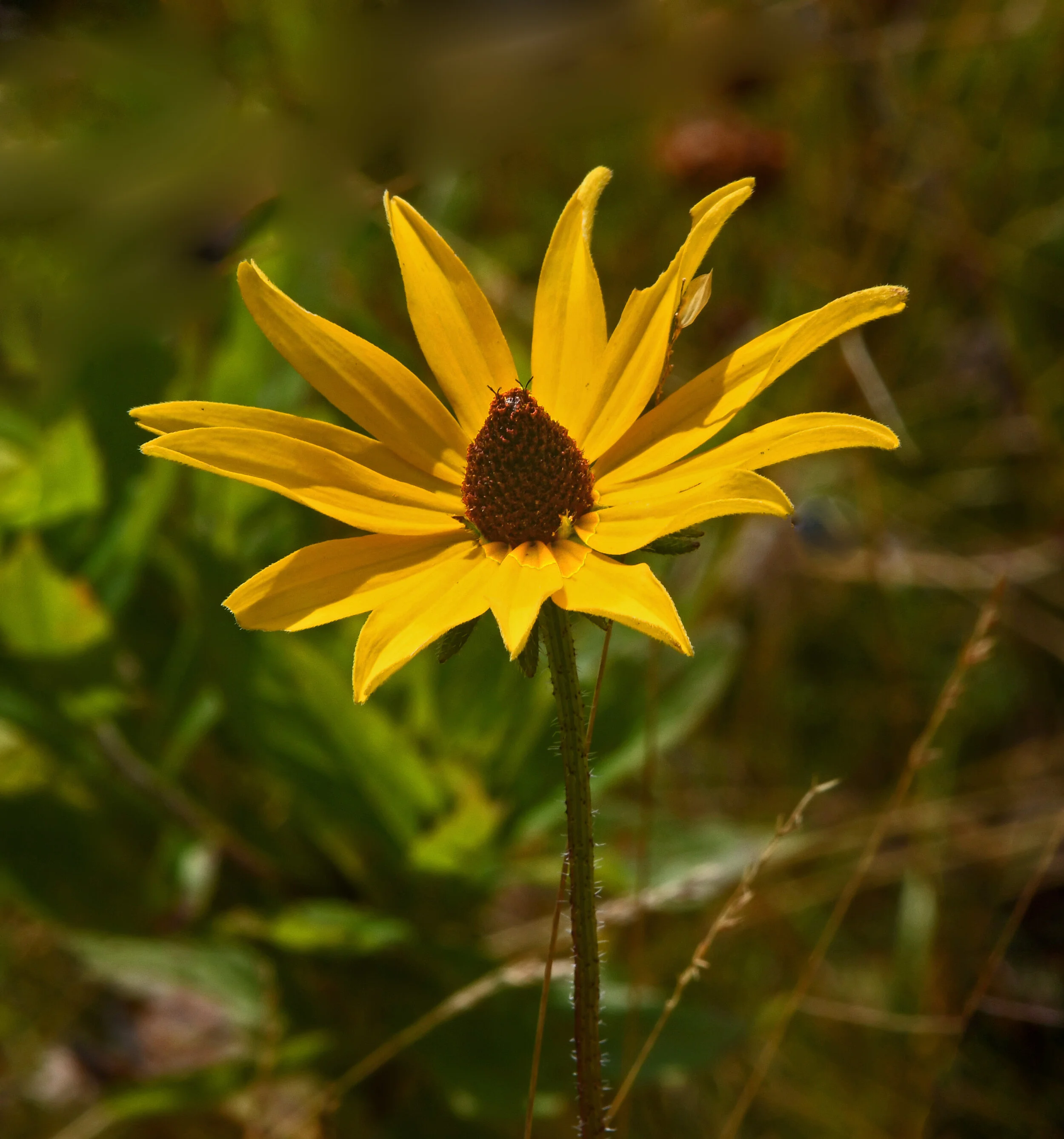
Black-Eyed Susans are at their peak here, both the cultivated ones in the gardens and the wild ones in the fields. There are at least 30 species of Black-Eyed Susans, all native to North America and part of the Rudbeckia genus in the sunflower family. The cultivated ones shown here are R. fulgida var sullivantii (first two images taken August 18, last image taken yesterday):

1.jpg

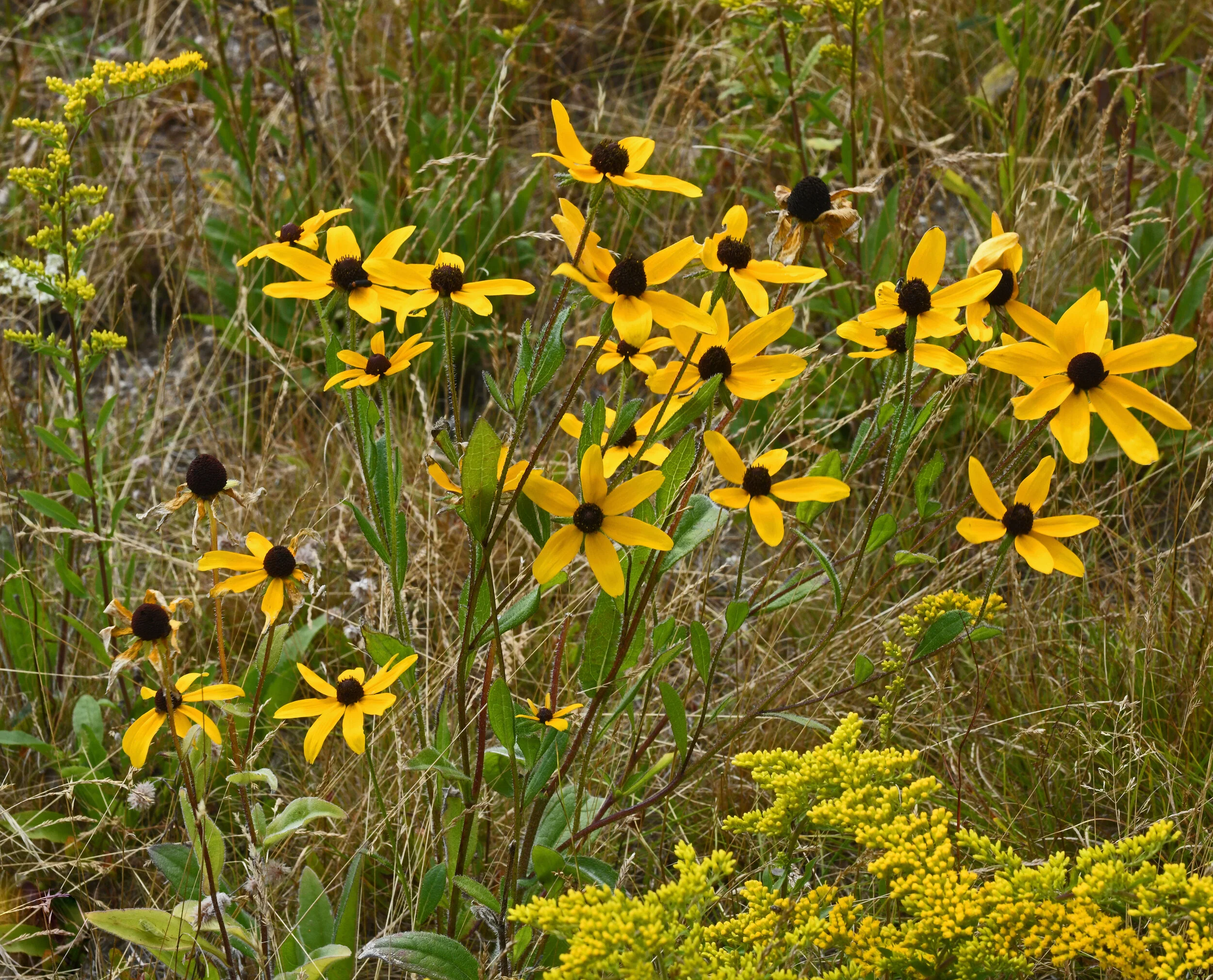
The wild ones shown here is Rudbeckia hirta, we believe (Images taken yesterday):

4.JPG
5.JPG

Why call a flower Black-Eyed Susan when no one has black eyes (other than the punched variety)? The origin of the flower’s name reportedly is the ballad “Sweet William’s Farewell to Black-Eyed Susan.” It was written about 1720 by English poet John Gay, who apparently was not an ophthalmologist. It’s a farewell song to Susan, who probably had dark brown eyes, as do the beautiful flowers named after her. Perhaps we should consider these flowers as her farewell to summer. (Brooklin, Maine)

Comment

Comment

In the Right Place: Osprey Nest Report 13

This may be our last installment in the weekly saga of Ozzie and Harriet, the ospreys that raised three youngsters here this summer. These parents have done a very good job. As you may remember, we’ve named their youngsters David, Ricky, and Lucy, in birth (and size) order for identification. All of the youngsters have fledged and Ricky has disappeared.

We haven’t seen much of Ozzie this week, but Harriet, David, and Lucy have been flying nearby and regularly returning to the nest or to nearby treetops. The image here shows David having difficulties emulating his parents’ ability to balance on the top of a high spruce near the nest.

A.jpg

David and Lucy are spending a lot of time flying and learning to fish. We haven’t seen either one catch a fish yet, but we’re not watching for extended periods anymore and they often fly far from the shore to fish in Eggemoggin Reach.

The youngsters frequently (but not always) return to the nest when one of their parents brings a fresh fish home. Below, we see Lucy who has just landed in the nest after her mother appeared there.

B.jpg

(Brooklin, Maine)

Comment

Comment

In the Right Place: Strange Thought Department

This fisherman’s truck and boat trailer were in a priority parking space at Naskeag Harbor on Tuesday (August 18).

i-fVSdTjh-X3.jpg

These vehicles are fairly typical of those that you’ll see scattered around that Harbor and other small fishing ports around here that don’t have the facilities to tie up small boats that take fishermen (male and female) to their vessels.

Usually, the fishermen come to our Harbor in trucks or other vehicles that pull a small outboard motored boat on a trailer; the trailer is backed into the water; the boat floated off; the fishermen climb into the boat, and motor out to their fishing vessel. The process is reversed when they come ashore.

Seeing this truck “in nature” provoked a strange thought and a little unreliable research relating to painters who are famous for portraying fishermen and their environment, from Winslow Homer, to Marsden Hartley, to the present generation. I couldn’t find in their works any portrayals of vehicles used by fishermen to get to their boats and come back home after work, except maybe one painting.

That possible exception was a painting by the self-taught Mainer Philip Barter titled “West Bros. Lobster Co.” It showed many things on and near the named Company’s pier at which a fishing vessel was off-loading fish. Nearby, there was an old truck filled with old-fashioned wooden lobster traps.

Perhaps many artists consider such things as trucks distractions from the beauty of the coast or maybe they’re too hard to portray, but they certainly are not out of place in reality. (Brooklin, Maine)

Comment

Comment

In the Right Place: Down East Fawn Report

It seems to have been a good spring and summer for White-Tailed Deer fawns here. The ones that we’ve seen seem large and healthy, which are two of the keys to their survival in the winter. This one, seen on Monday (August 17), is a good example:

D-2.jpg

She is still traveling with her mother, but roaming at a fairly large distances.  Here’s her Mom watching her:

D-1.jpg

(Brooklin, Maine)

Comment

Comment

In the Right Place: Lucky Varmint

You’re looking at the business end of a varmint that no one should be this close to. However, he crossed our path in a parking lot yesterday without so much as a “pardon me” and we quickly gave way.

P-1.jpg

Yes, this is a Porcupine’s rear end, not the most beautiful thing that you’ll see today. These animals have front ends that are much more interesting and some even think they are cute:  

Leighton Archive Image

Leighton Archive Image

Nonetheless, we and many others feel that Porcupines are detestable.  The State of Maine hunting regulations allow them to be shot on sight without limit, anytime. They kill valuable trees, there are too many of them, and they provide no human benefit. When threatened, they attack with amazingly fast swats of their tails, which contain thousands of loosely fitted barbed quills. (They don’t “throw” quills.) The result of a Porcupine attack can be misery for a dog, cow, horse, or (rarely) human.

Leighton Archive Image

Leighton Archive Image

The only effective natural control of these quilled animals seems to be Fishers, which are large weasels that appear to be in short supply here these days. A Fisher (sometimes called a Fisher Cat) will circle the Porcupine until the spiny prey gets confused and/or dizzy. Then, the Fisher will leap in front of the varmint and bite it in its non-quilled face and forehead, often piercing the brain and virtually always stunning the porcupine so that its soft stomach can be attacked.

We confess that we are Porcupine haters and were aware of the Fisher’s successful face-biting technique when this Porcupine rudely brushed us aside yesterday. However, we decided that it would be inappropriate for us to use the Fisher technique in a public parking lot where children were running around. Lucky for that Porcupine. (Brooklin, Maine)

Comment

Comment

In the Right Place: Prize

The image here, taken last week, is of the only plum produced by our plum tree this year. There is nothing wrong with our tree. It’s a flowering plum tree, not a fruiting one.

Plum-1.jpg

In the spring, flowering plums produce gorgeous masses of flowers that are made even more beautiful by the trees’ purple leaves:

Leighton Archive image

Leighton Archive image

Flowering plums produce few, if any, plums in the summer; they give their all in spring. But, when they do produce a plum, it often is considered to be a prize plum.

Plum trees were domesticated and cultivated into various types in China more than 2,000 years ago and eventually spread through Asia Minor and Europe with considerable help from the Romans. Our flowering version originally was a European version. It’s scientific binomial is Prunus cerasifera, but it’s usually marketed in the United States as a “Thundercloud Flowering Plum.” Here’s another image of our tree during this spring:

Leighton Archive image

Leighton Archive image

(Brooklin, Maine)

Comment

Comment

In the Right Place: Mental Health

We have a triangular sandspit in Brooklin that is not quite a sandbar. It’s the “point” of Naskeag Point at Naskeag Harbor. The sand is gravely and almost disappears at very high tides. Yet, in summer, it’s “the beach” to some residents and the occasional visitor. There’s plenty of room there to take masks off and not worry about the plague and other people.

Beach -2.jpg

The view at the Point is of beautiful Maine coastal islands, interesting fishing vessels, and flotillas of colorful kayaks going out or coming in. The water temperature can be too chilly for many swimmers, but foot-dipping there while sunbathing can be a pleasing yin-yang experience.

Being at the right beach reportedly can have significantly good effects on mental health – the effects of the soothing sound of waves, the tingle of toes in the water or sand, and skin being washed by fresh, salty breezes and warming sun. These can bring “mental balance” in troubled times, according to some studies. Of course, protection from too much sun is needed, and we’re not talking about beaches that attract ant-like humans who have a swarming instinct.

Beach-1.jpg

We’re talking about a place where you can open yourself and let the elements in to do some brain cleaning (which we imagine to be the case in the first image) or to go the other way and get lost in deep thought as a salty breeze sweeps over you (which we imagine is happening in the second image). Both images were taken this month, but on different days. (Brooklin, Maine)

Comment

Comment

In the Right Place: Stalking Sky Animals

Yesterday was one of those iconic summer days here: air clear as a good spring water; heat as dry as a Phoenix bake-off, but mitigated well by gusts of Maine northwest sea breezes, and – best of all – plenty of big, find-an-animal clouds in a bright blue sky.

2.jpg

Those puffy clouds are cumulus clouds that often float as low as 3,000 feet or so above our fields of clouds, Queen Anne’s Lace. The clouds’ name derives from the Latin word “cumulo,” meaning “pile” or ‘heap.” When driving or walking back from the sea on the WoodenBoat School campus, the clouds make you feel as if you’re ascending:

1.jpg

When these clouds build big cauliflower tops, they’re called cumulus congestus for obvious reasons. If they continue to grow upward into giant darkening formations, watch out. Those are lightning and thunderstorm factories called cumulonimbus clouds, “nimbus” being Latin for “dark cloud.” (Brooklin, Maine)

Comment

Comment

In the Right Place: Land of the Free

Here, we see a first-generation American being born yesterday under a milkweed leaf. This Monarch Butterfly has just squeezed out of her chrysalis and felt her folded wings slowly straighten out like inflatable objects.

M-1.jpg

Now, she occasionally opens those fully formed wings and then slowly closes them to get the juices flowing. Within 15 minutes she will have the strength to instinctively try her first flight. It will be awkward; but, within an hour, she’ll be flying well. Then, she’ll be sipping her first taste of nectar while pollinating flowers, no longer a caterpillar chewing leaves while pooping.

M-2.jpg

At the same time that we’re seeing this new and pristine citizen trying to catch her breath in the shadows, we see her worn relative three feet away flitting from zinnia to zinnia in the open sunlight.  See above. This old, undocumented relative apparently migrated here without a passport and helped produce some of the first American Monarchs of the year. (Brooklin, Maine)

[Special thanks go to neighbor Sherry Streeter, whose garden and milkweed plantings are butterfly favorites.]

Comment

Comment

In the Right Place: Osprey Nest Report 12

A lot has happened since last week at this time, and it’s been good and bad. The bad: Ricky, the first Osprey nestling to fledge, has disappeared. How he’ll exist is a mystery. The good: Ricky’s siblings, David and Lucy, have fledged and are flying gleefully all around the Great Cove area, shouting with joy over the discovery of what they were meant to do. They seem to still consider their nest home and have been returning to it. Here’s David beginning one of his test flights at fairly close range (if you have a big lens):

1.jpg

Lucy, the youngest and smallest, seems to follow David when she can; she also begs when he sneaks away alone. Here’s Lucy practicing a landing from on-high:

2.jpg

Their takeoffs and landings in the nest aren’t precise yet, which can cause scrambles and head-to-head confrontations.

11.jpg

Their landings on branches often are comically awkward, especially when they get caught in a spruce tree or try to balance on a bouncing thin branch and must keep their wings out for stability.

7.jpg

We haven’t seen either sibling trying to fish yet, but we expect that any day. (Researchers have concluded that Ospreys are not taught to fish by their parents; they hunt instinctively like most, if not all, raptors.) While they’re getting up the nerve to fish, their parents do it for them, slapping down a wriggling fish into the nest on a regular basis.

Those parents, Ozzie and Harriet, don’t spend much time on the nest now, but Harriet usually is visibly nearby, sometimes circling the nest:

17.jpg

Ozzie usually is the one that delivers fresh fish to the nest, but he often acts as a sentinel, sitting in a nearby spruce top and warning other raptors that come too close of the family’s air space:

19.jpg

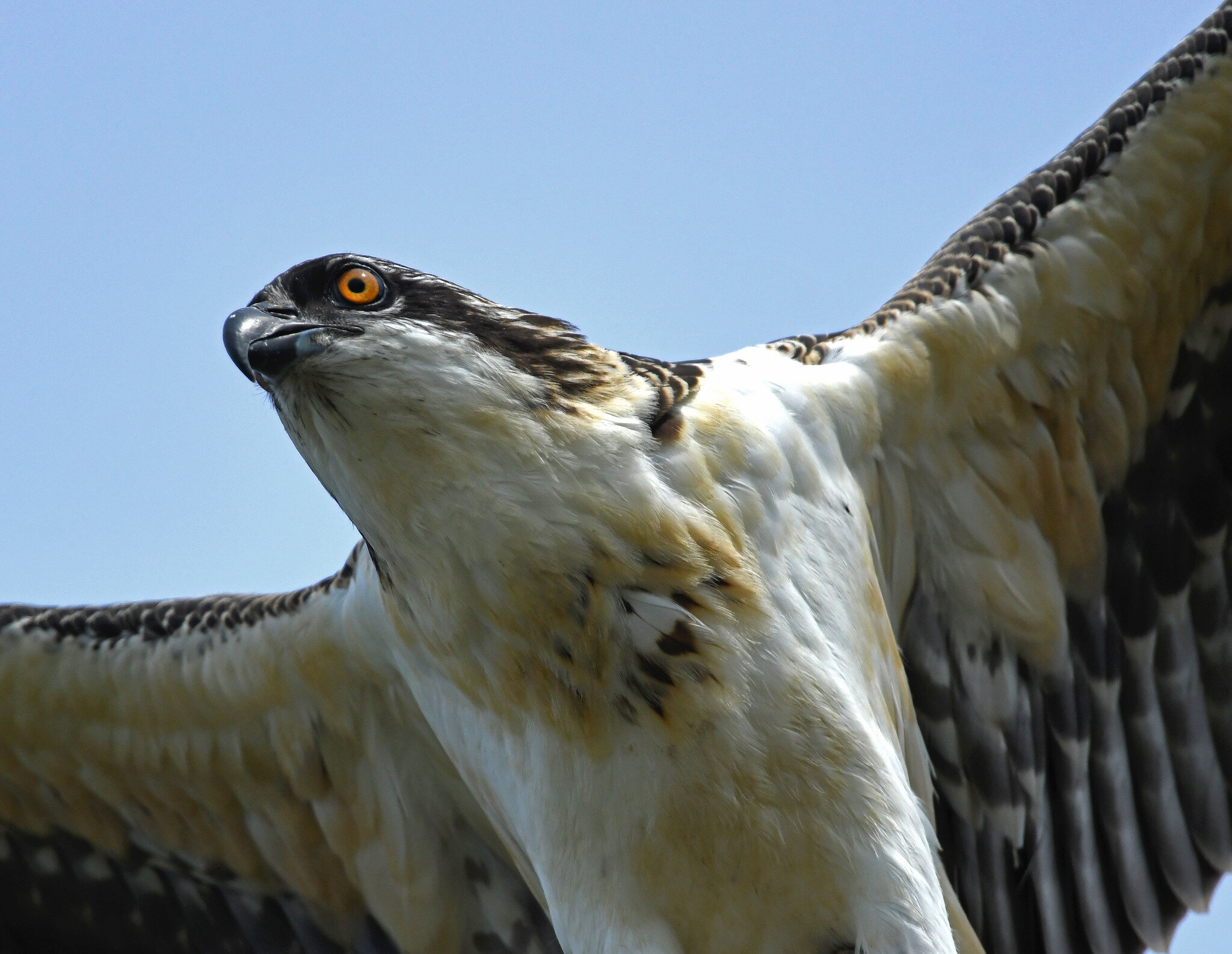
While the youngsters are almost as large as their parents, it is easy to tell the juvenile Ospreys (white-patterned backs and bronze eyes) from the adults (non-patterned backs and yellow eyes). The next step is for the youngsters to learn to fish, then they’ll be ready to migrate south in September. (Brooklin, Maine).

Comment

Comment

In the Right Place: Sinking Feelings

This mystery within a mystery came motoring through Great Cove on Sunday (August 9). At first, it appeared to be a Danish fishing vessel that was seriously off course. But, the name and home port listed on her rounded stern were “Lively Heels” from “Freedom, Me.”

Fisher 30 -1.jpg

A little research revealed that Lively Heels is a 1976 Fisher 30 [-foot long] Pilothouse Ketch with a history. The designs of these Ketches were inspired by Danish fishing vessels, but the boats were marketed as yachts, sometime luxurious ones inside. They reportedly are good “motorsailers.”

Fisher 30 -2.jpg

Lively Heels sunk in the Hudson River in 2007 or 2008, according to one of her prior owners. She was salvaged and restored, as you can see. We’re still working on what, if anything, she does in Freedom, Maine.

Freedom is a great small town with a world-famous restaurant, but it’s not on the coast and we’re not aware of any reasonably deep water there. (Sandy Pond borders Freedom, and is, at its deepest, 11 feet in spots, according to Town reports.) Maybe somebody out there knows more. (Brooklin, Maine) See also the image in the first Comment space.

Comment