Comment

In the Right Place: Blowin' in the Mild

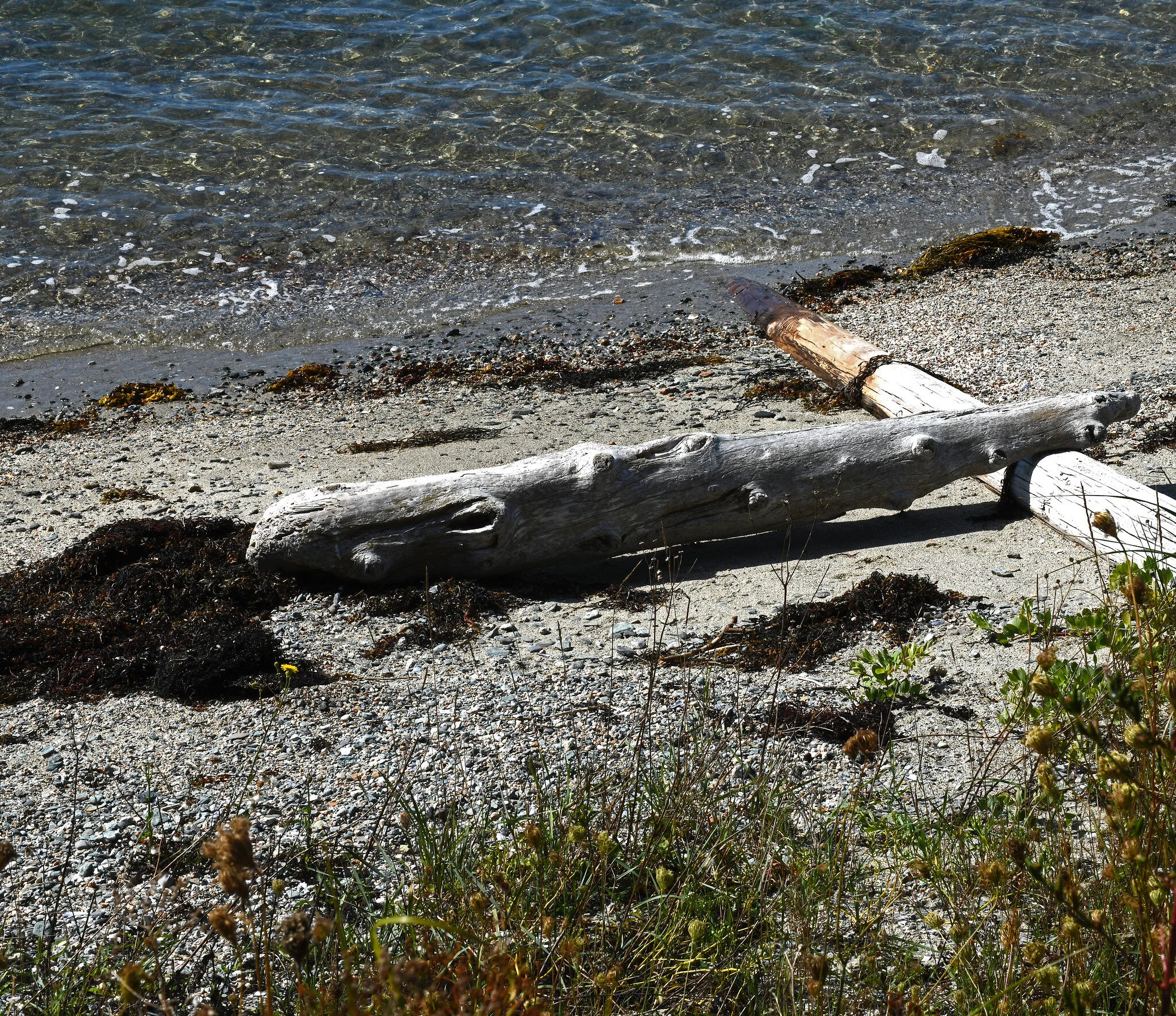
We’re getting a proper cleansing. Today is the third consecutive day that powerful winds have been sweeping across the sea and up onto coastlands. Thirty-mile-an-hour-plus gusts blew the caps off whitecaps Thursday (October 8):

G-1.jpg

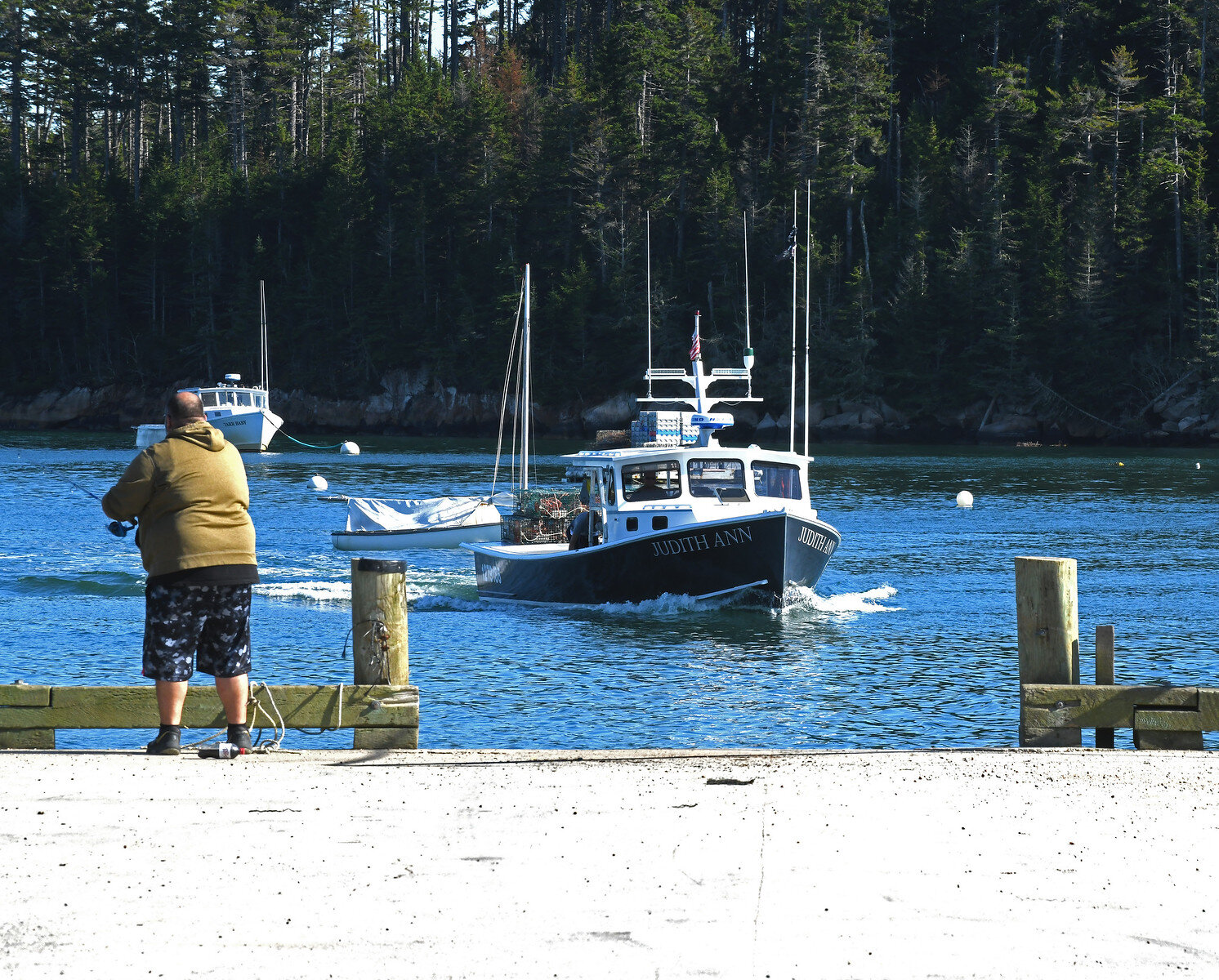
Yesterday, sailboats were bucking and pitching at their moorings and fishing vessels coming into Naskeag Harbor were creating their own whitecaps:
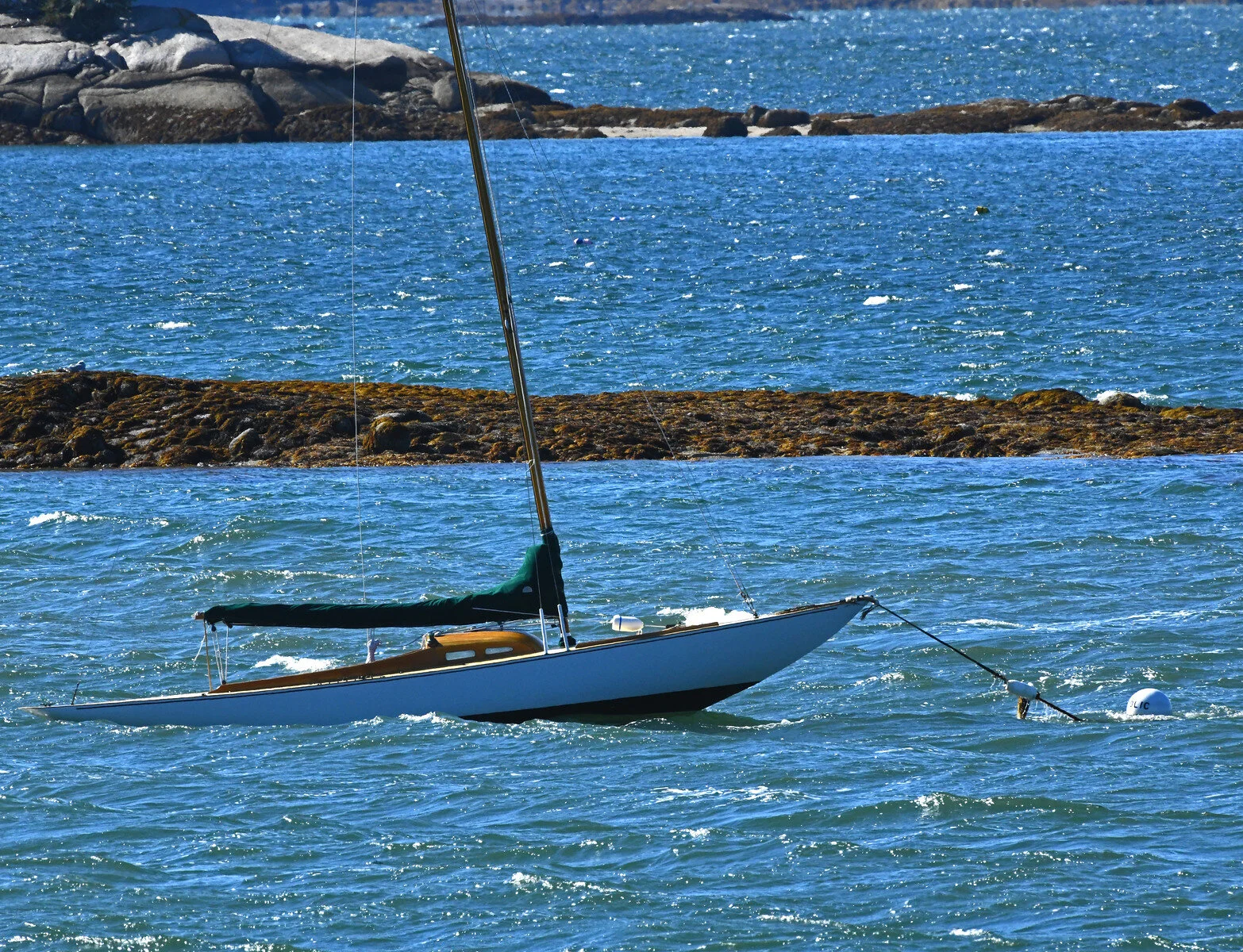
G-4.jpg

By today, some trees are being denuded before they can display their fall fashions, while those that still were wearing summer greens others are holding on tightly.:

Yet, the weather has been unseasonably mild otherwise. (Brooklin, Maine)

Comment

Comment

In the Right Place: Silent Rage

Cinnamon Fern seems to follow Dylan Thomas’s advice: It does not go gently; it burns and raves and rages against the dying of light, turning from soft green, to pale yellow, then to proud gold before it dies with shriveling bronze gasps. This is happening all around us now.

F-7.jpg

This relatively large fern, scientifically known as Osmundastrum cinnamomeum, often is referred to as a living fossil because its kind has been on the earth at least 180 million years. As North America became populated, the Abnaki and Menominee ate it as a vegetable; the Iroquois and Cherokee also administered it as a cold and snake bite remedy.

F-5.jpg

(Brooklin, Maine)

Comment

Comment

In the Right Place: Just Thinking

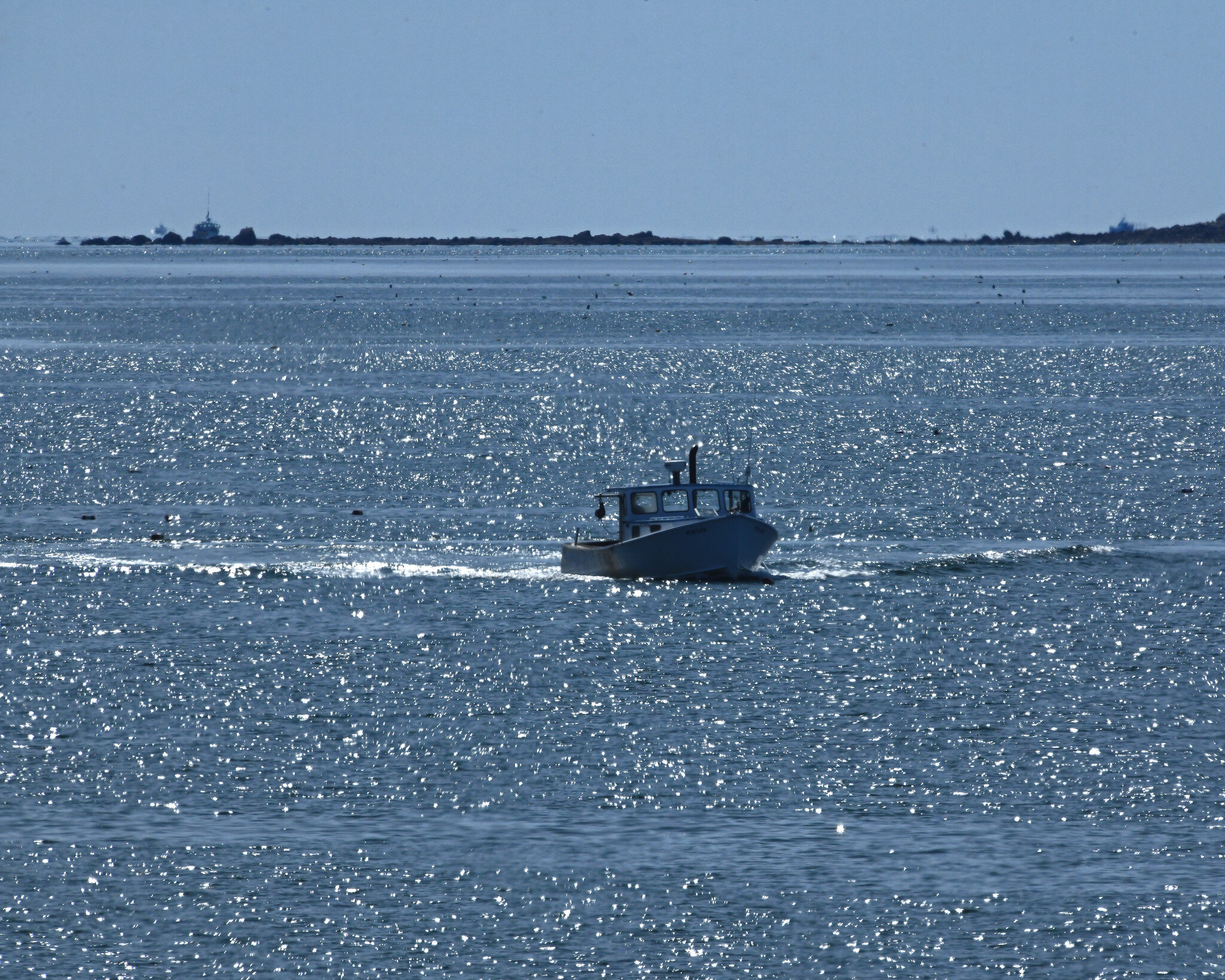
We glimpsed this fisherman looking at the sparkles in Naskeag Harbor yesterday and immediately thought of “The Thinker.” That’s Auguste Rodin’s huge bronze statue of a man sitting on a rock in a similar position, now on display in Paris.

i-P4X6G5n-X3.jpg

The main difference is that the Paris Thinker is nude, while the Brooklin Thinker is wearing his hoody, orange oil pants, and more. Clearly, our man made the right choice for someone who probably soon will be out on the chilly water unloading lobsters from traps.  Yet, there may be more to this story: there is a lot for a young man to think about these days, perhaps too much. (Brooklin, Maine)

Comment

Comment

In the Right Place: Amazement

We cleared this area of tall trees, restored the rock wall, and dug out the pond to recreate, in part, the sheep pasture that reportedly was here in the 1800s.

F-1.jpg

It’s now a place for deer to range; summer birds to nest; coyotes to howl at night; bear cubs to walk on top of the wall; butterflies and millions of other insects to live out their lives; turtles to bask; ducks to paddle, and humans to be amazed – once again -- by the beauty of a good fall day.

Yesterday was one of those days, as you can see. While sitting on Flat Rock behind the pond in the afternoon, you could gulp delicious air as the sunlight softened. You could look up and down and watch stratocumulus clouds streak across the sky and the pond below.

It was a day to notice a maple leaf taking its first and last solo voyage, spiraling into the pond, and reaching, tacking, and taking on water as it sailed alone in the shifting winds.

F-3.jpg

(Brooklin, Maine)

Comment

Comment

In the Right Place: Memories in the Making

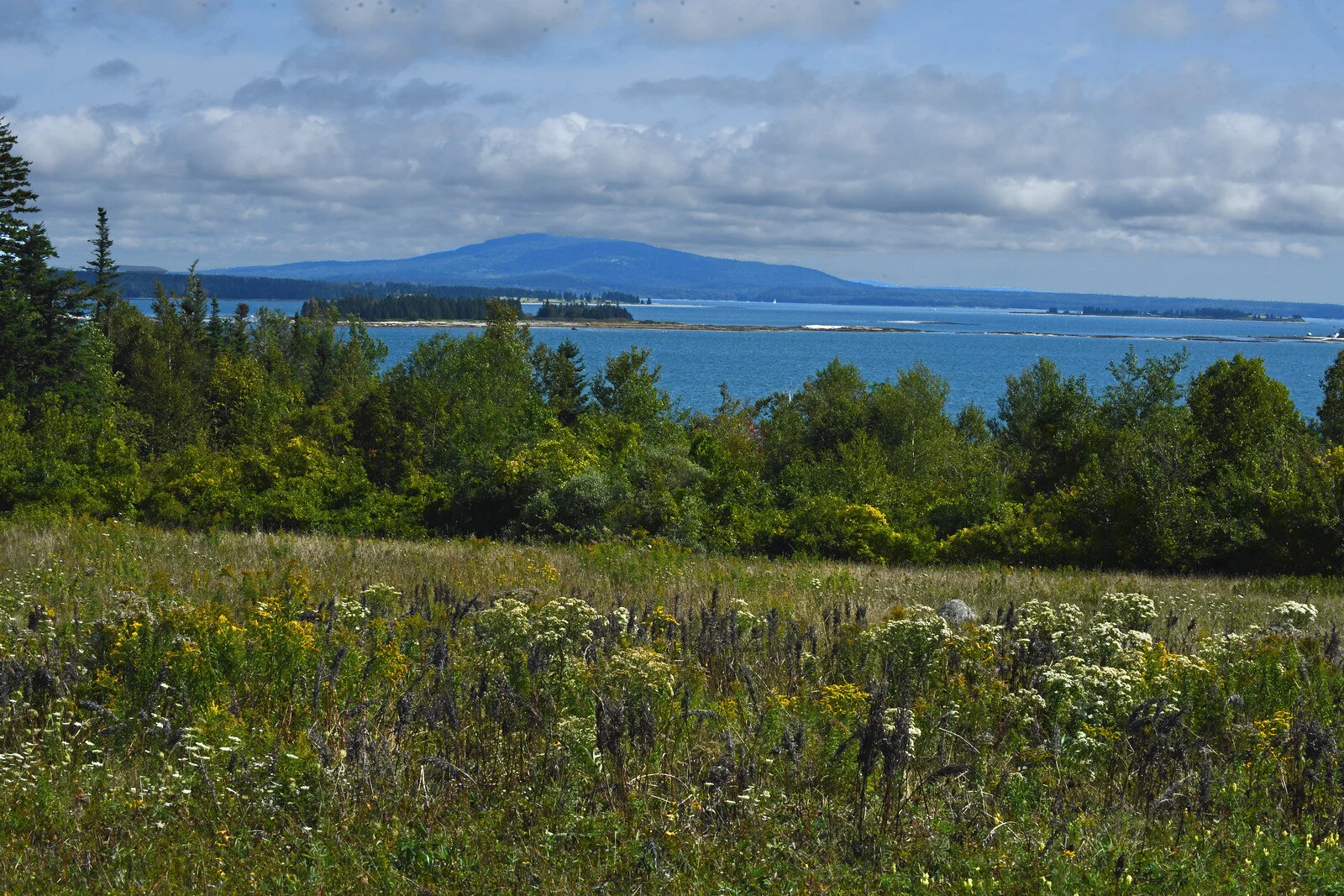
This sight, as you may know, is one of the wonderful local sights that we photograph at least once a month for our long-term visual record of the area. It’s Cadillac Mountain in Acadia National Park, as viewed from Brooklin’s Amen Ridge over Blue Hill Bay.

i-JjFktM6-X3.jpg

This image was taken Saturday (October 3) as trains of cumulous clouds streamed north. (Brooklin, Maine)

Comment

Comment

In the Right Place: Foggy Friday

Fishing, one of the original small businesses, has its phases. Friday (October 2), as shown here, was take-home-the-traps-day for some.

F-1.jpg

It was a family/team affair for those associated with lobster fishing in Long Set, the Fishing Vessel seen here giving up her traps while tied to the Town Pier. A dense fog seemed to make the sight classic.

F-2.jpg

With or without fog, this is a typical sight at this time of the year here, when fishermen (male and female) are ending their lobstering seasons. Some of the boats, probably including Long Set,  will be refitted for scallop dredging in the winter season; some will be hauled ashore and kept “on the hard” for the winter while other jobs and chores (and a few vacations) will be pursued by fishermen. (Brooklin, Maine)

Comment

Comment

In the Right Place: Morning Moon

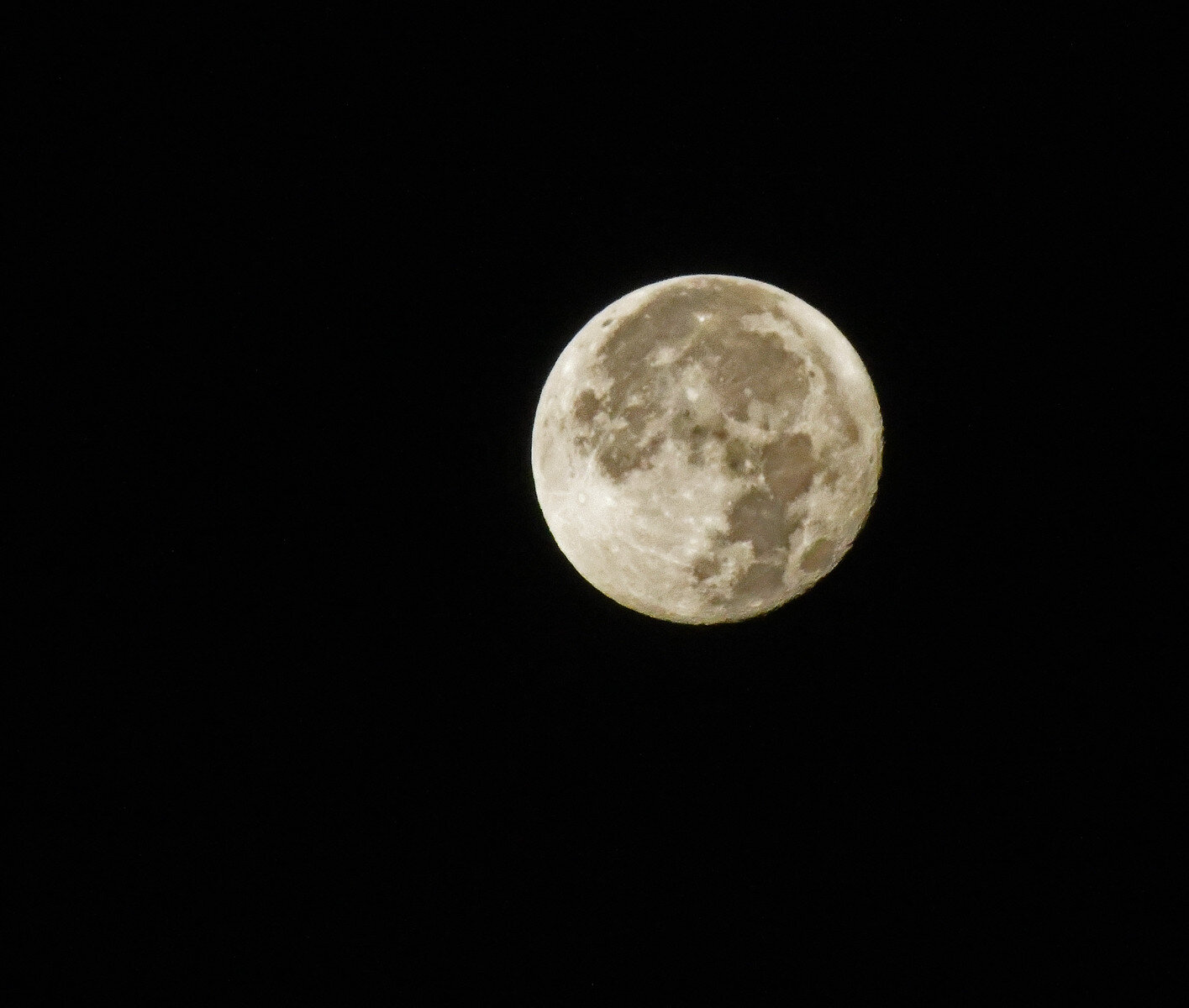
At about 2:30 a.m. today, at least five coyotes awakened us with their baying at the virtually full moon. (The moon was full October 1, but hidden from us by overcast.) We listened to the canine version of “Nessun Dorma,” looked over the beautiful moonlit landscape with satisfaction, and went back to sleep.

M-1.jpg

As you can see above, the moon waited patiently in the night to the north as the new day was spreading west. We took these images at the reasonable time of 6 a.m. today.

M-2.jpg

The leading theory about coyote baying is that bright moonlight allows a pack of them to see their territory at an unusual time. They tend to be paranoid predators and bay to prevent other coyotes from trying to invade their homeland while they’re watching.

(Brooklin, Maine)

Comment

Comment

In the Right Place: Candy Man

Halloween candy is a big thing here. The favorite is Giant Licorice-Peanut Butter Salties, which you can get delivered to your home by truck or, if you live on an island, the truck driver will row them out to you. The Salties are so big, you need to eat them on-the-stick, like big popsicles. Umm-umm, they’re good!

i-CqwwpSP-X3.jpg

(Brooklin, Maine)

Comment

September Postcards From Maine

7 Comments

September Postcards From Maine

Posted October 1, 2020

September this year was perplexing: days of brilliant sun in clear skies and warm temperatures, with the pleasing scent of field grass being mowed; days of cloudy skies portending needed rain that never came; days of dense fog and, near the end of the month, driving rain and winds. All of this while, the concept of living was being redefined by the Covid 19 plague.

1.jpg
3.jpg
8.jpg

Perhaps because of the drought-like conditions for most of the month, leaves started turning into fall colors prematurely.

15.jpg

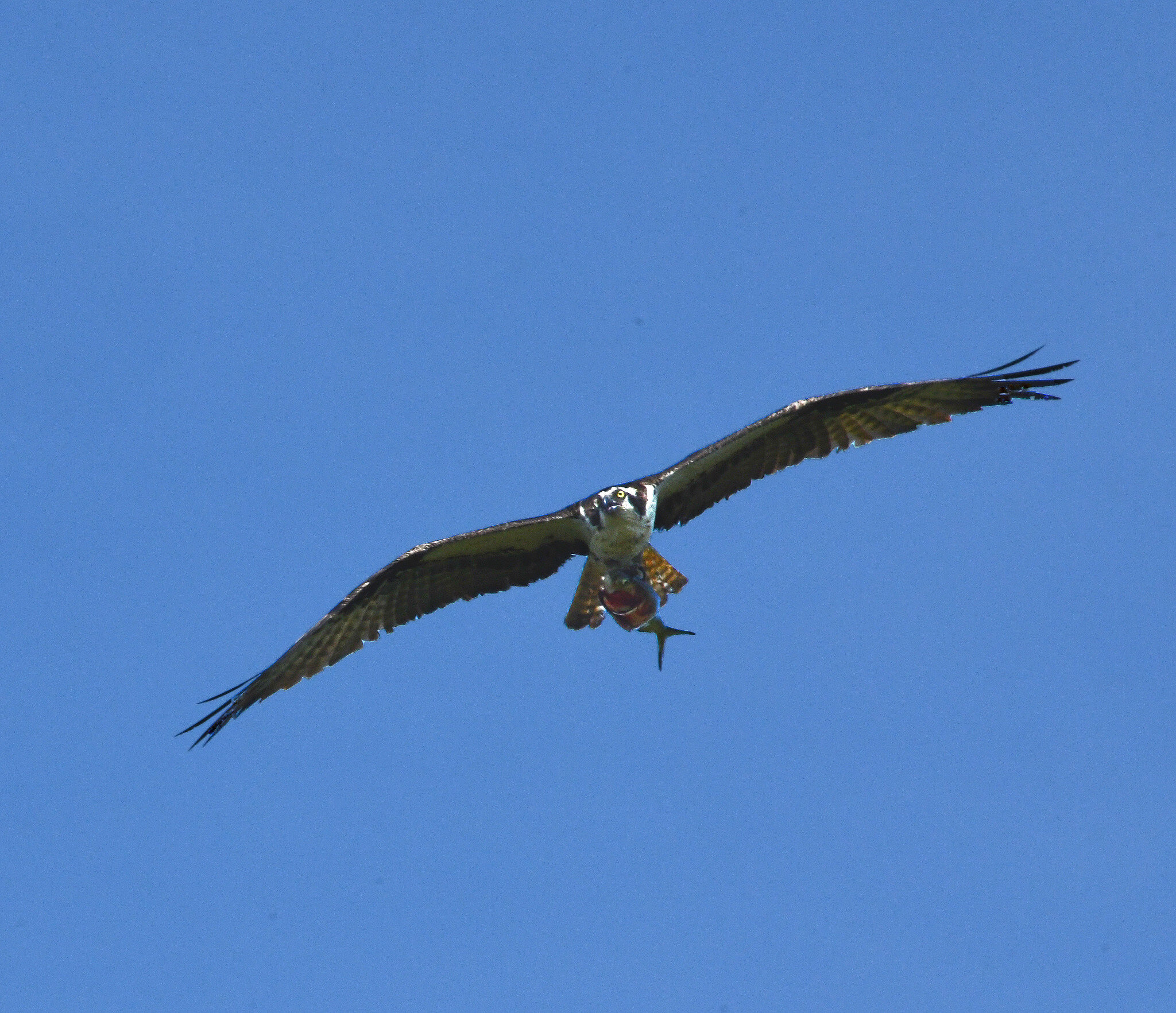
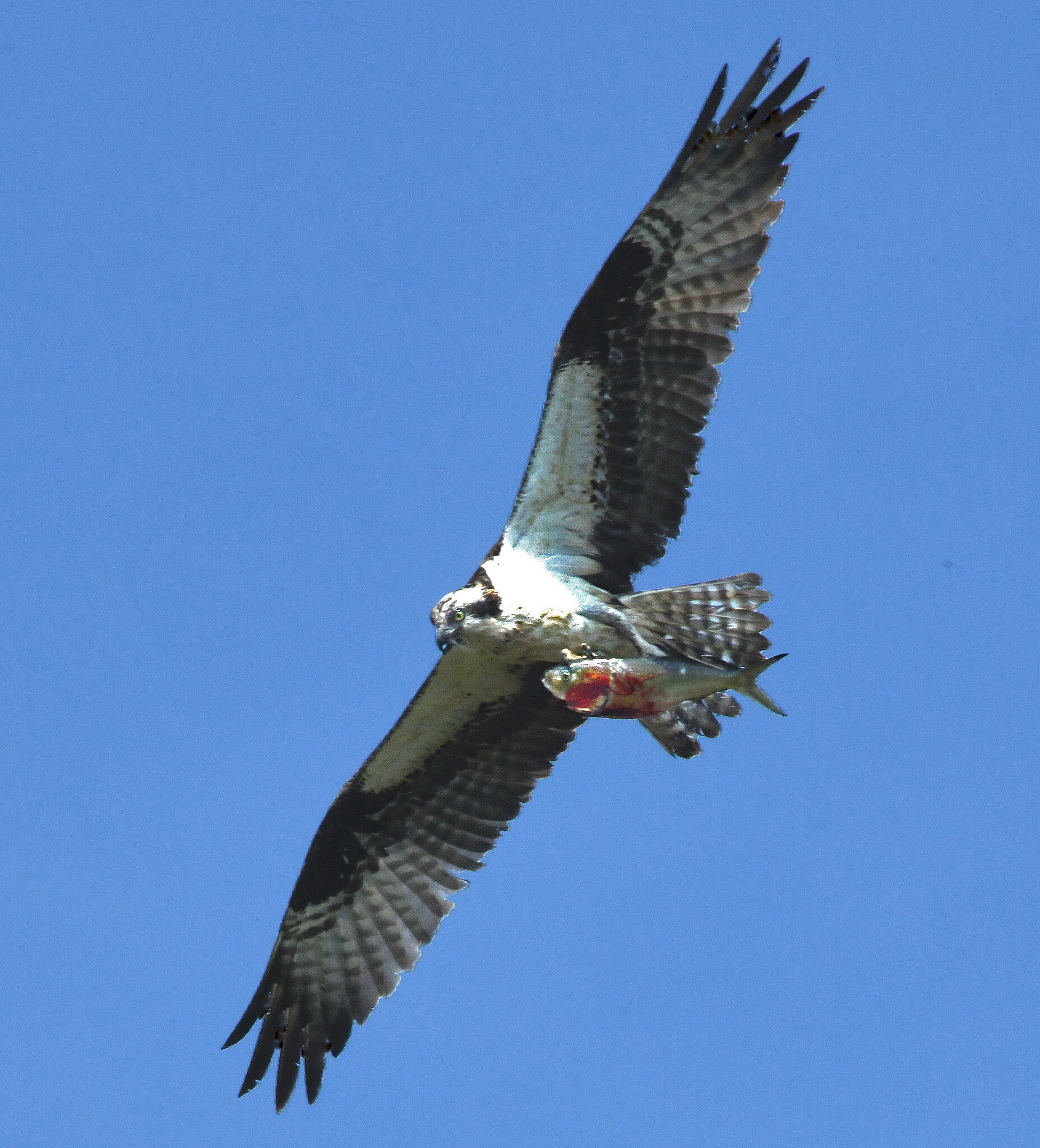
September is the month when many wildlife youngsters are strong and agile enough to come out of hiding. White-Tailed Deer fawns appeared in the fields during the days with their mothers; baby porcupines traveled alone wherever they wanted to go; immature Ospreys had become strong flyers, but their mothers still provided most of their food at the nest.

35.jpg
18.jpg

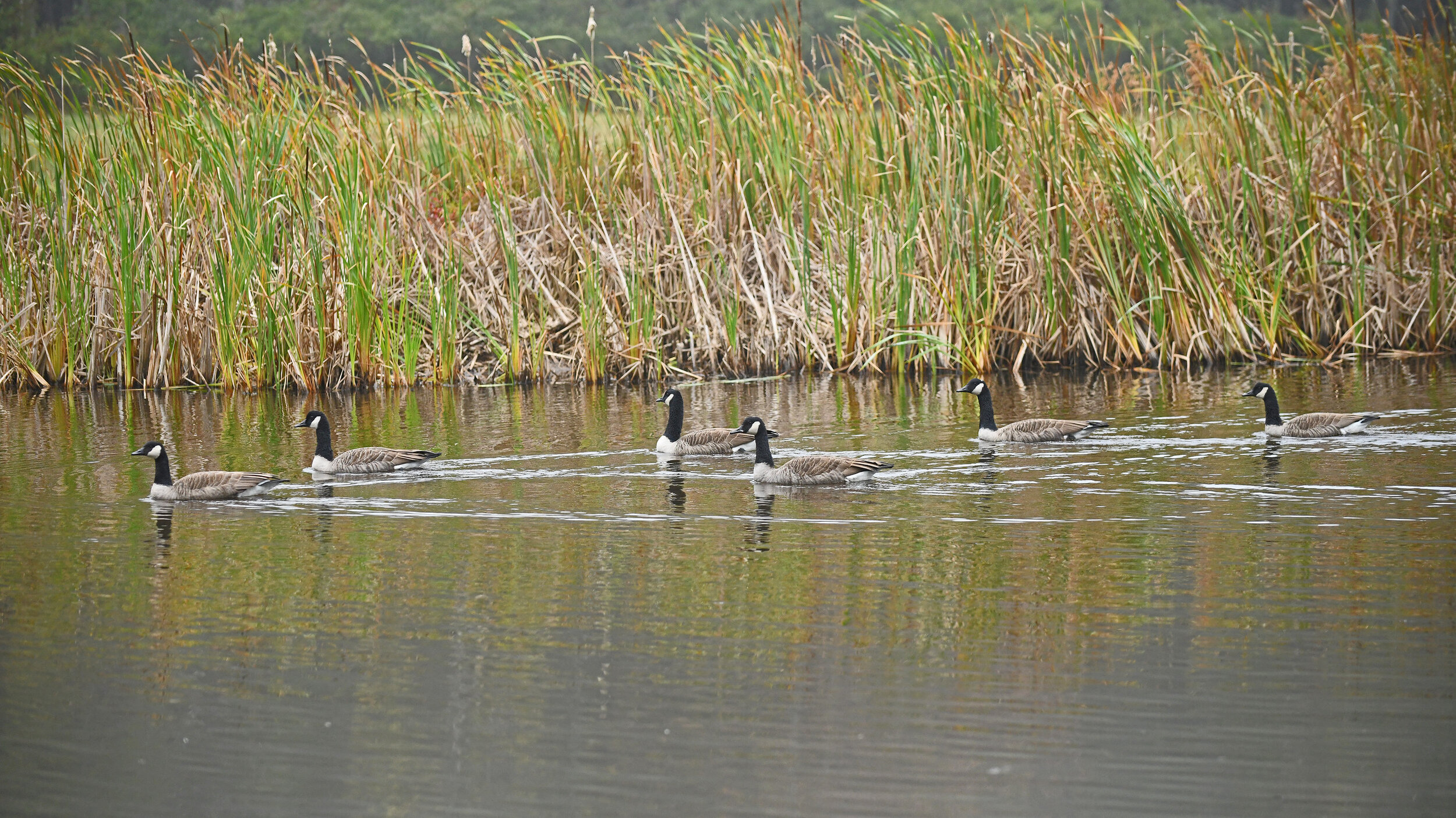
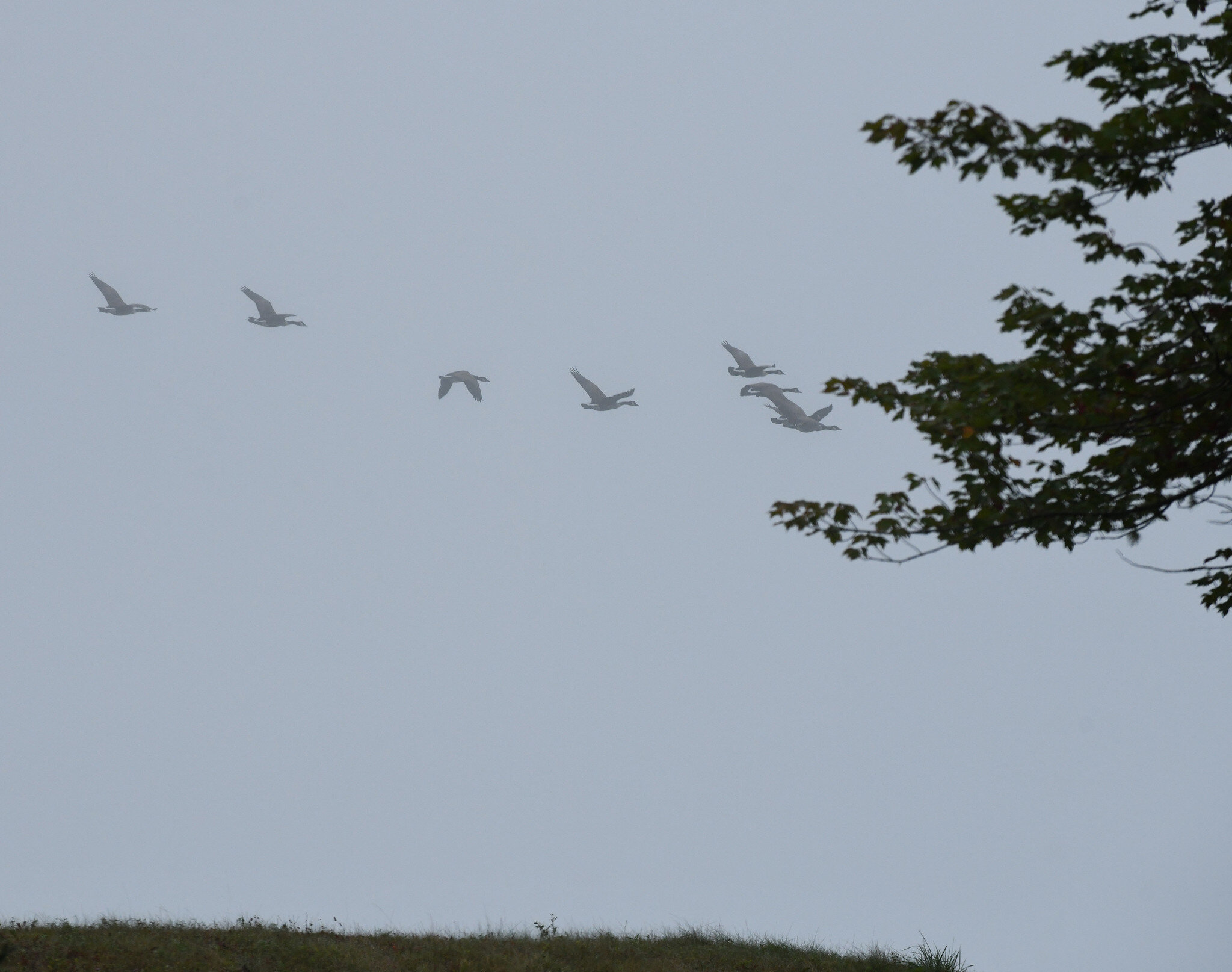
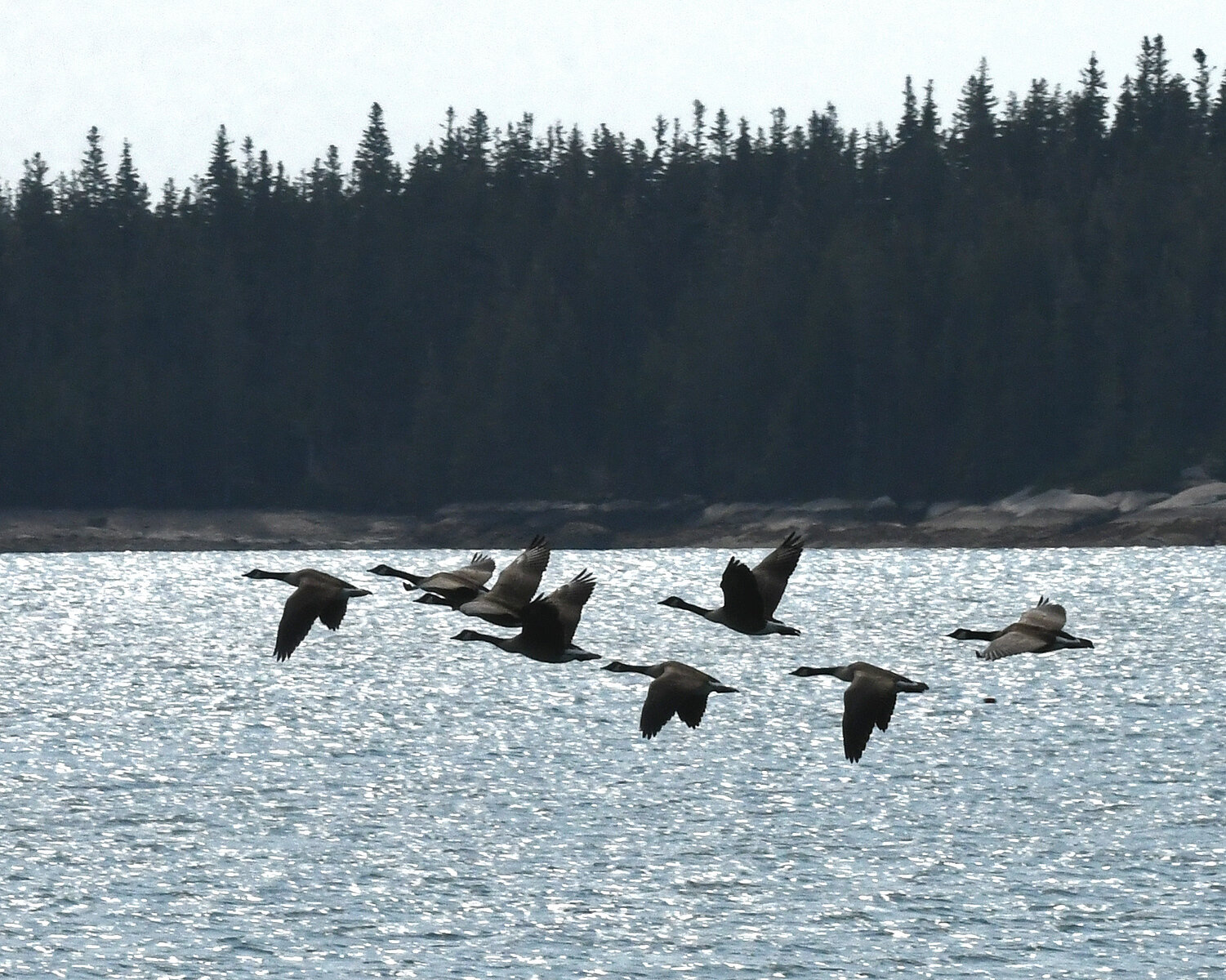
Migrating Canada Geese passed through in sun, fog and rain.

21.jpg

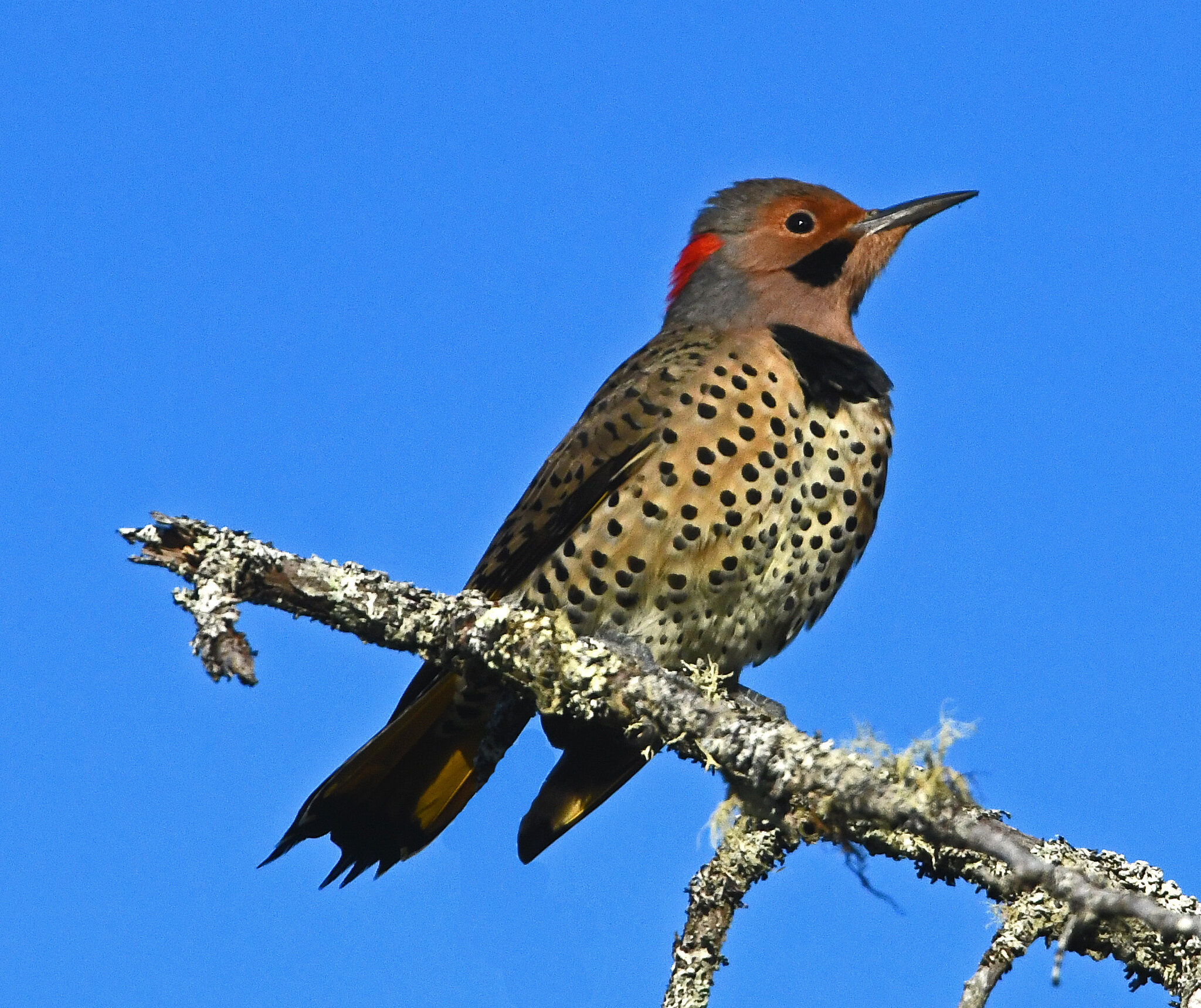
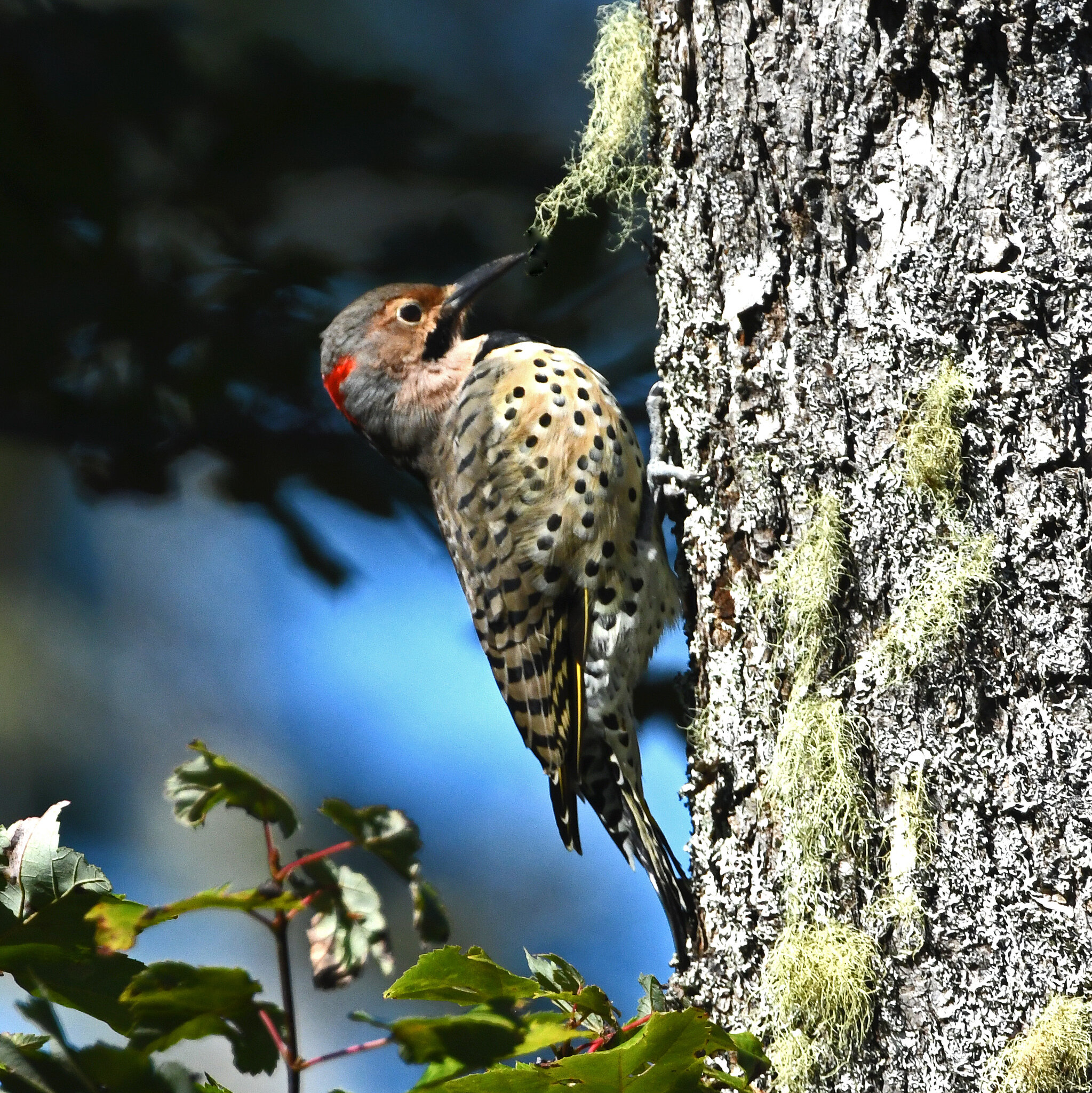
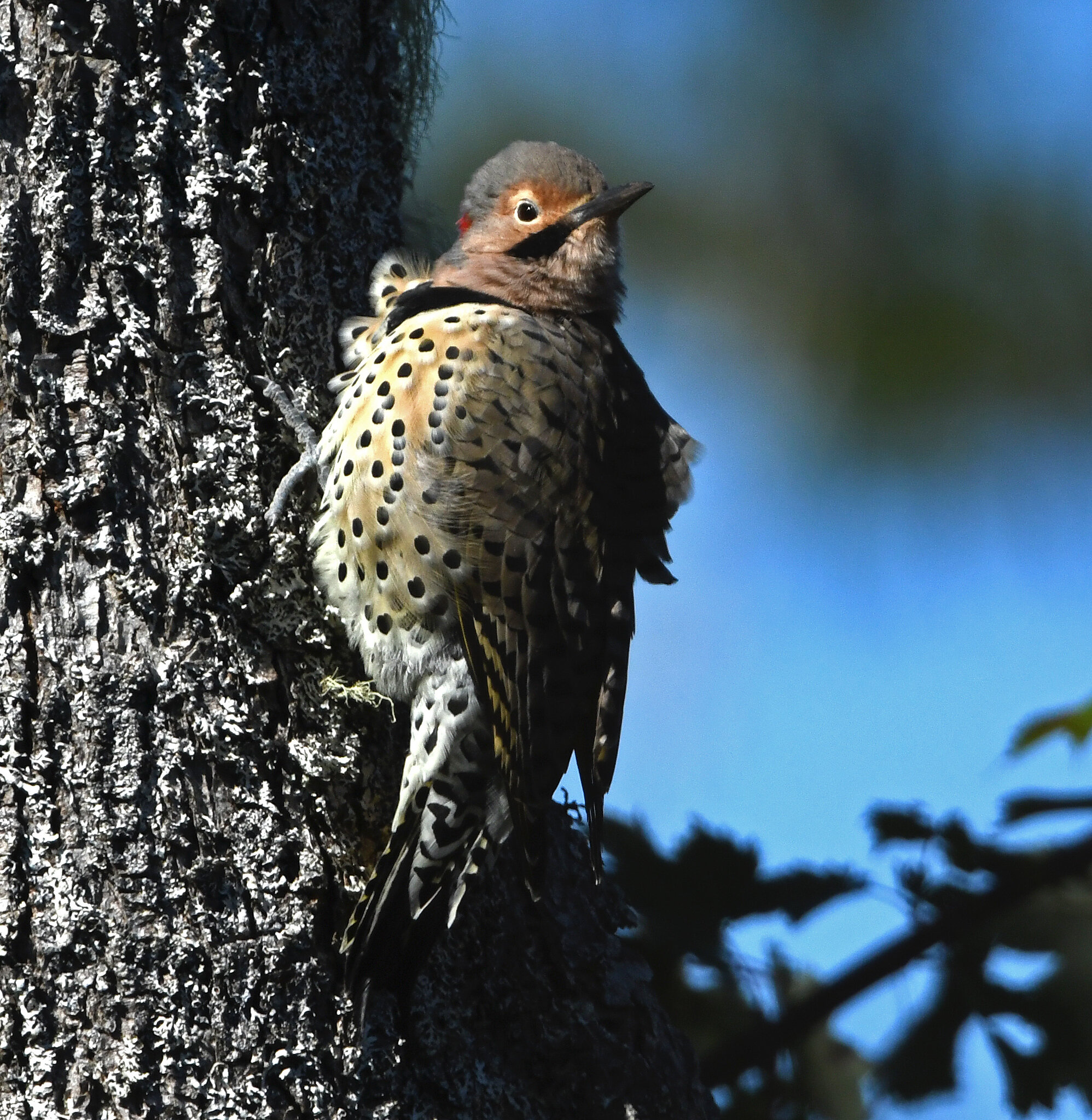
An unusual number of mature Northern Flickers passed through here in September with their fledglings. Here we have a mature male with two immature males that visited us. (Males have black mustaches.)

28.jpg

We also were visited by immature Solitary Sandpipers, including this cutie:

29.jpg

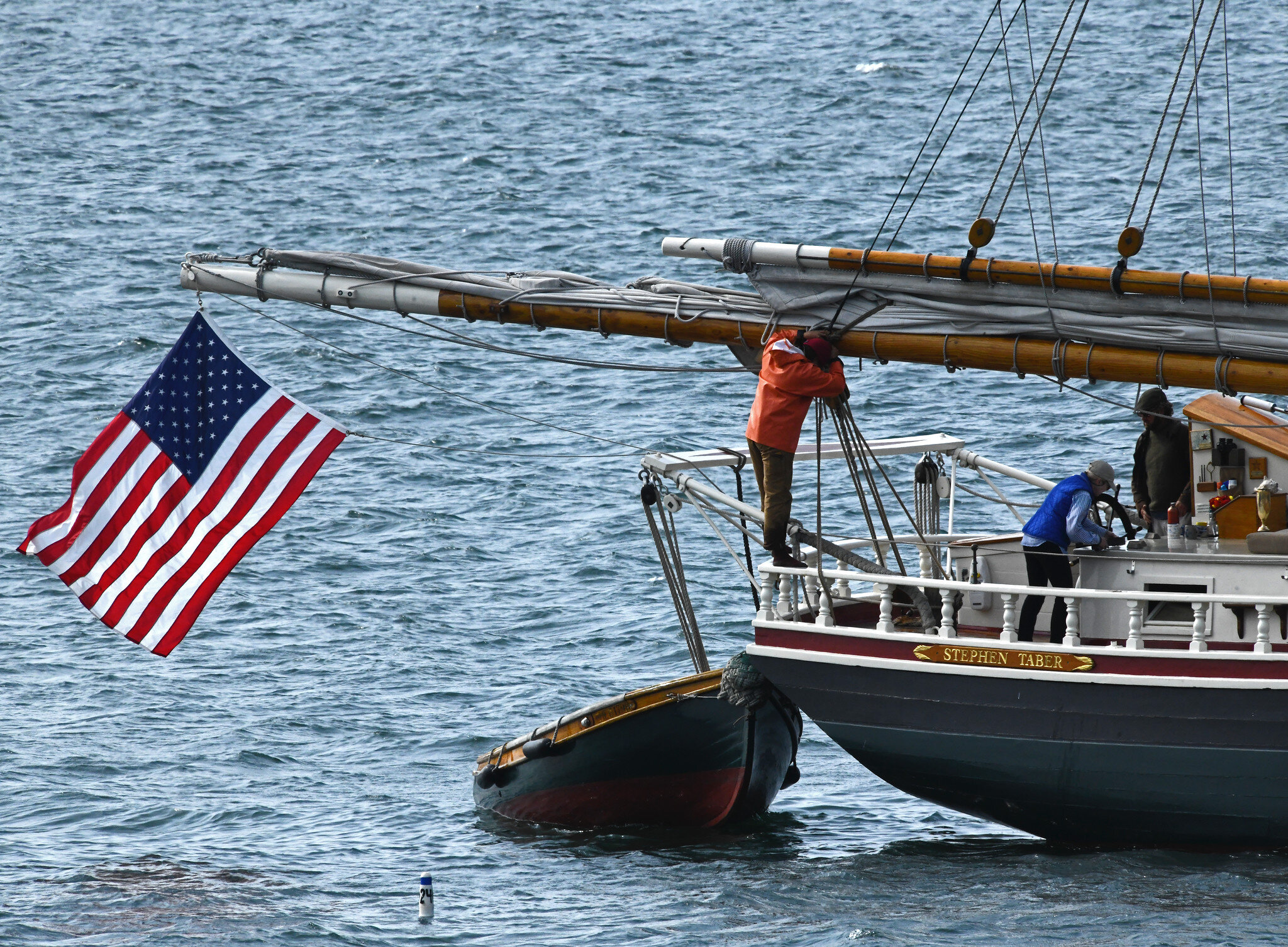
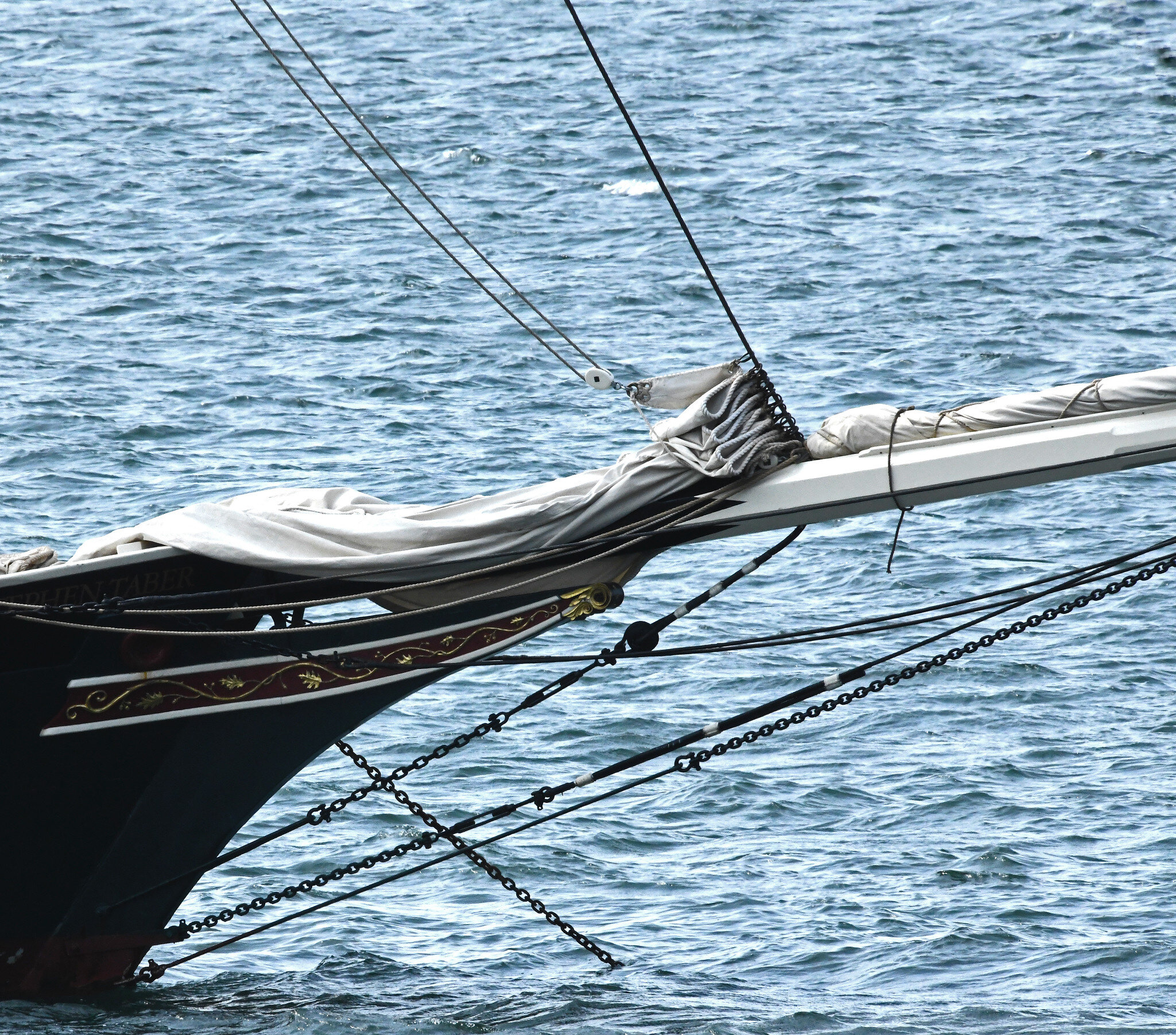
On the waterfront, very few schooners were chartering this season due to the plague. We were lucky enough to have a favorite, the Stephen Taber, visit Great Cove:

43.jpg
42.jpg

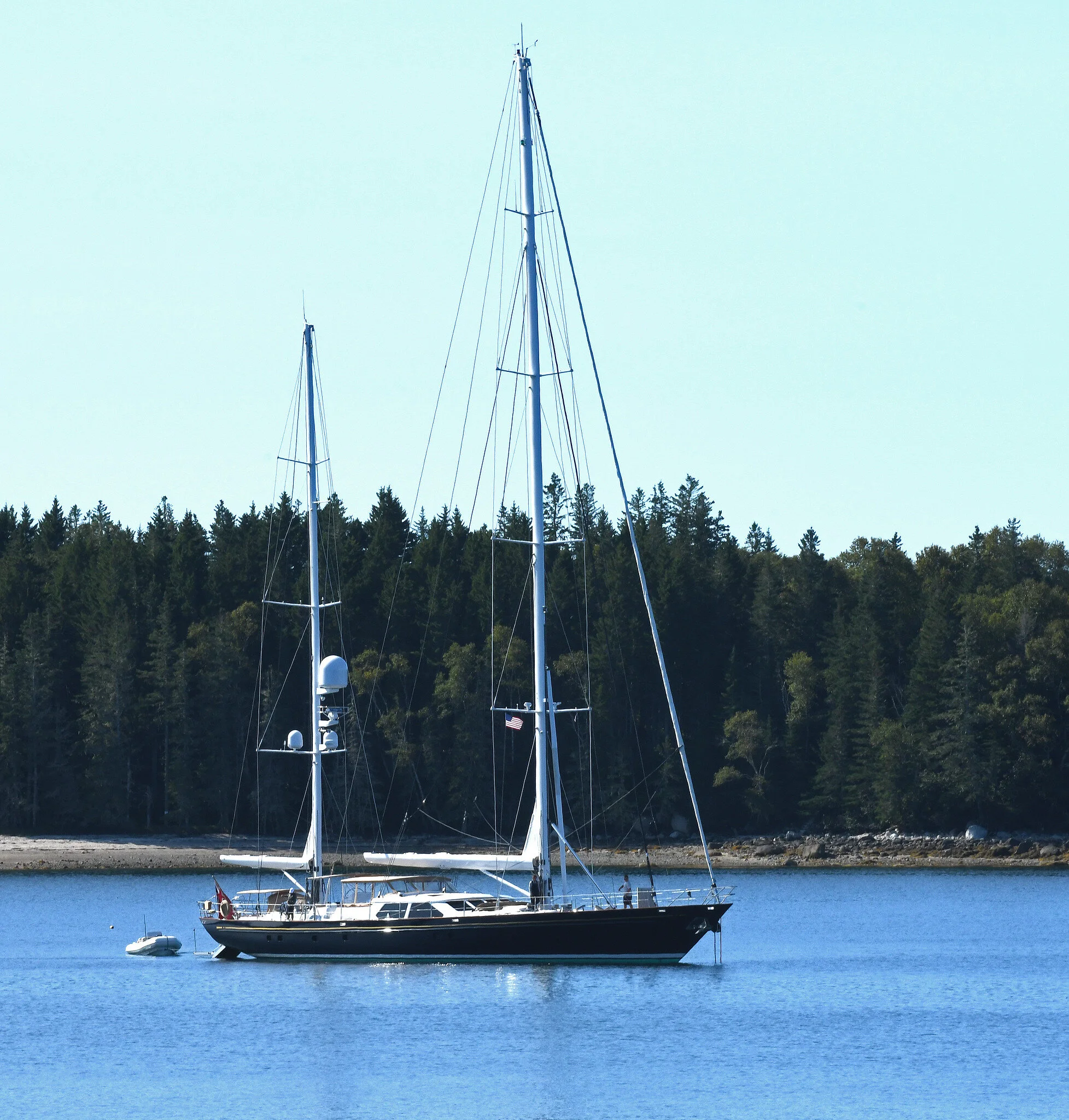
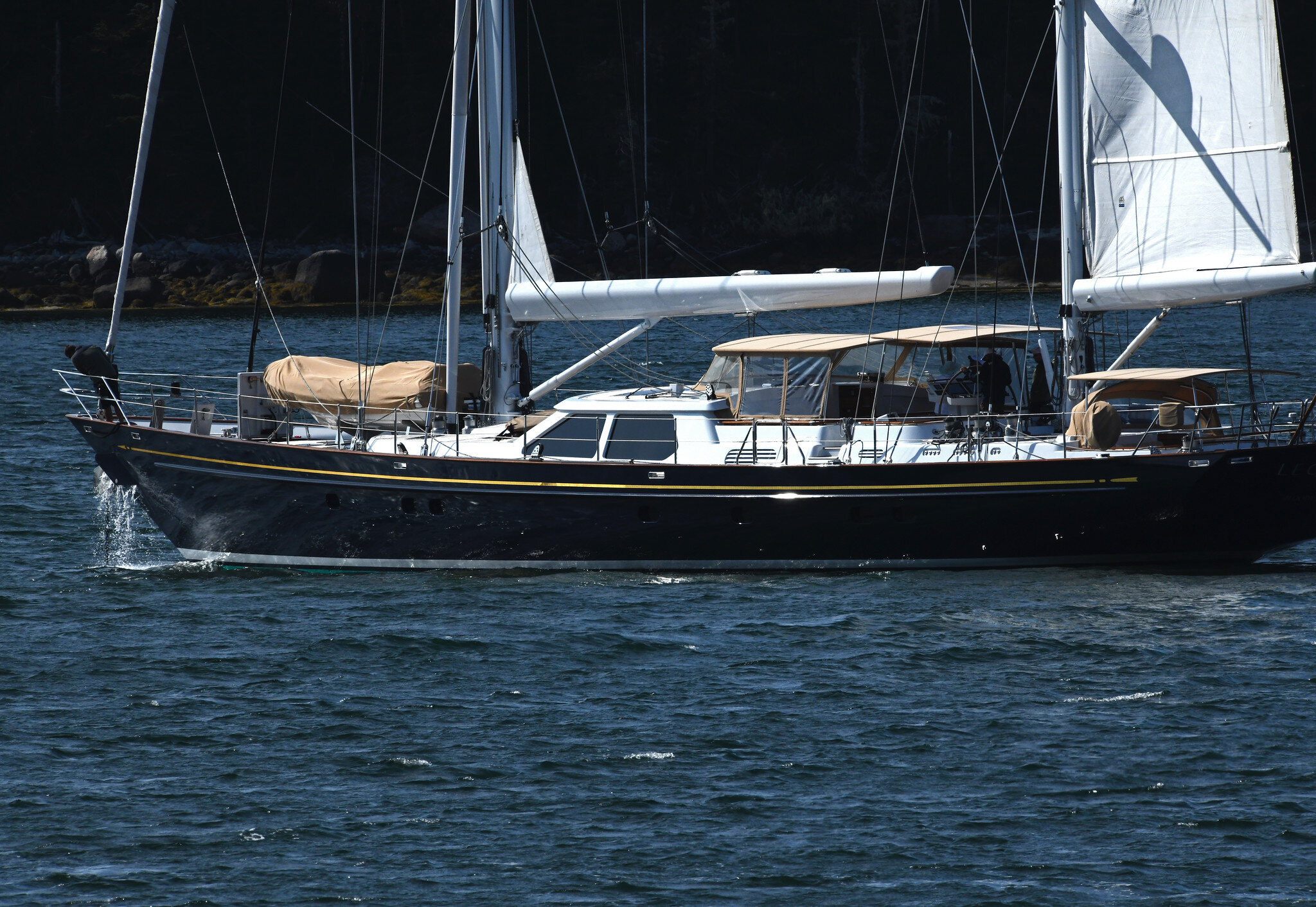
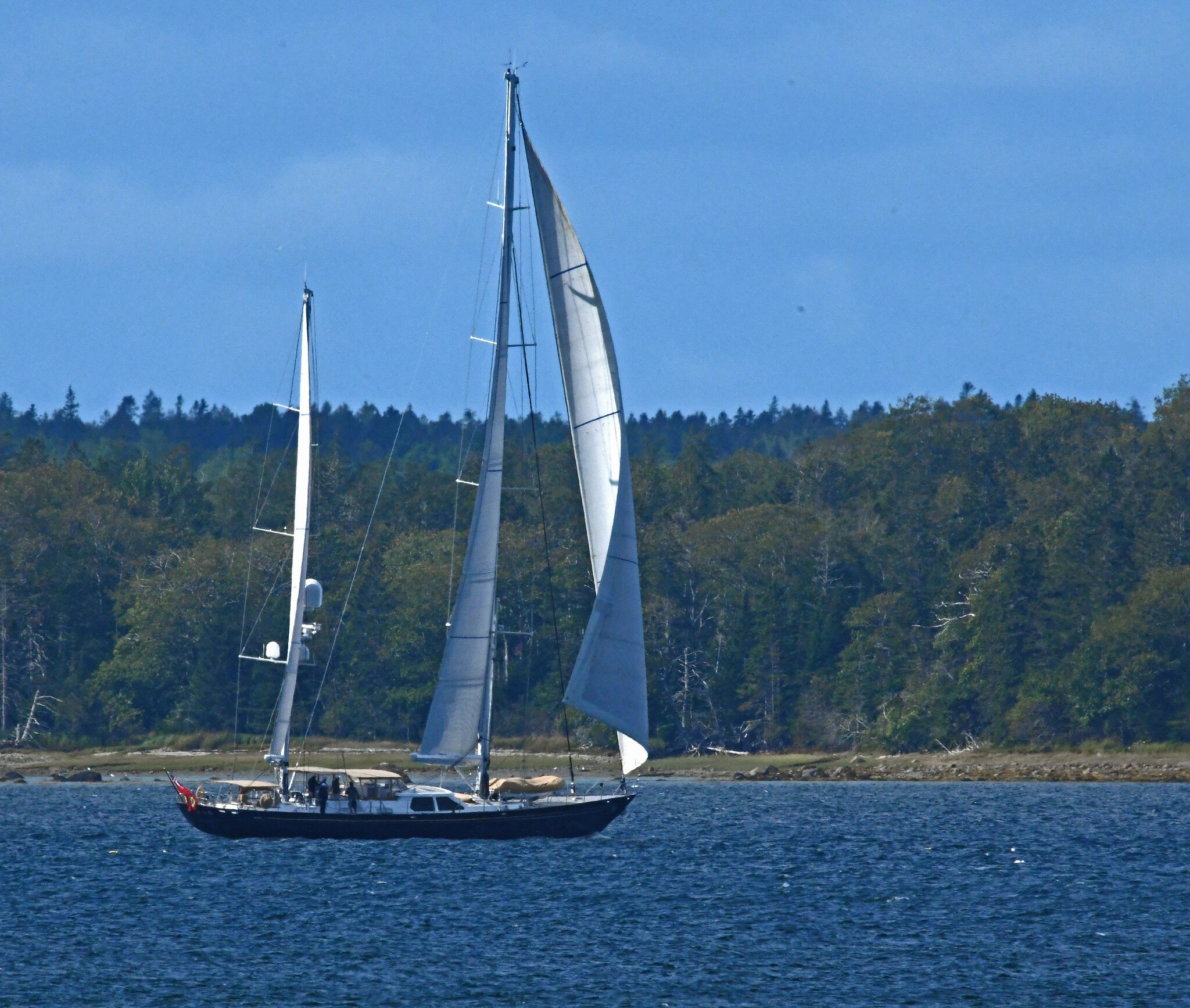
There also were relatively few sailboats here, but we were visited by Legend, a huge sailing yacht from the Cayman Islands that dwarfed some of our local craft.

i-qLMfKrb-X4.jpg

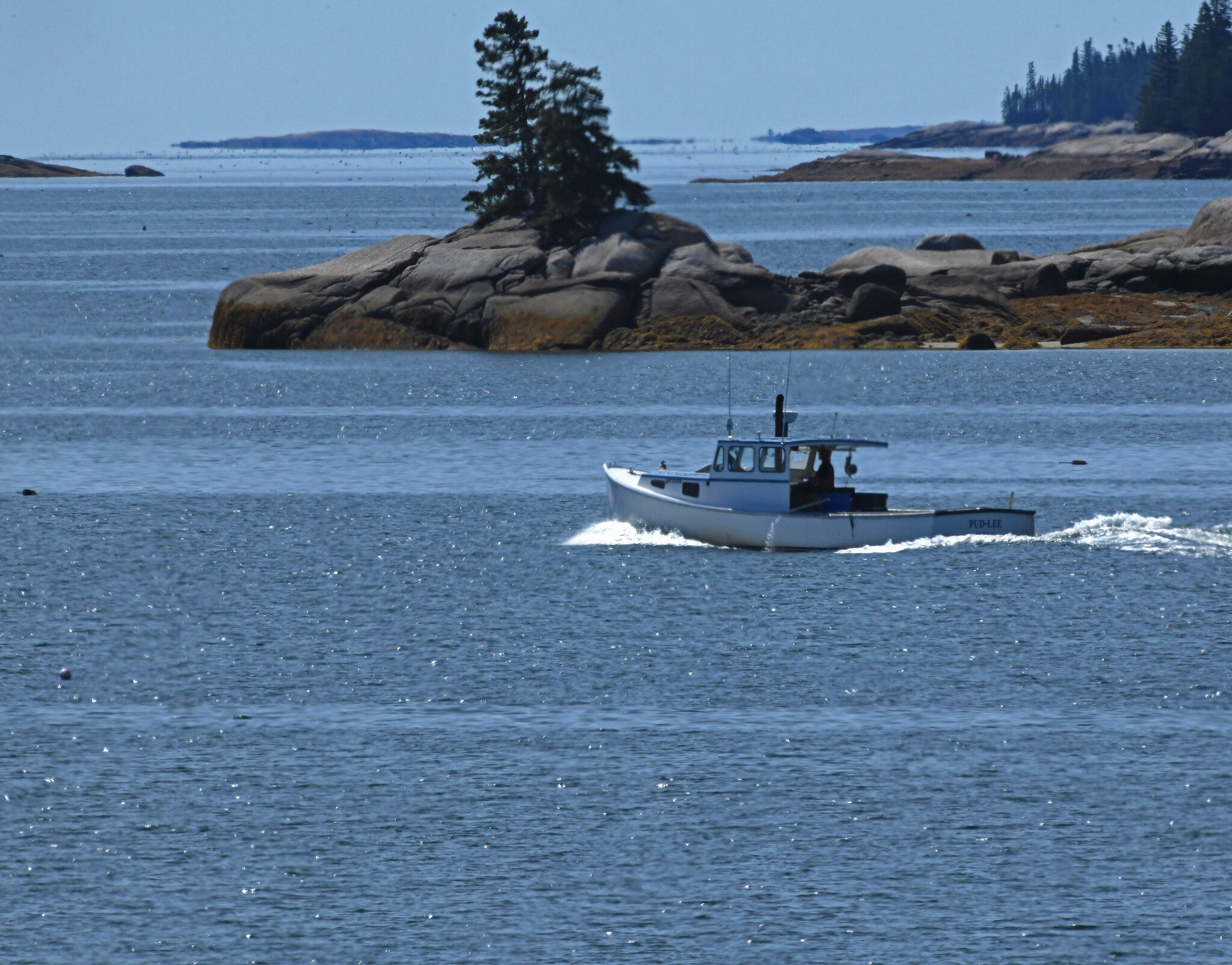
It was a confusing season for our lobster fishermen (male and female). Some ended their season in September due to confusing conditions caused by the plague, tarrif wars, and increasing regulation, among other things.

54.jpg
53.jpg

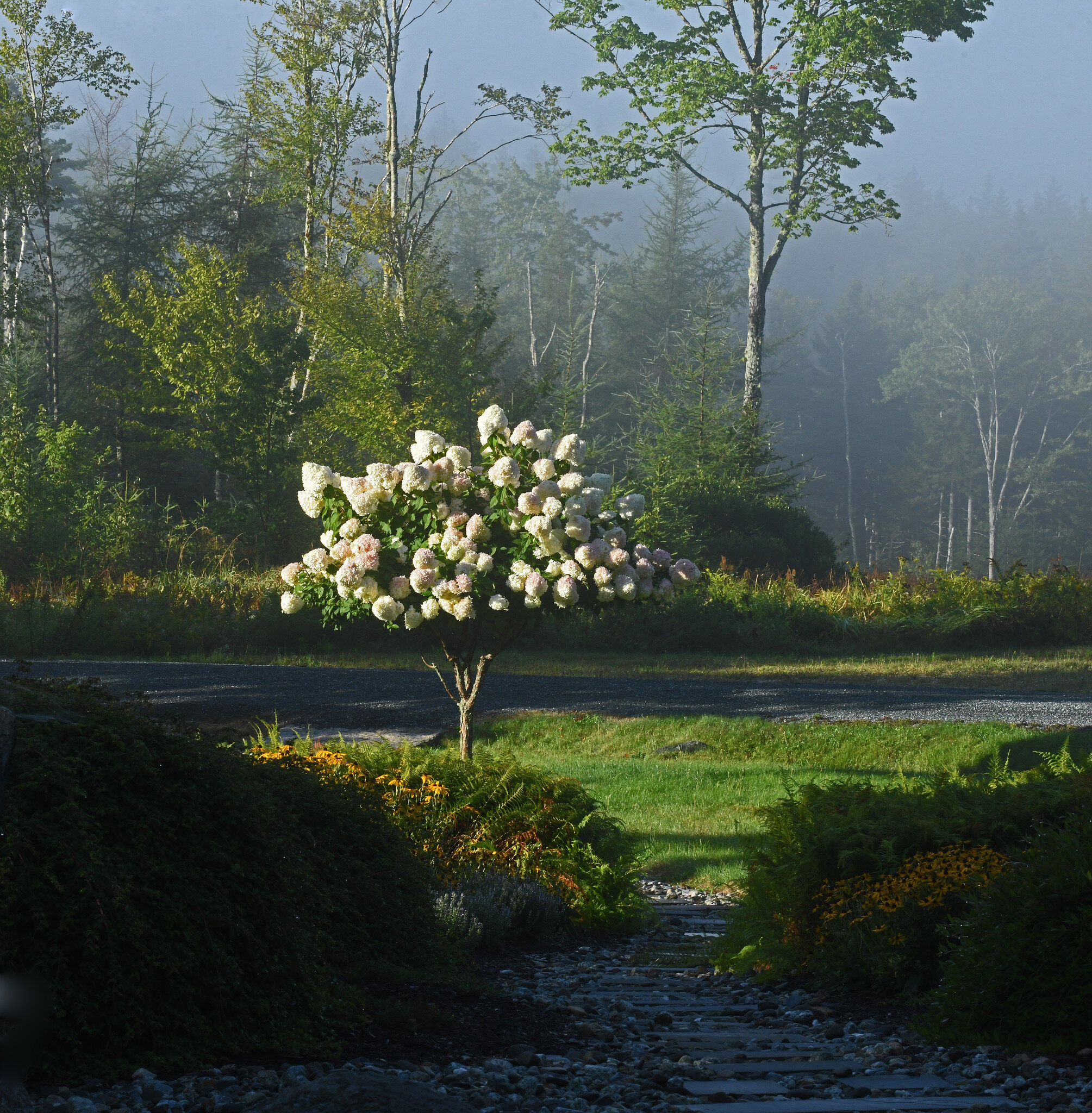
The wild Apple Trees held most of their crops in September, while some of the Maple Tree leaves started to turn and fall. Hydrangea Trees and bushes, which love fog, thrived.

61.jpg

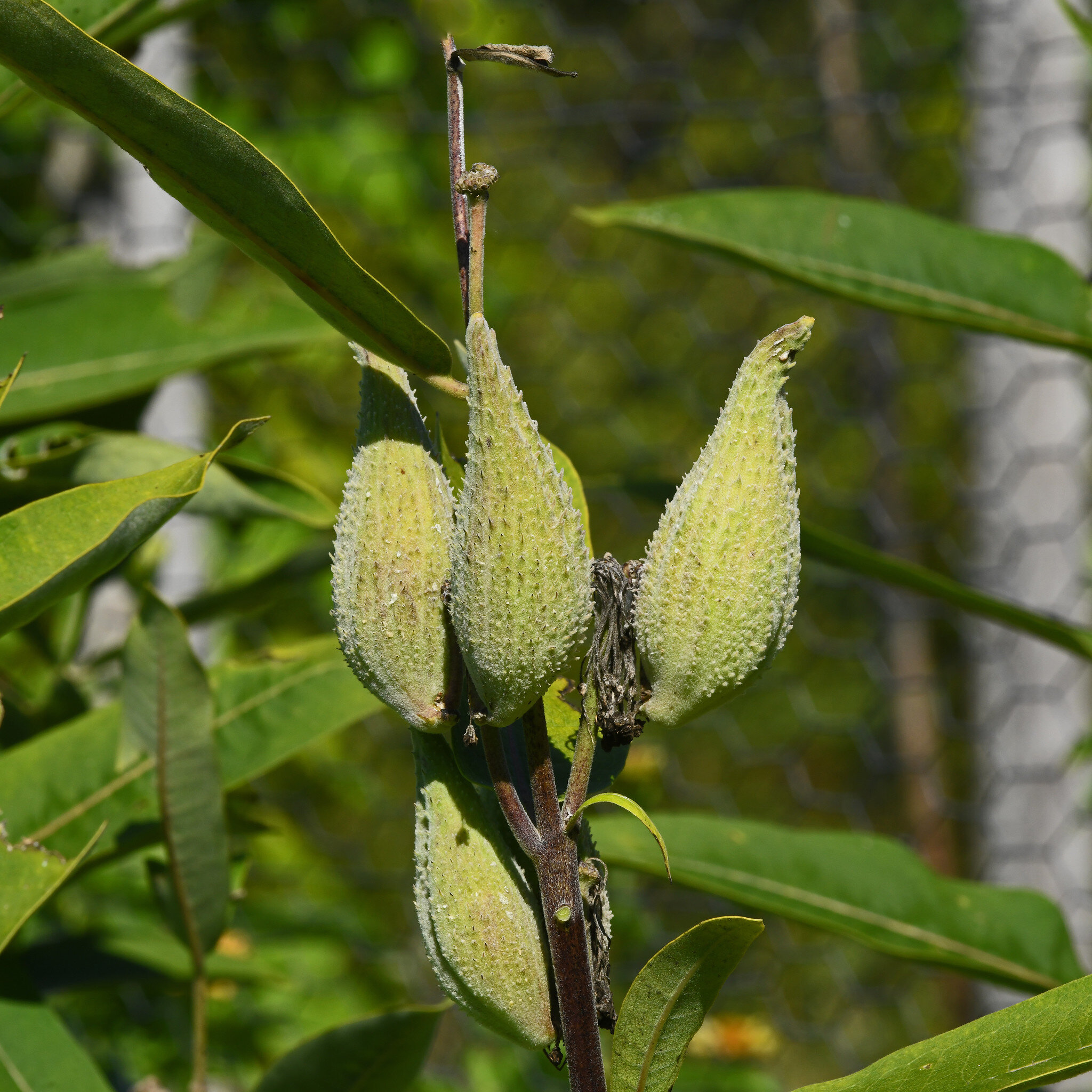
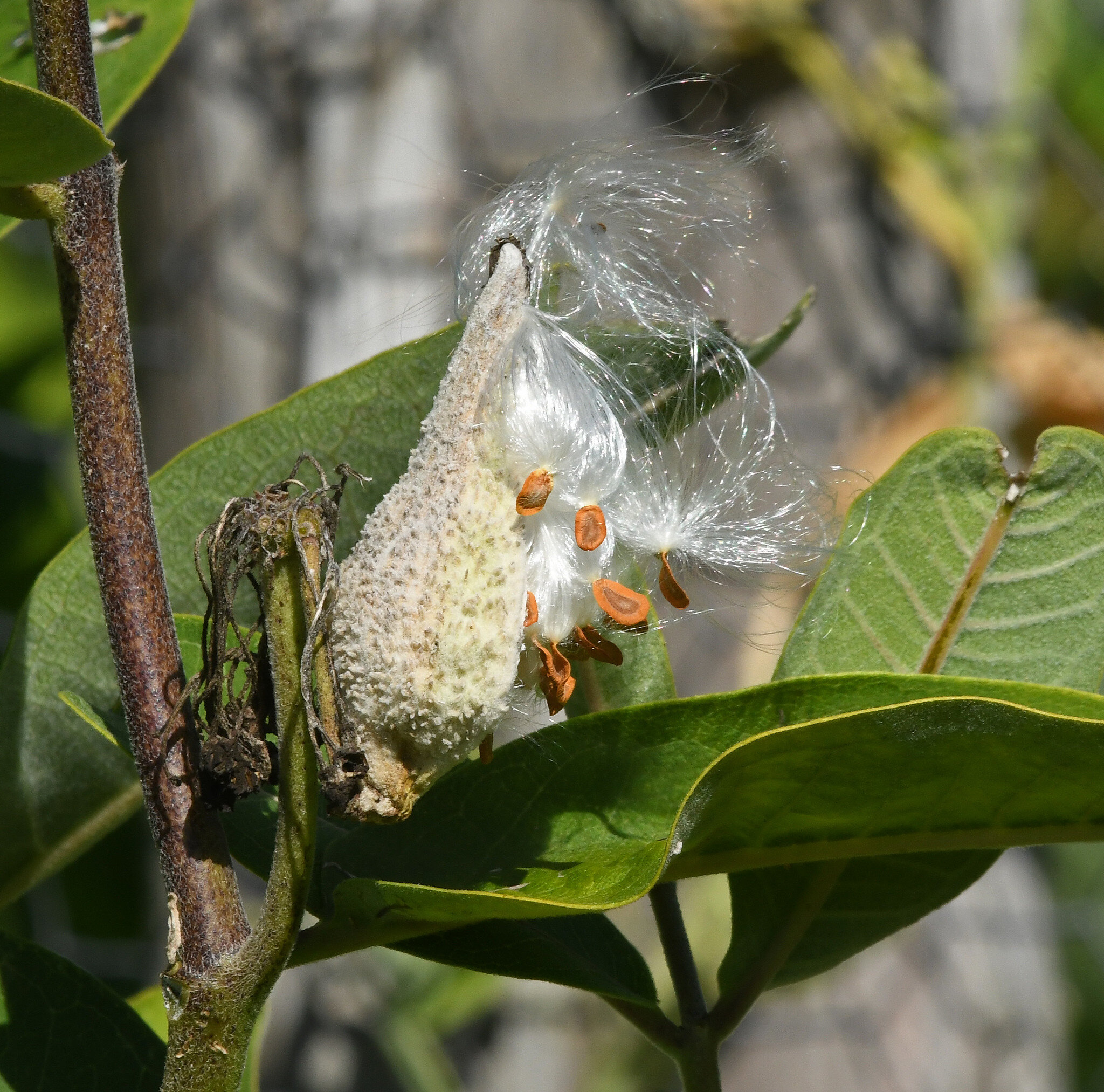
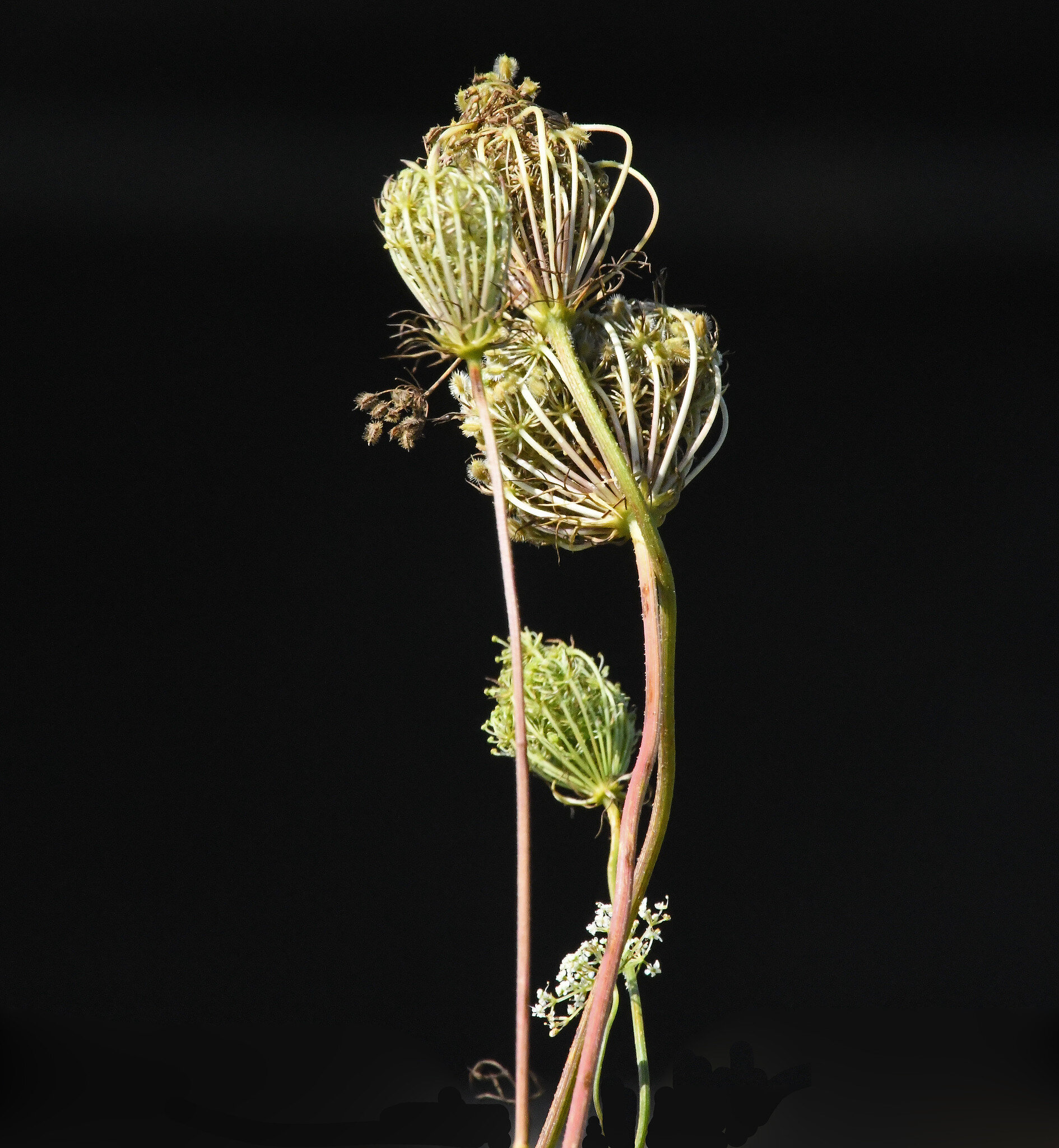
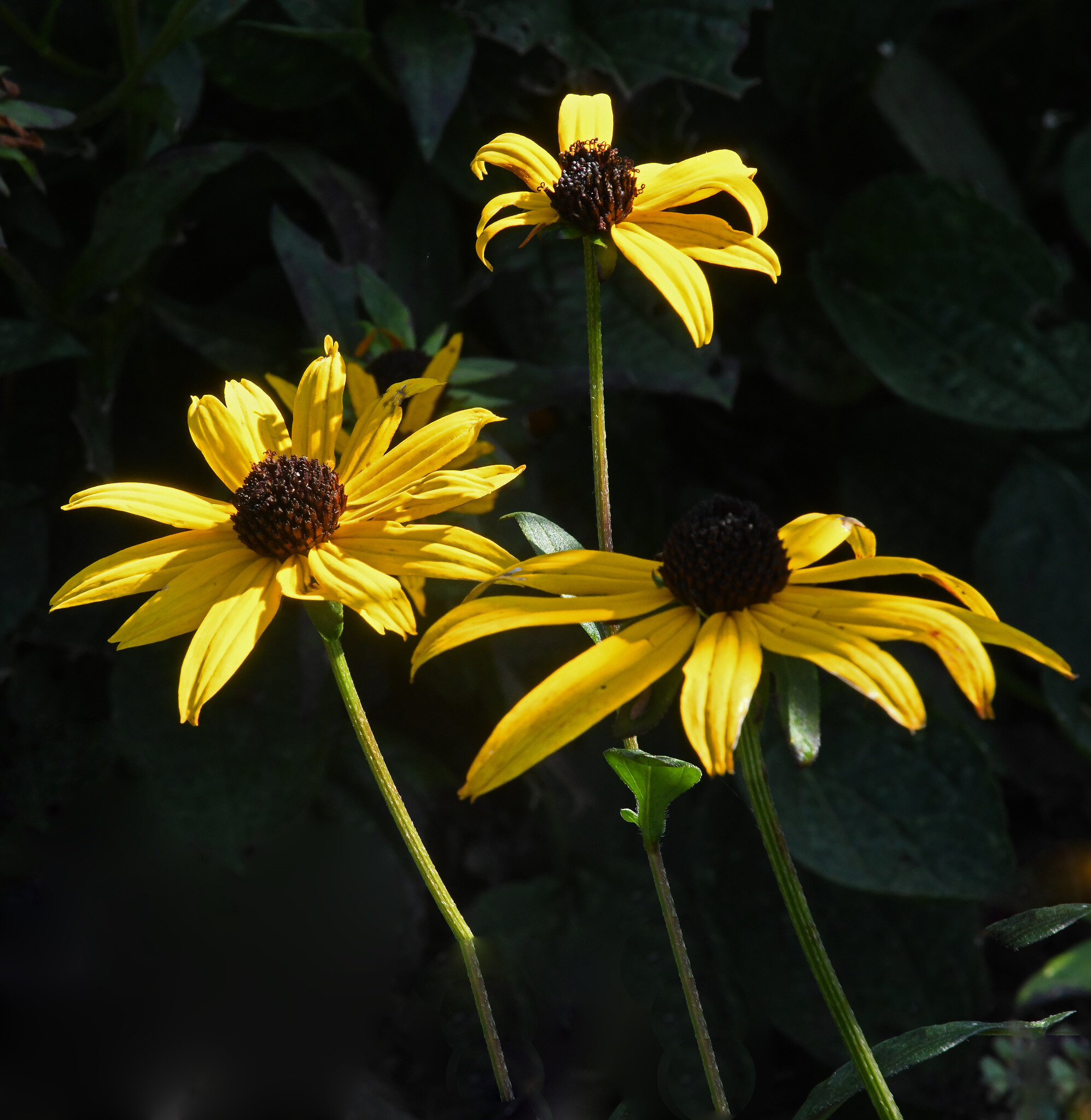
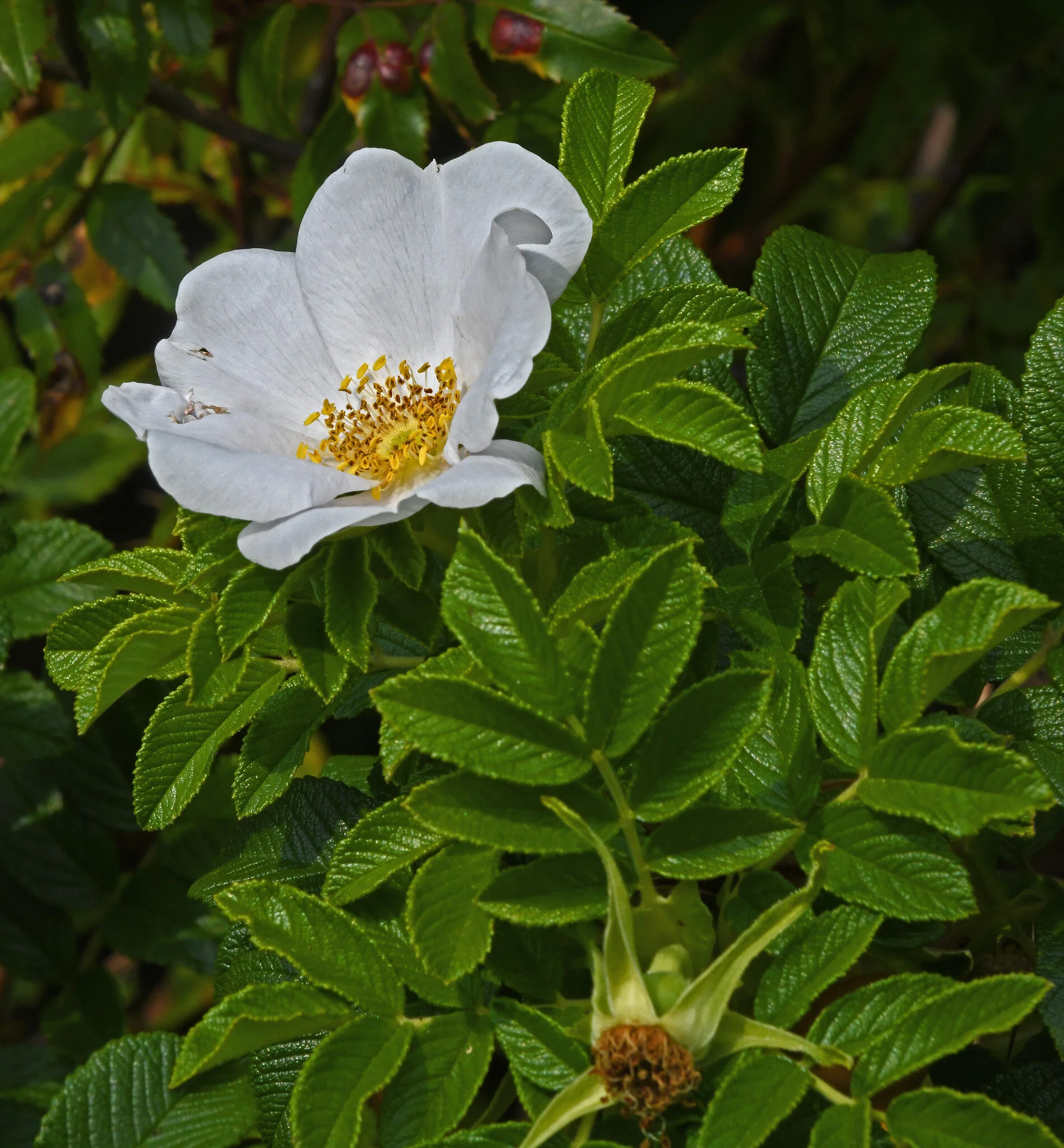
Virtually all of our last generation of Monarch Butterflies have migrated south, leaving the Milk Weed plants, on which their life cycle depends, to propagate seed. Queen Anne’s Lace started its death spiral during the month. Black-Eyed Susans and Beach Roses also were giving their last performances of the season.

67.jpg

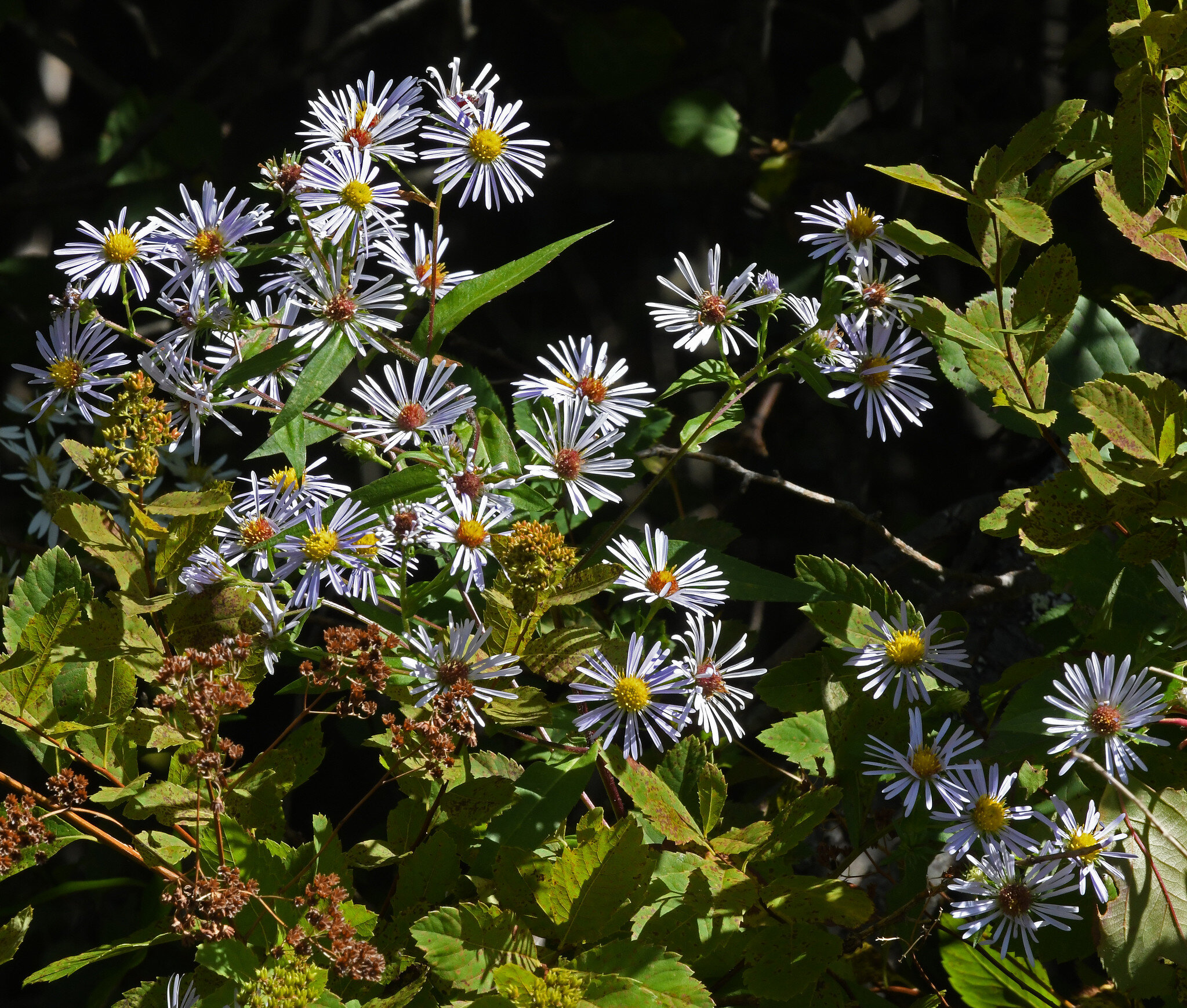
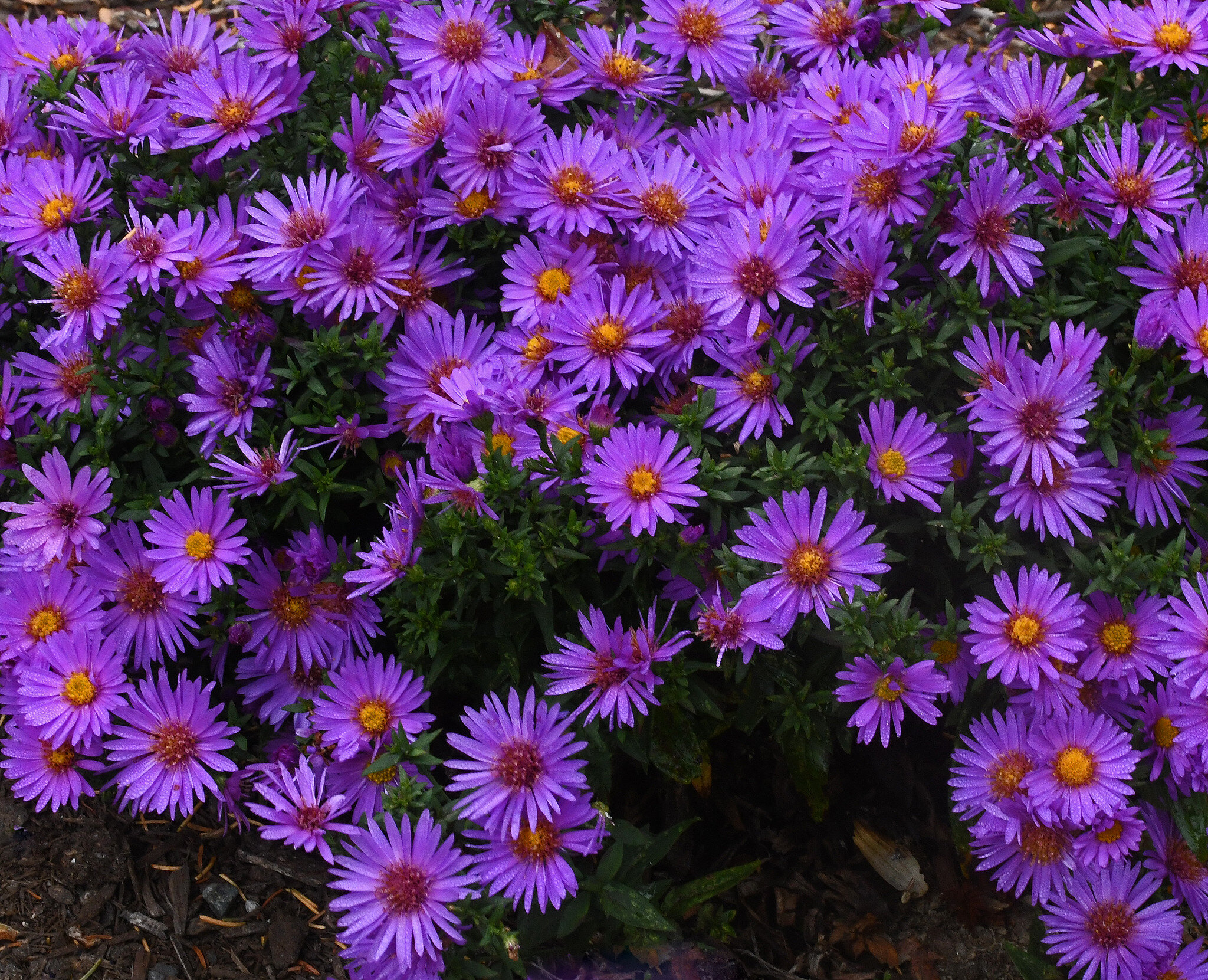
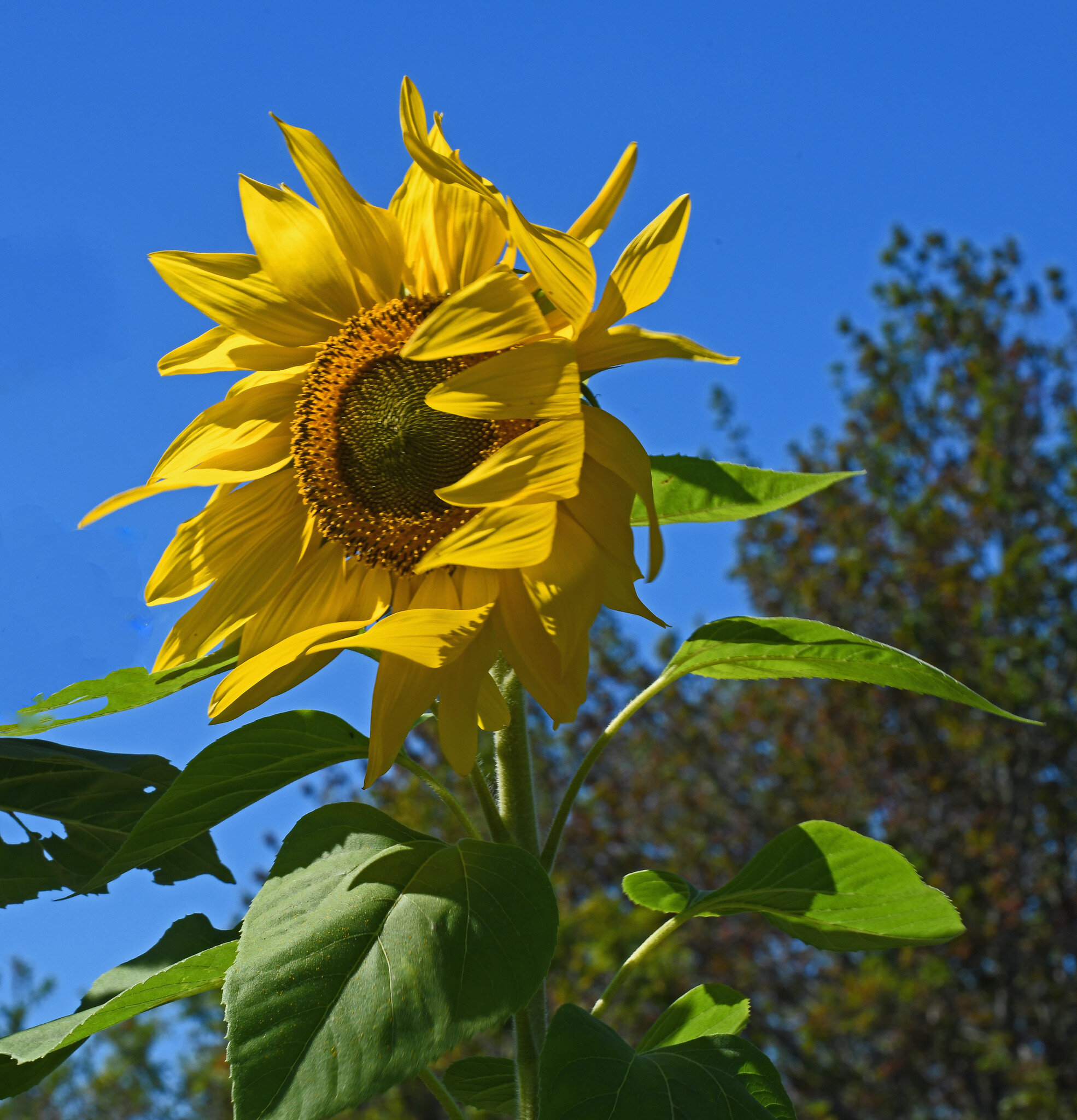
Wild and cultivated Asters hit their peak during the month. Sunflowers were stunning when the wind got in their hair, and the last scenes for Dahlias and Roses were particularly poignant last month. We also saw our first Chrysanthemums in September and expect to have them enlivening us into November.

77.jpg
82.jpg

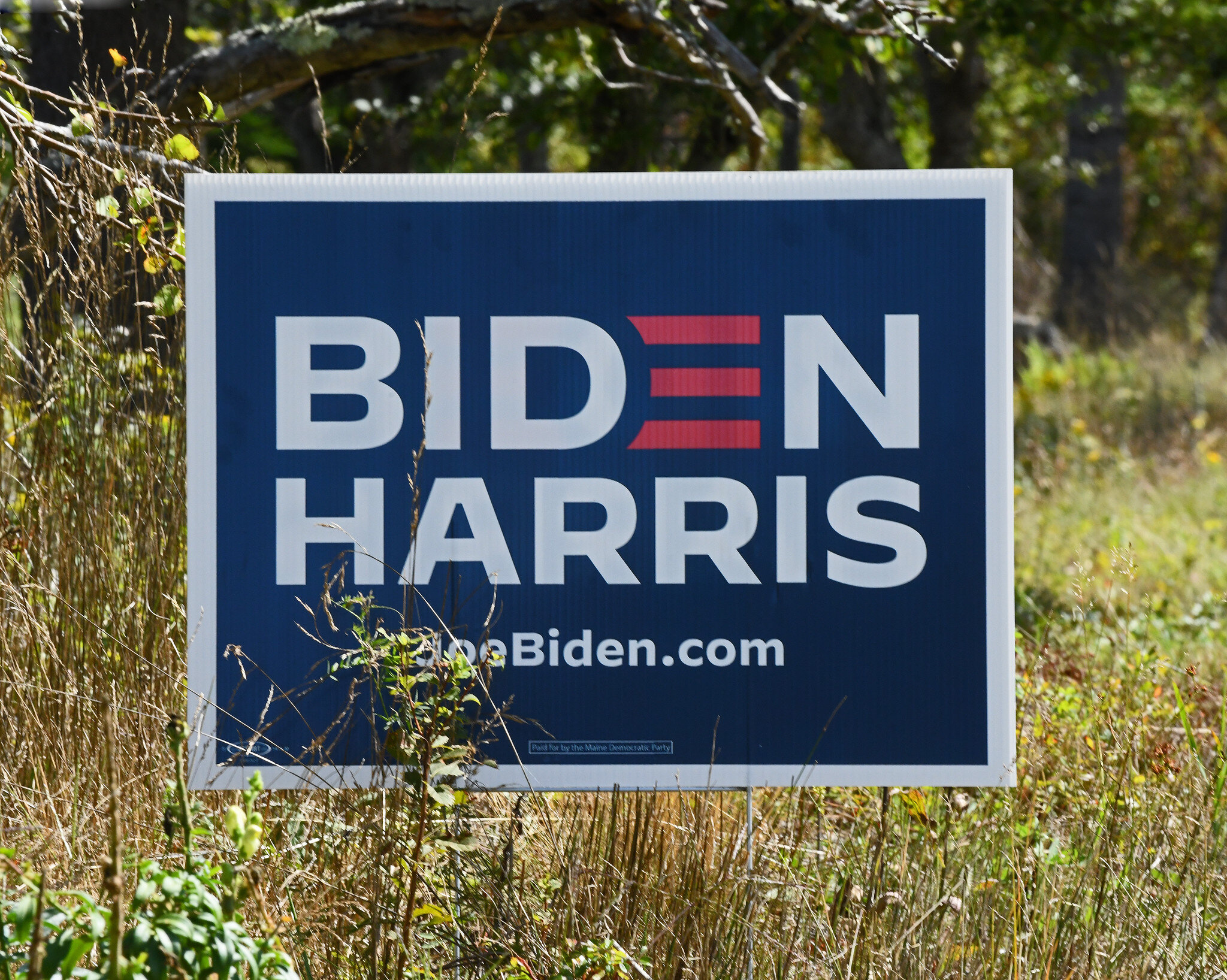
Of course, these are times to express yourself, even in little towns.

We leave you with a sign of hope, the rising moon of September 11, revealing itself to us during a beautiful day.

88.jpg

(All images here were taken in Down East Maine during September 2020)


7 Comments

Comment

In the Right Place: Endings

Many fishermen are calling their lobster season over and taking their traps out of the water, even though the weather is still mild. Frustration and confusion seem to be playing a part. Here, we see the Fishing Vessel Blue Sky unloading traps on September 19:

L-1.jpg

Here are traps at the Town Dock awaiting pickup on September 21:

L-2.jpg

Lobster fishing has been drawn into several of the current disasters and dilemmas. The Covid 19 plague wiped out much of the restaurant and cruise ship businesses, which are big markets for lobsters.

The trade war with China, one of the biggest Maine lobster markets, reportedly has had a devastating effect on American lobster exports.

Tightening whale protection regulations (and proposals) are making (and would make) lobster fishing more costly and perhaps too costly for some.

And, even the lobsters seem fed up. There are reports of them moving out to deeper – and colder – waters because the Gulf of Maine has been heating up.

(Brooklin, Maine)

Comment

Comment

In the Right Place: Weather Wondering

It’s foggy and raining again this morning. We’ve had fog and some direly needed rain for the past three days. This typical coastal weather seems to make me contemplative. Perhaps it’s because there are fewer interesting things visible to distract my impetuous eyes. (How many other favorite fishing vessels are hidden in this fog bank?)

F-1.jpg

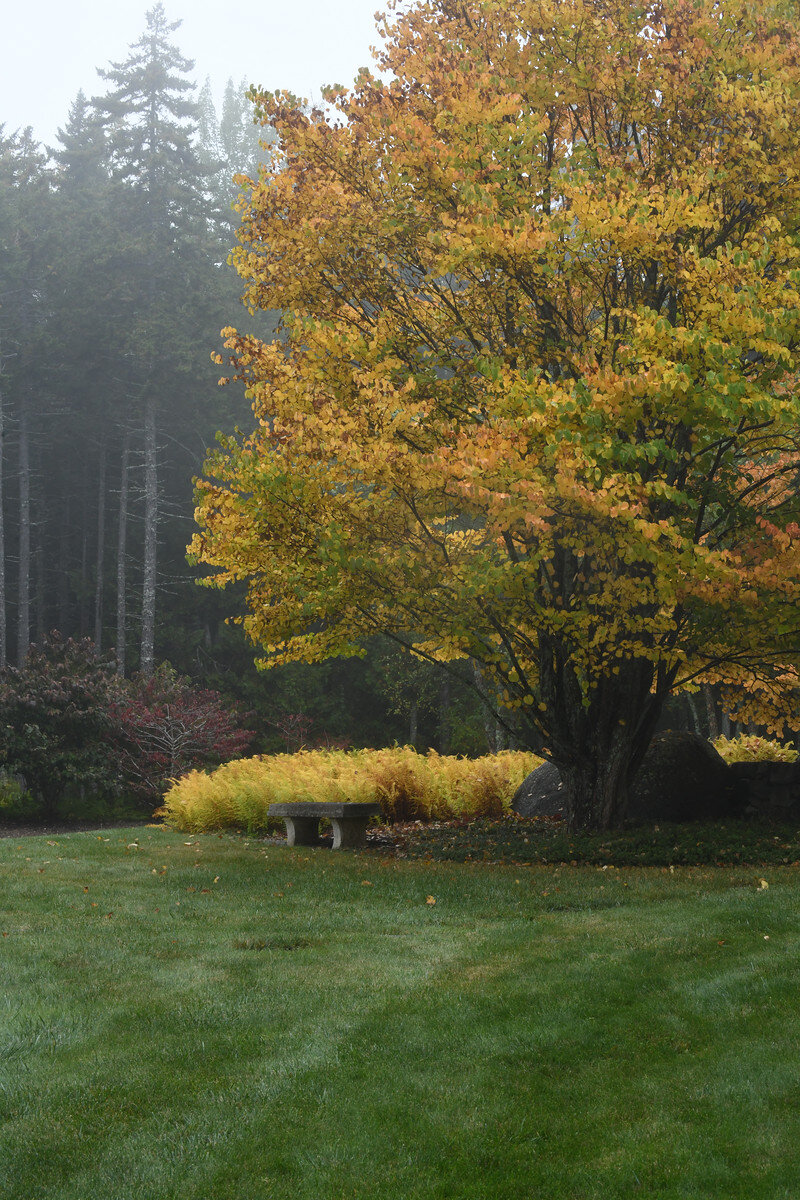
Perhaps it’s because some of the most beautiful sights in sunshine are beautiful in different ways that also make me aware of change. (Will the rain steal away that Katsura Tree’s thousands of leaves before they all can reach their full fall magnificence?)

F-3.jpg

(Brooklin, Maine; all images taken September 27)

Comment

Comment

In tje Right Place: Brassy

The fog was low and dense as I walked near the coast yesterday. It created a silence and closed-in feeling that added soft weight to the intimacy of being alone – until loud honks and shrieks broke the mood. It was like being too close to a bad brass band warming up. I could see nothing as I spun around, unsuccessfully trying to get my brain’s direction-finding lobe to zero-in.

Then, almost over me, this sortie of cacophonic Canada Geese broke through the thick gray cover and showed me their butts:

G-1.jpg

They did a quick course correction, and disappeared again within seconds.

G-2.jpg

They apparently were migrating. However, reports indicate that an increasing number of Canada Geese born in Maine are not migrating. This has created issues.

Geese don’t migrate by instinct; they learn the pathways from elders. If they mature here, they and their following generations become non-migratory residents and have to survive our winters. If that survival drives them to suburban and urban areas, they often are considered to be aggressive (and messy) pests.

Leighton Archive Image

Leighton Archive Image

(Brooklin, Maine)

Comment

Comment

In the Right Place: Only the Lonely

Yesterday morning, I was sitting on Flat Rock, which overlooks our pond. Out of the corner of my eye, a blur streaked across the pond surface screaming something like “peet-peet.” Before I could get up to the camera on its tripod, the blur had stopped at Big Turtle Rock at the opposite end of the pond. (For political correctness, I should tell you that Big Turtle Rock is an equal opportunity rock for small turtles; it’s just that it is three times the size of nearby Little Turtle Rock.)

I couldn’t see anything unusual that far away with my naked eyes. But, when the big lens focused on the rock, there she was: this beautiful sandpiper standing still at the end of BTR, looking back at me. (Sex assumed.)

S-1.jpg

I’m never sure of my field identifications of small and mid-sized sandpipers; but, after some research, she apparently is a juvenile Solitary Sandpiper.

She relaxed and I photographed her preening, wading, drinking, walking up and down BTR, and rocking her body to the tune of some sort of internal music.

S-4.jpg

After 45 minutes of this, my focusing eye was strained; my bad leg was aching; I had taken over 50 images (many virtually identical), and I was going to be late picking up the mail. I urgently needed her to relieve my misery and fly for what would be a stunning in-flight image of her.

But no. Remember her name? She liked being the only bird in the pond. She decided to take a nap.

S-2.jpg

I packed up the photo equipment, put it into the car, and I saw no action from that part of the pond as I drove off. I like to bitterly imagine that she snored. (Brooklin, Maine) For a few more images, click here:

Comment

Comment

In the Right Place: Hogging It

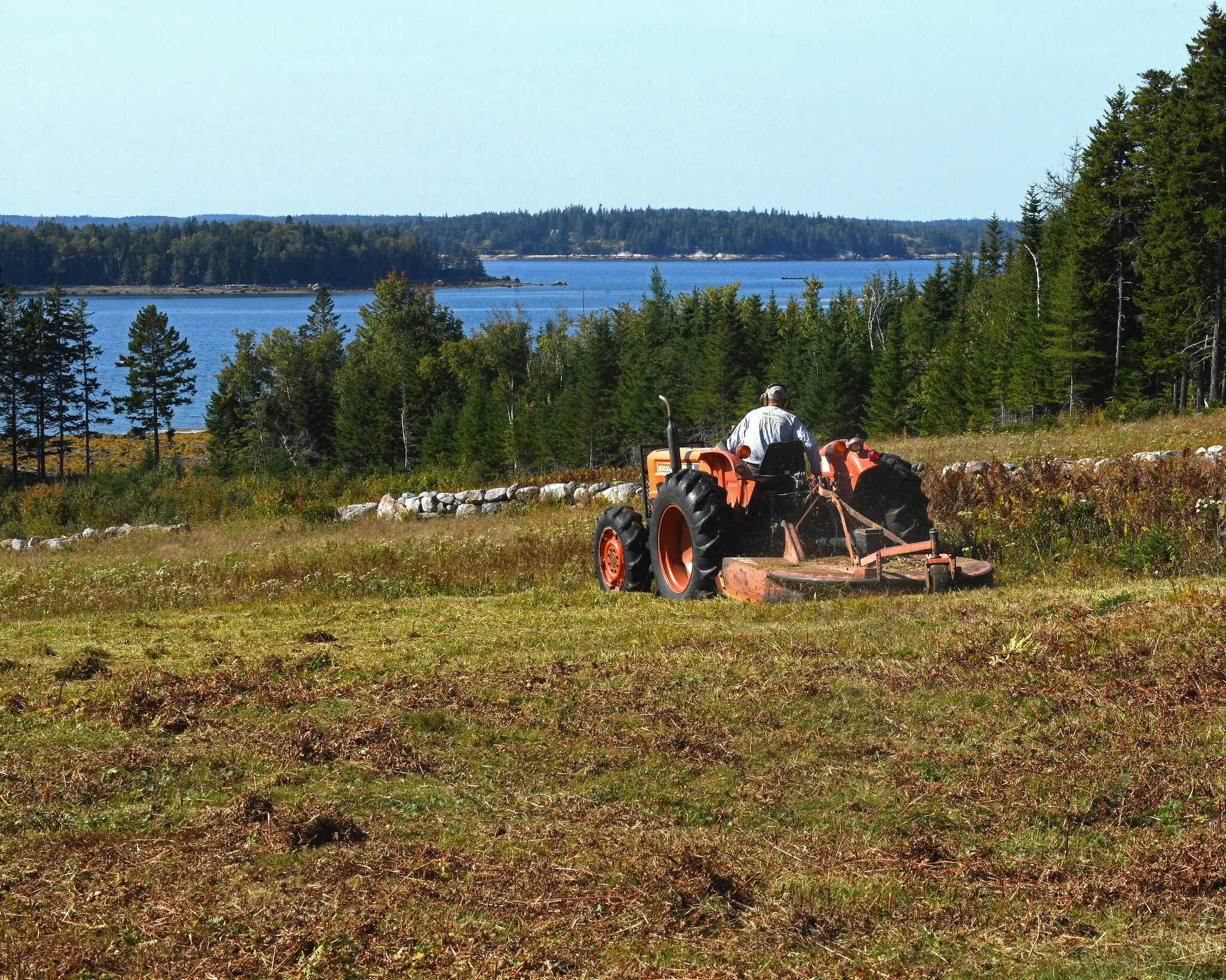
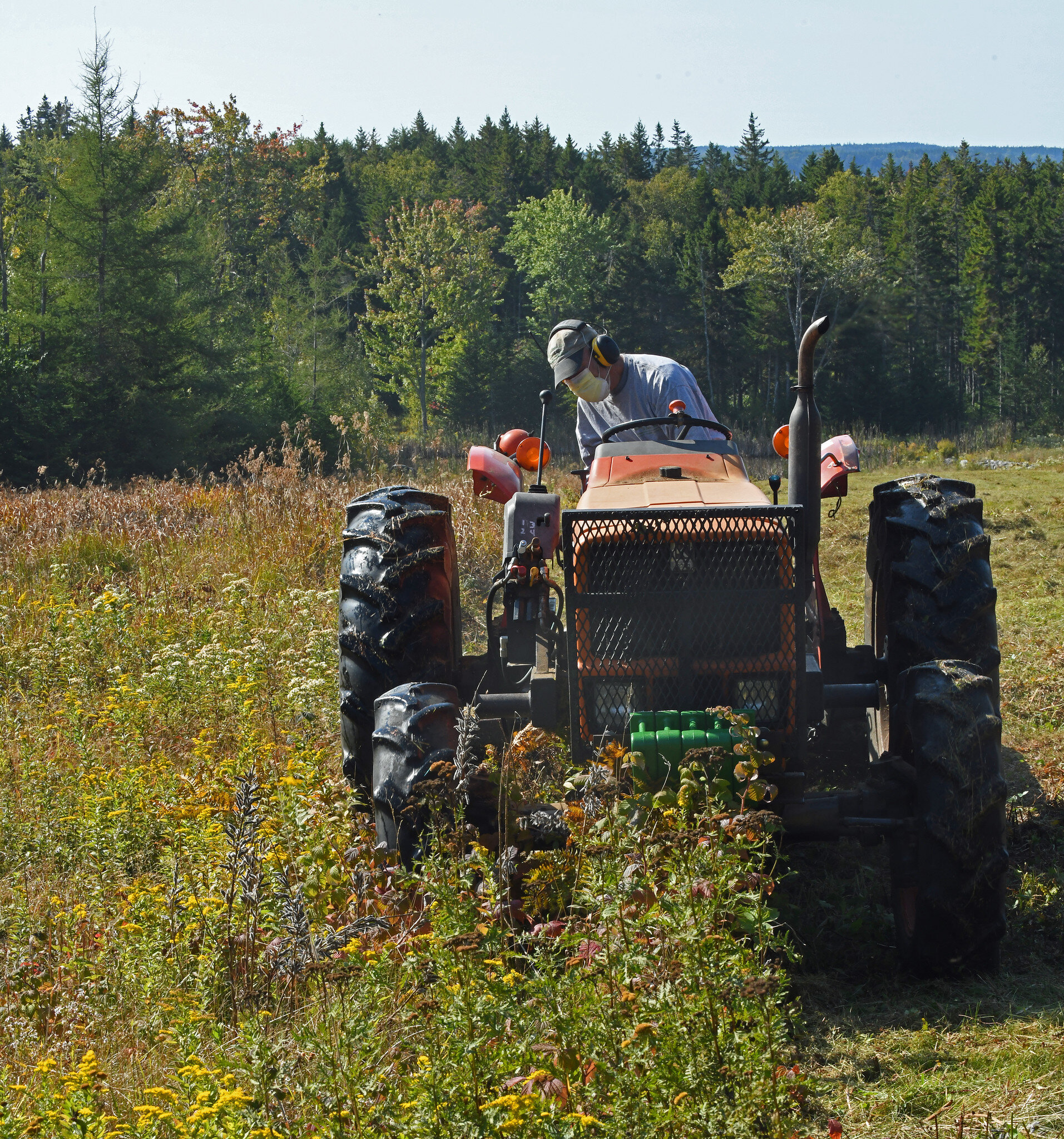
This is Ray McDonald starting his annual mow-down of our fields and borders yesterday, which lasts all day. He does both “straight” and “tricky” mowing, and we offer both.

4.jpg

All the while, he’ll be swinging his eyes backward and forward to avoid hitting a partially hidden rock or stump with the mower in back or bumping into a tree or boulder with the tractor in front.

2.jpg

A good mower, such as Ray, clearly is a master craftsman performing a job that can be difficult and hazardous. But, it also can be satisfying when he sees the remarkable transformation that his efforts have caused.

1.jpg

The equipment attached to Ray’s tractor is commonly called a “Bush Hog®.” However. that’s a brand name of an Alabama company, Bush Hog, Inc., that makes only one of several competing rotary field and brush mowers. (According to the company, the Bush Hog name derives from when the then-unnamed new product was being demonstrated in 1951. An amazed farmer said: “That thing eats bushes like a hog.”) 

3.jpg

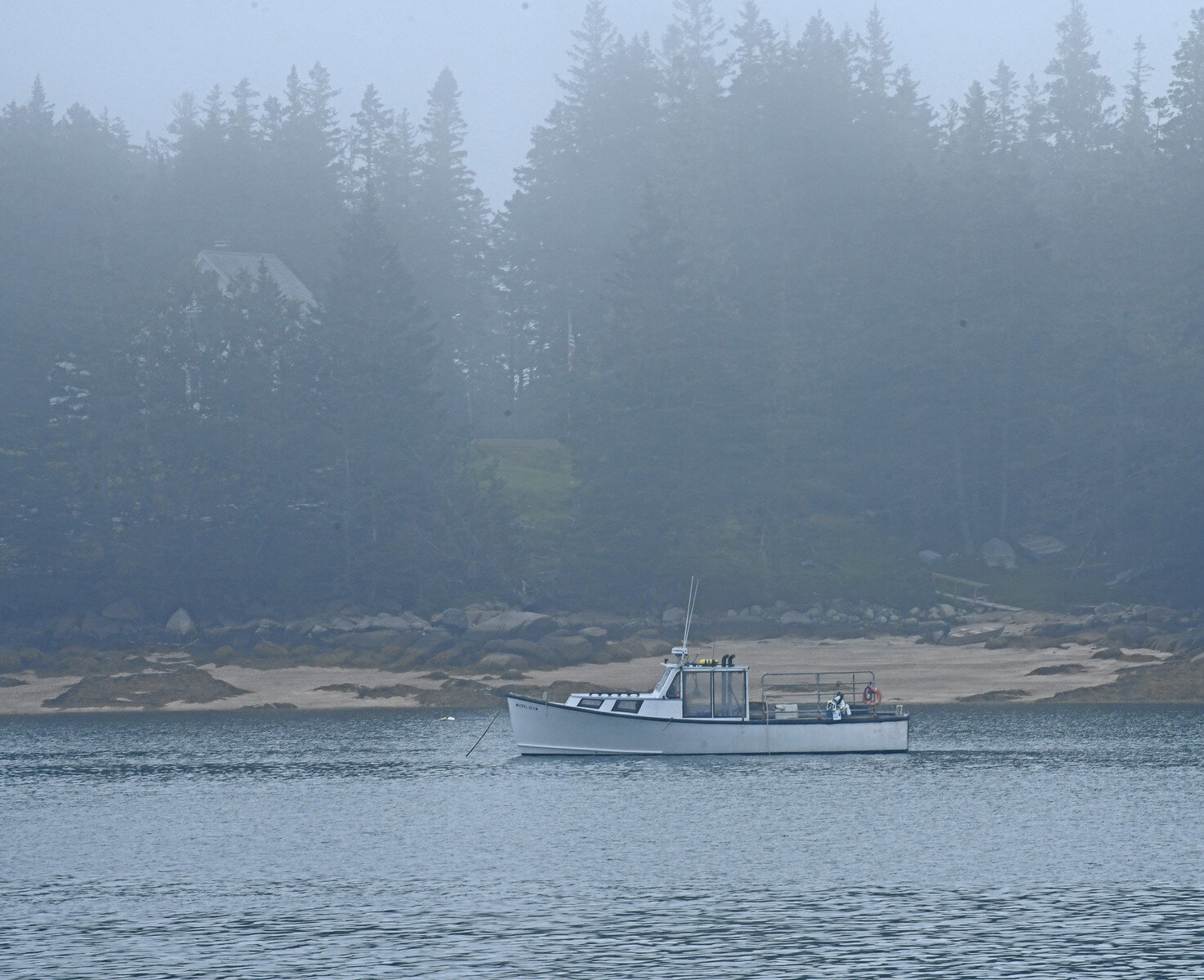
The distinctive features of all of these rotary mowers is their ability to me maneuvered into position from the tractor and their big, flexible blades on hinges, which are designed to bounce away when a rock or stump is hit. See also the image in the first Comment space. (Brooklin, Maine)
Comment

Comment

In the Right Place: A Taber Caper

Although yesterday dawned gray and cloudy, there was an uplifting sight in Great Cove: The schooner Stephen Taber had overnighted and would soon sail out in wind gusts of up to 19 miles per hour. Here, you see the Taber just after its yawlboat, Babe, had returned its passengers from a morning visit ashore on the WoodenBoat Campus:

1.jpg

There reportedly have been only three large schooners cruising in our area during the plague and the Taber is one of them. She’s 110 feet in overall length and was launched in 1871. She hails from Rockland, Maine, and is a National Historic Landmark.

Below, you’ll see her going through sailing preparations yesterday that are not that much different from those in the old days:

9.jpg

However, sailing on the Taber now is a bit more refined than it was in 1871. For example, according to her website, what you’re seeing here is part of a six-day wine-tasting cruise that features wines from a different country every night to accompany delicious food. It costs only $1,318 per person. After this cruise, she’ll be on a Fall Colors cruise along the coast.

Here, she’s turning into the wind yesterday, with a little help from Babe:

10.jpg
15.jpg

As with many 19th Century cargo cruisers, the Taber was built with a flat bottom to “ground out” and discharge her cargo without the need for a pier. She does have a centerboard to lower during cruising but has no motor. However, she does have trusty Babe, her yawlboat with a 230 horsepower inboard engine; Babe pushes the 16-ton Taber in light air and assists with other maneuvers.

There was plenty of air yesterday, though. Here she’s passing Babson Island and nearby ledges to leave Great Cove and enter hazy Eggemoggin Reach headed southwest in a following wind

19.jpg

(Brooklin, Maine)

Comment

Comment

In the Right Place: Real Hoaxes

Although often beautiful, Down East Maine’s weather has not been good in real terms recently. We’re in an official drought that has created a serious threat of wildfires and has been forcing plants to go into full fall foliage prematurely. The growing season for fruits and vegetables has been severely shortened after the hottest summer on record. The deer are eating every plant that contains the slightest moisture. And, we’re starting to have frosts, which could damage compromised root systems. If Climate Change is a hoax, I’d hate to see reality.

1.jpg

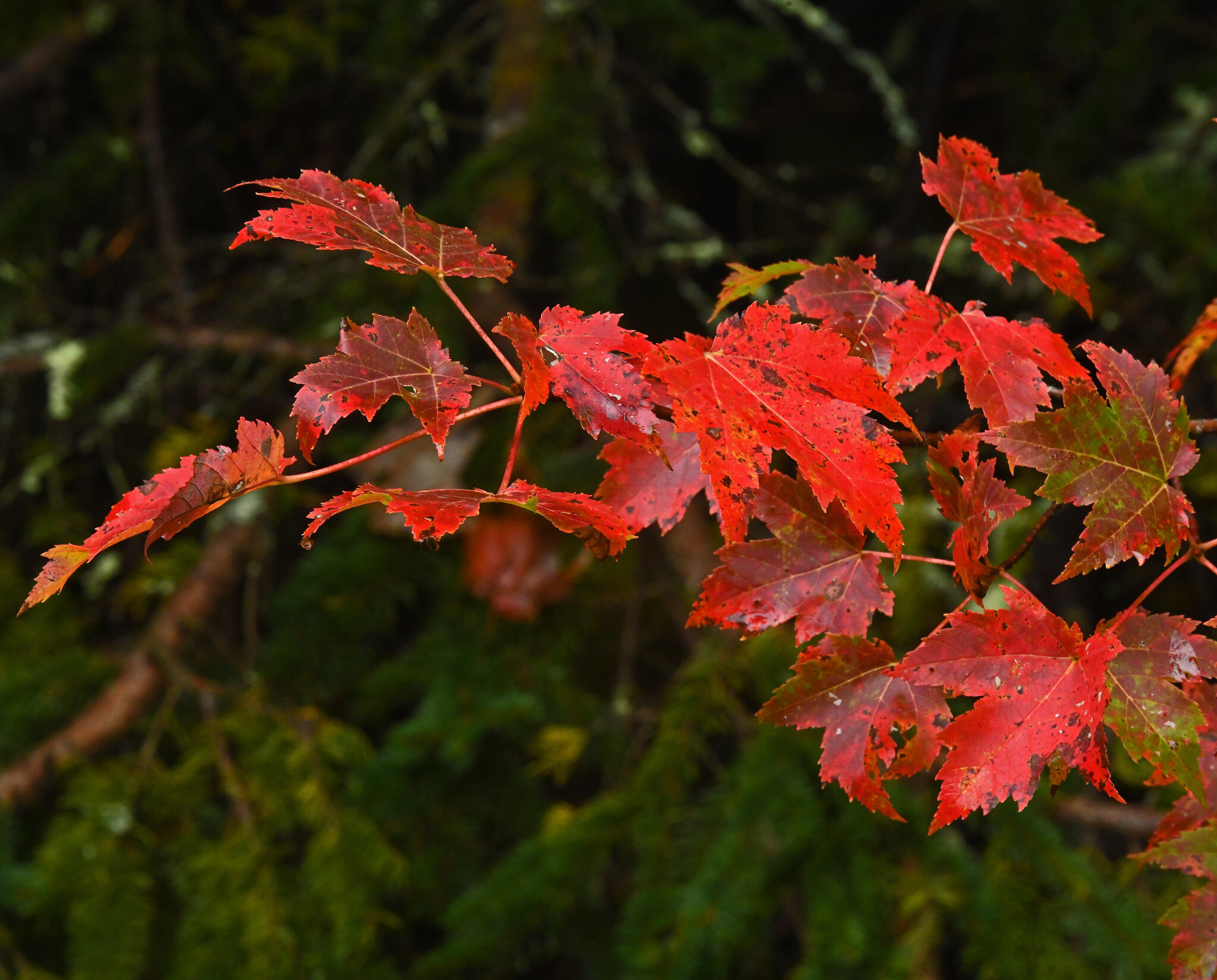
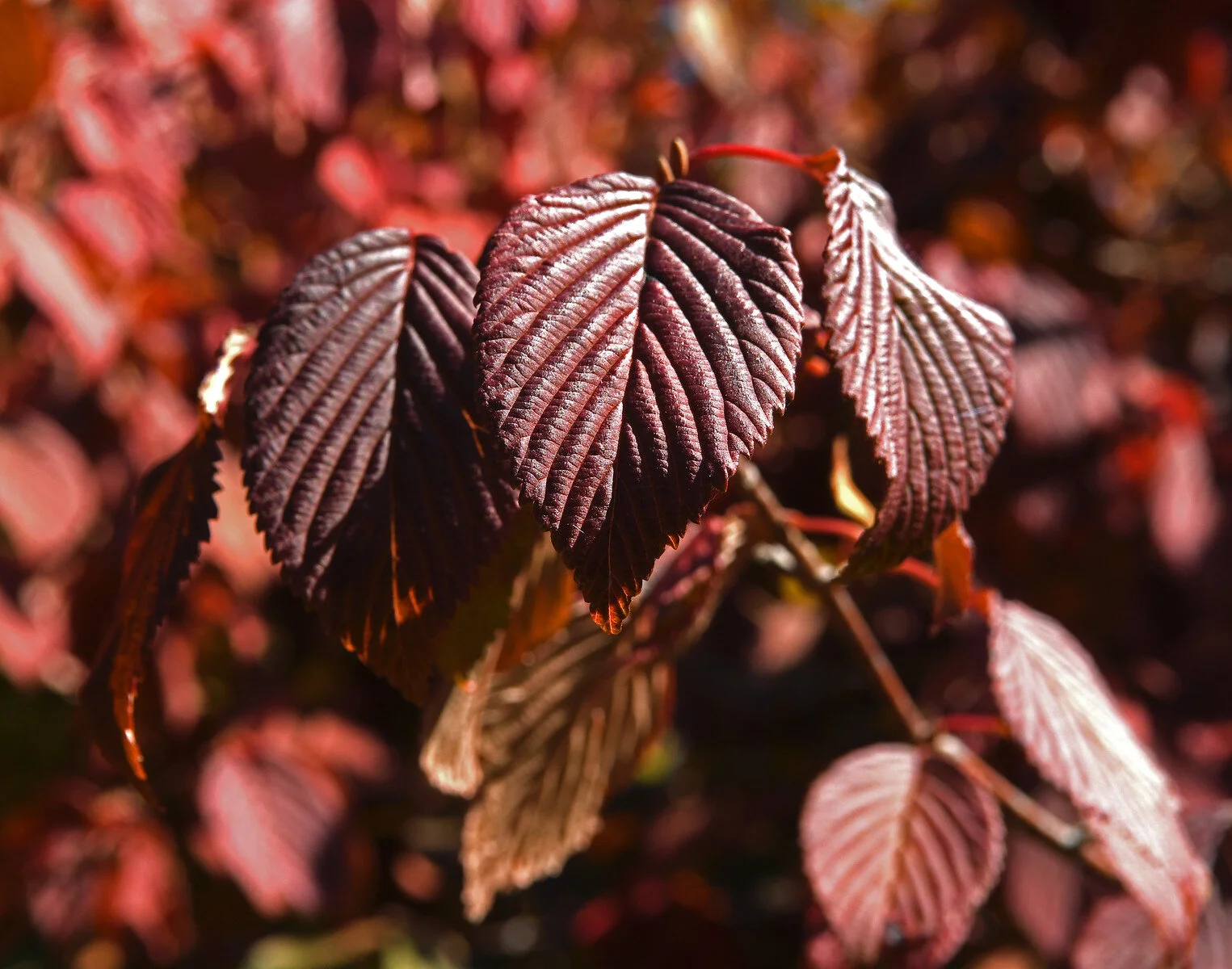
Above, we see a Maple Tree branch already turning on September 20.. Below we see Viburnum leaves turning on September 21.

2.jpg

(Brooklin, Maine)

Comment

Comment

In the Right Place: Guttering

Yesterday, I was driving on our South Field “road” (two ruts in a one-lane, mowed border) and I kept seeing Northern Flickers on the road, in the field, and in the trees. I was in the midst of a “guttering” (one of the names for a group of Flickers). I stopped and began “shooting” them, including this mature male. (His mate is identical, except that she has no black mustache.)

F-4.jpg

Here’s a female:

Leighton Archive Image

Leighton Archive Image

I counted nine or 10 Flickers, mostly juveniles, as they flew here and there chastising me with their “guttering” call, but never going far and never making their piercing maniacal cackle. Then, it dawned on me: this might have been just one family in its territory and on the verge of migrating. Here are images of several of the juveniles, the males already sporting mustaches:

F-5.jpg

We host the “Yellow-Shafted Northern Flicker,” the eastern version with primary feathers that emerge from yellow shafts and patches under its wings; the underside of its tail also is yellow. In the west, the bird is called the “Red-Shafted Northern Flicker” for the same (but red) reasons. It’s apparently  “Northern” because it’s in North America.

Unlike other woodpeckers, Flickers spend a lot of time using their custom-curved beaks to probe the earth for beetles and ants. Here’s a mature female (maybe Mom) climbing over a rock yesterday to dig in the soil around the rock:

F-7.jpg

Our bird is called a “Yellowhammer” in many regions. Some of you history buffs may remember that Confederate Civil War soldiers from Alabama were known as “Yellowhammers” because the Northern Flicker is Alabama’s state bird. (Brooklin, Maine)

Comment

Comment

In the Right Place: Frosty, the Flower

Our early mornings are showing a little frost now. It’s wild aster and goldenrod time, the lifelines to many pollenating insects during New England falls. Researchers have found that asters and goldenrod support more species of butterflies and moths than any other wildflower and that deer usually leave them alone.

A-2.jpg

Here, we see one of our native Wild Blue Asters, also commonly called the Frost Flower. It’s more specifically known as the Large-Leaved Wood Aster (Eurybia macrophylla), we think. These asters are providing nectar and color along our roadsides, trails, and other borders.

A-3.jpg

Above, we see one of our native goldenrods, Seaside Goldenrod (Solidago sempervirens) we think. It and other goldenrods are providing nectar and bright color in our fading fields. (Brooklin, Maine)
Comment

Comment

In the Right Place: Coated

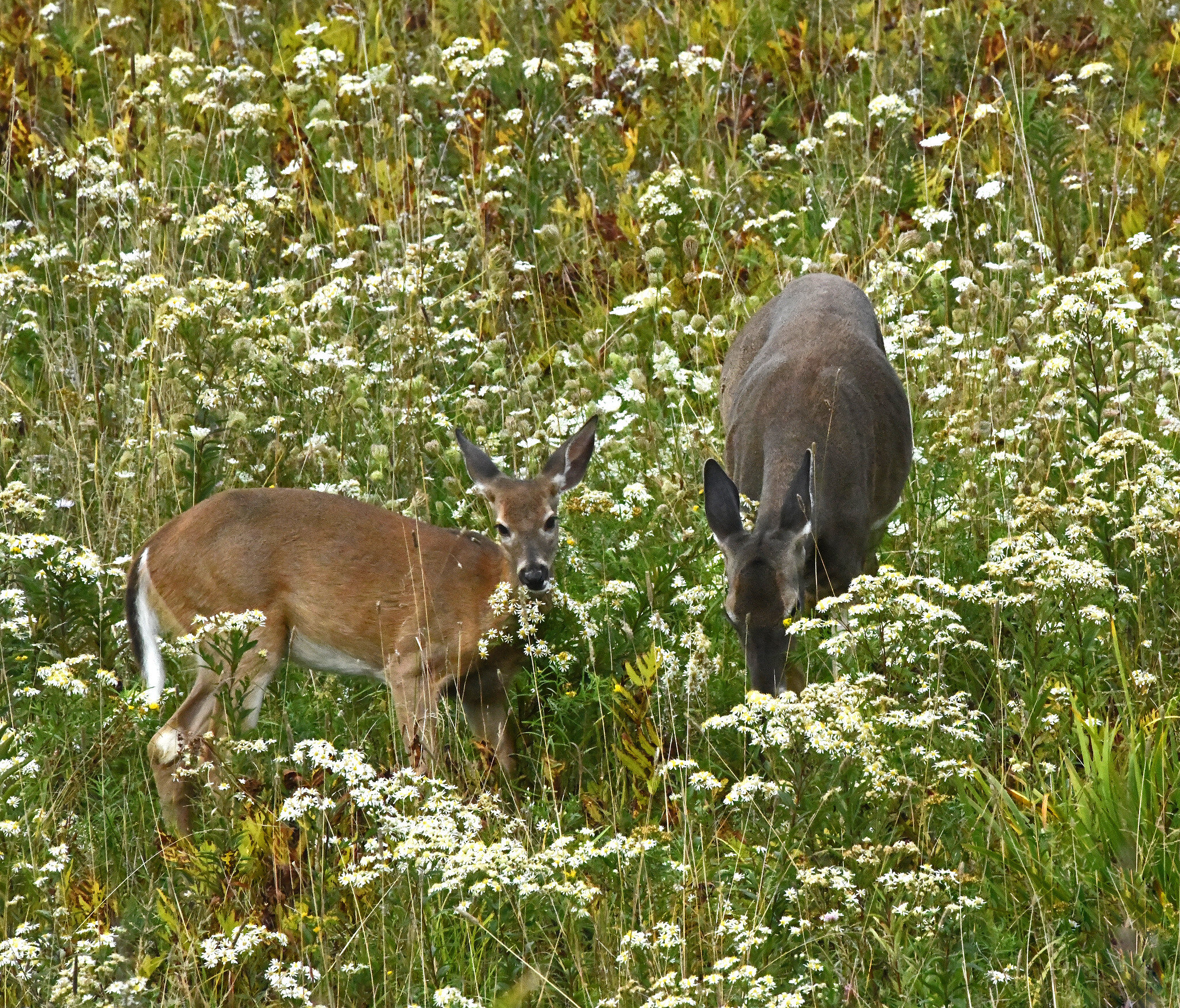
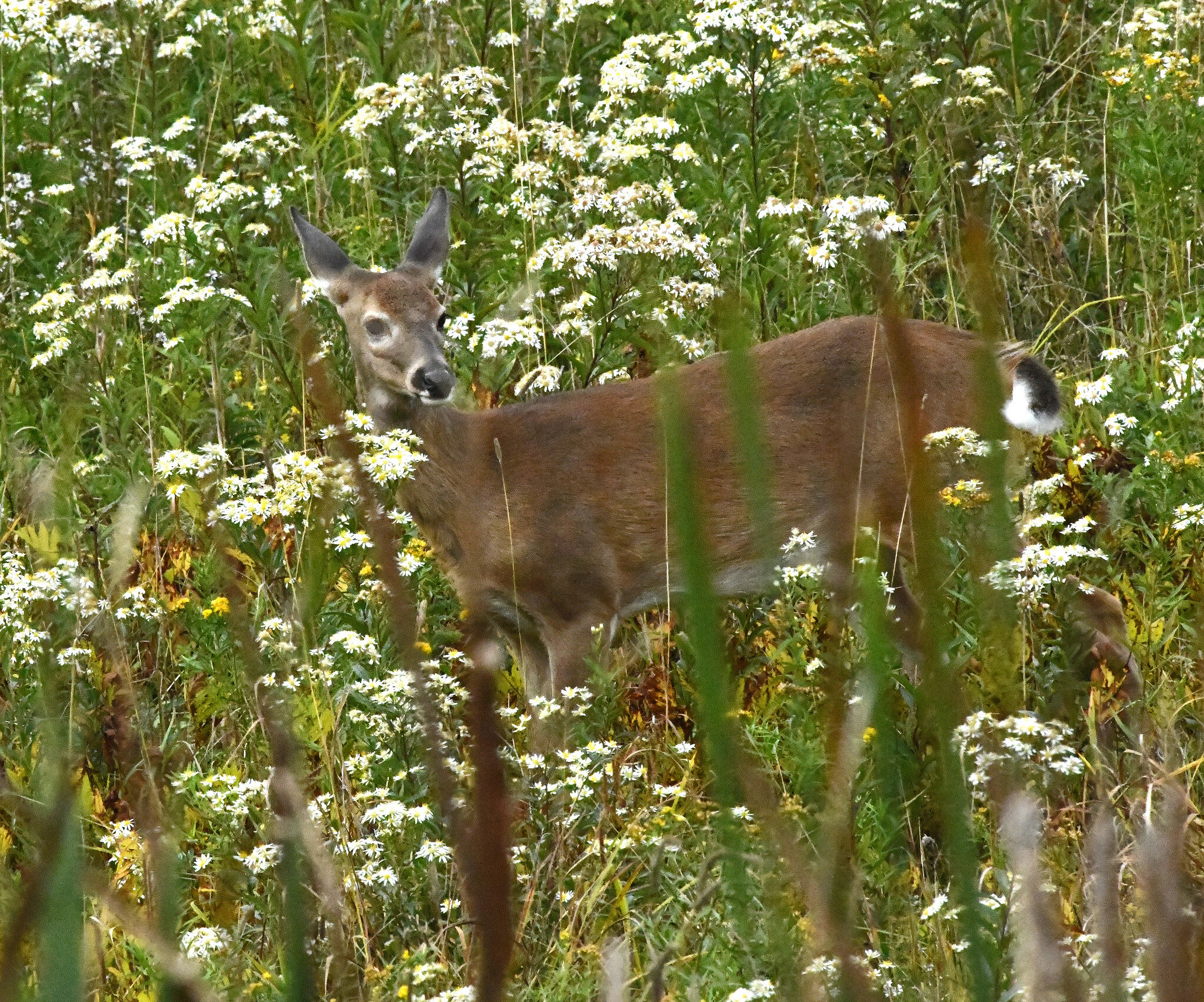
Most of our White-Tailed Deer fawns have outgrown their white camouflage spots. As you can see, they’ve grown into rich brown winter coats, which will continue to get darker, but probably never reach the darkness of their parents’ gray cold-weather apparel.

d-1.jpg

Most of these fawns will stay with their mothers over their first winter. The males will exert their independence next spring or early summer, but the females will remain for another year with their mother and the other does that she roams with.

d-3.jpg

(Brooklin, Maine; both images were taken Thursday, September 17, in our North Field.)

Comment