Comment

In the Right Place: Eden Apple Report

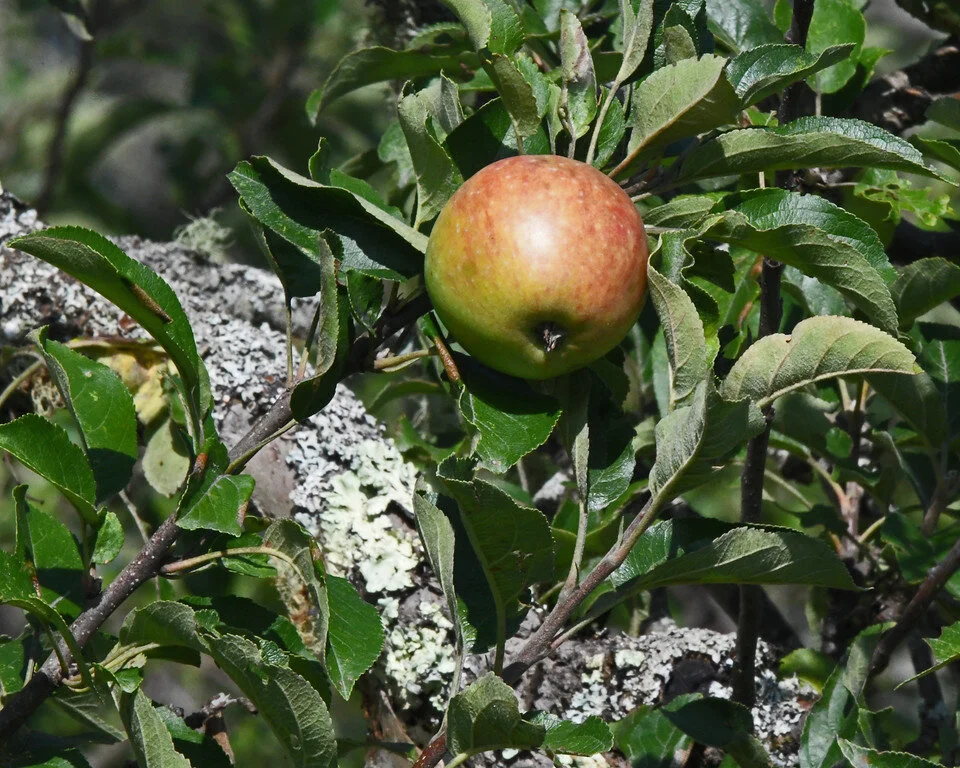
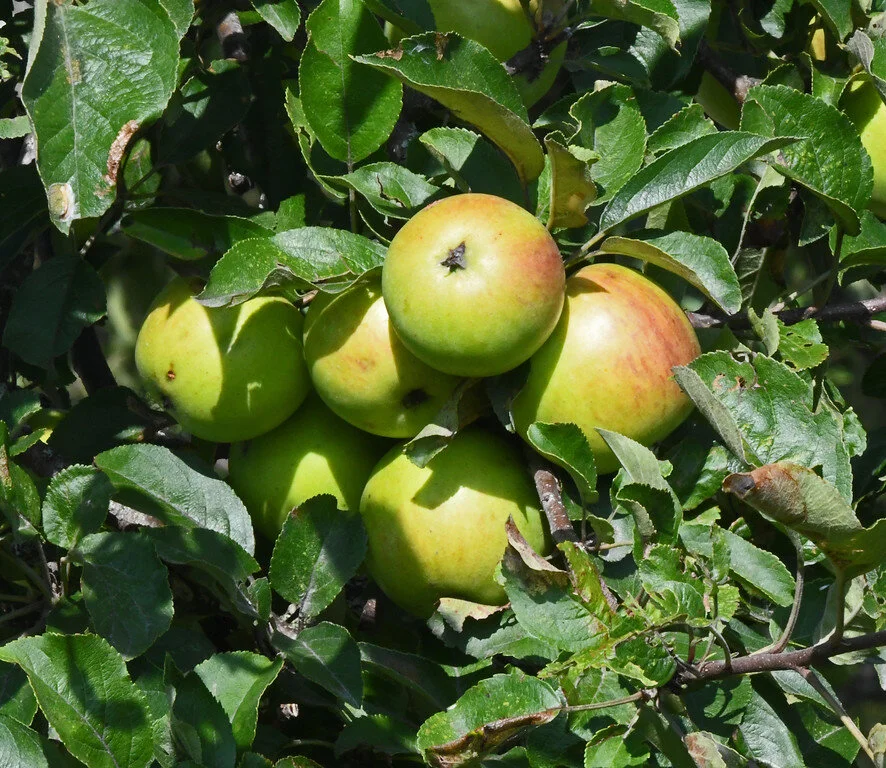
It looks like we’re going to have a good crop of “wild” apples here in the fall, judging by the state of the fruit now. By “wild,” I mean apples in the many old trees that have been abandoned to nature, some for well over 100 years.

Ap1.jpg

The deer have started to eat the apples, but for those of us who don’t have the teeth and taste buds of those tough ruminants, this fruit is too hard and much too tart. (Old-timers called them “spitters” due to the involuntary reaction humans had when trying to taste an August apple, as I foolishly did yesterday. Ugh.)
Ap2.jpg

We suspect that virtually all the old apple trees around here were planted primarily to produce hard cider and applejack liquor. In days of yore in rural areas, cider often was preferred over coffee and tea (because water in those drinks frequently got contaminated) and even more popular than beer and wine (because cider was less expensive).

Nowadays, a fair number of local apples will be picked and pressed by neighbors to make cider. We hear that it takes about 36 mature apples to make a gallon of apple cider with a bit of a kick. See also the image in the first Comment space. (Images taken in Brooklin, Maine, on August 15 and 18, 2021.)

Comment

Comment

In the Right Place: Cruel Irony Department

It’s high summer here in “Vacationland” and we’re still getting more days of gruel-like fog and/or intermittent rain than days of our famed dazzlingly blue skies filled with mounds of white clouds. Sailing classes at neighboring WoodenBoat School sometimes seem to require use of meteorological braille.

S2.jpg

The aftereffects of Tropical Storm Fred arrived as hard rain last night and this morning. We’re bracing for T.S. Henri to come and spend his last troubled days here over the weekend and/or next week. Some say he’ll turn into a hurricane a bit south of here and leave us with manic rain.

Yet, the cruel irony is that the majority of Maine still is abnormally dry or even in drought – and it got slightly worse last week in the State’s northeast counties, according to yesterday’s weekly U.S. Drought Monitor report of data recorded August 17. The Monitor maps are accessible online at https://droughtmonitor.unl.edu/CurrentMap.aspx

081721.jpg

Yesterday’s Monitor map for Maine, above, shows that, as of August 17, the State’s coasts are normal (white), but other areas are “abnormally dry” (yellow), in “moderate drought” (tan), or in “severe drought” (burnt orange). (Brooklin, Maine; fog image taken at WoodenBoat on August 12, 2021)

Comment

Comment

In the Right Place: Invasions We Have Known

A carousing flotilla of at least 14 female and juvenile Common Mergansers swarmed into the fast-moving waters at the mouth of Patten Stream on Tuesday. They had a fabulous time chasing each other on top and below the water without catching a single fish. Their long, sharply serrated bills often seemed to be smiling or even laughing in a grotesque, prehistoric way.

M1.jpg

There also was plenty of loud, stand-up wing clapping applause by these ducks. (Here you see a Merganser clapping and not standing on anything, it’s treading water:

M2.jpg

The reason that virtually all ducks make such displays is not fully known, as far as I can tell. It apparently is not a sexual display. Most researchers seem to theorize that it simply is a way for ducks to stretch and relieve cramped wings; some say that it’s a way to shed beaded water from their backs, and one “scientific” article offered the unlikely finding that the move is to activate the ducks’ preening oil gland (“uropygial gland”) at the base of their tails.

M3.jpg

(Images taken at Surry, Maine, on August 17, 2021.)

Comment

Comment

In the Right Place: A Necessary Paradox

Dragonflies have the grace of lightness, flying balletic maneuvers in sun-glinted blurs and landing with a touch so soft that a slender leaf does not appear to feel it.  The Dragonfly seen here apparently is a male Blue Dasher (Pachydiplax longipennis) that was descending to a favorite perch in a local pond on Monday, August 18:

X.jpg

Yet, from nymph through winged adult, they are carnivorous and considered to be among the world’s most vicious and successful territorial predators.

Adult Dragonflies hunt almost any flying insect, from tiny midges and mosquitoes, to smaller dragonflies, to moths and butterflies that are larger than they are. They reportedly can consume up to 10 percent of their body weight in fellow insects daily.

The adults’ predatory skills derive from their excellent eyesight and extraordinary aerodynamic design. Their four wings can be moved and rotated independently. This enables them to attack in a straight line with incredible speed, yet fly straight up, straight down, stop and turn on a dime, and fly backwards.

Leighton Archive Image

Leighton Archive Image

Their hunting tactics seem to vary due to species. Some are so-called “hawkers,” which roam continuously over their territories in search of prey. Some are “perchers” (or “salliers”), which perch in poised position and wait for prey to come by before taking off; often they will return to a good spot after a kill and wait for another victim. Others are “gleaners,” which alternate perching with slow hunting flights through vegetation; they seem to favor stationary victims.

Y.jpg

Blue Dashers , such as this one seen Monday, are perchers, They also are very aggressive protectors of their territories and sometimes seem to spend more time chasing other Blue Dashers than hunting.

(Brooklin, Maine)

Comment

Comment

In the Right Place: Hail to the Chieftain

You never know what you’re going to see around here. This is a replica of the small Gislinge Boat excavated in 1993 near the town of that name in Denmark, which is pronounced “Jiss-ling,” I’m told.

x.jpg

Archaeologists reportedly think that the vessel might have been built for a Danish Chieftain in or about the year 1130, soon after the Viking Age.

y.jpg

This replica, on the other hand, was built by WoodenBoat School students in this year’s Stitch-and-Glue Boatbuilding Class. They used computer-cut marine plywood with wire stitches and epoxy, among other things.

z.jpg

The students used plans, based on the original vessel’s measurements, that were developed by Class Instructor John Harris’s Chesapeake Light Craft Company, which markets boat kits and plans. (Brooklin, Maine; images taken August 14, 2021) See also the image in the first Comment space.

Comment

Comment

In the Right Place: A Moment of Silence

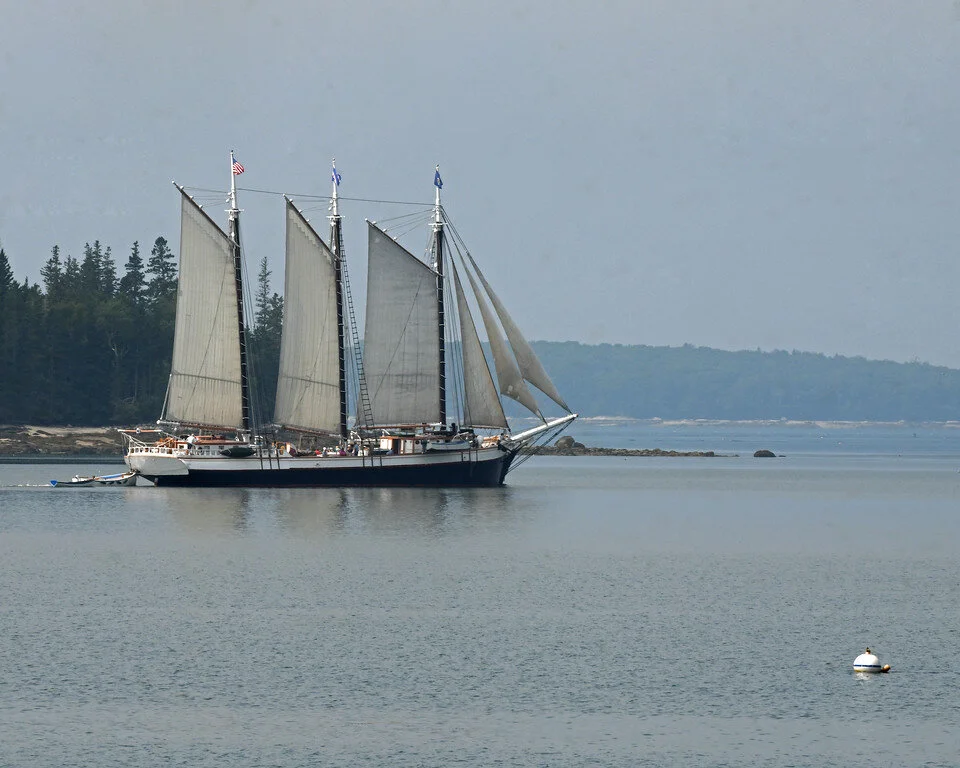
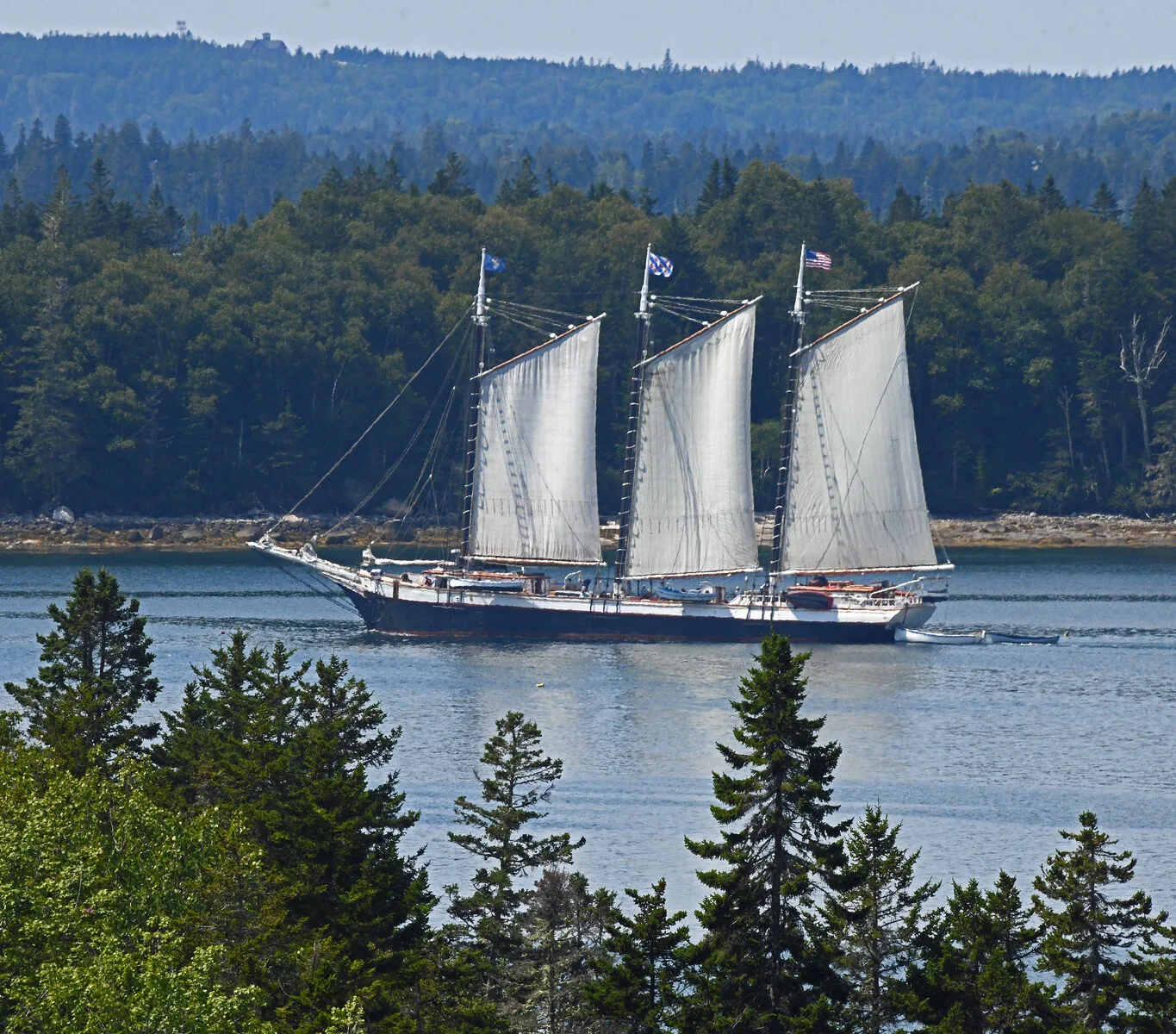
On Saturday morning, I was watching the sun battling the fog in Great Cove and saw no living creatures except seagulls and a lone cormorant. Then, a moving speck among the islands out in Eggemoggin Reach caught my eye. It slowly became a large schooner under full sail, coming silently toward the Cove’s southern entry, apparently trying to escape the Reach’s heavier fog and haze for a while.

v1.jpg

She passed through the Cove with no sound and returned to the foggy Reach through the Cove’s northern entry. (See the image in the first Comment space.)

v2.jpg

It was a moment out of the 19th and early 20th Centuries. The schooner was an old friend, the 170-foot Victory Chimes, launched in 1900 as the Edwin and Maud to freight fertilizer, coal, and lumber. As with the other coastal cruisers that have come to see the Cove this summer, the Chimes seemed to have fewer passengers than in prior (non-Covid) years. (Brooklin, Maine, image taken August 14)

Comment

Comment

In the Right Place: Hippies


Many Beach Rose (Rosa rugosa) hips are now cherry-tomato-sized and providing our deer a crunchy alternative to unripe apples. Humans also consume these hips for their vitamin C, antioxidant, and flavonoid content. Beach Rose plants are popular here, despite the plants’ highly invasive nature.

i-b2MbXJM-XL.jpg

The plants originated in Asia and were imported into New England for ornamental use as well as to stabilize shifting shorelines, hence their common name. Their flowers, usually white or a shade of pink/purple, are attractive:

i-LKk7ghw-XL.jpg

Since this hardy species had a high tolerance for sea salt, it was tried along New England roads that got plenty of salt and other chemicals in the winter. It prospered; some would say too much.

Firmly established Beach Rose plants create dense barriers of thorns and spines that can be painful, if not impenetrable, to walkers and dogs. They also are almost impossible to remove without heavy digging equipment. (Brooklin, Maine, images taken August 13)

Comment

Comment

In the Right Place: A Tale of Two Ladies

Here you see yesterday’s dawn sunlight touching little Martha and big Angelique as they sleep in Great Cove. It was a wonderful sight, especially since we haven’t been able to see the Cove on many mornings lately, due to heavy fog.

1.jpg

Martha is a local legend. She was built in 1967 by the famed Brooklin naval architect Joel White for his even more famous father, the New York- and Brooklin-based author E.B. White. Martha was named after Joel’s daughter, E.B.’s granddaughter.

She’s a sloop-rigged Crocker Pocket Cruiser that is almost 20 feet long overall (19’ 9”). After E.B.’s death, Martha was sold by the White family to Rich Hilsinger, Director of the WoodenBoat School here, who promised to keep her in Brooklin. Here’s an archive image of Rich sailing her in the Cove:

Leighton Archive Image

Leighton Archive Image

Angelique is a 130-foot topsail ketch. She was built in 1980 for the tourist trade and is designed to look like a 19th Century English North Sea trawler. Nonetheless, Angelique has unseen modern touches, including a metal hull, full (not retractable) keel, and two powerful diesel engines. Here’s a close-up of her yesterday:

2.jpg

(Brooklin, Maine)

Comment

Comment

In the Right Place: Maine Drought Report

The above-average rain and fog of July on the Maine coast is now the above average rain and fog of August here. The moisture has increased our ground water and is relieving the coast from the State’s significant dryness problem. (See the drought report below.)

P-2.jpg

In the image above, you see Patten Stream in Surry, Maine, tumbling fresh water into salty Patten Bay at very low tide on August 6. The image shows an interesting mixture of life that is below water at high tide.

The bright green strands on the rocks appear to be the algae known as Green Rope Seaweed (Acrosiphonia spp.). In the upper background are fields of seaweed that appear to be Knotted Wrack (Ascophyllum nodosum), the brown algae that is our most common form of Rockweed.

About 10 feet upstream, you’ll see that some of the rocks are spotted with what appears to be Common Orange Lichen (Xanthoria parietina), also known as Maritime Sunburst Lichen:

P-1.jpg

Despite the precipitation here on the coast, today’s federal “U.S. Drought Monitor” reports that Maine still has a significant dryness problem, as of August 10.

0812212 Release.jpg

This week’s Monitor map, above, shows that the majority of the State remains “abnormally dry” (yellow), in “moderate drought” (tan), or in “severe drought” (burnt orange). See the image in the first Comment space. (Brooklin, Maine)

Comment

Comment

In the Right Place: Recent Coastal Cruiser Sightings

Here you see the 170-foot Schooner Victory Chimes (launched in 1900) leaving Great Cove in the sunny morning of August 4:

S-1.jpg

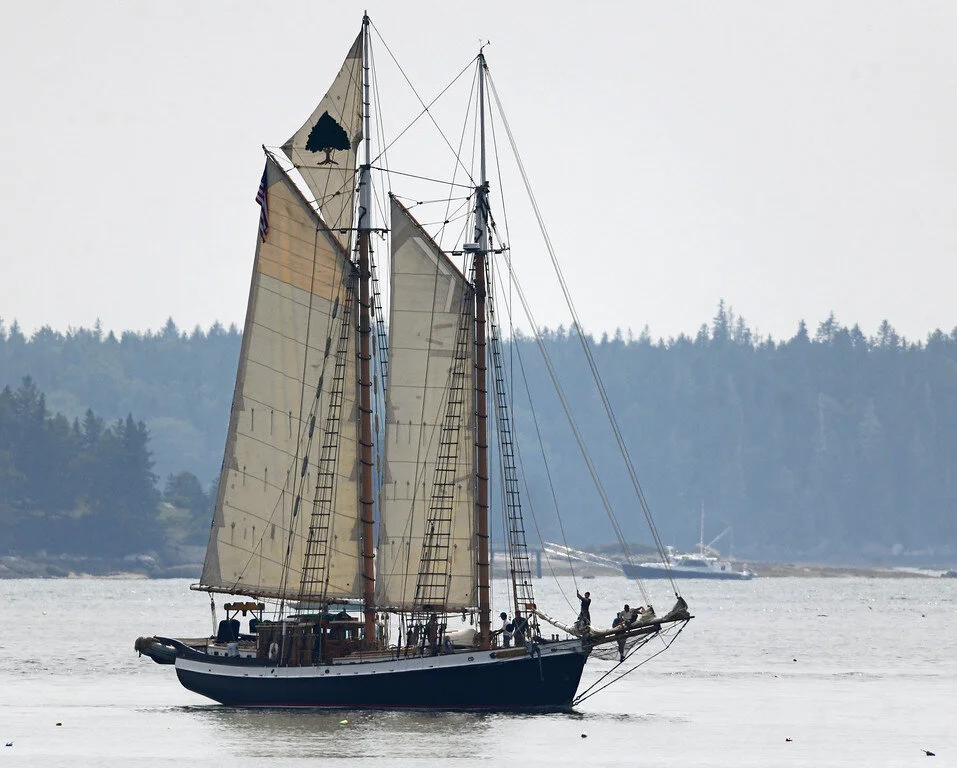
Here’s the 91-foot Schooner Tree of Life (launched in 1991) entering the Cove in the hazy-foggy afternoon of August 7:

S-2.jpg

Changing weather is the norm here on the coast. As this is written, it’s so foggy that we can’t see our North Field, no less the Cove and what’s in it. (Brooklin, Maine)

Comment

Comment

In the Right Place: Petal Power

Tiger Lilies (Lilium lancifolium) have come into full bloom here, their swept back petals giving them the appearance of pulsating sea forms swimming in the garden air.

T-1.jpg

They’re native to China, where they have been admired and depicted in literature and artworks since at least the 10th Century.

T-2.jpg

Those Tiger Lily petals and bulbs, by the way, are edible by humans, but not dogs and cats, which can have severe adverse reactions from eating them. Chinese chefs reportedly like to use the bulbs (when available) in moo shu pork. (Brooklin, Maine; images taken Sunday, August 8.)

Comment

Comment

In the Right Place: Heaven Reimagined

Yesterday was a high summer day here.  The temperatures were below 80 (F) with a breeze that provoked involuntary smiles. There was haze on the sea, but cumulonimbus clouds worthy of N.C. Wyeth were performing their now-you-see-it-now-you-don’t trick with the sunshine.

Our fields are now thick with proud Queen Anne’s Lace and emerging Goldenrod. The ponds are mostly carpeted with Fragrant Lily pads and flowers, but with room for clouds to float.

2.jpg

(Brooklin, Maine)

Comment

Comment

In the Right Place: Regatta Regalia

Here you see the fog lifting off Great Cove early this morning. Few are stirring on the sailboats that raced in the annual Eggemoggin Reach Regatta yesterday, but a breakfasting deer can be seen by those with keen eyesight:

X.jpg

The boats in that 15-mile race yesterday encountered heavy haze and difficult (sometimes nonexistent) winds. The air often was light near the finish line at the Cove entrance, where some boats had to tack across.

Y.jpg

The Schooner Tree of Life came into the Cove before the finish to allow her passengers to see the end of the race:

Z.jpg

The prestigious Regatta has been run for wooden boats since 1985 and has been cancelled only once by fog. (Nonetheless, the after-race party was held then.) The Regatta is sponsored by the Brooklin Boat Yard and Rockport Marine boat builders and the after-race party takes place at the WoodenBoat School campus, overlooking the Cove. (Brooklin, Maine)

Comment

Comment

In the Right Place: Painting

August is a good time to sneak up on Painted Turtles (Chrysemys picta) to see these natives basking. They’re usually very shy and will disappear under water if they see or otherwise sense your presence at a distance.

i-jrPNvq3-X4.jpg

I’ve found it best to approach them slowly while keeping a screen of cattails or other vegetation between us; usually there are small openings through which you can peer when you get close. That’s what we did yesterday to “catch” the young fellow above.

Painted Turtles have existed for at least 15 million years, according to fossil records. They reportedly evolved into four subspecies during the last glacial age, which ended almost 12 thousand years ago. Our subspecies, shown here, is the Eastern Painted Turtle (C.p. picta); it’s the only subspecies with shell segments (“scutes”) that occur in virtually straight rows and columns. (Brooklin, Maine)

Comment

Comment

In the Right Place: How Dry I Am

We had significant rain yesterday, through the early morning today, and there is a misty overcast here as this is written. The Viburnum berries are happy, the tourists are not, and Maine is still significantly dry. This image of the berries, was taken in yesterday’s rain:

i-NfZvJZX-X3.jpg

Yesterday’s U.S. Drought Monitor reported that most of Maine still has a dryness problem. The U.S. Department of Agriculture Drought Monitor Map, tabulating data as of August 3, shows that the majority of the State remains “abnormally dry” (yellow), in “moderate drought” (tan), or in “severe drought” (burnt orange):

080521 US Drought.jpg

(Brooklin, Maine)

Comment

Comment

In the Right Place: Ups and Downs

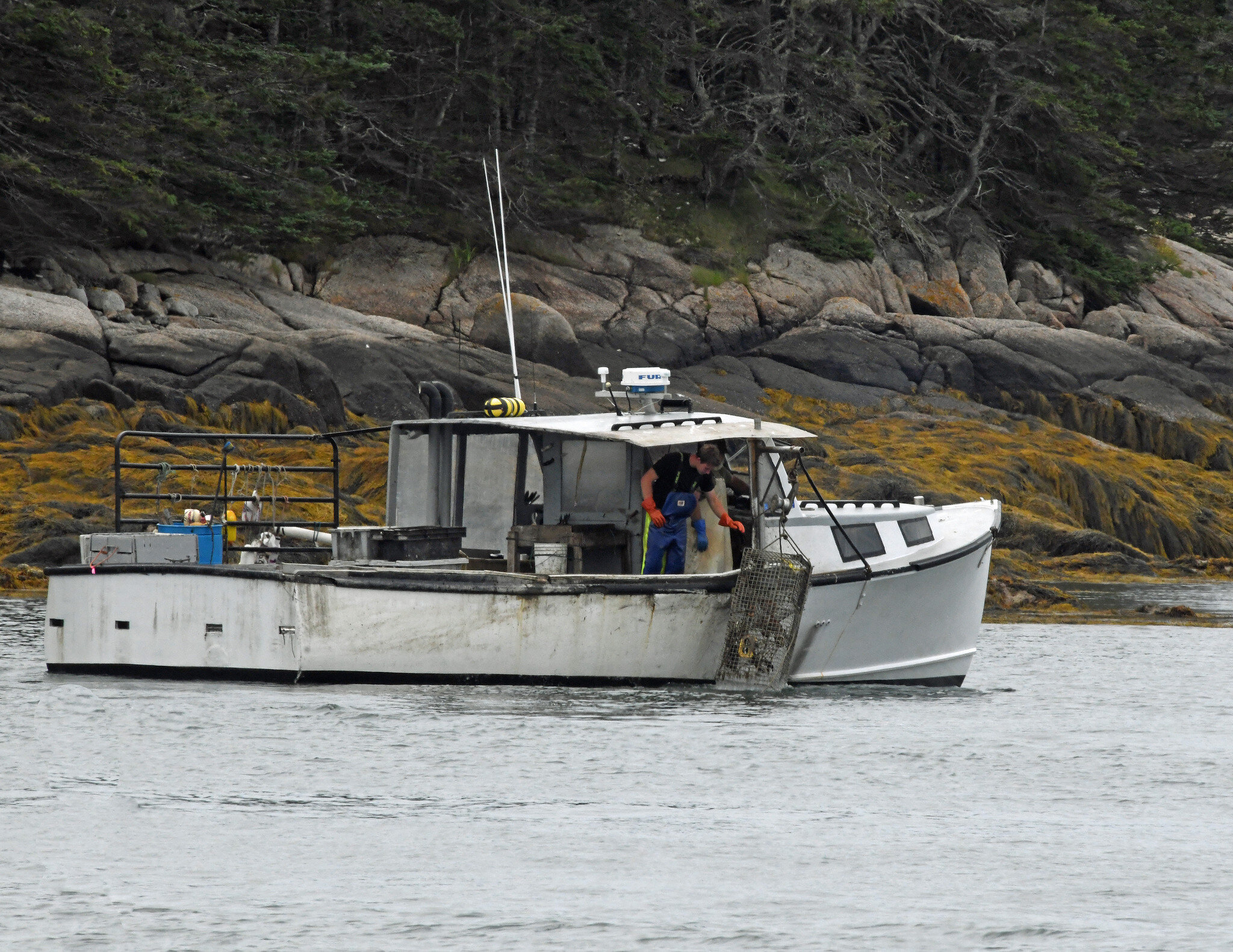
We hear that lobster prices paid to fishermen have been very good so far during this primary season, but that the catch numbers are down statewide.

2.jpg
1.jpg

Above, youl see Long Set, a local fishing vessel, catching lobsters right in our Naskeag Harbor on a cloudy Monday, August 2. (Brooklin, Maine)

Comment

Comment

In the Right Place: Osprey Nest Report 14

Progress: The three Brooklin hatchlings are flying or virtually flying now. Here you see David, the oldest of Ozzie and Harriet’s 2021 brood, returning to the nest from a long solo flight yesterday.

2.jpg

That’s his sibling June in the foreground,; Harriet is in the middle, and his other sibling, Ricky, is ducking behind David. (Names and sexes assumed for descriptive purposes.) Here, left to right, are Harriet, David, and June after the landing:

3.jpg

I'm almost certain that I’ve seen Ricky flying recently, but this second-born is now difficult to distinguish from David. We’ll know for sure soon when we see them flying together. Here, I think, is David coming out of the fog on Monday, August 2, with his two siblings in the background:

5.jpg

June, the smallest and last-born (in late June), was doing the Osprey Bounce yesterday – catching breezes with flapping wings so that she elevates above the nest and can practice landings:

She’ll be flying around the neighborhood soon.

1.jpg

Ozzie is still doing all of the family fishing, as far as I’ve seen, but Harriet does not need to feed her youngsters anymore. They sometimes compete with her at grabbing the fresh fish.

Leighton Archive Image

Leighton Archive Image

The next developmental step for the youngsters likely will be to trail along with Ozzie as he fishes and then to try their own hands (talons) at fishing. Here’s an archive image of Ozzie returning to the nest with a fish:

Most researchers seem to think that Ospreys are not taught to fish, they just do it innately when they are ready. However, flying in a group over water with a hunting parent seems to prepare them for the physiological and mental moment when they feel brave enough to dive and plunge under water to grab a fish. (Brooklin, Maine)

Comment

Comment

In the Right Place: Mysteries

Here you see the abundant berries of a Mountain Ash Tree in yesterday's morning fog. They appeared here in the mysterious trees about a week ago:

M1.jpg

These trees (Sorbus aucuparia) are neither Ash Trees nor especially fond of mountains. They’re members of the Rose Tree family.

They’re also called Rowan Trees because our early Scots and Irish settlers mistakenly thought that they were the same as European Rowans, which were believed to ward off witches and have other magical properties. In nearby Canada, they’re known as Dogberry Trees and their berries are used to make Dogberry Jam, which is popular there.

M3.jpg

Many old-timers here believe that an abundance of Mountain Ash berries in the summer and fall means a harsh winter. The theory is that this is one of the ways that Mother Nature protects the over-wintering birds. Of course, that was before we created Climate Change to ruin nature as it was. (Brooklin, Maine)

Comment

Comment

In the Right Place: The Day of Rest

August arrived with splendor yesterday– cool, sunny, and breezy with a few clouds scudding across a bright blue sky.  It was a hopeful sign after having just experienced the second wettest July in recorded Maine history, according to Portland records. But, our hopes were put in doubt when we awoke to fog and rain today. Nonetheless, after July, a one-out-of-two great day ratio seems fine.

Yesterday being the day of rest for most fishermen, we went to nearby Stonington on Deer Isle to see the fleet at anchor, which always is a reassuring sight. The small port ranks first in Maine for lobster landings by value: a reported $43.26 million last year, despite Covid 19.

1.jpg

The foreground of the image above shows part of the fishermen’s commuting system, which seems more refreshing than rides on buses or subways (except, perhaps, when it’s raining, densely foggy, very choppy, or cold and windy in predawn darkness).

2.jpg

It was low tide when we got there, so we got a bonus view of Stonington’s famous granite ledges.

3.jpg

(Stonington, Maine)

Comment