Comment

In the Right Place: Super-Wide

We got a glimpse of this Maine Marine Patrol Vessel yesterday. She was patrolling Naskeag Harbor and, having found no pirates or other illicit activity, was gone within minutes.

Maine’s Marine Patrol is the oldest law enforcement organization in the State. Its history extends from 1867, when the Maine legislature authorized state-wide enforcement of conservation requirements for marine species.

This Patrol Vessel is a 46-foot Wesmac Super-Wide named Sergeant. She was named in honor of the late Stanley “Cappy” Sergeant, a Maine fisherman who participated in many State marine resource projects.

Her 803-horsepower diesel engine gives her plenty of chase speed and, for shallow water and more delicate work, she also carries an outboard-powered  rigid hull inflatable boat in a cradle on deck. She can bring up and check lobster traps with a lobster trap hauler in her stern.

The Sergeant is called a Super-Wide because her 17-foot,1 inch beam (widest point) is 3 feet wider than the standard 46-footer. (Image taken in Brooklin, Maine, on December 7, 2021.

Comment

Comment

In the Right Place: Under the Weather

The ancient Greeks reportedly believed that weather was an indicator of how their gods were feeling. Storms indicated that Zeus, their most powerful god, was in a bad mood and had to be placated. Yesterday, Zeus apparently had a very painful bout of acid reflux:

He chilled the air, violently hurled rain, and stampeded the wind into gusts of more than 40 miles per hour. Then, in the afternoon and apparently just for the hell of it, Zeus ordered the sun to come out and charge into a dark crowd of weeping clouds to break them into pieces. That’s what you see here. (Image taken in Brooklin, Maine, on December 6, 2021.)

Comment

Comment

In the Right Place: Icing

Here you see a local pond with about an inch of clear blue (some say black) ice yesterday morning. Clarity and color are important, according to researchers. Clear blue ice is the strongest; it’s formed by pond or lake water freezing.

Cloudy white ice is weaker; it’s usually formed when snow on an ice surface melts and freezes. Gray ice is weaker than white ice and is formed by ice that is starting to break down. White-spotted gray ice is the weakest; it’s just about to disintegrate on its own.

The Maine Inland Fishery & Wildlife Department’s safety warnings are given in inches for pond or lake surface water that has frozen into clear blue ice: 2” is safe for one person to stand on; 3” for a group of people walking single file; 7.5” for a two-ton automobile; 8” for a 2 ½-ton truck; 10” for a 3 ½-ton truck.

Other sources say that anything less than four inches of clear ice is unsafe to ice skate on and that ice on rivers and other moving waters should be approached with extreme caution. (Image taken in Brooklin, Maine, on December5, 2021.)

Comment

Comment

In the Right Place: Bashful

This landmark weeping beech tree at Amen Farm finally has dropped most of her leaves now, revealing her previously covered curves. She’ll probably keep some of her lowest leaves on until spring brings her a new wardrobe.

Some trees, especially beeches, oaks, and willows, are too bashful to disrobe while the other trees are doing so in the fall. This beech’s leaves didn’t begin to wither until November. Here’s what she looked like in late October:

The trees that have such longer-lasting leaves are said to have “marcescent” leaves, a word derived from the Latin root for drooping, withering, and languishing. (Images taken in Brooklin, Maine, on October 20 [with leaves] and December 3 [without most leaves], 2021.)

Comment

Comment

In the Right Place: A Bit of the Bubbly

March winds came a bit early yesterday, with some gusts exceeding 50 miles per hour. Normally placid Great Cove was crawling with whitecaps, which made me realize that I didn’t know much about these waves.

It turns out that new studies of them are being devised to improve the accuracy of models for predicting climate changes, according to reports in Nature magazine.

Most whitecaps are caused by the wind blowing over the ocean surface fast enough to make waves that crest with droplets and bubbles that scatter the light into whiteness. It’s a mixture of air and sea water. Beneath each wave is a significant turbulence known as the “bubble plume.” That plume is being studied with new visualization methods because bubbles play a surprisingly important role – physical, chemical, and biological – in the air-sea interface.

As the bubbles rise, they scavenge bacteria and organic material and buoy it to the surface; at the surface, bubbles increase gas transfers between the sea and air, and they even are the sources and scatterers of underwater sound. (Images taken in Brooklin, Maine, on December 3, 2021.)

Comment

Comment

In the Right Place: Performing Arts

This troupe of apple trees on the WoodenBoat School campus is thought to be over 100 years old, yet they still dance daily.

(Image taken in Brooklin, Maine, on December 1, 2021.) Click on image to enlarge it.

Comment

Comment

In the Right Place: Good Beginnings

This is one of the last moments of daylight here yesterday, a fine first day performance by December. The sun is sinking behind Deer Isle and Babson Island is still visible as it protects Great Cove.

We’re into sunset season now and expect to see some spectacular sights well into January. Here’s part of the afterglow last night:.

(Images taken in Brooklin, Maine, on December 1, 2021.)

Comment

November Postcards From Maine

2 Comments

November Postcards From Maine

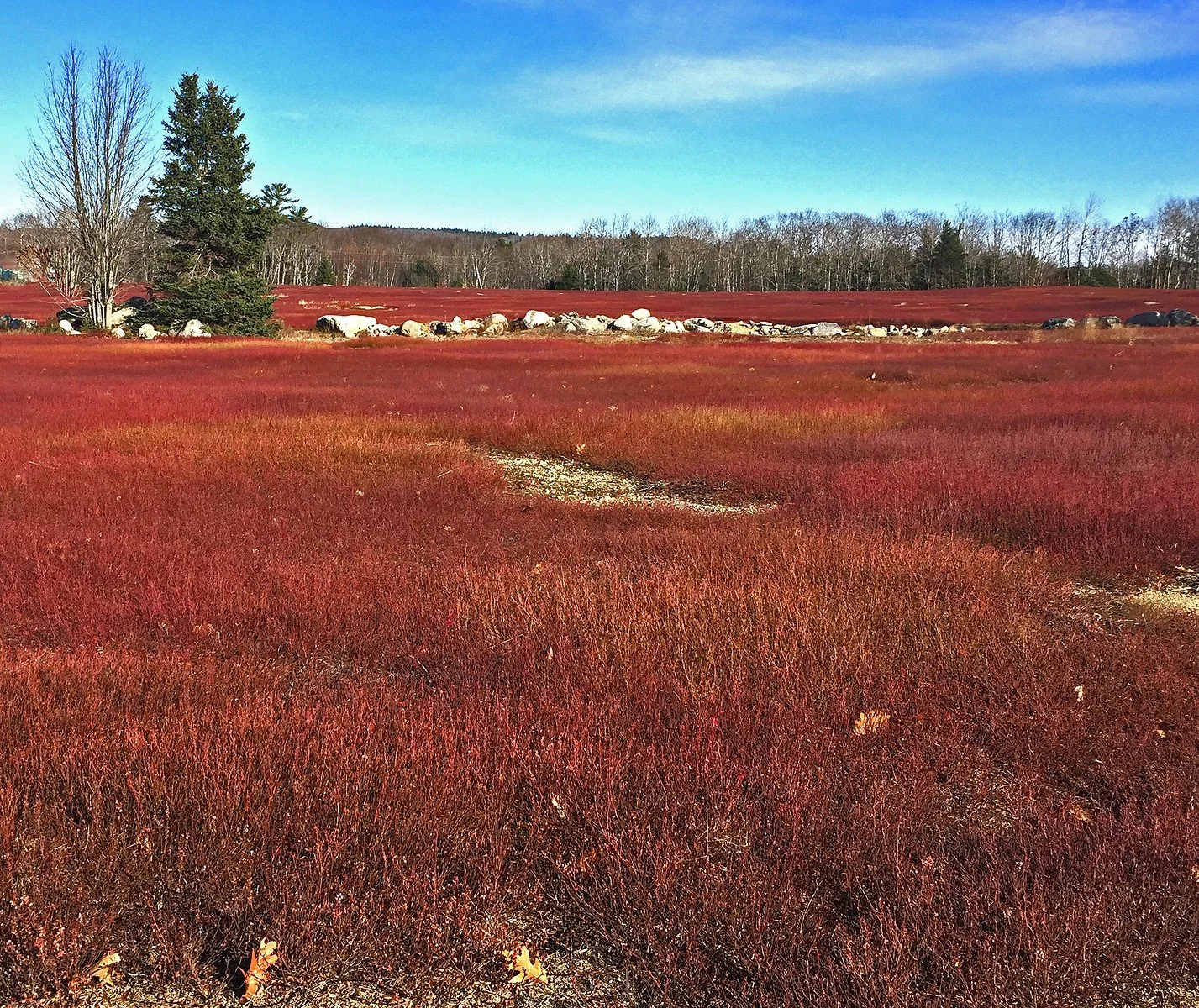
November was unusually warm this year, which may have been the reason that the month often was fall-like. Our blueberry fields turned into the most interesting reds that we’ve ever seen. Tamaracks (larches), sand cherries, chokecherries, maples. and large oaks remained vibrant well into the month.

The month also was a good one to be in the woods when the light would seep through portals in the canopy where the summer’s leaves once were. In the late afternoon, the low sun would send soft, golden shafts of light. At other times, the light would dapple dark trails, illuminate the fallen leaves, and warm the last of the year’s mushrooms.

November’s pure, cold air and stratocumulus clouds enhanced our water views and, by the end of the month, the ponds and streams had started icing.

The month was not all blue skies and sunshine, of course. Our first (very modest) snow fall this winter came near the end of November and several torrential rains provoked our streams into rages.

Speaking of water, November is when the lobster season ends for most of our fishermen. They bring their traps in to be stacked and trailered to storage. Some of the fishing vessels also will be stored “on the hard,” while others will be reconfigured to dredge for scallops during the winter.

Of course, November is the month to give thanks, which is especially appropriate for those who are lucky enough to live on the coast of Maine. Below you’ll see one of our feathered neighbors who was lucky enough to be parading with pride on Thanksgiving Day.

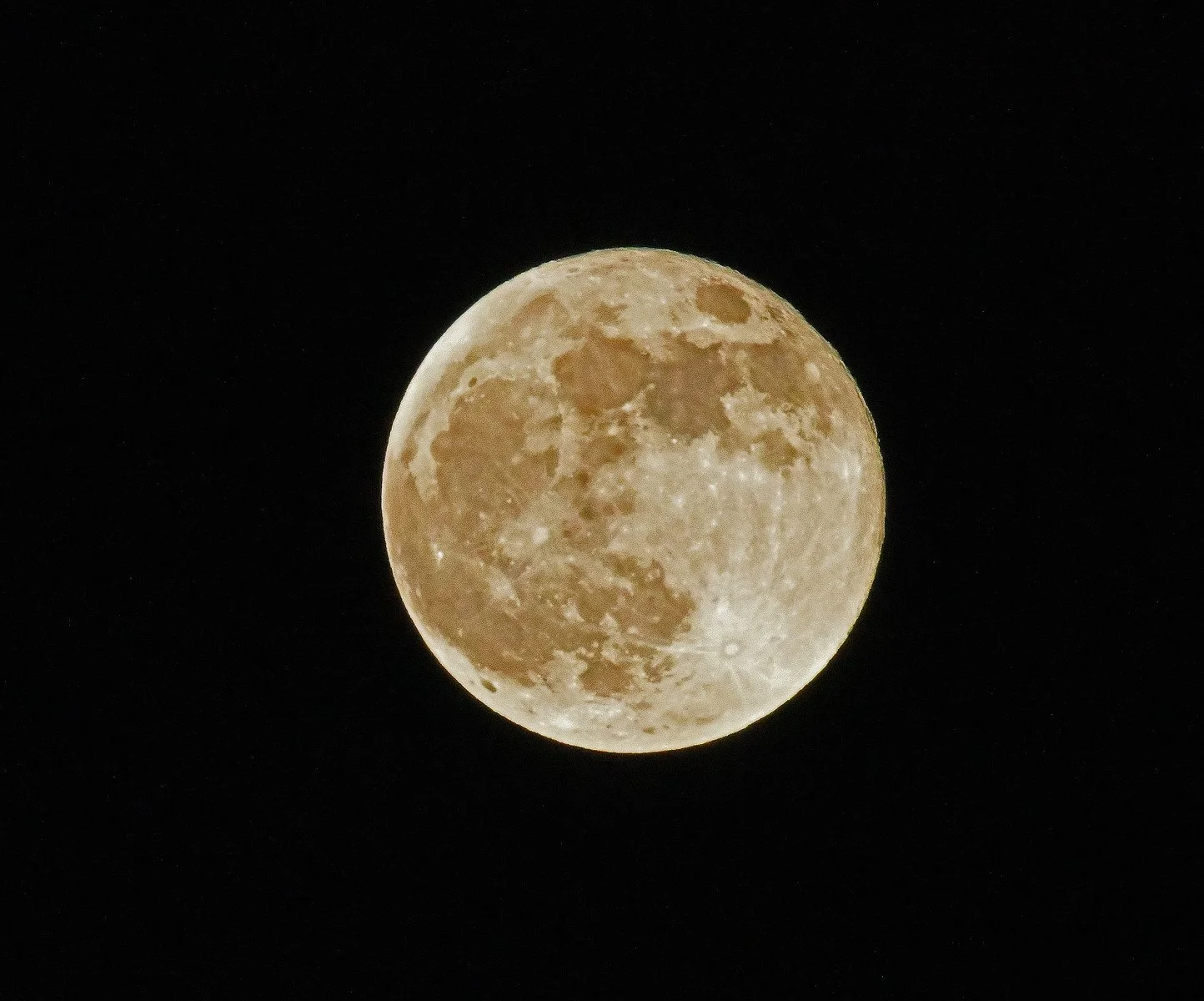
November’s frequently clear skies made watching the moon mature into the month’s full Beaver Full Moon an adventure.

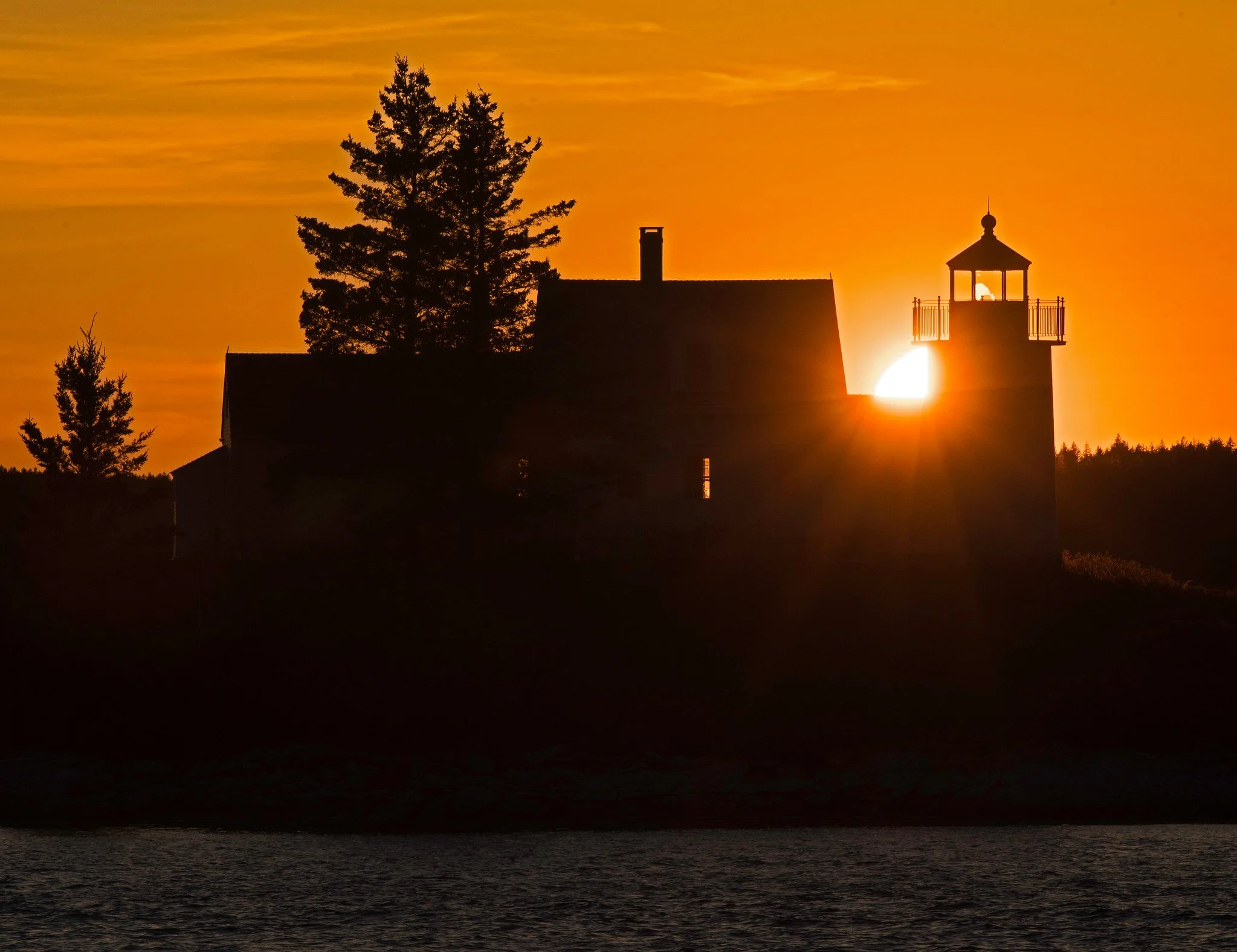
Finally, November is the beginning of sunset season here, when the sun sinks low and to our southwest and the cold air rids the atmosphere of much of its water and pollutants. This allows the warmer colors in the sun’s rainbow of light to be seen, not to mention November’s crescent moon..

(All images here were taken in Down East Maine during November 2021.)

2 Comments

Comment

In the Right Place: Winter Conversions

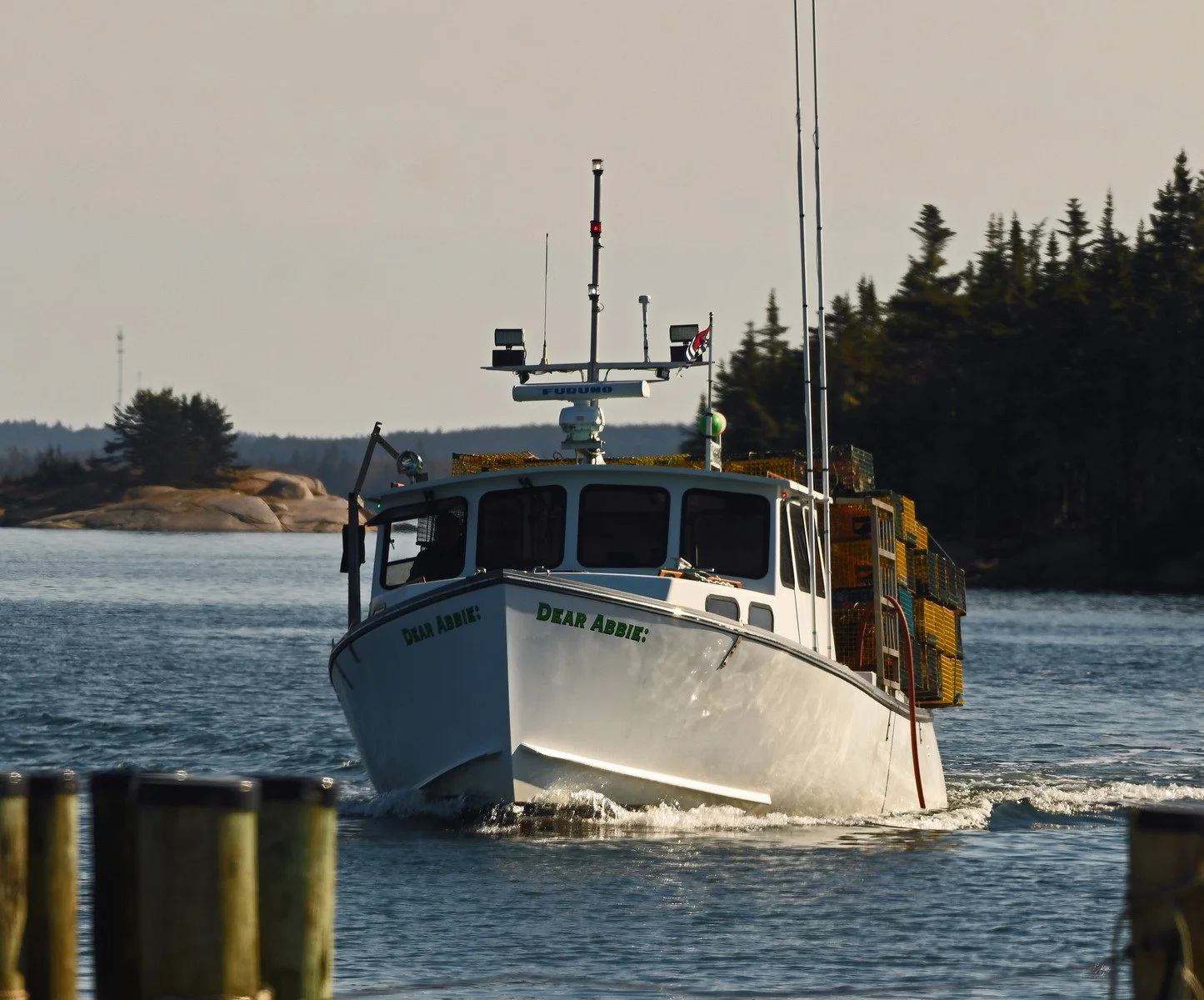
Many of our lobster boats recently have been converted to trawlers for the opening of the scallop dredging season tomorrow.

Above, you see the converted Dear Abbie: in Naskeag Harbor yesterday with her recently added mast and boom for trawling with a scallop dredge. The dredge is a steel-framed, chain mesh “net” that has a twine top for unloading; it’s dragged along the sea bottom to collect scallops and then winched onboard for unloading.

Dear Abbie: also now has a wooden “shelling house” constructed behind her cabin. That’s a protection from cold winter winds for the crew member who shucks the muscles from the scallop shells and puts that “meat” into containers. (What we eat are the scallops’ shell-opening and “swimming” muscles; the empty shells are thrown back into the water.)

Some of the converted fishing vessels are both trawlers and platforms for aqualung divers who hand-harvest choice muscles from the sea floor; these are the more expensive “divers’ scallops.” Tarrfish, shown above, , is one of these; she has a drop-down stern transom, which can be used to enter and exit the water easily. The diving season here opens December 2. (Images taken in Brooklin, Maine, on November 29, 2021.)

Comment

Comment

In the Right Place: Snow Job

The woods yesterday morning were refreshingly chilly and pure, full of shafts of light briefly transforming unremarkable areas into dramatic stages awaiting action. But, it was noisy. Walking on frosty fallen leaves is like walking on potato chips. It was impossible to be stealthy and get close to our woodland neighbors.

However, on my return, I did get fairly close to a snowy owl. Not one of those that are irrupting here on streaming Canadian winds, though. This was a one-of-a-kind from the strong hands of Cabot Lyford (1925-2016), the acclaimed granite sculptor who adopted Maine as his home.

(Images taken in Brooklin, Maine, on November 28, 2021.)

Comment

Comment

In the Right Place: Success and Excess

Here you see an Eastern wild turkey that had no hesitancy about parading with her extended family around here during the Thanksgiving season. Maine, once an importer of wild turkeys, is now exporting part of its surplus of them to east Texas, where they have been in perilous decline.

Image taken in Brooklin, Maine, on November 19, 2021

In years gone by, Maine had its own difficulties preserving wild turkeys, our biggest game bird. Early attempts to reintroduce the birds were failures. Fifty years ago, wild turkeys had become as scarce as flamingoes here. It was thought by some that they could not adapt to harsh winters or survive serious spring hunting.

Image taken in Brooklin, Maine, on February 21, 2019

However, during the 1970s and 1980s, wildlife officials in Vermont and Connecticut contributed 110 turkeys to a new Maine turkey reintroduction and wildlife management program. It was a well-managed program that succeeded; some now say that it was too successful.

Wild turkeys here are at unprecedented numbers and even populate our coldest, snowiest, and most hunted counties. Maine’s spring population of the big birds has increased to between 60,000 and 70,000, providing hunters about 6,000 harvested birds in the spring and between 2,000 and 3,000 in the fall, according to State officials and the National Wild Turkey Federation.

Image taken in Brooklin, Maine, on March 17, 2018

(Brooklin, Maine)

Comment

Comment

In the Right Place: Reminder

We were beginning to forget what it felt like to experience snow, but the snow fairy visited this morning and gave us a mild reminder. She just sugared the spruce tips and leaves – yes, we still have some leaves – and lightly covered the landscape with a thin blanket.

Every now and then, a lost snowflake will drift by the window. Maybe she isn’t done.

But it was a harsh reminder of our laziness during our warm November. We left the deck furniture out too long and failed to put in the snow stakes along the driveway.

Looks like we’ll miss some good football this afternoon while doing those chores. (Images taken in Brooklin, Maine, on November 27, 2021.)

Comment

Comment

In the Right Place: Improvement

Here you see, but unfortunately can’t hear, a robust local stream laughing as it clears its hurdles in the race to the marshes yesterday morning. We’ve had more than our share of rain to keep our streams vigorous and our woods vibrant:

(Image taken in Brooklin, Maine, on November 25, 2021.)

And, conditions continue to get better in the interior of the State. Maine’s dry areas have shrunk considerably compared to last year, according to this week’s U.S. Drought Monitor. At this time last year, almost 11 percent of Maine was in severe drought. Now it’s 5.32 percent. Nonetheless, an estimated 59,619 Mainers are even now affected by moderate or severe drought, according to the report.

The above Monitor map for data as of November 23 shows the State’s areas that have no harmful dryness (white), compared to those that are “abnormally dry” (yellow), in “moderate drought” (tan), or in “severe drought” (burnt orange):

Comment

Comment

In the Right Place: When the Blues Become the Reds

The Penobscot wild blueberry fields were especially fiery in yesterday morning’s early light. It seems that the colors of these “low bush” berry fields are peaking later and later and getting more intense, perhaps due to our increasingly warmer and wetter climate.

The plants’ various shades of red in the fall (and now, winter) are due to significant amounts of anthocyanin, a red pigment, being synthesized by the plant before its leaves drop. Anthocyanin is a flavonoid, a powerful antioxidant that helps make the blueberries a highly nutritious food.

Maine is the world’s largest harvester and marketer of these pea-sized, extra-sweet blueberries (Vaccinium angustifolium). Unlike ordinary blueberries, these grow only in the wild; they can’t be planted like a commercial crop.

Nonetheless, many growers do bring commercially available bees to their fields for pollination and harvest the fruit mechanically. On the other hand, many growers still rake them up with tools invented in 1910. (Images taken in Penobscot, Maine, on November 23, 2021.)

Comment

Comment

In the Right Place: Grumpy Old Rodents

This grumpy old fellow shambled close by me in the Naskeag Harbor parking lot last week without a morning greeting or even looking up. (Sex assumed.) He probably was in a bad mood because he usually sleeps all day and the lobster trap stackers down there were making strange noises.

He’s a North American Porcupine, the largest of the porcupines and the only kind that we have in Maine. Their common name is a derivation of the Latin for “spiny pig.” Researchers say that these rodents can be armed with 30,000 or more barbed quills. They don’t shoot those quills; they defend themselves with amazingly fast swats of that spiked tail. Unfortunately, most dogs appear to underestimate how dangerous these fellow mammals are until it’s too late.

At this time of the year, the porcupine diet turns from fruit and plants to mostly wood, whether it’s part of a log cabin or is natural tree bark or woody bush stems. They can seriously damage (even kill) trees and are viewed by many as pests.

State wildlife managers do not consider porcupines worth conserving at their current levels – they may be killed here at any season, in any number, and at any age. That’s another reason for that old fellow to be grumpy in the morning. (Images taken in Brooklin, Maine, on November 15, 2021.)

Comment

Comment

In the Right Place: Collection Reflections

Here’s a bit of a curiosity: a raft of at least 20 wild turkeys just enjoying the sunset over Blue Hill Bay on Saturday evening. They soon flew into the nearby trees to roost for the night.

A group of Turkeys is called a “raft,” originally meaning a large collection of the same things (e.g. a raft of logs). The word was derived from the Middle English “raf,” which also meant a large collection and evolved into such words as riffraff and rafters. (Some publishers of funny group names have incorrectly called a group of turkeys a “rafter.”)

And yes, although wild turkeys spend their days as sauntering nomads, they usually protect themselves at night by sleeping in trees. The exception is brooding hens, which will incubate their eggs in a ground nest in the spring and stay with their poults until the little things can fly to bed. (Image taken in Brooklin, Maine, on November 20, 2021.)

Comment

Comment

In the Right Place: Light on Light

Here we see the Pumpkin Island Lighthouse on Friday afternoon. It’s a good place to go in any season, if you like to watch the day do magic tricks with natural light. On Friday, the island was being side-lit by the fast-falling sun in the southwest – a horizontal layer of weak winter light that lengthened shadows into infinity.

It’s different story in the spring and summer here. The sun can go down in a raging firestorm of light directly behind the island, silhouetting its structures and piercing them in places:

Pumpkin Island is located at the northwest entrance to Eggemoggin Reach, a famous sailing channel between the Penobscot Bay and the Atlantic Ocean. The powerful light on the island entered service in 1855, when many big-masted coastal cruisers were carrying timber, granite, and other commercial cargo through the Reach.

The light was operated until 1933, when the Island and its structures were sold into private ownership and have remained in private hands since. (Images taken from Little Deer Island, Maine, on November 19, 2021, and May 11, 2018.)

Comment

Comment

In the Right Place: Chilling

Here we see November’s Full Moon as it finally appeared in clear skies last night. It had undergone a partial lunar eclipse earlier yesterday morning – an eclipse that we didn’t see here because of torrential rains.

This moon was named the Beaver Full Moon by native Americans because it appeared during their beaver trapping season, when humans in this area needed fur to protect them from November’s freezes.

We have yet to have a hard freeze here this month, although the temperatures have temporarily dipped below freezing during some nights and mornings. It is a chilly (but not painful) 34 degrees (F) as this is written. (Image taken in Brooklin, Maine, on November 19, 2021.)

Comment

Comment

In the Right Place: Waterfront Report

Naskeag Harbor looks like a Lego® competition lately, as more fishermen bring ashore their lobster traps and stack them for trailering to winter storage.

You can get quite a workout stacking these plastic-coated wire traps. They’re up to four feet long and can weigh up to 65 pounds. You also want to be neat about it so that you don’t bend them out of operable shape or otherwise damage them. They cost about $100 per trap and are more intricate than it might seem to the casual observer.

(Images taken in Brooklin, Maine, on November 17, 2021.)

Comment