Comment

In the Right Place: The Ozzie and Harriet Season Begins

Yesterday, these two familiar-looking ospreys appeared separately and reclaimed their nearby nest, which I’ve been visiting daily lately in anticipation of seeing the first ospreys of the year.

(I’ve been photographing and reporting on this nest for four years and always call the adult occupants Ozzie and Harriet to avoid the he-she-it syndrome.) Ozzie arrived first and immediately began nest repairs.
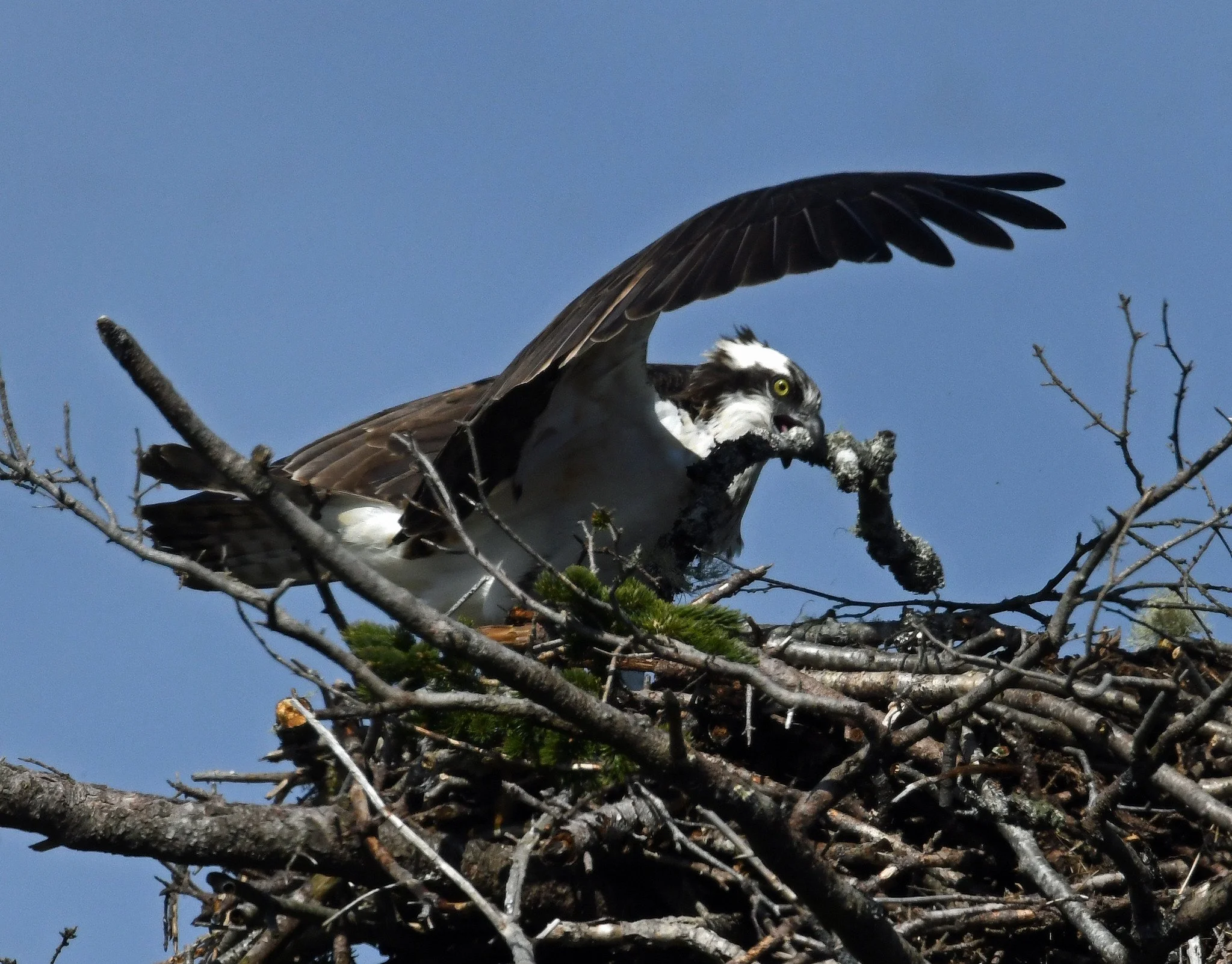
Of course, I can’t be certain each year that I’m seeing the same two parents. However, ospreys are nest-loyal and these two seem to be very comfortable with the nest and each other – there has been no hesitation about occupying it and no challenges from other pairs. There also usually is little to no courting; copulation attempts usually begin right away in the nest and nearby, as they did yesterday.

Nonetheless, there is a concern about the safety of ospreys such as these that have been nesting along the Maine coast. Bald eagles are on the increase along the coast and they love to harass and rob hardworking ospreys of their fish, eggs, and even chicks.

There seems to be a correlation between the eagle population increases and coastal osprey nest abandonments. According to Maine banding reports and Vickery (Birds of Maine), it appears that significant numbers of osprey are shifting their nesting to inland lakes, where the eagle-to-osprey ratio is better for the ospreys as of now. (Images taken in Brooklin, Maine, on April 17, 2022.)
Comment

Comment

In the Right Place: Not in the Pink, But With the Blues

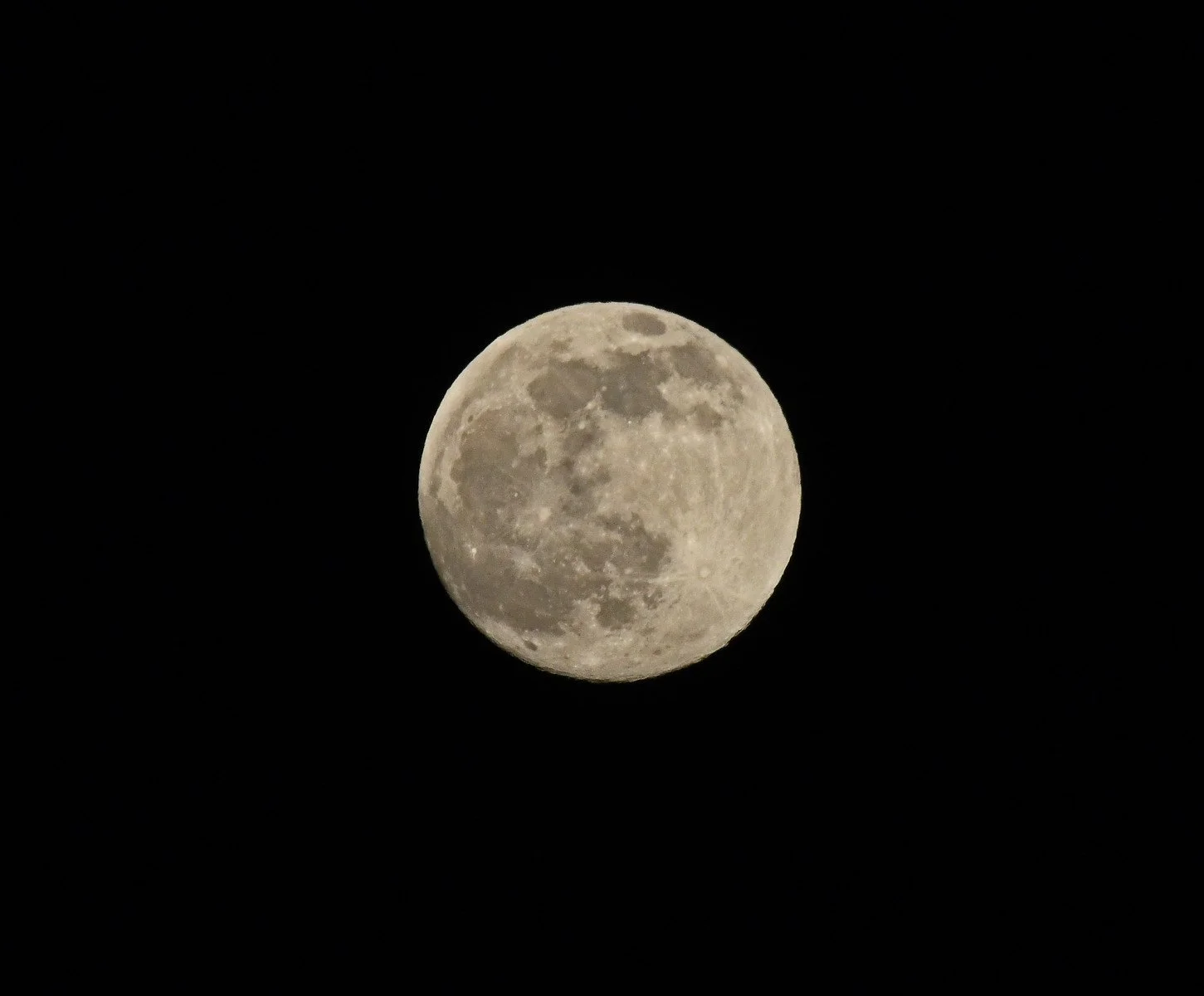
Last night’s rain squalls prevented us from taking a look at the April full moon at its peak luminosity. However, the moon was virtually full on Friday, the night before, and we caught this glimpse of it.

The April full moon most often is called the “Pink Moon,” which reportedly is a translation of the Native American description of the moon that arrives with the emergence of pink wildflowers.

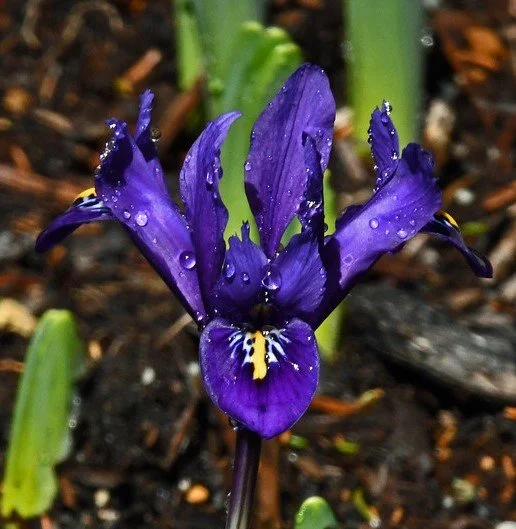
Well, those Native Americans must have been enjoying their emerging pink flowers in latitudes south of here. I may have missed them, but I’ve seen no emerging pink wildflowers here. However, I have seen some blue-purple flowers emerging in the form of this dwarf iris (Iris reticulata):

The April full moon also reportedly was known by more inclusive Native Americans who called the month’s full moon the “Sprouting Grass Moon,” “Hare Moon,” “Fish Moon,” and Growing Moon.” (Images taken in Brooklin, Maine, on April 15, 2022.)

Comment

Comment

In the Right Place: Skunk Cabbage, Humans, and Bears

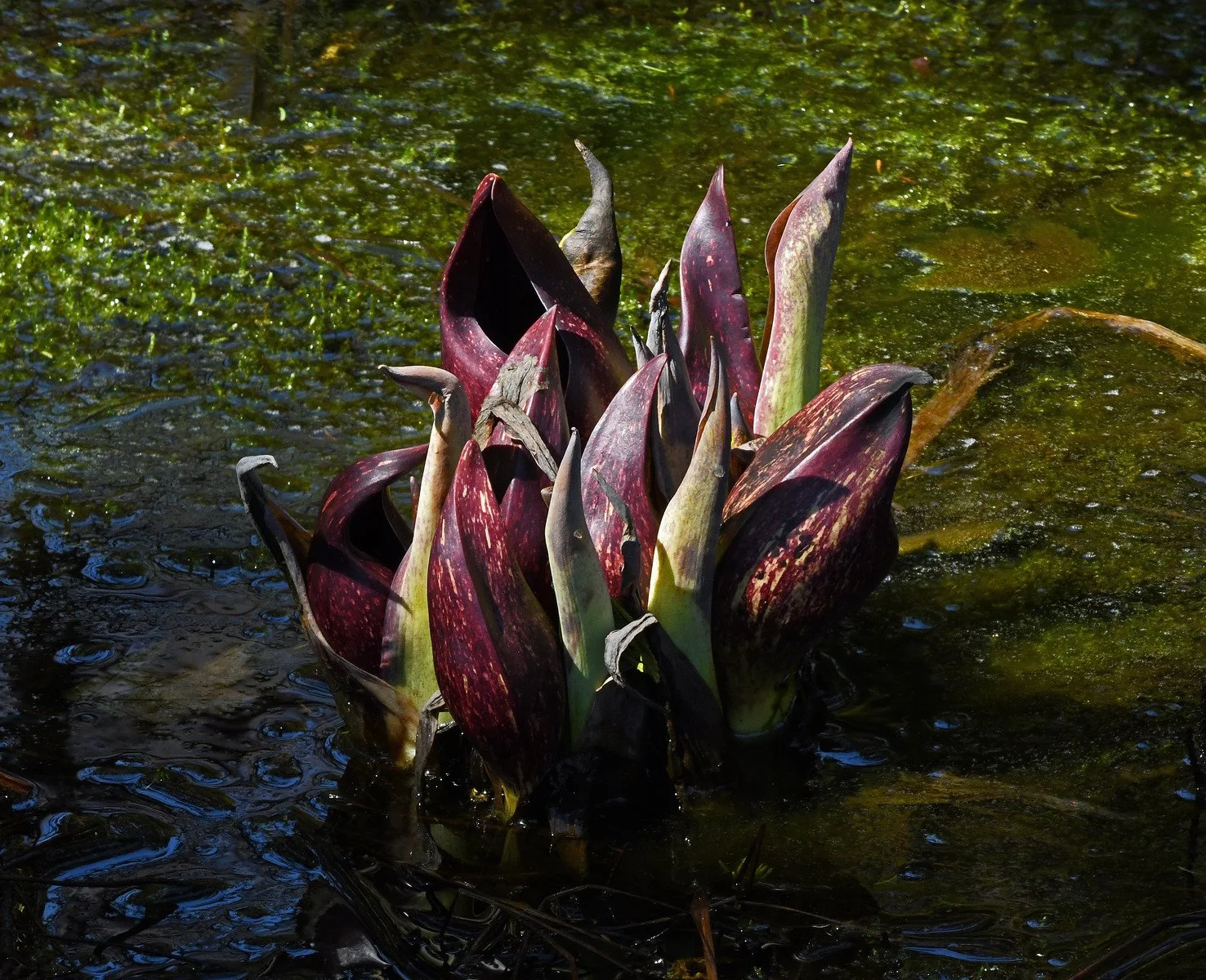
As of yesterday, as you see, this colony of Eastern skunk cabbage (Symplocarpus foetidus) that we’ve been monitoring has not shown any leaf shoots, but its purple spathes appear to be doing well.

A nearby smaller plant had opened a spathe yesterday to advertise its internal spadix of flowers and allow their foul smell to drift farther to attract pollinators, which apparently think that rotting meat is a heavenly scent.

Skunk cabbage has a very high content of oxalic acid, which makes it virtually toxic for humans – the smallest taste creates almost unbearable, burning, needle-like pains in humans. The plant is eaten by few wild animals, but is almost essential to one group of mammals that give the plant its alternative name: Bearweed.  

Black and brown bears will eat the roots and other parts of the young plant in the spring as a form of self-medication when the animals arise from hibernation. They usually are severely constipated at that time by up to a foot-long detritus blockage that accumulated in their lower intestines while they were dormant. You probably do not want to be near any bear when the acid of its skunk cabbage breakfast meets the firmness of its hibernation blockage. (Images taken in Brooklin, Maine, on April 15, 2022.)

Comment

Comment

In the Right Place: Surprises

It was a very gray day yesterday. The water in our field pond was dark and reflected its surrounding crop of cattails, which, themselves, were full of shadows. While scanning the pond’s far bank for turtles, my eyes told my brain that they were seeing something that was not the usual, often-seen pondscape.

After a few seconds, my brain matched two familiar forms in my memory, which I hope you can see here: two male wood ducks sitting still in the water’s edge, apparently waiting for me to leave:

It was surprising to see how well the stripes that break up the ducks’ heads and bodies can camouflage these flamboyant birds.

When I raised the camera and took the first image, the birds rose from their hiding places with spectacular splashes and were gone in seconds:

(Images taken in Brooklin, Maine, on April 13, 2022.)

Comment

Comment

In the Right Place: In the Mood

There are many Maine moods. Or, more accurately, the weather and scenery of Maine can evoke personal feelings in many of us. On the day before yesterday, for example, these schools of clouds racing in a clear sky above Blue Hill Bay created bright, expansive, joy-of-life feelings in me:

However, yesterday morning, a sudden rain on a pond proved capable of evoking my gray, introspective thoughts involving complexity and incomprehensibility and doubt – circles within circles; circles destroying circles, appearances and disappearances; agitation and disorder:

Fortunately, the sun broke out yesterday afternoon and changed the day’s mood to a more positive one. (Images taken in Brooklin, Maine, on April 11 [clouds] and 12 [rain], 2022.)
Comment

Comment

In the Right Place: Another First

This is the first painted turtle that I’ve seen this year. He was basking and seemingly smiling amid the dead cattails in our lower pond yesterday. (I’m guessing that this is a male because of the relatively long and substantial tail. Among other sexual differences, female PTs have shorter, stubbier tails to facilitate mating.)

Painted turtles (Chrysemys picta) have existed for at least 15 million years, according to fossil records. These common natives to the United States evolved into four geographical subspecies during the last glacial age, which ended almost 12 thousand years ago.

Maine’s subspecies, shown here, is the Eastern painted turtle, Chrysemys picta picta; it’s the only subspecies with shell (“carapace”) segments (“scutes”) that occur in virtually straight rows and columns. The other subspecies are the Western, Midland, and Southern PTs. (Images taken in Brooklin, Maine, on April 11, 2022.)

Comment

Comment

In the Right Place: Mastersingers

Sometimes, the most common and plain creatures can possess rare and prideful abilities. That’s true with people and true with birds. And, when it comes to birds, it’s especially true with regard to song sparrows, the most common sparrows in North America. They have been scientifically named in honor of their outstanding ability to sing pleasantly -- Melospiza melodia.

I heard my first two spring song sparrow performances of the year yesterday. The birds were hidden near the edge of our woods, hurling songs at each other worthy of a Wagnerian mastersingers contest. (The images here are from my Archive.) It was a wonderful thing to hear on a gloomy day.

It’s almost always the males that sing in spring to establish nesting territories and attract females. These males have been known to sing up to 20 basic songs on which they perform thousands of variations. Research indicates that the more complex a song, the more attracted are song sparrow females.

Curiously, one study also indicates that a few females will sing like males when stressed by other females intruding into their nesting territory or when the song sparrow population of their area is too high. It’s thought that such events may elevate testosterone levels in the females. (Images taken in Brooklin, Maine.)

Comment

Comment

In the Right Place: Transformations

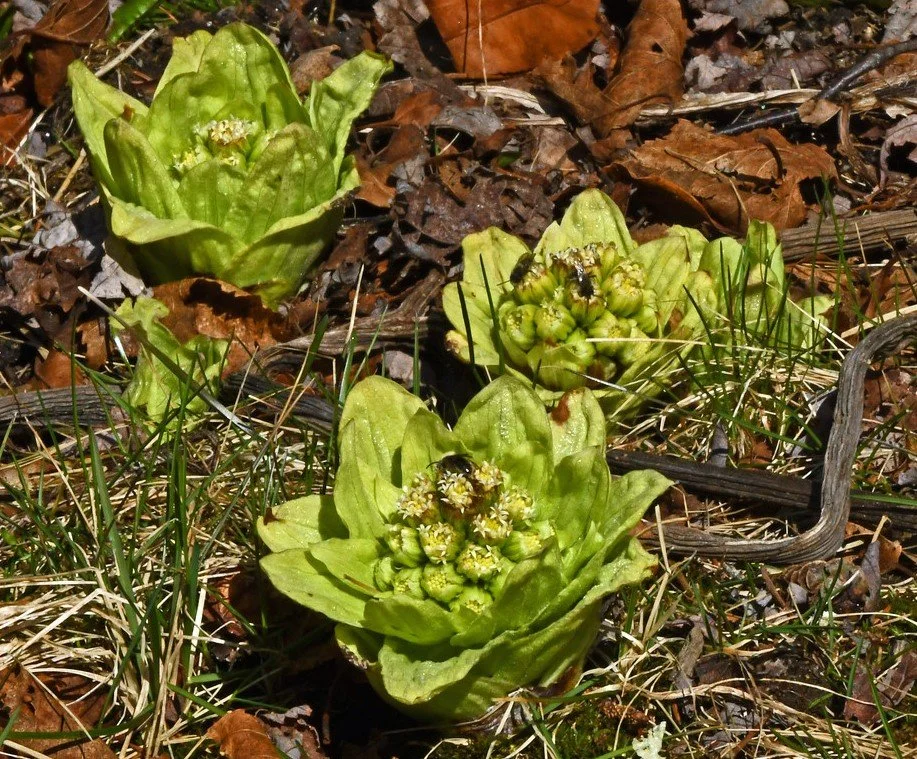
Perhaps it’s fitting for these troubling times that a plant that was used unsuccessfully to treat the bubonic plague in the Middle Ages is now flowering and providing life-saving nectar to our earliest insects.

The plant, shown above, is Japanese sweet coltsfoot (Petasites japonicus). It apparently was introduced into North America in the 19th Century by Japanese immigrants to Canada’s British Columbia. It has a sweeter scent than other coltsfoot plants, including Maine’s native sweet coltsfoot (Petasites palmatus).

The Japanese version goes through an enormous transformation in which the little two-inch flower clusters shown here disappear and are replaced by sturdy stems of about three feet in length. The leaves at the ends of those stems can grow up to four feet in width and are shaped like a colt’s hoofprint, hence the plant’s name:

The leaves also are the source for one of this plant’s alternative common names: Japanese Butterbur. In days of yore before refrigeration, those leaves were used to wrap butter for storage in cool places. Another common American name for this plant is bog rhubarb. By the way, the plant is very invasive.(Primary image taken in Brooklin, Maine, on April 9, 2022.)

Comment

Comment

In the Right Place: Progress Report

Here, seemingly trying to catch yesterday’s big raindrops, is the eastern skunk cabbage that we’ve been monitoring for many years.

Curiously, the plant (Symplocarpus foetidus) looks both primeval and futuristic now in its bog. But, it will be leafing out in a day or so and its vernal pool likely will be virtually dry and full of ferns by June. (Image taken in Brooklin, Maine, on April 8, 2022.)

Comment

Comment

In the Right Place: Lazing

I entered the WoodenBoat School boat shed on Wednesday to see how a few old friends were doing. As you can see, they were lazing in sunshine that was pouring through the skylights and – it seemed – old Babson II, the reliable outboard skiff, was snoring lightly.

The School’s small craft apparently have survived the winter in good shape and maybe it was just the wind coming through openings in the boat shed that sounded like snoring.  Here’s a Leighton Archive image of the shed:

Leighton Archive Image

Next month, School alumni will haul the boats out, clean them up, and perhaps add fresh paint to some. By June, they’ll be back in the water, responding to the hands of students, instructors, and harbor personnel. (Top image taken in Brooklin, Maine, on April 6, 2022.)

Comment

Comment

In the Right Place: The Danger Within

Fortunately, wooded streams continue to flow well here in Brooklin, Maine, as you see from the images here, which were taken on April 5:

As of that date, the eastern two thirds of the State had adequate water levels, according to today’s U.S. Drought Monitor. However, Maine’s western and northwestern border counties continue to experience abnormally dry conditions (yellow) and moderate to severe drought (tan to orange):

The situation is far worse in the western half of the United States, which still is experiencing alarming conditions with “exceptional drought” (the most dangerous category) increasing during the last week, according to this latest report:

(Photographs taken in Brooklin, Maine, on April 5, 2022.)

Comment

Comment

In the Right Place: Harbingers

In looking for realistic harbingers of spring on Monday, I found an expressionistic harbinger of summer: mooring buoys, mushroom anchors and their chains wait patiently at the WoodenBoat School Campus:

They’ll be returned to Great Cove’s waters next month in time for the first sailing class, which begins in June.

(Images taken in Brooklin, Maine, on April 4, 2022.)

Comment

Comment

In the Right Place: Investing

During the “Tulip Mania” of 1637, a single tulip bulb reportedly was sold in Holland for the equivalent of $2,500 in today’s currency.

These flowers were the bitcoins of the Dutch Golden Age; investor speculation kept driving their prices up until the market crashed, ending the first documented asset bubble burst in history. Today, in rural Maine, you can buy a kitchen-brightening bouquet of fresh tulips at the grocery store for $5.99.

One of the fascinating things about tulips is that they appear to have five or six petals. Yet, two or three of those are sepals that grew to look like petals, thereby increasing the flower’s color and attractiveness to pollinators.

As you may know, sepals are the lower, outer parts of a flower that initially are folded over the emerging bud to protect it from the elements; in most flowers, they’re green. (Images taken in Brooklin, Maine, on April 3, 2022, of flowers bought in Blue Hill, Maine.)

Comment

Comment

In the Right Place: Hoodies

Water may roll off ducks’ backs, but they often shelter themselves from rain. We glimpsed this male hooded merganser in the lee of a large rock during Friday’s rain – unhooded for the moment.

These shy fishing ducks (Lophodytes cucullatus) appear to erect their proportionately massive hoods (crests, really) not only when excited, but just when they feel like it – sort of a flexing move. This flex makes their heads weirdly tomahawk shaped.

Leighton Archive Image

The effect is more spectacular on the male because his hood contains a white halfmoon and his eyes are yellowish orange. When his crest is down, the moon turns into a white racing stripe.

Leighton Archive Image

The dark-eyed and grayish-brown female, shown above, often has a coffee-with-cream color crest that usually is not as fulsome as the male’s. She doesn’t want to be conspicuous when protecting her ducklings. (Primary image taken on Little Deer Isle, Maine, April 1, 2022.)

Comment

Comment

In the Right Place: Here They Come!

The purple skunk cabbage spathes (Symplocarpus foetidus) have been emerging from the waters in our bog this week. The first image here, taken this morning, is of a cluster in our bog that we’ve been cataloging photographically several times a week for four years.

Skunk cabbages are among the first wild plants to flower during our spring. However, they flower inside the spathe from a fleshy bulb called a spadix. These flowers produce a gagging odor that smells like rotting meat to us, but apparently smells delicious to pollinating insects.

The large, beautiful skunk cabbage leaves usually start to come in May here. You should be careful not to barge through them, unless you like being confronted with an odor similar to skunk spray.

By June, the plants are in regal form. Here’s an image of the plant shown above taken last summer:

(Images taken in Brooklin, Maine, on April 3, 2022, and June 21, 2021.)

Comment

Comment

In the Right Place: Almost Seeing the Light

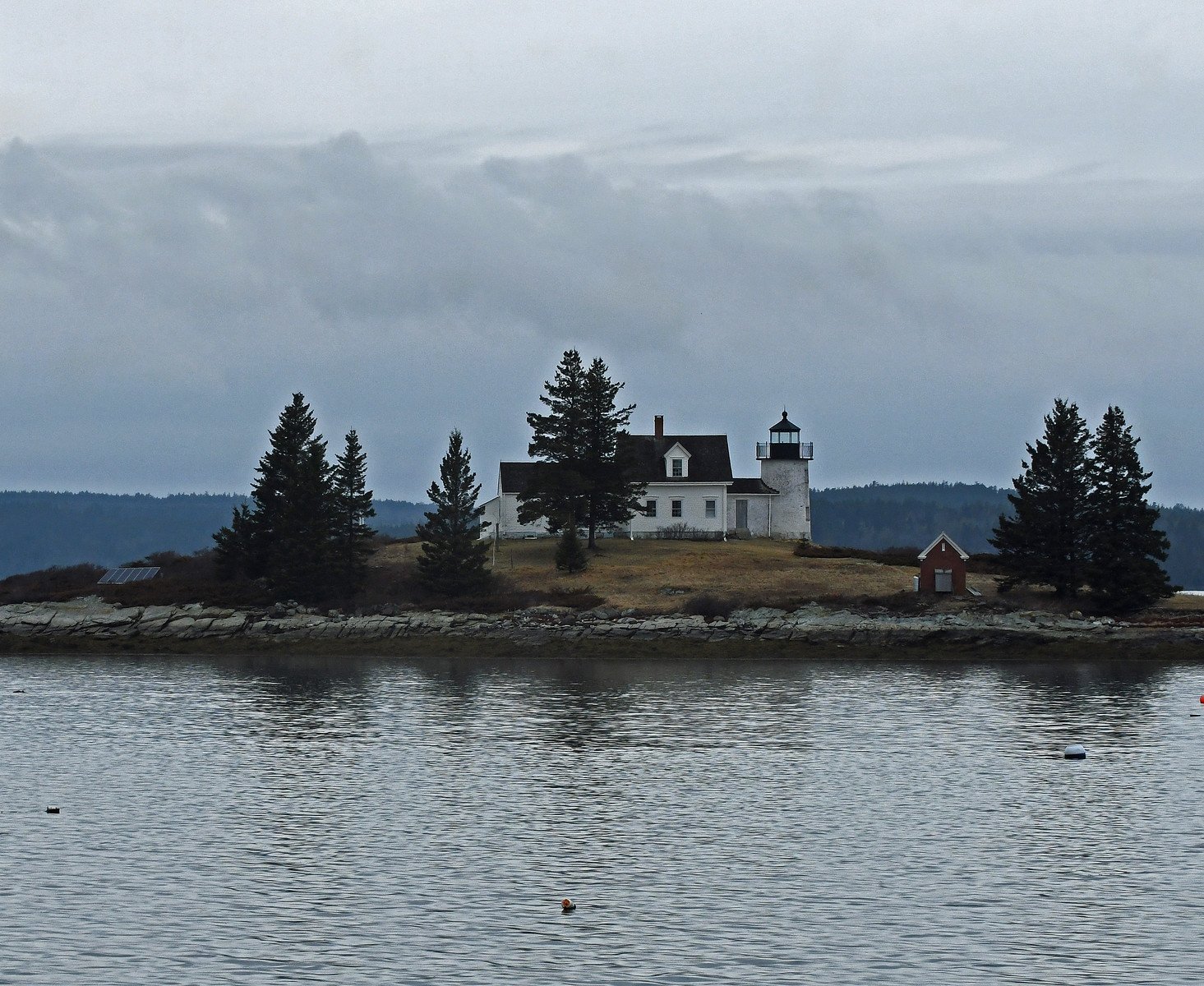
This is the Pumpkin Island lighthouse in a rain squall yesterday as fog approaches – the kind of weather in which the light was needed in 1855, when it entered federal service.

It was said that the light then could be seen in good weather with the naked eye from nine nautical miles away.

The light is just off the northeast tip of Little Deer Isle, near the entrance to Eggemoggin Reach. The Reach is a granite-ledged and island-clogged shortcut from the Penobscot Bay to the Atlantic Ocean; in winter, there can be significant patches of ice jutting from the Reach’s islands. The Reach is some of the best sailing water in the world during a clear day, but can be perilous during a foul day or dark night, even to boats with radar.

There was no radar but plenty of traffic in the Reach when the light went into service. Coastal cruisers sailed Down East Maine carrying timber, granite, housing goods, and other commercial cargo; they were the truckers of the time for this area. The island and light were owned and operated by the federal government until 1933. They were then sold to private owners and have remained in private hands.

Nonetheless, nobody seems to know why the Island is named Pumpkin; it is not shaped like one and we’ve found no reports of pumpkin farming there. Perhaps one of you can tell us the origin of its name. (Images taken in Little Deer Island, Maine, on April 1, 2022.)

Comment

March Postcards From Maine

3 Comments

March Postcards From Maine

March gives birth to spring, which is not a simple event here. There have to be cycles of sunny fanfares with high-flying clouds, followed by leaden light and falling snows; freezing interludes, followed by window-opening warmth; and sudden surprises of fog and/or rain.

This March, snow and no-snow versions of familiar sights were remarkable, including the view across Blue Hill Bay to Acadia National Park and the view from beside the lily pond on WoodenBoat Campus:

The rain in the woods made the moss vibrant and the subsequent snow covered it with soft icing; sun-splattered country lanes were turned into monochrome etchings by falling snow; lush, rain-dappled bogs became treacherous ice; and, freezing days assured that plenty of firewood was used:

American robins announced the arrival of spring by hopping around fields when the sun shone; resident white-tailed deer rejected the concept in the half-light of dawn snowfalls, and migrating Canada geese didn’t think ice in the ponds was spring-like:

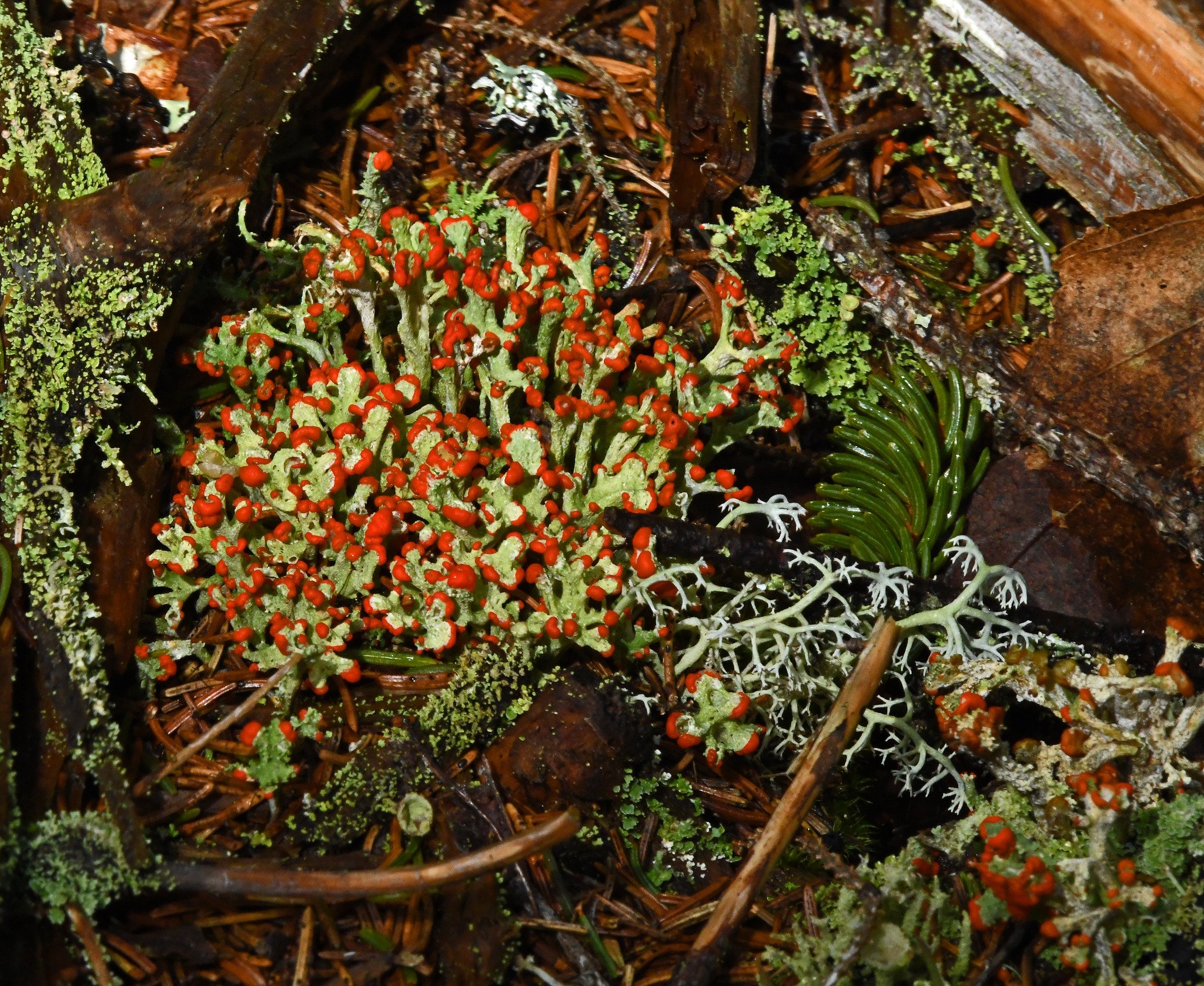
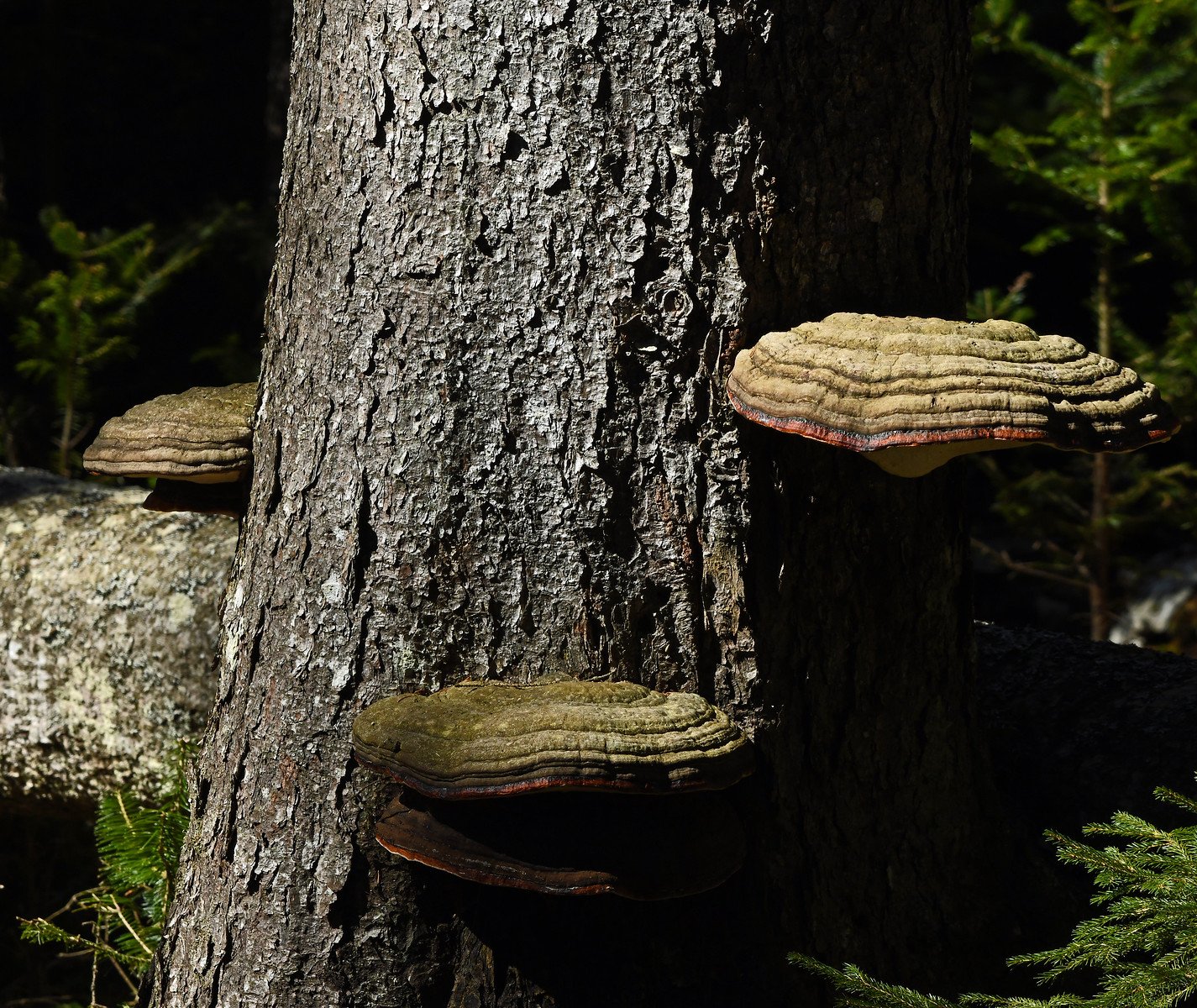
Nonetheless, pussy willow catkins appeared on time , British soldier lichens thrived, and polypore fungi hung in there:

On the waterfront, March is the last month of Maine’s scallop-dragging (dredging) season. To drag for scallops in the winter, our summer lobster boats are equipped with masts, booms, shelling huts, and drags (dredges). At the end of this March, they started to come in to have that equipment removed at the Town Dock:

Although March is rife with variables, it has two constants around here: One is St. Patrick’s Day, when you can hoist a glass of Guinness; the other is the opening of the elver season, when you can net a glass eel. (Fyke funnel nets are used to catch baby American eels. These little creatures are called glass eels because they’re mostly transparent; the nets are placed where the eels try to ascend streams to get to the ponds in which their parents matured.)

Finally, March is when the grocery stores sell spring flowers to Mainers whose gardens have not thawed yet:

(All images above were taken in Down East Maine in March of 2022.)


3 Comments

Comment

In the Right Place: Pregnant Paws

Below, you see the furry catkins of American pussy willow (Salix discolor) soaking up sunlight yesterday. Pussy willow catkins usually are the first sign that winter has lost its grip, although we’re never surprised by an April snow here. (By the way, “catkins” is a botanical term for slim flower clusters with tiny or nonexistent petals; the term is not limited to plants that have feline-sounding names.)

Of course, the common name for this furry plant, “pussy willow,” is due to the resemblance of its catkins to cat or kitten paws. That “fur” only is on male pussy willows to protect their flower pollen from the elements. The male flowers have no petals or scent; they’re just stamens loaded with pollen.

The cat fur soon will be shed, allowing the stamens to cast massive amounts of dusty pollen to the wind, often producing small, drifting yellow clouds. The wind has the job of making sure that some pollen finds eagerly awaiting female flowers and that some pollen finds the noses of bunch hikers so that they will sneeze and stop talking loudly. Okay, that was peevish; that last sentence is only half true. (Image taken in Brooklin, Maine, on March 30, 2022.)

Comment

Comment

In the Right Place: Spring Cleaning

The scallop dragging (dredge trawling) season has ended in most Maine fishing zones. The winter fishing vessels are starting to come in to clean up and remove scallop-related gear (masts, booms, shelling huts, drags [dredges], etc.). They’ll be back as lithe lobster boats by June.

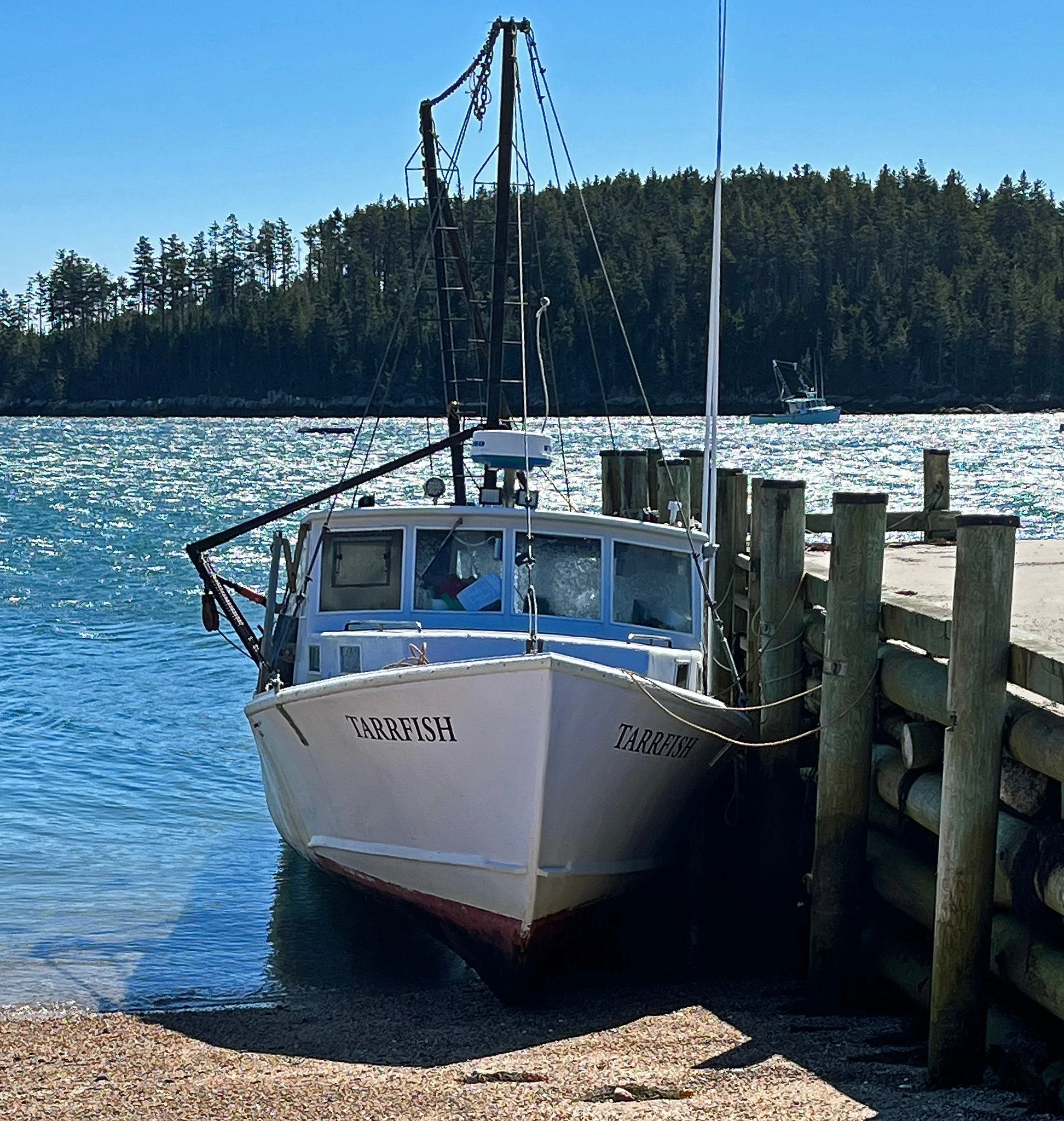
Above, you see Fishing Vessel Tarrfish made fast to the Town Dock in Naskeag Harbor yesterday as the tide goes out. This image of her deck below shows that her drag apparently is ready to be taken off the vessel:

The drag’s “chain bag” seems to be rolled-up around its wooden “club stick” and, on the left, you can see part of the winch that raises and lowers the drag.

(Images taken in Brooklin, Maine, on March 29, 2022.)

Comment