Comment

In the Right Place: Osprey Report -- Breaking News!

Harriet has done it again: She and Ozzie have three nestlings, as you’ll see here if you look closely:

Of course, the first two born will be named David and Ricky to keep up Nelson Family traditions; the third will be named June in honor of the month of her birth. We have no idea of the sex of any of them, of course, but the names will facilitate further reports on their development. It is not unusual for the last born and smallest osprey hatchling to be bullied by her siblings and even mysteriously disappear.

Harriet has had three offspring each of the last four years that I’ve been monitoring the nest, which reportedly is the usual number of hatchlings that ospreys have. However, last year, the smallest one disappeared after about a month of jostling.

We know from their size and eye color that these new ospreys are a few days old. They are born with blue eyes, which turn red in a few days, and then turn golden when the birds mature. (Images taken on June 26, 2022.)

Comment

Comment

In the Right Place: Day Sailing

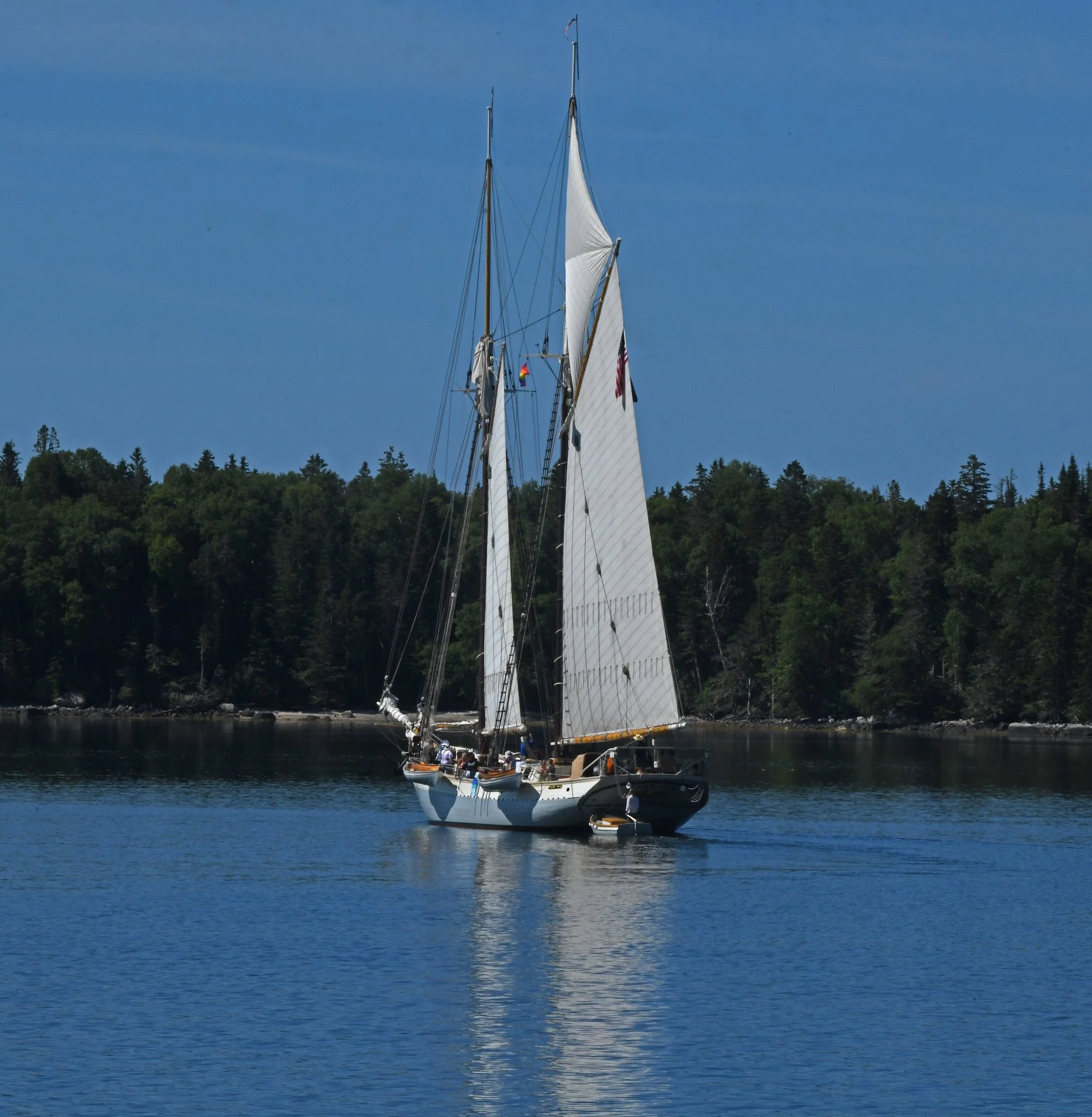
Here you see the schooner Mary Day weighing anchor while getting help from her yawl boat in light air on Wednesday.

She was in Great Cove after overnighting here. According to her schedule, she was on a four-day cruise to celebrate the summer solstice while also visiting Down East lighthouses.

Mary is a 125-foot schooner with classic mercantile coastal cruiser lines, but she was built in 1962 just for passenger cruises. (She reportedly has heat in every tourist cabin.) She was built in South Bristol, Maine, and named after the wife of the late Captain Havilah Hawkins, Senior, who designed the vessel and owned her for about 20 years. (Images taken in Brooklin, Maine, on June 24, 2022.)

Comment

Comment

In the Right Place: Jacks Are Wild

Our annual reunion of preachers named Jack has occurred later this year and with fewer attendees. We’re talking, of course, about the arrival of our Jack-in-the-pulpit plants (Arisaema triphyllum) that love dark boggy areas in the woods. Perhaps their sparse attendance is because our woods are in a moderate drought now.

We seem to have a significant number of the plants’ three-part (trifoliate) church leaves, but without their underlying striped pulpits (spathes) in which the Jacks (flower spikes/spadices) appear. I’ve been unable to find the reason why the name “Jack” was chosen for the preachers. (Perhaps it was inspired by the historic Jack-in-the-box toy.)

These native plants are lovely, graceful things, but dangerous: their leaves are significant irritants to humans and can be toxic to horses, dogs, and cats. Nonetheless, Native Americans used the plants’ roots to treat rheumatism and snake bites. (Image taken in Brooklin, Maine, on June 22, 2022.)

Comment

Comment

In the Right Place: Surprises

Angelique was in Great Cove when the dawn sunlight reached there yesterday, as you see here. She was on a six-night private charter, according to her schedule.

She left in mid-morning before I had a chance to get down to the shore to take some close-ups:

Instead of going down to the shore, I researched how this unique 130-foot ketch got her name, thinking that there might be a juicy story about a beautiful French femme fatale named Angelique in the vessel’s history. In doing so, I received two surprises from a 2021 Captains’ Quarters interview with the windjammer’s original owner and primary designer, Mike Anderson.

First, although it is true that the vessel was named after a long-limbed beauty, those limbs weren’t legs. It was named after one of the purple/brown hardwoods imported from French Guiana and Suriname that are used in boat and ship construction: “Angelique wood” (Dicornya quianensis). A significant irony here is that the vessel has a steel compartmentalized hull.

The second surprise was that Angelique was not designed (in 1980) to replicate a 19th Century North Atlantic fishing trawler, as frequently reported. Although she does resemble one of those trawlers somewhat, her design was inspired by early pilot sailboats and early large sailing yachts, according to Captain Anderson. He was designing a vessel for passenger traffic, not for fishing or commercial hauling, he said.

(Images taken on June 23, 2022.)

Comment

Comment

In the Right Place: Color June Dry

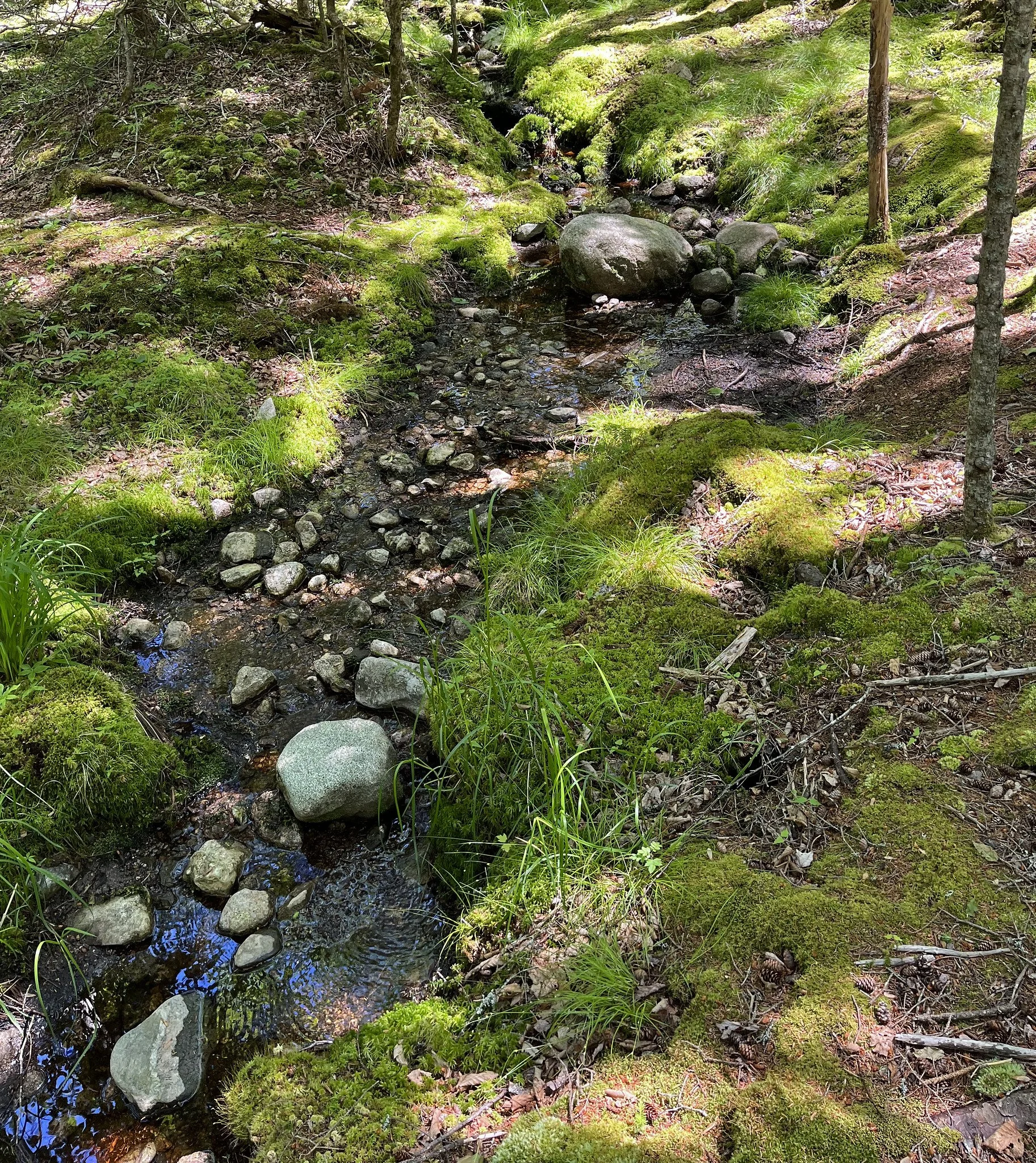
Precipitation and stream flows continue to be below what is needed here in Down East Maine. If our July and August are hotter and dryer than last year, as some predict, the situation could turn into something very nasty. We’re still in a moderate drought, according to the federal U.S. Drought Monitor:

Below, you see one of our spring-fed streams in the woods yesterday. It’s flow usually is much more robust in June than it has been this year:

The water levels in our ponds, which are fed by such streams, are not as markedly lower than the streams, but they do show signs of drying around the edges. Nonetheless, most ponds still are lovely sights:

(Images taken in Brooklin, Maine, on June 22, 2022.)

Comment

Comment

In the Right Place: You Think You've Got It Hard?

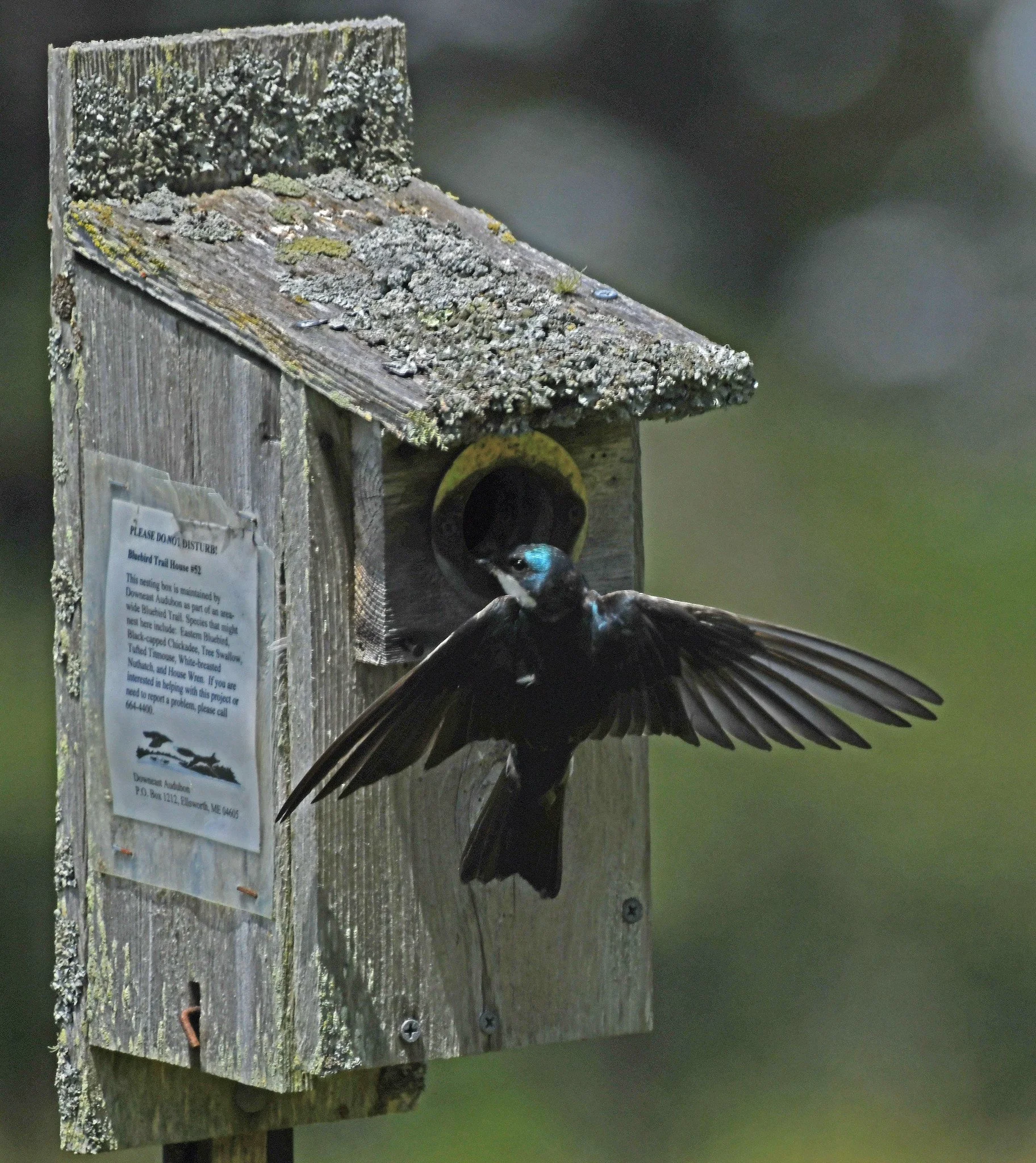
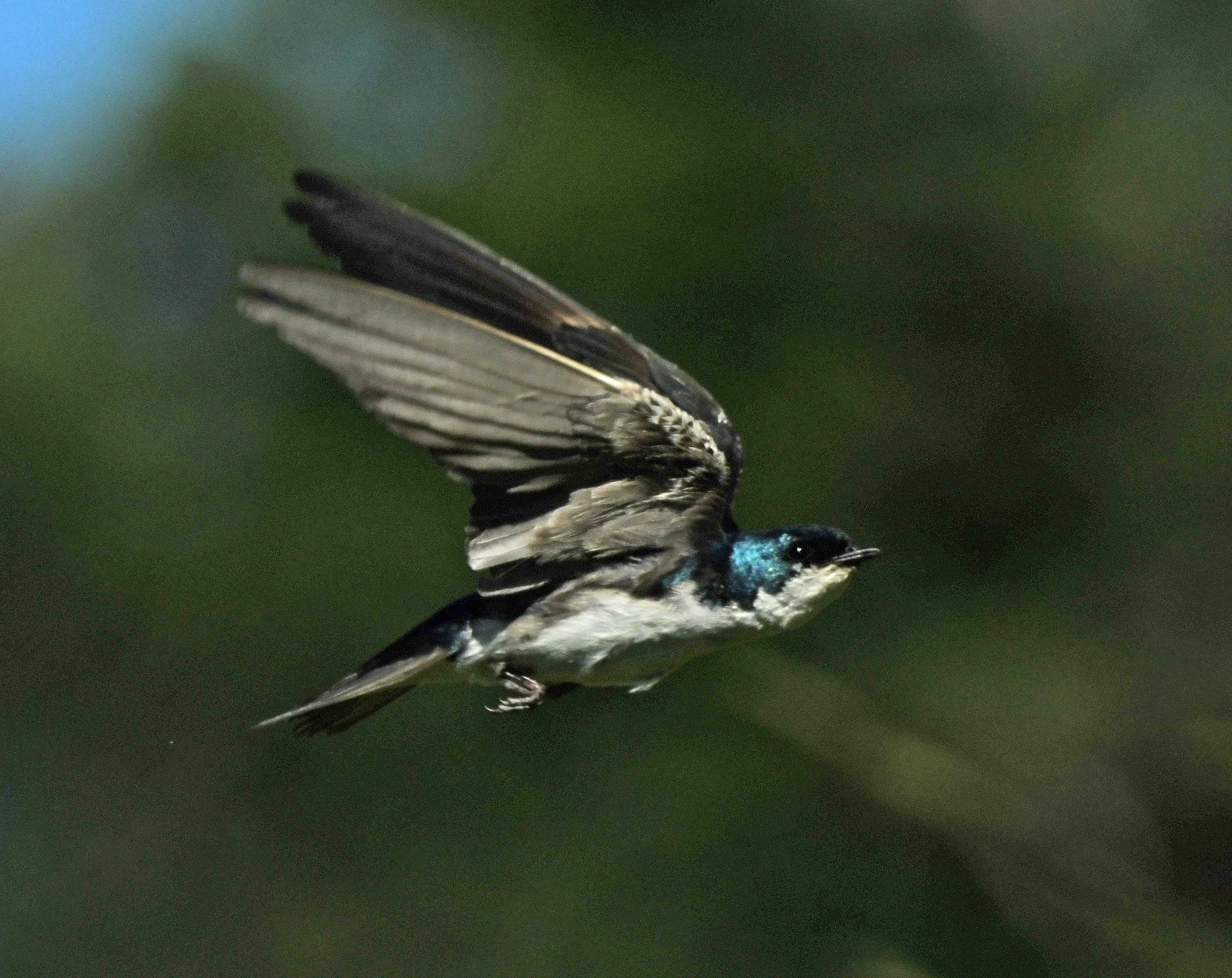
Every year, our local blue bird boxes are taken over by tree swallows, which are very busy now feeding their families of four to seven fledglings.

Mom and Dad share the immense feeding and cleanup chores. (The parents incessantly deliver food to the big-mouthed youngsters and clean up after them by taking out their droppings.)

A pair of these fast-flying acrobats reportedly needs a daily diet of about 6,000 small insects – all caught in the air – to feed themselves and their fledglings. Extended periods of cold and rain (when small insects don’t fly) can have a devastating effect on the birds. Tree swallows not only eat on the fly, they drink and bathe while skimming over still water.

Although these birds remain common breeders In Maine, they have experienced tremendous declines in recent decades, according to noted New England ornithologist Peter D. Vickery. This is part of an overall decline in North America of swallows and most other air-hunting insectivores, he reports in Birds of Maine (2020). (Images taken in Brooklin, Maine, on June 19 and 21, 2022.)

Comment

Comment

In the Right Place: Harmonization

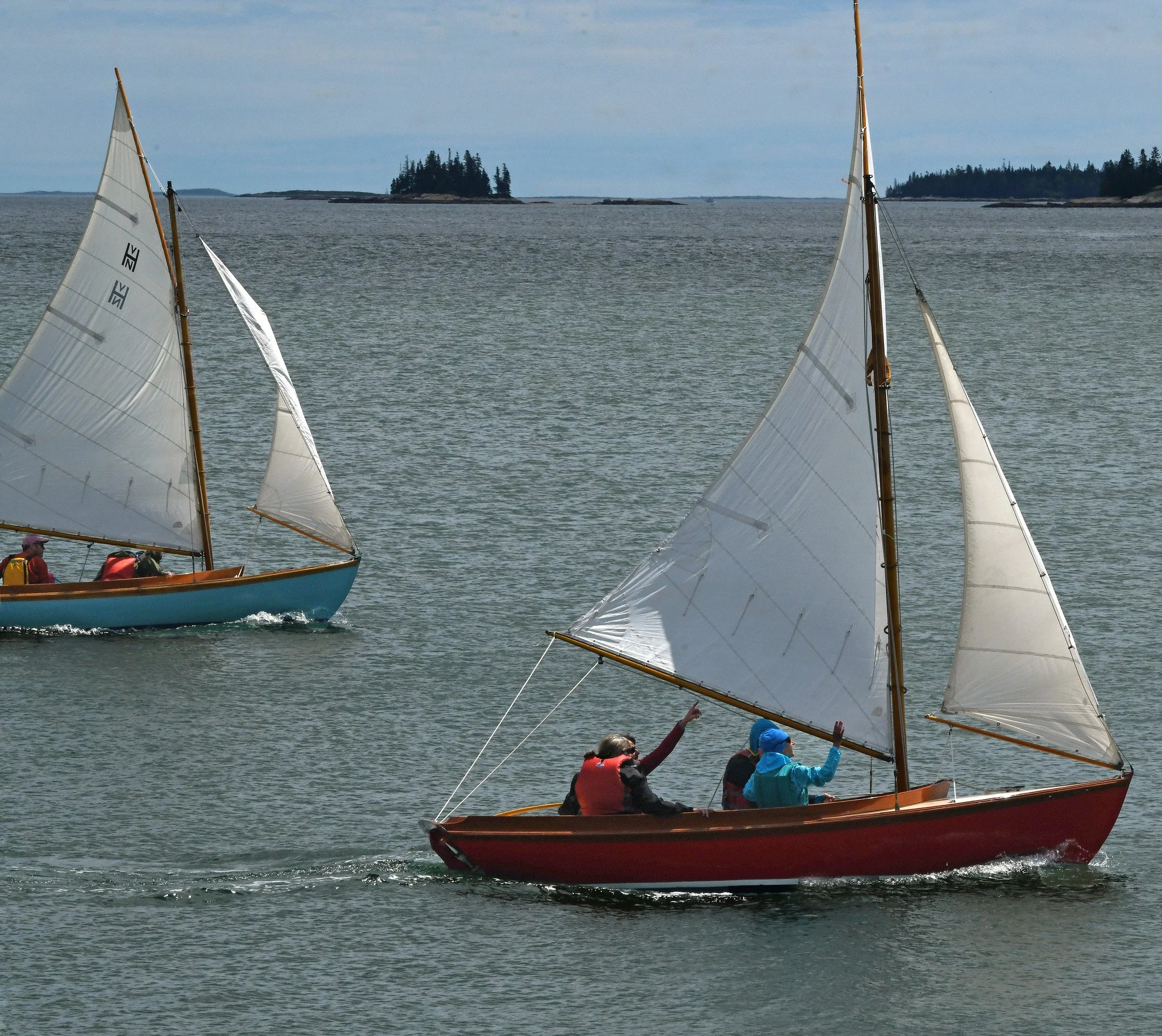
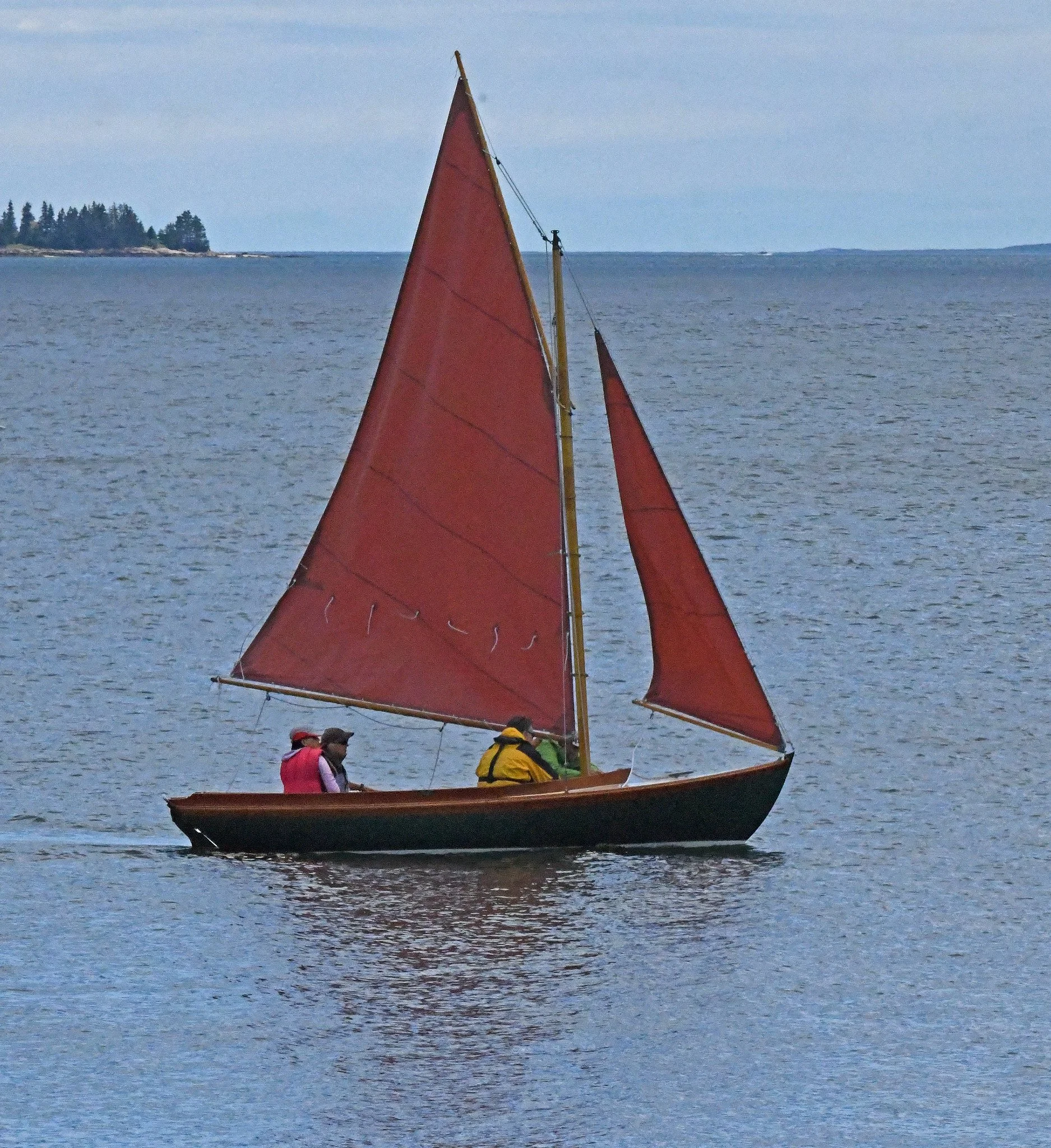
Introductory sailing classes began yesterday at the WoodenBoat School. It was a chilly day, but there were good breezes for the students to learn the art of harmonizing wind and water into movement.

They were sailing some of the most responsive small sailboats ever designed: Herreshoff and Haven “12 ½ s” (which measure 12 ½ feet at the waterline and 15’ 11” overall).

The Havens are, basically, a Herreshoff with a removable keel for shallow water sailing.

(Images taken in Brooklin, Maine, on June 20, 2022.)

Comment

Comment

In the Right Place: When Looking Old Is Looking Good

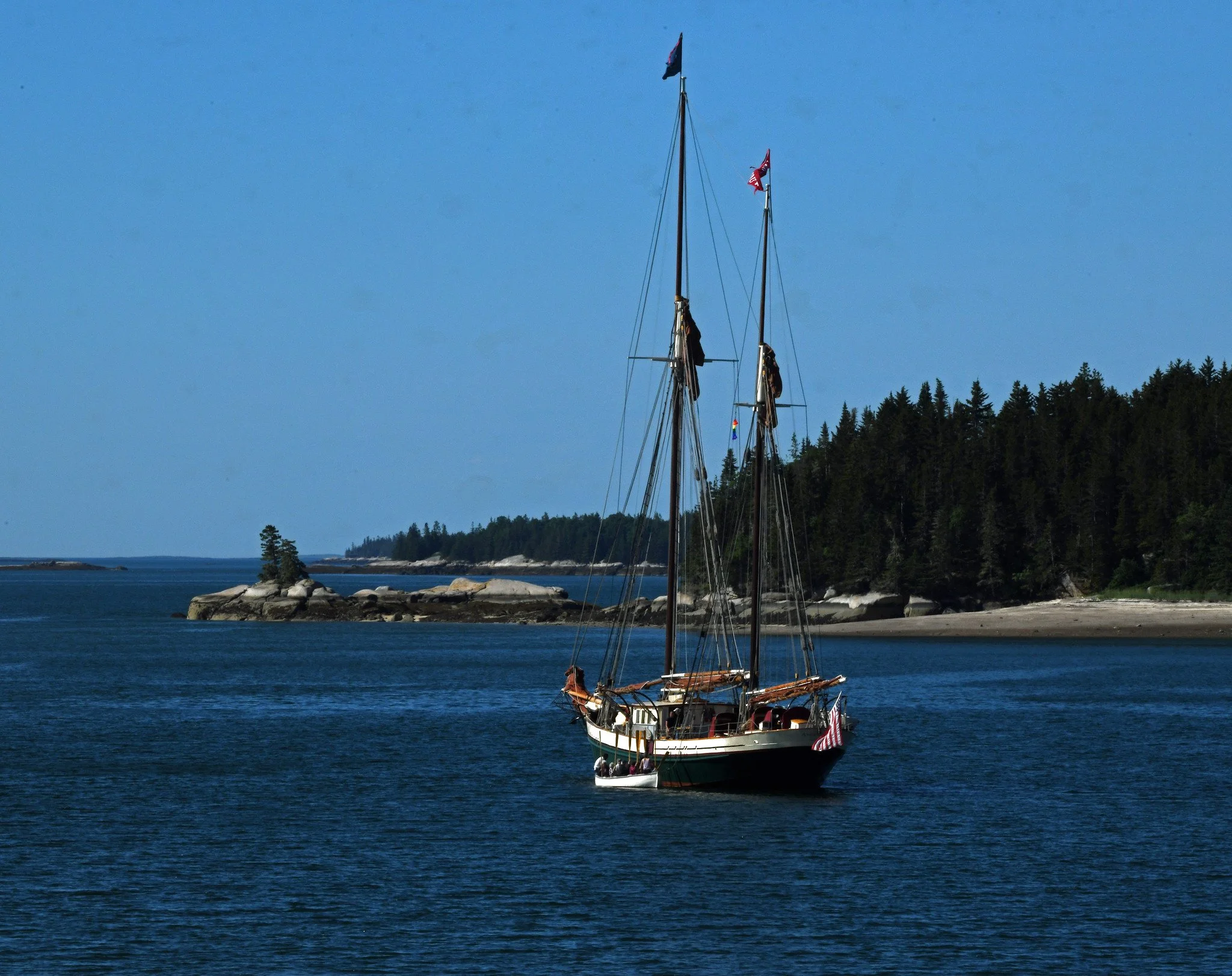
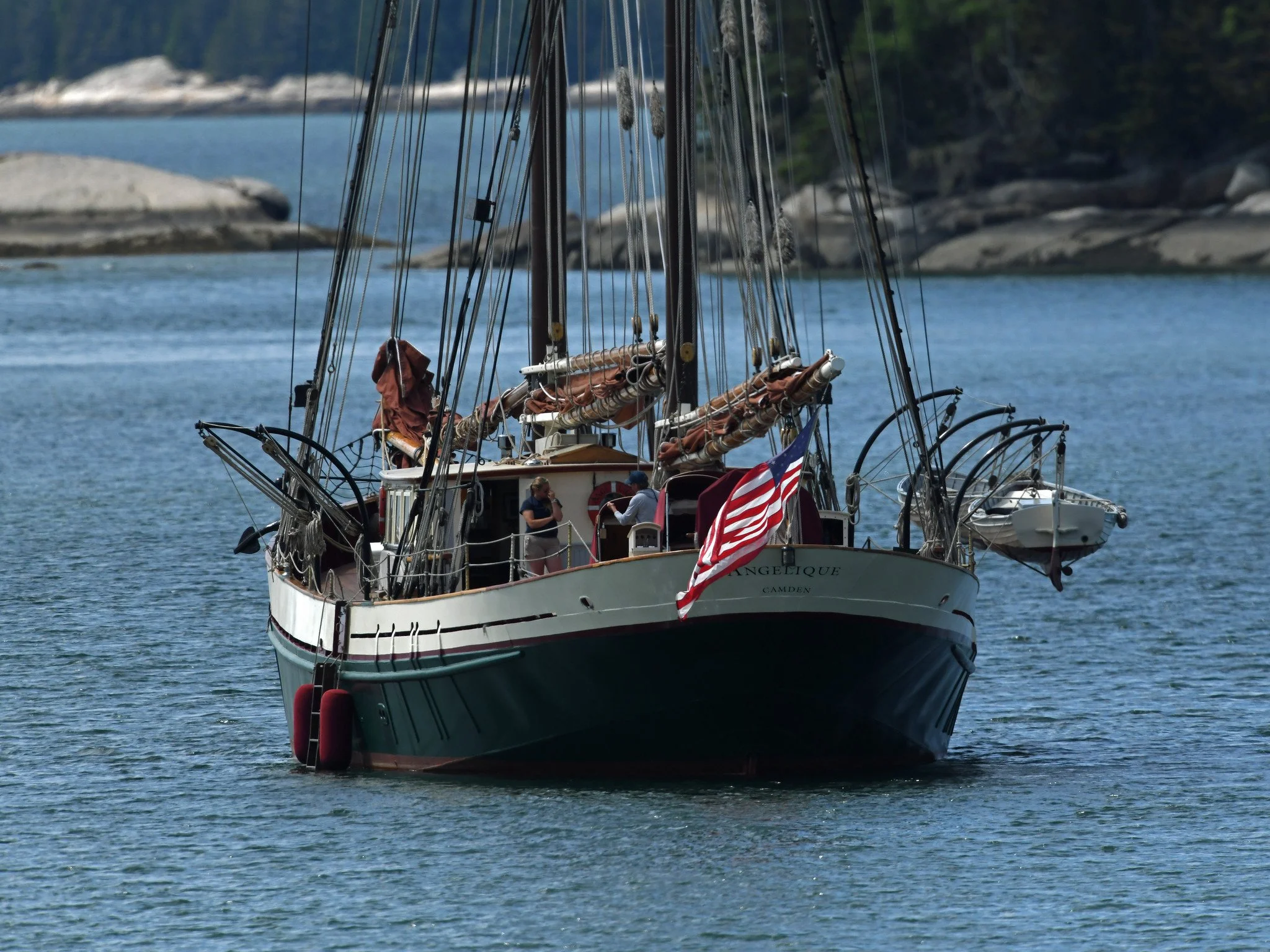
Here you see the distinctive Angelique moored in Great Cove on Thursday morning. She was on a passenger cruise that included a tour of nearby Acadia National Park and the WoodenBoat School campus here.

Angelique is 130 feet long overall and the only Maine windjammer that is configured as a gaff-rigged topsail ketch. (Note that, unlike a two-masted schooner, Angelique’s foremast is her main [taller] mast, not her aft mast.)

Her “tanbark” reddish sails also are unique in the Maine windjammer fleet. In days of yore, when sails were cotton, they were dipped in vats of tannic acid, tallow, and red ocher, which turned them reddish and protected against mildew.

Angelique was created old. She actually was launched in 1980, but was designed to look like a 19th Century English North Sea fishing trawler. Her modern conveniences, including a metal hull and two auxiliary diesel engines, are not obvious. (Images taken in Brooklin, Maine, on June 16, 2022.) For a few more images of Angelique, click this:
She departed under a clouding sky at midday:

(Images taken in Brooklin, Maine, on June 16, 2022.)

Comment

Comment

In the Right Place: Osprey Nest Report

Ozzie and Harriet have been well and are acting very much like there are eggs and/or one or more nestlings in the lower reaches of their summer home here. (It’s more likely to be eggs at this time.)

Above, you see Harriet on Thursday, doing what many birders call “begging” on the nest, although “complaining” seems more apt to me. She often does this until Ozzie comes by and delivers a fish. Note that she is crouched and has her wings slightly spread, a typical stance for shading eggs or nestlings from the sun while letting air flow below her.

The image is a different story, however:

That’s Harriet returning to her nest after a 10-minute break – and she’s soaking wet. It’s more likely that she has just taken a thorough bath than just been unsuccessful at fishing. However, this raises an issue that may be of interest to some of you who have never looked into an osprey nest.

Osprey nests contain rotting fish parts, fresh and dry blood from fish, dust and soil from imported moss and lichen “beds,” and feces when there are nestlings or the parents’ sphincter muscles have misfired. Stated another way, osprey nests are dirty places that attract swarms of flies and other pests, including a wide variety of parasites that infest the birds.

Thus, regular bathing is common among ospreys. I’ve only seen ospreys bathing in fresh water, but they may bathe in salt water as well. Perhaps one of you has seen them do so.

The bathing ospreys that I’ve seen stand shoulder-high in the shallows and continually dip their heads and bodies in the water, shake themselves, and wave their wet wings about – just like robins in a bird bath. (Images taken in Brooklin, Maine, on June 16, 2022.)

Comment

Comment

In the Right Place: It's Started!

Naskeag Harbor is busy lately. Lobster fishermen are loading their traps from the Town Dock onto their fishing vessels, piling them high on deck. The traps will be set in our coastal waters. Below, you’ll see the Fishing Vessel Judith Ann taking off after being loaded cloudy Thursday.

It’s the beginning of the lobster fishing season here and every lobster-oriented thing looks sparkling and tidy. Below, you’ll see a trailer-load of traps near the Dock waiting to be stacked on an incoming fishing vessel on sunny Wednesday.

Let’s hope that this season is as good or better than the last, which set a record. (Images taken in Brooklin, Maine, on June 15 [truck] and 16 [boat], 2022.)

Comment

Comment

In the Right Place: Disturbing Signs

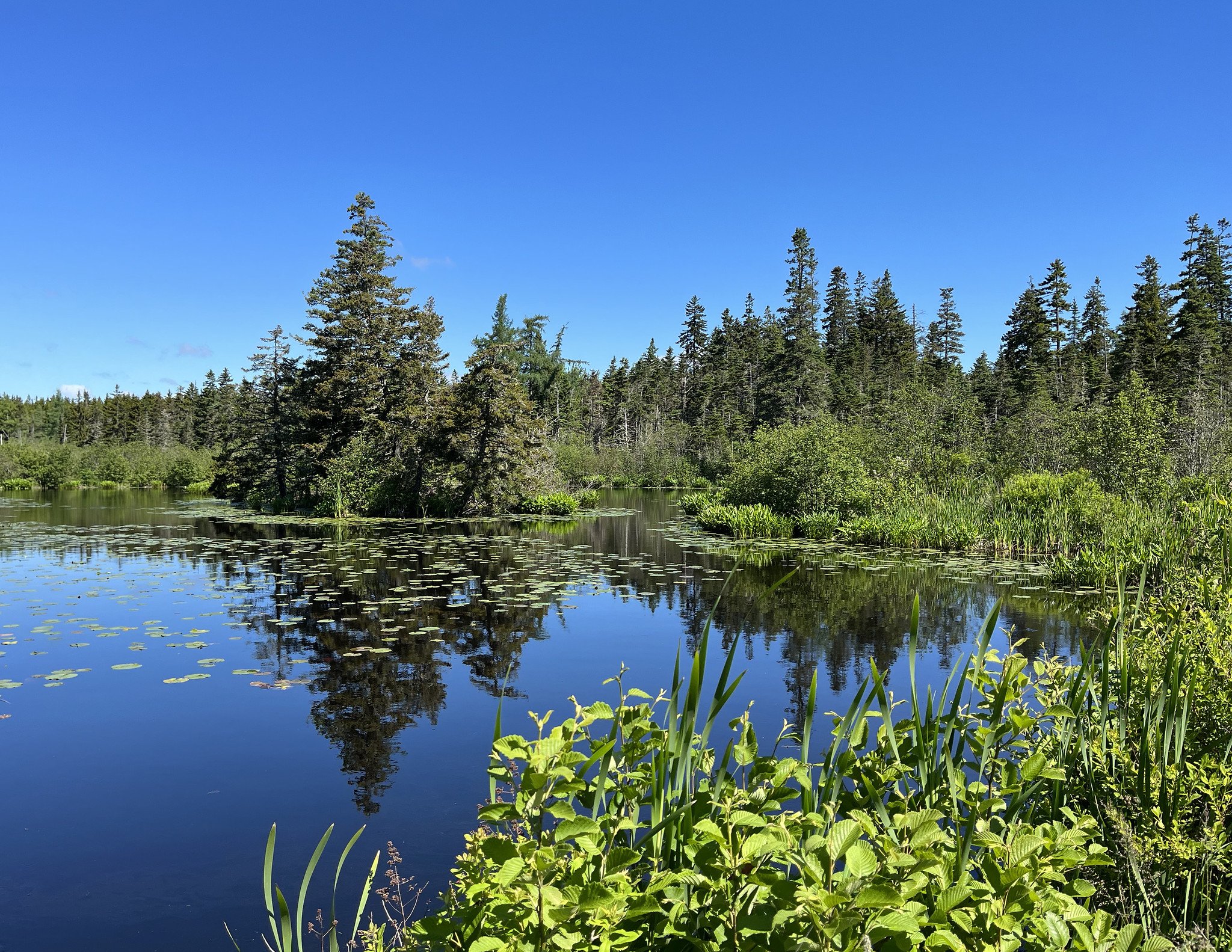
Here you see an image of one of our local ponds as it appeared Wednesday,

We hope that it will remain beautiful all summer, but the signs are not promising.

Yesterday’s official U.S. Drought Monitor shows that our area of Down East Maine already is in a moderate drought and there is a wide swath of abnormally dry conditions in significant parts of the rest of Maine:

Yet, it’s only mid-June and we’re on the New England coast!

The Monitor points out that precipitation and stream flows in Maine have been below normal in many areas and that soil moisture remains negative across much of Maine. The situation is much worse in the western states, but that certainly doesn’t make me feel better. (Lucky, maybe.)

By the way, it rained last night and this morning, but it wasn’t the kind of soaking rain that we need and have not been getting. (Photograph taken in Brooklin, Maine, on June 15, 2022.)

Comment

Comment

In the Right Place: Gam Cruise

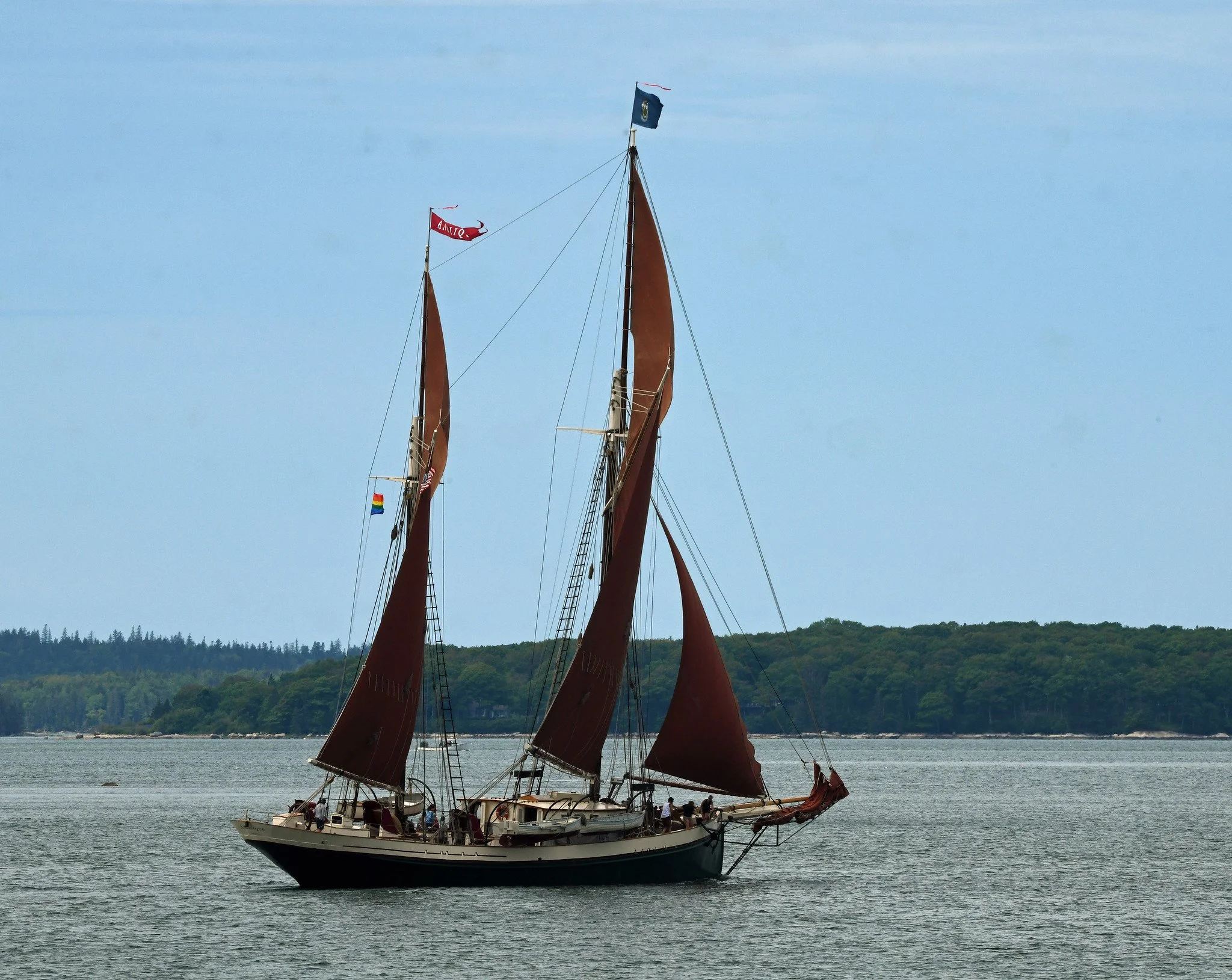
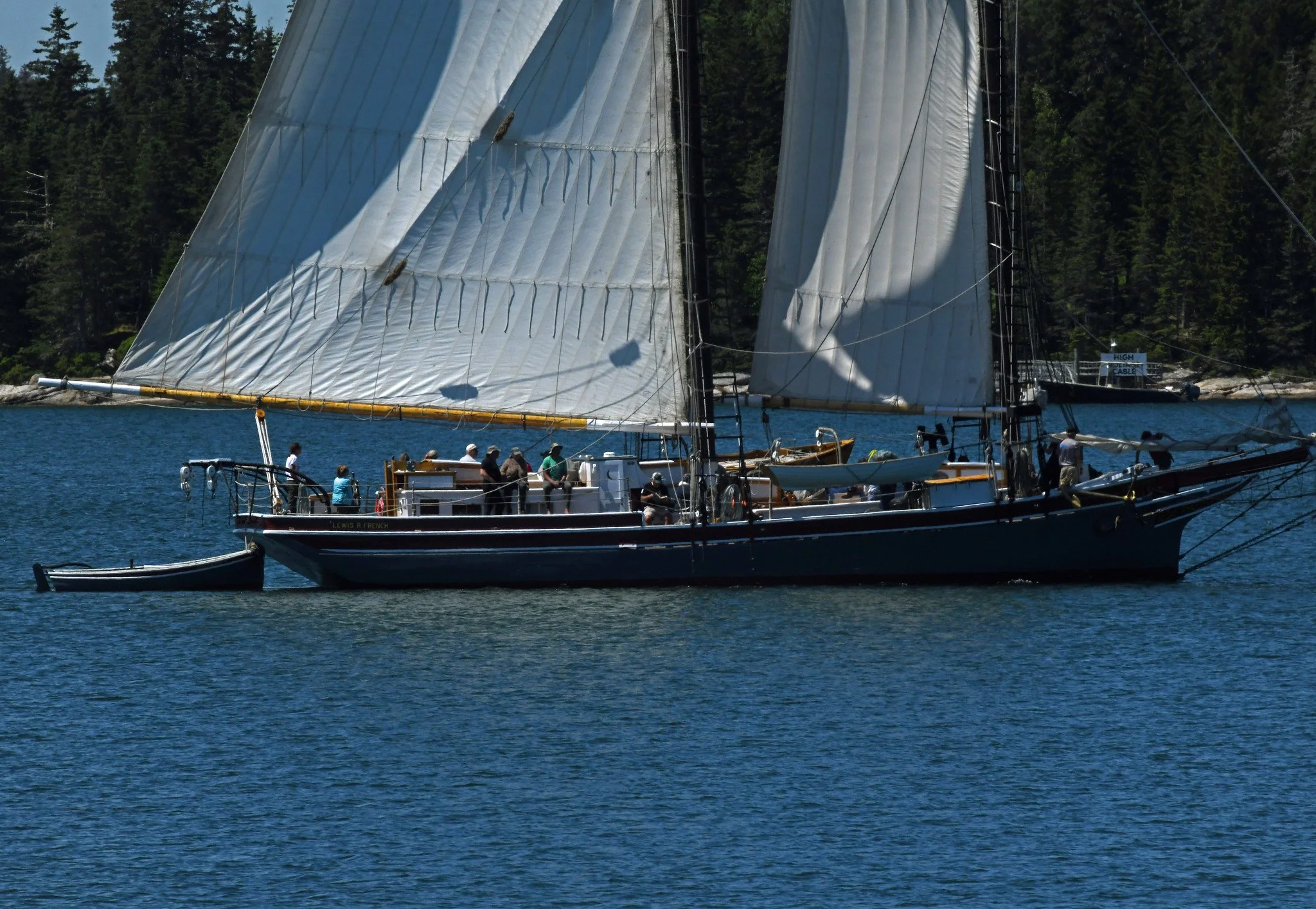
The Lewis R. French sailed into Great Cove at dusk Tuesday and slept over; she awakened nestled among her smaller sailing cousins.

According to her schedule, the 101-foot schooner is on a five-night cruise that includes a “Schooner Gam,” an event in which 15 traditional tall ships will raft together for an evening of music, vessel touring, and sailing comradery. The French will be one of the oldest vessels there, having been launched in 1871.

She raised sail, weighed anchor and, with a motorized push from her yawl boat, sailed out of the Cove headed north into Eggemoggin Reach:

(Images taken in Brooklin, Maine, on June 14 and 15, 2022.)

Comment

Comment

In the Right Place: Little Devils

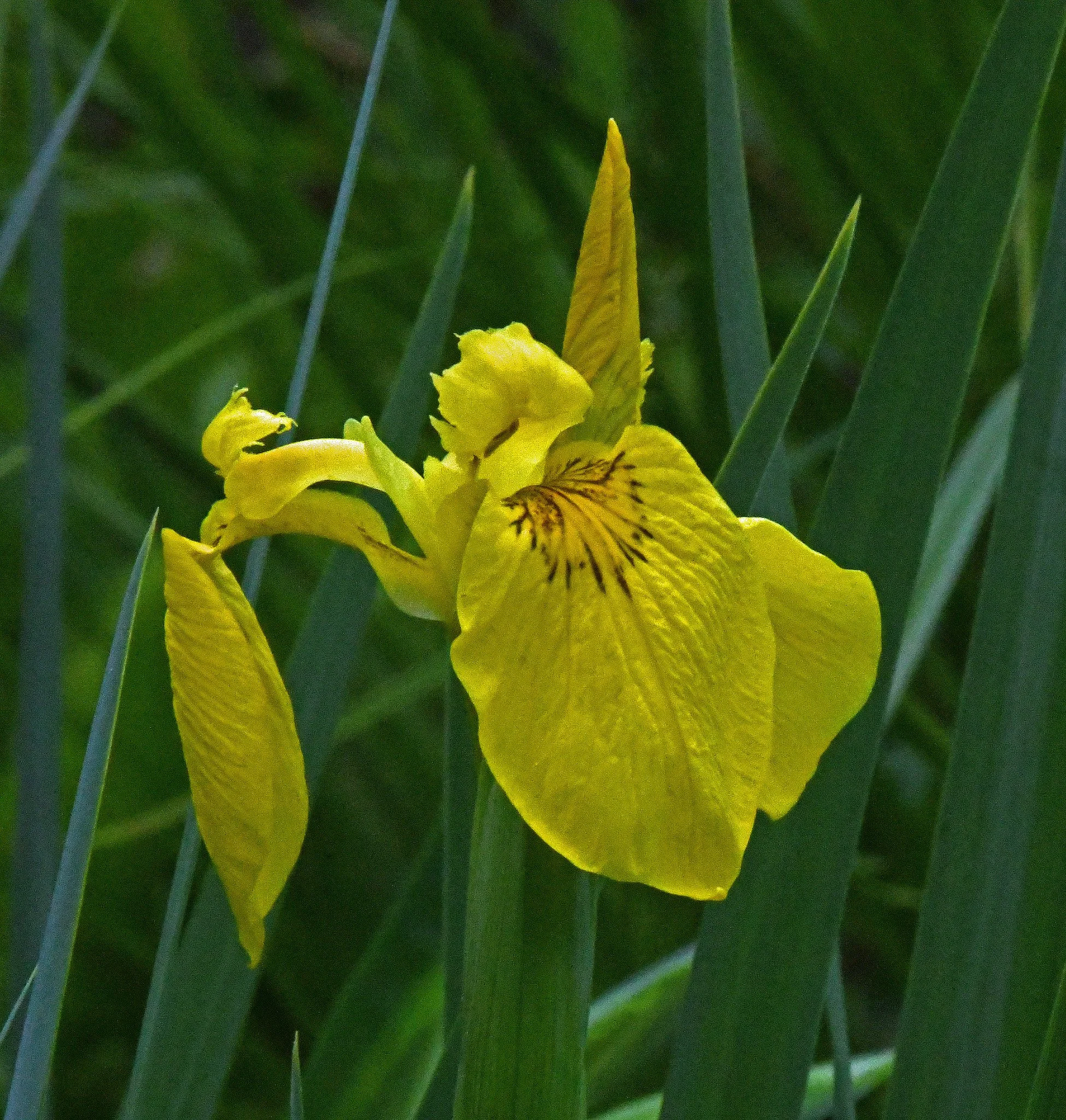
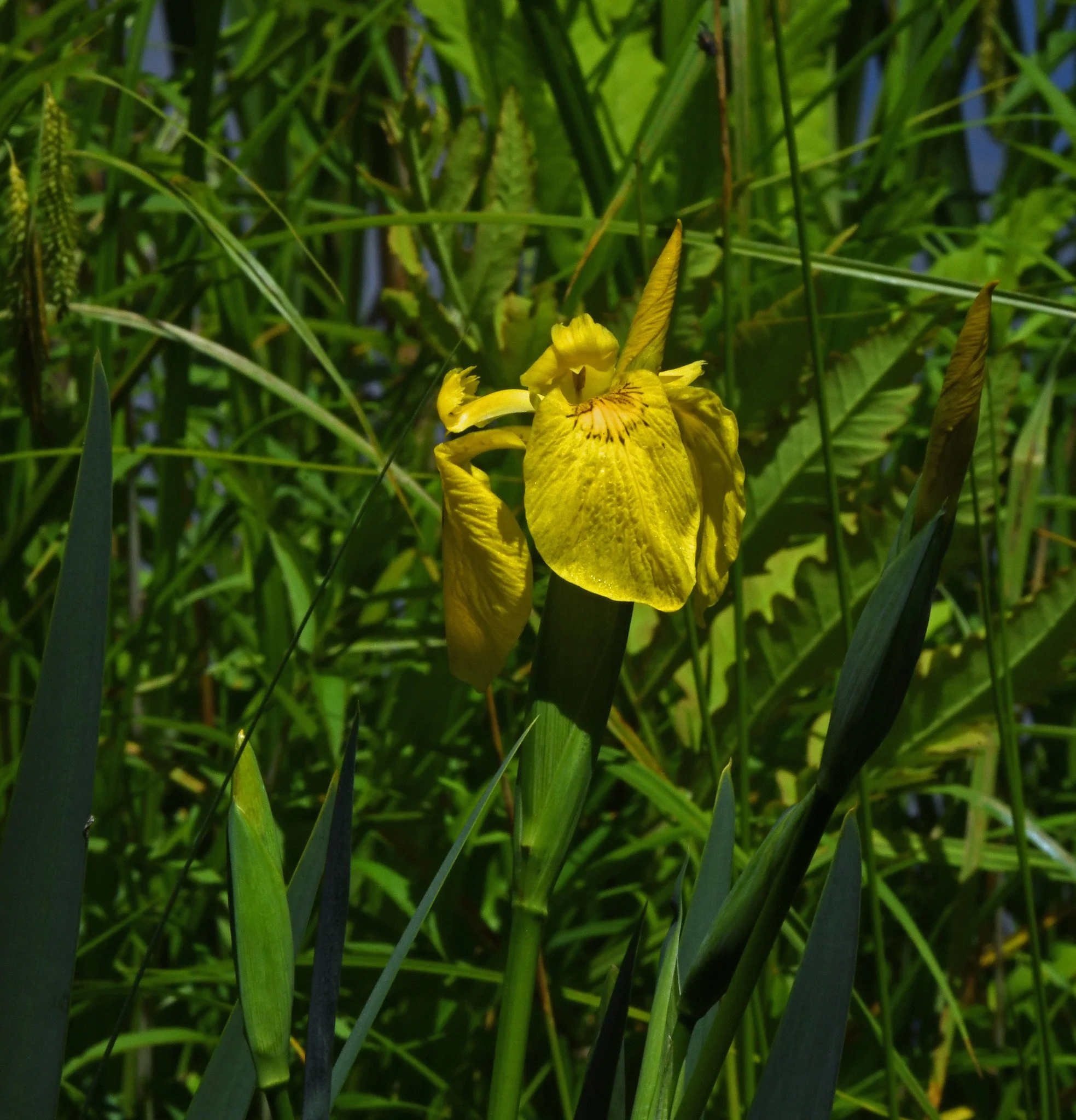
Wild yellow flag iris plants (Iris pseudacorus) have started their short blooming period here in our wetter areas. They’re reportedly the only completely yellow, large wild iris now growing naturally in North America.

Although not native to North America, they have become naturalized wildflowers here and are spreading rapidly in Maine and elsewhere, according to the reports that I’ve seen. That’s not good; these handsome little devils are extremely invasive.

The Maine Department of Agriculture, Conservation & Forestry states that they may be controlled with chemicals or by digging them up (wear gloves), bagging them, and disposing of them with the garbage. Note, however, that special rules apply to using herbicides to control plants in or near wetlands and water bodies in Maine. (Images taken in Brooklin, Maine, on June 14, 2022.)

Comment

Comment

In the Right Place: Opening Act

Fragrant waterlilies (Nymphaea odorata) are just starting to appear in our ponds. Their long-stemmed leaves – lily pads – started rising weeks ago and already appear to be attracting water lily aphids and leaf beetles. (See the image in the first Comment space.)
The white flowers of this native species usually open during sunny morning hours and are closed by mid-afternoon; they sometimes will close when a day turns very cloudy.  The lily pads provide shade for fish and aquatic invertebrates, such as dragonfly nymphs. The tops of the pads become floats for frogs to loll and birds to stand, both looking for water bugs.

The fragrant water lily seeds reportedly are a favorite of ducks and other waterfowl, and their underwater stems (rhizomes) are munched by muskrats, beaver, deer, moose, and even porcupines. (Images taken in Brooklin, Maine, on June 10 [pads] and 12 [lily], 2022.)

Comment

Comment

In the Right Place: Wetflix

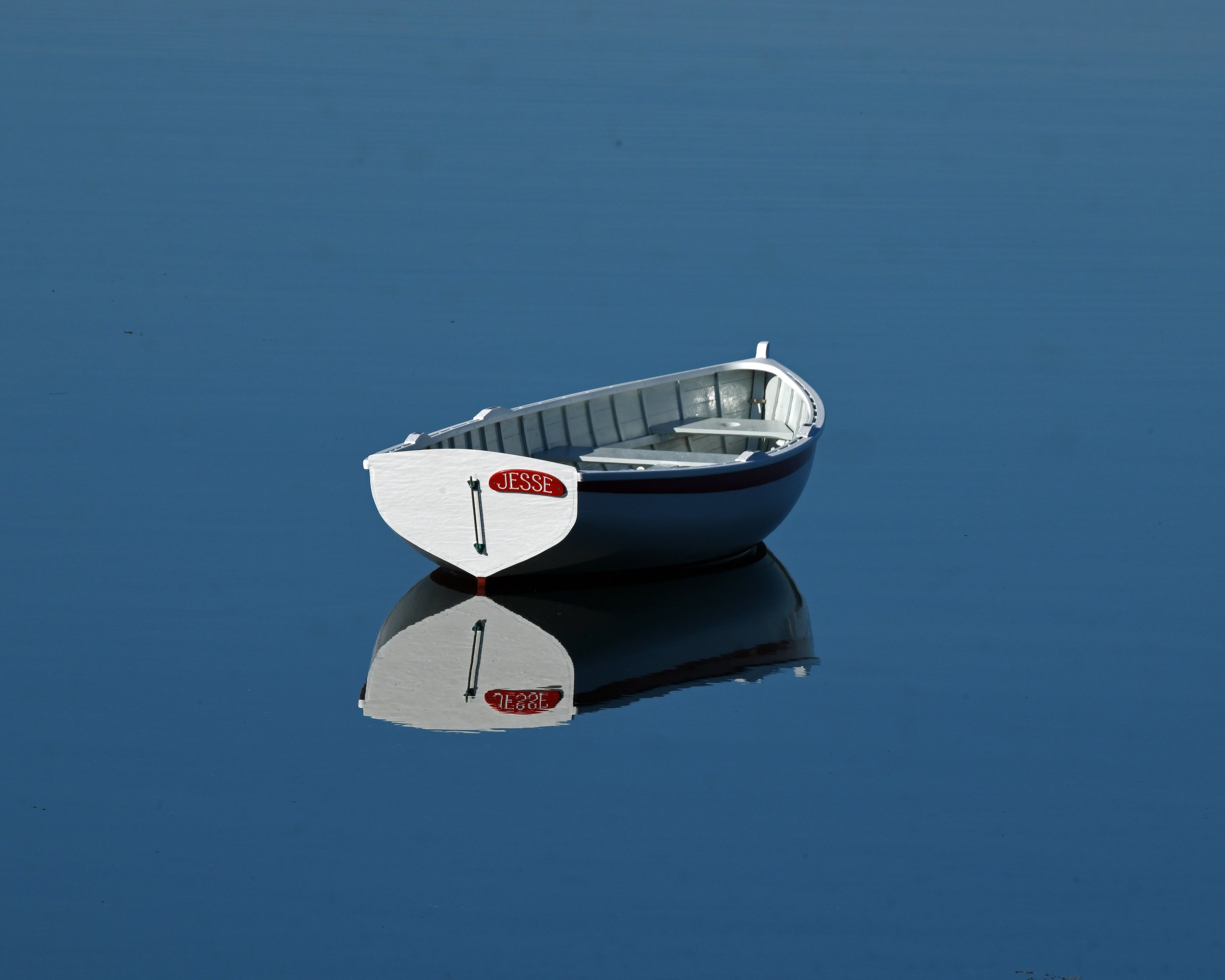
Living on Great Cove is like having a subscription to the world’s best streaming service. It’s an enchanted cove with many moods that can transform itself and everything in and around it. One of the best of those bewitching times is early on a clear, windless morning when the first light is sliding slowly across the Cove’s still waters.

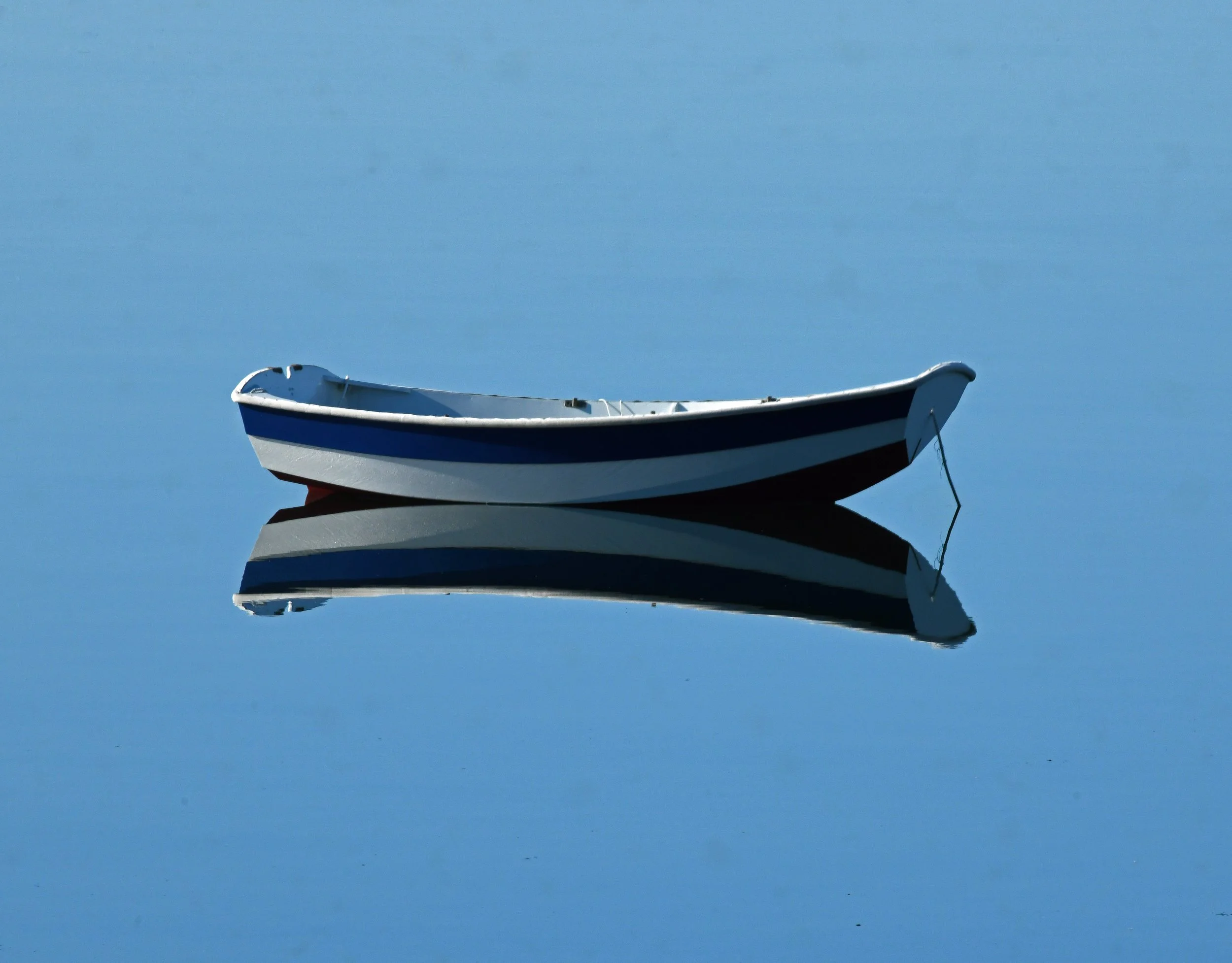
That happened yesterday. The images here were taken then, but they can’t fully capture what the Cove does when it is in one of these moods. It seemingly casts spells that turn its waters into sky and make its summer visitors simultaneously rise and hover while sinking and penetrating the depths below. For example, here’s Jesse, a 12-foot catspaw sailing dingy belonging to the WoodenBoat School:

Below is the Belford Gray, a 20.5-foot Friendship sloop that was built at WBS and is now used there for sailing classes and, beneath that image, is an image of the Belford Gray and Jesse, with WBS’s Fox in between. Fox is a Haven version of the Herreshoff 12.5-foot sailboat (waterline measurement).

Below, you’ll see Martha. She’s a 20-foot Crocker pocket cruiser designed by Joel White (the famed Brooklin naval architect) for his father (the even more famous Brooklin author E.B. White). Martha is now owned by Rich Hilsinger, the recently retired WBS director.

Below is Big, a 9.5-foot nutshell sailing pram owned by WBS, followed by an image of Nomaste, a cabin cruiser out of Bucks Harbor, Maine, that was in the Cove yesterday:

(Images taken in Brooklin, Maine on June 12, 2022.)

Comment

Comment

In the Right Place: Flagging

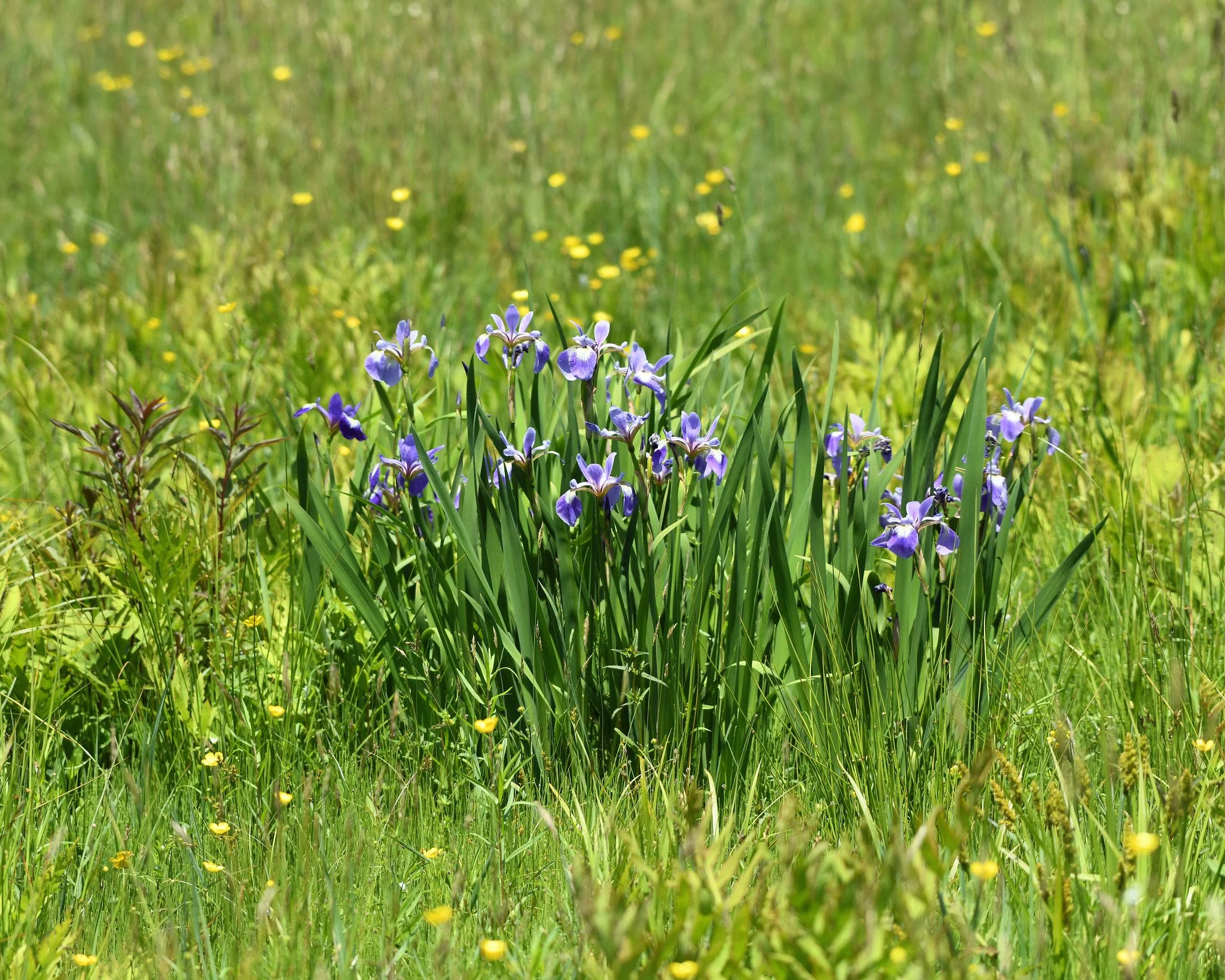
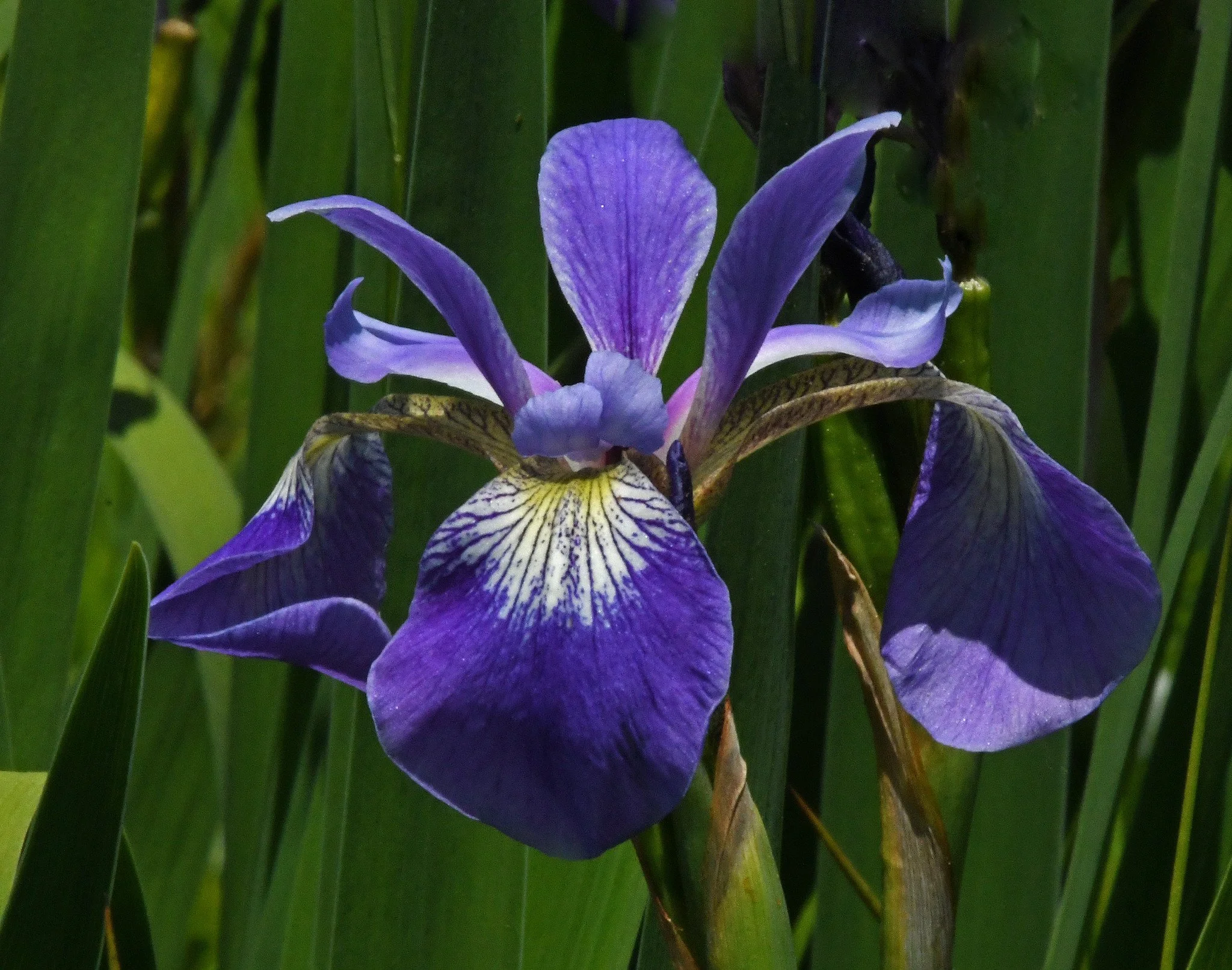
This year, there are more blue flag iris clusters in our north field than we’ve ever seen before; perhaps they like more volatile weather.

These graceful plants (Iris versicolor) are natives, but mildly invasive ones. Nonetheless, we welcome them so long as they stay in our fields, which we let grow wild in the summer.

The plant’s “flag” designation reportedly is from the middle English word “flagge,” meaning a rush or reed. However, it also is commonly called the wild iris, harlequin blue flag iris, and northern blue flag iris. (Images taken in Brooklin, Maine, on June 7, 2022.)

Comment

Comment

In the Right Place: Hidden in Plain Sight

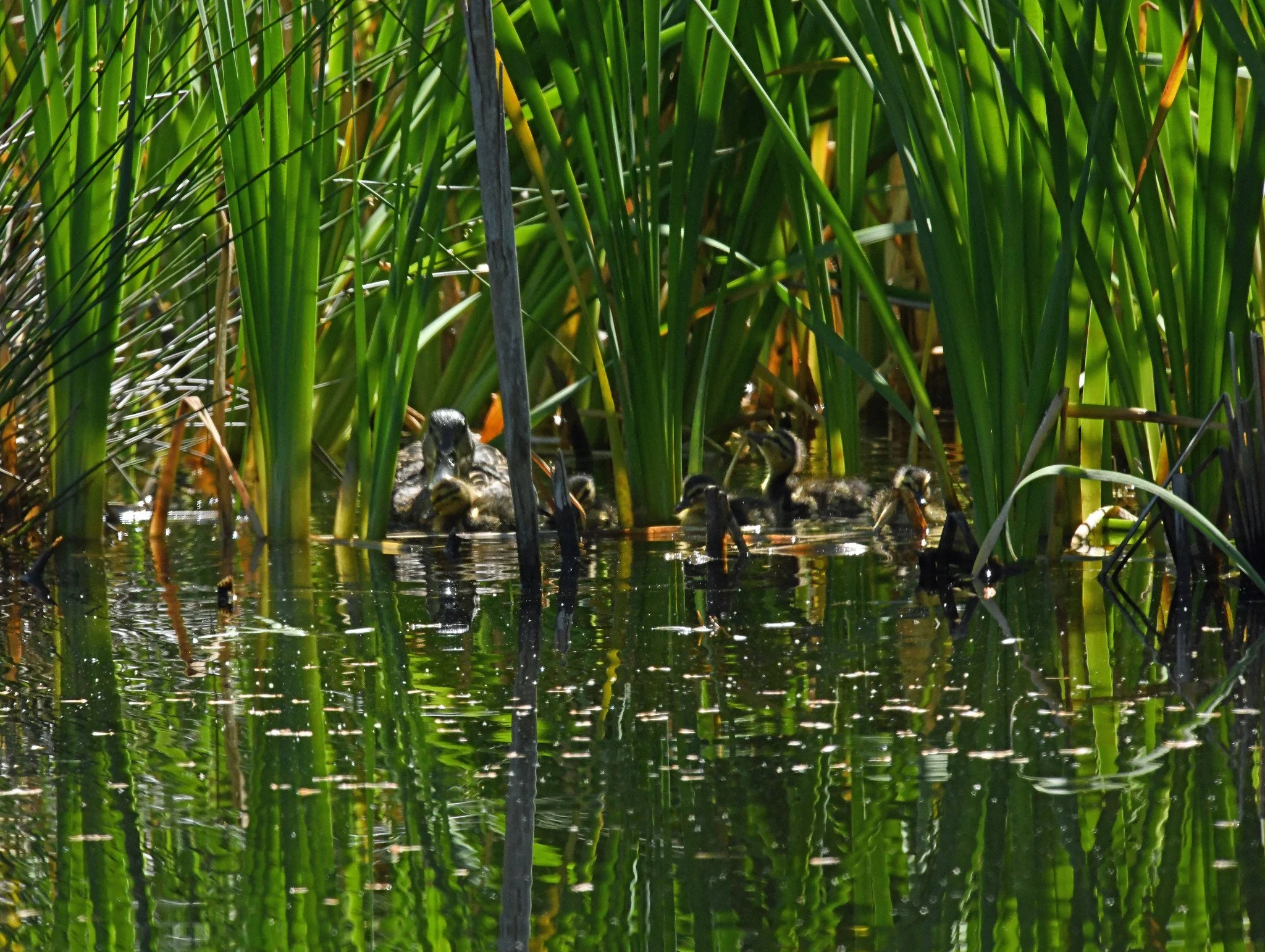
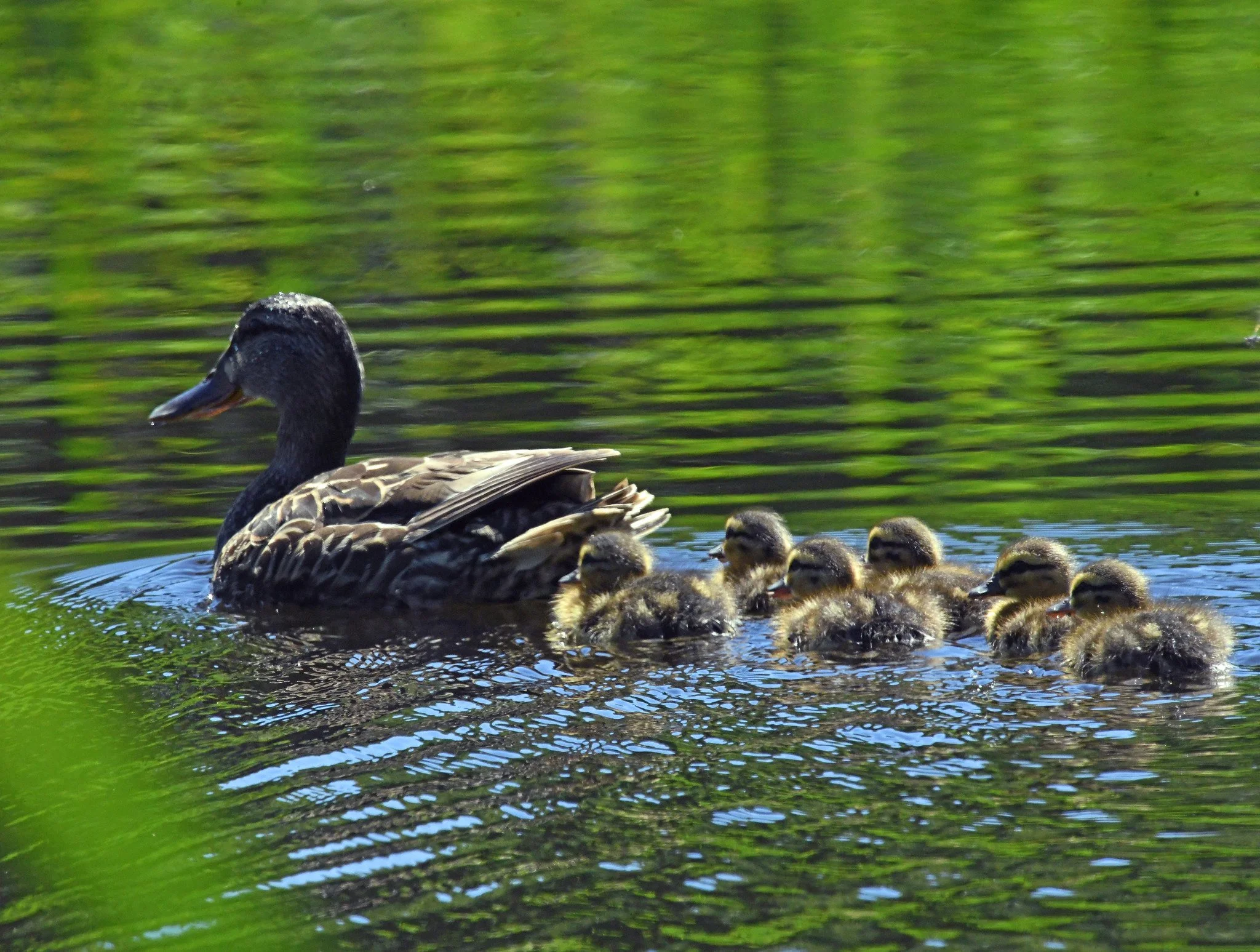
A female Mallard duck hidden in the cattails usually is so well camouflaged that we never know she is there, as was almost the case yesterday.

But, once her ducklings are hatched, Mom loses much of her control over being unseen – no matter how stoically still she remains, her young seem incapable of following her example; their little ripples almost always give the family hiding place away.  

After a while, with a lot of patience and a minimum of movement, a photographer might be lucky enough to witness family life resuming on the open pond. (Images taken in Brooklin, Maine, on June 10, 2022.)

Comment

Comment

In the Right Place: Beautiful Medicine

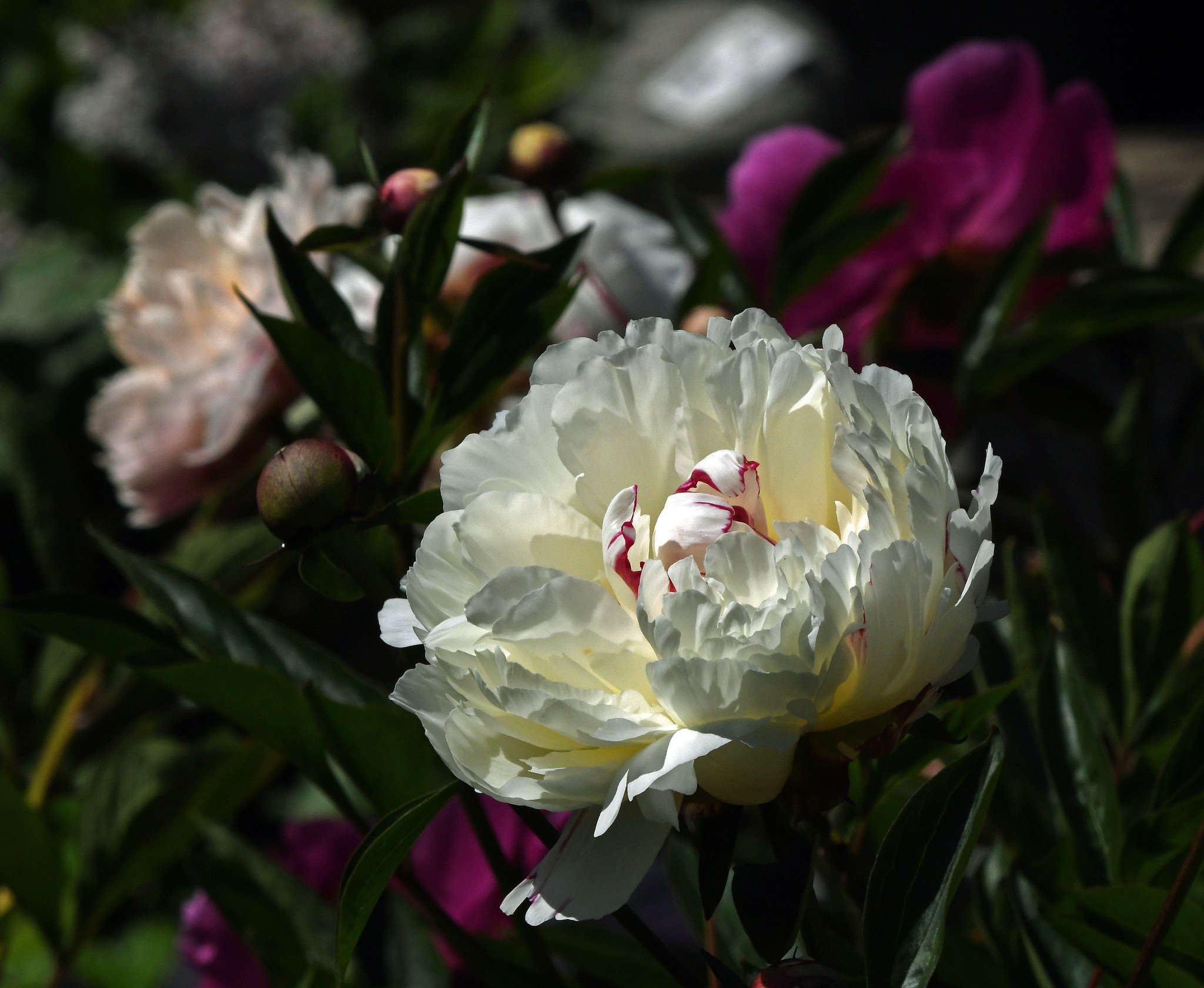
Peonies, such as these two, are in full bloom in local commercial nurseries:

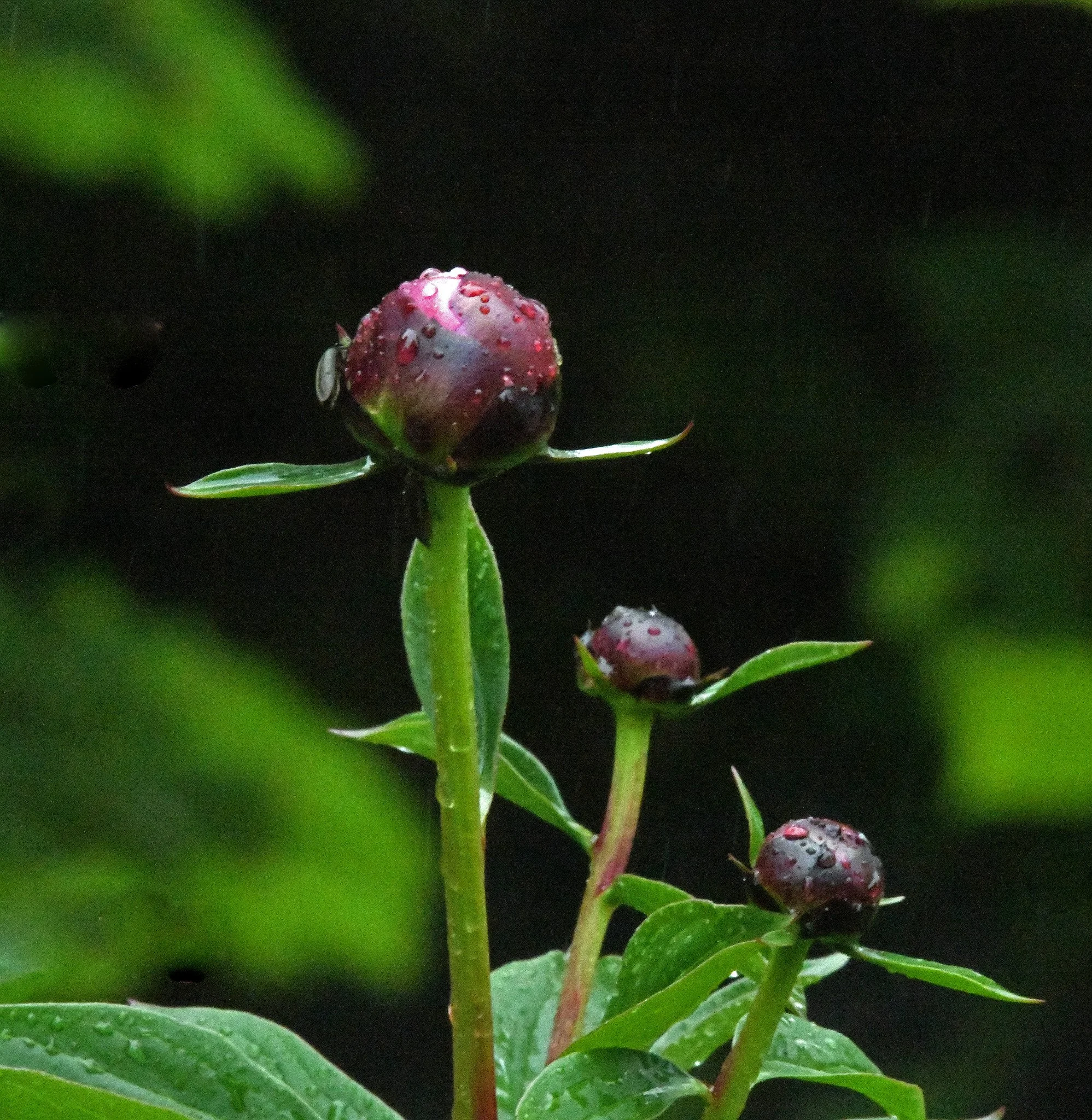
However, many of the peonies in home gardens here are still tightly budded up, including these taken in yesterday’s rain:

Peonies (usually pronounced “PEE-uh-knees”) are named in honor of Paeon, the Greek god of medicine; and, indeed, their flowers and other parts have been used in Asian medicines and teas for centuries. The flowers also traditionally have been one of the most popular subjects for tattoos in Asia. (Images taken in Blue Hill, Maine, on June 4 [flowers] and Brooklin, Maine, on June 8 [buds], 2022.)

Comment

Comment

In the Right Place: Osprey Nest Report:

Everything has been pleasantly normal in the old nest overlooking Great Cove. Here you see Ozzie bringing yesterday’s lunch to Harriet.

Her head is barely visible as she hunkers down over what I assume are the pair’s clutch of eggs:

Speaking of heads, note that the fish that Ozzie is bringing home has none. Oz usually eats the highly nutritional head off of the fish in a nearby tree before flopping it into the nest for Harriet. She usually picks at the fish while she is in the nest.

However, every now and then, she grabs the fish just after it is delivered and flies away with it for a real lunch break of about 30 to 40 minutes:

When she does that, Ozzie takes over the hunkering.

We’re hoping that at least three little ospreys will be here in time to join other summer residents during Brooklin’s July 4 celebration. (Images taken in Brooklin, Maine, on June 7 [Ozzie flying] and 5 [Harriet flying], 2022.)

Comment