Comment

In the Right Place: Windjammer Watch XVI

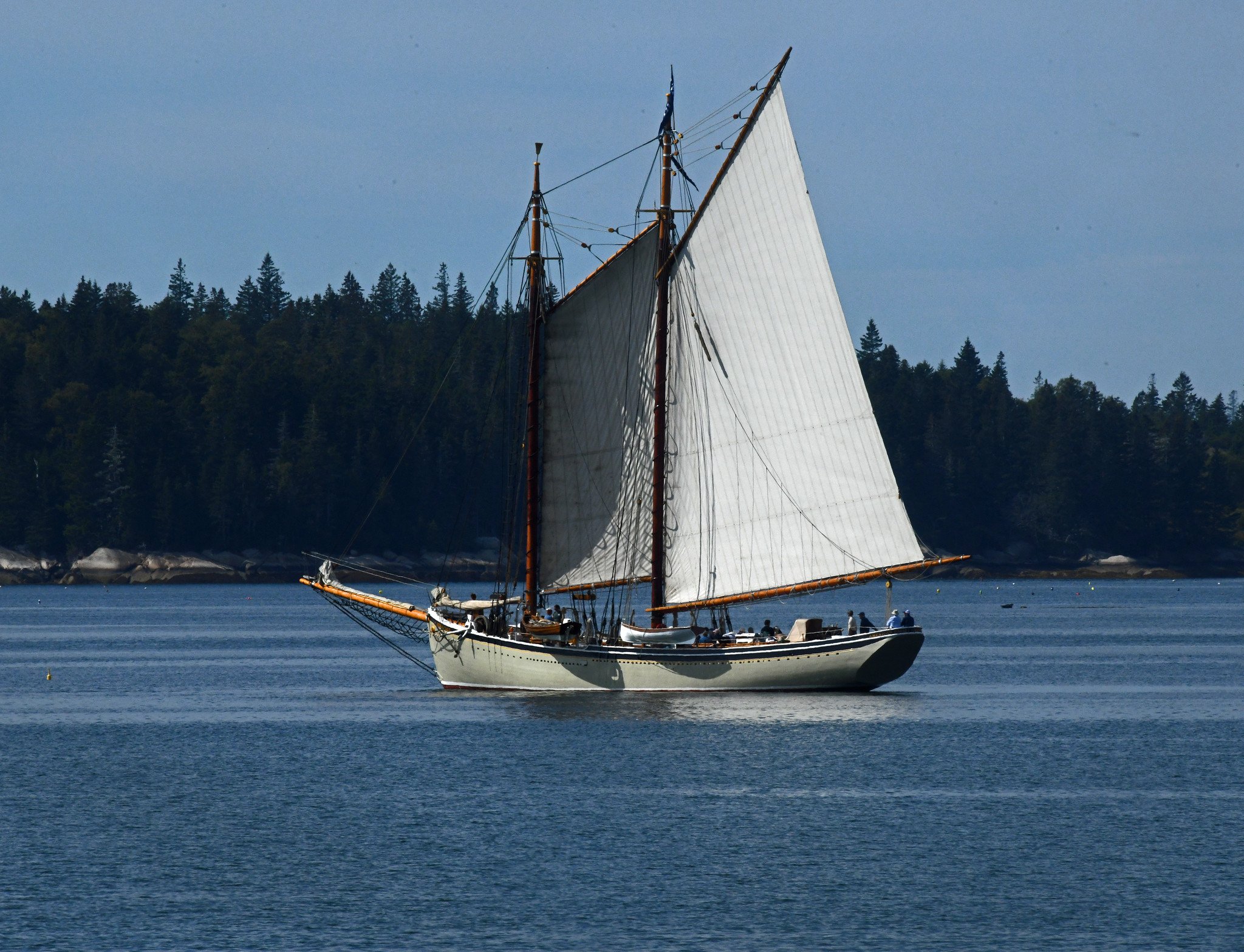
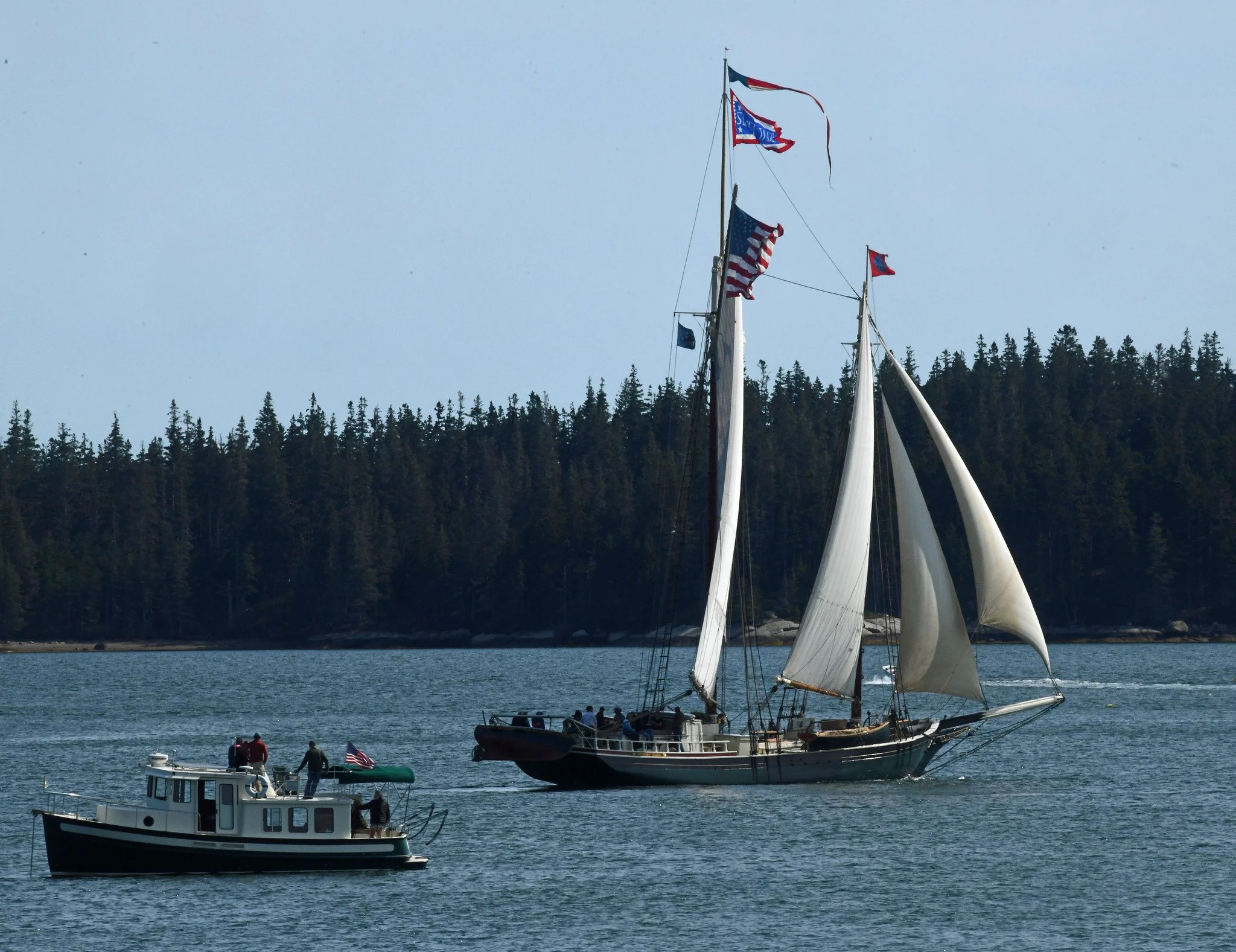
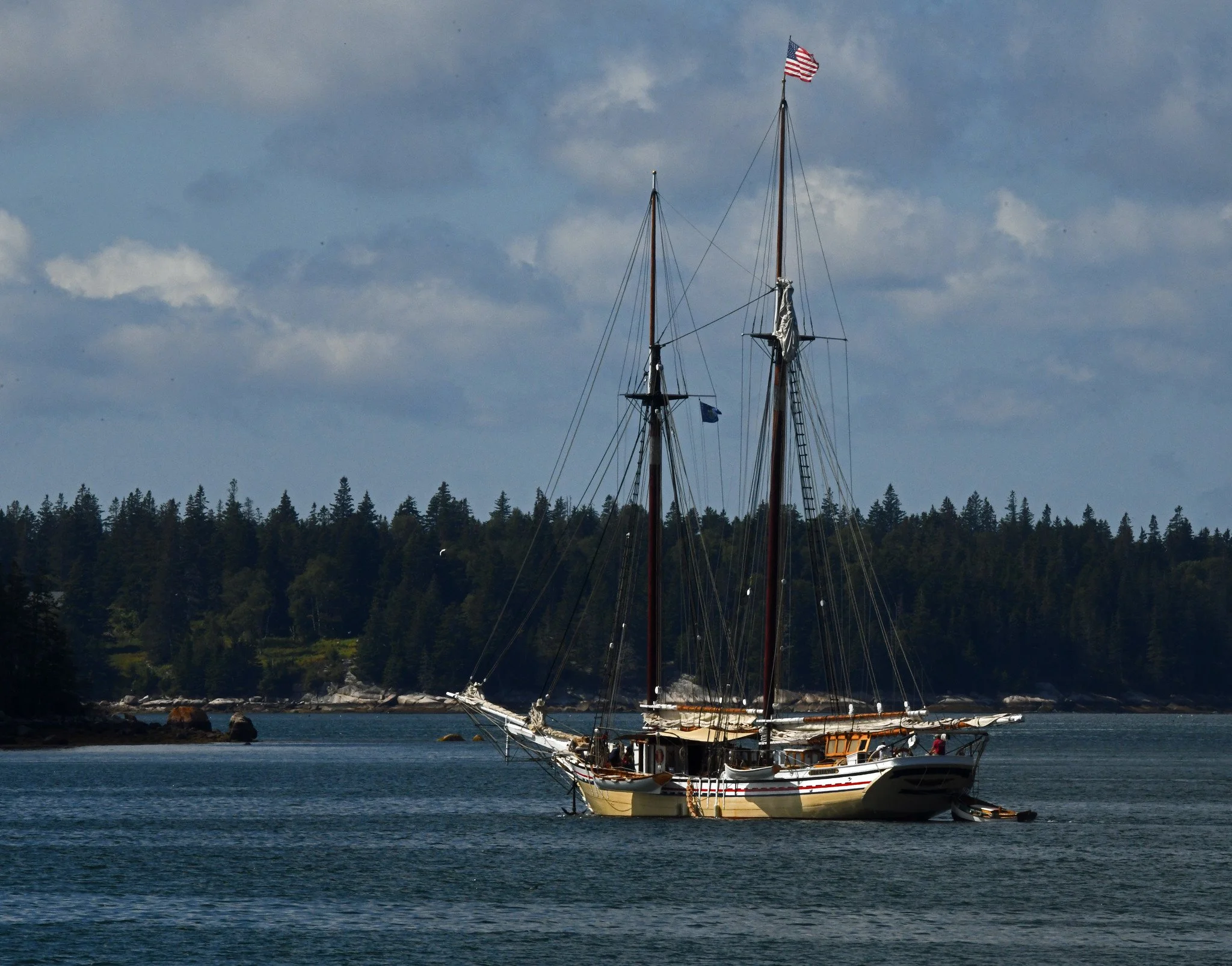
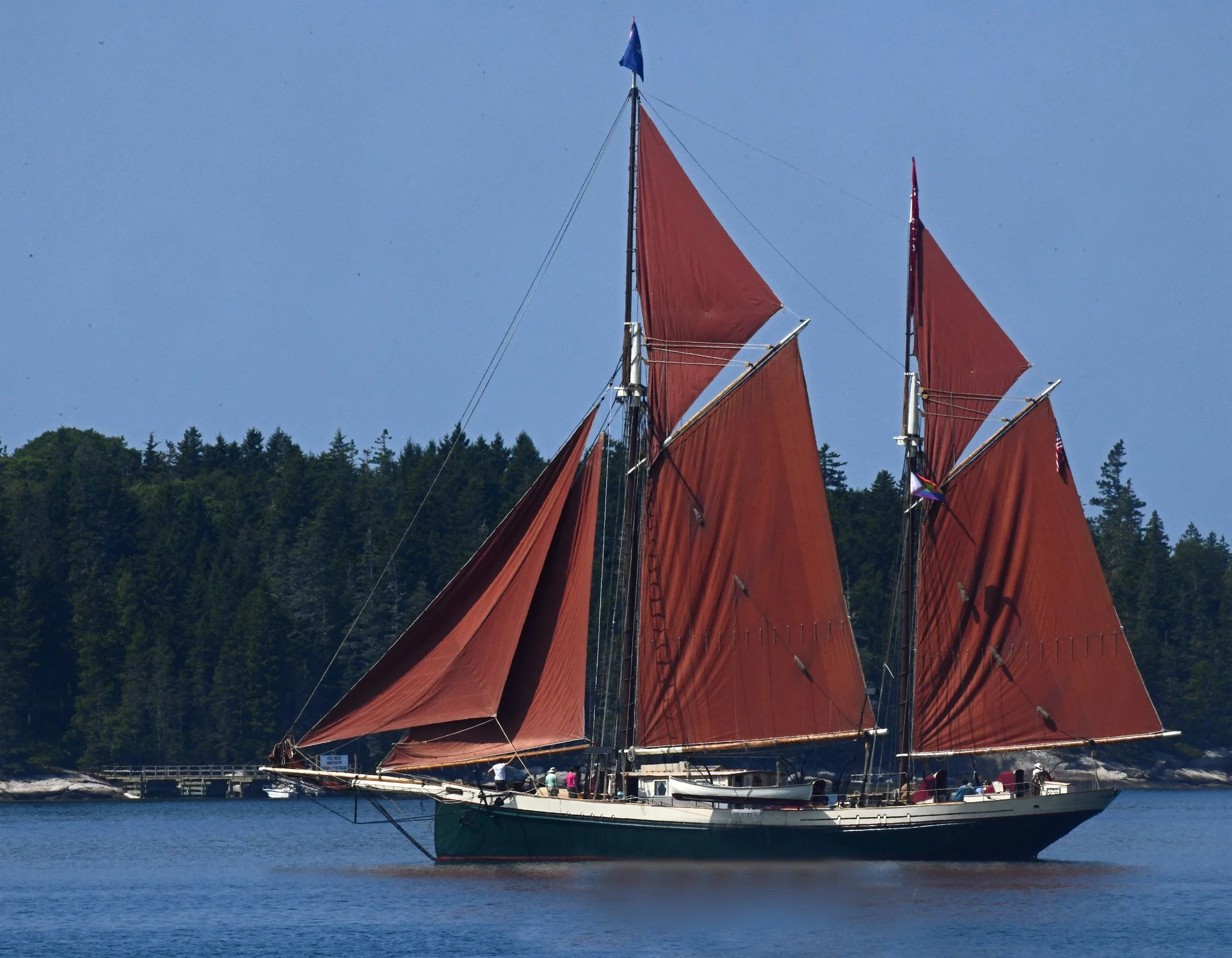
Here you see the 123-foot schooner AMERICAN EAGLE coming into Great Cove at dusk Tuesday. She overnighted and apparently tried playing the part of a maritime Sleeping Beauty awaiting a ptincely kiss from dawn’s early light:

She left the Cove before noon under two sails.

The EAGLE was launched in 1930 under a different name and had a relatively rough life before she was restored and refitted as a tourist coastal cruiser. She now hails from Rockland, Maine, and was on a five-night “Full Eastbound” cruise booked for private charter, according to her schedule. (Images taken in Brooklin, Maine, on September 17, 2025.)

Comment

Comment

In the Right Place: Letting Go

Here you see the setting September sun sliding a glitter path into Center Harbor on – appropriately – Sunday. When looking westerly like this from the Brooklin Boat Yard docking float, the shadowed Harbor remains a bit “porcupiney” with silhouetted masts on sailboats that still have a few good cruising days ahead. 

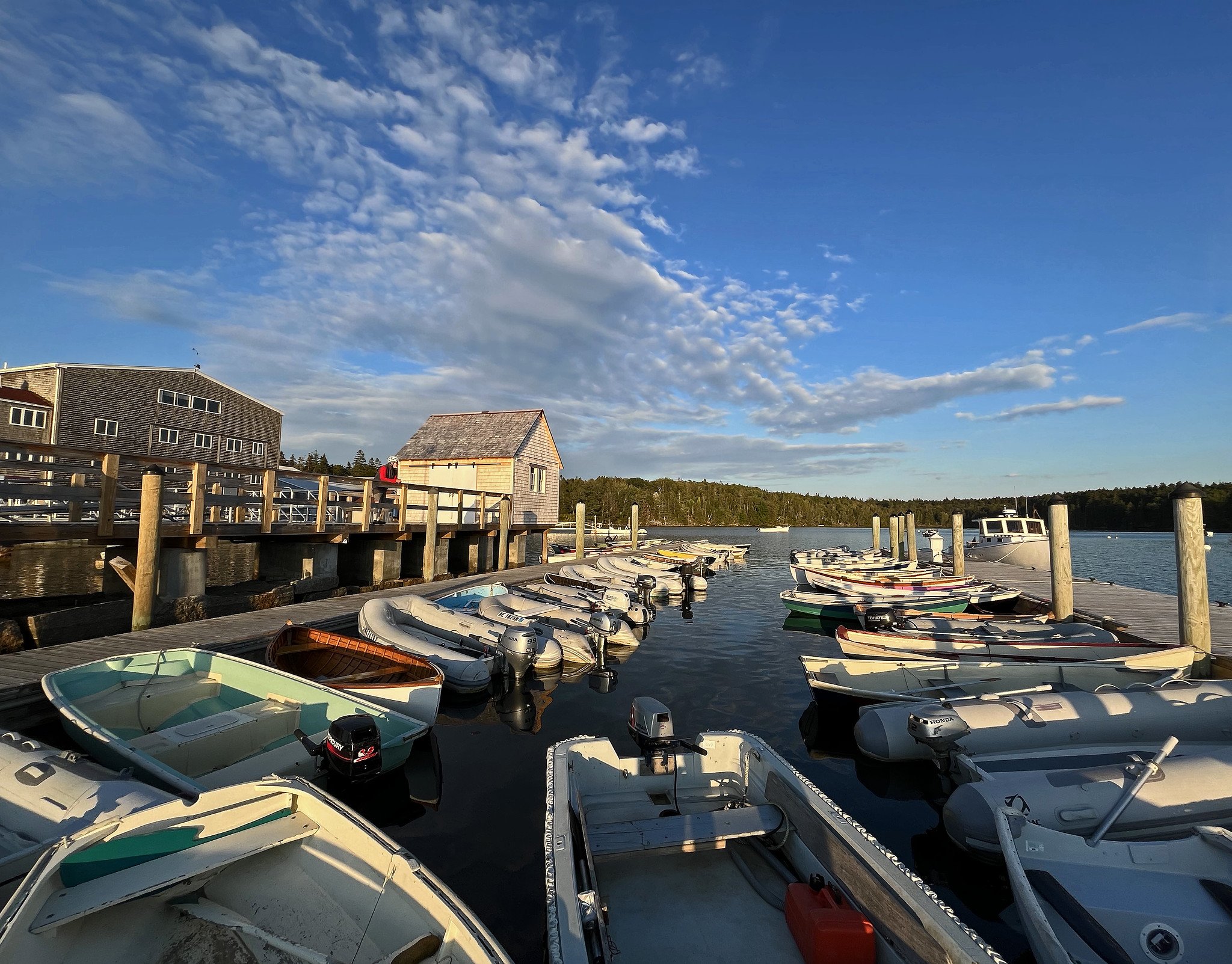
When you turn around and look toward the east on an evening like this, you discover that the golden light is washing over the boarding skiffs and other small boats docked below the BBY pier and its shed, with part of the shingled boat-building shop lit up on the upper left:

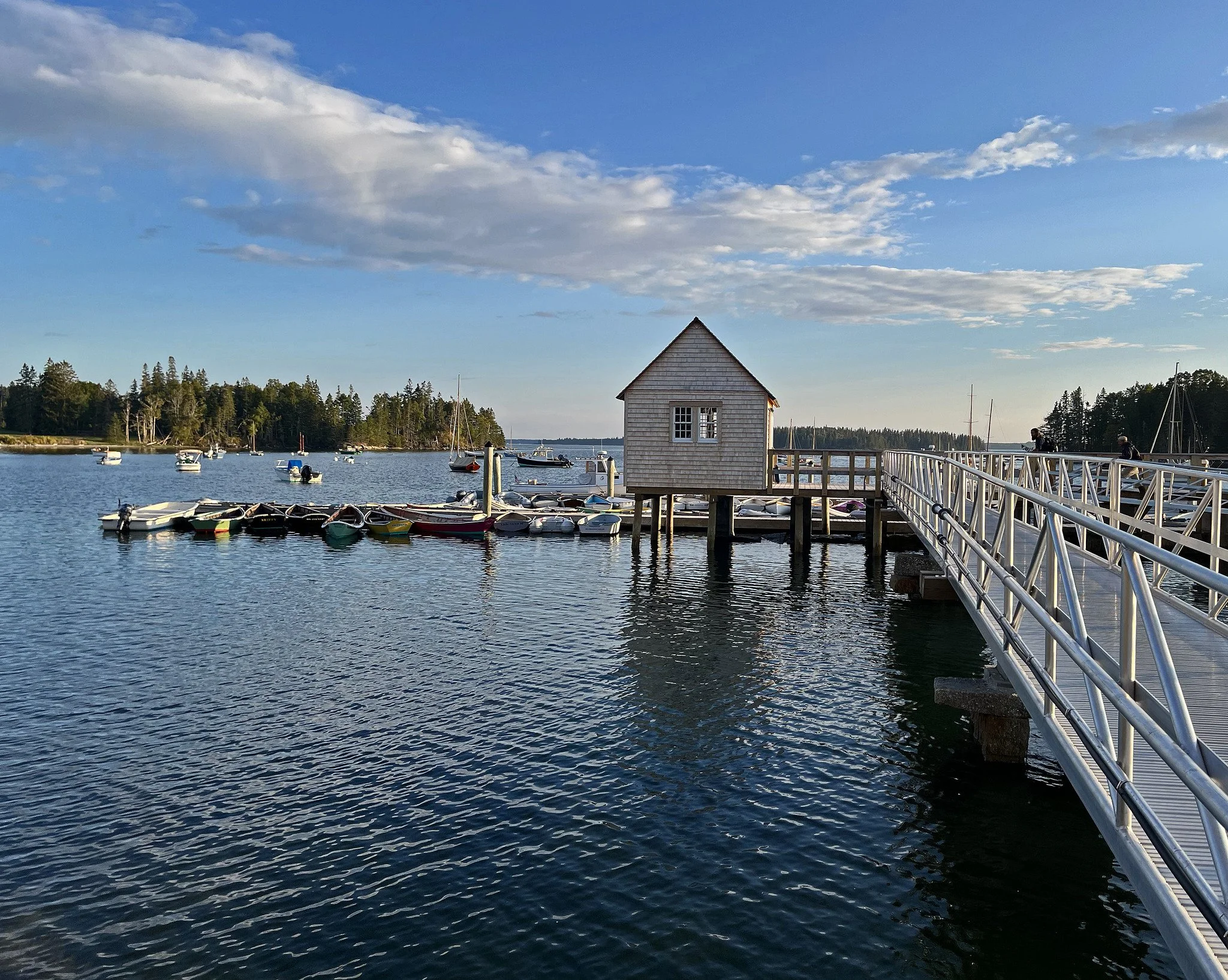
Many sailboat owners here seem to take their boats out of the water between mid-September and Columbus Day weekend. But we know some who can’t let go of summer in Vacationland and sail until late October or early November, usually just locally for day cruises. Here’s another perspective:

(Images taken in Brooklin, Maine, on September 14, 2025.)

Comment

Comment

In the Right Place: Hope and the Next Generation

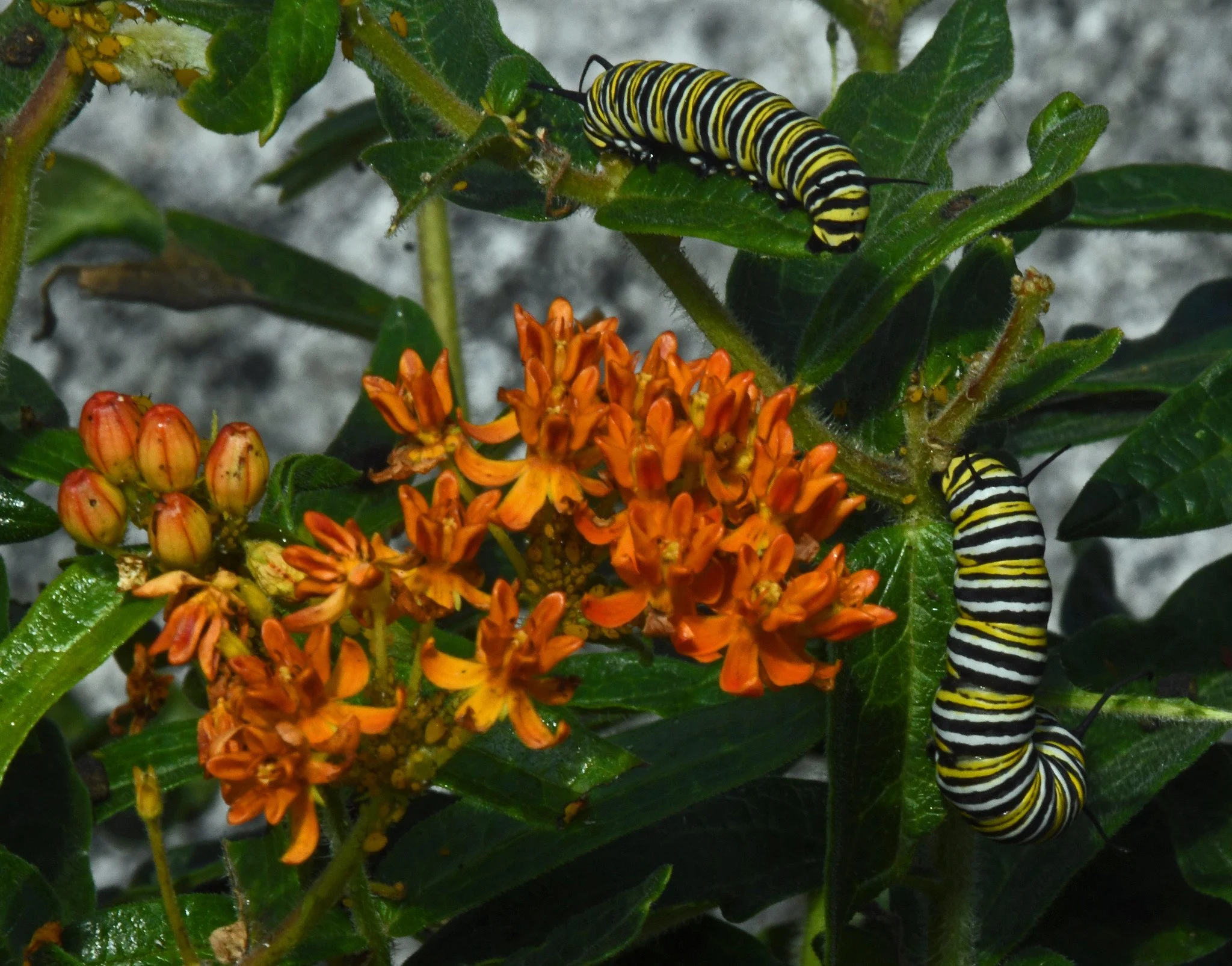
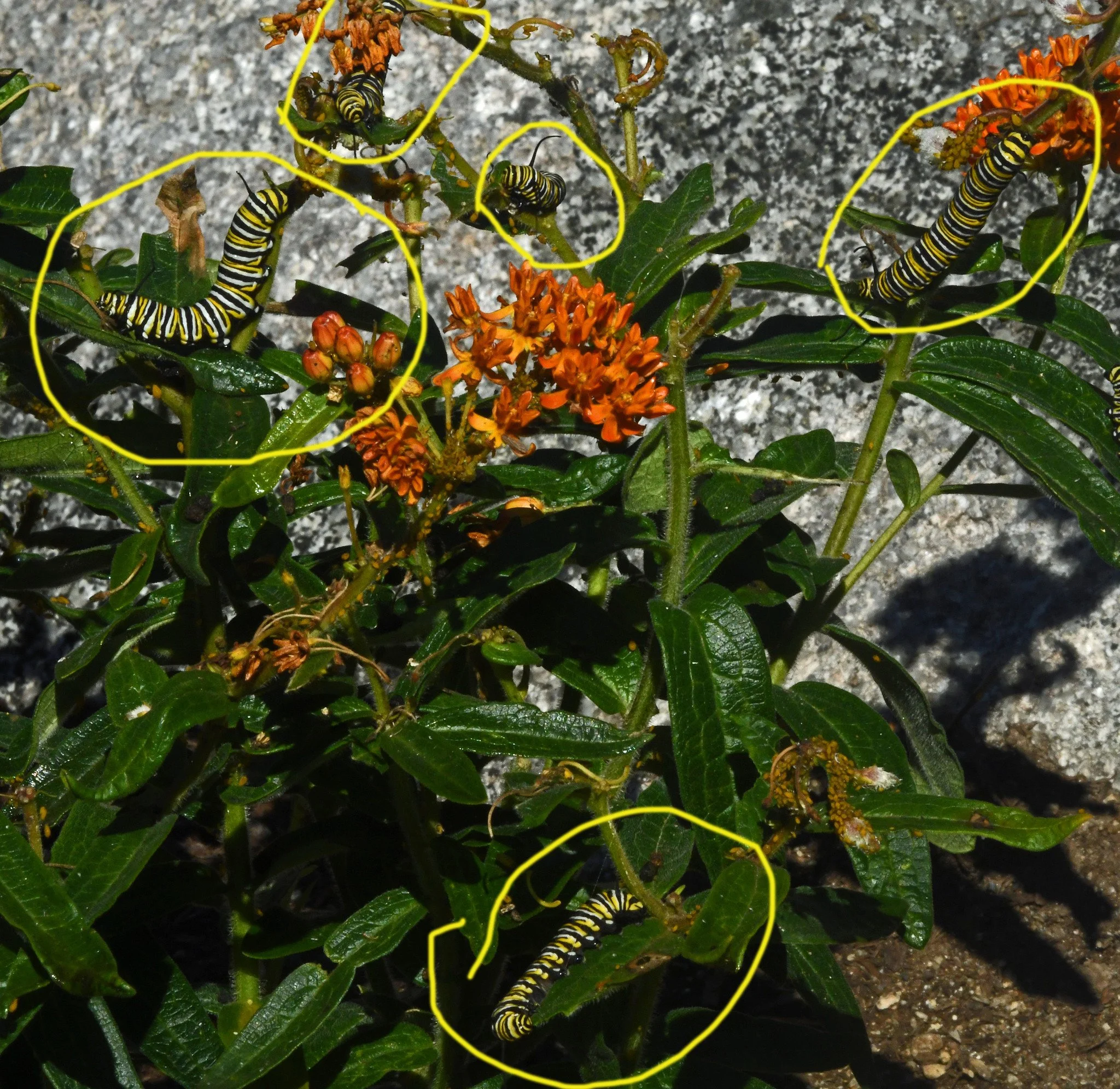
We have at least seven monarch caterpillars now munching our cultivated butterfly weed (Asclepias tuberosa), a milkweed plant that once was native to Maine, but now is listed by the state as “Potentially Extirpated.” Can yiou find at least five caterpillars in this image taken the same day on a different part of the bush?:

Answer Below

The monarch butterfly migration here usually starts in late August and September, so these little crawlies are late coming to the party. I hope that they can metamorphose into migrator butterflies and build up flight energy so they get out of Dodge before significant freezing starts here.

Fortunately, these cats grow extremely fast, taking about 9 to 14 days to develop from an egg to fully-developed caterpillar capable of transforming itself, according to the literature. In that process, they reportedly increase in size about 2000 to 3000 times during five growth stages, shedding their skins as they grow.

Given the date, these cats – if they survive – almost certainly will be in the migrating monarch butterfly generation, the last generation of monarch butterflies here in the year. The migrators are a “super generation” that mysteriously is born with special characteristics that allow them to live up to nine months, rather than the usual two to six weeks. The extra time and perhaps genetic variations allow them to complete the treacherous journey from Maine to Mexico, where the survivors usually arrive by early November. Those migrators will breed and die in Mexico and a new generation will start to migrate north in March.

It’s an incredible phenomenon for any species, no less one that is lighter than a feather and usually has a wingspan that is less than the width of a standard playing card. They travel up to 3000 miles by instinct and physical forces that we don’t understand fully yet.

(Images taken in Brooklin, Maine, on September 14 and 15, 2025.)

Comment

Comment

In the Right Place: A Life Sentence

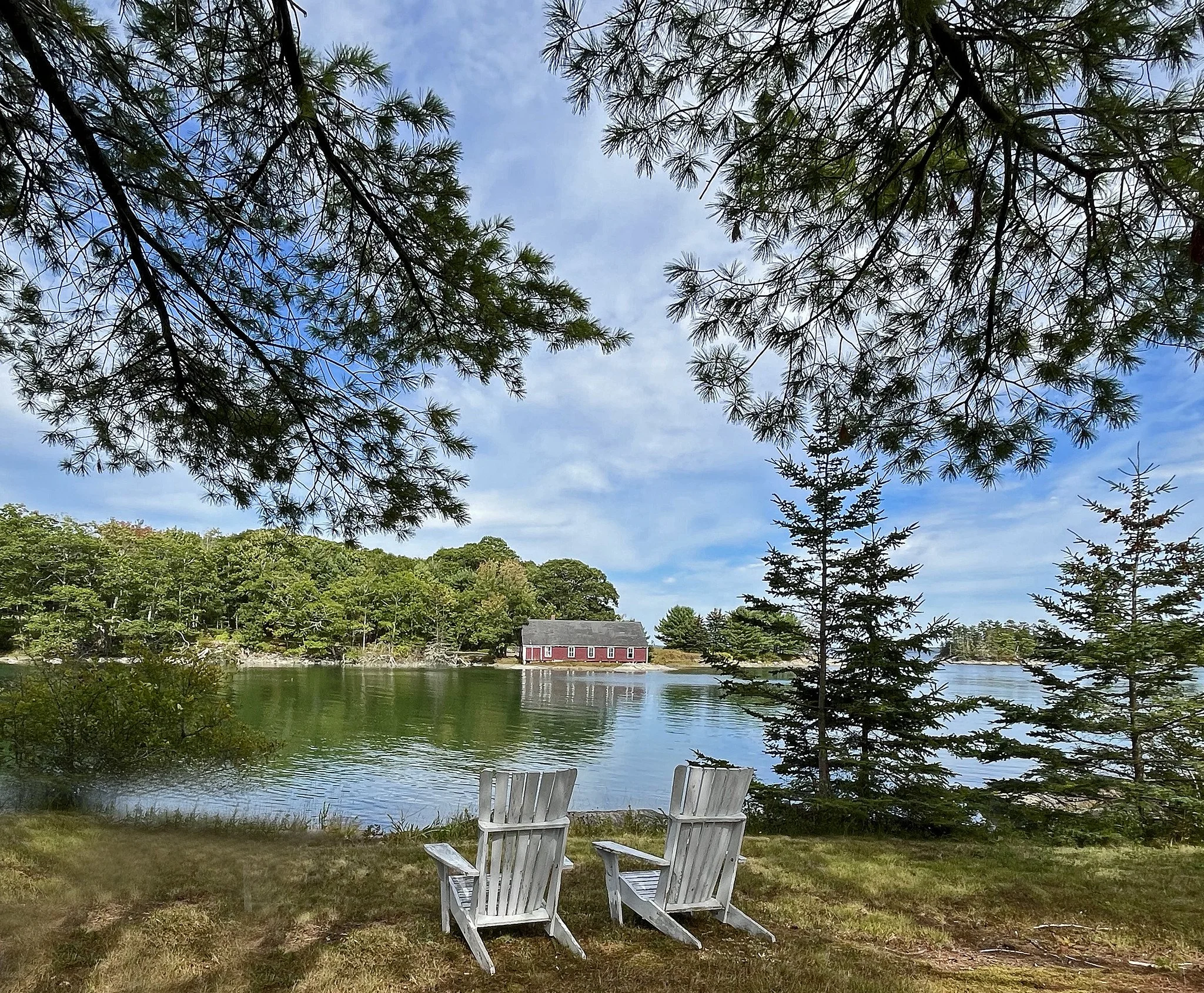
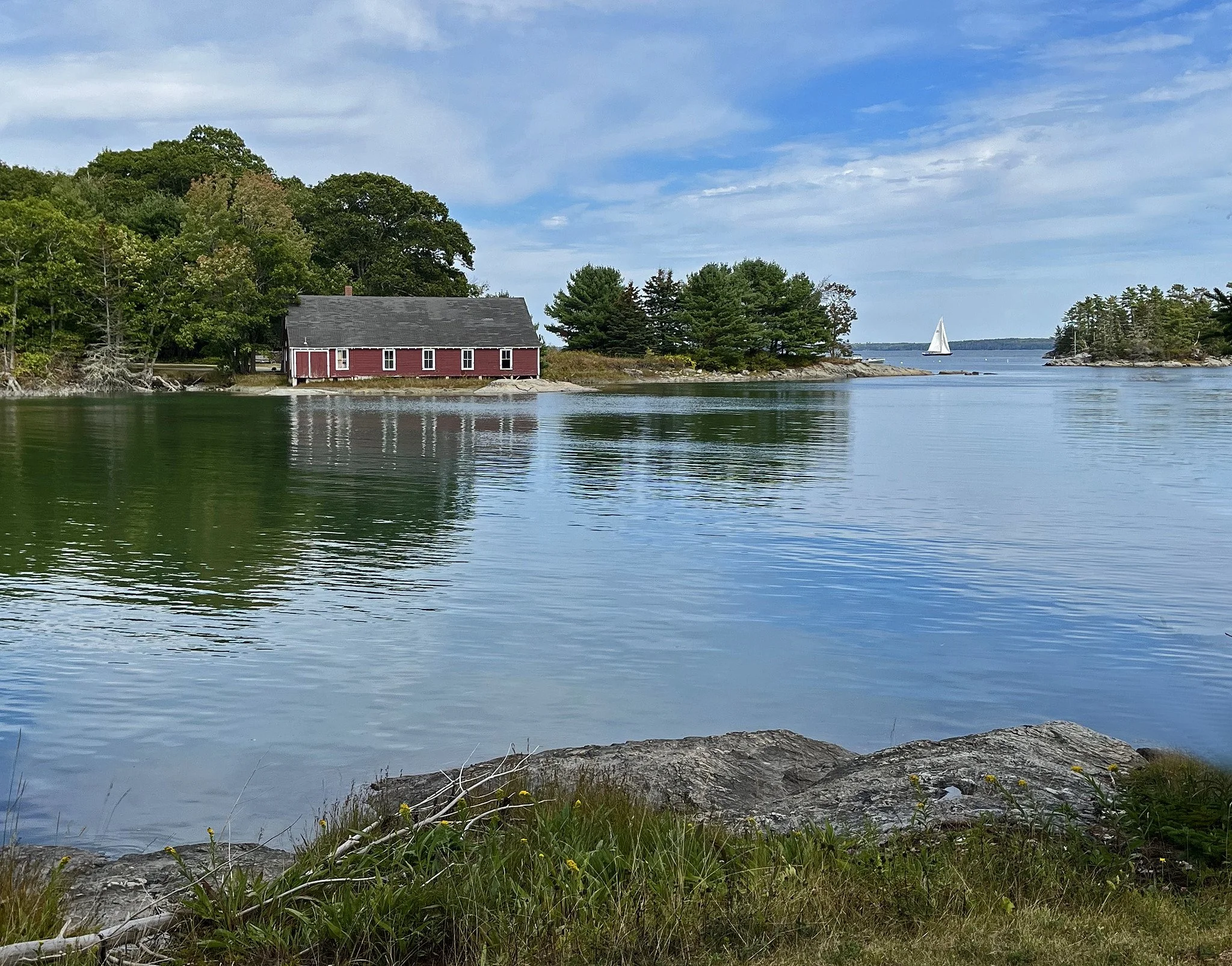
Here you see one of the many things that inspired the state slogan that appeared at our southern border: “Welcome to Maine: The Way life Should Be.” This is Conary Cove in Blue Hill, a place that is featured in these posts at least monthly. The Cove is part of Blue Hill Bay, where sailboats still play in September.:

In 2019, Governor Janet Mills replaced the "The Way Life Should Be" sign with a "Welcome Home" sign. However, there was such an outcry from Maine residents that "The Way Life Should Be" message was brought back and erected beside "Welcome Home."

When we return from out of state, it’s nice to be welcomed back and reminded of why we came back. (Images taken in Blue Hill, Maine, on September 13, 2025.)

Comment

Comment

In the Right Place: PTs’ Last Stand

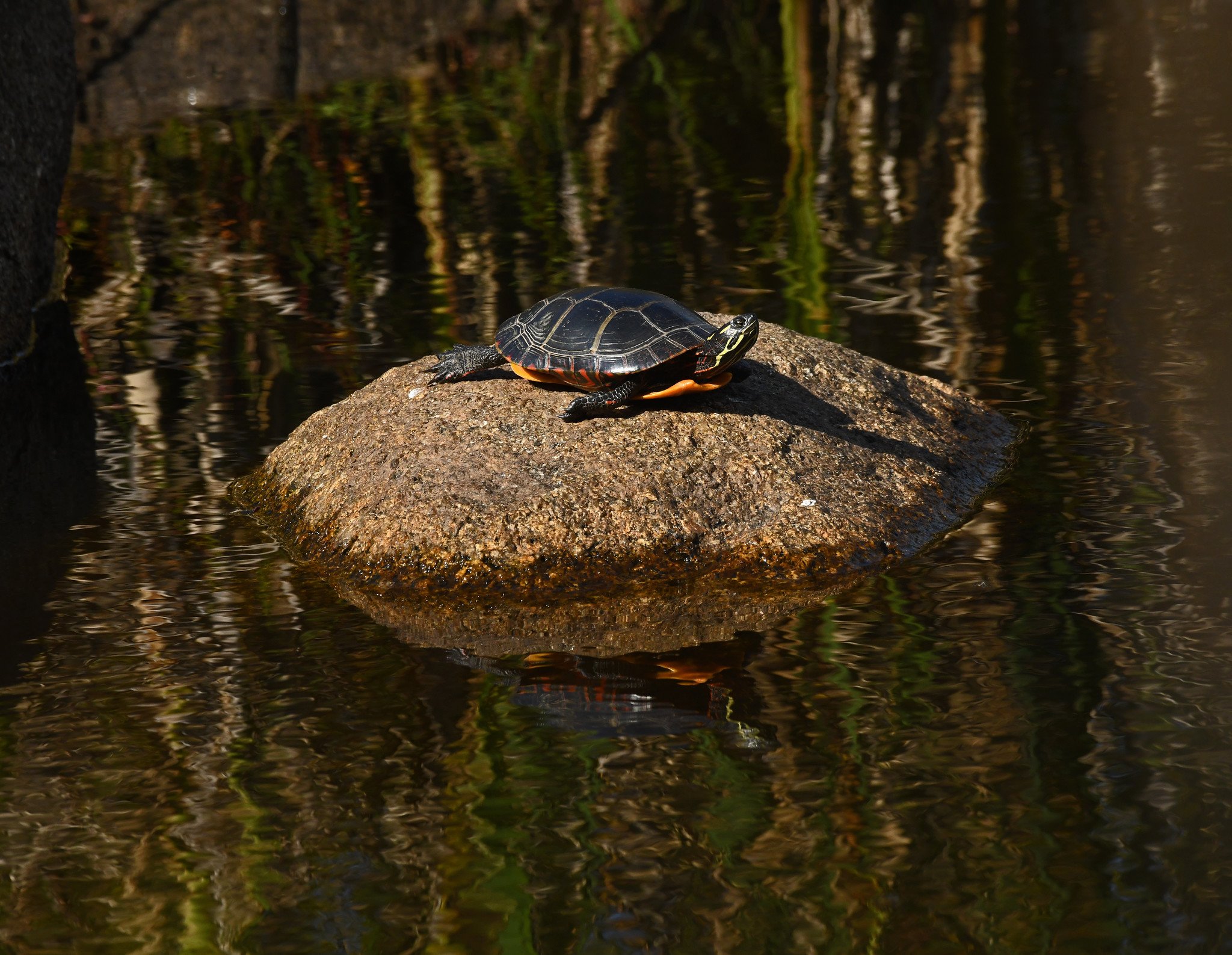
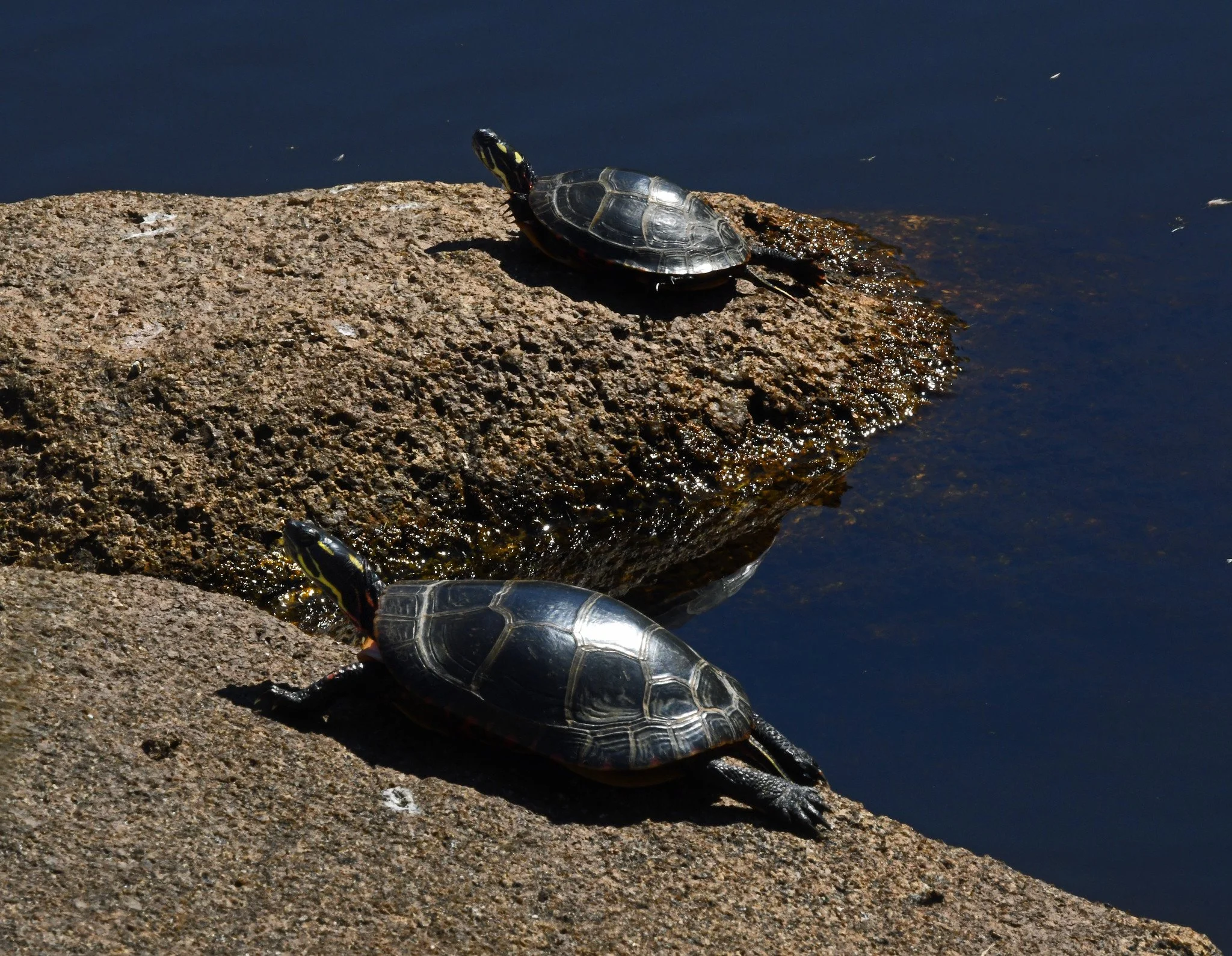
We’re down to two painted turtles regularly basking in our pond, and one of them has not been so regular lately. The rest of the bale may already have begun their dormant period a bit early. In past years, some hung around until October and, once or twice, a few stayed above water into November.

PTs winter at the bottoms of ponds and lakes, dug into the mud and sediment. They don’t go into hibernation, but they do slow down their metabolism dramatically. In this “brumation” state, they reportedly can tolerate periods of regularly breathing little or no oxygen, but they apparently do absorb some of the oxygen in the water through their skin.

They usually emerge here in April, but occasionally some eager PTs will come up in March for an early start to the spring and summer. (Images taken in Brooklin, Maine, on September 10 and 12, 2025.)

Comment

Comment

In the Right Place: Feeling Kinda Jumpy

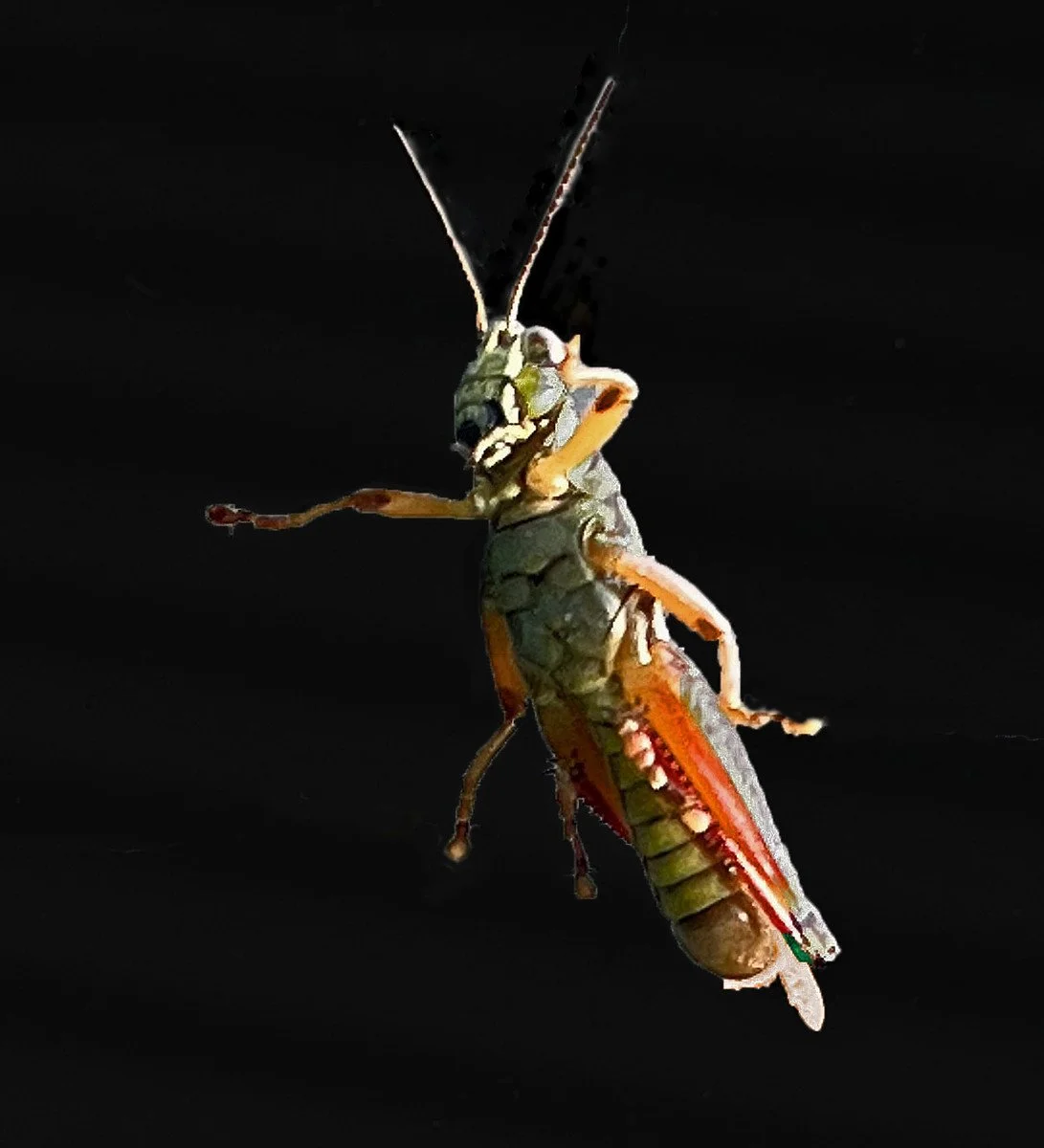
Maine has 35 species of grasshoppers, according to the Maine Entomological Society. I find identifying our hoppers very difficult and photographing them in action almost impossible.

I would love to be able to boast that this image shows a grasshopper hopping at me. However, it wasn’t hopping – it landed on my windshield as I was driving off-road; I stopped, took out my iPhone and snapped an image of it from the driver’s seat; later, I took out the background (and the dirt on the windshield) while editing. I think it’s a red-legged grasshopper (Melanoplus femurrubrum).

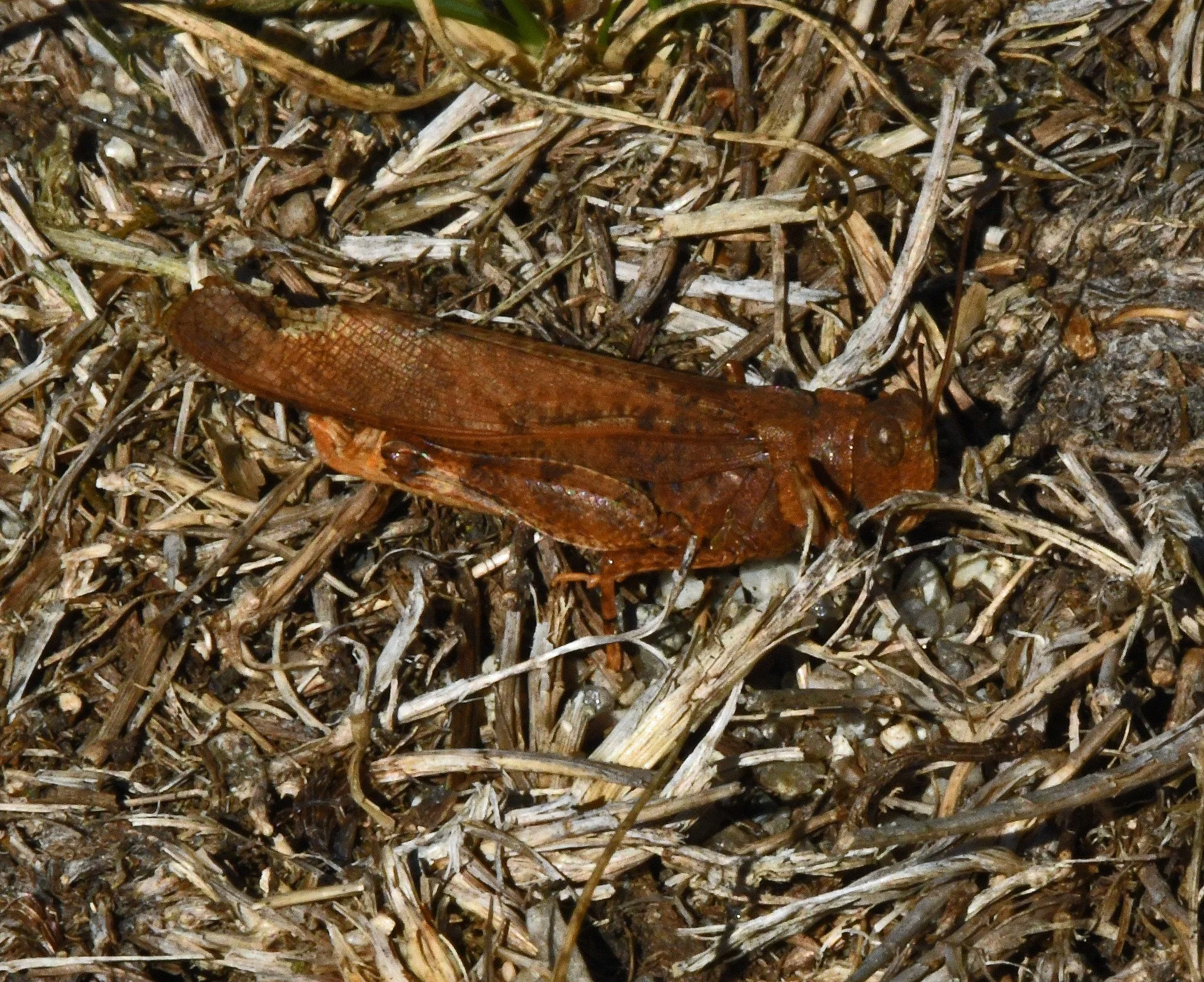
In doing some research, it appears that one of the frequently-asked insect questions is “What is the difference between grasshoppers and locusts?” It turns out that there is no difference: locusts are short-horned grasshoppers that have the special ability to transform from loners like other grasshoppers into swarmers that get together for protection when they’re under stress and have to migrate. Scarcity of food or loss of habitat can cause them to swarm.

I think that’s a Carolina locust (Dissosteira carolina) above; you’ll have to look closely for the short horns. (Images taken in Brooklin, Maine, on September 10 [red-leg?] and 12 [locust?], 2025.)

Comment

Comment

In the Right Place: Uh-Oh?

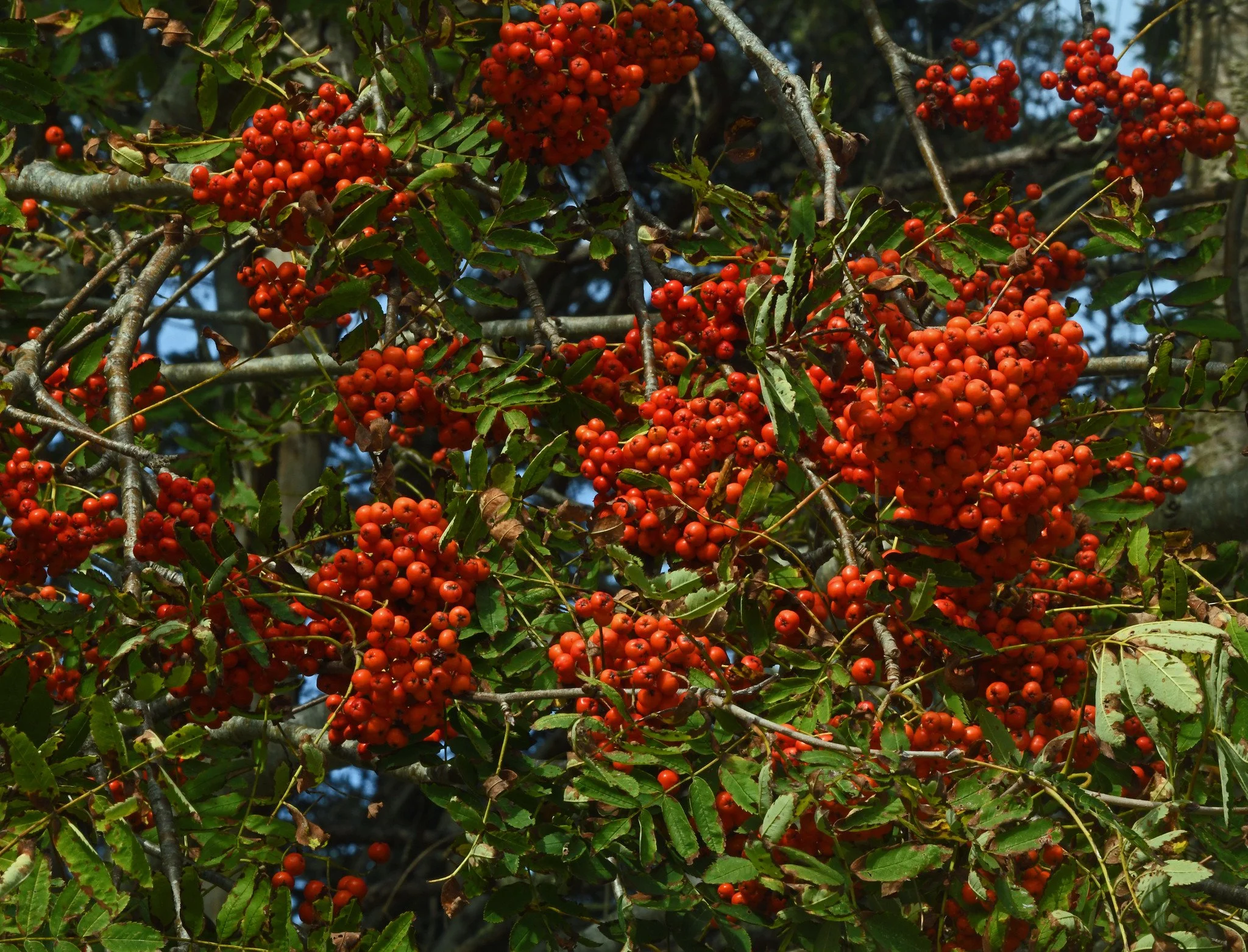
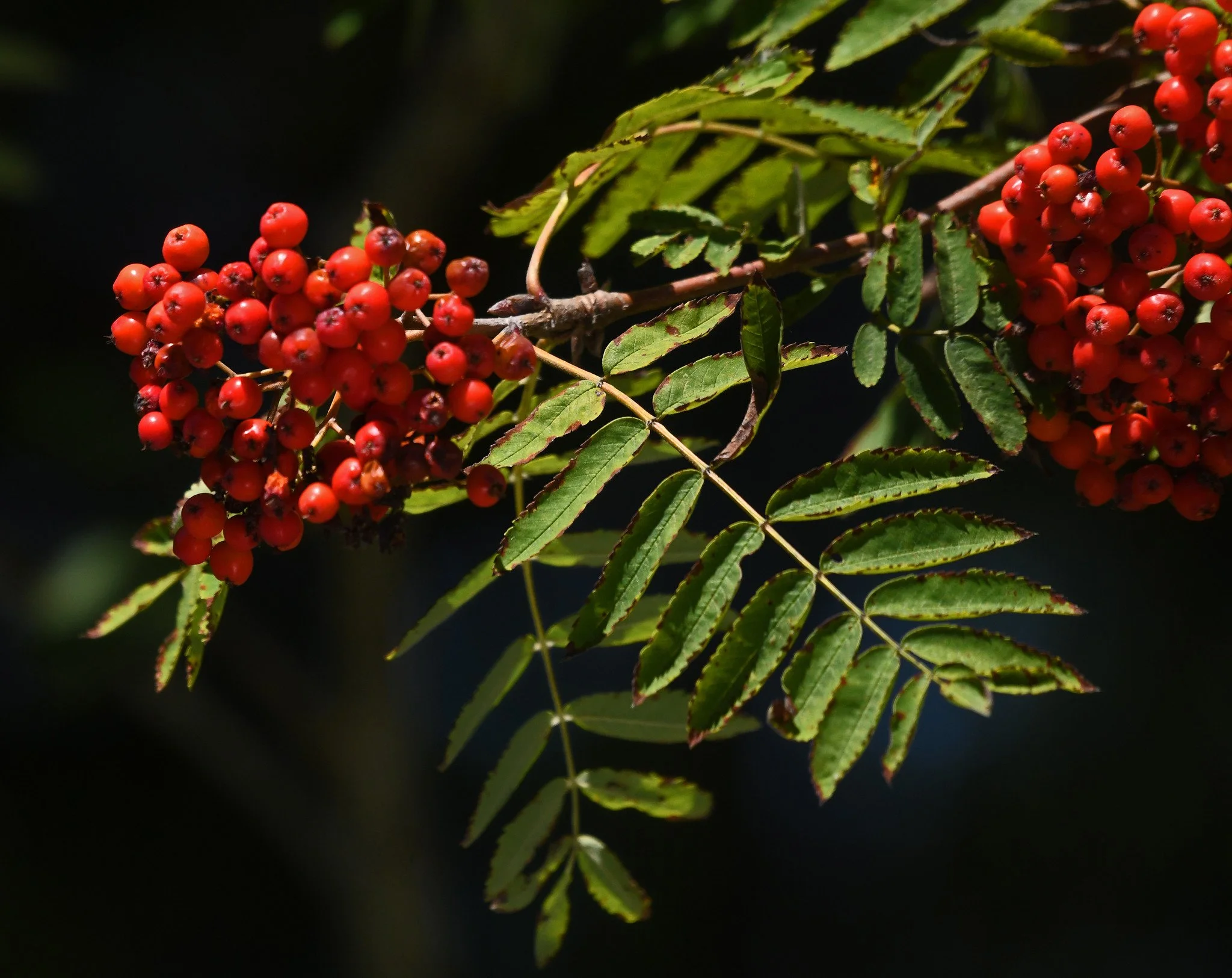
As you see, our American mountain ash trees (aka American rowan trees) have been bursting out all over with berries this fall.   According to a popular folktale, an abundance of berries on these trees means a severe winter is coming because the trees sense the future weather and have evolved to provide extra food for birds and other wildlife.

I hate to upset anyone who believes in such helpful compassion of trees, but mountain ashes actually are very poor predictors of the weather, according to the scientific literature. The usual cause of a big crop of berries on these trees reportedly has to do with the good past, not the bad future. When the previous spring had adequate moisture (rain, fog, etc.) and the summer had plenty of sun, these trees often produce a bumper crop of berries, according to researchers.

Curiously, we’ve been suffering from severe drought this summer and fall, but the mountain ashes don’t seem to be worried about that either. (Images taken in Brooklin, Maine, on September 10, 2025.)

Comment

Comment

In the Right Place: Admirable Admirals

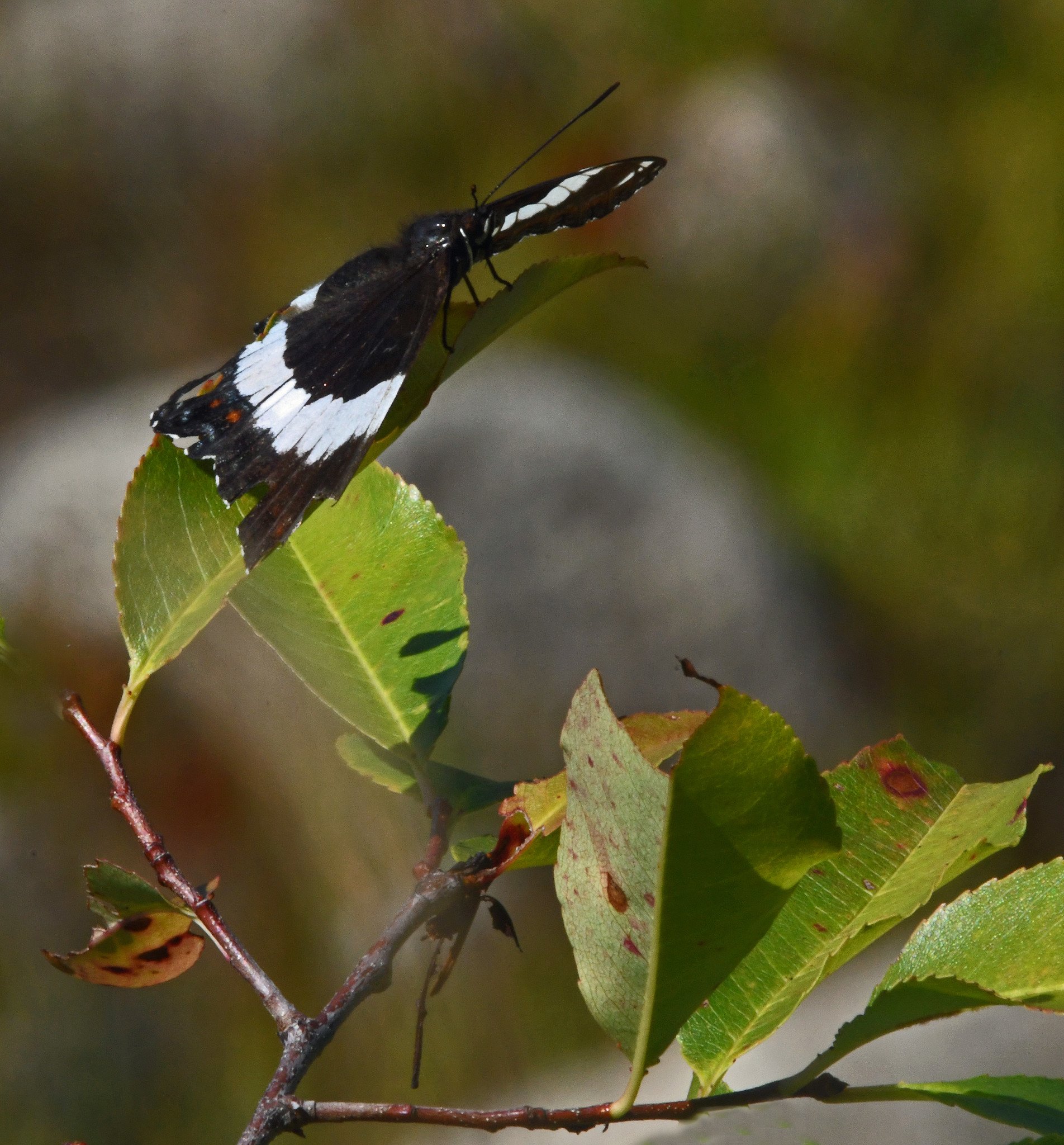
Butterflies don’t have nursing homes to go to when they’re old and dying; most end their short lives in public disarray. Here you see a deteriorating, previously beautiful white admiral butterfly trying to get enough energy to live a few more days. Its reported lifespan is only 6 to 14 days, if it survives predators.

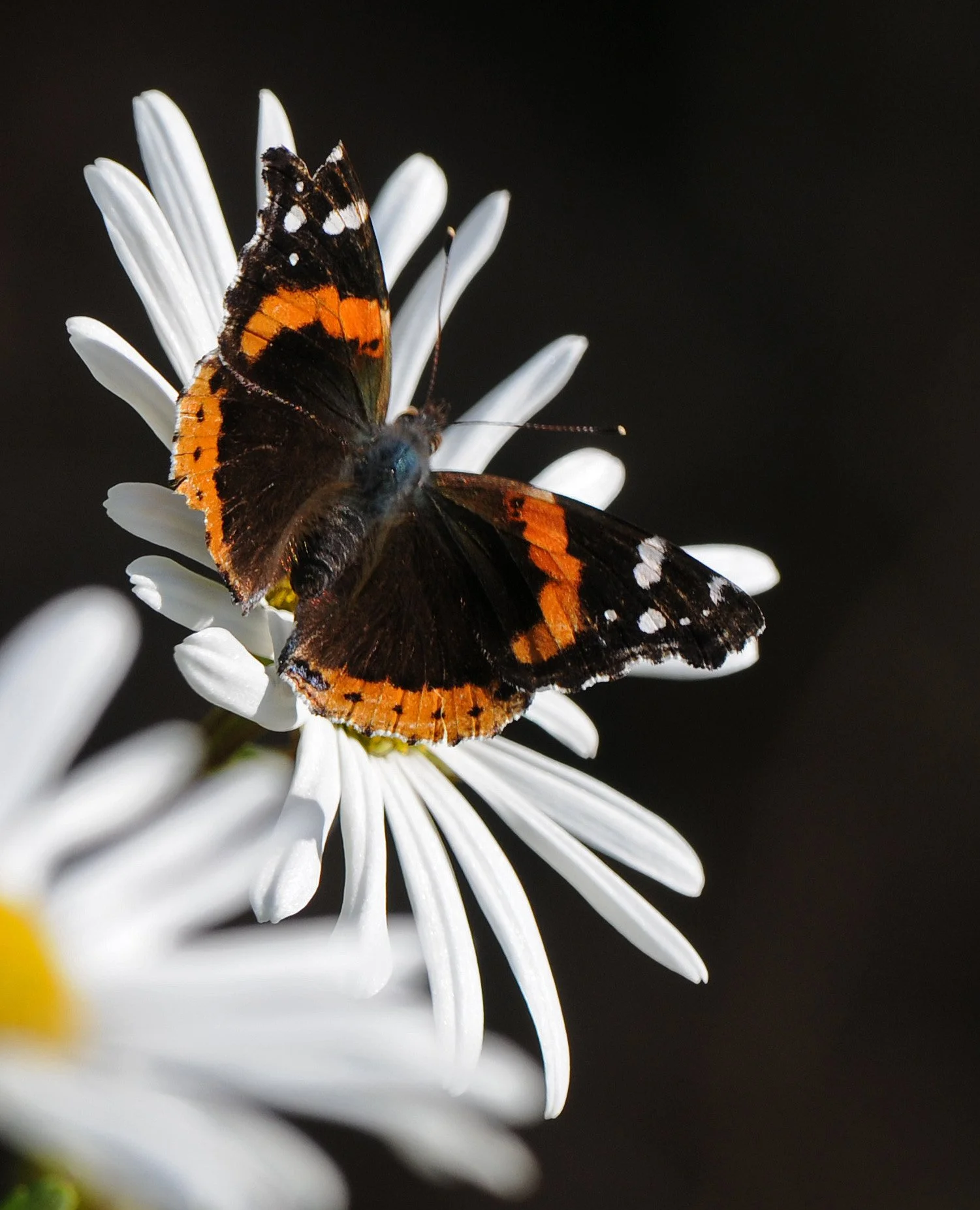
There are two common admiral butterflies here, but they are distinctly different species: the white admirals (Limenitis arthemis arthemis) and the red admirals (Vanessa atalanta). Here’s a Leighton Archive image of a red:

Why these insects are called “admirals” is not clear. Goggle and AI searches revealed only this theory: “The ‘admiral’ designation likely comes from the stately, commanding appearance of these butterflies, giving them a regal, ‘admiral-like’ presence.” My guess is that it’s more likely they were named “admiral” because they both have broad, characterizing bands on their wings, arguably similar to the broad insignia braids on Navy admirals’ dress uniform sleeves.

(Images taken in Brooklin, Maine; white admiral image taken September 4, 2025.)

Comment

Comment

In the Right Place: Windjammer Watch XV

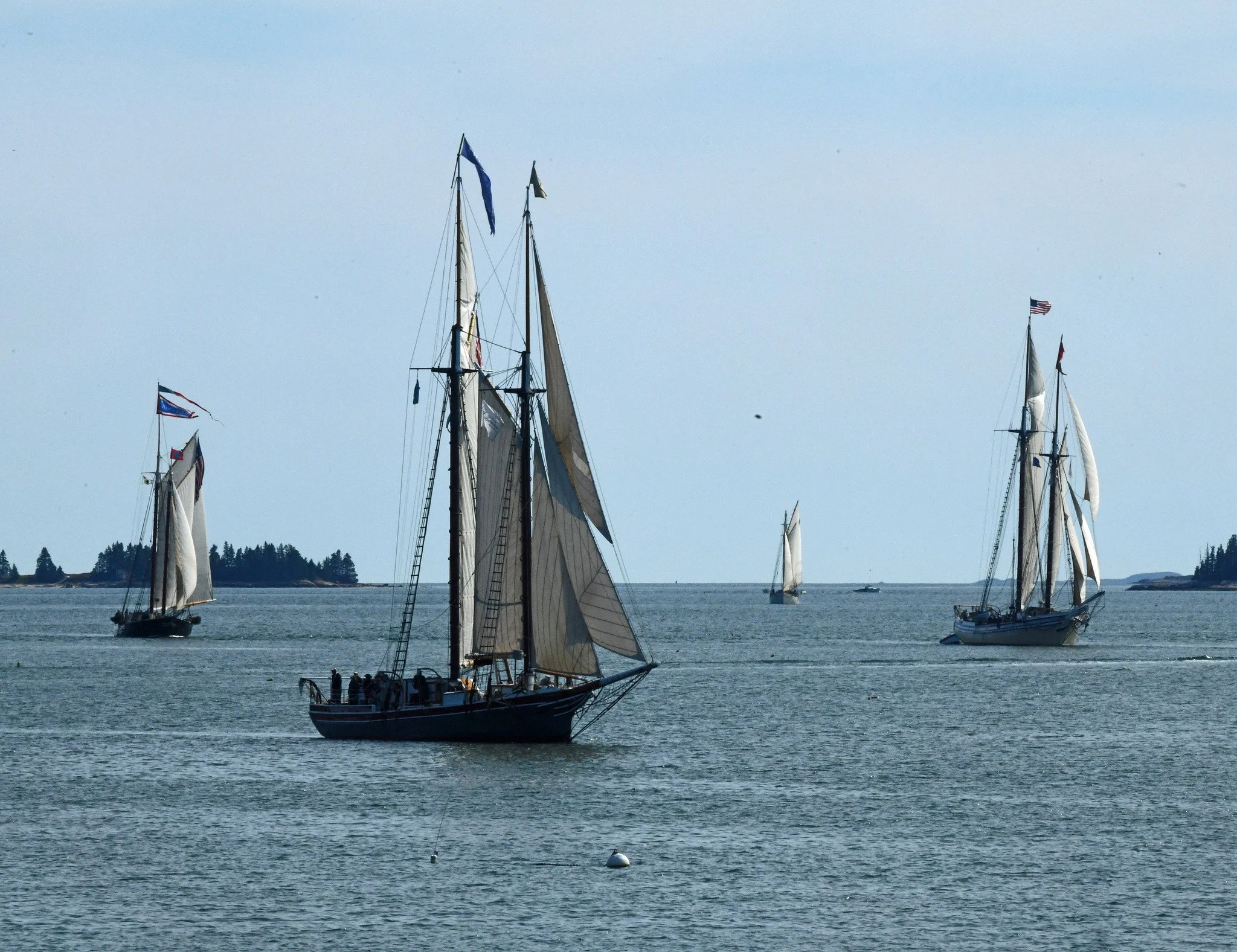
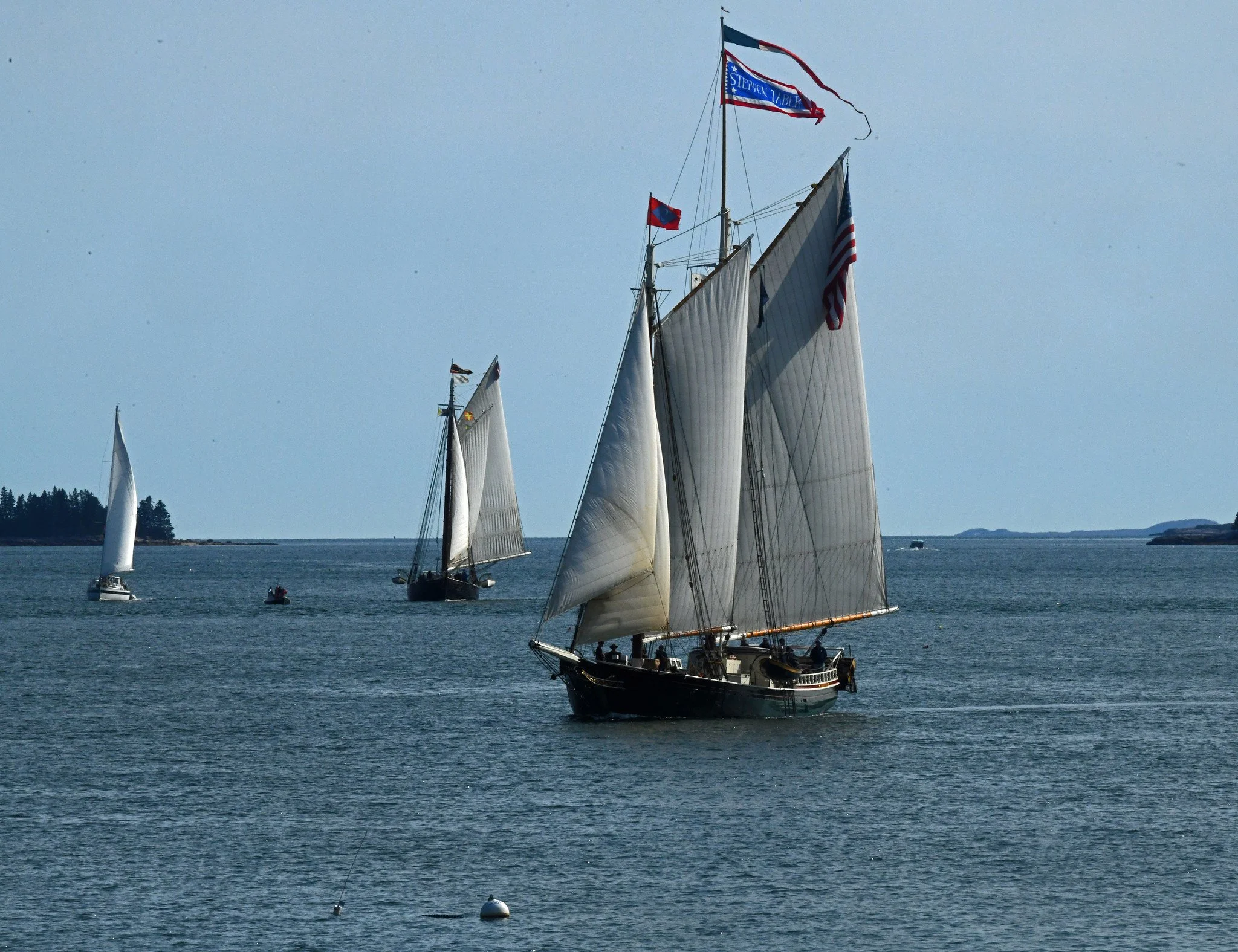
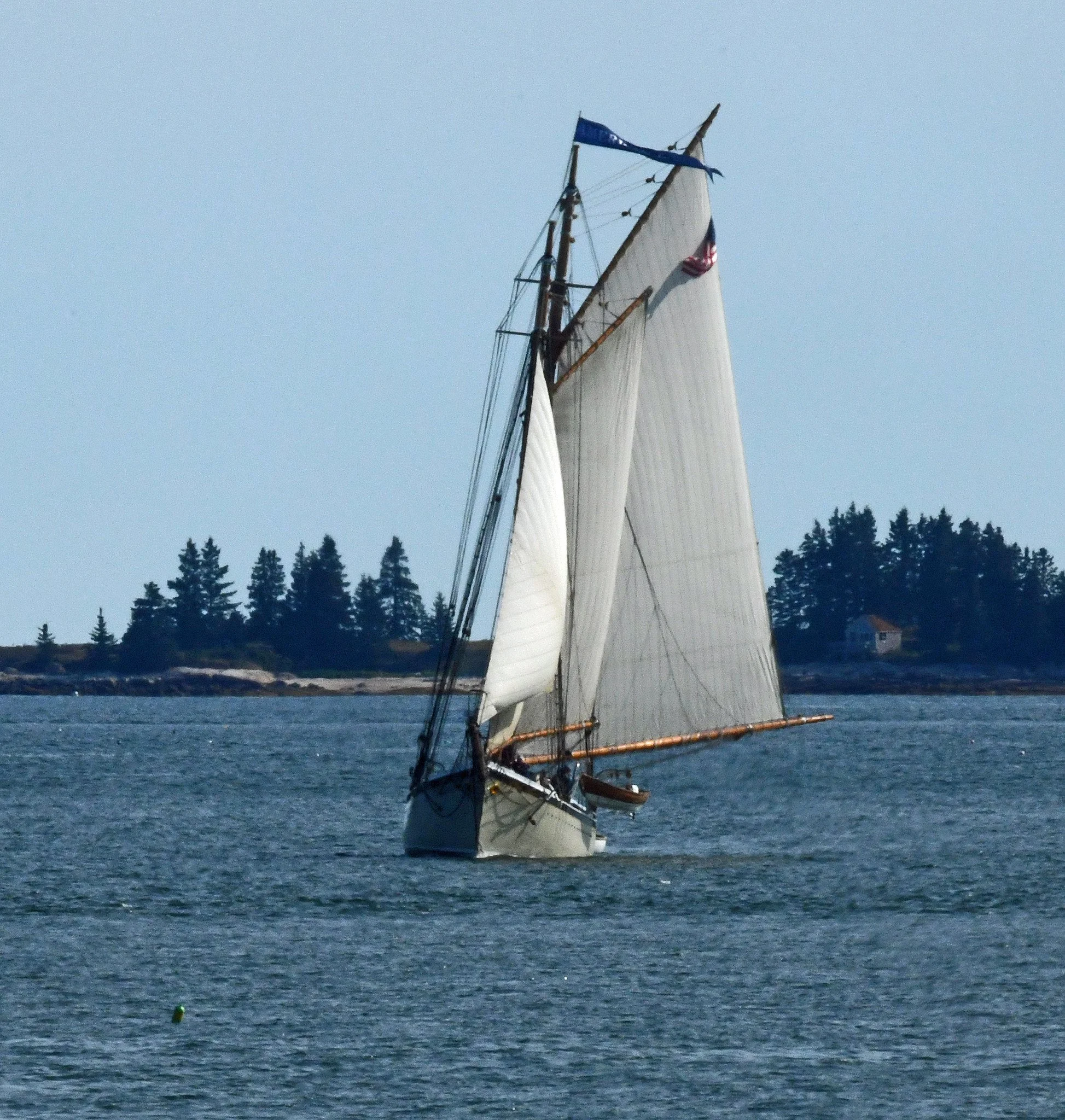
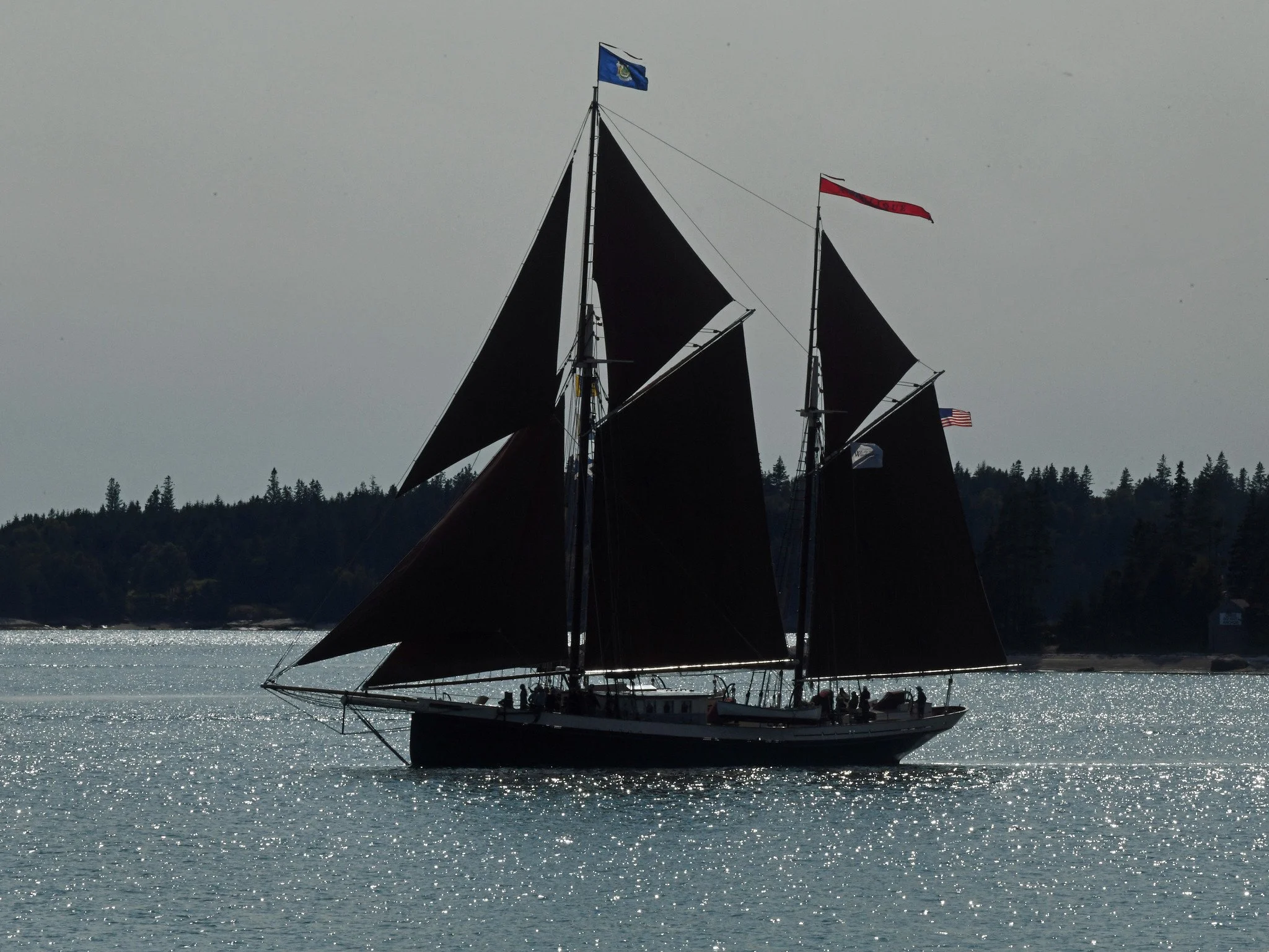
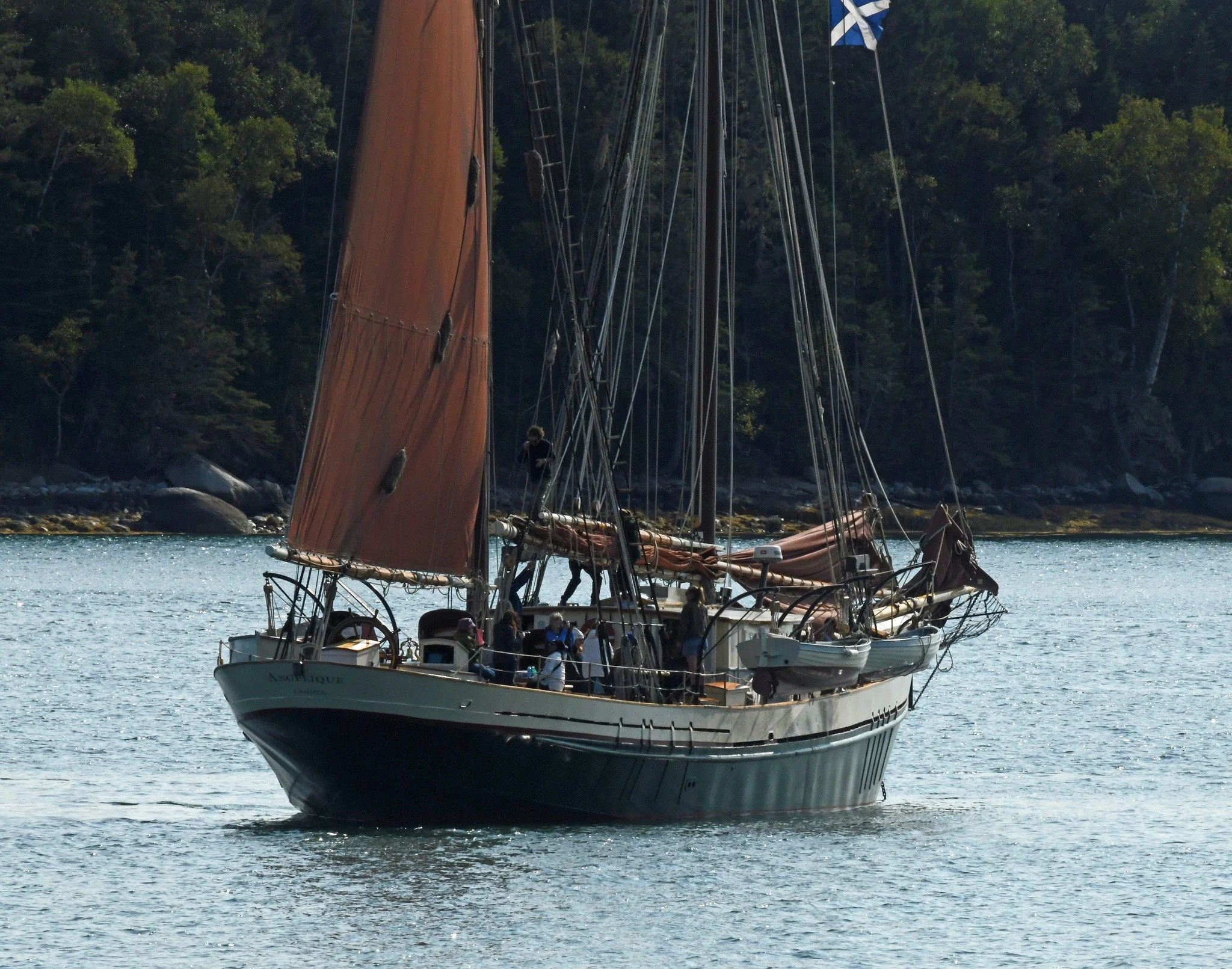
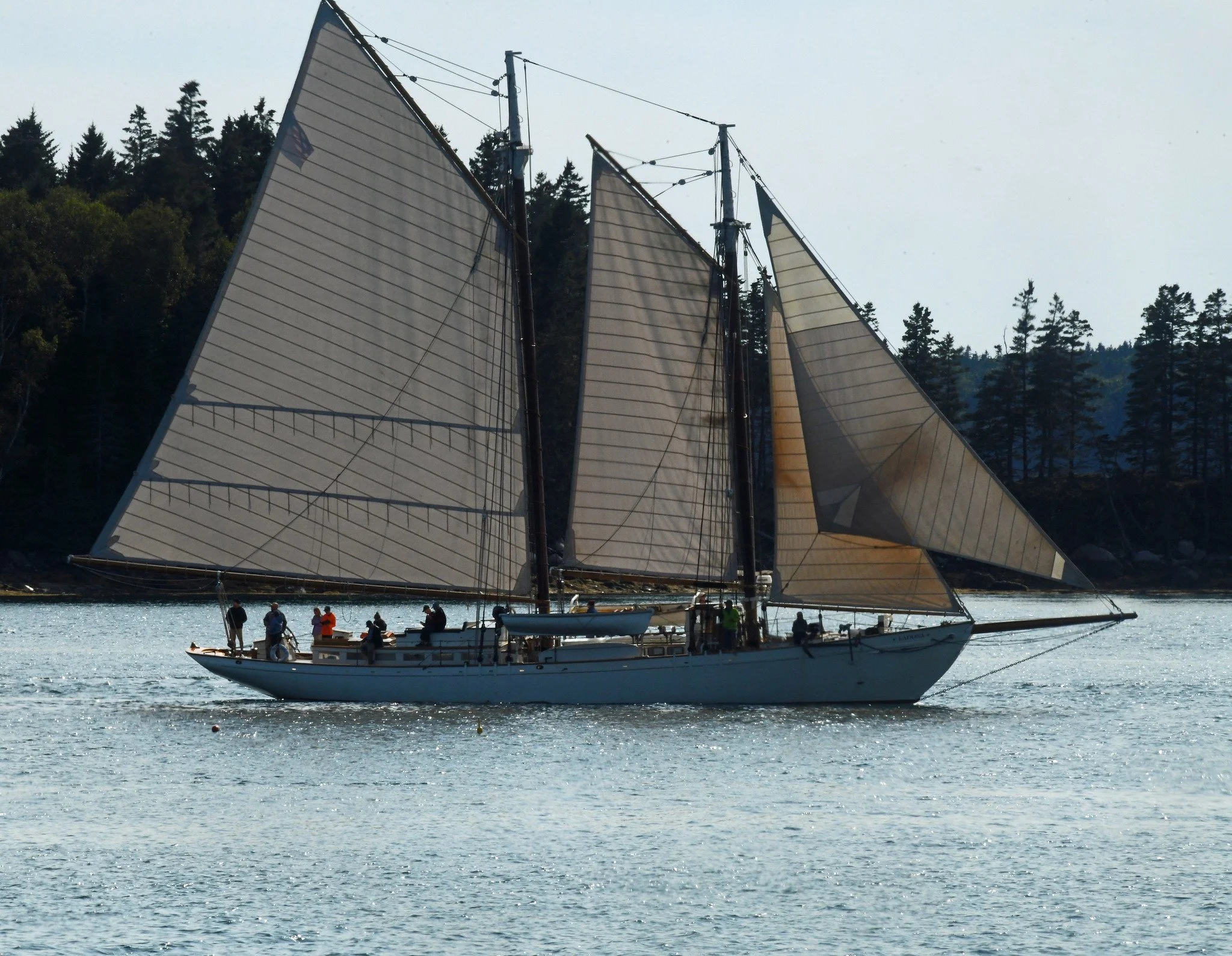
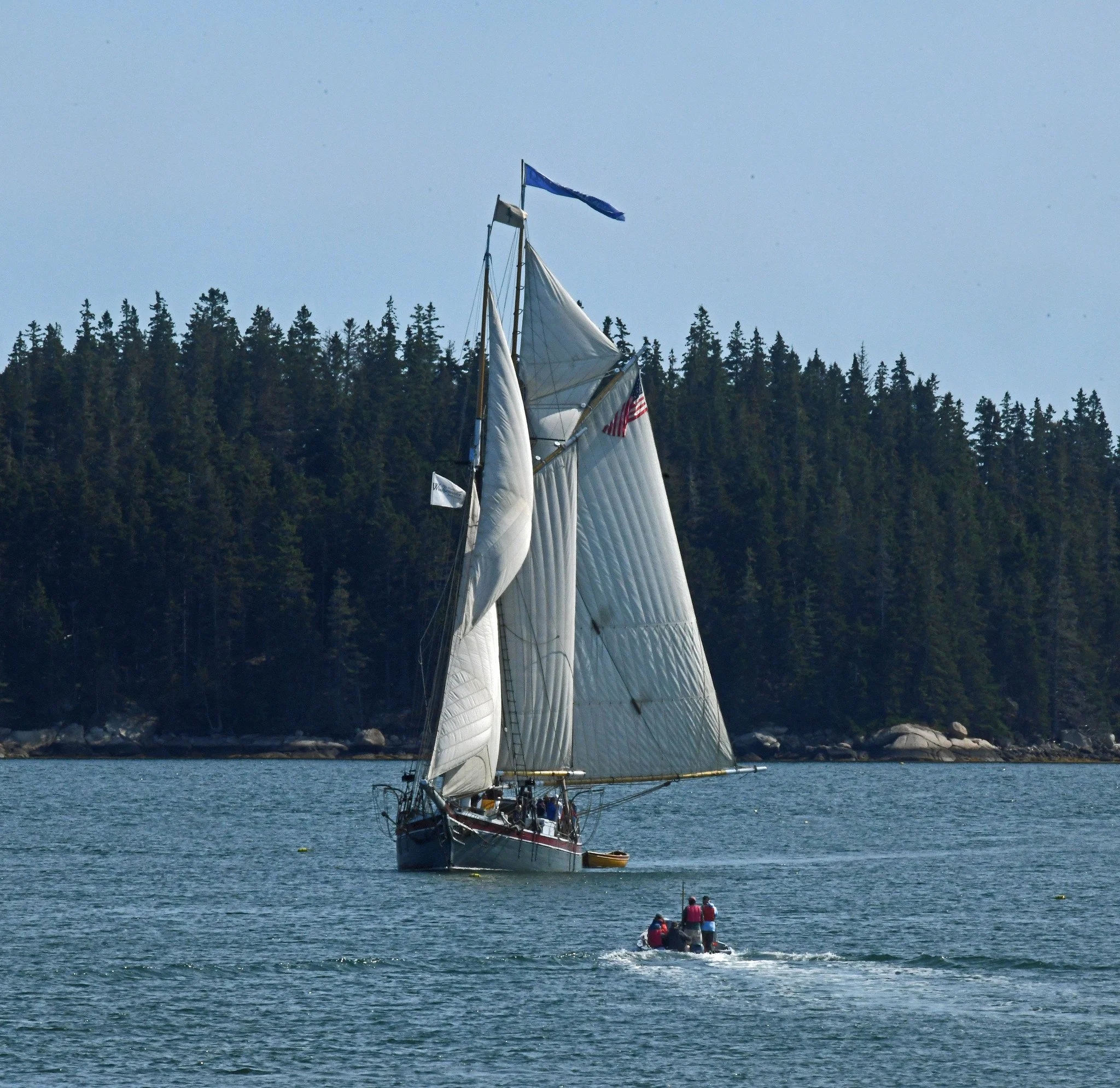
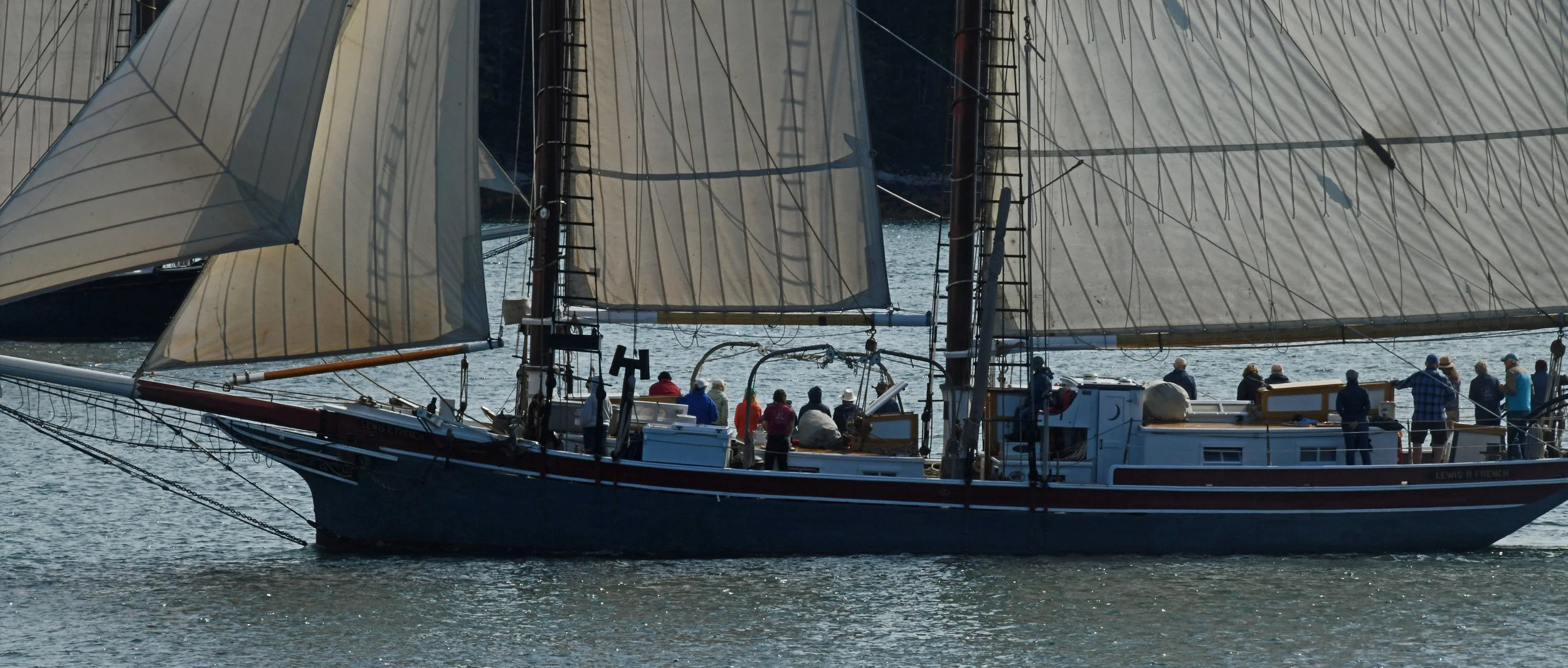
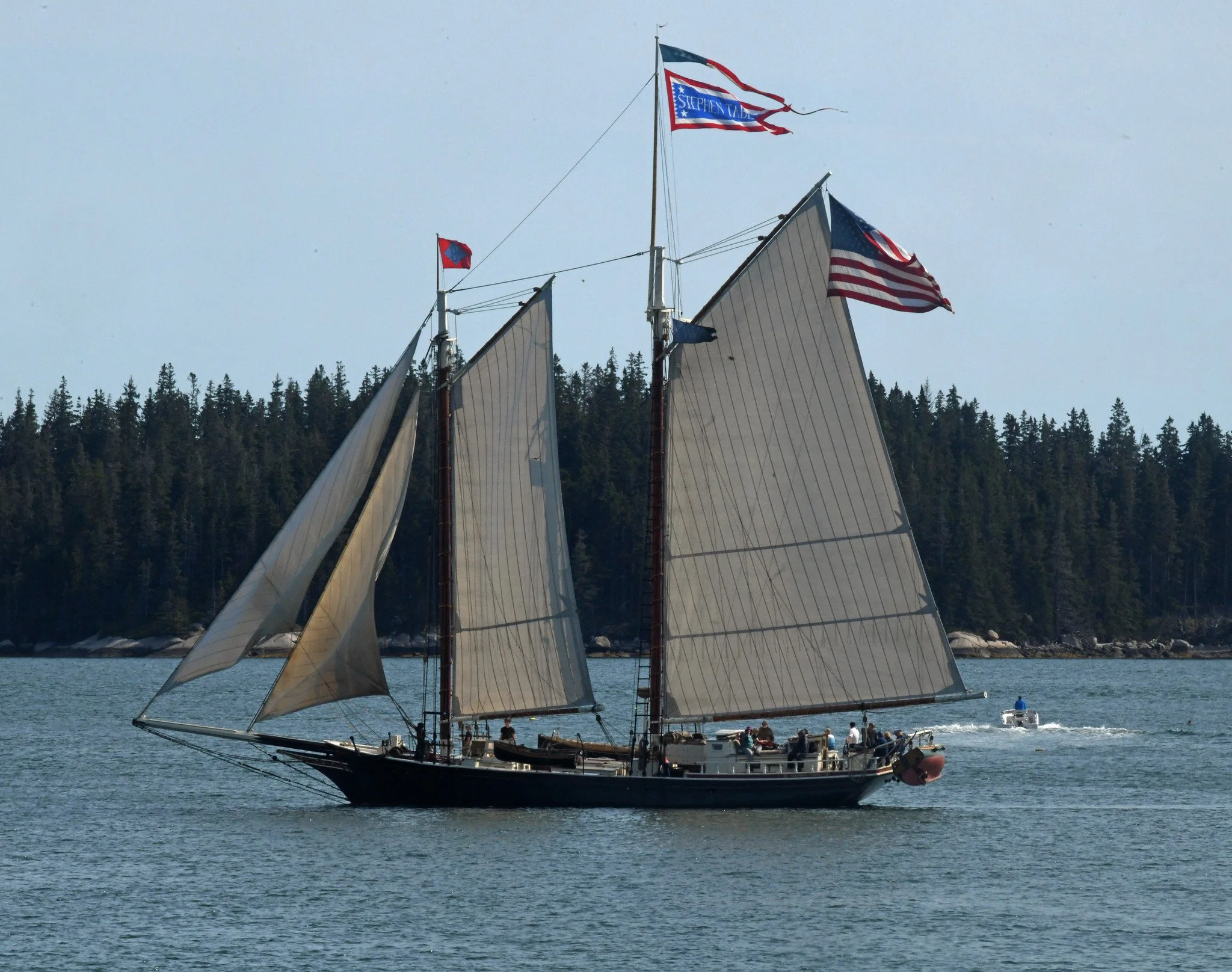
The annual WoodenBoat-Windjammer Rendez-Vous took place yesterday afternoon. Nine ‘jammers soared into Great Cove under full sail and paraded (well, meandered in all directions) in the sun and afternoon shadows. It was a spectacular sight for viewers and apparently fun for the vessels’ passengers, who later enjoyed refreshments and live music. 

Below, you’ll see some of these coastal cruisers coming into the Cove. For locals: See if you can identify them. (Identities will be provided later.)

The individual windjammer visiters and their age, overall lengths, and homeports:

American Eagle: Launched in 1930, 123 Feet, Camden, Maine

Angeligue: Launched in 1980, 130 Feet, Camden, Maine

IAngelique

Captain Franj Swift (AKA Swift): Launched in 1983, 753 Feet, Camden, Maine

Grace Bailey: Launched in 1882, 118 Feet, Camden, Maine

Grace Bailey

Heritage: Launched in 1983, 145 Feet, Rockland, Maine

Heritage

J&E Riggin: Launched in 1927, 120 Feet, Rockport, Maine

Ladona: Launched in 1922, 105 Feet, Rockland, Maine

Ladona

Lewis R. French: Launched in 1871, 101 Feet, Camden, Maine

Lewis R. French

Stephem Taber: Launched in 1871, 110 Feet, Rockland, Maine

Stephen Taber

This event, sometimes called the Wooden Boat Sail-In, is the cruising season’s last convocation of multiple vessels in the fleet. However, the vessels will continue to explore the coast individually into the fall.

(Images taken in Brooklin, Maine, on September 9, 2025.)

Comment

Comment

In the Right Place: Loudmouths

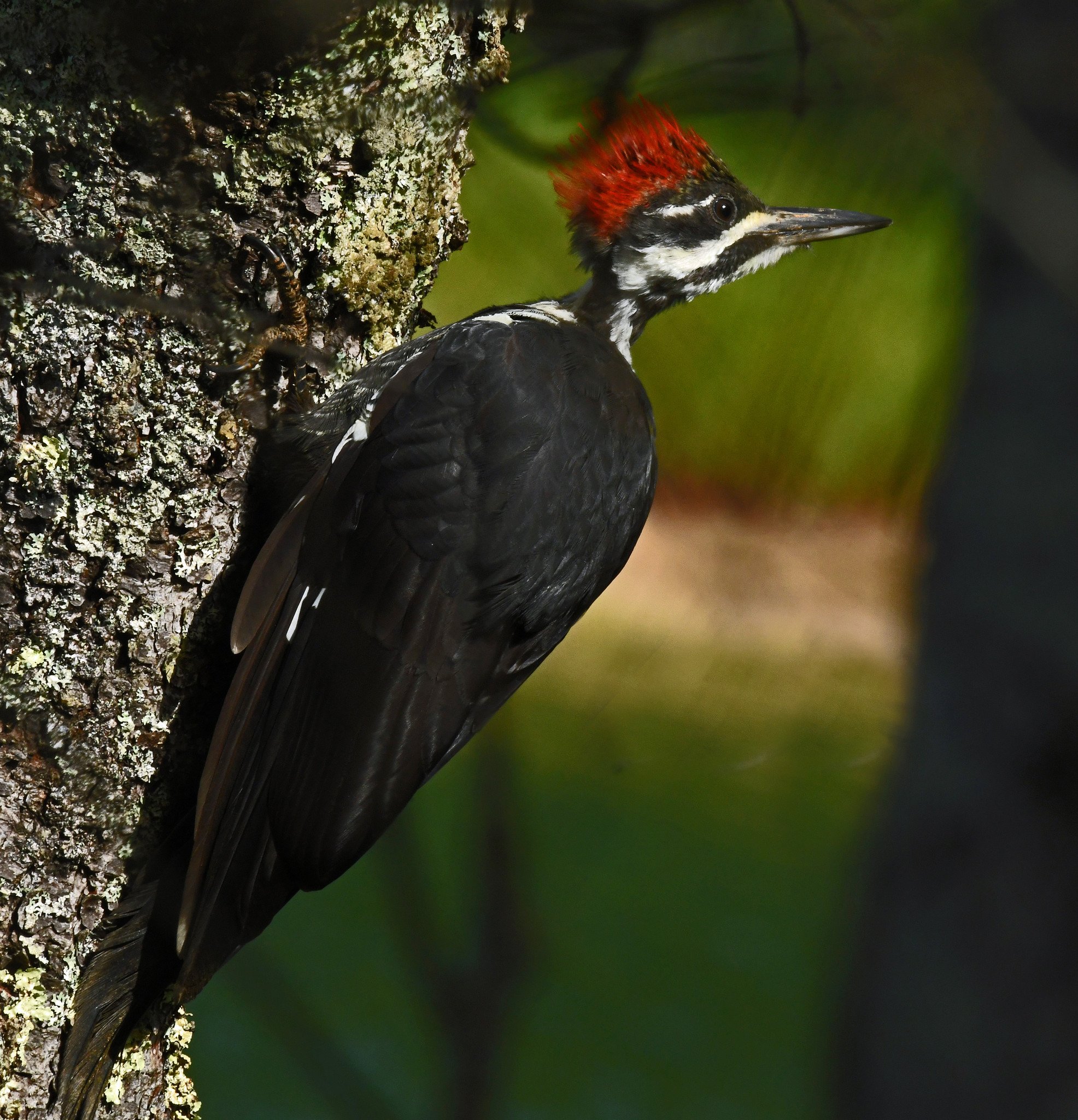
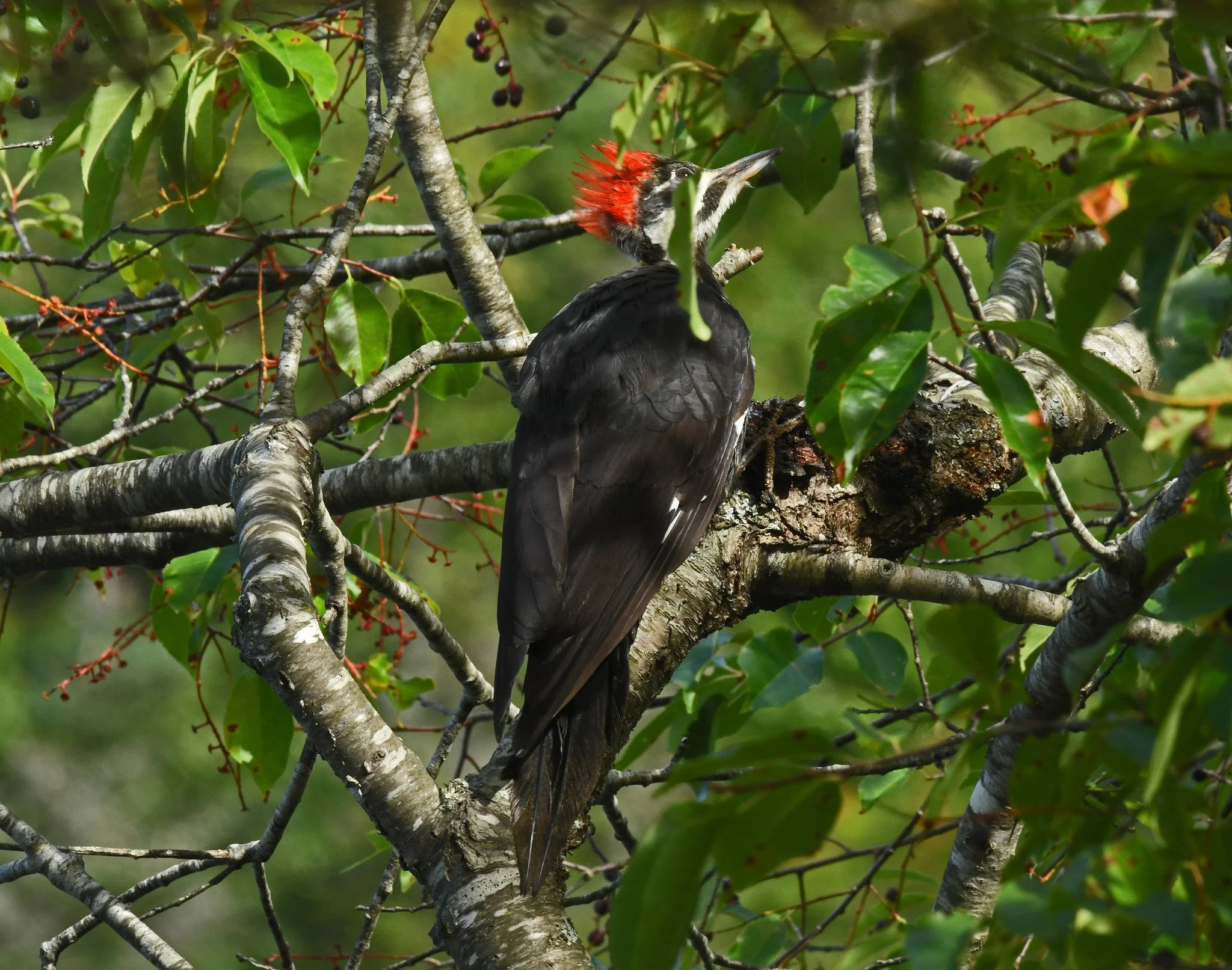
This young piliated woodpecker flashed onto that conifer trunk yesterday, eyeing its neighbor, a large tangle of what I guess to be black chokeberries. She immediately sprang into that tangle, gave a loud series of witch’s cackles, and began gobbling berries as if she were in a hot dog eating contest at the county fair. After five minutes of gorging herself, she was gone and so were many berries.

Piliated woodpeckers mostly eat insects, especially carpenter ants and wood-boring beetle larvae. But they supplement their crawly diet with easier-to- obtain fruits and nuts and, sometimes, feeder suet when they can get it without getting too close to humans. They’re our largest woodpeckers here in Maine, and can grow up to 16 inches long with an impressive 30-inch wingspan

They’re also excitable and loud, maybe our loudest wild animal except for the coyote on a good night. These birds uncover insects by pounding viciously into dead wood with their strong beaks, often sounding like a jackhammers. When paired up, they frequently cackle loudly to each other as they work different trees. They can sound like flickers on steroids. (Images taken in Brooklin, Maine, on September 8, 2025.)

Comment

Comment

In the Right Place: Corny

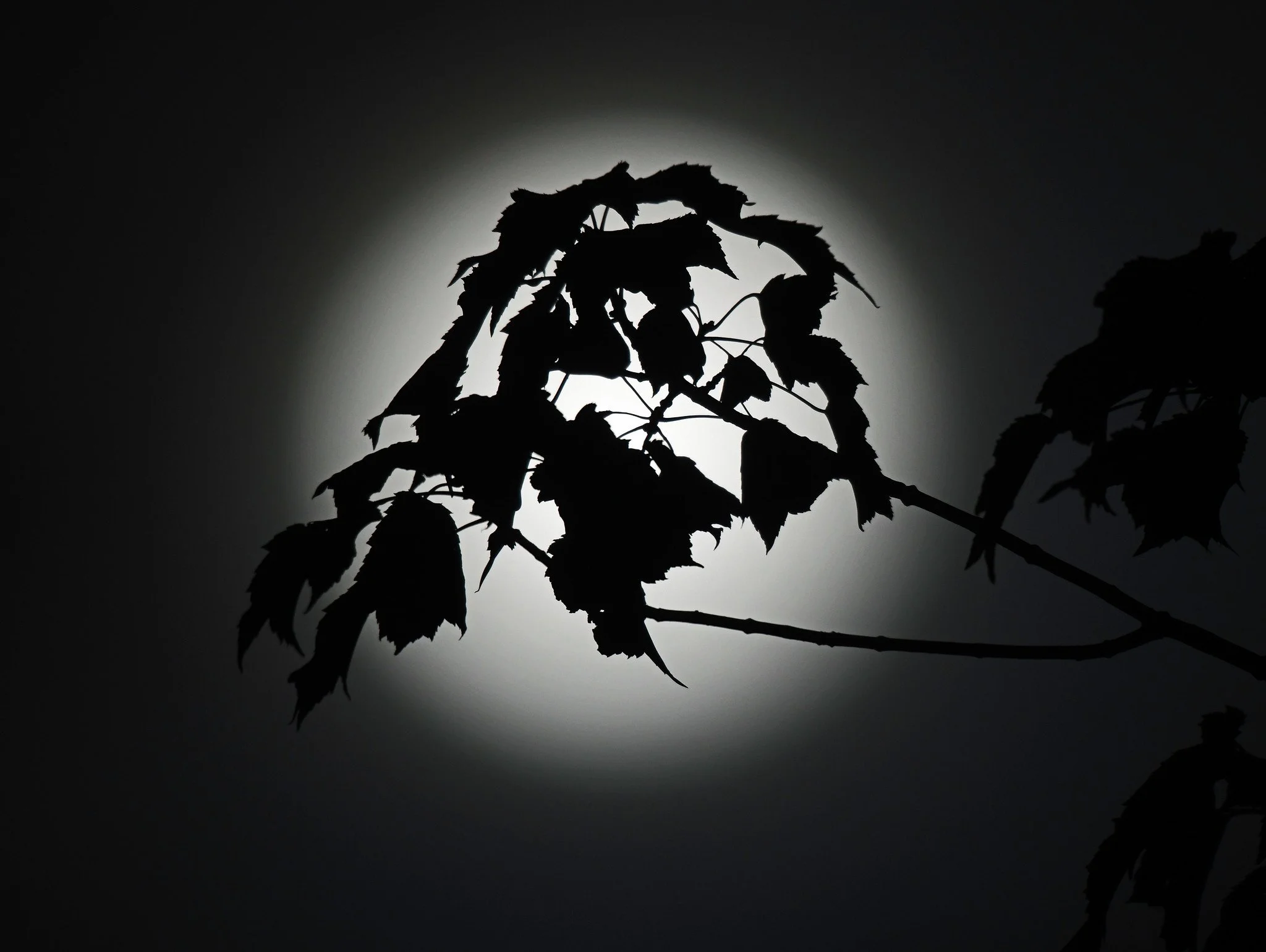
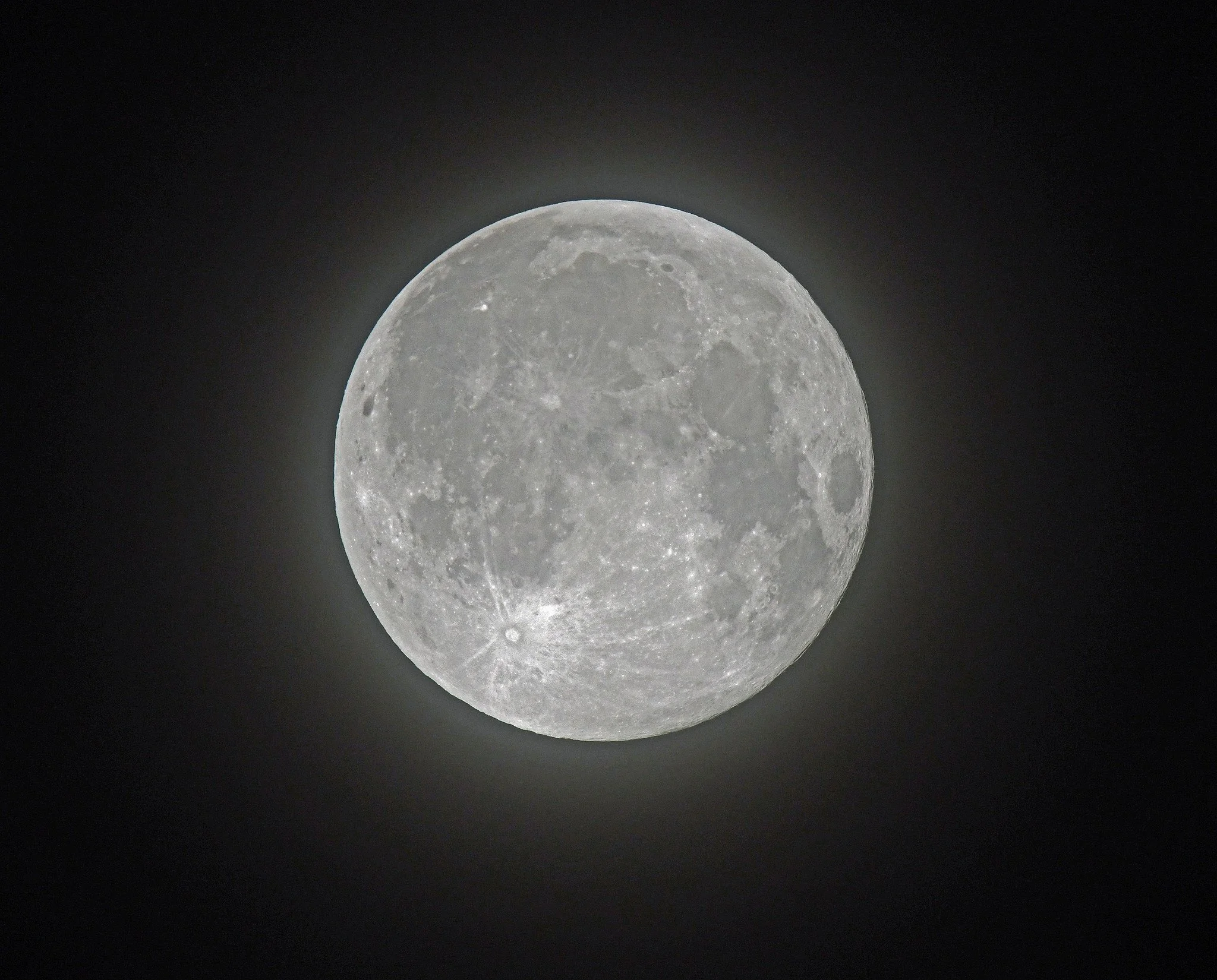
It rained from dawn into the night yesterday, a slow rain that nursed the aching, dry landscape. The rain stopped early enough to allow us to see the full moon rising behind the trees on the ridge to the east, coming like a needed friend. It soon rose high into the thinly-clouded sky, and all was right again:

In the United States, the September full moon traditionally is called the Corn Moon or variations thereof, such as the Corn Harvest Moon and Corn Maker Moon. These and other traditional names apparently were the descriptors given by our Northeastern Native Americans and early European settlers of the time of the year that the moon rose, as collected by the Farmer’s Almanac.

If we lived in Africa, Australia, China, or India, we probably would have called last night’s moon a Blood Moon. A total lunar eclipse occurred on their side of the planet, reportedly turning the moon red for more than an hour. (Images taken in Brooklin, Maine, at about 12:30 a.m. September 8, 2025.)

Comment

Comment

In the Right Place: Windjammer Watch XIV

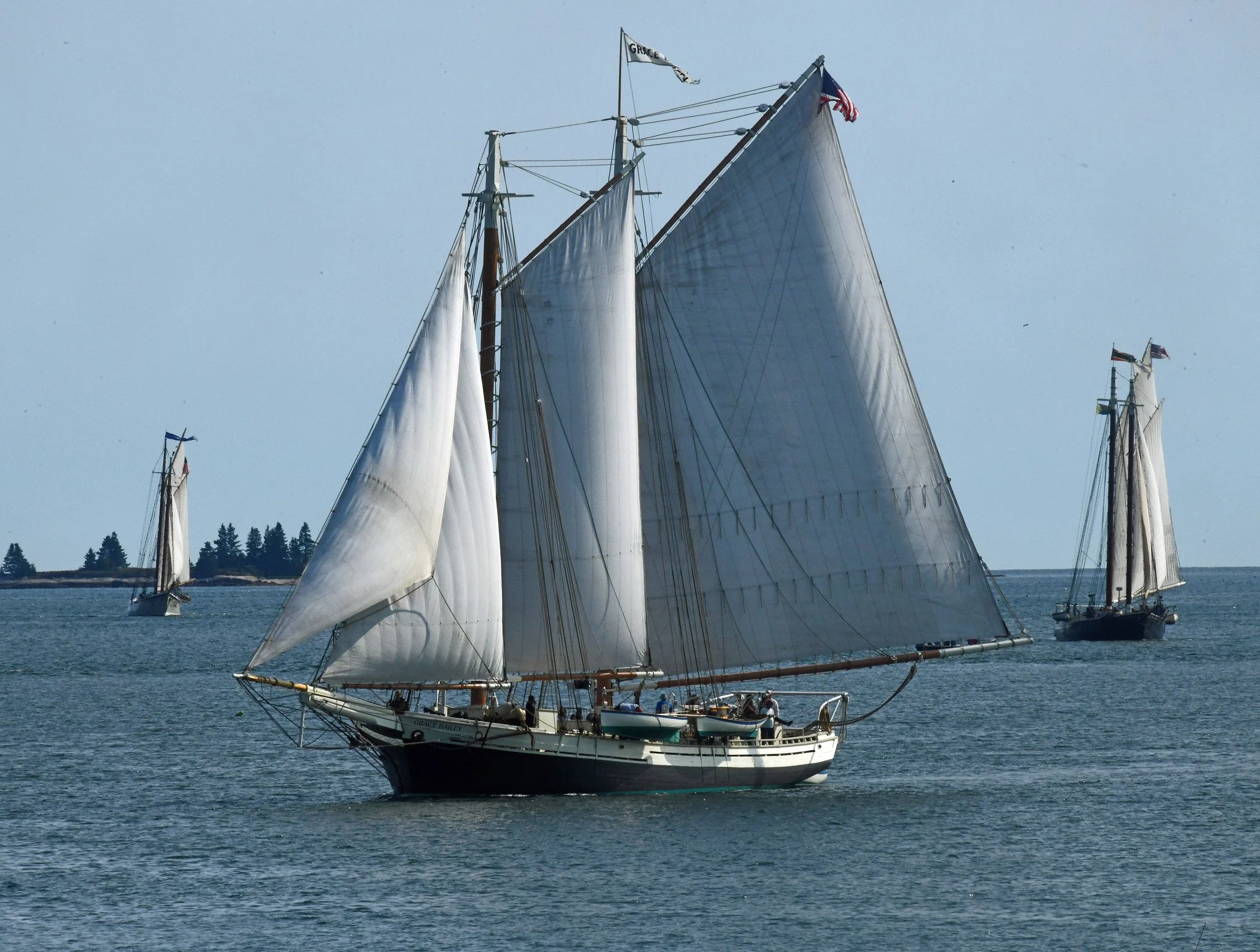
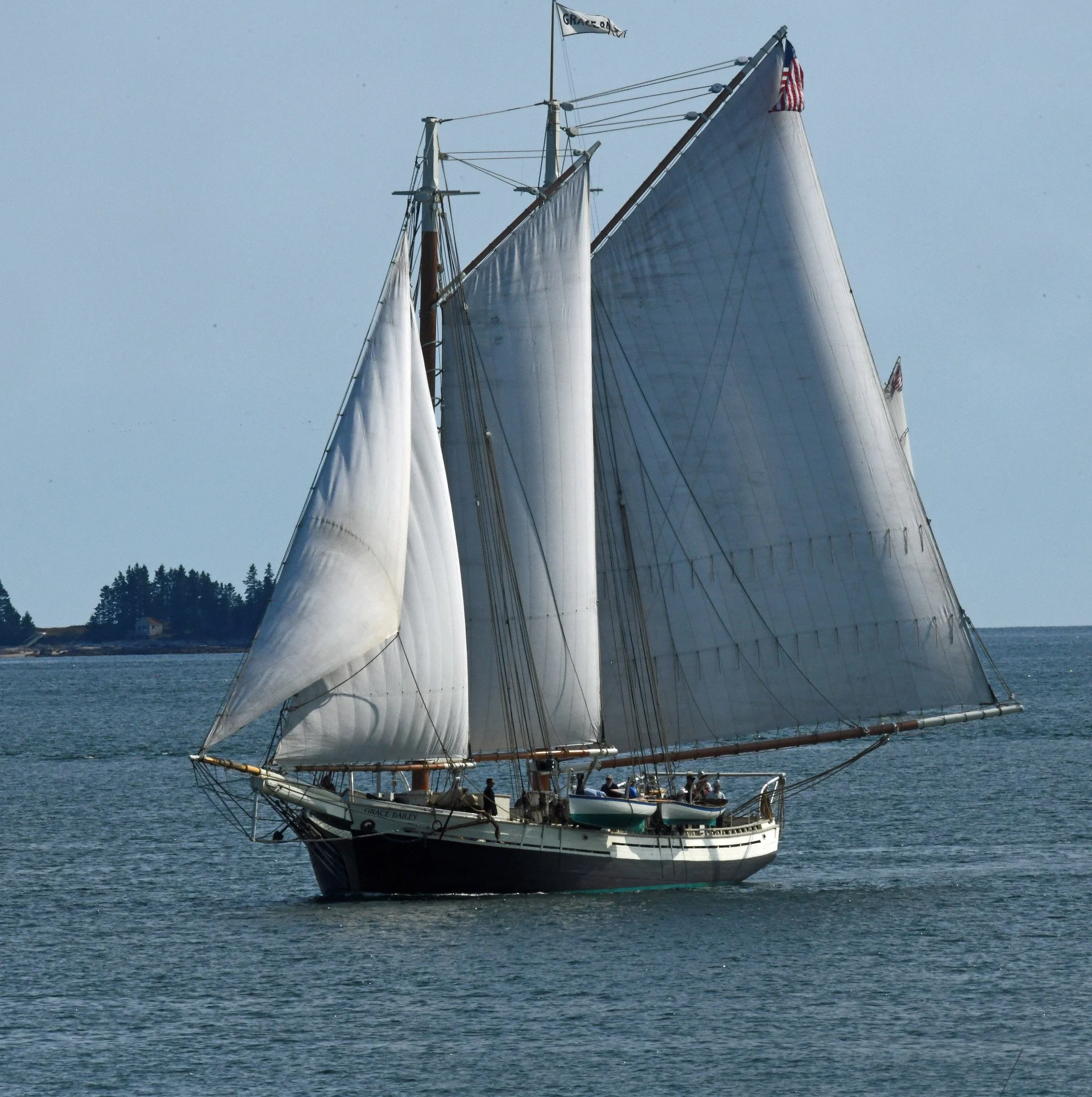
Here you see the 118-foot schooner GRACE BAILEY resting in Great Cove Thursday like a contented hen surrounded by her chicks. It might look like she’s putting up sails, but she’s apparently just letting her sails go slack to lessen vessel movement in the shifting breezes. (Note the wind in her U.S. flag and private signal [name] flag.)

This is GRACE’s fifth visit to the Cove this cruising season that I’ve seen, and it probably won’t be her last. She was on a six-night adventure with music, according to her schedule. She’s a grand old lady that bespeaks her first name. Launched in 1882, GRACE now hails from Camden, Maine. Here’s a closer look at her in repose:

(Images taken in Brooklin, Maine, on September 4, 2025.)

Comment

Comment

In the Right Place: Being Crabby Today

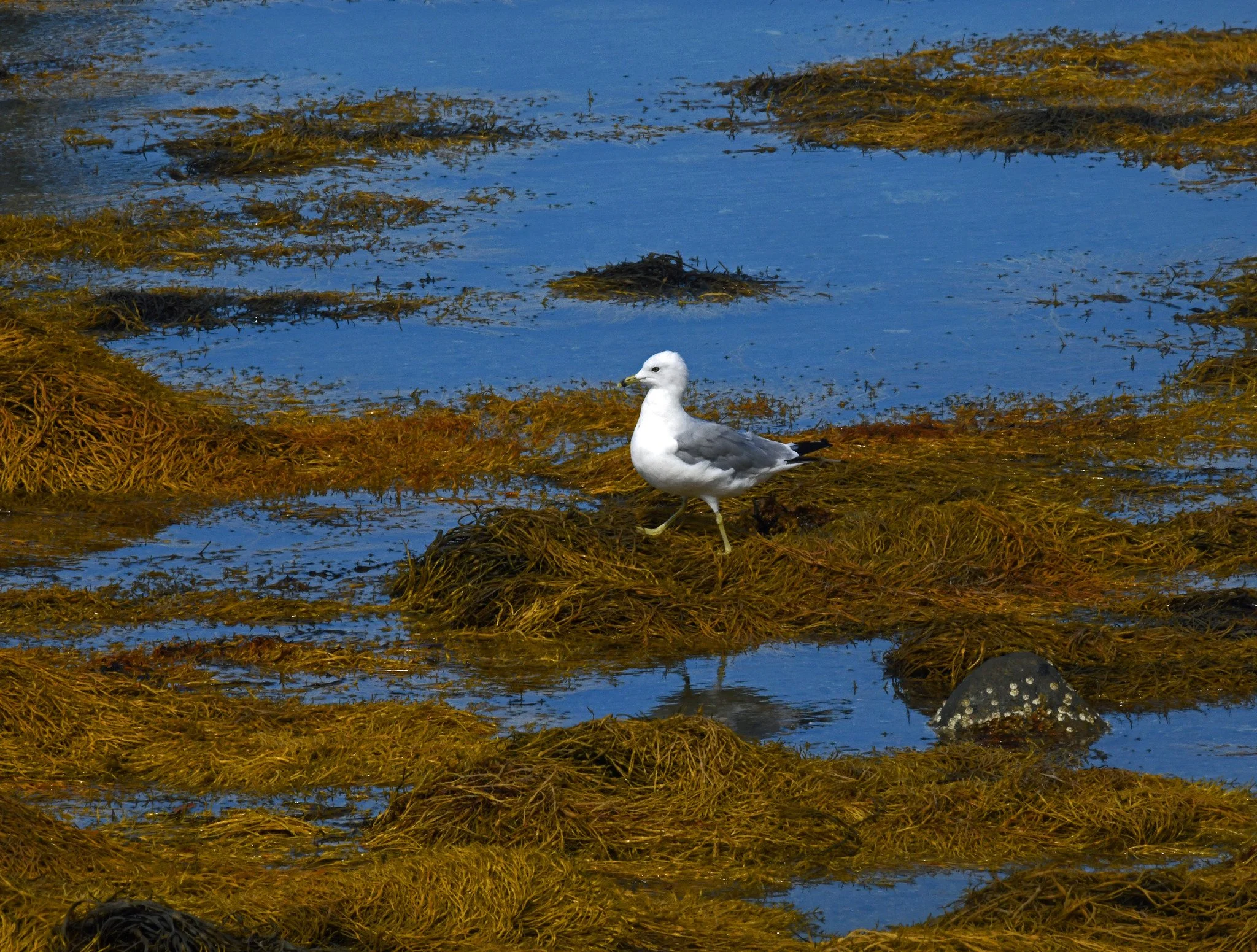
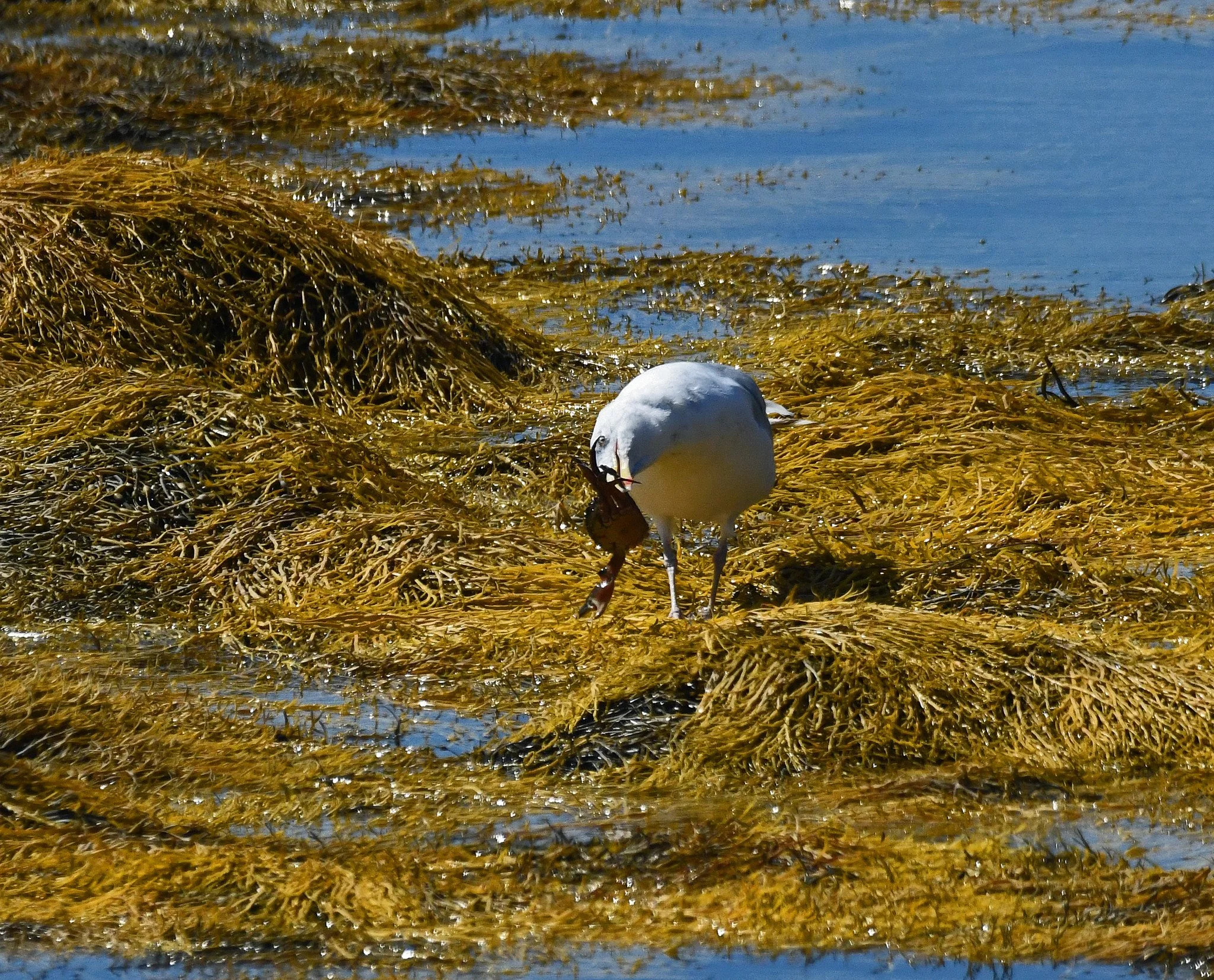
Herring and ring-billed gulls often make foot or flight patrols over the intertidal zone’s rockweed to find inept crabs that think they’re hidden in the moist blades.

The birds pull their prey out of the heaps of vegetation and swing, peck, and tear the crabs apart, then gulp their innards down with gusto. The crustaceans writhe and try to pinch the gull, but to no avail; once detected, they’re usually doomed.

The gull shown above apparently has found an Atlantic rock crab (Cancer irroratus), which is almost universally called a peekytoe crab in Maine. This primarily intertidal and shallow water crab reportedly received its nickname decades ago from the owner of a Portland, Maine, seafood company that promoted hand-picked rock crab leg meat as a delicious specialty. Which it certainly is.

However, we’re told that the “peekytoe” promotional name was derived from the use of “picked,” which is Maine slang for “pointed” or “picketed” as well as the usual word for the act of removing or disassembling (as in to “pick an apple” or “to pick apart” something). To that was added “toe,” which for Maine crabbers reportedly can mean a short crab leg.

Peekytoe crab and Jonah crab (Cancer borealis) are the two species of edible crab most harvested in Maine. Jonahs are trapped offshore in deeper waters than the peekytoes. They reportedly are named after the unfortunate Biblical prophet Jonah, but with lobsters in mind, not crabs. Jonah crabs enter lobster traps on the sea bottoms and eat the bait, which is bad luck for a lobster fisherman.

In very deep waters off Maine there are descriptively named red crabs (Chaceon quinquidens), which are edible, but not harvested as much as peekytoes and Jonahs. Apropos of Jonah’s problems, we also have two descriptively named invasive foreign crabs along the Maine coast that most people don’t eat, but that sea gulls love: European green crabs (Carcinus maenas) and Asian shore crabs (Hemigrapsus sanguineus).

There also are the virtually prehistoric American horseshoe crabs (Limulus polyphemus), but that’s a different, inedible story. (Images taken in Brooklin, Maine, on September 3 and 4, 2025.)

Comment

Comment

In the Right Place: Windjammer Watch XIII

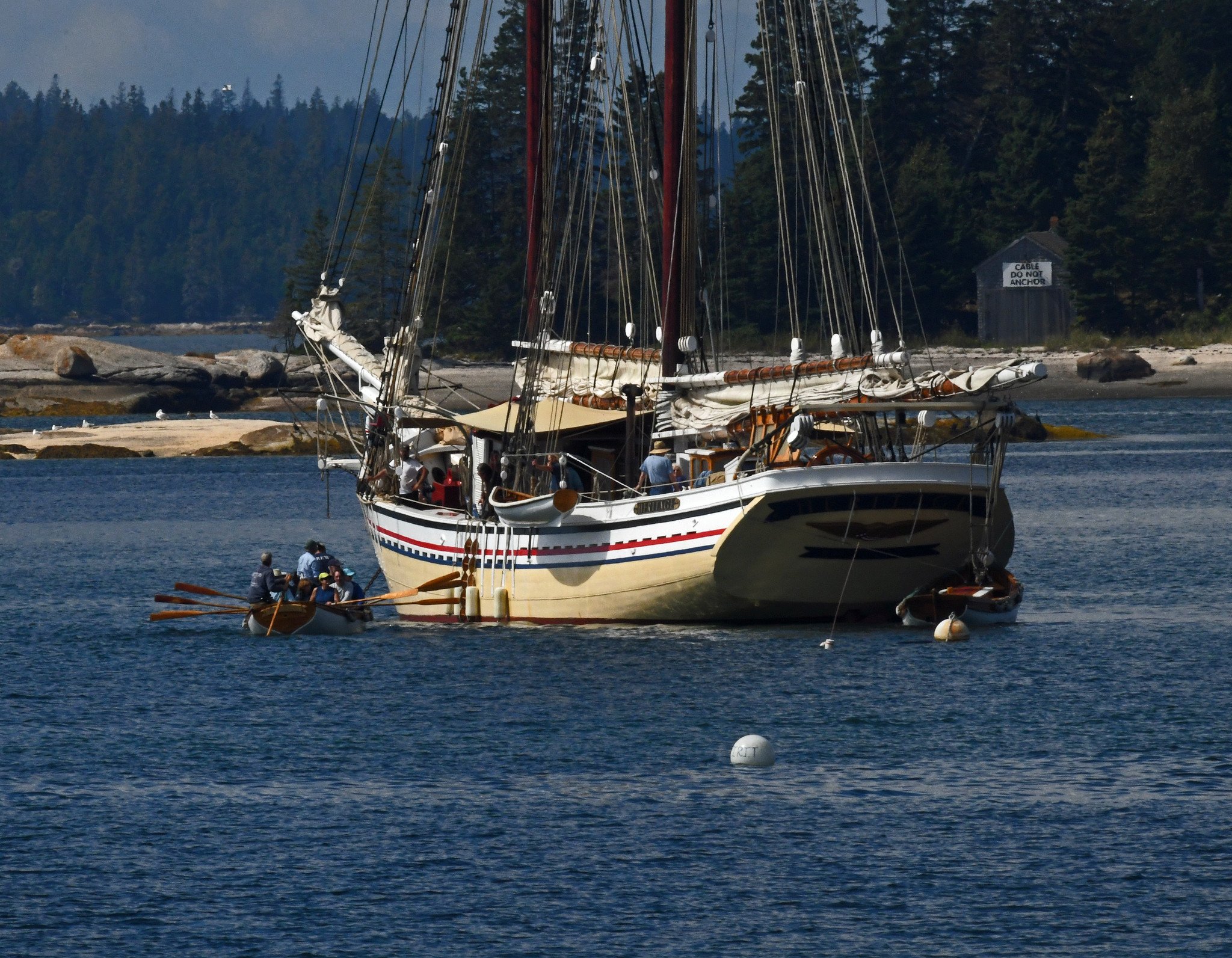
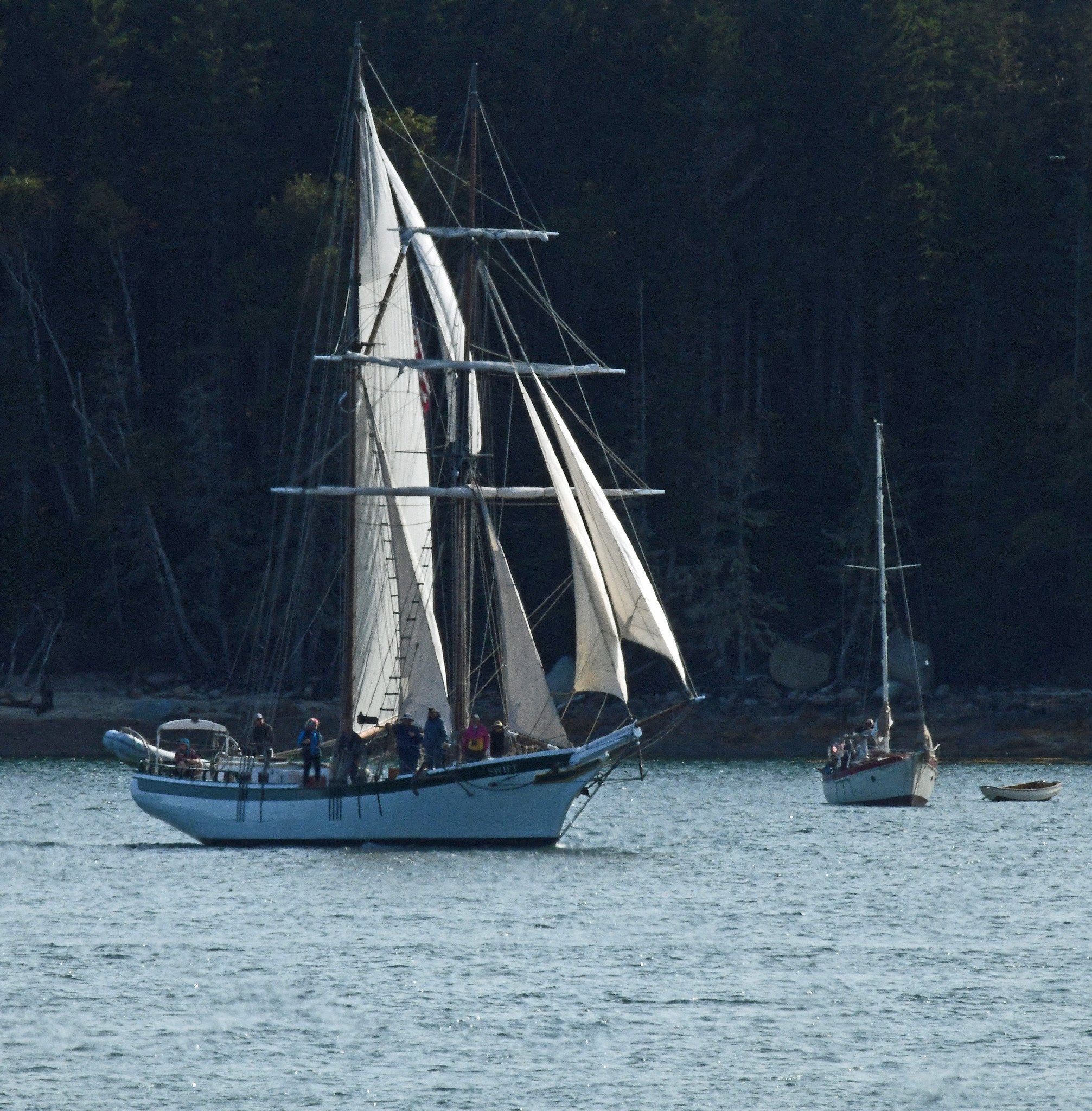
Here you see the big-bodied schooner HERITAGE in Great Cove Wednesday morning. She had just boarded passengers who were visiting the WoodenBoat School campus:

Her tarps are up and her sails aren’t because she’s being pushed by CLARK KENT, her yawl boat, to Babson Island in the Cove. (The schooner has no internal motor.) Her passengers likely are looking forward to a beach lunch.

The 145-foot HERITAGE is now the largest coastal cruiser that visits the Cove regularly. The larger VICTORY CHIMES (170’) has been retired, and I hear that she’s enjoying life as a waterfront bar and restaurant. According to HERITAGE’s schedule, she was on a six-night exploration of the Maine coast. (Images taken in Brooklin, Maine, on September 3, 2025.)
Comment

Comment

In the Right Place: A Great Experience

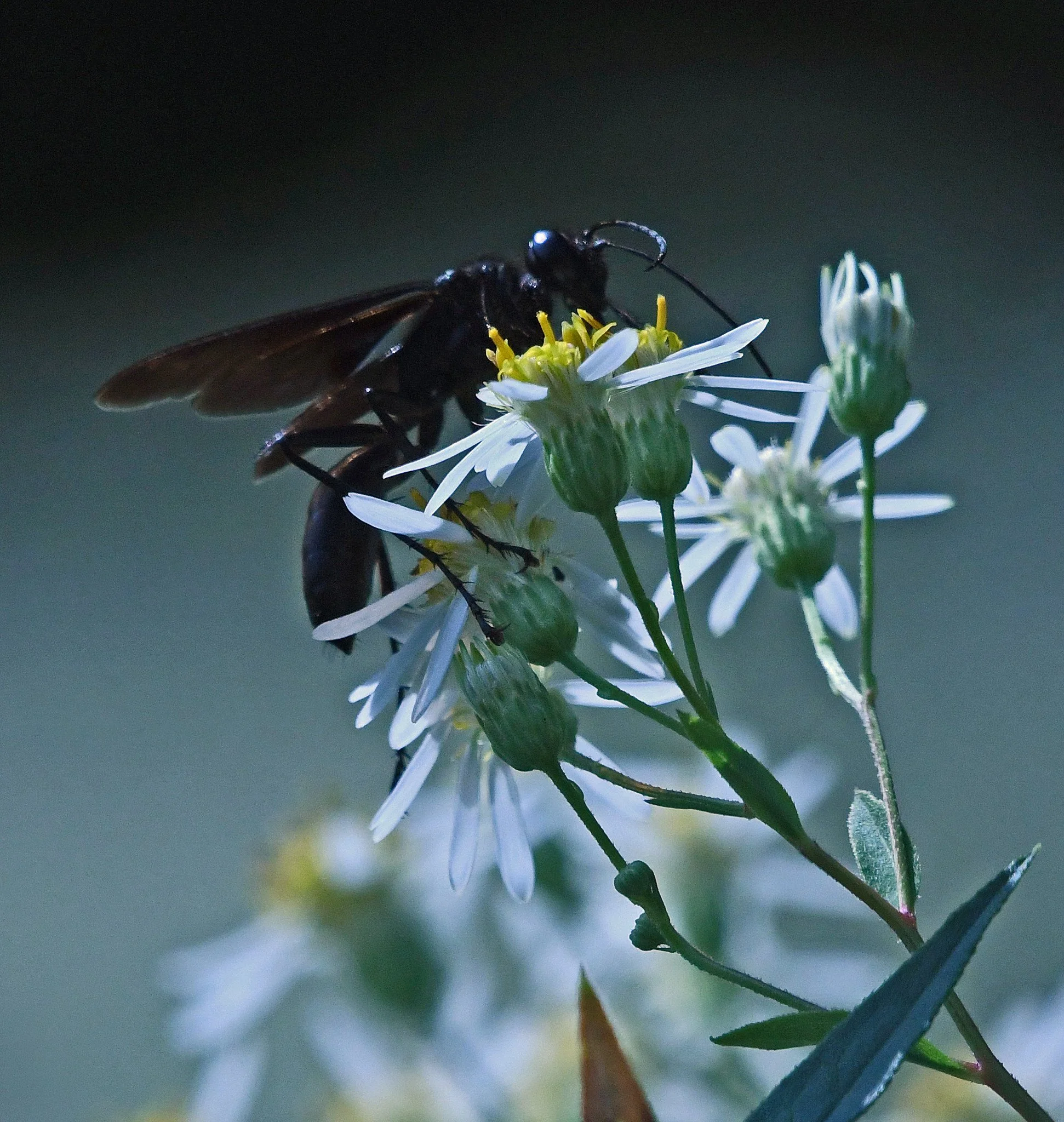
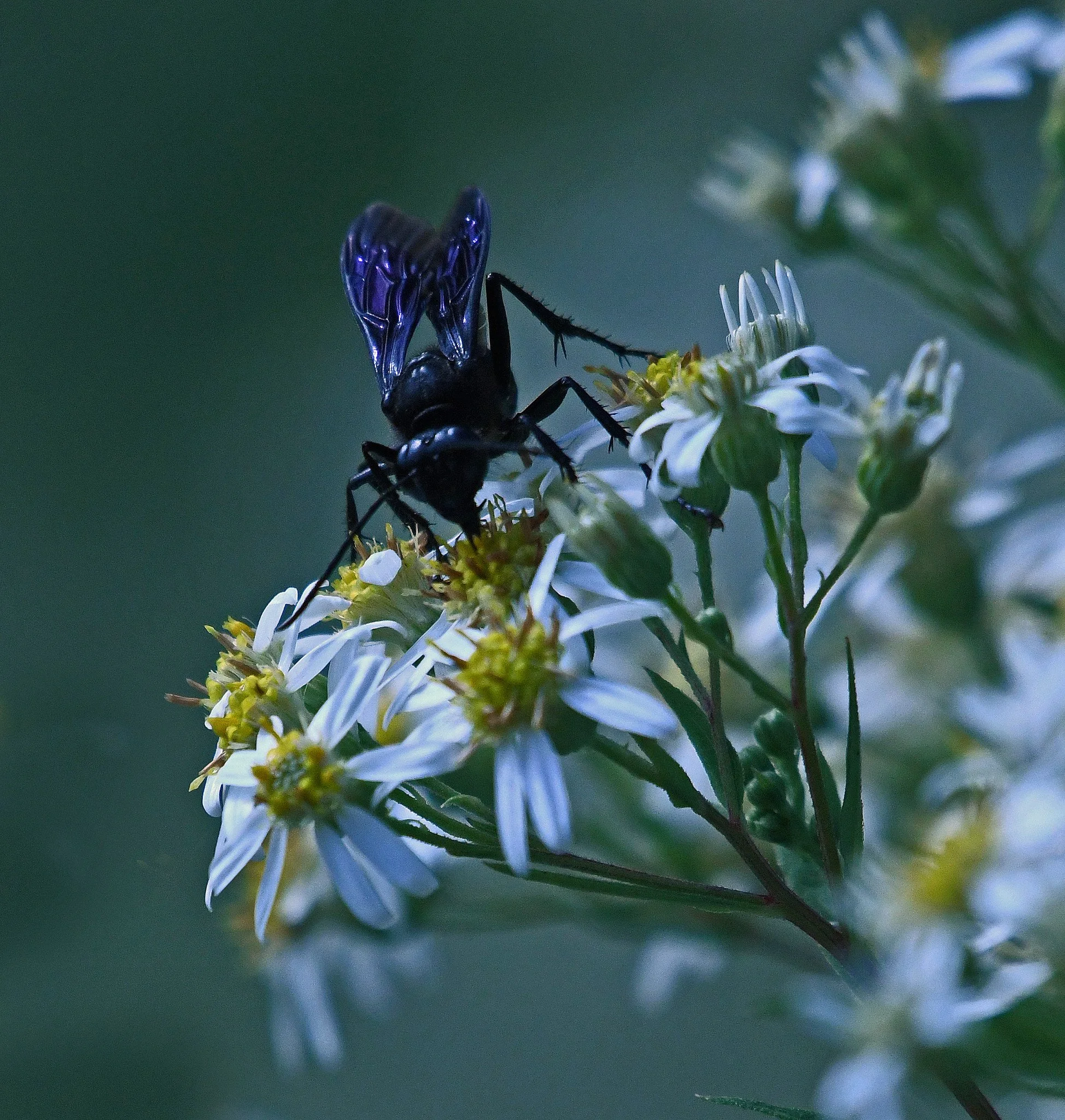
Among other wildlife greats, there are “great white sharks,” “great blue herons,” and “great black wasps.”  Here’s one of the latter, apparently a 1.5-inch female, working the daisy fleabane on Tuesday. Her slightly less great mate – male GBWs are smaller – was working the neighboring flowers:

Great blacks (Sphex pensylvanicus) are native to Maine and fairly common throughout the nation. They’re “solitary” wasps in that they typically don’t live in colonies or nests.

A pair usually will dig a burrow for their larvae and feed them there. These are impressive and virtually always helpful insects. They’re pollinators as well as predators of pest insects, which they paralyze and bring back to their larvae as live food.

I’ve never known them to be aggressive to, or even interested in, humans that don’t try to provoke them significantly. Curiously, the literature says that only the females can sting, but I’ve never tested that finding personally. (Images taken in Brooklin, Maine, on September 2, 2025.)
Comment

Comment

In the Right Place: Waterfront Watch

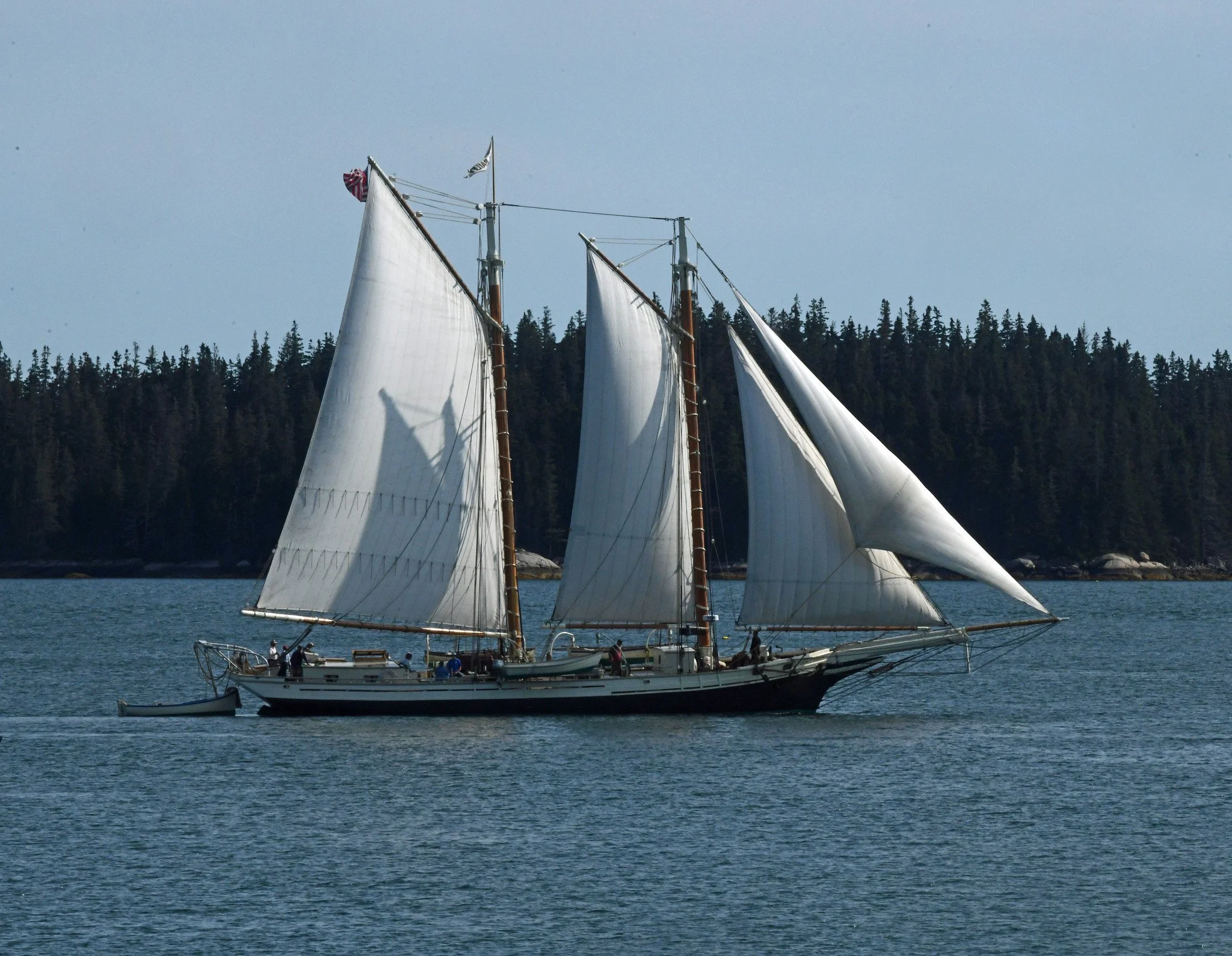
Here you see LITTLE BEAR in Great Cove yesterday. She reportedly was launched in Scotland. She’s built for luxury cruising, but obviously is a steel-hulled replica of a North Sea fishing trawler. That ketch sailing rig can be especially helpful for stability in a rolling sea. She now apparently hails from Rockport, Maine. Detailed information about her has been hard to uncover.

I’m assuming from her looks and Scottish launching site that LITTLE BEAR’s name is not inspired by furry mammal cubs or hairy dolls named after Teddy Roosevelt. I suspect that she was named after Ursa Minor ("Little Bear" in Latin), which is the Little Dipper star constellation. Historically, that constellation has been important for sea navigation. Its brightest star, Polaris (“of the Pole”), is the North Star, which hangs out nearly directly above the North Pole and historically has been a general indicator of where North is. 

The Little Bear constellation can be found by using the two "pointer" stars in the Ursa Major (“Great Bear”) constellation to locate the North Star, which is the rear light on the Little Dipper's starry tail. (Images taken in Brooklin, Maine, on September 2, 2025.)
Comment

Comment

In the Right Place: Bright Nose Department

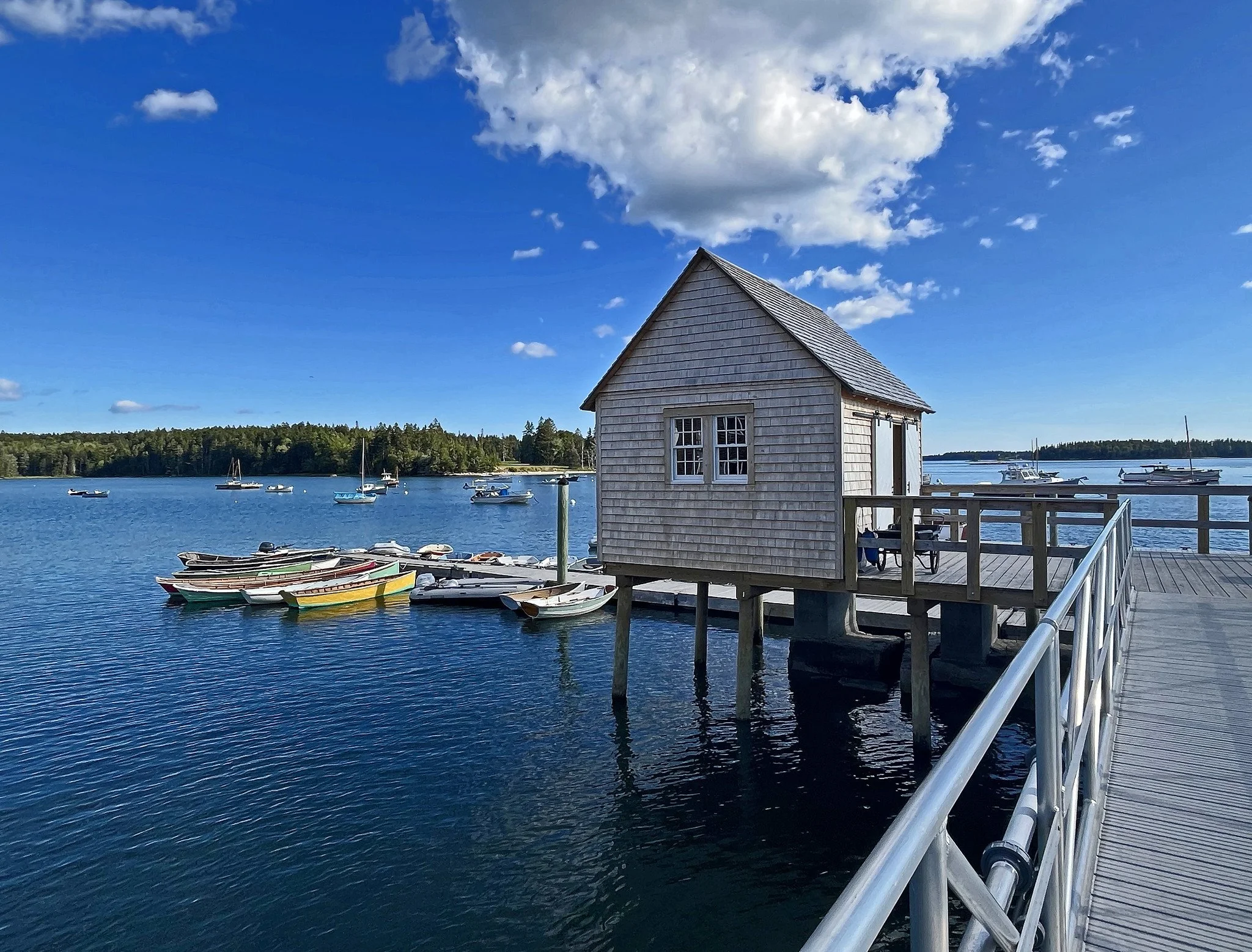
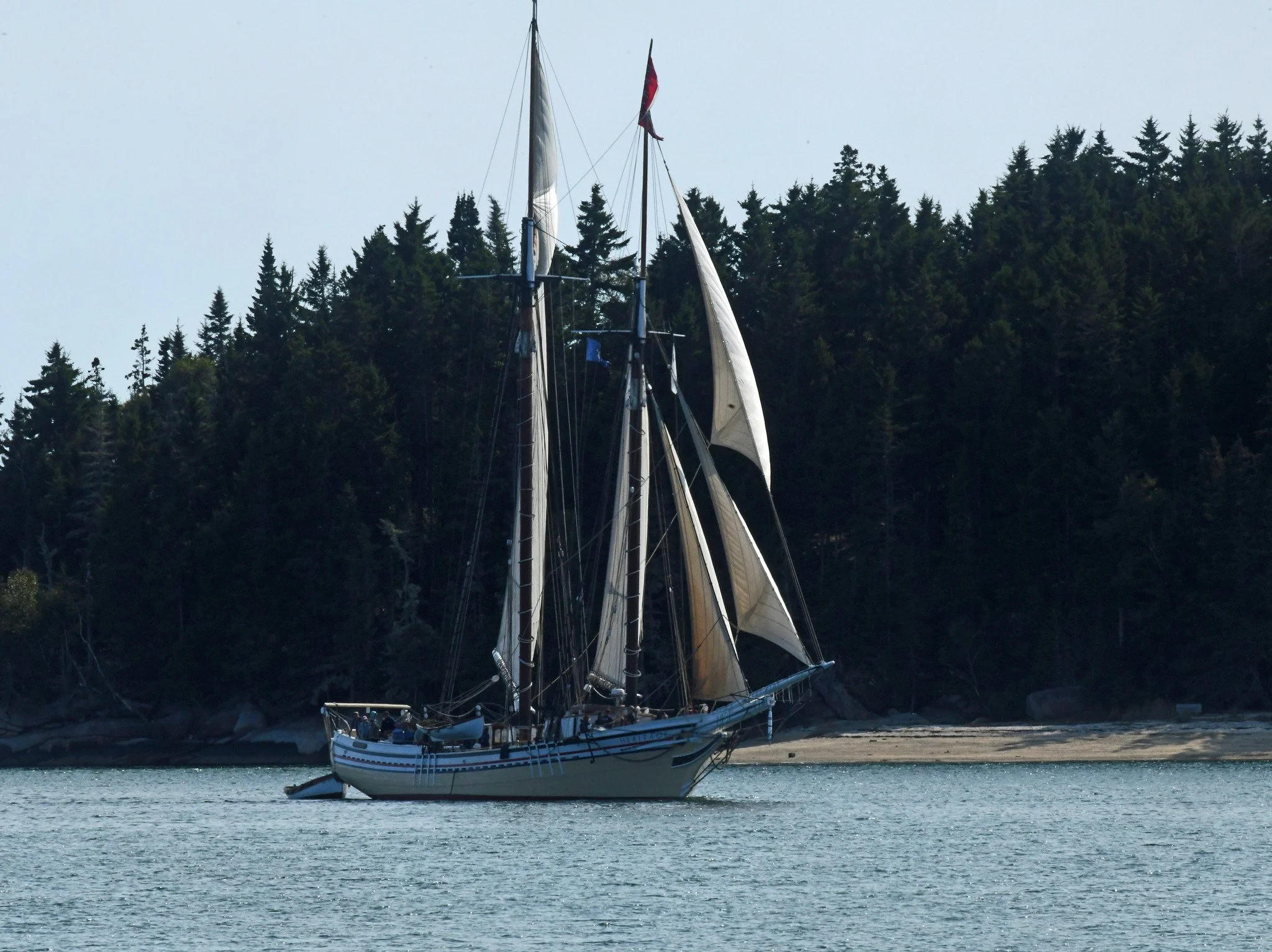
Here you see part of the Brooklin Boat Yard pier and docking float on Sunday’s glorious afternoon. I have to wonder how many lines and angles, especially right angles, live in this little space? How many measurements went into forming and relating these differing sized and shaped planes, not to mention nails, screws, and bolts?

It made me shudder in remembrance of my brain-sizzling trials with geometry and trigonometry; but then, I focused on the happy little green-trimmed, yellow skiff cheerfully sticking her bright nose into the monochromatic orderliness. (Image taken in Brooklin, Maine, on August 31, 2025.)
Comment

August Postcards From Down East Maine

3 Comments

August Postcards From Down East Maine

August here in Vacationland can be the ultimate experience for lovers of outdoor activities. This year, however, it was a mixed blessing. We had more beautiful days than usual — cool, sunny, big blue sky days — which was wonderful. But that meant less rain; which meant comtinued severe drought here on the coast. Nonetheless, this August was one of the most beautiful that we’ve had.

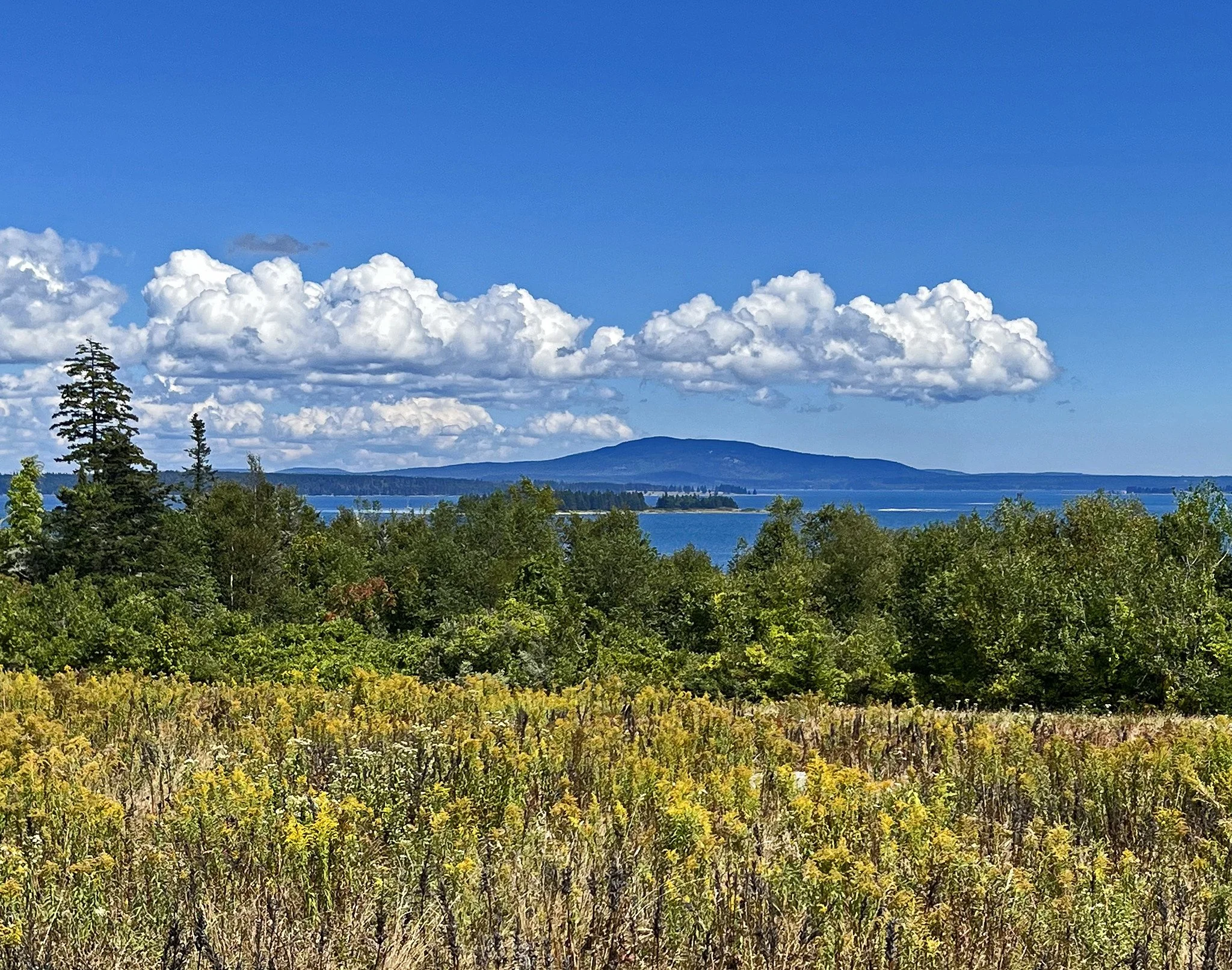
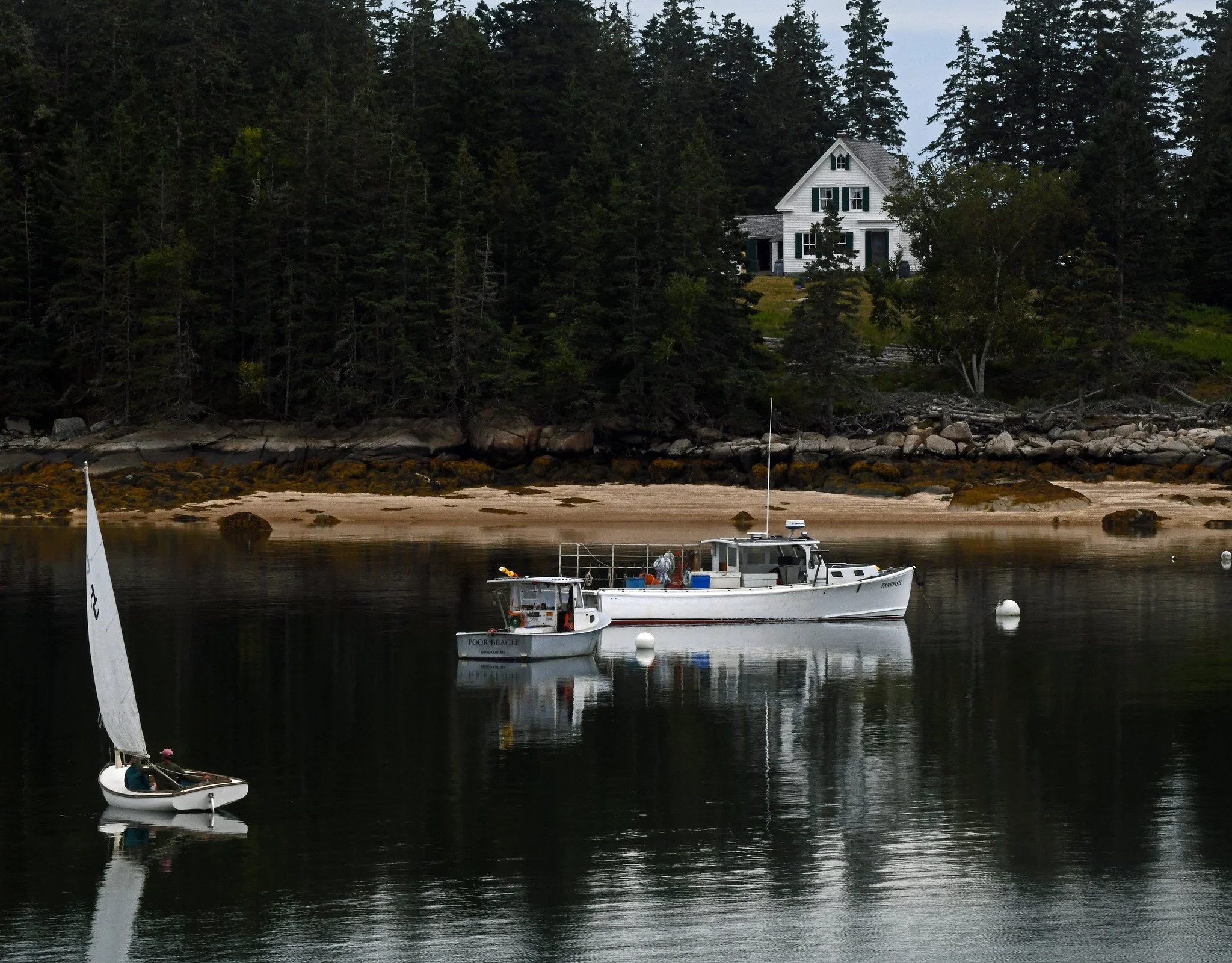
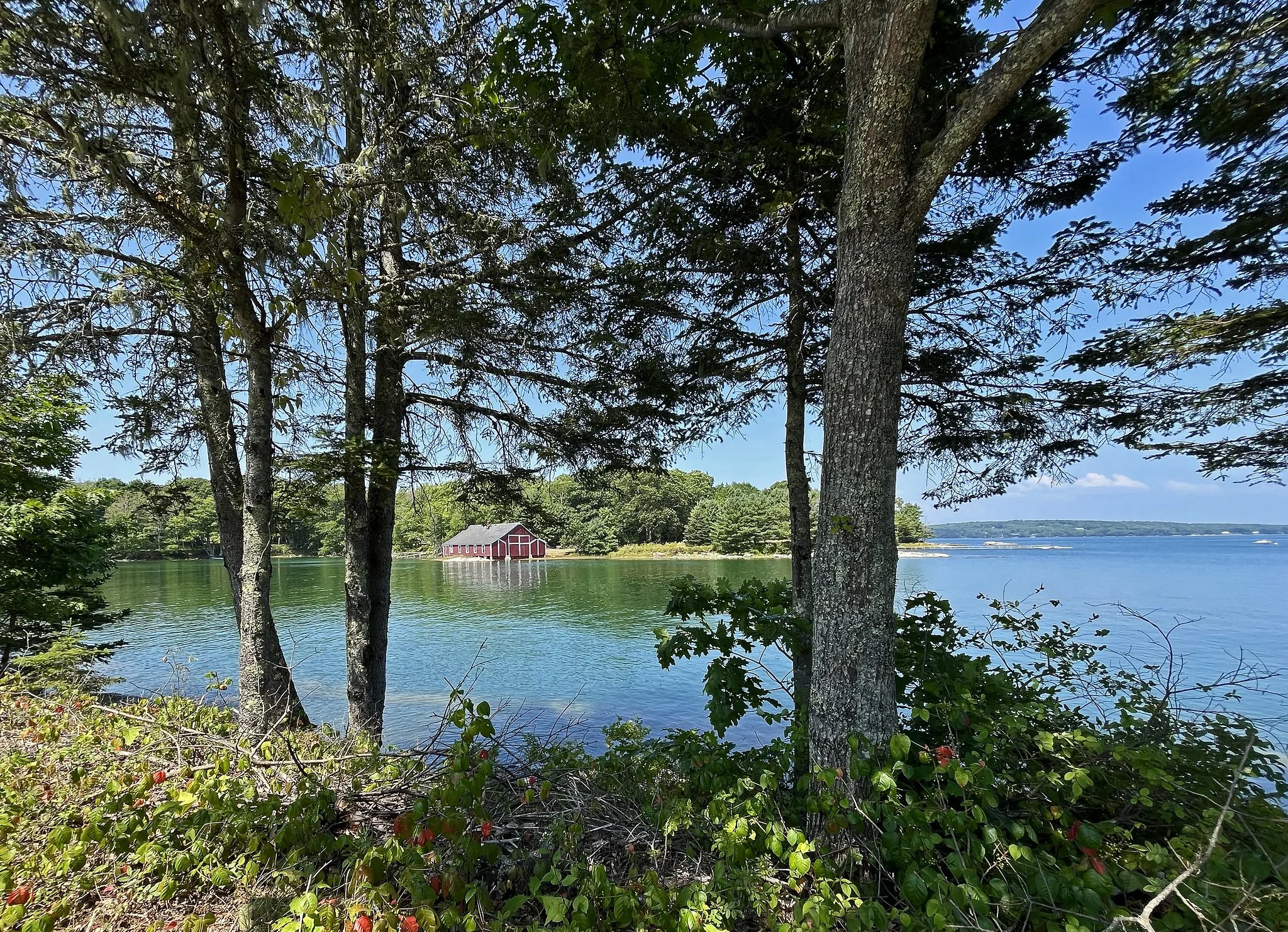
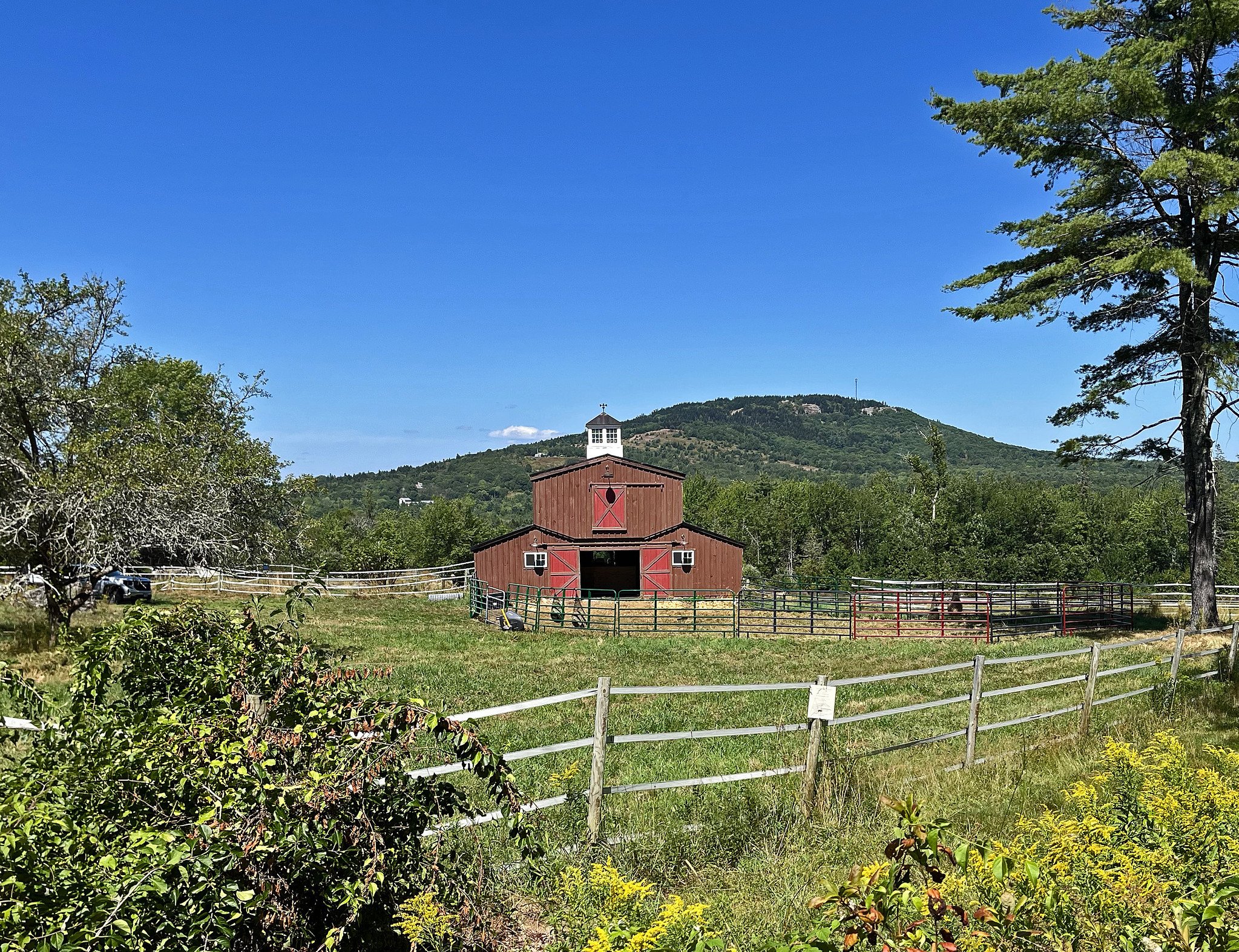
As usual, we begin our “Wish You Were Here” Postcards with the four iconic scenes that we monitor monthly in these Postcards. They’re the view across Blue Hill and Jericho Bays to Mount Desert Island; the Harbor House in Brooklin’s Naskeag Harbor; the old red boat house in Blue Hill’s Conary Cove, and a long view of the small mountain called Blue Hill, with a bonus image of that Hill from Blue Hill Bay:

The wooded trails were dry, even where they were moss-covered. Nonetheless, walking along a dappled trail among tall trees with bird song and the scent of balsam fir and spruce in the air is one of the real — in the literal sense — pleasures of life for some of us.

The ponds were lower and the stream flows lighter. The mouth of Patten Stream at low tide was rock-strewn. But wildlife in and around the waters was abundant.

As you see above and will see below, our field grasses and sedges were browning and fall wildflowers of yellow, white and purple were pervasive. Some fallow fields received their fall mowing in August, others will be mowed in Spetember or even October.

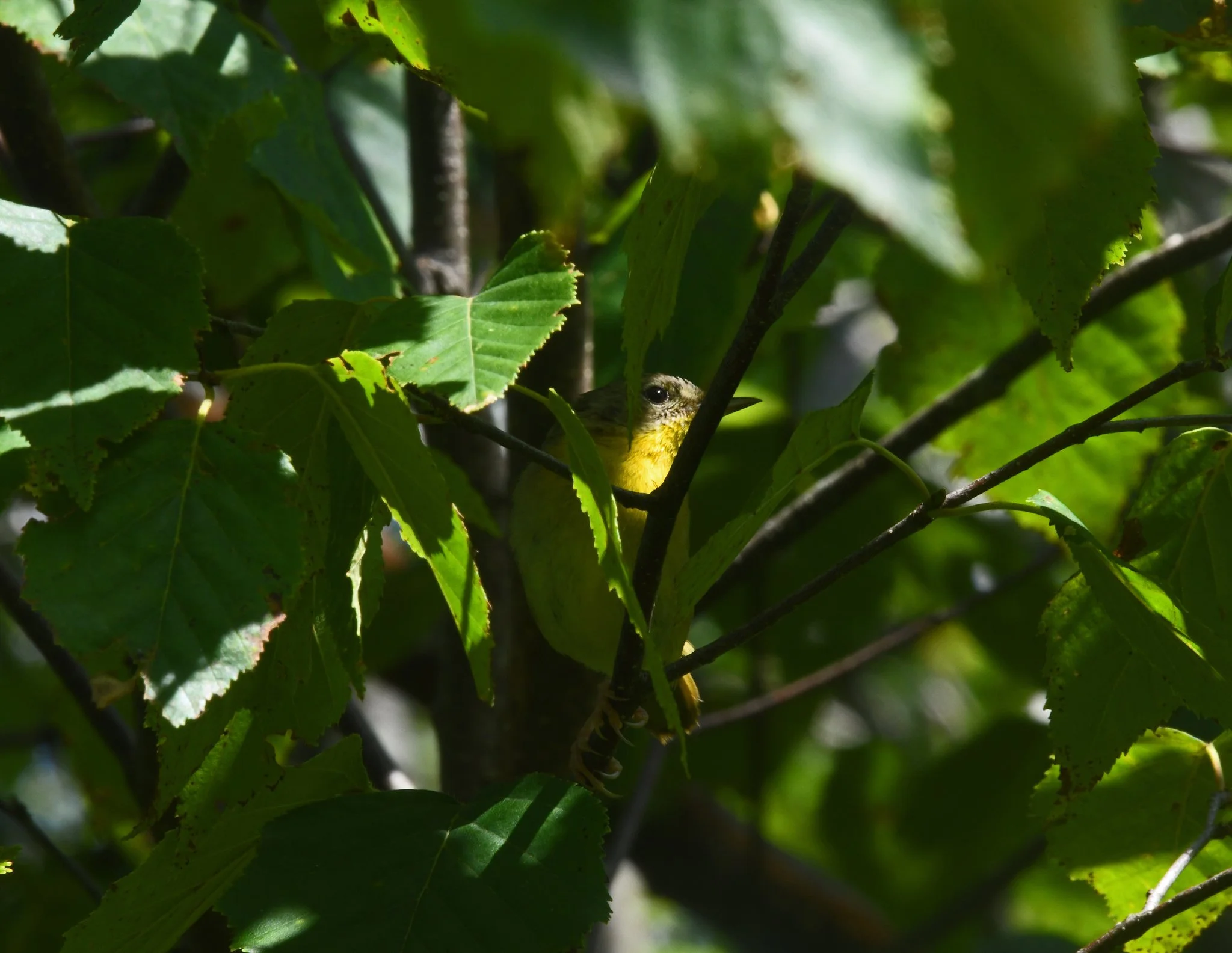
On the fauna front, our white-tailed deer and wild turkeys strolled in August’s long grasses. Common yellow throat warblers hid among alder leaves, while our herring gulls seemed to have wanted to be seen. Dragon flies landed lightly here and there and bees and butterflies were everywhere. (But, curiously, I saw only a few monarch caterpillars.) Painted turtles and toads made what might be their last appearances of the year.

Flora-wise, August was spectacular, although the dryness caused some early berry production and color changing. As for the trees, the standouts included the mountain ashes berrying-out, plum trees turning purple early, sugar maples also turning, and hydrangia trees giving it everything they had.

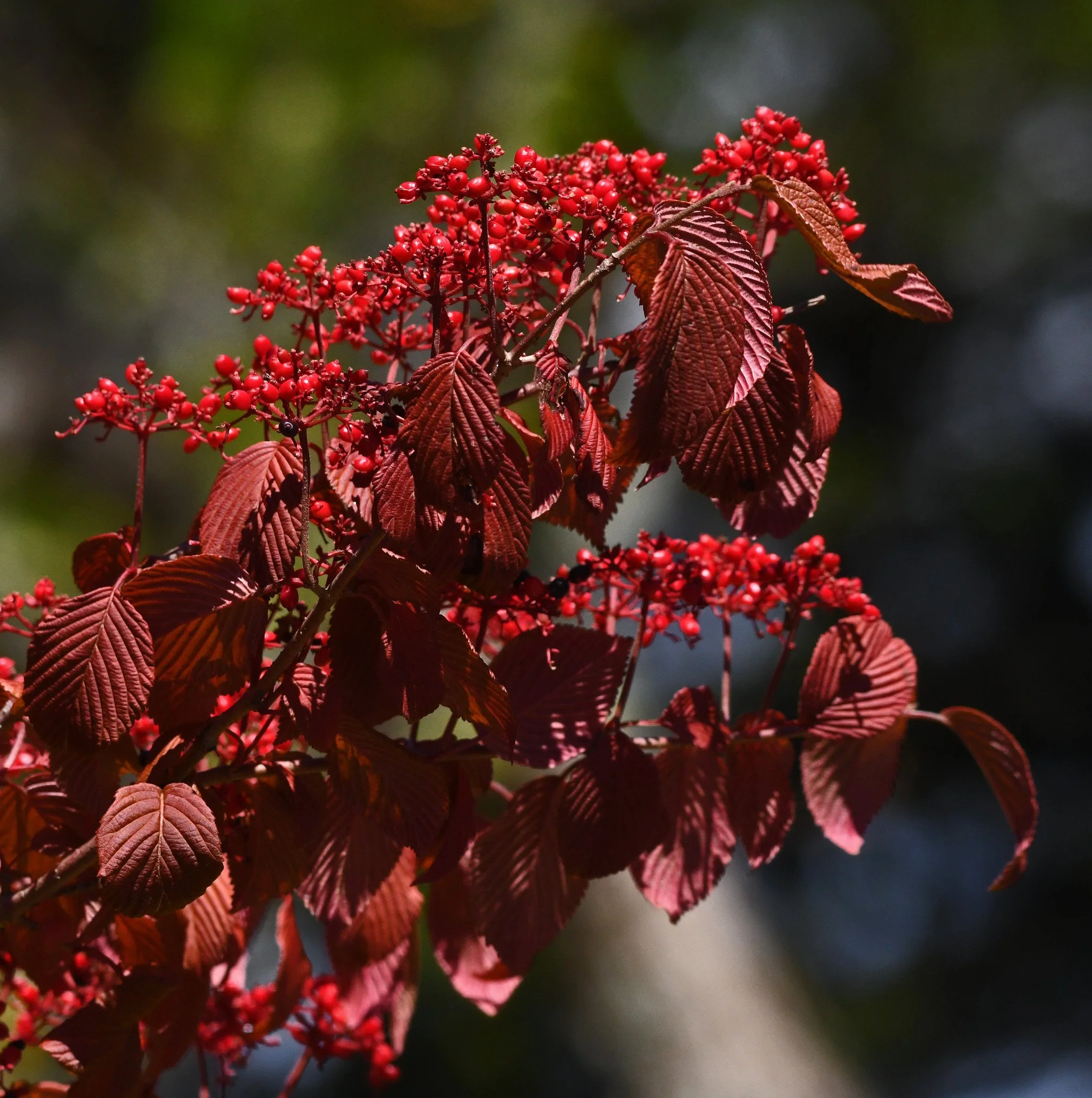
The viburnum bushes turned red early and the beach roses (Rosa rugosa) produced hips while many continued to flower through August.

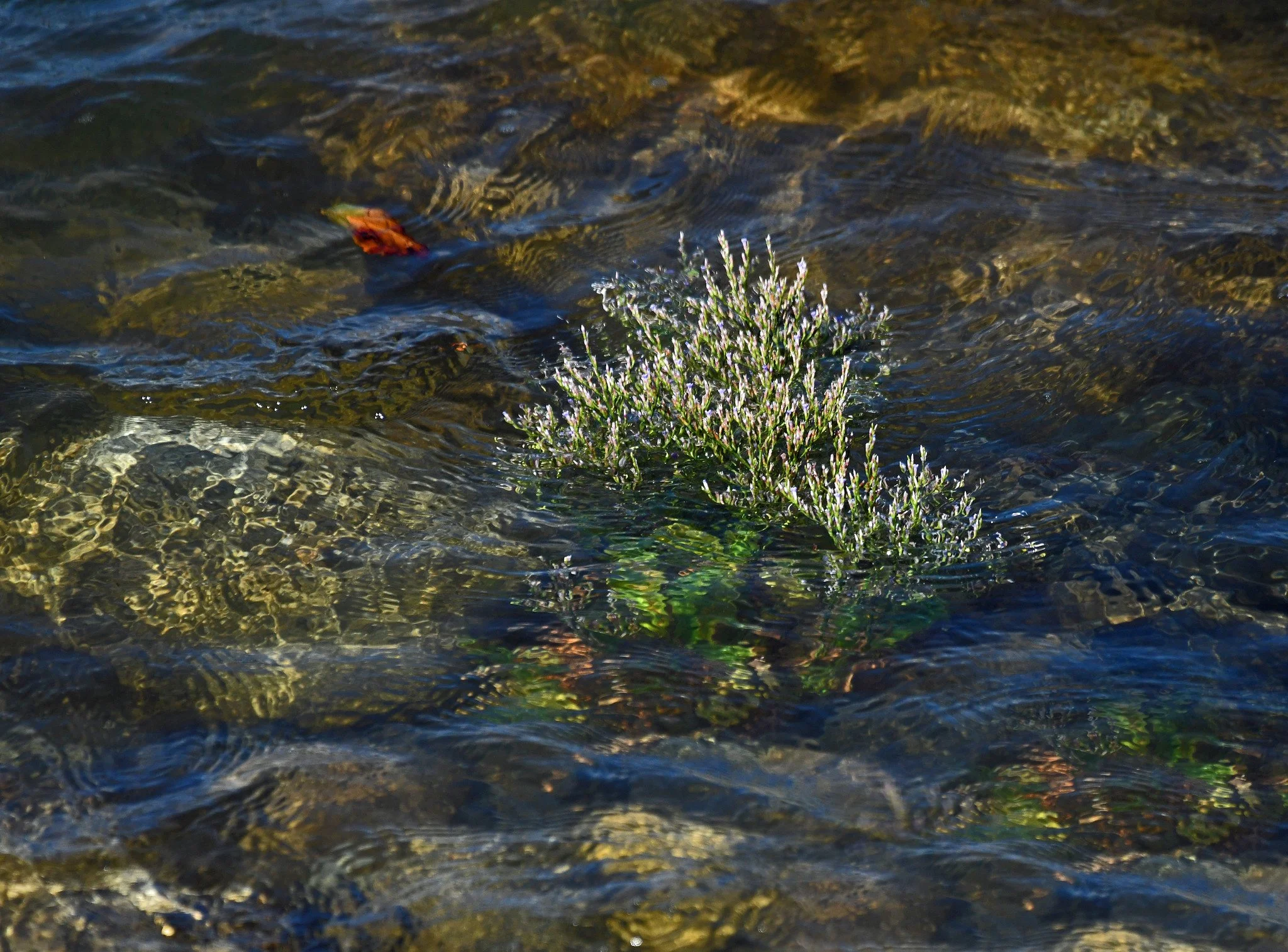
Standout August wildflowers included Queen Anne’s lace; butter-and-eggs; primrose and tansy; bull (spear) thistle and fleabane; black-eyed susans; fragrant water lilies; sea lavender; star flower leaves turning silver, and Indian (ghost) pipes that looked like porcelain, and golden rod.

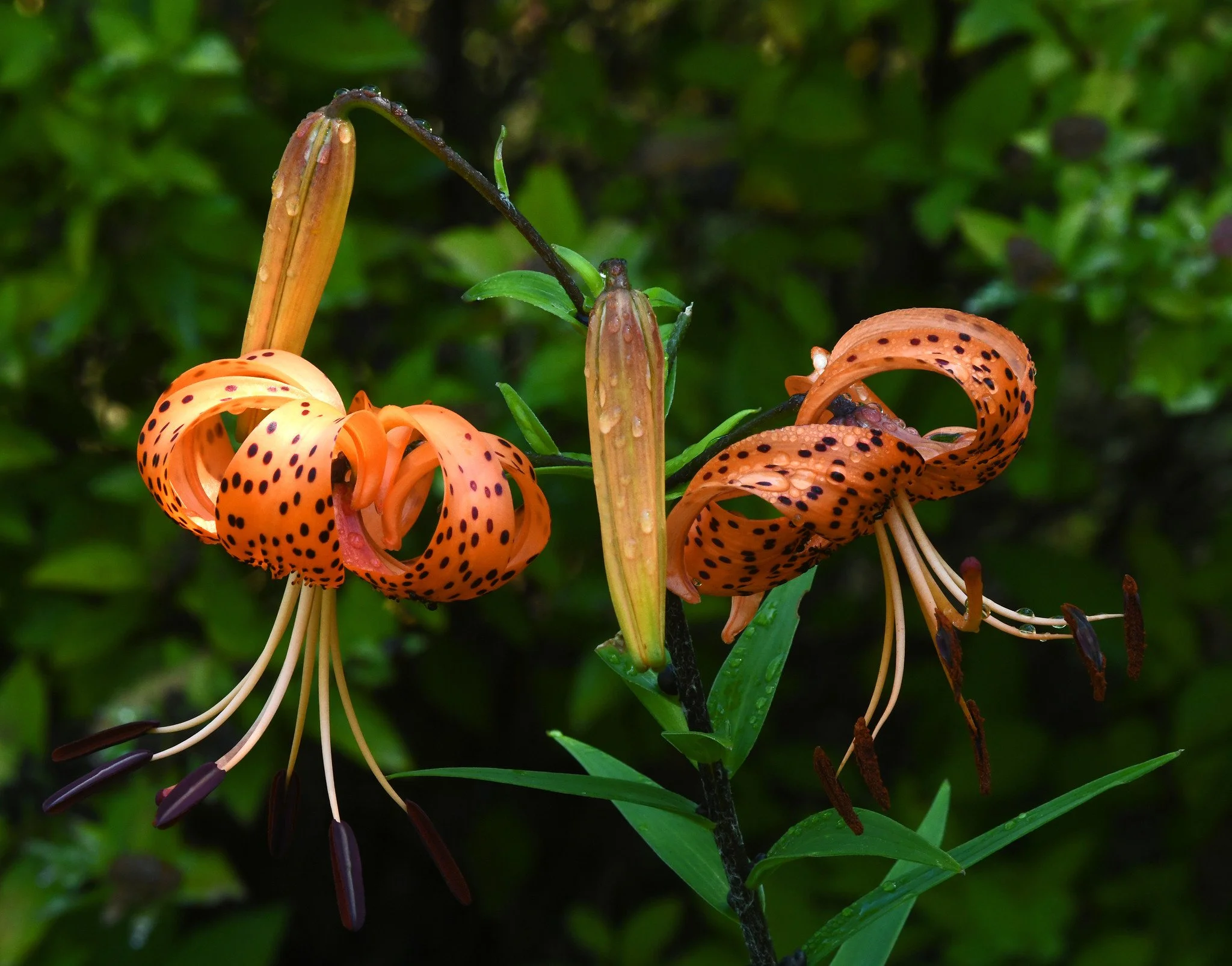
In the gardens, there was spectacular beauty where the watering hose or sprinkler could reach. Among the best were liatris (blazing star); butterfly weed; gladiolas; clematis vine; tiger lilies, and the last of the poppies.

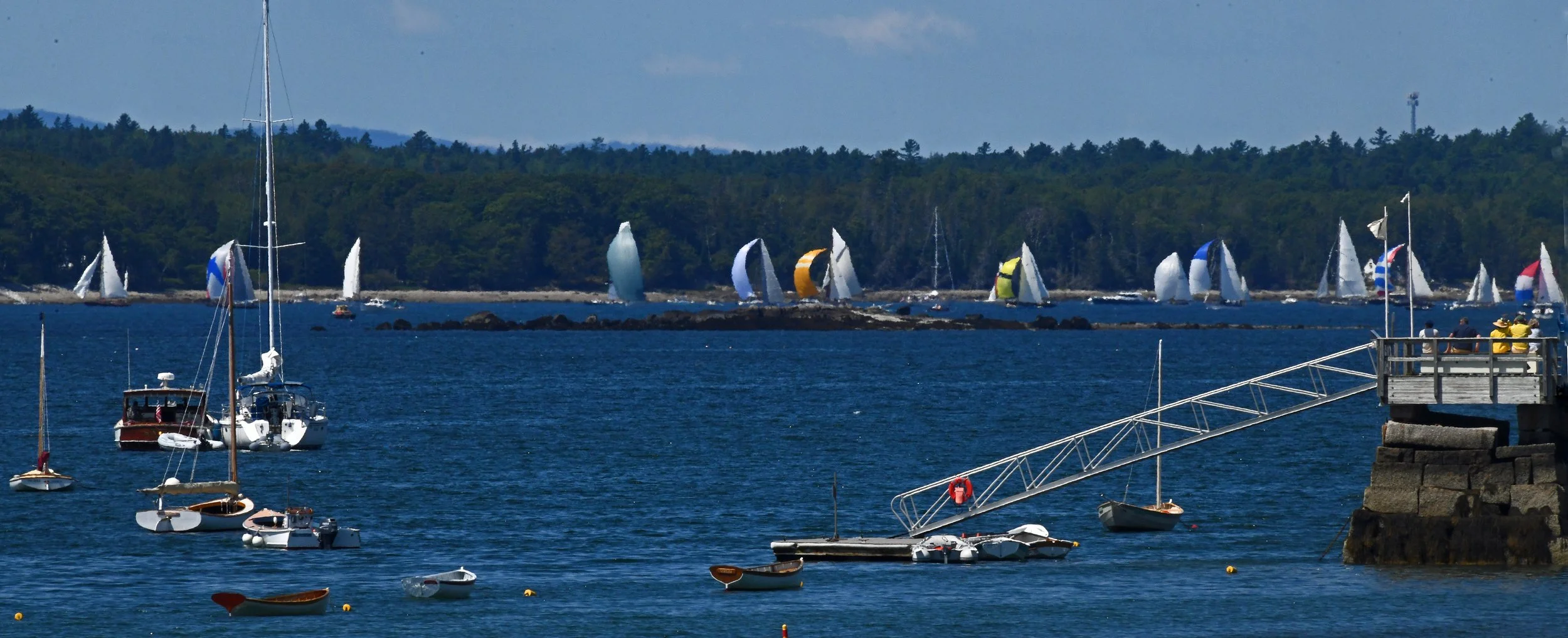
The waterfront always is a big part of Down East Maine. We begin there with views of Brooklin’s picturesque harbors: the mostly working waterfront at Naskeag Harbor; the mostly pleasure boating Center Harbor (which includes the revowned Brooklin Boat Yard), and the sometimes-harbor of Great Cove, which fills up with fascinating vessels for major events, such as the August Eggemoggin Reach Regata.

Naskeag Harbor

Center Harbor

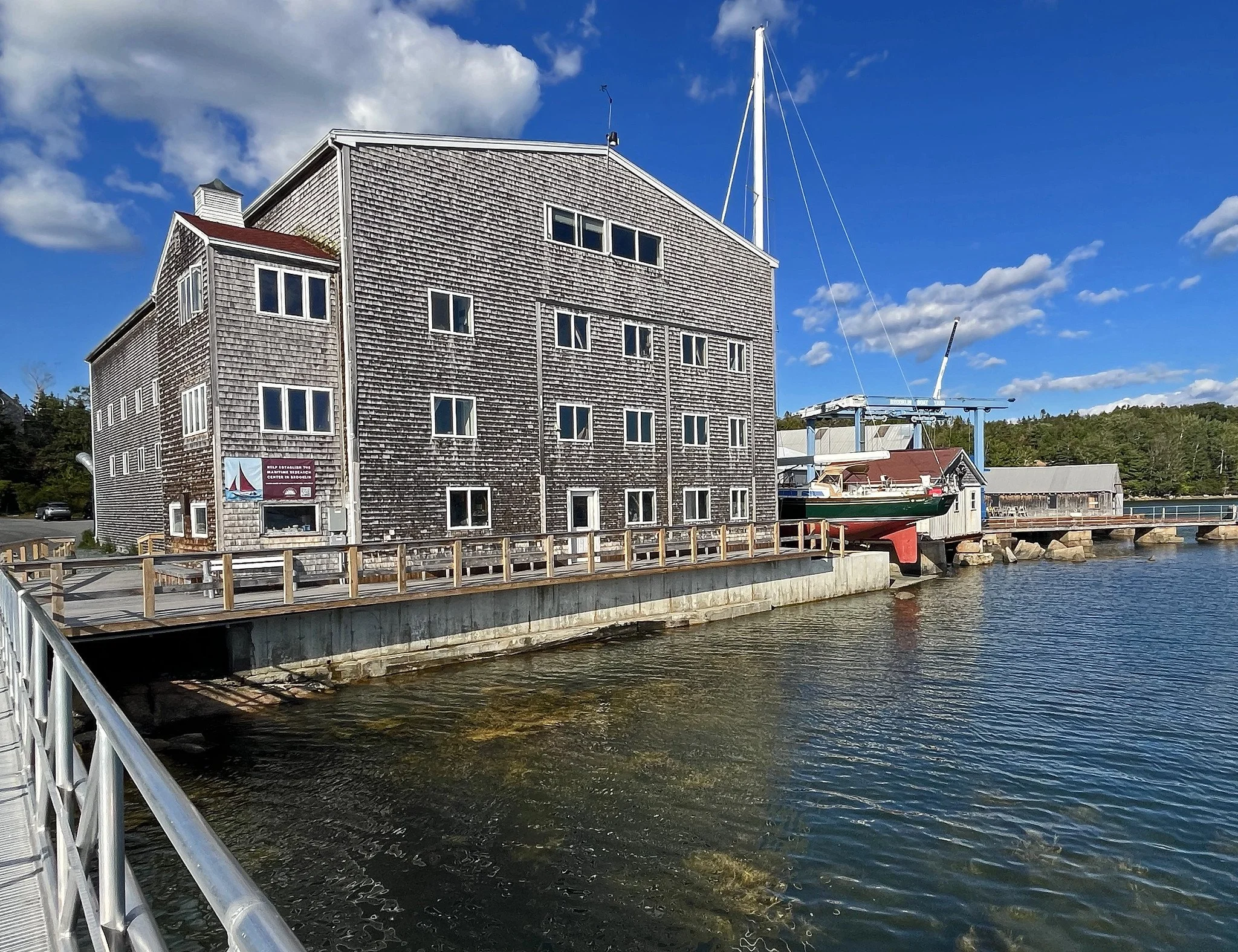
Brooklin Boat Yard at Center Harbor

Great Cove Before the Regata

During the Regata

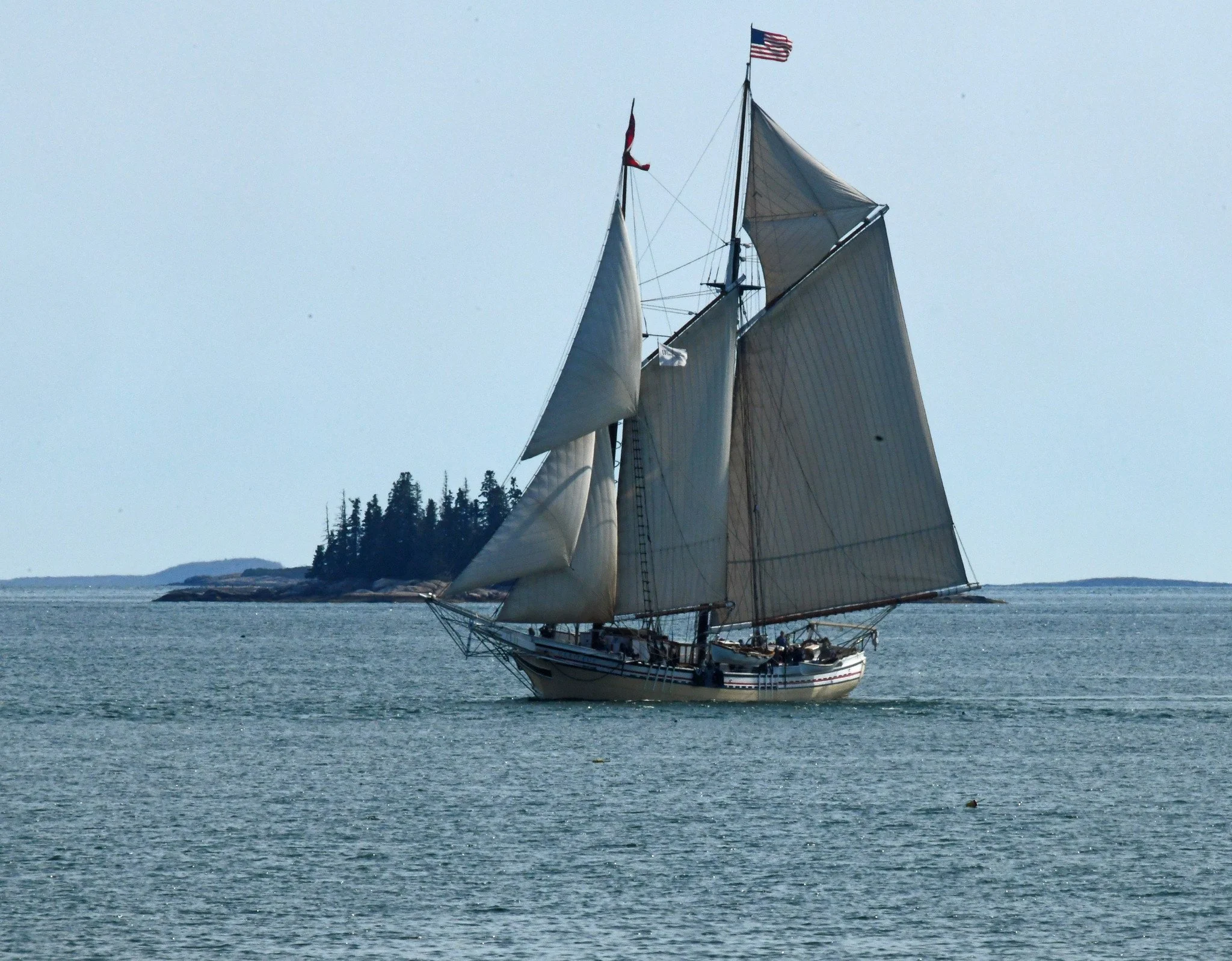
Great Cove attracts some fascinating vessels, including the sleek GRAYLIN, a sardine carrier converted into a luxury yacht; FRAYA, a chunky, sea-going catamaran, and many classic windjammers that take tourists on multi-day journeys along the Down East coast.

Schooner Grace Bailey (Upper Right)

Angelique

American Eagle

Stephen Taber

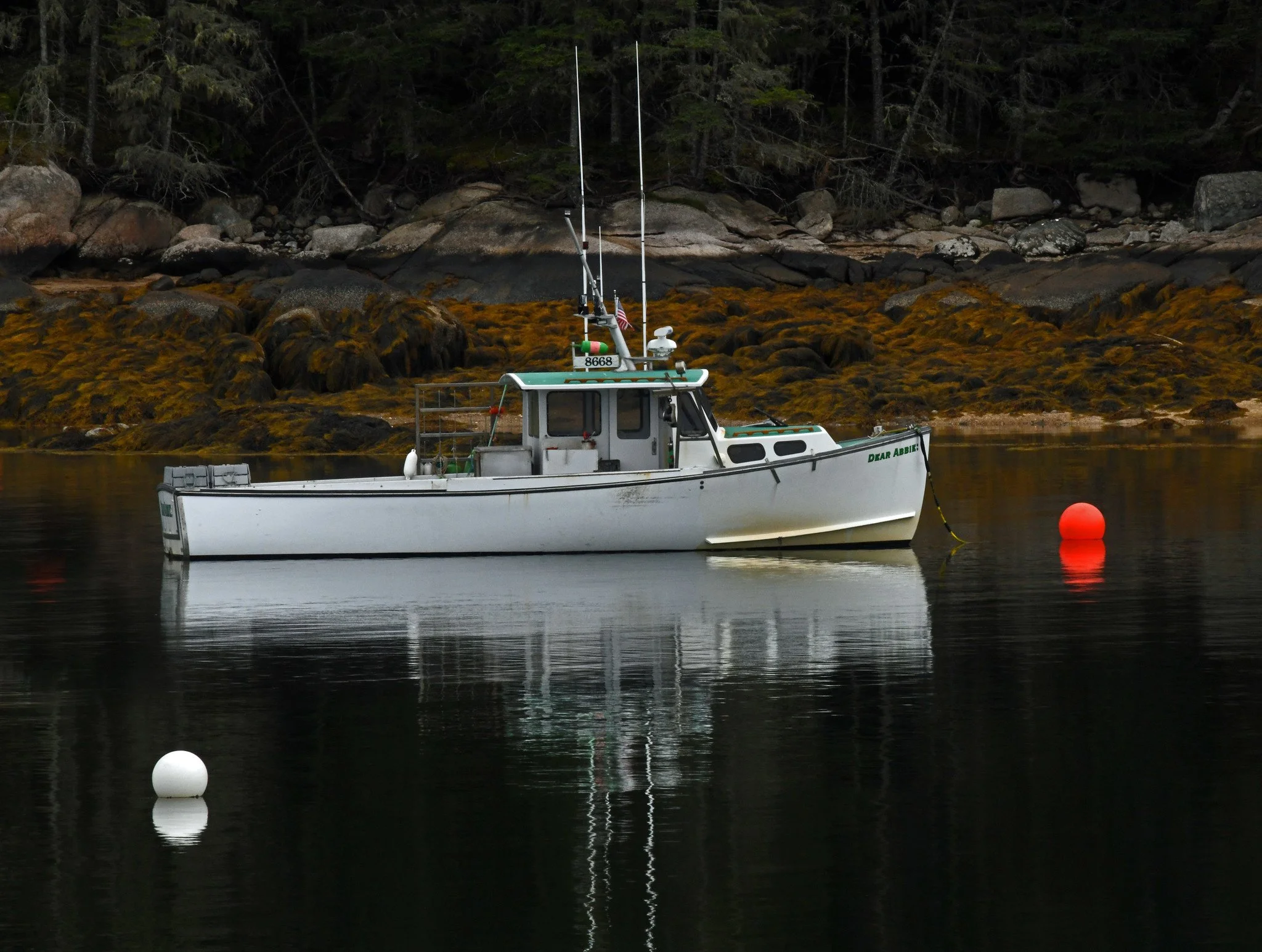
On the working waterfront, the fishing vessels seem to have been having a reasonably good lobster season. The lopbster boats are quite varied, reflecting the ways and means of their captains/owners. Here are a few of the August regulars in Naskeag Harbor:

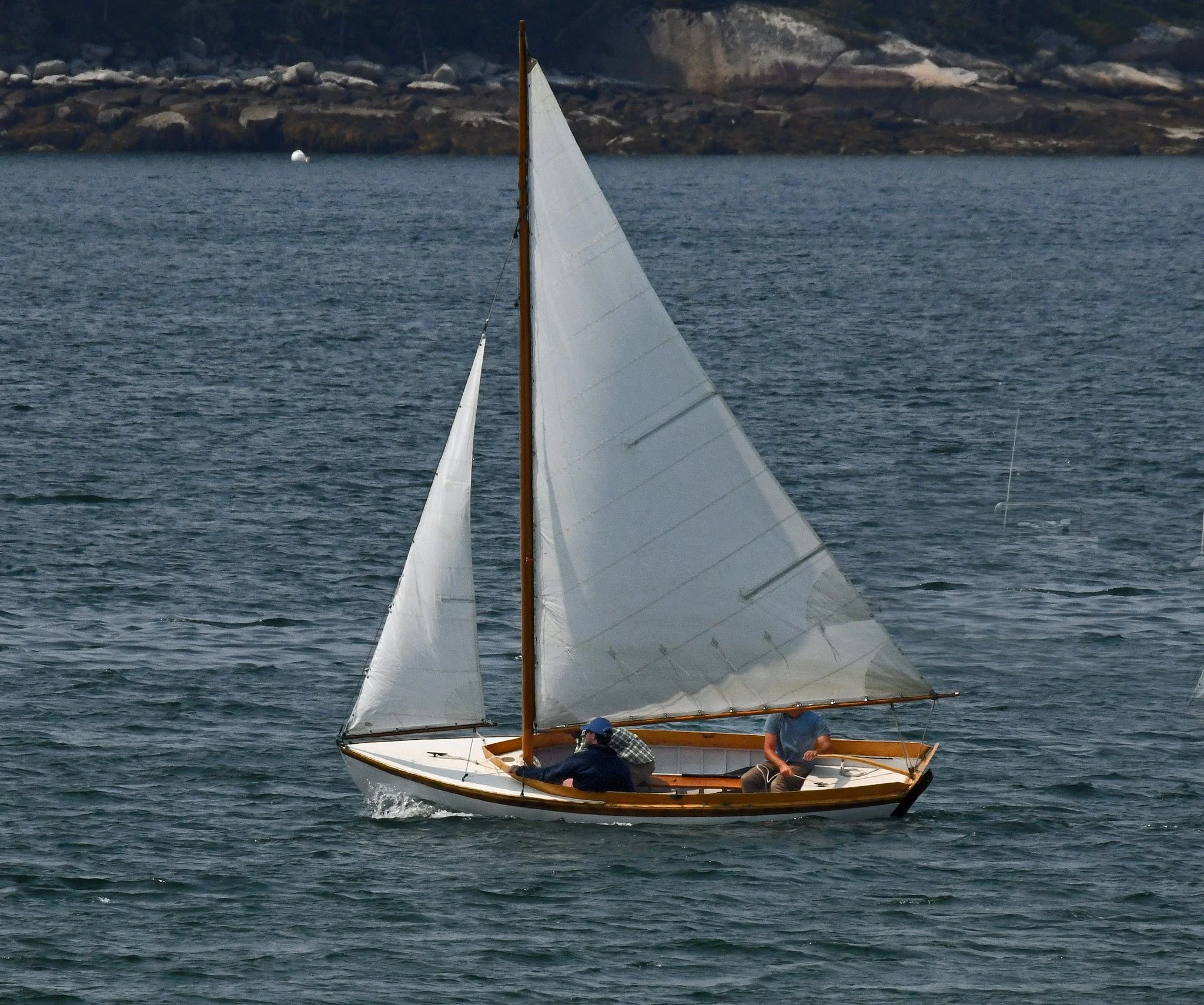
On the educational waterfront, the world-famous WoodenBoat School is in session at Great Cove all summer, teaching how to build and sail small boats, as well as other marine-oriented subjects. The Cove is alive with WBS sailboats during August:

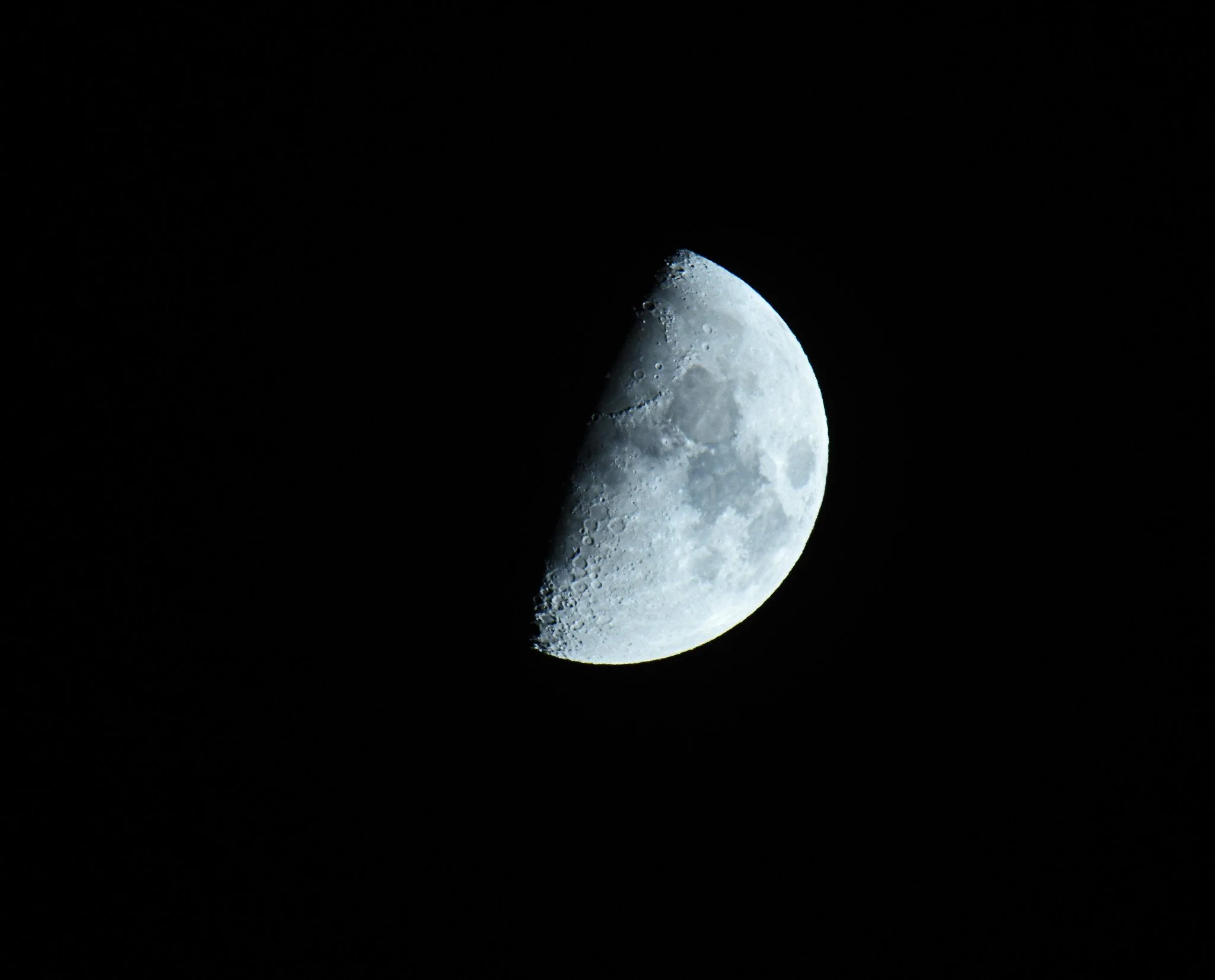
Finally, there was the August full moon. It is most commonly called the Sturgeon Full Moon, the name given it by Native Americans who fished for those fish in August. She rose red over Jericho Bay, became white after slipping through our atmosphere, probed Naskeag Harbor with a glitter path, and later slimmed down to a crescent and began to grow again. She was about half full last night:

(All images in this post were taken in Down East Maine during August of 2025.)
3 Comments

Comment

In the Right Place: Shy and Audacious

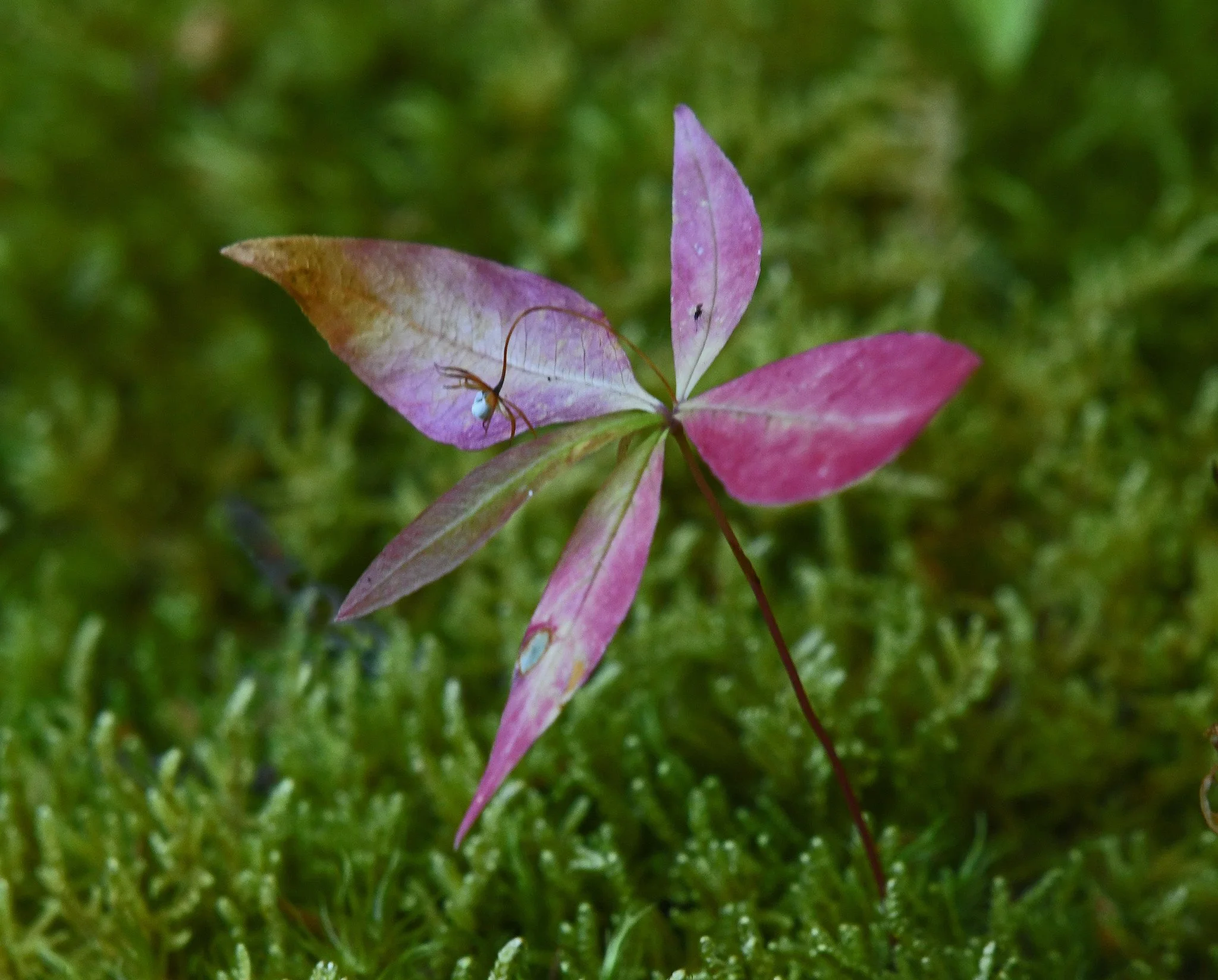
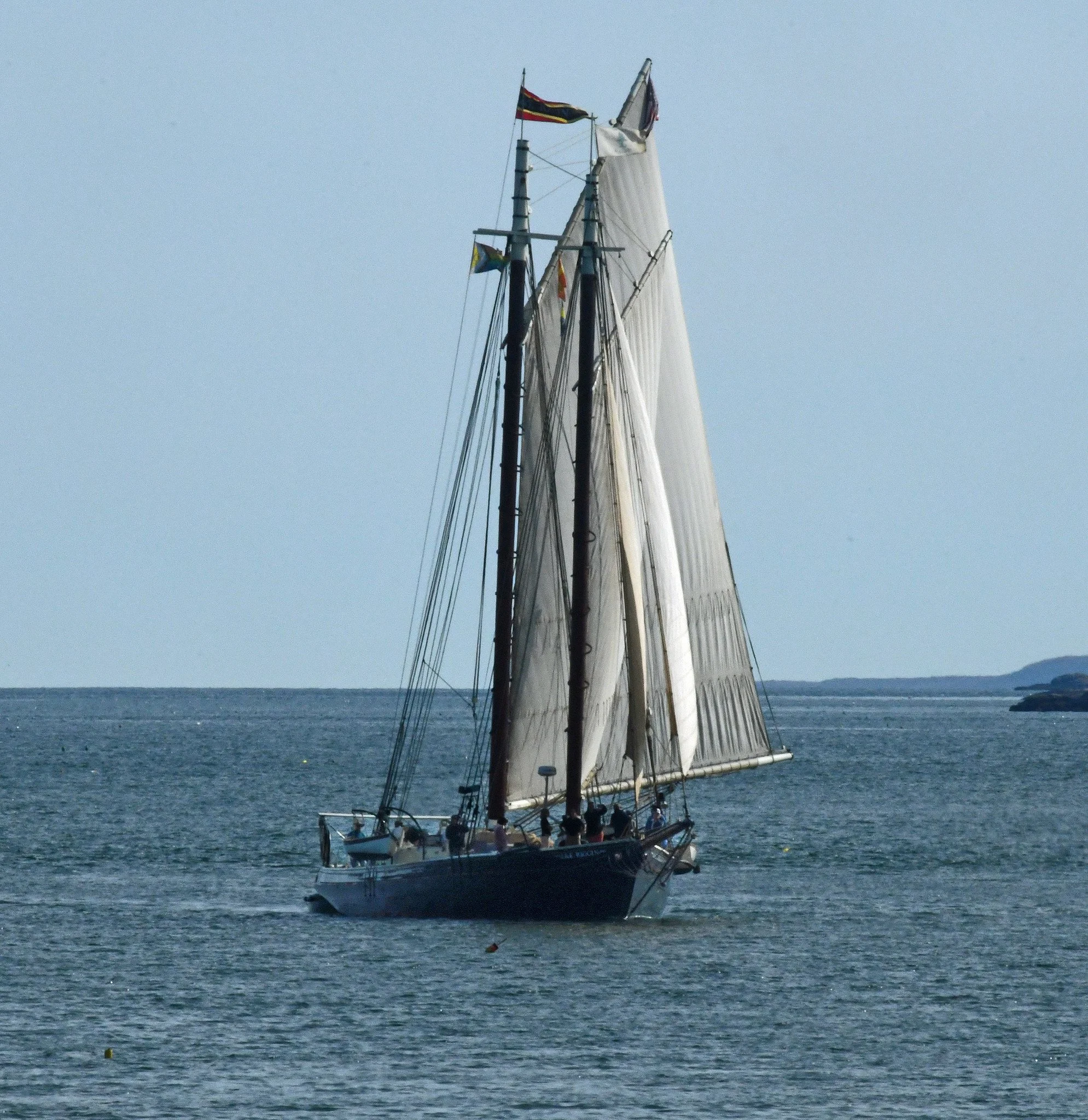
Here you see a dying star. Or, more accurately, the leaves of a dying star flower plant, one of our many shy spring wildflowers whose beauty is obscured by their commonality. After the plant loses its delicate white flowers in early summer and is performing its farewell responsibilities in the early fall, it can turn various shades of color and then lose all color, but – for a few days – almost glow in ghostlike hues:

On the other hand, there is no obscuring the beauty of audacious gladiolas in the light of high summer and early fall. They are neither common nor shy at any time in their life. Some already are shedding their shriveling flowers in careless fall disarray.

(Images taken in Brooklin, Maine, on August 16 (gladiola) and 26-27 (starflower), 2025.)
Comment