Comment

In the Right Place: Embers and Wine

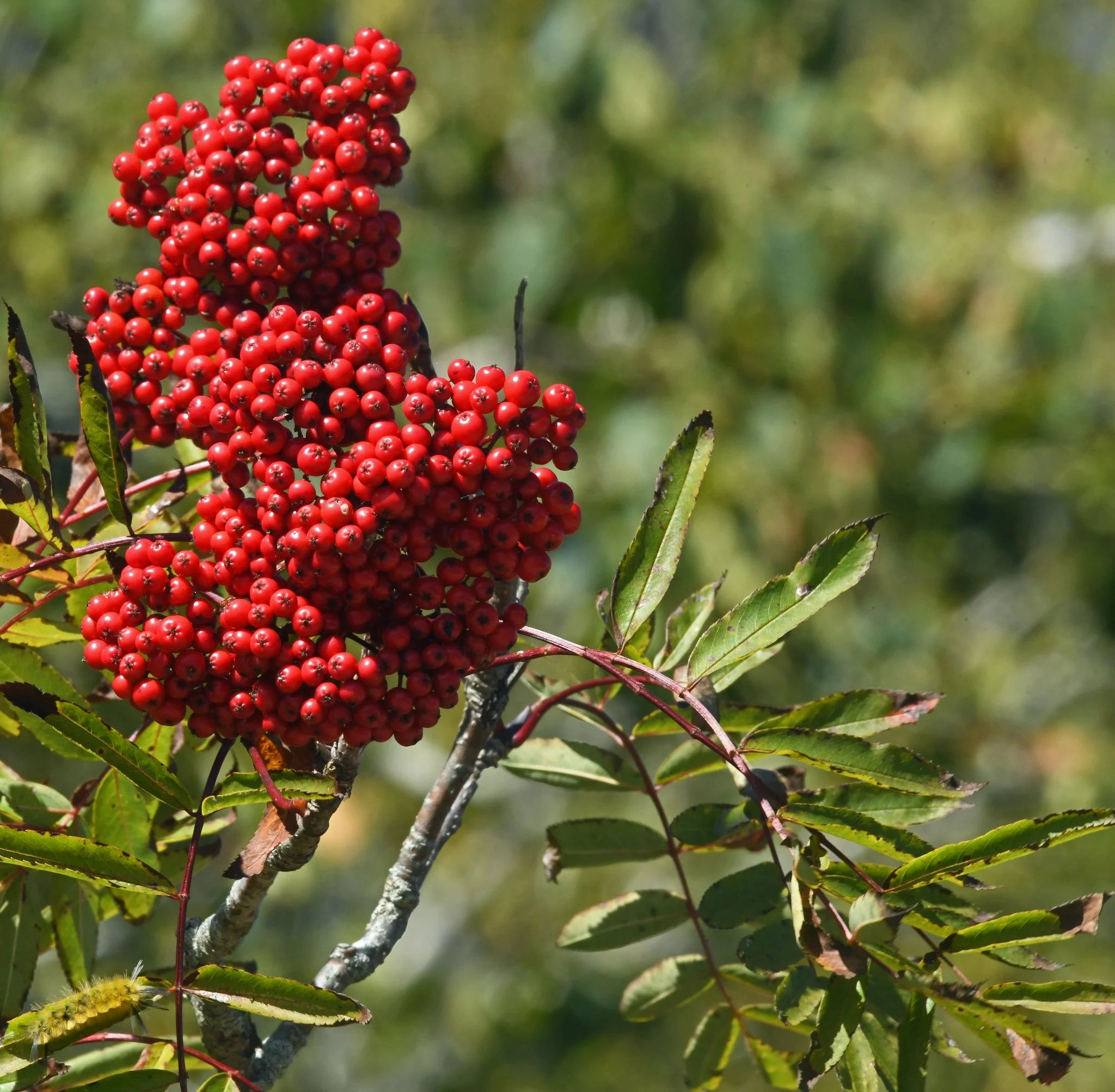
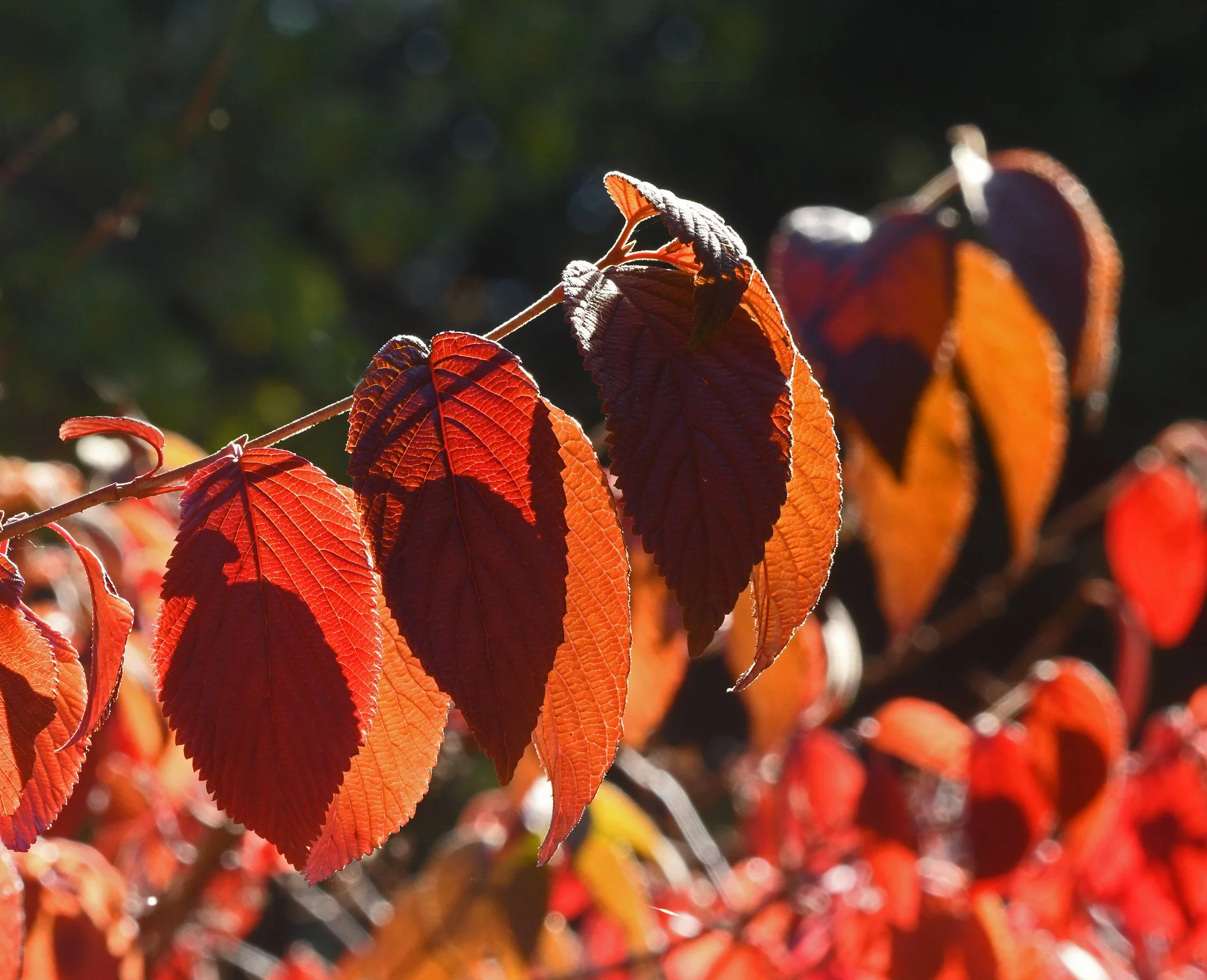
This fall the toothed leaves on our doublefile viburnums seem especially striking. Maybe it’s the drought. When backlit by a lowered October sun, the leaves glow like embers, as you see here. On cloudy days, they look like they’ve been dipped in a rich Burgundy wine and left to dry:
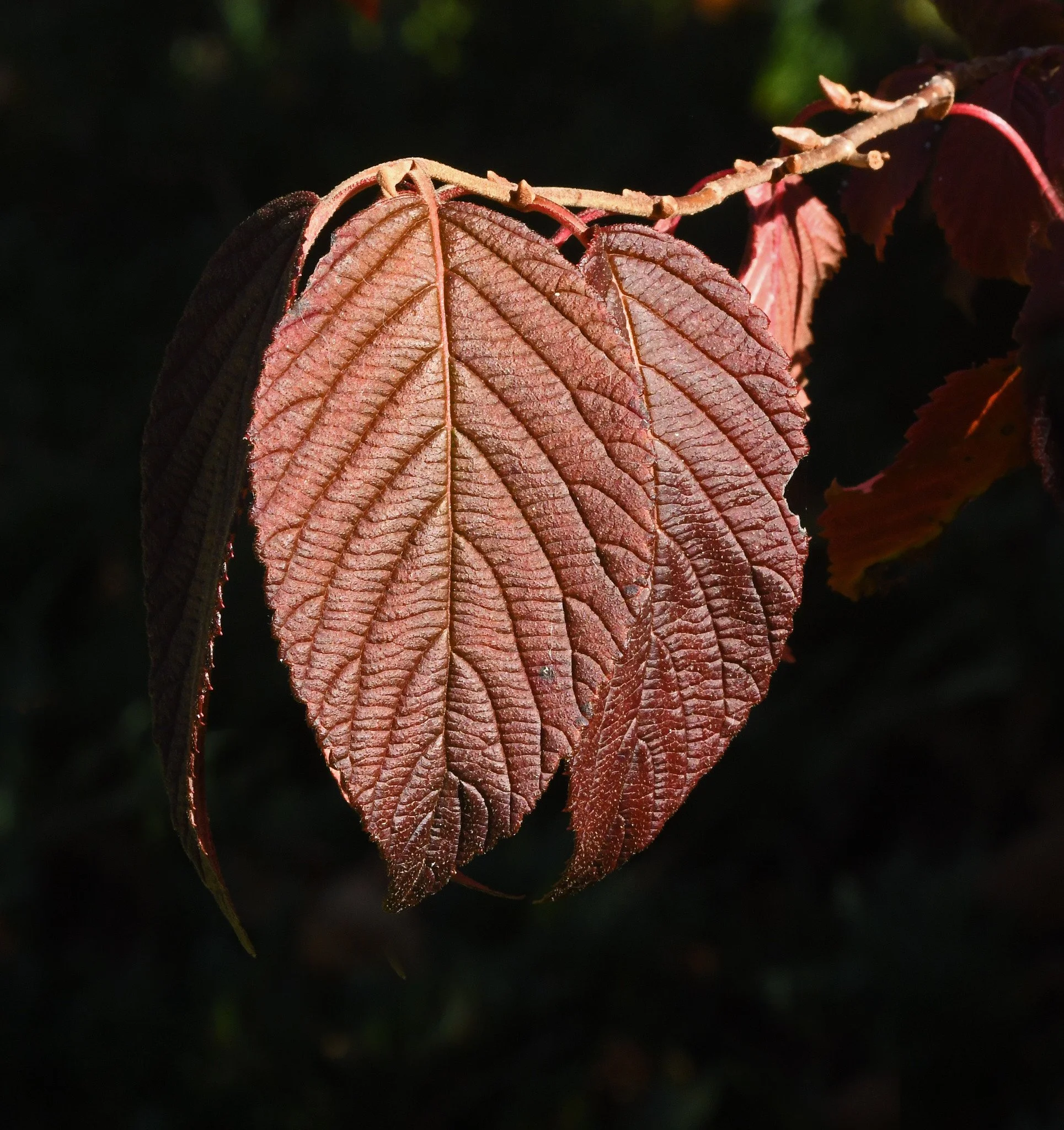
The doublefile viburnum (Viburnum plicatum) is known for its distinctive horizontal branches that are covered in lacecap-style flower clusters in the spring, full of berries loved by the birds in late summer and early autumn, and decorated with colorful hanging, ovate leaves in the fall and early winter.
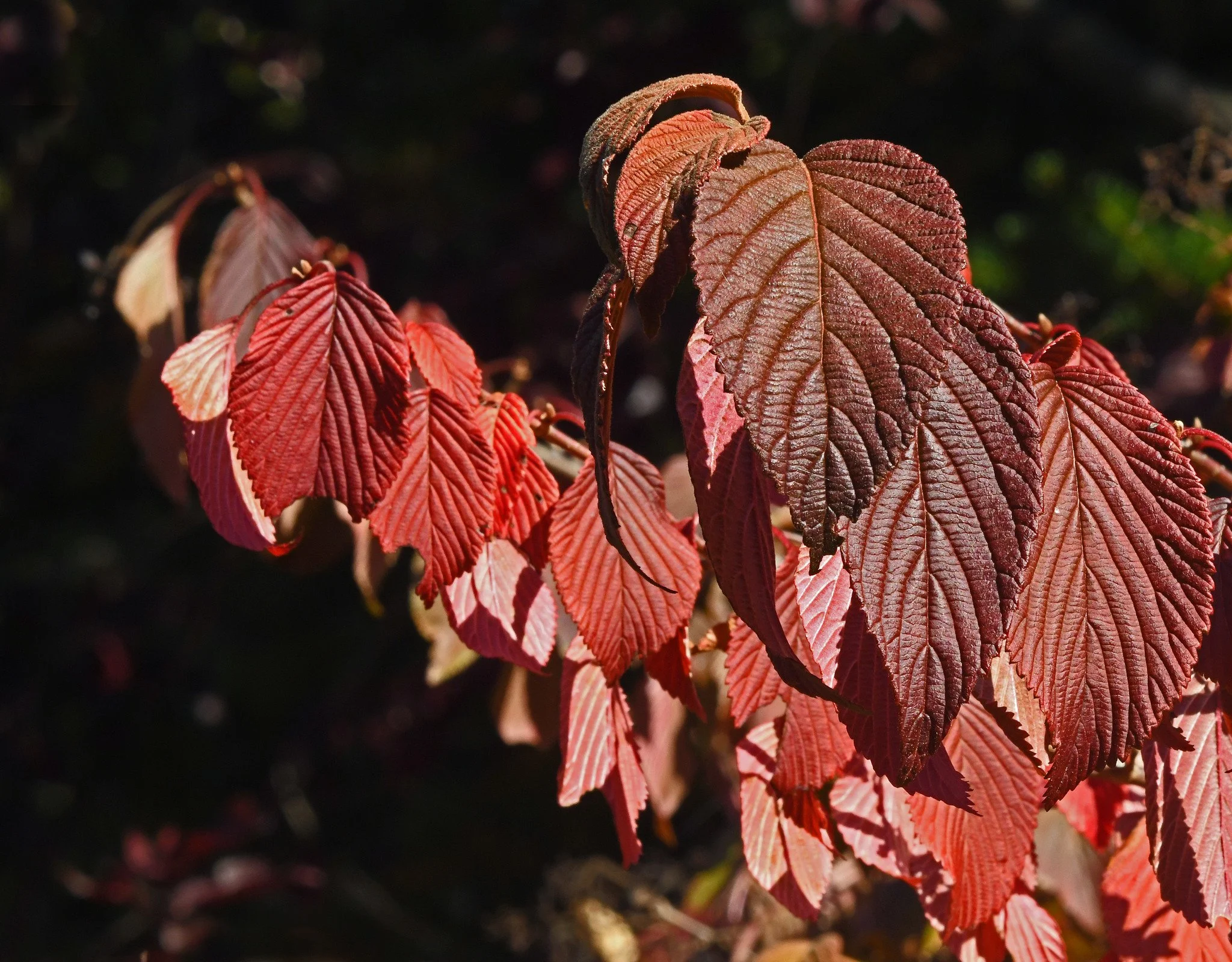
(Images taken in Brooklin, Maine, on October 5, 2025.)
Comment

Comment

In the Right Place: American Neoclassical

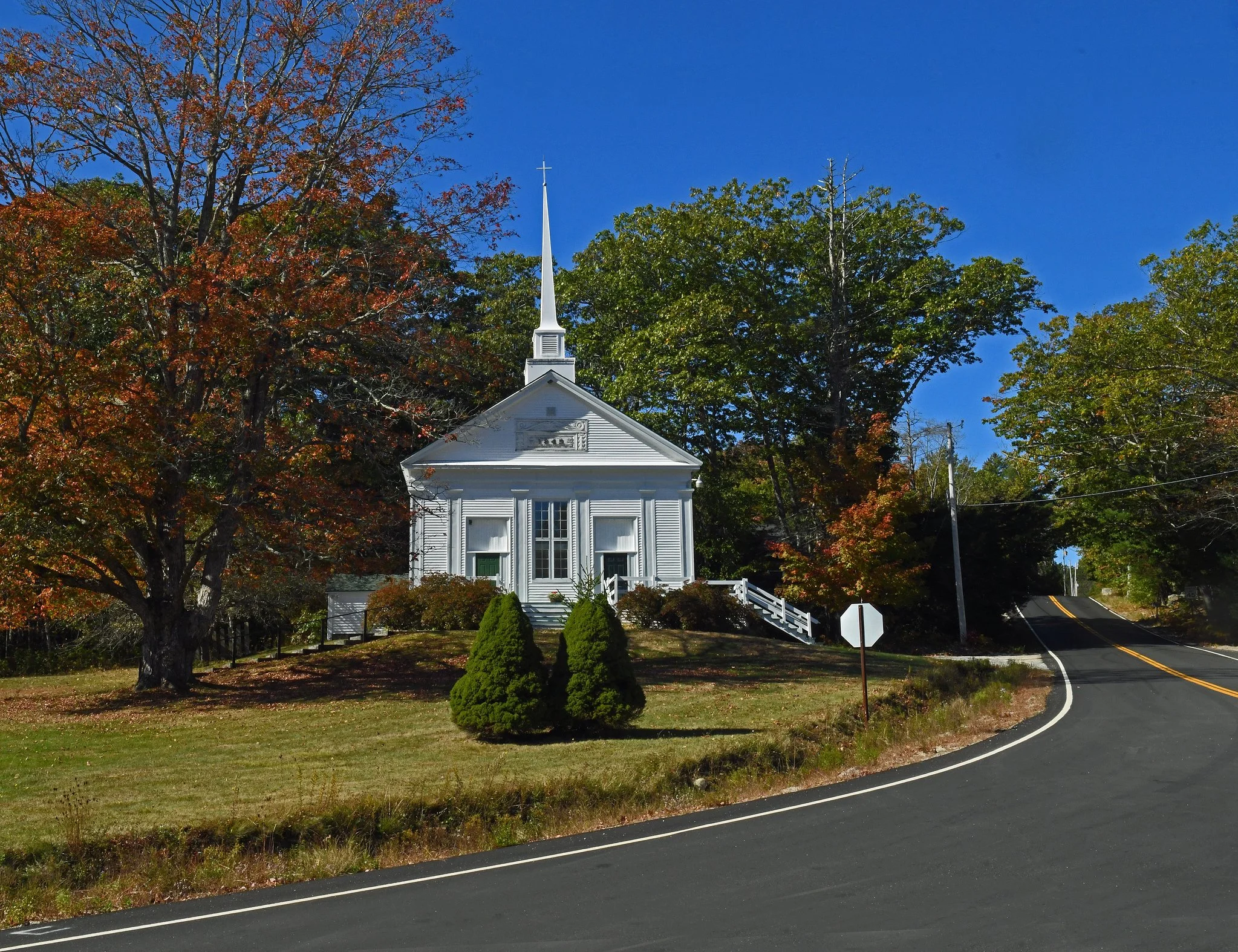
Here you see a Baptist church that was built in 1845 and, I believe, still is attended by a congregation. It seems typical of many of the 19th Century rural New England churches that were built in what is now called the Vernacular Greek Revival style. Their new, hard-working congregations could not afford (and did not want) a grand Greek Revival building of the type going up in wealthy areas in the quickly-expanding United States.

That is, this church is Vernacular (of a localized style) because it is close to a road, made mostly of wood, and painted white in imitation of marble. It has a Greco-Roman triangular temple front (pediment), as did many real Greek Revival buildings, but no marble or stone columns to hold the pediment up – just wooden impressions of plain Doric columns (pilasters). It has a multi-stage belfry, but maybe no bell. (Some Vernaculars used stucco and/or brick, according to the literature and what I have seen.)

Nonetheless, who would want a large Greek Revival edifice in this setting? This apparently well-maintained church seems appropriate and inviting for a local congregation. It sits there in quiet brightness by a rising rural road in the shelter of tall trees – not proud, but certainly not shy. (Image taken in North Sedgwick, Maine, on October 11, 2025.) Click on the image to enlarge it.

Comment

Comment

In the Right Place: And Then There Were Two

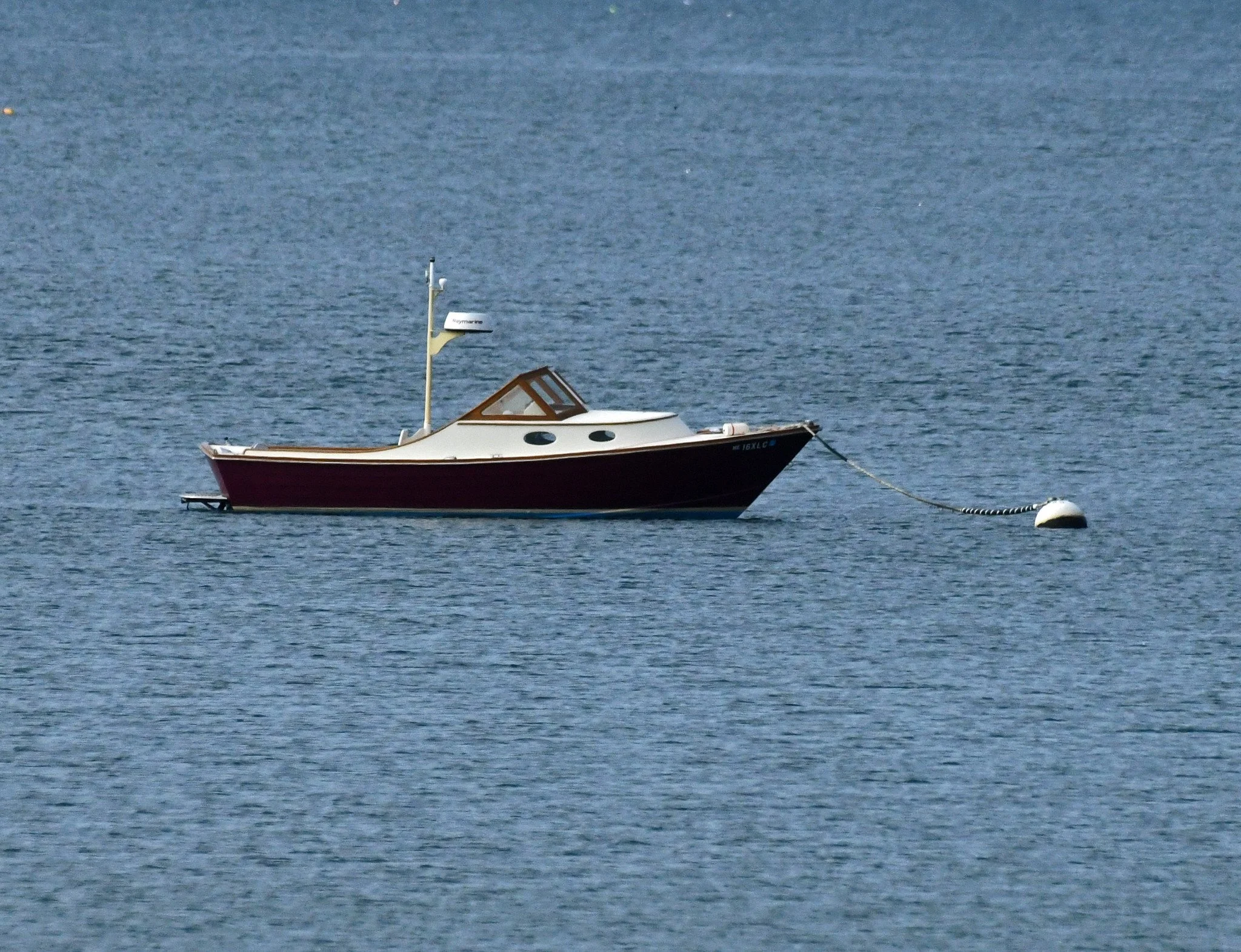
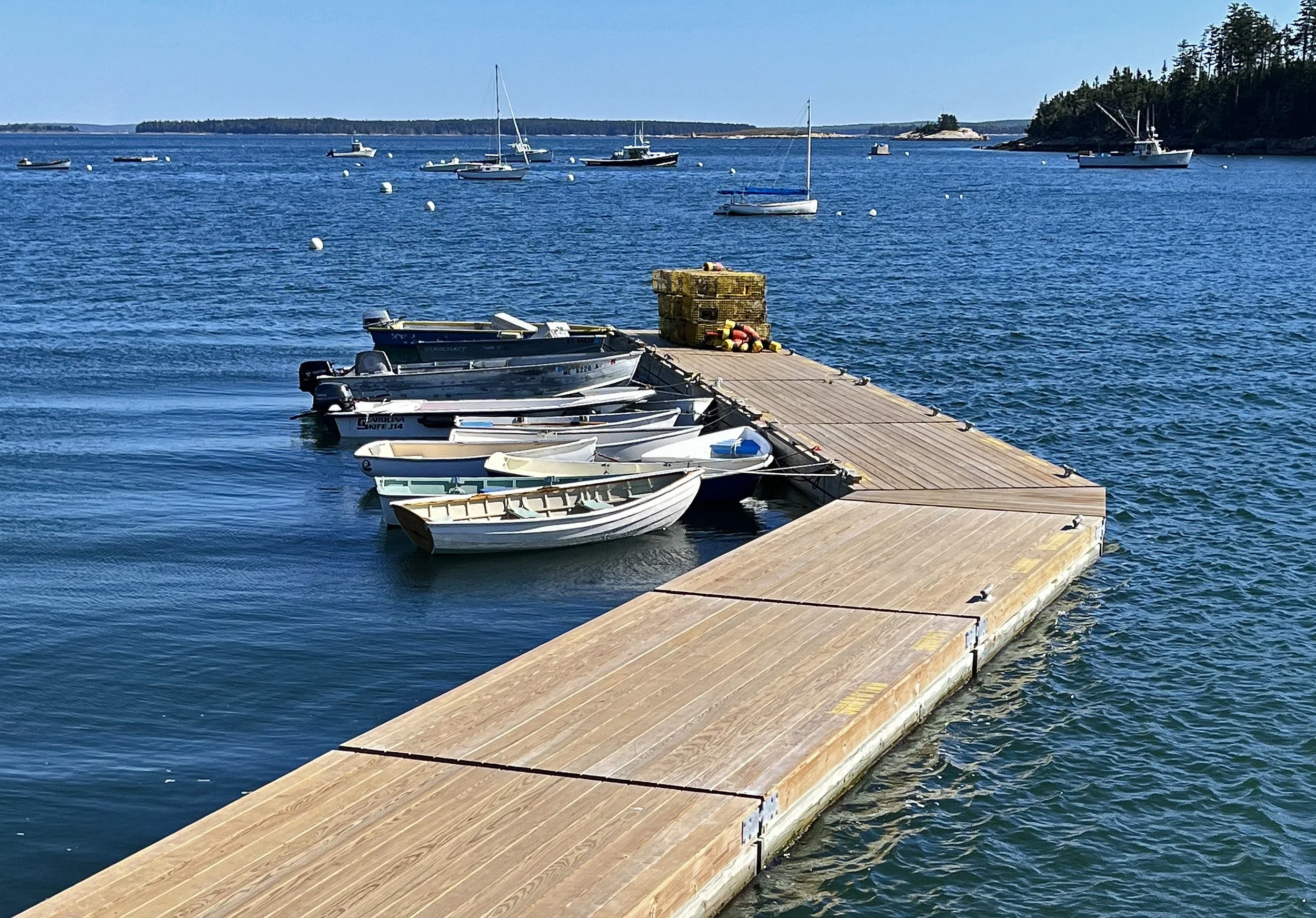
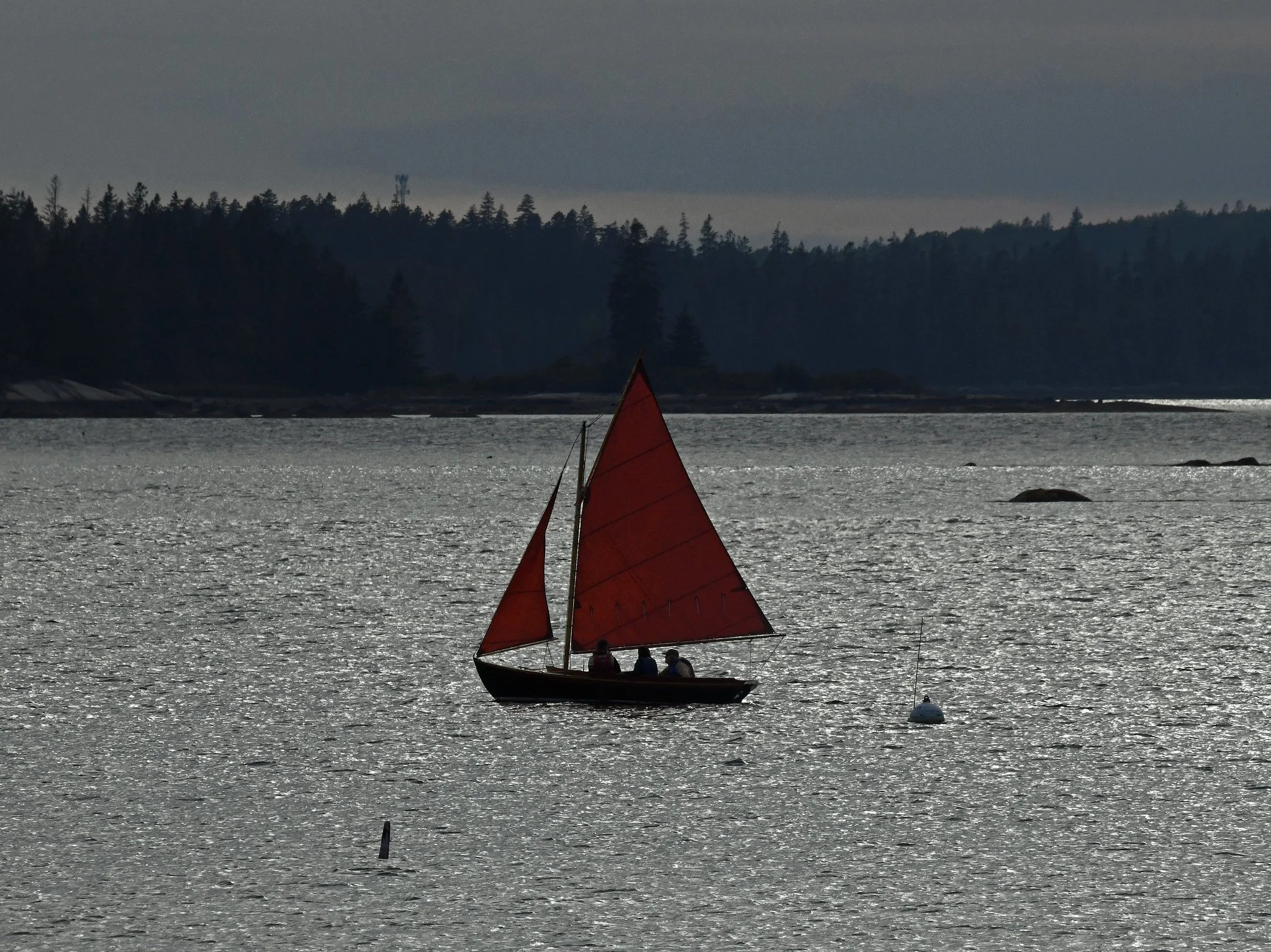
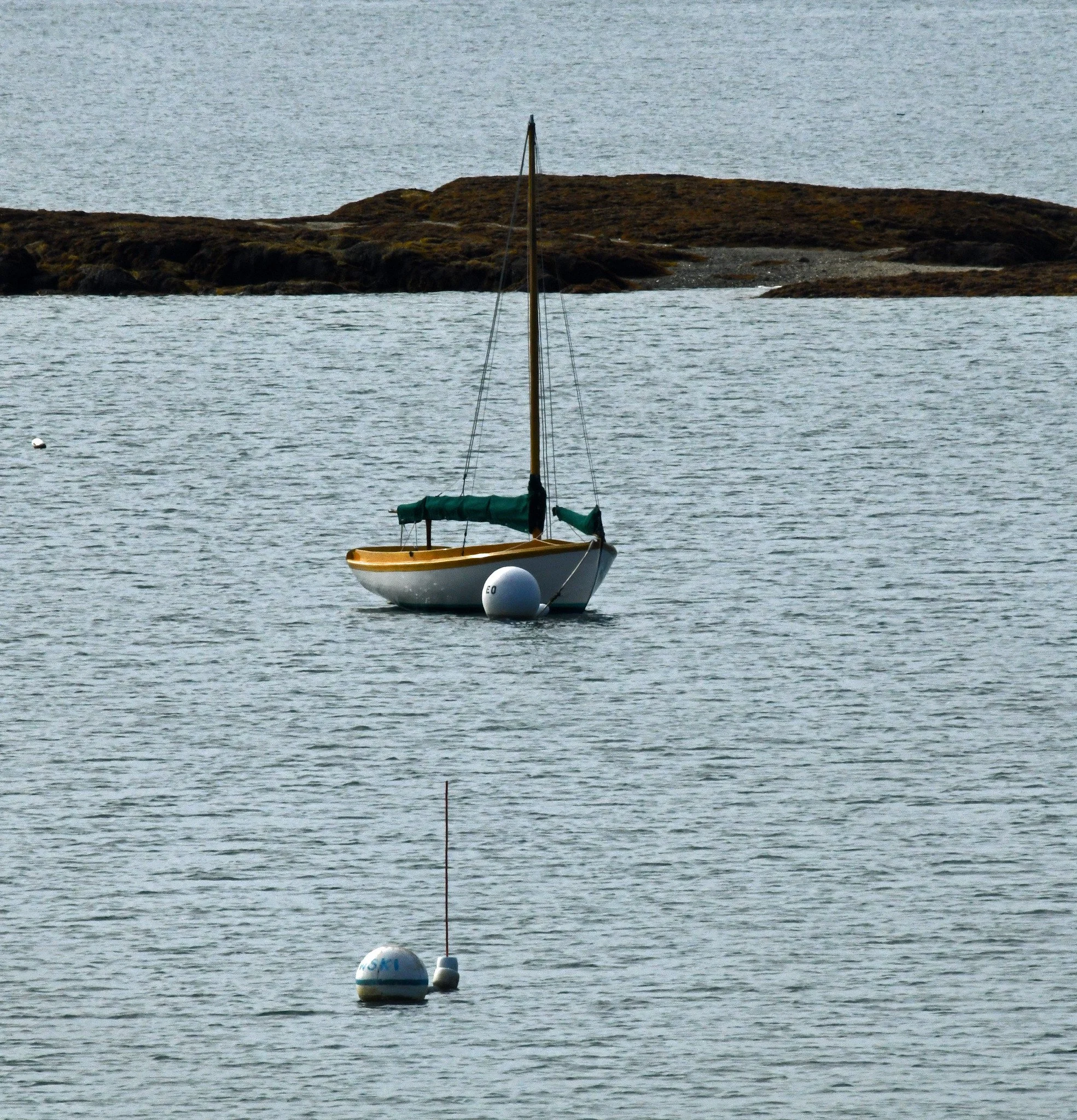
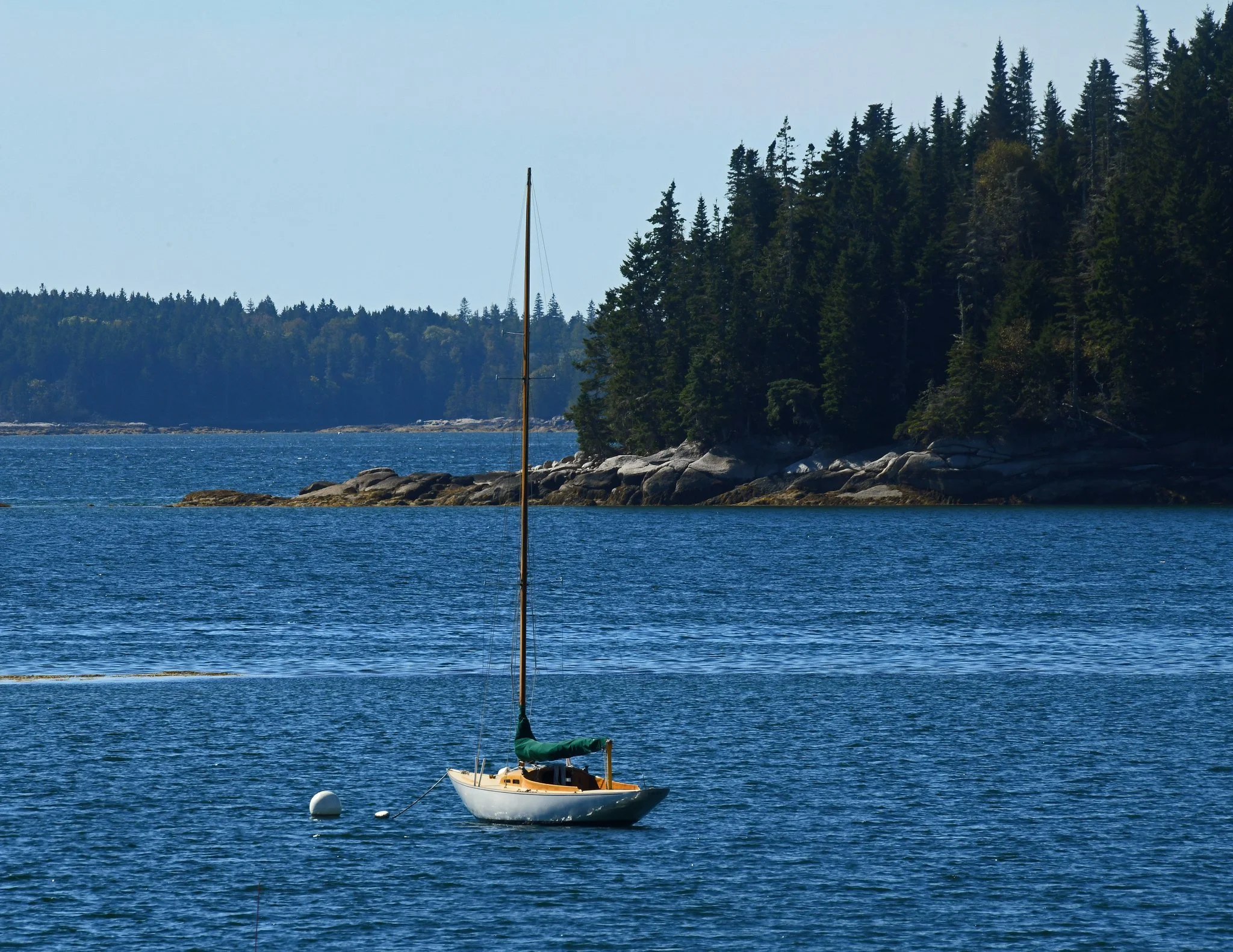
Yesterday there were only two boats left in all of Great Cove, both owned by neighbors who live on the Cove. Above you see one of the two: EO, a 12 ½-foot sailboat (Herreshoff or Haven). Below, you’ll see the other boat: RIVERBIRD, a recrafted Chris-Craft runabout/sport boat:

Living on Great Cove is like having year-long box seats at the Circus Maximus. There’s everything from the pageantry of windjammer sail-ins, to the competition of regattas, to the tragedy of duckling flotillas being attacked by bald eagles.

In the summer, the Cove is full of fascinating boats: sailing classrooms owned by the WoodenBoat School; recreational sailboats owned by neighbors and visitors; tall-masted coastal cruisers with tourists eager to explore the School campus; exotic motor yachts; fast motorized runabouts; fishing vessels (lobster/scallop) taking a shortcut; working boats full of marine equipment; skiffs; pulling boats; kayaks; paddle boards, and other watercraft.

Moored boats start to disappear in September, and all usually have moved out before November. Waterfowl then move in. At first, it’s often flocks of Canada geese migrating south. In addition to our resident sea gulls and common loons, at least 18 species of waterfowl winter in the state. In the Cove, it’s mostly common eiders, scoters, mallards, black ducks, mergansers, and bufflehead ducks each year.  There also are the occasional seals and porpoises chasing fish. Thumbs Up!

(Images taken in Brooklin, Maine, on October 14, 2025.)
Comment

Comment

In the Right Place: Season’s Greetings

October in New England is the beginning of that special season that is NOT the leaf-turning, apple-picking, pumpkin-finding, deer-hunting, baseball playoff, football or other outdoor activity season. It’s the coming of the indoor STEW season, which arrives best when the nights are crisp outside the house and glowing inside from a wood fire.

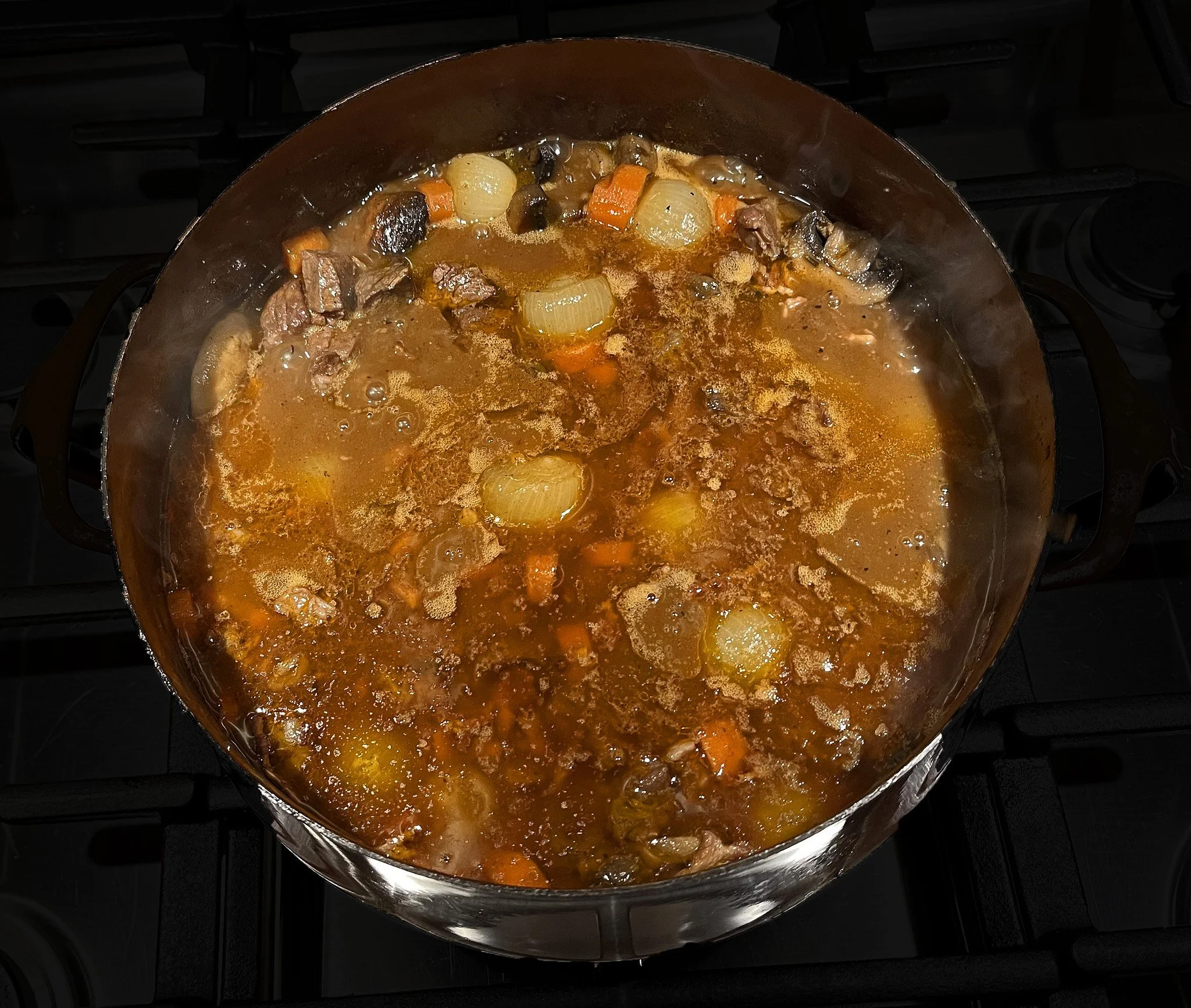
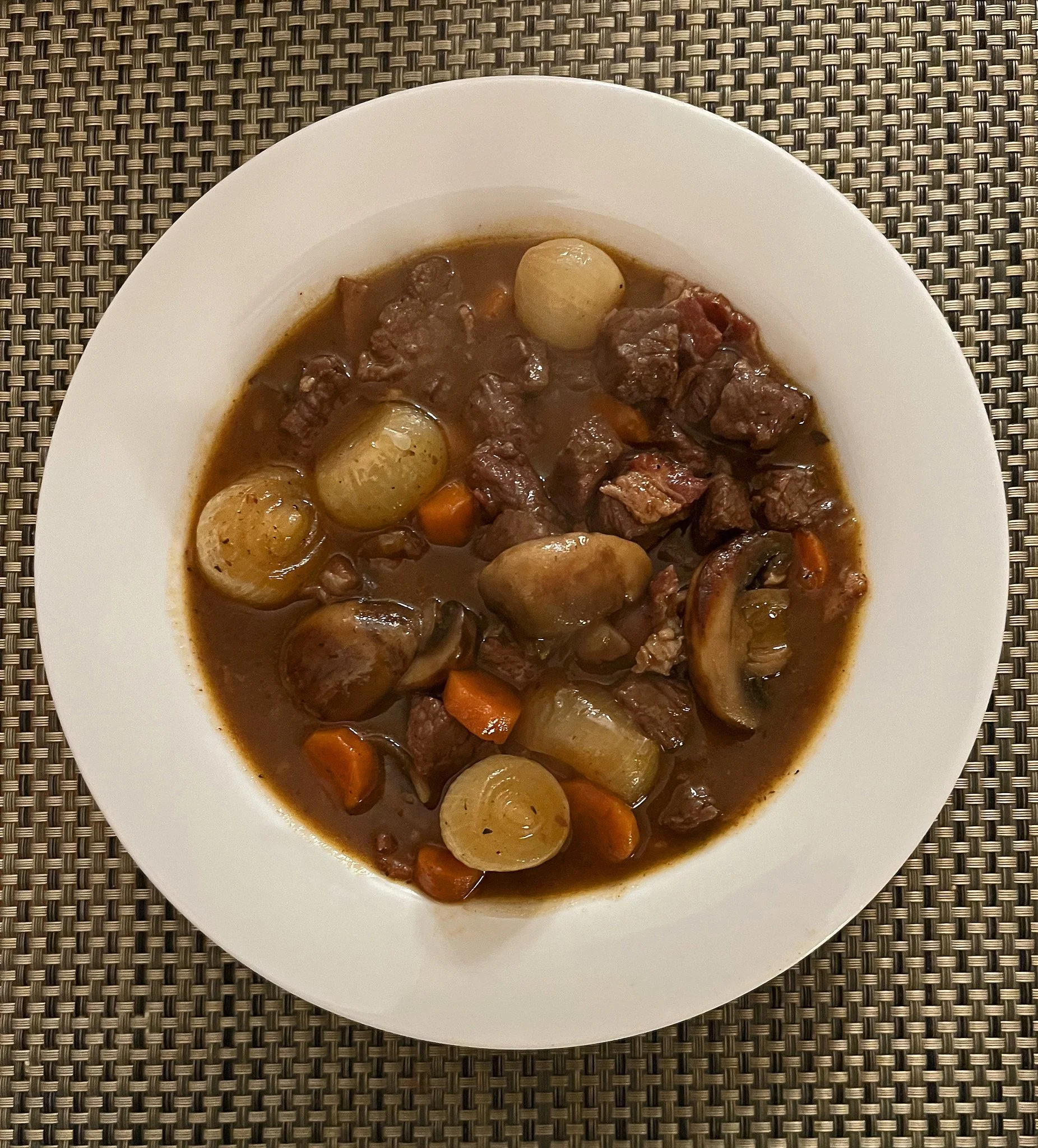
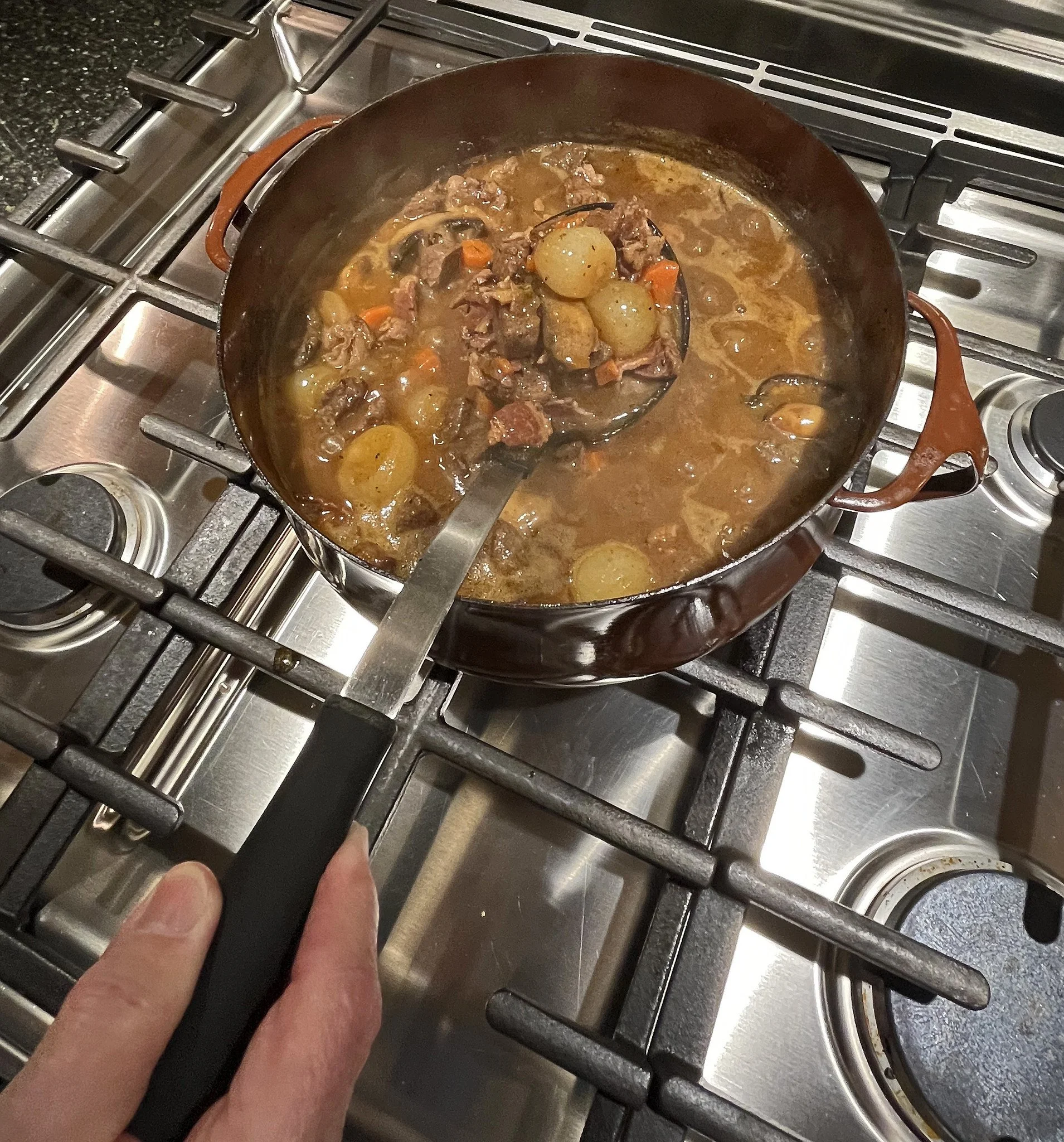
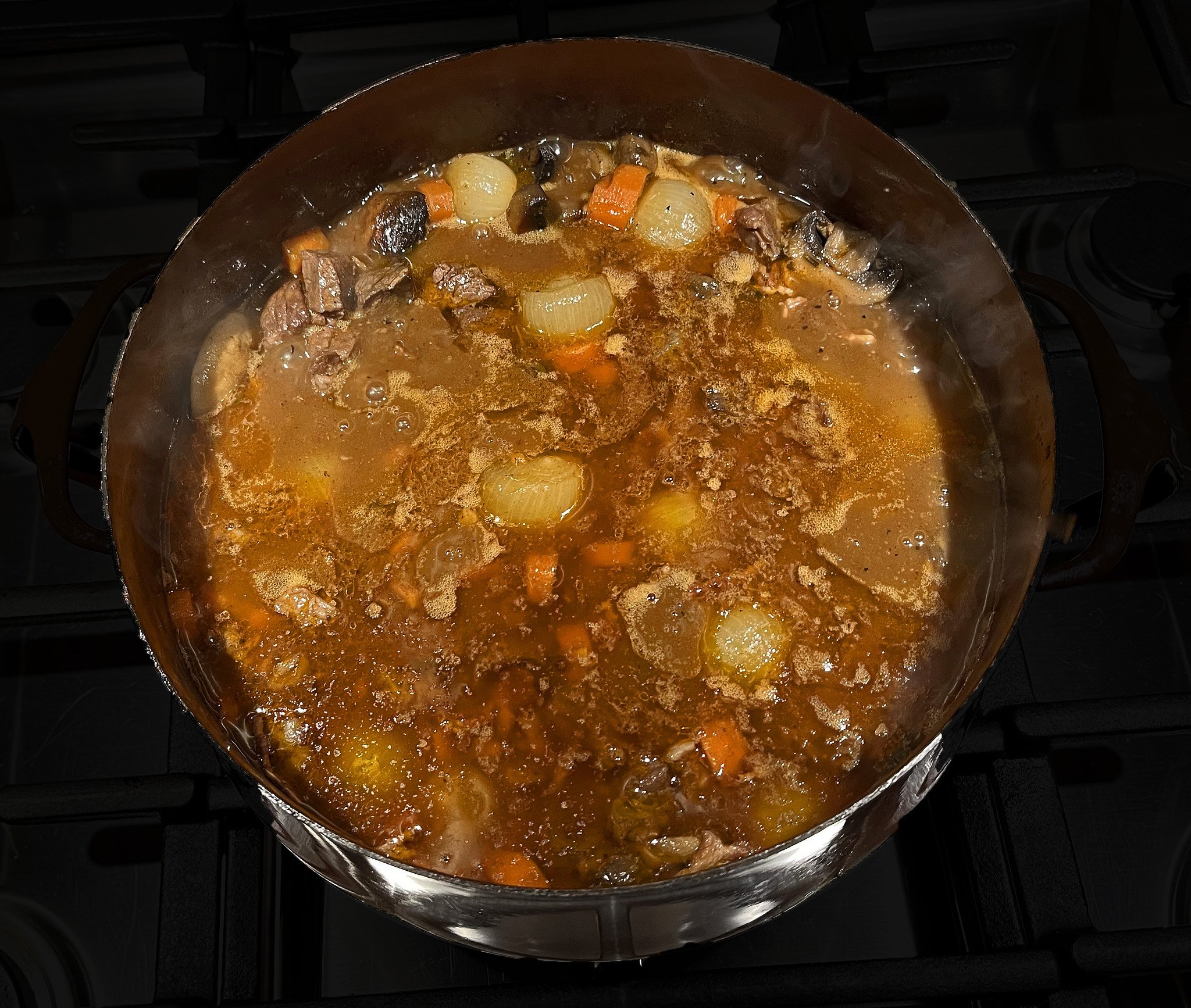
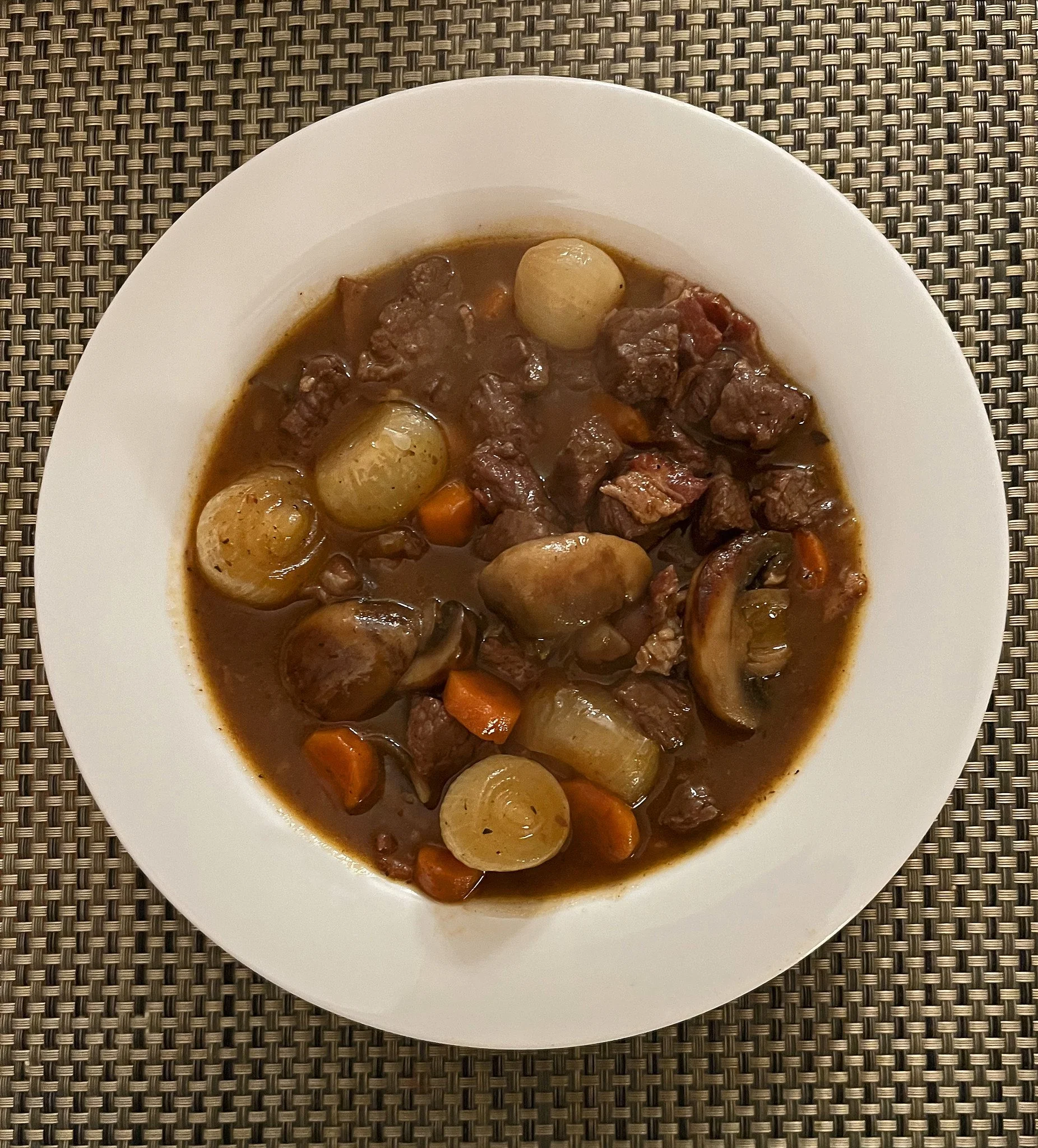
Barbara and I had our favorite stew Sunday night. That would be beef (or boeuf for you Francophiles) bourguignon, as prepared by our daughter Jessica, who is a great cook. You can practically smell and taste the hearty deliciousness from this image of Sunday’s dinner:

This classic French stew contains lots of chuck beef that is slow-cooked with onions, carrots, garlic, mushrooms, herbs, bacon and, especially, lots and lots of added, big-bodied red wine for the ingredients to tread in. As you might have guessed, the stew originates from the Burgundy region of France and is renowned for its savory gravy and fall-apart-tender meat.  

Beef bourguignon began as a peasant recipe designed to make tough meat more palatable, according to what I’ve read. It was then modified for complex tastes and popularized by Julia Child, among others. Here on the Blue Hill peninsula, you’ll probably also want to have some crusty Tinder Hearth bread handy to sop up that exquisite gravy. (Images taken in Brooklin, Maine, on October 12, 2025.)


Comment

Comment

Barbara and Dick's Birthday Dinner

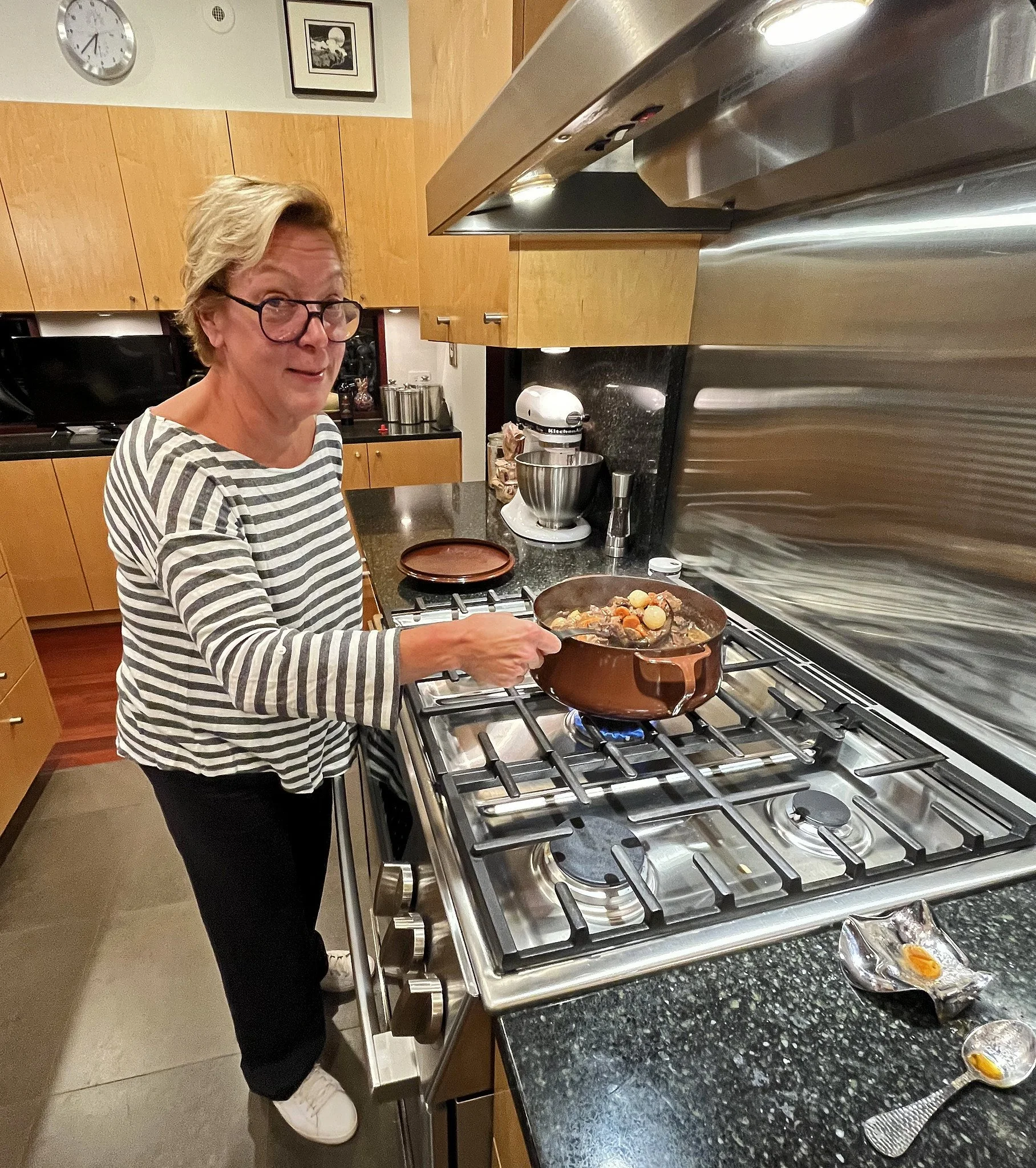
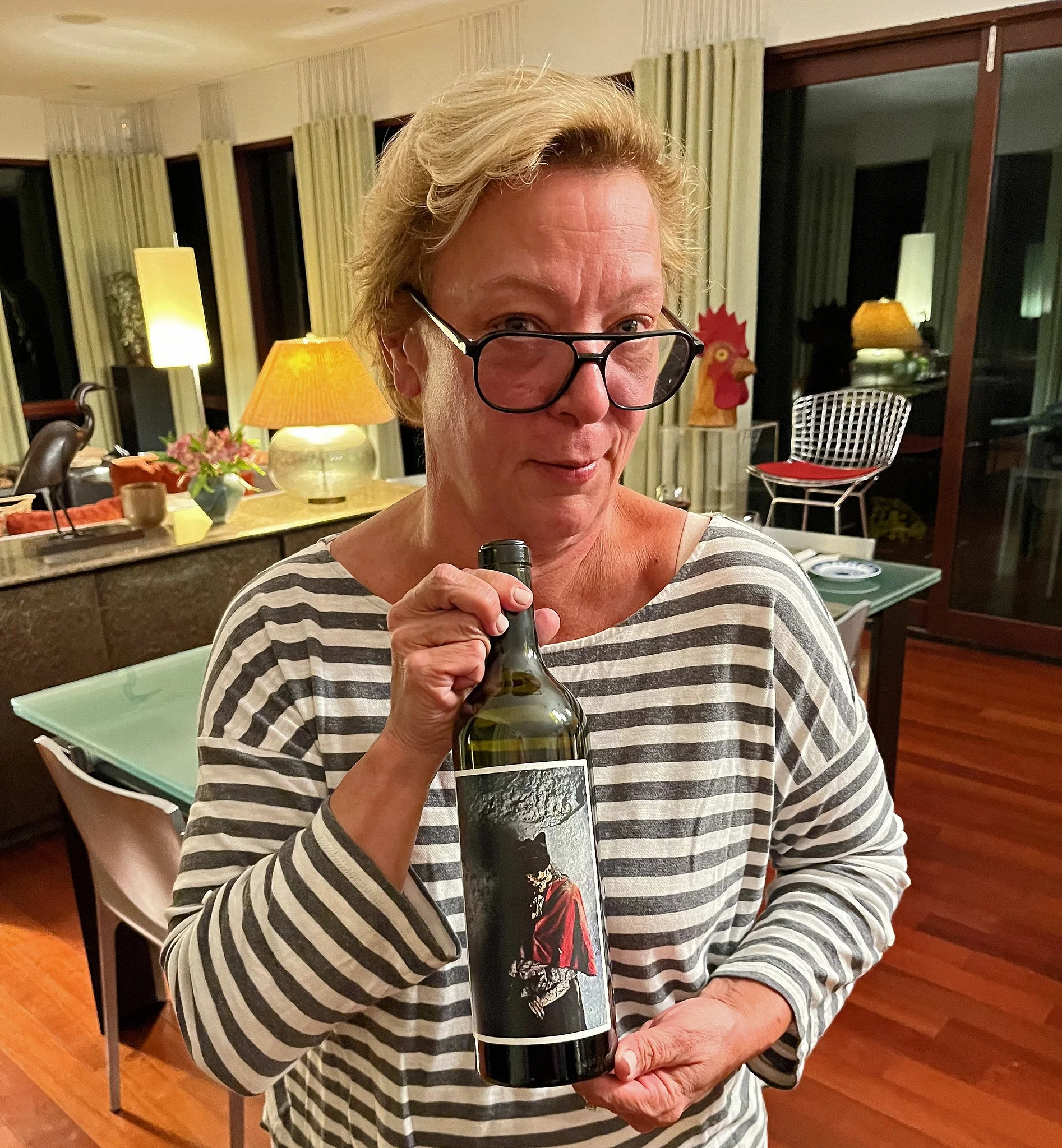
Last night, the birthday codgers were served a wonderful meal and wine by their personal chef, sommelier and flower provider, the talented Madame Jessica Dentzer (aka Julia [our] Child). A magnificent boeuf Bourguignon was well-accompanied by a bold Orin Swift Palermo cabernet sauvignon:

Comment

Comment

In the Right Place: Life with Bernie

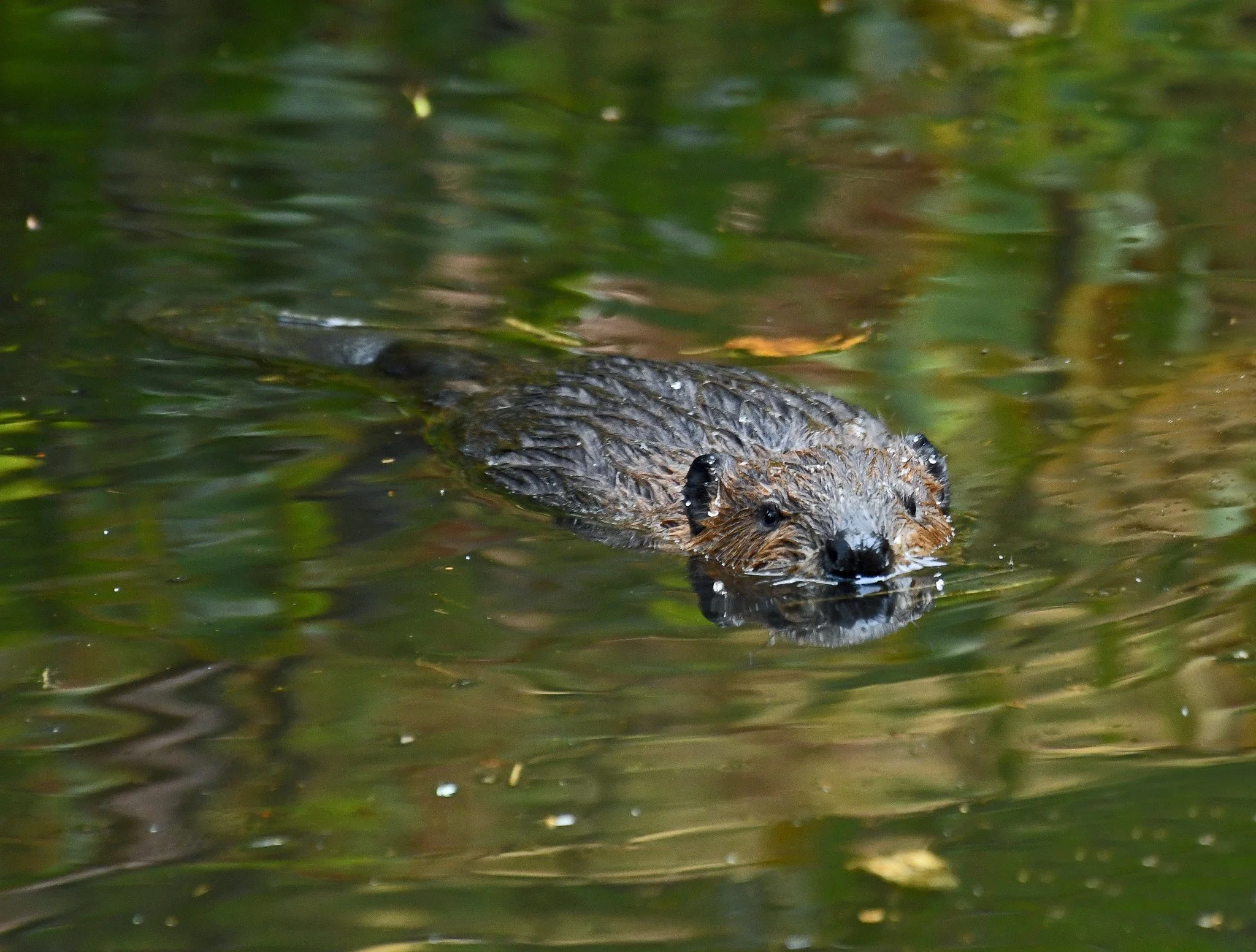
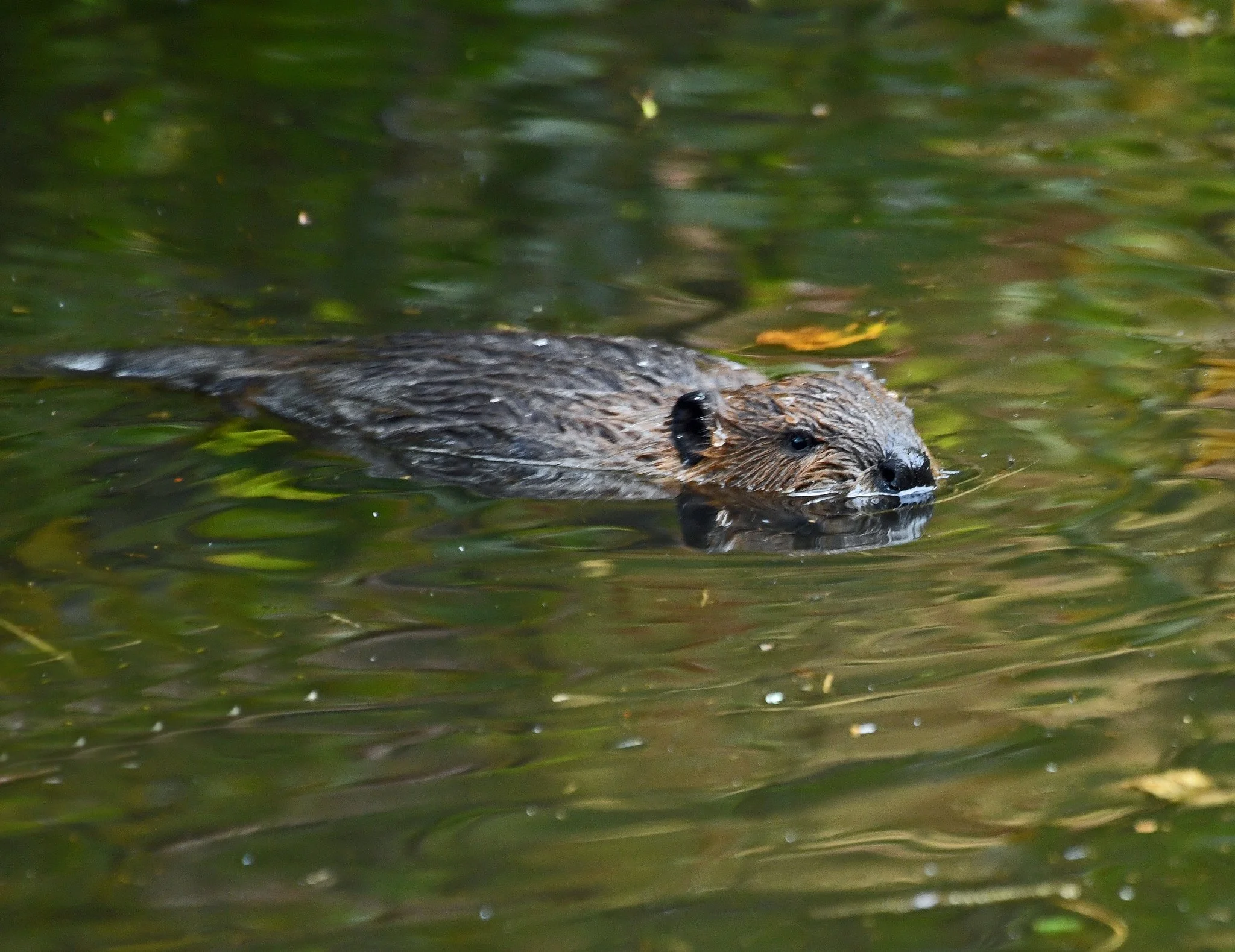
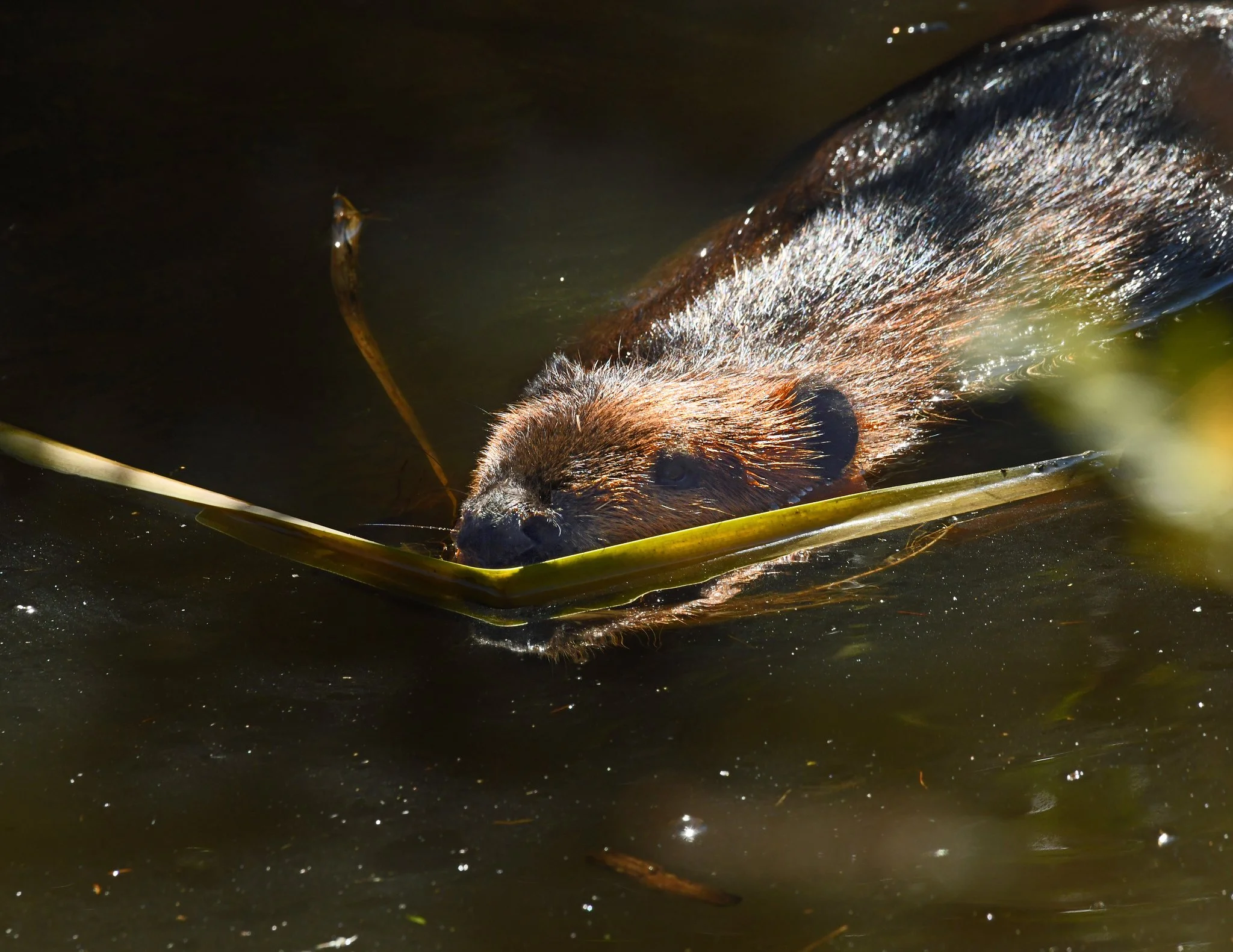
You may remember that an American Beaver visited us in late September, and we weren’t sure what to do about him. Well, he apparently has decided to stay and we still don’t know what to do about him, other than to name him Bernie and see what happens.

This is an image of Bernie at dusk Tuesday, when he was working hard in a pond that he alone created and that apparently still is a work in progress.  He did it by putting up a dam across a stream that acts as an overflow channel from our large pond. Except for his first day here, I have only seen Bernie at dusk, which apparently is when he starts his solo shift at the new pond.

As of yesterday, his dam was about three feet high, which is not nearly the size of some beaver Hoover Dams that I’ve seen. (Not yet, anyway.) He also has taken down at least eight of the many trees in that area. He prefers birch but also has taken down a small maple and several alders as far as I have seen.

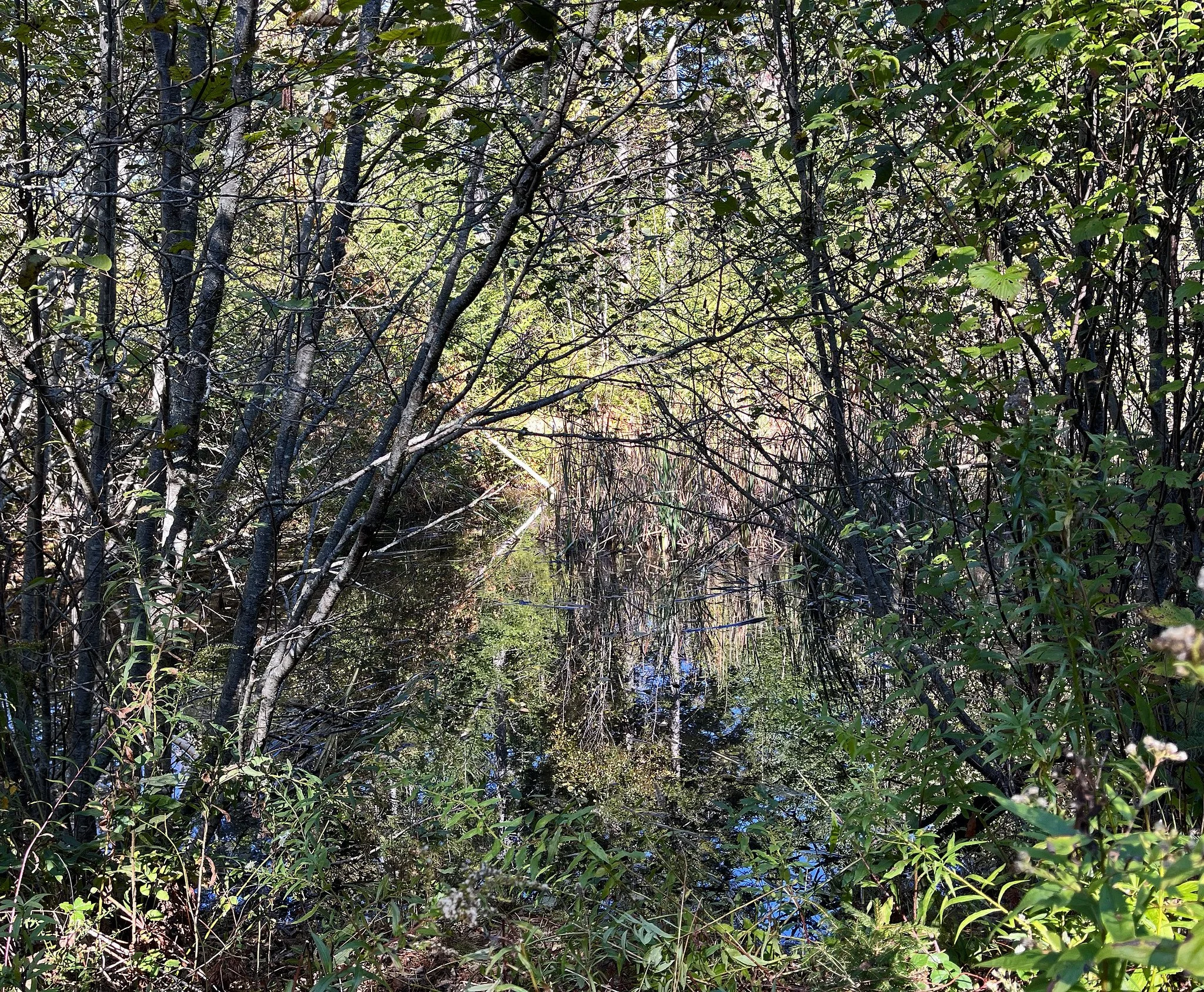
Bernie’s new pond is in a wooded area where a reasonable amount of flooding likely won’t be a problem. In the morning sun, the still, new waters give off reflections of the vegetation that the impressionist Claude Monet probably would like; Bernie probably improved the scene:

Bernie also has created what looks like a relatively small, wood-and-mud-covered residence on a little island in an existing, adjac:ent pond, but I’ve seen no dam engineering going on there. I’ve also seen no signs of another beaver in the whole area.

My hope is that Bernie is one of those crotchety “bachelor beavers” that like to live alone and don’t build large dams or colony lodges. They usually build just enough to protect themselves and then get very territorial about keeping other beavers out, according to the literature.

If that’s what happens, he and we probably will be able to come to an understanding. (Images taken in Brooklin, Maine, on October 7 (Bernie) and 11 (Bernie’s mew pond).

Comment

Comment

In the Right Place: The Last of the Queens?

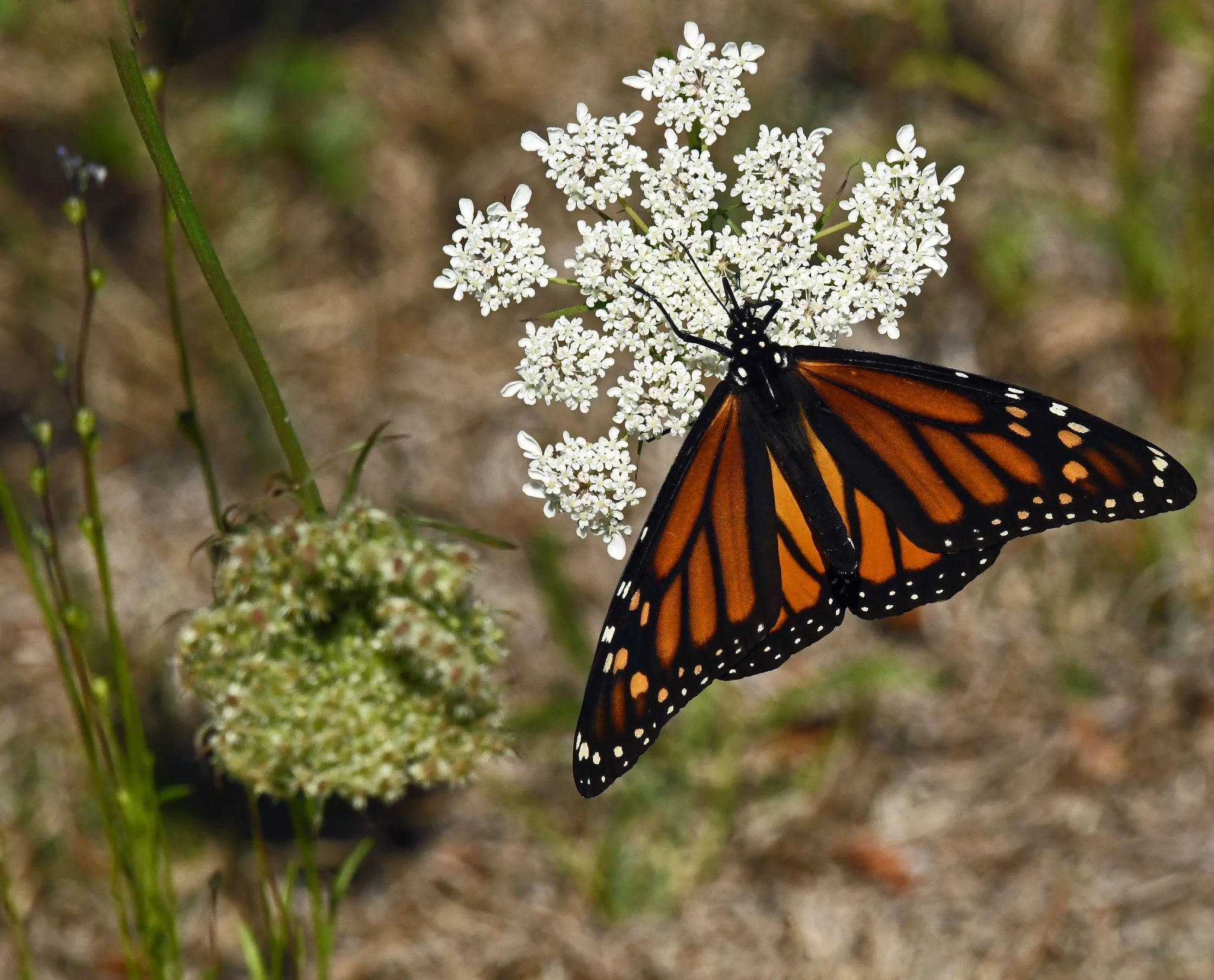
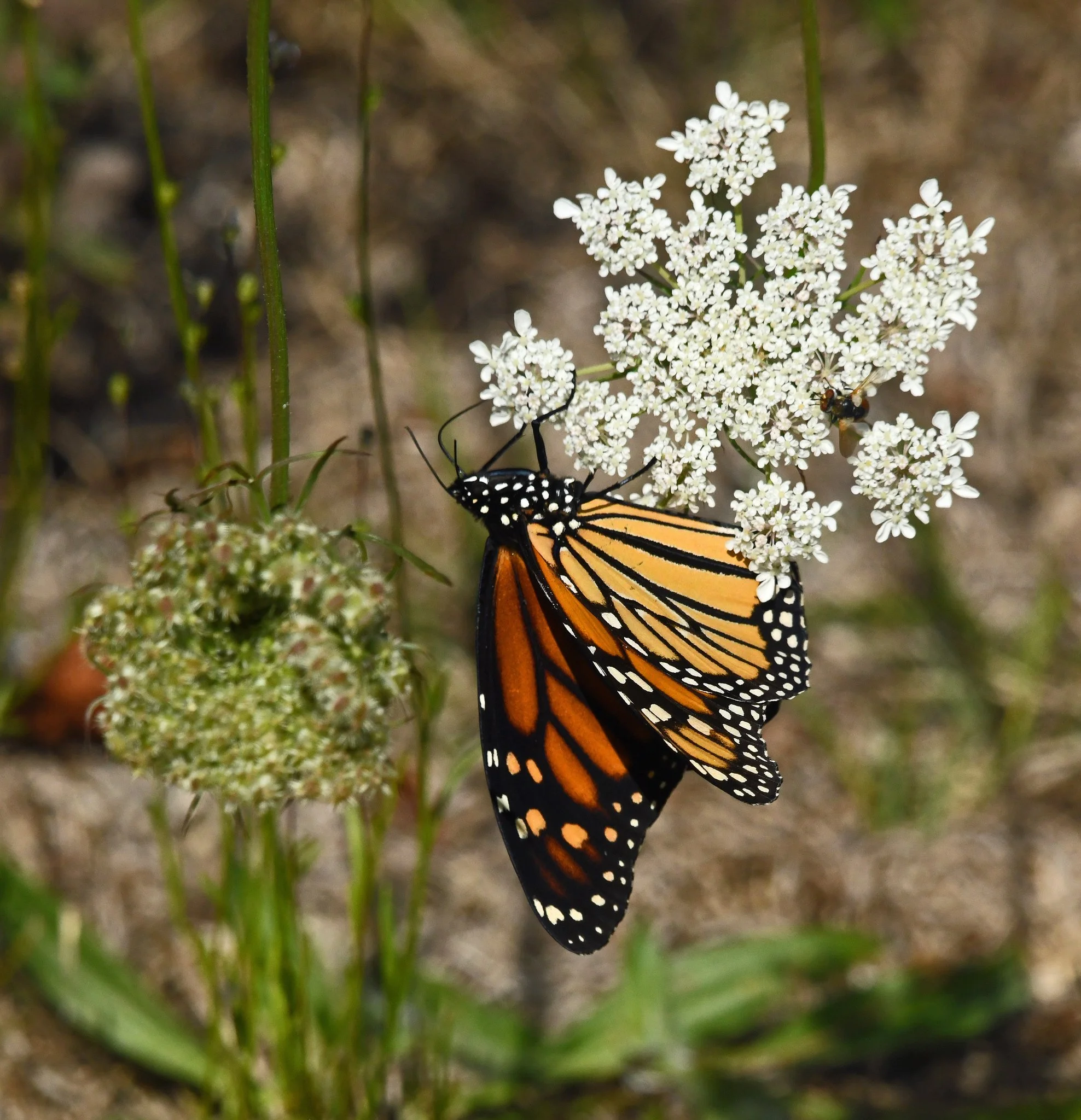
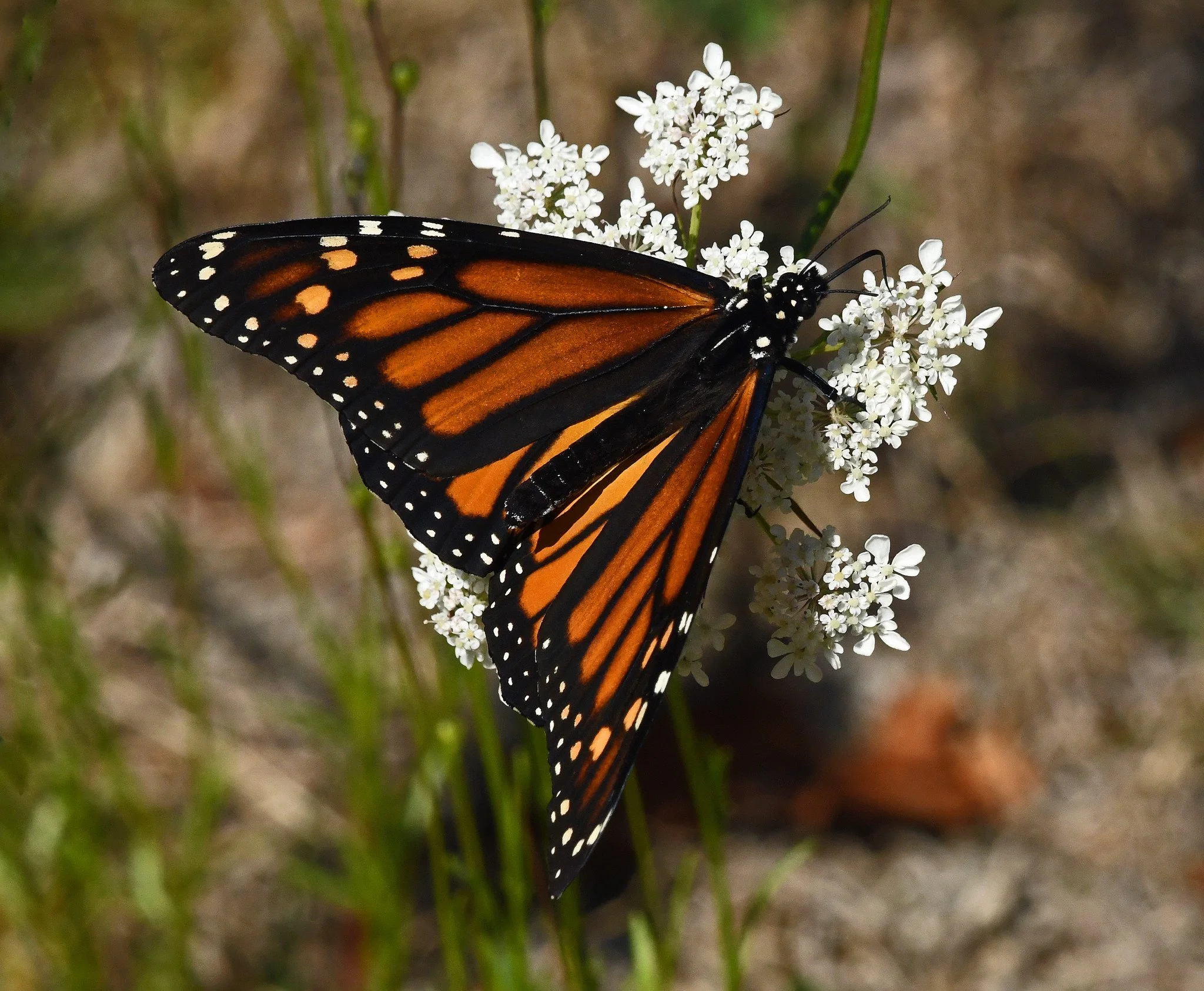
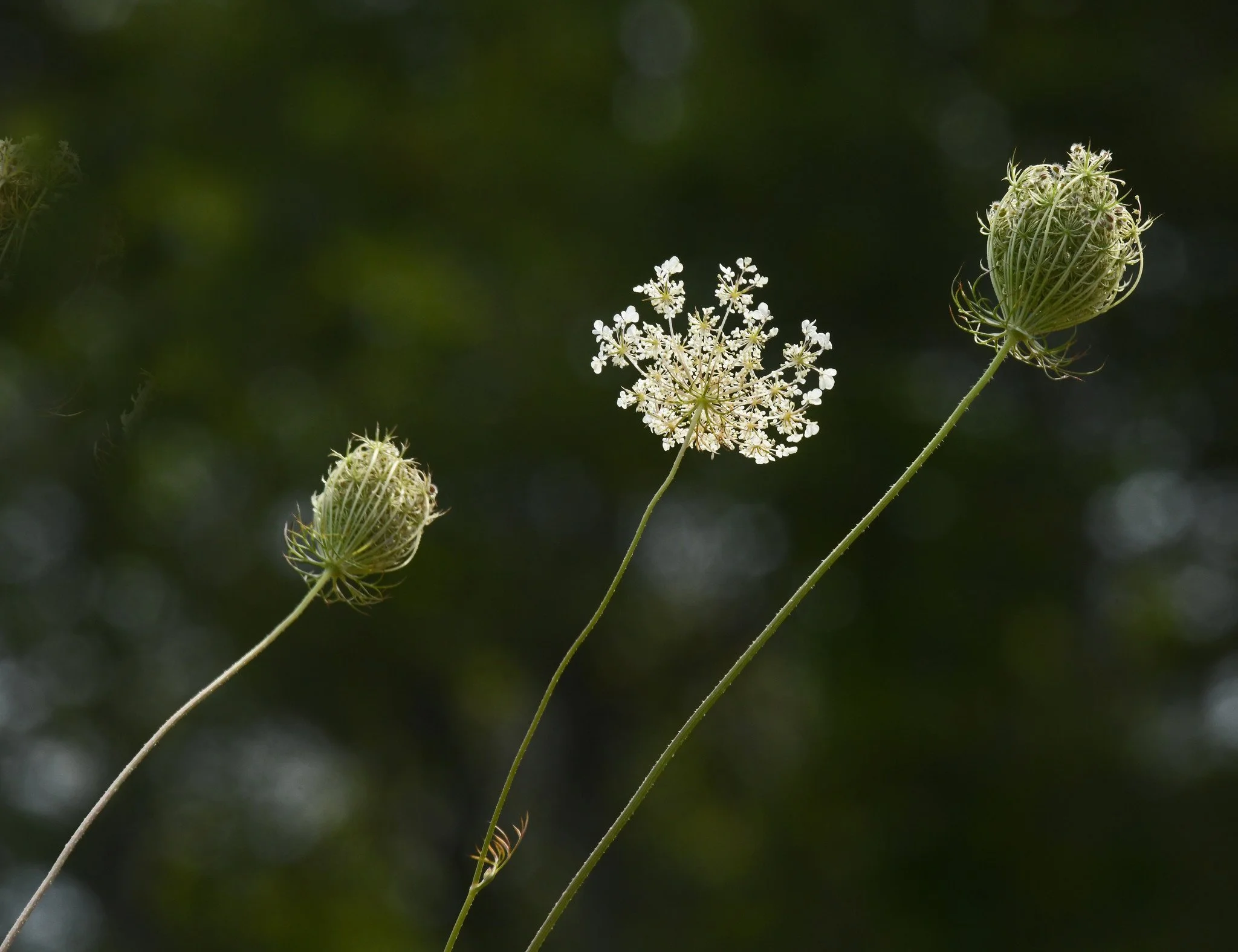
Here we see one of the last royal female insects on one of the last royal female flowers. That’s a female monarch (i.e., queen) butterfly trying to find nectar in a Queen (i.e., monarch) Anne lace flowerhead yesterday when the temperature was 55° (F).

Judging from her awkward flight, I don’t think that this beauty is part of the monarch migrating “super generation” that has the special genes to live longer and be stronger than the year’s prior generations. Those pilgrims left for Mexico in September, I believe. I think this butterfly was born in Maine this year and will die here, perhaps before all the royal lace does.

(Images taken in Brooklin, Maine, on October 11, 2025.)

Comment

Comment

In the Right Place: October Revelations

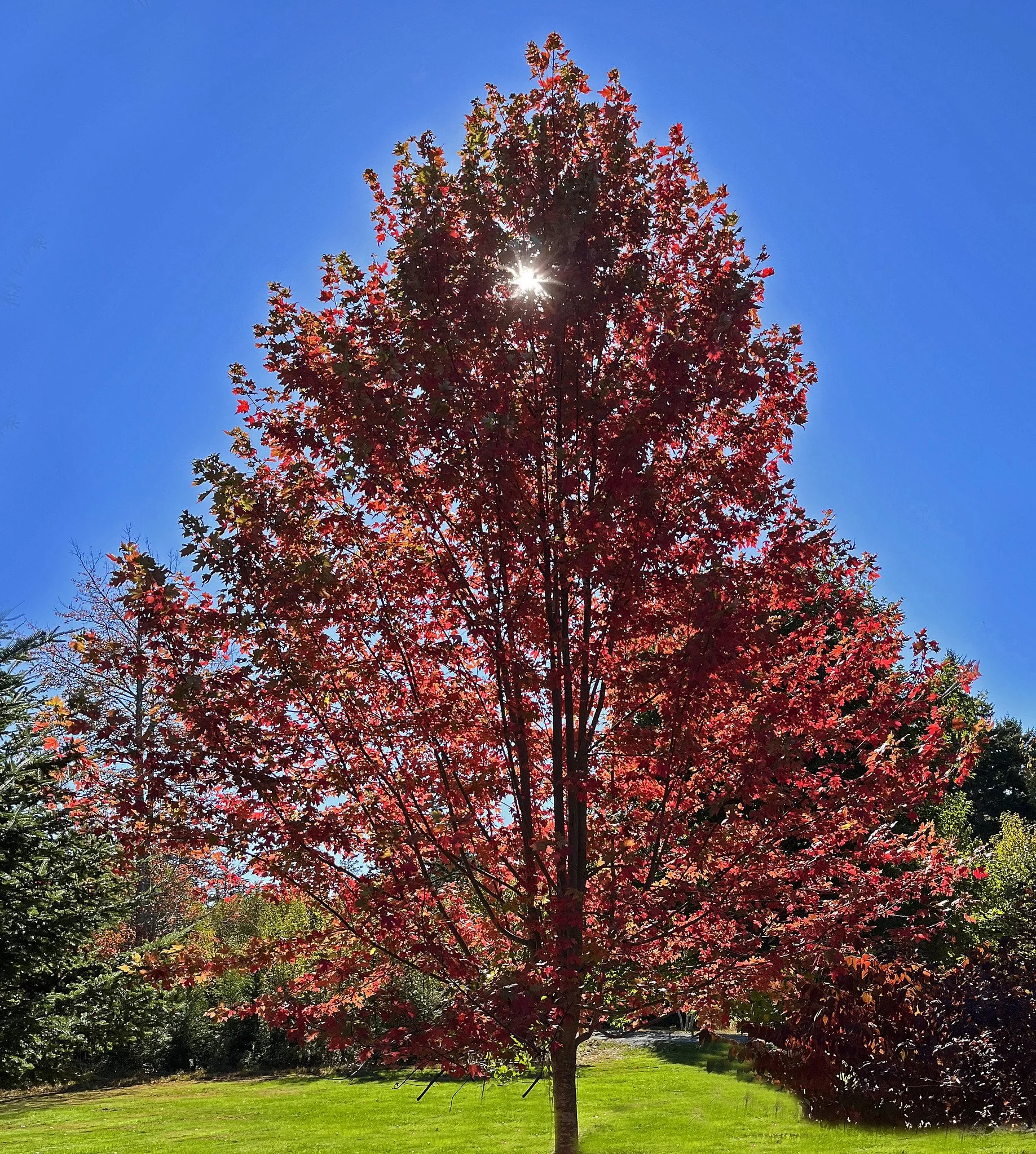
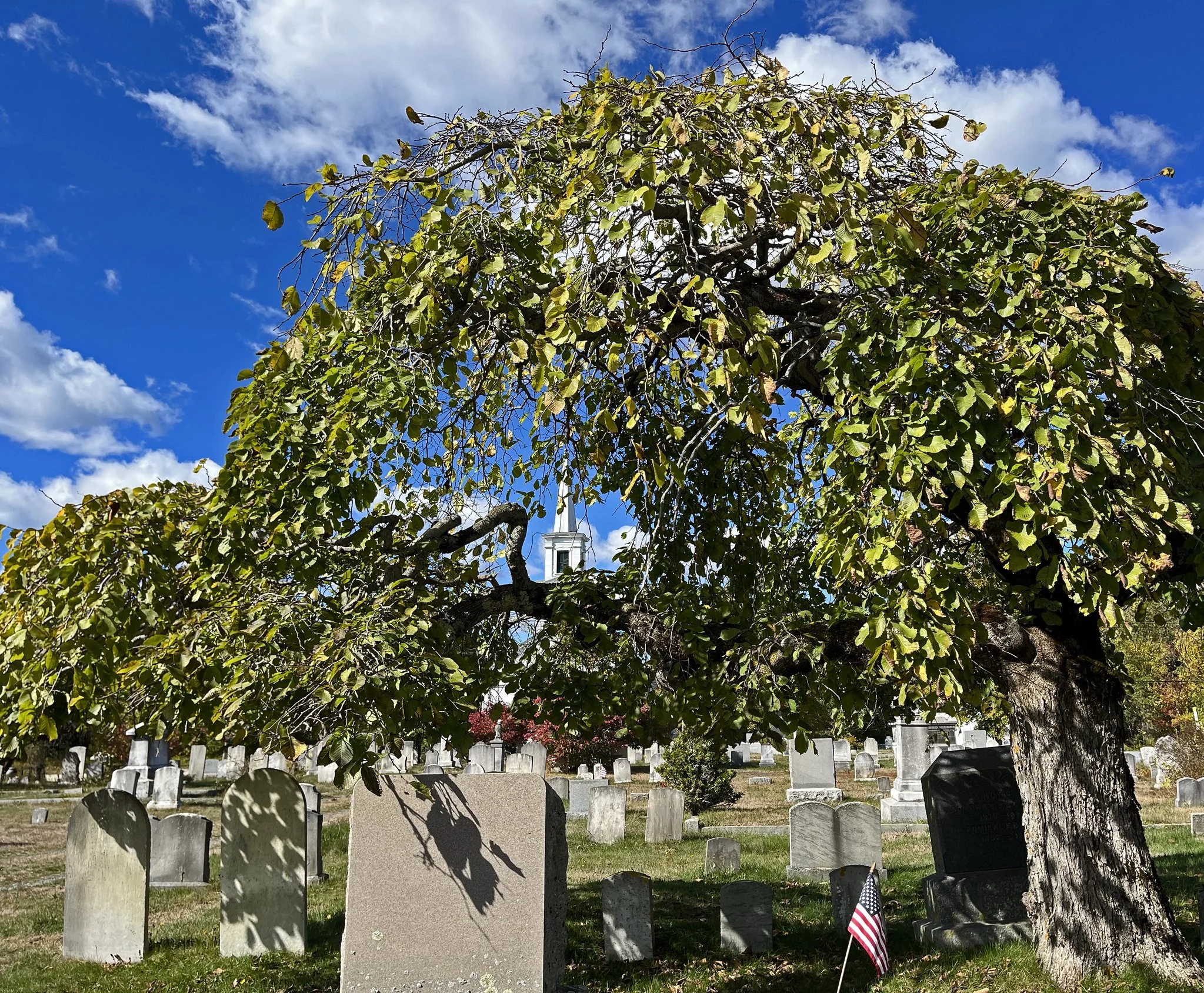
Leaf-by-leaf, our deciduous trees are slowly revealing their intriguing inner selves and provoking our imaginations.

Above, you see a young, glowing red maple, standing straight and true and silhouetted stylishly in the October sun, seemingly daring us to stare at her. Below, you’ll see a very old, seemingly aching, Camperdown elm bending to keep shading her assigned graves from that same sun, while no longer being able to hold her leaves well:

(Images taken in Brooklin, Maine, on October 9, 2025.)
Comment

Comment

In the Right Place: On Tranquility

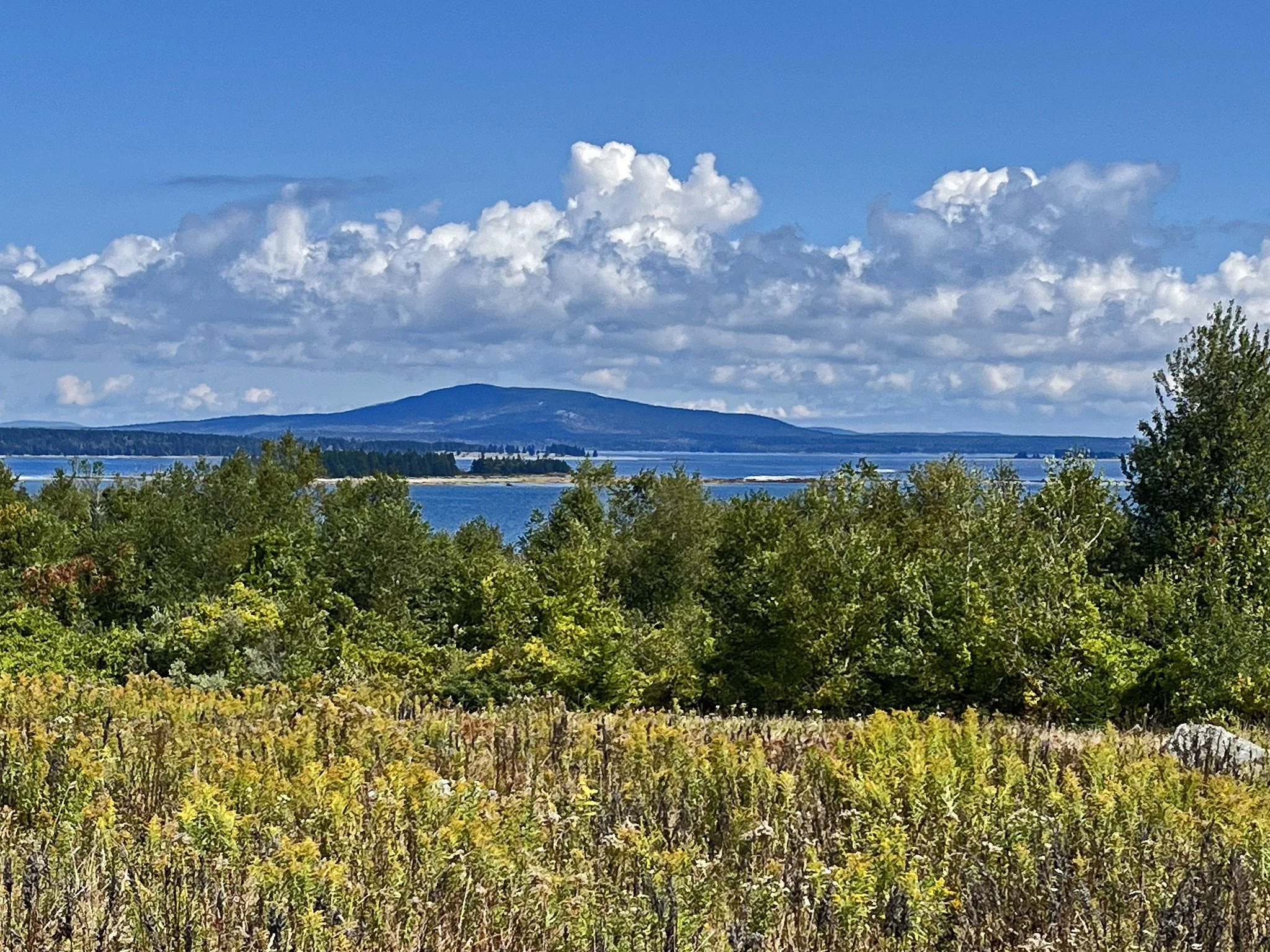
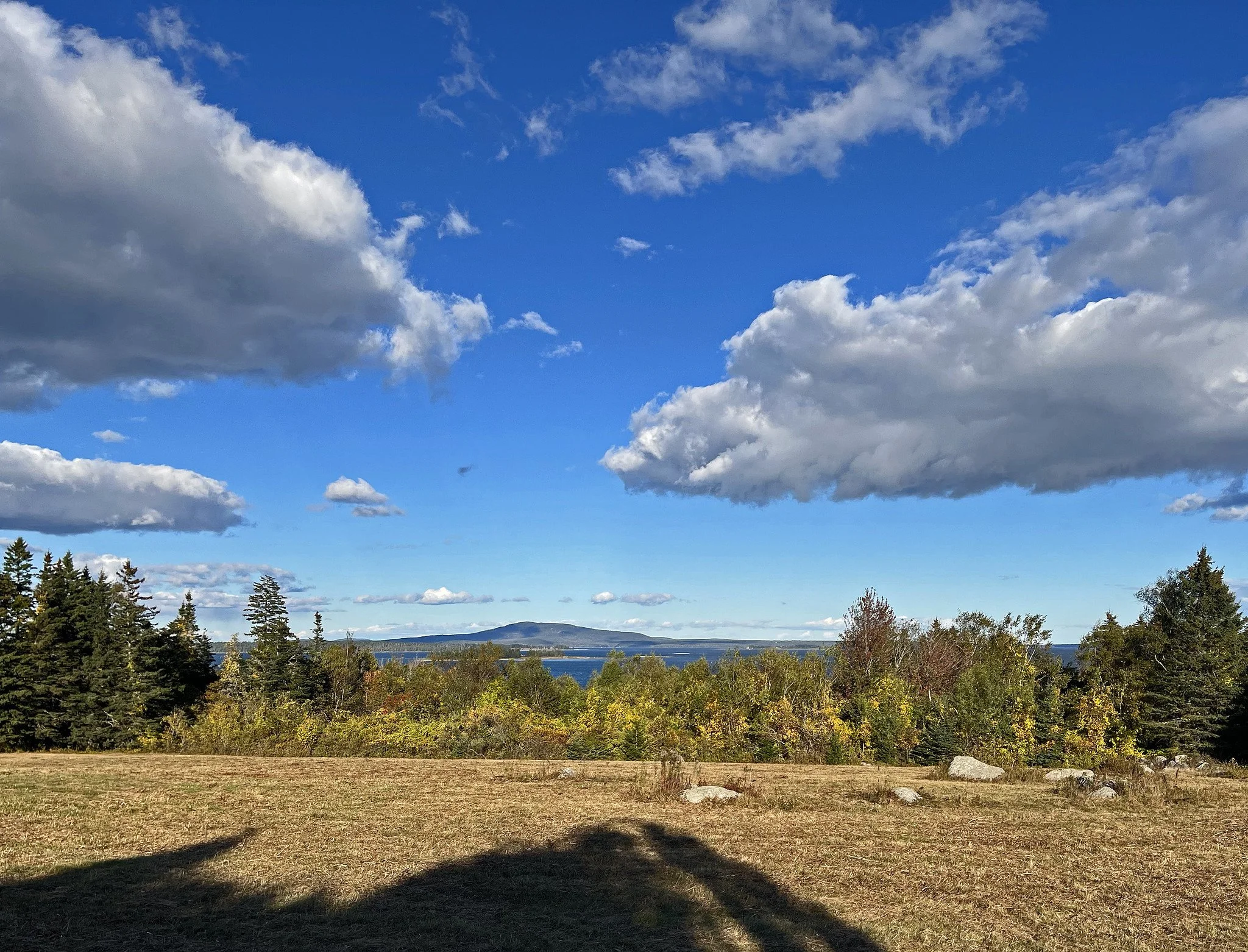
It’s time to see one of our many soothing local scenes and wonder why it soothes. Here’s a glimpse of the near-mountain called Blue Hill as it looms above a reflective Blue Hill Bay last week:

Studies show that scenes with water, often called "blue spaces" by researchers, are especially beneficial for mental health due to our evolutionary development. For many people, apparently, simply gazing at bodies of water – or images of them – can lower their heart rate and blood pressure and reduce levels of the stress hormone cortisol. 

Nature’s abundant “cool” blue and green colors historically have been associated with the evocation of tranquility in people. Seeing a calm, reflective, watery surface has been found to make people pause and reflect on their own thoughts and emotions while also feeling reconnected to nature. These feelings, in turn, can reduce anxiety and stress and lead to feelings of peace and a better mental balance.

Of course, I’m not qualified to say that the reported psychological observations are accurate for anyone other than me. But I do know tranquility when I feel her, and she comes silently to me sometimes when I visit scenes like this. (Image taken in Blue Hill, Maine, on October 3, 2025.)

Comment

Comment

In the Right Place: The Loon in Winter

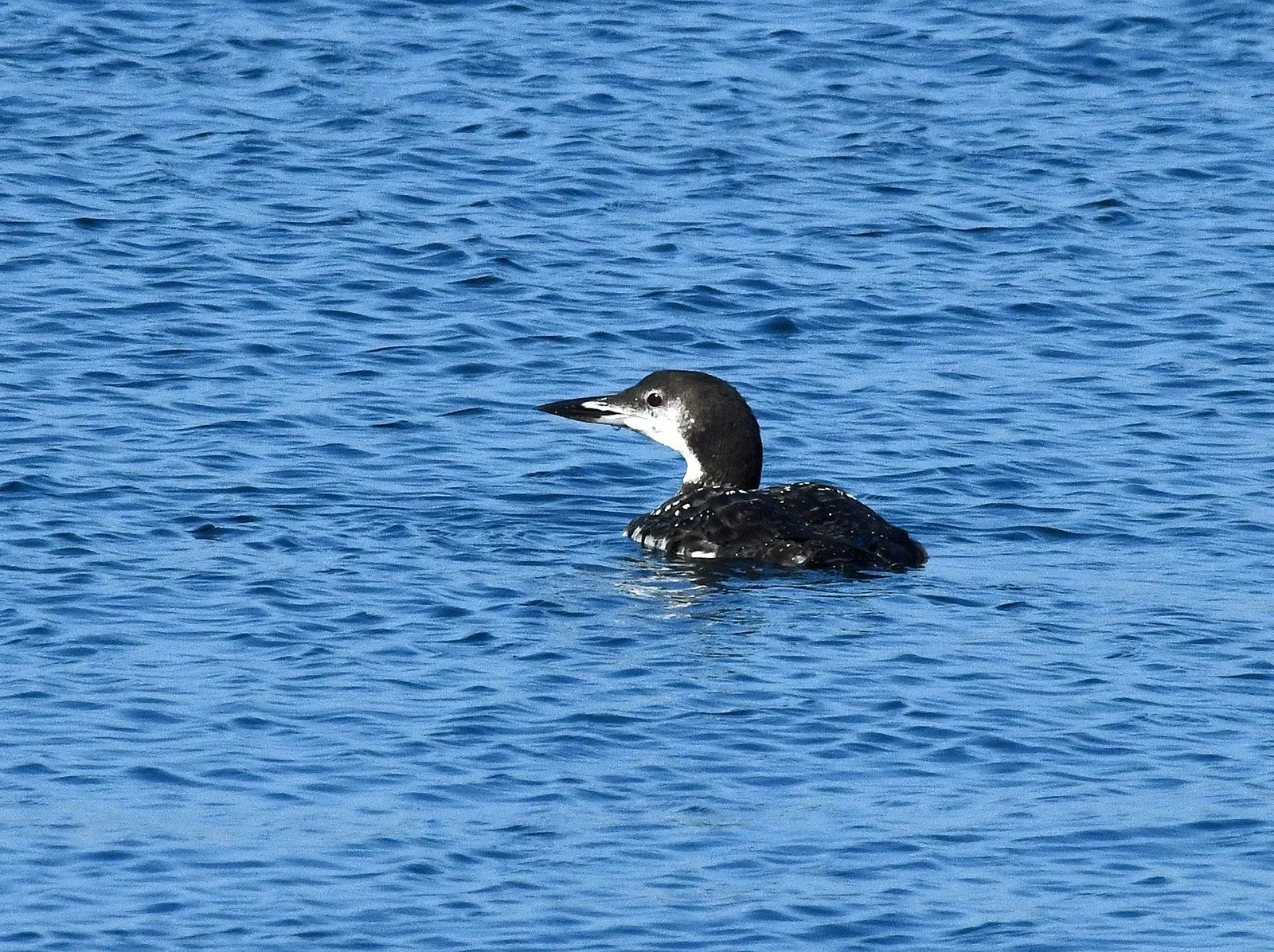
The common loon in winter is drab. And that’s okay with the loon. Coastal bald eagles now hang around all year and prey on what they can find and catch. The loon that you see here was transitioning yesterday to its winter attire:

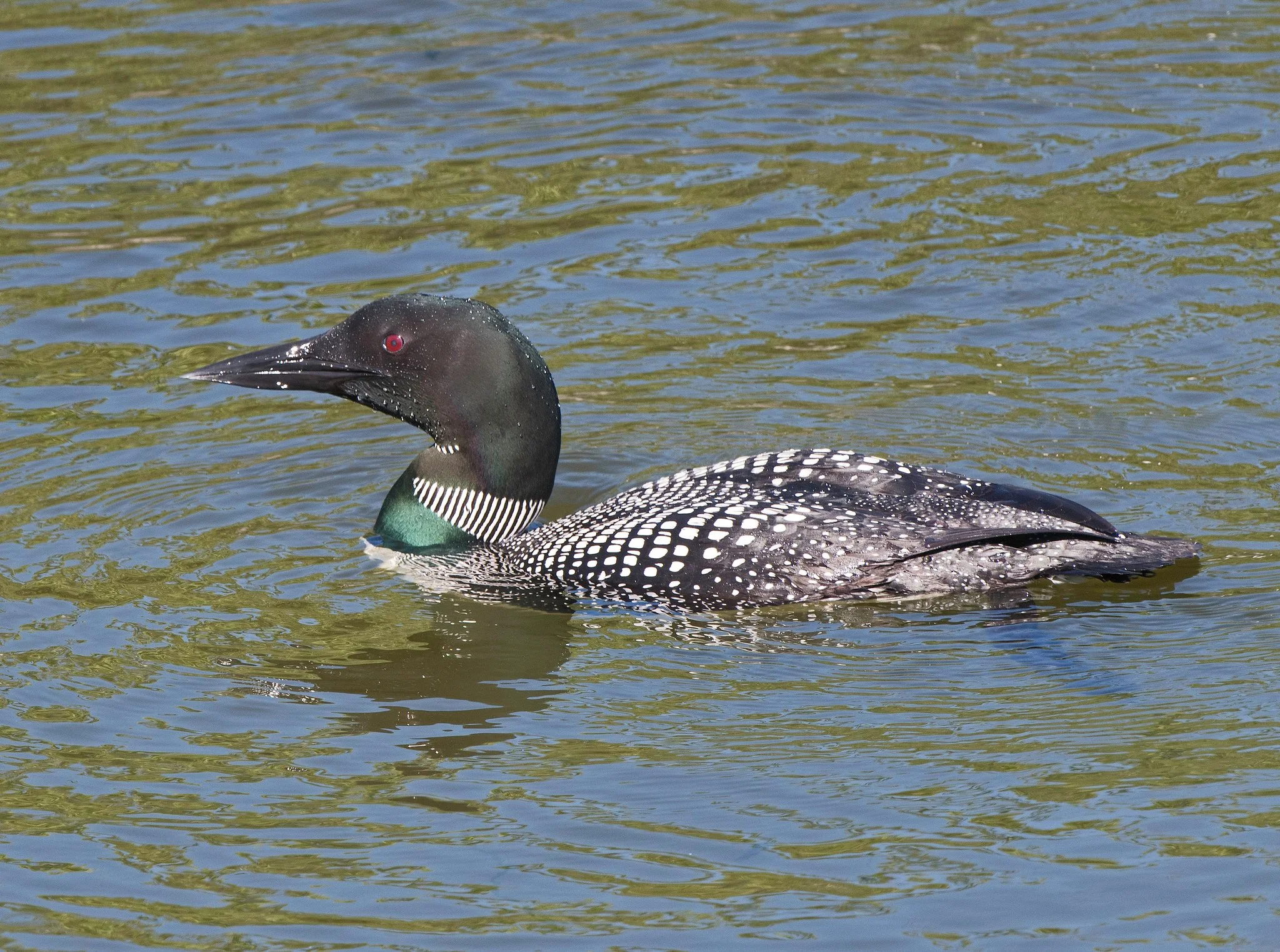
In the summer, when they’re trying to mate, loons are fashion plates wearing birdland’s version of Giorgio Amani formalwear: white-spangled, rich black plumage, ruby eyes, shiny black bill, and a flickering iridescent necklace:

Leighton Archive Photo

In their winter wear, when they’re trying to survive, they ditch the startling red eyes, black and white attire, and iridescent jewelry and don grays and whites that have the brilliance of dishwater.

On a gray winter’s day, you’d hardly notice a loon fishing alone as they do, very low in the water, disappearing and appearing without hardly a sound – except when it can’t help being loony and emits a startling winter wail, then laughs tremulously at itself. (Primary image taken in Little Deer Isle, Maine, on October 7, 2025.)
Comment

Comment

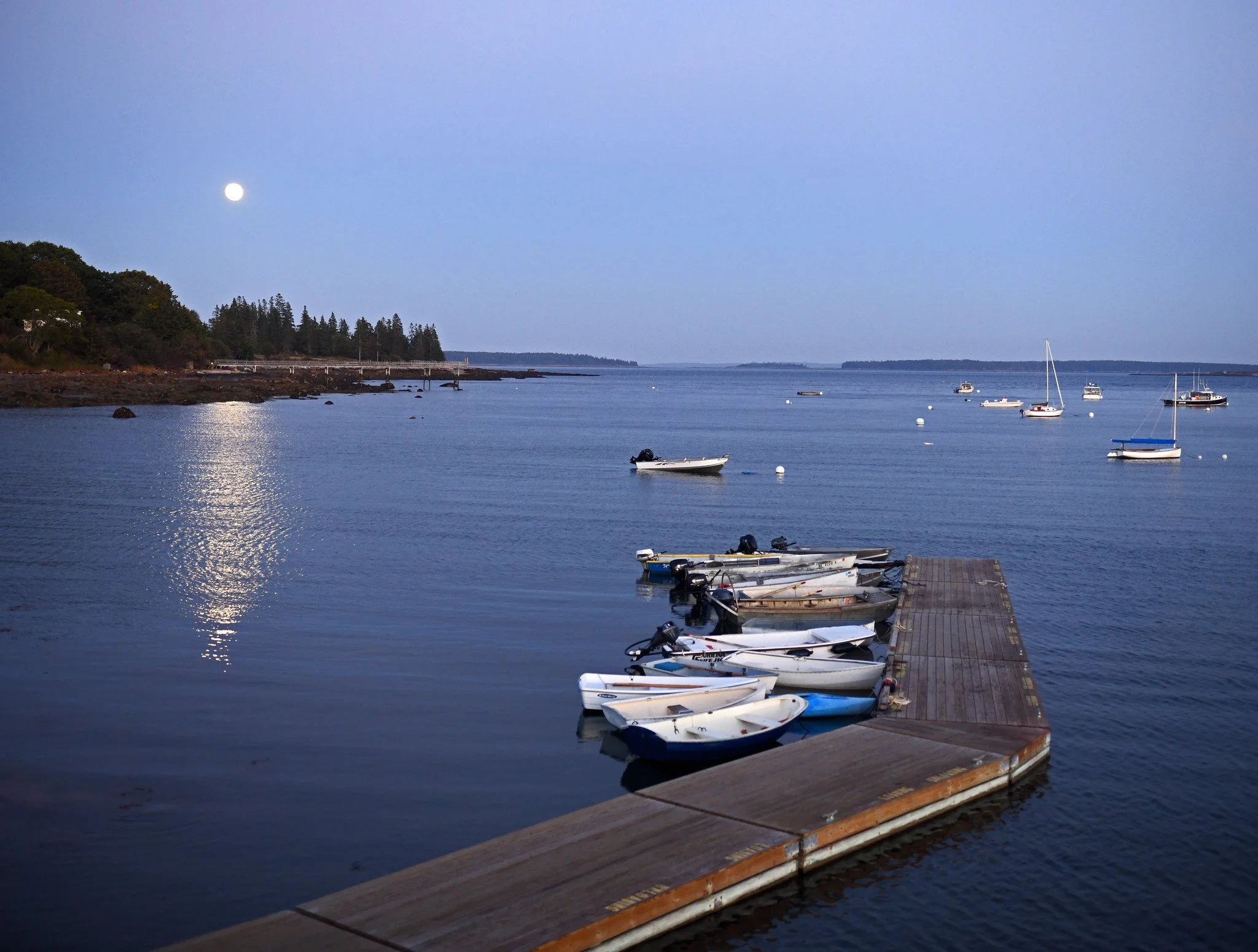
In the Right Place: Lunar Three-Fer

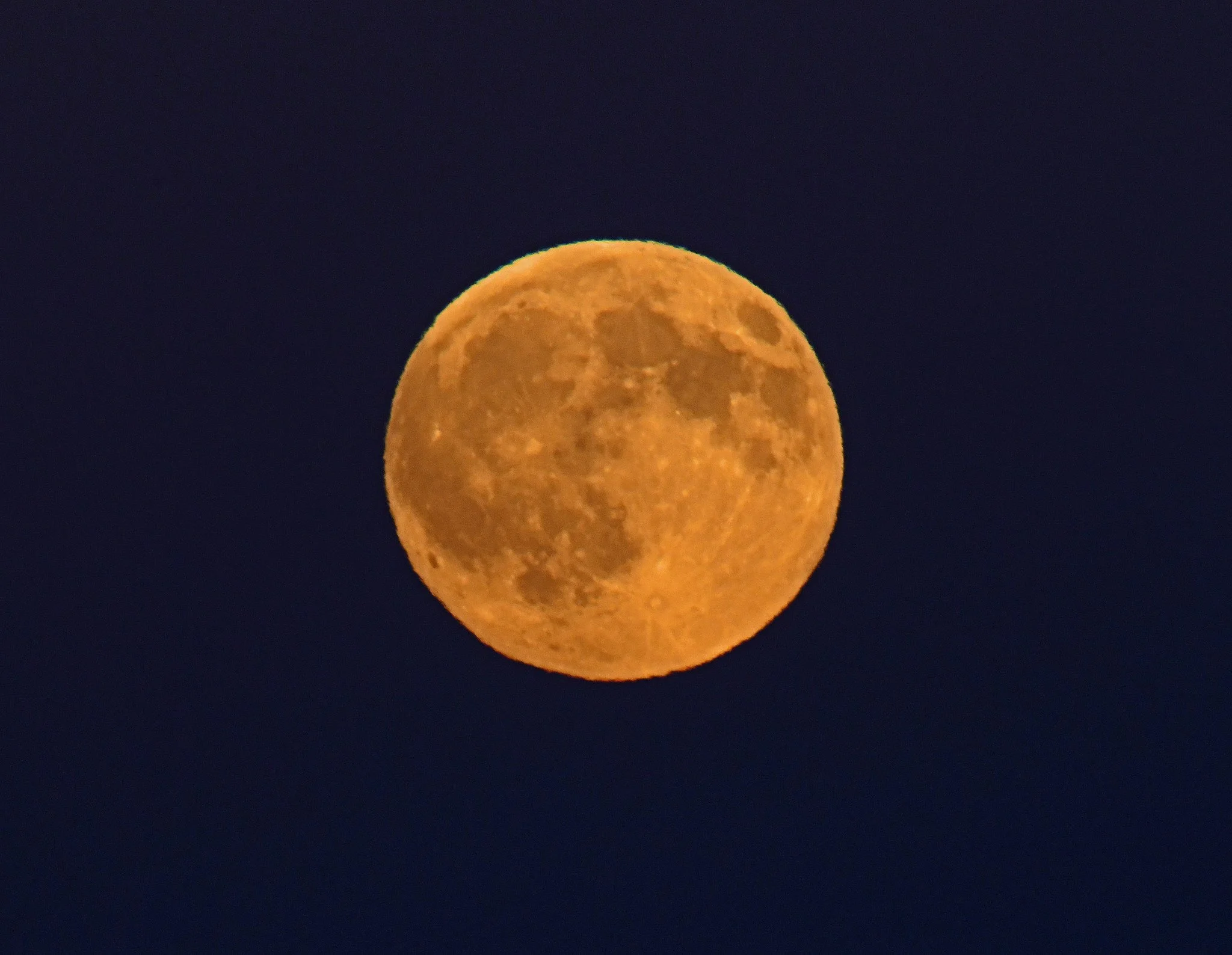
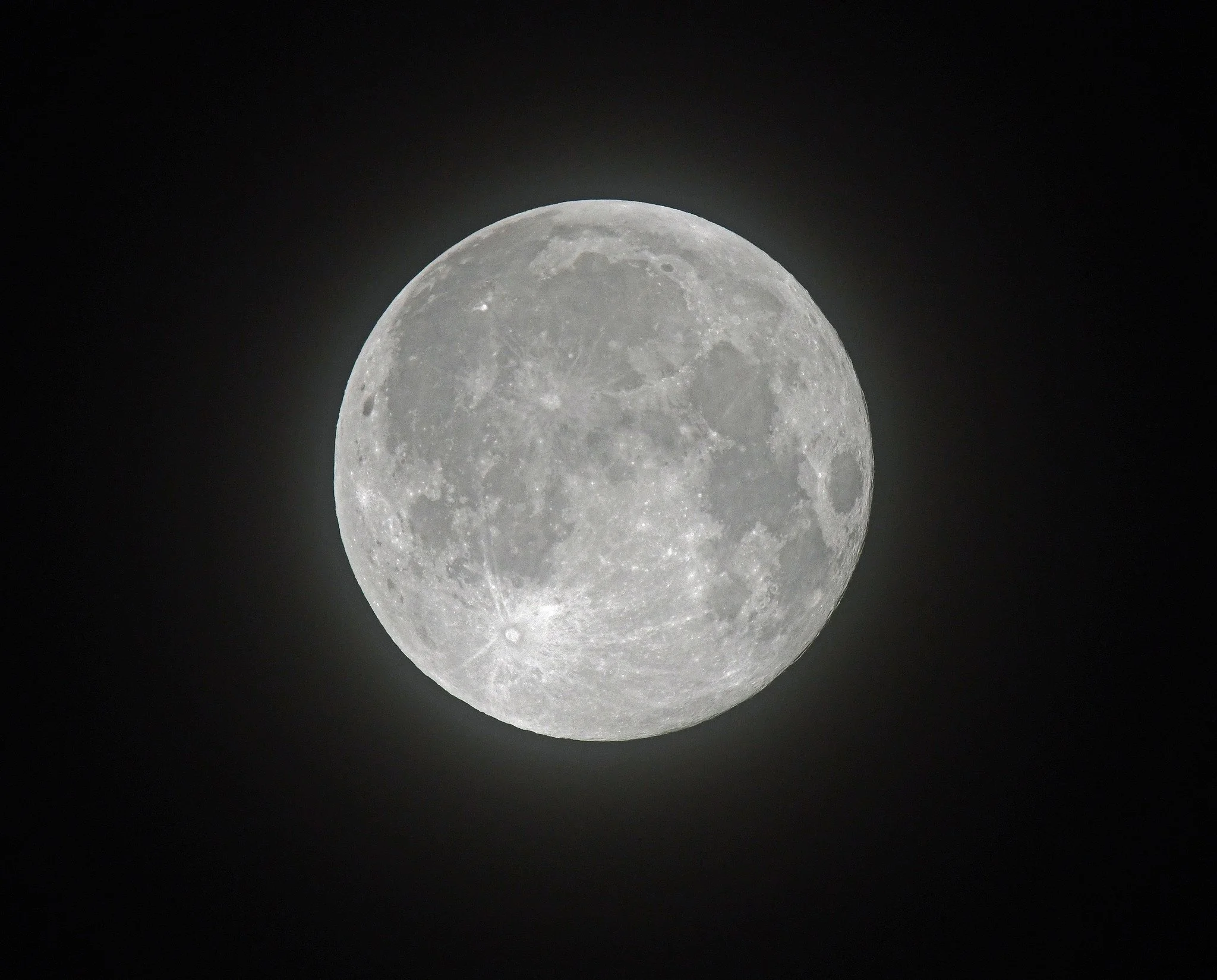
Here you see October’s full moon rising over Blue Hill and Jericho Bays while the sun was setting yesterday evening.  Haze and particles in our atmosphere distorted it and made it appear reddish until it broke through the pollution band.

This visit by our faithful companion is a three-fer: it’s the Harvest Moon, because it’s the full moon closest to our autumnal equinox; it’s the Hunter’s Moon, because that’s the traditional name given to the October full moon, and it’s a Super Moon because it’s close to its lowest orbit of Earth (its “perigee”). We’ll have Super Moons in November and December, also.

The Harvest and Hunter’s Moon designations reportedly are the most popular names that this month’s moon was called by northeastern Native Americans (Algonquin, often), as adopted by early European settlers and collected by the Farmers’ Almanac.

However, the October moon has other historic Native American names that vary geographically. For example, Maine's Abenaki people referred to it by various names depending on the month’s events, such as the Dying Grass Moon or the Travel Moon. 

(Images taken in Brooklin, Maine, on October 6, 2025.)

Comment

Comment

In the Right Place: Bon Voyage!

Fall warblers are coming through in good numbers now.

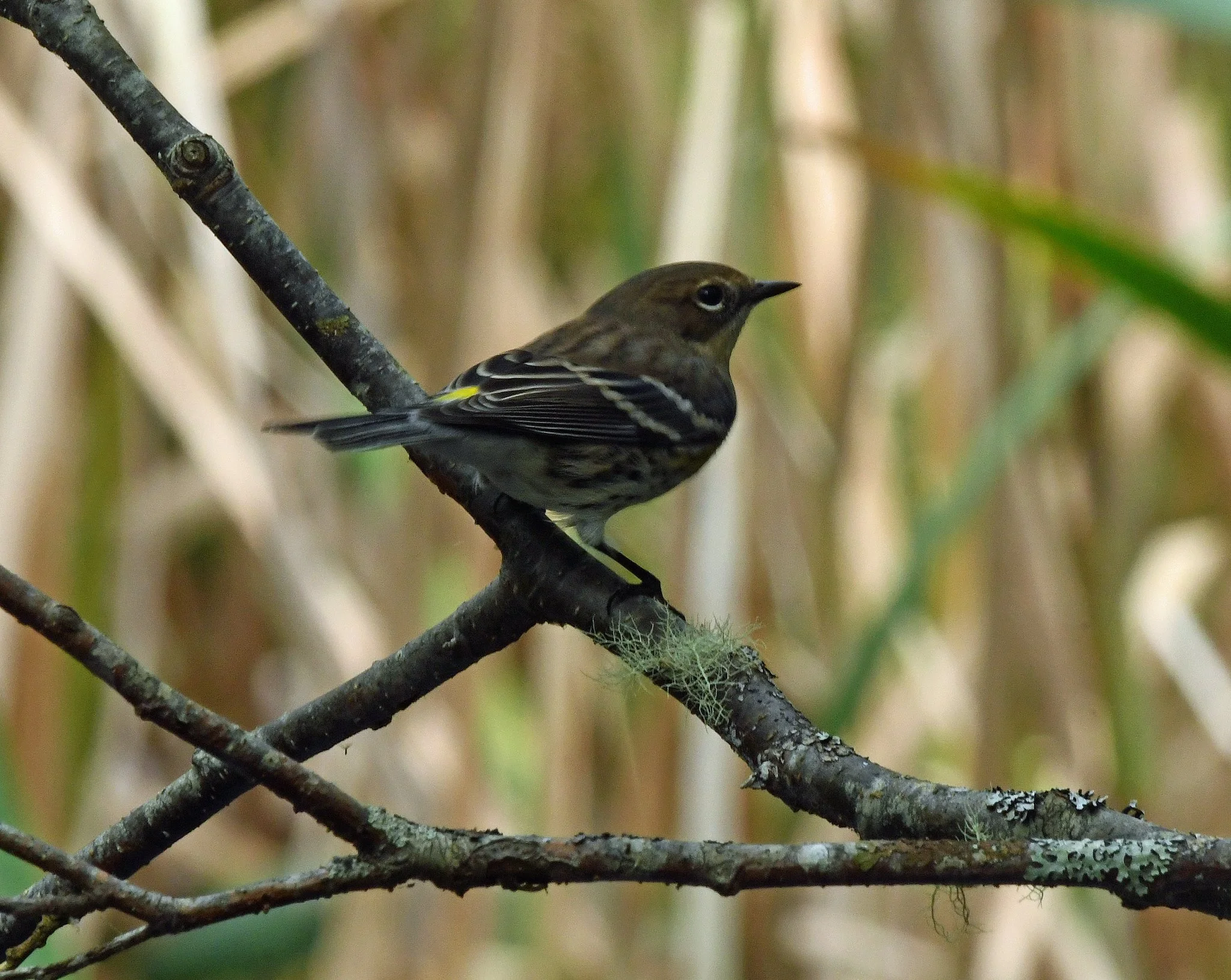
I’m a considerably-less-than-awesome birder when it comes to identifying warblers, especially dull-hued fall warblers. They seem to have a habit of staying mostly in the leafy shadows. And, they’re usually only about the size of a Snickers® candy bar or standard playing card. And, the damn things hardly ever stay still when I try to focus binoculars or a long lens on them. And, and, and …. (Why can’t warblers be like pushy black-capped chickadees?)

You might appreciate my situation by trying to find the warbler that’s staring straight at me (hence, you) in this photograph taken Saturday:

I don’t see any really good identifying marks from that perspective; stripes are common to many types of warblers. However, as usual, he didn’t stay still long and I managed to get a privacy-invading shot of him and his bold butt:

That dab of yellow on his rear (and a little on his side) make me believe that he’s a Yellow-Rumped Warbler and that he’s on his way with his kind to the southern states, Mexico, or Caribbean. Bon voyage, you little devil! (Images taken in Brooklin, Maine, on October 4, 2025; sex assumed.)

Comment

Comment

In the Right Place: The Art of Feeling Better

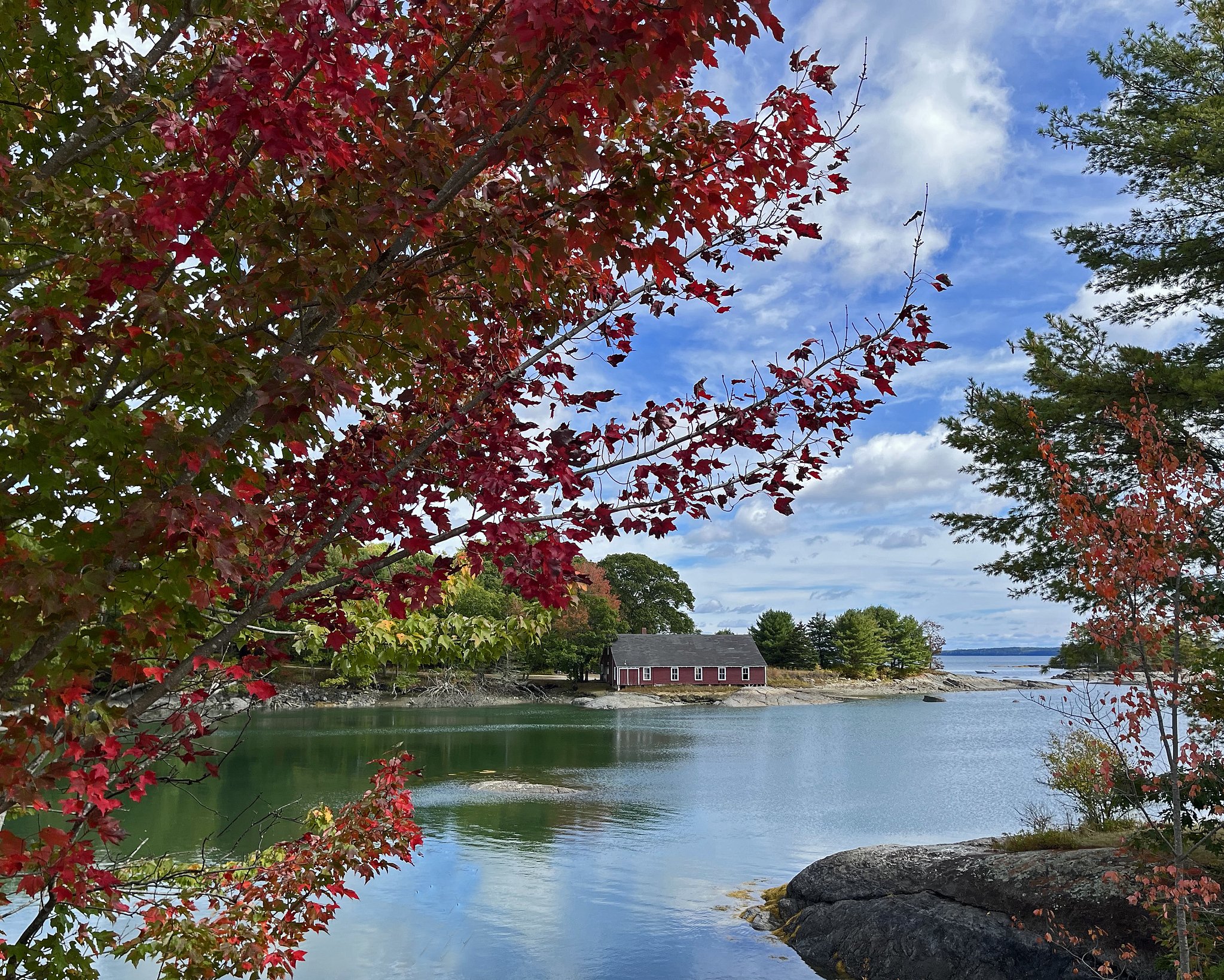
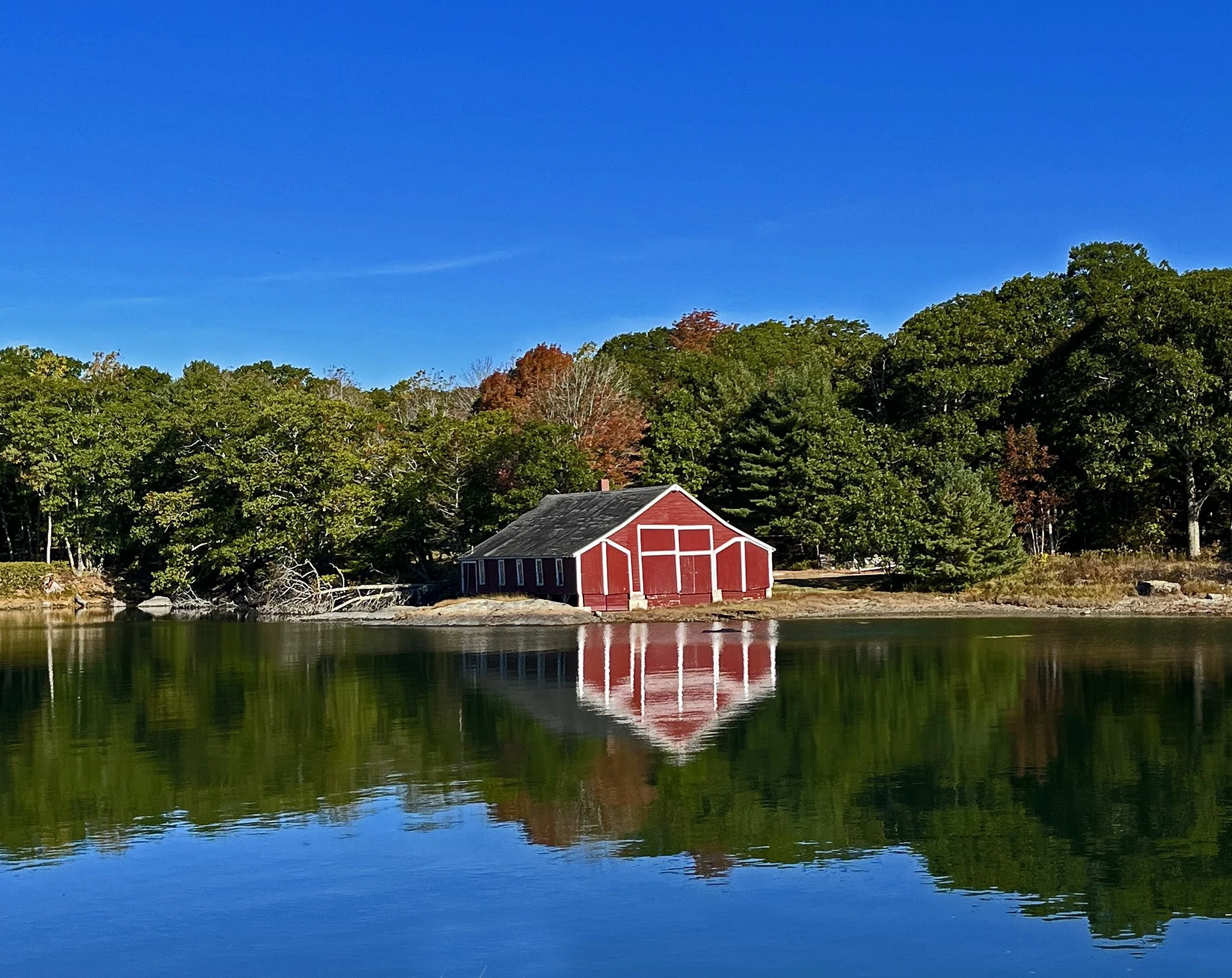
For some of us, a fine fall morning at high tide on Maine’s Down East coast can be more satisfying than the best Scotch. As you may know, this is the old red boat house at Conary Cove just doing its job of making passers-by feel better.

(Images taken in Blue Hill, Maine, on October 3, 2025.)

Comment

Comment

In the Right Place: Do Opposites Attract?

Above, you see FROLIC yesterday, the last sailboat in Great Cove. Below, you’ll see VULCAN visiting the Cove yesterday. If anyone wants an illustration of the difference between elegance and inelegance, there it is. Beauty and strength are welcome, but often come separately.

FROLIC is a Luders 16. That is, her design is by the renowned naval Architect Alfred E. (Bill) Luders and she’s 16’4” long at the waterline. She’s a racer owned by a neighbor and probably will be “taken out” for winter storage soon.

VULCAN is a moorings service vessel owned by Brooklin Marine, LLC. Her crew installs, removes, maintains and repairs moorings and mooring equipment. Her crew apparently was replacing the large, summer ball buoys that float on mooring chains with slim, winter mooring sticks (long, thin, vertically-oriented buoys that are better at withstanding ice).

As with most of life, it takes all kinds. (Images taken in Brooklin, Maine, on October 4, 2025.)

Comment

Comment

In the Right Place: Good and Bad News

As you see, Mount Desert Island was under celestial shark attack on Wednesday. However, the large island survived and its Acadia National Park reportedly is remaining open despite a federal government shutdown. That’s the good news.

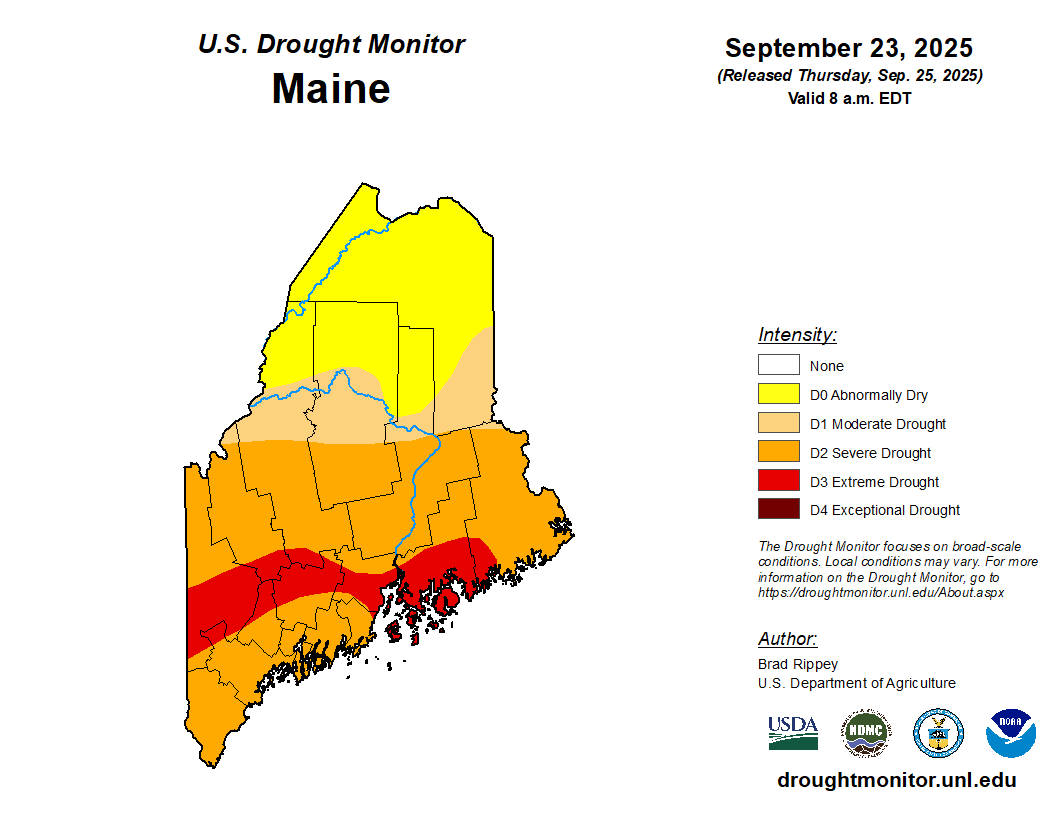
The bad news is that we’ve been having a lot of beautiful weather of the type that you see here. Yes – you read that right; that’s bad. We need about a week of steady rain. We remain in an extreme drought and the possibility of catastrophic wildfires in our extensive woodlands is real. See the latest official map:

(Photograph taken from Brooklin, Maine, on October 1, 2025.)
Comment

September Postcards From Down East Maine

3 Comments

September Postcards From Down East Maine

The most important news about this September is that it did not relieve Maine from severe and even extreme drought. It was a crisp, beautiful, exhilarating month, yes. But dangerously so. Maine is the most forested state and much of it is experiencing fire hazard conditions. Here’s the latest official map:

But, enough of this gloom! You’re expecting some September beauty and you’re going to get a lot — maybe too much — of it in the following Postcards, which show that “We’re (Still) Having a Wonderful Time and Wish You Were Here.”

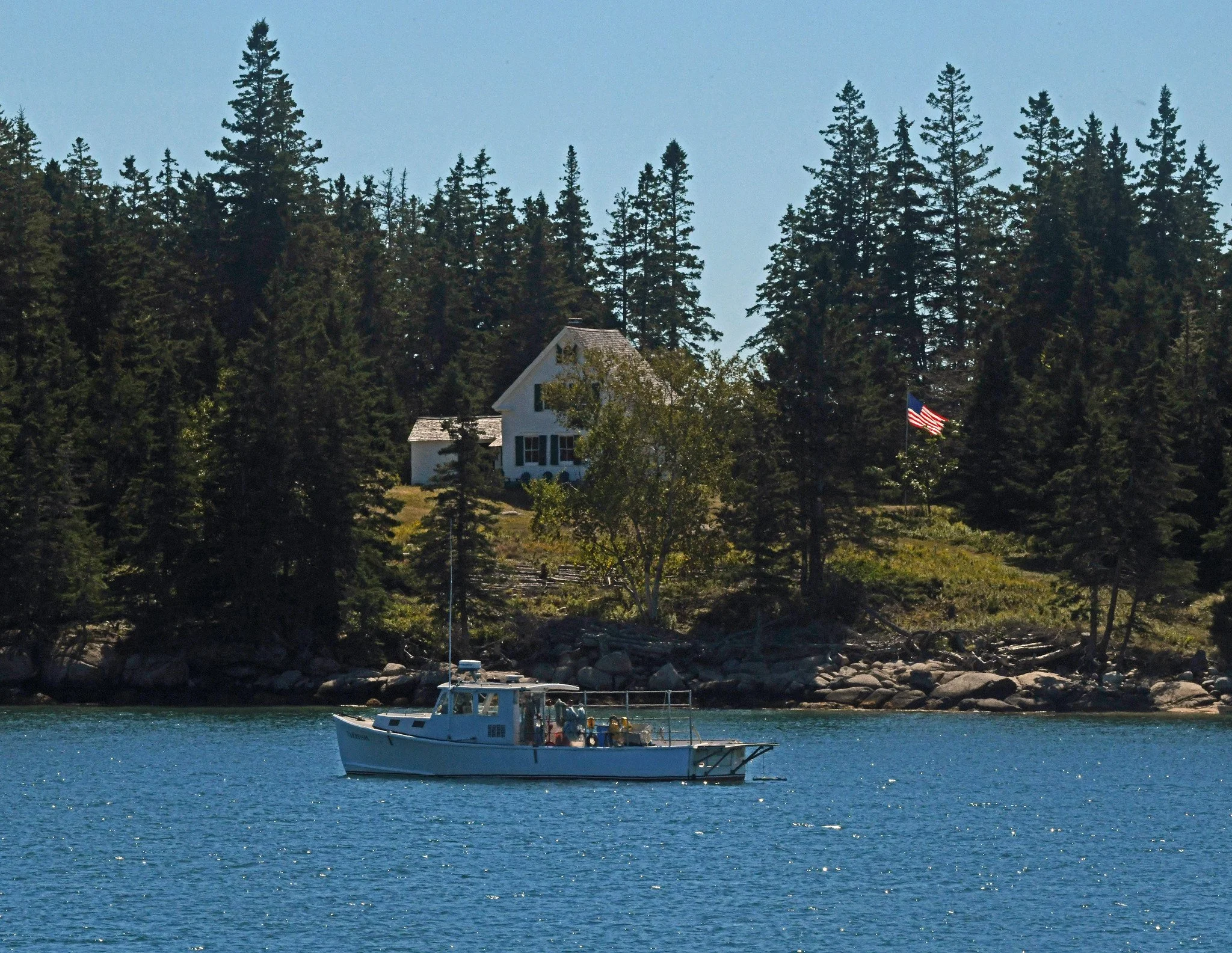
As usual, we start with the iconic views of the four Down East scenes that we monitor for you each month: The view from Brooklin’s Amen Ridge of Mount Desert Island, Maine’s largest island; the “Harbor Island House” overlooking Brooklin’s Naskeag Harbor; the old red boat house in Blue Hill’s Conary Cove, and Blue Hill, the near-mountain itself, as viewed across Blue Hill Bay:

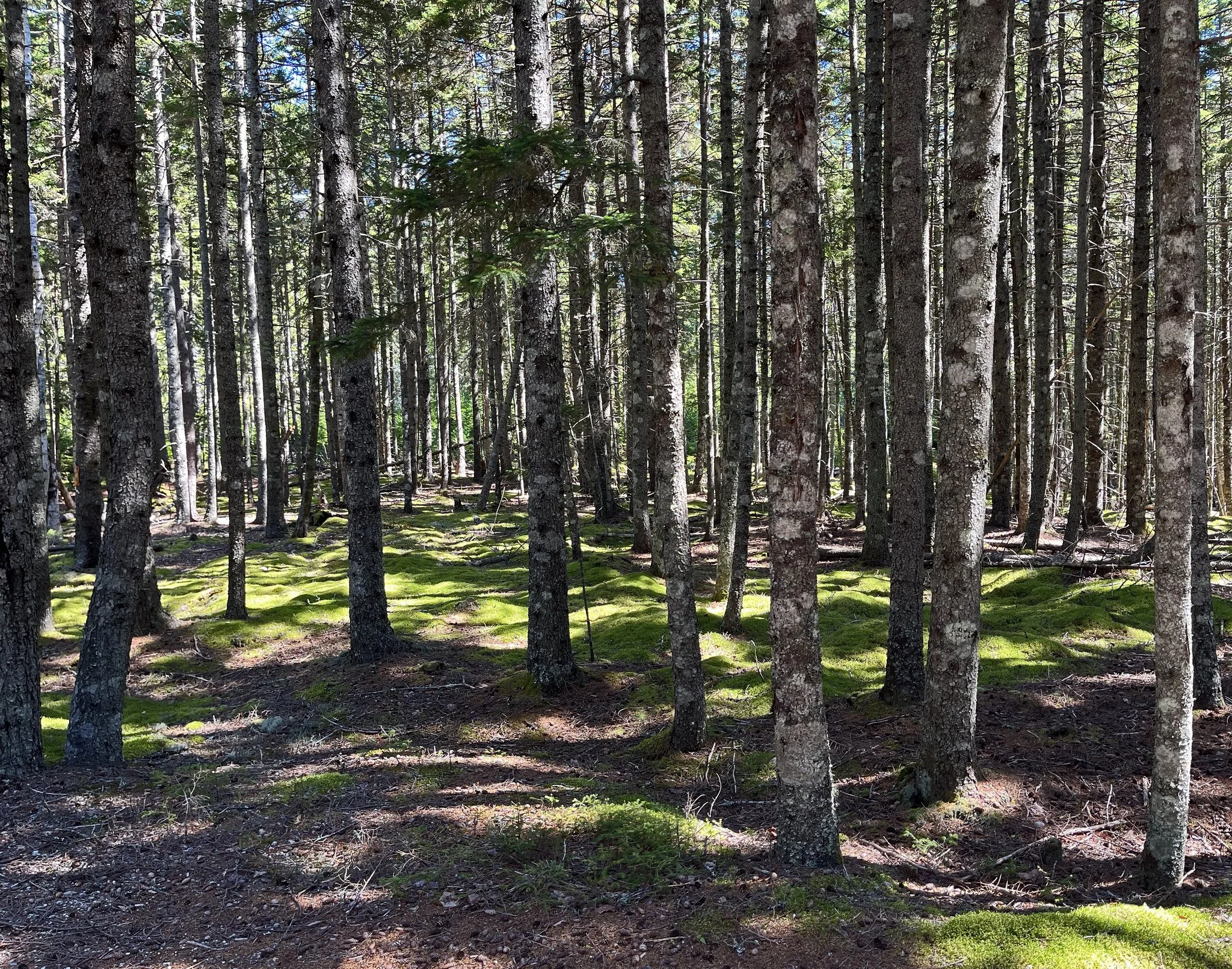
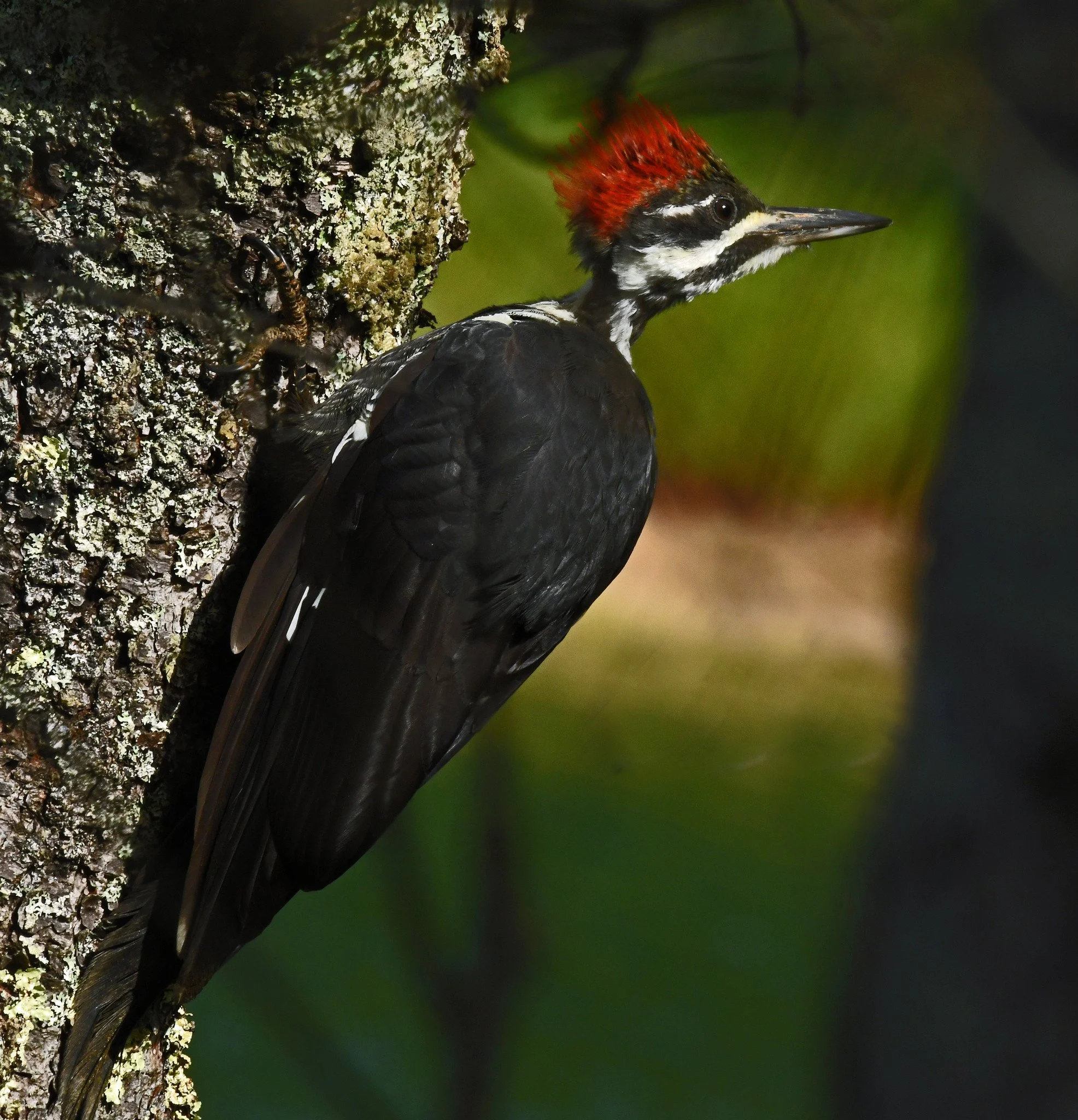
Despite the dryness, walking through the dappled light and balsam scent of a mixed-wood forest on a crisp September day still can be sanity-saving. The slow rhythms of song birds were replaced by the percussion of hairy and piliated woodpeckers and the constant complainting of red squirrels.

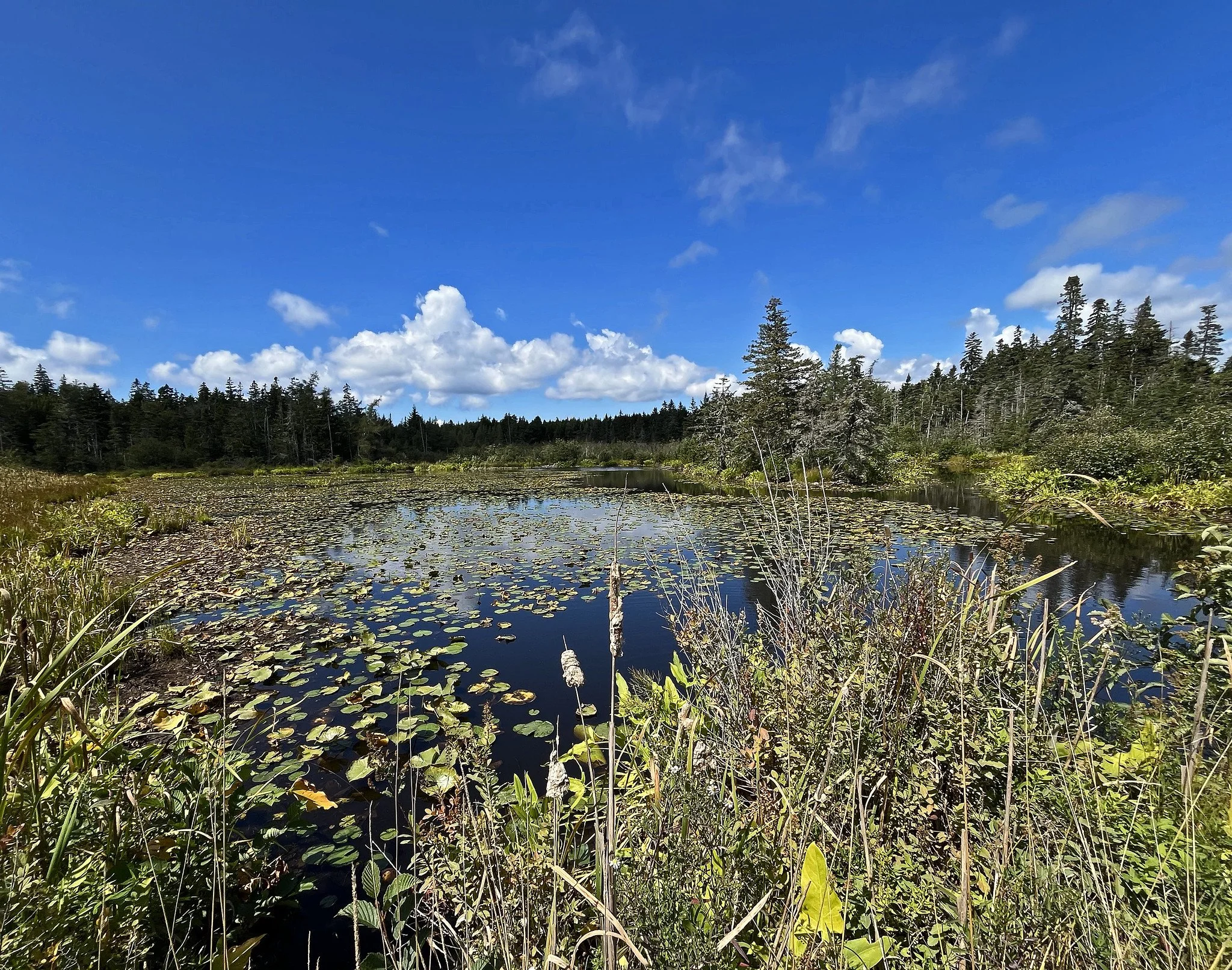
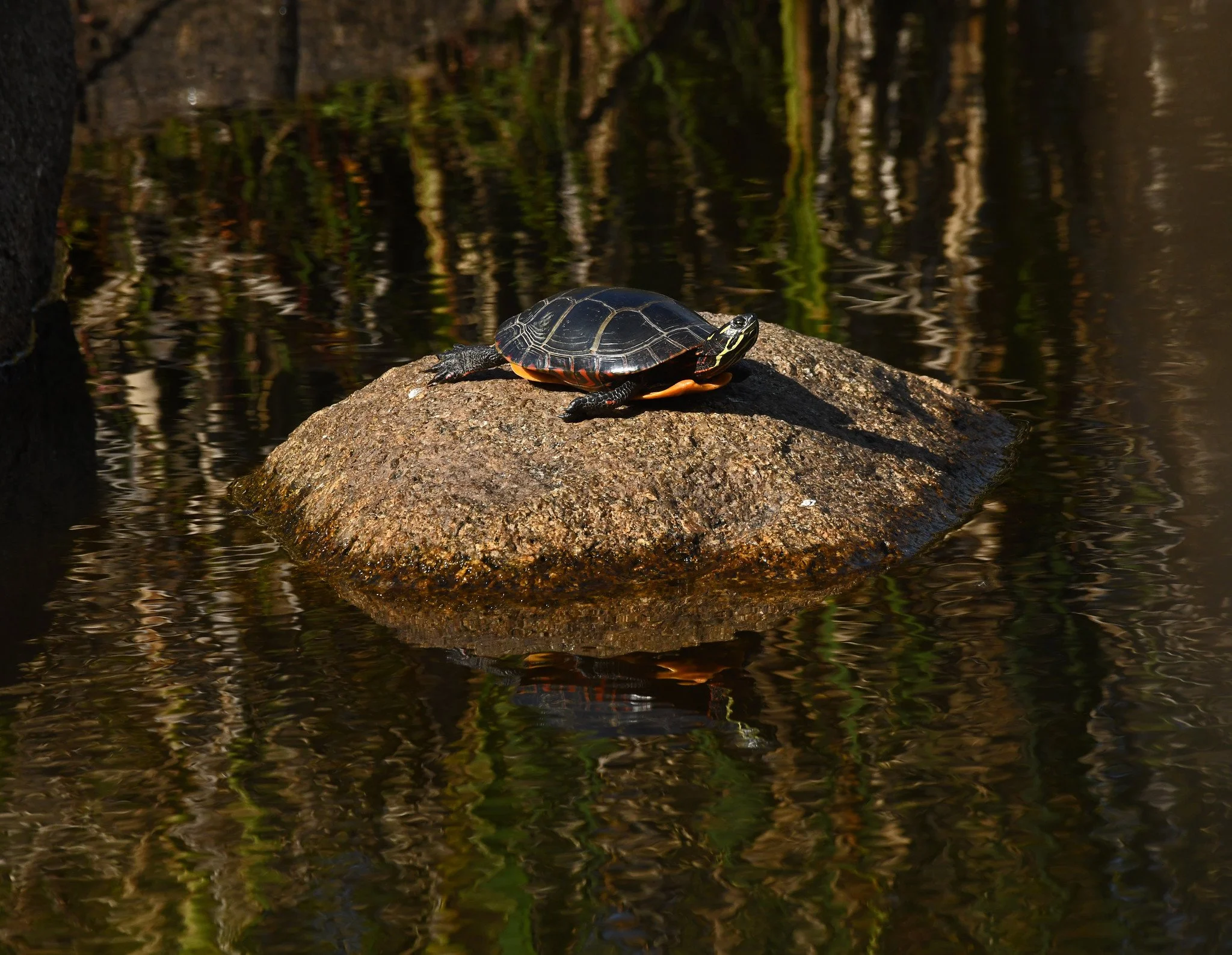
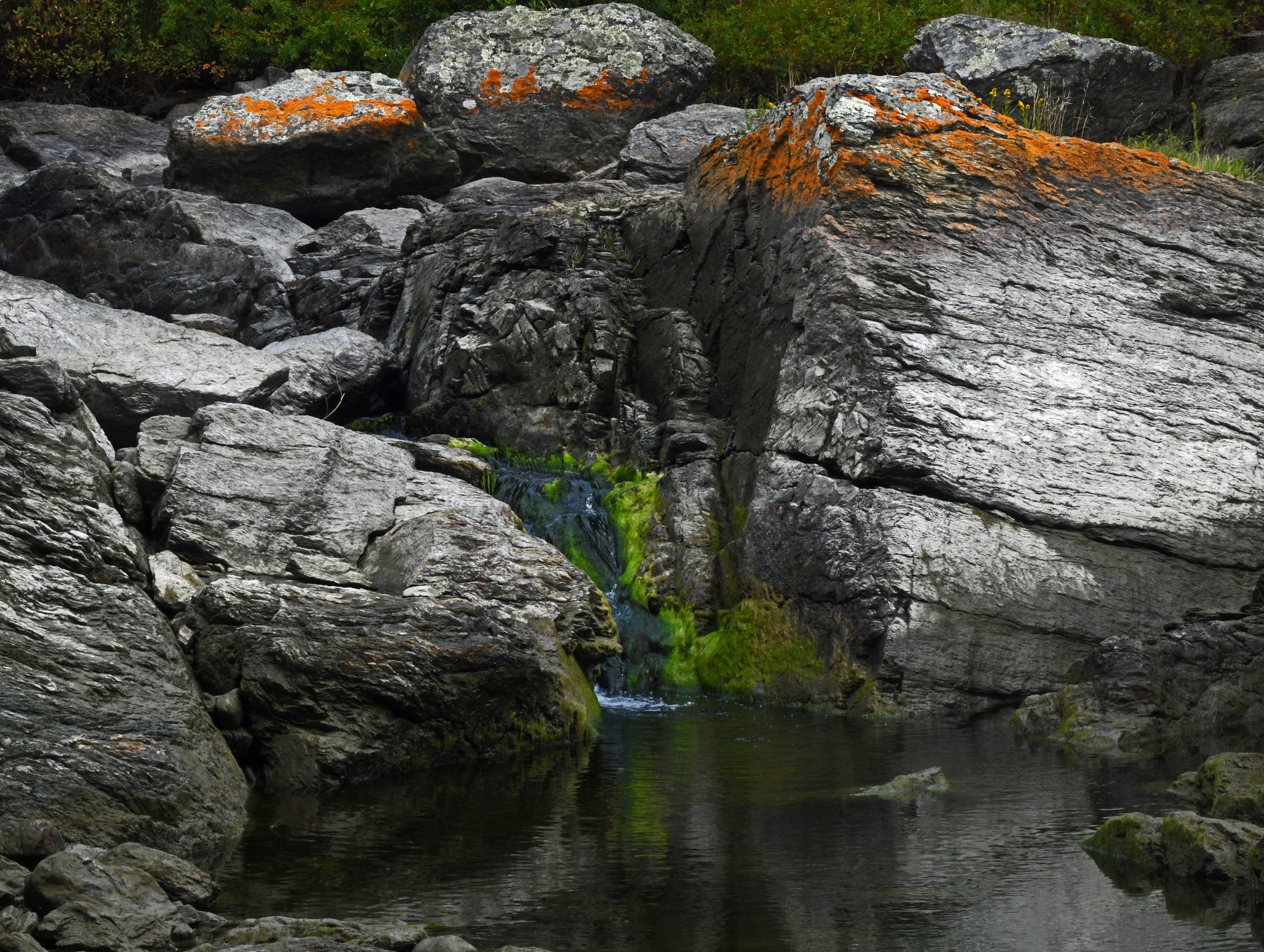
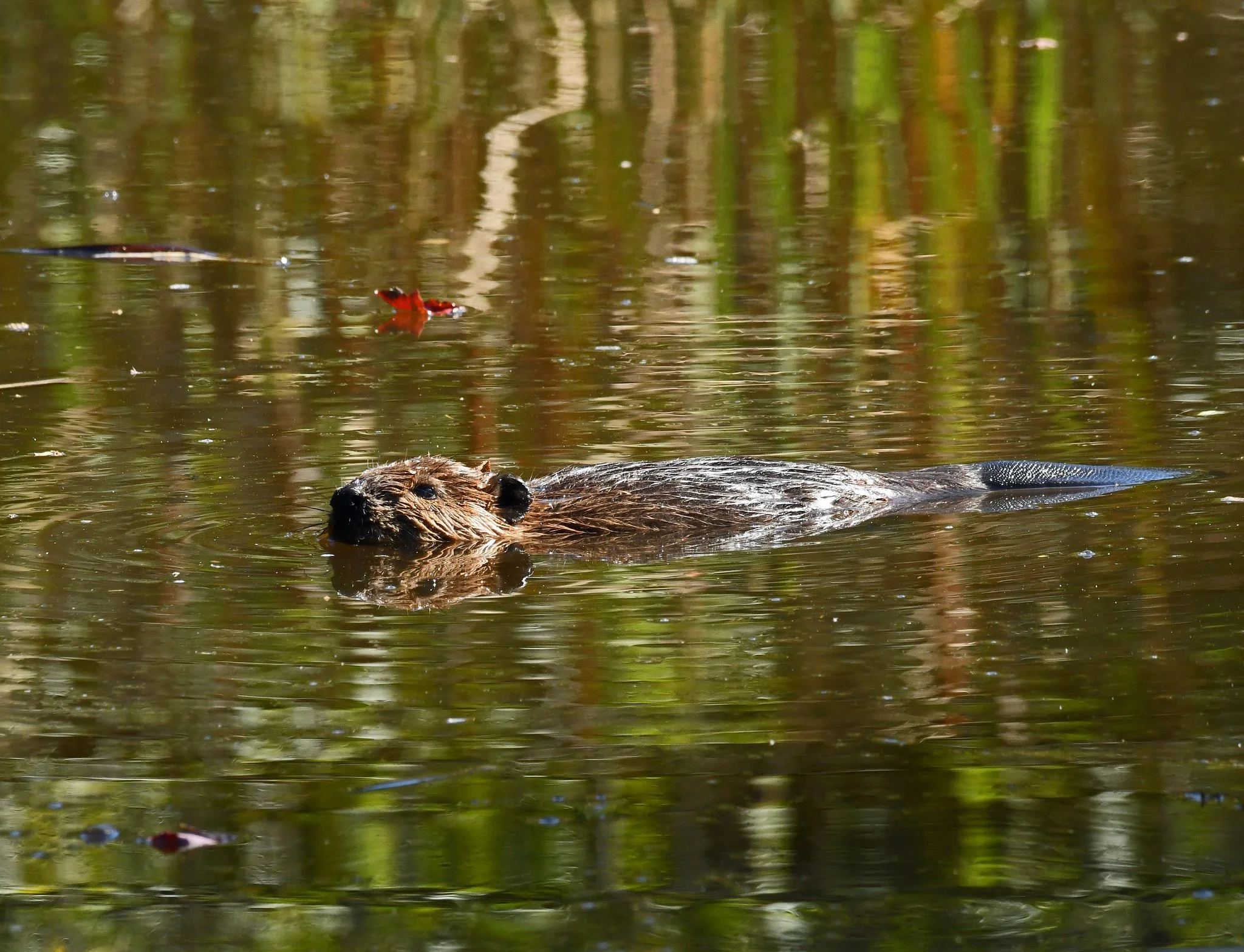
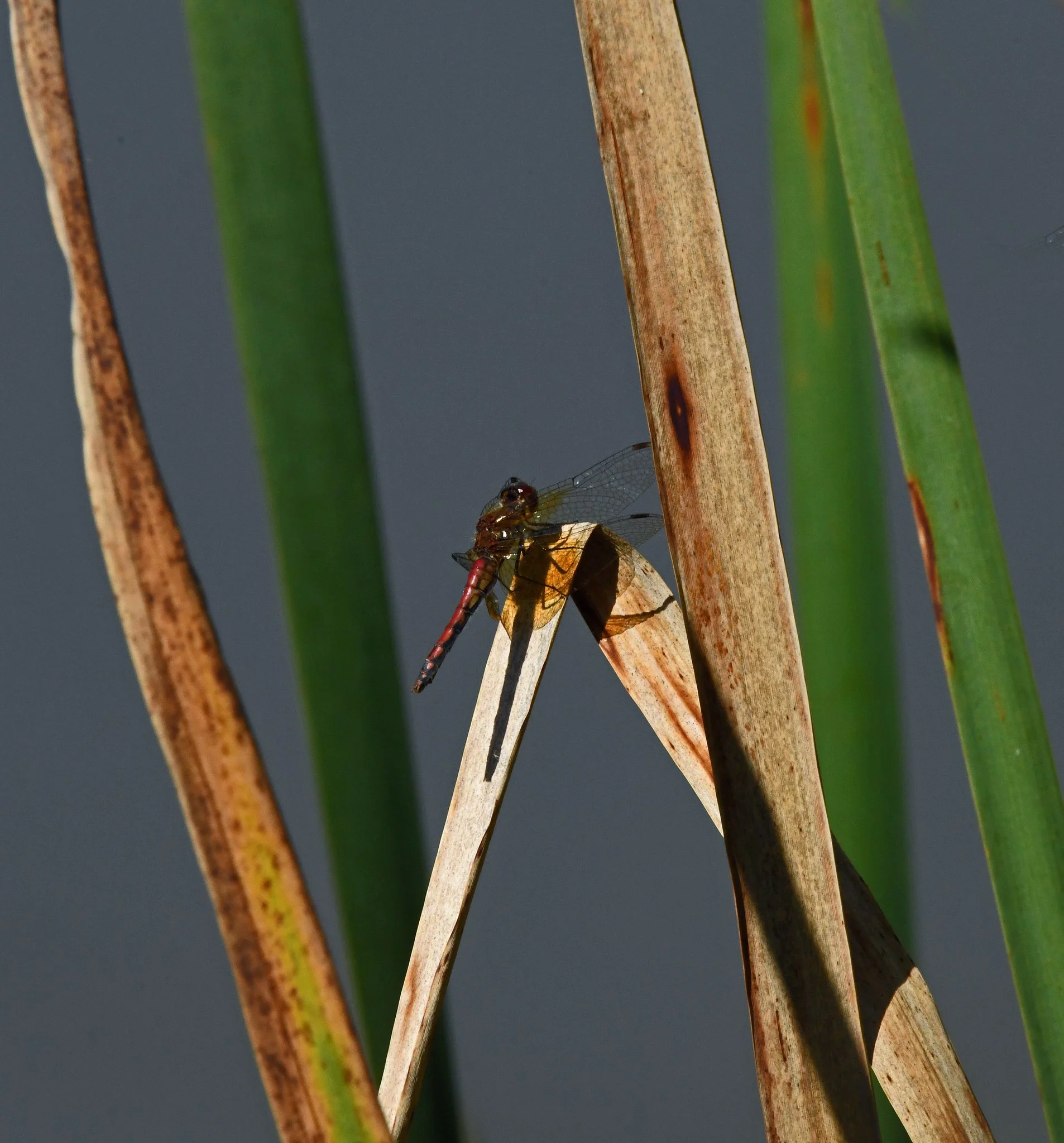
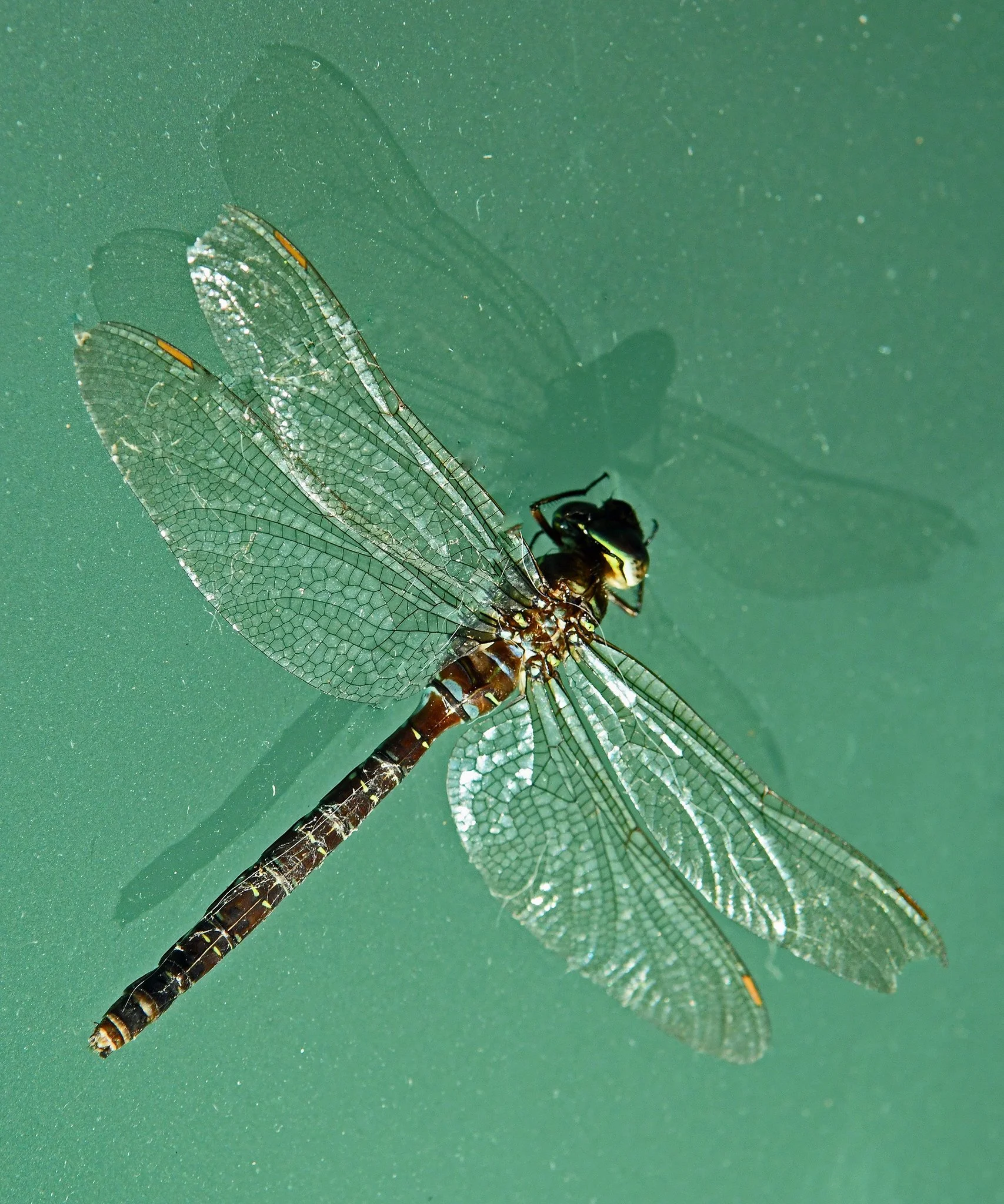
Our ponds were lower and our streams were slower, but they retained their vibrancy. The painted turtles, beavers and dragonflies didn’t seem to be concerned about the loss of water, which may be a good sign:

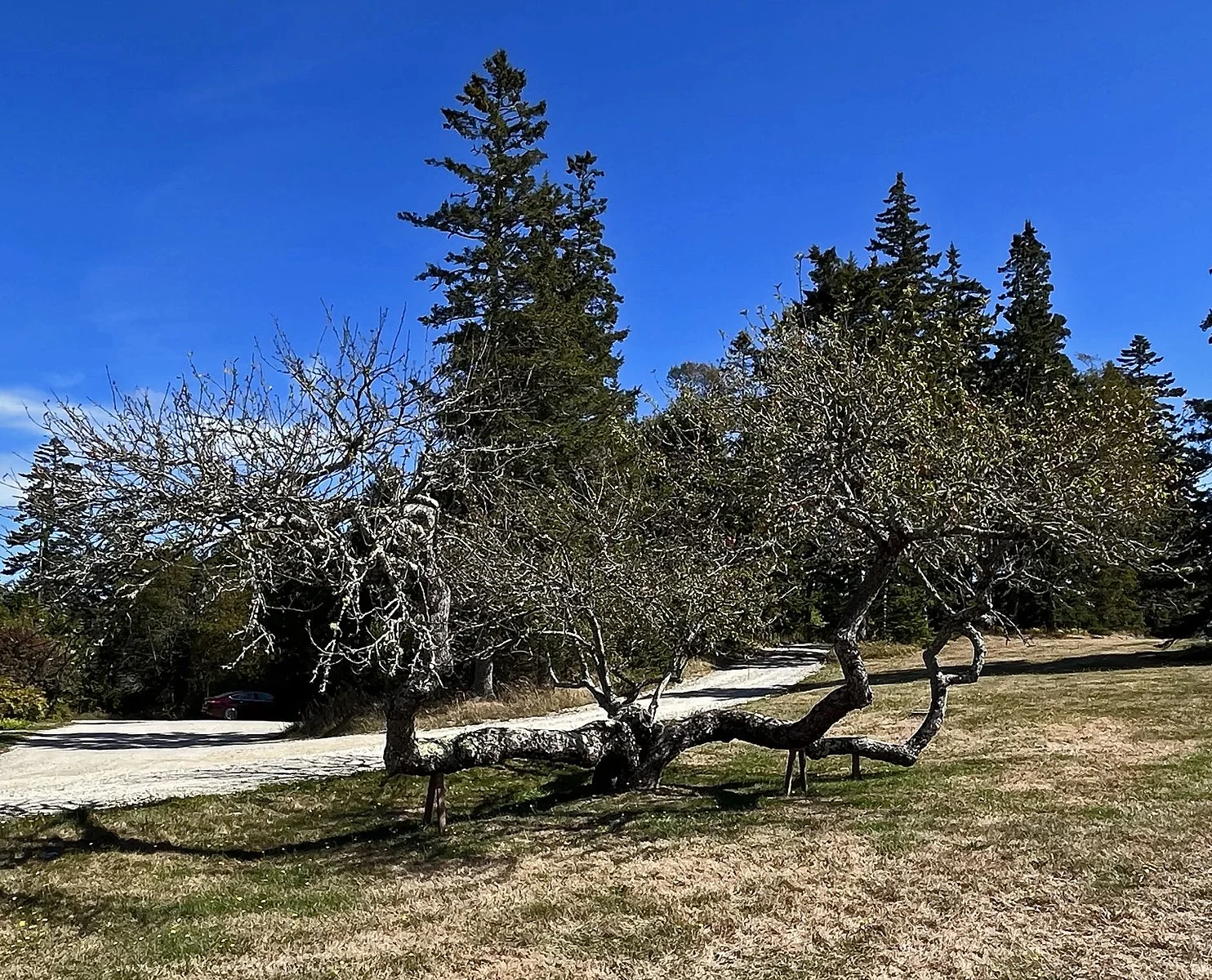
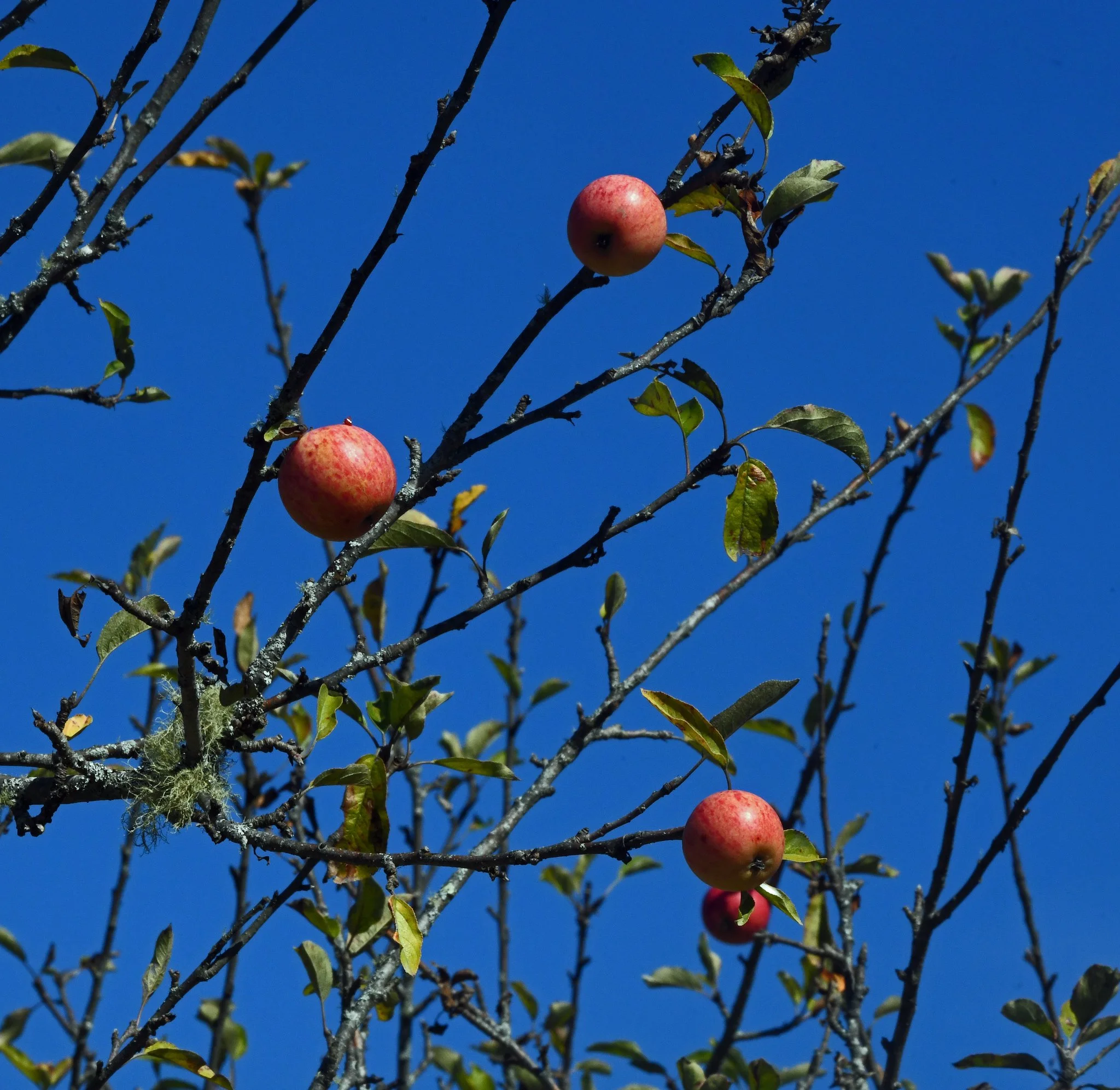
As for the flora of September here, the standout trees were the centurian apple trees that still bear tempting fruit on almost leafless branches; the plum trees with indescribably deep red leaves; mountain ashes, some with red and some with orange berries; sugar maples starting to show fall colors, and fruited crabaple trees:

For bushes and ferns, the eye-catching prizes go to the viburnum leaves and berries; beach rose flowers and their hips, and cinnamon ferns, all of which became transformed in September:

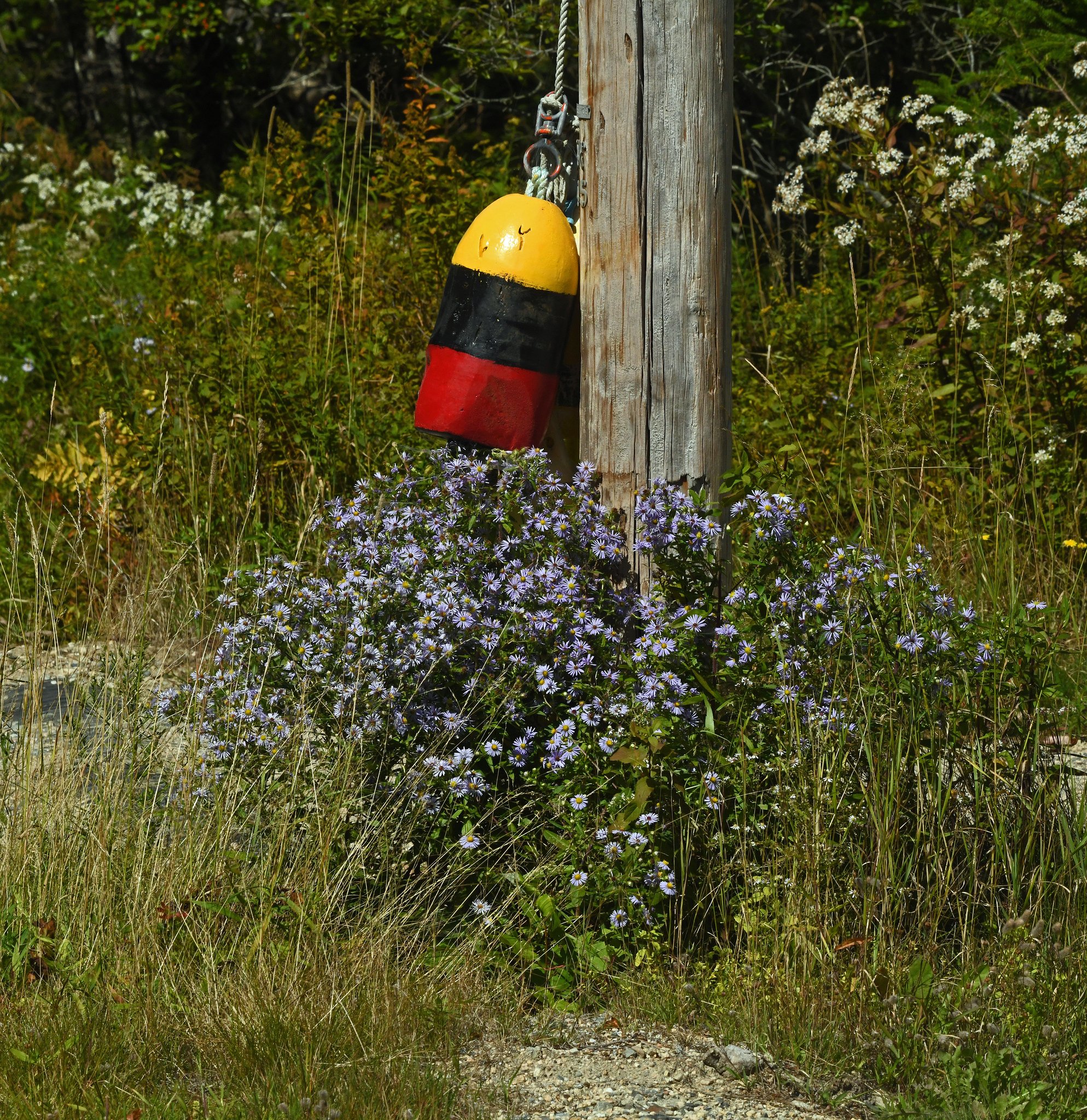
The representative wildflowers of September included Queen Anne’s lace in its caged and galaxy forms; the many varieties of goldenrod, much of which became “grayrod” by the end of the month; asters that didn’t care where they called home, and sea lavender in and out of water:

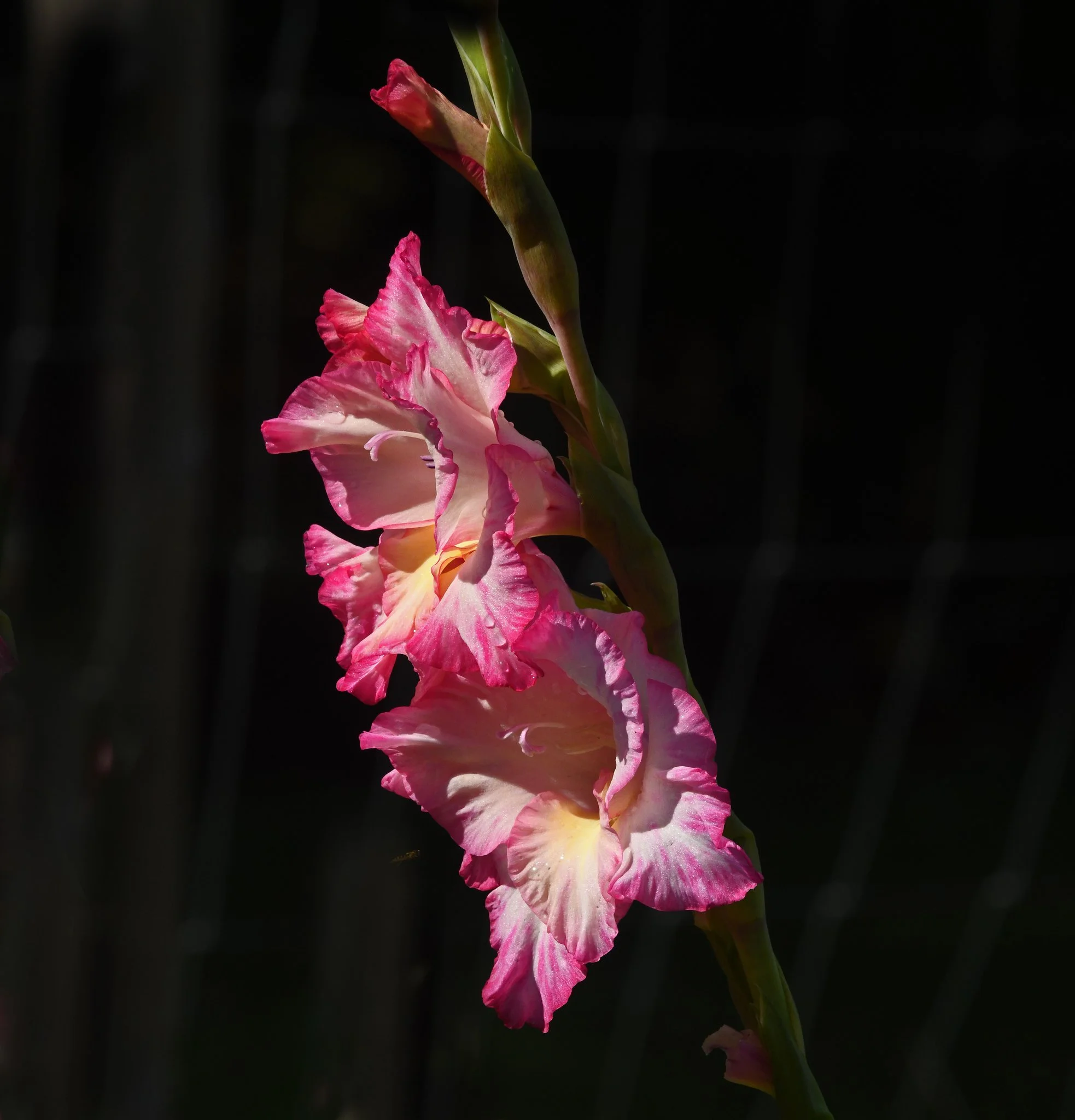
In the gardens, we saw the last of the tiger lilies, poppies, petunias, and clematis in September. But, gladiolas still were putting up a good fight at the end of the month and chrysanthemums and gourds were becoming available:

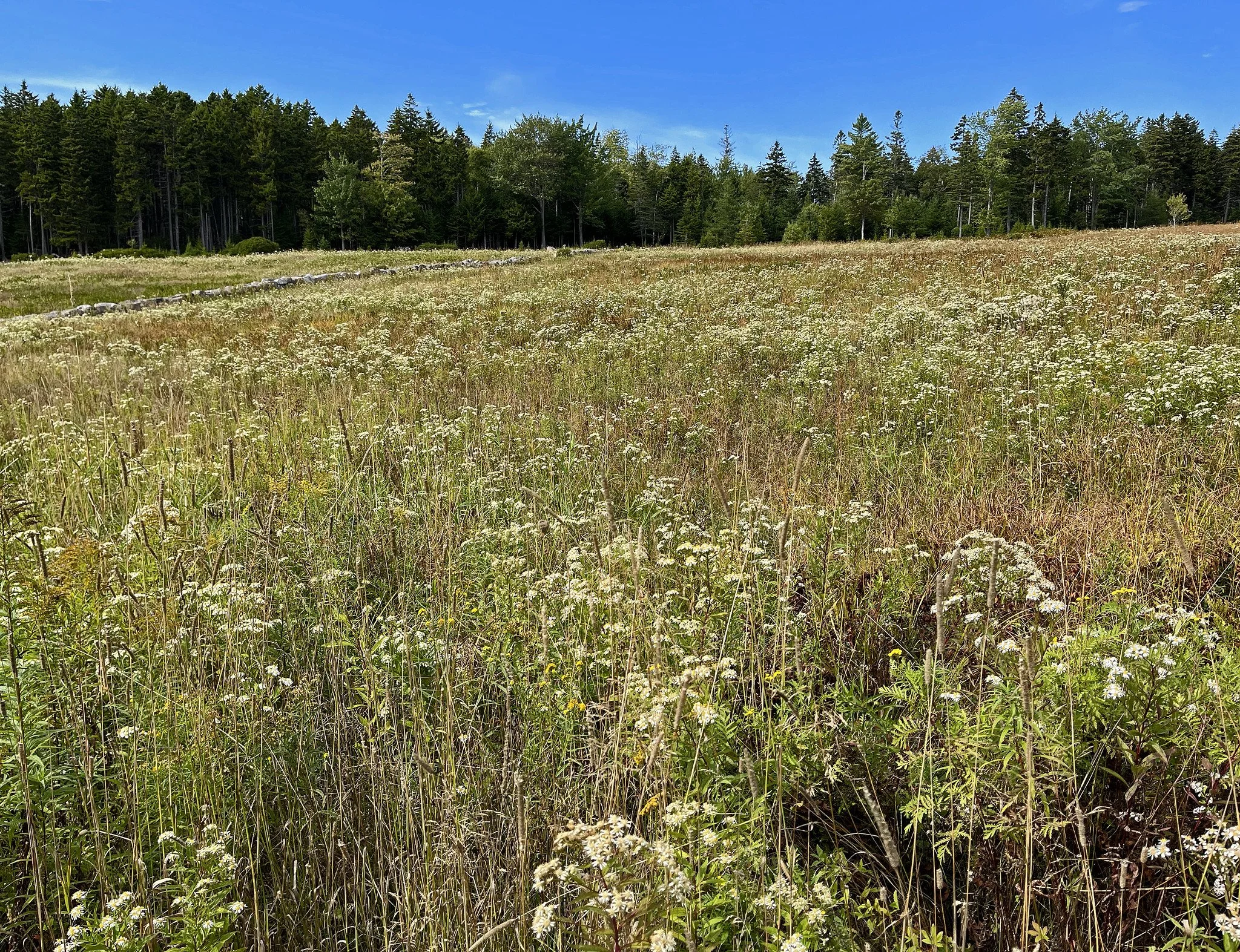
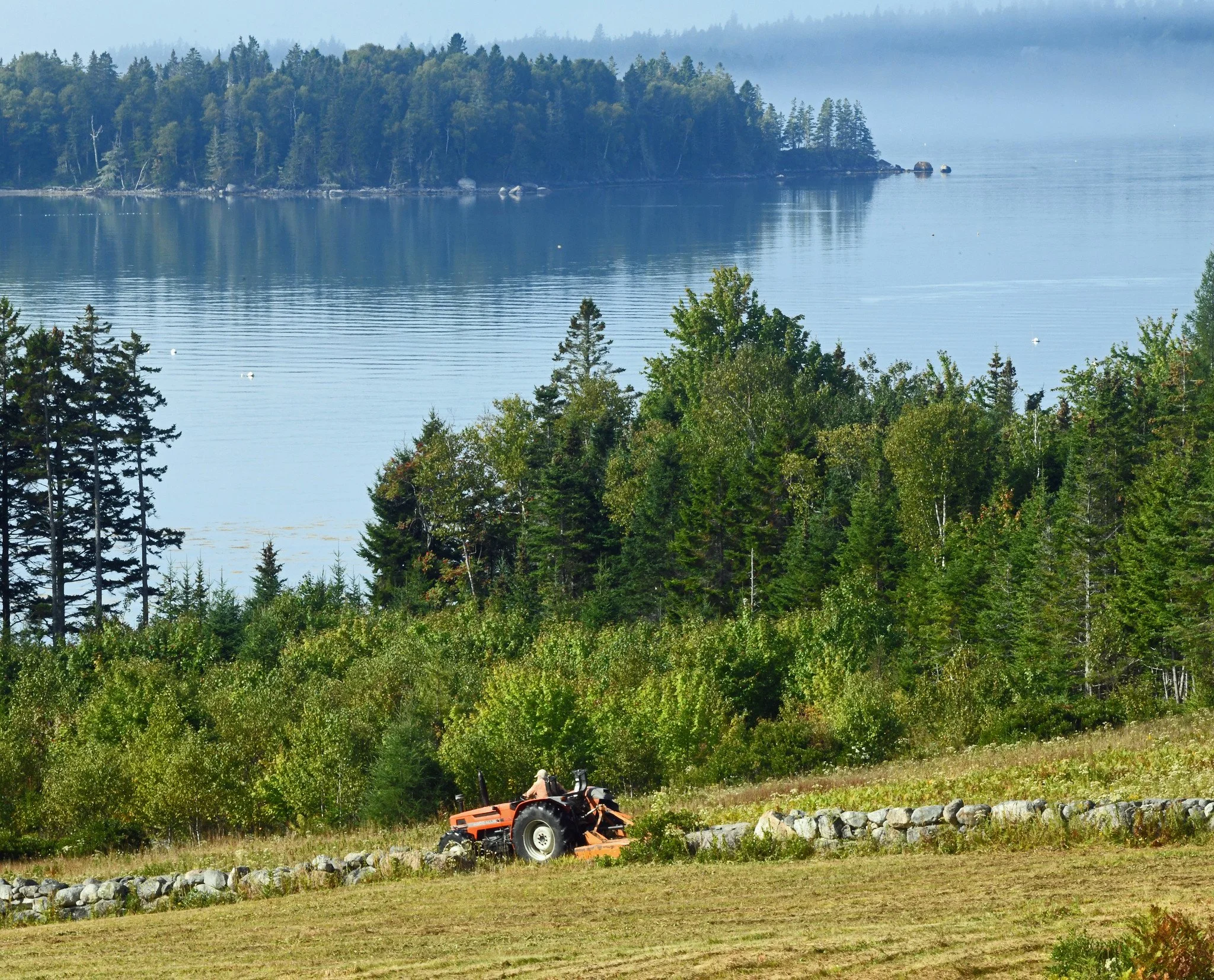
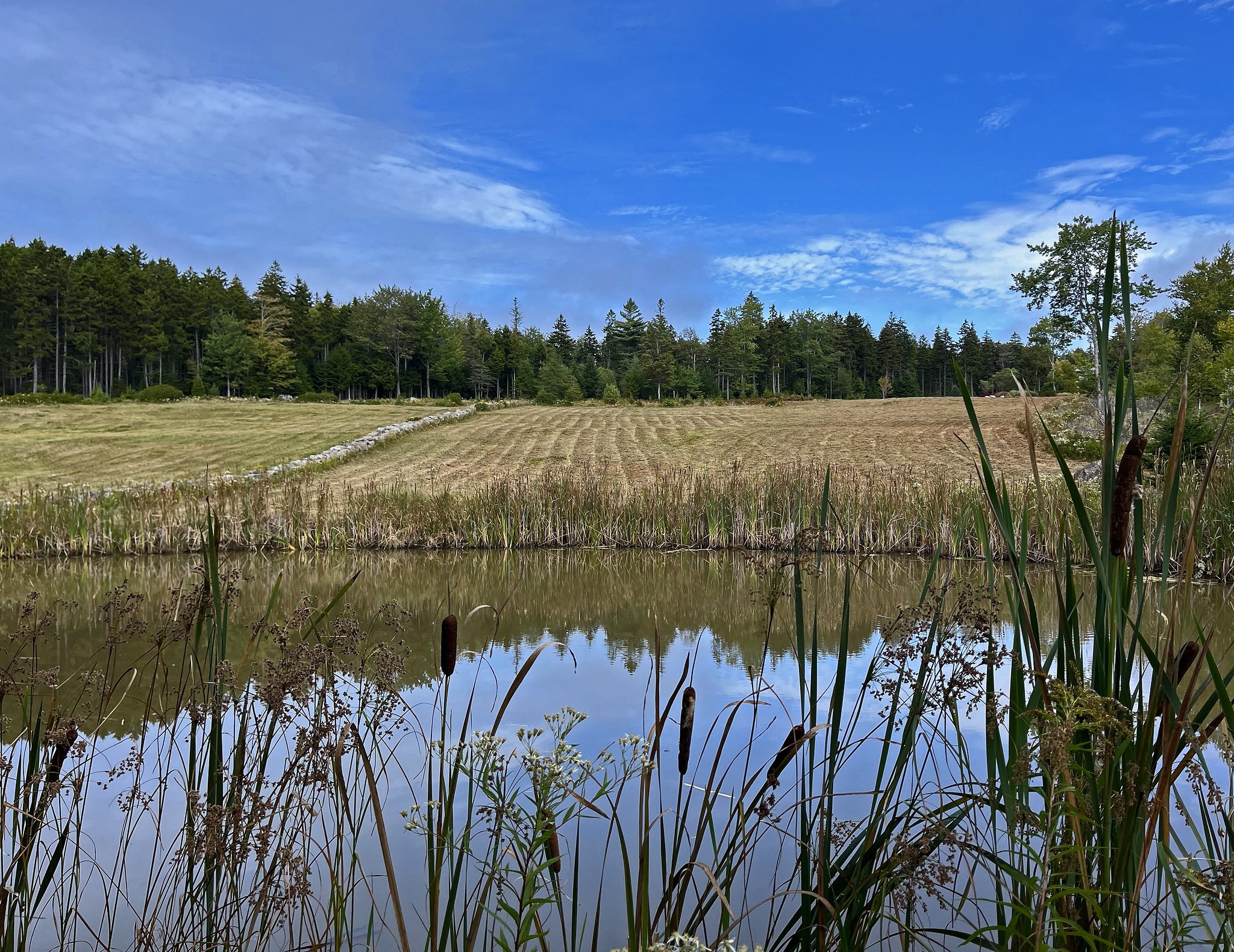
Our fallow fields were thick and full of the browns and whites of fall grasses, sedges, and wildflowers before our annual September mowing:

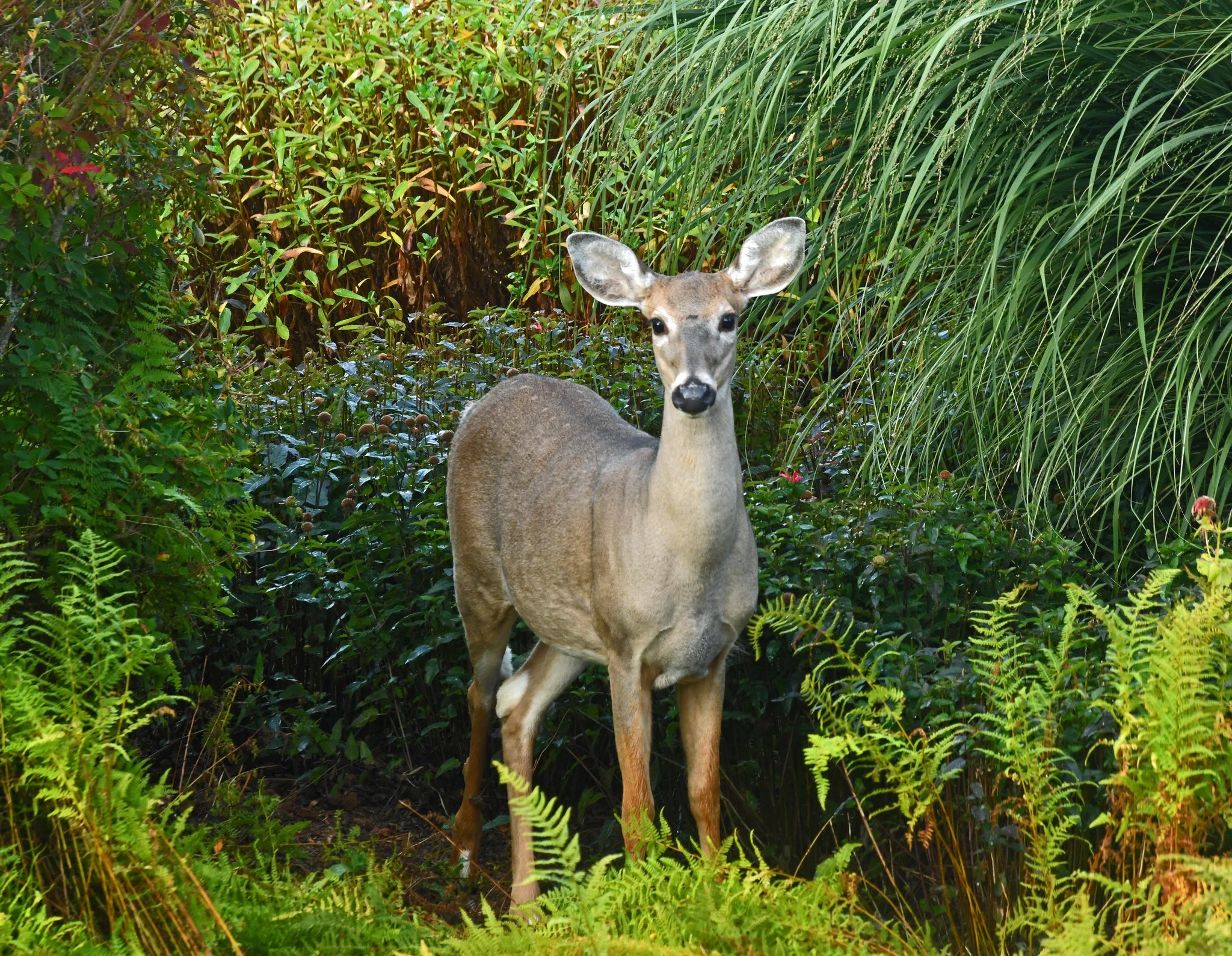
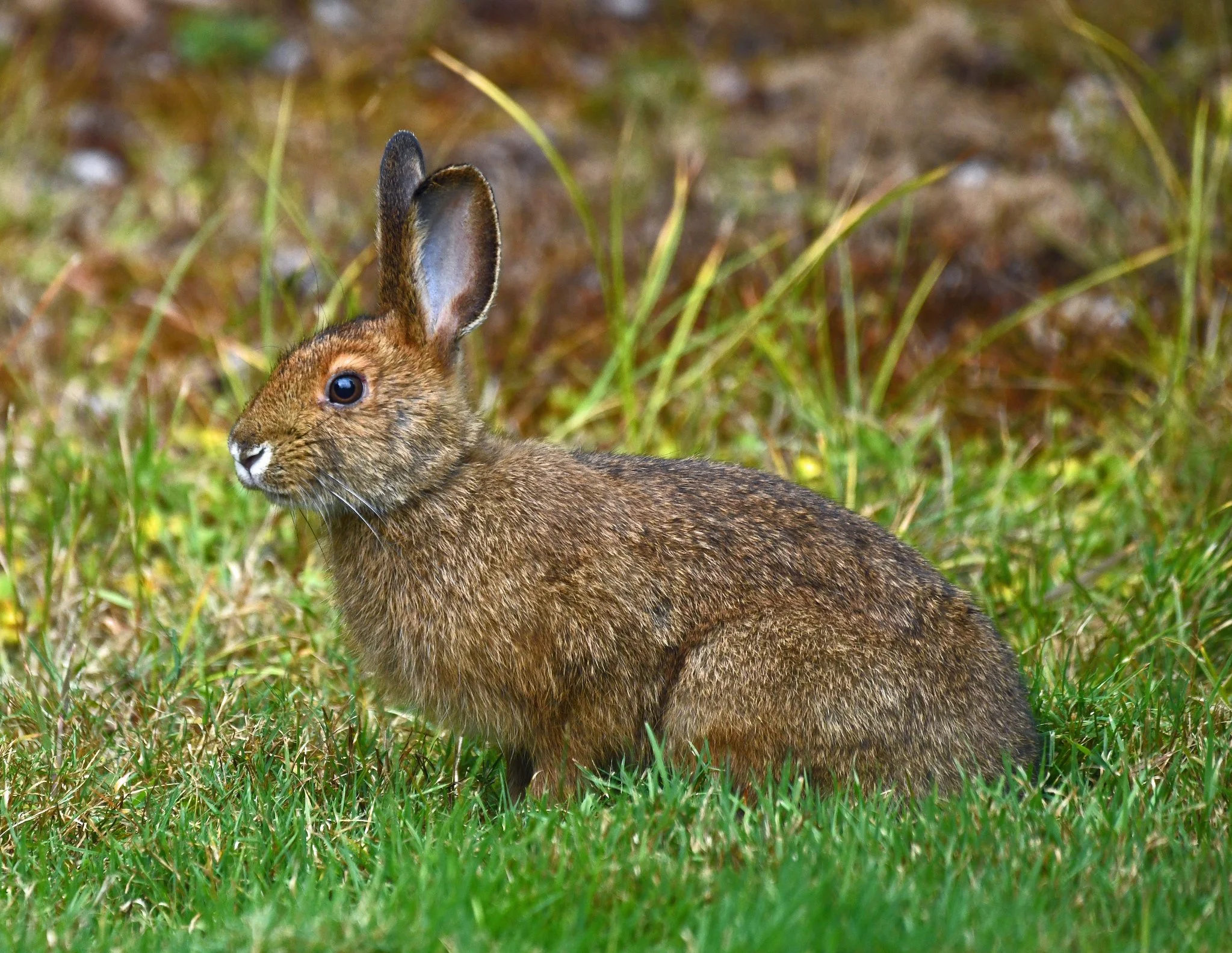
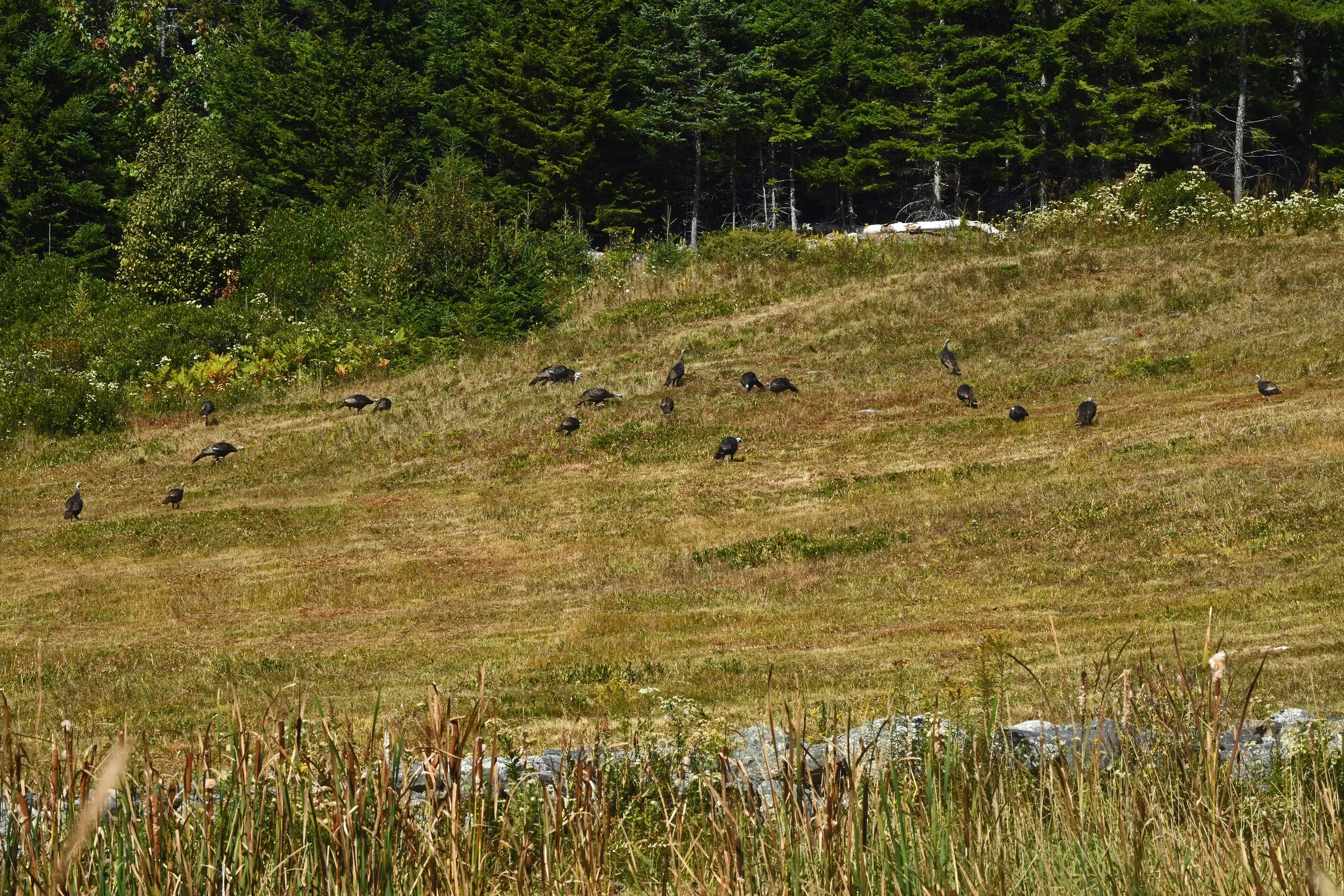
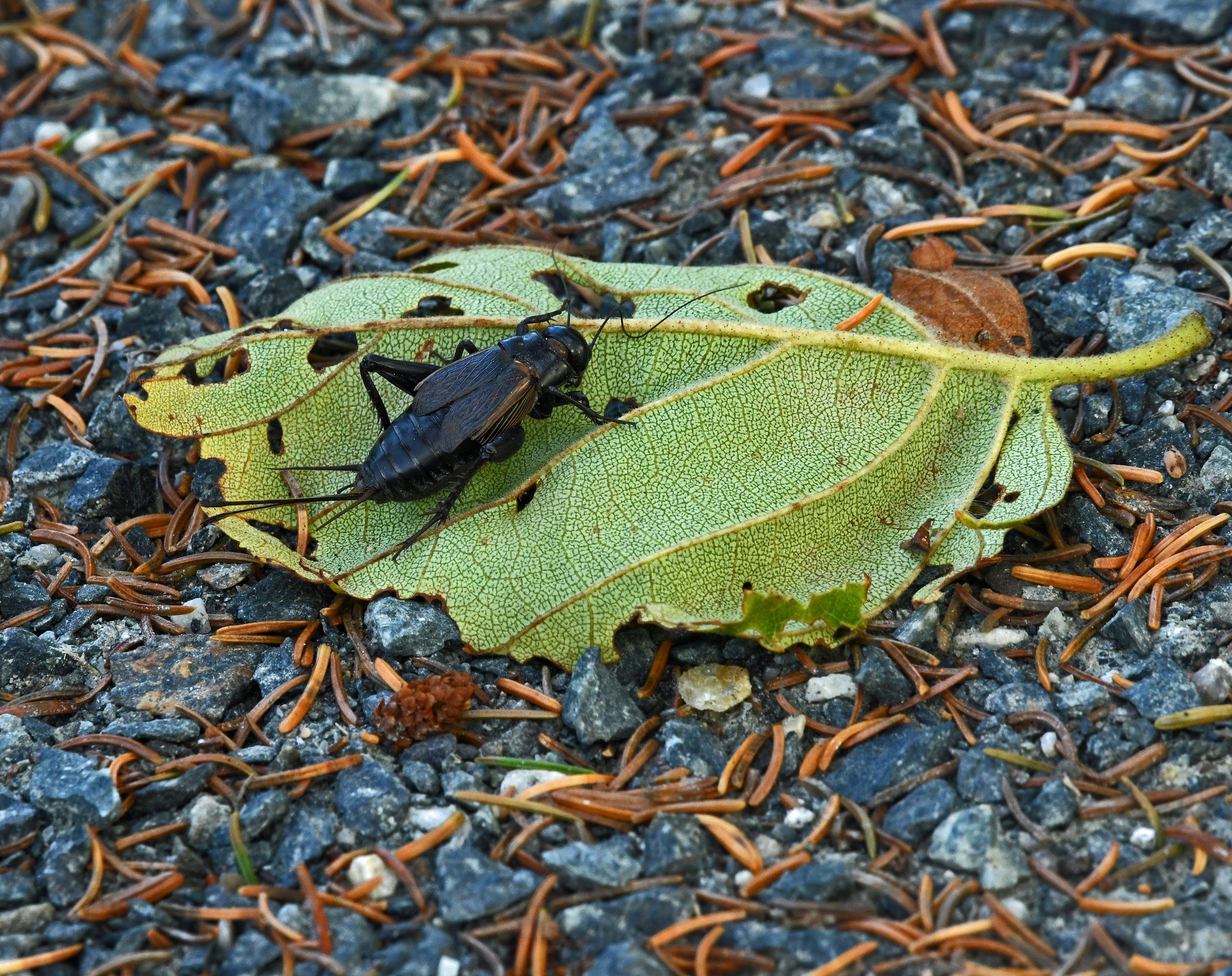
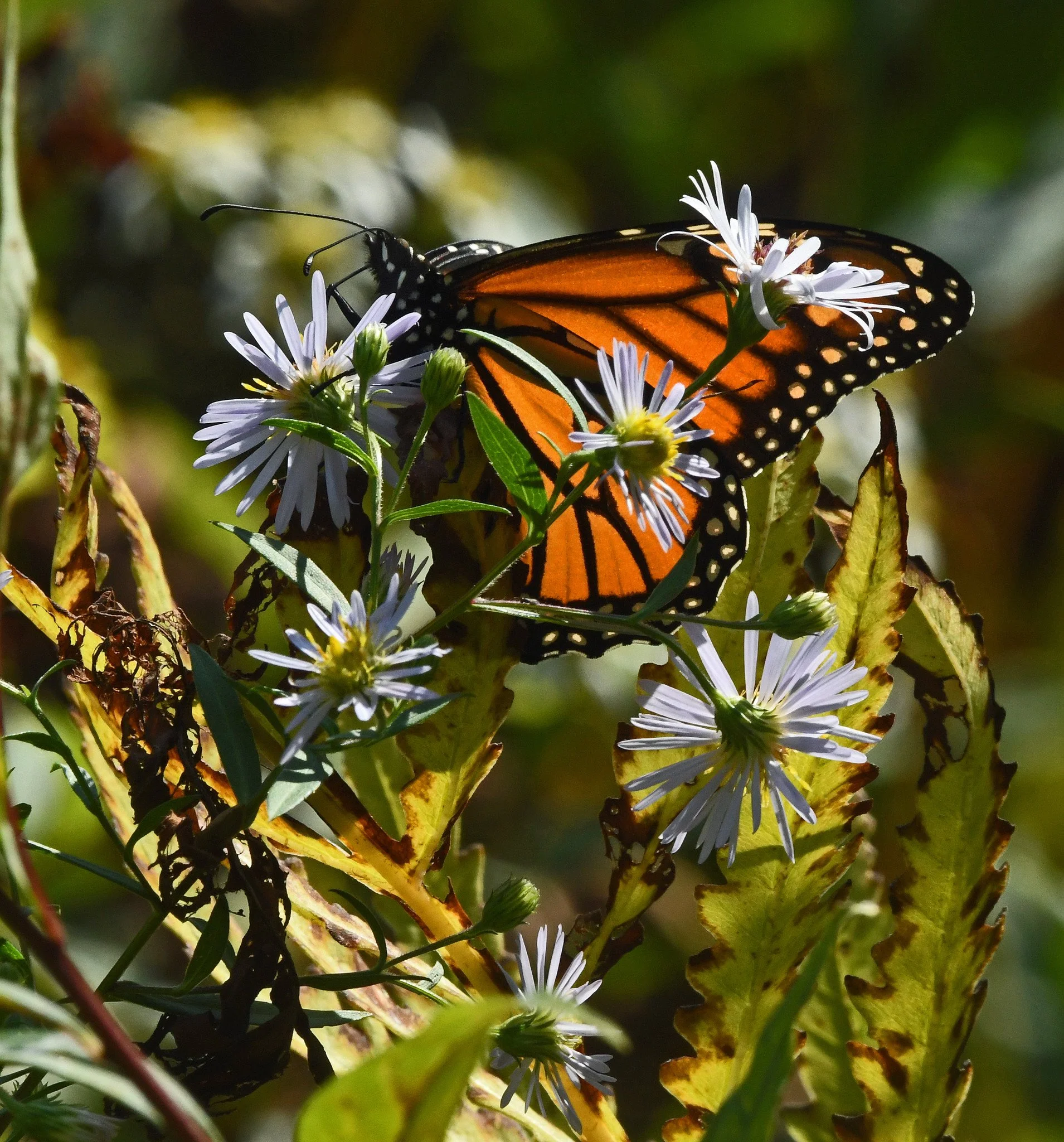
After the mowing, white-tailed deer found new hiding places among garden grasses and ferns; snowshoe hares gorged themselves on the shorter grass; monarch and white admiral butterflies and other pollinators patrolled the flowers along the uncut edges, and grasshoppers, fall crickets, and tiny field toads were exposed to marouding wild turkeys:

It’s worth highlighting the September caterpillars that turned themselves into this year’s “super generation” of stronger monarch butterflies. These miraculous, longer-living monarchs started their dangerous migration from Maine to Mexico in September. We wish them a safe trip.

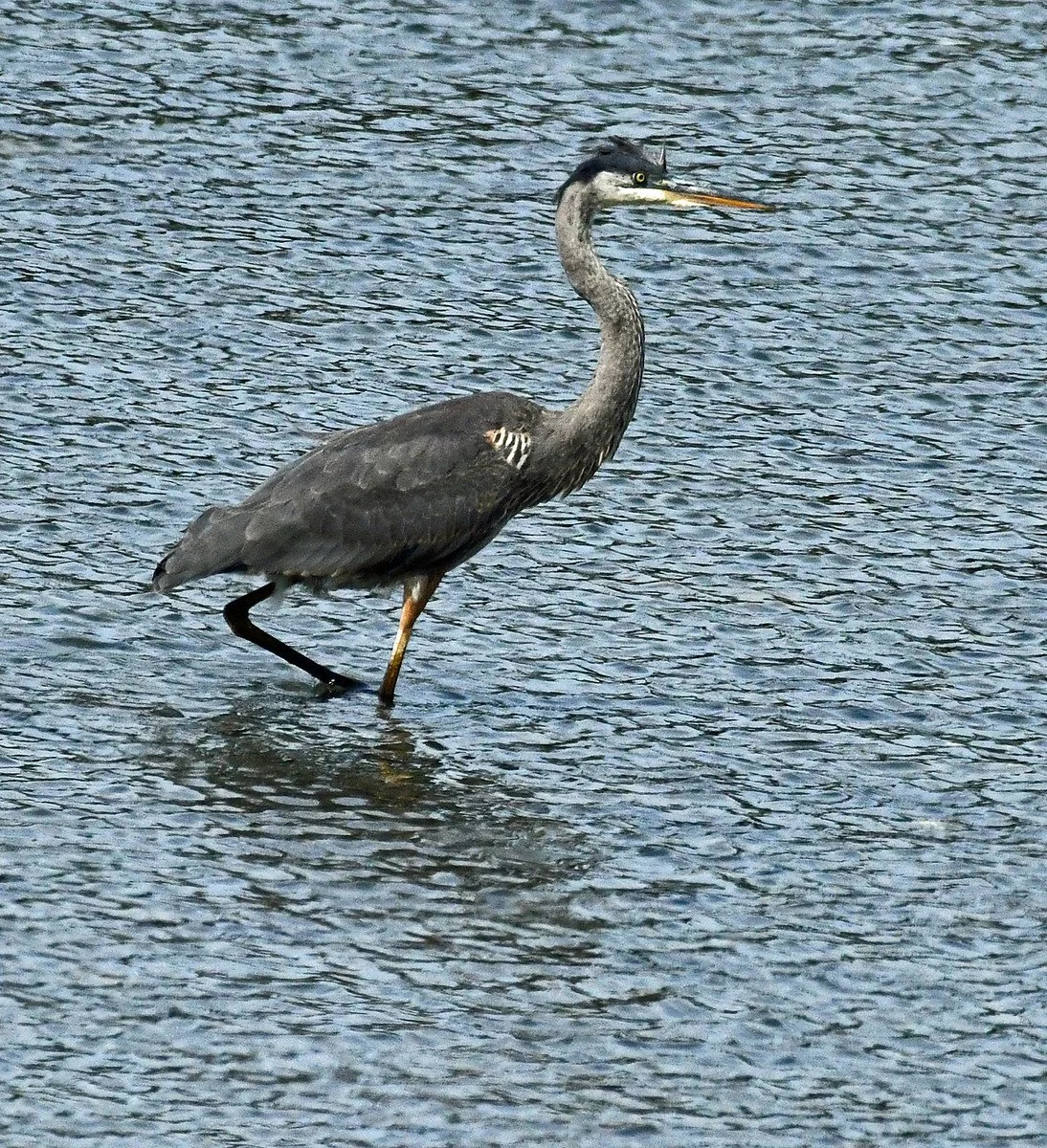
Another vulnerable species is the great blue heron, which usually migrates south, but increasingly has been overwintering here as our years get warmer:

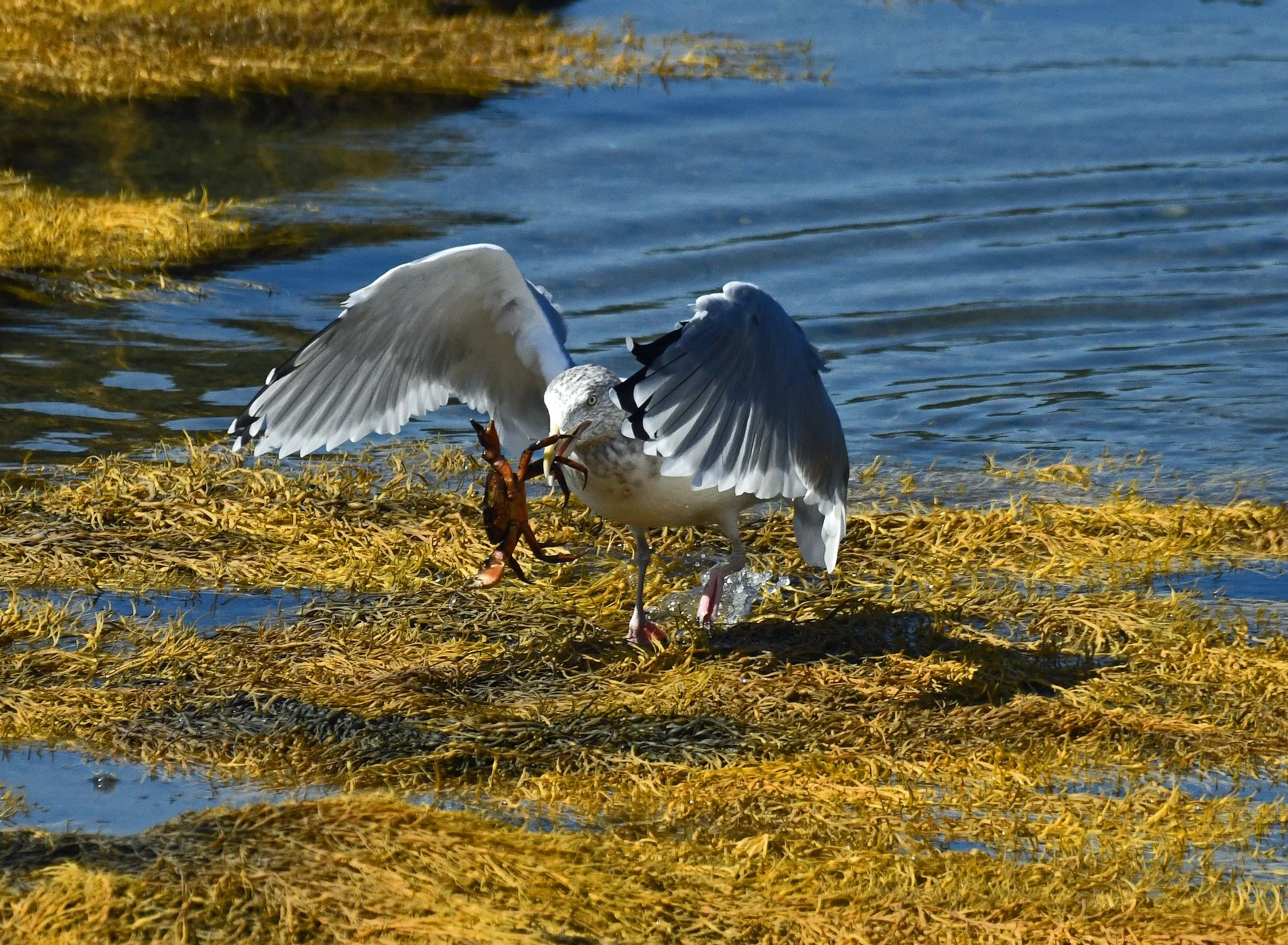
Sometimes its easy to forget the beauty and importance of our resident birds, especially our many herring and ring-billed seagulls. They’re among nature’s toughest species and best flyers, not to mention their having a fancy for harmful European green crabs that hide in the rockweed:

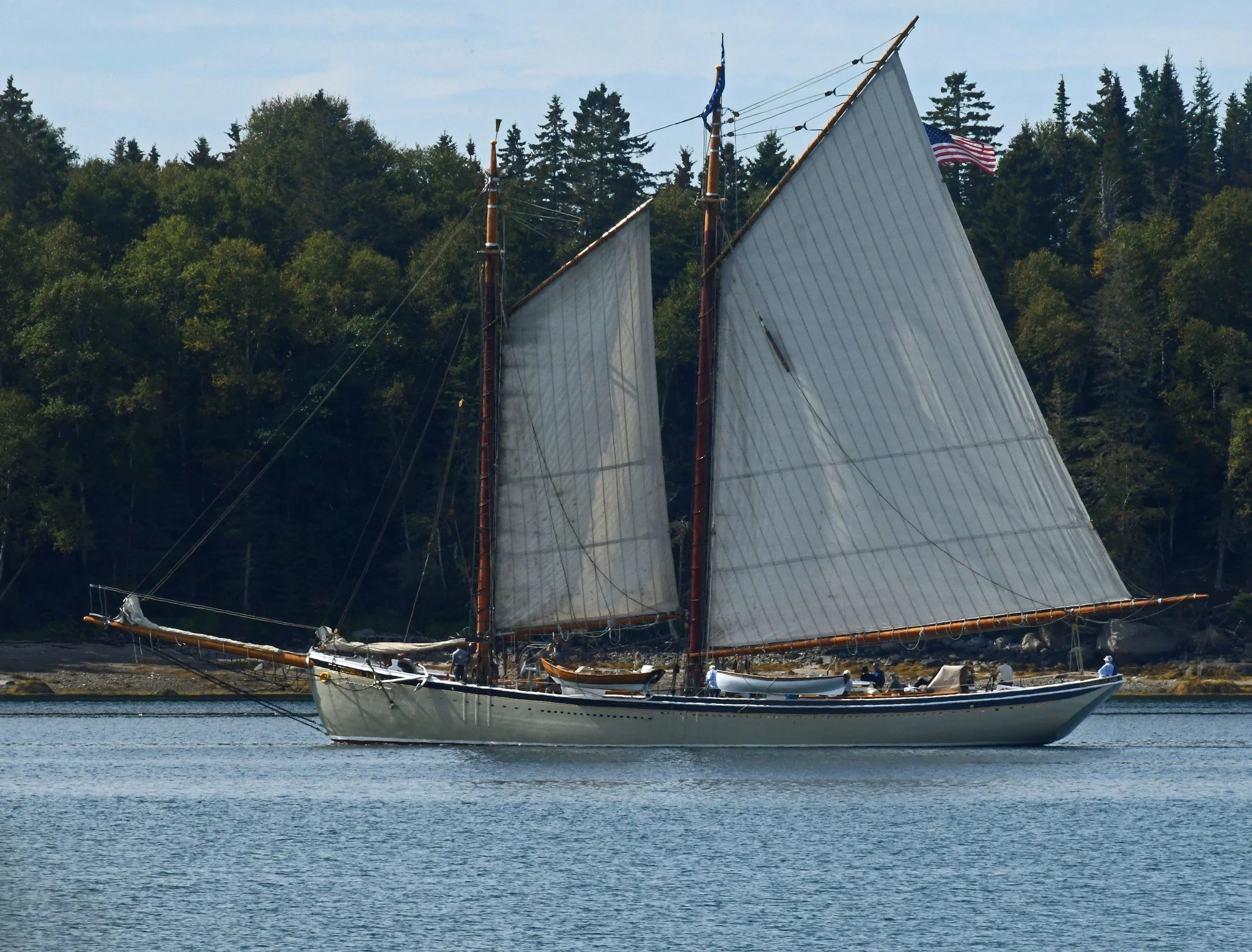
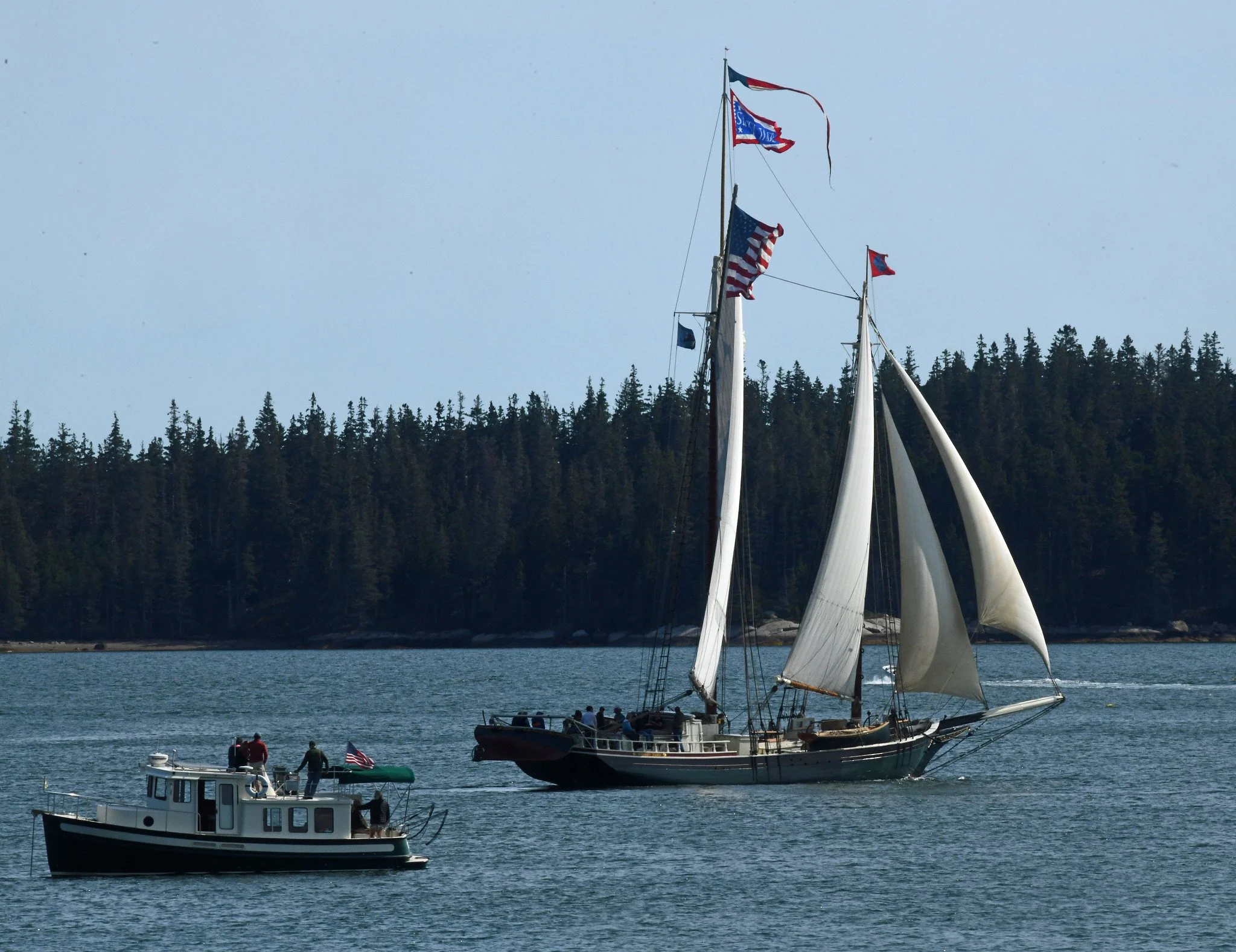
The September coast is visited by other, larger migrators in the summer and fall. They come in the form of classic windjammers that sometimes gather together for a rendez-vous, but usually take tourists on special, multi-night coastal cruises. Here are some that visited Brooklin’s Great Cove in September:

American Eagle

Angelique:

Grace Bailey

Heritage and J.&E. Riggin:

Stephan Taber

Lewis R. French and Ladona:

On the working waterfront, the fishermen and their vessels in Naskeag Harbor seem to have been very busy tending lobster traps in September. When the fishing vessels return to their moorings, they complete the picturesque scene.

Up the coast a mile or so, we have another picturesque harbor that was busy in September. It’s Center Harbor, the port for many recreational boats and the home of the renowned Brooklin Boat Yard:

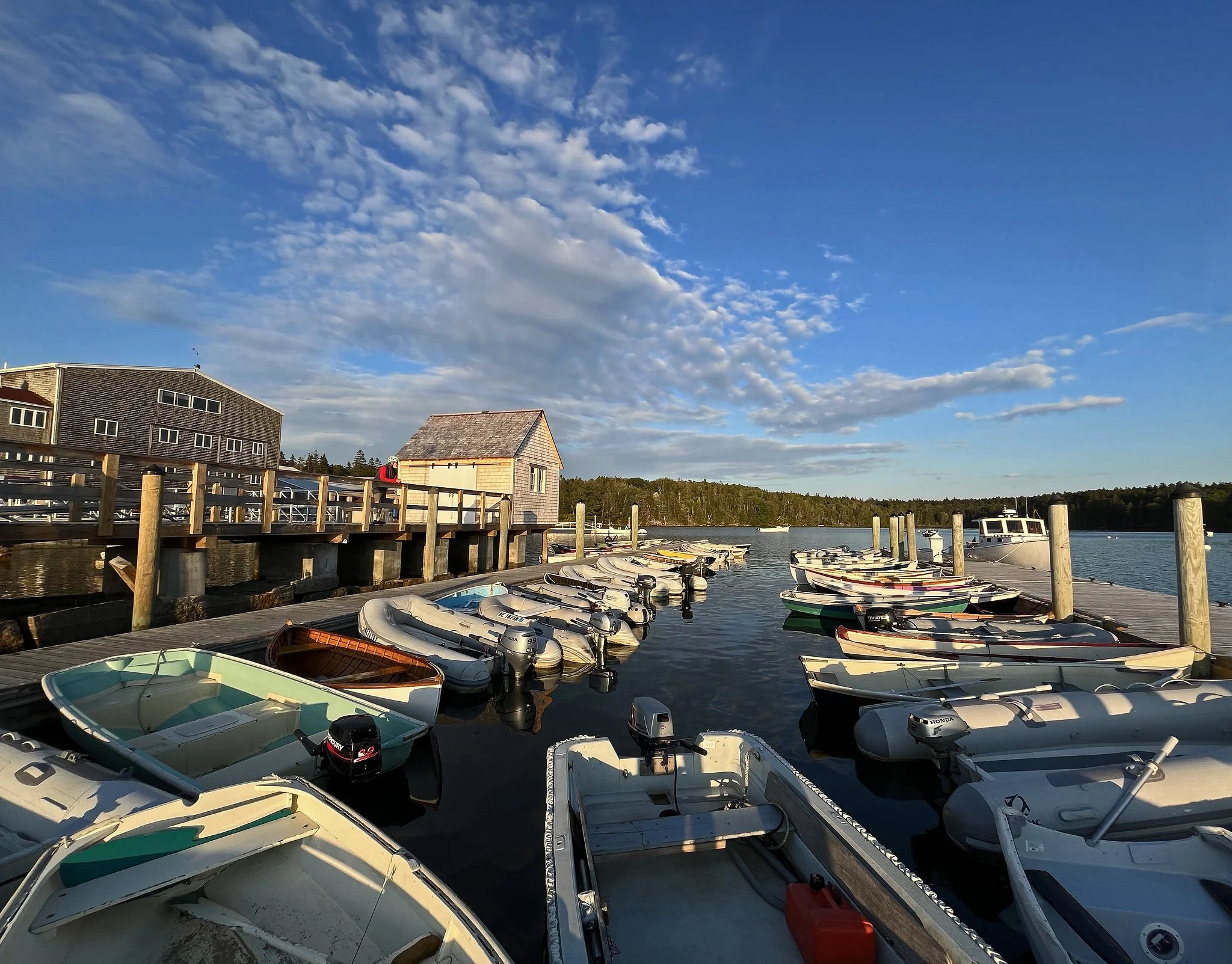
Between Naskeag Harbor and Center Harbor there lies Great Cove, where the also-renowned WoodenBoat Publications headquarters and WoodenBoat School are located. The Cove is very busy all summer. The School ends its boatbuilding and other classes in September. Sailing classes end early in the month, but faculty can take out a boat for a sundown sail after work. By the end of the month, though, all boats usually have been brought ashore, cleaned, and stored for the winter.

Finally, we look to the sky. The September moon, which often is called the Corn Moon or Corn Harvest Moon when full, was spectacular almost all month, perhaps due to the month’s relatively dry and cool, clearer air.

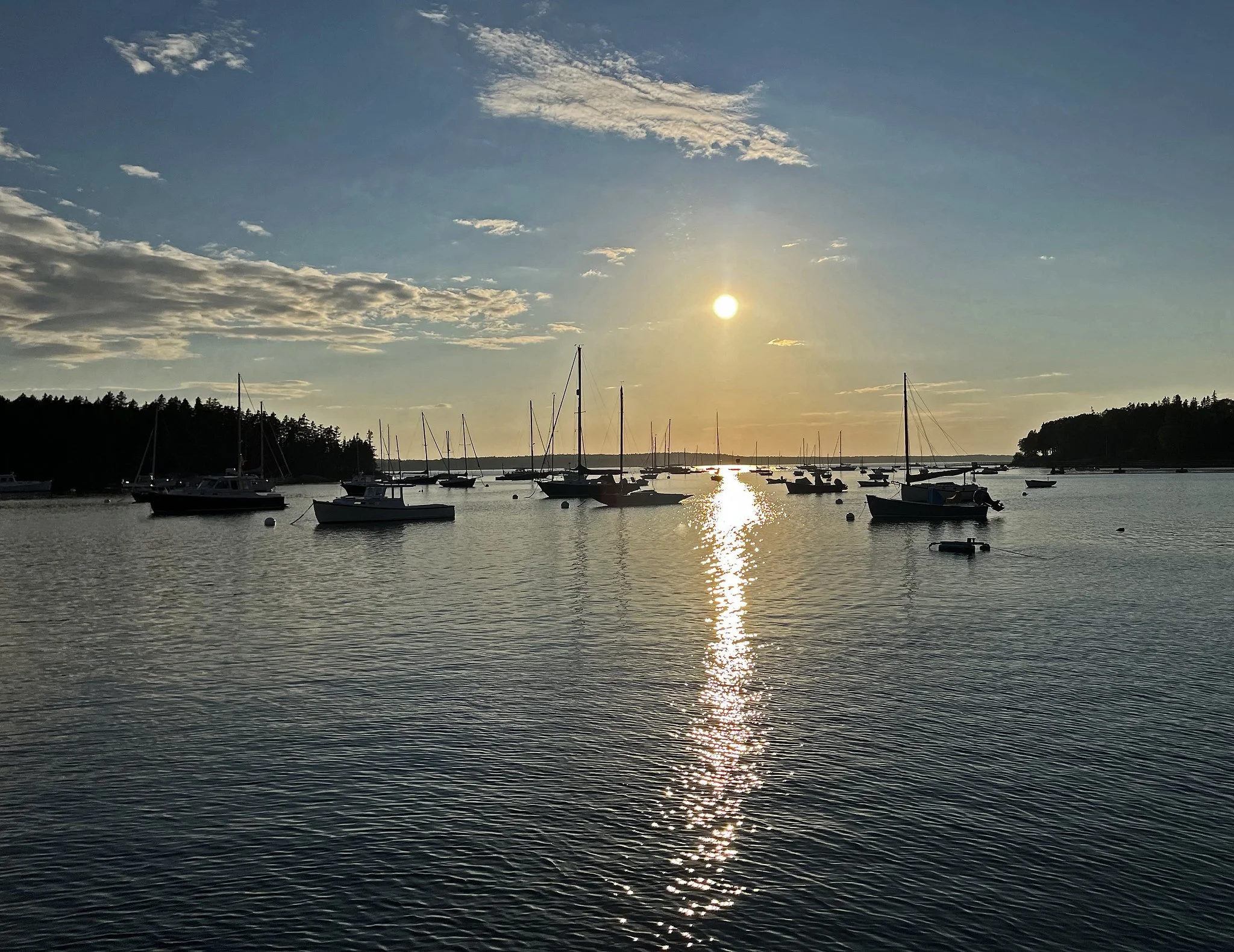
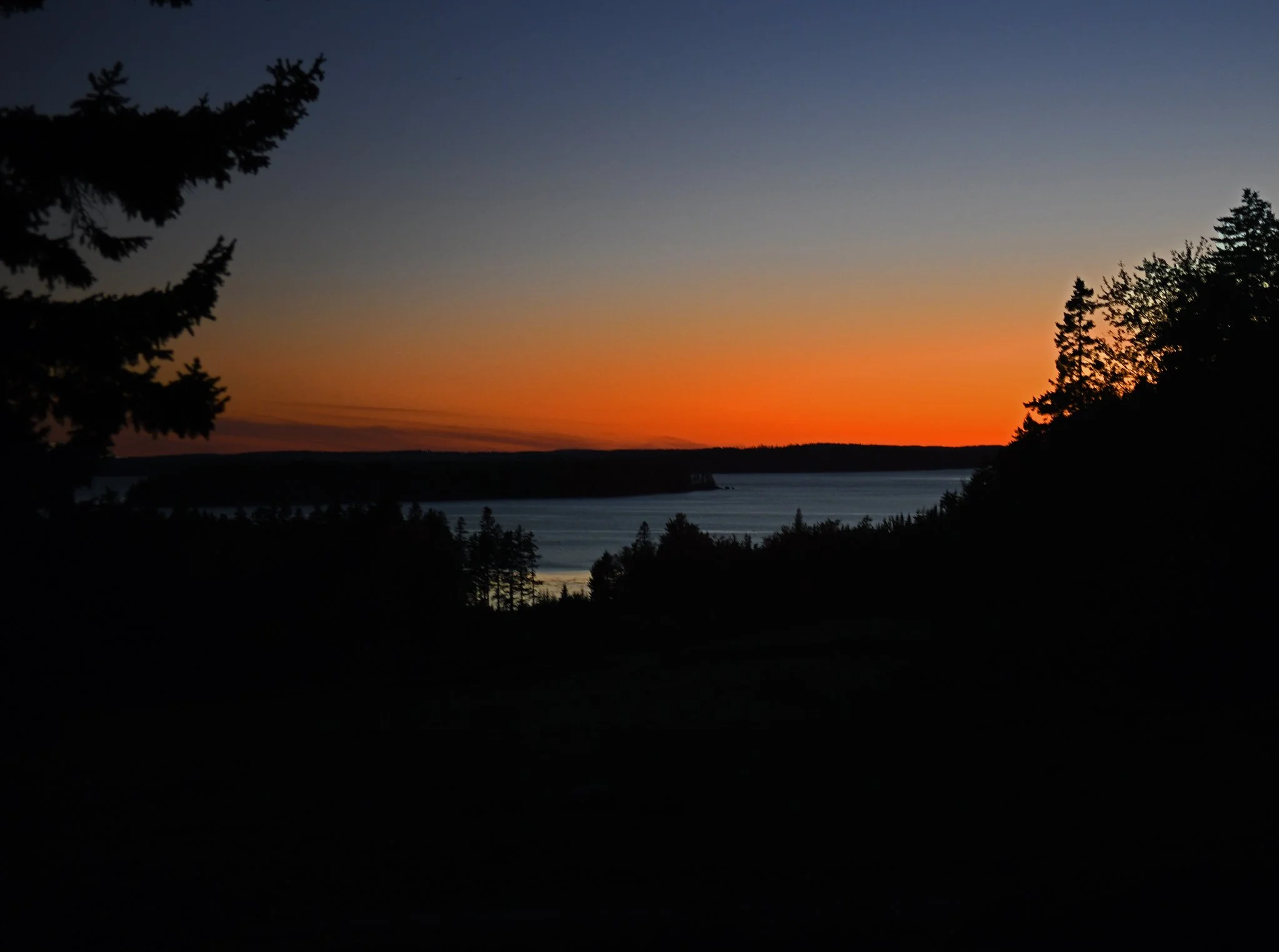
The cleaner atmospheric conditions and our changing views of the sun in September combine to start the colder months’ “sundown afterglow season.” That’s when we begin to see increasingly spectacular sights of coastal waters, such as Great Cove:

(All photographs in this post were taken in Down East Maine during September 2025.)
3 Comments

Comment

In the Right Place: And Then There Were None

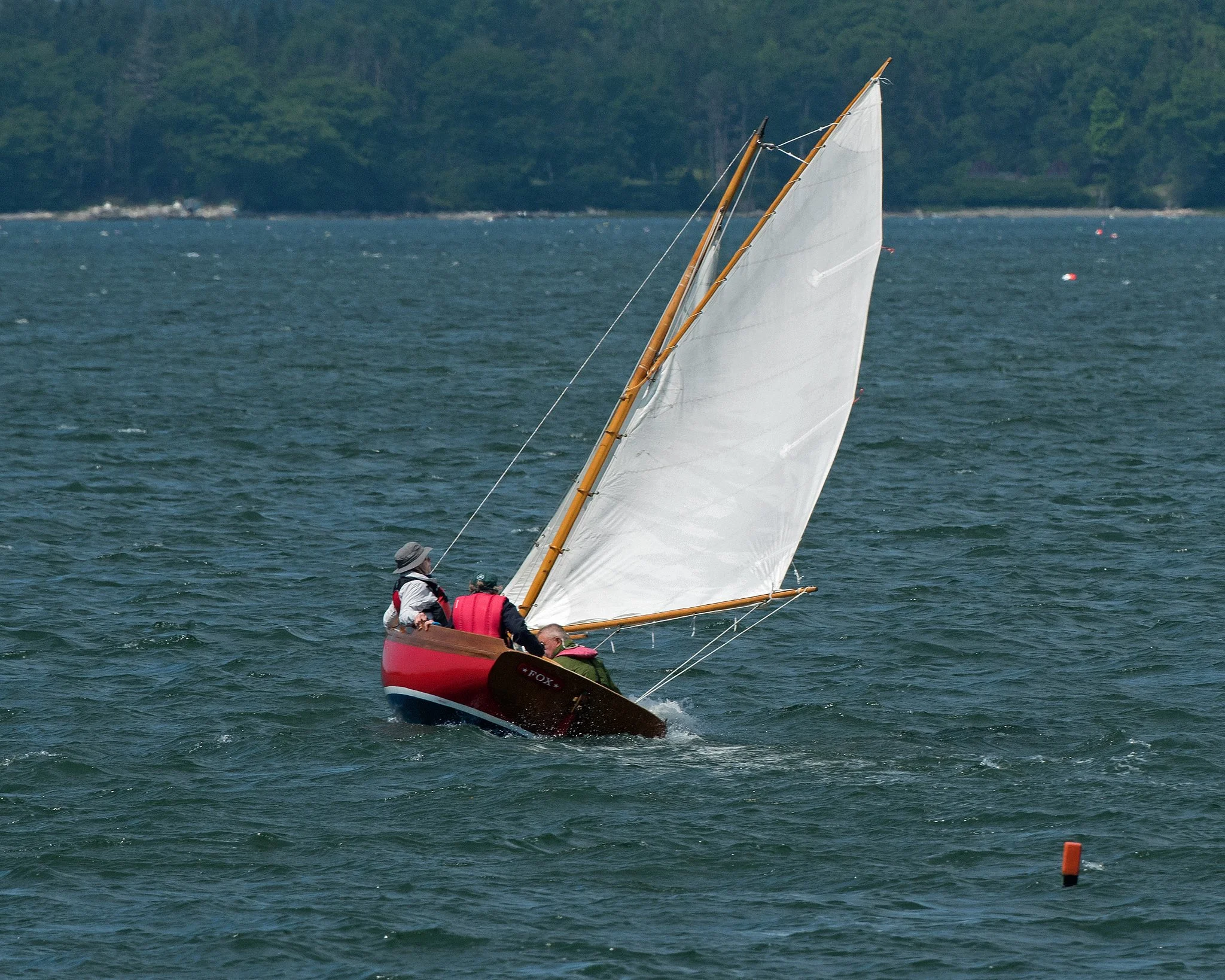
Here you see FOX at rest in Great Cove on Sunday, the only sailboat in the WoodenBoat School fleet remaining there then. The School’s year ended last week and FOX was scheduled to be pulled out of the water yesterday and tucked into storage with the rest of the fleet until next year’s classes.

But some fortunate sailors have everlasting memories of sailing on FOX and her sisters. And others will be able to have those memories created in next year’s classes. Here’s a Leighton Archive image of FOX being sailed and creating memories:

Leighton Archive image

FOX is a Haven 12 ½ daysailer designed by Brooklin Boat Yard’s Joel White in 1985. The Havens are a practical adaptation of perhaps the most classic of small sailboats, the Herreshoff 12 ½ (foot long at the waterline) daysailer. The Herreshoff was designed by the dean of sailboat designers, Nathanael Herreshoff, in 1914 as a safe, high-performing training boat.

The principal difference between the Haven and the Herreshoff is that the Herreshoff has a relatively large, fixed keel and the Haven has a removable centerboard for shallow water access and easy transportation. They both have the same fine lines above water and both may be gaff-rigged or Marconi-rigged.

The story is that Joel was asked to design a small sailboat that was as beautiful and high-performing as the Herreshoff, but that could be transported on a two-wheel trailer between the customer’s residences at the lake and on the seacoast. Mission accomplished. (Primary image taken in Brooklin, Maine, on September 28, 2025.)

Comment

Comment

In the Right Place: Saving Face

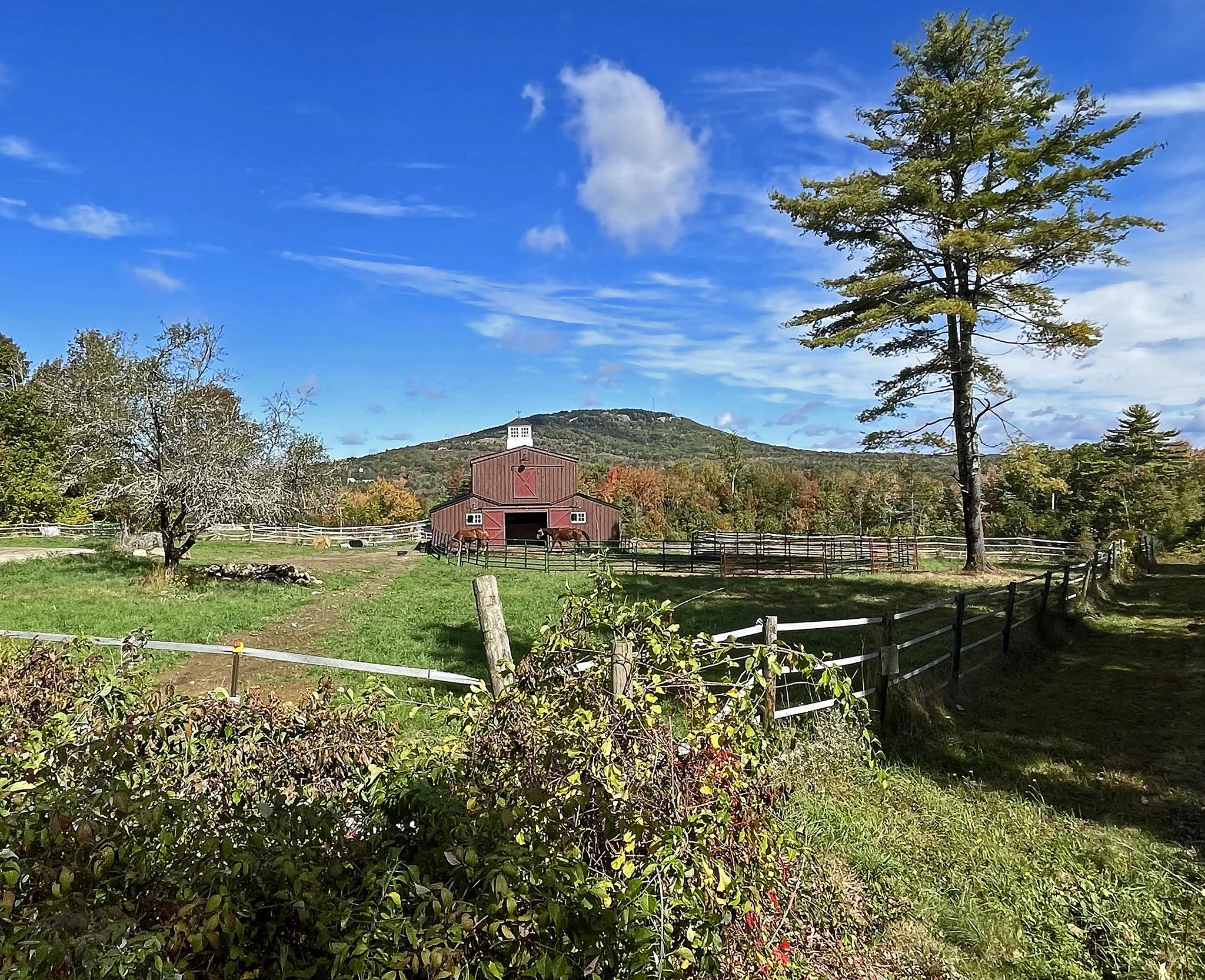
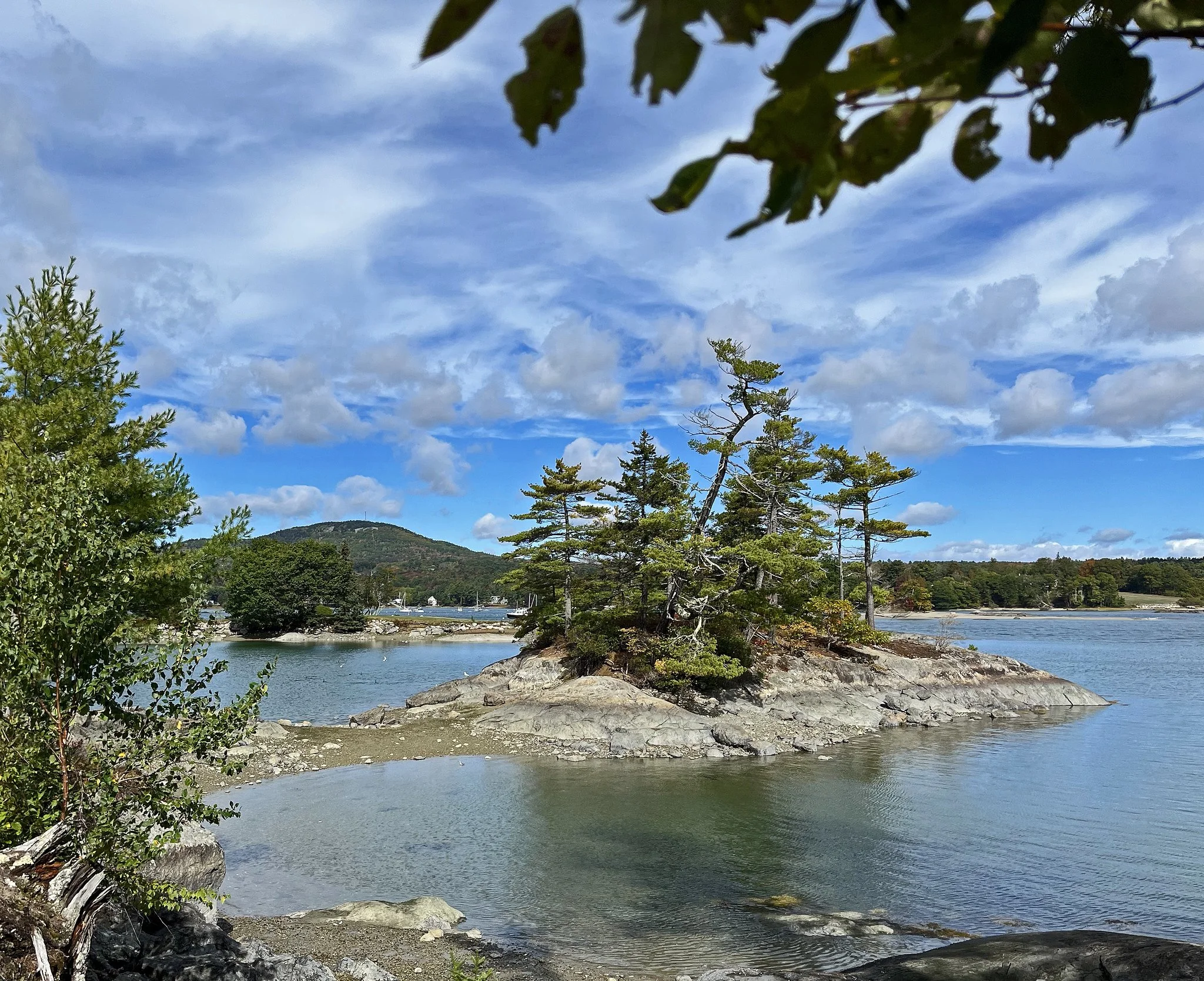
It’s time for two September perspectives of the south face of that big, forested mound – that almost-a-mountain – that is officially named Blue Hill. Above, you’re looking roughly northeast at it over a rural landscape at mid-day. (See if you can find two totally disinterested horses.) Below, you’re looking virtually due north over Blue Hill Bay at low-tide on the same day:

The 934-to-940-foot high forested mound was called Blue Hill when mounds had to be at least 1000 feet tall to be called a mountain. That height standard has been abandoned and some people and institutions now call this Maine mound a mountain. But they have to call it “Blue Hill Mountain,” which seems as self-contradictory as calling someone a “boy man.”

Nonetheless, the mound called Blue Hill has nice hiking trails and views, especially in the fall. (Images taken in Blue Hill, Maine, on September 26, 2025.)

Comment

Comment

In the Right Place: Mixed Blessings

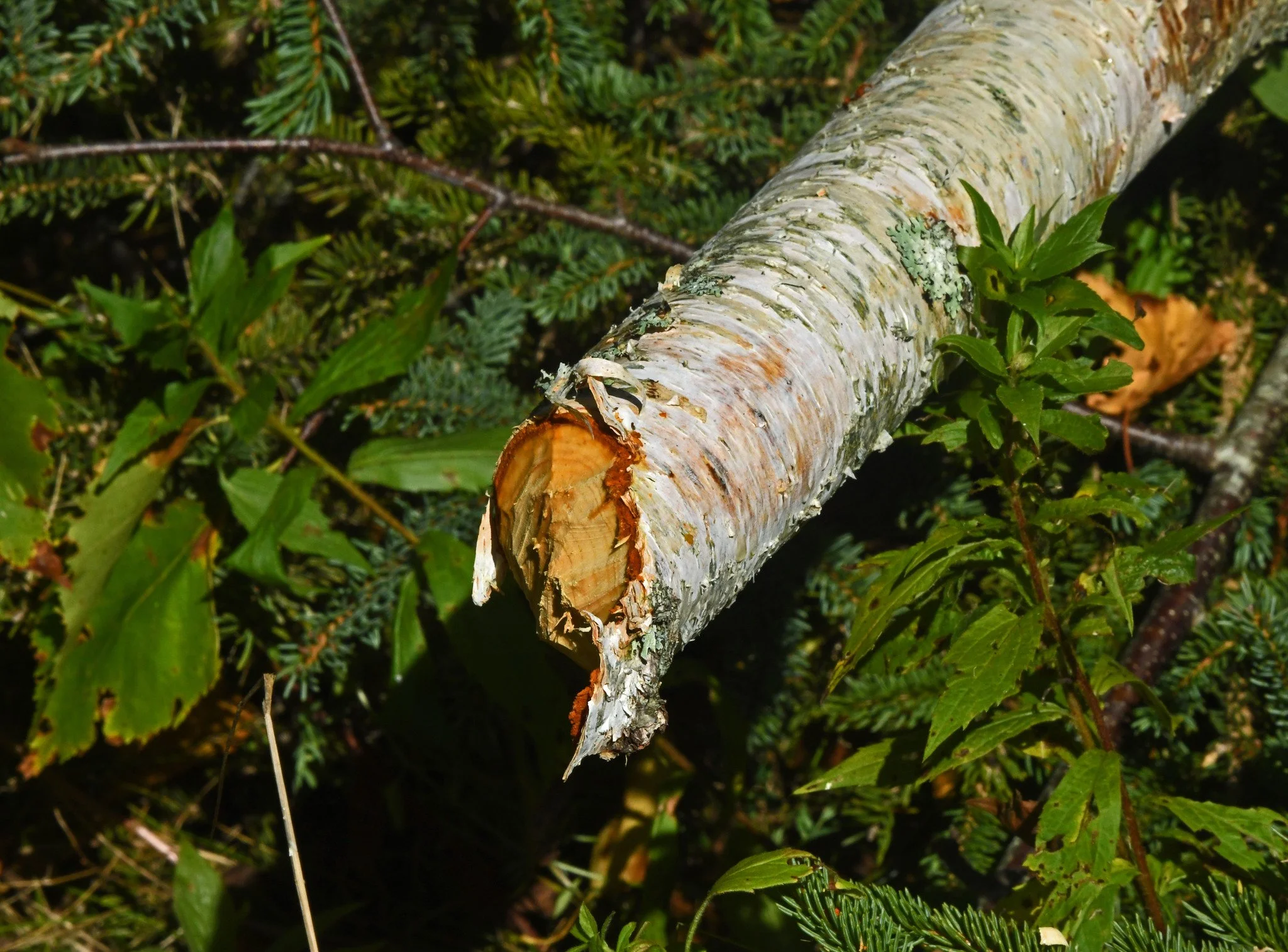
It all started when I went down to our ponds and saw a recently-felled young birch tree with its trunk cut in segments and wood chips all around.  I suspected that this was not the work of a phantom forester.

The next day, most of that birch was gone and I went looking for it. I found it on a small island in our wild, bog pond, where it could be used as food, a lodge rafter, or both. We had received the mixed blessing of an American beaver on our place looking for real estate with a water view.

I finally saw him yesterday and the day before: He’s an adult between three and four feet long in good condition, as you see from the images here. If he attracts a mate and has a family, we’re going to have to worry about them blocking up our drainage culverts to dam and raise the water. If they do that, we’ll get a trapper to perform a beaver removal-and-release operation and take them for a ride to where they can be beneficial.

American beavers (Castor canadensis), not to be confused with Eurasian beavers, are the largest native rodents in North America. On balance, they benefit the environment by creating and filtering needed wetlands for other species. 

These semi-aquatic mammals have webbed hind feet for swimming and self-sharpening incisors for felling trees. They’re most active nocturnally, use their broad tails as rudders and to give warnings by loud water slapping, and they can be pugnacious. Don’t try to touch one if you value having 10 fingers. (Images of the beaver taken in Brooklin, Maine, on September 27, 202; sex assumed.)
Comment