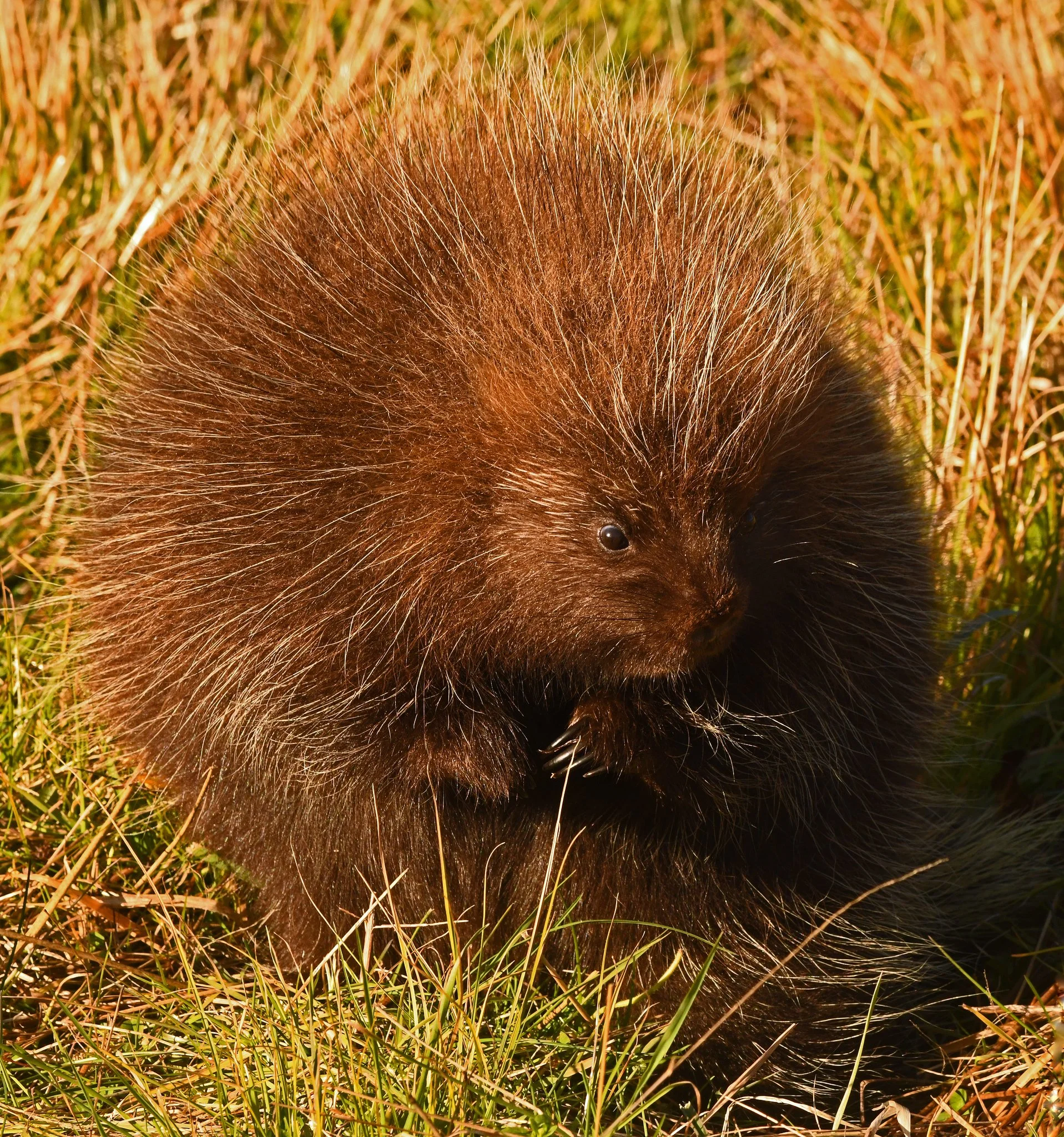
Here you see Harry out in the open again yesterday morning. I met him in the usual place, the lower part of the North Field. Most porcupines sleep during the day and come out of their shelters to climb and roam at dusk and during the night. But not Harry; he’s a morning porcupine.
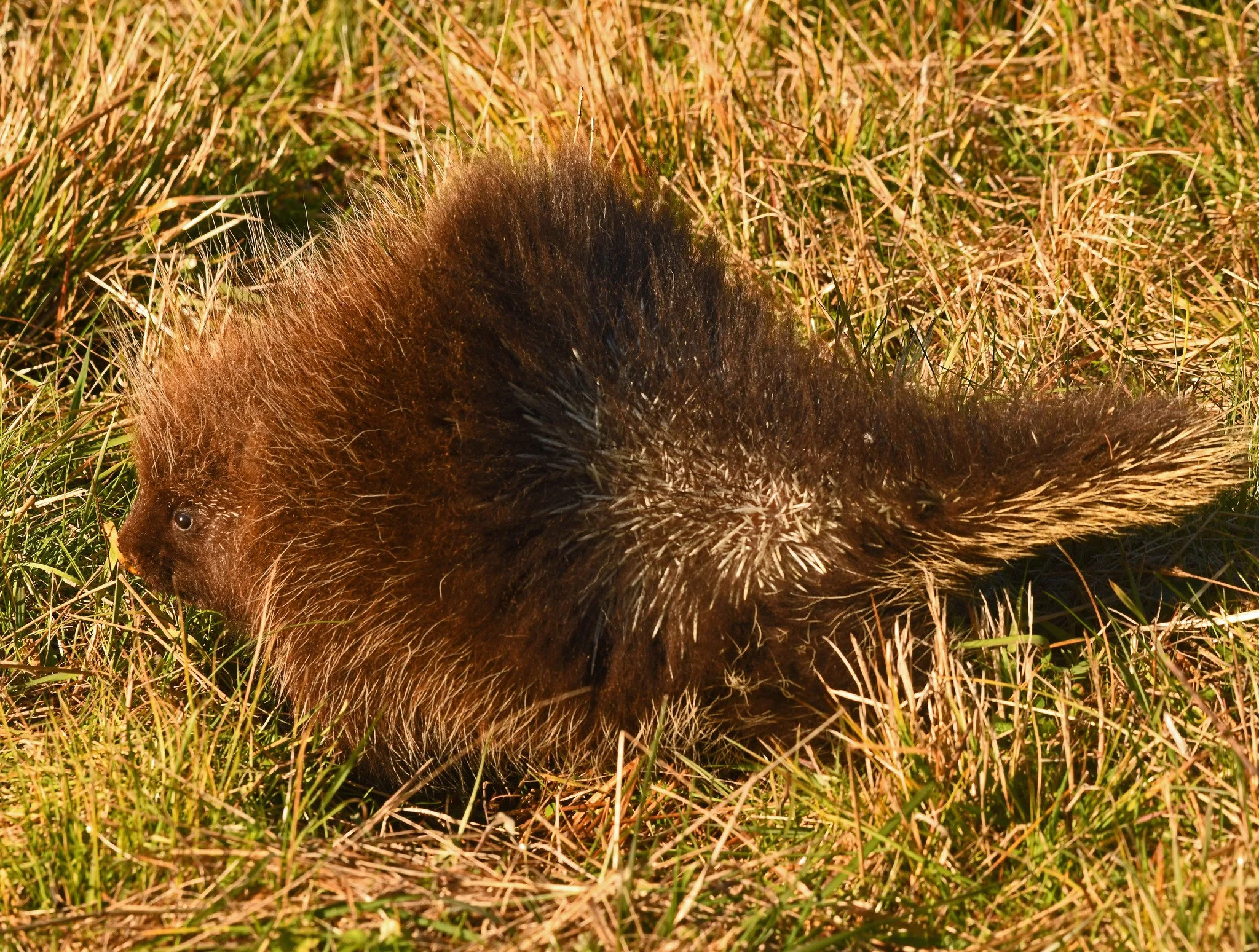
Porcupines don’t hibernate or build nests or other structured shelters; they hide and rest in naturally convenient places, such as tree crotches, hollow logs, caves, rock crevices, and various wild tangles. They’re mostly solitary animals, but they will huddle together – carefully – at very cold times.
You get a glimpse of one of Harry’s front paws above. All four feet are adapted for climbing and gripping vertical surfaces, but porcupine front paws have a vestigial thumb opposing four long, clawed “fingers.” This configuration makes them dexterous climbers and allows them to hold food in their “hands” while eating. They can sit up and eat that food in a high tree like squirrels by using their tail and its quills for support.
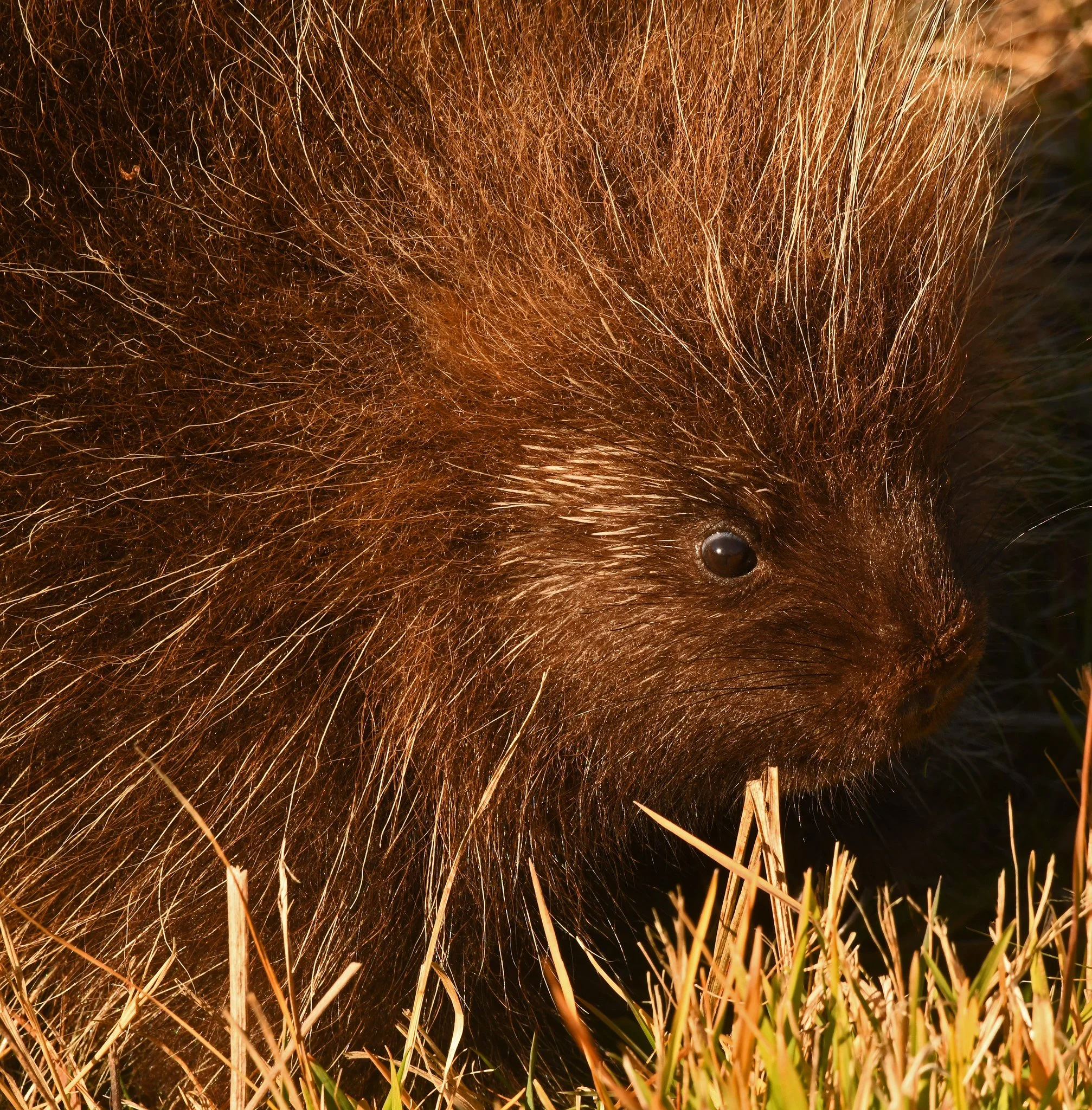
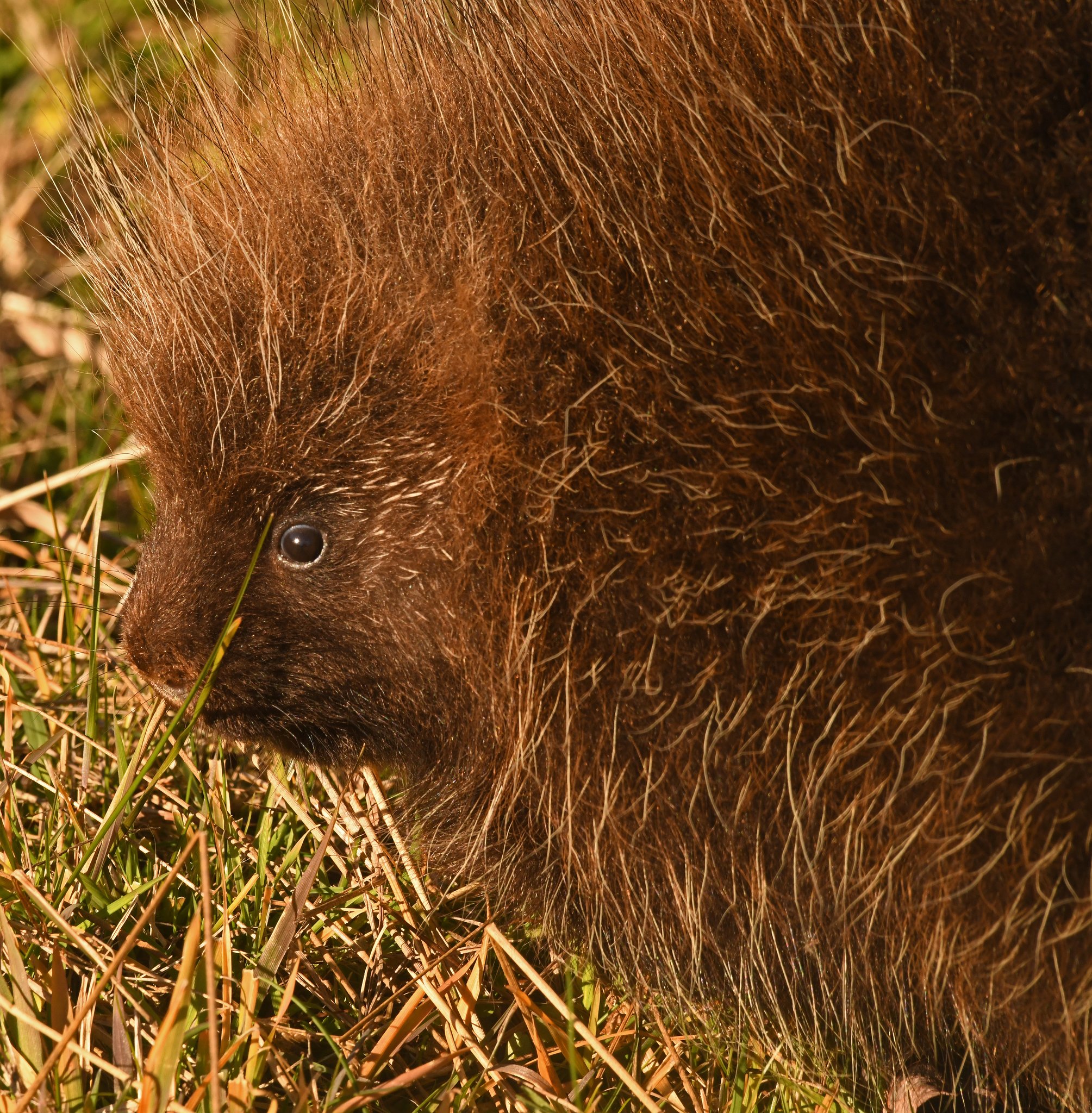
Porcupines like to snack on the inner bark of trees, especially in winter; this can kill or maim a tree. Although cute and interesting, some people (including me) believe that there aren’t enough natural porcupine predators around here to allow nature to balance the damage that they do.
The fisher weasel (aka fisher cat) is just about the only predator that will take on a mature and healthy porcupine and virtually always win. Some domestic dogs seemingly can’t resist the urge to chase and snap at porcupines, no matter how many times the unfortunate canines have been taken to the vet to have painful quills removed from their face.
On the other hand, porcupines do less tree damage than beavers. But that’s another story with a mostly-redeeming ending. (Images taken in Brooklin, Maine, on November 28, 2025; sex assumed.)