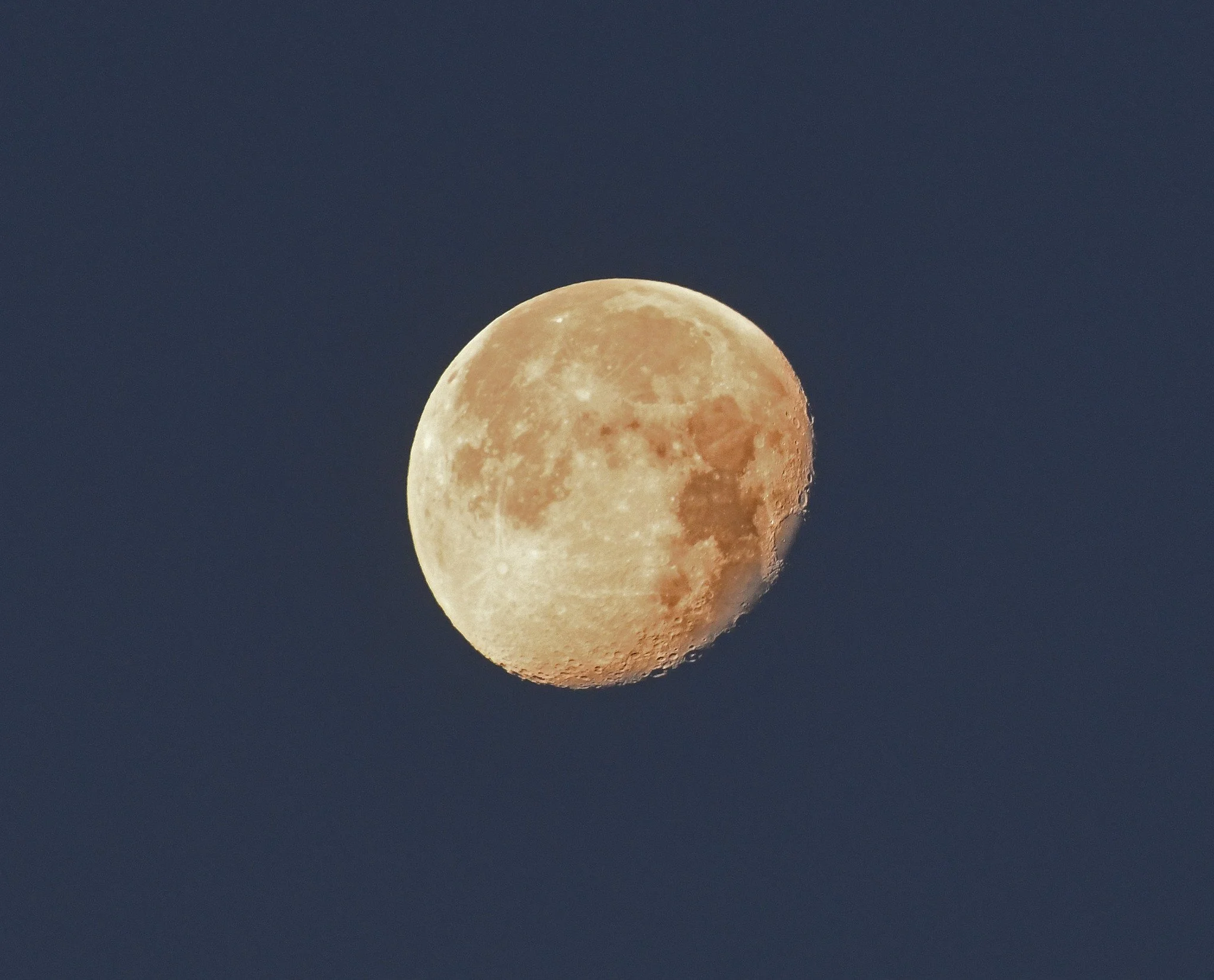
Here you see the December Cold Moon as it was being transformed into a lovely “morning moon” at 7:50 a.m. on Sunday. Morning moons are not rare (the moon is up over us for about 12 hours), but the conditions are not always favorable for our seeing them.
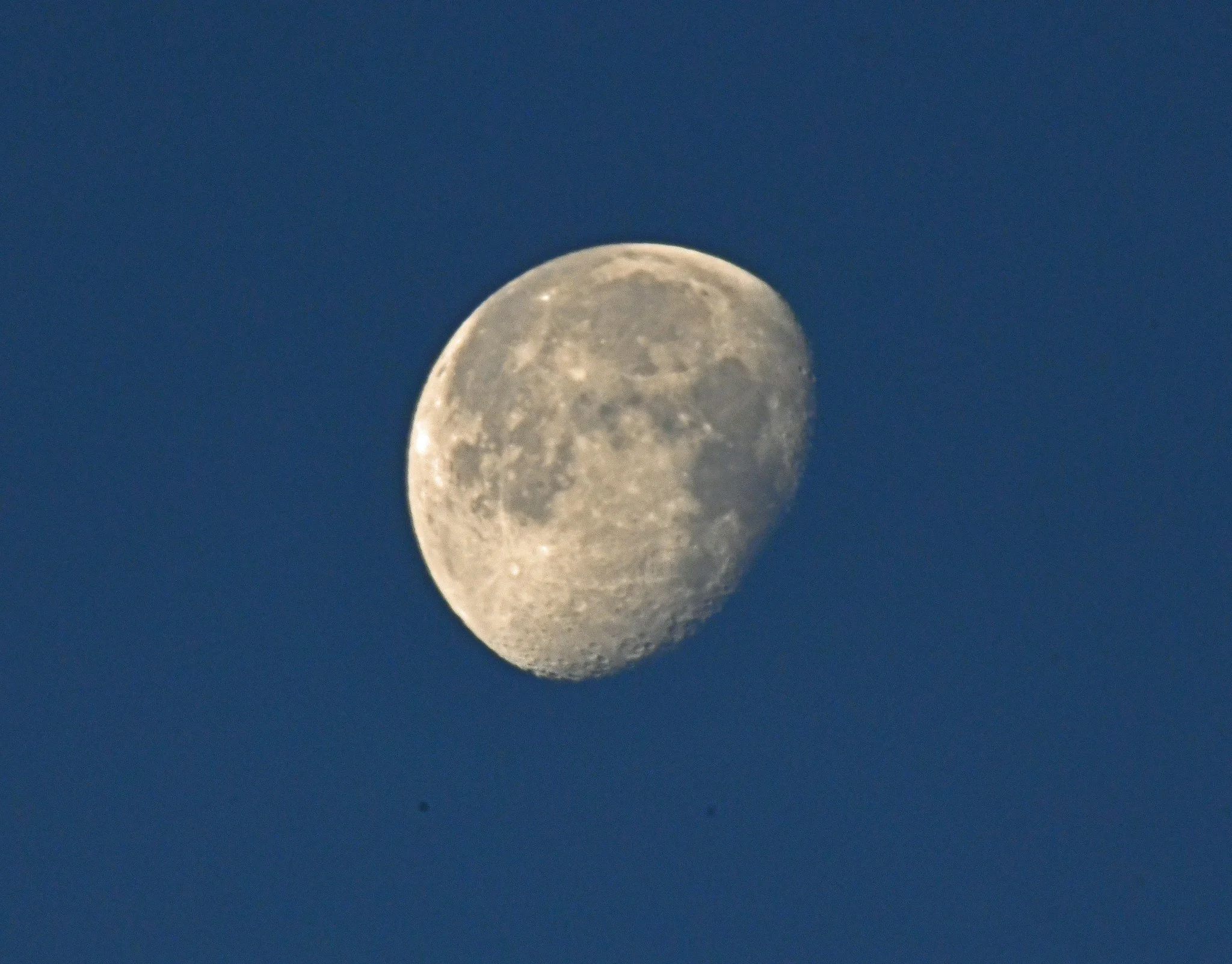
The reflective parts of the moon that we see now are shrinking (“waning”). This moon is a “waning gibbous” moon because it is hunch-shaped with more than 50 percent illumination and on the way to losing more light. It was within our dirty atmosphere when the image was taken, which gave it a sepia-like cast. When it escaped our atmosphere far into the celestial heights Monday morning, it turned silver-gray:
The sun’s reflective light won’t be able to reach the moon in its orbit on December 19, when it will disappear from us as a black “new moon.” After that, the parts of the moon that we’ll see will start growing (“waxing”) from slim crescents to a full “Wolf Moon” on January 3, 2026
(Images taken from Brooklin, Maine, on December 7 and 8, 2025.)