We continue to see Harry frequently. He seems content this winter in his own eccentric way, but it’s difficult to psychoanalyze North American porcupines (aka “quillpigs”).
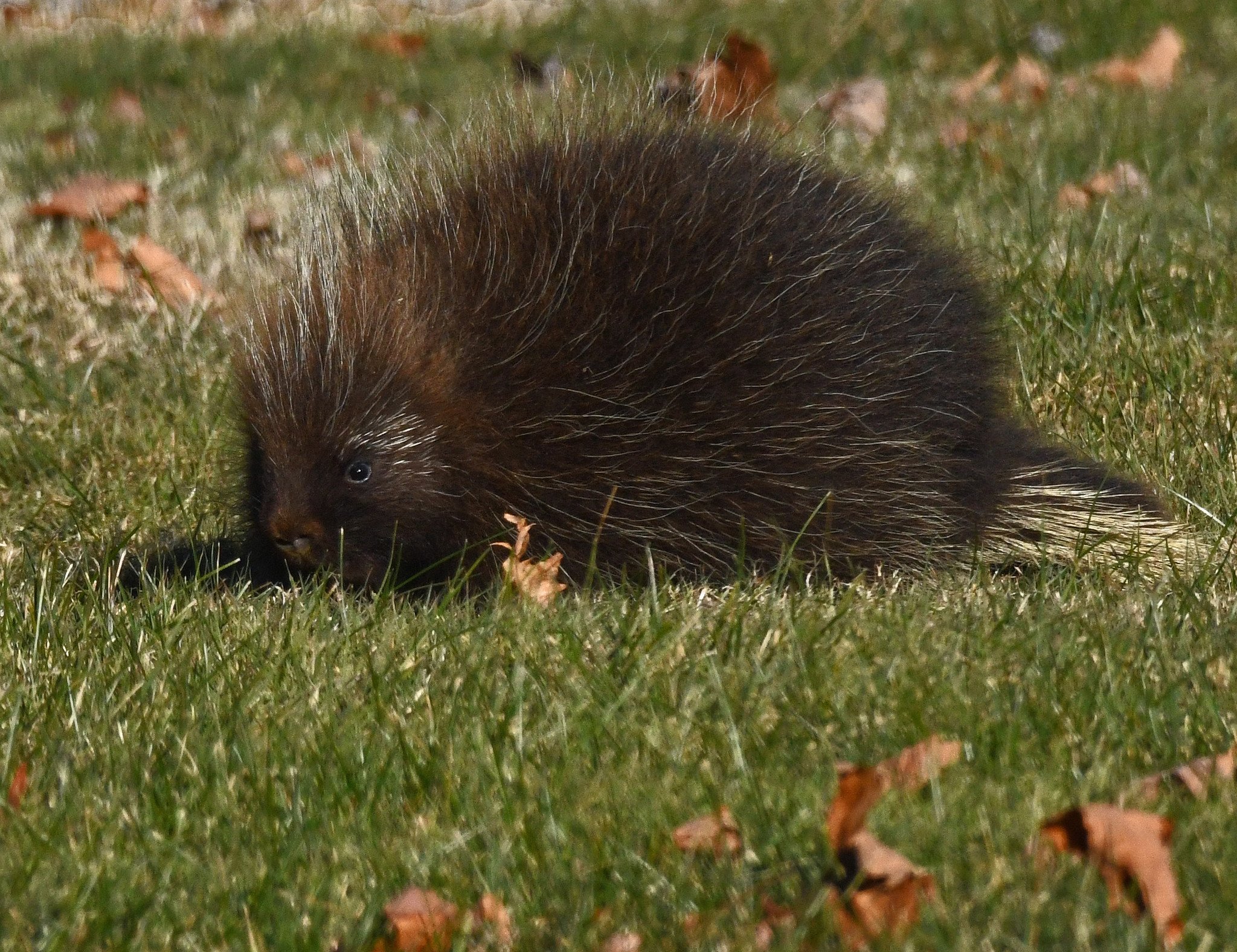
Harry spends a lot of time feeding in open fields and lawns in daylight, which seems unusual for a rodent that’s supposed to be shy and primarily a nocturnal feeder. He apparently hasn’t switched to what is supposed to be the porcupine winter diet of conifer needles, twigs, and the nutrient-rich inner bark (cambium) of trees such as hemlock, birch, fir, and aspen.
Harry seems to spend most of his winter days with his head in field and lawn vegetation, feeding on grasses, other low growth, and maybe roots. It may be that climate warming has kept nonwoody vegetation alive and tasty.
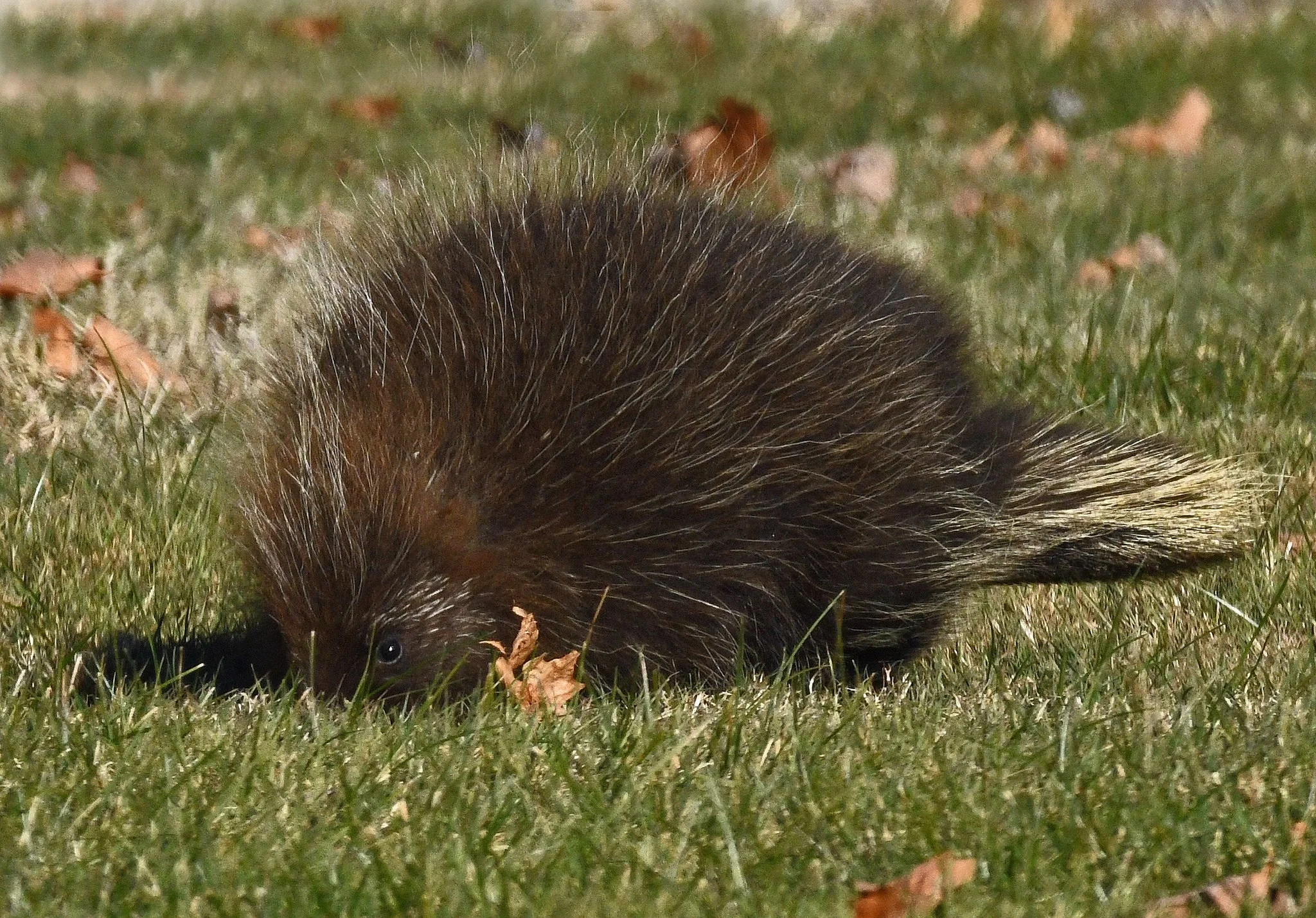
As with all porcupines, Harry has poor eyesight and is slow to react to surprises. If you get upwind of him and move carefully, you often can get fairly close to him. He’ll move off and try to keep his back to you when he discovers your presence. (His tail is a spiked club that is his primary defensive weapon.)
(Images taken in Brooklin, Maine, on December 22, 2025.)