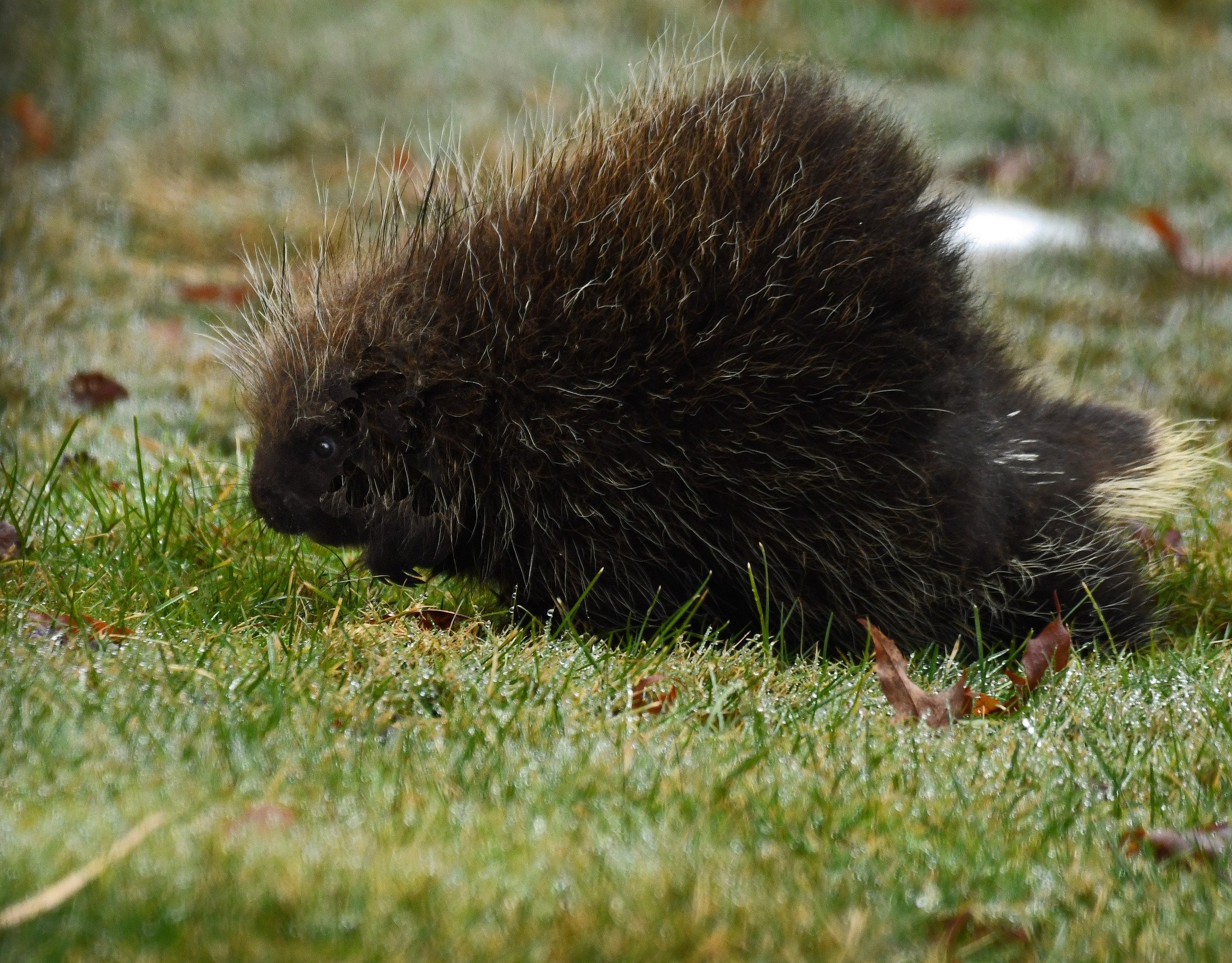
Harry, the unusual porcupine, still wanders about in sun and snow during daytime instead of sleeping in a tree or otherwise being inconspicuous. He waddles into the underbrush when he sees me, but generally doesn’t erect his quills defensively if I stay a respectable distance away. Below are some interesting facts from scientific reports about those quills.
Porcupines reportedly have a coat of up to about 30,000 quills, which actually are modified hairs. The quills cover the rodent’s back, sides, and tail. When relaxed, they lie flat, mostly hidden under regular guard hairs and a thick, woolly underfur that is great for insulation.
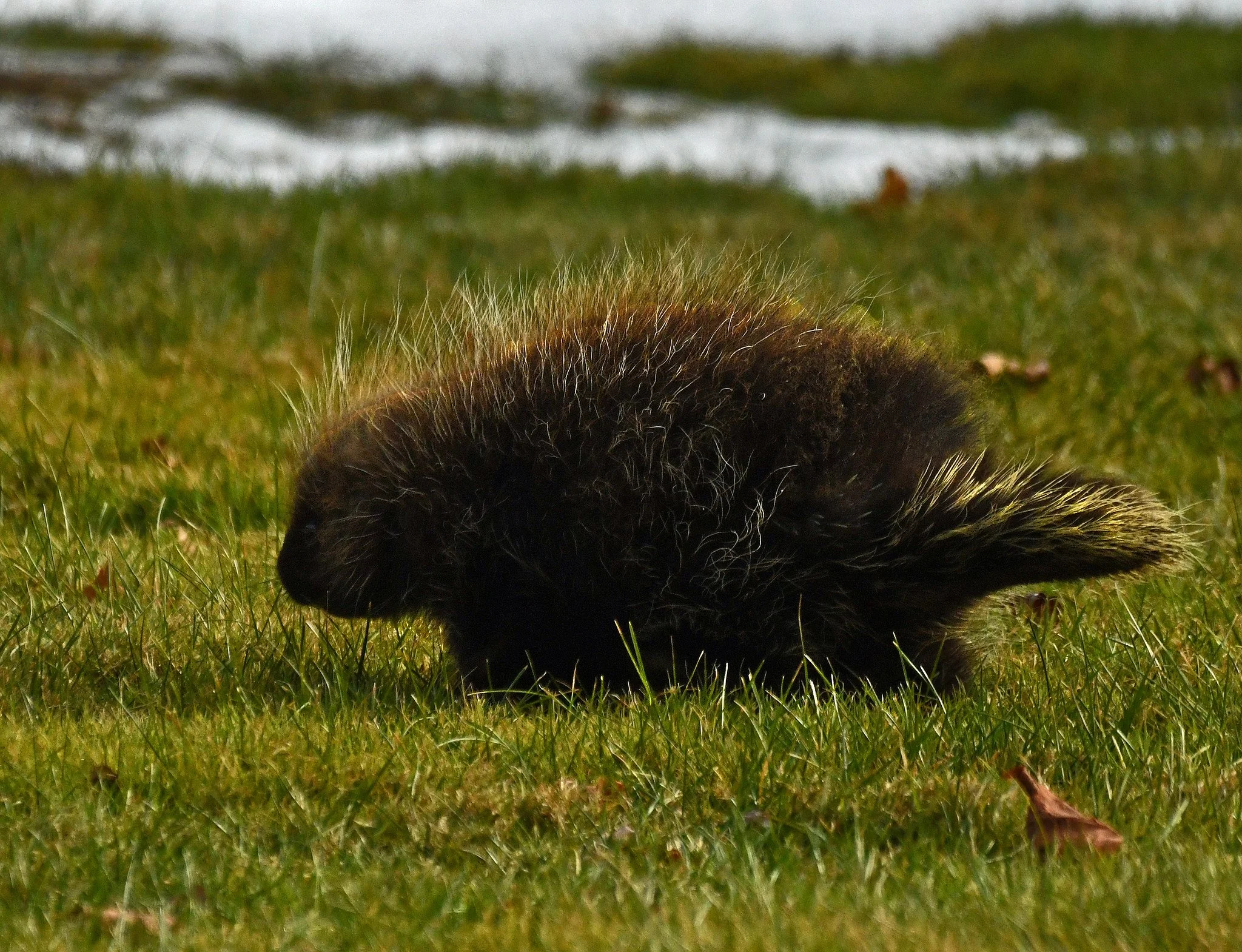
However, when a porcupine feels threatened, it goes on alert and uses special muscles to erect its quills, making it look larger and (it hopes) frightening. The quills are only loosely attached and detach easily into the skin of any being that touches the porcupine or that is within range of a powerful tail swat that can drive quills deeply into skin. But porcupines do not shoot quills like arrows, as some myths maintain.
The quills have very sharp tips and very small backward-pointing, fishhook-like barbs. Thus, they penetrate skin easily but are extremely difficult and painful to remove, often requiring pliers for the quill and a sedative for the victim. (Images taken in Brooklin, Maine, on January 11 and 13, 2026.)