Seagulls are among the most extraordinary fliers in the feathered flora kingdom. They have been inspirations to musicians, painters, aircraft designers (including drone designers), and just about anyone who has seen them fly under various conditions.
The most common seagull along the Maine coast reportedly is the American herring gull, shown here Edward Howe Forbush, the late, preeminent ornithologist, had this to say about that bird : “The Herring Gull is a master of the air. It can fly forward or backward, veer gracefully in any direction, soar with stiffened pinions or shoot downward like an arrow, sail on steady wing against the wind and perform numberless evolutions with grace and ease.”
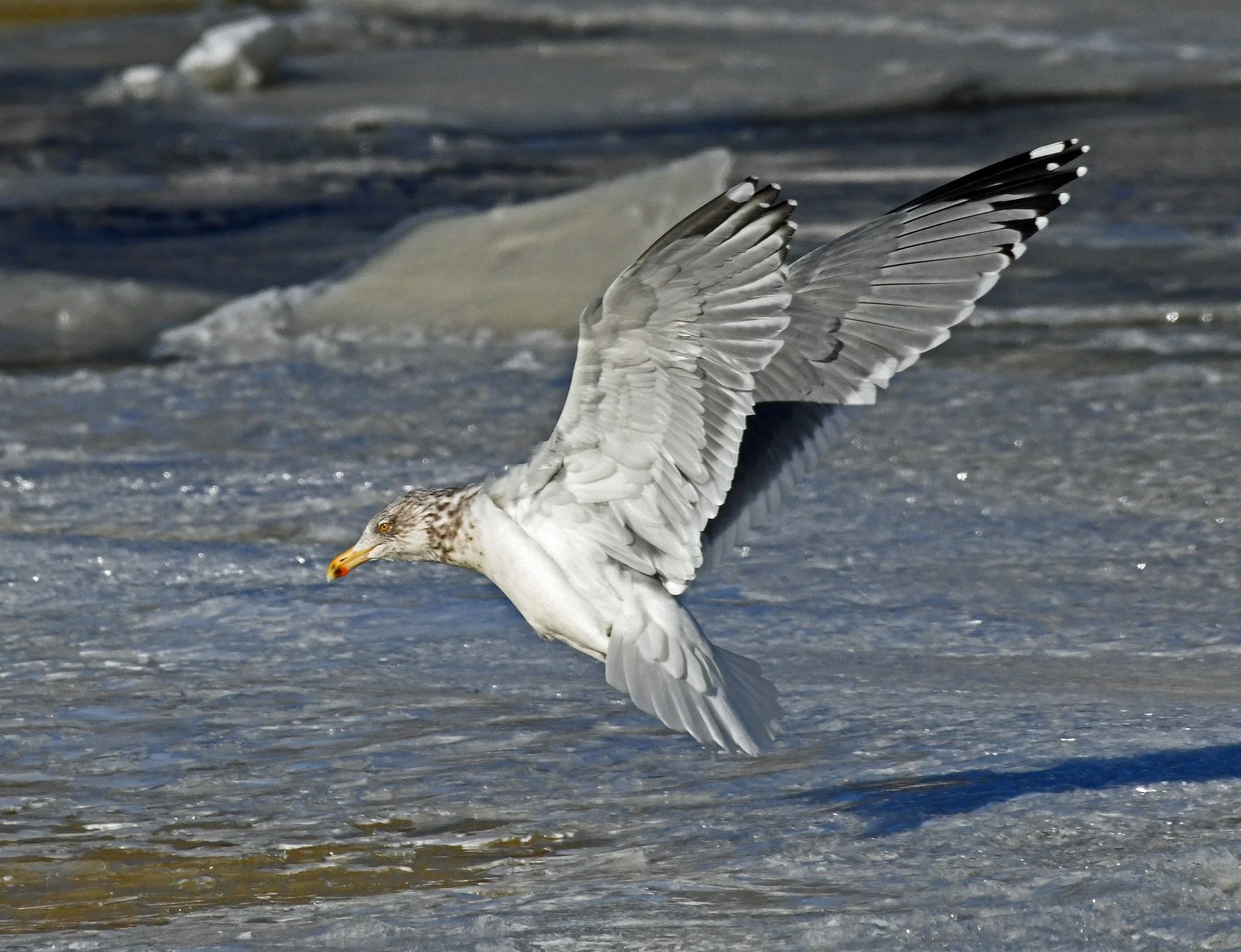
Research has shown that gulls, as they fly, change wing shapes by flexing their elbow joints, tucking wingtips in or extending them out. This can create more stable, rounded shapes for soaring or flatter shapes for quick turns. When landing, they twist wings to increase surface area for lift, slow wing beats, and spread their tail feathers to act as a brake:
Seagulls also know how to glide more smoothly by manipulating the cushion of compressed air between their wings and the water's surface. To conserve energy, herring and some other gulls "surf" above the wings of fellow gulls in the moving air there. Also, the darker wing colors on herring and some other gulls help absorb heat, creating warmer air that improves flight efficiency and lift, allowing for better gliding.
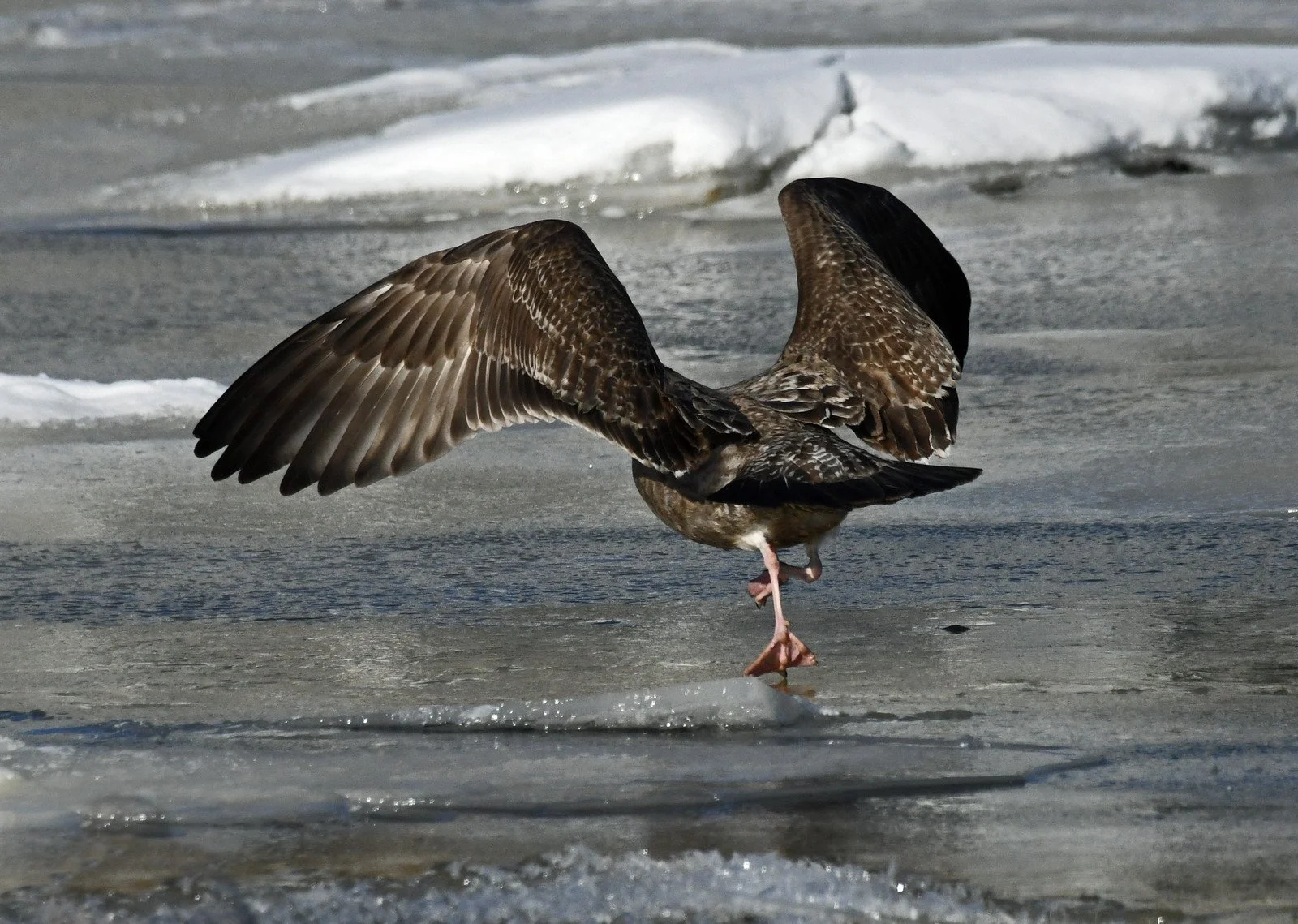
(Images taken in Blue Hill, Maine, on January 2, 2025.)