If you can’t hire a guardian angel to protect your church, a muscular maple is a good second choice -- especially to attract congregants in the fall. Here you see the North Sedgwick Baptist Church, built in 1845, on Saturday.
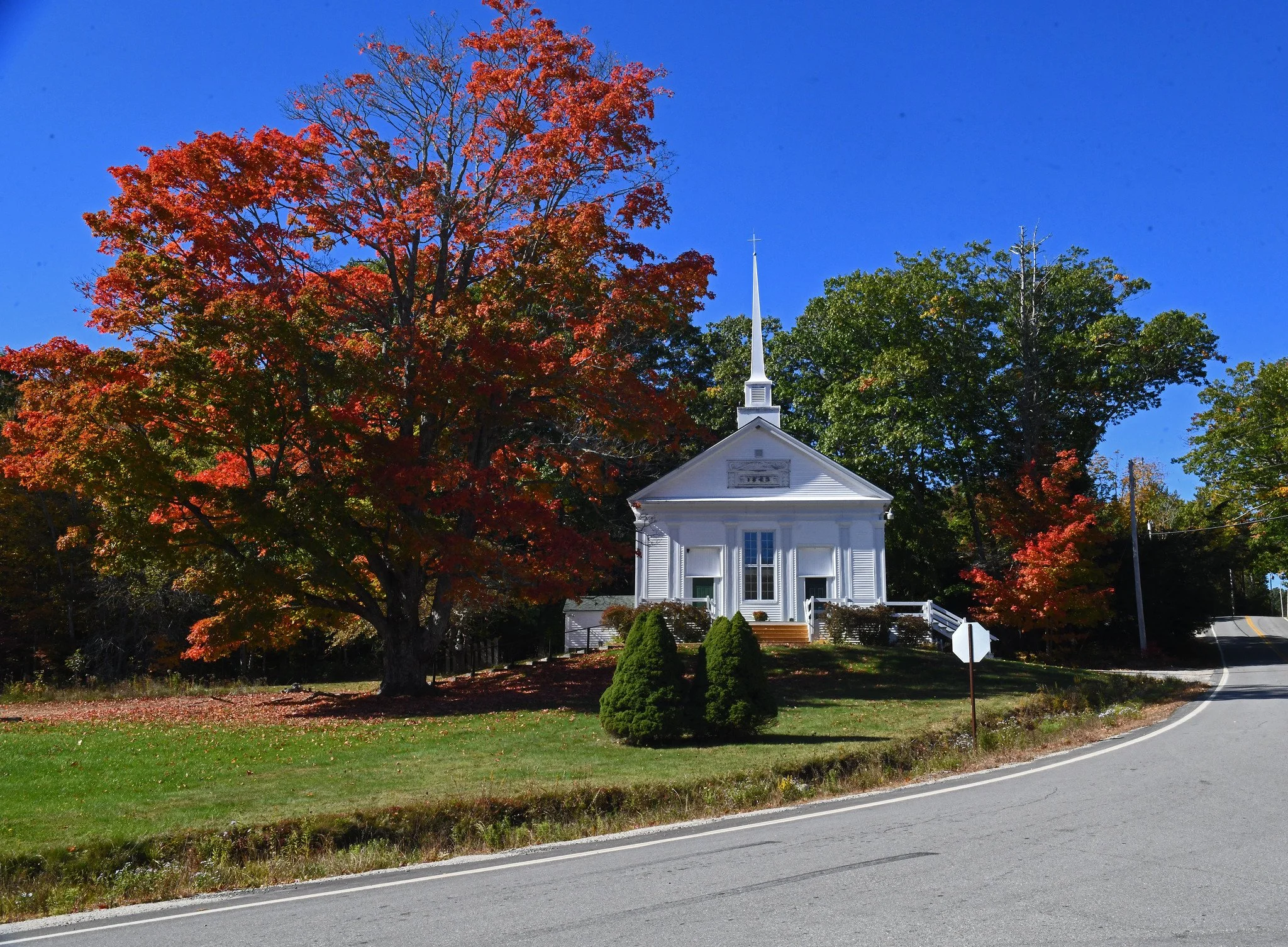
This church is a fine example of the rural (inexpensive/small) versions of Greek Revival architecture. They were popular in New England in the mid-19th Century for rural churches and meeting houses with small congregations. There are grand, mostly marble or brick examples of that architecture that were built in wealthy and well-populated communities. However, this little church in rural Maine seems right for where it is.
The primary characterizing feature of Greek Revival buildings is their Greek-temple-like (triangular) pediment over the entrance. The rural versions had faux (and often flat) wooden “columns” (pilasters) that hinted at the great marble columns of Greek temples. Wooden clapboards were used elsewhere in the rural versions, especially where there were plenty of trees.
Many of the 19th Century New England churches reportedly had a tiered, square tower rising from the roof that became an octagonal belfry (with or without a working bell) and ended as a spire.
(Image taken in North Sedgwick on October 10, 2026.)