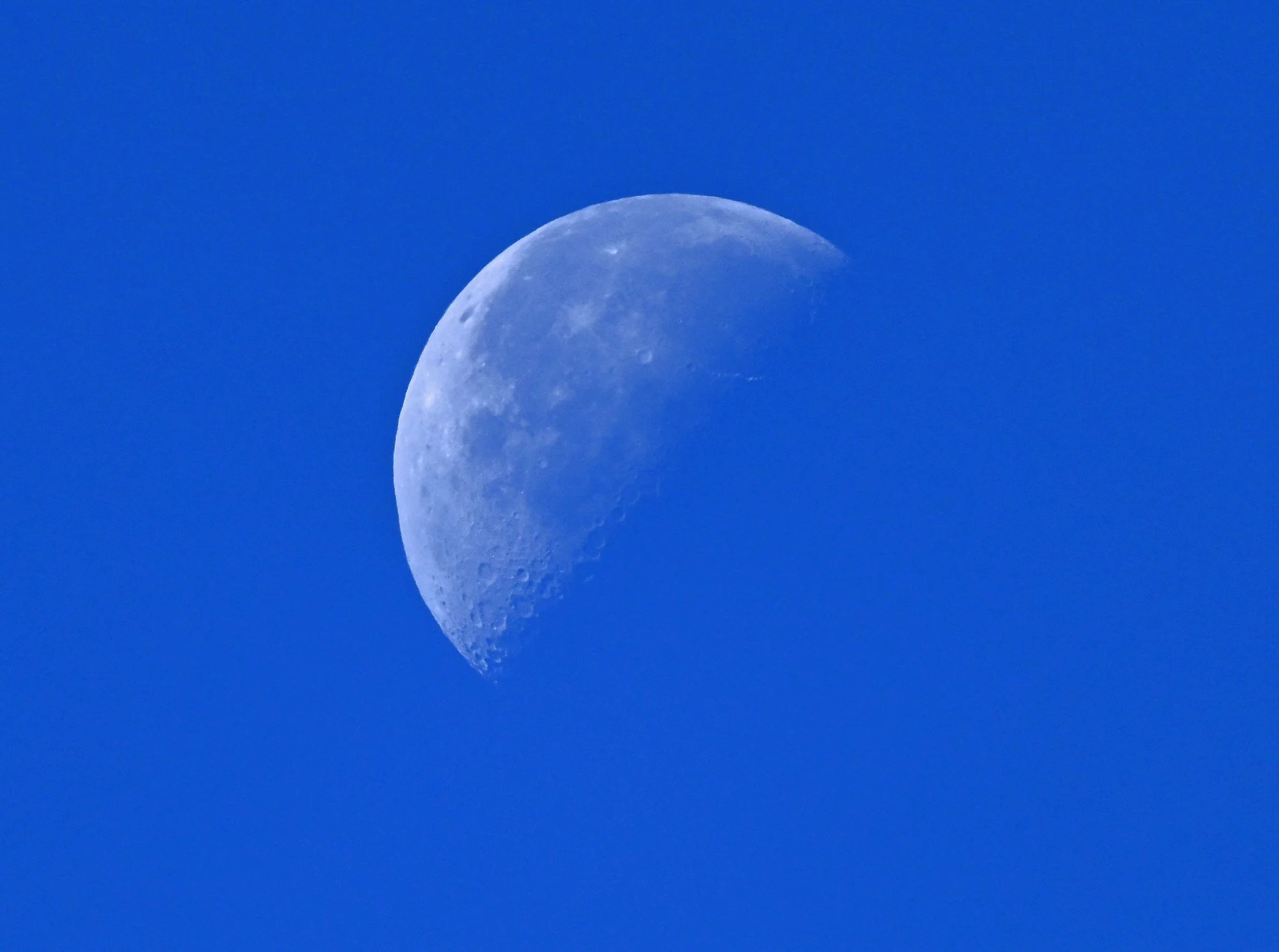
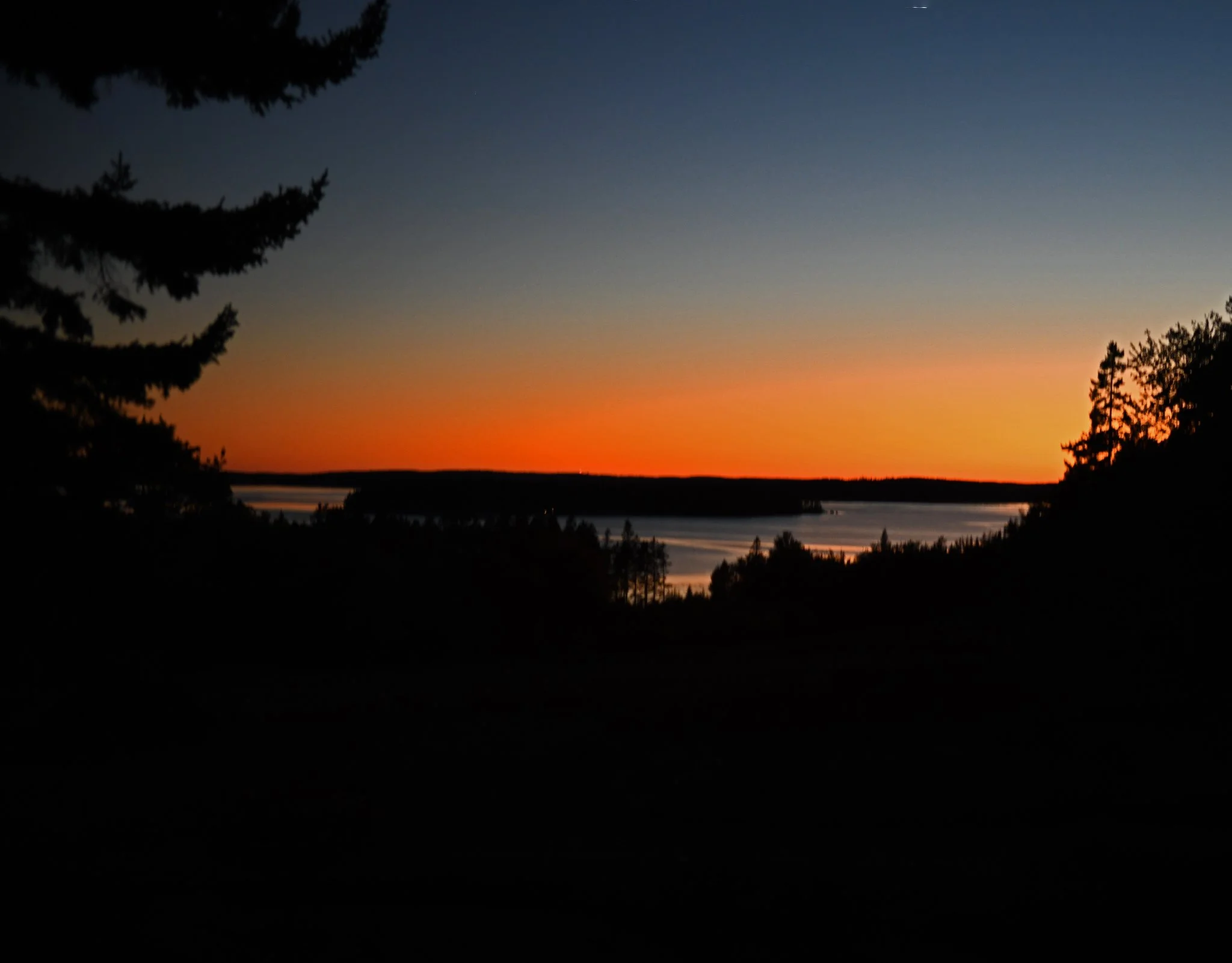
Saturday was a two-fer as far as fall phenomena go: This ghostly waning gibbous morning moon appeared in a vividly blue sky and this breath-taking burnt orange twilight eased us into nighttime:
As I understand it, we see a morning gibbous or quarter moon because the moon is moving farther west relative to the sun and we happen to be in the right place at the right time to catch a glimpse of a short-term lunar reflection of the early sunlight from the east.
In the fall, I’ve read, we see a warm-colored sky at sundown because sunlight travels through a much thicker/longer layer of air when the sun appears low on the evening horizon and that air is cleaner when it is crispy-dry. The blue and violet short wavelengths of the sun’s rainbow of light then are scattered by the band of oxygen and nitrogen gas molecules. But the long waves—red, orange, and yellow—can often pierce through the long space and reach our welcoming eyes.
(Images taken in Brooklin, Maine, on October 3, 2026.)