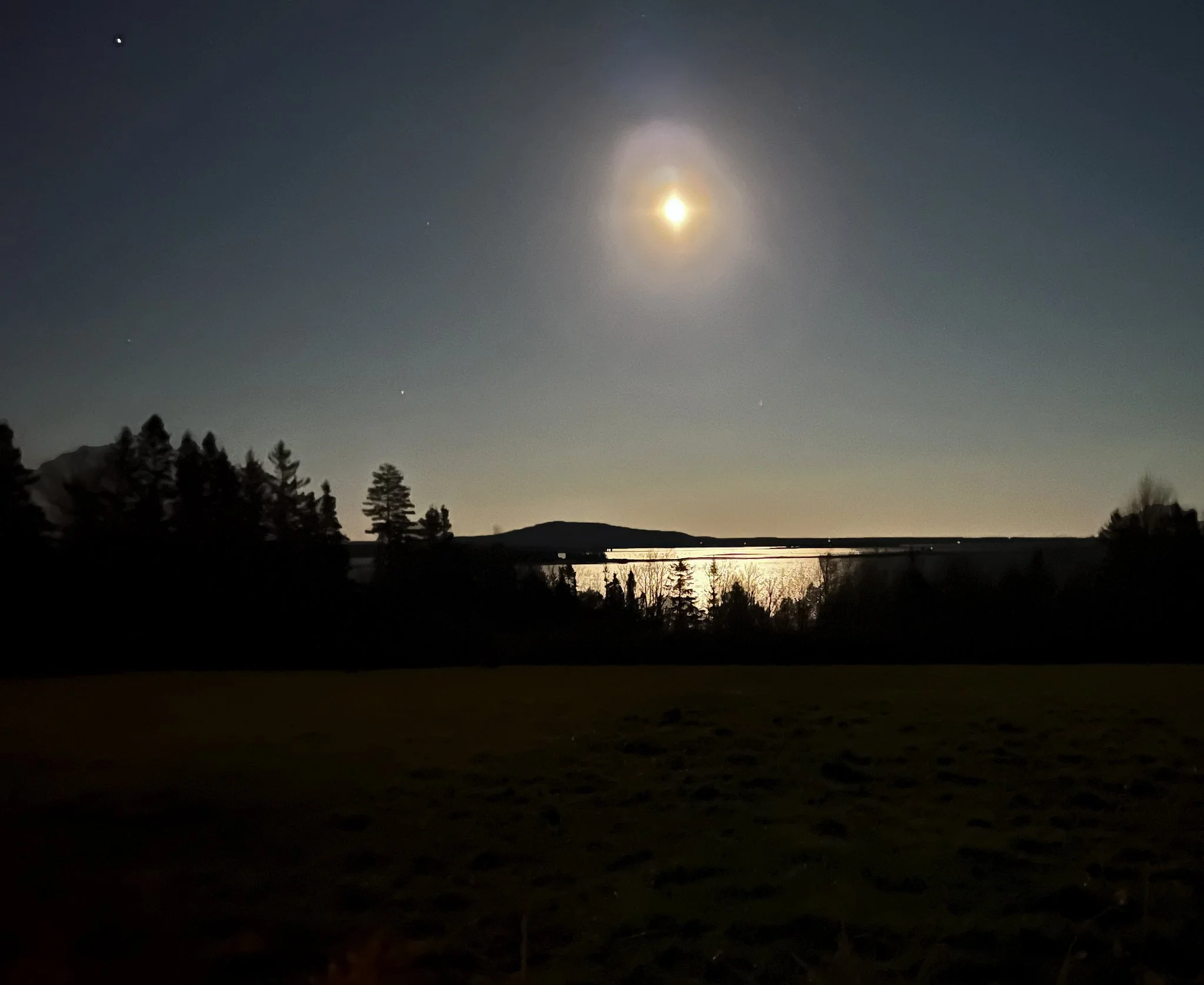
Above, you see last night’s full moon rising over Blue Hill and Jericho Bays and the western mountains of Mount Desert Island. Bdlow, you’ll see her already-risen, dizzyingly straight above our house:
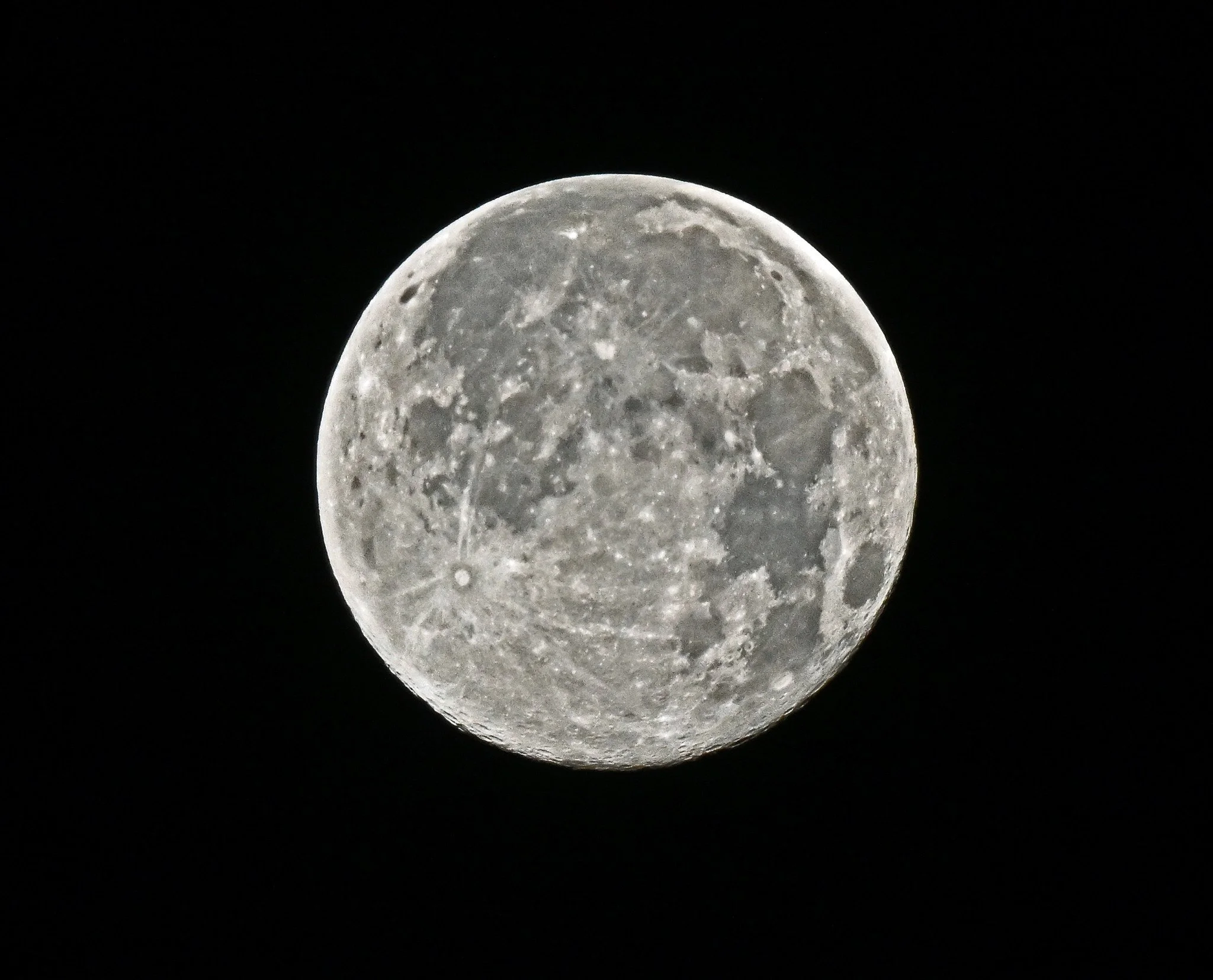
This November moon traditionally is called the Full Beaver Moon, a nod to our Native Northeastern Americans of yore who named it that because they tried to trap the last beavers here at this time, before the ponds and lakes got iced over.
This year, the November full moon was a “supermoon” because it turned full as it passed within 90% of its closest point to Earth (its perigee). That proximity can make the moon appear 30% brighter and 14% larger than the most distant full moons of the year, called "micro-moons.” The micro-moons occurred in May and June.
Although our Wabanaki peoples’ lunar calendars don’t indicate super- and micro-sized differences in the monthly full moons, it seems highly likely that they were aware of the appearance phenomena and also considered them one of life’s wonders.
(Images taken in Brooklin, Maine, on November 24 and 25 [1:33 a.m.], 2026.)