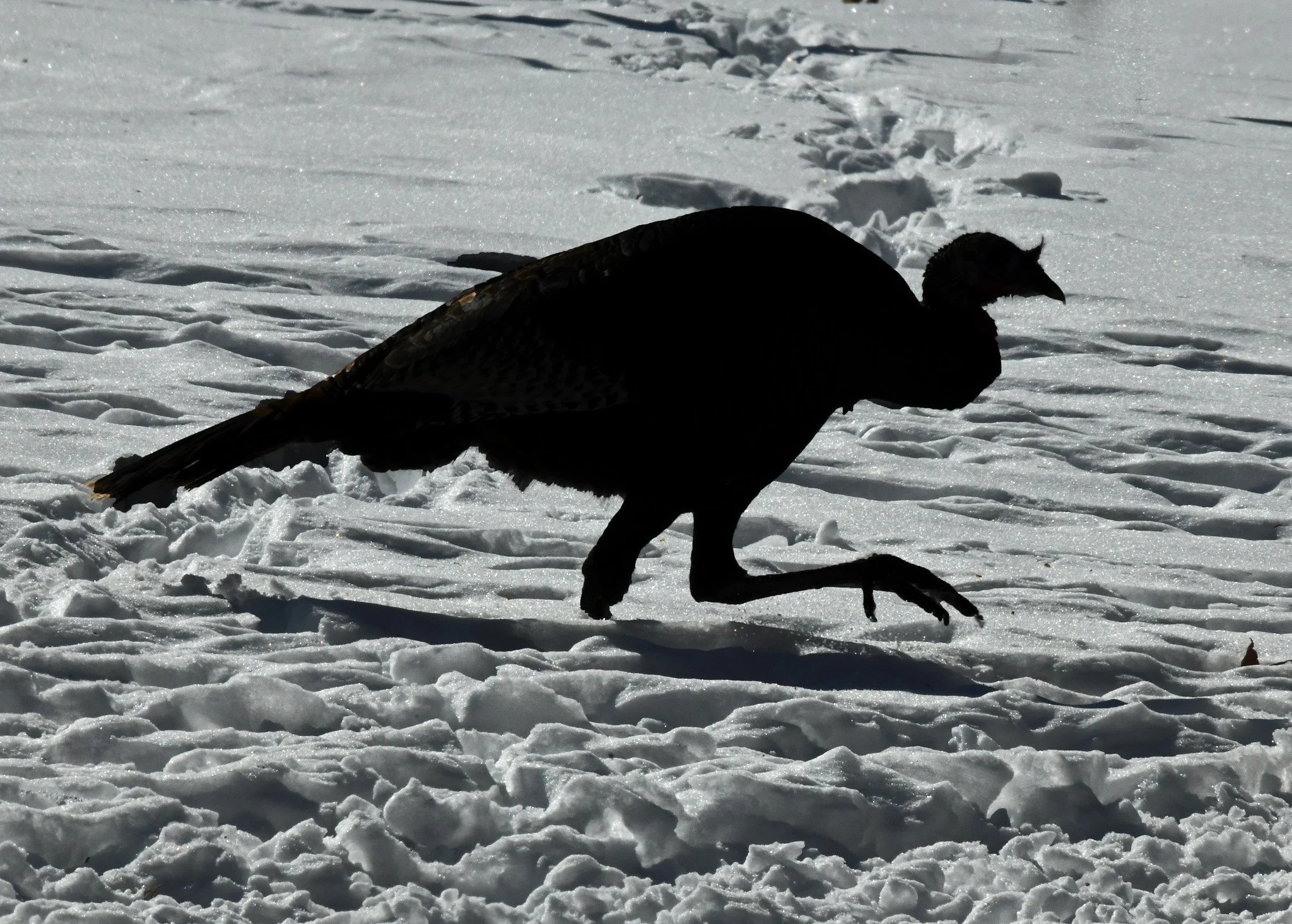
Pity the wild turkeys that have to high-step slowly through snow. These birds walk on their clawed toes rather than their shanks (feet) and keep at least one foot on the ground when they travel on the ground. They bend their legs in the middle at what looks like a knee, but really is an intertarsal joint (ankle). On solid ground, they can run up to 18-25 miles an hour; in snow, they creep.
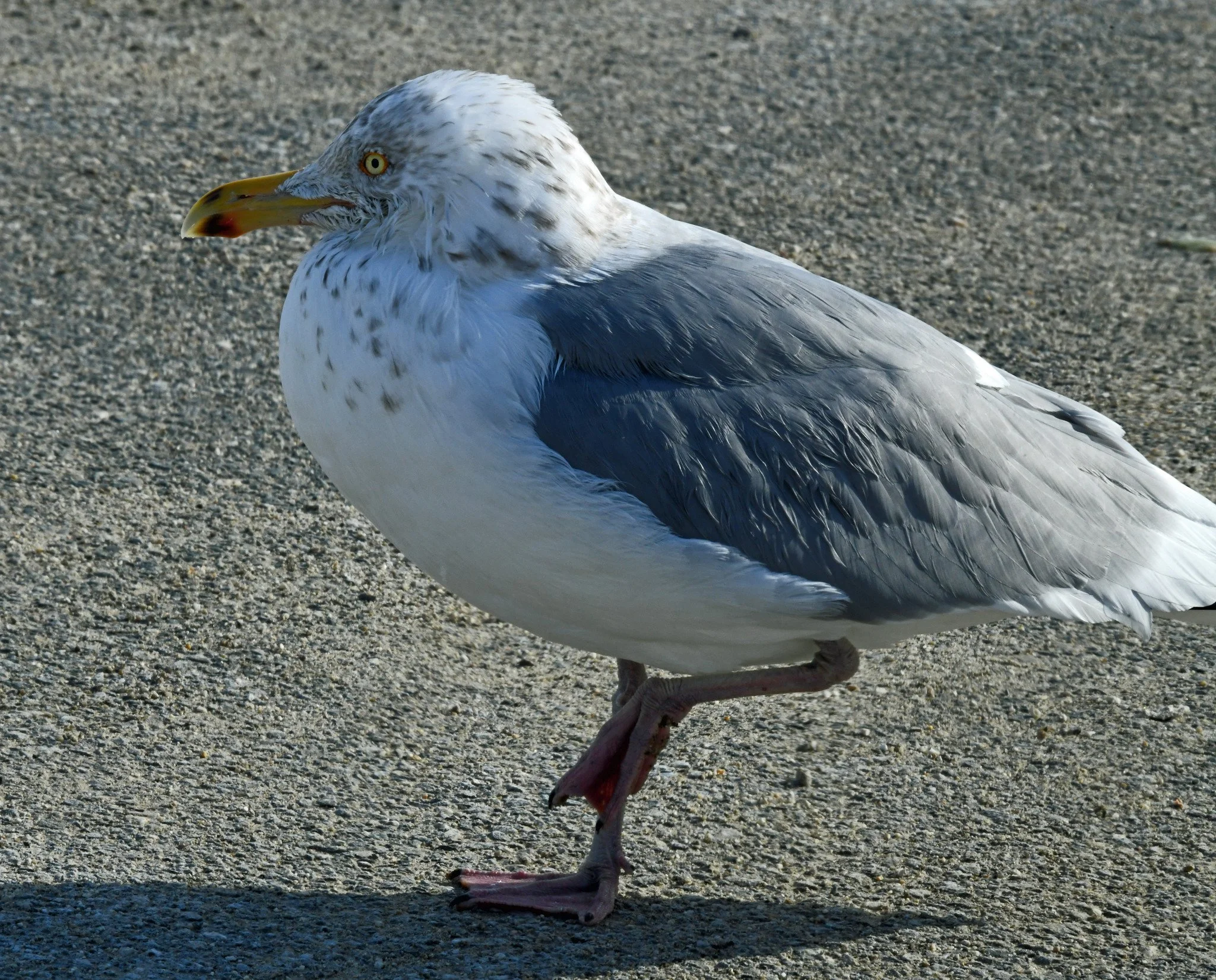
Also pity the high-stepping, slower-running herring gulls when their inshore sea territory turns to snow-covered ice. (See the image in the Comment space.) But seagulls have some advantages: their webbed feet can act like snowshoes in snow and slush, they’re more comfortable with populated spaces, and they’re smarter than turkeys. (What mammal or bird isn’t?) In very cold weather, seagulls often descend on roofs, parking lots, or other surfaces that absorb and give off heat. (Images taken in Brooklin and Blue Hill, Maine, on February 5 and 6, 2026, respectively.)