It snowed again last night, and now we’re getting ice-cold rain. But the eastern skunk cabbage plants don’t mind; they’re born with built-in heat pumps. More on their thermodynamics later.
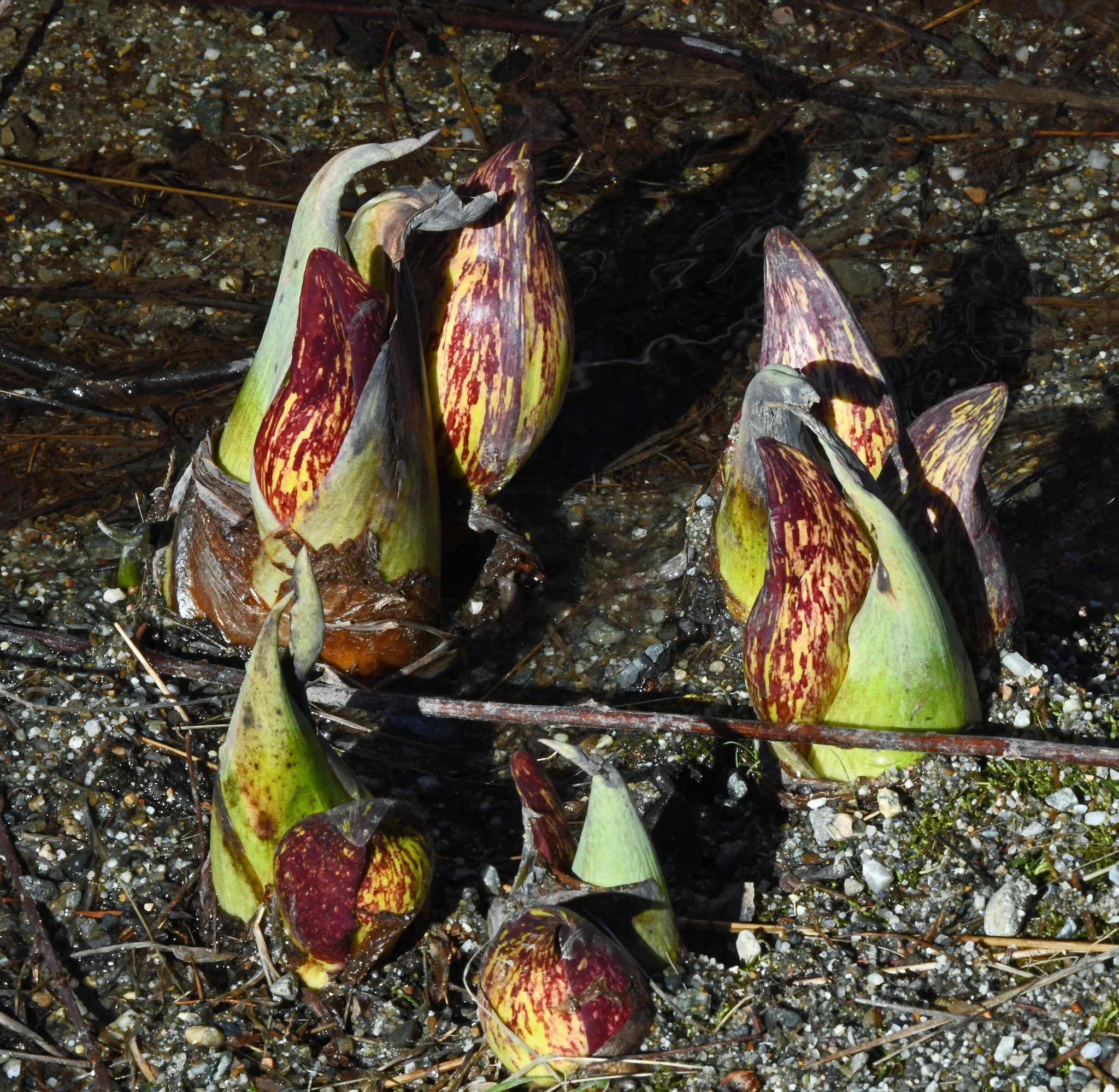
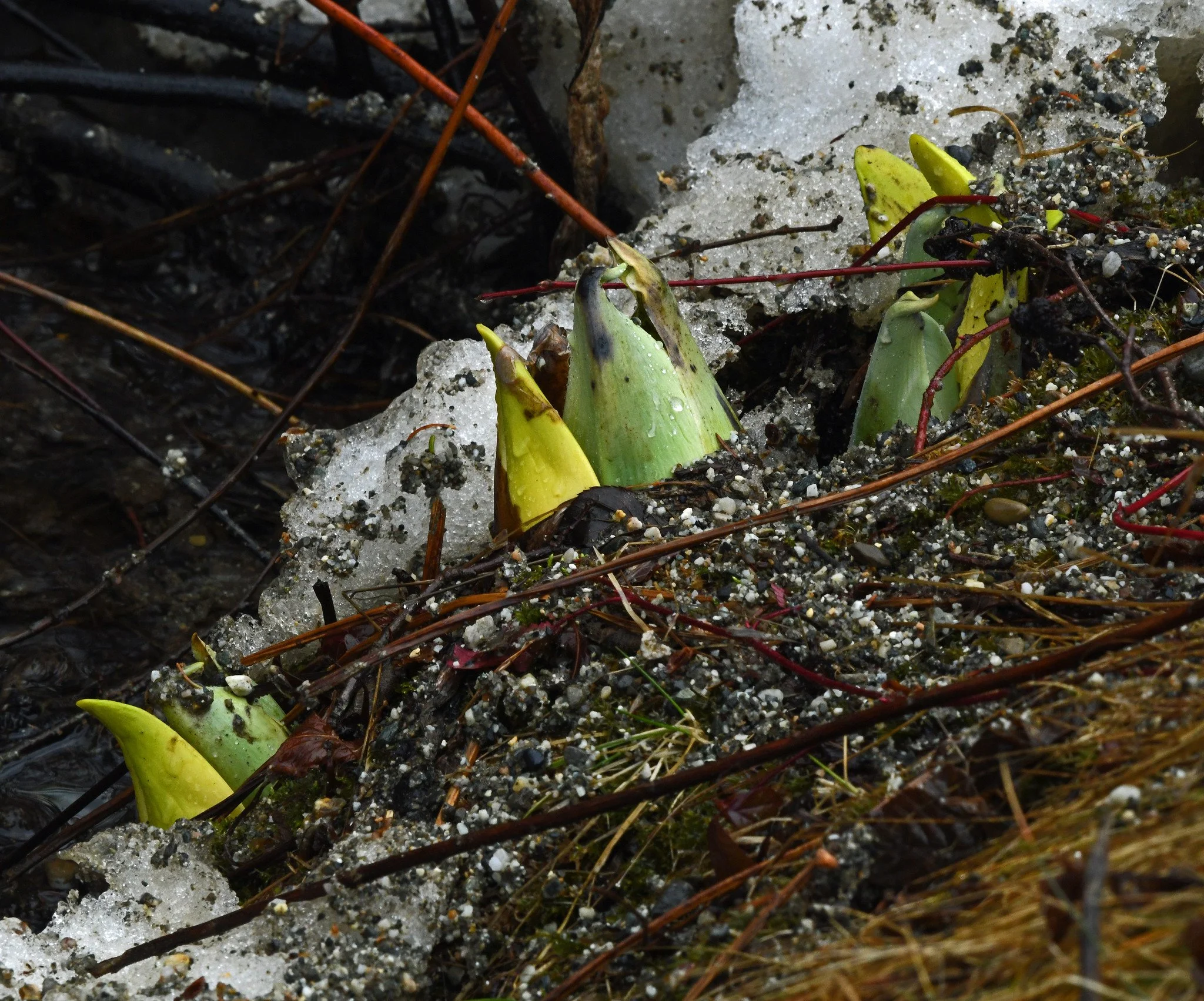
Skunk cabbage spathes have been surfacing through snow, ice, standing bog water and frozen ground for at least a week here. Most plants have sported the common purple-red and red-mottled spathes, as shown above. However, we’re also getting a few of the uncommon yellow-spathed varieties:
As usual, these are the year’s first flowering annual plants to break ground. A cluster ball of pinhead-sized flowers (a “spadix”) is hidden inside the jester-hat-like spathes:
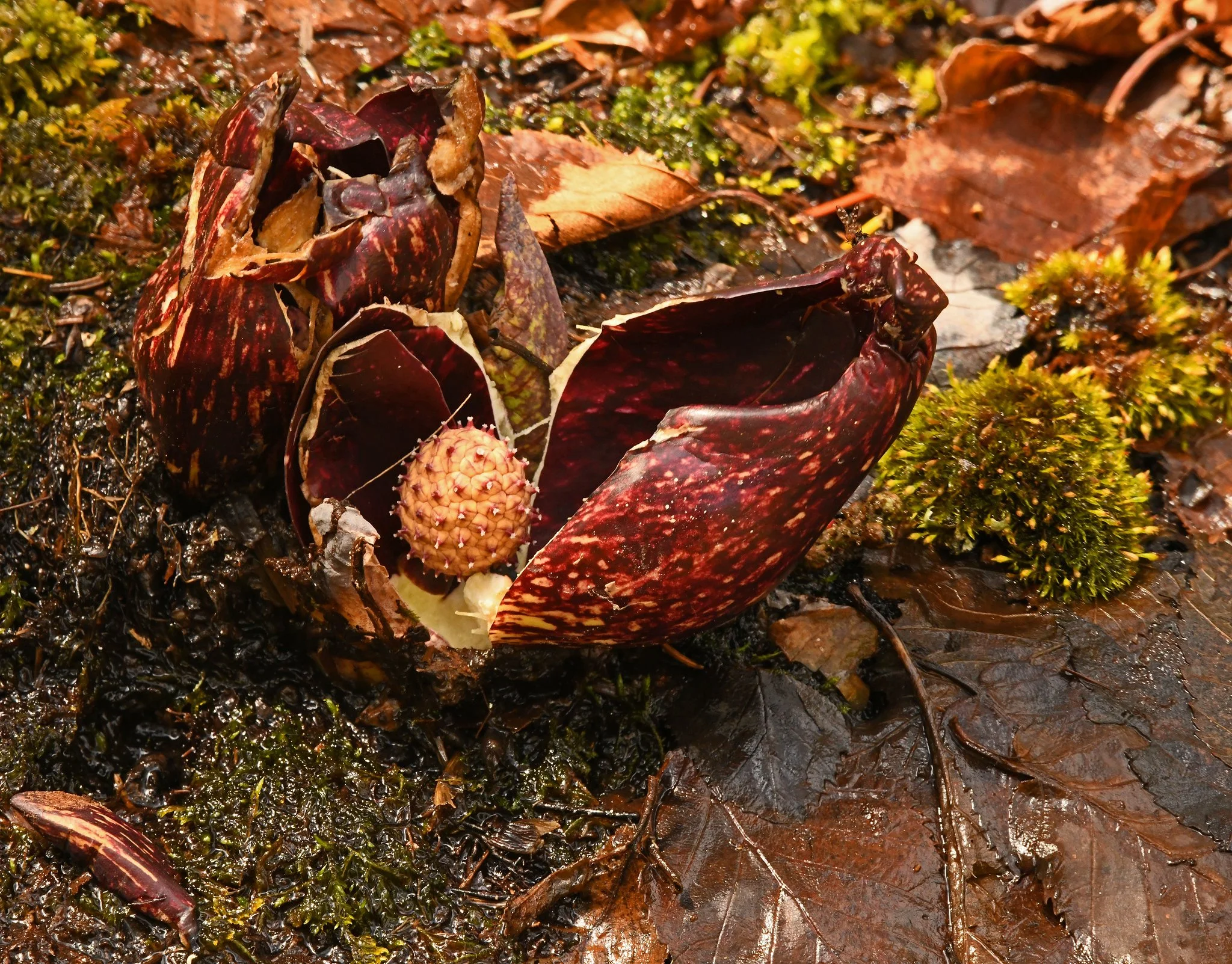
Leighton Archive Image
This amazing plant (Symplocarpus foetidus) is one of a very few plants that has evolved the ability to metabolically generate considerable internal heat. It uses intense cellular respiration to convert starch into heat-energy. Skunk cabbages have been reported to have raised the temperature of the flowers in their spathes to 71.6˚ F (22˚C), even when the surrounding temperatures are freezing.
This heat enables the plants to get a jump on competitive plants before true spring arrives. Being warm and cozy is thought to attract and shelter the earliest pollinators, which crawl into the side openings of the spathes for a little refreshment (nectar and pollen), as well as protection from the elements. (Images taken in Brooklin, Maine, on March 12 and 13, 2025, except as noted.)