These masked characters slipped over our northern borders under cover of another snowfall yesterday and the only ICE in sight was on the ground. Canada geese have been coming south for at least two weeks.
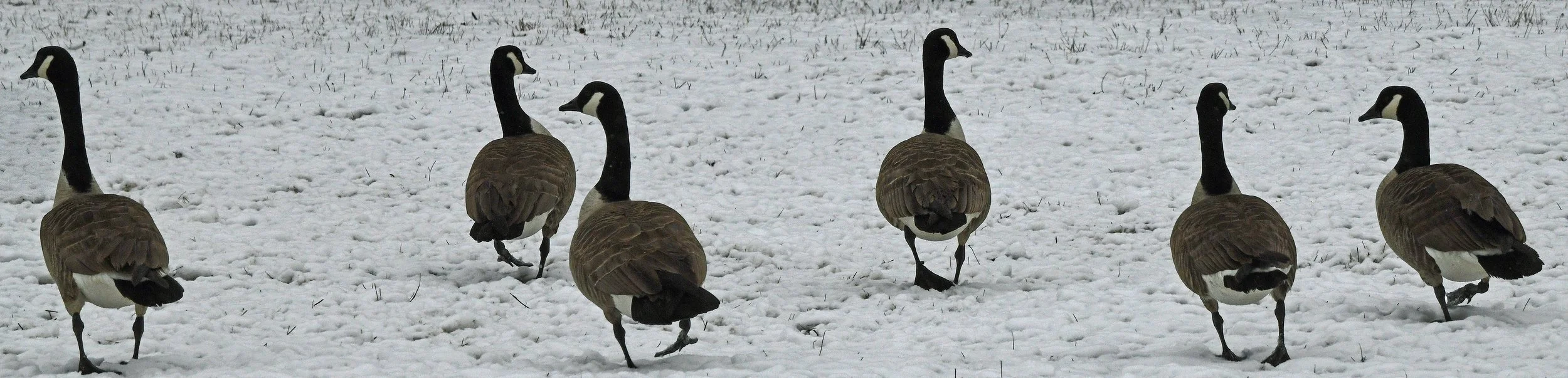
In Maine, Canada geese consist of both migratory birds such as these and rapidly increasing "resident" populations that stay here year-round, adapted especially to environments with large lawns and still, open water.
There were no Maine breeding populations of these birds before 1960, but restoration programs were highly successful, if not too successful in some areas. Canada geese are magnificent creatures that are monogamous, extremely territorial, and can live over 20 years. But, as you’ll see, they’re not always nice neighbors.
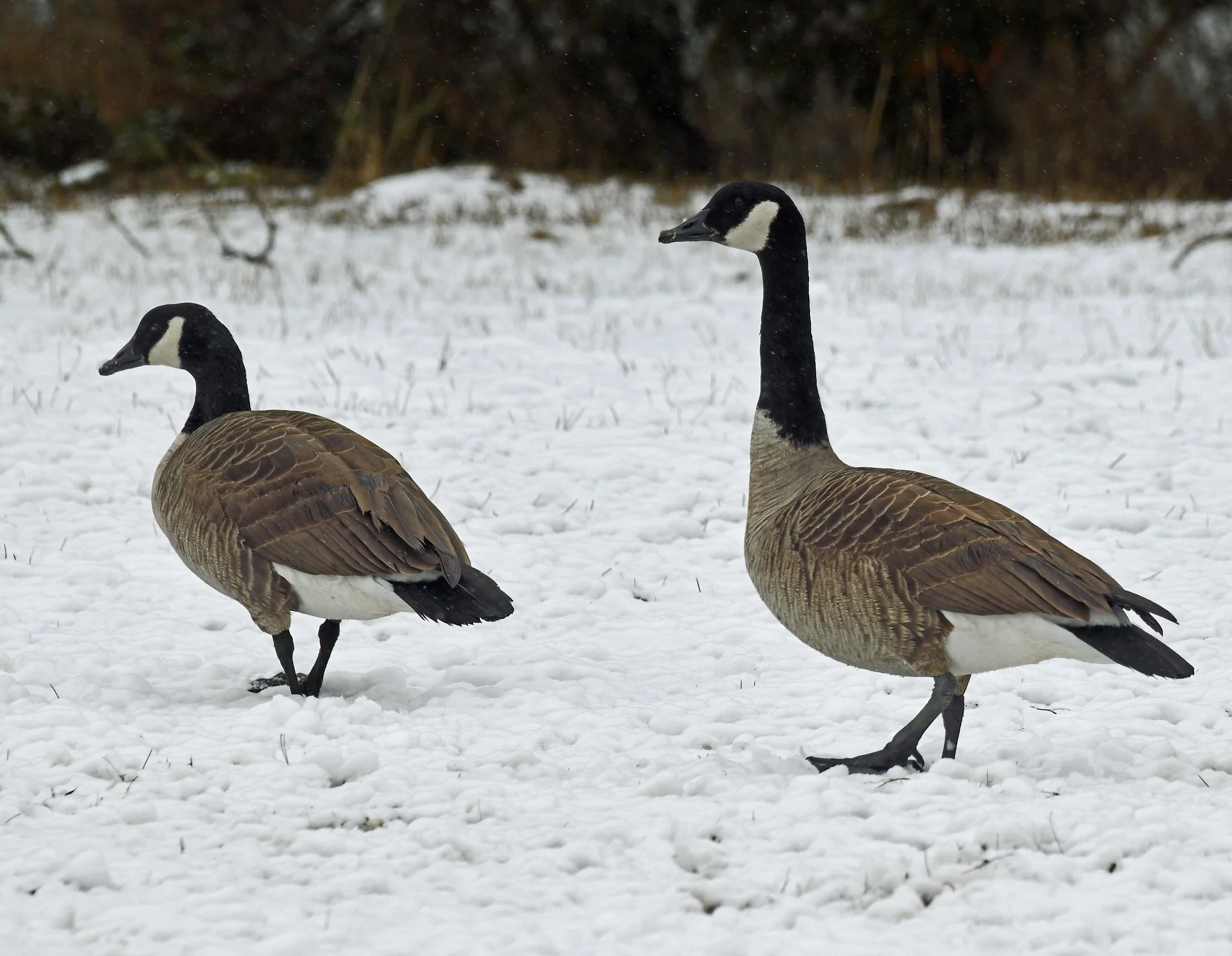
The Canada geese that choose to reside here increasingly are the "giant" subspecies of Canada goose (Branta canadensis maxima), which were once near-extinct. The literature reports that the adult giants average around 12–15 pounds, with exceptional specimens exceeding 20–24 pounds. The common Canada geese adults migrating through usually are in the 7–9 pound range or just slightly heavier.
Yes, there are issues with resident geese. They can be highly aggressive in populated areas, especially when nesting. They threaten and scare approaching pets and people by hissing, honking and even striking. They also have been known to overgraze and ruin public and private lawns, and create significant scat buildup in public areas and water sources.
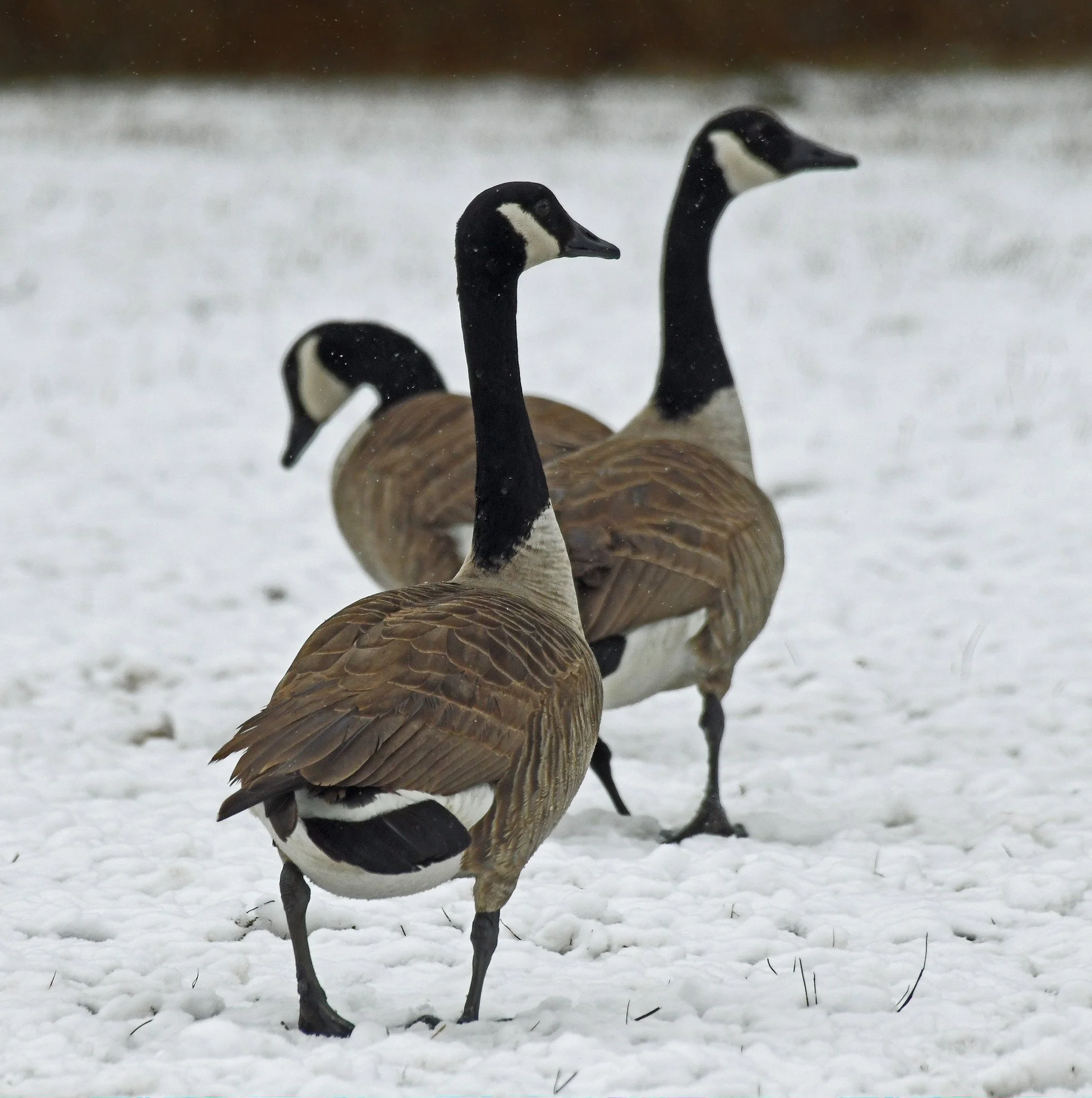
Thus, Maine wildlife regulators advise against feeding Canada geese, because it causes them to lose their fear of humans and build resident populations in numbers that are not naturally sustainable. (Images taken in Brooklin, Maine, on March 23, 2026.)