As you’ll see below, Toms around here have gotten their spring testosterone spike and are now performing the wild turkey strut. This performance is one of the most complicated and strenuous displays in the animal kingdom.
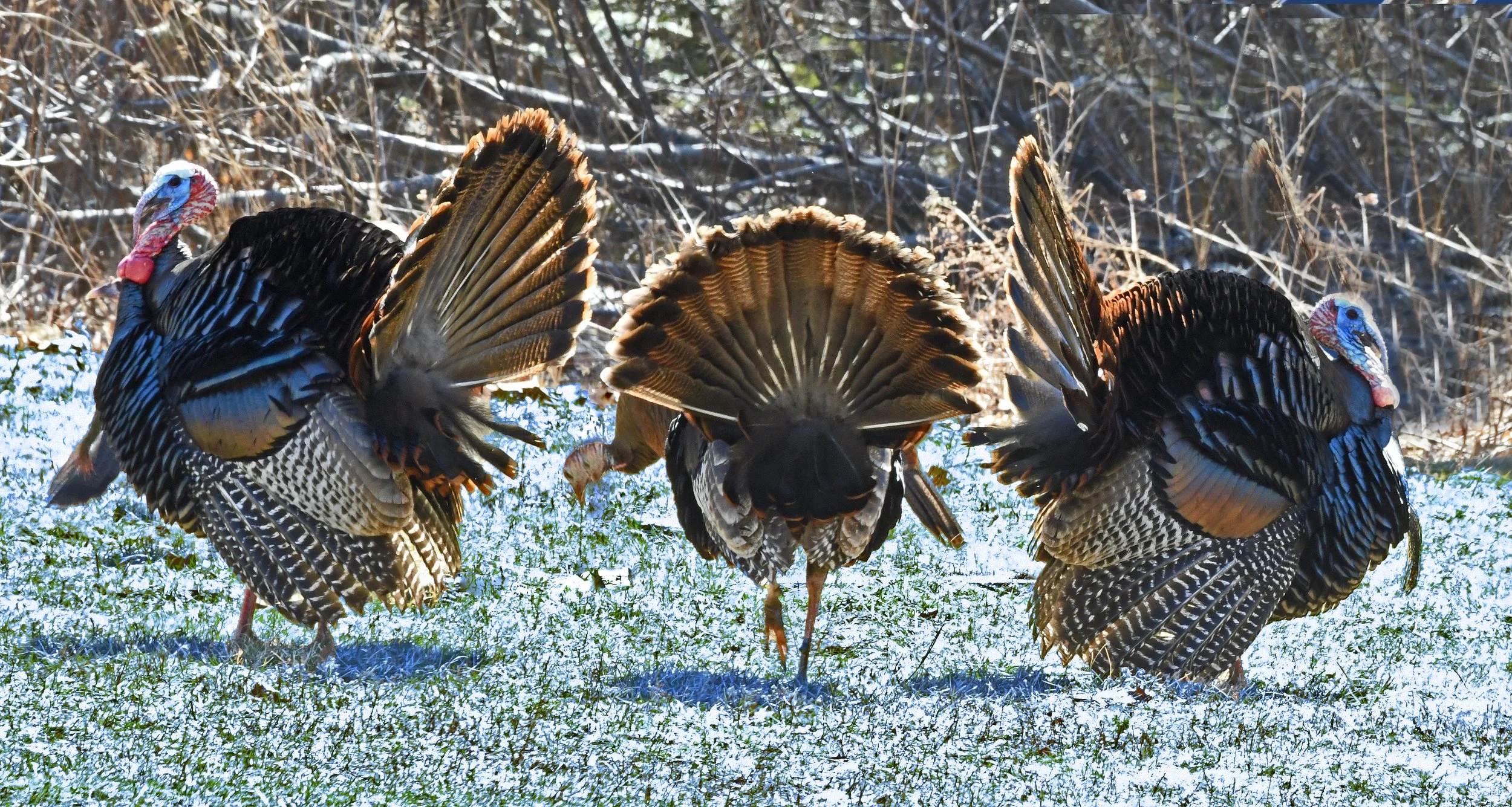
There seem to be three major aspects to the turkey strut, a courtship and domination phenomenon. First, there’s the swelling-up. The Tom contracts his many muscles at the base of each feather on his back, breast and sides, making his tail fan out and other feathers stand up. Most Toms can swell themselves up to twice as large as they were when relaxed.
Second, there’s the related dance moves and sound effects. The Tom’s primary wing feathers are drooped down while he shuffles, stiff-legged. The wings scrape the ground and make a rustling sound, while he pulls back his head to expand his chest to the ultimate size possible. While doing this, he growls with a drum-like sound and “spits” or “huffs” with sounds amplified by vibrating his breast feathers. He then periodically shakes himself all over to make his fanned tail and wings rattle.
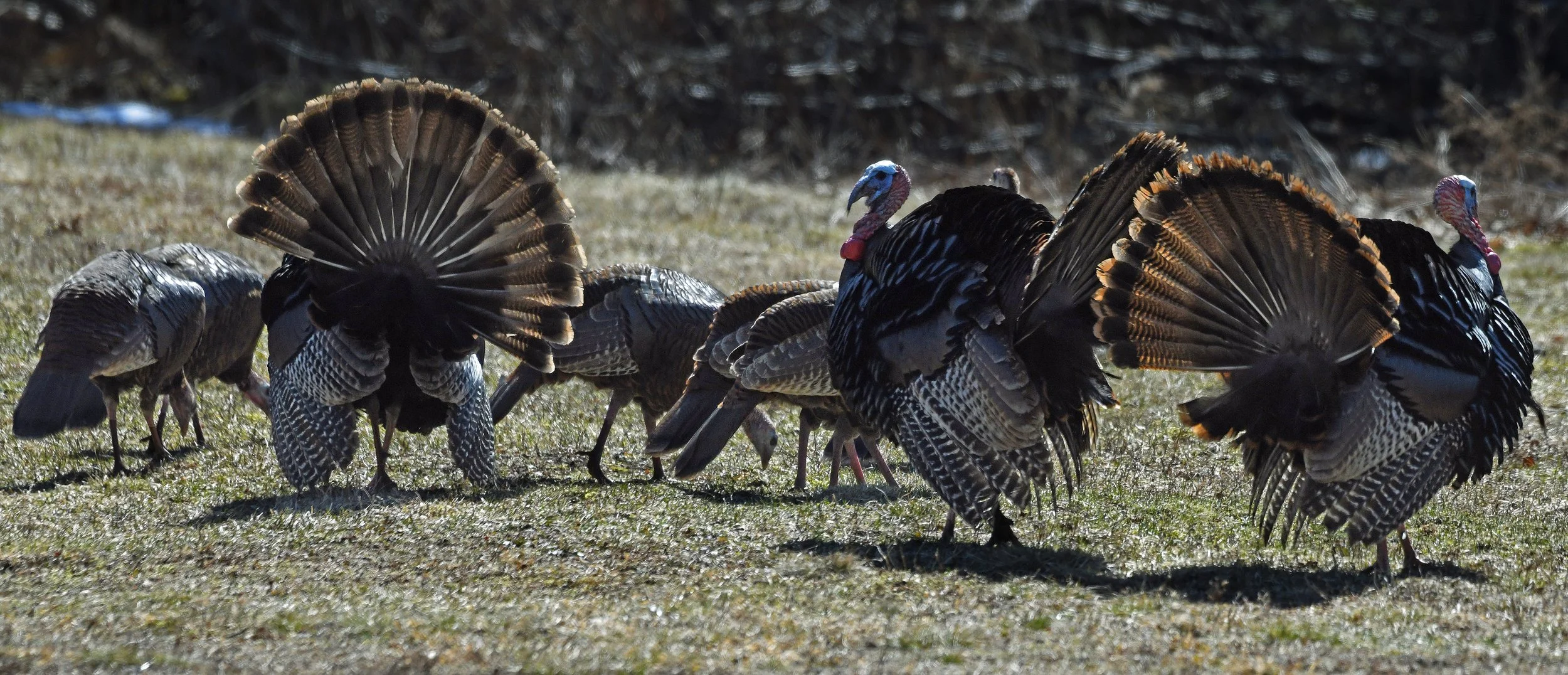
If that hasn’t made you wonder about the biological purposes of the varying concepts of male attractiveness in this world, the final phase of the strut should. The Tom uses his blood pressure to transform his head and face. The top of the Tom’s head turns red, white and blue, while his “snood” (that fleshy flap that dangles from his face) gets engorged with blood and elongates over his beak. As if that’s not enough, he then elongates and swells his “caruncle” (that testicular-like growth on the neck), while making it flaming red.
Ah, romance …. (Images taken in Brooklin, Maine, on March 25, 2026.)