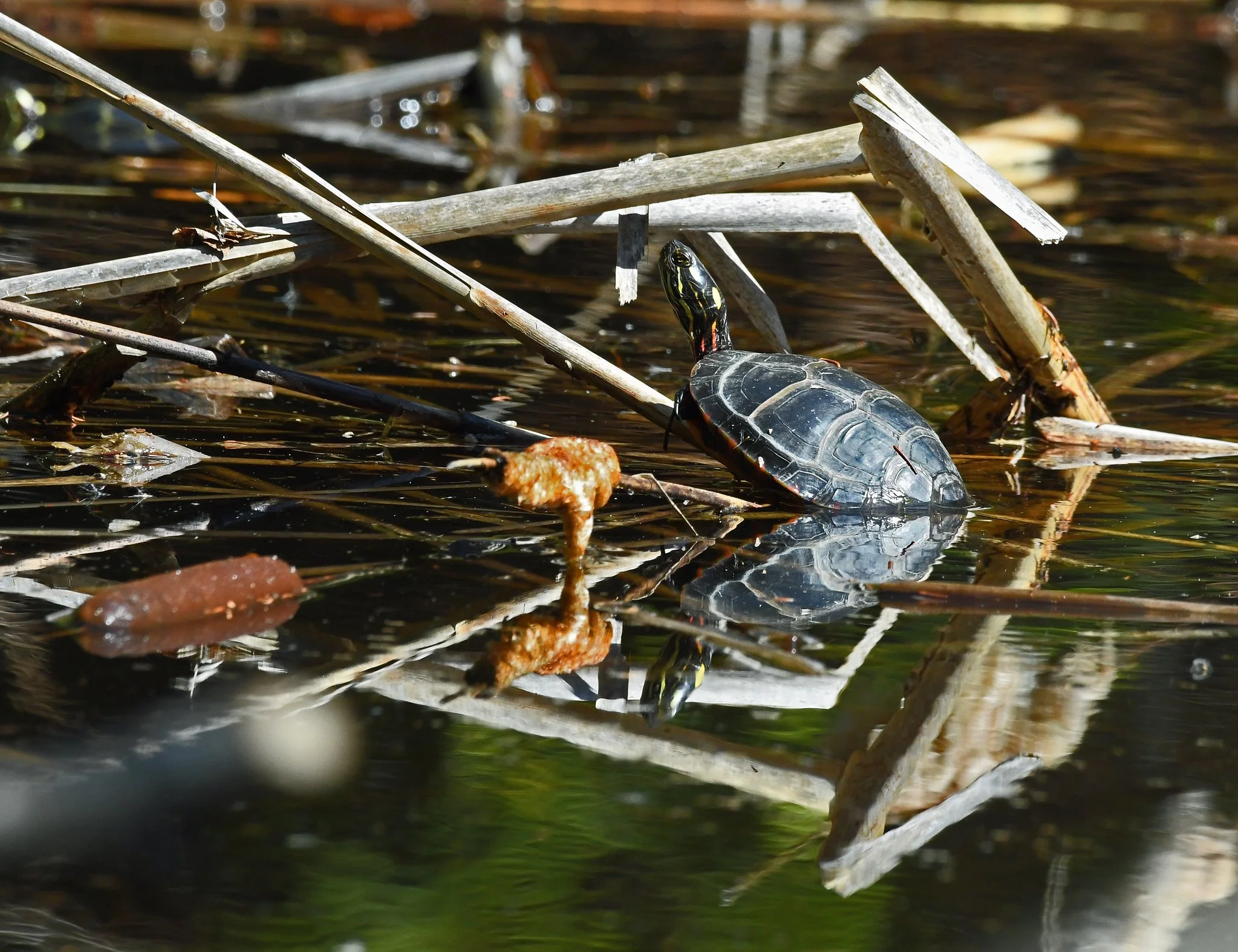
This good-looking painted turtle is the first of the year in our ponds. He’s been rising to bask on sunny days since at least April 12, when I first spotted him.
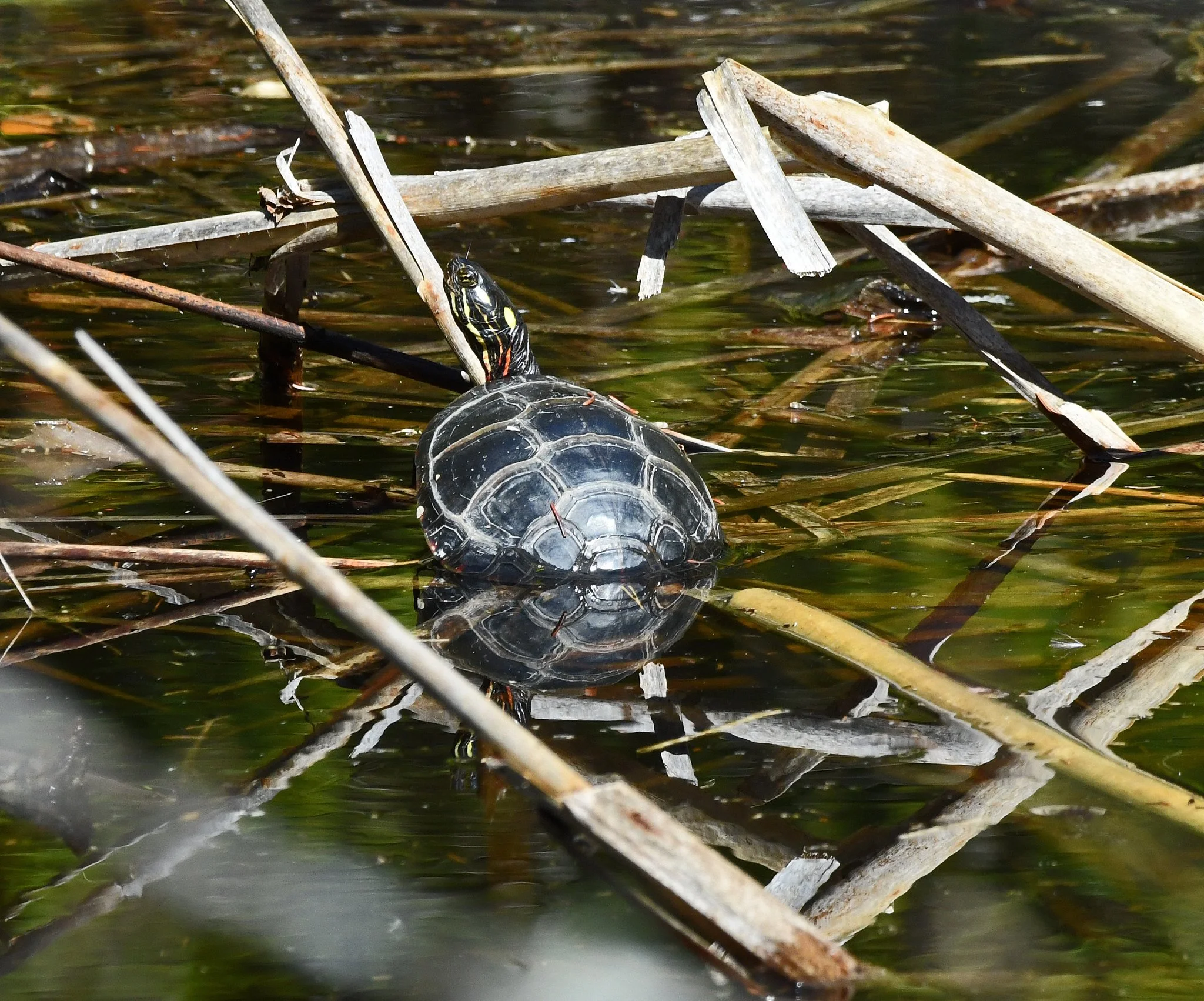
He’s got exceptionally vibrant yellow and red stripes and daubs “painted” on his head, neck and shell. These are signs of a healthy diet and a healthy turtle. Potential mates will notice that he’s a good catch from a good place to hang out.
The literature reports that the painted turtle’s diet includes aquatic insects, fish, crustaceans (crayfish), snails, worms, algae, and leafy plants. Young turtles apparently are mostly carnivorous, but they become more herbivorous as they get older. Curiously, PTs have to eat in water. They have virtually fixed tongues and can’t produce saliva; they need water to act as a lubricant to get their food “down.” They swim with their mouths open at the surface or below to catch prey and floating vegetation, then use the water to help ingest their catch.
PTs are Maine’s most common and most colorful turtle, and they live 30-40 years. In the winter, they brumate (lie very dormant) in the muck at the bottom of ponds and lakes, and they’re one of the few turtles adapted to tolerate freezing temperatures for extended periods. (Images taken in Brooklin, Maine, on April 18, 2026; sex assumed.)