Since early April, we’ve had two great blue herons wading in our waters and mousing in our marshes. They’ve inspired me to do a little research into the unique adaptations that have evolved in these prehistoric-looking birds. I’ll share what I’ve learned about two of these adaptations here.
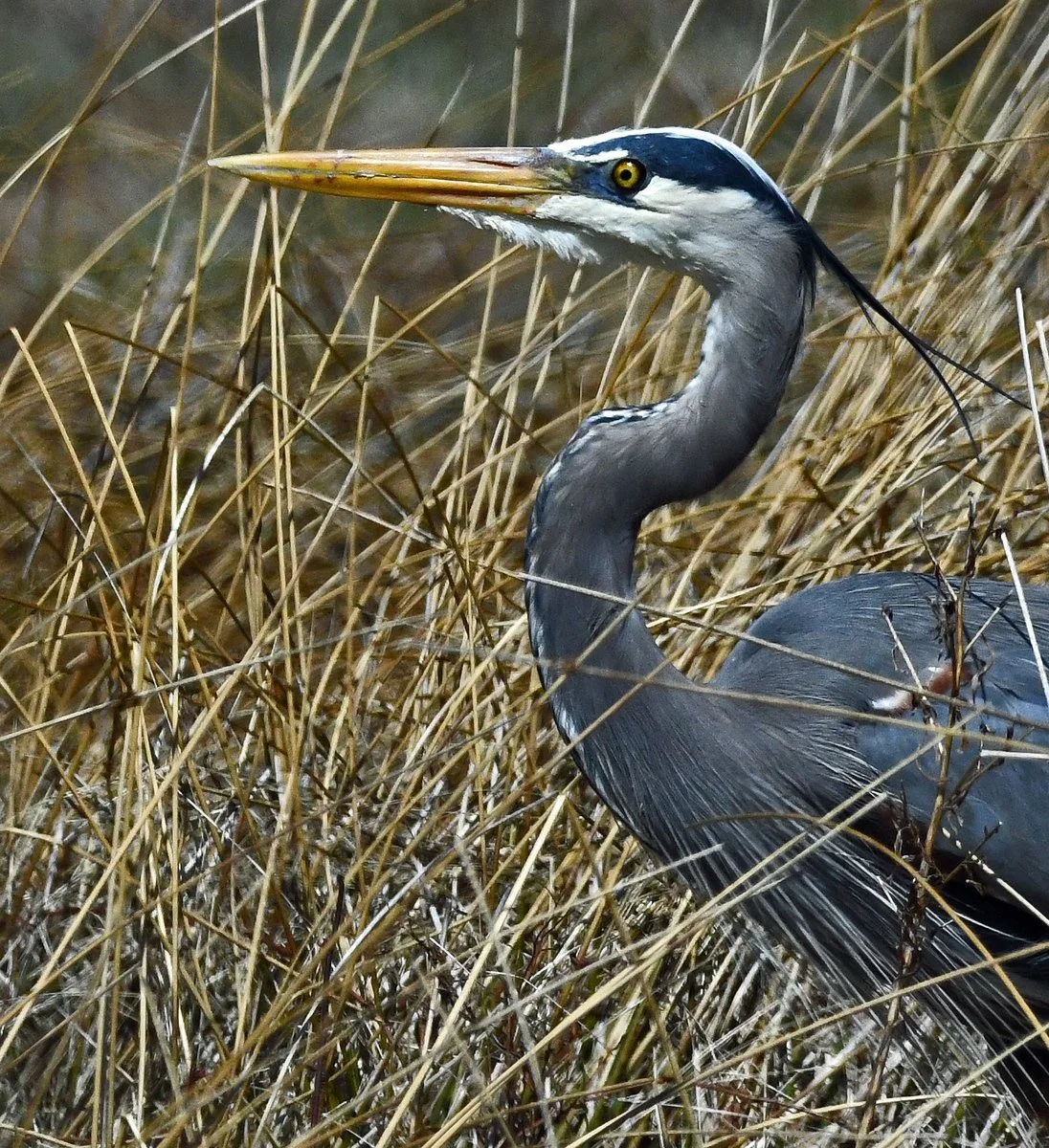
The first is the great blue’s long, serpentine neck, which is specialized for hunting, defending and feeding itself. Its modified, longer vertebrae double back on themselves, allowing it to coil and strike like a snake – but faster, with greater force and with a long, spearhead-like beak that can be plunged into the water. (Or plunged elsewhere: I’ve seen a great blue drive off a bald eagle by repeatedly spearing the slower National Bird in the face and chest while fighting over a dead fish on the shore.)
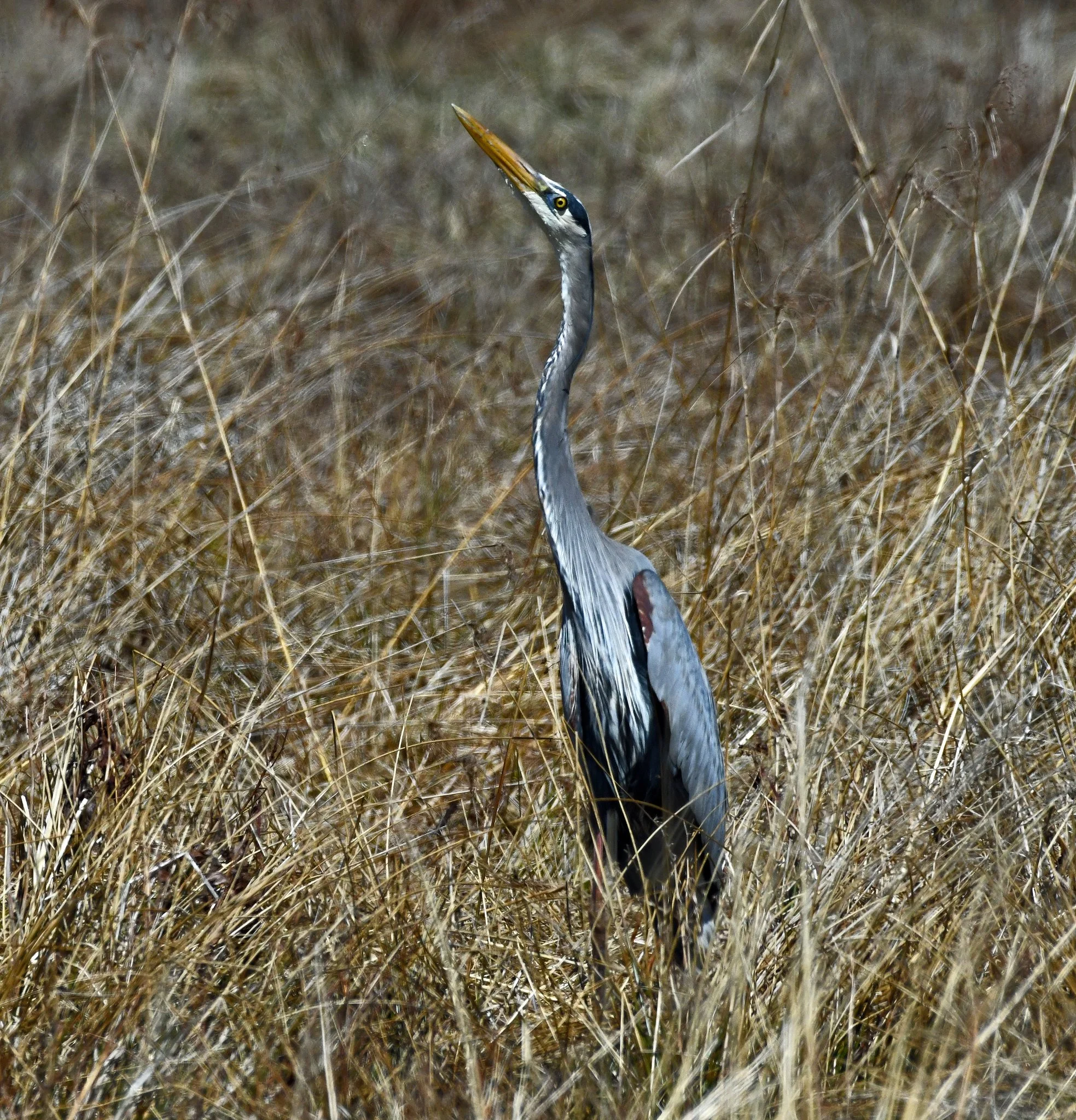
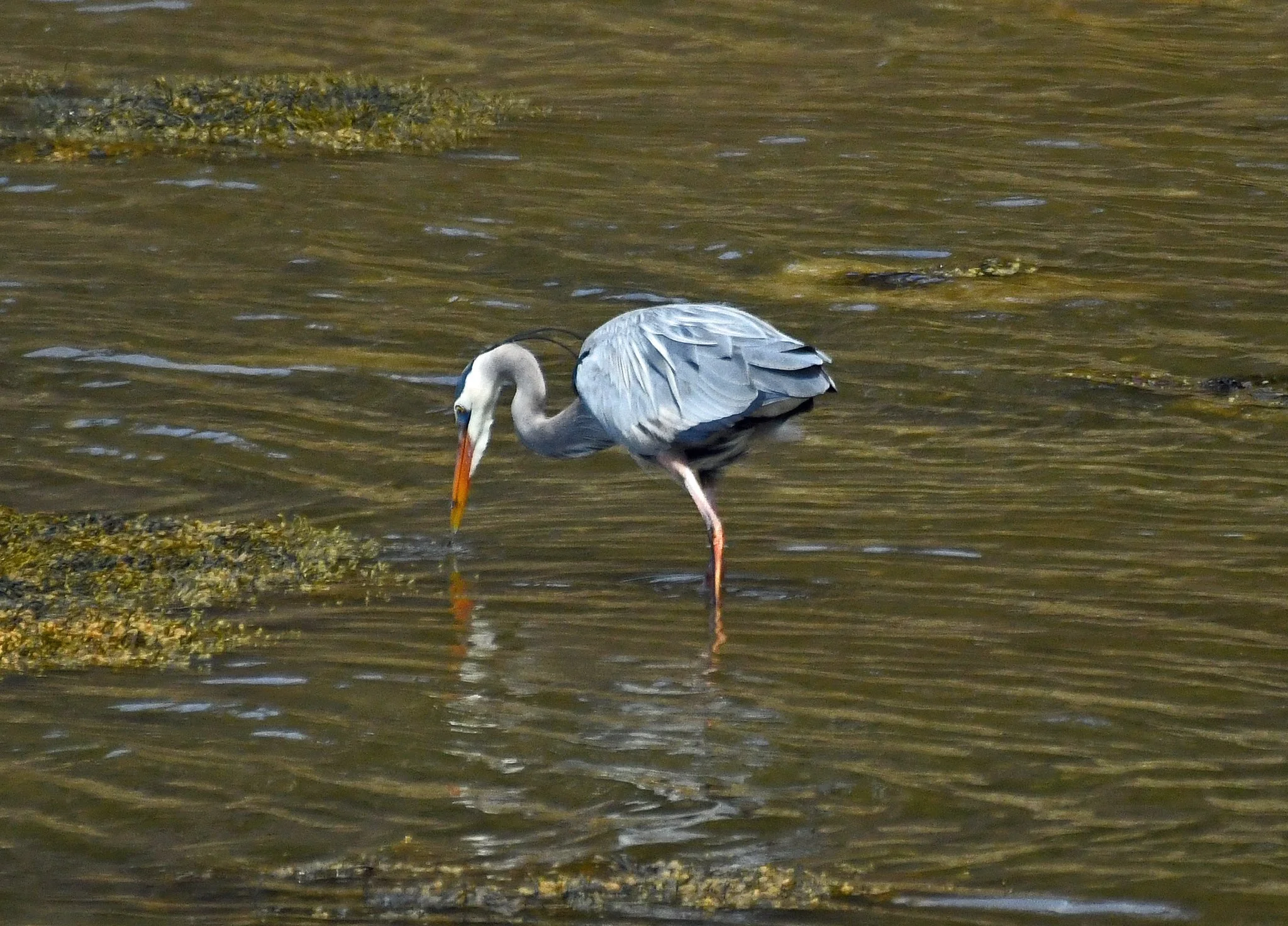
In the middle of the GBH’s neck, the esophagus and trachea bend behind the spine,. This protects the bird’s windpipes during the ingestion of a whole, live fish and other large, resisting prey. Unlike geese, swans and other birds with large necks, great blues can tuck their heads back into their shoulders when flying and improve their aerodynamics.
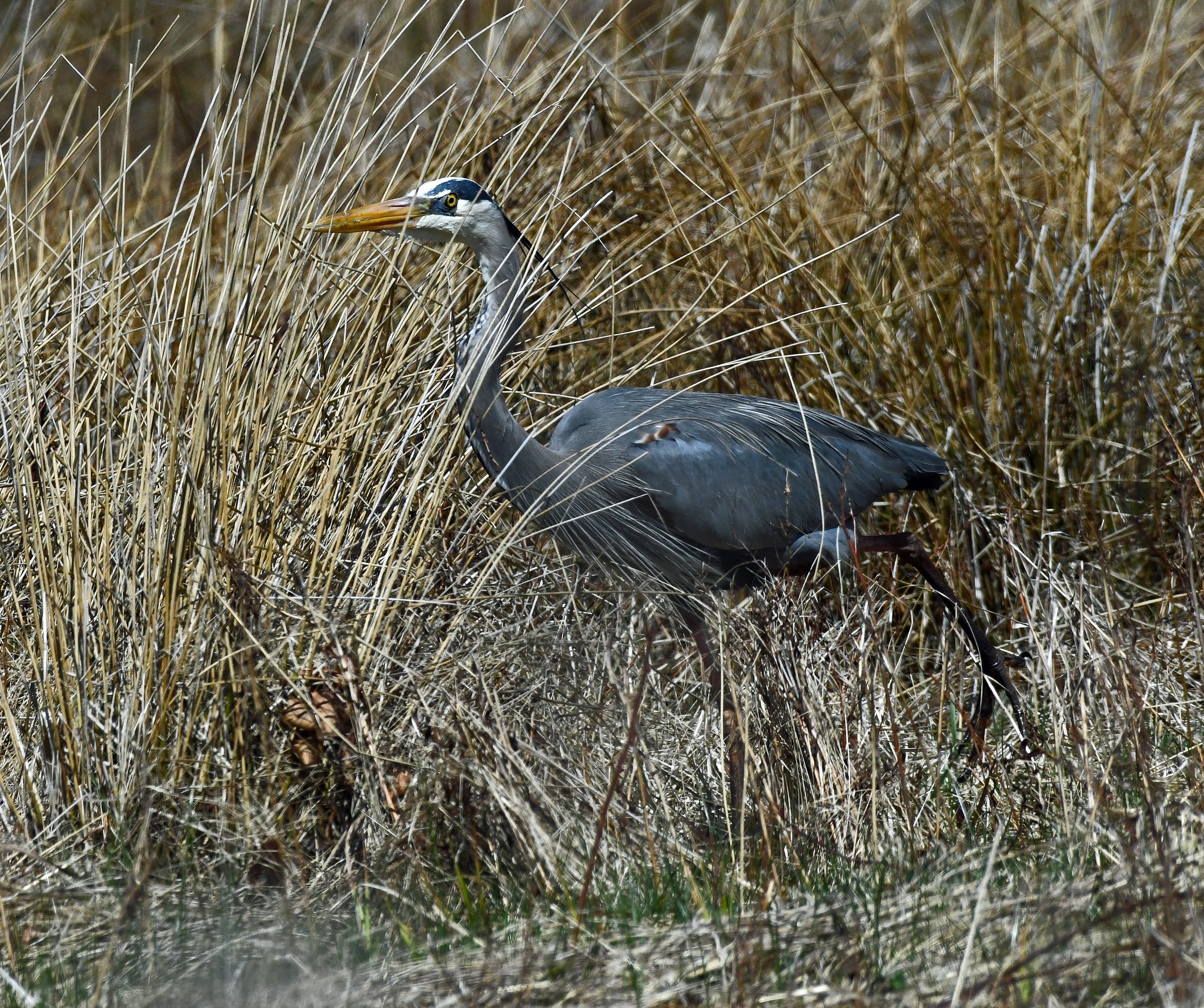
Where the great blue’s neck joins its chest, it wears a necklace of wispy down feathers that are called pectoral plumes or powder down feathers. This adaptation is not only decorative, but also highly useful to ameliorate the results of the bird’s habit of getting blood, fish oil and pond sediment on its face and chest.
The tips of these specialized feathers fray into a cleansing dust that has a consistency similar to talcum power. Sometimes the heron just cleans its head and neck by rubbing them in the powder down. More often, it uses a specialized comb-like claw on its middle toe to collect the powder and comb it through needy areas.
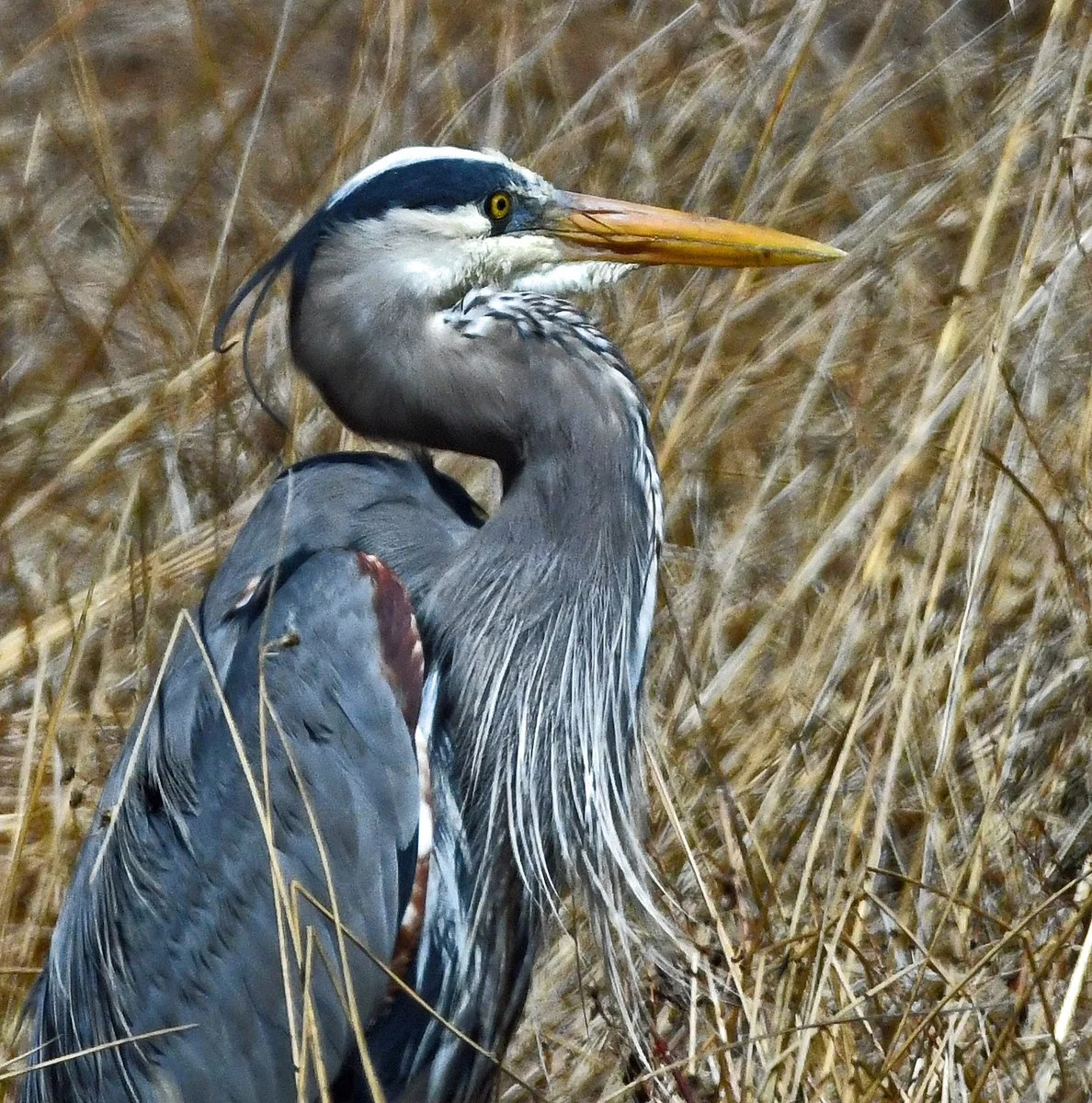
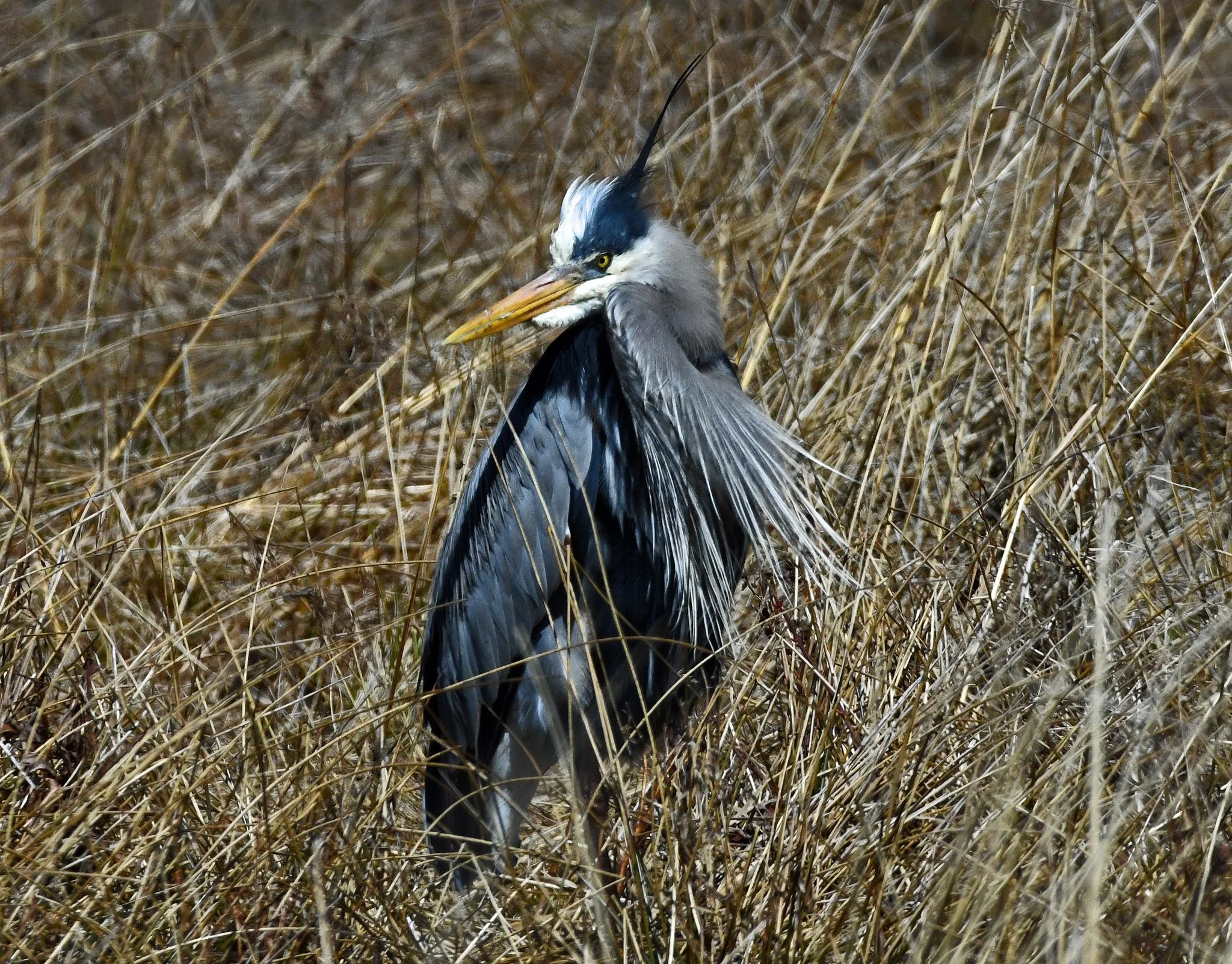
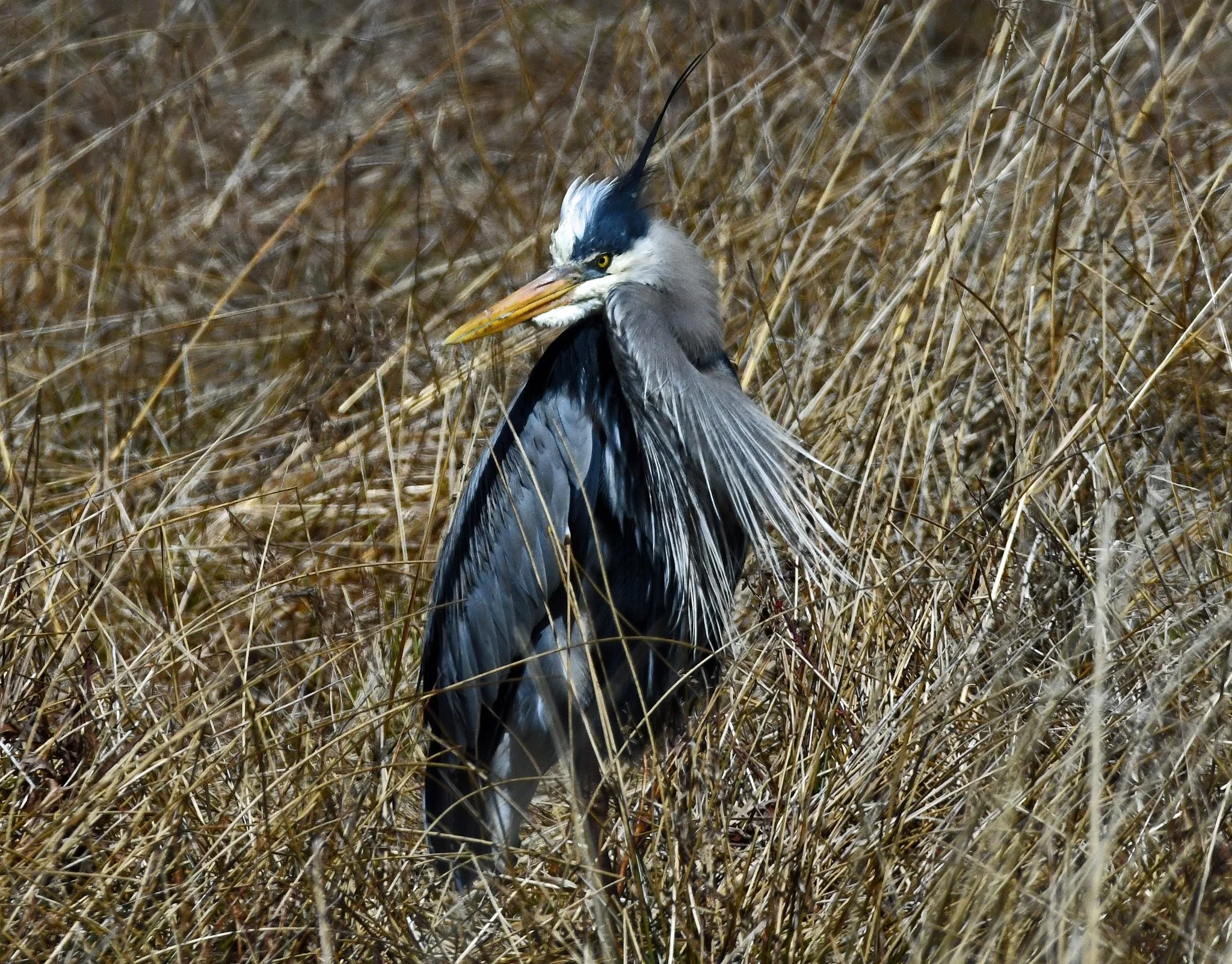
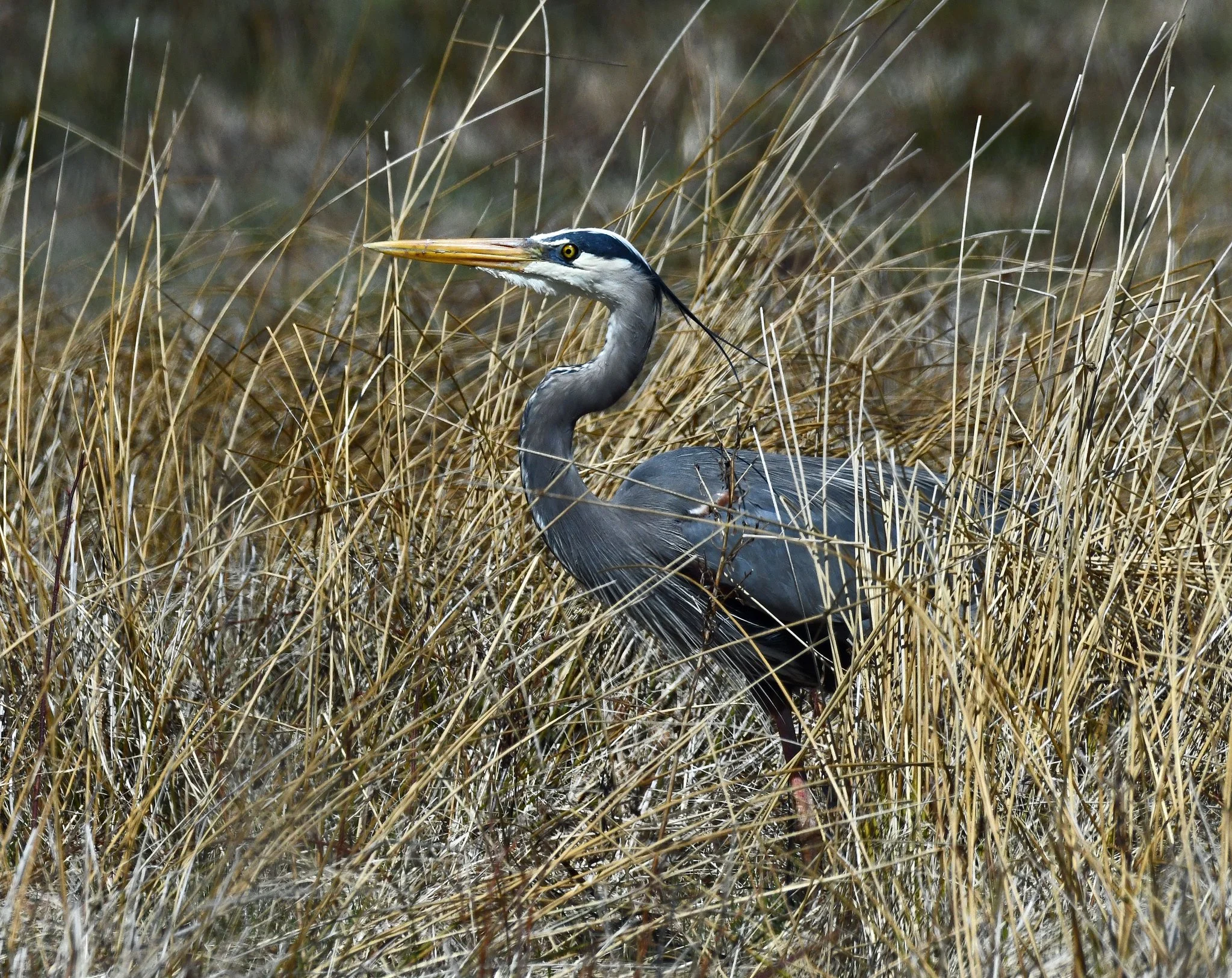
(Images taken in Brooklin, Maine on April 17 [marsh] and 21 [water], 2026.)