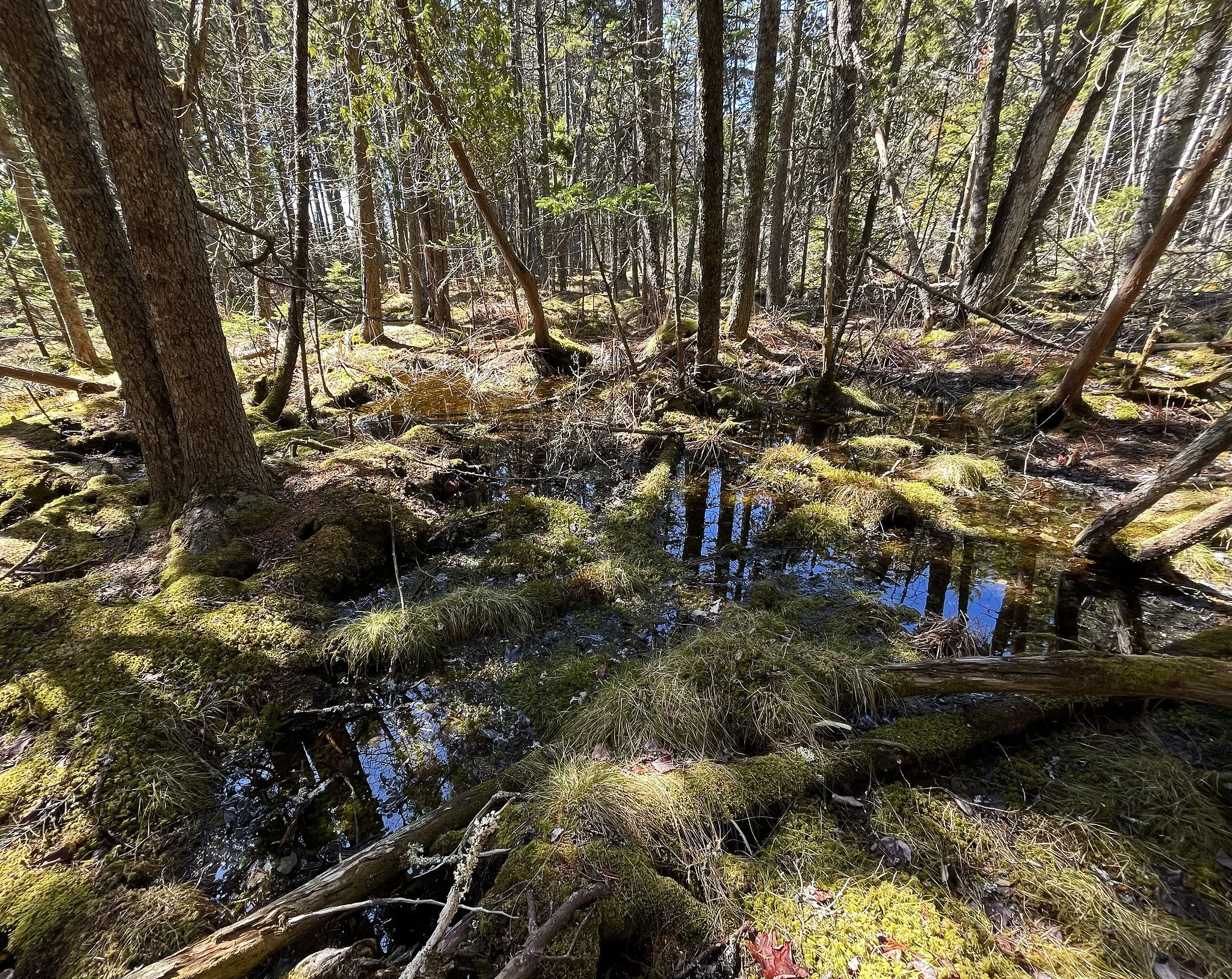
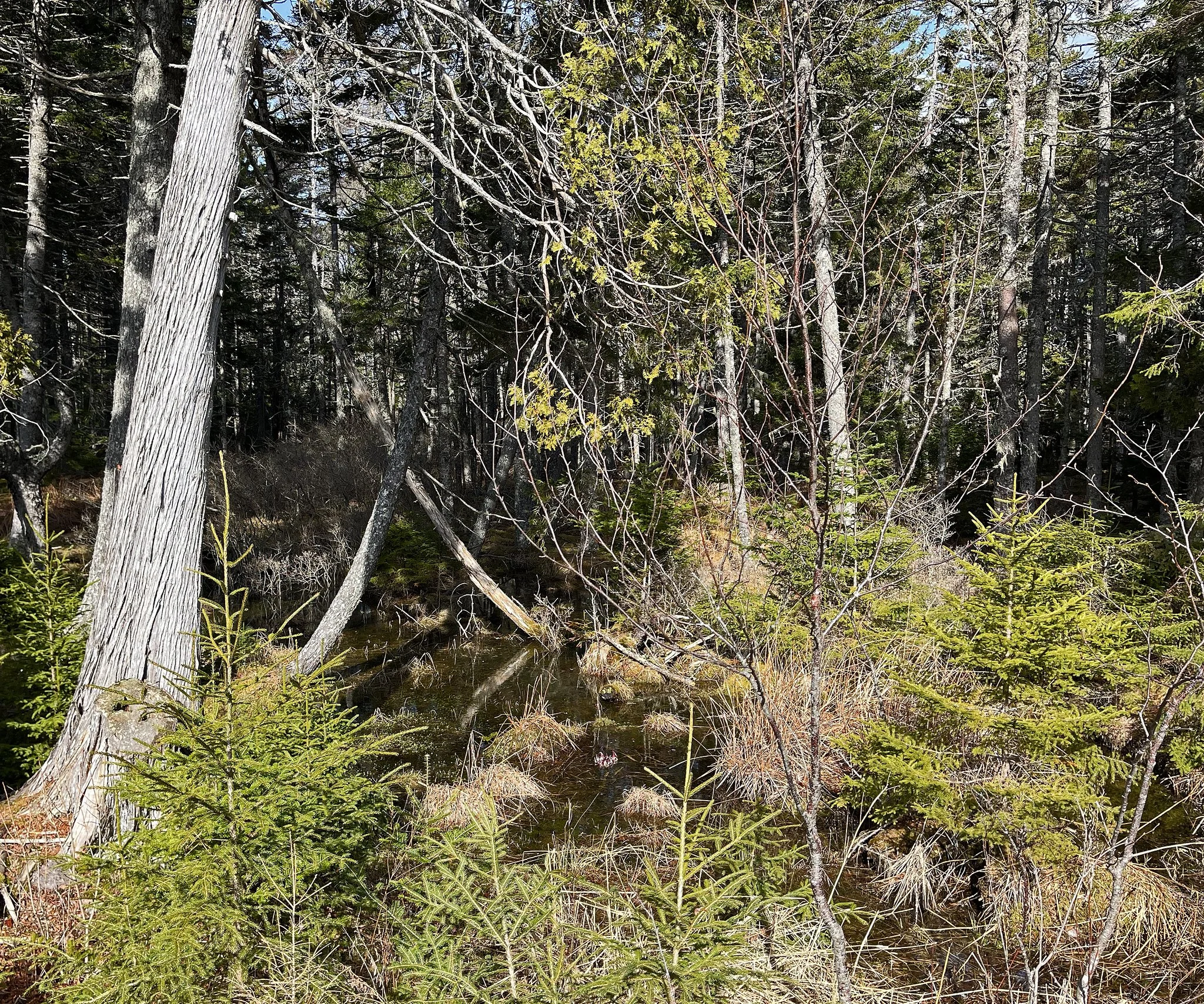
Above and below are images of some of our vernal pools where amphibians return in the spring each year to ensure the survival of their species. This year, the pools seem to have less water than prior years. Otherwise, they appear ready.
Vernal (spring) pools typically are small and temporary bog pools that appear in spring and fall and host a great diversity of wildlife. They’re disappearing in Maine and elsewhere, primarily due to the encroachment of human development. Since 2007, Maine has designated and protected “Significant Vernal Pools” by regulation under its Natural Resources Protection Act. Last year, the Maine legislature enacted a law that established a 100-foot “no disturbance” zone around these Significant pools.
Maine’s vernal pools are critical breeding and feeding habitats for salamanders (spotted, blue-spotted and four-toed); frogs (spring peepers, wood, green, gray tree and bull frogs), as well as American toads.
Other fascinating creatures rely on these wet Maine habitats for parts of their life cycles, including fairy shrimp, fingernail clams, garter snakes, herons, raccoons and diving beetles. Even moose use vernal pools as an early season opportunity to cool off, avoid insects and browse on emerging vegetation.
The first warm, rainy spring nights in coastal Maine trigger massive nocturnal migrations of amphibians to their local vernal pools to breed. Concerned citizens traditionally guess when that activity will peak and designate one or more nights as “Big Nights” to go out and help their tiny neighbors cross dangerous roads. Around here, a Big Night is scheduled for tomorrow.
(Images taken in Brooklin, Maine, on April 7 and 8, 2026.)