Look closely and you’ll see Harriet yesterday, laying and incubating eggs (I hope). She keeps her fierce head up to look around constantly for danger; her big wings are spread as cover from the elements; her soft underbelly is gently lowered over the eggs, keeping them at the right temperature; and, her tail is pitched up, seemingly just because she wants to look perky in her pregnancy.
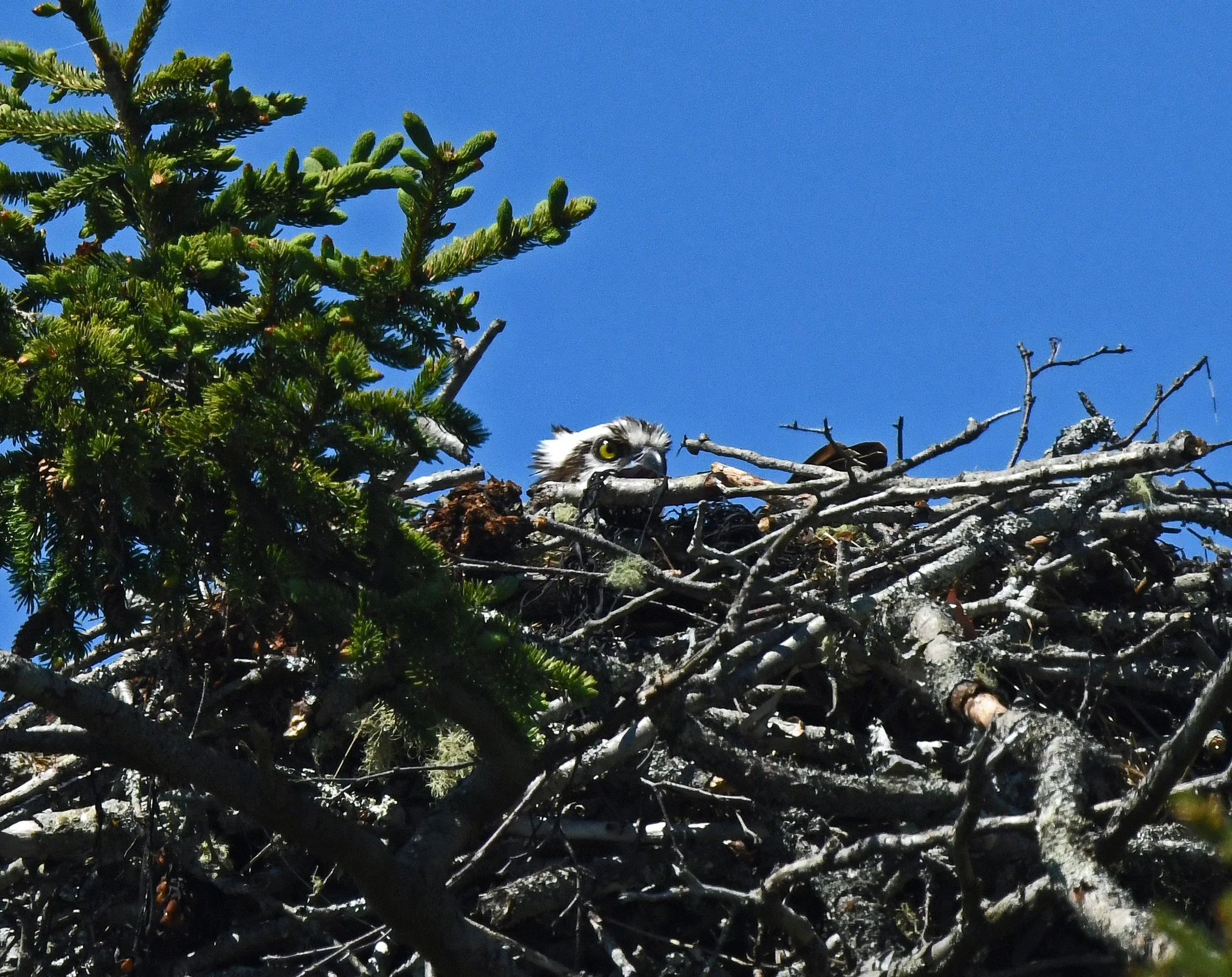
Soon (I hope), Harriet’s sharp beak, which was designed to kill and rip fish, will be picking flecks of fish off a still-wriggling body and delicately placing them in the wide-open mouths of her insatiable, fuzzy, prehistoric-looking offspring.
Below, you’ll see Ozzie returning to the nest yesterday, as he usually does several times a day. On at least one of those visits, he’ll bring a good-sized, but headless, fish for Harriet – they’re usually pogies (Atlantic menhaden) from which Ozzie has ripped out and eaten the nutritious brains for his own meals.
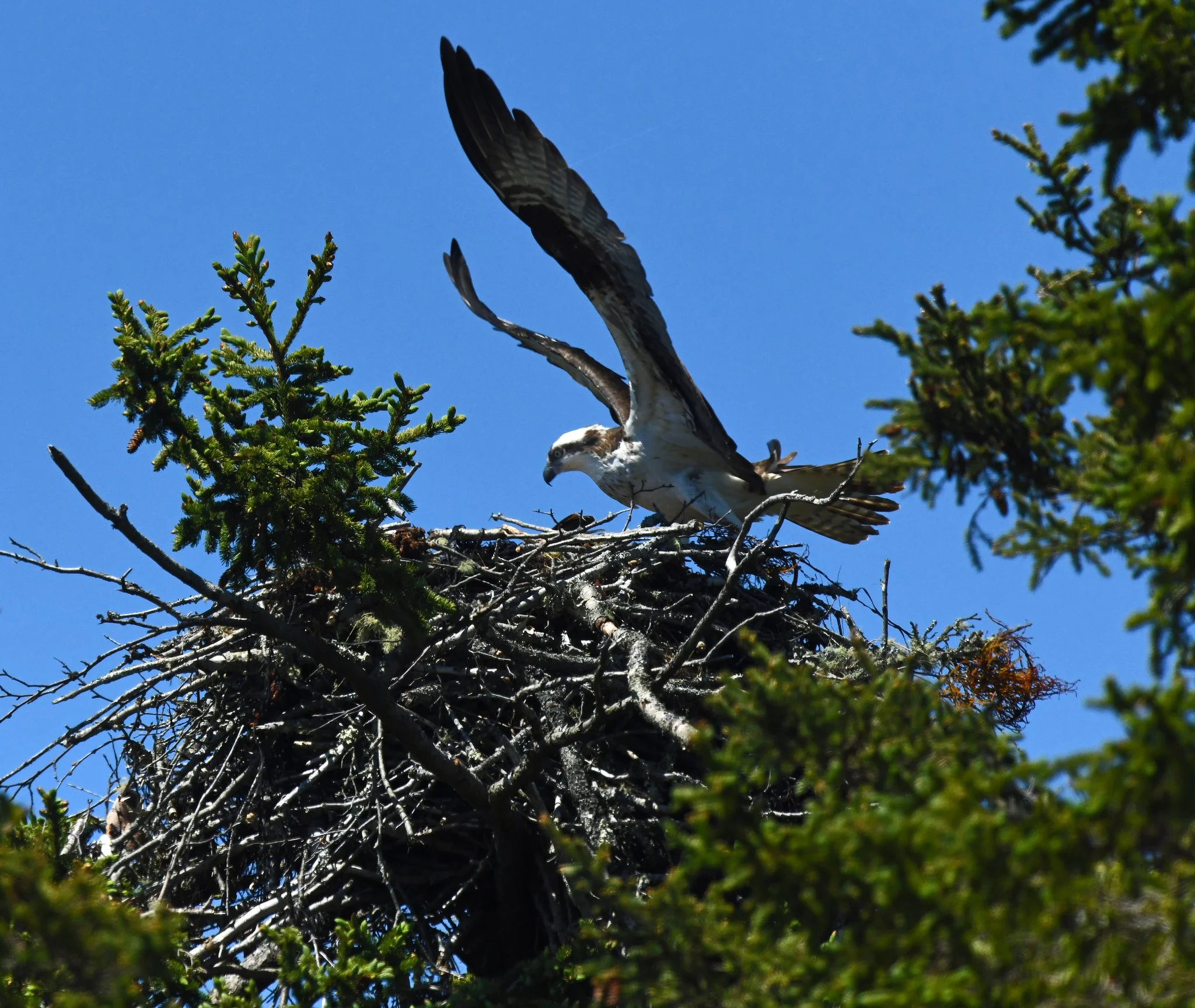
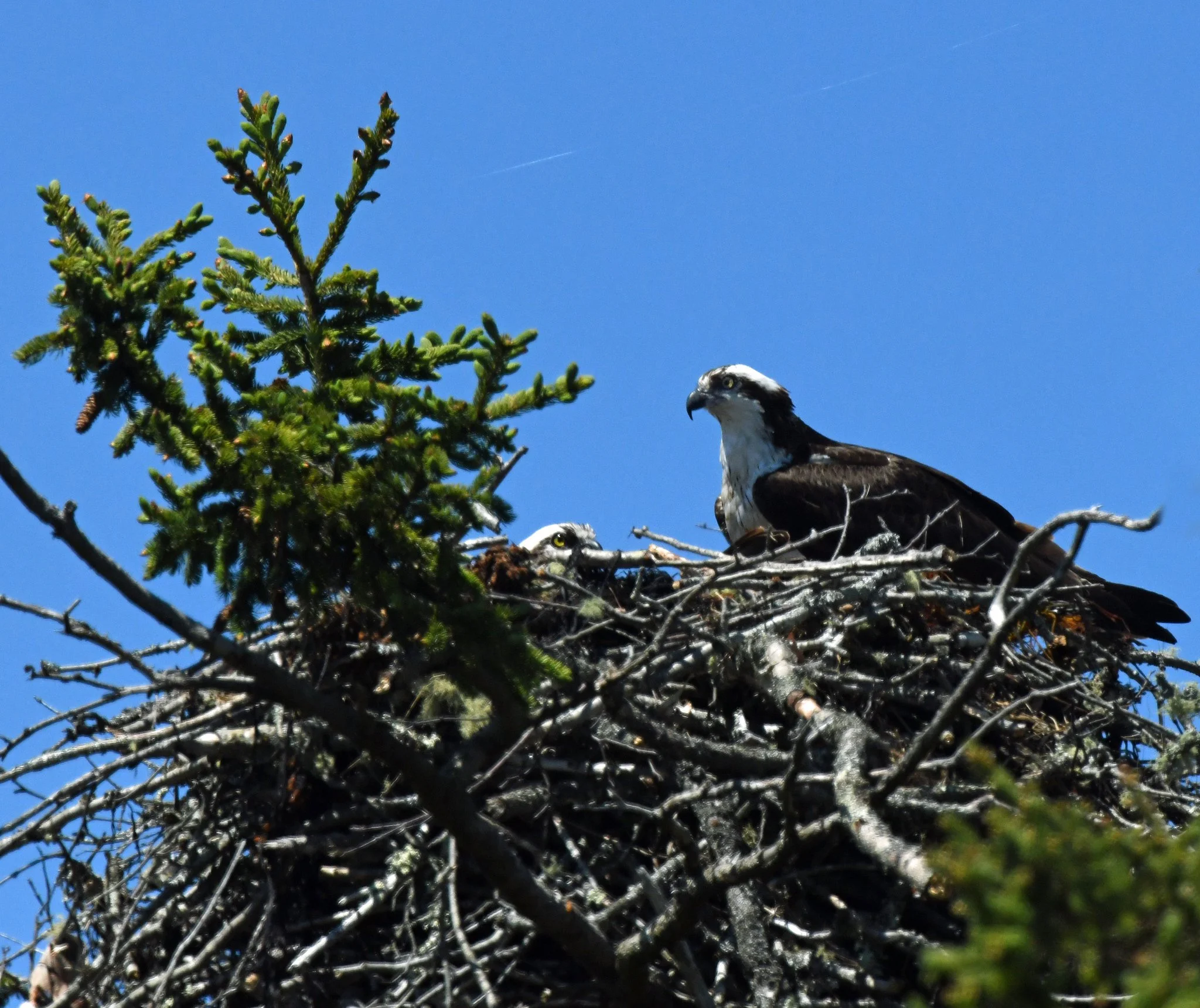
Sometimes, Ozzie brings a branch or moss to fix up the nest. Sometimes, he takes over the egg-sitting while Harriet takes a breather or drops down to a nearby pond for a drink or bath. At other times, Ozzie just stops by momentarily and exchanges chirps with Harriet, then flies off. There also are times when he’ll swoop in at great speed as Harriet shrieks an alarm about an intruder.
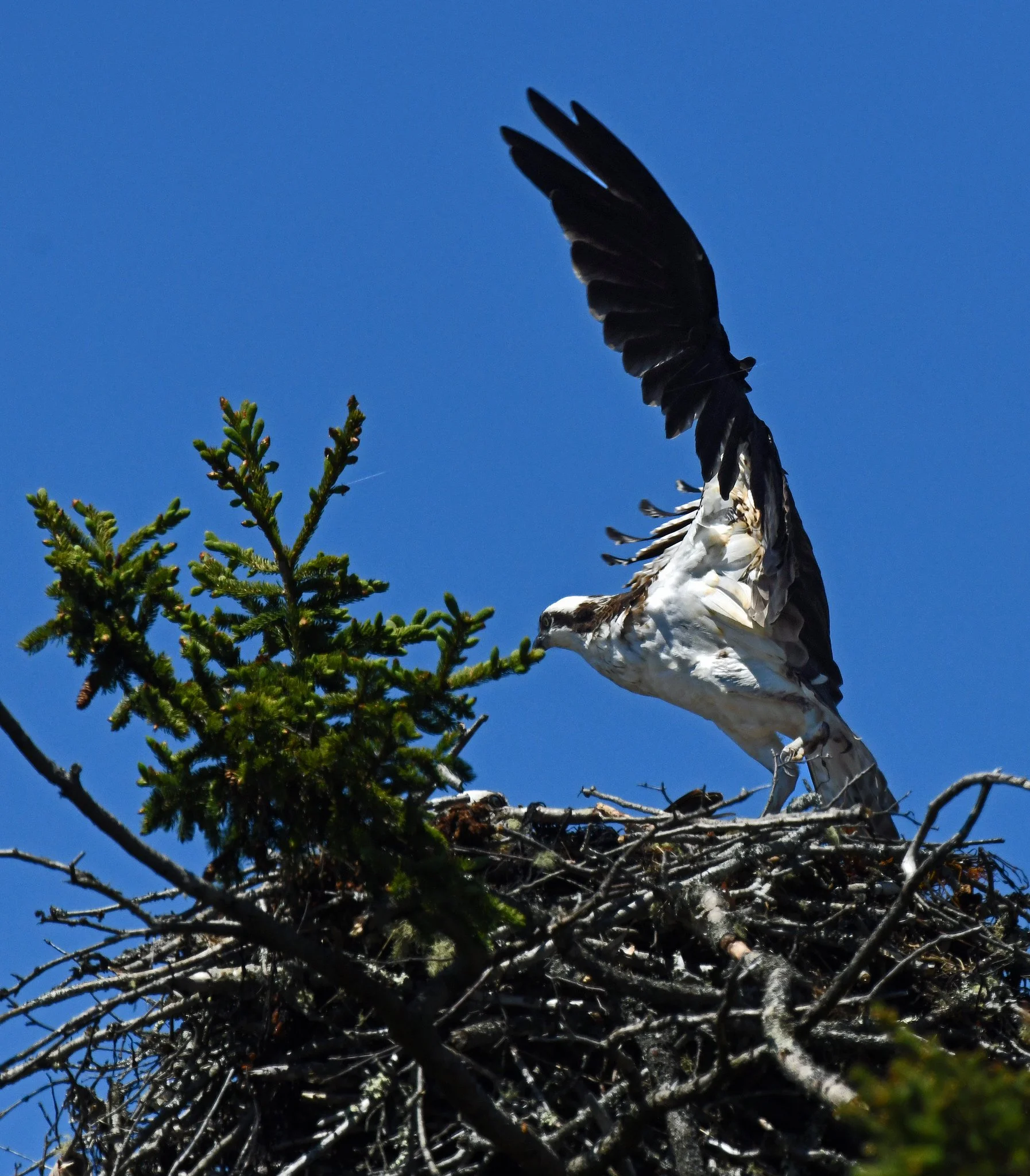
The literature indicates that ospreys usually lay 2 to 4 eggs about 3 days apart. They hatch in about 4 to 5 weeks in the same order that they were laid. In this nest, we usually see the youngsters in early June. They grow extraordinarily fast. Within a month of hatching, they’re often 75 percent grown. (As you know, they have to be strong enough to migrate thousands of miles by fall.)
In this nest, we usually have three fledglings, but sometimes raptor life can be wrenching. Last year, the nest was attacked several times by rogue bachelor ospreys. Ozzie drove them off, but not before the last one of them gave him a significant chest wound. Harriet flew off then before finishing incubation, and the nest failed to produce fledglings.
As the numbers of Ospreys and bald eagles increase, the fights over large, established nests in prime fishing locations increase. But it’s not only intruders. Predator problem-solving can be chilling. One year when the fish were running low, Ozzie and Harriet had four hatchlings. During feeding one day, the oldest and largest hatchling attacked the youngest and smallest, grabbed it by the back and threw it out of the nest. Brotherly love is not big with birds of prey.
(Images taken in Brooklin, Maine, on May 26, 2026.)