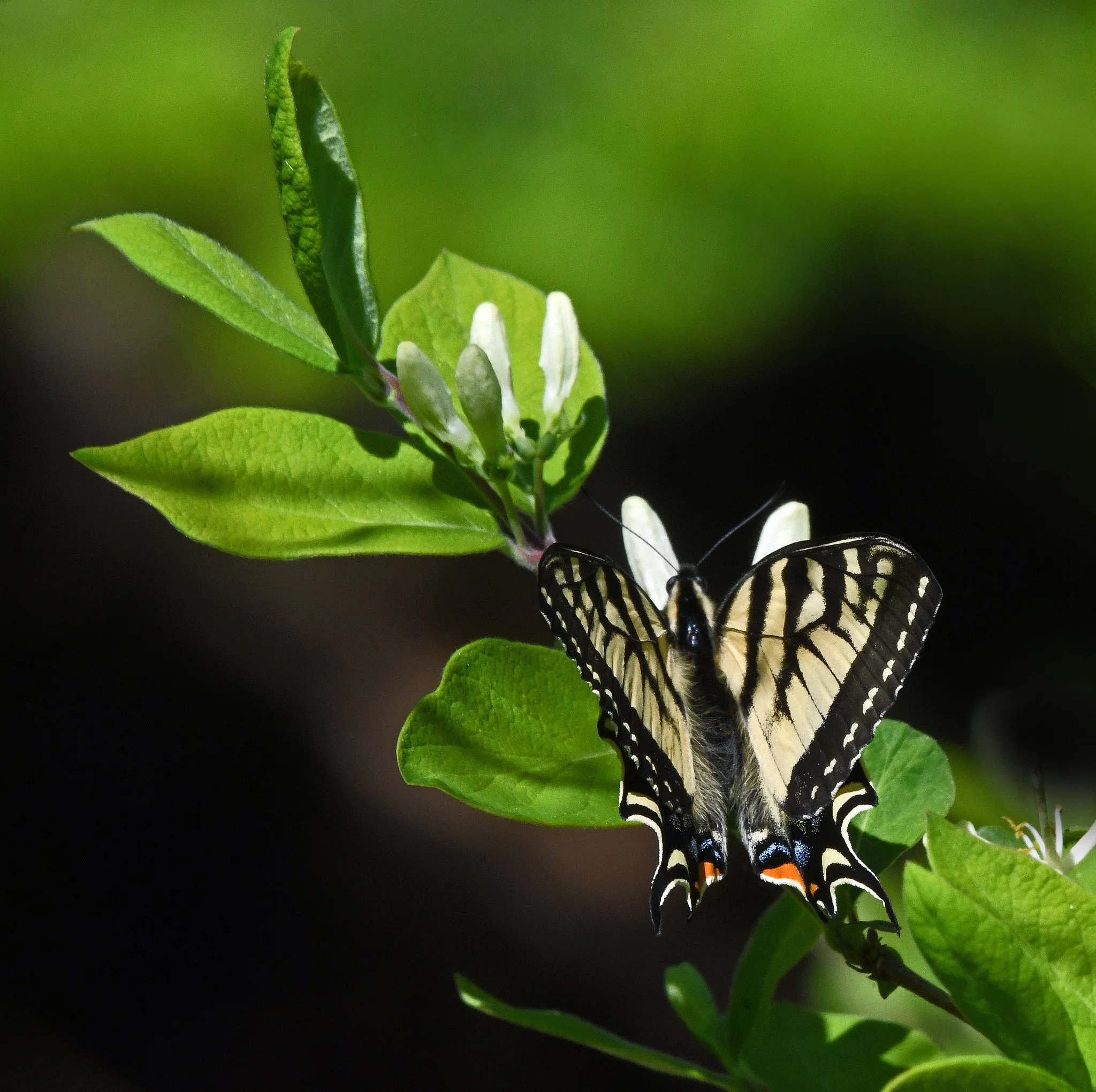
Above, you see a Canadian tiger swallowtail feeding on the deeply hidden nectar of wild honeysuckle. The flower’s pollen will stick to the butterfly’s hairs and probably be rubbed off on another plant to propagate the honeysuckle.
Below, you’ll see what appear to be black garden ants (Lasius niger) feeding on the oozing nectar from a peony bud’s "extrafloral nectaries" — special glands that secrete a sugary liquid. The ants aren’t engaging in pollination; they’re engaging in “biological mutualism.” That is, in exchange for the bud’s sweet sustenance, the ants perform pest control on it – they repel pests, such as aphids and thrips.
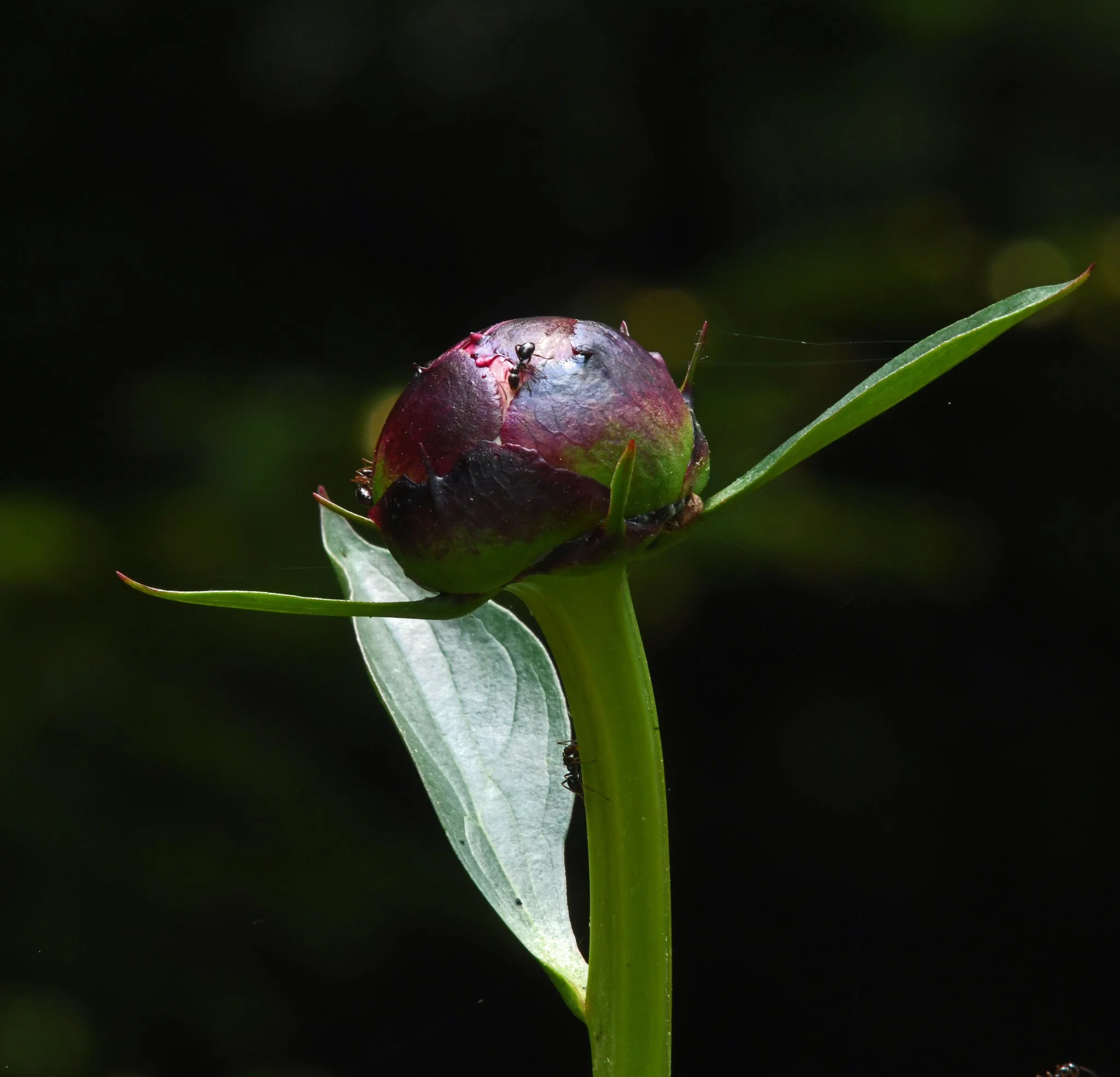
By the way, peonies don’t need this Orkin-like treatment to bloom beautifully, as many people believe. The pests usually don’t do lasting damage. The ants get the better part of the deal, but no one’s complaining except the aphids and thrips. (Images taken in Brooklin, Maine, on June 9 and 12, 2026.)