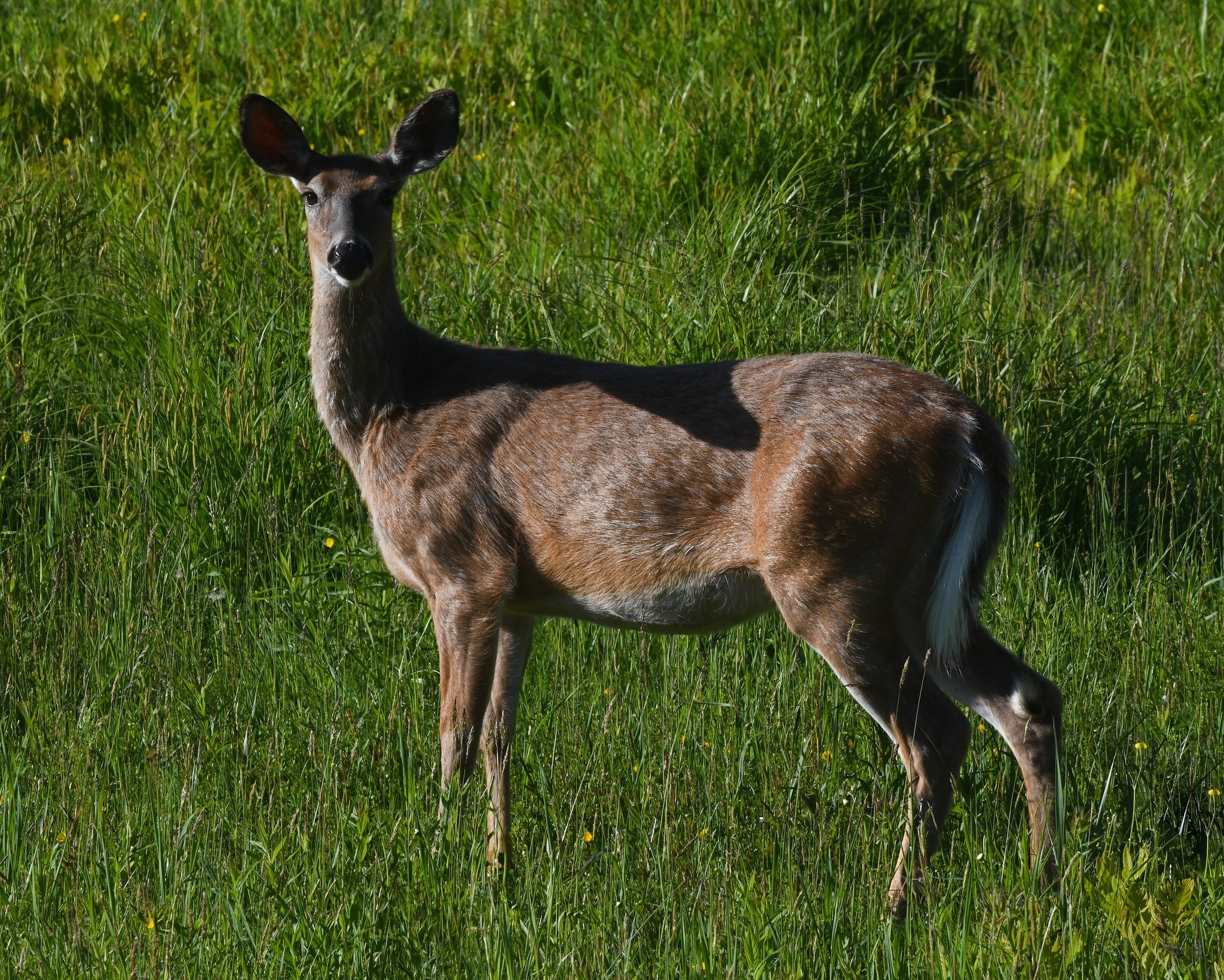
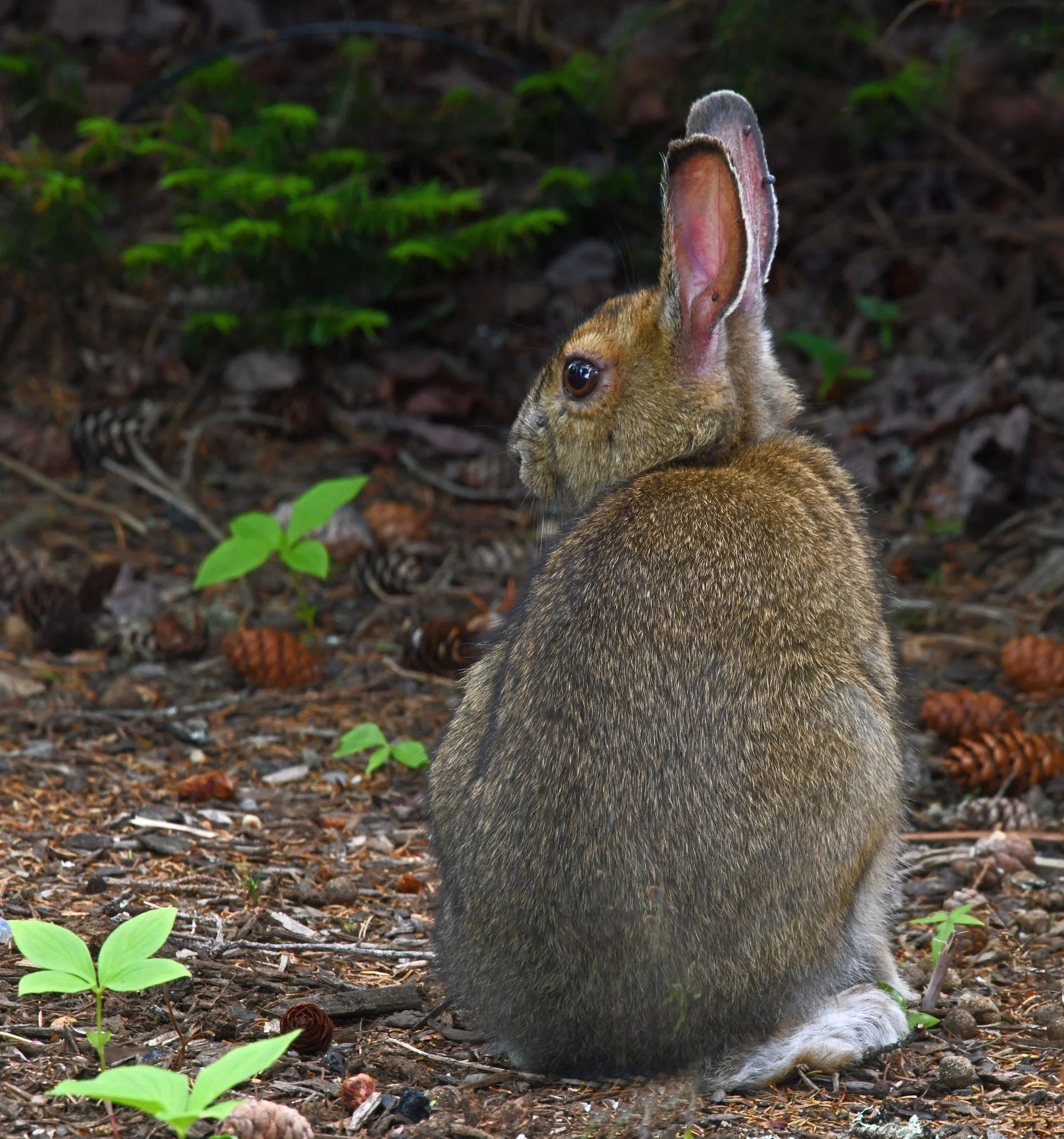
Our white-tailed deer and snowshoe hares are now sporting their summer attire. Above, you see a doe in her cool, thinner reddish coat. Below, you’ll see a hare in her thinner brown coat.
Their coats not only change density due to rising temperatures, the new colors provide seasonal protection against predators. The deer’s summer coat blends better with sunlit fields and sun-dappled woods. Its thick winter gray coat blends better with the woody grays of leafless vegetation.
The hare’s summer coat blends better with summer forest floors (although their big feet usually continue to have some white fur, as if they stepped in paint). The hare’s thick white winter coat, of course, blends with the snow.
If we continue to get fewer and fewer snow storms due to global warming, it’s going to be interesting to see how hares respond. Their coat color transitions reportedly are governed by the amount of daylight more than anything else. If less snow means more light, they may stay brown longer. Without snow on the ground, white hares seem spotlighted. This can be of special concern during the evening and night hours, when sharp-eyed owls, bobcats, lynx and coyotes are on the prowl.
The deer don’t have that problem.
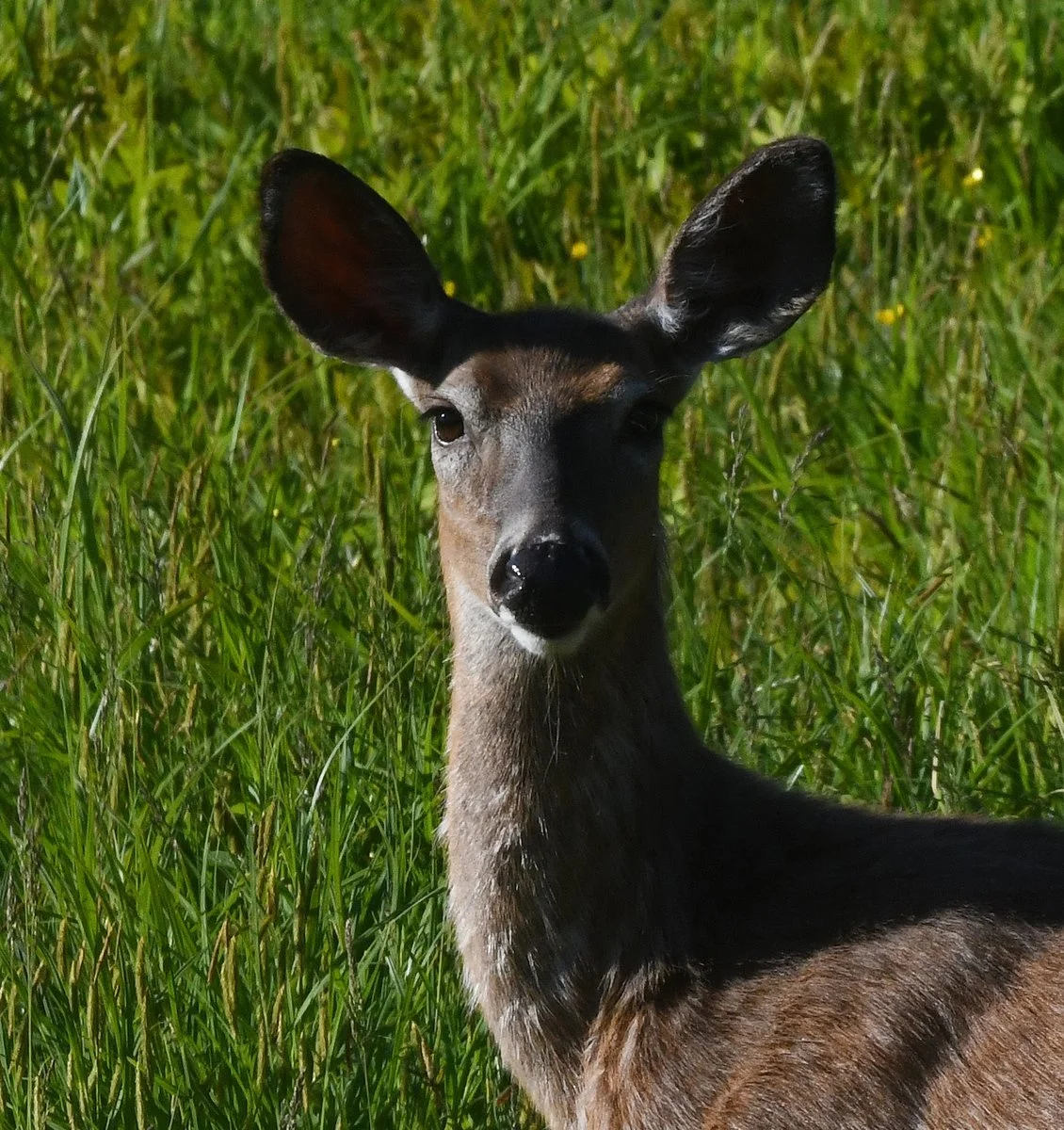
(Images taken in Brooklin, Maine, on June 3 and 6, 2026.)