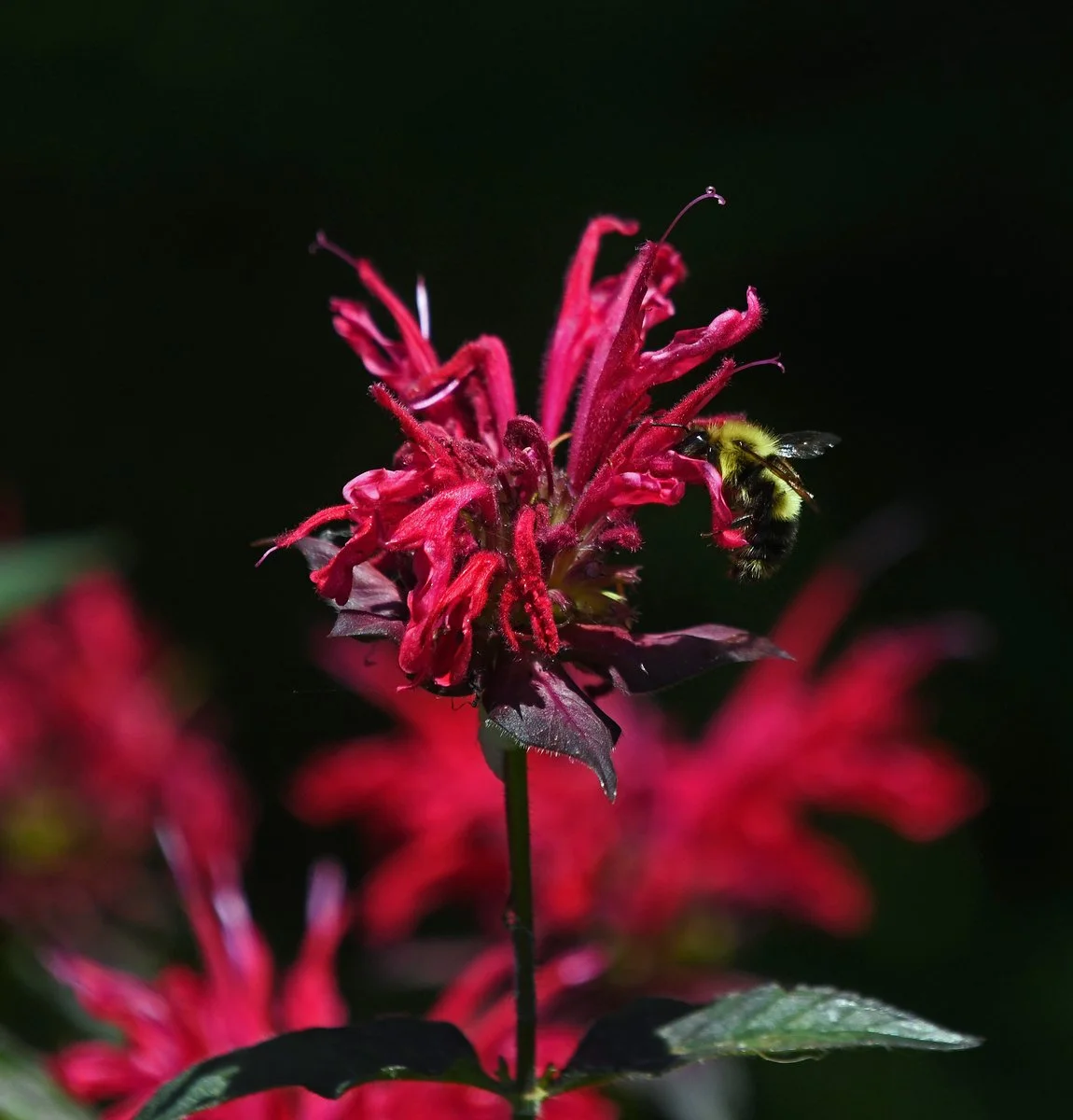
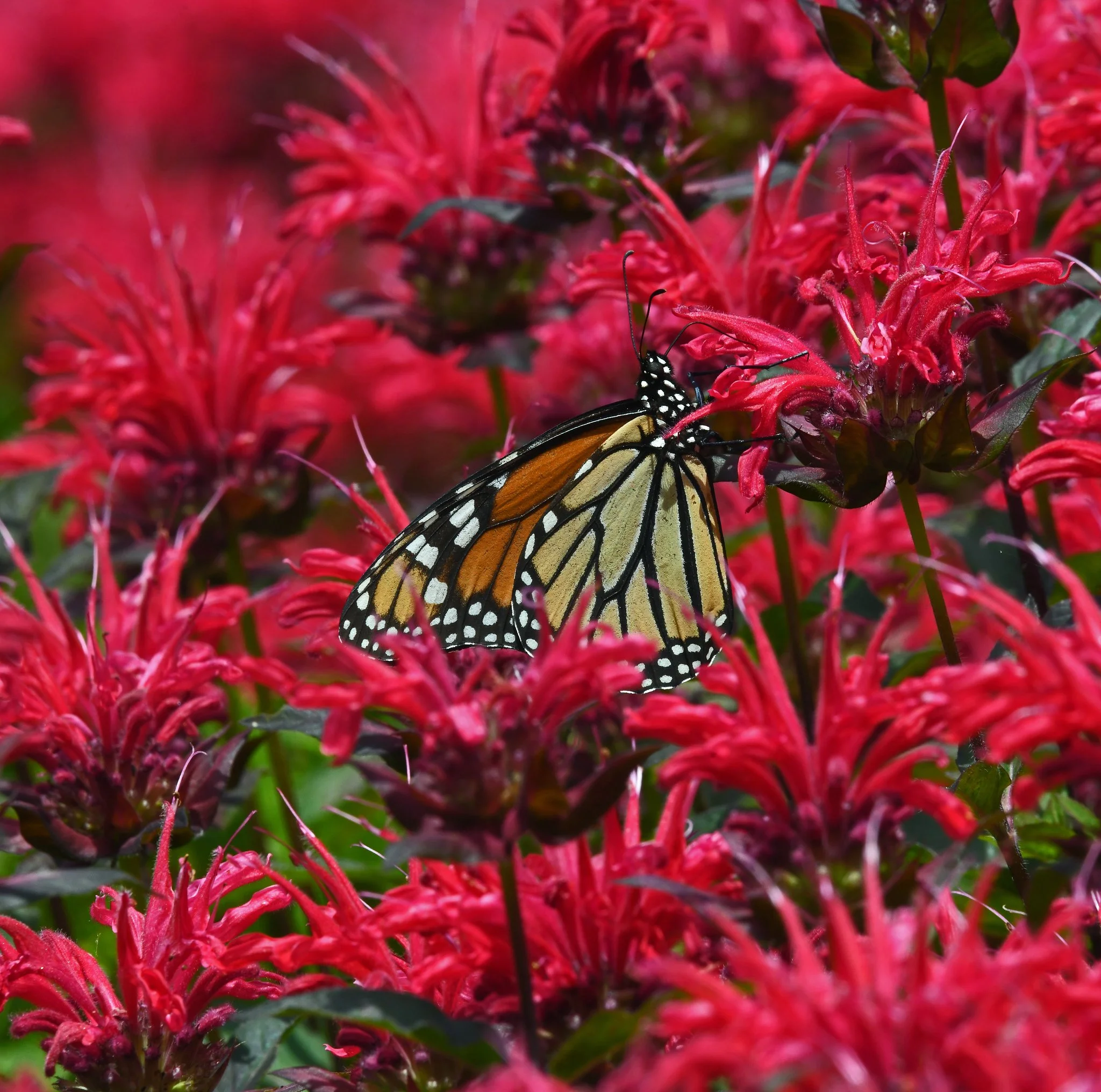
Bee balm is peaking and its fans are freaking. It not only attracts long-tongued bees and butterflies, it is loved by hummingbirds. Here you see a two-spotted bumblebee on scarlet bee balm. Below, you’ll see one of our first arriving Monarch butterflies sipping nectar from one of the flowers’ long, red straws:
Bee balm (Monarda) is a native herb that is in the mint family and comes in several species: wild bee balm (Monarda fistulosa), spotted bee balm (Monarda punctata) and scarlet bee balm (Monarda didyma). Cultivated versions also are readily available at plant nurseries.
It seems to be more of a balm to soothe humans than wildlife, which can get excited about it. The plant is a source of thymol, a powerful antiseptic. Native Americans and early settlers reportedly crushed bee balm leaves and rubbed them directly on bee stings and insect bites to reduce pain and swelling.
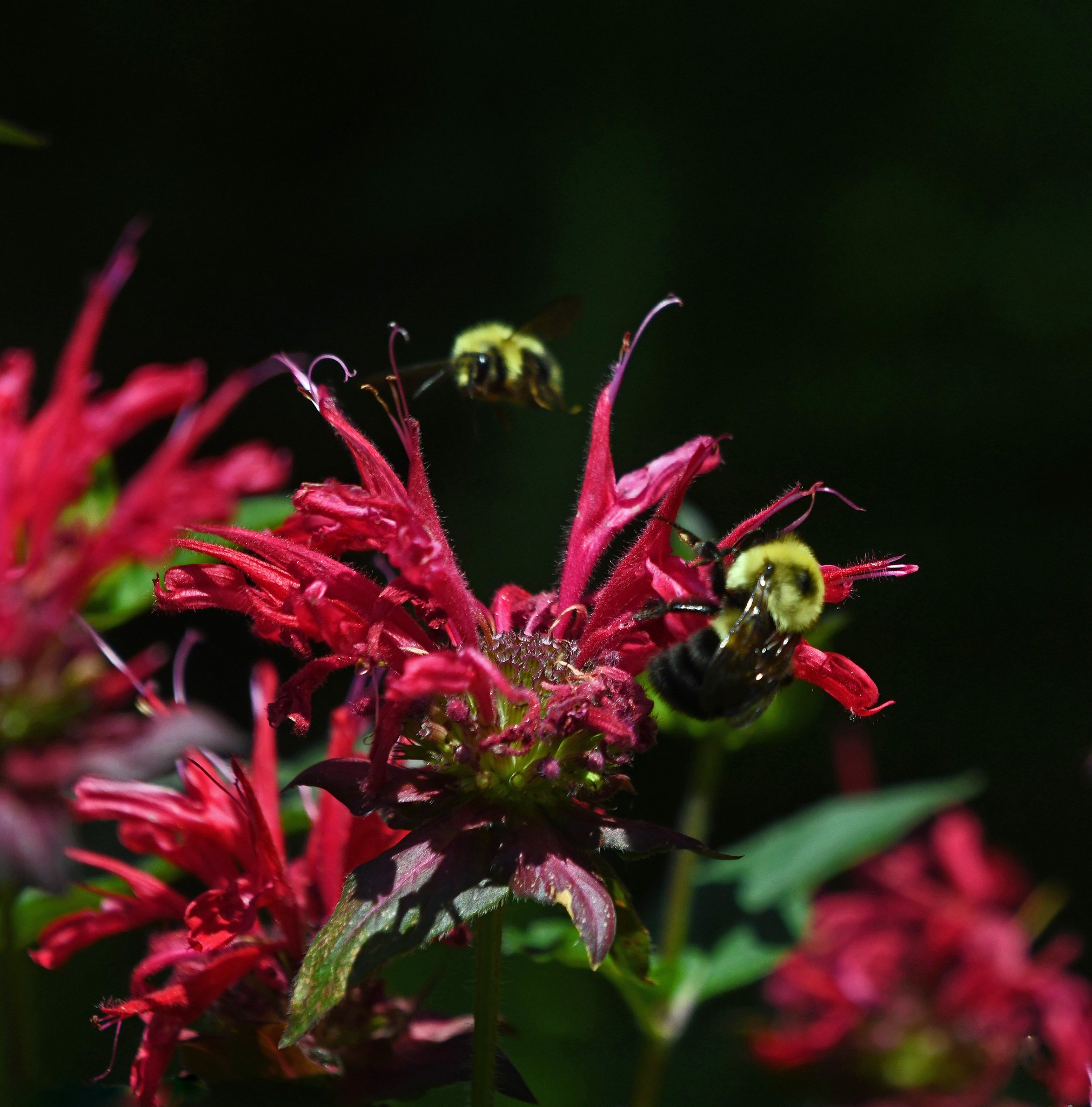
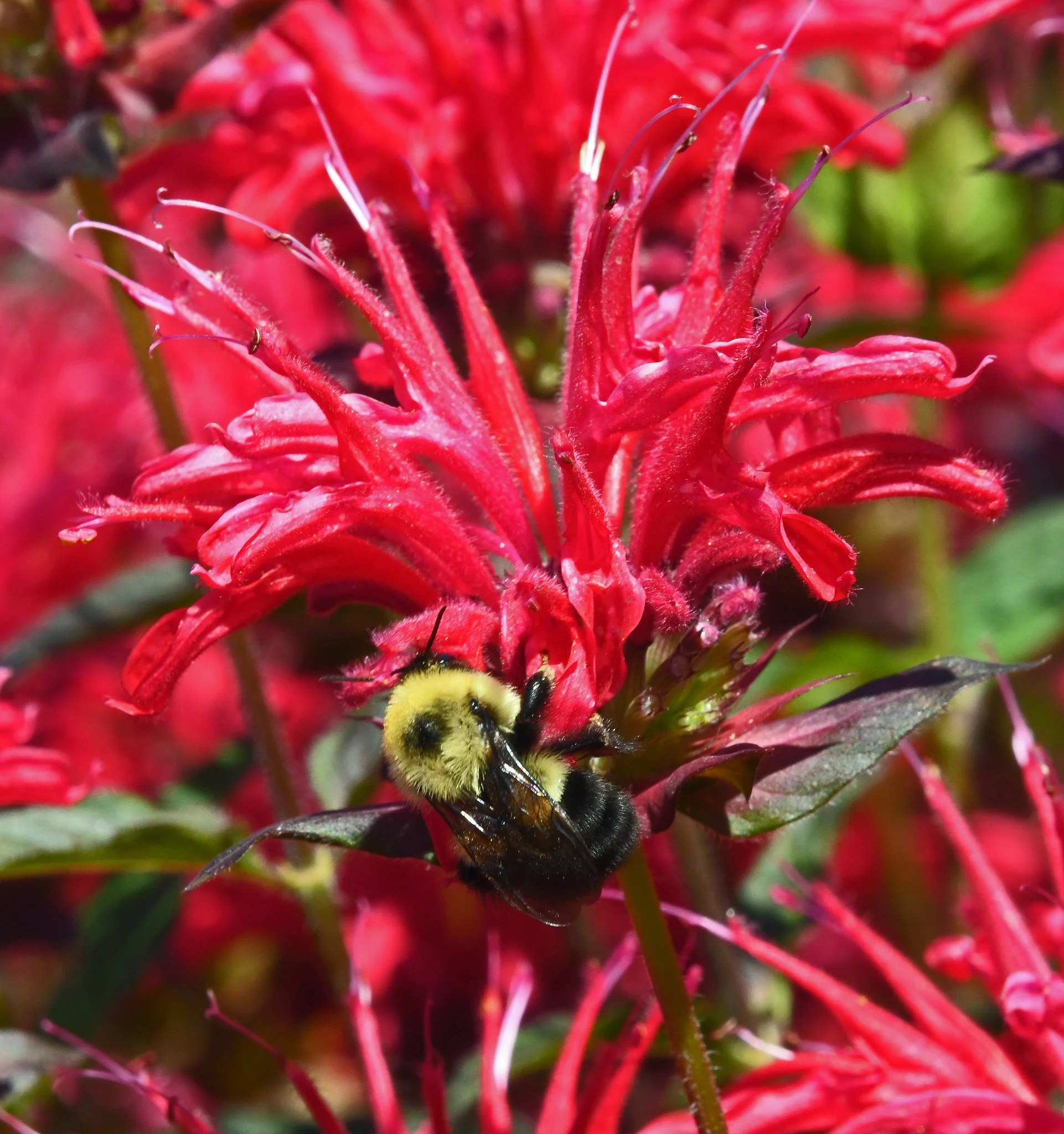
(Images taken in Brooklin, Maine, on July 10 [Monarch] and 12, 2026.)