Our bee balm looks like a floral Gaza Strip now; but that’s not bad. Swarms of nectar-seeking invaders, including hummingbirds, butterflies, moths and, especially bumblebees, broke and sucked the life out of most of the corollas. Corollas are the bee balm’s red, stalk-like flower tubes that contain the sweet nectary deep down within. The flowers start the season with a full head of erect corollas. Then, they’re swarmed, which is what they “want.”
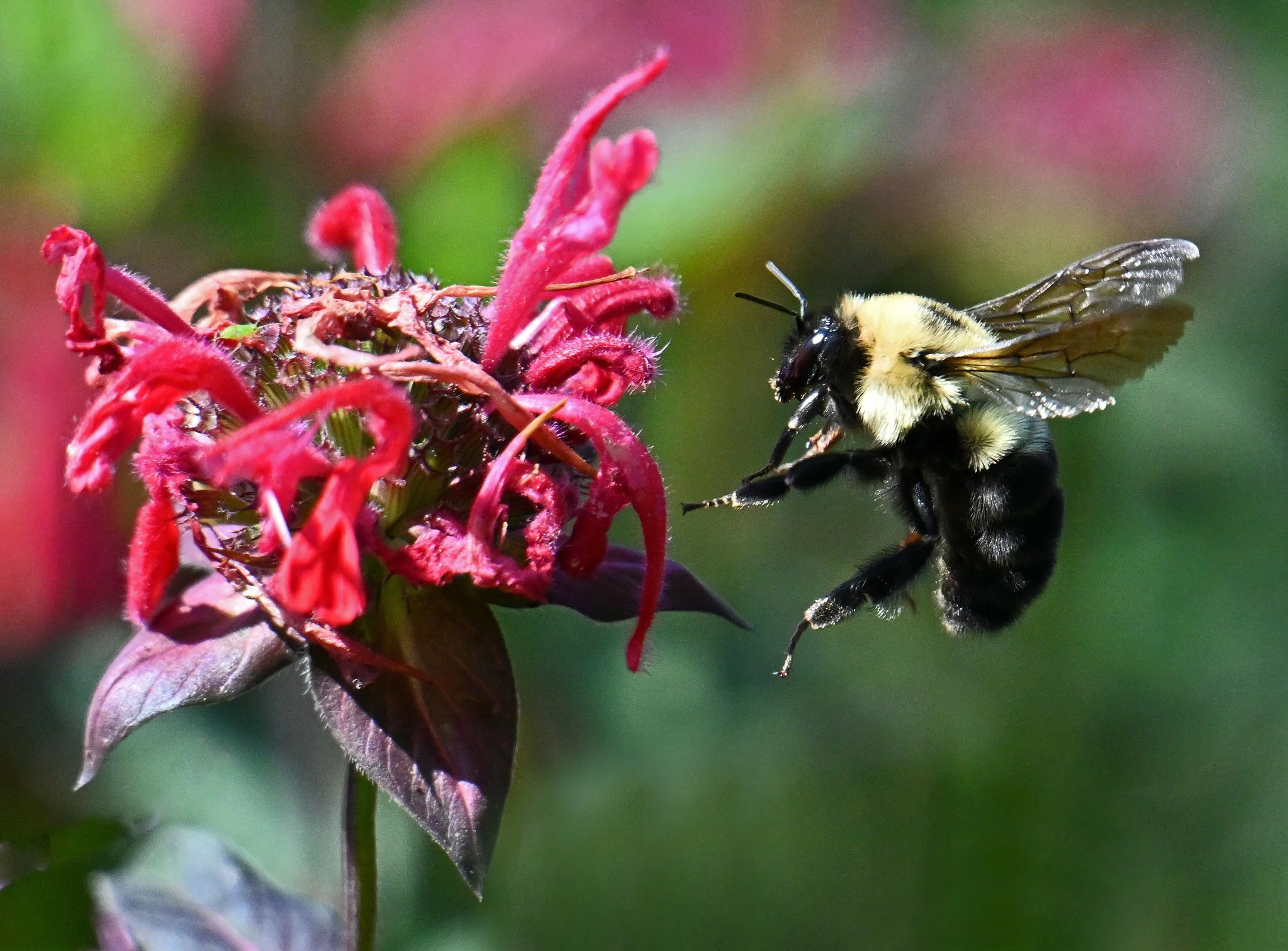
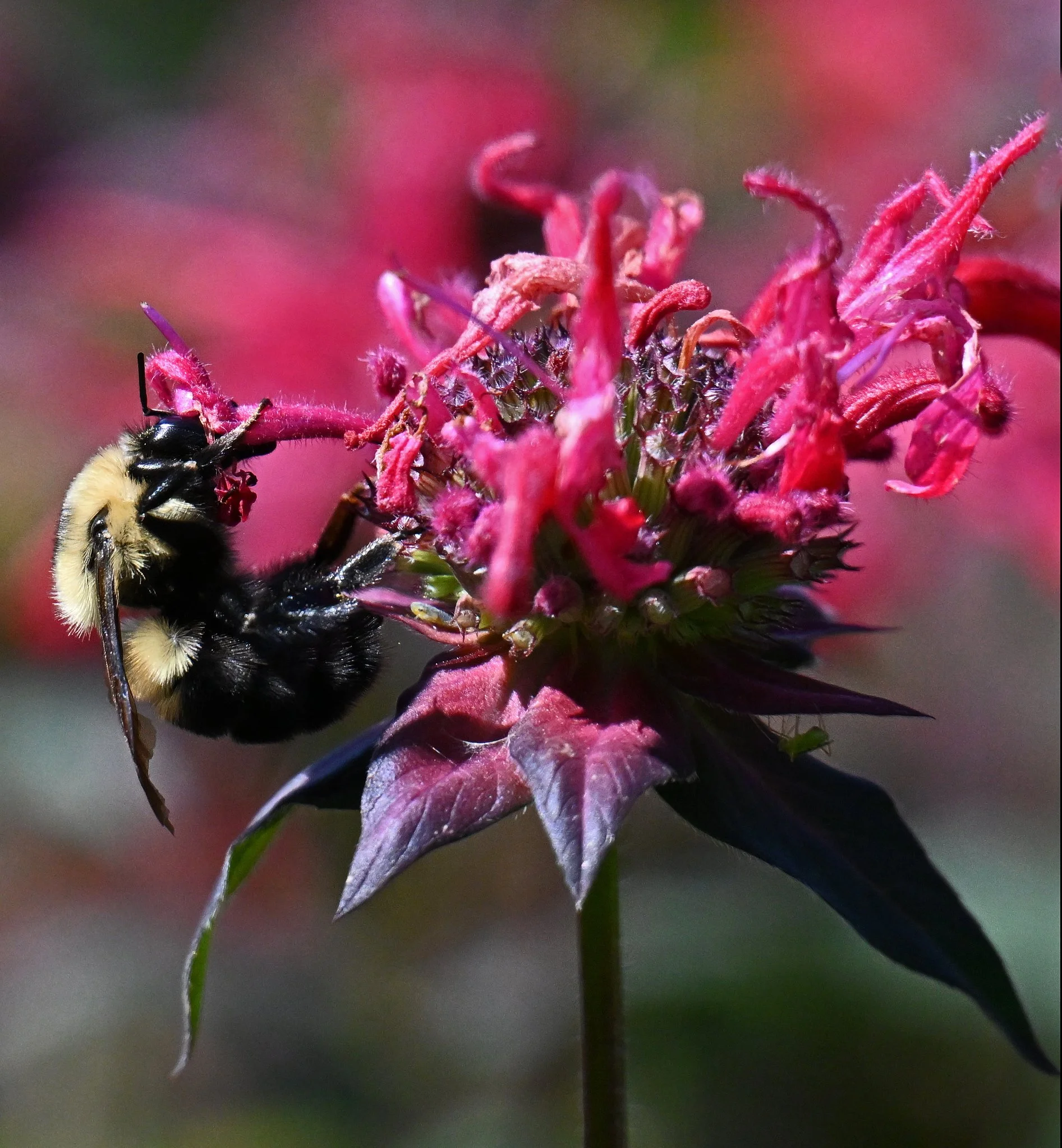
A few desperate bumblebees remain on the damaged flowers, scavenging leftovers, but most of the pollinators have moved on to sweeter pastures starting to bloom nearby. Here are what I guess to be desperate two-spotted bumble bees (Bombus bimaculatus) looking for the last of the nectar in the well-worked-over bee balm.
There are 17 native bumble bee species that have been documented here in Maine at one time or another. However, reports indicate that 4 of these species haven’t been seen in recent years or are getting scarce. Our wild bees are in trouble due to loss of habitat. The consequences of losing more of them may be profound.
(Images taken in Brooklin, Maine on July 24, 2026.)