Pity the poor petunia. It’s so common, it never gets the attention it deserves. Petunias rank second only to impatiens as the most popular and best-selling bedding plants in the United States, according to a recent survey.
They come in seemingly limitless colors and often have an enticingly self-contradicting sweet/earthy fragrance. They bring smiles to the visually inclined from spring’s first warmth to fall’s first frost. Yet. no one seems to celebrate them or their look-alikes that horticulturists continually cultivate. Perhaps they’re considered to be old-fashioned.
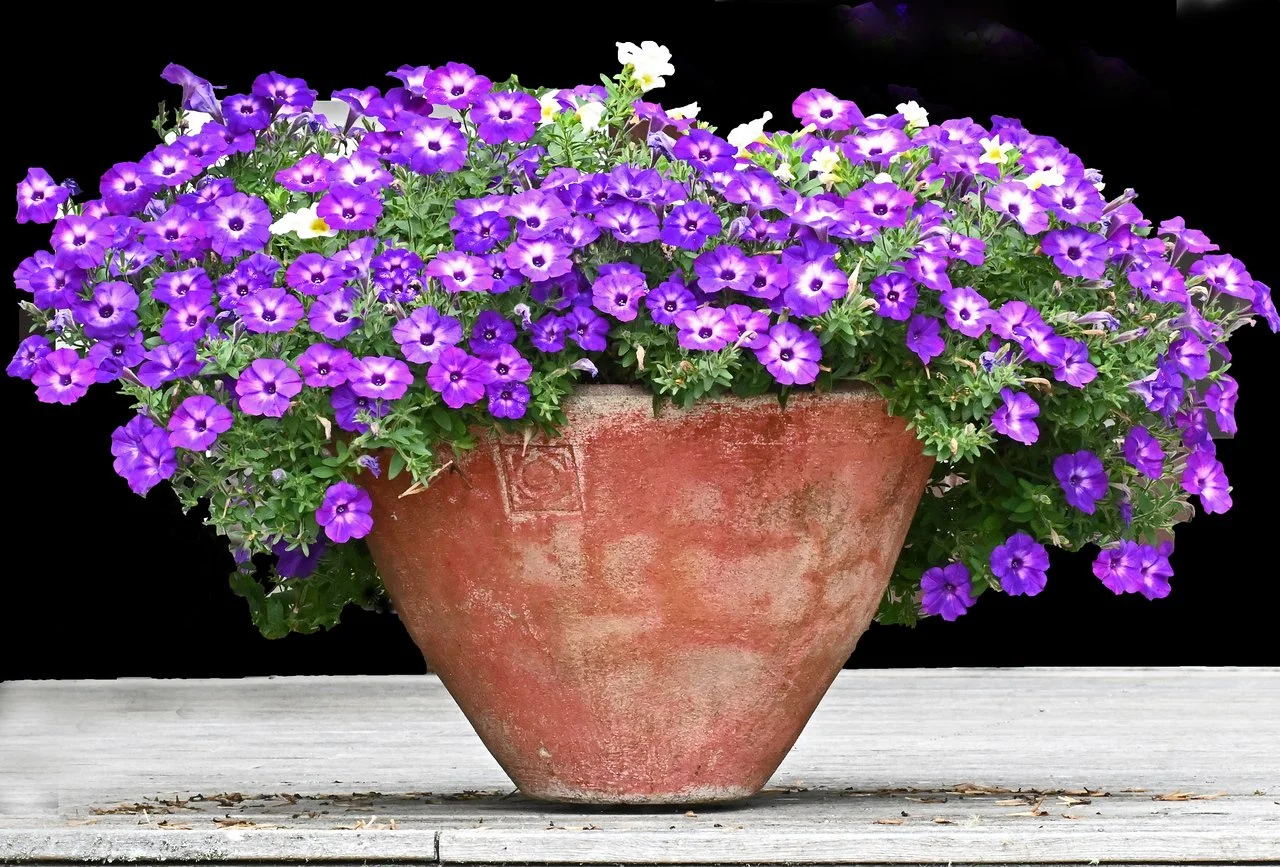
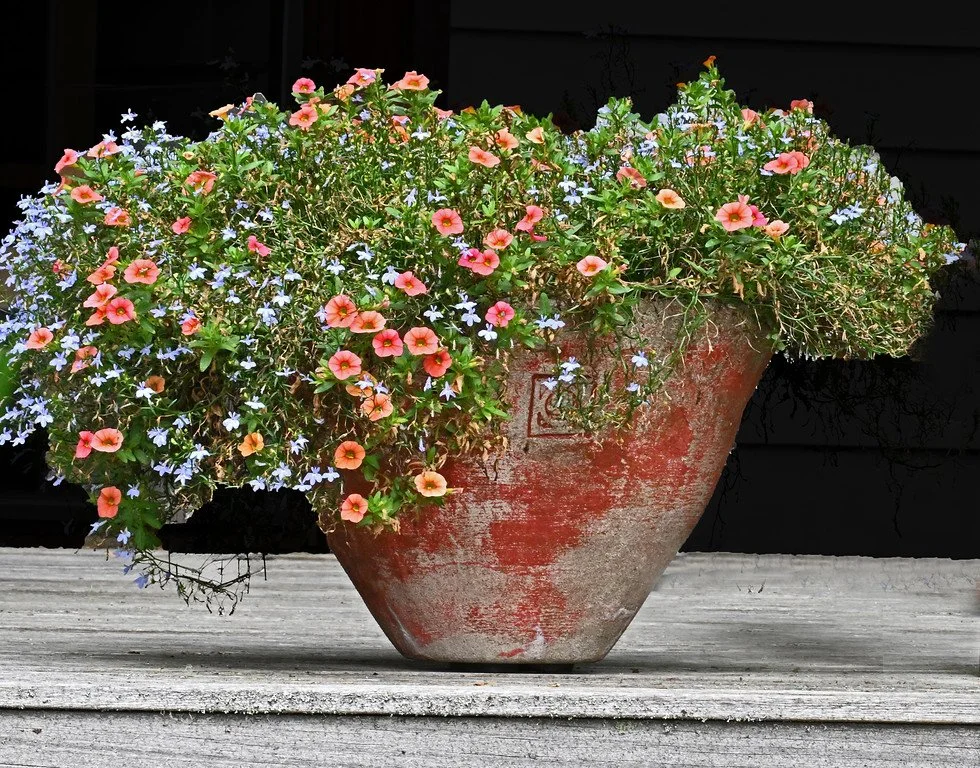
Above, you see mostly violet-blue spreading petunias (Petunia hybrida).Below,, you’ll see what are sold as “mini-petunias,” cultivated peachy look-alikes that here are combined with what appears to be blue trailing lobelia. The attractive flowers in those two planters have been blooming since early spring. All they need is watering.
Petunias are trumpet-shaped flowers that belong to the nightshade family. They’re natives of South America and cousins of tomatoes, potatoes, chili peppers, and tobacco. Their name reportedly comes from “petun,” meaning "tobacco" in an indigenous South American language.
Sixteenth century Spanish explorers initially rejected the wild, white-flowered South American petunias as worthless and didn’t include them in the flora samples sent back to the mother country for cultivation and sale. On the other hand, the native South Americans, including Mayans and Incas, reportedly believed that petunias had mystical powers that warded off evil spirits and monsters. (Unfortunately for them, the petunias weren’t potent enough to ward off Spanish conquistadores.)
(Images taken in Brooklin. Maine, on August 16, 2026.)