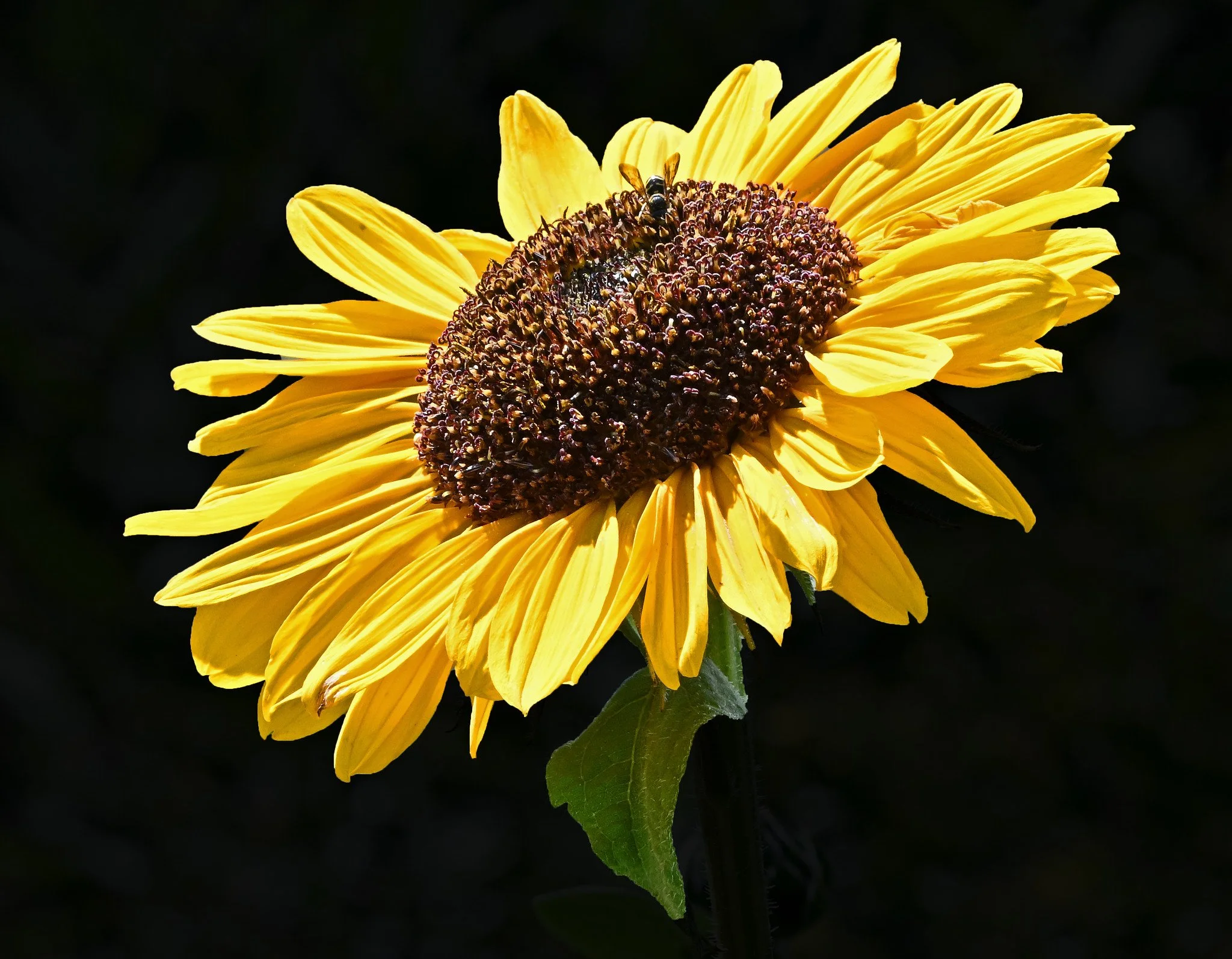
The sunflower is a monument to summer. You might say high summer. You might even say very high summer. This spectacular native flower tracks the sun like a radar disk, cleans the soil in which it grows and – in its center – hosts thousands of tiny flowers (“florets”) made for tiny pollinators. Did you notice the itsy-bitsy bee on the florets in this image? (It might be one of our longhorn bees.) Look again:.
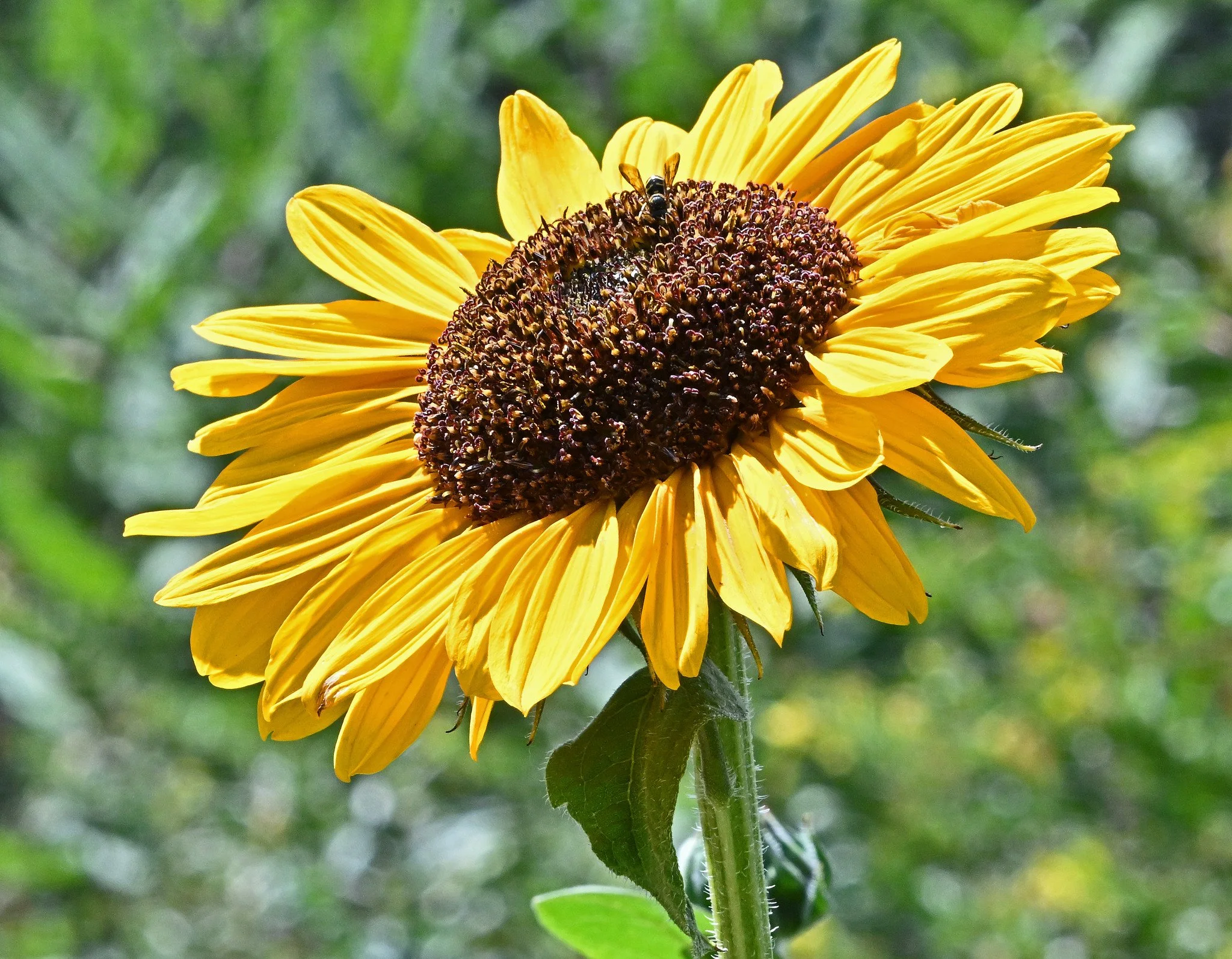
Corn may grow as high as an elephant’s eye, according to songwriters, but sunflowers (Helianthus annuus) can grow much higher than a giraffe’s eye, according to gardeners. Sunflowers regularly grow taller than 10 feet and some plants reportedly have grown over 35 feet. These plants also are an older agricultural crop than corn. Native Americans reportedly cultivated sunflower seeds and flowers for food, oil, flour and dyes long before corn was farmed.
Although ancient, sunflowers have very modern uses. They are known to absorb contaminants in the surrounding soil, including the heavy metals and radiation in the Chernobyl disaster area. They also can grow from seed in space, as shown in the 1982 Columbia space shuttle mission experiments.
(Images taken in Brooklin, Maine, on August 20, 2026.)