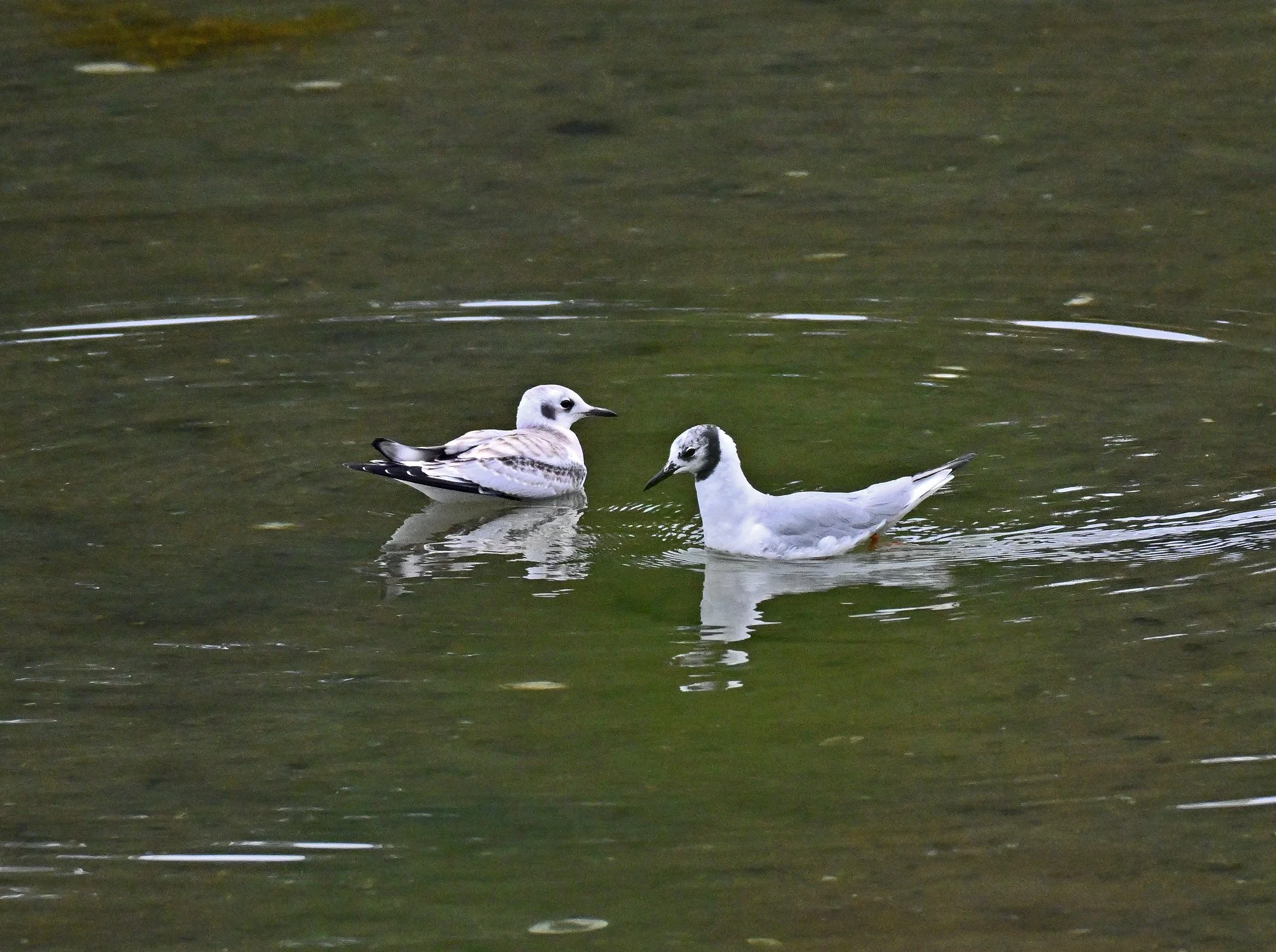
Here you see a pair of Bonaparte’s gulls, one of our more unusual shorebirds. They’re migrating from Canada now and a few may overwinter here. They’re apparently the only gull that regularly nests in trees, usually large conifers in Canada and Alaska. They also rely on insects for their summer diet more than other gulls.
They’re only about a foot long, but extraordinarily graceful and powerful flyers. Like terns, they’ll dip their head into the water to scoop up small fish while in flight, but I’ve never seen one dive completely under water for a fish as terns, kingfishers and ospreys do.
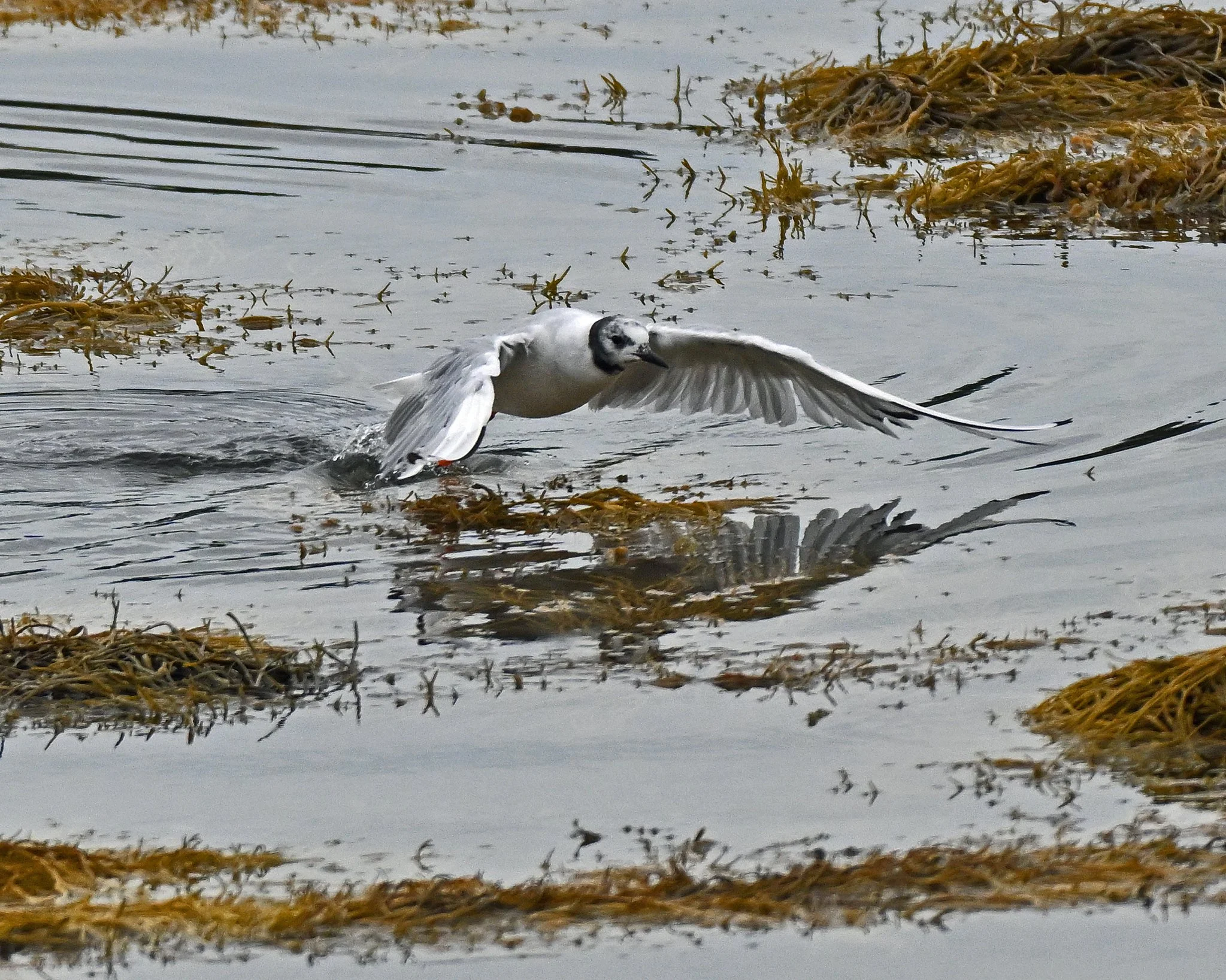
At this time of year, Bonaparte’s gulls are losing their dark summer (breeding) hoods and soon will be left with eyes that are softened by being outlined with smudges (think running mascara) and a dark ear spot (think bodacious beauty mark).
Their common and scientific species names also have interesting backstories. Their common name honors Charles Lucien Bonaparte, the French ornithologist who spent years in the United States studying and writing about our birds. He was the nephew of Napoleon, the little corporal who wanted to rule the world.
Their scientific name is Chroicocephalus philadelphia, which names the species after the U.S. city in which the bird was first collected for classification by noted early American ornithologist George Ord. That was in 1815, apparently.
(Images taken in Brooklin, Maine, on August 22, 2026.)