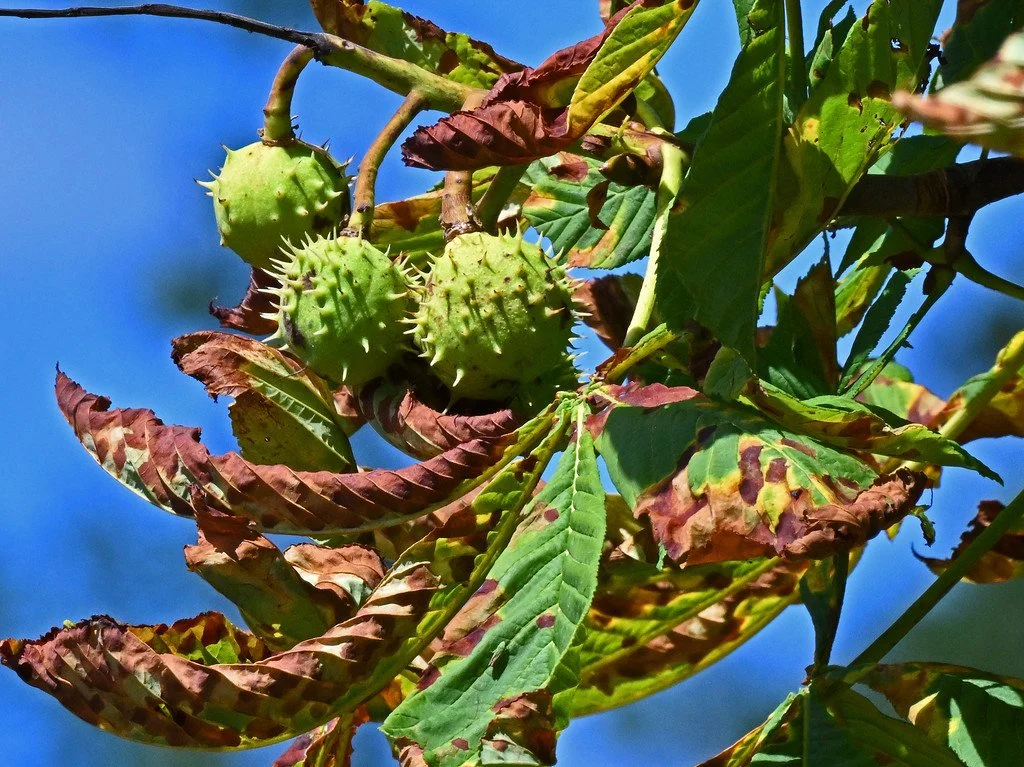
Horse chestnut tree leaves, such as these, are among the first to change color each year, as you see from this image. The large, hand-shaped leaves quickly and dramatically shift from bright green to crispy brown and create little floral planetary scenes with their spiked fruit husks.
Soon, those husks also will turn brown, fall to the ground and split open to release their large, polished-looking seed fruits (“conkers” or “buckeyes”). Some of the conkers that aren’t eaten by wildlife or collected by humans will split open in the spring, send down a root and attempt to become another horse chestnut tree.
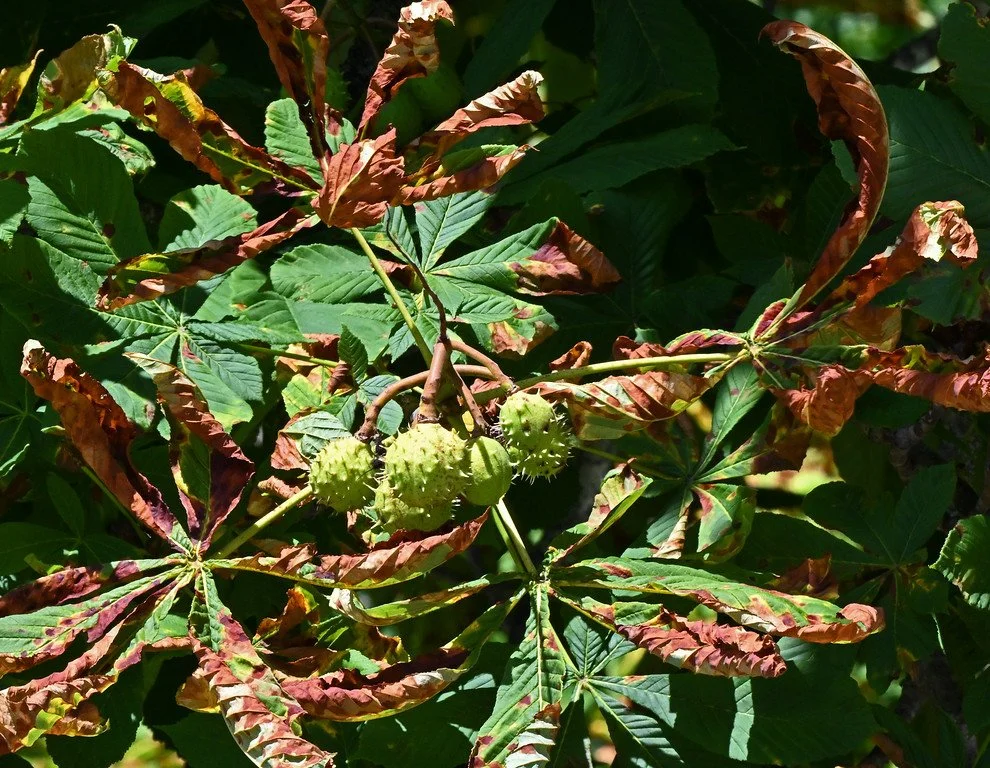
Horse chestnut trees (Aesculus hippocastanum) are neither natives nor true chestnut trees. And, unlike true chestnuts, the conker is inedible by humans and probably toxic to most of us. The horse chestnut is in the same family as maples. Its name apparently comes from the ancient practice of crushing and feeding its seeds to sick horses – a practice that probably did more harm than good, according to modern research.
Conkers are still used, especially in England and Ireland, in the ancient “battle” game of “conkers” in which each player has a favorite conker strung on a strong cord. The players take turns swinging at and striking an opponent’s conker until someone wins by destroying the opponent’s “weapon.” In case you want to book a flight, the Annual World Conkers Championship is scheduled for October 11 in Northamptonshire this year.
(Images taken in Brooklin, Maine, on August 14, 2026.)