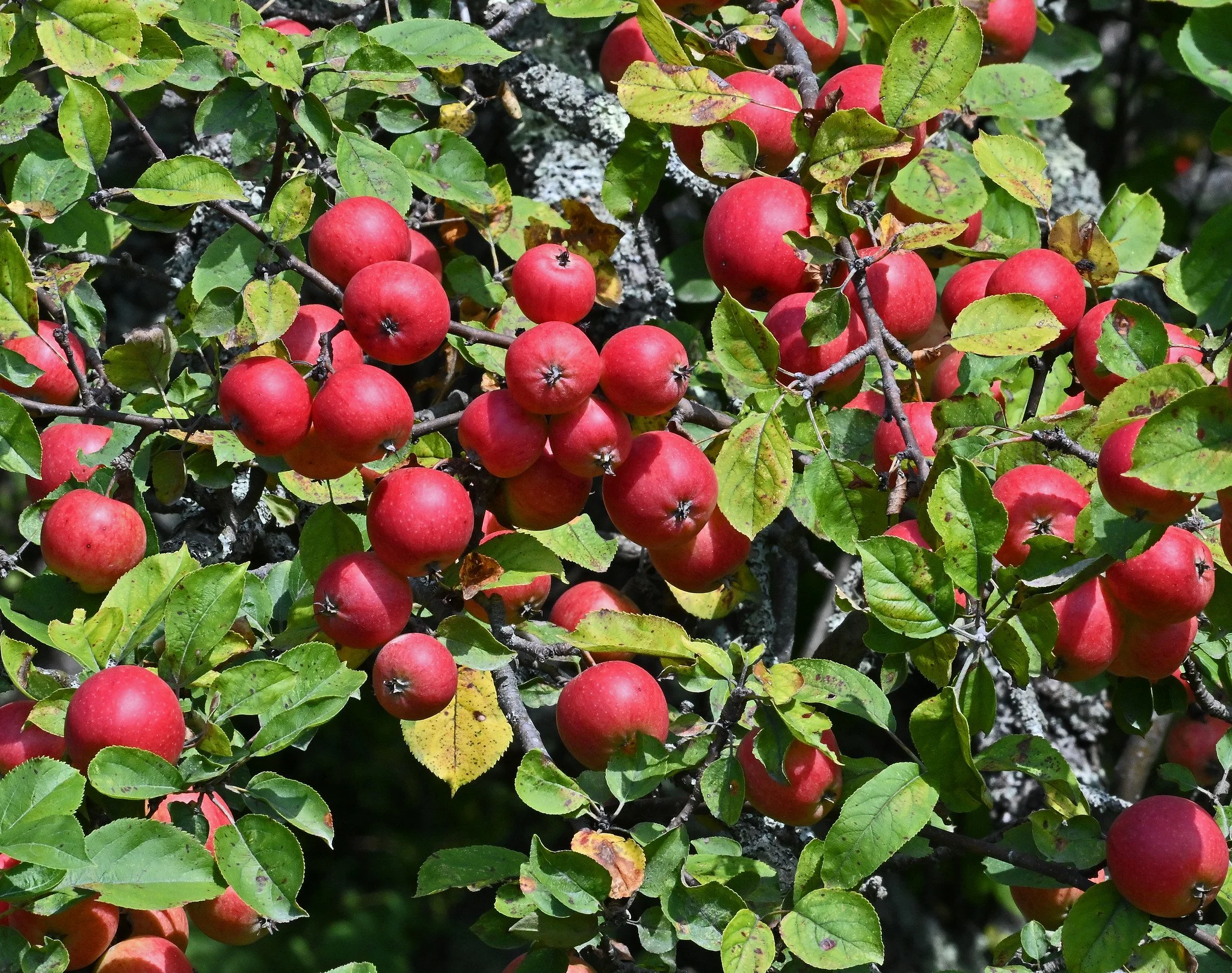
As you can see, our “wild” and “feral” apples are extraordinarily abundant, despite our persistent drought. Long-established trees seem capable of making the best of dry spells. Their unharvested fruit is ripe and starting to drop with rustling tumbles and plumping thuds.
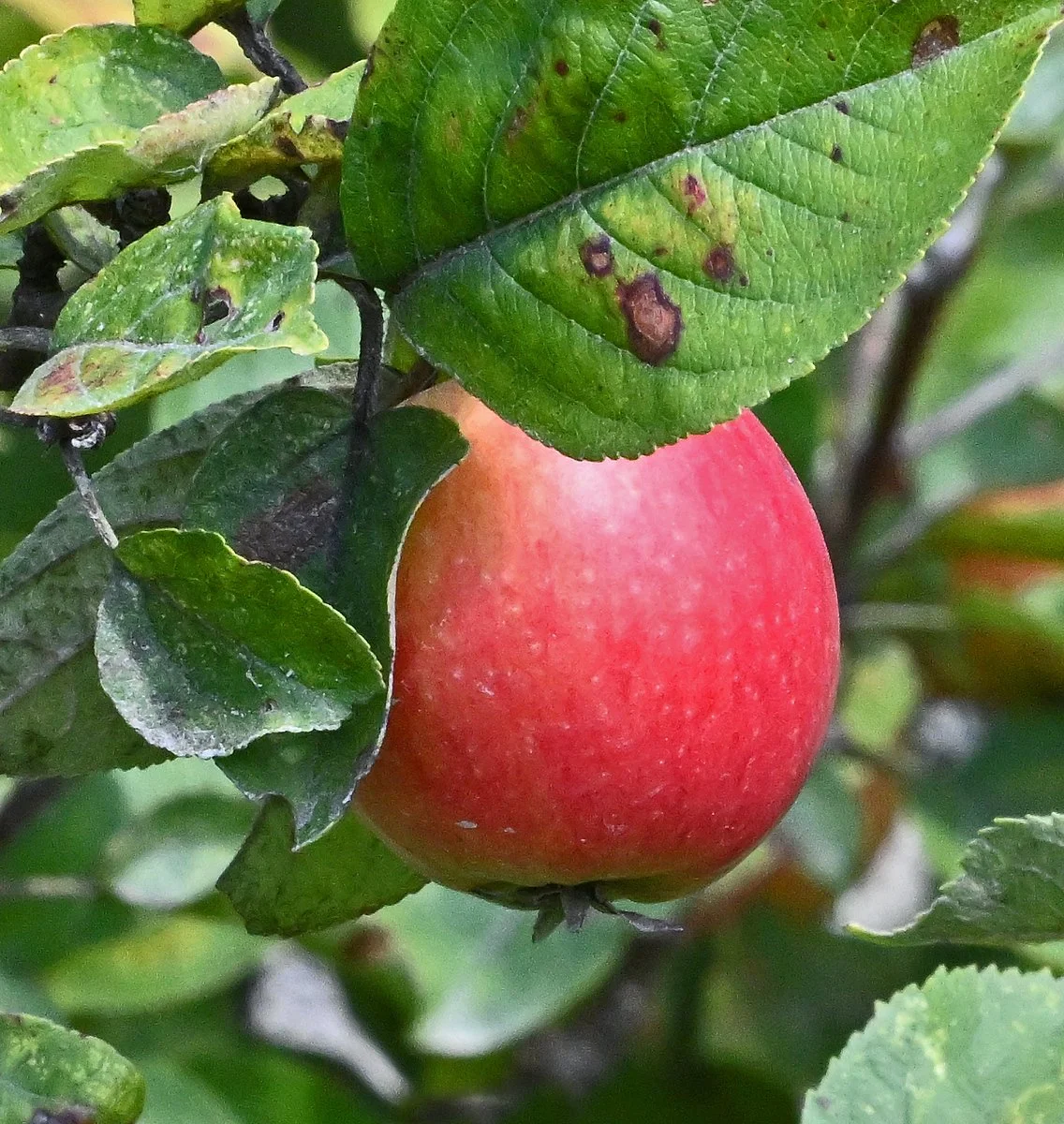
These are not domestically cultivated apples that you’ll find in the supermarket. They’re mostly of two types. Many are cider apples planted by Mainers many years ago and abandoned to the encroaching weeds and woods. Others arose from seeds “planted” and fertilized by birds, bears and other wildlife. In 2018, based on a survey, the U.S. Forestry Service estimated that there were more than 11 million of these wild and feral apple trees in Maine. There may be more now, red, green and mixed.
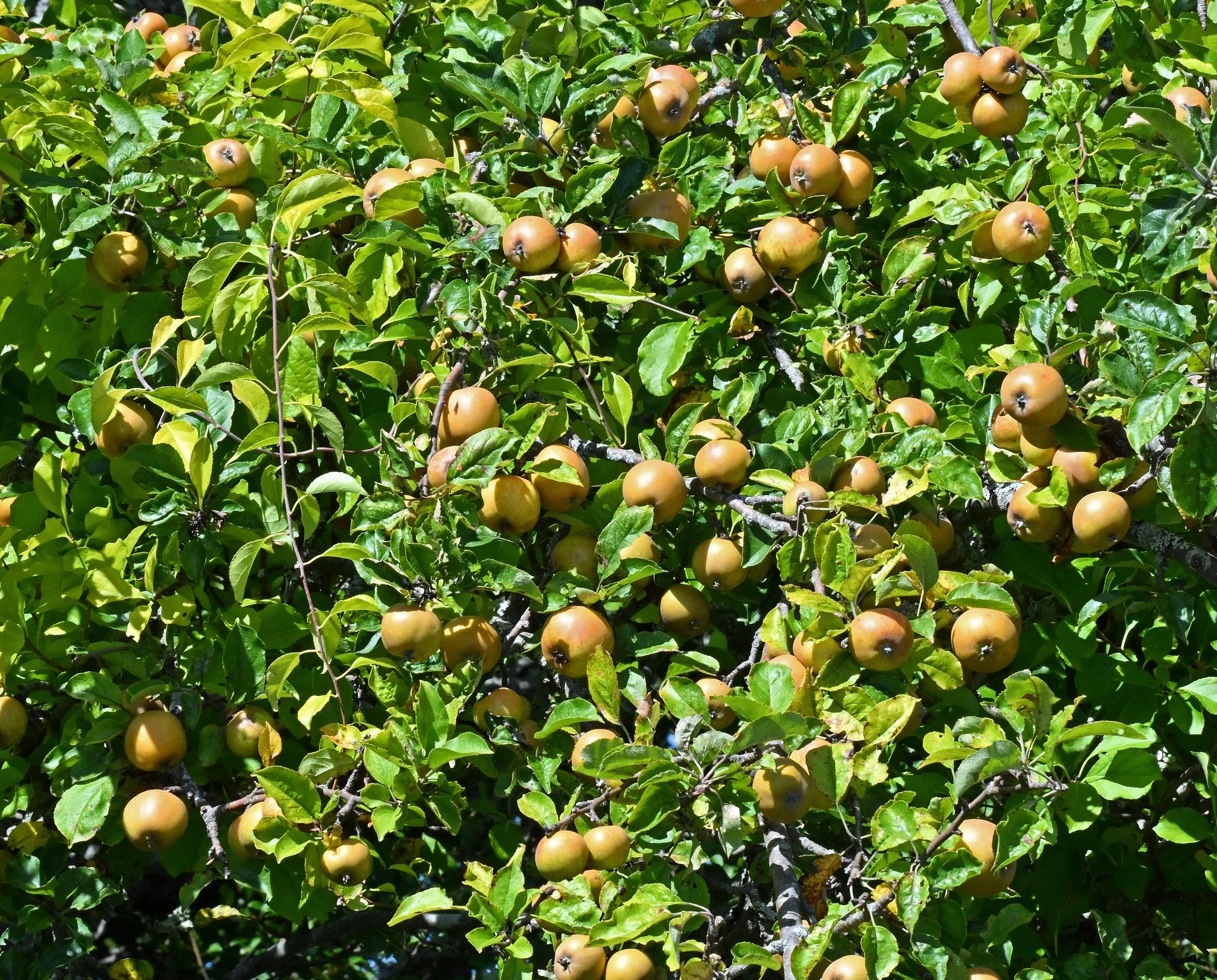
Henry David Thoreau, an ardent wild apple eater, considered them “the noblest of fruits.” Yet, all apples had immigrant ancestors here. Very early explorers and settlers brought domestic apple seeds here from Europe – primarily the Spanish into our west and southwest and the more northerly Europeans into our east and northeast areas. The delighted North American wildlife were glad to spread the joy.
(Images taken in Brooklin, Maine, on September 8 and 11, 2026.)