


We had a good, old-fashioned New England snow storm last night – plenty of fat flakes falling slowly and sticking to whatever they touched, no wind to speak of, and cold of the reasonable kind. Our vegetarian neighbors even came by at dusk to have a salad al fresco.

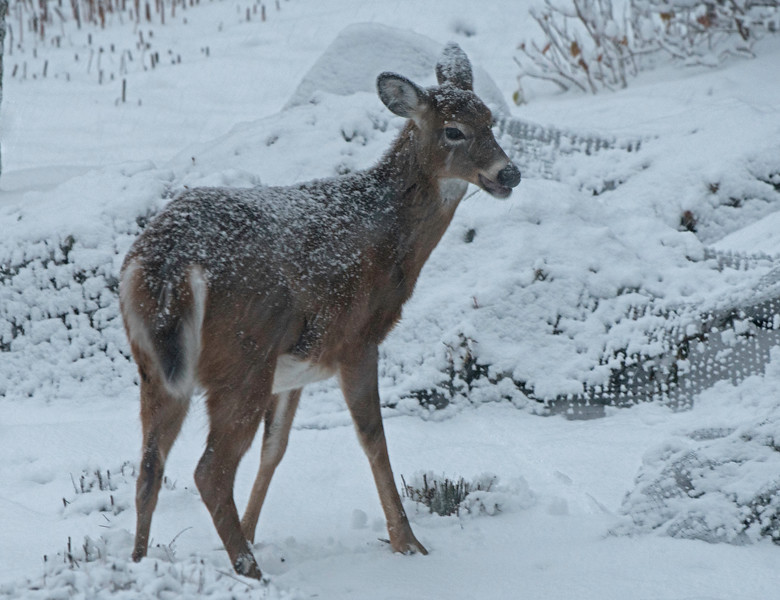
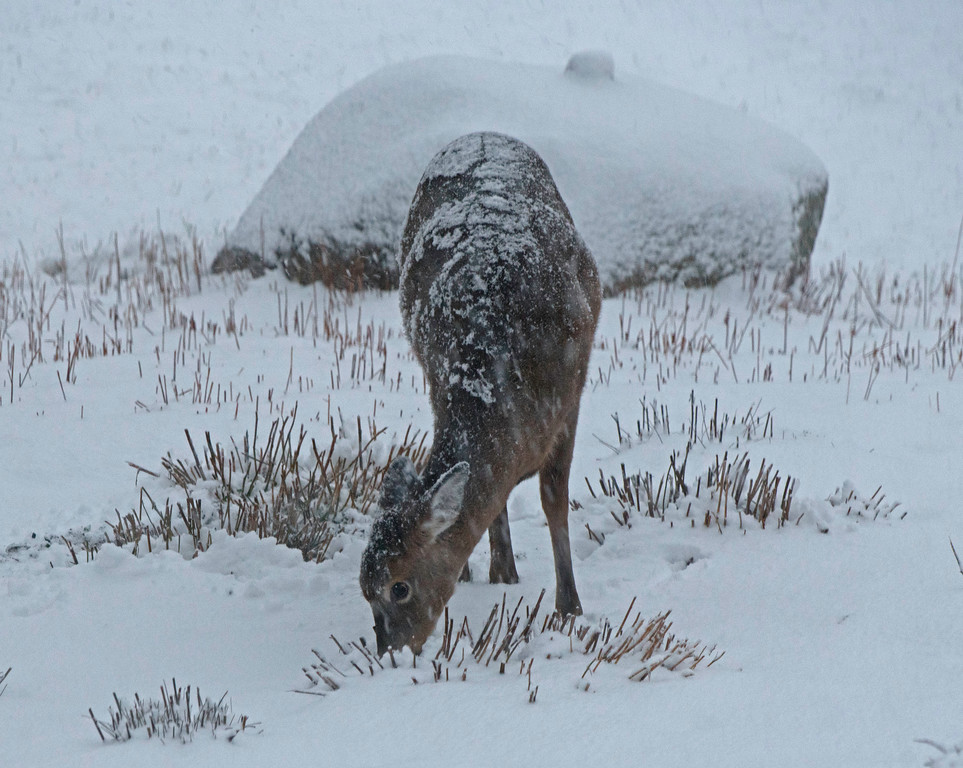
It was still snowing when we went to bed and, when we awoke at first light today, we realized that we had been transported into a Christmas card. The sun has to climb over a line of spruce and fir before it reaches us.

Parts of the North Field and Great Cove then get the light.

The early light created pockets of shade and light in which bristly textures were softened with snow.
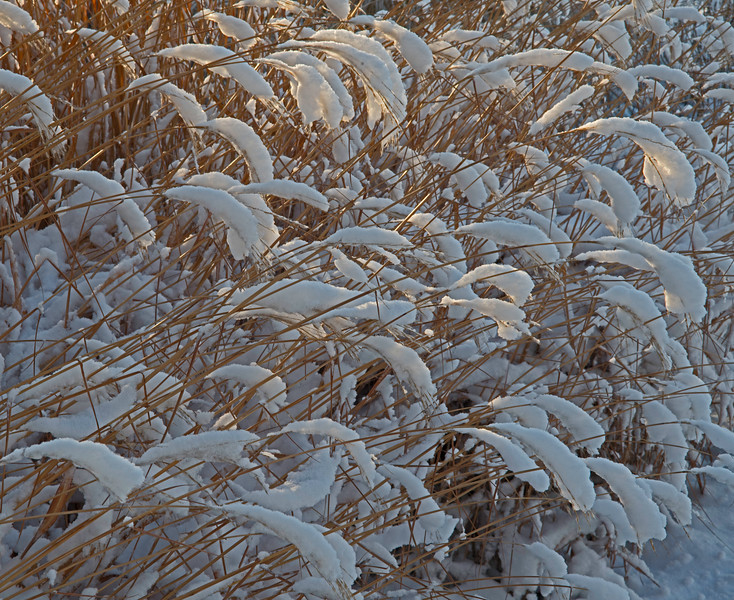
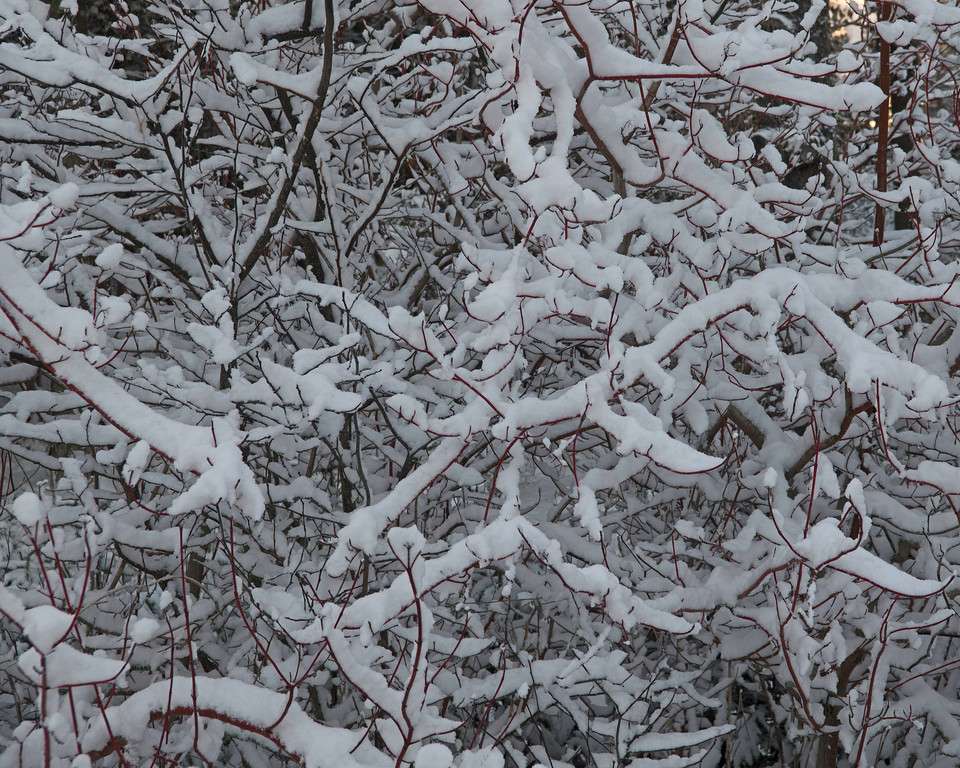
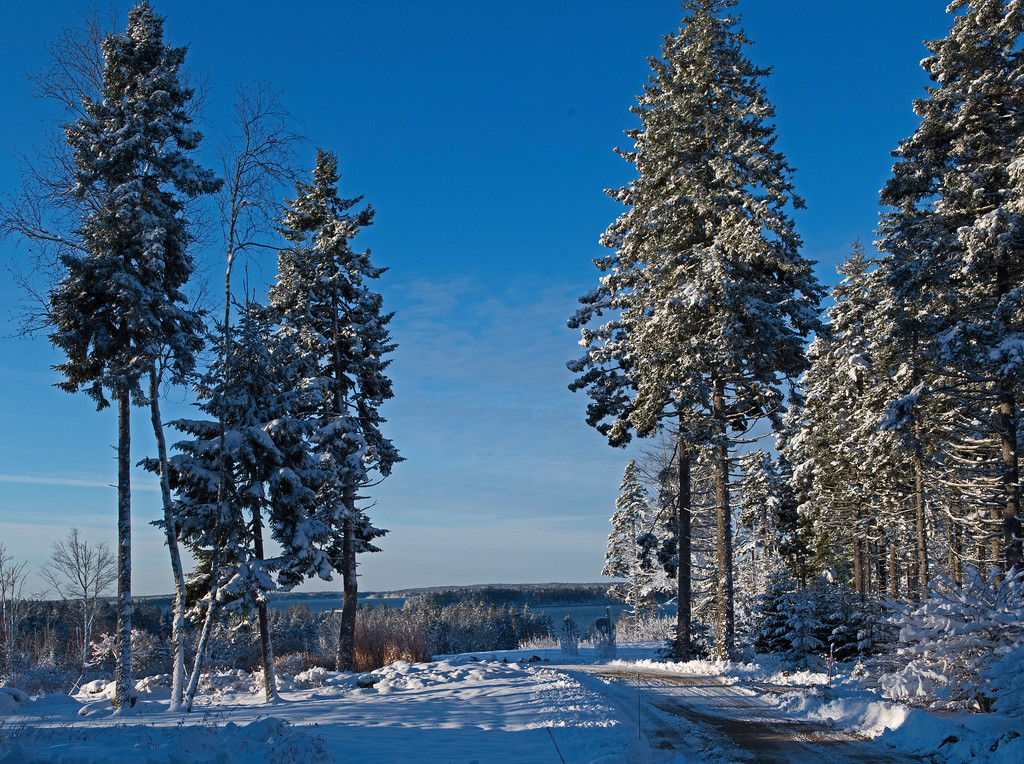
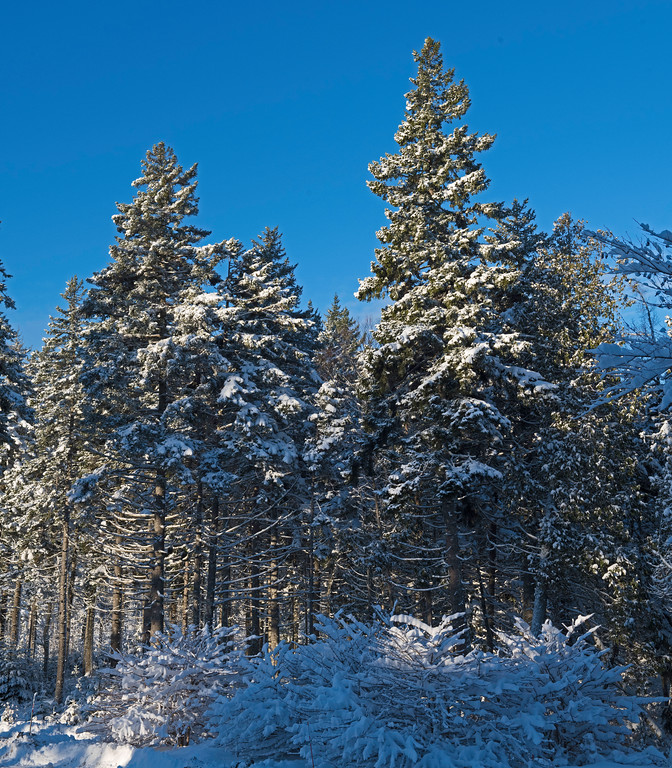
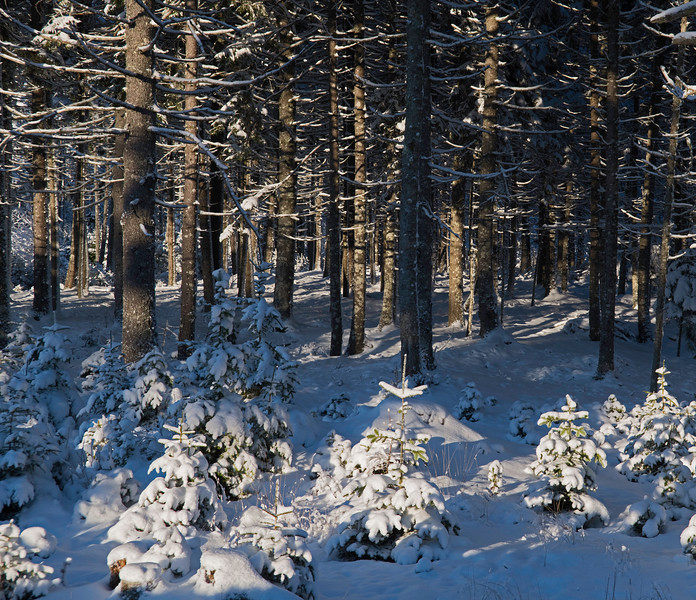
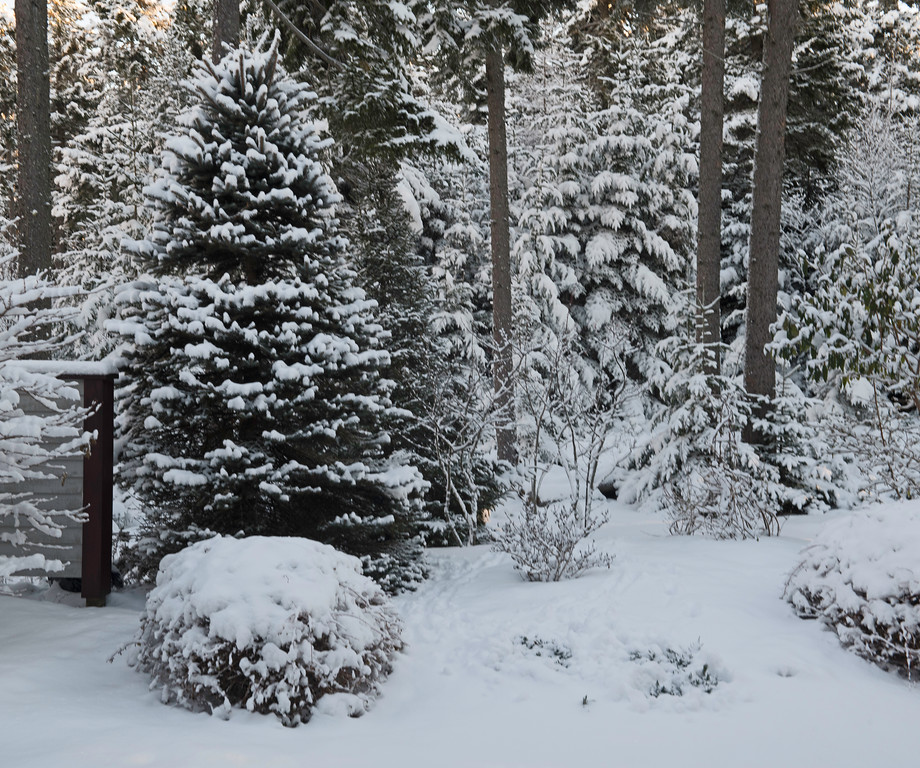
As this is being written, however, it’s starting to gray up and get cold. Tomorrow’s Thanksgiving is supposed to be a frigid one, according the weather tellers. (Brooklin, Maine)
Here we have a Northern River Otter with frozen whiskers. She’s cavorting briefly in a local pond’s open water before disappearing somewhere under the ice, never to reappear within the 30 minutes that we waited for her.

It’s a good sign for us, since these large weasels will not inhabit polluted areas. Otters are adapted for hunting and playing in water: they have webbed paws; powerful undulating tails; ears and noses that can be sealed shut; lungs that allow submersion for up to eight minutes; eyes that can see through dark water, and whiskers that sense vibrations caused by underwater prey.

(Brooklin, Maine)

The woods are silent, snowy, and icy now, which makes us look down a lot for our own protection and to be amazed at the number of tracks made by our unseen smaller fellow-travelers. As we crunch along looking down, we often don’t see Raccoons and other members of the night-working shift rouse themselves from sleep to see what our damn racket is all about. So, we usually stop every hundred yards or so, slowly turn and look around and up. Every now and then, we have a gasp-inducing moment when we peer into the angry eyes of the little owner of the territory on which we’re trespassing.
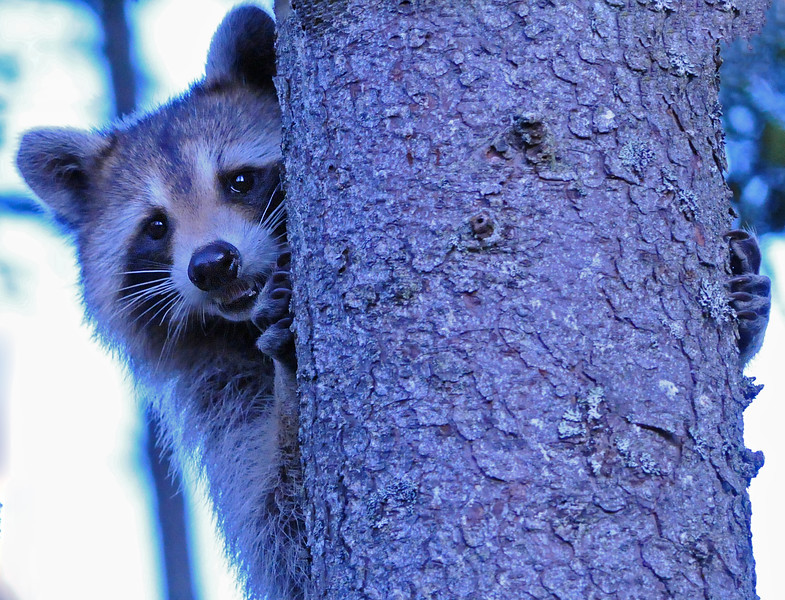
(Brooklin, Maine)

Winter light up here is an adventure. The first image above and the ones below were taken almost exactly two hours apart yesterday. Above, at about 11 a.m., curdling clouds mass above ancient apple trees on a hill above Great Cove, which lies unseen just below the horizon. A monochromatic soul-searching moment.
Below, a few miles away at about 1 p.m., a big blue sky above Blue Hill Bay hosts fast-moving cloud wisps. Its reflections spill into little Conary Cove, where the flamboyant Fishing Vessel Sun’s Up dares to wear a yellow hull with a blue mooring float. A color-popped visual laugh.

Smaller craft in Conary Cove add to the delight.

(Brooklin, Maine)
As with other feathered winter residents, Blue Jays are beginning to flock here for protection (more eyes and ears) against predatory raptors that can see their prey better in a leafless landscape.

But Blue Jays also use winter fears to their advantage, especially near bird feeders. When they can’t scare off their competition with Blue Jay curses – Northern Cardinals usually won’t budge – the Blue Jays give a perfect imitation of a Broad-Wing Hawk scream; this usually clears the feeder quickly, even though the Broad-Wings have moved south.
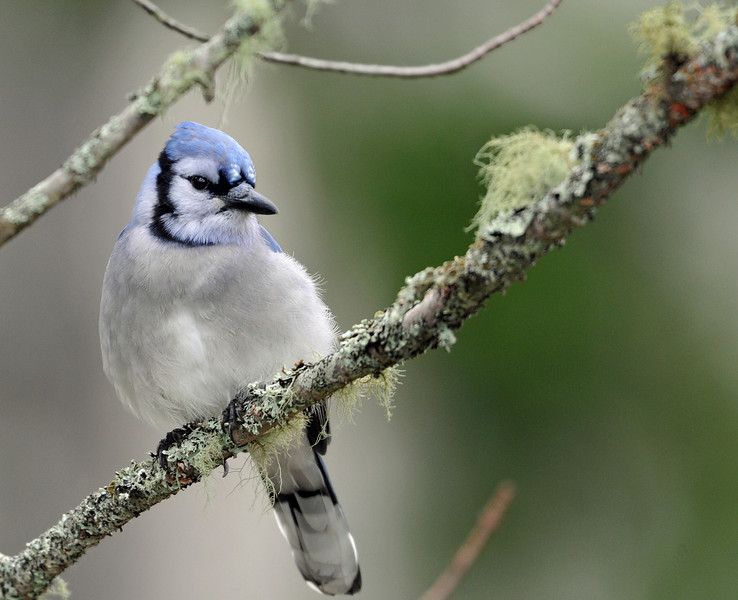
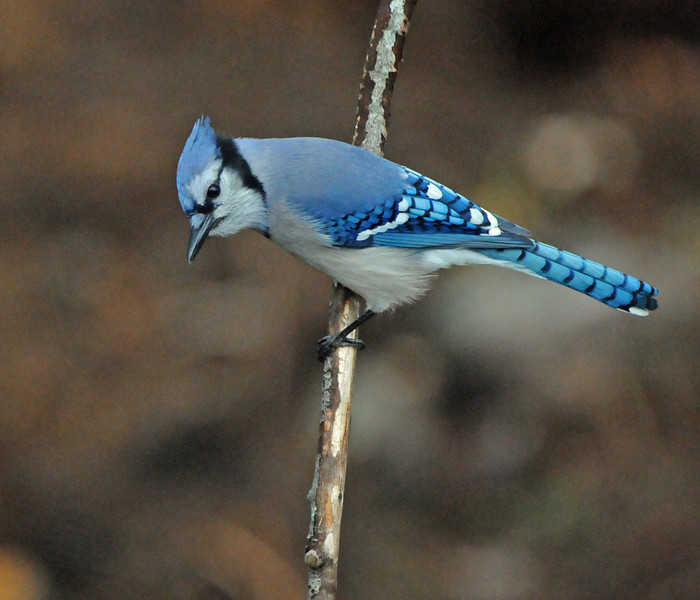
Some people think that the origin of the Blue Jay’s name is another of its calls: a slurred “Jay.” But more think that the name is a carryover from “Jai,” the Old French name for “gay” or “merry” given to some birds that the English later called “Jays.” See also the image in the first Comment space.

(Brooklin, Maine)
That ill-tempered little Nor’Easter that’s been creeping up the coast reached here late last night and dropped on us the first appreciable snow of the winter. This storm is laboring hard to continue as we speak. But, it did have its moments earlier today when we took a sleety look-around between 6:30 and 8:30 a.m.

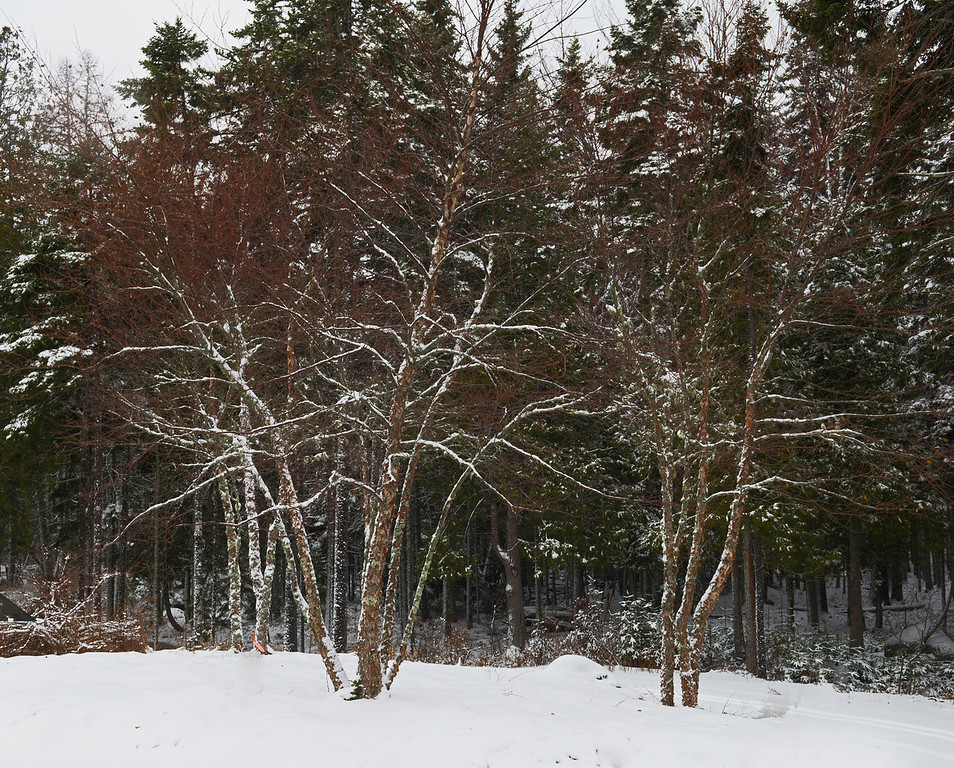
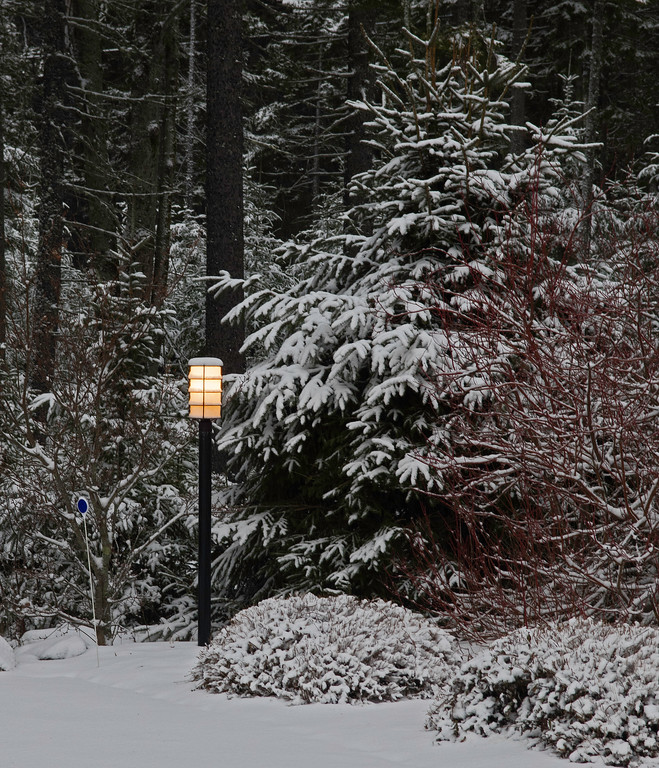
This storm is no Fluffy Winter Wonderland that makes you want to lie back and make snow angels. It’s mostly a mix of rain, sleet, and snow that’s more annoying than awesome; in fact, the early sleet stung enough to make you wince. The main roads were well-plowed, as usual, but the Lanes to driveways and had nor been plowed (or melted) as of early morning.
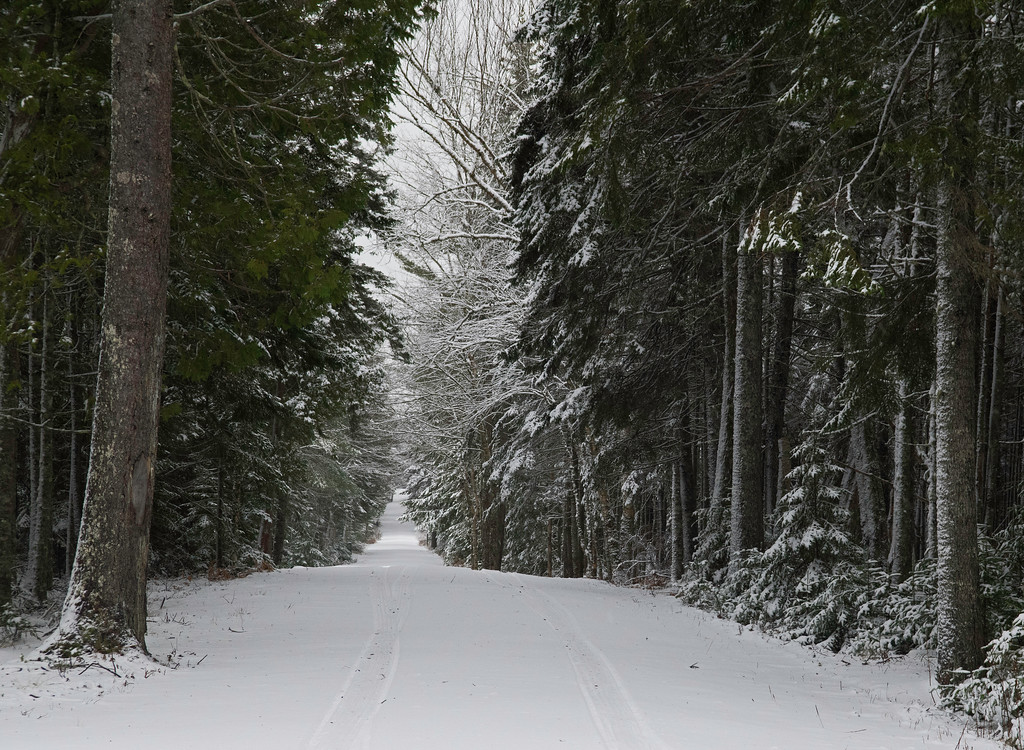
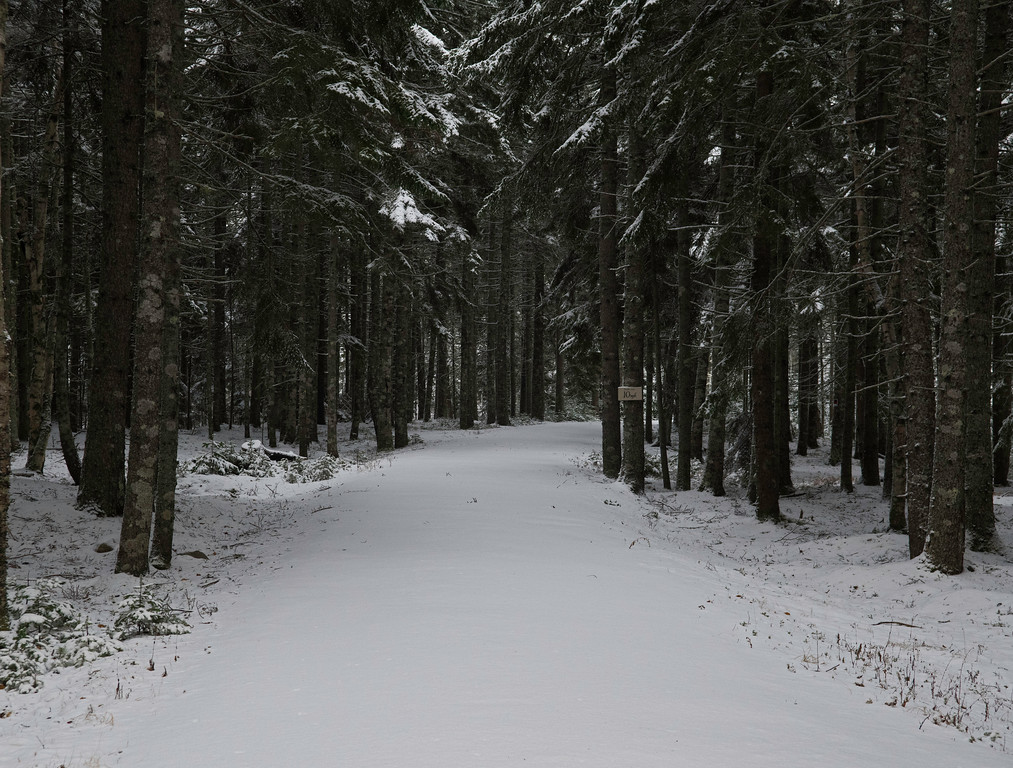
The Town Offices, Library, General Store, and Cemetery seemed to take the weather in stride.


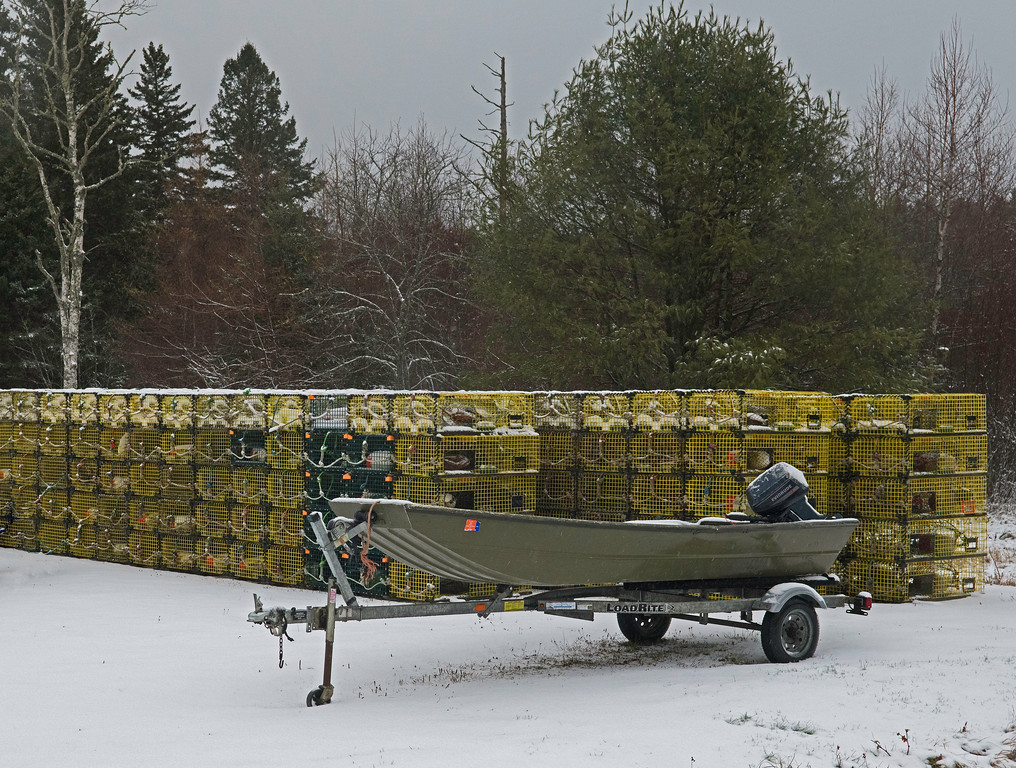
At Naskeag Point, the wind and rain limited snow accumulations. Nearby, recently brought-in lobster traps stood out in the gloom.
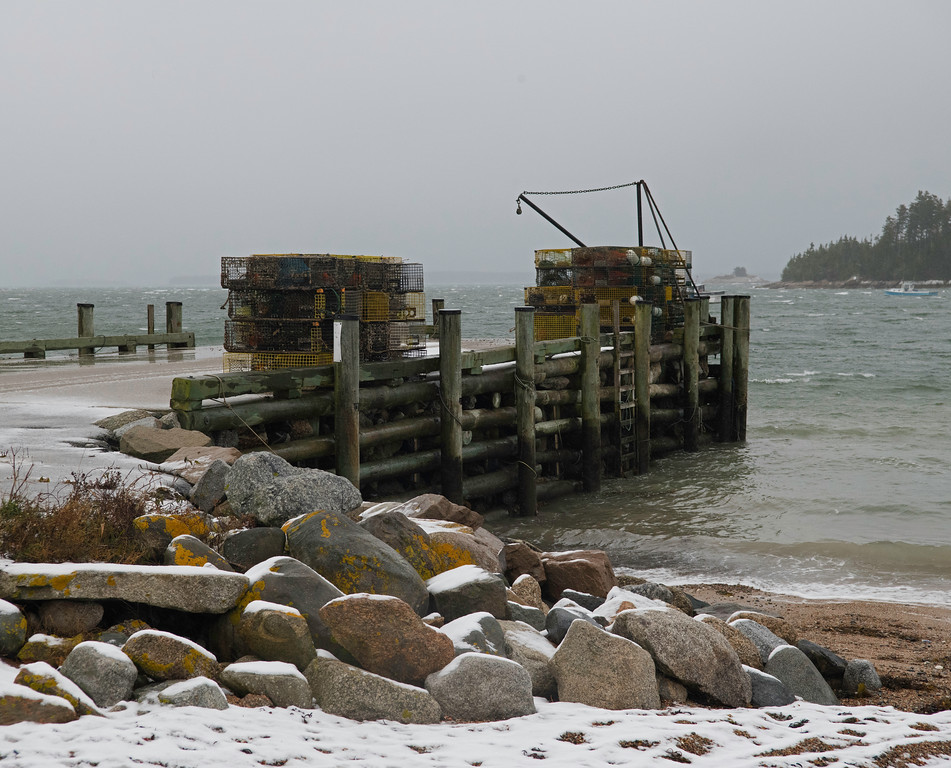

Back at 5 Back Road, every now and then Babson Island appeared in the distance as the storm ebbed and flowed.

(Brooklin, Maine)
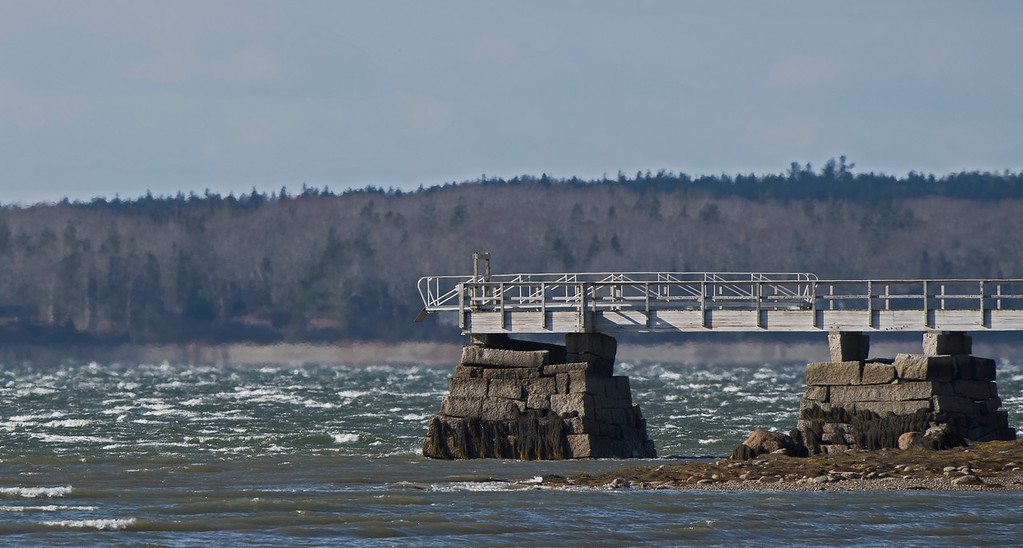
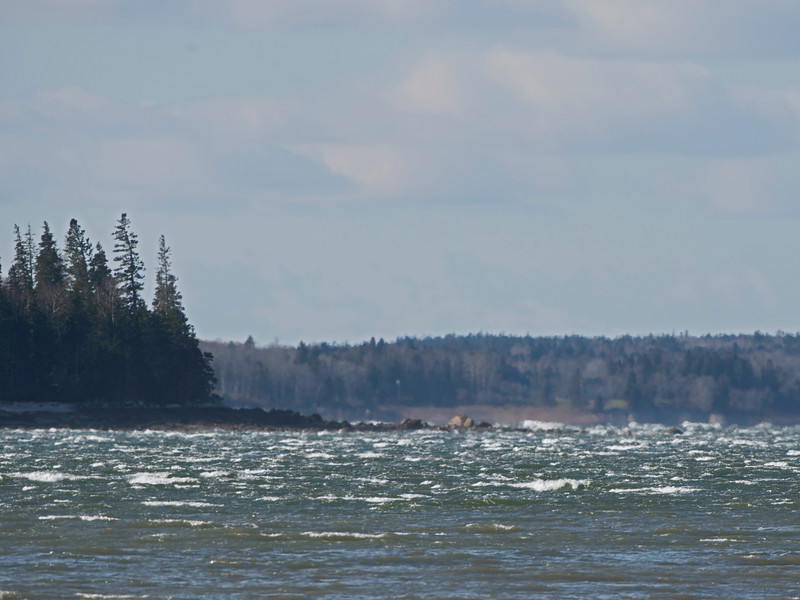
Tuesday’s rain storms turned into Wednesday’s (yesterday’s) bright sun, near-gale winds (gusts up to 33 miles per hour), and freezing temperatures (low 20s F). Great Cove, which usually is calm, threw a low-tide fit, as you can see here. But, she’s pretty when she’s angry.

She’s also devoid of boats, except for the occasional fishing vessel. Floats on piers are up and ducks and gulls have taken full occupancy.

At seven this morning, it was sunny, 15 degrees, and there was virtually no wind. Late tonight and tomorrow are supposed to be snowy, sleety and windy, followed by a half-decent weekend. It’s already hard to remember summer’s easy-going sensations. (Brooklin, Maine)
Unlike in Spain, the rain in Maine falls mainly down the chain – if you have a rain chain instead of a drain pipe and a deluge such as yesterday’s storm here.

That rain also fell on the garden while high winds frenzied the grasses there:

Inside, the constant rain on the windows created an abstraction of the garden:

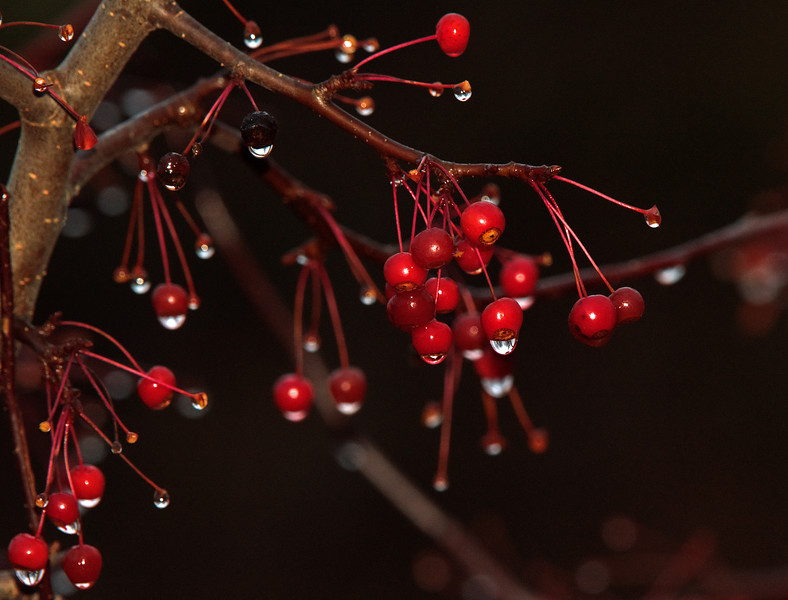
Fortunately, rainy days are not without their beautiful moments, if you don’t mind getting wet to see them. Raindrops on Chokecherries and Asiatic Bittersweet berries come to mind:
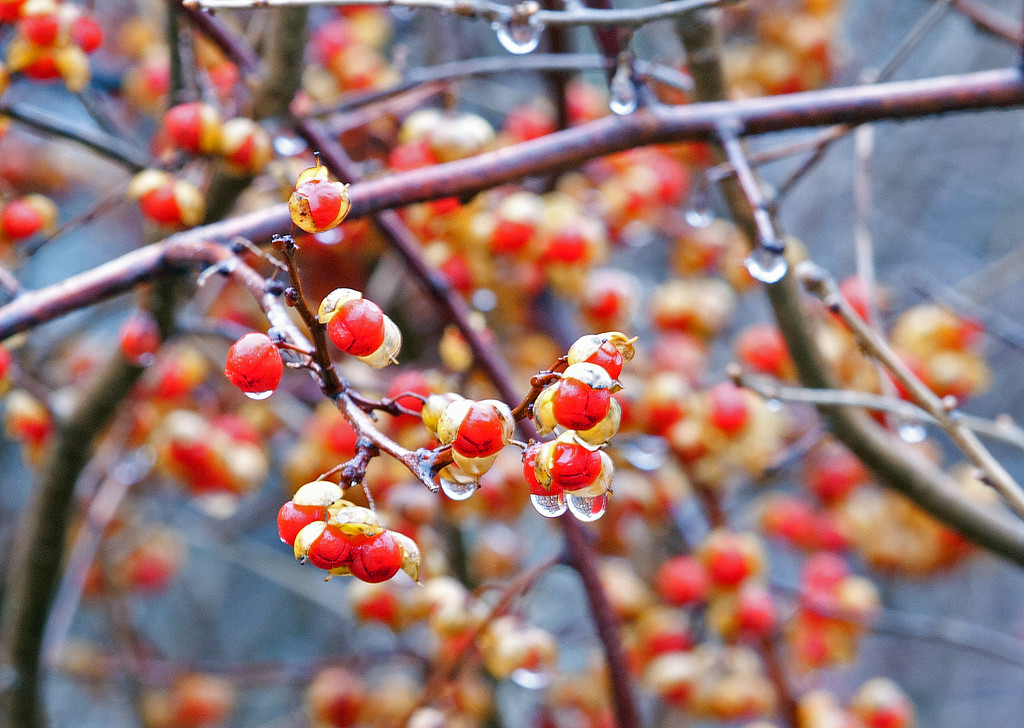
One of the artistic effects of rain comes when a storm is just beginning over a pond and the rain drops create water wheels within wheels:
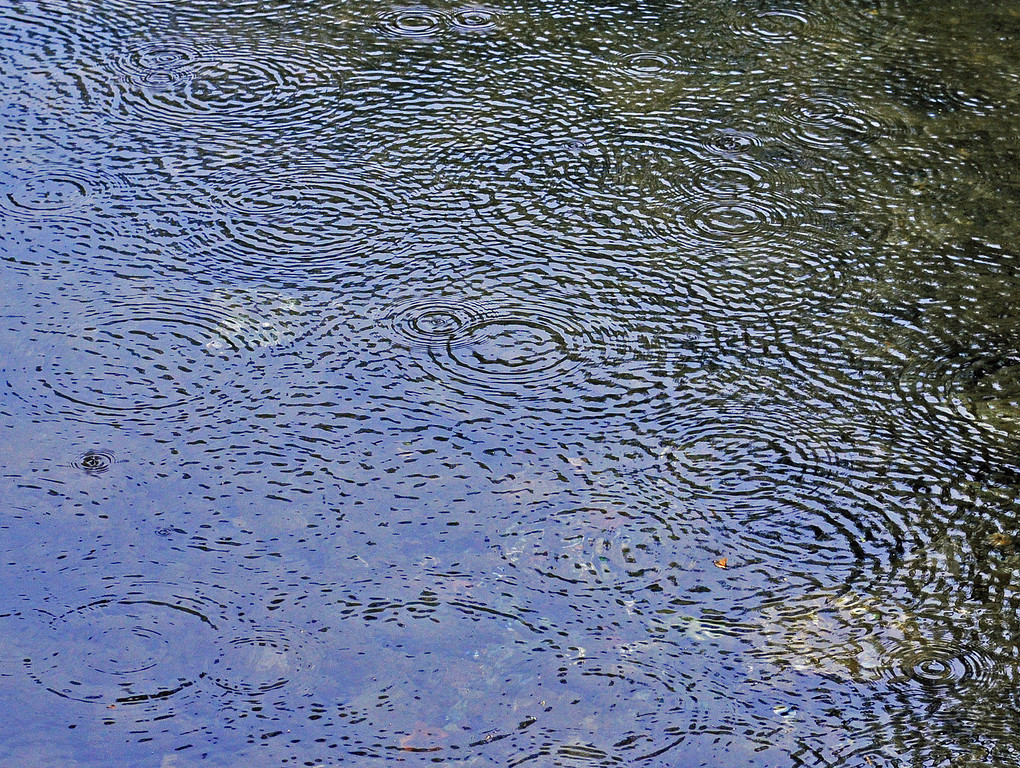
(Brooklin, Maine) [The last three images were not taken yesterday.]
Sparrows are more noticeable now that the leaves are mostly gone and the small birds are gathering in flocks. Basically, there are two types of sparrows out there now: brown blurs and white-streaked gray blurs. As to the grays, we seem to be getting more than our usual share. They’re Dark-Eyed Juncos and many are year-round residents here.

But this year, apparently, more of their Canadian relatives have decided to visit and join the family feeding flocks here. Winter flocking is thought to be a defensive maneuver: the more eyes and ears they have, the easier it is for sparrows (and Crows) to detect hawks and owls that can see them better in leafless vegetation and on bare or snow-covered ground.
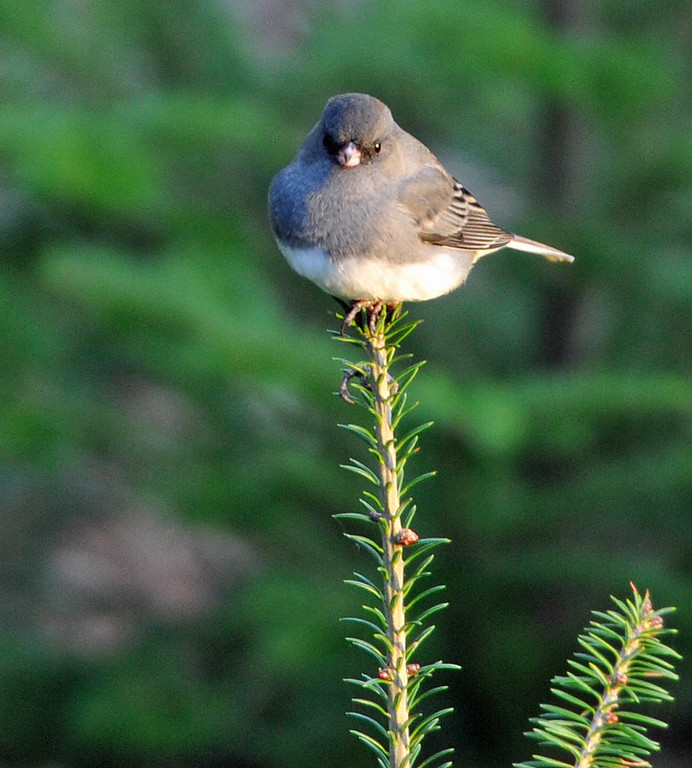
No one seems to know why these birds are called Juncos, however, that name is derived from the Spanish word for the rush plant. Similarly, some people call them “Snow Birds,” derived from inaccurate yarns about the bird’s appearance predicting snow.
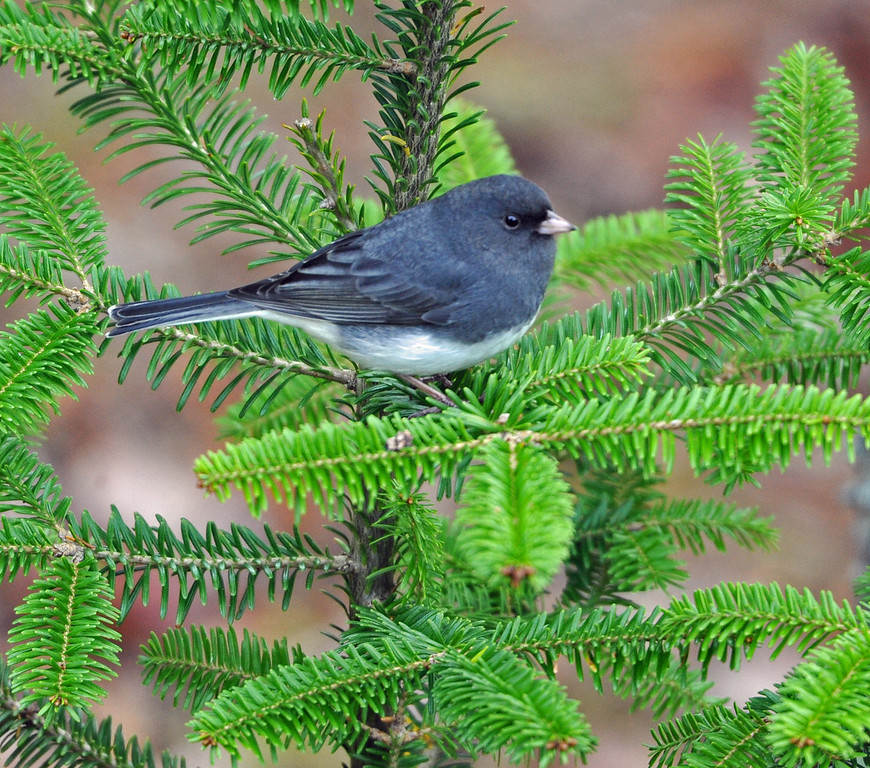
(Brooklin, Maine)
The top leaves on one of our Red Maple Trees did not go gently into the November nights. They flew for weeks like battle flags during attacks by driving rains and whipping winds that decimated others in their ranks. But, yesterday morning, these defiant few were gone, all of them.

It wasn’t just the wind and rain; they died mostly from “abscission,” the arboreal aging process whereby hormones and enzymes gradually dry the leaves and weaken their desperate holds until there is a tear, and then separation, and then the fatal fall, and then earthly reincarnation. (Brooklin, Maine)
Here we have the beginning and end of last night’s sunset:


It wasn’t the most beautiful sunset that we’ve seen (and will see), but it was good enough to make at least one crazy old photographer leave the boring Alabama game and dash out into the cold and misty dusk to shoot it – without a jacket. Don’t tell his wife. (Brooklin, Maine)
Lobster Boats, like good Labrador Retrievers, have a jaunty beauty that transcends their working characters.
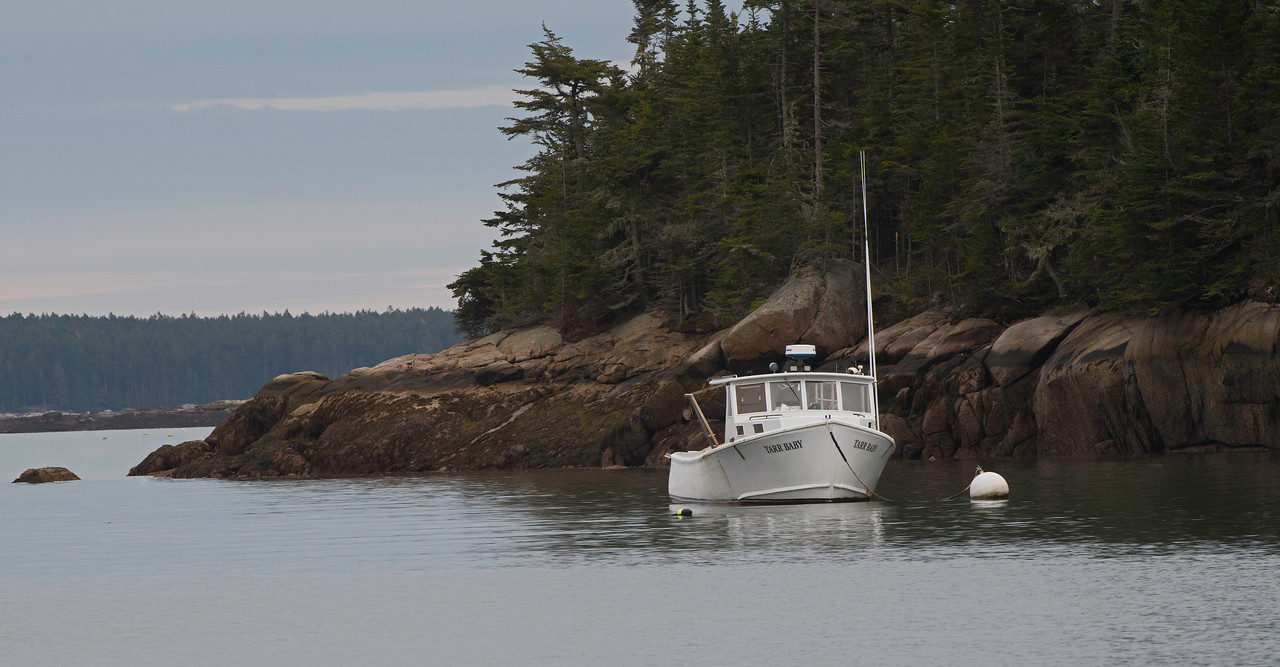
But, there’s much more to these specialized fishing vessels than meets the uneducated eye. Here’s part of the Power&MoterYacht definition with our bracketed explanations: “The classic Maine…lobster boat is a semi-displacement vessel [part of its hull remains above (displaces less) water] notable for a springy sheerline [top hull line from bow to stern] that sweeps aft from a high, flared bow to topsides with low freeboard [distance between waterline and deck] aft and often considerable tumblehome [hull-narrowing] at the stern. *** A real lobster boat has a pronounced keel that protects the propeller and the hull is round-bottomed without hard chines [bottom angles]. The forefoot [underwater hull at bow] is usually deep, to handle head seas and to help hold the bow from falling away from the wind as the traps are hoisted aboard.”

(Brooklin, Maine)
This is the image that appeared yesterday in our monthly column in the Ellsworth American.

To read the column, click here:
This canoe was the only man-made thing in Herrick Bay on Monday, November 5, when the vessel took on the aura of a scarred monument to good design.

The canoe is one of the oldest vessel designs in the world, dating at least from 7,600 BC. The vessel played an important part in North America’s history, first as one of the most sophisticated Native American possessions and then as a vehicle for early European traders and explorers. Somewhat later, Lewis and Clark relied heavily on canoes for their success.
At first, canoes were constructed by digging out tree trunks or wrapping bark on a wooden frame. Now, many are aluminum, plastic, or fiberglass. The name “canoe” is based on the Carib “kenu,” meaning dugout. Click on image to enlarge it. (Brooklin, Maine)
This is a symbol of November: one of our small, but rampant, woods streams during a light rain earlier in the week. November is the rainiest month in this part of Maine, according to the historical data. It’s when the wells get needed refills, the lakes and ponds get brimming full, brooks roil through the woods, and rivers flood.
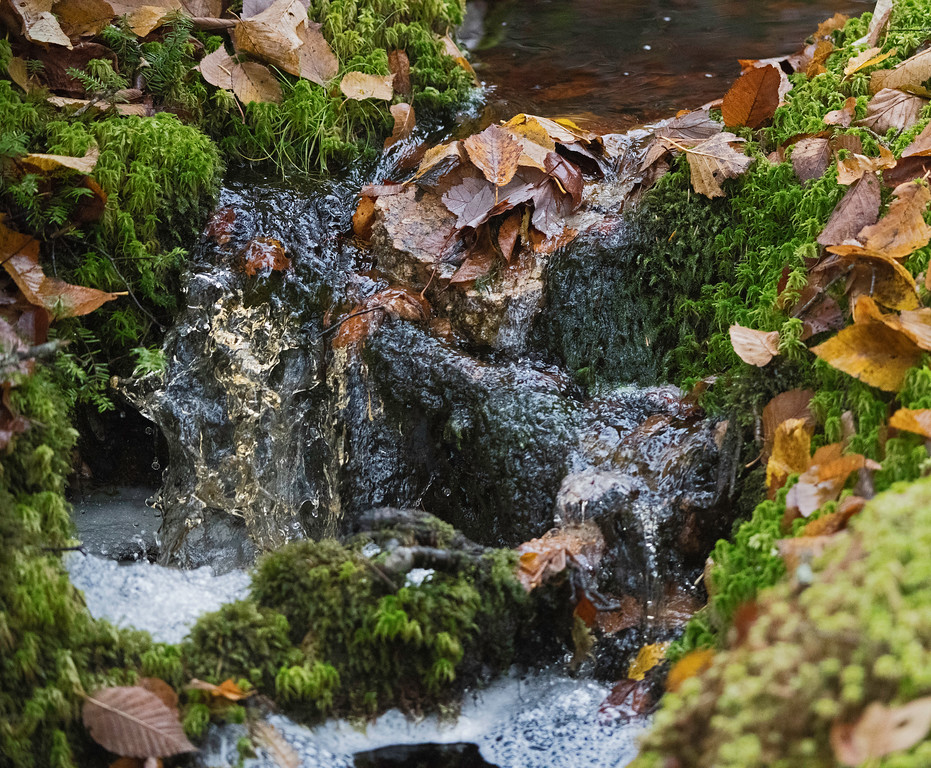
November rains’ benefit to wells is no small thing. Drilled wells are the most common source of drinking water in Maine, especially wells drilled into the bedrock to catch the sweet water that seeps through the cracks. The more rain, the more seeping. We’ve been having a lot of seeping lately. (Brooklin, Maine)
Many fishermen are calling it a season and bringing in their traps now for winter storage. Here we have “Blue Sky” waiting to off-load her traps at the Town Dock yesterday.

Long Set’s traps are being unloaded there.
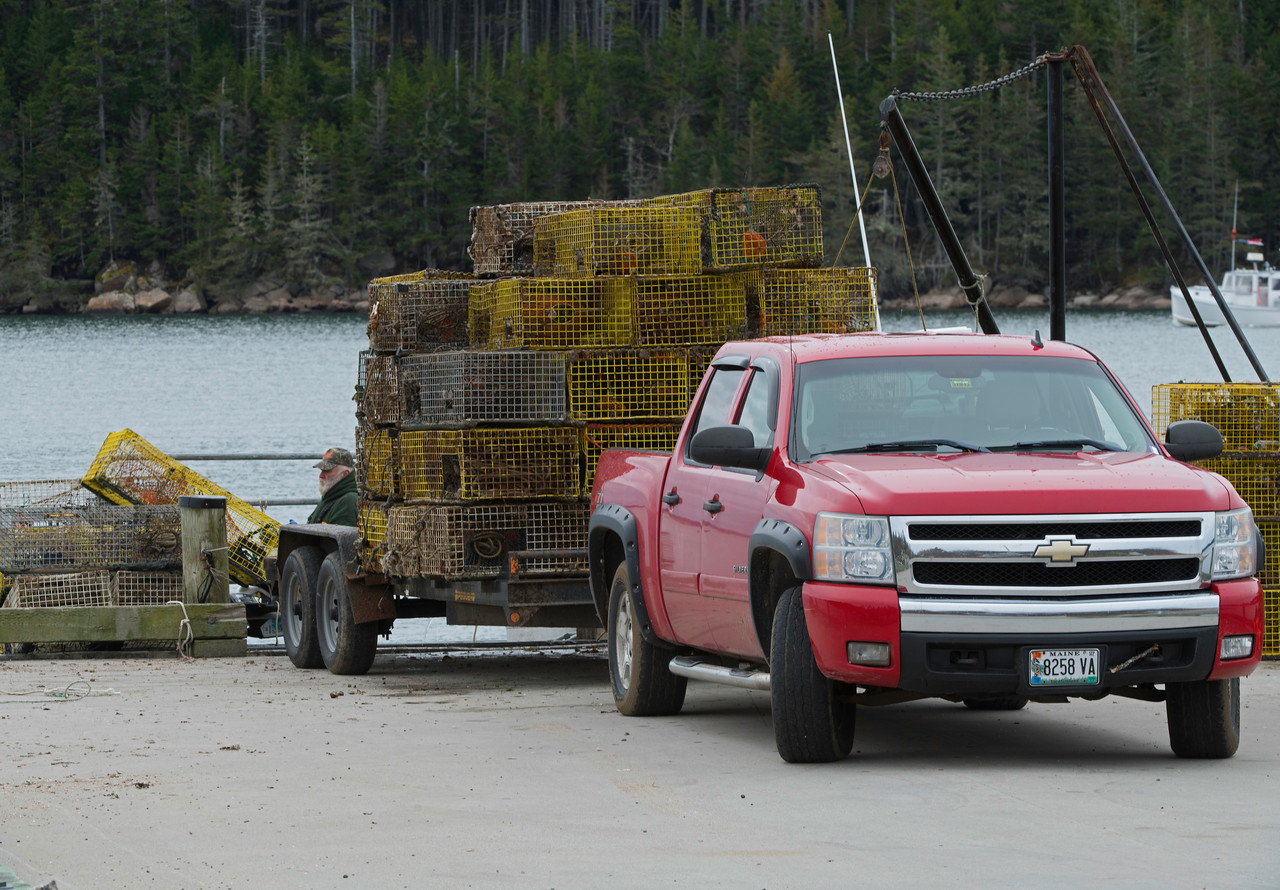
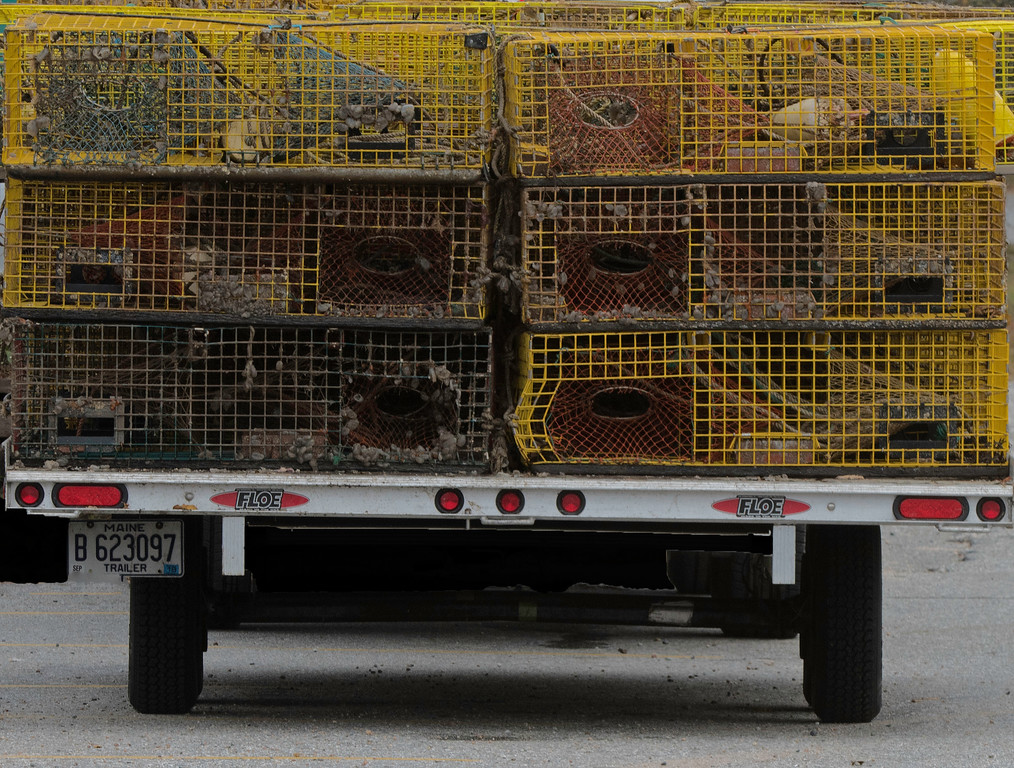
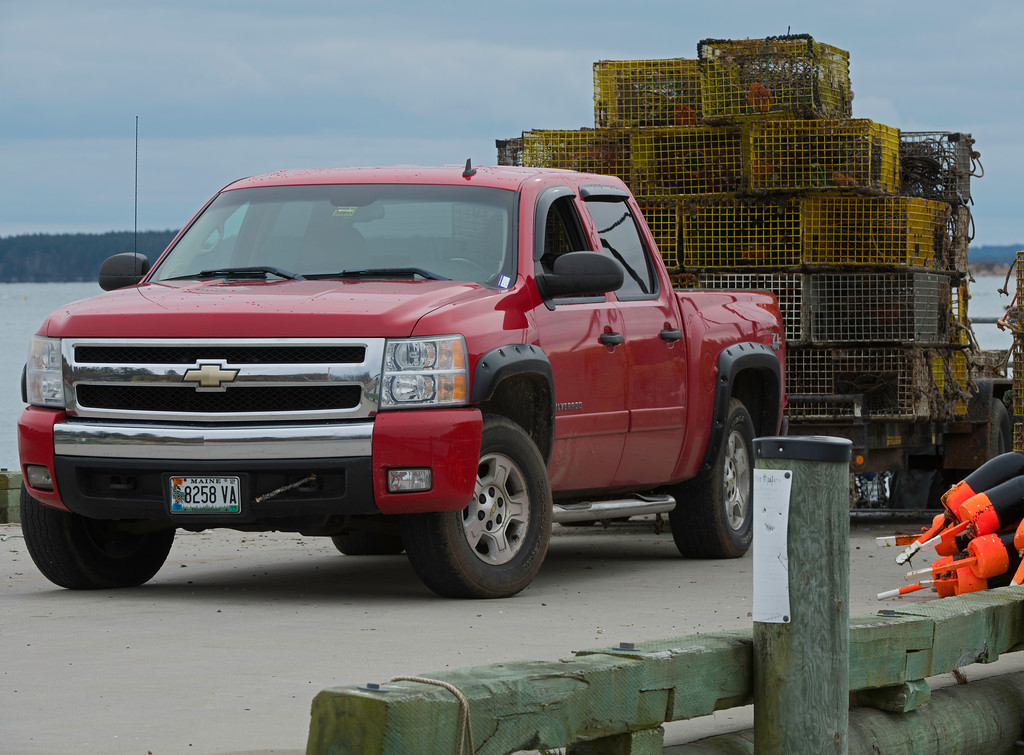

The traps will be stored “on the hard” until next summer, often on the fishermen’s properties.

On the other hand, some fishermen will continue to trap lobsters, dredge for scallops, or dive for scallops during the winter.
(Brooklin, Maine)
When this image of last night’s sunset was taken here, it was cool, but not cold; there was a wind, but it was little more than a breeze – and our generator had been chugging since Saturday afternoon.

On that Saturday, there was no sun to set; a rain and windstorm with gusts of up to 60 miles an hour swept across Maine, and the electric power of more than 67,000 customers was snuffed out, according to the Portland Press Herald. Less than an hour after this image was taken yesterday, our line power was restored and, a little later, we watched the New England Patriots win in Foxborough. Normality is good. (Brooklin, Maine)
This morning dawned an unsaved hour earlier and it is SUNNY! As we speak, our generator is still running the house after yesterday’s high-winded rainstorm did something to the powerlines. November historically is Maine’s wettest month, and it’s been living up to its reputation during its first week here.

Nonetheless, the wet and gray gloom has been brightened by the glow of fall colors that seem to be lasting longer this year. Especially outstanding are the Redvein leaves that, as shown here, become smoldering embers in the rain. This plant (Enkianthus campanulatus) holds back until late fall and early winter, and then erupts in breathtaking hues of yellow, orange, and red. It’s even more spectacular in an early snowfall, which can be another of November’s weather whims. (Brooklin, Maine)
Here, in the middle of Naskeag Harbor, is an example of Maine functional architecture. It’s a type of structure that you’ll see in many forms in many harbors during the primary lobster season. Its lines are not graceful, and its various names are not poetic. Most often, it’s called something like a Bait Float, Bait Barge, Bait Shed, or Bait Hut.

It’s usually a place where lobster fishermen can buy bait and/or sell their lobsters quickly on operational days. Fishermen who aren’t ready to go through the procedure for off-loading at a larger shore facility can find a mid-harbor transaction advantageous. For example, if a fisherman is having a good day, he or she can efficiently sell a catch at the Barge and then go out again. (Brooklin, Maine)