
In the Right Place: Homeland Security
This is the image that appeared yesterday in our monthly column in the Ellsworth American.
To read the column, click here: http://www.5backroad.com/montly-column
JOURNAL
In the Right Place: Homeland Security
This is the image that appeared yesterday in our monthly column in the Ellsworth American.
To read the column, click here: http://www.5backroad.com/montly-column
Everyone is hoping that yesterday’s tantrum by the weather gods – cold, snow, sleet, rain, and, finally, slushy thaw – is the last of that kind of behavior until winter. Nonetheless, their gray moodiness had some memorable moments, including the Camperdown Elm in the Brooklin Cemetery seemingly trying to protect huddled gravestones from the fine snow and sleet:

The nearby reflective fire pond seemed to be gulping the fluttering snowflakes when they turned fat:

The woods’ streams were bursting out of their snowy overcoats.


Country Lanes were plowed while, of course, wooded paths remained undisturbed, except by wildlife and a wild photographer:


The gnarly character of old apple and crab apple trees seemed to be enhanced by snow.


In the early afternoon, Naskeag Harbor was experiencing more rain and sleet than snow, and the temperature was rising to the point that the thaw had begun along the beach:


The thaw was remarkably fast. Here you see our frozen rain chain starting to melt yesterday afternoon and being virtually bare early this morning:


Speaking of this morning, that’s when the weather gods redeemed themselves with a sparkling blue and white gift::

(Brooklin, Maine)
It’s not only still snowing as we speak, most of the large raft of Common Eiders are still “wintering” off Blue Hill Falls, where these images were taken last week.

Why haven’t these ducks left? Probably because it still feels like winter here.

The brown females outnumber the males, as usual, but the white males stand out at a distance.

They’ll soon leave to nest, primarily in colonies on sea islands off Canada, Maine, and Massachusetts. They prefer islands that are free of their larger predators: humans, seals, dogs, coyotes, foxes and raccoons.

However, they have perennial problems protecting ducklings from Bald Eagles and Gulls, especially Great Black-Backed Gulls. After the ducklings can fly, the Eiders will head out to open sea and remain there in relative peace until winter.
(Brooklin, Maine)
Significant April snowstorms usually are uncommon and always are inconvenient, not to mention boring after a snowy winter. It snowed virtually all day yesterday, when the following images were taken; it looks like we got about three to four inches.


It was a relief to see a calm early morning from the bedroom, albeit one with overcast that presages the snow forecast for later today.


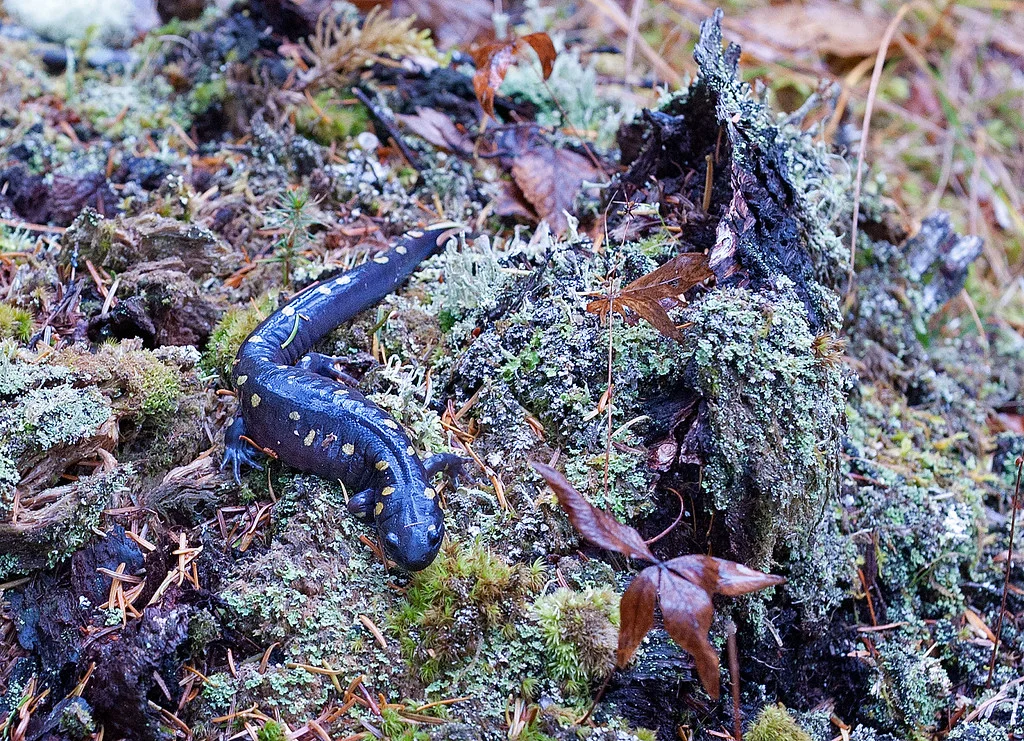
IOur bog area was re-winterized, which likely will postpone the plans of salamanders and other amphibians who need to return there to breed some night soon when it warms up.

The snow-covered spruce and fir are picturesque, which can be distracting when trying to get some work done.


Fortunately, we’re not likely to get one of the surprise April super-snowstorms that have occurred in New England occasionally. The apparent record for one of those was set on April 1, 1807, when Gardner, Maine, got 20 inches of wet snow and Danville, Vermont, got a suffocating 60 inches. (Brooklin, Maine)
It’s been snowing all morning, but guys gotta do what guys gotta do when the calendar says it’s Spring.

We caught Tom here performing his famous annual engineering and chemical stunt in our side yard a couple of hours ago. He’s strutting slowly while flexing connected muscles in his skin to erect body and tail feathers; simultaneously, he’s contracting blood vessels in his head to change skin color and lengthen his nose snood.

The hens were not interested at all; we think we heard one shout, “It’s snowing for God’s sake, Tom!”

(Brooklin, Maine)
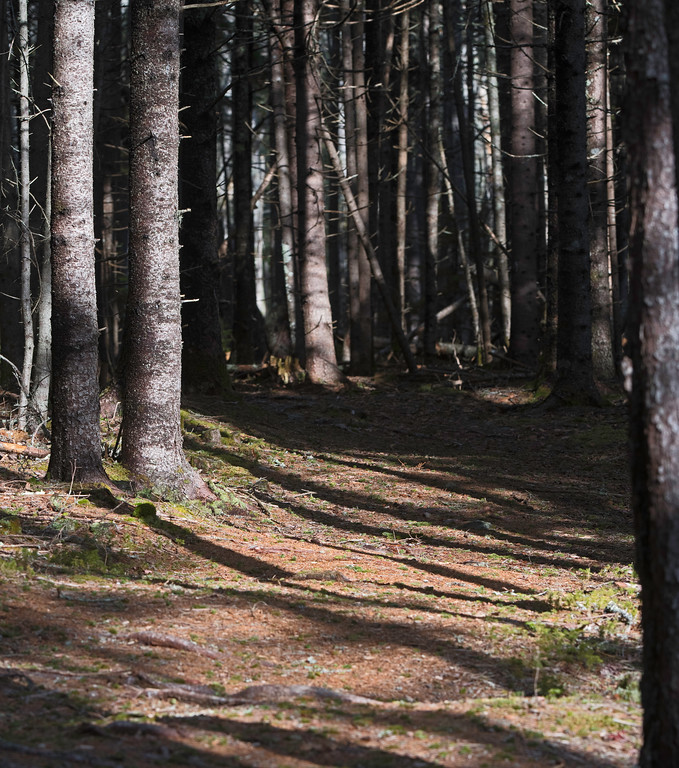
As of yesterday afternoon, the snow and ice were virtually gone in the woods’ trails that are frequently traveled by the local wildlife and tamelife (hikers). However, there still are favorite deer trails that are icy bone-breakers, passable only by hoofed and clawed wildlife and booted and cleated tamelife.

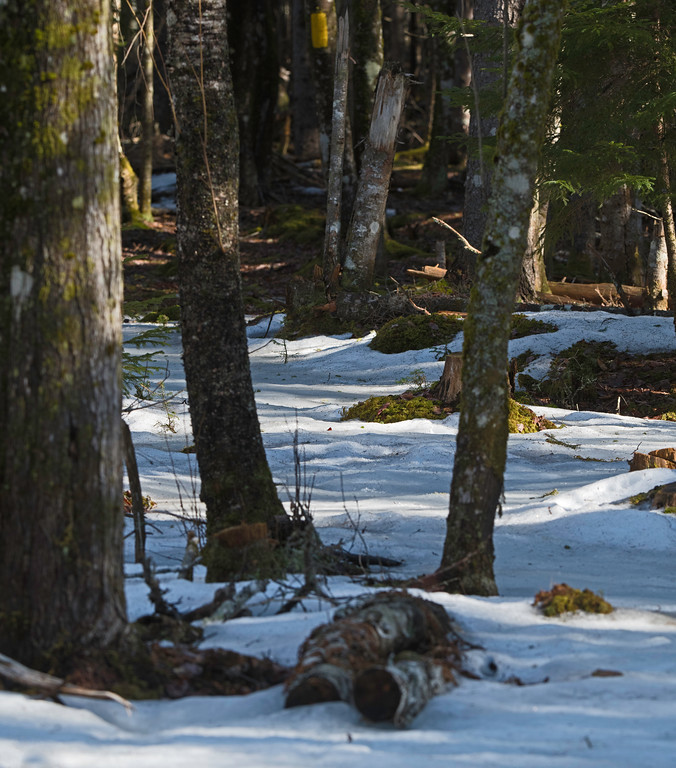

The wooded streams mostly have escaped their icy cages:

The ponds are in the process of opening their waters for the Spring waterfowl tourists; some still have relatively thick ice, others just a film that will disappear if we don’t have a cold snap:.
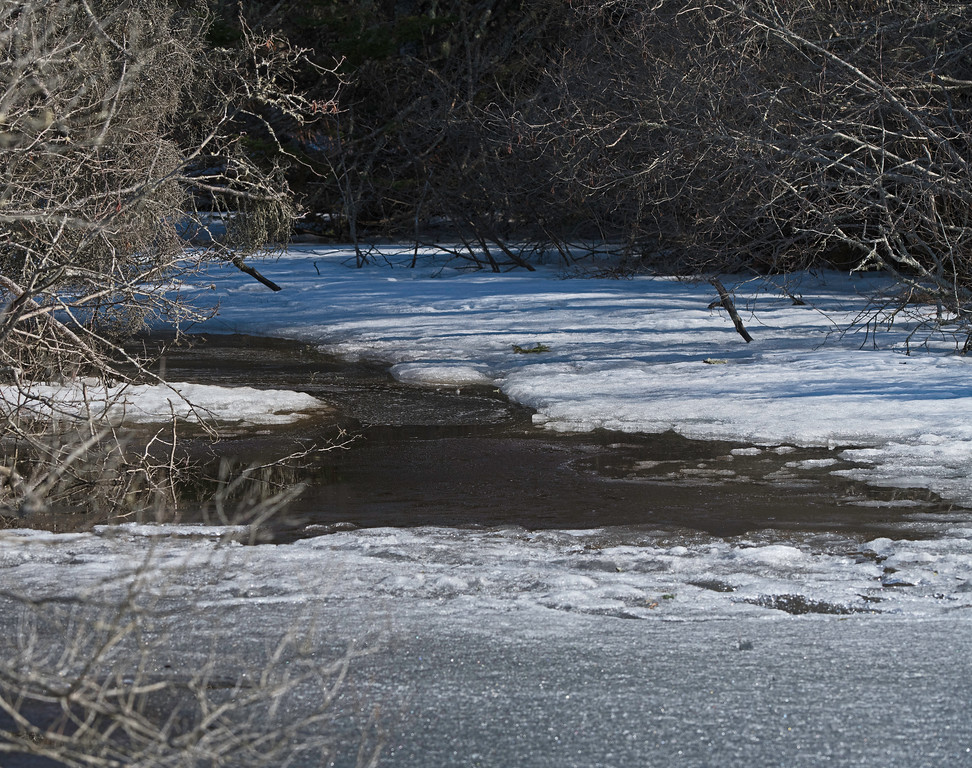
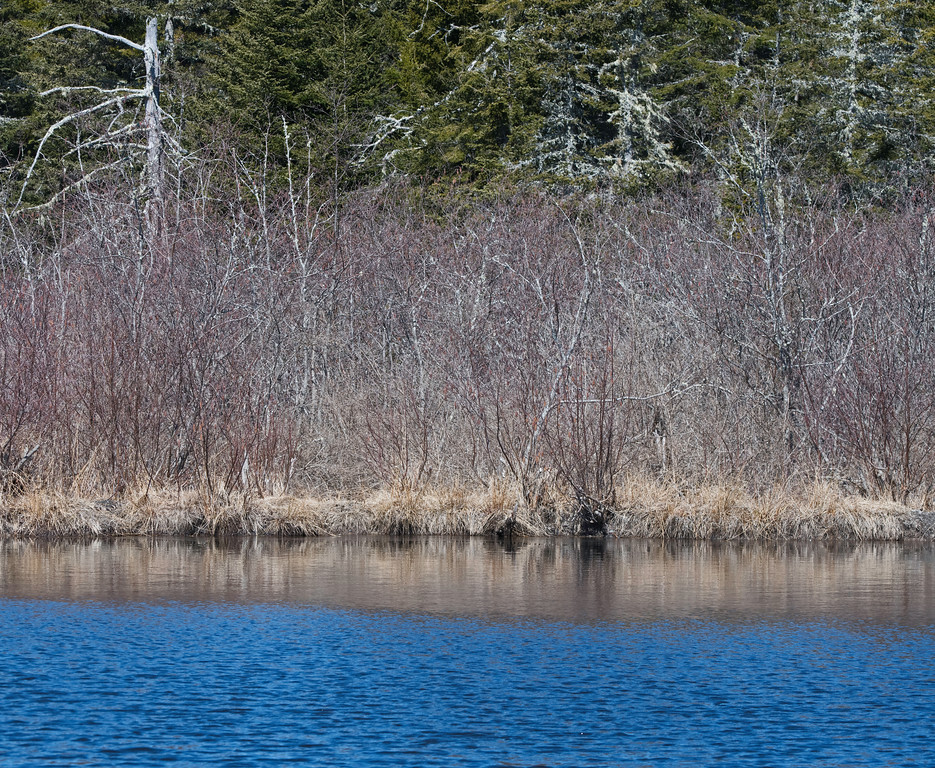
Vernal pools have formed and are awaiting a “Big Night” for salamanders and other amphibians to come for their annual dark orgy:

We’ve seen no Red-Winged Blackbirds yet, but there are reports of them being close. (Brooklin, Maine)
American Woodcocks are arriving here and seem surprised to see patches of snow and ice. The zaniness of these small birds has inspired some funny common names for them, including Timberdoodle, Mudsnipe, and Bogsucker.

But, the Woodcock’s weird looks actually are functional: its extra-long beak is an earthworm probe; Its small head and large eyes allow sight all around when feeding and aid in its nocturnal flights, and its stubby camouflaged body makes it disappear in ground cover.

At dusk and sometimes dawn, the males court by doing a bizarre “sky dance”: They ascend in fast concentric circles hundreds of feet while making buzzing, cicada-like sounds; Then, they helicopter down fast. The females watch this air show closely, then they work out a prenuptial agreement and nest. Click on image to enlarge it. (Brooklin, Maine; images from a prior year)
The tide was rising, the wind was up, the sun was out, and the temperature was reaching for a bracing 40 degrees Fahrenheit yesterday morning in Great Cove and Naskeag Harbor.

White-capped green and blue water was moving and tethered fishing vessels were pulling and rolling.
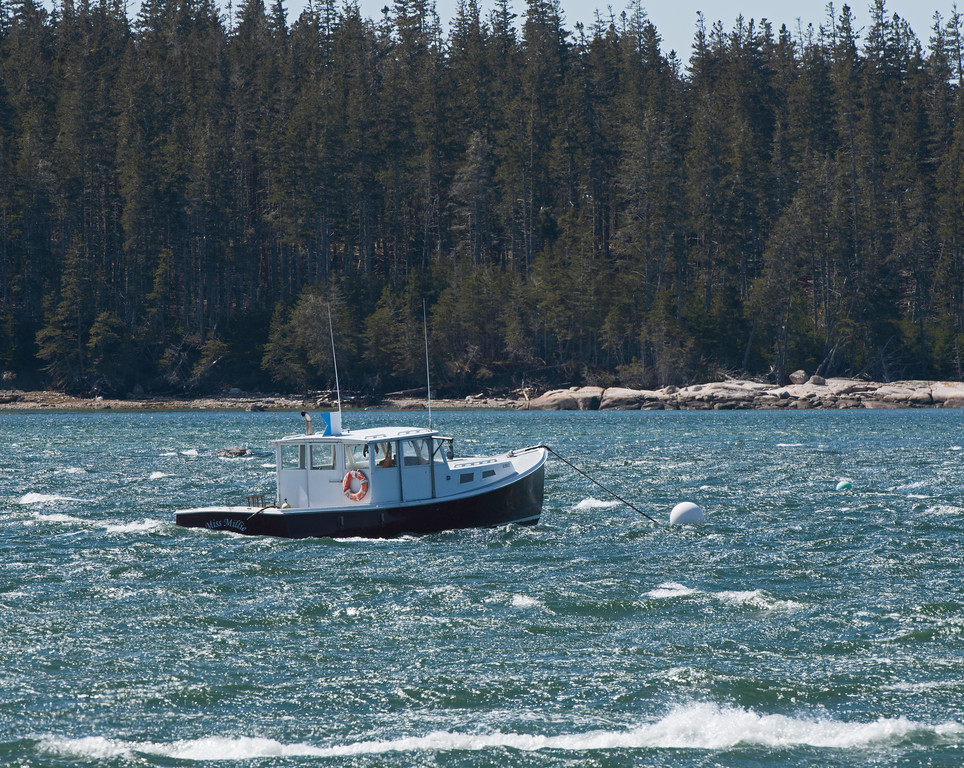
Vistas were sprinkled with sun diamonds.

Wind gusts were staggering surprises, reportedly up to 37 miles per hour.
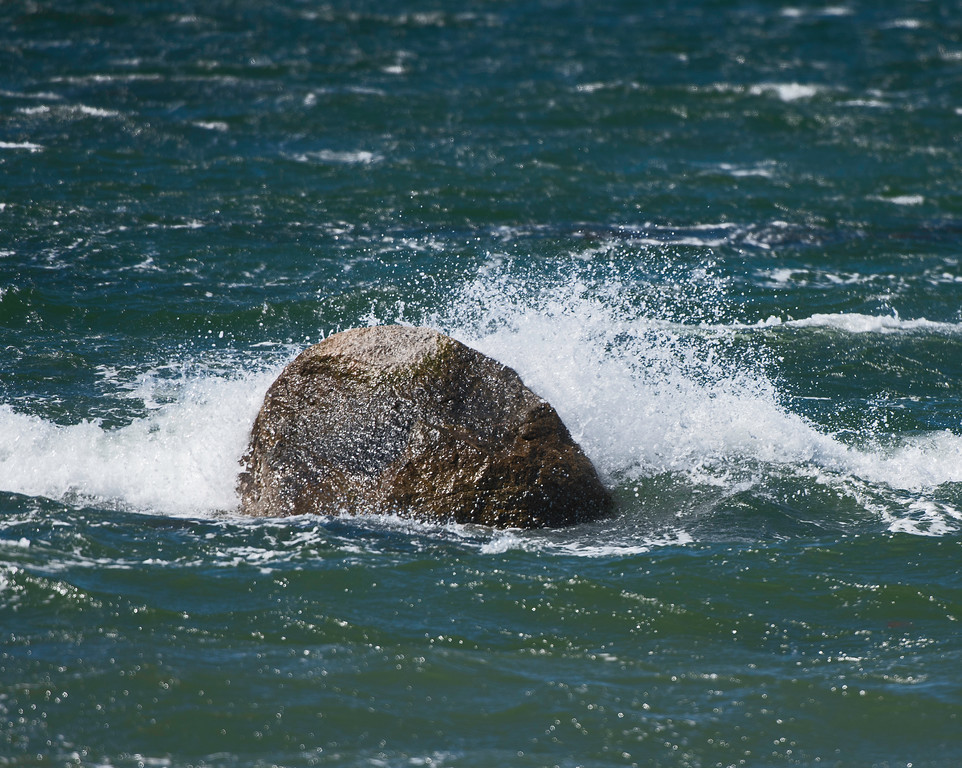
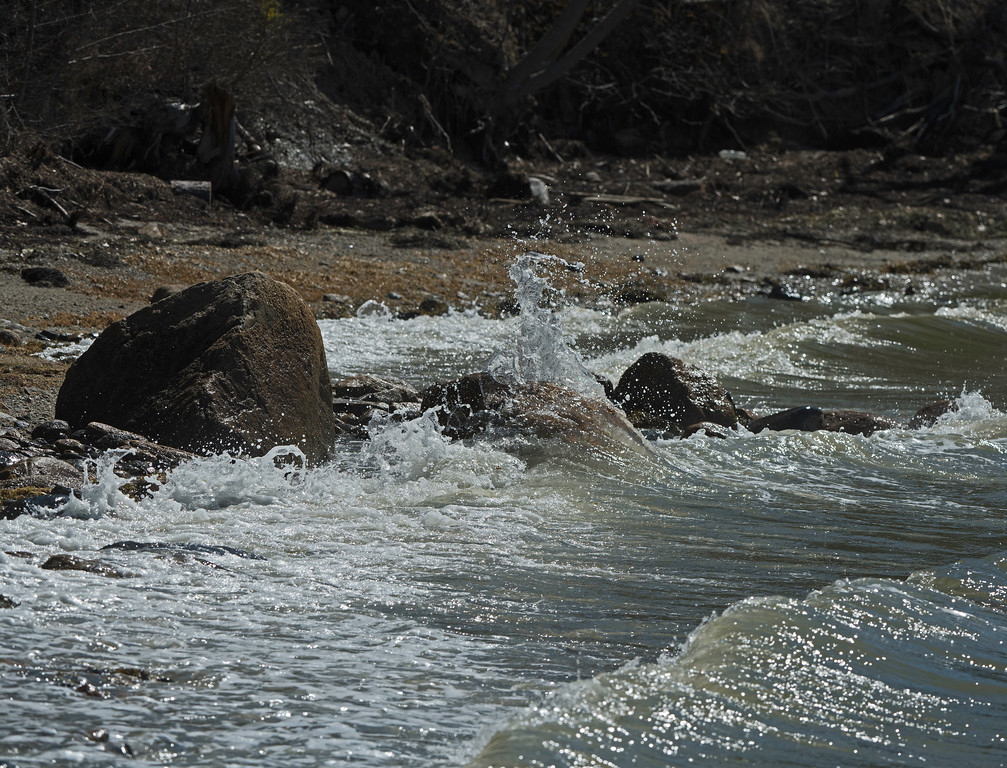
This wasn’t Spring; this wasn’t Winter; it must have been Sprinter..

(Brooklin, Maine).
For the past week, on and off, we’ve had a Merlin around here that deserves the name of the legendary magician. This bird has the mysterious ability to reveal himself nearby when we’re without a camera and appear out of range when we do have a camera. (The Merlin images shown here are from a prior year.)

Merlins are small and fast falcons that like to prey upon slower and smaller birds and animals. During the Middle Ages in England, these birds were called “Ladies’ Hawks” because they were the favorites of female falconers in the court.

Later, in this country, the birds became known as “Pigeon Hawks,” in recognition of one of their favorite slow foods. Birders didn’t like calling this regal bird by such a limiting and impliedly sinister name, so its name was changed to the more mysterious moniker “Merlin.” That name was derived from the Old Frankish word “Esmerillon,” simply meaning “Falcon.”
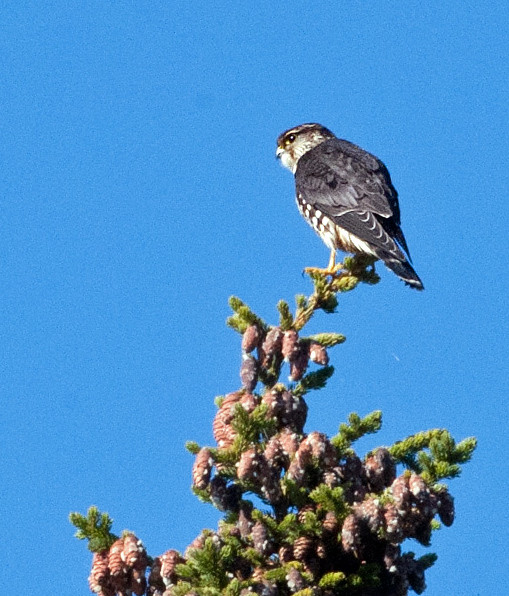
(Brooklin, Maine)
We’re sorry; we apologize to our neighbors. We knew that we shouldn’t do it, but we couldn’t stand the way it was. Yes: we washed the car and got rid of all that grime and snow chemical stain. And, yes: somehow mother nature found out and snowed on us this morning.

To make matters worse, it looks like she’ll just lay down enough white to annoy us and then flip the switch to rain mode and create some sticky mud. Images from this morning.
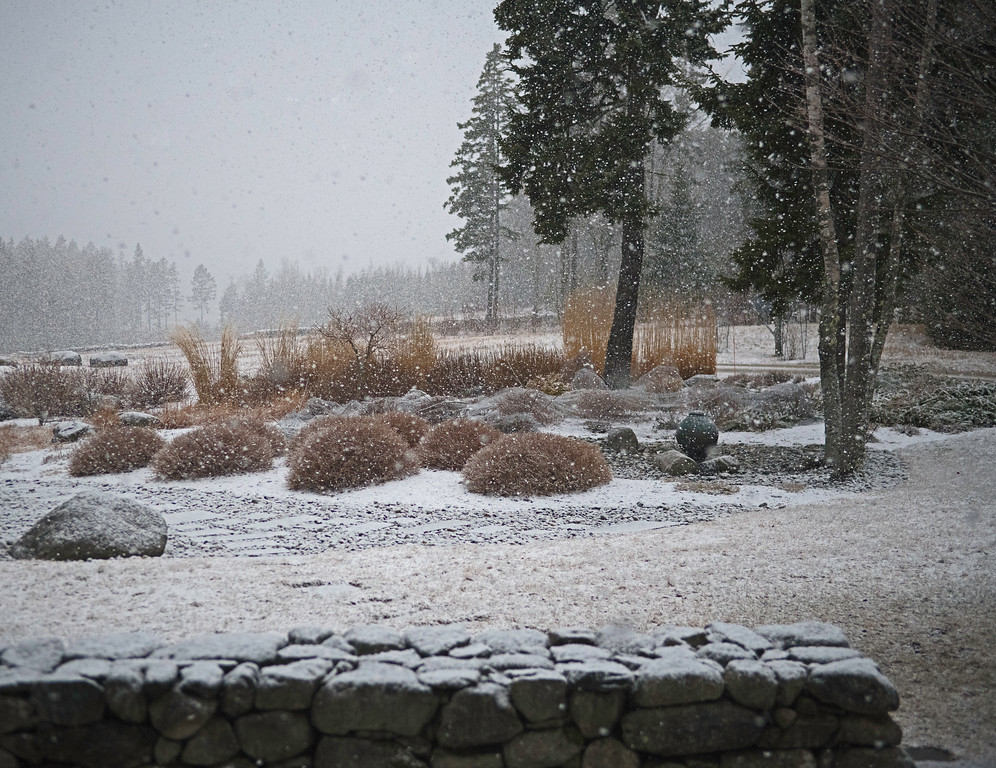
(Brooklin, Maine)
Recent rains and a relatively warm weekend have cleared out about 90 to 95 percent of our snow and ice and are causing a significant runoff. We went to several of our unofficial wildlife check points yesterday to get a sense of the effects.
Patten Stream, one of our more picturesque fish- and eel-climbing waterways in nearby Surry, was a torrent:

The local streams that the deer drink from in the heart of the Brooklin woods were breaking out of their ice tunnels and showing parts of their beauty:

The boggier parts of those woods were still awash in water over thin ice:

The culverts that drain marsh and field ponds when they reach their capacity were draining constantly:

But, there still were large patches of snow and ice along the back trails:

The March 2019 Climate Review from the National Weather Service of the National Oceanic and Atmospheric Administration. forecasts that April will have above average temperatures., but will not be an unusually wet or dry month. (Brooklin, Maine)
We enjoyed last night’s special Blue Hill Fair. This Fair will continue today and tonight in celebration of April 1, with all rides free. April 1 has been celebrated for centuries all over the world.

For example, in England on April 1, 1698, it was advertised that lions would be washed at the base of the London Tower. Many people came to watch that dangerous activity. When they arrived, they not only saw no lions, they were laughed at and called “April Fools.”
If you don’t want to be laughed at, stay away from the Fair grounds. Nothing will be happening there today or tonight. But, have a nice April Fools’ Day otherwise. (Brooklin, Maine)
Once again, March proved that she’s totally unreliable. Her primary job was to bring us Spring, but she indulged in such an outrageous on-again-off-again affair with Old Man Winter that her mind was never really on her work.
March often turned a cold shoulder on us, icing up coves and open coasts, while turning woods into vernal ice rinks and residence roofs into stalactites.


We awoke to howling March snowstorms before and after the due date for her to deliver the equinox, astronomical Spring.


To be sure, after a spat with Winter, March would rest with a sunny smile on her face and we would again have visions of Spring showing up.


There are certain events and practices that usually happen in March, no matter how fickle she is. This March’s full moon not only was a super Moon, it came within hours of the equinox — a very unusual event.

Of course, there is St. Patrick’s Day. Wasn’t he the priest who drove snakes out of Ireland and replaced them with pink flamingos? Or was it with snowmen? We’ll have to ask neighbor Judith Fuller, whose road banners appeared throughout the month:


March is when the season opens for netting Glass Eel Elvers near the streams that these youngsters will ascend. (See our prior post, below.) Common Goldeneye Ducks fish for these valuable baby eels without having to buy an expensive license.


In deeper waters, commercial fishing for scallops continues during March’s unpredictable weather. Most of the fishermen use lobster boats that have been converted to trawlers to dredge for the delicious mollusks.

There also is, of course, March Madness, when many of us here are glued to the TV sets to see the best basketball games of the year. Even our Wild Turkeys are inspired; they practice their pick and roll plays constantly during March, while their chin-whiskered fans smile.


Speaking of birds, the large raft of Common Eider ducks that came to nearby Blue Hill Bay to winter were still there this morning, as were some Ring-Billed Gulls in breeding plumage.


It’s bad enough having to fish in cold water, but imagine what it’s like to pry frozen larvae out of wood to eat. Our smallest and largest resident tree walkers — Brown Creepers and Pileated Woodpeckers — still had that challenge in March.


There were a few signs of Spring outside and inside in March: Pussy Willows extended their furry paws out of their catkins and our windowsill Hibiscus delivered a salad-plate-sized blossom.


Oh, sorry: we forgot about the largest and strangest blooms of all in March. They appeared just as a Spring party was starting and were gone the next day. We’ve got the flora books out, but haven’t been able to identify them yet.

(All images above were taken during March 2019 in Down East Maine.)
This male Common Goldeneye duck is fishing alone at the bubbling mouth of Patten Stream on Wednesday, March 27. He appeared to be diving after the Glass Eel Elvers that are migrating up the stream now. See prior post.

Common Goldeneyes are informally known as “Whistlers,” due to the sound that their short, fast-beating wings make when they take off. And, when they do take off, they’re unlike other water fowl: they take only two or three steps on the water and then burst into the air; their zero-to-60 ability is phenomenal.

They also are the only North American duck that can survive in acidified lakes that contain no fish. They can digest the acidified insects and other small wildlife that also survive there.

(Surry, Maine)
For some people, the arrival of Spring is when they can see flocks of Robins alighting on lawns and fields. For others, it’s when they can capture swarms of Glass Eels swimming up streams and rivers. A favorite spot to do the latter is the mouth of Patten Stream, shown below as it looked Wednesday (March 27).

These “Elvers” are the valuable babies of American Eels (Aguilla rostrate). The youngsters are called Glass Eels due to their being transparent, except for their spinal cords and eyes:

Prior year image.
They’re harvested here during their March 22-June 10 Maine fishing season, usually by Fyke (“fick”) nets, which are fine-mesh funnel traps that end in a cylindrical netting bag.

Prior year image.


Prior year image.
Most of the trapped Elvers are air-shipped alive in special containers to Asia, where they’re raised to nontransparent adulthood and then sold as delicacies.

Prior year image.
The many Elvers that are not caught swim up the streams where their parents were born and stay there for 8 to 25 years. Then, they swim down and out into the ocean to the Sargasso Sea, where they’ll spawn and die. Their eggs will become drifting larva that transform into the babies that return to their family streams in Spring. (Surry, Maine)
Spring in Maine is different. You must be ready to throw open the doors to today’s sultry 40-degree sunshine, while remaining ready for tomorrow’s snowy surprise.

(Brooklin, Maine)
These unusual tidal waves, so graceful in low light, are caused by a geological rarity at nearby Blue Hill Reversing Falls. In this country, only Maine has this kind of falls, and there are only eight of them in our State, according to the research.

Such falls occur when bedrock geology forms an inclined channel of a certain width and depth between two bodies of water, at least one of which is strongly tidal. There also must be the right height difference between the two bodies of water to produce rapid surges in rising and falling tides.

Apparently, during the last Ice Age, Maine’s coast was under a glacier cover longer than the coasts of more southern, smoother-coasted states. The moving ice here scoured the coast down to its granite bedrock, deposited boulders, and had a furious meltdown via rivers and other waterways that gouged geologic anomalies seen nowhere else.

(Brooklin, Maine)
We’ve recently seen advance teams of migrating Canada Geese stop by in Patten Bay on their way to their namesake.


There actually are some Canada Geese that stay all year in Maine, but they tend to propagate non-migratory residents that don’t have the instinct or skill for long, high-altitude travel. We don’t seem to have any of those year-round Canadas in this area, perhaps because most of our still water is solid during parts of the winter.


This year, we haven’t yet been able to get close enough to shoot any of the courageous when they come in for a lay-over in opening water. But we’ve be lucky enough to do so in prior years, which is where these images came from.
(Brooklin, Maine)
March historically is our third-wettest month, after November and December. This March seems destined to keep or exceed its family standards. The lower parts of the woods are trapped in about one to two inches of ice and awash in two to three inches of water on top of the ice.


In fact, there is ice everywhere in the woods and it would be treacherous to walk them without hefty cleats chained to your boots.

The wooded streams are running fast, but often only noticeable by their gurgling – many of their bends and falls are invisible under an inch or more of ice.


The culverts that take our huge amounts of surface water under paths and roads are open hydrants 24 hours a day.

It’s all a reminder that one of Maine’s major resources is fresh water, something more precious than gold in the long run. (Brooklin, Maine) See also the image in the first Comment space.
Warmer temperatures and rain have melted most of our snow. This is the time when the fields are bouncy and so are some of the White-Tailed Deer yearlings.

They gambol – chase each other, do four-legged leaps, flash their luxuriant namesakes, and make everyone wish we were young again.

But, the older deer seem to share our doubts about seeing the last of snow and cold; we’ll all wait until May to gambol.

(Brooklin, Maine) (Images reflect current activity, but were taken last year.)
