Comment

In the Right Place: Peeking

Last night’s full moon rose from behind Acadia National Park and barged uninvited into the cloud conference there about how much rain to deliver to us today (which has been plenty).

A.jpg

The moon, which was a super moon, played peek-a-boo among the clouds while still in its early, Martian red ascent.

D.jpg

 It turned platinum in about 10 minutes and reached for us with a glitter path whenever it could see Blue Hill Bay.

E.jpg

The primary name given by Native Americans to this February full moon was the Snow Moon, but it also was known by some tribes as the Storm Moon and Hunger Moon. In other parts of the world, the February full moon reportedly has been called the Chinese Lantern Festival Moon, the Mahamuni Pagoda Festival Moon, and other names. (Brooklin, Maine)

Comment

Comment

In the Right Place: Reality

Friday’s snow and ice storm was a reminder of how horrible a real Maine winter day can be – bitter cold winds; slippery and slushy roads; ice- laden trees blown down, and power outages. Yesterday was a reminder of how beautiful a real Maine winter day can be after an icy storm – air so clean and clear that inhaling it seems like receiving a sacrament; sun so bright in the snowy landscape that we have to wince to take it all in; ice-glazed trees that, when caught by the sun’s rays, look like the most delicate of blown glass, and orange-burnished sunsets welcoming warmly-dressed deer to nuzzle darkening, snowy fields. But, still cold.

1.jpg
4.jpg
3.jpg
2.jpg
5.jpg
6.jpg

(Brooklin, Maine)

Comment

Comment

In the Right Place: NOTICE

ITRP will be taking a few travelling days off. We’ll probably be up and running here again next week. In the meantime, here’s a placemarker from yesterday’s walk in the woods that might get you in the mood to contact your own muse.

i-RHPhZLL-X3.jpg

Cheers! (Brooklin, Maine)

Comment

Comment

In the Right Place: Heartbreaking

This residence at 627 Naskeag Road went up in flames of unknown origin yesterday afternoon. Fortunately, no one was hurt; it apparently was a summer residence or otherwise uninhabited at the time.

020320-1.jpg

First responders and equipment came from Brooklin, Blue Hill, Deer Isle, and Sedgwick, as well as the Peninsula Ambulance. Investigators reportedly will be studying the scene today.

More images from the scene are below:

020320-9.jpg
020320-2.jpg
020320-6.jpg

(Brooklin, Maine)

Comment

Comment

In the Right Place: Putting Up

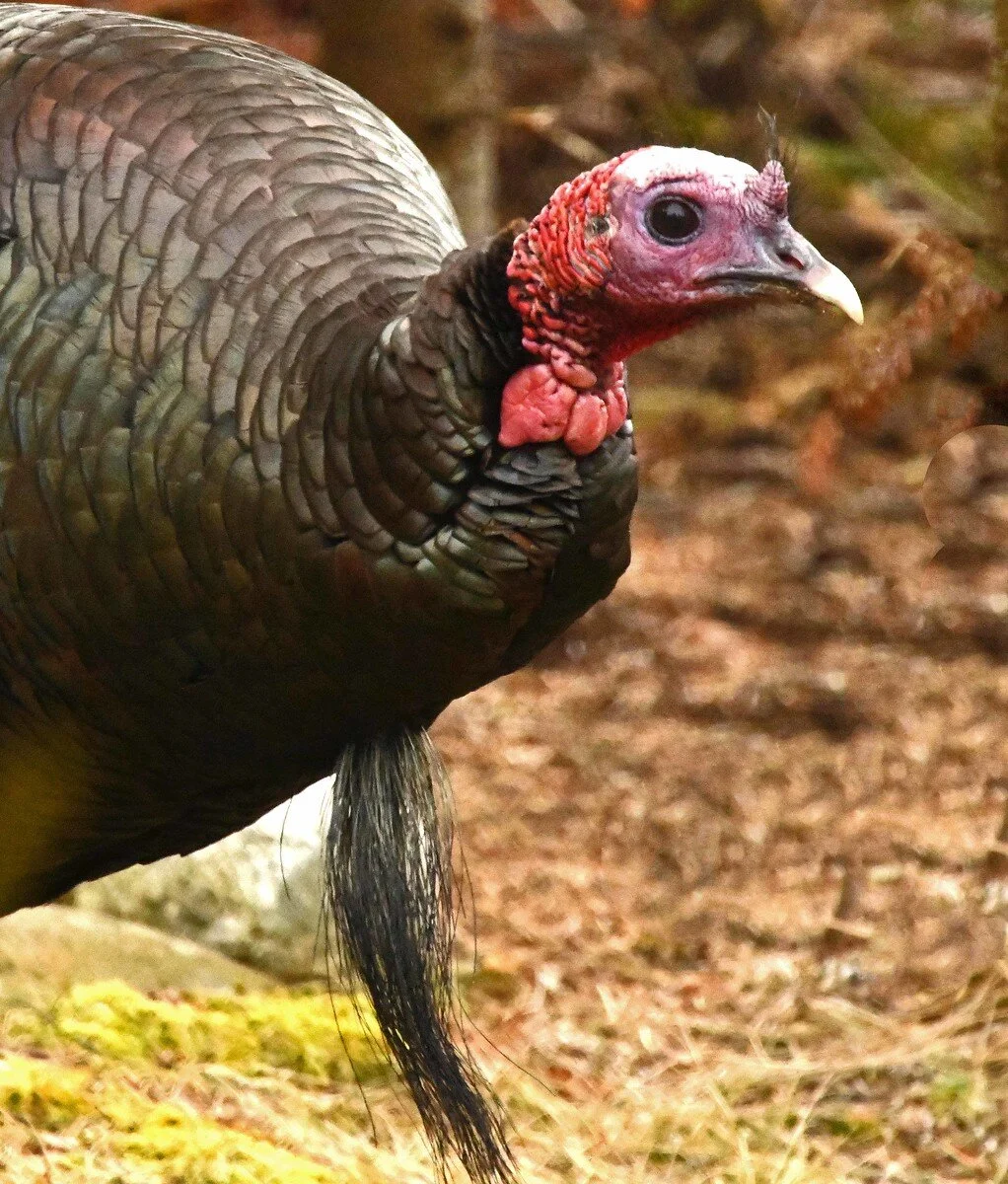
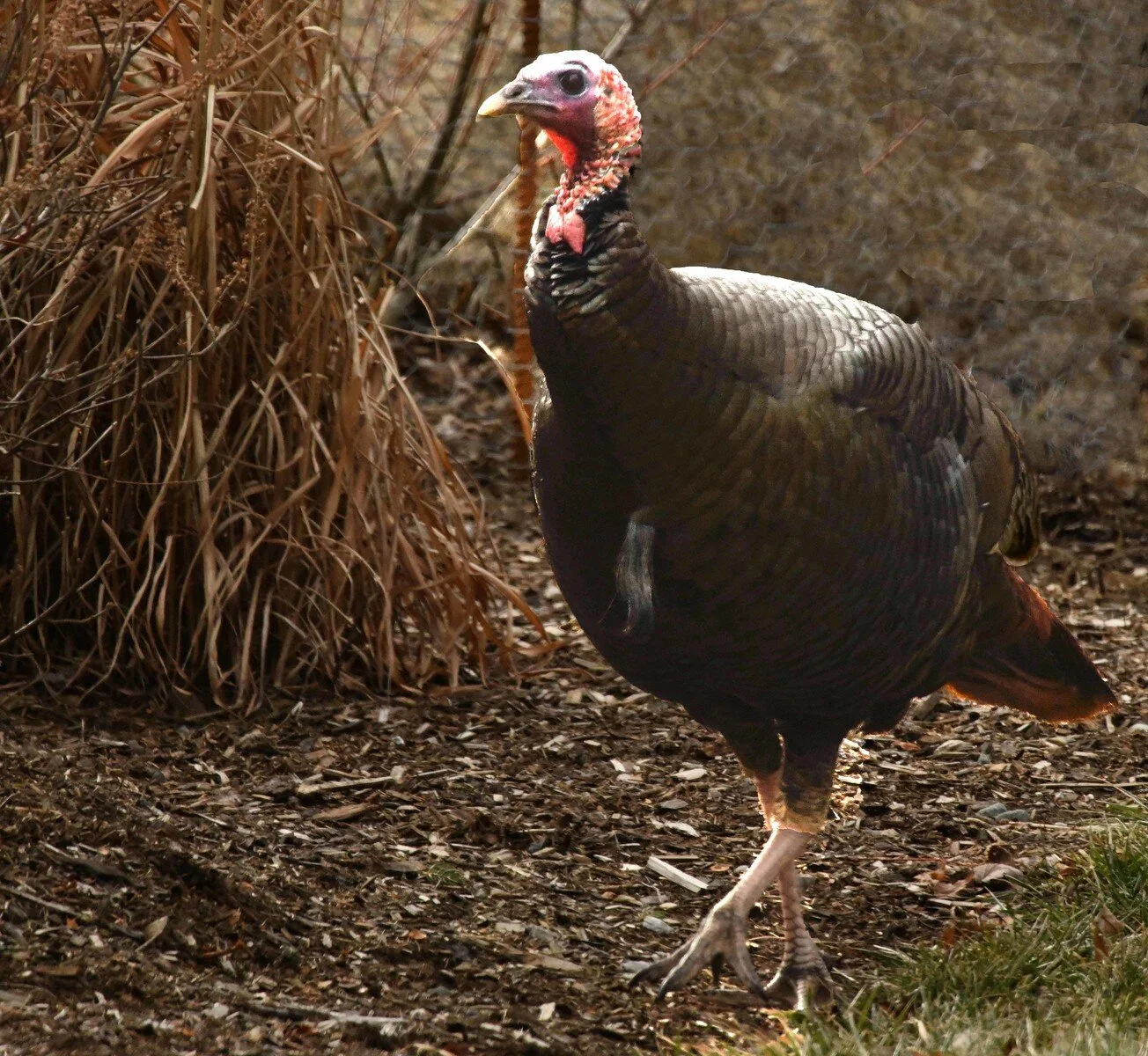
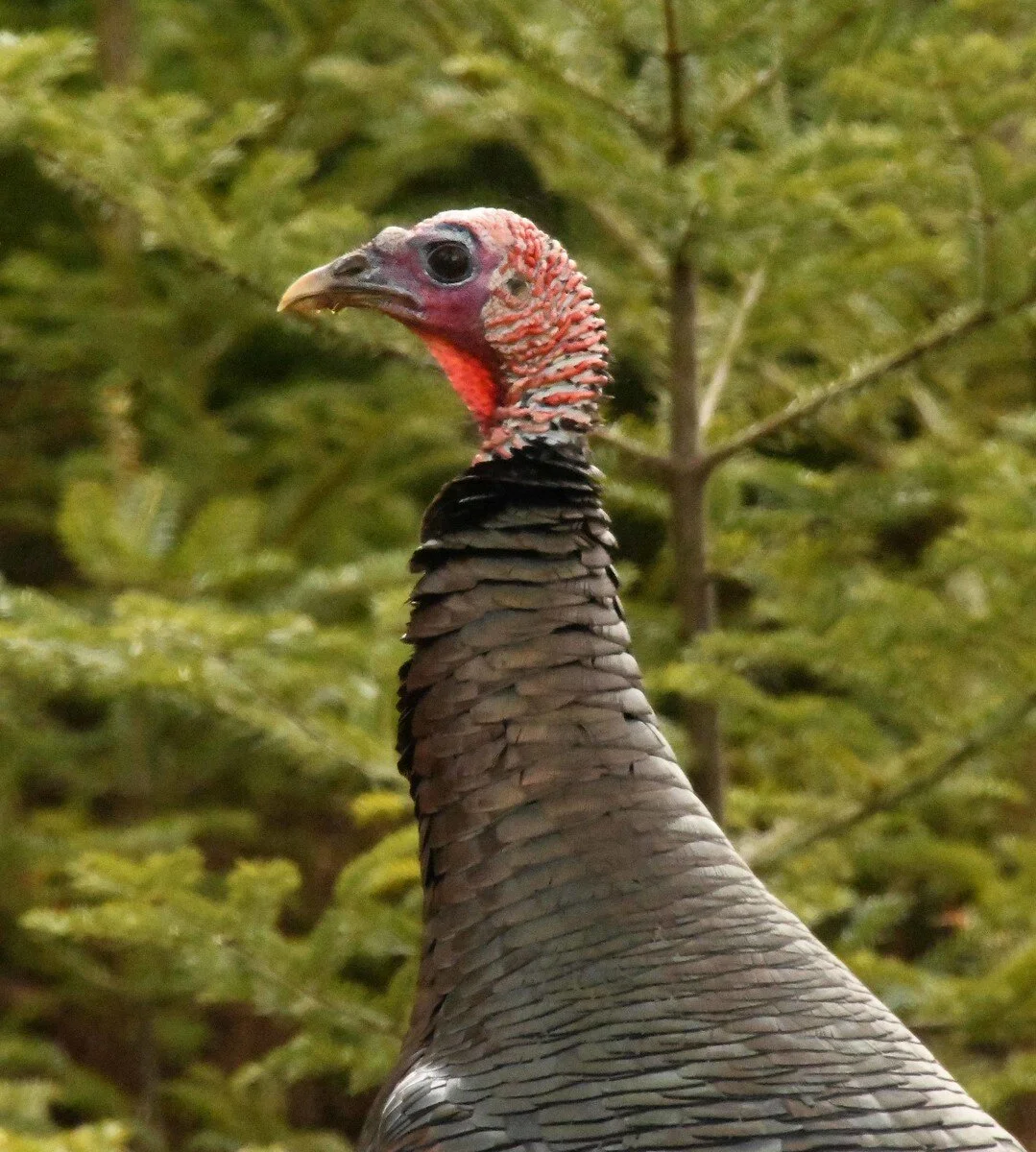
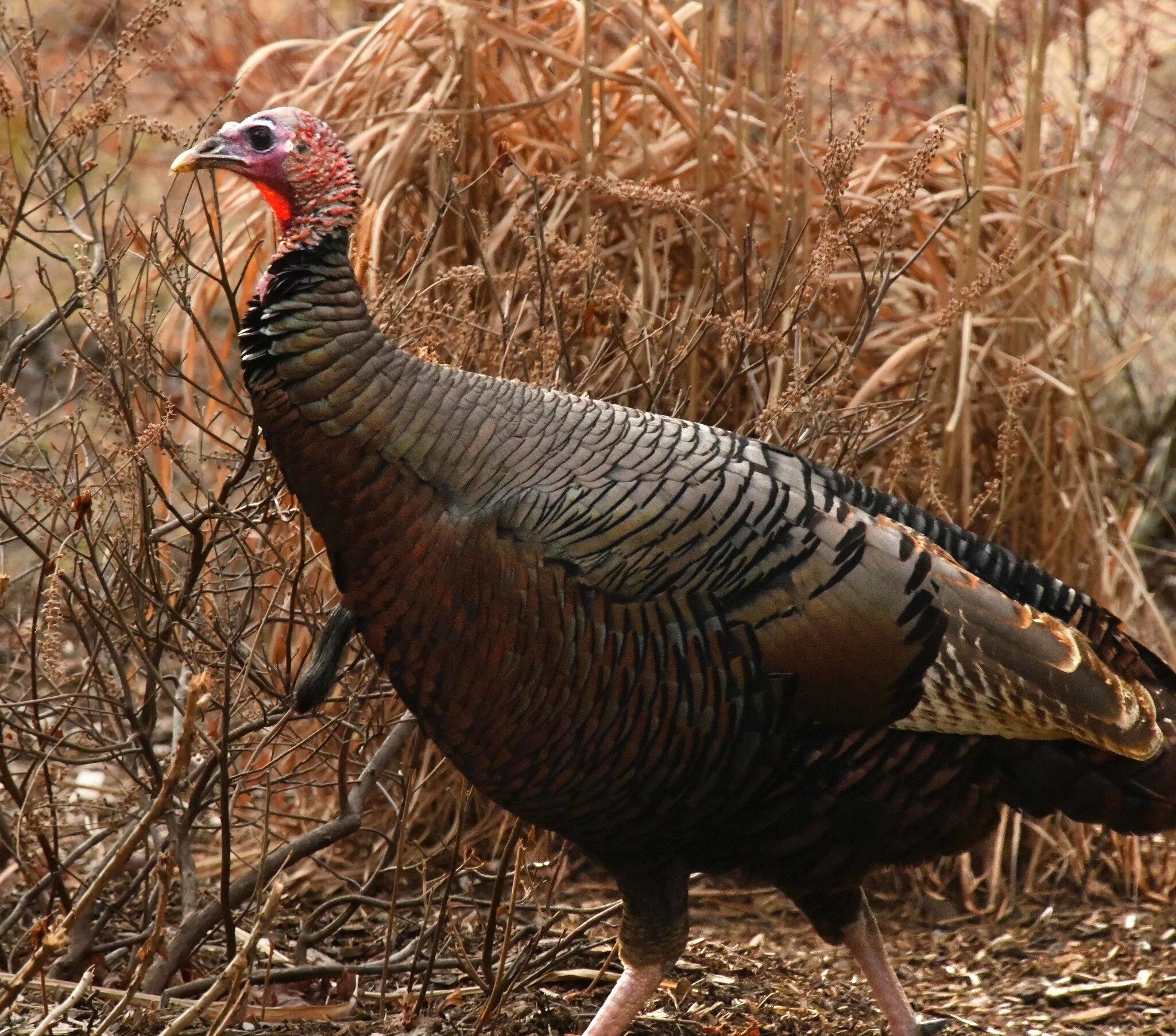
A seven-member wild turkey troupe that came by yesterday to peck and scratch and excrete under the bird feeder. We have at least three distinct nomadic tribes of them that wander by regularly according to some schedule known only to them. Here’s the apparent leader of yesterday’s tribe:

i-WmngPDF-X3.jpg

We’re finding it increasingly difficult, however, to love the turkeys the way we do the deer and red squirrels, which also have become overpopulated and bold to the point of sometimes being pests and traffic hazards.

4.jpg

Maybe it’s that turkeys insist on traveling by gawky-headed walking, rather than elegant flight. Maybe it’s that they look like they were designed by a madman: head like a vulture with boils; neck that can be elongated like a feathered snake; body like a bulbous gourd (or shmoo, for old Al Capp fans); naked, scaly legs and sharp toes like an ostrich or giant chicken….

3.jpg

Nonetheless, we’ve come to think of them as our turkeys and we put up with them and they with us.

2.jpg

(Brooklin, Maine)

Comment

January Postcards From Maine

2 Comments

January Postcards From Maine

The first month of the new decade was very mild for a January in Down East Maine. There often was a stillness to it., except for the energetic streams carrying snowmelt to the bays.

1.jpg
3.jpg

The low light of the season always had us checking the skies near dusk, when sunsets and their afterglows often made the day’s end dramatic.

9.jpg

January’s nights could be as dramatic as its days. The month’s full moon was the Wolf Moon, according to Native American legend. And, this year we had two lunar bonuses. The moon was a Super Moon, being at its closest point to earth. Also, in the latter half of January, the moon became a brilliant waxing crescent that would race above us on its way to the rest of the country.

10.jpg

Of course, it wouldn’t be January in Maine without snowstorms. But, we had to make due with only two plow-worthy storms.

15.jpg
27.jpg
16.jpg

Weather-wise, there are few things better than a sparkling sunny day after a night of blowing snow — and, we had one.

29.jpg
43.jpg

We also had ponds that froze, thawed, and refroze:

While we had little snow, we had plenty of rain and fog, often working as a pair to produce dream-like scenes.

49.jpg
52.jpg

Our usual wildlife seemed to snigger at the mild weather this January. There appeared to be no stress, even on those that lived by grazing grass, foraging for anything edible, or digging up buried nuts.

56.jpg

Many of our fishing vessels stayed in the water after lobster season and converted to trawlers with booms, masts, and wind-protective shelling huts. They dredge for scallops or urchins in January.

66.jpg

We end with a beginning — the calm of a sunny January dawn after a night of high winds and snow. It’s a good way to remember the first winter month of the decade.

26.jpg

(All images above were taken in Down East Maine in January 2020, except the “Wolf Moon” superimposition, which was created that month from prior images.)

2 Comments

Comment

In the Right Place: January Evening

Here we have images of the sunset afterglow over Great Cove at about 4:30 p.m. on Wednesday (January 29) :

1.jpg

A half an hour later, the waxing crescent moon climbing fast over that spot as the sky darkened.

2.jpg

It was clear, cold, and Venus, the Evening “Star,” tried to steal the show. (Brooklin, Maine)

Comment

Comment

In the Right Place: Orange Delicacies

We’ve had January cold weather for the past few days, which doesn’t make it easy for those who harvest scallops or green sea urchins. Here we see some of these stalwarts out in Naskeag Harbor on Tuesday (January 28), dragging for the seaweed-eating urchins.

A.jpg

The orange reproductive innards of urchins (gonads called “uni”) are delicacies in Japan and other parts of Asia, to which Maine processors air-freight the fresh creatures whole or their processed uni.

The commercial urchin-dragging season here ends in late February or mid-March, depending on zone. Harvesting urchins here also is done by raking, trapping, and diving. The urchin-dragging regulations require, among other things, that the drag net be no more than five and one-half feet wide and that the urchins taken be no larger than three inches and no smaller than two and one-sixteenth inches. Here we see a crew member measuring urchins to see if they’re legal:

B.jpg

(Brooklin, Maine)

Comment

Comment

In the Right Place: Coming to Her Senses

I’m certain from her actions that this young white-tailed deer was not aware of me while she was deciding whether to come fully out of the woods on Sunday (January 26). I was well hidden about 150 feet away and the wind was coming from behind her.

1.jpg

Thus, I wasn’t worried about her extraordinary sense of smell. (Research indicates that her nose has up to 297 million scent receptors, compared to a dog’s 220 million and our pitiful five million.)  I also wasn’t too concerned about her seeing me if I remained still. Deer don’t have extraordinary eyesight during the day and they can’t focus well to the side with only one eye. However, I arguably was within her hearing range. Although white-tails don’t have extraordinary hearing, they are programmed to alert when hearing a sound that is not natural to their environments.

Thus, when my camera “clicked” in taking the first image here, she alerted and turned her widened eyes, flaring nostrils, and revolving ears all in my direction.:

2.jpg

I don’t think that she saw me as I took the second shot, but she heard it and, trusting her instincts, melted back into the woods. (Brooklin, Maine)
Comment

Comment

In the Right Place: Getting Real

Sometimes, the difference between the intrigue and joy of abstraction and the grit and sweat of reality is merely a matter of framing. Here, we see eye-catching gear from last year’s lobster season.

7.jpg

Below, we see the gear as it really was Sunday (January 26), on a weather-beaten raft in foggy Naskeag Harbor.

8.jpg

The raft likely will be hauled up and stored with others in the pier parking lot there until being put back into the water in June. (Brooklin, Maine)
Comment

Comment

In the Right Place: Midwinter Day's Dream

Yesterday morning came to us shrouded in mild rain and fog. It enclosed us in a soft, dream-like world, where we could see the snow before us being washed away, but couldn’t see the herring gulls that were crying 100 yards offshore.

2.jpg

There was a dreariness in which beloved things could be imagined as being tested by human reactions: the desperation of the Cemetery’s old Camperdown Elm, as she tries to shelter her assigned souls; the loneliness of the abandoned shed on Brooklin Boat Yard’s pier, as it watches Chatto Island disappear….

1.jpg

(Brooklin, Maine)

Comment

Comment

In the Right Place: Rising Up

Here we see a hen and two drake Mallards making themselves conspicuous in Blue Hill Bay on Wednesday (January 22). Perhaps they sense that the hunting season for them ended in the first week of the month.

1.jpg

Curiously, a group of Mallards on land or in the water is called a “flock,” but when they take flight, they’re called a “sord” of Mallards. (Note: some nature articles incorrectly call multiple Mallards a “sord” when they’re in “flock” mode and vice-versa. It’s helpful to realize that “Sord” is derived from the Middle English word “sorde,” to rise up.) Below, in an image from a prior year, we see a sorde of Mallards about to land and become a flock:

2.jpg

Nonetheless, when it comes to flying, Mallards are no slouches. They’ve been clocked at 70 miles per hour and can explode out of the water in virtually vertical flight.  (Brooklin, Maine)

Comment

Comment

In the Right Place: Wave

Snow is melting fast, streams are overflowing their banks, and ice-entombed rain chains are dripping like leaky faucets. It feels good, but this is not usual for January. The cold and ice of early in the week was what is usual for January.

2.jpg

Since then, we’ve been having a winter warming wave – the high yesterday was almost 40 degrees (F) and the day before it was above 40. As we speak early this morning, it’s already 37. The historical average temperatures for this week have been less than 30 degrees, according to local records.

4.jpg

Meanwhile, precipitation this month has been well below average, which may mean that, when the rain comes, it will lead our Town’s boat builders to wonder what type of planking is best for arks. (Brooklin, Maine)

Comment

Comment

In the Right Place: Stonewalling

January 24, 2020

One of the best times to view New England stone walls is January when they’re framed in snow, according to “Exploring Stone Walls,” a field guide by Robert Thorson. Here, you’re viewing a local stone wall, as it was snow-framed yesterday, January 23.

i-pqW3PQ5-X3.jpg

This wall was constructed about 30 years ago over the remnants of an ancient stone wall designed to pen in sheep. It’s now a traditional “double wall,” consisting of two parallel rows of large stones with smaller stones and gravel between. “Single walls” also were built in neat, single-stone rows by fastidious farmers. More frequently, farmers created less artistic stone walls called “dumped” or “tossed” walls. These were all “drystone” (no mortar) field walls, usually built from cleared stone for agricultural purposes. More artistic “laid” walls, wet or dry, often were built nearer the house for attractiveness.

The oldest documented stone wall in New England was constructed by English settlers in 1607, north of what is now greater Portland, Maine, according to another book by Thorson, “Stone by Stone: The Magnificent History of New England’s Stone Walls,” a source for much of the material here. (Brooklin, Maine).

Comment

Comment

In the Right Place: Waiting

Here we see a low sun lighting a low tide yesterday afternoon at Naskeag Harbor. It was the kind of day that could bring contentment to January – cold, but of the freshening kind; snow-strewn in places, but not slushy or very dirty snow; disappearing light, but golden not pewter light.

i-jPNDr3S-X3.jpg

The vacant, snow-clad house on Harbor Island seems to be waiting patiently for its summer residents to return when its grass will be green and its flowers in bloom. The Fishing Vessel Dear Abbie:, wearing her scalloping equipment now, also waits at her mooring, but more like a hunting dog that is eager to leap into action.

i-4qNL3Dv-X3.jpg

(Brooklin, Maine)

Comment

Comment

In the Right Place: Second

In the Right Place: Second

While walking in the woods Sunday morning (January 19), I became quite confident from the state of the overnight snow on the path and the early hour that I was the first two-legged mammal to go that way that day. Then, I saw ski tracks coming out of a side trail that went where I was going!

i-t23rRBp-X3.jpg

In about a quarter of a mile, his or her ski tracks went right where I had to go left. It’s not so bad coming out second to The Phantom Skier. (Brooklin, Maine)

Comment

Comment

In the Right Place: The Beat Goes On

Our second significant snowfall of the new decade came mostly during yesterday’s wee hours and was ready for plowing in the early day’s light.

New.jpg

The snow was wetter than its predecessor and, in places, the wind was able to whisk it into what looked like slathers of whipped cream – an oddly pleasing sight when served with rustling cattails around a marsh pond.

i-xPvZ6nT-X3.jpg

(Brooklin, Maine)

Comment

Comment

In the Right Place: The Day After

Yesterday, we wandered through Thursday’s dark but purifying snowstorm; today, we wander through the cold and clear day after, Friday (January 17).

1.jpg

As we see above, dawn had some gold in it as it slipped into the North Field and began to light the spruces at the far edge. On the other, eastern, side of Naskeag Peninsula, Acadia National Park stood in relief across Blue Hill Bay. Mount Cadillac usually mostly deep green, was powdered white..

Each snow storm has its special features. In this one, we think it was how the spruces and balsam firs seemed to be daubed thickly with a palette knife to add voluptuous textures to their overlapping layers.

4.jpg

Snow-dabbled winterberry shrubs competed with each other and with old apple trees for best in show, abstract art division:

7.jpg
15.jpg
16.jpg

The purity of that bright, snow-accented day brought out the character of houses, barns, and even institutions:

20.jpg

The deer started to arrive in the honeyed light of late afternoon, their heavy winter coats glowing. They waited until after dusk to socialize in the field where we began this little journey.

19.jpg

(All images above were taken on January 17, 2020, in Brooklin, Maine.)

//

//

//

//

//


Comment

Comment

In the Right Place: Plow-Worthy

The first plow-worthy snowfall of the new decade occurred Thursday (January 16) and we ventured forth into it during the morning. It snowed the entire time that we were out, sometimes a fine powder and sometimes the chunky variety, as these images would show, if enlarged. By the end of day, we got almost four inches of snow at our house.

The Town of Brooklin carried on as usual. The General Store seemed to be doing a good business; people were walking in and out of the Library as if nothing had happened; most of the fishing vessels were out of Naskeag Harbor, and the residents of the Brooklin Cemetery got some good insulation.

1.jpg
4.jpg

It was in the woods and fields — where there were no people — that the storm created some serious beauty. The snow became a sticky meringue icing on the spruce and fir.

5.jpg

The old, rugged apple and crab apple trees gained racing stripes. Those that had yet to let go of their apples often took on some of the qualities of Japanese Sumi-e painting.

8.jpg
11.jpg

Country lanes and paths had no traffic early in the morning. The purity and grace of their lines for once trumped their functionality.

26.jpg
15.jpg

There was little color, but winterberry and ornamental grasses provided daubs of red and rich browns here and there.

The woods, streams, and marshes were silent and virtually monochromatic, except for water-polished granite and trail blazes.

24.jpg
22.jpg

The human touch became more apparent in the half-light and included wood fences and log piles; a classic bench and stone wall under a frosted Katsura tree; lobster traps in the side lot, and Revolution Red paint jobs:

13.jpg

In the sun of the prior day, the Fuller Family road banner seemed out of place. But, as the snow came down on it Thursday, it proved prophetic.

32.jpg

The wildlife came out at dusk and went about their business of surviving as best they could.

29.jpg

(All images taken on January 16, 2020, in Brooklin, Maine.)


Comment

Comment

In the Right Place: Death of a Friendly Giant

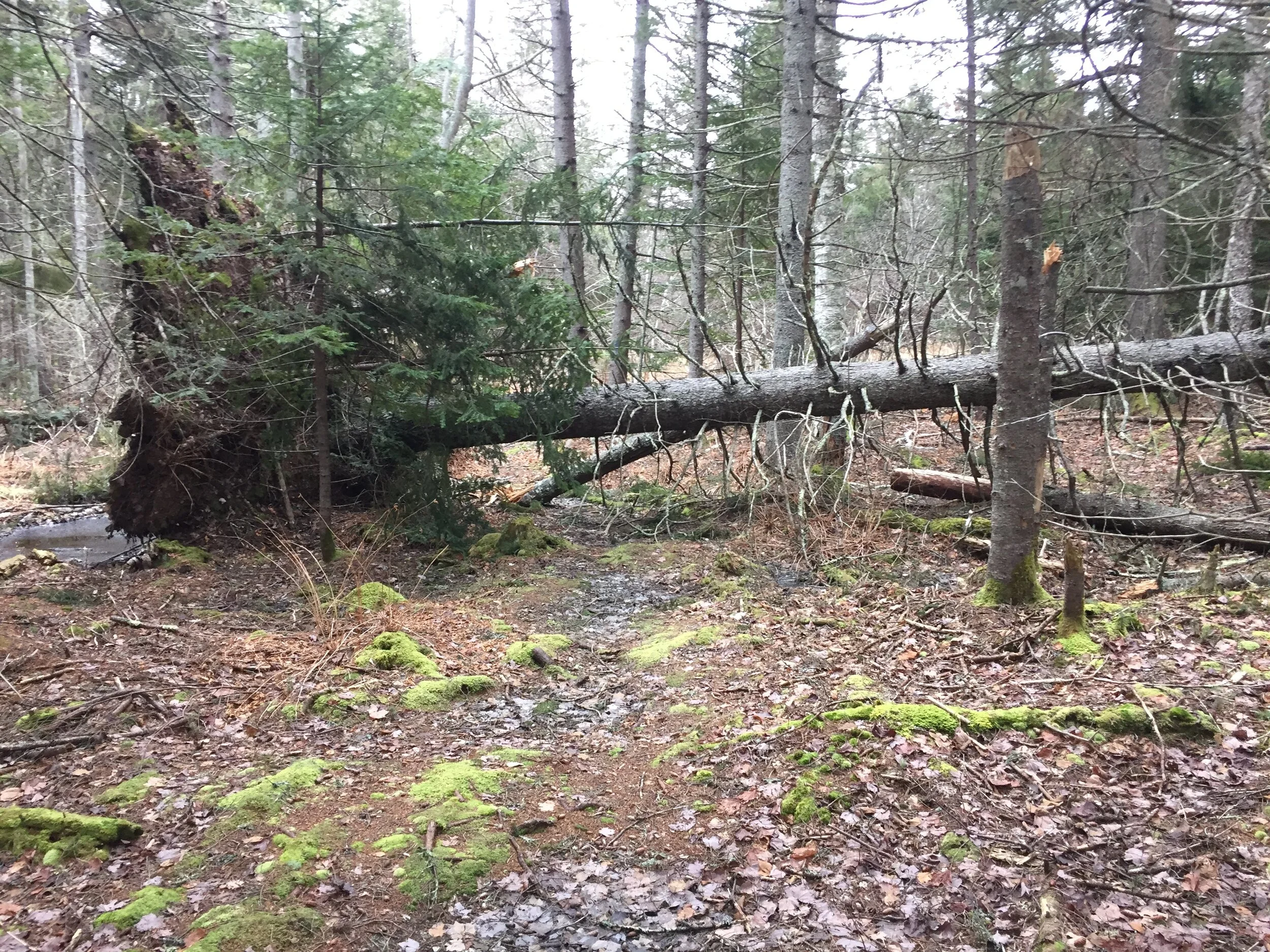
One of our locally prized red spruces died an inglorious death earlier in the week. Pounding rain, high winds, and ground-thawing temperatures got it rocking uncontrollably; one of its sways went too far and the 85-footer blew down, ripping an almost 20-foot-diameter root plate from the ground. It splayed in an ungraceful, seemingly embarrassing, position across a trail used by local hikers and wildlife.

011320.JPG

Although we have thousands of big spruce and firs here, seeing one go always is saddening. Red Spruces are very slow growing. They often reach a length of 130 feet and, sometimes, 150 feet. This red spruce probably was a sapling in the 1930s and still was a youngster when it went down. The species can live for 250 to 450 years, depending on conditions, according to experts.

Fortunately, Kyle Chick and his assistant from Blue Hill Tree Service & Arboriculture were working nearby; they came by Wednesday (January 15) and opened a passage in the trail, during which the tree’s large root plate sprang back into its original position.

6.jpg
7.jpg

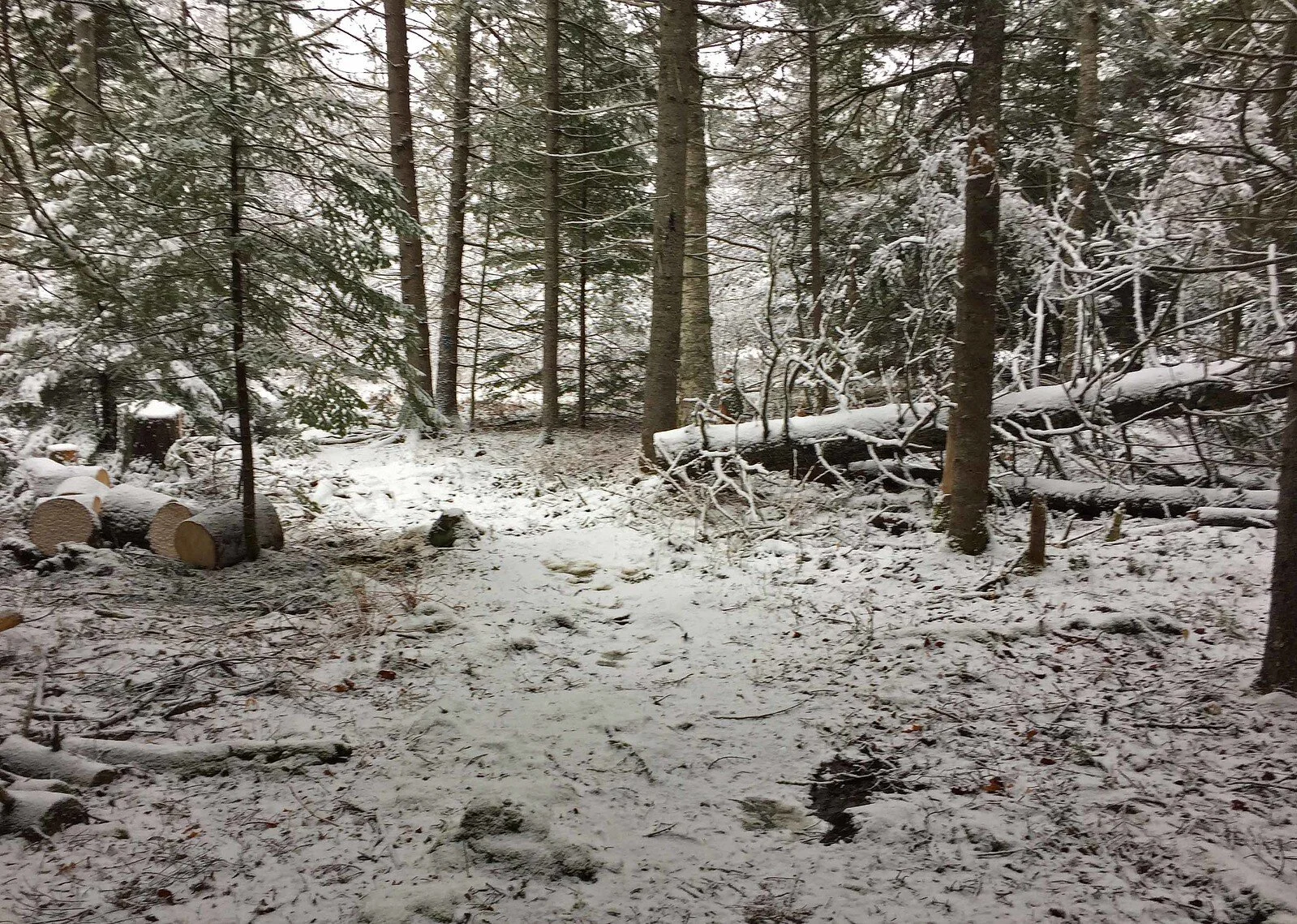
Here’s an image of the opened trail yesterday as the snow started falling:

011620.JPG

(Brooklin, Maine)

Comment