February Postcards From Maine

5 Comments

February Postcards From Maine

February is supposed to be the grand finale of winter here, the month of blinding whiteouts, plowed snow piled high, bitter cold, and gray days followed by days so bright that they make your head hurt. Well, not quite this year. We’ll blame it on Climate Change until a better reason comes along. Nonetheless, February did have a few good winter moments, including two plow-worthy snowstorms that we explored with camera in hand.

39.jpg
40.jpg

During and after the snowstorms, some of our miserly old apple trees held tightly onto their fruit, providing red memories of Fall, albeit withered memories.

23.jpg

A sunny February day after a gray snowy one is one of the great pleasures of a rural life. We had several of those. On one such days, snow hid imperfections, ice glistened in branches, and an orange-burnished sunset tucked the day in as if it were a precious child.

44.jpg
46.jpg
6.jpg

Speaking of the white stuff, February’s full moon was called the Snow Full Moon by Native Americans. This year, it rose dramatically into a densely clouded sky and looked very “February.”

30.jpg

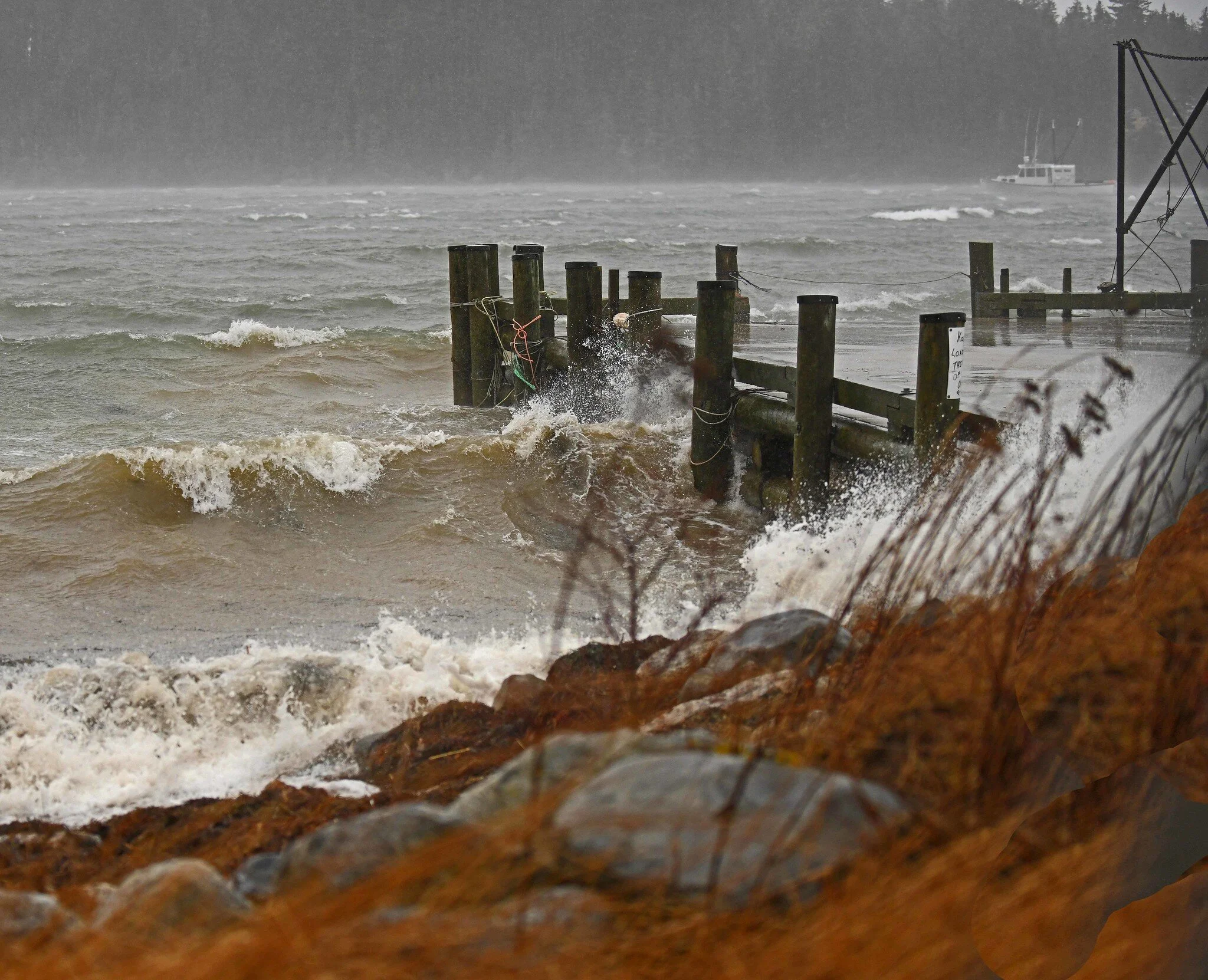
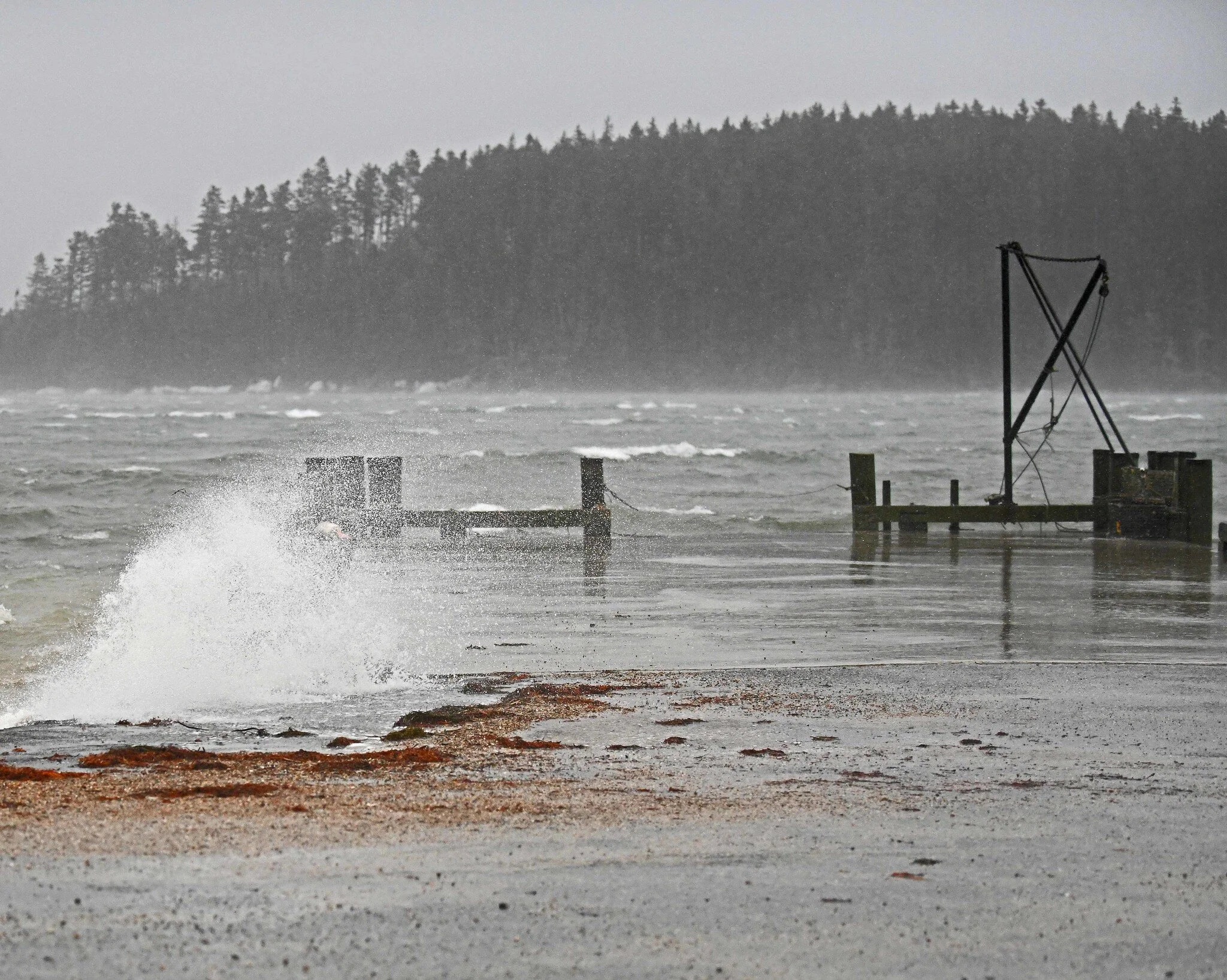
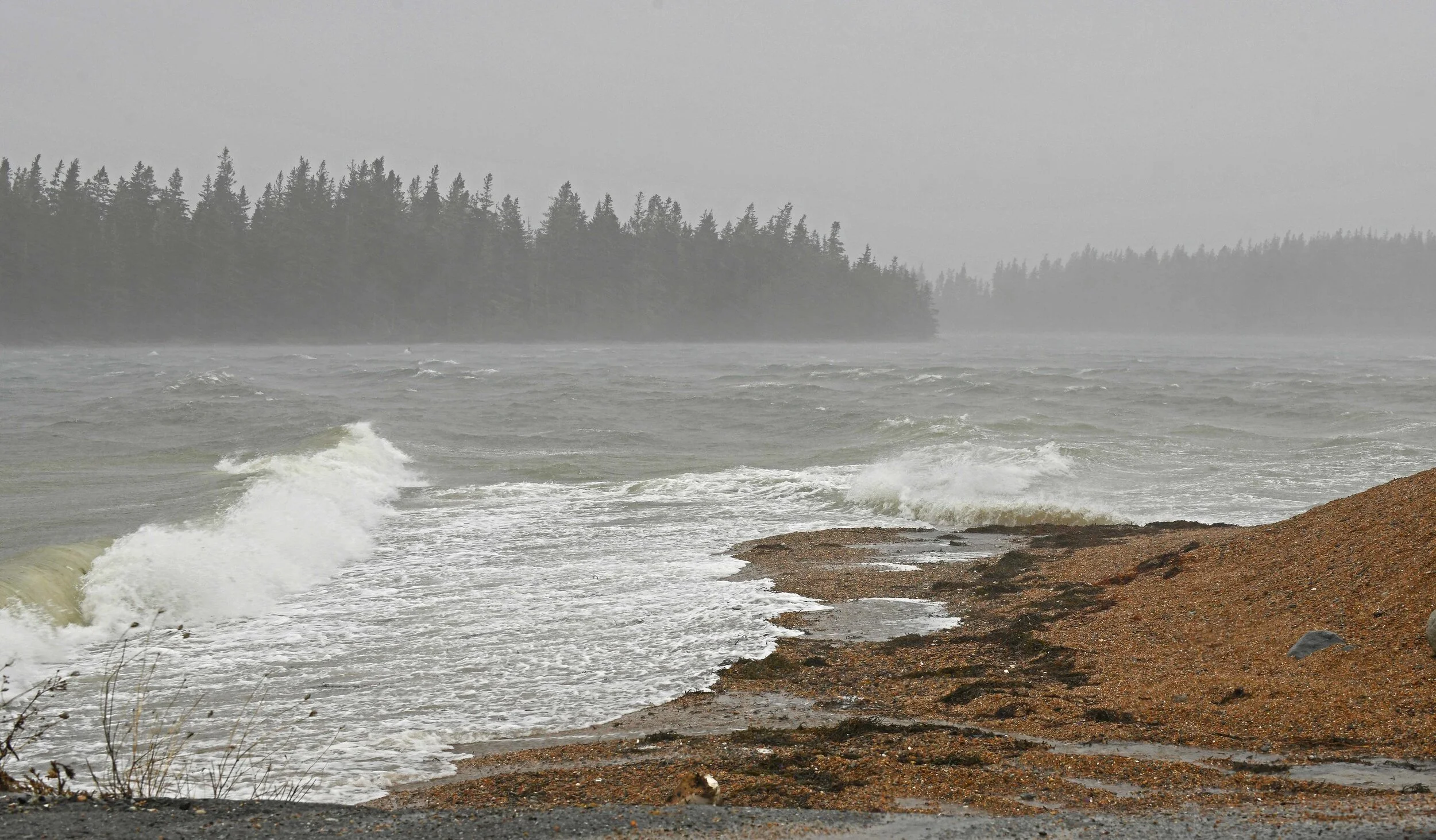
Although we had little snow, we had plenty of fierce rain and high winds, a combination that downed trees, disrupted electrical power, and devastated dirt driveways.

However, those windy days created a traveling color show along the coast, where fishing flotsam came bobbing in for a brief rest.

61.jpg

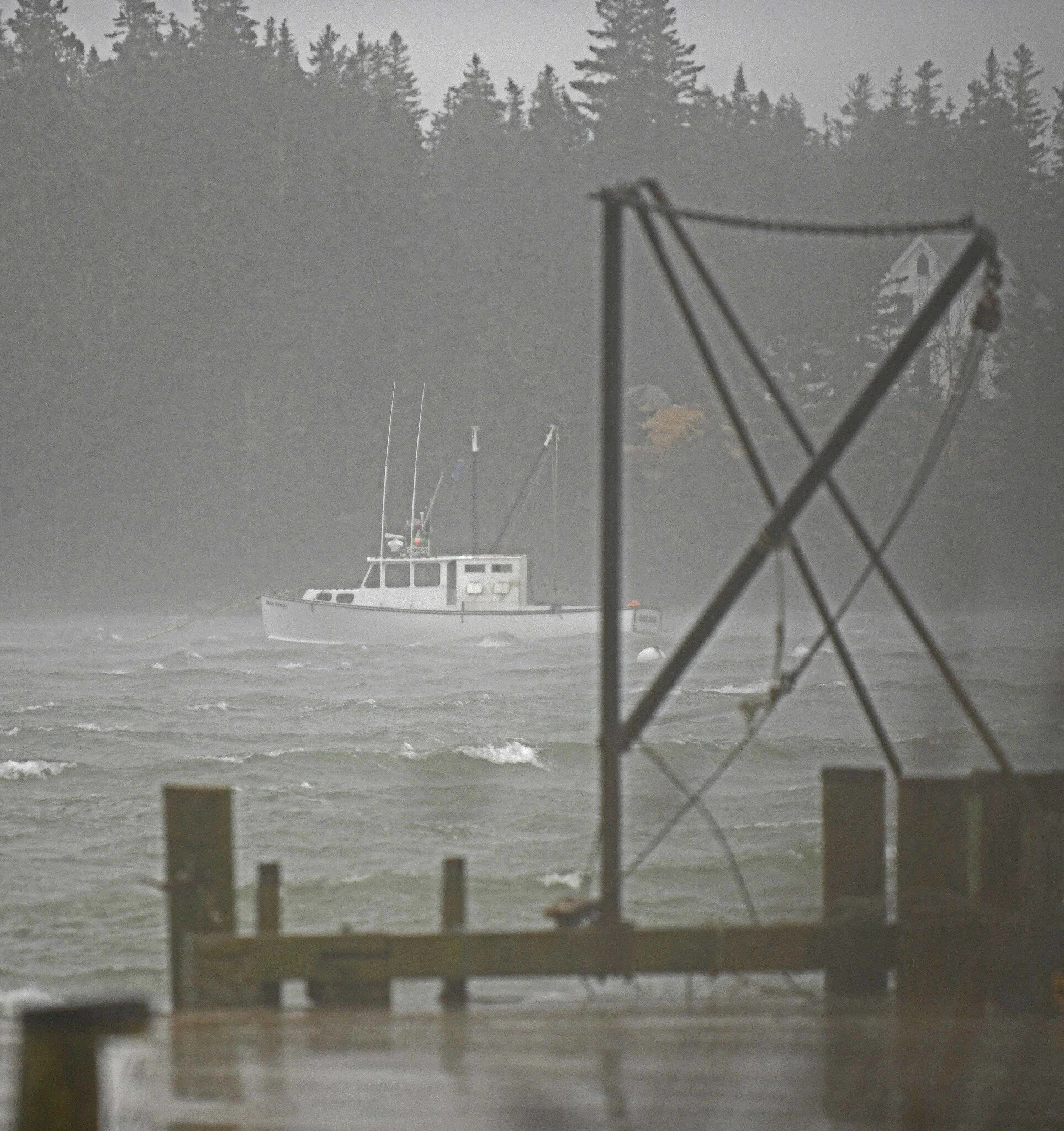
Some fishing vessels remain working in February here, fishing for scallops and urchins, mostly. But, a good number of vessels are put “on the hard” and go to bed with nightcaps on.

19.jpg
20.jpg
21.jpg

In the wildlife category, the mild month made survival easier for our resident rafts of Wild Turkey and herds of White-Tailed Deer in thick winter coats that gather falling snow. However, that survival always is subject to some culling by our Eastern Coyotes, sometimes called Coywolves. Note the fresh deer leg bone in the mouth of one of our residents, below. (Eastern Coyotes, are the result of a significant coyote migration last century; they’re larger than their Western cousins because they picked up a significant percentage of wolf in their DNA along the way.)

Coyotes can’t reach our annual convention of about 400 Common Eiders in Blue Hill Bay. They come into the fast waters of Blue Hill Falls with the rising tide and dive for mollusks and crustaceans.

14.jpg

Finally, February is about love. Valentine’s Day is a great excuse to brighten the winter of a loved one. This year’s flowers from Fairwinds Florist in Blue Hill did the job nicely for one beloved person:

63.jpg

(All images above were taken in Down East Maine during February 2020.)

5 Comments

Comment

In the Right Place: The 4th Dimension

Today is Leap Day, an extra day in our lives that is given to us by calendar makers only every four years. It’s a reminder of the value of Time, which seems to have become mankind’s most important dimension. Most of us need uniform calendars and clocks to exist effectively in today’s world. We need to be “on the same page” with others for everything from baptisms to funerals.

C.jpg

In significant part, that’s because we now live our lives according to how long it takes us (and the Earth we’re on) to make one revolution around the Sun. A trip around our star takes us 365.2422 days, as we now measure things. That’s about six hours more than the standard calendar year of only 365 days, which includes a February of only 28 days.

So, we forget about those six hours until they add up to a whole day in about four years (6 x 4 = 24); and, we make that today, February 29. If we didn’t “leap” into this extra day, time would continue to get away from us and we’d end up with summer beginning in mid-July. (Brooklin, Maine)

Comment

Comment

In the Right Place: Wet, Windy, and Mild

Here we see Naskeag Harbor roiling in yesterday’s storm of teeming rain and wind gusts of over 50 miles per hour. The tide ripped seaweeds off their rocks and beached them:

B.jpg
F.jpg

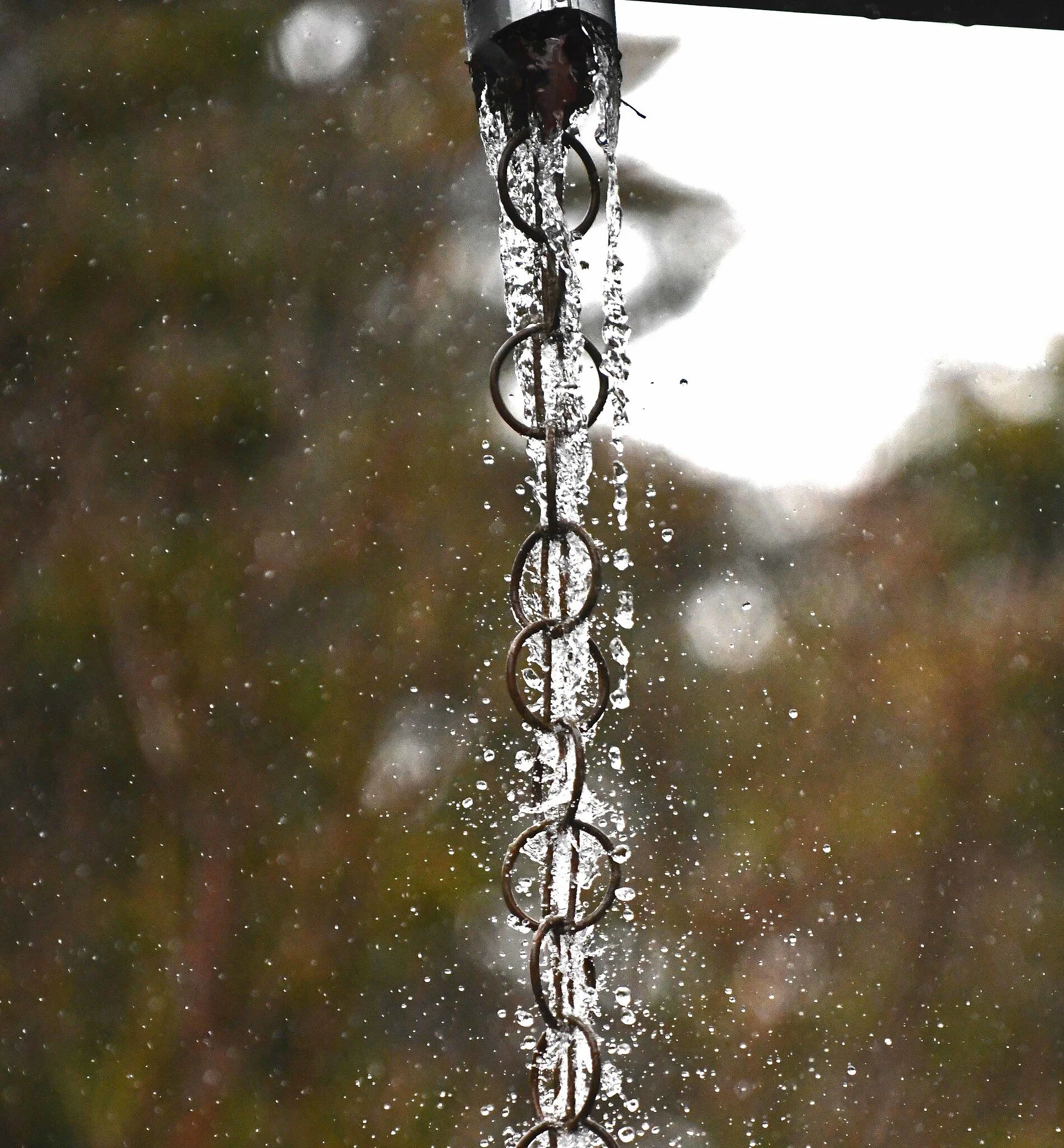
Rain chains worked overtime:

E.jpg

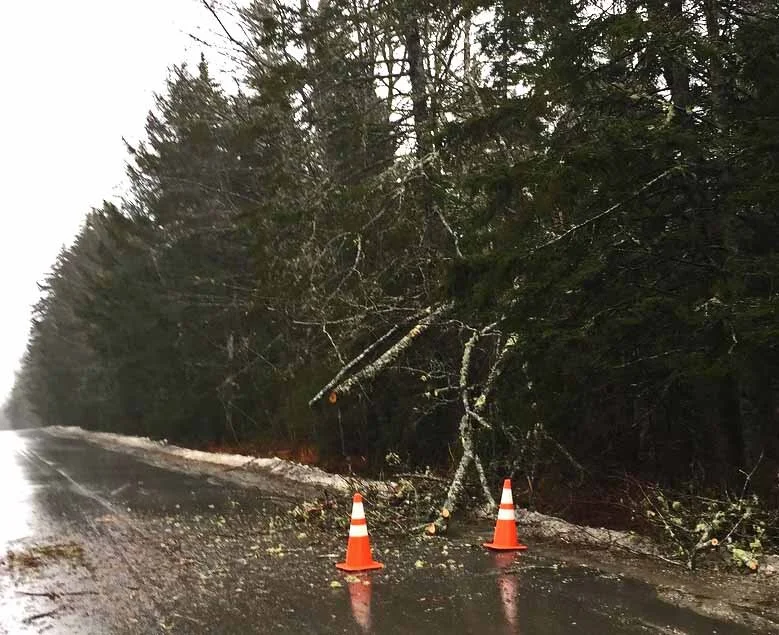
A few trees came down into Naskeag Road and a few people temporarily lost power.

022720.jpg

Nonetheless, the temperatures remained mild for February and much of the remaining snow and ice was washed away. By four p.m., the sun was trying to break through in an eerie way. As we speak, its sunny, 28 degrees (F) with gusts of 28 MPH that are white-capping Great Cove. (Brooklin, Maine)

Comment

Comment

In the Right Place: The Ancient Future

This abstract expression was not created by Jackson Pollock in a red mood; it was created by the sea in a bad mood. It’s an image of seaweeds in the low sunlight of a February afternoon. They were ripped from their rock holdfasts by a recent turbulent tide and stranded on Great Cove’s shoreline.

021720-5.jpg

The species here appear to be mostly Dulse (Palmaria palmata) and Knotted Wrack (Ascophyllum nodosum), which is our principal “Rockweed” that attaches itself to rocks and other hard underwater surfaces.

Seaweeds such as these often are considered to be in the plant kingdom, but they’re not true plants. They’re rootless algae that seek external food like animals, but they also create internal energy (photosynthesis) like plants. They’ve been used by mankind for thousands of years as human and other animal food, fertilizer, medicine, and cosmetics, among other things.

Today, attention has focused on these marine algae to see if they might be mankind’s next major commercial harvest from the sea. Let’s hope that any such wild-cut sea harvest is more sensitive to the environment than prior major commercial harvests that lacked forethought, such as the over-harvesting of the smaller fish (alewives, etc.) on which local cod preyed, which apparently has almost extirpated our once numerous cod. (Brooklin, Maine)

Comment

Comment

In the Right Place: Blimey!

Here, living in our melting snow and ice, is a tiny fungus called British Soldier Lichen (Cladonia cristellata). Its name derives from the British uniform referenced in the New England warning, “The Redcoats are coming!”

Y.jpg

However, these redcoats won’t fit anything much larger than a pinhead and they like to bivouac on cedar tree stumps.

X.jpg

Nonetheless, the lichen is considered to be a tasty treat for white-tailed deer, wild turkeys, and other mixed salad lovers. We say “mixed” because lichens are two symbiotic organisms – a fungus and an alga – in partnership to help each other. Basically, most of the combined body is a fungus that provides protection, water, and minerals to the lichen; the alga makes sugar from sunlight for the fungus. Because their “bodies” are mostly fungi, lichens are classified as fungi. (Brooklin, Maine)

Comment

Comment

In the Right Place: Meltdown

Despite our recent tropical temperatures (i.e., 40F+), there were rink-sized patches of ice in the woods and on spruce-shadowed country lanes. The slick stuff was appearing from under the melting snow and plowed crusts yesterday.:

1.jpg
2.jpg

For those who can’t resist the come-hither call of the woods, cleats and/or a hockey stick are advised until the ice melts fully. (Brooklin, Maine)

Comment

Comment

In the Right Place: FQ Time

(Posted on FaceBook February 24, 2020)

And now, from our Frequent Questions Department: “Are Maine fishing vessels taken out of the water before winter?” [Drumroll] The Answer: “Yes and no.” [Cymbal Crash]

Below, we see Earnest, near Surry Landing, telling shivering neighbors: “Come on! It’s warm enough to take off our caps.”

021620.jpg

Long Set, below, is squinting into the freezing wind in Naskeag Harbor, muttering: “If I hear another ‘How Quaint!,’ I’m gonna puke.”

5.jpg

(February 2020, Surry and Brooklin, Maine)

Comment

Comment

In the Right Place: Coyness

We have at least three Coyotes on or near our (and their) property, judging from the moonlight howling contests that these canines sponsor. They’re extraordinarily elusive, but we did get a glimpse of one at a great distance yesterday. We’re sorry about this bad image, but – if you have good eyes – you’ll see one of our locals with what appears to be a fresh deer femur bone in his mouth. (Sex assumed.)

Y.jpg

Enlarged portion:

X.jpg

The estimated 12 to 15 thousand Coyotes in Maine are so-called Eastern Coyotes or Coywolves. Their ancestors bred with wolves and dogs during the Great Coyote Migration from the west in the past century. DNA analyses in 2014 found that the Maine hybrids studied were approximately 62 percent Coyote, 14 percent Western Wolf, 13 percent Eastern Wolf, and 11 percent domestic dog. It’s thought that the interbreeding of the Eastern species is over here due to the canines reaching sufficient numbers.

The wild prey of the Coyotes around here appears to be mostly small mammals, occasional wild turkeys, and young and small deer. (Now, when snow and ice in the woods inhibits the leaping ability of deer, yearlings are more vulnerable. In the spring, newborn fawns also are vulnerable.) Coyotes also eat berries and other plant food, not to mention garbage.

There apparently has been no reported human injury from a Coyote attack in Maine, although there have been some reported attacks in other states. Nonetheless, Maine public policy is not friendly to coyotes. Except for Sundays, hunters may kill as many as they wish during the daylight hours and they may be hunted at night from mid-December through August 31. (Brooklin, Maine)

Comment

Comment

In the Right Place: Different Strokes

The weather tellers are saying that our recent spate of winter cold will end today. Although the air in the past few days could be piercingly cold, the vistas were stunningly clear and the snow stayed mostly on the ground. Early morning breezes, combined with the pure February light, sometimes turned the sea into unimaginable colors, including something like blue coal being streaked with white wavelets, shown here.

1.jpg

At other times, that light brushed the sea with strokes of green and blue while putting twinkles in the eyes of fishing vessels.

2.jpg

(Brooklin, Maine).

Comment

Comment

In the Right Place: Hatching the Plot

We’re among many thousands of people who are on “Hatch-Watch 2020,” checking from time to time on Jackie and Shadow. They’re a pair of Bald Eagles nesting in beautiful Big Bear Valley, part of the San Bernardino National Forest in California. See the nest here: livestream . (Keep in mind the time zone there.)

EA1.jpg
EA3.jpg

Jackie’s two eggs should hatch any time now, according to local experts. She reminds us of a wounded Bald Eagle that allowed us to take many portraits of her several years ago at a wildlife refuge. One portrait is below. Click on it to enlarge it.

(Brooklin, Maine)

Comment

Comment

In the Right Place: Found Art

Lost or abandoned lobster gear is a sea and seacoast pollution problem taken seriously up here by many of us, but it does have one almost-redeeming aspect.

YY.jpg

Colorful lobster trap buoys that have been separated from their gear wash up onto the shore and often become art in a new frame.

Z.jpg

It can be enjoyed by the eyes while the brain despairs.

021720-4.jpg

(Brooklin, Maine)

Comment

Comment

In the Right Place: Peace

Standing within the last of the honey-toned light of a February afternoon, while drinking down an icy breeze, is, physically and literally, a sensational contradiction. That’s what we were doing standing here all alone on Sunday (February 16), watching and hearing Patten Stream tumble into Patten Bay. It was a moment to “come into the peace of wild things,” as Wendell Berry did when “despair for the world” grew in him.

i-H5q9sXm-X3.jpg

We would not be alone in this beautiful place if it were spring or summer. When the alewives and glass eels migrate in from the open Atlantic to swim up the Stream, this becomes a place where wildlife with wings and fins learn to tolerate humans with nets and cameras.

Upstream, there’s about 1200 acres of clear spawning waters, much of them within 41 acres of conservation property that is open for the hiking public. At the mouth of the Stream that we see here, we’ve watched bald eagles, ospreys, crested cormorants, sea gulls, loons, diving ducks, herons, and – just behind us in the Bay – circling harbor seals. But now, it’s just us and the peace that we’ve found. (Surry, Maine)

Comment

Comment

In the Right Place: Death Grips

Many of our old abandoned apple trees would confound Sir Isaac Newton – they’re still holding tightly onto some of their apples despite gravity, not to mention rain, snow, ice, and howling winds. (The images here were taken from different trees, on Sunday, February 16.)

1.jpg

To be sure, we would not want to eat any of this frozen and deformed fruit, but we like to view its defiance.

2.jpg

A possible reason for the death grips may be that the trees are not producing enough ethylene in their old age. That’s the hormone that ripens apples and plays a part in sensing the best time for them to drop. At that time of ripeness, the hormone stimulates the production of enzymes that eat away at the cells where the apple stems attach to the branches.

4.jpg

It turns out that Sir Isaac was viewing more than gravity at work. (Brooklin, Maine) See also the image in the first Comment space.

Comment

Comment

In the Right Place: Say What?

Today is our most confusing holiday historically and grammatically. We celebrate it under federal law as “George Washington’s Birthday.” However; he actually was born under the Julian calendar on February 11, 1731, which became February 22, 1732, under the Gregorian calendar in 1752, and then the third Monday in February by Congressional fiat.

In some states, however, George shares the spotlight. Today is “Washington’s and Lincoln’s Birthday” or Day in Colorado, Minnesota, Montana, and Ohio. In Alabama, it’s “Washington’s and Jefferson’s Birthday.” In Arkansas, today is “Washington’s Birthday and Daisy Gatson Bates Day.” (Ms. Gates was a civil rights activist.)

It gets worse for punctuation perfectionists – the states can’t agree on how or whether to use an apostrophe in further naming today. Some celebrate today as “President’s Day,” grammatically meaning only one unnamed President (Alaska, Idaho, Maine, Maryland, Nebraska, New Hampshire, Tennessee, West Virginia, Wyoming).

POTUS Seal 2.jpg

Some celebrate “Presidents’ Day,” grammatically meaning some or all Presidents (Hawaii, New Mexico, North Dakota, Oklahoma, Pennsylvania, South Dakota, Texas, Vermont, Washington [and Puerto Rico]). Some simply omit the apostrophe and declare that it’s “Presidents Day,” to leave us scratching our heads (Nevada, New Jersey, Oregon [and the Maine Court System’s notice of closure today]).

The Presidential Seal, shown above, based on the Great Seal of the United States that was approved by George Washington, adroitly avoids an apostrophe. (Brooklin, Maine)

Comment

Comment

In the Right Place: Thoughts

Fine works of art should be shared. This is especially true with short-lived floral art designed to send a personal thought.  Victorians liked this concept, especially when the thought could be delivered without self-implicating evidence in the form of words. The concept apparently was learned from the Persians in the 17th Century. Eventually, Valentine’s Day became the most famous day to express romantic thoughts to others through flowers, often anonymously.

Be My Valentine.jpg

Which brings us to the fine work of floral art shown here. It should not only be shared, but much-deserved credit should be given to the artist, Cullen Schneider, the owner of Fairwinds Florist in Blue Hill. As has been the practice for decades, this arrangement was delivered on Valentine’s Day to a beloved woman with an unsigned note from her lover of many years. The people’s names are not important; their thoughts and the art that communicates them are. (Brooklin, Maine)

Comment

Comment

In the Right Place: What a Difference a Day Makes

Thursday (February 13), we had a light snow shower that didn’t amount to much more than a fling of pixie dust, but it did make the neighborhood look a little more magical and set the scene for yesterday’s beautiful gleaming landscape. It also inspired us to take a few more images than usual.

We begin with what was happening while the snow was falling. The roads to the center of Town didn’t really need plowing, but got cleared anyway, of course:

19.jpg

The General Store, Library , and Town Offices went about business as usual, as did the Brooklin Cemetery in its own hallowed way:

3A.jpg
5.jpg

Naskeag Harbor was quiet and, judging from the tire marks, a place to check things out during the snow shower:

The dusted trees were especially proud looking, including Spruce, River and White Birch, and Weeping Beach:

1.jpg
12.jpg

We have many classic structures that calmly sat this brief interruption out.

And, then came yesterday — calm, clear, cold. — and very bright.

23.jpg
24.jpg
29.jpg

Snow-dusted Mount Cadillac, across Blue Hill Bay in Acadia National Park, looked like Moby Dick broaching.

31.jpg

(Brooklin, Maine)

Comment

Comment

In the Right Place: Fickle

As you can see from this image taken from our garage a few minutes ago, it’s snowing here as we speak and we’re under a winter weather advisory that forecasts very cold temperatures for tonight and tomorrow. February is so fickle.

5.jpg

Yesterday was warm and squinty-clear with one of those breezes – not too strong, but not weak – that tickles the sea surface into billions of sunny smiles:

1.jpg

(Brooklin, Maine)

Comment

Comment

In the Right Place: Hunkering

Here we see our winter-vacationing Common Eiders taking some sun together on Saturday, February 8. (Such a group of Eiders is a “paddling.”)

1.jpg

They started to arrive in Blue Hill Bay in September and often hunker at the mouth of the Blue Hill Falls natural spillway. They wait there for the right time to enter the Falls’ fast, lowering water and feed on the mollusks and crustaceans being exposed and tossed about in the spillway. We estimate that we’ve had about 400 Eiders at times this year in this part of the Bay. The males are mostly white and black and the more numerous females are mostly bronzy-brown.

(Prior year image)

(Prior year image)

Eiders are our largest native ducks and are among the few waterfowl that are strong enough to swim up the whitewater of the Falls. They’re no slouches in the air, either. They’ve been clocked flying at 70 miles and hour, according to researchers. (Blue Hill, Maine)

Comment

Comment

In the Right Place: Blubbering

It was cold and raining when we visited Mystic Seaport Museum in Connecticut last week. But, the bad weather turned out to be a good thing when we decided to go outside and explore the Charles W. Morgan, shown here. We had her all to our wet and shivering selves. The Morgan is one of the Seaport’s most popular sights; she’s had tens of millions of visitors walk her restored topside and lower decks and she’s apparently still seaworthy.

1.jpg

The Morgan’s popularity stems mostly from the fact that she’s the last remaining American wooden whaling ship. She was built in 1841 in New Bedford, Massachusetts, and spent her first 81 years whaling in the Atlantic and Pacific Oceans. She sailed as a double topsail bark with a capacity of over 300 new tons. Her other vital measurements in feet: overall length 113; beam (widest width) 27 ½, and depth 17 ½.

9.jpg

The Morgan hung five whaleboats on her side davits and stored a spare one atop her after house. These approximately 30-foot vessels were light, fast, and highly maneuverable by oarsmen who got dangerously close to a whale to enable a harpoon throw. The boats often had different trim colors to allow identification from a distance. Whaleboats were “double-enders” (pointed at both ends), a design that allows beaching and refloating without turning around.

3.jpg
4.jpg

The Seaport’s historic Danish training ship Joseph Conrad was moored for the winter close by. She was built in 1882 in Copenhagen to train Danish merchantmen and was christened the Georg Stage. She was sunk in 1905, but raised and repaired. She was bought and put under the British flag in 1934, when she was renamed after the famous adventuring author Joseph Conrad. In 1936, she was bought by an American and served as a merchant marine trainer in this country. In 1947, she bacame the property of the Seaport by act of Congress.

11.jpg

Comment