Comment

In the Right Place: Darkenings

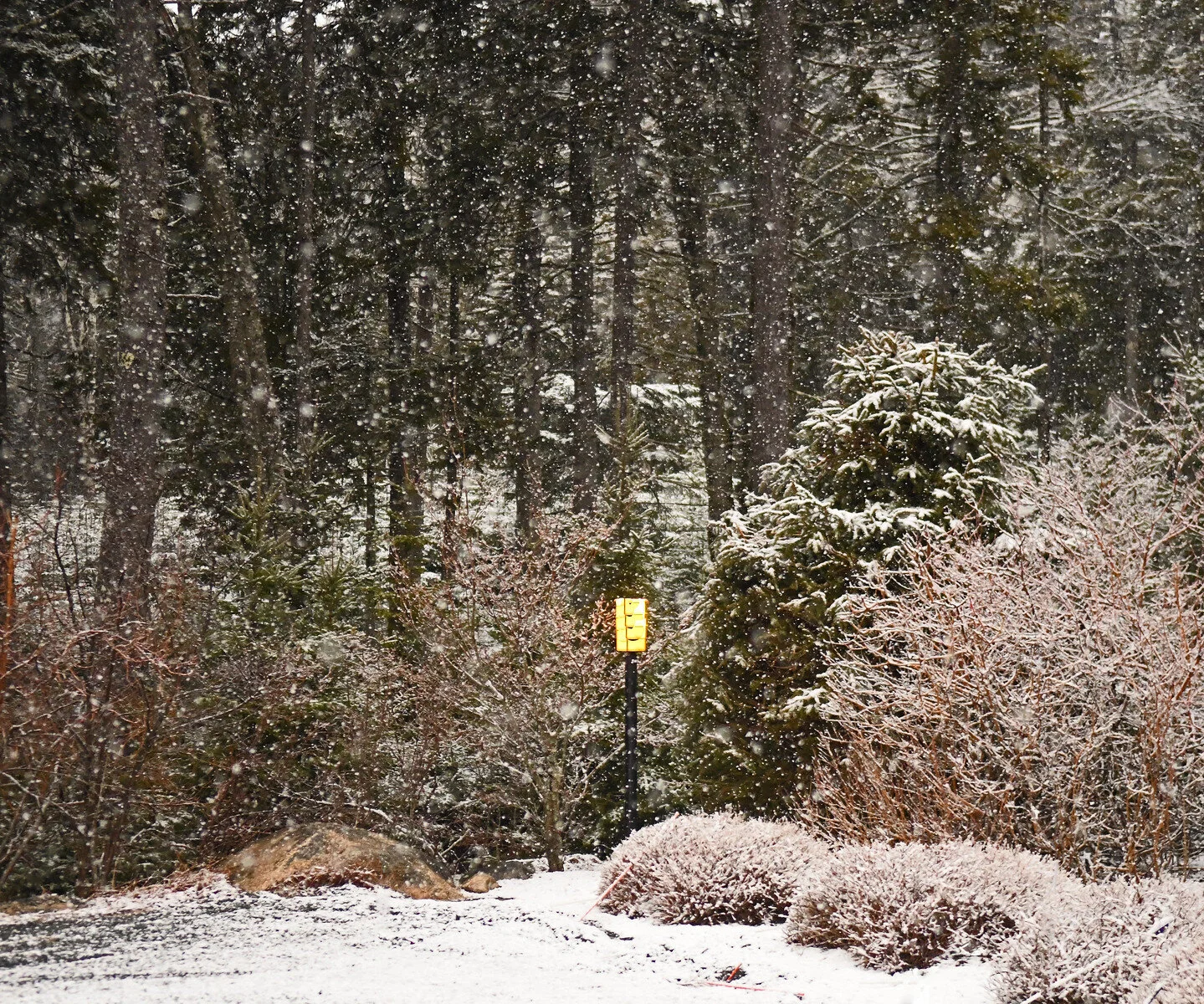
For the past two days, we’ve had dismal snowstorms graying our days, muddying our roads, and otherwise increasing the somberness of our leafless landscapes during a time of isolation.

S-1.jpg
S-2.jpg

But, then came this morning, which is a beautiful, sunny prelude to Easter and the season of rebirth. It helps to think of Maine “spring” weather symbolically: full of darkenings that make what will come seem even brighter, more beautiful, and more meaningful. (Brooklin, Maine) The images here were taken yesterday.

Comment

Comment

In the Right Place: Vernal Virus

This image of a wood duck drake appeared yesterday in our monthly column in the Ellsworth American. Click on the image to enlarge it. To read the column, click here: http://www.5backroad.com/montly-column

EA-1.jpg

(Brooklin, Maine)

Comment

1 Comment

In the Right Place: In the Pink

We’re standing on Amen Ridge as last night’s Full Pink Moon comes booming out from behind the Atlantic Ocean’s horizon. At first, it’s only a molten orb masked by the budding maples along our shore, as you see here. Then, it frees itself from the tangles and comes into golden focus as it rises into the darkness of night. After its orbit took it above the clouds, it turns platinum.

M.jpg
M-2.jpg
M-5.jpg
M-4.jpg

The April full moon is called the Pink Moon, not because it ever gets pink, but because it arrives when pink phlox (Phlox subulata) begins to appear in our more southerly latitudes. It’s also called the Paschal Full Moon because it’s the full moon nearest to Passover and Easter. (Brooklin, Maine) For more images, click here:

1 Comment

Comment

In the Right Place: Structural Feat

Spring has sprung here for wild turkey Toms. Chilly mornings have not deterred their ardor, or perhaps it’s more accurate to say their self-centered strutting. But, as far as we’ve seen (and as you can see here), the hens have been quite chilly and show no signs yet of being ready to submit to such blandishments.

T-1.jpg

Nonetheless, these Toms are performing a significant engineering and chemical feat. They’re flexing a vast, interconnected series of muscles in their skin to erect imbedded body and tail feathers hundreds of times a day They’re also simultaneously contracting blood vessels in their heads to change skin color and lengthen their droopy snoods.

Curiously, while such pornographic poses are not attracting any females yet, they do entice other males to perform competitive displays. It’s a male thing, we suppose:

T-3.jpg

(Brooklin, Maine)

Comment

Comment

In the Right Place: For Peat's Sake!

Now is the time to go into the sun-flecked woods, as we did yesterday, and admire the vibrant mosses that are softening the edges of brooks and gently covering the bodies of fallen trees. While you’re at it, you might ponder a modern misconception about the ancient division of plants known as mosses (Bryophta).

M-1.jpg
C.jpg

That misconception is the current interpretation of the common proverb “Rolling stones gather no moss.” There is nothing bad about moss or the gathering thereof. Somewhere over the centuries, the original proverb was turned on its head by those who couldn’t read Latin.

That origin reportedly was this (translated) criticism by Publilius Syrus: “People who are always moving, with no roots in one place or another, avoid responsibilities and cares.” (Mosses don’t have true roots.) The old saying “a day in the moss” meant hard, necessary work, such as harvesting peat moss and its remains (peat) before winter. The mosses shown here, by the way, appear to us to be peat (Spagnum) mosses, our most common variety. (Brooklin, Maine) See also the image in the first Comment space.

Comment

Comment

In the Right Place: Silent Summer

This symbolic image was taken Saturday, April 4, two days after the famed WoodenBoat School here cancelled its popular summer classes through June, due to the dangers of the corvid-19 virus. The School also announced that it is reviewing, on a daily basis, whether to cancel the remainder of the year’s programs. The prospect of seeing Great Cove without flitting WBS sailboats this summer is a sad one, but prudent optimism is the right course.

1.jpg

This image is symbolic for two reasons. First, those are the doors to the WBS Boat House storage area in “lockdown” mode. Second, that’s a form of Brooklin double-latched lock. To open the doors, we need no key or combination; all we need is permission. If we have that, we’ll just unlatch the rope and press the handle thumb latch. If we don’t have permission, we and other Brooklin residents won’t open the doors. [Many of us don’t lock our residences during the day, or at all, and leave our cars and trucks unlocked when we park locally. It’s a small-town-trust thing.] (Brooklin, Maine)

Comment

Comment

In the Right Place: Family Business

This handsome pair of Canada Geese appeared here without the rest of their migrating flock. Perhaps they’re social-distancing; perhaps they’re thinking of nesting locally. Canada Geese mate for life and usually nest in northern United States and Canada during late March through early May.

B-4.jpg

Once they do select a site, the female “goose” will build the nest and stay on it until her four to seven “goslings” hatch. Meanwhile, the male “gander” will protect her and the nest heroically, viciously attacking anything that gets near, including humans. Sometimes, that bravery means giving up his life when coyotes and wolves attack in packs.

i-PSBdDZF-X3.jpg

Four to seven goslings usually are born in late April or May. These cuddly fuzz balls usually are swimming and diving deeply within 24 hours of birth. They’ll stay with their parents until the following spring migration.

B-6.jpg

(Brooklin, Maine)

Comment

Comment

In the Right Place: Truth

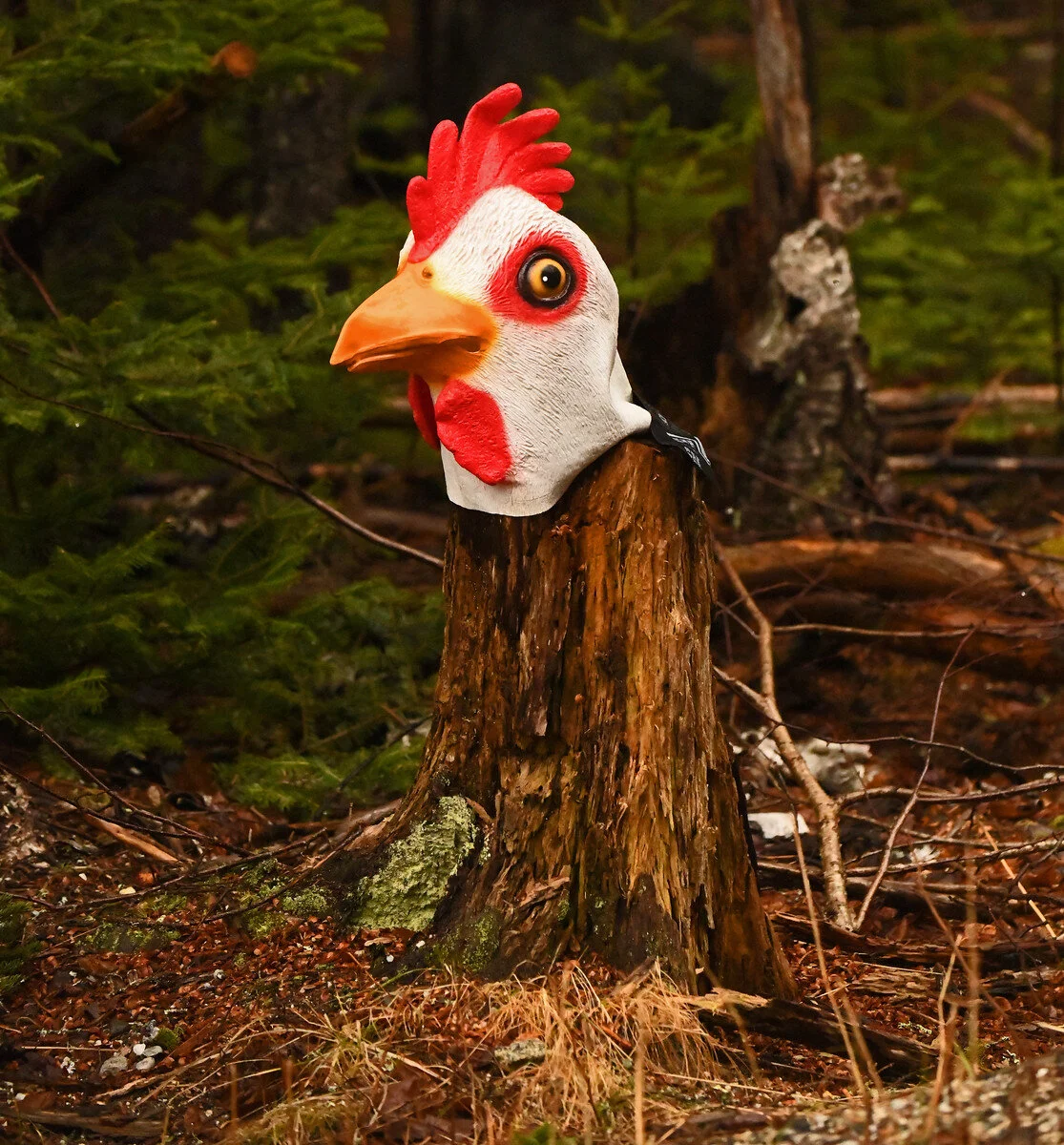
We were lucky yesterday to catch this glimpse of a rare Stump Chicken near a neighbor’s driveway on Naskeag Road. Unlike domestic chickens, “stumpers” (as birders call them) climb into empty stumps on April 1, lay their eggs there, and fly away a few days later. By Easter, the hidden eggs mysteriously are hardboiled and decorated. This is the absolute truth; that story that’s going around about a big bunny laying those eggs is fake news.

3.jpg

(Brooklin, Maine)

Comment

Comment

In the Right Place: Corruption

This image was taken during a walk in yesterday’s chilly rain shower, the kind of jaunt that may be appreciated only by outdoor photographers. The rain continued overnight and into the early hours of today, reminding us of the famous ancient proverb “April showers bring skunk cabbage flowers.”

2.jpg

Unfortunately, when it comes to skunk cabbage flowers, they stay hidden in those purple spathes. But, you get the poetic idea. Speaking of that, some of you pedantic viewers might be offended over our taking a tiny bit of poetic license with that proverb.

Okay: it originally was the following couplet published in 1610 by the famous English poet “Anon.”: "Sweet April showers/Do spring May flowers." That rhyming rationalization has since been decoupled and corrupted into today’s “April showers bring May flowers.” (Brooklin, Maine)

Comment

Comment

In the Right Place: Exemption

It’s raining here as we speak. Our vernal pools have filled with water and last fall’s leaves have risen from the dead to congregate on their surfaces. The stage is set for the upcoming orgies.

2.jpg

Those would be the spring salamander, newt, toad, and frog orgies, of course, which are allowed under the amphibian exemption to the Maine social distancing order. (Brooklin, Maine)

Comment

March Postcards From Maine

4 Comments

March Postcards From Maine

March in Maine is a random experience consisting of too much winter, too little spring, and surprises almost daily. This March was relatively milder than normal, but also wilder when it came to the number of surprises. We had cycles of bright sun, snow, fog, rain, ice, fierce winds, and days that were turned on and off by sunlight periodically breaking through dense clouds.

1.jpg
47.jpg
J.jpg

Our ponds and streams froze and thawed continually.

12.jpg

Great Cove frequently was wind-whipped and frozen into sea ice along the shore.

17.jpg
18.jpg

We haven’t seen many of the usual spring migrating birds yet, although our Herring Gull population has increased, a flock of Canada Geese rested a day in the Cove on its way north, and a pair of Mallards had to walk on ice, rather than swim.

25.jpg

The scallop season ended in late March and our fishing vessels looked like they had been through a tough, but successful, season. They’re getting cleaned up and ready for the summer lobster season — if we have one this year.

26.jpg
I.jpg

March is when our ancient apple trees get pruned before they wake up and crowded conifers are culled from the woods and chipped.

29.jpg

Skunk Cabbage spathes and Pussy Willow catkins appear in March and the Spruce trees disclose whether it will be a big cone year or not. This year is very big. There still were a few fruits on the Crabapple trees and Winterberry plants — an indication of a mild month in which the birds had plenty of better food to eat.

37.jpg
31.jpg

The March full moon was a super moon that rose molten red and became platinum when it gained height. It’s traditionally known as the Worm Full Moon, because it comes when the soil starts thawing and the worms awaken.

43.jpg

One of the month’s last surprises was a pretty snowfall that she gave us on March 30th to remember her by.

C.jpg

(All images above were taken in March 0f 2020 in Down East Maine.)


4 Comments

Comment

In the Right Place: Dusting

Well, March left us a going-away present to remember her by: a pretty snowstorm yesterday afternoon that was just enough to sugar coat the landscape today without being a shovel and plow event. Here are a few images of yesterday’s delightful dusting:

C.jpg
D.jpg
A.jpg
B.jpg

(Brooklin, Maine)

Comment

Comment

In the Right Place: Getting High

Faster tides seem to be a good source of natural performance art. We have fairly fast tides in Brooklin, although nothing like the mini- tsunamis in Canada’s Bay of Fundy, where there can be 38-foot-plus high tides. Our highest tides usually reach slightly above 12 feet over the approximately six-hour intervals from low to high tide. But, they seem impressive to us.

Their surge is hard to describe with mere words. However, if you are six feet tall, standing on the low tide line in Great Cove, and incapable of moving, there could be six feet of water above your head at high tide within about six hours – that’s a rise of two feet per hour.

Tide-1.jpg

Unlike the slower two- or three-foot high tides south of us, it’s easy to see our faster tides coming. As you can see in these images taken last week in Great Cove, they come rippling in and bubble around the rocks at our feet – which is when we also can hear them. Soon, the rocks are below clear Maine water and so are our boots if we don’t move back.

Tide-2.jpg

(Brooklin, Maine)

Comment

Comment

In the Right Place: Paradise Postponed

It’s Friday, March 27, and we’re on Amen Ridge looking northeast. A herd of altocumulus clouds is stampeding over Blue Hill Bay, turning parts of our day on and off as the sunlight tries to break through.  Cadillac Mountain looms out of Acadia National Park, seemingly brooding.

i-LbRLFZ8-X3.jpg

Acadia, the nation’s seventh-most visited National Park in 2019, has reason to brood. Park officials issued an Internet alert that states, in part: “[T]o slow the spread of the novel coronavirus (COVID-19), all park roads, facilities, restrooms, carriage roads, campgrounds, visitor centers, and visitor services are closed effective Thursday March 26. *** [O]utdoor spaces remain accessible to the public .… Stay at least six feet away from people outside your immediate household. *** Rescue response may be delayed. Each incident increases risks for park staff and local first responders.”

Paradise lost. But, just for a while, we hope. (Brooklin, Maine)

Comment

Comment

In the Right Place: Resting

Our fishing vessels show the signs of an intense winter scalloping harvest at the end of the season. Here, we see two of them yesterday: Long Set and Tarr Baby. They converted to scalloping after last year’s lobster season and now remind us of big horses that have been worked hard and need a good grooming and rest.

1.jpg
2.jpg

Most of the scallop fishing vessels will have their masts, dredges, and shelling huts removed, get freshened up, and be ready for this summer’s lobster season, when the rest of the fleet is taken off their blocks and put back into the water. That is, if there is a lobster market to supply after (during?) the pandemic. (Brooklin, Maine)

Comment

Comment

In the Right Place: Really Seeing

This older seagull, let’s call him Herman Herring Gull, very recently was taking a snooze on our neighbor’s pier rail and – amazingly – doing so pointed into a stiff breeze. As we got closer, his yellow eyes squinted open and he began glaring at us.

When we got within about 100 feet of him, Herman dipped off the rail, skimmed the water, swooped straight up to about 50 feet, and circled back and around us twice before heading out – all the while cursing us foully.

03/24/20

03/24/20

It was a great feat of flying under those windy conditions and we got the message. This small encounter reminded us that it’s easy to take our common winter birds for granted – to forget how talented and beautiful they are, each with its own personality.

Leighton Photo Archive

Leighton Photo Archive

The lesson learned is transferable: it’s also easy not to really see others who are around us often, sometimes even loved ones and friends. (Brooklin, Maine)

Comment

Comment

In the Right Place: Squinting

The photographers’ “Golden Hours” can contain a marvelously vivid glow in these latitudes during March. It’s especially stunning when the sun finds the flaxen cat tails and fields that have not yet awakened; that’s when gold gilds gold.

Sun-1.jpg

Most photography texts generally describe the Golden Hours as the last hour of sunlight before sunset and first hour before sunrise, give or take a varying amount of time. Better texts describe the phenomenon in relation to charts of the sun’s position above or below the horizon in degrees. The bottom line for us: the Golden Hours are longer and more intense in winter.

Sun-2.jpg

During the in-between month of March, we can experience the transition of light awakening life. The sunlight still needs to travel a longer, lower, winterish path through the atmosphere to us, during which the blue and violet light gets scattered more and virtually filtered out, leaving mostly red and orange light to reach our squinting landscapes. (Brooklin, Maine)

Comment

Comment

In the Right Place: Rock and Roll

Here, we’re watching a shifting southerly wind fluttering the waters of Great Cove while seaweed fans sway in rhythm.

The fans are “knotted wrack” (Ascophyllum nodosum), our most abundant “rockweed.” They’re fascinating organisms that are ‘knotted” with little air bladders that float their “blades” up to get needed sunlight when the tide comes in.

RW 1.jpg

They’re called “wracks” because “sea wrack” is an old name for “seaweed.” “Wrack,” once meaning something that is cast up from the sea onto the shore, became “wreck”; “ship wrack” became “ship wreck.”

Knotted wrack is neither a weed nor a true plant; it’s one of our marine algae that hosts other lives. It's one of the seaweeds that attach themselves to rocks, hence their common "rockweed" name. They have no roots; they have “holdfasts” that glue them to hard surfaces.

At low tide, their graceful fans look like very bad wigs:

RW 4.jpg

(Brooklin, Maine)

Comment

Comment

In the Right Place: Overstaying

One of our customary spring snowstorms arrived last night, as you can see, and its straggler flakes are catching up as we speak.

Replace.jpg

It's all part of March (and probably April). We have days that cycle between freezing and warmer temperatures that cause ice to form and thaw and form in our ponds and streams:

St 4.jpg

It’s pretty in a winter way, but our winter always overstays its welcome here and becomes the lovable relative who can’t take a hint. (Brooklin, Maine)

Comment

Comment

In the Right Place: For Laughs

Last fall, our woods were within the territory of a pair of pileated woodpeckers, our largest woodpeckers at about 16 ½ inches in length. This pair would come looping through like prehistoric pterodactyls, calling maniacally to each other. We expected them to be good neighbors, since pileateds usually don’t migrate, mate for life, and are very territorial.

Leighton archive image

Leighton archive image

Then, as winter began, the female was flying alone, silent. We saw her periodically in November and December, still alone and silent. In January, she disappeared – or, at least, she failed to appear where we could see her.

Leighton archive image

Leighton archive image

Last week, however, we saw her. Or, at least, we saw a lone female silently foraging in our trees and on the ground. We hope that it’s she. We also hope that another Mr. Right comes by and that maniacal laughing returns to our woods.

Leighton archive image

Leighton archive image

By the way, “pileated” means “crested” or “capped,” which these birds certainly are. They may have been the model for the Walter Lantz Studio’s very crested and much-exaggerated cartoon figure Woody Woodpecker, especially for Woody’s incredible laugh. (Brooklin, Maine)

Comment