Comment

In the Right Place: Maine Spring

The Shadblow Serviceberry bushes and trees and Flowering Plum trees are blooming now, finally making us feel like Spring has arrived.

The white Shadblow flowers and their tan leaves are on cultivated and wild plants here:

F-3.jpg

The pink Plum flowers and their dark red leaves are found only in cultivated trees that bear no fruit, but compensate for that with their delicate flowers:

F-1.jpg

The name plum, by the way, is thought to derive from the 18th Century word for something desirable, as in “this fruit is plum.”

The name Shadblow is an old name derived from the fact that this species usually blooms when shad fish begin to run in New England. The name Serviceberry was given to a group of trees and bushes by our founding settlers because they bloomed when the ground became soft enough to bury those who died in winter – the time when burial services would occur and blossoms and berries could be used for decoration.

(Brooklin, Maine)

Comment

1 Comment

In the Right Place: Osprey Nest Report No. 4

This is the latest report in the continuing saga of “Ozzie and Harriet in Brooklin,” starring a local pair of nesting ospreys that we’ve been checking about two or three times a week.

2.jpg

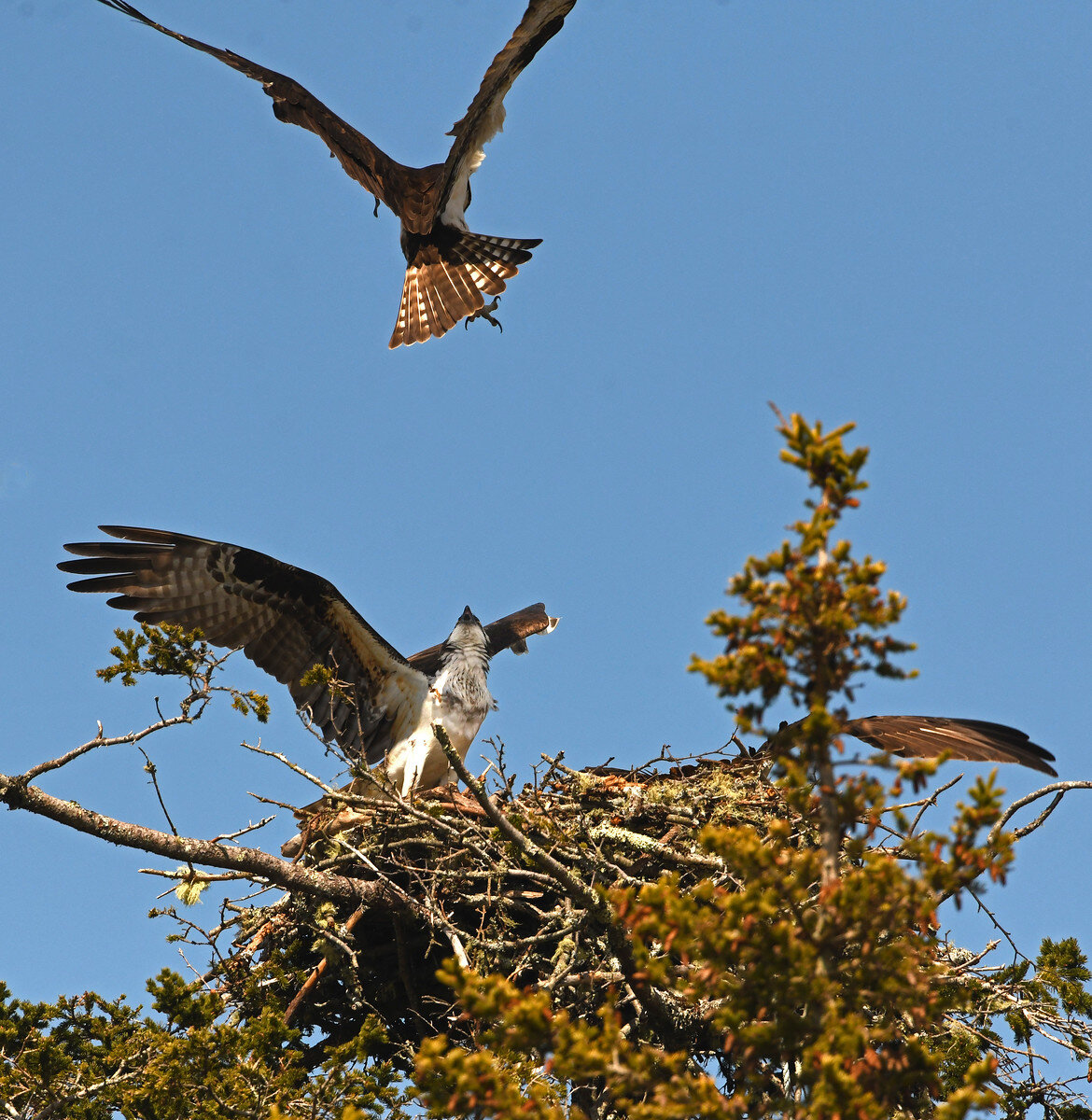
The image above is of Ozzie yesterday. He’s cursing loudly, battle-ready, and returning home fast, where Harriet has been screaming for about 10 seconds. A third osprey, probably Brutus, is circling high overhead.

 Ozzie returned to the nest, where Harriet was now on her feet also ready to defend their home, which we hope soon will be a nursery. Brutus circled twice more and flew off.

4.jpg

Ozzie stayed on the nest for about two minutes more, then left to get lunch as Harriet was settling herself low again in an incubating position.

3.jpg
1.jpg

We’ve seen two threatening dives on the nest while Harriet has been low and flat in the nest, apparently incubating one of more eggs. Here’s an image of one on a very disturbed Harriet, which happened on May 6:

Leighton Archive Image

Leighton Archive Image

We’ve seen no dives on Ozzie when he was doing his share of the apparent incubating (which is less than Harriet’s share, but not insignificant). Both dives on Harriet seem to have been by the same rejected osprey, which we’ve named Brutus. As regular readers know, Ozzie and Brutus courted Harriet and Ozzie won her taloned hand. (Brooklin, Maine)

1 Comment

Comment

In the Right Space: Very Short Stories

These images, from yesterday, appear to be abstract, but they’re very real and have short stories behind them. The first image is of new cattail leaves floating – seemingly levitating -- in our pond above a reflection of the blue sky and last year’s “tails”:

051820-34.jpg

(The story: We have a muskrat in that pond, whom we call Murray; he often chews off the bases of five or six new cattail fronds, then swims away with just one. This waste may decimate cattail growth in our pond, but that isn’t a bad thing.)

The second image is of the only live tulip in an often dark, now-untended patch. It is desperately groping for the sun to open it, but remains tightly closed. The flower’s lovely shape and pastel colors conjure thoughts of Cupid’s arrowhead or, maybe, Italian spumoni ice cream on a stick:

051820-38.jpg

(The story: The tulip’s patch is in the sometimes-dark corner of a nearby, usually bustling, boathouse; that building will not be open this year due to the corona virus. The question is whether this determined tulip will be able to open to see the summer before it dies.)

(Brooklin, Maine)

Comment

Comment

In the Right Place: Common

In the Right Place: Common

You have to look closely to see this well-camouflaged fellow. (Sex assumed.) We caught a glimpse of him yesterday as he was out taking his daily slither. He’s a Common Garter Snake of about 18 inches.

1.jpg

These snakes are Maine’s most abundant reptiles. They usually get a little larger than two feet, but one Maine specimen was officially recorded at almost 44 inches, which is hard to believe. Here’s yesterday’s little traveler stretched out:

2.jpg

Garter Snakes were named after something that most of you have never seen – “garter straps,” elastic devices with clips that once were used by men to hold up long stockings. (Men’s garter straps are not to be confused with women’s “garter belts,” a devilish device that most of you have not seen either.)

Returning to Garter Snakes with apologies for the descriptive meandering, these reptiles love earthworms, but will eat just about any living thing that they can get their small mouths around. Garter Snakes, in turn, are a favorite snack for many winged and furry predators, not to mention other snakes with more understandable names. Thus, Garter Snakes are always flicking their very sensitive tongues to test the air for danger:

3.jpg

(Brooklin, Maine)

Comment

Comment

In the Right Place: Hat Trick

Mid-May is tulip season here, a month later than in Holland and our nation’s lower latitudes. The Maine beauties shown here were bowing gracefully into yesterday afternoon’s disappearing light.

RJL_0150-Edit-X3.jpg

The tulip plant was created in ancient Turkey and Persia (Iran now). The flowers became an integral part of the art, culture, and daily life in that area of the world. In fact, tulips often were worn in turbans, which is how they received their name – Europeans, who created a massive market for them, named them after the Persian word for turban. (Brooklin, Maine)

Comment

Comment

In the Right Place: Extreme

On Thursday (May 14), we were down at Naskeag Point enjoying the beautiful day and wishing that we could fly like a seagull in the 17-mile-per-hour wind gusts. Then, along came Jim McMillan from Blue Hill, a local expert in the extreme sport of kiteboarding. He does the next best thing to flying like a seagull.

Here, as preliminary examples, ls Jim speed-racing toward the islands and launching into one of his flying jumps.

35.jpg
32.jpg

This was no performance; there were only about five people at the point. Jim was just practicing on a fine, windy day when the tide was low enough for him to spread out and assemble his gear.  He needed room for that; the lines to the kite appeared to be at least 70 feet long and the kite seemed longer than a large pickup truck.

To get started, Jim placed his kite and extended lines, harness, and control bar in waist-deep water. Then, still standing in water, he hooked the lines to his harness, grabbed the control bar, and jerked the kite up into the wind. Jim immediately exploded out of the water like a submarine missile..

15.jpg

The kite instantly shot up to its full extension and, due to Jim’s weight, moved directly over him; he was wrenched straight up out of the water due to the different forces at work:

17.jpg
16.jpg

Once out of the water, Jim practiced a series of surfing, jumping, and long-line racing moves in the white-capped water, which he sculpted into beautiful wakes. Our guess is that he achieved at least 40 feet in height and probably more in some of his jumps.

23.jpg

The day’s winds, though stiff to us, were mild compared to some that leading kiteboarders search for world-wide. Reportedly, the sport’s record jump occurred in South Africa: It was 94 feet high with an airtime of 8.5 seconds in 40-mile-per-hour winds.  The record for kiteboard surface sailing reportedly is 50.59 knots (about 70 MPH). That’s extreme for someone standing on a curved board that’s about 11 feet long.

(Brooklin, Maine)

Comment

Comment

In the Right Place: Powerful

This early morning, as has been the case for several days, is brightly clear and unseasonably cold (in the high 30s [F]); but there is little wind. Yesterday and the day before, however, also came with March-like Westerly winds (gusts in the 20’s [MPH]) that produced March-like shudders. They were days to watch powerful forces work within a beautiful land and seascape.

Low-1.jpg

The white-capped tides were approaching full low then and moving fast. They irreverently slapped granite-ledged shorelines that had been kneaded like dough millions of years ago by immense glaciers; they also raced in channels between previously submerged rock and sand spits at the entrances to harbors.

Low-2.jpg

The first image here, of the western entrance to Naskeag Harbor, was taken on May 12. The other mage, of the northwest entrance to Great Cove, was taken on May 13. (Brooklin, Maine)

Comment

Comment

In the Right Place: Latin Lingo

This Northern Parula Warbler was easy to see flitting in the low and leafless branches here on May 5. (Sex assumed.) But soon, he and his kind will be virtually invisible in the leafy tree tops.

P-1.jpg

A Parula is just a little bigger than a credit card. From below, it\ looks like a bit of the bright sky; from the side, it looks like a dapple of sunlight in blue-gray shadows:

Leighton Archive Image

Leighton Archive Image

John James Audubon named these birds Blue Yellow-Backed Warblers for easy identification. However, later name-givers, who gave little thought to encouraging public bird identification, had a "better" idea. They thought that these birds looked like titmice (genus Parus); so, they gave these warblers the little understood Latin name Parula (“little titmice”).

Leighton Archive Image

Leighton Archive Image

This Northern species lives mostly in the United States and Canada, while the yellower Tropical Parulas live mostly in Central and South America. (Brooklin, Maine)

Comment

Comment

In the Right Place: Win-Wins We Have Known

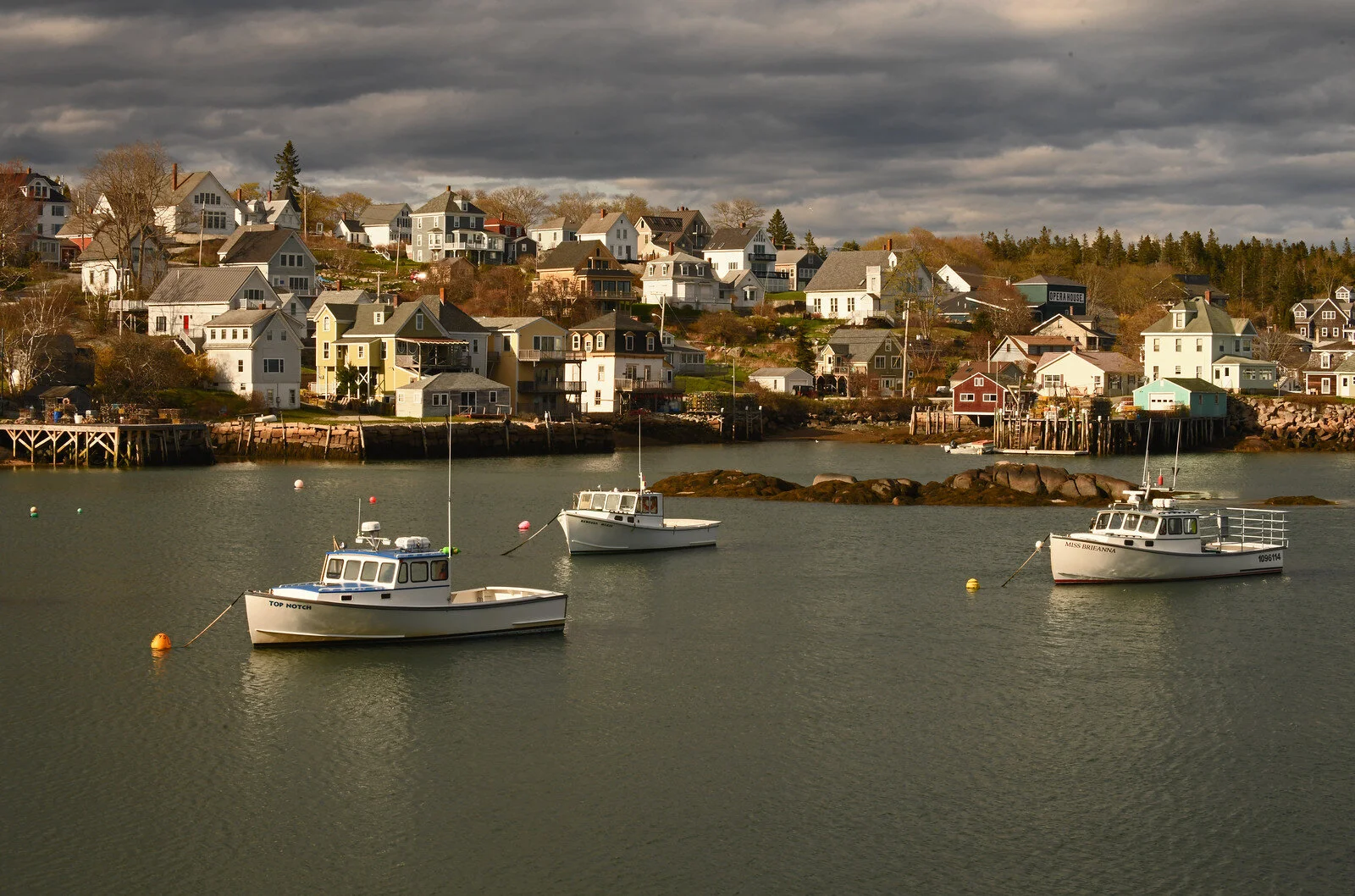
This is picturesque Stonington Harbor on Sunday (May 10):

DI-1.jpg

The gathering clouds were performing a magnificent shell game with the honeyed afternoon light: showing it here, then there, then nowhere, while the lobster boats seemed to smile to themselves on their day of rest. There should have been tourists here for this performance, even at this early date; but, we saw none.

DI-2.jpg

Stonington, historically famous for its fine granite, has been Maine’s leading lobster port in recent years. And, of course, Maine has been the leading lobster catching (“landing”) state in the nation for quite some time. It’s a win-win kind of place when there’s no plague to worry about.  But now our world is changing and we wonder what it will look and feel like in the future. (Stonington, Maine)

Comment

Comment

In the Right Place: Shy and Gentle

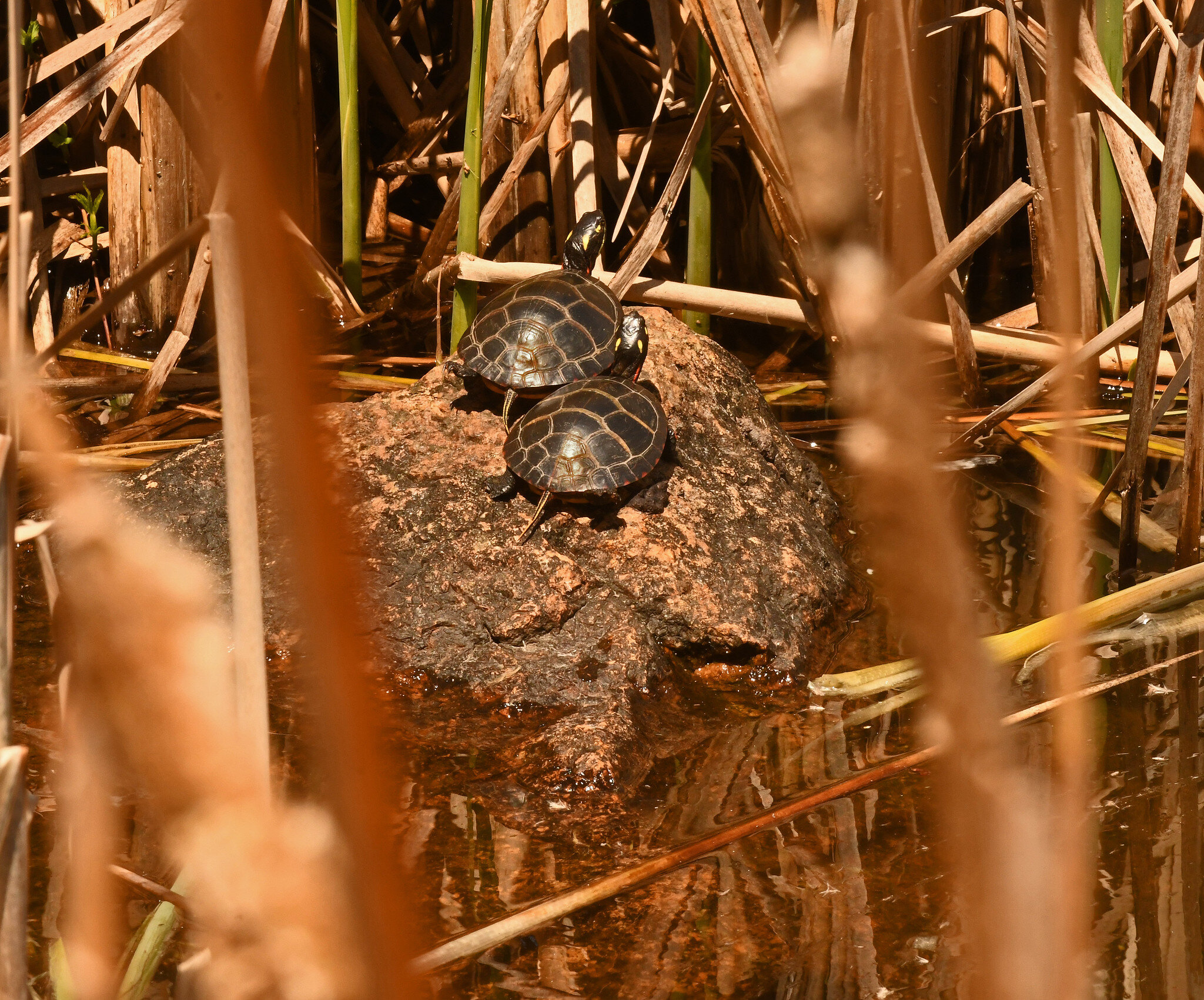
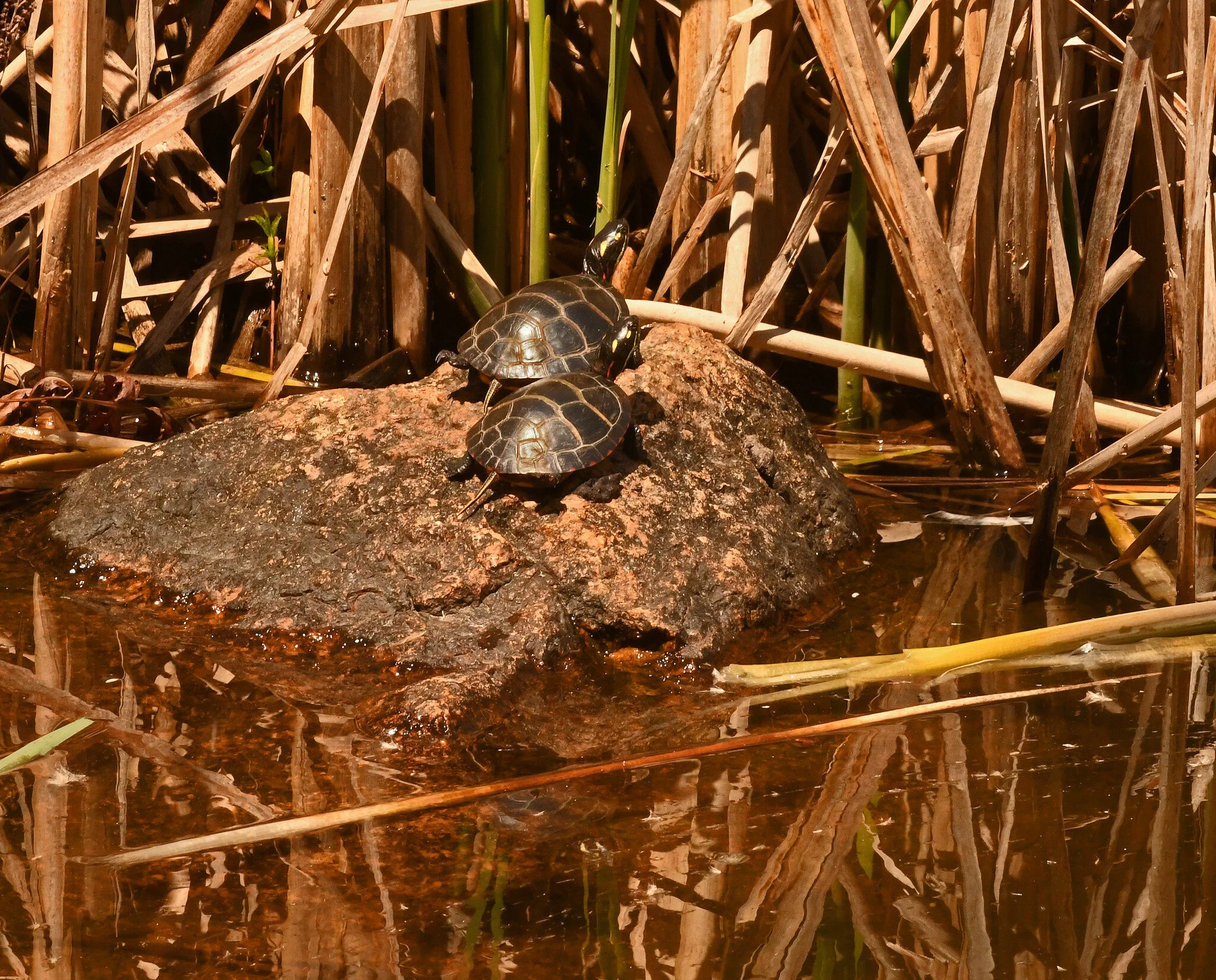
For about two weeks, we’ve been seeing these two Painted Turtles basking in our pond on warmer days. They’re apparently male. (Males have longer, wider-based tails; females have thin stubs.) If history is prologue, these two soon will be joined by three or four additional male and female summer painters to form a “bale” of basking turtles.

PT-1.jpg

Painted Turtles are shy and gentle creatures; they scrabble off their rock if anyone or anything gets close. When alone and at the right time, the male asks the female the important question by stroking her face with his front claw; if she agrees, they’ll disappear into the depths of the pond and mate. Soon thereafter, she’ll climb up into our North Field, make her nest, lay her eggs, and return to the pond while the eggs incubate.

PT-2.jpg

If the raccoons, skunks, coyotes, and crows don’t find the eggs, some of the hatchlings may come back to our pond; others will look elsewhere for a summer place with a water view. (Brooklin, Maine)

Comment

Comment

In the Right Place: Uncertainty

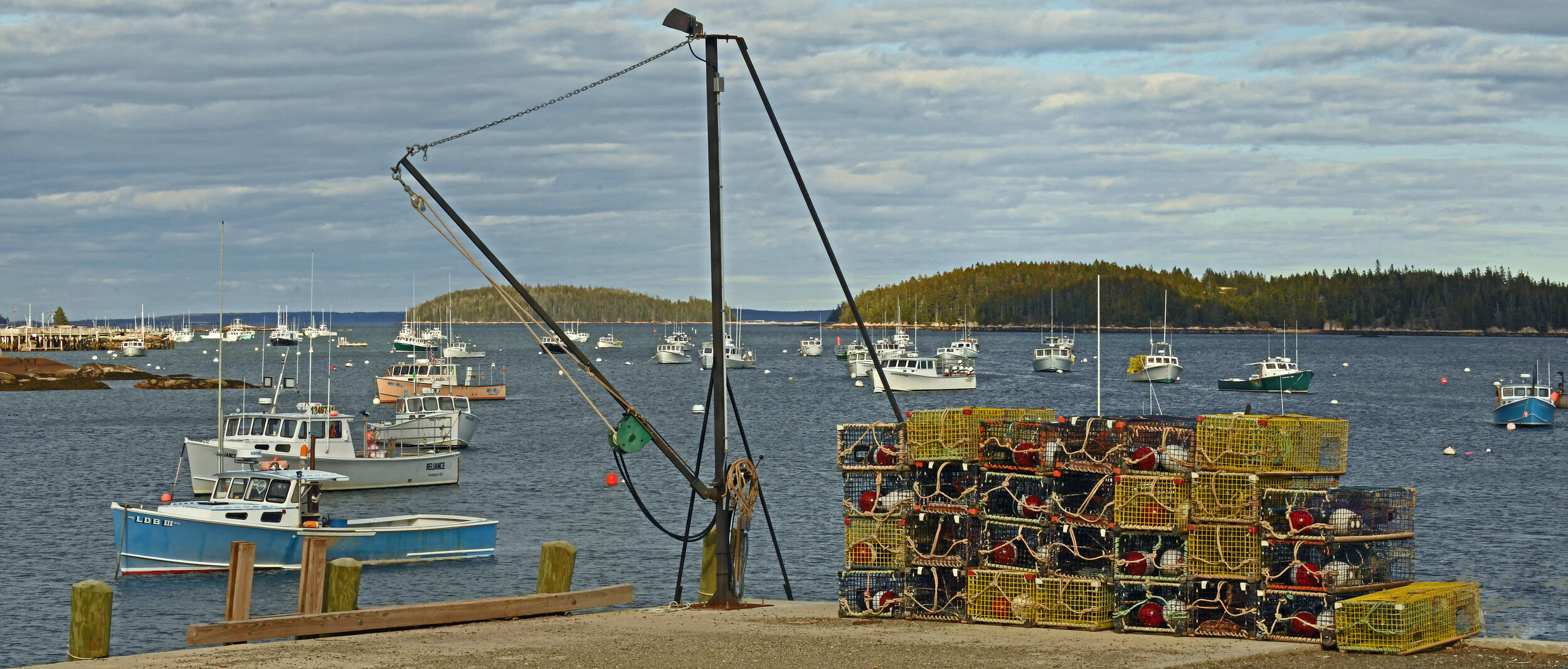
This usually is a pleasing spring sight here. As with emerging flowers, we look forward to seeing lobster traps and buoys all clean and neat and sea-ready being trailered to the water.

1.jpg

This year, however, the covid-19 pandemic has made everything uncertain for lobstermen (male and female). Consider just this one fact: two of the best markets for Maine lobsters are cruiser ships and China. But, perhaps there is time for answers to unprecedented questions to be found.

The lobster fishing season normally is slow in the April-through-June quarter taken as a whole; the number of boats going out usually is building then. State statistics indicate that, on average, 69 percent of active fisherman have their gear in the water by the end of June in normal times. Those data also indicate that things usually peak for Maine lobstermen during the July through November a period. That’s when they sell 84 percent of their annual catch, which accounts for 80 percent of the overall value of the Maine harvest. (Brooklin, Maine; image taken May 7)

Comment

Comment

In the Right Place: In Full Flower

Last night, this year’s Flower Full Moon burst big and red from behind the trees in Acadia National Park far across Blue Hill Bay. At first, as you can see here, it was an imperfect form for those of us so far away, like molten glass being shaped on the glass blower’s blowpipe.

1.jpg

As it quickly rose, we saw it seemingly shed its birthing redness and irregularities and grow into a ghostly silver orb on its tireless way to circle the earth.

6.jpg
7.jpg

The May full moon is named the Flower Full Moon because it appears as flowers are blooming in many parts of this country and many Native Americans called it that or similar names.

To our eyes, full moons initially greet us as compressed, blurry, and red or orange because they are low relative to us and their light at this point is passing through, and being bent by, more of Earth’s atmosphere than when they are high. The blue light in the low moonlight is scattered away more than the red light and all of the light is bent more on the horizon than above it. (Brooklin, Maine)

Comment

Comment

In the Right Place: Name Games

It’s bad enough to be informally called a Yellow-Rumped Warbler. But, when your full given name is “Eastern Myrtle Form Yellow-Rumped Warbler,” it’s time to go hide in the dense bushes. That’s what this little male was doing Tuesday (May 5):

1.jpg

He then rudely “mooned” us with his yellow rump:

4.jpg

His mate, who was flitting with him, also has a yellow rump, but her back is brownish:

2.jpg

The American Ornithologist’s Union dictated that each of five American warblers that had a patch of yellow on their lower backs should all be called a “form” of Yellow-Rumped Warbler. The one that we have here in Maine is the Eastern Myrtle form.
The powers that be did not name this bird Myrtle because that was their great aunt’s name. Myrtle warblers are the only ones that eat toxic wax-myrtle berries, which they do when insects are not available. That non-insect feeding helps them to be among the first and last migrating warblers that we see here. (Brooklin, Maine)

Comment

Comment

In the Right Place: Housekeeping

We were at a nearby marsh pond yesterday trying to keep warblers in focus when we heard the lovely gurgling sound of the still water’s surface being parted. This young muskrat had come out through his underwater tunnel from his home up in a distant bank. (Sex assumed.)

1.jpg

He swam silently to a patch of new, green cattail leaves, bit some off at their base, and returned with them in his mouth to where he had surfaced. Once there, he returned home by quickly slipping under the surface, spring bedding or food pantry materials in mouth.

2.jpg

Muskrats are powerful swimmers. They use their webbed hind feet and side-swishing flattened tails to swim forward and can swim backwards using their feet alone. They also can hold their breath up to 20 minutes. Muskrats once were hunted widely for their soft fur and rabbit-like taste. (Julia Child recommended sautéing them.) Of course, they get their name from the strong, musky scent that they use to mark their territory and their rat-like looks. (Brooklin, Maine)

Comment

Comment

In the Right Place: Not-So-Black Blackbird

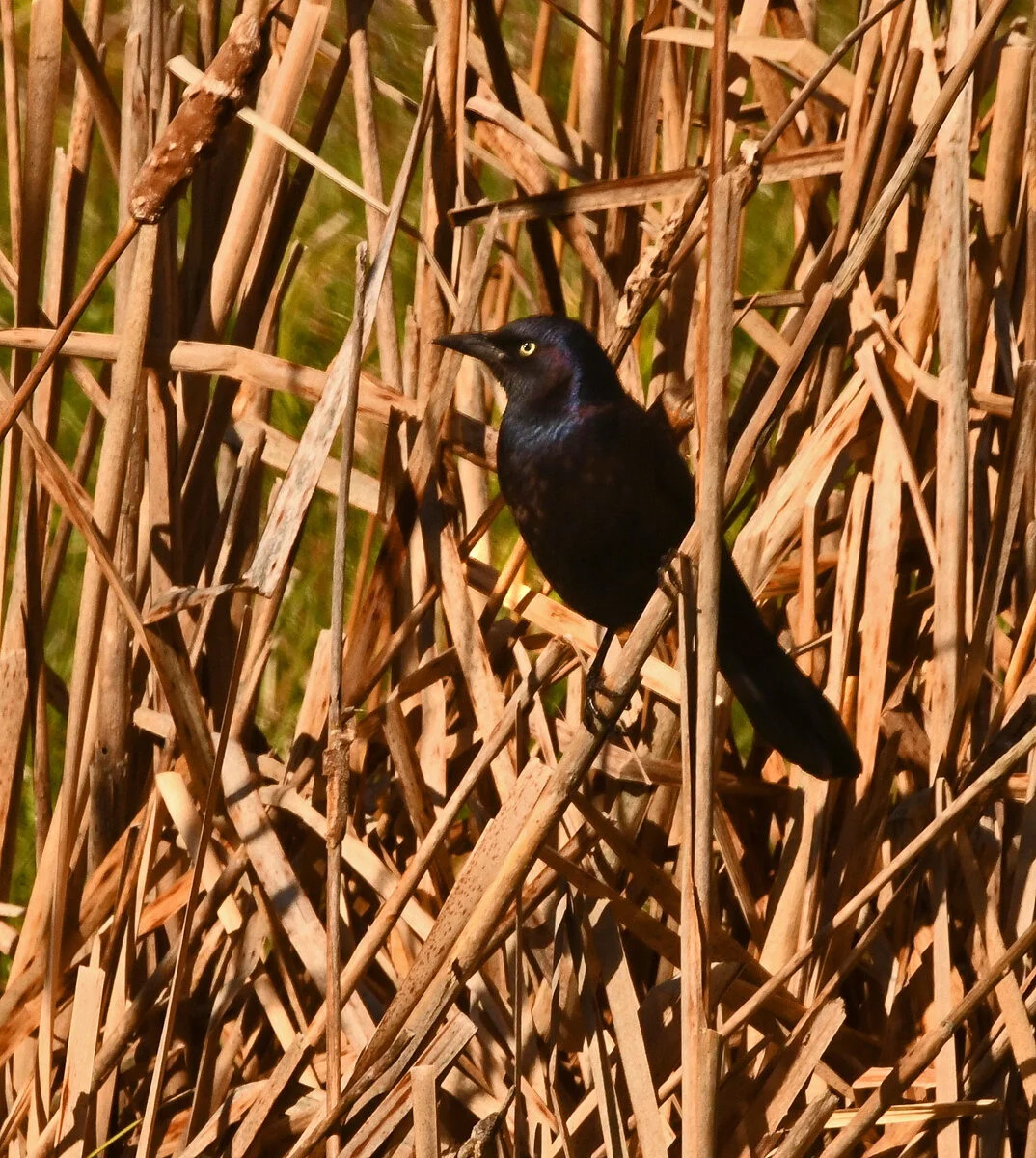
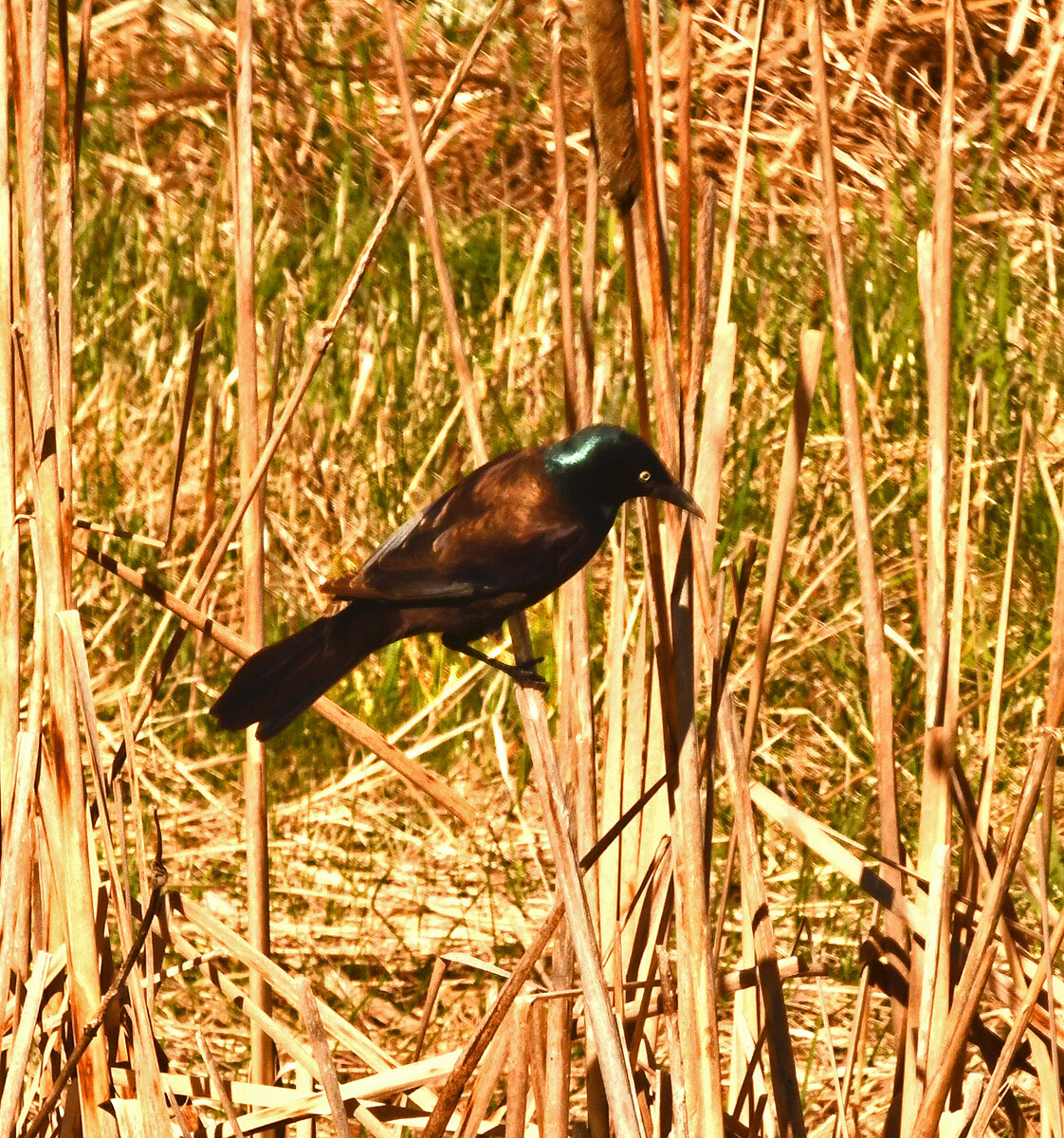
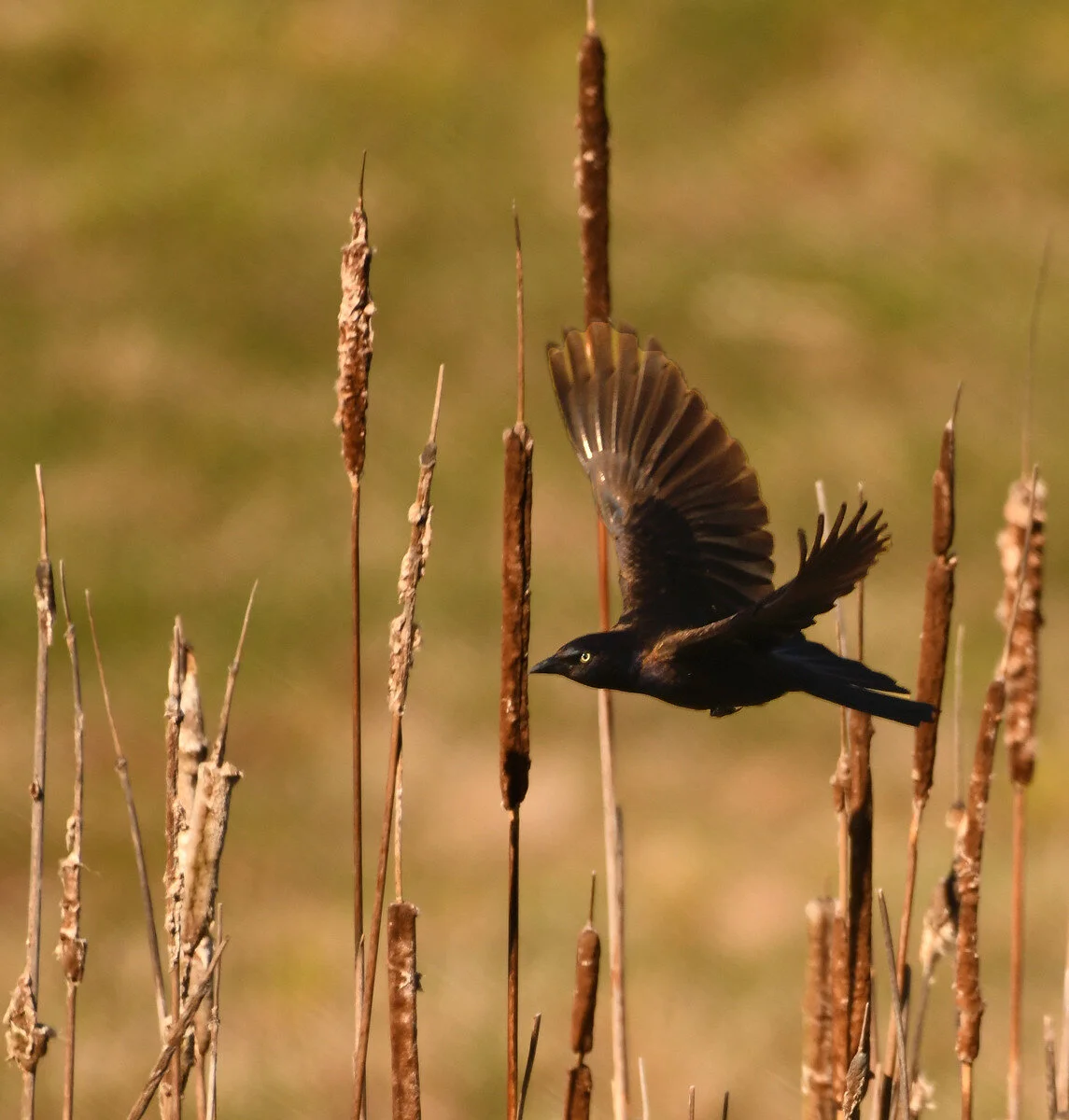
Common (Bronzed) Grackles have been back for more than two weeks. (The images here were taken Saturday, April 2., except for the archive image.)

3.jpg

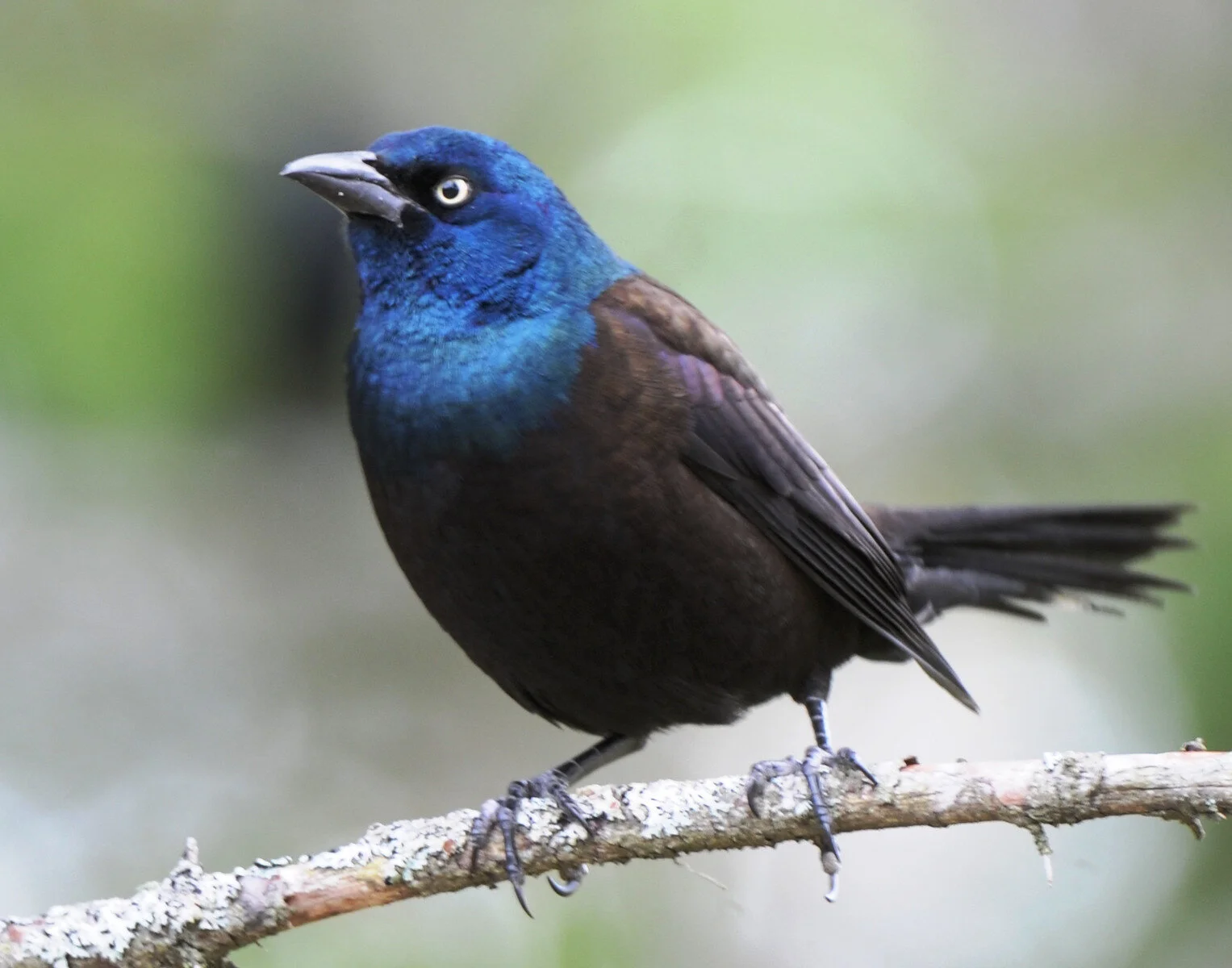
Many appear to be nesting or looking for nest sites deep among the cattails. Some people call these birds “blackbirds,” but they can glow with iridescent hues of purple, blue, or bronzy-brown, depending on the light.

Leighton Archive Image

Leighton Archive Image

Their strange name reportedly comes from its Latin root, “Gracula,” which either referred to the European crow named a jackdaw or was transliterated from one of the calls made by Grackles. Grackles apparently will eat anything that looks like it has nutrients, including smaller birds and parts of food-caked wrappers left behind by tourists. (Brooklin, Maine)

Comment

Comment

In the Right Place: Baseball

Saturday (April 2) was beautiful to begin with. In the afternoon, that beauty became heavenly as a waxing gibbous moon sailed slowly through the blue sky above maple trees flowering in the bright sunlight.

1.jpg

Waxing gibbous moons usually rise after noon to give matinée performances on clear days. As you may know, “waxing” means getting larger; “gibbous,” from the Latin for humpbacked, in this context means a moon that is more than half whole, but not whole (full).

The red maple flowers are impressive now, especially the males with their long stamens that are about to pitch their pollen:

2.jpg

The less spikey female flowers patiently crouch, ready to catch the pollen in their catchers’ mitt stigmas. (Brooklin, Maine)

Comment

2 Comments

In the Right Place: Close Call

As some of you know, for almost a month, we’ve been monitoring a pair of Ospreys that are nesting nearby.. We know them well enough now to call them Ozzie and Harriet, rather than “the male” and “the female.” At first, they were enjoying domestic bliss yesterday morning, as you can see from this image taken then:

1.jpg

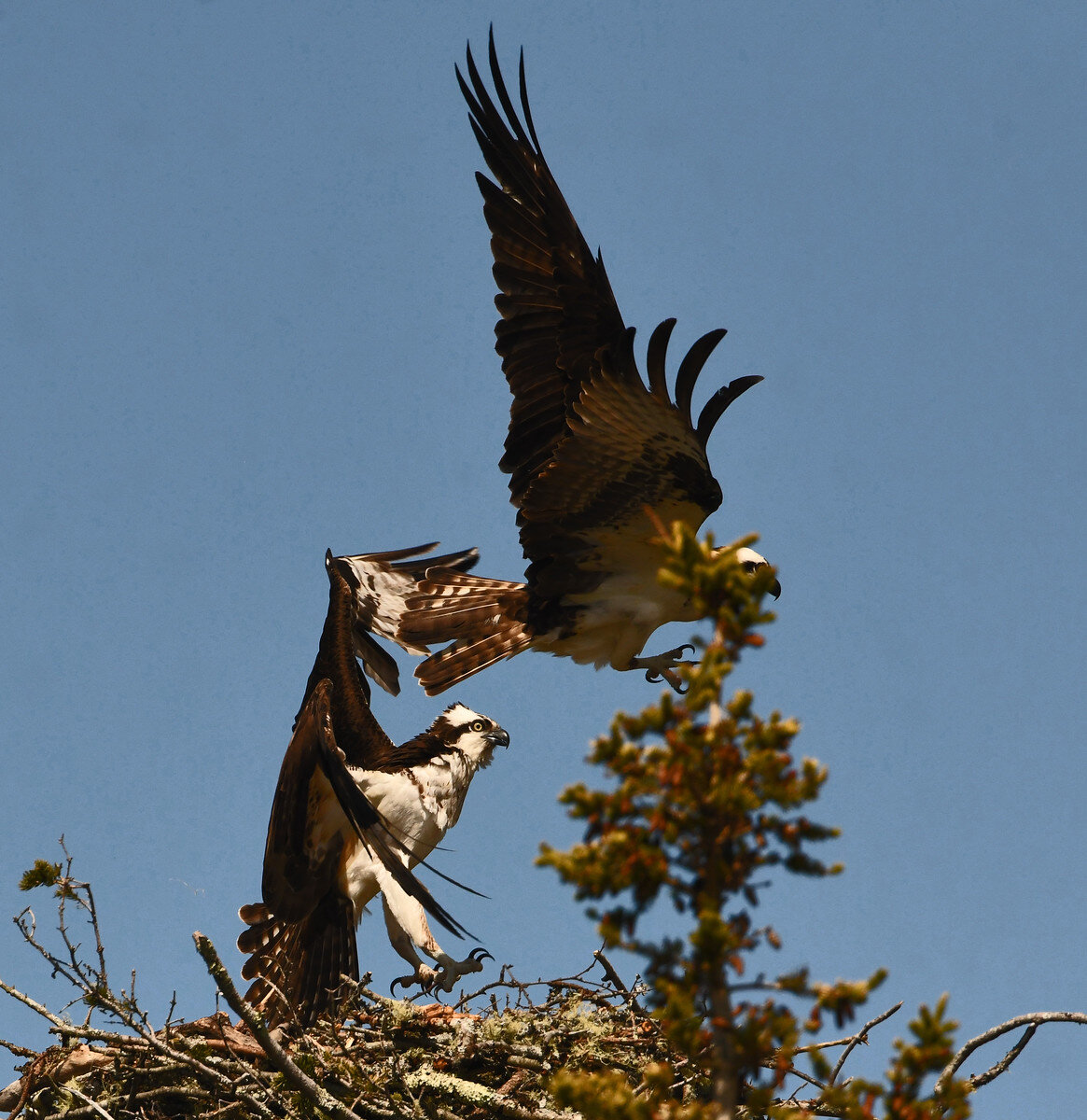
But, unbeknownst to them, danger was lurking. Another Osprey, which we’ll call Brutus, had been circling high above their nest for several days. (When the first Ospreys arrived last month, there were three of them, two males courting Harriett; she chose Ozzie. Perhaps Brutus was the other suitor.) Ozzie always flew up and ran Brutus off before he could get close to the nest. Yesterday, however, was different.

Brutus power dived silently and unseen out of the sun and barely missed scalping Ozzie, who pulled back just in time. Harriett flew away immediately; Ozzie recovered quickly and gave hot pursuit to Brutus, leaving the nest empty. It still was empty an hour later. To be continued. Here’s part of the series of images taken then within no more than two seconds, starting when Ozzie first sees Brutus bearing down on the nest and Harriet leaves the scene::

2.jpg
3.jpg
5.jpg
6.jpg
8.jpg
9.jpg

(Brooklin, Maine)

2 Comments

Comment

In the Right Place: Ode to Eliza Doolittle

This rain in Maine stays mainly on the pane. Here, during yesterday’s rain, we glimpsed through a windowpane the beauty of a blossoming forsythia bush.

1.jpg

We also learned yesterday that this rain in Maine can stay mainly on the stern, in some circumstances:

2.jpg

We had to get wet to admire the above composition of a Brooklin Reserved Parking space. (Brooklin, Maine, with apologies to Alan Jay Lerner and Frederick Loewe.)

Comment