Comment

Inthe Right Place: Imagining

I sometimes find myself fixated by windows, especially these old windows that I’ve photographed many times, including this image yesterday.

i-LPxGqCw-X3.jpg

These windows are part of the Beth Eden Chapel on Naskeag Road, a one-room church and meeting place that was finished in 1900. You can peer through the Chapel at the maple trees on its north, while the shadows of the maple trees on your side seem to be trying to enter the windows there.

Leighton Archive Image

Leighton Archive Image

This Chapel usually is vacant now, but it’s not hard to imagine the hope, joy, grief, and solace it has hosted as the place for a small rural community’s christenings, weddings, funerals, and prayers for the suffering.

i-2q36d7q-X3.jpg

(Brooklin, Maine)

Comment

Comment

In the Right Place: Nipper

The mornings here have been looking like October, but feeling like December. As our visiting neighbor said this morning, “It’s a nose nipper out there.” Yet, it’s been sparklingly clear and invigorating to be out of doors on days like this (when dressed warmly).

1 (2).jpg

The image above is of one of the neighboring field ponds yesterday doing what field ponds do best at this time of the year – giving us a second helping of beautiful views and giving the still-migrating Canada Geese safe havens. You can see several of those Geese in this same pond last month in the first Comment space.

2.jpg

(Brooklin, Maine)

Comment

Comment

In the Right Place: Exuberant

 Yesterday morning was beautiful. However, the 12.86-foot high tide, wind gusts of 33.37 miles per hour, and temperatures in the high 40s here might have been a bit exuberant for those on or near the sea.

1.jpg

Above, you see Great Cove and the WoodenBoat School’s dock as the tide approached its high mark. Below you see the wind playing in Naskeag Harbor on the other side of our peninsula.

2.jpg

(Brooklin, Maine)

Comment

Comment

In the Right Place: Scoops and Dabs

Small flocks of little Bufflehead Ducks are now visiting Great Cove, flying here and there at high speeds. Buffleheads (Bucephala albeola), seldom reach 15 inches in length, which makes them the smallest diving ducks in North America. Their top flying speed has been clocked at a blurring 48 miles per hour.

5.jpg

The males are mostly white with a black head on which it looks like a double scoop of vanilla ice cream has been dropped.The females are darker overall with a dab of that ice cream on their cheeks. They get their strange name from the swell-headed males, which reminded the name-givers of American “Buffalos”.

1.jpg

Buffleheads eat crabs, clams, and water vegetation in winter and (unusually) nest in abandoned cavities of large woodpeckers. (Brooklin, Maine; Leighton Archive images used)

Comment

Comment

In the Rigjht Place: Pendulous

This spectacular Weeping Beech Tree at Amen Farm is a Brooklin landmark and it would be a curiosity anywhere with its unusual bottom branch pruning and training. In this November 10 image, you see it starting to shed its leaves that have turned to copper in the fall.

i-5sQL3SM-X3.jpg

In the summer, the leaves form a dense green canopy:

Leighton Archive Image

Leighton Archive Image

When the leaves are gone, the tree looks like it’s having a massive bad hair time:

Leighton Archive Image

Leighton Archive Image

Weeping Beeches (Fagus sylvatica, “Pendula”), named after their pendulous branches, are not native to North America; they’re cultivars of the European Beeches. This one is 70 years old and is still growing; most Weeping Beeches live between 150 and 200 years. (Brooklin, Maine)

Comment

1 Comment

In the Right Place: Obedient Grace

We lost an old friend on Tuesday (November 10). It was a 60-foot Red Spruce that had partly framed our view from the house of the North Field, Great Cove, and Eggemoggin Reach. An ancient injury to the Spruce’s trunk was opened up (probably by piliated woodpeckers) and it started to rot internally. We had to have the tree removed; it was beyond repair and large enough to damage the house if it came down in that direction.

Above, we see our tree cutter, Tobey Woodward, beginning to notch the tree base after cabling the trunk to his big tractor about 100 feet away. The fatal cut from the opposite side of the trunk felled the tree obediently, but gracefully, where the cable pulled it:

2.jpg

By the way, Red Spruces are a principal source of building lumber, especially for heavy construction, yet their wood also is valuable for the sounding boards of musical instruments. Their resin was the principal source of the spruce gum chewed and used for healing by Native Americans and American pioneers.

3.jpg

(Brooklin, Maine)

1 Comment

Comment

In the Right Place: In the Still of the Day

Yesterday was extraordinary. It looked like November: there were very few leaves above ground, the cattails were dead, and the North Field was browning. Yet, the temperatures were in the sixties (F).

Yesterday also was still and quiet near the pond, which became a reflecting pool. We sat unmoving on Flat Rock behind the pond and stared at the Field the way the deer and coyotes do from the woods’ edge, looking for movement before stepping into the open.

111020.jpg

There was no movement, but we could imagine the flock of sheep that grazed this Field in the 19th Century, nosing the grass as they moved toward us. (Brooklin, Maine)

Comment

Comment

In the Right Place: Hanging Around

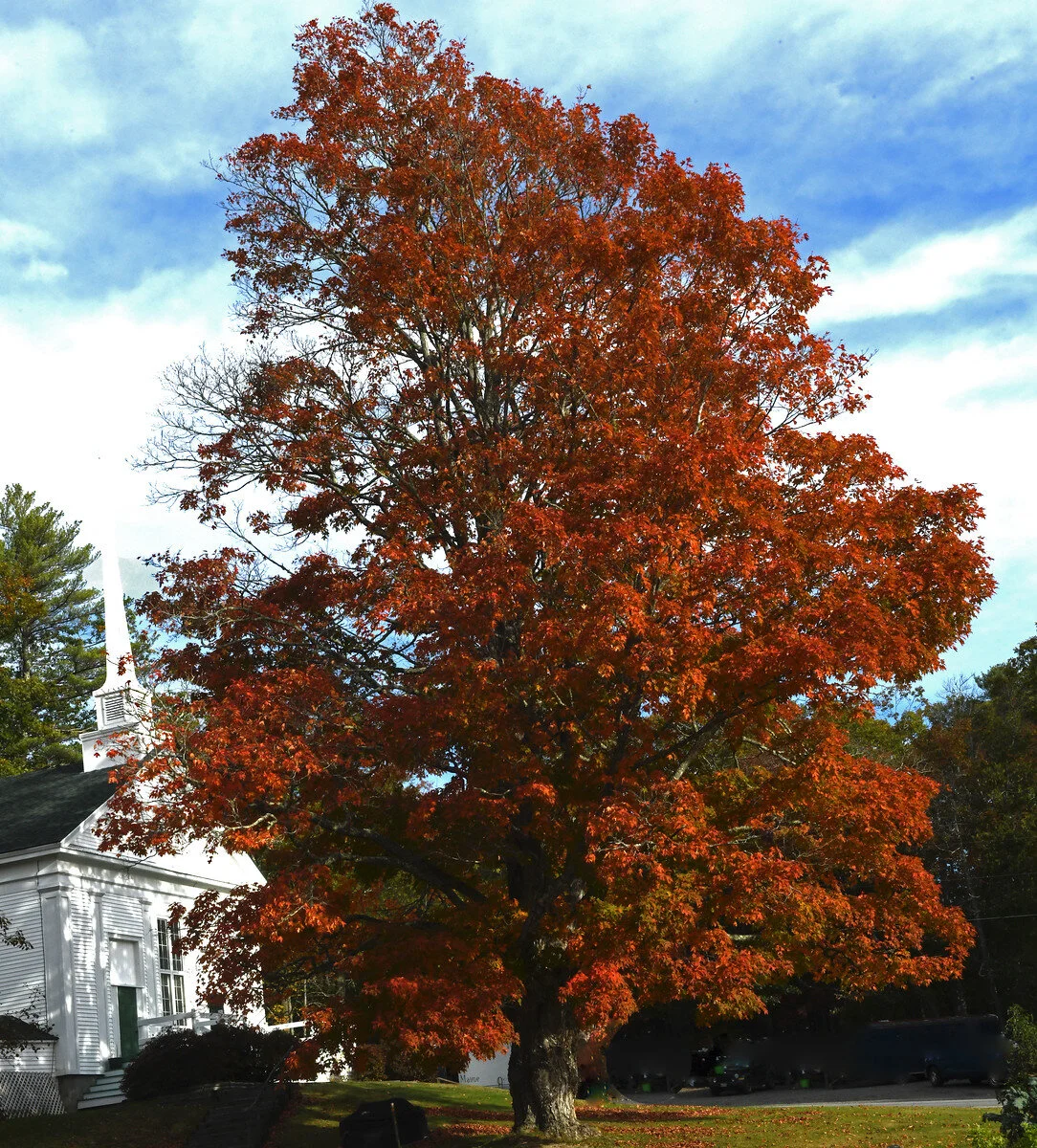
The leaves of this young Sugar Maple, photographed here yesterday (November 9), have just recently started changing to their fall colors.

1.jpg

On November 3, when other Sugar Maples were bare of leaves, this teenager’s leaves were still green and collecting snow:

3.jpg

Why do some trees hold onto their leaves longer than others?

Research shows that the more stress that a tree undergoes, the earlier it will shed its leaves to conserve water and energy. The amount of water that a tree gets in the spring and summer is especially important. This year we had semi-drought conditions, but this tree is in a low area (near our raised driveway) that collects some water when it rains. It also is fairly well protected from the high winds that we get on our ridge. Moreover, we’ve been experiencing unseasonably warm temperatures.

Meanwhile, about 200 feet from this Maple, our Katsura Tree looked like this yesterday:

2.jpg

(Brooklin, Maine)

Comment

Comment

In the Right Place: In Memoriam

 As we walked by this mooring gear yesterday at the WoodenBoat School, Maine’s self-proclaimed status as the nation’s “Vacationland” came to mind.

i-FvjQZsD-X3.jpg

This gear hasn’t been in the water since the summer of 2019, when it last served the School’s fleet of beautiful boats and the happy students who sailed and rowed them. Now, the gear seems to be a memorial to the 2020 vacation time that never was here. Yet, it also gives us hope – it seems to be eagerly ready for the fleet and smiling students to return in 2021 and for the world to start to return to what is loosely called “normal.” (Brooklin, Maine)

Comment

Comment

In the Right Place: Curiosity

Something unusual happened to the moon this morning. Well, actually, it happened to our view of the moon. While the sun was trying to break through a very cloudy sky, a full moon appeared from time to time. This was at 10:25 a.m. Tonight, only a quarter of the moon is scheduled to be illuminated for us and there is no guarantee that we’ll see that.

i-W2SfNbb-X3.jpg

Perhaps it was because, from our perspective, the orbiting moon was closer to the sun than usual and at an angle that received more light; but, the moon wasn't so close that the sun’s glare blotted it out to us. And, the clouds helped cut down on that glare. Maybe you have a better explanation for us. (Brooklin, Maine) Click on image to enlarge it.

Comment

Comment

In the Right Place: True Confessions

Now is the time to locate Tamarack Trees, and we did a little of that yesterday, as you see.

1.jpg

In the summer, when gazing at the distant woods, it can be hard to tell the thin and wiry Tamaracks from their sturdier neighbors, the Spruces and Balsam Firs. All are a mass of green-needled branches. But at this time of year, the Tamaracks confess their secret: their needled branches flare into yellow incandescence and then the needles let go and drop like golden sprinkles.

2.jpg

These trees are different. They’re “deciduous,” not evergreen, but they’re also “coniferous” because they produce and drop cones (both male and female ones from the same tree).

3.jpg

“Tamarack” is the Algonquin Tribe’s name for “snowshoe wood,” which is what the tree’s flexible wood trunk and branches could become in the hands of a good craftsman. Nonetheless, the tree also is commonly called a “Hackmatack” (Abanaki Tribe name) and a “Larch” (European name). (Brooklin, Maine) See also the image in the first Comment space.

Comment

Comment

In the Right Place: Bobbing

This morning, I was sitting in an intermittent drizzle on Flat Rock, hidden behind the cattails while scanning our North Field. I wasn’t comfortable. The rock was wet and not equipped with a roll of Bounty Towels.

I was debating moving to another location when our alarm went off – about 20 crows started screeching their black hearts out in the trees at the edge of the Field. “Eagle!,” I thought and intensively searched the tree tops while the birds went insane. Nothing.

I fortunately looked down at the Field in frustration and there he was. (Sex assumed.) He was loping low and keeping his eye on me. While I was watching crows, he was watching me: a gorgeous mature Bobcat. When I “shot” with a “click,” he stopped and studied me for a second and ran off.

3.jpg

I was lucky; Bobcats are mostly nocturnal. They’re named for their bobbed” (shortened) tails, of course. Although not commonly seen, they’re the most abundant wildcat in North America and have been roaming the earth for about 1.8 million years.

7.jpg

Bobcats can be fierce hunters and kill prey that is much larger than they are, but they usually eat rabbits, squirrels, birds, and other small prey. They’re fast for a small, stocky animal: They’ve been clocked at 34 miles an hour and seen to jump 12 feet high. (Brooklin, Maine)


Comment

Comment

In the Right Place: The Beat Goes On

It seems that traps are being off-loaded daily at the Town Pier in Naskeag Harbor.

1.jpg

Today, as you see above, we had Cool Change bringing her traps in. When they’re all in, she may be refitted for scallop fishing over the winter.

2.jpg

The preferred means of trap transportation is by truck and trailer, as you can see in today’s image below of the traps of a different vessel.

3.jpg

(Brooklin, Maine)

Comment

Comment

Inthe Right Place: The Other November Gobblers

We went by the Reversing Falls in Blue Hill today and noticed that our annual “paddling” of Common Eiders was forming far offshore in Blue Hill Bay. There were about 70 of these ducks have flown in so far – fewer than usual for early November.

4.jpg

These are our largest native ducks. By December, hundreds of them usually have arrived to over-winter as a group in the Bay.

2.jpg

Each year, the Annual Blue Hill Eider Convention seems to attract fewer vacationers. Part of the reason is that this duck’s favorite food, the Blue Mussel, has been significantly diminished along our coast. Actually, these ducks are part of their own problem – each can gobble down (whole) more mussels than you get for dinner at a generous restaurant.

1.jpg

When humans get close to these ducks while they’re feeding, they paddle away in a collective frenzy, which may be a defensive move designed to obscure individual targets and appear to be a single, large body.

3.jpg

We haven’t yet been able to get close enough to the Eiders to take good photographs this year. So, we’ll show a couple of images from prior years. The males are white and black and the females are bronze.

5.jpg

(Brooklin, Maine)

Comment

Comment

In the Right Place: Snow Job

This Election Day morning, we had the first snowstorm of the Winter. Although not a big one — about an inch’s worth — it delivered enough snow to cover the trees and bushes, some of which still were wearing their Fall leaves.

S-1.jpg
S-2.jpg

The early morning light gave familiar sights — including two familiar deer caught trespassing (again) — new aspects.

S-4.jpg
S-5.jpg

The Winterberry and Viburnum plants were caught by surprise with some of their leaves on when the Winter weather arrived. Some of the Maple trees were caught with all of their leaves on, which can be dangerous if the snow gets too heavy.

S-12.jpg
S-16.jpg

In the afternoon, the sun appeared occasionally to dapple the landscape while melting the snow. Cadillac Mountain in Acadia National Park got caught by a sunspot as the clouds opened for a few seconds.

i-4LvqSH6-X4.jpg

A similar dappling effect was seen at the Brooklin Cemetery and a local pond..

S-20.jpg

In the evening, the sunset afterglow was befitting a special day.

i-cFB2bgP-X4.jpg

(Brooklin, Maine)

Comment

Comment

In the Right Place: Pot Luck

Here, we see a pleasing display of garden pots at the Mainescape Plant Nursery in Blue Hill on October 19. We wondered why we found a group of pots so pleasing.

ITRP Mon.jpg

It turns out that there is significant research on the subject of the pleasing nature of circles. It begins with the finding that humans have had a predilection for circles and other curvilinear shapes for at least 40,000 years and the addition of colors and concentric lines has been a traditional way to make those forms even more pleasing.

The reported three leading theories on why we like circles start with an evolutionary finding that ancient humans found that curvilinear shapes in nature, such as bushes, generally were safer than angular ones, such as animal teeth and rocks.

The second theory is based on tests in which most humans associated circles and other curvilinear shapes with happiness and associated triangles with anger. The final theory is that circular shapes conform with the circular and curvilinear shape of the human eye and complement the act of viewing. (Brooklin, Maine) Click on the image to enlarge it.

Comment

October Postcards From Maine

6 Comments

October Postcards From Maine

This October and its fall foliage were not as spectacular here as in some prior years. That said, the month was a remarkable one. The month’s early clouds and light were special, even though, during the first two weeks, Apples, Beach Rose Hips, and Winterberry fruit hung on for dear life.

1.jpg
17.jpg

Eventually, the leaves began turning in earnest on trees and bushes.

56.jpg

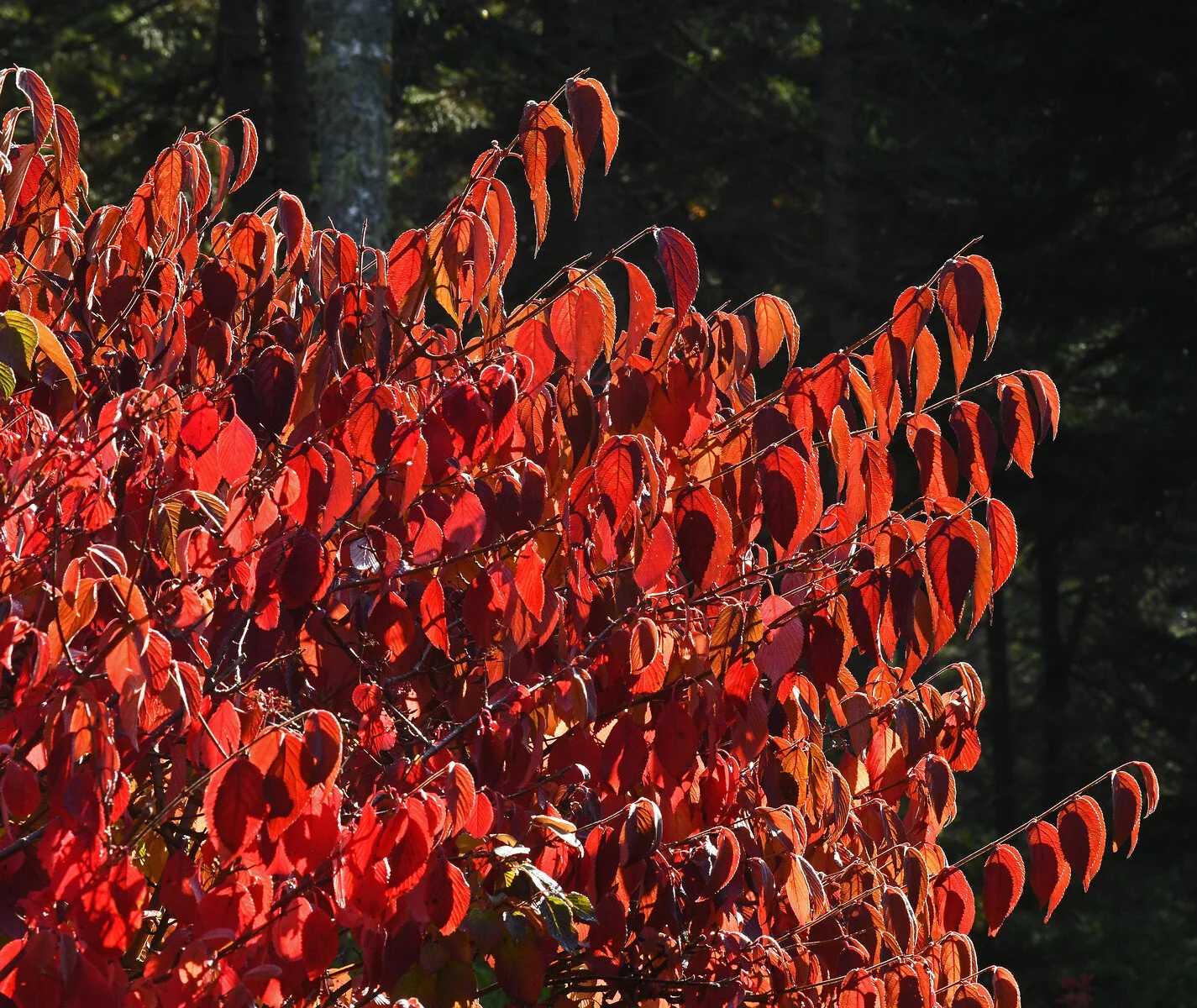
The wild Low-Bush Blueberry leaves were stunning in their fields that slowly became raspberry red. The Viburnum bushes also were especially vibrant this year, producing their full range of colors — from blazing red to purple.

5.jpg
8.jpg
12.jpg
20.jpg

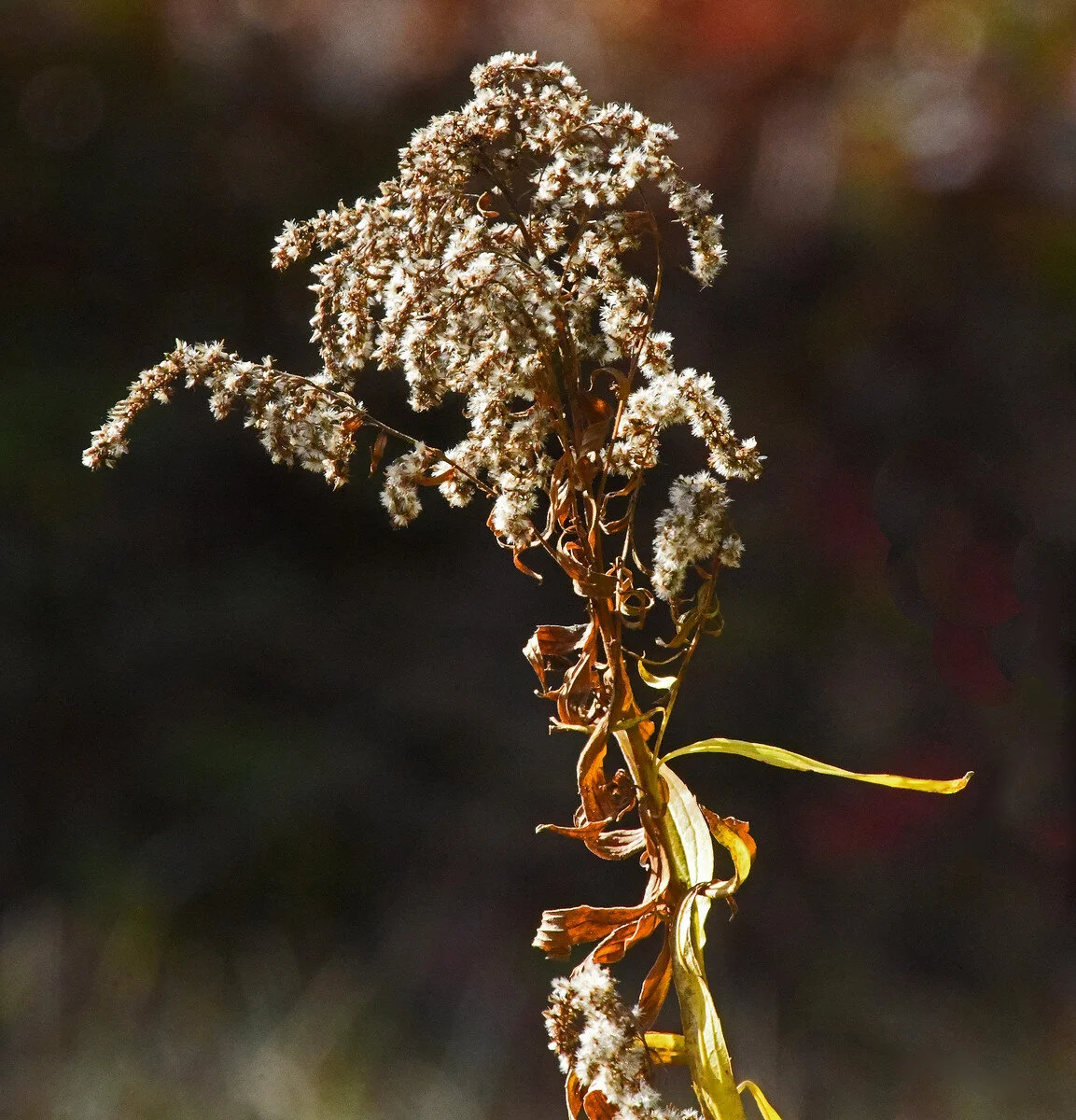
By mid-month, the Goldenrod had turned fuzzy gray, the Cinnamon Fern was turning gold, and the red fruits of invasive Asian Bittersweet were emerging from their yellow husks. Some of the trees also had dropped most of their leaves by then, including the Camperdown Elm in Brooklin Cemetery and many old wild apple trees.

26.jpg

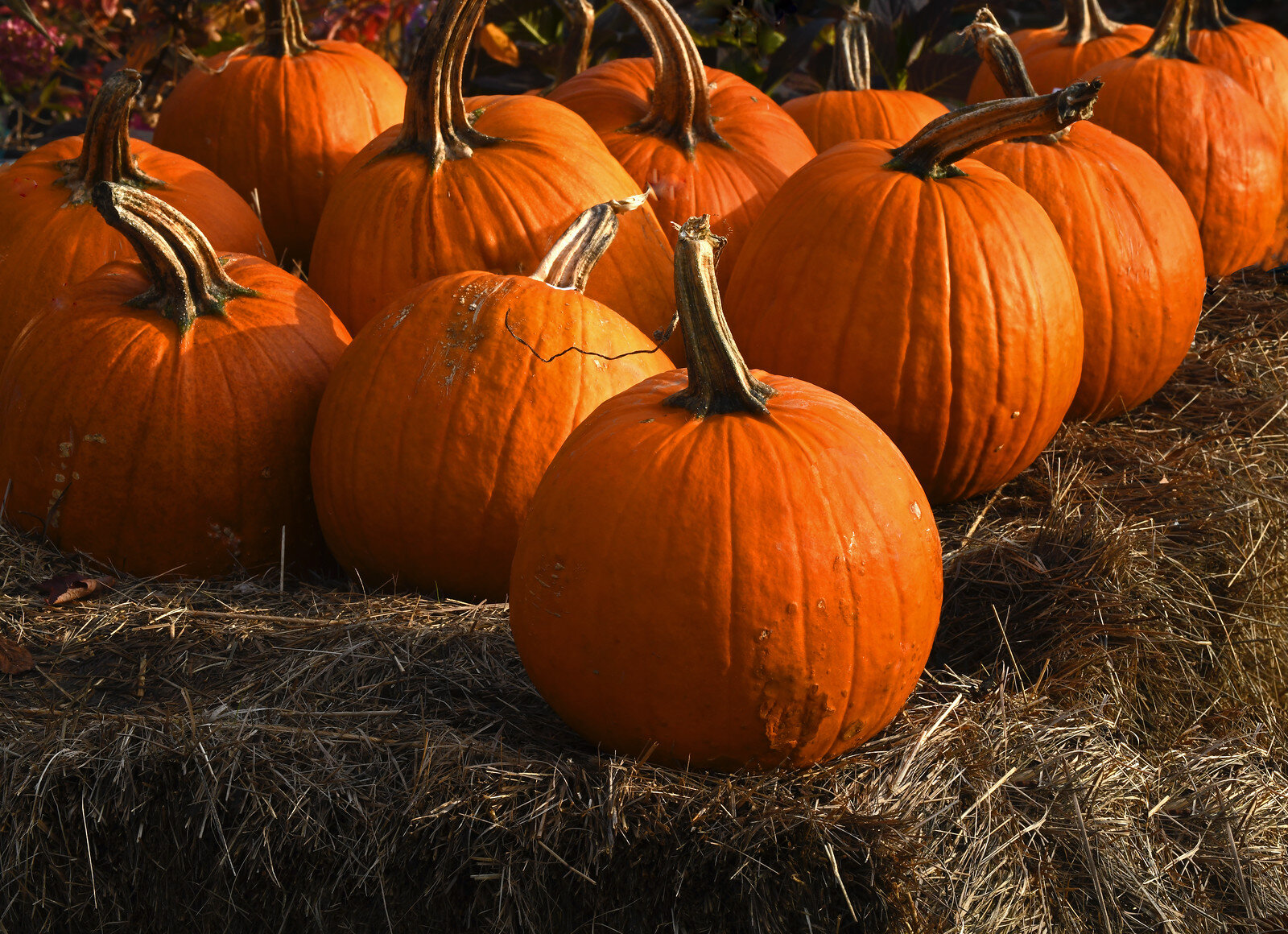
But, the Chrysanthemums were at their prime and truckloads of them were arriving to decorate Fall porches.

30.jpg

On the waterfront, we had our share of whitecap days, but the big activity involved our fishing vessels ending their lobster season and taking in their traps and buoys. Many of the vessels will get refitted for scallop dredging during the winter.

40.jpg
32.jpg
39.jpg

Although there was some recreational sailboat activity in October, many of the boats were in storage by then and some of them never left storage to sail this summer due to the Covid 19 plague.

41.jpg

Those of our Sea Gulls that intend to migrate south usually start in October. We hosted m,any sandpipers on their way south, including the Greater Yellowlegs Sandpiper below. Our White-Tailed Deer don’t migrate — they grow dark and deep winter coats and stay put.

43.jpg

By the end of the month, the sunsets were starting to get dramatic, as usual. The low sunlight in winter produces yellow, pink, red and occasional greenish sunsets. Of course, the last evening in the month is Halloween, which was historic this year.

Last-1.jpg
46.jpg

The reason that Halloween was historic this year had to do with the moon: We had two full moons this October and one of them was on Halloween. Below, you see the first one, the Harvest Moon on October 3:

It’s unusual to have a full moon on Halloween and even more unusual for that moon to be the second full moon in the month, making it a “Blue Moon.” Yet, we had one last night. That October Hunters’ Moon also was a “Micro Moon,” meaning that it was unusually far away — the opposite of a “Super Moon,” which is unusually close. Below, we see it rising over Acadia National Park and sending its glitterpath over Blue Hill Bay.

last-5.jpg

Now that we think about it, maybe October was spectacular.

(All images above were taken in Down East Maine in October of 2020.)

6 Comments

Comment

In the Right Place: Beauty Is the Beast

Now that many of the leaves have dropped, we can see our beautiful, but lethal, galaxies of Asiatic Bittersweet (Celastrus orbiculatus), sometimes known as Oriental Bittersweet.

B-1.jpg

This silent assassin has been growing quickly under cover all summer. The trees and bushes that are its prey are helpless as this Bittersweet squeezes them to death like a python winding higher and higher toward their tops.

As you can see from the October 24 images here, this is the time that many of the red fruits are emerging from their yellow skins, making themselves available to hungry birds. The droppings of those birds, in turn, propagate the plant faster than humans can eradicate it.

B-2.jpg

The State of Maine has acknowledged that this nuisance is too far-gone to be eliminated. But, the State has listed it as an invasive species that may not be encouraged or sold or distributed here for wreathes or other decorative purposes.

There is an innocuous native version of this plant, aptly named American Bittersweet (Celastrus scandens). Its leaves are elliptical, not rounded, and its flowers and fruit occur in clumps at the end of the stems like pendants, rather than being strung along the stem like a pearl neckless. (Brooklin, Maine) See also the image in the first Comment space.

Comment