April Postcards From Maine

2 Comments

April Postcards From Maine

April gave us some beautiful days — perhaps too many. Down East Maine needs rain and plenty of it, if it is to avoid a summer drought. Yet, there were only a handful of good rainstorms. Nonetheless, our fields, streams, woods, and sea coast did make a good showing in the April sun.

1.jpg
5.jpg

The April showers and a few snow flurries that we did get grounded our seagulls for a while. However, the droplets encouraged daffodils and forsythia to start our cold spring with bright yellow hues and our star magnolia trees to bloom into white pom-poms. The rains were enough at times to flood our bogs and help the important flora there to emerge, including skink cabbage and ferns.

9.jpg
10.jpg
13.jpg
17.jpg

We also had some very windy April days, with gusts in the 40-mile-an-hour range. If you were light enough, you could defy gravity by leaning into them.

21.jpg

The winds had our fishing vessels tugging at their moorings. They hunt scallops in April; some with booms and dredges, some smaller vessels only needed an outboard motor for aqua lung divers to hand-harvest “divers’ scallops.”

There were, of course, very still days when everything seemed perfect and ready for spring.

27.jpg

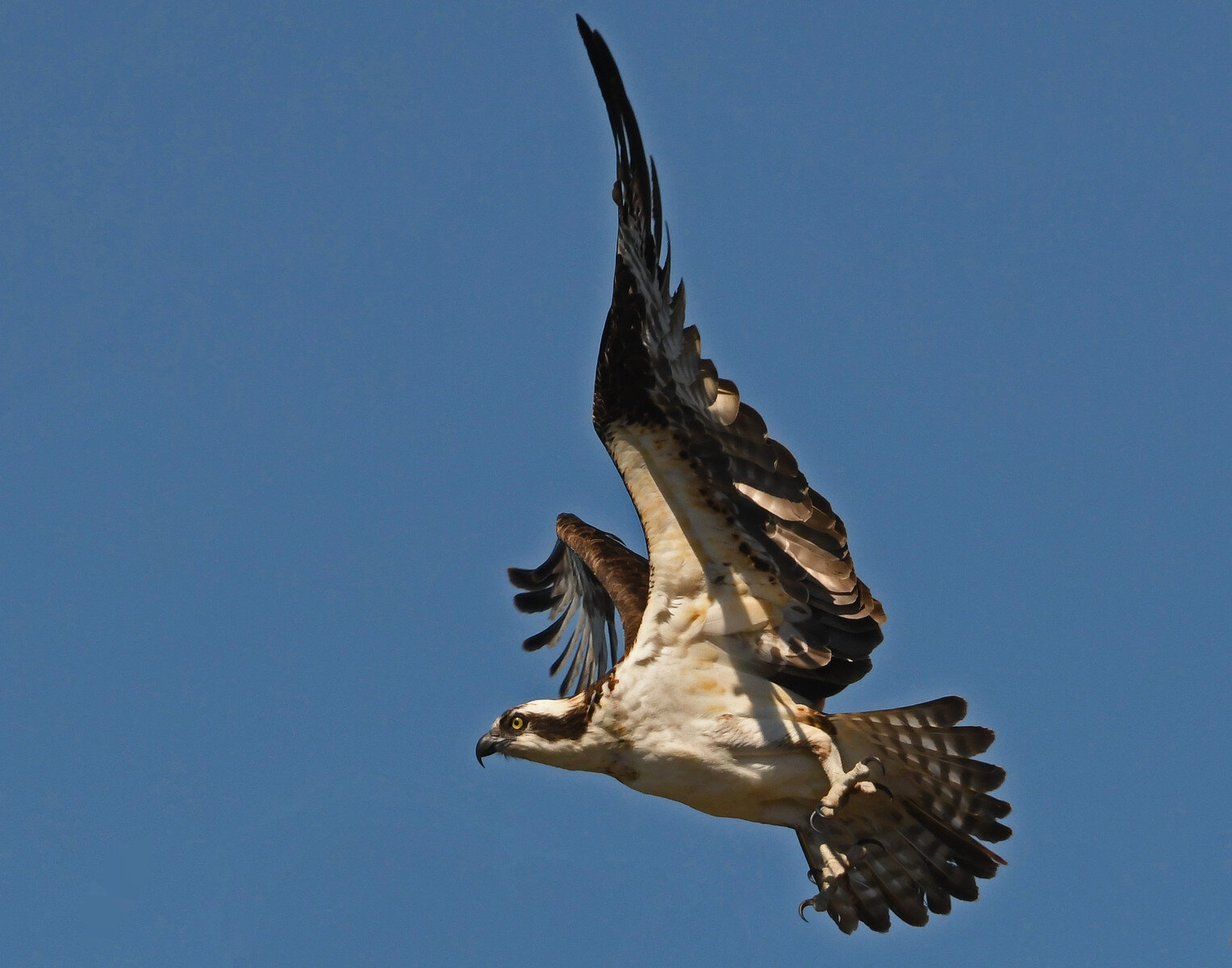
As for April wildlife, we can’t ignore old robin redbreast, one of the signs of spring. However, the return of our nesting pair of ospreys, Ozzie and Harriet, was the highlight of the month for us. Other birds of interest were loons in the sea and wood duck in the pond. One notable event was the early emergence of two painted turtles.

30.jpg
33.jpg
34.jpg

Finally, April had a super moon — literally and figuratively. The April Pink Full Moon was at its closest to earth when it appeared late in the month, hence it was a “super moon.” It’s called the Pink Full Moon because it appears when pink phlox does.

41.jpg

(All images in this post were taken in April 2021 in Down East Maine.)

2 Comments

Comment

In the Right Place: Osprey Nest Report 3 (Good News)

I wasn’t sure I’d be able to see the nest from my usual vantage point yesterday morning: it was foggy and misting and the nest is about 100 feet above Great Cove, atop a broken off spruce. I also didn’t have high hopes for Harriet’s annual return from the south in such thick weather. But, I went to see out of concern for Harriet’s being late.

And there she was!

i-xz7qvRK-XL.jpg


She was lying flat in the nest while Ozzie stood. Yesterday apparently was Harriet’s first day at her summer residence.  As you can see, she and Ozzie were gazing through the murky morning like an old, settled couple enjoying the airs on their porch. (A curious thing: although ospreys usually are monogamous, it is thought that they return to the same nest out of territorial fidelity, not attraction to their mate.)

If all goes well, “our” pair will do some courting and mating for a short period, with Ozzie feeding Harriet as part of the ritual. She’ll lay one to four eggs and incubate them for up to 40 days, with Ozzie feeding her and sometimes doing a little incubating, himself.

The young hatch sequentially, usually one a day, and grow fast. This gives the first born (hence biggest) an advantage. It is not unusual for one or two of the hatchlings to be bullied to death by their siblings. (Last year, Harriet brooded three youngsters and two survived the competition.) (Brooklin, Maine)

Comment

Comment

In the Right Place: Osprey Nest Report 2

As followers know, we’ve been concerned about one of “our” pair of ospreys that hasn’t returned to it’s nearby nest, a nest that we’ve been studying for five springs and summers. Another pair from another nearby nest has already hooked up and has been flying and loudly “cheep-cheep-cheeping” at each other over Great Cove recently.

For descriptive reasons (and for fun), we’ve named our pair Ozzie and Harriet. It’s Harriet who hasn’t arrived yet, based on last year’s photographs. (We could be wrong; the only way we have been able to tell the difference reliably is when the birds are together. Harriet is a little larger than Ozzie, whom we assume we’re seeing now.)

B-1.jpg

Yesterday, as you can see above, Ozzie was standing alone in his nest looking in every direction when we got within “shooting” range. He did not call; he just stared with his golden eyes. In about an hour, he flew off to the north, where one of his favorite fishing areas lies. See below.

B-2.jpg

Ospreys usually are monogamous and nest faithful, but mates do die and there is a breeding imperative. When a mate disappears, the remaining bird chooses another mate or is chosen as one. It’s then often a question of whose nest to use for breeding and raising the young.

But, we’re not giving up on Harriet just yet. Stay tuned. (Brooklin, Maine)

Comment

Comment

In the Right Place: Greetings

Daffodils are bobbing in the cold winds and ducking in the rain all over Brooklin; yet, they appear to be tooting “Spring is coming! Spring is coming!” Here, you see them protecting an old New England double rock wall yesterday:

5.jpg

Here’s one after a rainstorm:

Leighton Archive Image

Leighton Archive Image

The botanical name for these flowers is Narcissus pseudonarcissus, part of the Narcissus genus of spring perennials. They were named after the handsome Greek youth who, according to legend, fell in love with his own reflection and was punished for his vanity by being turned into a flower.

Pretty they may be, but they contain protective alkaloids that are toxic and have been known to cause major problems for dogs who tried a mouthful. When cut and put into a vase, they also can adversely affect some other cut flowers there, unless the Daffodil stems are thoroughly washed beforehand.

Nonetheless, these beautiful greeters have almost convinced me that we’ll see spring soon. (Brooklin, Maine)

Comment

Comment

In the Right Place: In the Pink

The “April Pink Full Supermoon” last night and early this morning was spectacular here. It’s the first of only two supermoons that we’ll see in 2121 and It lit up the night; no flashlights needed. For those who missed it, there will be a second, virtually identical, performance tonight. The only other supermoon that will happen this year is on May 26.

In the images above, you see (from our perspective) the full moon rising seemingly even with the tall spruce trees on Naskeag Point ridge. In the below, it’s risen well above the ridge and heading for Great Cove at 11:19 p.m. :

X.jpg

Below, it’s on its way northwest at 5:13 a.m. this morning, but still able to light up our North Field and a few deer grazing there.

Z.jpg

As you can see, the “April Pink Full Moon” is not pink. It’s named after the herb known as pink moss (also known as creeping phlox or mountain phlox), one of the earlier spring flowers.  It’s a supermoon because it’s full (the sun lights the side facing us all up) when its orbit is closest to the earth; that is, it is at its “perigee.” (Brooklin, Maine)

Comment

Comment

In the Right Place: Where is She?

It’s Osprey breeding season. This appears to be Ozzie yesterday on a local nest to which he has been returning from southern climes for at least five years, since I’ve been monitoring the nest and named him and his mate for convenience. Ospreys are what has been called “nest faithful” as well as being monogamous.

1.jpg

Ozzie has been here this year for at least a week and Harriet, his mate of many years, has not shown up yet, at least at the times that I’ve been monitoring the site and watching the skies along the coast. Harriet is larger than Ozzie, which is typical for female birds of prey. (One theory is that female birds of prey need to be larger to protect themselves and their young from aggressive male mates and strangers with killer instincts.)

To be sure, Harriet is one tough bird when it comes to protecting the nest. Here are a few Leighton Archive images of her:

7.jpg

However, Ozzie has shown no killer instincts toward his families and often is left alone to sit on eggs or youngsters when Harriet needs a break to eat the fish that Ozzie delivers or to get away from it all for 30 minutes or so.

We’ll let you know if and when Harriet returns. (Brooklin, Maine)

Comment

Comment

In the Right Place: Hot Tip

Green Arrow Arum (Peltandra virginica) plants in our local ponds and other freshwater wetlands are coming up like ballistic missile fields, as you can see from this image taken Tuesday (April 20):

1.jpg

Soon, these missiles will unfurl into leaves that will be about 30 inches long and about 8-inches wide at their widest. They’ll form green “arrow heads” that are heavy enough to bend the stalks gracefully over the pond’s lily pads. See these summer archive images:

3.jpg

This plant, also known as Tuckahoe, produces fruits that ducks, muskrats, and other marsh creatures eat, but humans are advised not to taste any part of the plant. The family name “arum” is thought to derive from the Arab term for “fire” and reflects the sensation you’ll have in your mouth if you chew this plant. (Brooklin, Maine)

Comment

Comment

In the Right Place: Blown Away

This morning arrived clear, cool (38[F]), and very windy (40 MPH gusts).

1.jpg

We’re feeling a meteorological and psychological broom sweeping away yesterday’s bad air and dreariness. Today’s winds also are providing a joyous opportunity to defy gravity a little at Naskeag Harbor – if you’re the right size and weight, as our young neighbors here are.

5.jpg

The boats in the harbor were trying their own version of leaning into the wind this morning:

3.jpg
2.jpg

(Brooklin, Maine)

Comment

Comment

In the Right Place Season's Greetings

Ahhh, spring in Maine.

Yesterday at about noon here at the pond, it was partly sunny and a chilly 53 degrees (F) when I saw this pair, our first painted turtles.:

S-1.jpg

They had thrown off their mucky covers, arisen about 14 feet from their winter beds, and were desperately seeking heat from a miserly sun.

This morning, as this is written, it is 31 degrees here and snow is flurrying outside, as it has been, off and on, all morning:

S-2.jpg

I suspect that our other turtles will stay in bed this morning. (Brooklin, Maine)

Comment

Comment

In the Right Place: Going Soft?

This mysterious gull ritual was taking place again on Monday, April 19. It occurs from time to time in this small field pond, which is on a flat piece of land that overlooks the waters of Naskeag Harbor and Eggemoggin Reach.

3.jpg

The pond’s elevation above the other waters gives it the appearance of one of those “infinity pools” in luxury hotels in which you get the giddy sensation that you’re swimming on top of the world and could fall off.

The ritual appears to be carried out by a significant portion of the Harbor’s gull colony, which is mostly Herring Gulls. This colony contains some of the most cantankerous and territorial things that ever emerged from an egg. Here’s one of the screamers:

G-2.jpg

Yet, in all seasons, large numbers of these troublemakers congregate closely in this field pond as if going to church. They bathe there together making soft sounds, having been transformed from crime family seagulls into peace-loving pondgulls.

There appear to be no fish or other food in the pond; the birds meet there whether or not a storm is coming, and I’ve never seen them hunting insects in the surrounding grass. Sometimes, they’ll meet in the winter there and stand around on the ice with their wings crossed behind their backs, apparently discussing the latest gull football scores.

Is this about taking a freshwater bath to get rid of salt buildup? Are these a rural species of parking lot gulls? Do they go there because they pretty much have a 360-degree view to protect against predators?

Are our gulls going soft and fancy on us? (Brooklin, Maine)

Comment

Comment

In the Right Place: Weather Report

Yesterday and today have been beautiful here, according to conventional standards. Ironically, however, we would be better off experiencing continual April showers.

We need plenty of rain to build up our low ground water and assure that we don’t slip into a drought this summer. The current federal U.S. Drought Monitor lists the southern half (and more) of Maine in the “Abnormally Dry” category with an elevated fire danger.

1.JPG

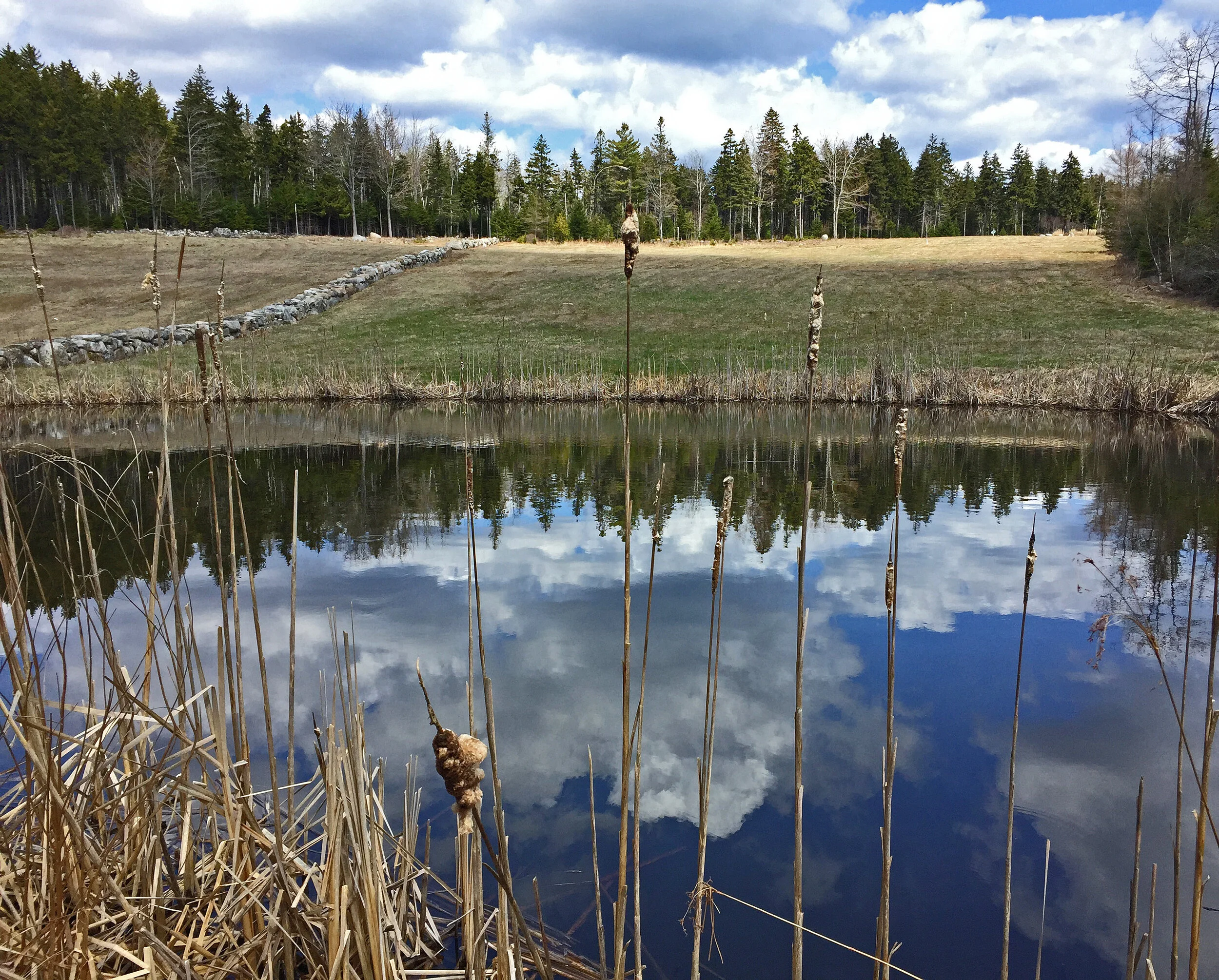
As you can see from the images here, taken yesterday, there have been large cumulous clouds wandering high above us, but none has released large amounts of its precious rain recently. Our fields are not yet fully green and virtually all of the cattails remain rickety dry.

2.jpg

Nonetheless, the pond is good at catching the water run-off from the sloping field and reflections of clouds from the sky. It was full of both, yesterday. We hear that we might get some rain tonight and/or tomorrow. (Brooklin, Maine) See also the image in the first Comment space.

Comment

Comment

In the Right Place: Bad Poetry

“’Good fences make good neighbors.’” – Poet Robert Frost in Mending Wall  (BUT, Frost is quoting his dull neighbor and being annoyed by the trite statement).

My poetry for the day:

“Bad fences are playing good death scenes,

“While good fences are making good kayak racks.”

1.jpg

WHAT?! You don’t think that’s good poetry?! Well, maybe not. But, at least it’s true.

2.jpg

(Images taken April 16 (kayaks) and 18 (fence), 2021. In Brooklin, Maine)

Comment

Comment

In the Right Place: You First

Yesterday’s rain and very light snow came, but the storm was much less impressive than predicted; it was a whimper really, except for some high winds.

R-1.jpg

Those 25-30 miles-per-hour winds did have fishing vessels in Naskeag Harbor pulling obstinately at their mooring tethers yesterday, as you can see with Dear Abbie:, above. But, the moorings held.

And, that hard-to-anger Harbor was provoked into producing occasional two-foot beach waves. We saw one local Herring Gull apparently saying to the other: “No, George, you go first”:

R-2.jpg

But, we saw no significant damage in our area. (Brooklin, Maine)

Comment

Comment

In the Right Place: To Unfurl or Not to Unfurl

This Eastern Skunk Cabbage plant in our bog is one of the plants that we’ve monitored closely and photographed regularly for several consecutive years. We’ve chosen this April 12, 2021, image to show here because it illustrates the plant’s well-engineered resilience.

S-1.jpg

The plant clearly is doing well now, despite heavy rains in early April that made the bog waters rise above it, not to mention below-freezing temperatures from time to time:

S-2.jpg

The purple spathes that contain the plant’s flowers are designed to both capture and circulate outside air and to contain the plant’s own warming heat that is generated internally; they also buffer shocks to the hidden flowers.

The plants’ leaves are outside the spathes, wound tightly into a scroll that will open only when the plant decides that it is time. Some Skunk Cabbage plants in our bog have started unfurling their leaves to allow them to grow, others, such as this, are keeping their leaves tightly furled. Do they know something? (Brooklin, Maine)

Comment

Comment

In the Right Place: Gray Matter

The weather tellers are saying that, tomorrow, we’ll be attacked by that nasty combination known as “snain” (snow and rain). So, here’s a happy image to hold us over:  Blue Hill (the demi-mountain, not the Town) rising above Blue Hill Bay on sunny Saturday, April 10.

B-1.jpg

According to some of the histories, the Hill was virtually covered with evergreen trees in the 18th Century before it was heavily harvested for timber and quarried for granite. The original dense stands of conifers gave it a blue hue. Now, it looks like less than 10 percent of evergreens live there.

From a distance in the winter and early spring, the Hill appears to be mostly bands of gray. That’s because mostly deciduous trees live there now and have not yet produced leaves.

When summer arrives, however, Blue Hill will be the high endpoint a lush green ridge above the Town that named itself after the Hill in 1789, when it was young and blue:

B-3.jpg

(Blue Hill, Maine)

Comment

Comment

In The Right Place: Fooled Again

It was a beautiful day last Saturday (April 10), with only the gentlest of winds. They stirred the water in Connery Cove as if by sighs; just enough to create brush strokes in the reflections.

I was admiring the rippling leaves on the upside-down trees at the Cove’s north point, wondering what were those trees? Maple? Ash?

i-zkbSxZH-X4.jpg

Then, my old visual cortex finally awoke and shouted inside my head: “WAIT A MINUTE! Leaves? In Maine? In mid-April?”

I looked closer. The trees were conifers, maybe spruce. They apparently had been trimmed to resemble deciduous trees. Fooled again. (Blue Hill, Maine)

Comment

Comment

In the Right Place: Out-Waited

On Sunday (April 11), I was driving past a local pond and noticed near the opposite side a slow moving “>” in the dark water, the wake of a small duck. Squinting hard, I either saw or imagined a parading duck wearing Cleopatra streak eye makeup – the sign of a female Wood Duck.

I stopped the car, fumbled for the 200-500 mm zoom lens behind the seat, found it and exchanged it for the one I had on the camera body beside me. All the while I was saying to myself, “Don’t fly yet; don’t hide yet.” The “>” had now become two (“>>”) and had entered the center of the pond and stopped; two ducks had turned toward my stopped car.

I poked the lens out the window, rested it on the half-down window, and focused: It was a pair of Wood Ducks, alright. But, they had turned again and were heading fast for the cat tail reeds. I got off four desperate shots before they disappeared into the reeds.

d-1a.jpg

I waited 10 minutes; then 20; then 30. I decided then to wait only five more minutes. At 35, I decided definitely to go only another five. (I’ve got no discipline.) At 50 minutes after they had disappeared, I finally decided I’d go home and see what I had in the camera. (I need to work on my patience.)

None of the four images was great. The one above shows the male’s striped bicycle helmet head, painted bill, and Maraschino cherry eyes, all key identifiers. The female’s Cleopatra eyes can be seen in the image below:

D-3.jpg

(Brooklin, Maine)

Comment

Comment

In the Right Place: Foiled Again

Here, we have a foil board rider at Blue Hills Falls on Saturday, April 10. The current there is fast enough to support foiling, if you attach a rope to the bridge and hold on while the water speeds by you and your board rises on its foil.

1.jpg

However, the situation changes when you let the line out to maneuver in the surf when up on the foil.

3A.jpg

You have to be able to handle the incoming tide when it suddenly and unexpectedly twists and turns. Not many can do it for long, including this foiler:

2.jpg
3.jpg

(Blue Hill, Maine)

Comment

Comment

In the Right Place: For the Great-Great Grandkids

Here, you see a rare work in progress along Back Road: A real copper roof is being installed on a private residence, not an aluminum roof tinted to look like a quantitatively more expensive copper one that has achieved its gray-green patina. 

R-1a.jpg

Although extraordinarily expensive, copper is malleable, yet strong and durable. It can last centuries with relatively little maintenance, according to reports. It once was the metal of choice for the roofs of important public buildings, especially before the development of efficient aluminum extraction processes.

R-2.jpg

Actually, copper roofs are a derivative of ship building. Prior to the American Revolution, it was discovered that copper sheets could be molded into hull coverings that added extra protection for ships of wars. It was a short step from there to try the metal as a building covering. (Brooklin, Maine)

Comment

Comment

In the Right Place: Towering

This week, our Hibiscus plant has been presenting lascivious flower after lascivious flower for its spring offering.

H-4.jpg

As one flower is appearing, another is dying after carefully wrapping itself tightly into a petaled shroud and dropping to the floor – the perfect cat toy for about a minute.

H-1.jpg

A blooming Hibiscus flower is an excellent model for teaching the basic reproductive parts of some plants. It’s long pistil (primarily of female organs) arises from its hidden ovary in the center of the flower like a city’s observation tower. Atop the tower, like radio antennas, red stigma orbs (containing pollen) protrude on their styles above a rounded yellow observation-ball-like stamen of (male reproductive) anthers and filaments.

H-5.jpg

(Brooklin, Maine)

Comment