Comment

In the Right Place: In Memoriam

Yes, Don; it’s that day again.

It’s time to remember my last walk with you, which was made difficult by your silence and flag-wrapped spirit atop a black caisson doing sad duty.

RJL_5610_edited-1-X3.jpg

Your color guard was ahead of us, breeze at their backs, holding high the flags that know the way and seem eager show it to those of us who don’t want to see it.  

And, yes, most of all, Don: I’m trying to remember what you taught about honor and being honorable. It’s getting harder to remember that part.

Until next year, Don.

(Arlington Cemetery, ceremony of Lt. Col. Donald Green; U.S. Marine; Attorney-Colleague; Honorable Person, November 2015)

Comment

Comment

In the Right Place: Creepy Stuff

Bunchberry herbs are now flowering in the woods. These creeping members of the dogwood family are named after the clusters of red berries that they will produce in the summer, much to the delight of our vireos.

i-XJhzctN-X3.jpg

The yellow flowers that we see now have crisp white “petals,” but they’re not petals; they’re separate leaves that are designed to attract and channel pollinators to the flowers. The plants also are known as Canadian Dogwood, which is the literal translation of their botanical name, Cornus canadensis.

Bunchberry plants are not to be confused with Bunchbottom paint jobs, which also are appearing now. But, that’s another story.

i-TszBDS9-XL.jpg

(Brooklin, Maine)

Comment

Comment

In the Right Place: Early, But Welcome

The rain last night and this morning brought a little happiness to our stressed landscapes and woods, but they need much more. The near-drought situation seems to have provoked our Horse Chestnut Trees (Aesculus hippocastanum) into sprouting their beautiful, foot-long candelabra-shaped flower stalks a bit early along the coast here. The trees’ usually lush palmate leaves also seem dry for May. The images shown here were taken on Thursday (May 27).

C-1.jpg

Horse Chestnut trees are native to the Balkans. They were imported into England in 1616, primarily for landscape shade on large estates. They were first exported from England to its American colonies as shade trees in the 1740s.

C-2.jpg

The large tree is called a chestnut tree because of perceived similarities to the European Sweet Chestnut Tree (Castanea sativa), but it’s not related to that tree. Most botanists say that it was called a “Horse” Chestnut because the Turks fed its conker seeds to cure coughing horses. Some also say that it got that name because, when the trees’ leaves fall, they leave scars on their twigs that look like horseshoes complete with nail holes. (Brooklin, Maine) See also the image in the first Comment space.

Comment

Comment

In the Right Place: Climate Change

Some of the fishing vessels in Naskeag Harbor yesterday were still wearing their scallop dredging equipment for winter mollusk dragging and were showing the wear and tear of cold weather fishing. See Tarr Baby below; she likely will have her dragger mast, boom and other scalloping gear removed soon.

1.jpg

Some vessels in the Harbor yesterday already had had that equipment removed and had been spiffed up to start summer lobstering, probably in mid- to late June when the lobsters usually are most active. See Captain Morgan below:

2.jpg

The Harbor bait hut already has been installed on its raft in the middle of the Harbor. It not only sells lobster trap bait and boat fuel, it also buys lobsters from returning fishermen (a term that also refers to females here).

3.jpg

(Brooklin, Maine)

Comment

Comment

In the Right Place: Star Trek, Brooklin Galaxy

The deciduous tree leaves have filled much of the forest canopies and, when a breeze sways them, the woods trails are full of sliding sunbeams and stretching shadows. The light and shadow show make it both easier and harder to see the Starflowers (Trientalis borealis) now rising from the mossy and leafy earth.

S-1.jpg

However, there seems to be fewer of the plants than in past years. Perhaps it’s because our woods are in near-drought conditions.

s-2.jpg

There was, however, a promising sign that may mean rain is coming: there were plenty of “Lucky Stars” to thank. These are Starflowers that have seven petals arising out of a seven-leafed plant.

s-3.jpg

(Brooklin, Maine)

Comment

Comment

In the Right Place: Monumental

It was windy in Brooklin yesterday, with gusts exceeding 20 miles per hour down at Naskeag Harbor, shown here with its two “monument flags” being given a workout:

i-hkk8RTc-X3.jpg

The monument to the Battle of Naskeag that the flags honor did not budge, but the story of that Revolutionary War event continues to evolve. A few residents say that it never happened, but most of us are willing to accept that something with guns happened here in 1778.

Few of us think that a real “battle” took place, however. It was more of a potshot followed by a later game of hide-and-seek between a few fast-retreating Americans and a lot of panting British redcoats.

As the leading story goes, Willie Reed of Brooklin was down in the Harbor in April of 1778 and he saw an enemy (British) barge passing close by. Well, Willie was a crack shot. He fired his musket at the barge and actually killed one of its crew with his first and only ball, according to the story.

The British were not amused. They vowed to come back and teach a lesson to the treasonous inhabitants of Plantation 4, which comprised Brooklin, Brooksville, and Sedgwick. As promised, two British war ships arrived at the Harbor in July and put ashore a party of more than 60 soldiers.

The red-coated British soldiers chased Naskeag’s seven drab American militiamen up and around the peninsula in a running gun battle. There apparently is no record of any American or redcoat being killed, but local farms were torched and Brooklin livestock was slaughtered by the enemy landing party

Why we want to celebrate this is a mystery. Nonetheless, you have to admit that the monument looks good down there. (Brooklin, Maine)

Comment

Comment

In the Right Place: Strangers in Paradise

This is one of three scruffy ducks that were loafing in our pond yesterday, probably conspiring to do no good. They were faux male Mallards and their history is more interesting than their appearance.

X-2.jpg

A pure drake Mallard and his mate are beautiful birds But, many would argue that there are too many Mallards and there is trouble and unnatural brazenness in wildlife numbers. This is especially so when the wildlife becomes dependent on humans. It’s thought that wild Mallards were the first ducks to be captured and bred by prehistoric man, thus becoming the forebears of domestic ducks.

Leighton Archive Image

Leighton Archive Image

Now, Mallards have become, by far, the most abundant duck in many jurisdictions, including Maine. Yet, they often are not native to their present locations, including Maine. They have the unfortunate luck to being a favorite bird to breed and introduce for hunting. There are records of hundreds of the birds being raised on State preserves for hunting in Maine in the 1940s. (See Vickery, Birds of Maine [2020] at 110.)

Mallards reportedly have been introduced successfully by humans throughout South and Central America, the Falkland Islands, South Africa, Australia, and New Zealand.  Their success is, in part, due to their being good and abundant breeders – and not just with other Mallards.

X-3.jpg

Which brings us back to the three drakes loafing in our pond. Note that their heads appear mostly black and somewhat dingy. They apparently lack the full range of glossy green-reflecting head feathers that pure Mallard drakes have. There is some fear that the duck gene pool is being polluted by Mallards breeding with other species, especially Black Ducks.

One nasty thing that unpaired Mallard drakes and their unpaired faux counterparts have in common, however, is that they gang rape (sorry, there’s no better word) lone females, practically drowning their victims. (You don’t want to see the photos.) Perhaps this is another function of overpopulation doing what it does best -- creating even more population.

Leighton Archive Image

Leighton Archive Image

(Brooklin, Maine)

Comment

Comment

In the Right Place: Hot Stuff

Many Skunk Cabbage plants are at their lush peaks now. This image, taken yesterday morning, is of a Skunk Cabbage cluster in our bog that we’ve been studying for five years.

1.jpg

The plant’s purple pixie-cap spathes, which house its flowers, break through our frozen ground in March by generating their own internal heat over the winter. The heat inside the spathes during winter has been recorded as high as 67 degrees (F), according to one Canadian study. Here’s an image of our study plant breaking through the frozen ground this March:

3a.jpg

Here’s an image of the same plant during this year’s April showers:

2.jpg

At this time of May, the leaves of Skunk Cabbage plants are full of water to get them through the summer. By July, the leaves are starting to whither and usually they dry up and disappear completely before the end of August, perhaps getting ready to turn on the heat during our first frost in September. (Brooklin, Maine)

Comment

Comment

In the Right Place: Soon!

Great Cove was calm early this morning, but the excitement was palpable – there she was, the first student sailboat that the WoodenBoat School has launched since the pre-Covid 19 season of 2019:

c.jpg

She’s also the only WBS sailboat launched so far. However, more of the School’s impressive small fleet are being spiffied up to enter the water soon. The first WoodenBoat day of the 2021 season starts on May 30. In the interim, proud WBS alumni have been helping to get the school ready for this year’s lucky students.

The double-ender shown above is Swifty, a 19’6” (waterline) Caledonia Yawl with a 6’2” beam (widest part). She was built by WBS students in 2014 and named after their instructor, Gordon Swift. She’s extraordinarily good at light air sailing and sailing to windward. She also has an unusual (and big) push-pull tiller – pulling the tiller forward turns the boat to port; pushing it back will straighten the boat out or turn it to starboard.

Leighton Archive Image

Leighton Archive Image

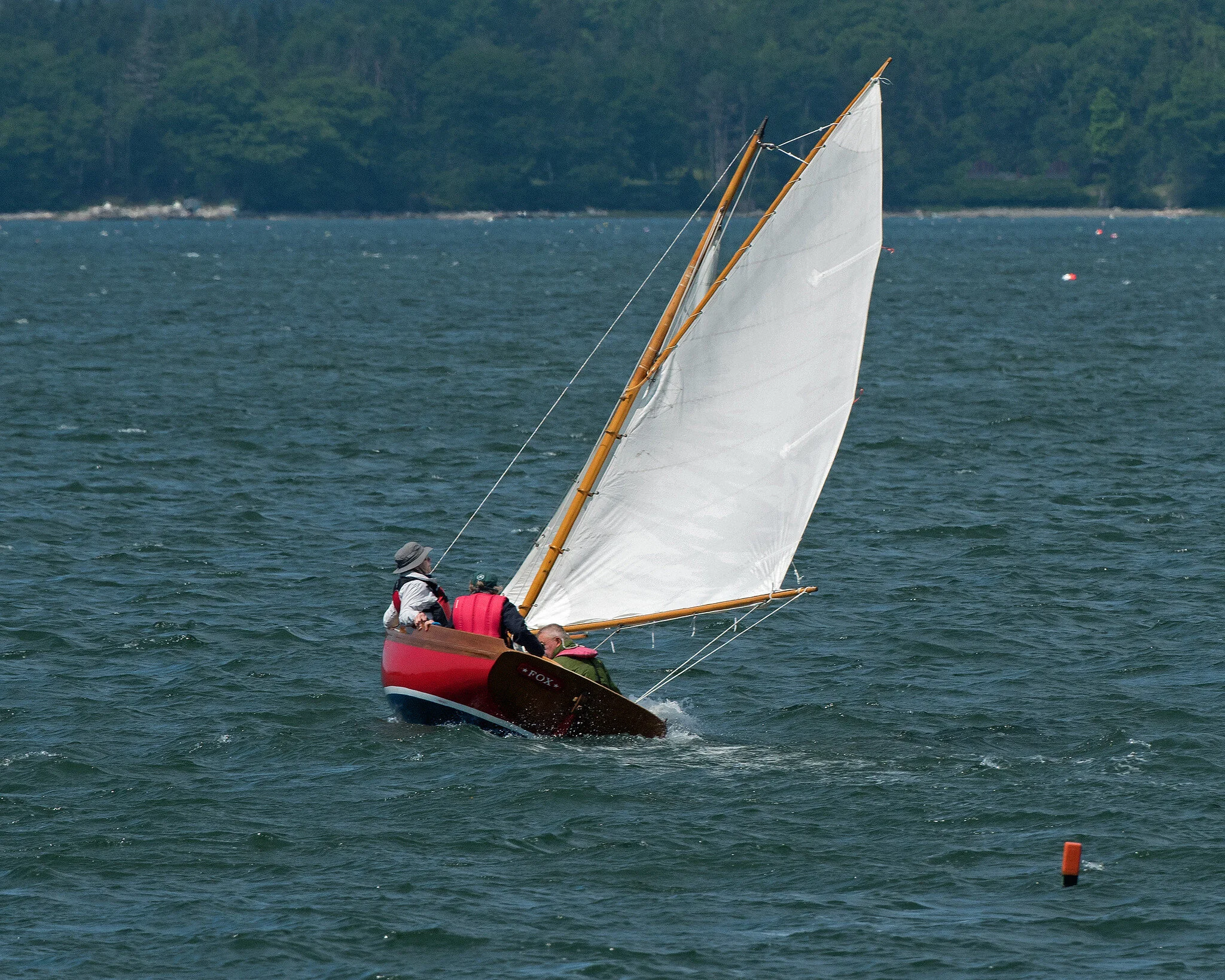
Yesterday, in light rain, Cracker Jack (green) and Fox (red) were out of storage and waiting to have their varnish work completed. These Haven Class sailboats, which run 15’11” at the waterline, were designed by famed Brooklin naval architect Joel White.

a.jpg

The Havens are variations of Nathanael Herreshoff’s beloved 12’6” sloops, which also run 16 feet overall. However, the Havens have centerboards for practicality (shallow-water sailing and easier trailering) and a slightly wider beam for more stability while students learn to sail. Here are Cracker Jack and Fox archive images:

(Brooklin, Maine)

Comment

Comment

In the Right Place: Wild, But Cultivated

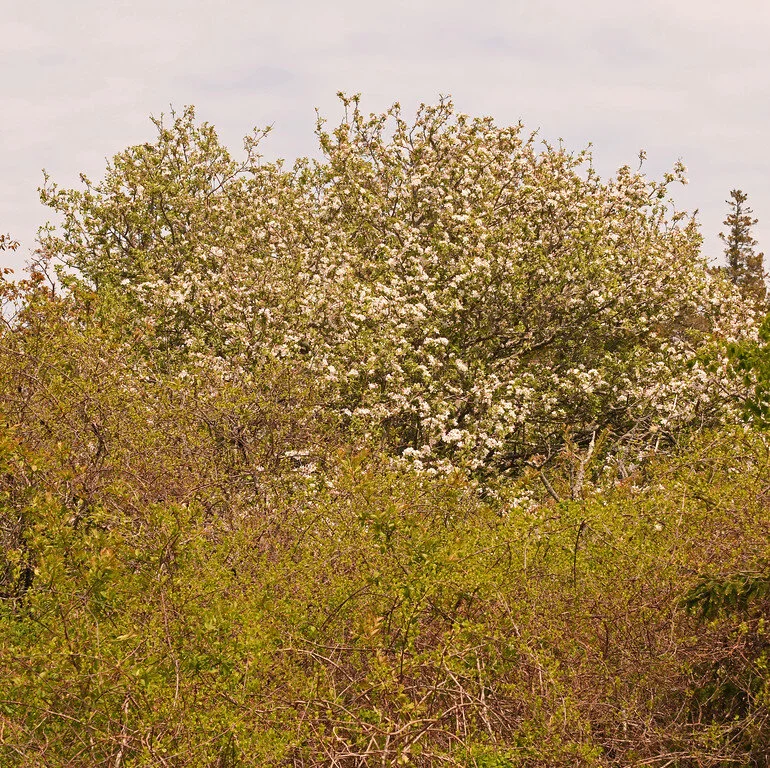
It’s apple blossom time here, as you can see from these images taken yesterday.

3.jpg

More interesting, it’s wild apple tree blossom time, when the locations of long-abandoned apple trees and orchids make themselves known by their blossoms, which sometimes appear by surprise in the middle of overgrown brushlands:

1.jpg

Even more interesting are the “apple detectives” who will appear when the wild apples finally hang on the branches. Inspired by John Bunker’s fascinating book, APPLES and the Art of Detection, these detectives try to learn local history through finding, identifying, and sampling the types of apples once grown on trees in Maine – the Marlboro in Hancock County, the Black Oxford in Oxford County, Cole’s Quince in York County, Cora’s Grand Greening in Knox County, etc.

2.jpg

Of course, all of these “wild” apple trees were at one time cultivated into a new species by humans. The original apple tree from which all this started is thought to be a wild species in Central Asia, Malus sieversii.

European colonists brought apple trees with them to North America, but they weren’t the first to do so. European fishermen, who previously worked New England’s summer waters, first planted cultivated apple trees on the coastal islands, where the fishermen camped and ate. (Brooklin, Maine)

Comment

Comment

In the Right Place: Osprey Nest Report 4

Ozzie and Harriet are well as of yesterday morning, which is when this image of Harriet was taken. She’s been incubating very low in the nest, where only the tip of her head is visible until she gets uncomfortable. Then, she often stands, stretches her wings (shown here), shifts her position, and returns to incubating.

N-1.jpg

Some of the days are turning hot and sunny now, which can be difficult for a brooding Osprey in a high nest without shade. Last year, when Harriet got very hot, she glided down to a nearby freshwater pond, took a head dip and a gulp. and flew back up to her eggs, all in about a minute.

Ozzie, as always, is a good mate. He comes immediately when Harriet complains about invasions of their nest’s airspace. He also has been feeding Harriet fish regularly. Last year, Harriet sometimes got up and took her lunch to a nearby spruce when she was in the mood to eat out. Ozzie sometimes incubated while she was doing this.

As he did last year, Ozzie usually first eats the head completely off the fish before he offers it (often dripping blood) to Harriet. “Offer,” according to Osprey etiquette, usually means swooping in, flopping the fish into the nest while Harriet gets out of the way, and flying off.

Leighton Archive Images

Leighton Archive Images

Leighton Archive Image

Leighton Archive Image

A live, headless lunch seems like a fair deal – Harriet gets more flesh and calories, but Ozzie probably gets the most nutritious part of the fish. The heads of fish reportedly contain the most concentrated fatty acids, plenty of vitamins and minerals, and all those power-packed brains. Ummm-umm. (Brooklin, Maine)

Comment

Comment

In the Right Place: Historic Irony

Flowering Crabapple Trees are coming into full bloom here. Yesterday, the two Crabapple Trees at the portal of Naskeag Cemetery provided welcoming soft red and pink petals to this special place near the tip of our Naskeag Peninsula.

N-1.jpg

Although welcoming, the flower-bordered Cemetery entrance arch contains an irony that might make historians smile: it states “NASKEAG.” That word means “the end” to the Abenaki natives who lived here before strangers arrived.

Nonetheless, historic Naskeag Cemetery, the smaller of Brooklin’s two cemeteries, is a pleasant, quiet place to visit. There are veterans from many different wars buried here, including William Reed, a Captain who served in the Revolutionary War. He died and was buried here in 1790, three years after the Constitution of the United States was signed. 

N-4.jpg

(Brooklin, Maine)

Comment

Comment

In the Right Place: Black Peacocks

Common Grackles are now nesting in cattails around marsh ponds here and guarding those nests from surrounding high spruce trees, as you can see from these images taken yesterday.

2.jpg

Approaching these areas will result in a cacophony of threatening “chucks” and “chacks,” as well as a multitude of unique Grackle curses. Their strange name reportedly comes from its Latin root, “Gracula,” which either referred to one of the calls made by Grackles or the European Crow named a Jackdaw.

1.jpg

Some people call these birds “blackbirds,” which they often are in certain light. However, Grackles share a trait with male Peacocks: they have reflectors within their feathers that are spaced and shaped to create an array of iridescent hues, especially in bright light. Basically, the effect enhances some color wavelengths that produce purple-, blue-, and bronzy brown-colored refractions of light and blocks others. (Brooklin, Maine)

Comment

Comment

In the Right Place: Stoned

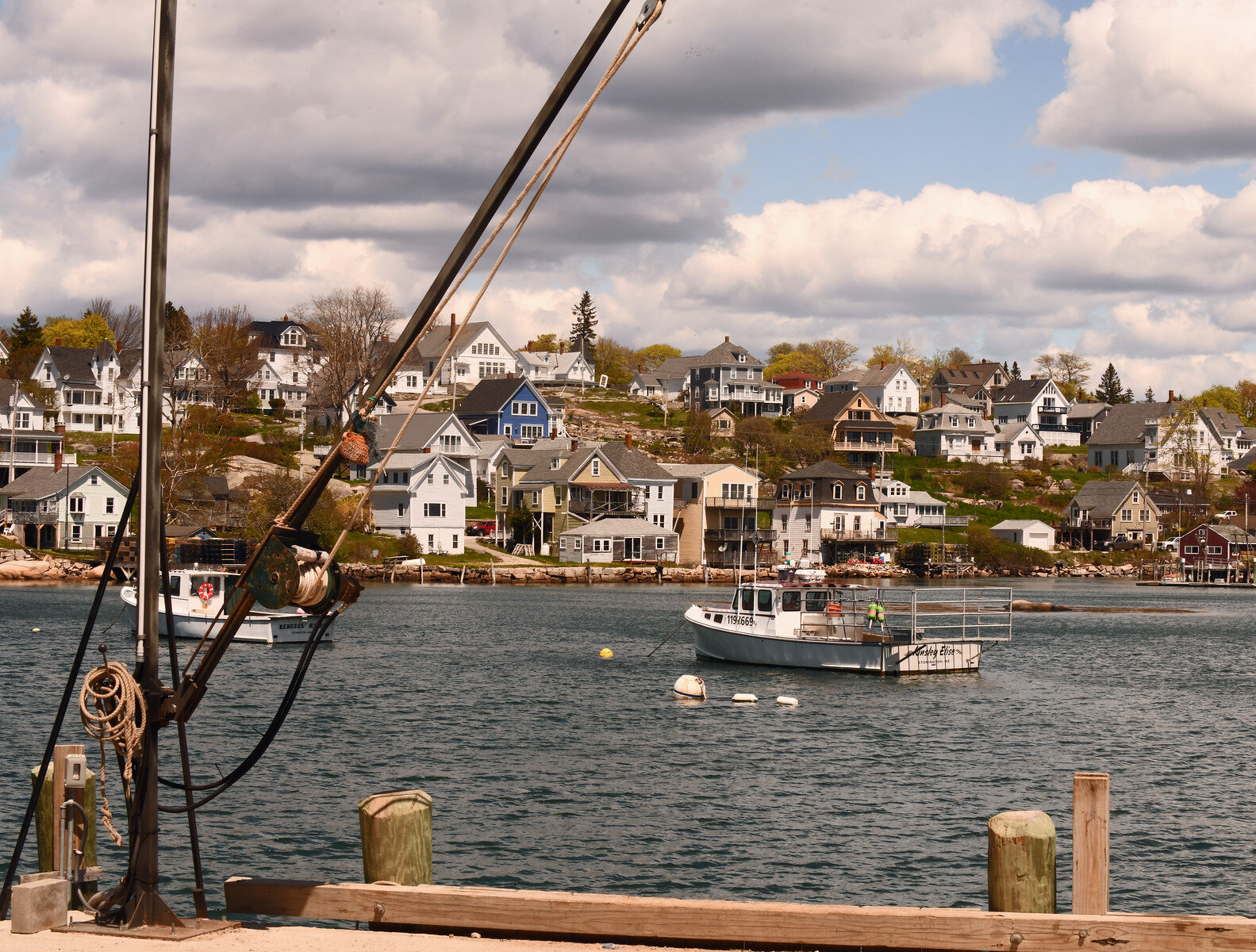
Here, we see cumulus clouds conferring over Stonington on May 12, deciding whether to turn themselves into cumulonimbus or cumulus congestus storm clouds and give the old seaport a dowsing.

i-mjKL6zK-X3.jpg

Our eye can’t help catching the sweeping sheer and remarkably clean buoys and lobster traps of the Fishing Vessel Tsunami, calmly waiting at its mooring that day:

i-vSQ7P3J-XL.jpg

Stonington was settled by Europeans about 1769, relatively late in the colonization of New England. Perhaps this is because it’s on the southern tip of rocky Deer Isle, Maine, where soil is not abundant and the sea winds can blow hard. But, as is obvious from its name, Stonington does have stone -- fine granite that was quarried in the 19th Century and shipped south to become part of many famous buildings and roads.

The granite boom is gone, but lobster fishing is doing well here. The Stonington fleet may be the most successful lobster harvesters in the world. Perhaps the Town name should be changed to Lobsterton. (Stonington, Maine)

Comment

Comment

In the Right Place: Famous Bands

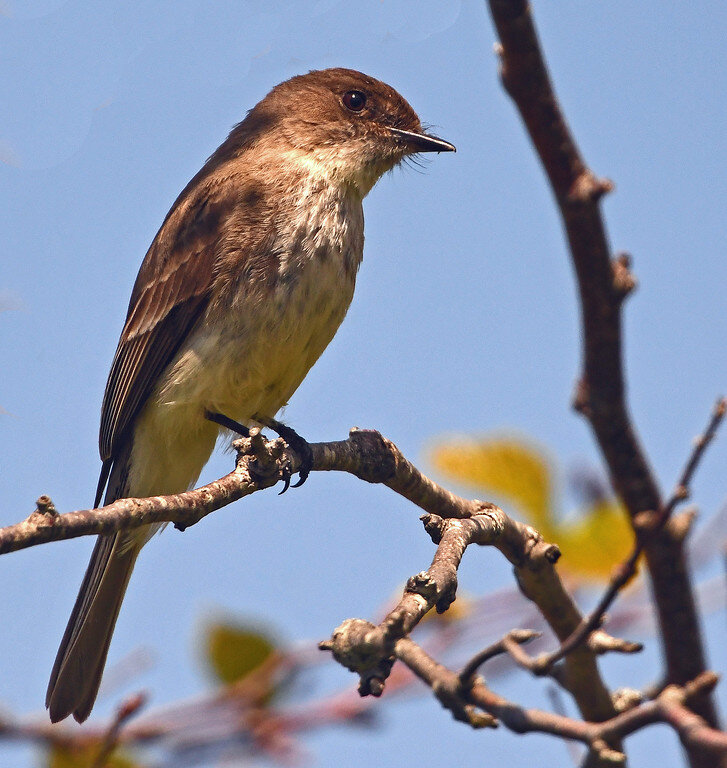
This is one of those small, drab birds that few people know or notice. Yet, it’s a famous species with a fascinating song.

1.jpg

It’s an Eastern Phoebe, a sparrow-sized flycatcher that migrates here in the summer  and often reuses its old nest. I was lucky to see it yesterday as it flitted onto a branch for a second or two while I was shooting Ospreys.

2.jpg

Phoebes are famous for the report that they were the first birds banded in the United States – and by none other than John James Audubon in Pennsylvania in 1804. He reportedly tied a silver thread to the bird’s leg so that there would be a way to tell whether it migrated back … and it did, according to Audubon!

These birds were not named Phoebes because they look like someone known by that name. They were named Phoebes because they sound like someone saying that name. They often repeat raspy “Feee-Beee … Feee Beee” calls from hidden locations. (Brooklin, Maine) See also the Image in the first Comment Space.

Comment

Comment

In the Right Place: Tribute to the Frozen Dead

Here, you see the spring flower fireworks of one of our native Shadblow Trees yesterday. These joyful trees, part of the Serviceberry family of bushy trees, come in many native and domestic varieties in the United States, but our state biologists say that the native species that we’re seeing is Canadian serviceberry, Amelannchier canadensis.

5.jpg

A closer view shows that the trees produce small pyramids of white-petaled flowers and bronzy green leaves now. In the summer, they’ll produce purple, blue, and pink berries.

4.jpg

The tree has many common names, but the two most frequently heard here have unusual origins. It was named a Shadblow because it flowered when Atlantic Shad (River Herring) would be running in large numbers up the Hudson and other Rivers. (One of the old English origins of the word “blow” translates into “to swell”; thus, there was a swelling of Shad.)

The name Serviceberry also reflects conditions in the Northeast and Canada. Settlors here couldn’t efficiently bury their dead at least six feet in the winter until the ground thawed at about the time that this tree flowered. Relatives held last services for their winter dead about this time of the year, used these flowers, and lowered the previously-frozen bodies into freshly-dug soil. (Brooklin, Maine)

Comment

Comment

In the Right Place: Predictions

In the Right Place: Predictions

Here, we see yesterday morning’s sun, scudding cumulus clouds, and 20-mile-per hour wind gusts at the head of Eggemoggin Reach. This is where the Pumpkin Island Light used to warn sailors of the Reach’s treacherous nighttime waters.

1.jpg

I tried to imagine what a 19th or early 20th Century coastal schooner captain would have said when he awoke to the glorious new day. As usual, I turned to John Leavitt’s invaluable sourcebook, Wake of the Coasters, and found one answer: The captain, likely a man of a few words, might well have said, “Looks like a chance along.” This meant that there was a fair wind on a fair day and the odds of having a good trip without trouble or disaster looked favorable. At least at that moment.

Cumulus clouds also are known as “fair weather clouds” here in Down East Maine. The base of each cloud is usually flat and the top is rounded or in mounds of fluffiness. However, cumulus clouds can congregate into a mass, darken the day, and decide to grow upward into towering cumulus congestus or cumulonimbus storm clouds. Hence, fair weather clouds give you a good chance, but they’re not totally reliable as weather predictors.

2.jpg

(Little Deer Isle, Maine)

Comment

Comment

In the Right Place: Preparing to Shoot From the Hip

I had a hip replacement Monday, and everything has gone well since. There will be no posts for several days more, while I go through physical therapy and relearn how to slink through life by studying the masters. I’ll be back soon, though, maybe toward the end of next week.

Leighton Archive Image

Leighton Archive Image

In the meantime, I hope you all enjoy yourselves .

Leighton Archive Image

Leighton Archive Image

Cheers, from Brooklin, Maine

Comment