Comment

In the Right Place: Darkened Days

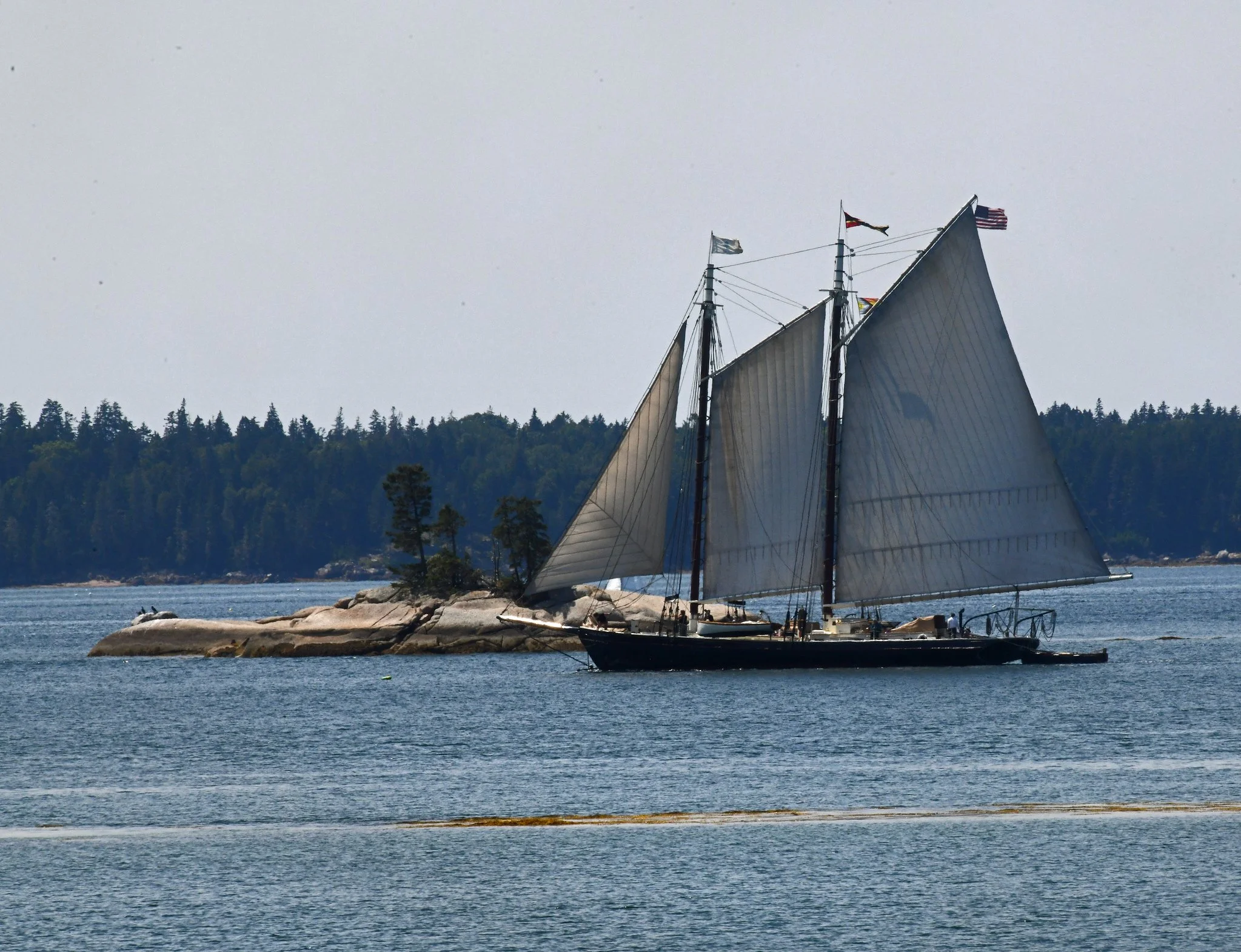
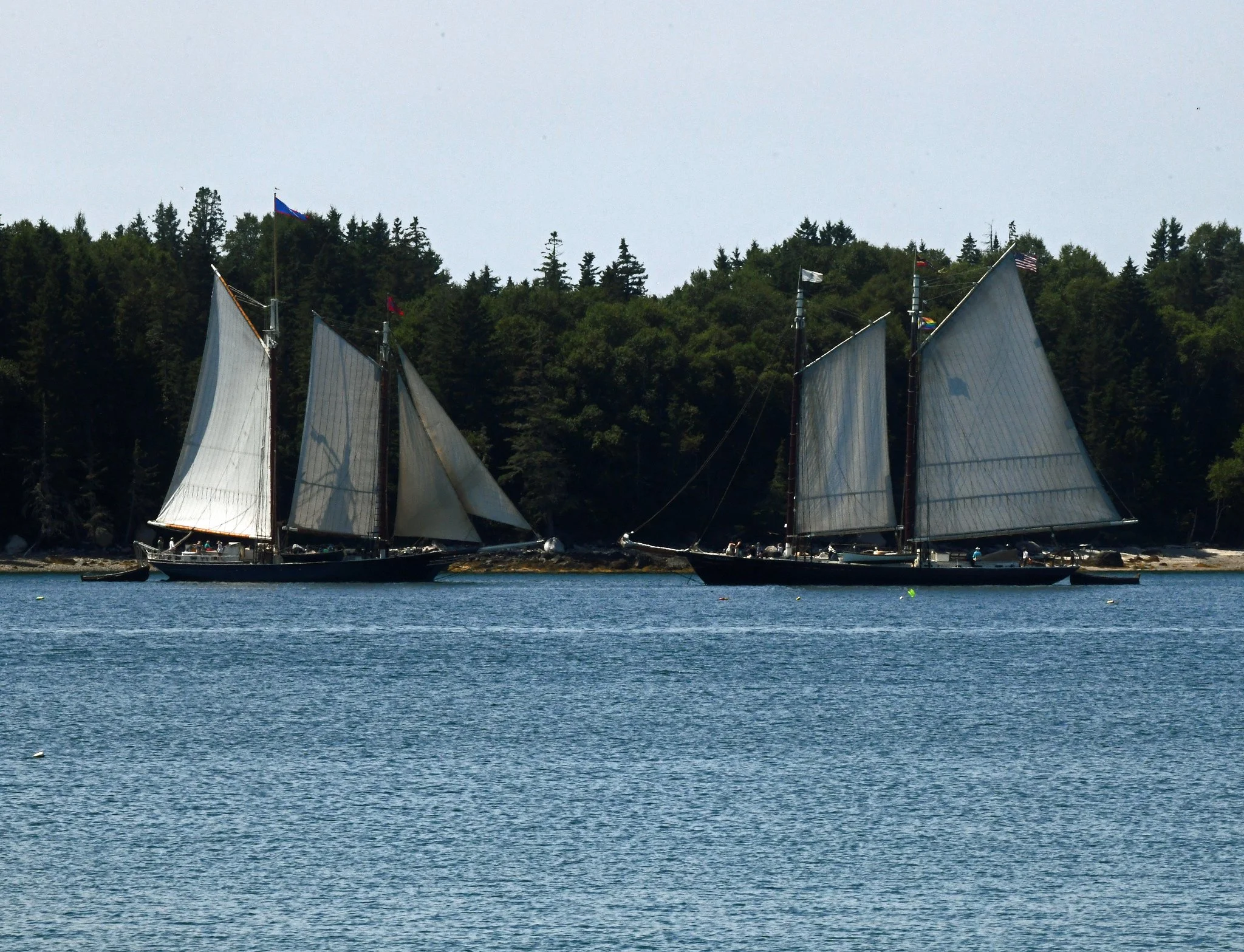
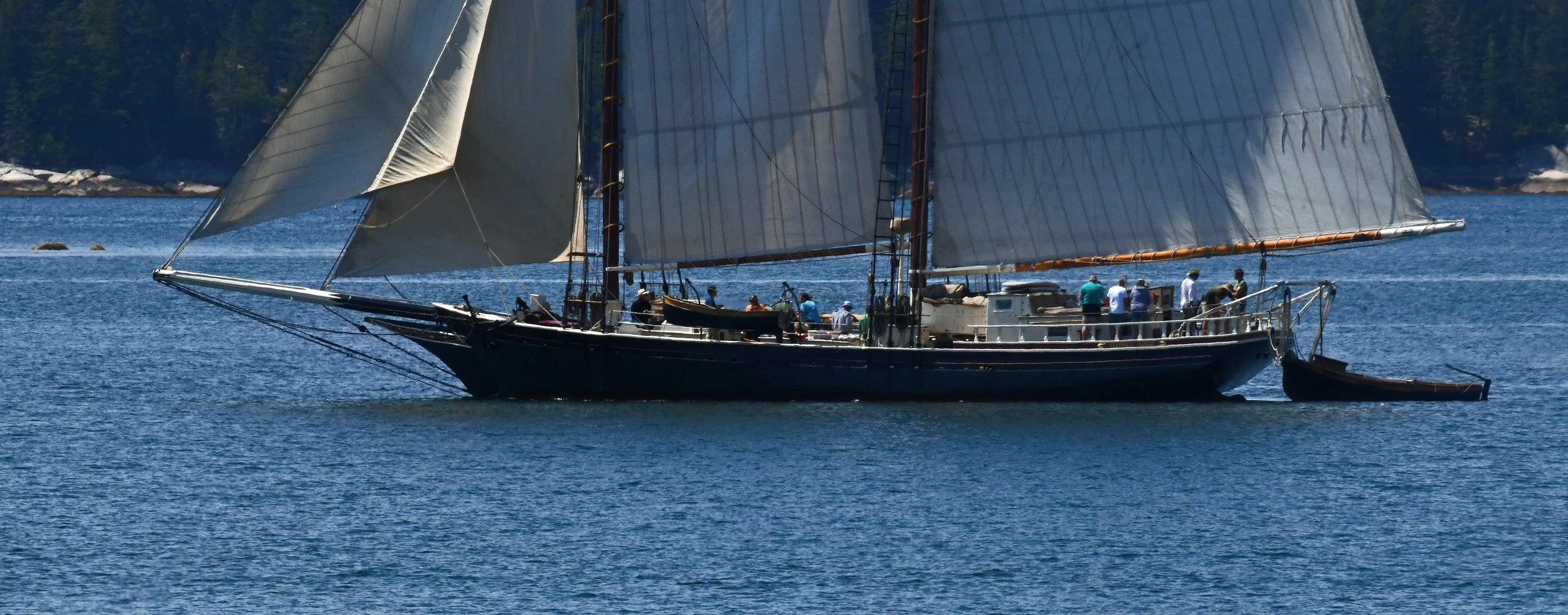
One of the magic tricks that August does here every now and then is to briefly and unexpectedly pull the clouds over the sun on a breathless day and create eclipse-like light. The waters become like reflective black ice and the spruce and balsam fir trees along the shore become dark shadows.

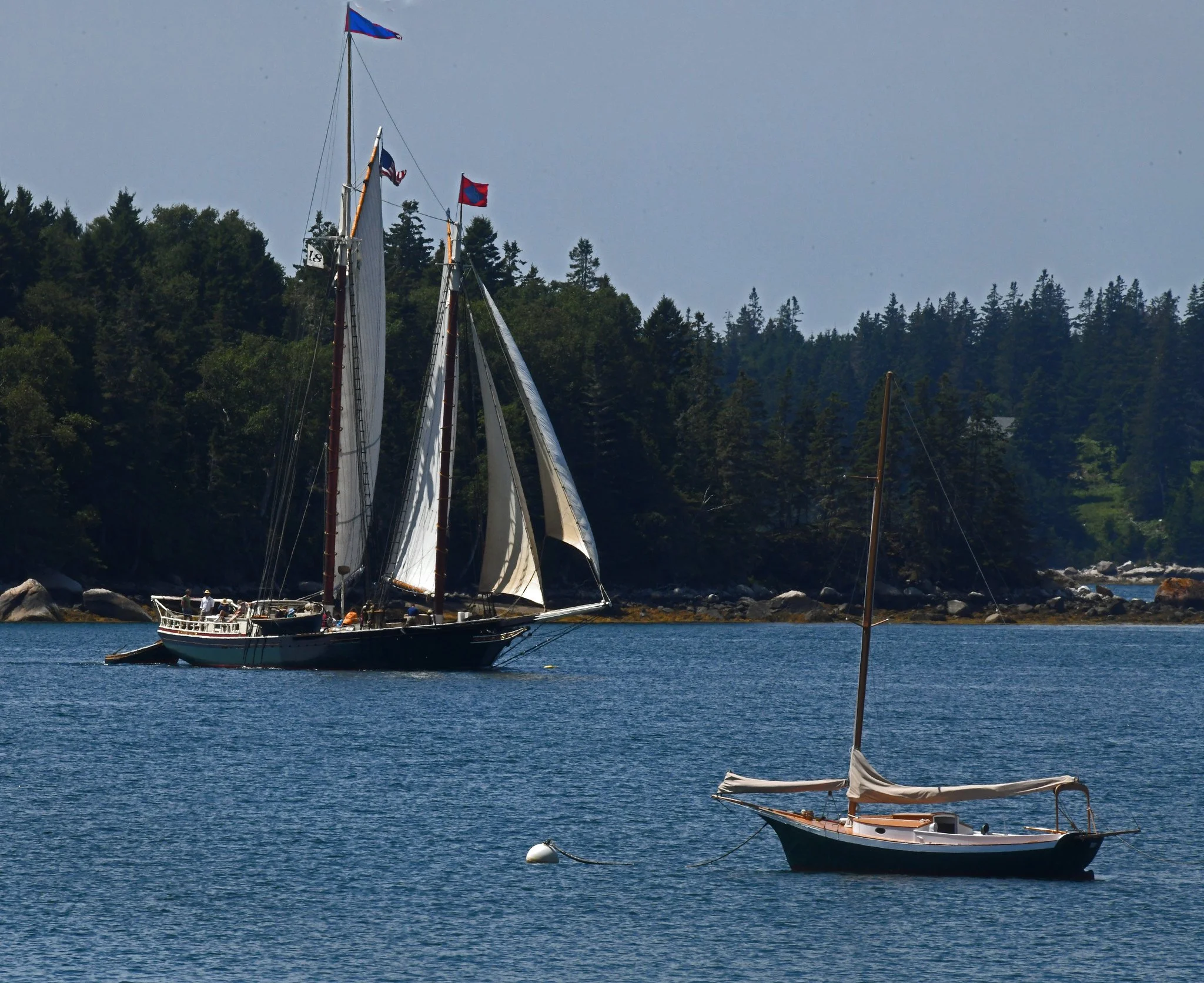
Here you see such a dramatic moment happening in Naskeag Harbor on Wednesday afternoon. What made it extra-special was a small, white catboat slowly and soundlessly entering and leaving the still, dark scene -- gliding smoothly about as fast as the second hand on a clock.
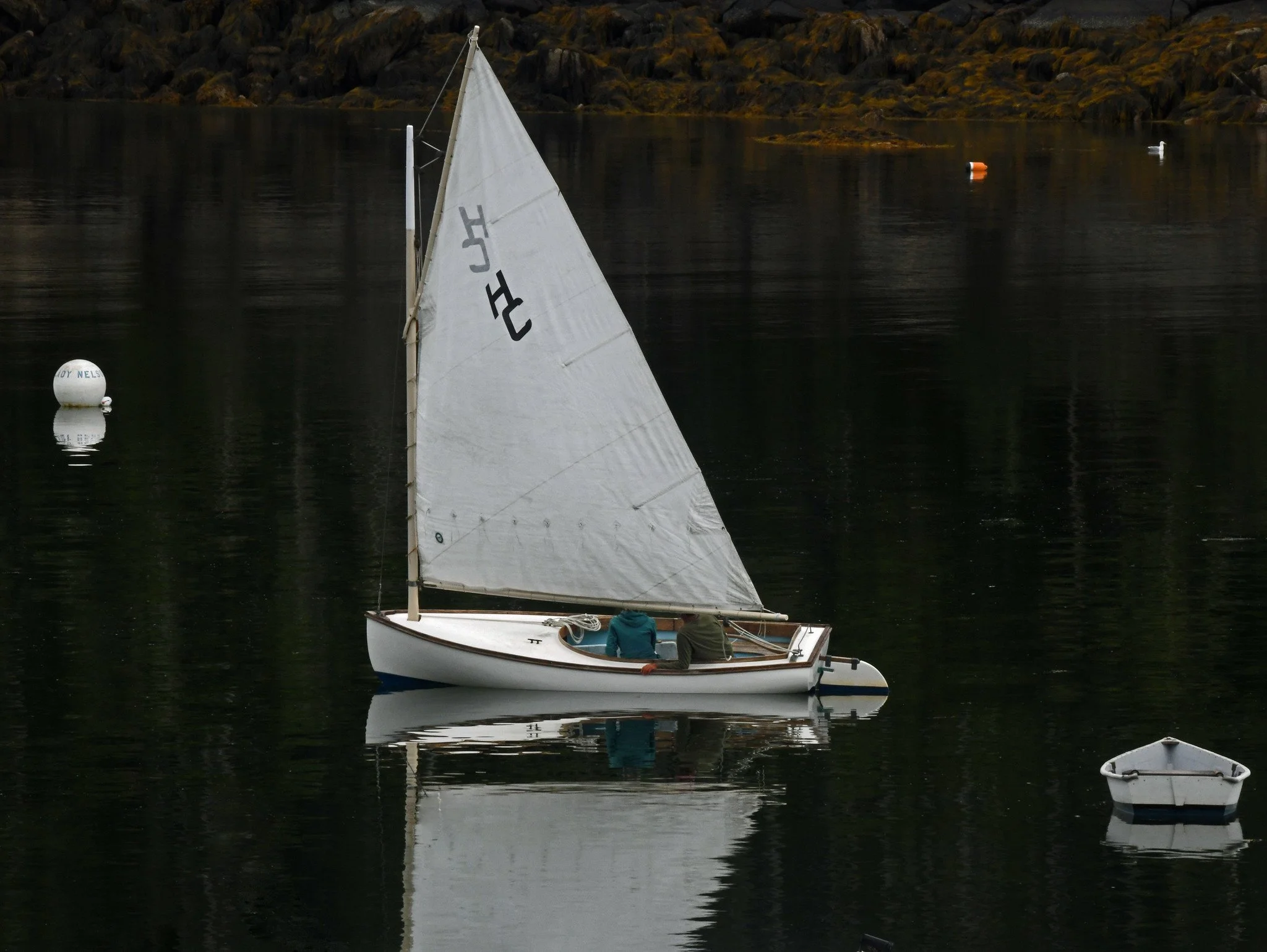
(Images taken in Brooklin, Maine, on August 20, 2025.) Anticipating Questions: My guess is that the boat is a 14-foot fiberglass Handy Cat (“HC”), a Merle Hallett design.

Comment

Comment

In the Right Place: That’s One Hill of a Mountain

Here, in the distance, you can see the south face of what was originally and officially designated “Blue Hill” by the area’s European settlers.  It’s the 934-foot-high landform that inspired the names of the Town of Blue Hill and Blue Hill Bay below it, as well as the whole Blue Hill Peninsula on which it looms.

Until the 1970’s, the official geological consensus reportedly was that a landform had to be over 1000 feet high to be considered a “mountain” rather than a “hill.” But there apparently no longer is such a height criterion or any official classifying agency. Apparently, local traditions and perceptions are now the criteria by which area residents are to decide whether a high landform is a hill or mountain.

Consequently, there has been a slightly confusing compromise here on the Blue Hill Peninsula by some people who promote the area. They have identified the high landform that you see here as “Blue Hill Mountain” in their descriptions and maps. That seems to me to be self-contradictory. (It’s a bit like calling your blue water-going vessel a “blue boat ship” or your son “a boy man.”)

The Native Americans who originally lived in the area reportedly called this high, sometimes bluish landform “Awanadjo,” which we’re told means “small, misty mountain.” Now, they knew how to make a mountain out of a blue hill! (Image taken in Blue Hill, Maine, on August 16, 2025.)

Comment

Comment

In the Right Place: The Ouch Flower

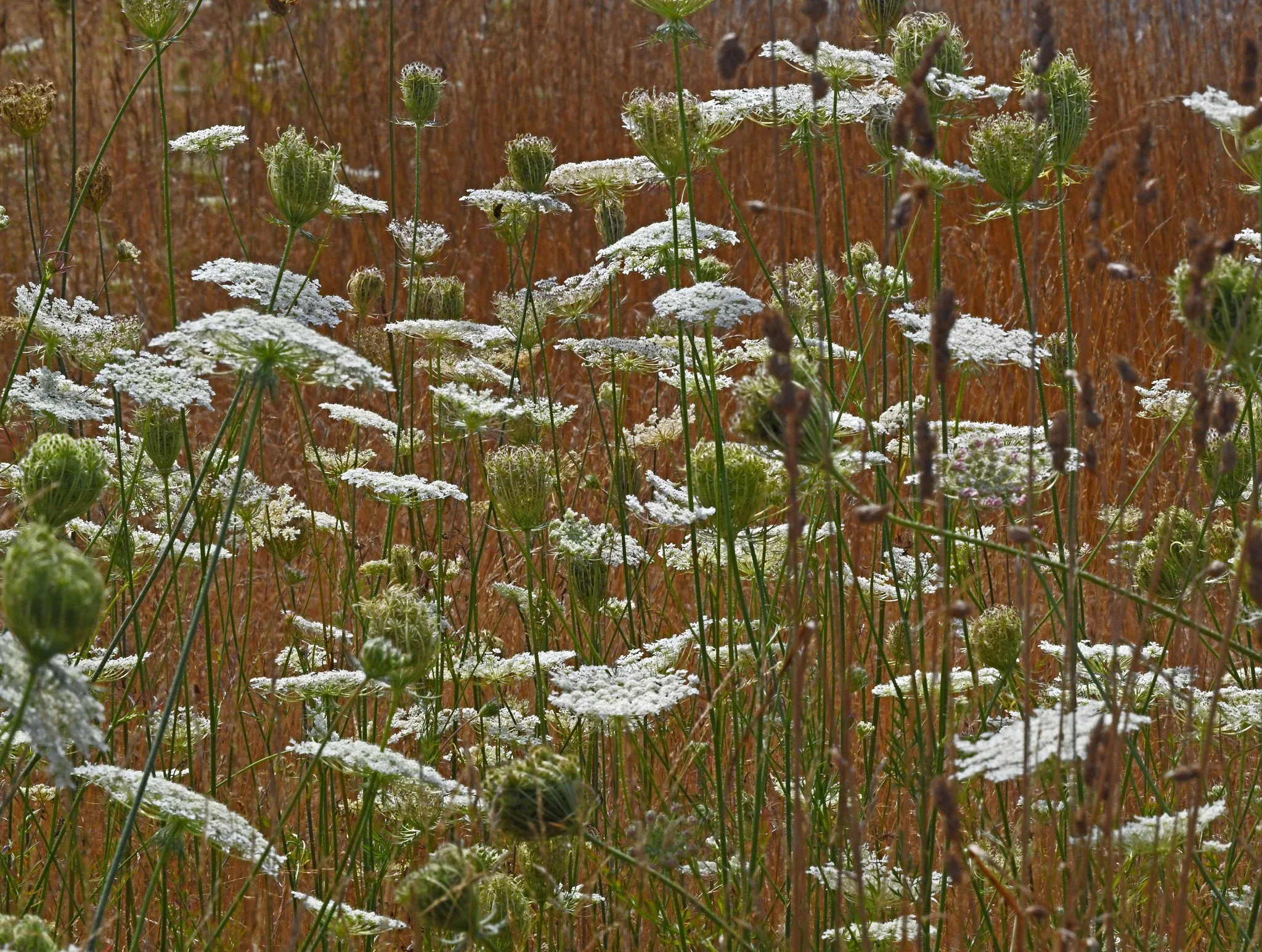
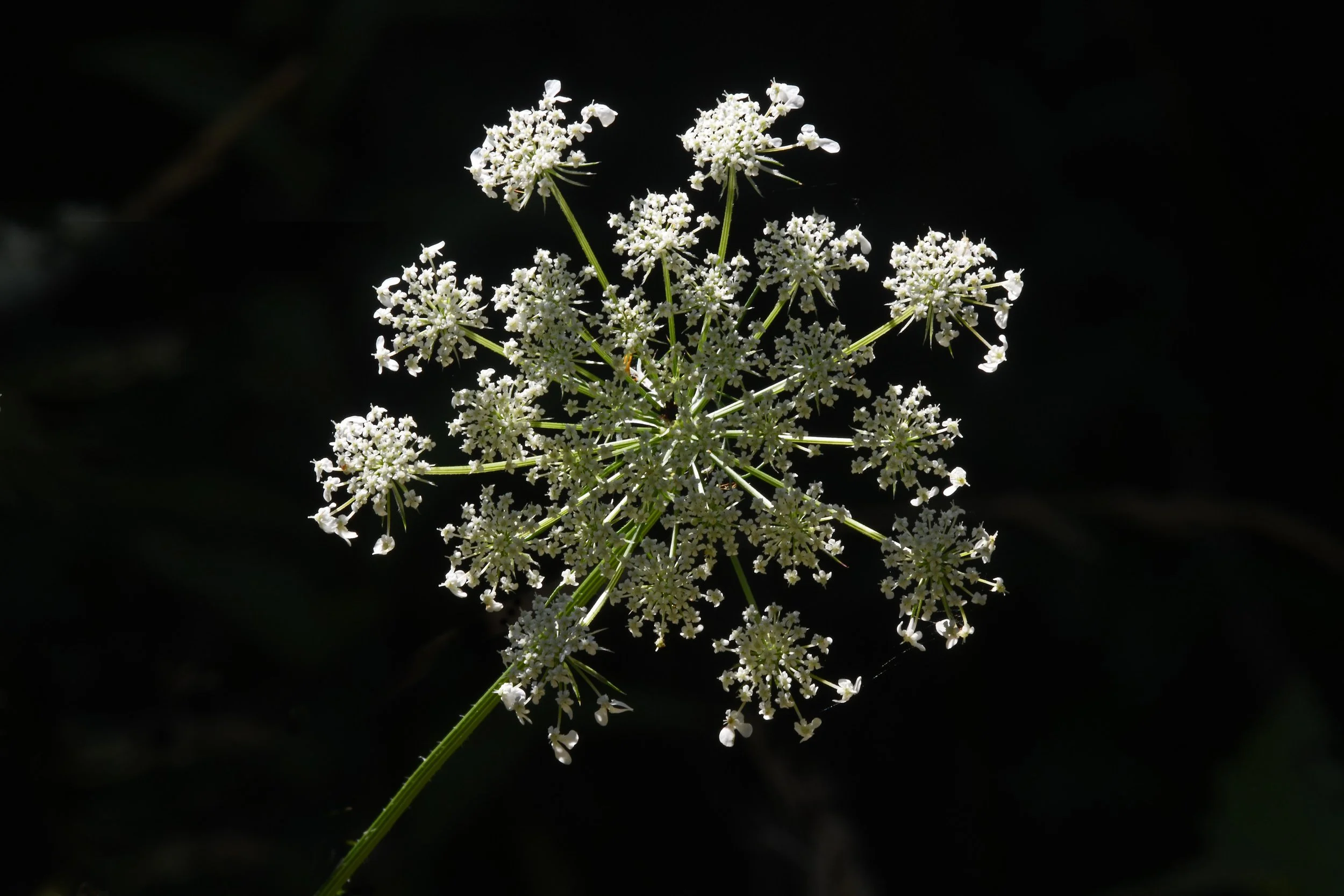
Queen Anne’s lace is invading the browning fields as high summer starts to show signs of early fall. Individual flowers often look like celestial galaxies:

The usual fields of flowers, however, often look like the parachute drop behind Normandy beaches in World War II:

The plant’s scientific name, Daucus carota, hints at one of three other interesting common names for QAL. The first is “wild carrot” because it’s related to the domestic vegetable. The second is “bird’s nest flower” because its flowerhead stems sweep upward when growing out and look like a nest. And third, “bishop’s lace,” apparently because of its resemblance to the lace often worn (at least ages ago) by bishops performing religious rites.

But Queen Anne’s lace is its most popular name, a reference to the wife of King James I, who unified England and Scotland and has a Bible named after him instead of a flower. His pitiable wife Anne died in 1619 after having had at least 17 pregnancies in as many years and only one surviving child, according to the texts.

The various legends as to why this flower was named after Anne include the Queen usually wearing a lace headdress and her love of sewing lace. The most famous legend follows from the white flowers sometimes having a small red or purple floret at their center to attract pollinators. That spot is said to represent a drop of Anne’s blood that fell when she pricked her finger with a needle while sewing fine lace. I like to think that she shouted a very unroyal “Ouch!”

(Images taken in Brooklin, Maine, on August 18 and 19, 2025.)

Comment

Comment

In the Right Place: FVs at Rest

The coastal lobster season is in full swing during August and prices to the fishermen reportedly are at comfortable levels now. But Sunday usually is a day of rest for the hard-working crews and fishing vessels.

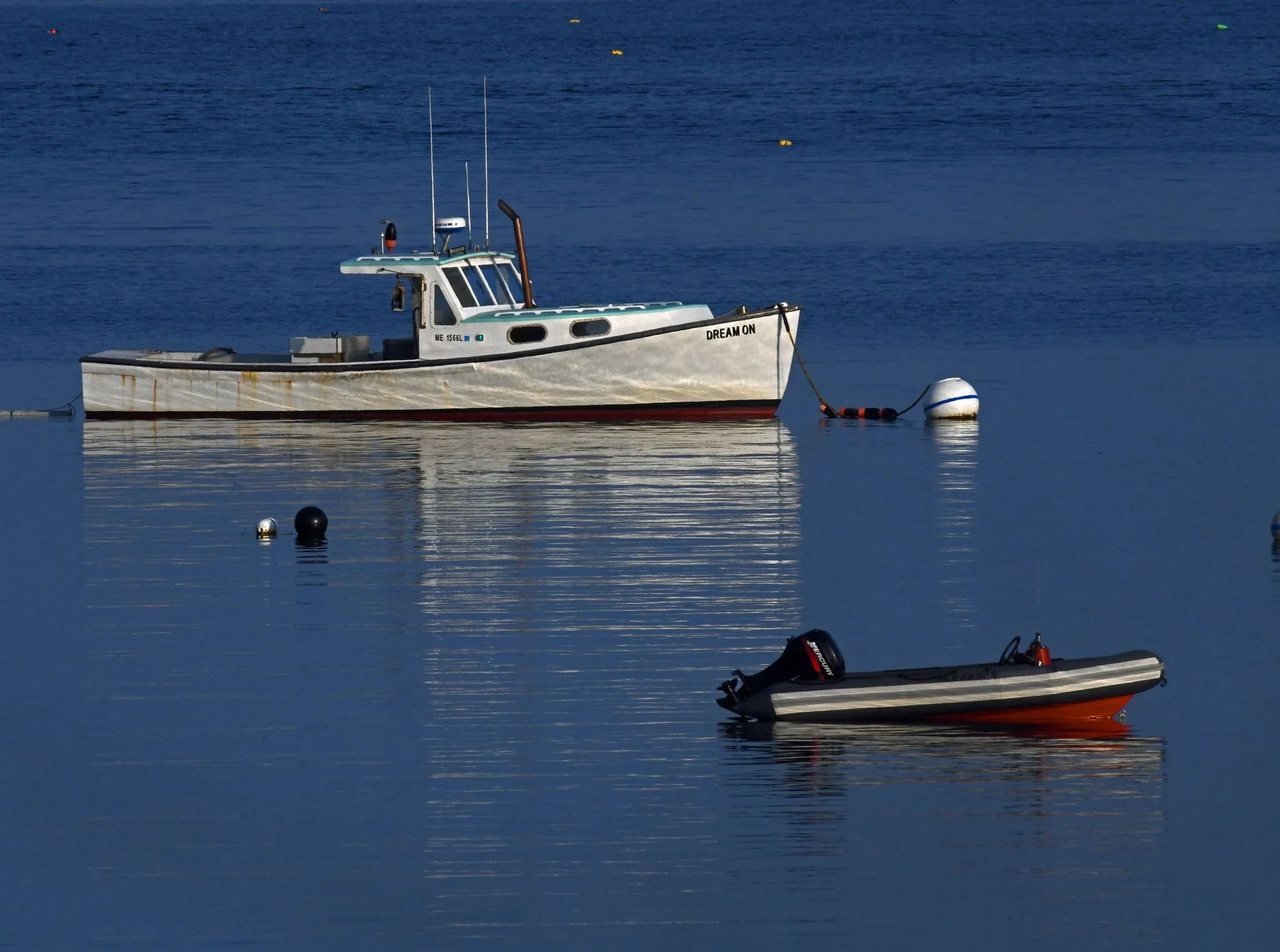
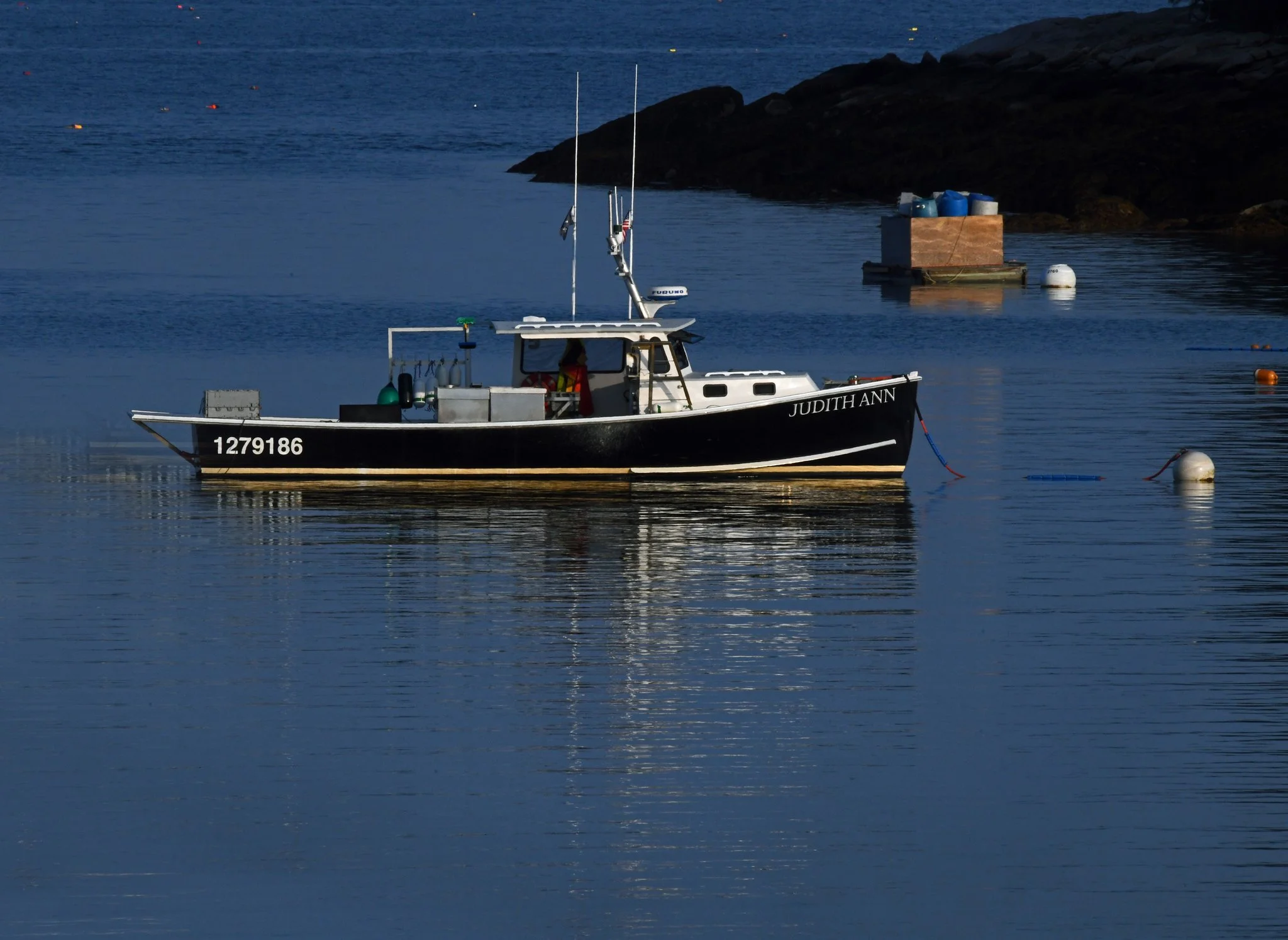
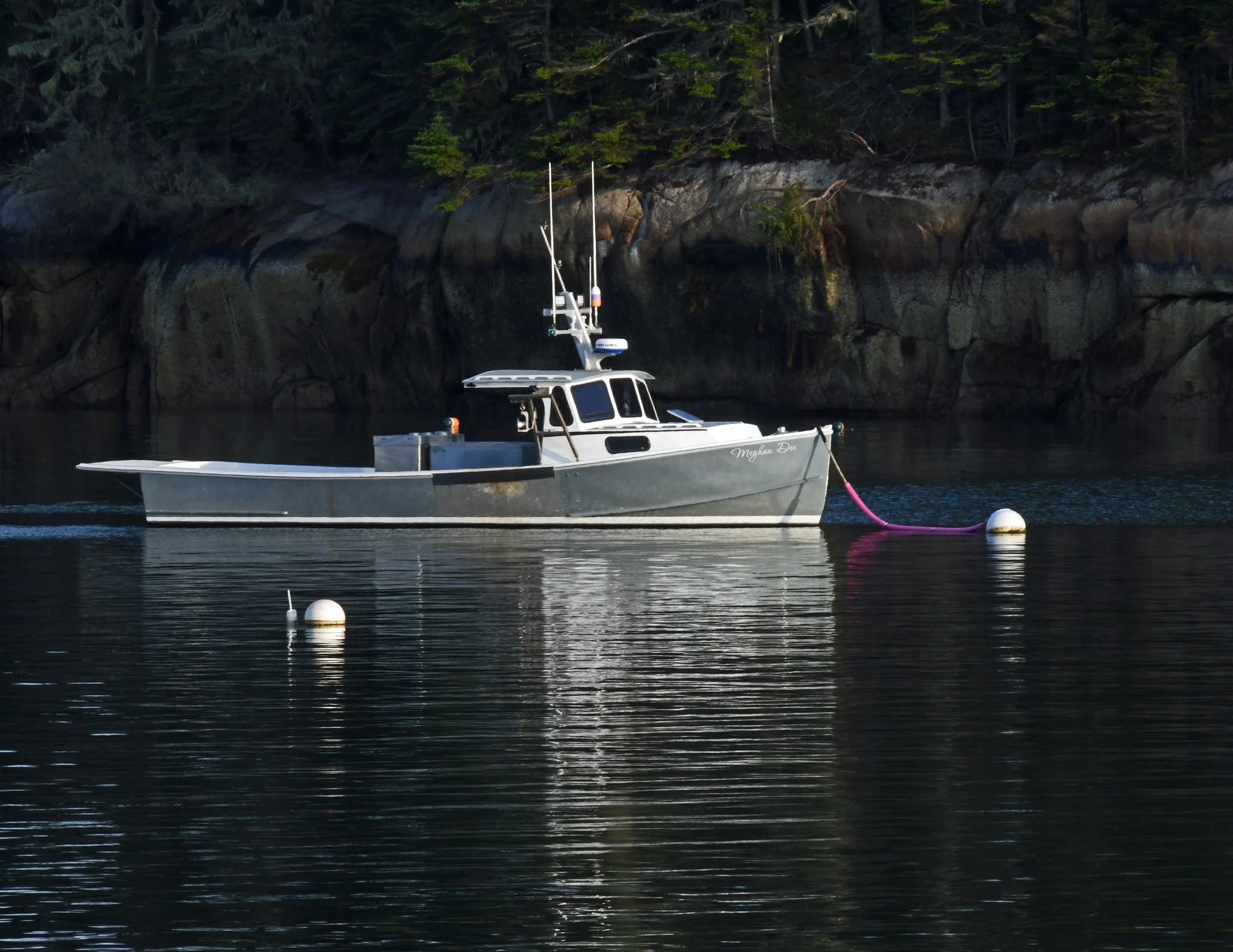
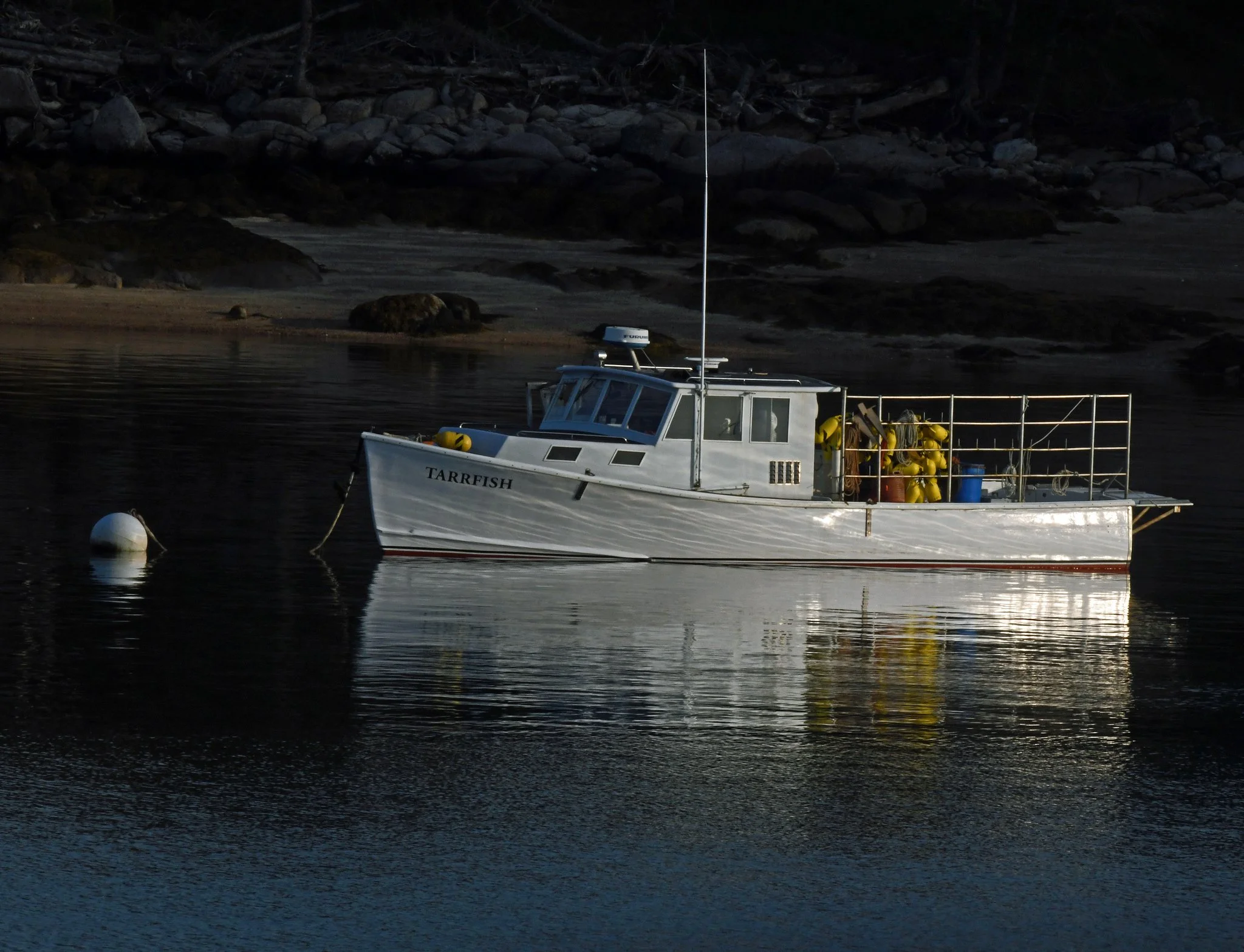
On a recent Sunday, I took “portraits” of all eight of the FVs in Naskeag Harbor as they rested on reflective waters and basked in the beautiful golden light of near-sundown. One of the reasons that lobster boats are fascinating to some of us is that, unlike trucks, they come in an almost infinite number of sizes and personalities, perhaps in part reflecting their owners’ ways and means. Here are the differing eight:

Captain Morgan

Dear Abbie:

Dream On

Judith Ann

Knotty Problem

Meghan Dee

Poor Beagle

Tarrfish

(Images taken in Brooklin, Maine, on August 10, 2025.)

Comment

Comment

In the Right Place: Iconic

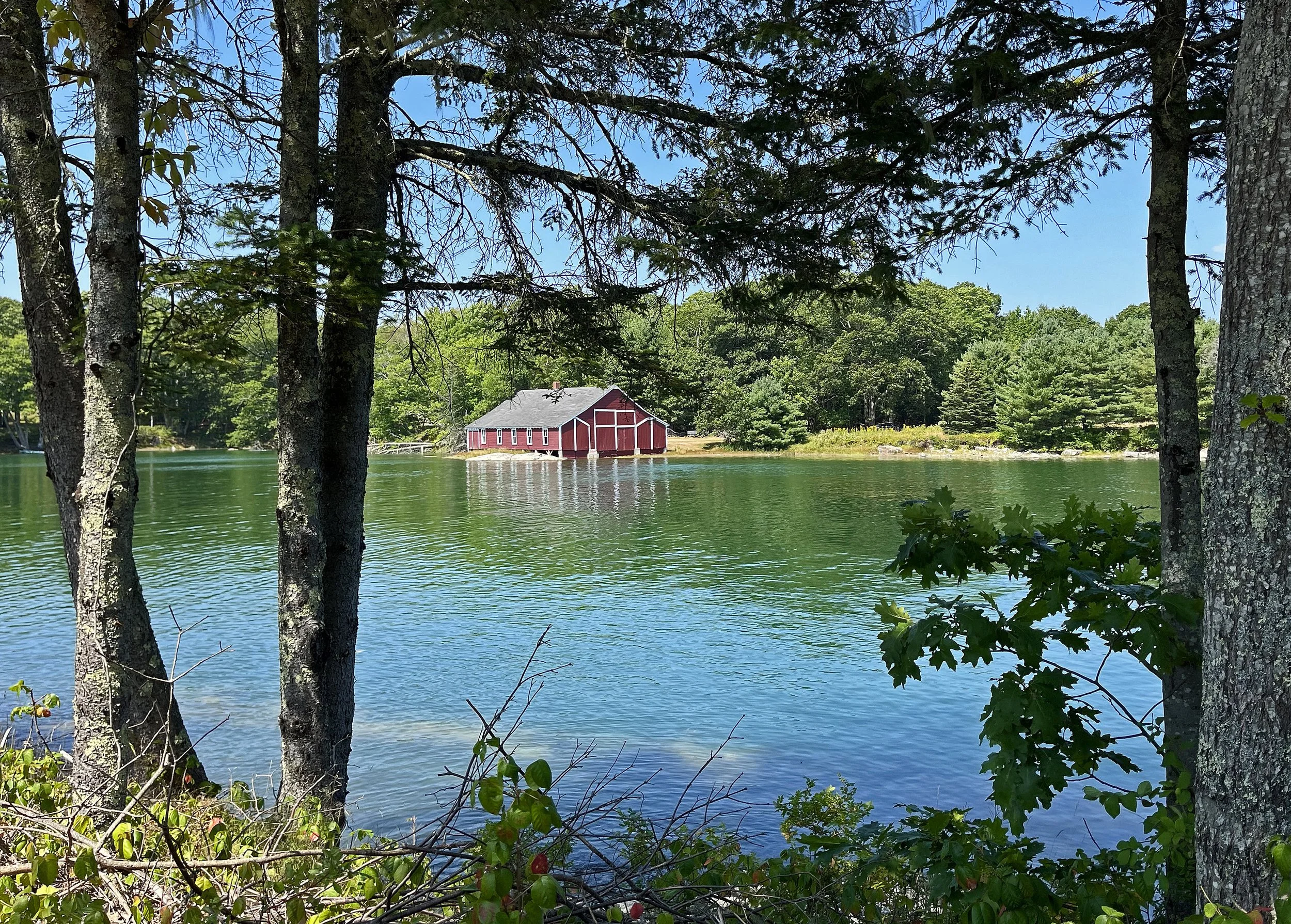
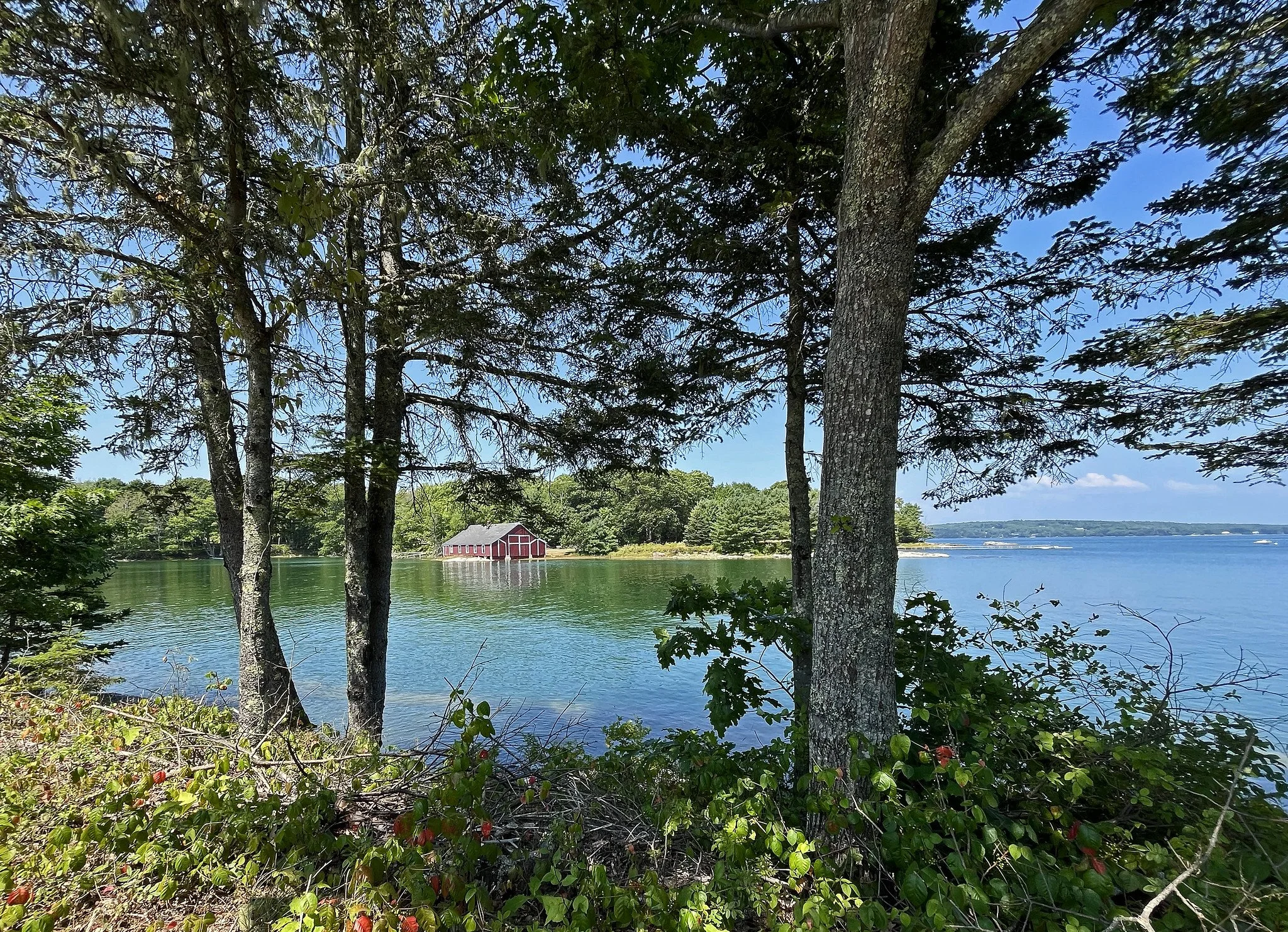
Here you see the old red boat house watching the still-incoming high tide turning green as it rolls slowly into Conary Cove on a recent sunny August day. A slight breeze that gently strokes the leaves seems to create a repeated whisper: “High Summer in Down East Maine.” Iconic.

(Images taken in Blue Hill, Maine, on August 12, 2025.)

Comment

Comment

In the Right Place: Windjammer Watch XVII

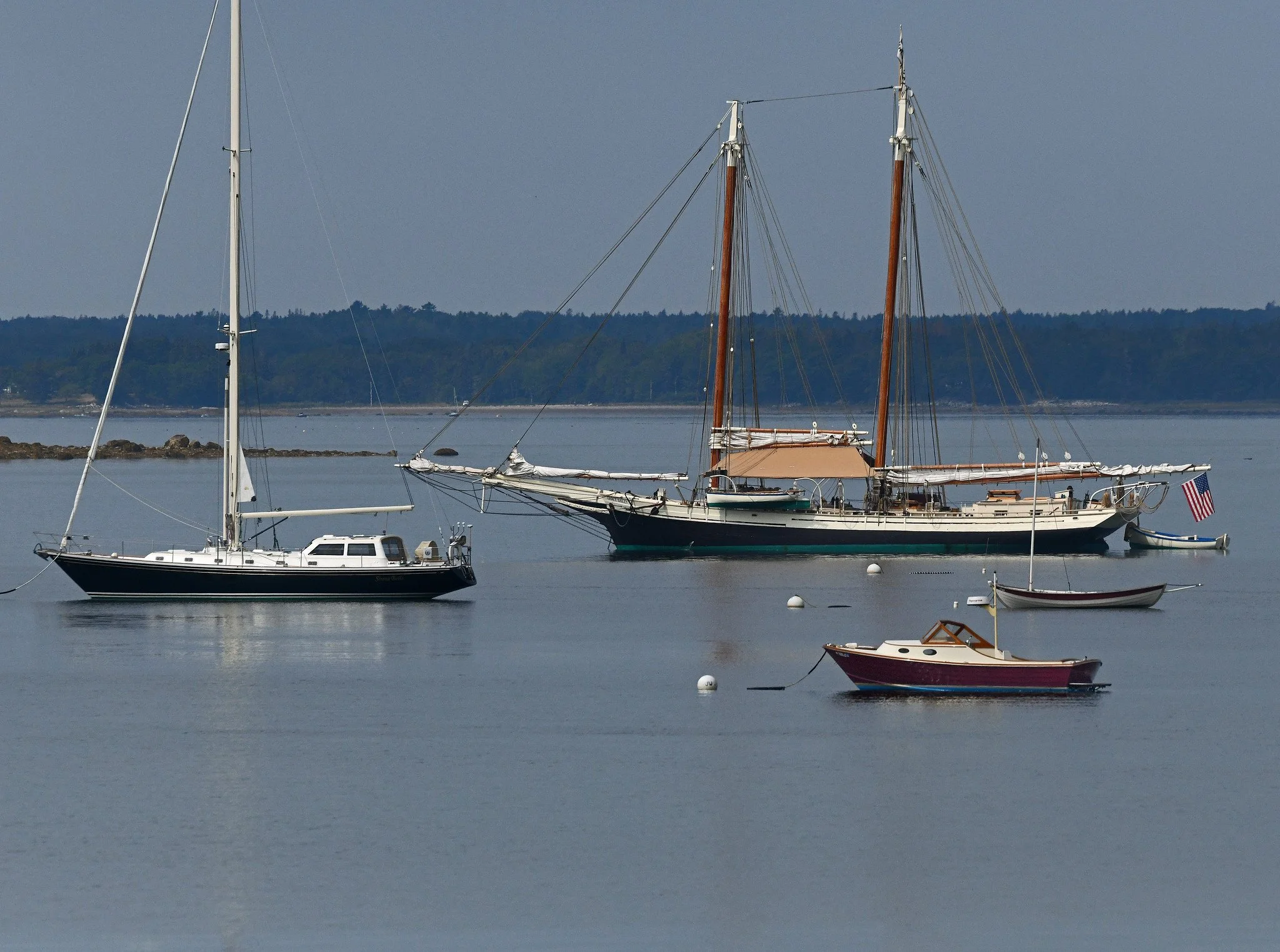
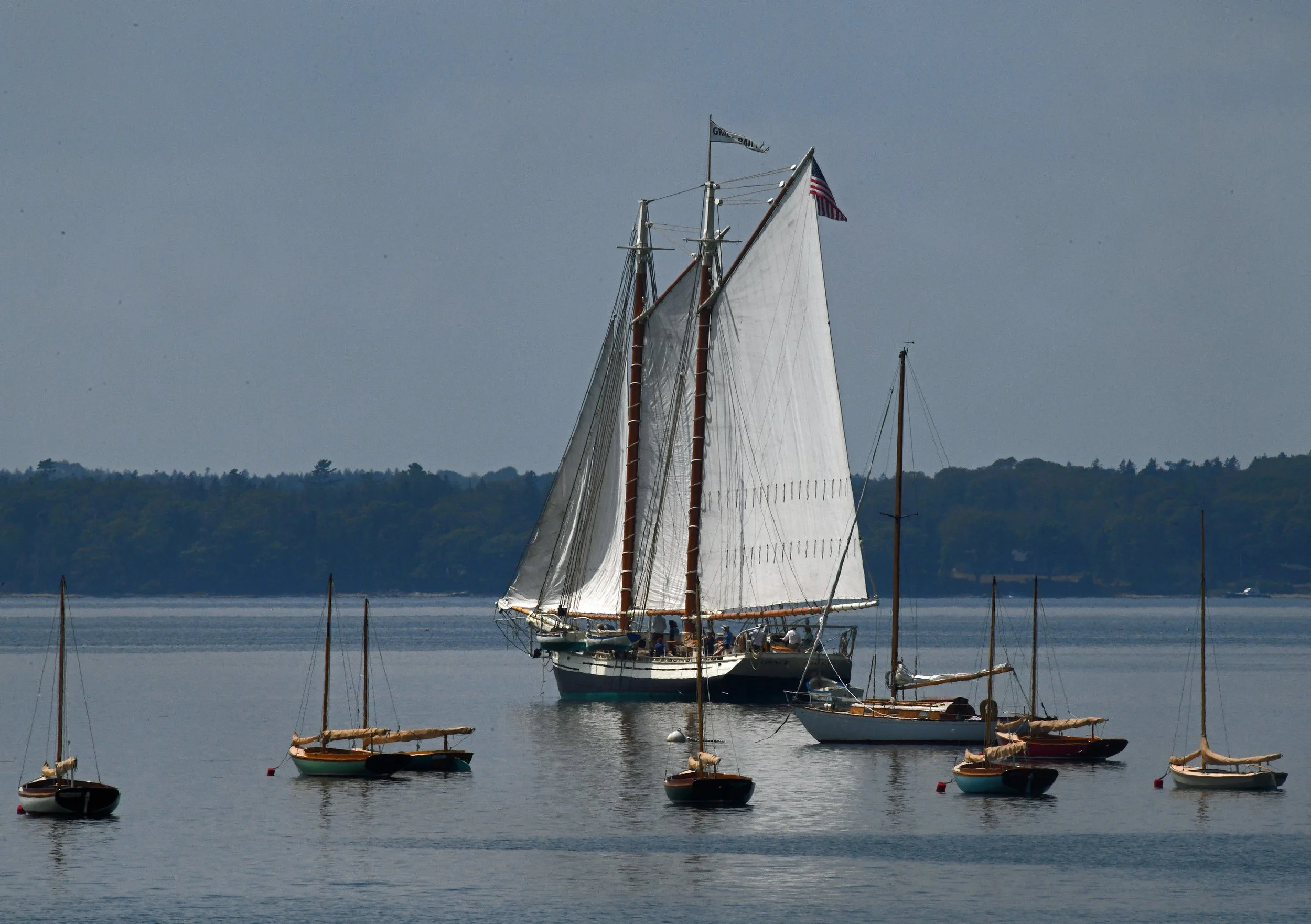
GRACE BAILEY snuck into Great Cove last week and decided to overnight as part of an eclectic quartet. The scene looked like a model collection of contrasting 19th and 20th Century vessels:

Clockwise at about 9 o’clock in this image you see a very tall-masted cruiser with the hull name SIRENA BELLA (“beautiful mermaid,” I guess), but no listed home port that I could see. (She looks to me like the old Ted Hood PATIENCE.)

At about 12 o’clock, there’s GRACE dominating the scene, a 118-foot schooner built in 1882 and now hailing from Camden, Maine. Her schedule says that she was on a “Six-Night Adventure,” which apparently included sleeping with strangers.

At about 3 o’clock, there’s one of the WoodenBoat School’s fleet of small sailing classrooms; this one looks to be a Caladonia’ Yawl with its aft mast down.

And, at about six o’clock, in the foreground, is a sleek little Brooklin, Maine, runabout/sport boat named RIVER BIRD, owned by Jon Wilson, founder of WoodenBoat. She reportedly is a recrafted Chris-Craft.

At mid-day Thursday, GRACE raised sails in a light wind and slowly paraded past a WBS “parking lot” to create another contrasting scene before she departed the Cove:

(Images taken in Brooklin, Maine, on August 14, 2025.)

Comment

Comment

In the Right Place: A Royal Birth

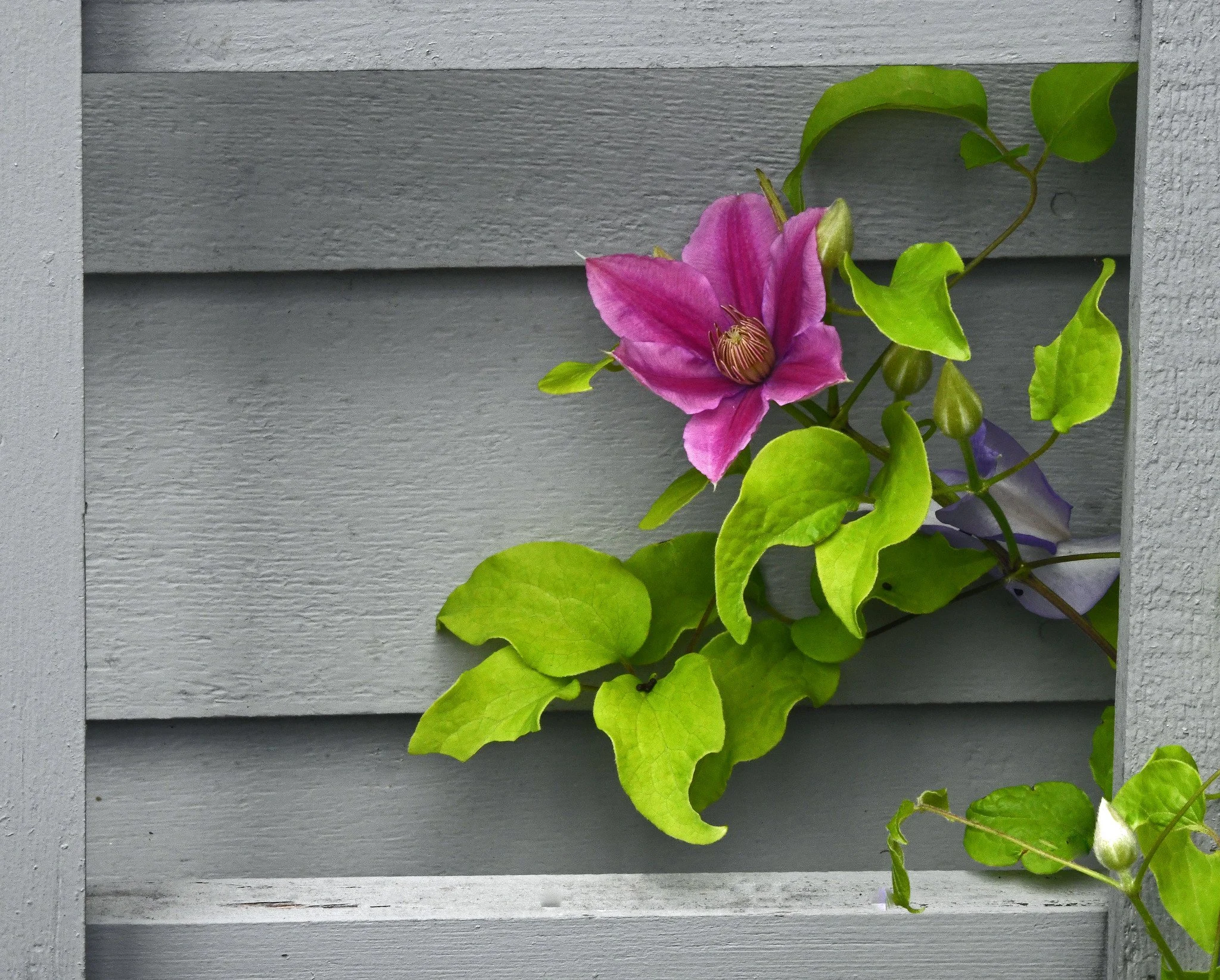
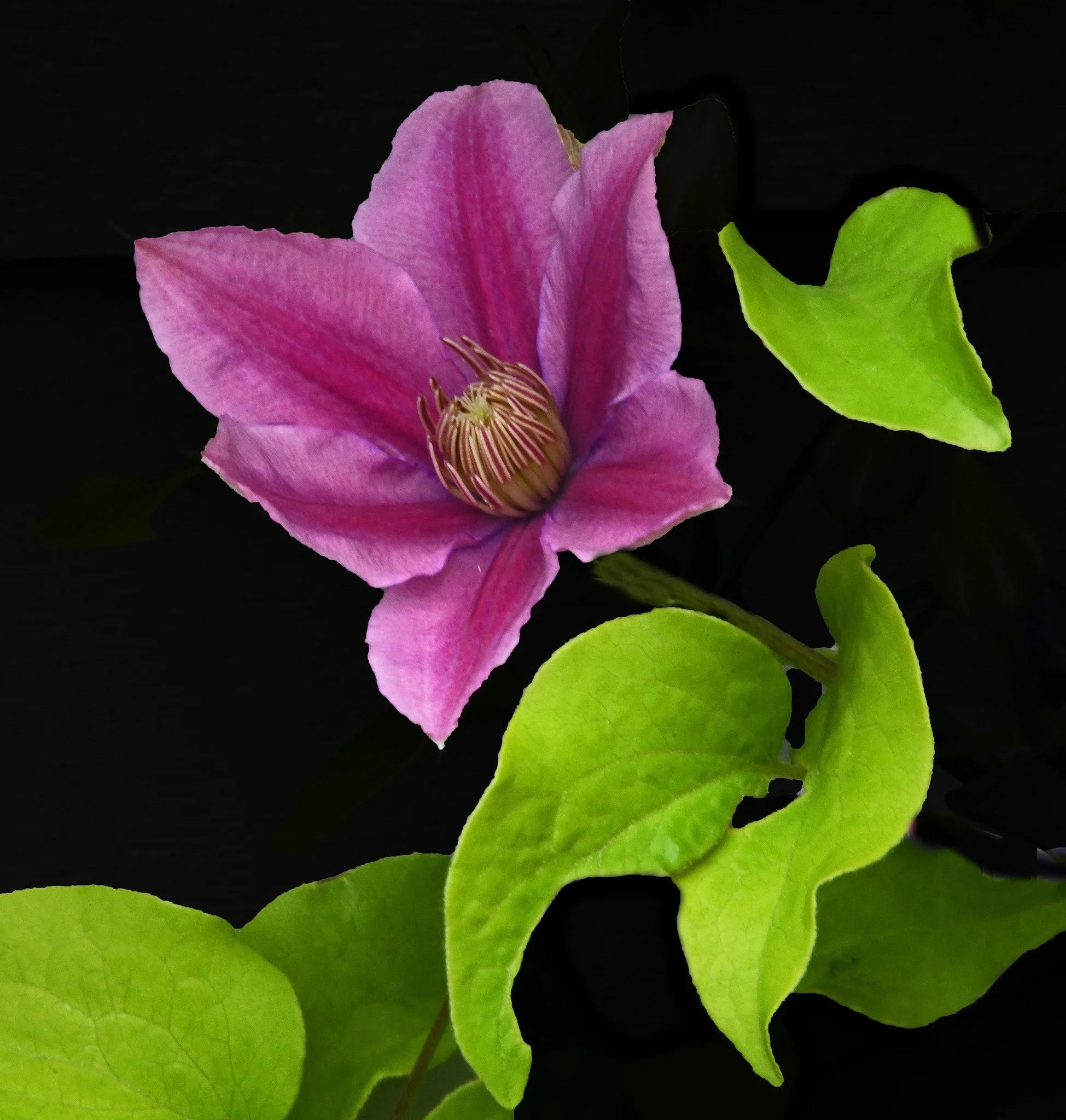
Here you see a happy occasion at our house: the joyful “birth” of the first little bloom on a pair of clematis plants that Barbara put in this summer at the base of a deck trellis. They were treated with plenty of TLC in the hope that they would “take,” which they have done . Here’s an enhanced image:

The new raspberry-sherbet-colored clematises were put on either side of a well-established blue clematis that climbs full and tall every year. They replaced climbing roses that, sadly, could not survive the vicissitudes of Maine weather and/or that location.

The plant reportedly was named after the Greek word "klematis" (or klēmatis) which means "climbing plant" or "vine." Depending on location, clematises are known as either the “kings” or “queens” of vines due to their fast-climbing ability and great variety of colors. They have a relatively long flowering period that is helpful to hungry pollinators and admiring people.

(Images taken in Brooklin, Maine, on August 14, 2025.)

Comment

Comment

In the Right Place: Windjammer Watch XVI

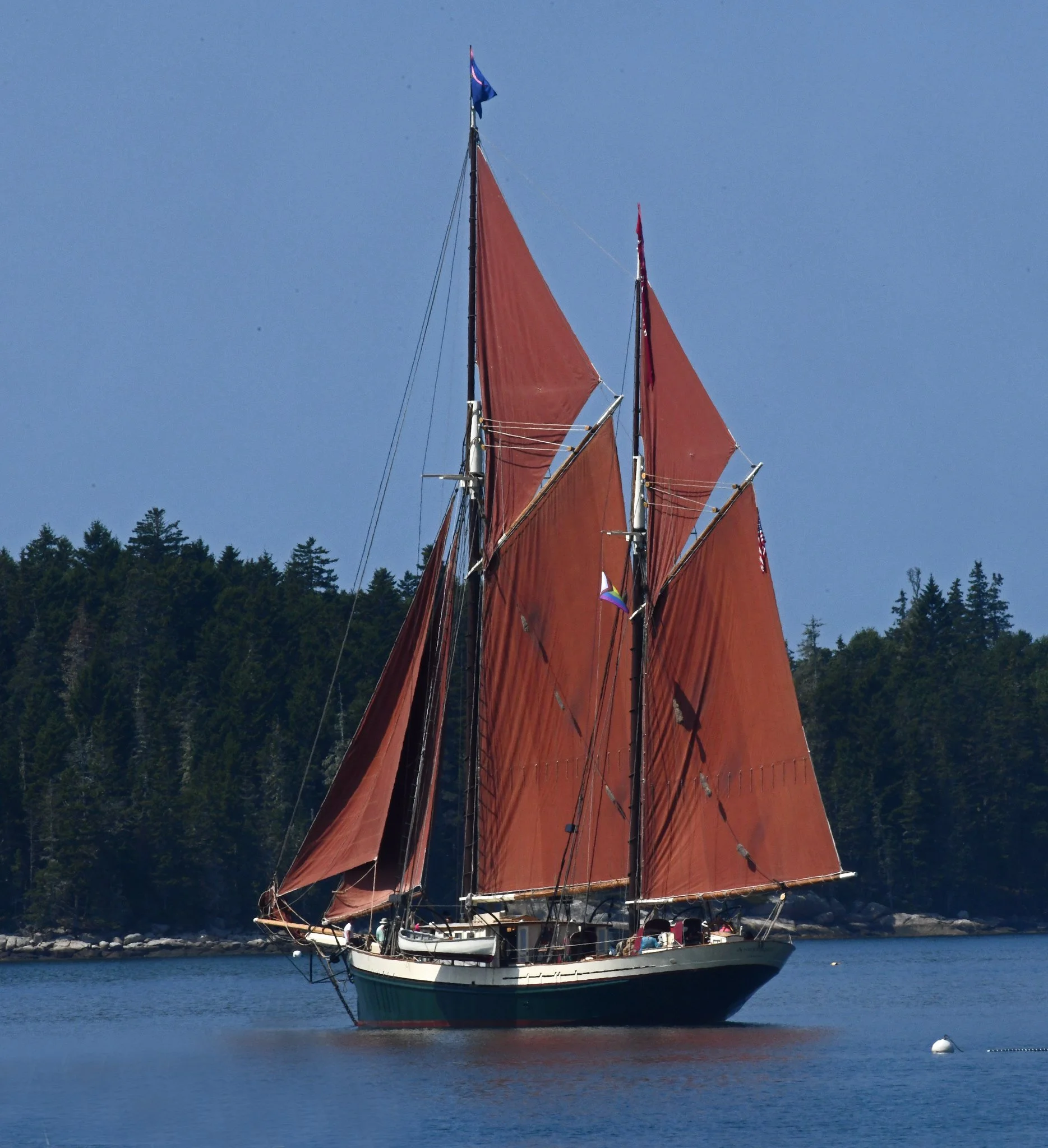
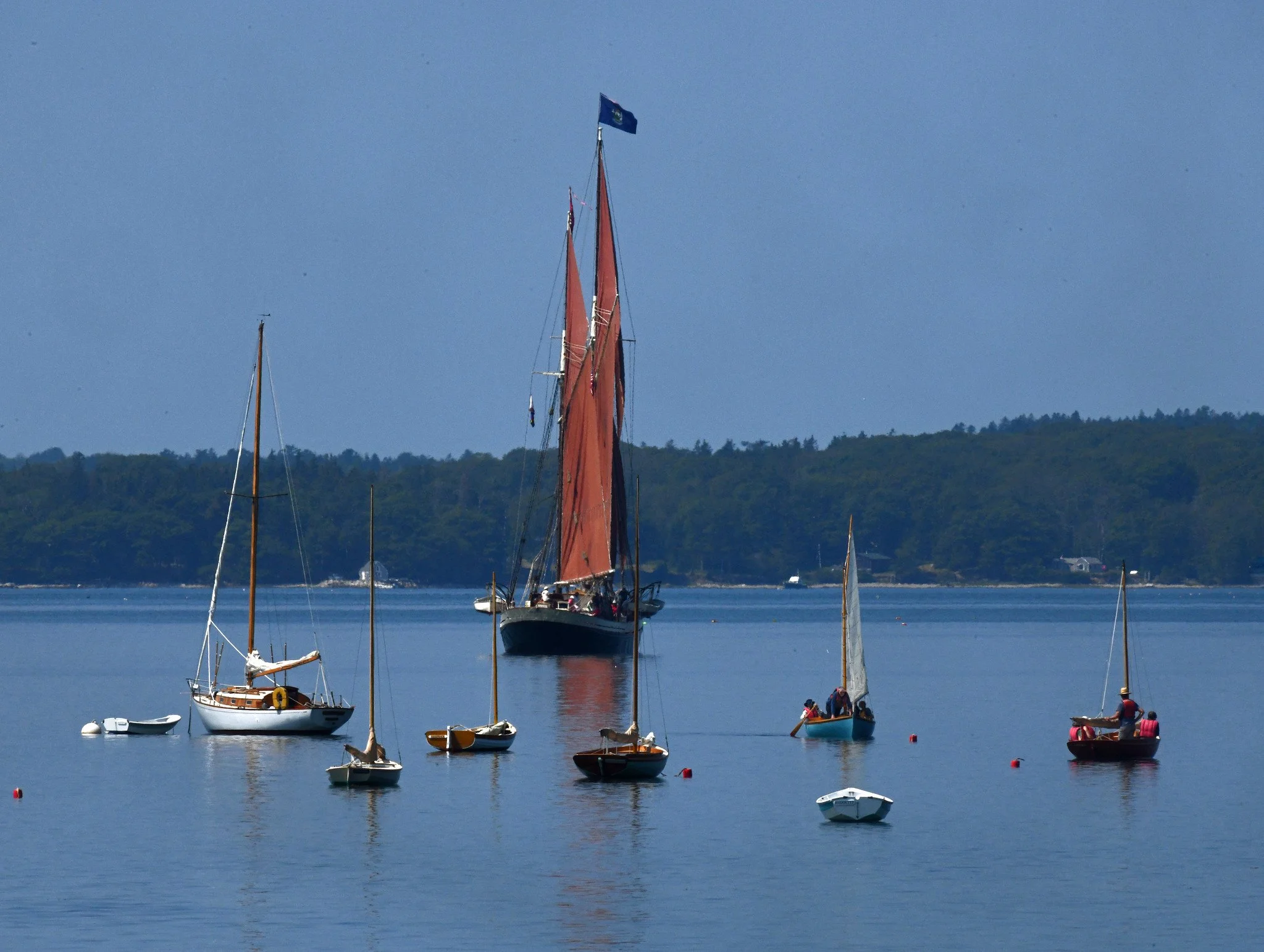
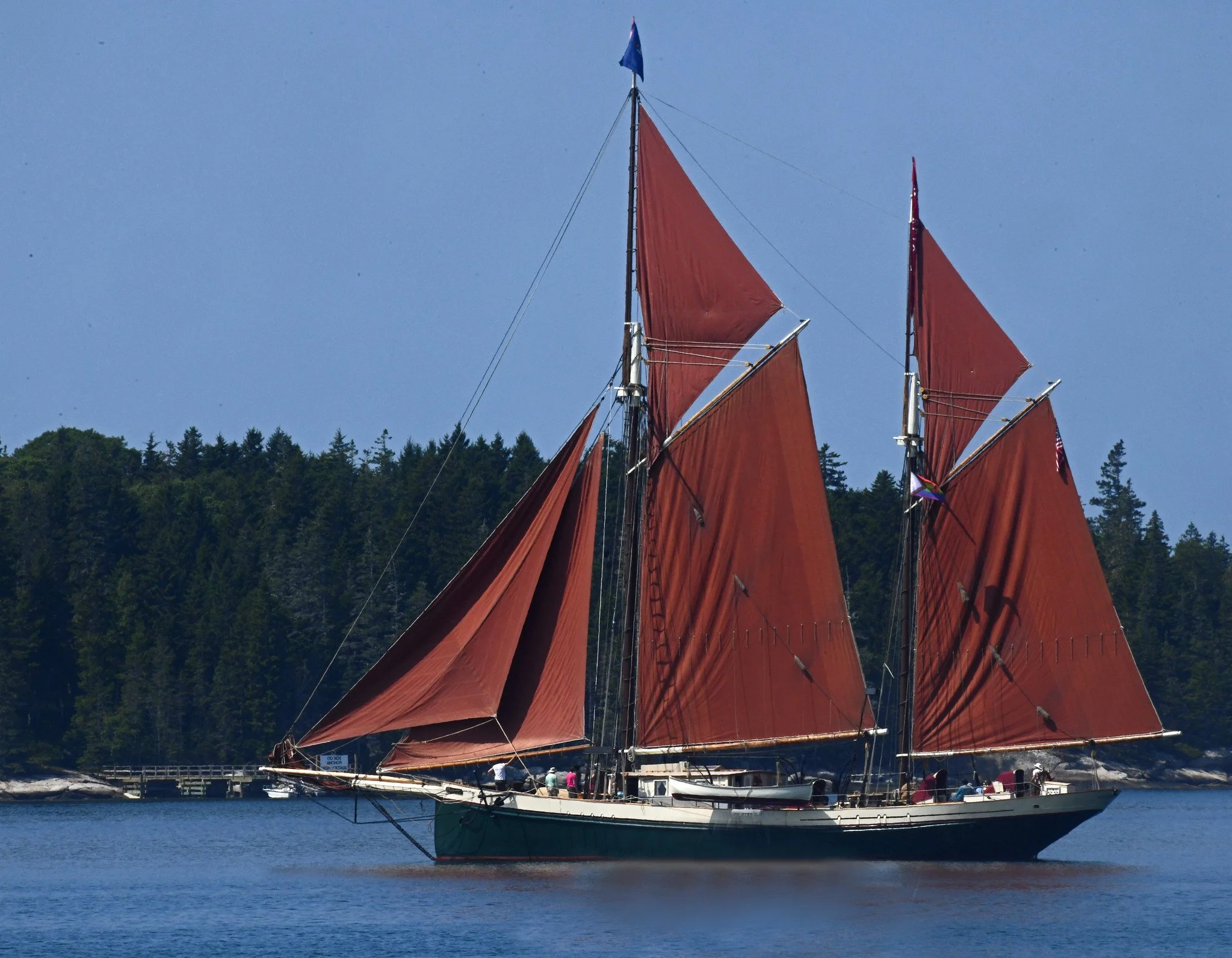
Here you see the 130-foot ketch ANGELIQUE in Great Cove Monday, where she overnighted. In this image, she’s just weighed anchor and is wheeling around to sail north (to your right) into Eggemoggin Reach, but there was a problem.

There was virtually no wind and it took ANGELIQUE more than half an hour for her massive sails to pick up the occasional whiffs and drift out of the Cove. Even the small WoodenBoat School sailboats had to be paddled back to their moorings due to lack of wind:

ANGELIQUE was launched in 1980 as a tourist cruiser and home ports in Camden, Maine. This was her fifth visit to the Cove this season, as far as I’ve seen. She was on a five-night Perseids Meteor Showers cruise during which, her schedule said, she would “Anchor in dark harbors and [passengers would] sit on the fantail to enjoy the celestial show….”

As many of you know, in this context, a fantail is not a pigeon; it’s an overhanging, fan-shaped part of the stern that some vessels have. The term reportedly was adopted in American English for certain maritime vessels during the 1800s, especially warships, ocean liners, and larger yachts.   (Images taken in Brooklin, Maine, on August 11, 2025.)

Comment

Comment

In the Right Place: Tale of a Tiger

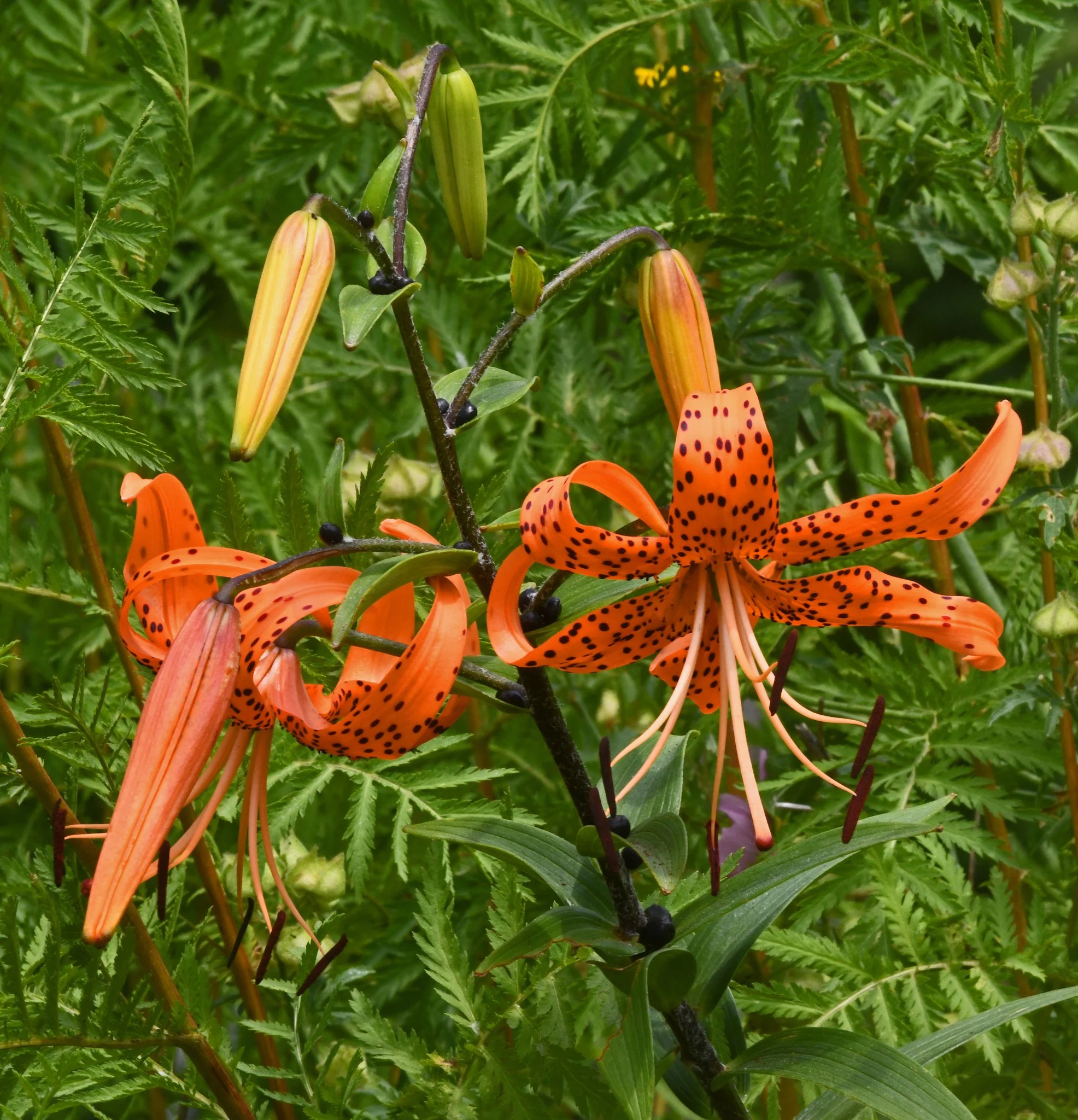
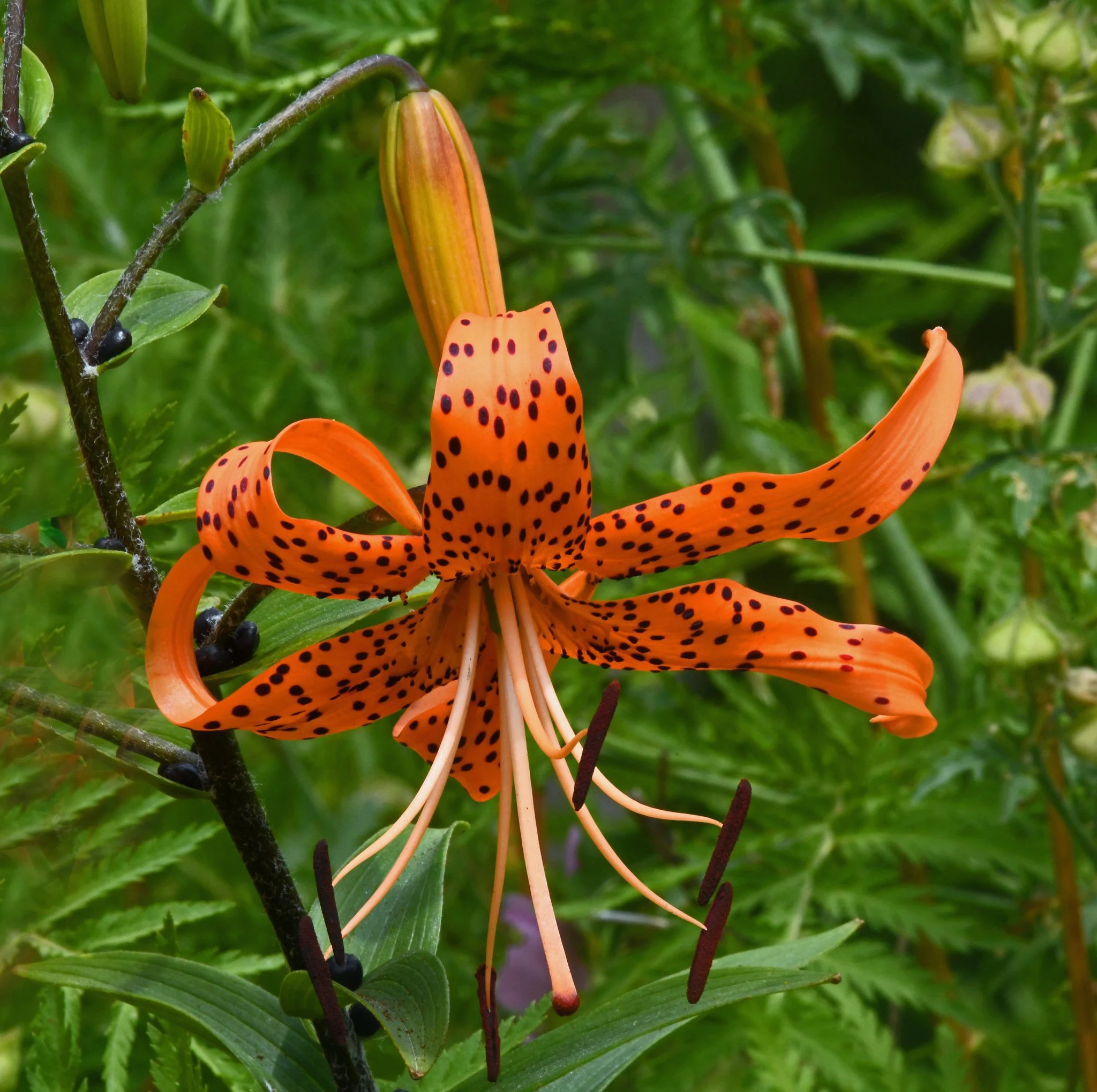
Exotic tiger lily flowers have been appearing here for several days now. The literature states that they received their name because of their orange color with dark spots.

I’ve never seen a spotted tiger, but being half correct isn’t that bad when it comes to flower names. Their scientific name, Lilium lancifolium, is spot on (so to speak): it literally means "lily with lance-shaped leaves."

Tiger lilies originated in Asia, but are now cultivated around the world and have naturalized themselves in some areas. Unlike most flowering plants, they rely on bulb-like growths instead of seeds to reproduce themselves. These dark “bulbils” grow in leaf axils until ready to drop off and start a new plant.

The flowers are edible to humans, but reportedly are “toxic to cats.” I wonder if that includes tigers? (Images taken in Brooklin, Maine, on August 8, 2025.)

Comment

Comment

In the Right Place: Windjammer Watch XV

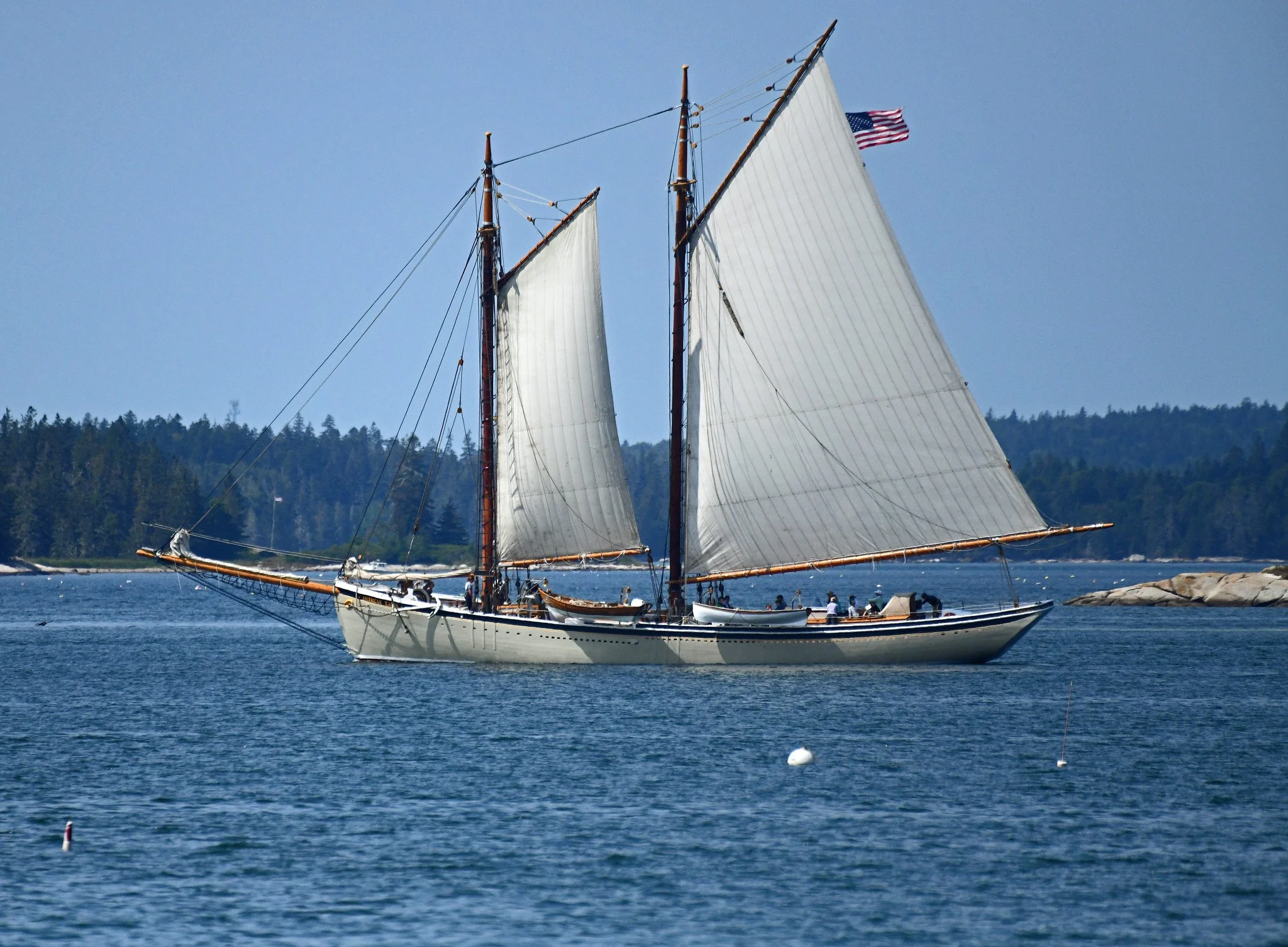
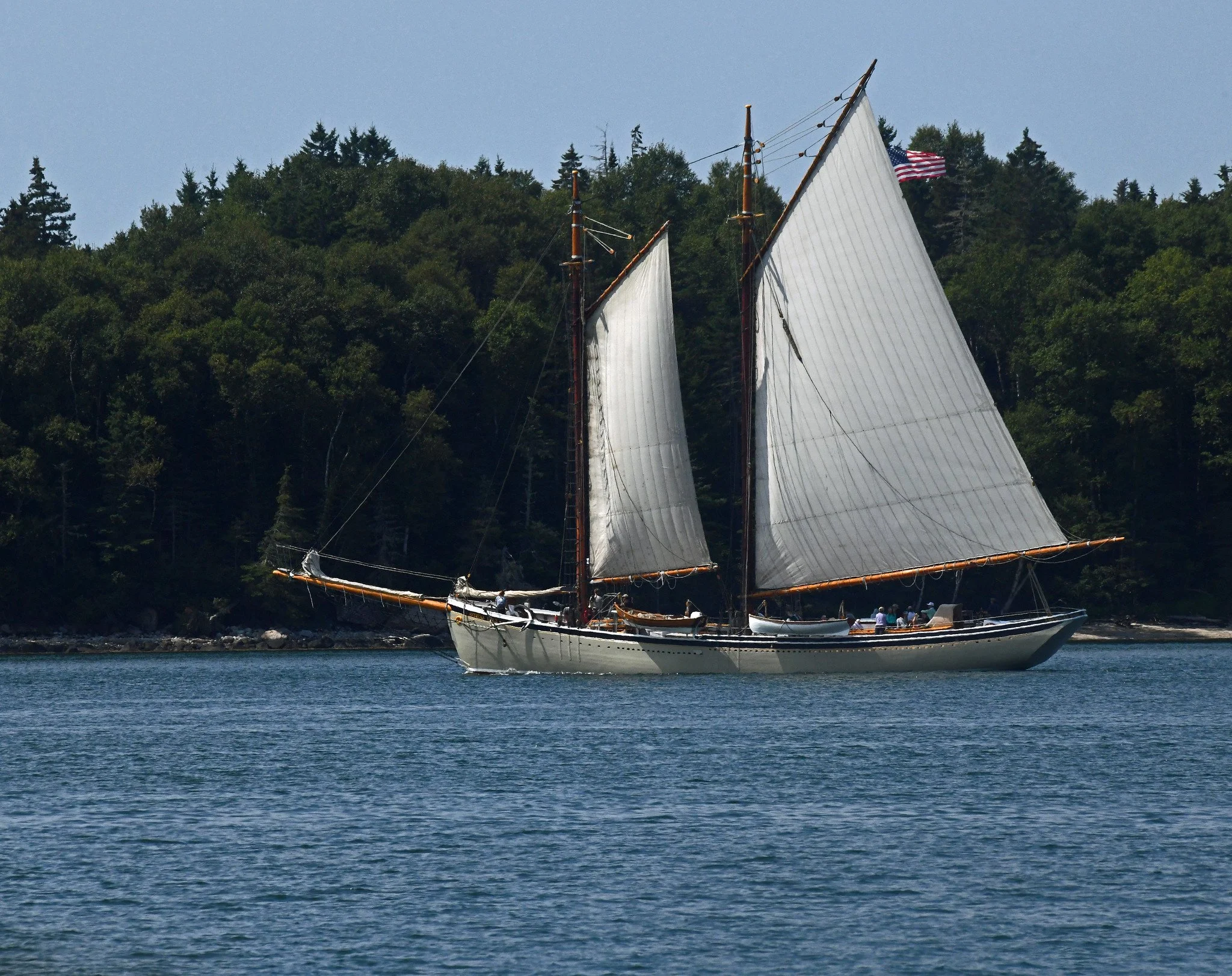
Here you see the schooner AMERICAN EAGLE departing Great Cove on Sunday after overnighting there for the third time this coastal cruising season that I’ve seen. She was on a multi-day “Yoga & Sailing” cruise with “guided yoga and mindfullness sessions in mornings or evenings,” according to her schedule.

In 1930, when she was launched in Gloucester, Massachusetts, there probably were few people on deck doing the Downward-Facing Dog pose on a brightly-colored yoga mat. (Just a hunch.) Then, she was the Atlantic Ocean fishing schooner ANDREW & ROSALIE. She was renamed the AMERICAN EAGLE in 1941 by new fishing owners when World War II was brewing.

In 1984, the old and worn fishing schooner was purchased again and underwent a two-year, complete restoration in Rockland, Maine, to convert her into a 123-foot tourist cruiser. She was relaunched as a bright and classy coastal cruiser in April of 1986. She still hails from Rockland. (Images taken in Brooklin, Maine, on August 10, 2025.)

Comment

Comment

In the Right Place: Full Time

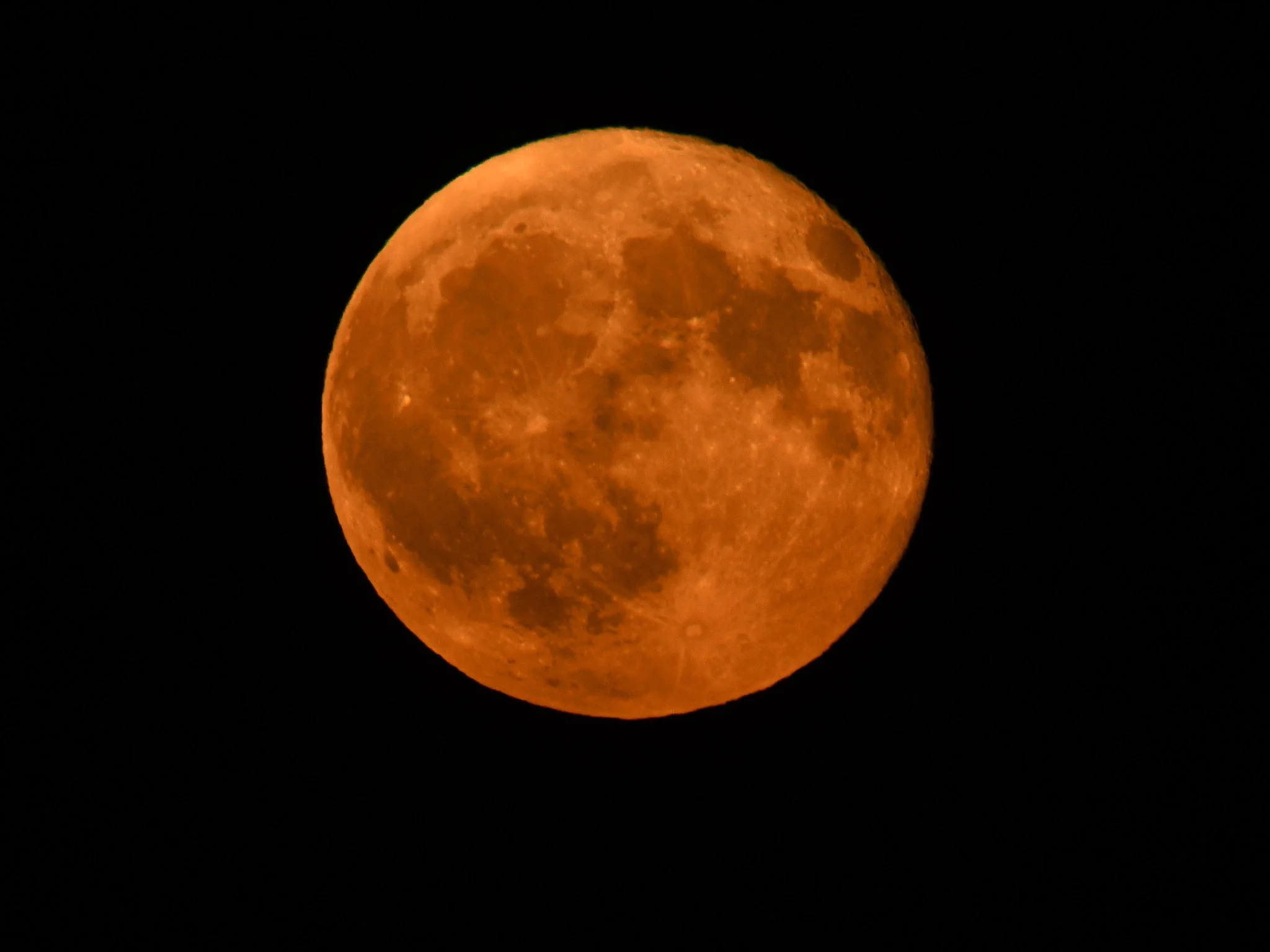
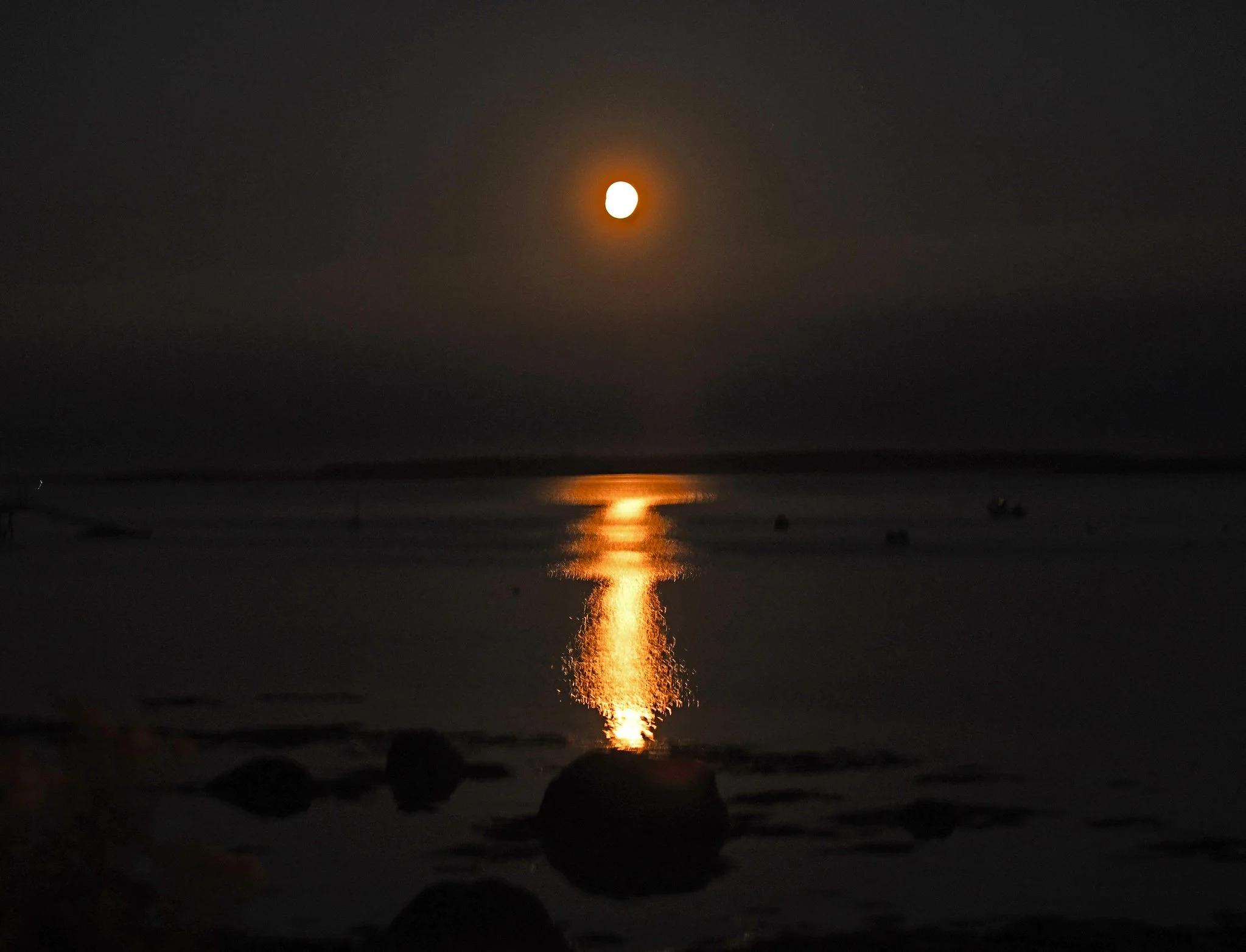
Here you see the August full moon rising orange and big over Jericho Bay Saturday night. As it rose, it transformed from red-orange into hues of lighter and lighter yellow until it was high enough to become a bright white spotlight. It then cast a glittering probe into Naskeag Harbor:

It was almost close enough to be a supermoon that night. Its early orange and yellowish colors were caused by its low position in the sky, which forces the early moonlight to come to us through more of the summer’s hazy-gritty atmosphere. That pollution scatters shorter blue wavelengths and lets longer red and orange wavelengths reach us.

It was sailing away over Great Cove before dawn the next morning:

The August full moon most often is called the Sturgeon Moon, reportedly a translation from the Native American fishing tribes that depended on those prehistoric-looking fish to rise and run in lakes and rivers now. Other common names for our fully-illuminated companion in August are Grain Moon, Green Corn Moon, and Red Moon. (Images taken in Brooklin, Maine, on August 9 and 10. 2025.)

Comment

Comment

In the Right Place: Eat Your Heart Out

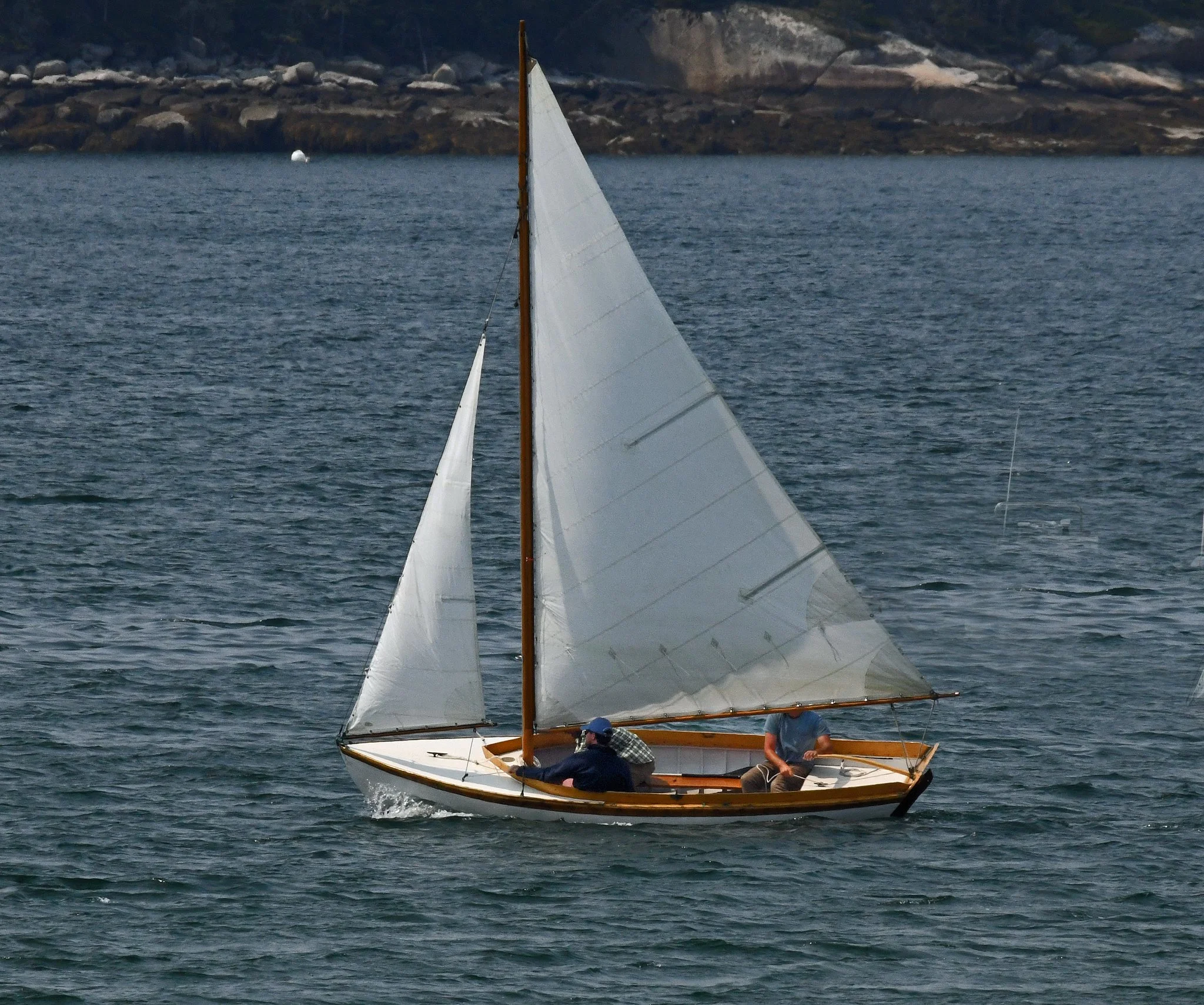
The late Roger Angell came to mind when I saw this small boat sailing in Great Cove recently. I think that it might be SEAL, a “12 ½” (foot at the waterline) Herreshoff used by the WoodenBoat School to teach sailing.

As you may know, Roger was a senior editor and writer at the New Yorker Magazine and beloved summer resident of Brooklin, Maine, among other significant things. He wrote the following in the Magazine about sailing on his 12 ½ Herreshoff, SHADOW, with a “nonsailing friend” in the waters off Brooklin:

“It can’t be helped, but sailing is exclusive. What the landsman senses and perhaps envies is exactly what grabs me at odd moments in a small boat in August. Here – for the length of this puff, this lift and heel – I am almost in touch with the motions of my planet: not at one with them but riding a little crest and enjoying the view. I smile across at my friend but say nothing. Eat your heart out, pal.”

(Image taken in Brooklin, Maine, on August 3, 2025.) Click on the image to enlarge it.

Comment

Comment

In the Right Place: Berry Bounty

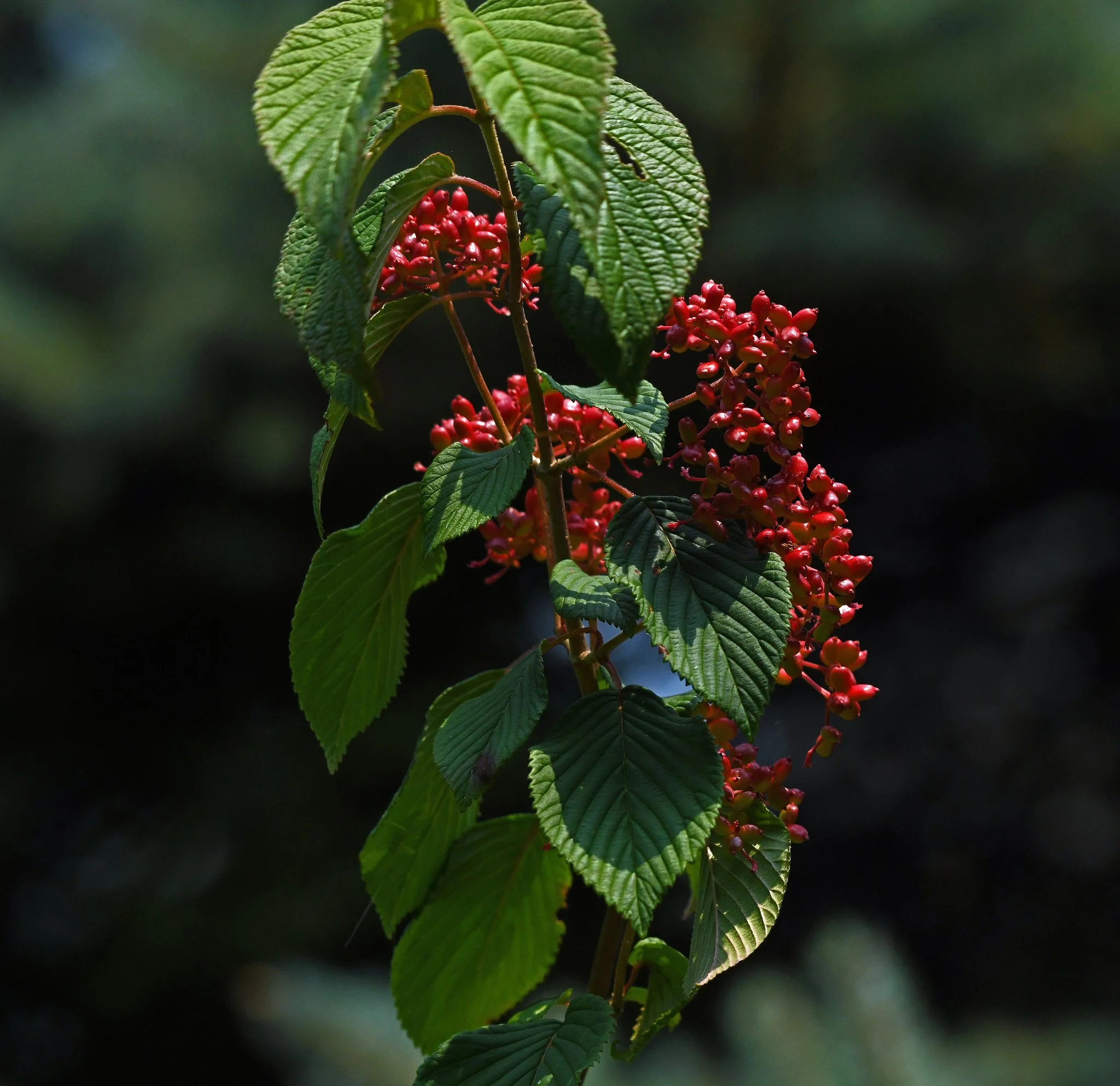
Viburnum berries soon will fuel many of the birds that will start migrating in late summer and fall. Some migrating birds may already have started to switch from protein-based insect diets to the higher-energy, fatty berries on viburnum and other berry bushes. The fat content of various viburnum bushes apparently varies and some reports state that native American viburnums have the highest.

I think that the plant shown here is a nonnative doublefile viburnum (Viburnum plicatum var. tomentosum). It has multitudes of large white flowers in spring and even more red and black berries starting in August.

This bush that you see has attracted many of our feathered friends in the late summer and fall. Sometimes we see swarms of berry-gulping birds, especially cedar waxwings and robins. During the winter, resident birds and, sometimes, desperate red squirrels munch on the leftovers until they’re gone. (Images taken in Brooklin, Maine, on August 4, 2025.)

Comment

Comment

In the Right Place: Cat on a Toxic Roof

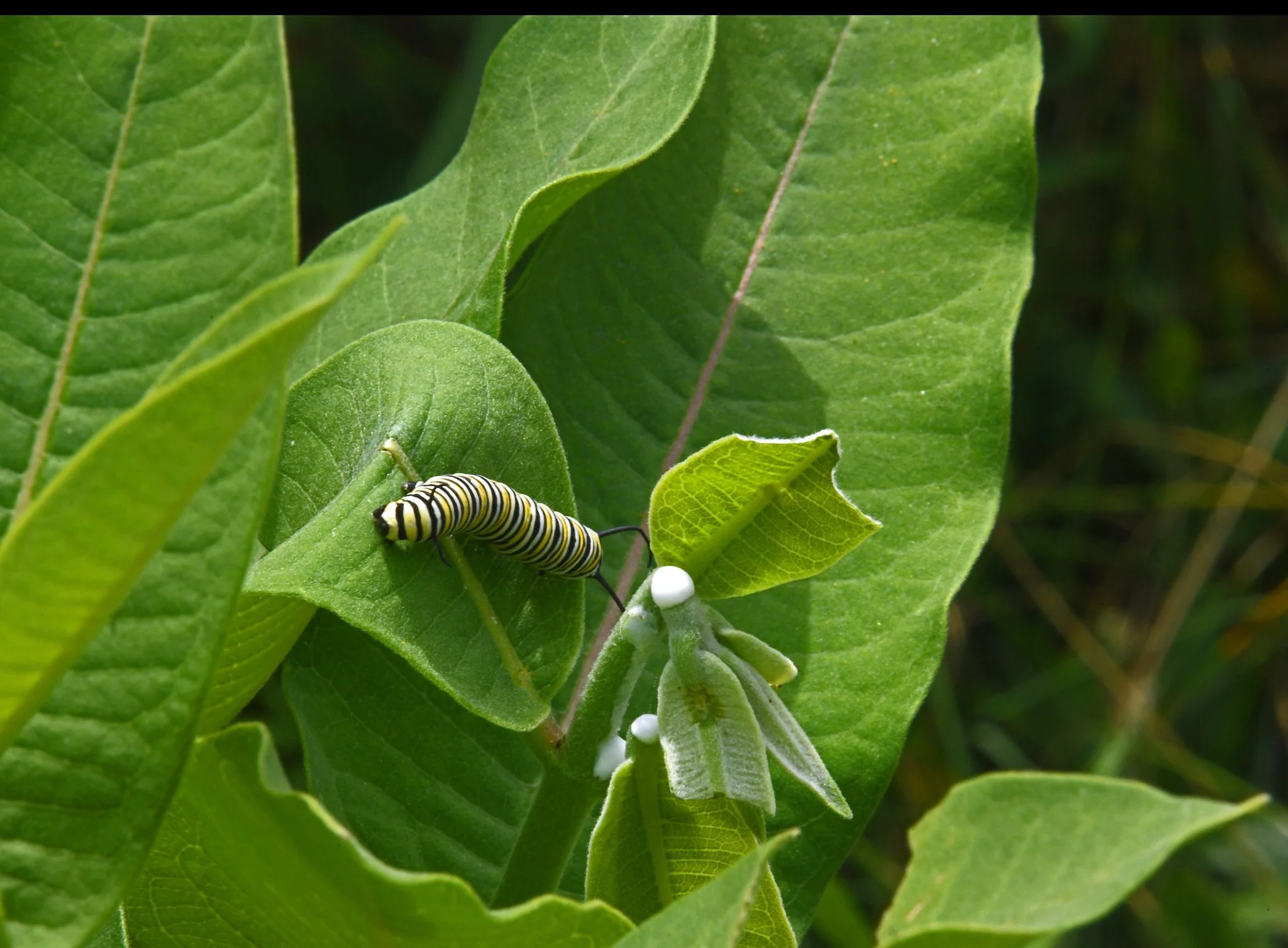
I saw this little fellow – my first Monarch butterfly caterpillar of the year – yesterday. He’s the only one that I could find in the large plot of common milkweed that Sherry Streeter is cultivating to nurture this troubled species. The toxic leaves from plants in the milkweed family (wild and cultivated) are the only foods that Monarch caterpillars eat.

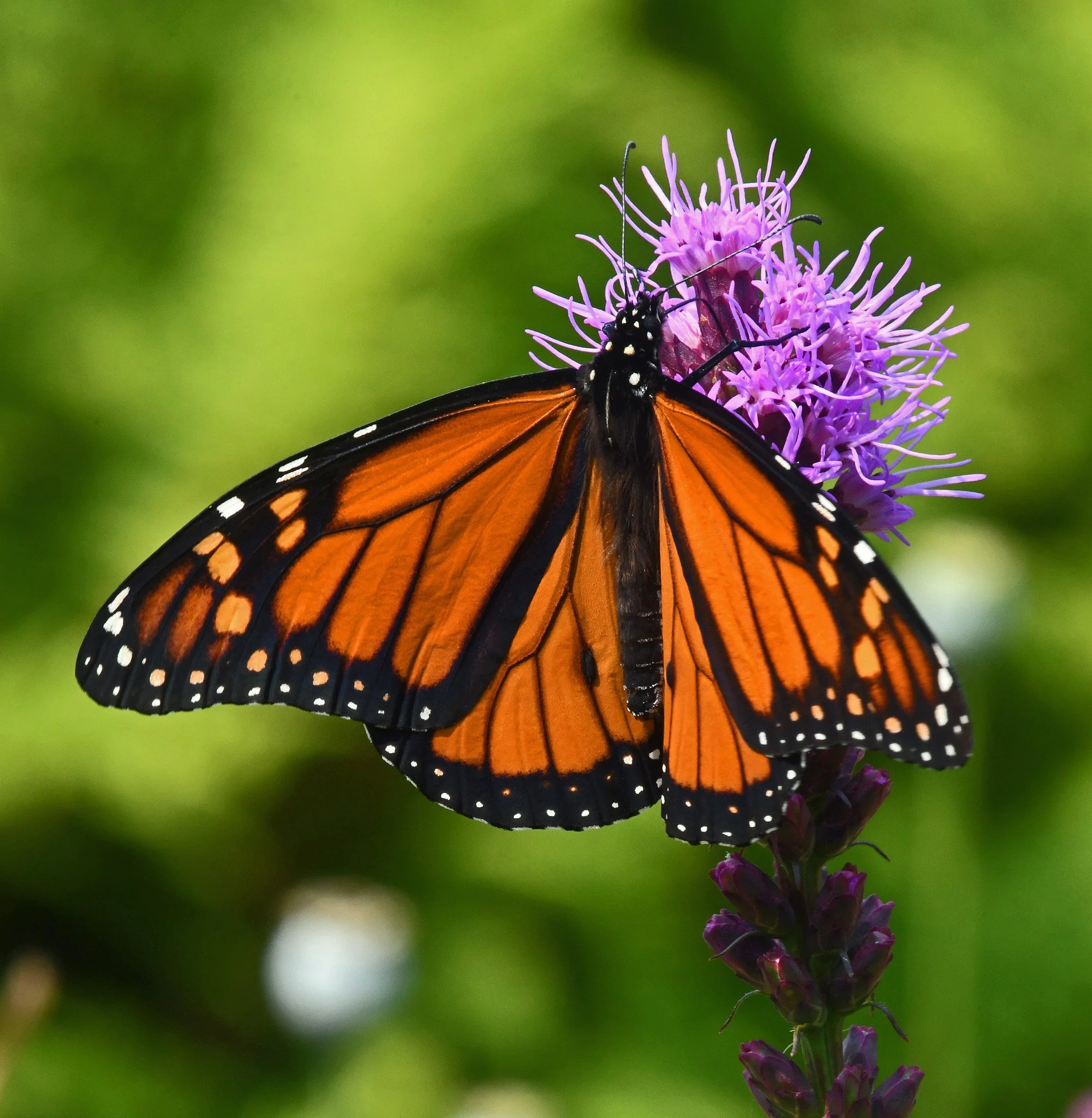
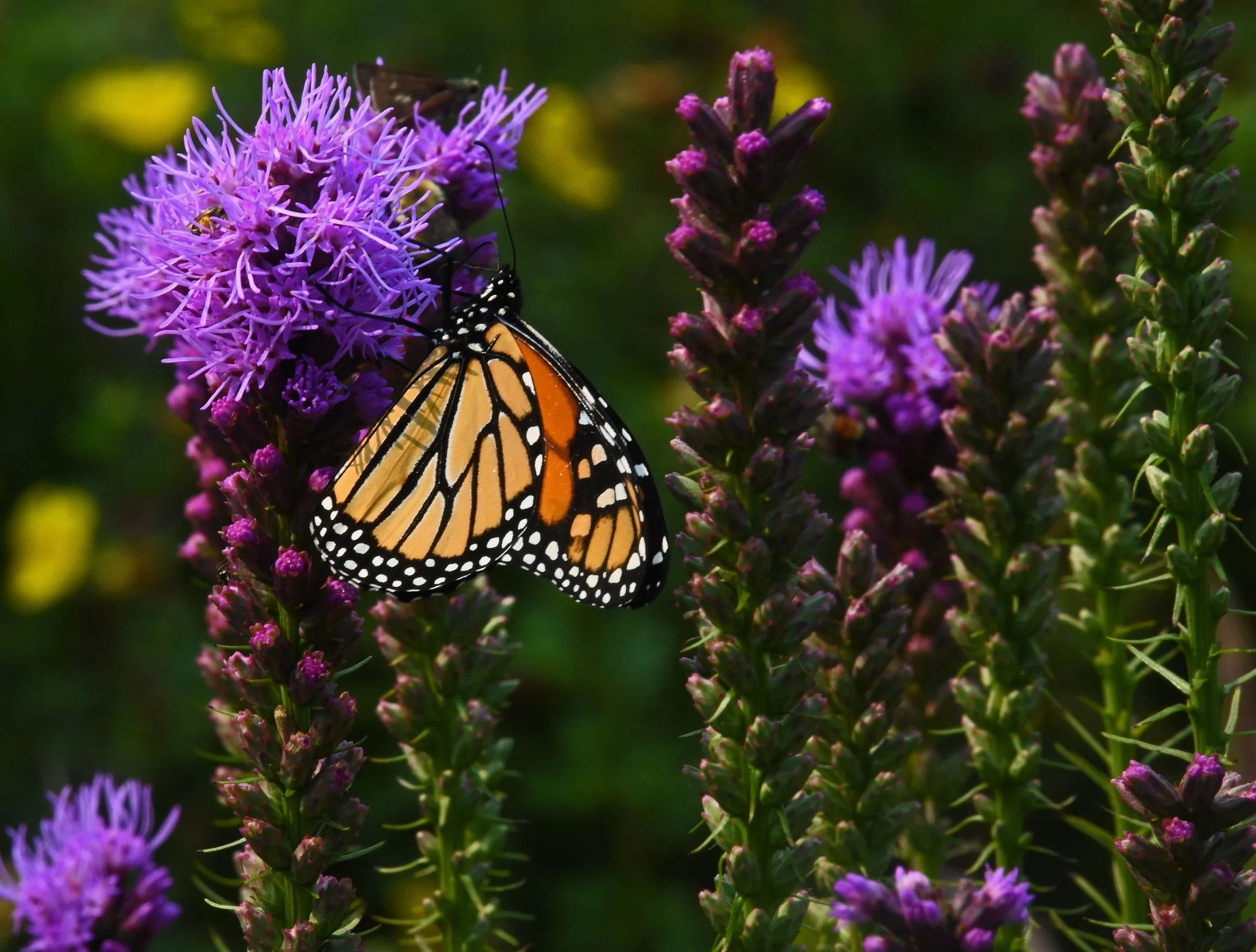
Nonetheless, I’ve been seeing a good number of Monarch butterflies for several weeks. While many of the nectar-producing flowers on milkweed and other plants have faded, our liatris (blazing star) is blooming and attracting them:

(Images taken in Brooklin, Maine, on August 3 and 7, 2025; sex of caterpillar assumed.)

Comment

Comment

In the Right Place: Windjammer Watch XIV

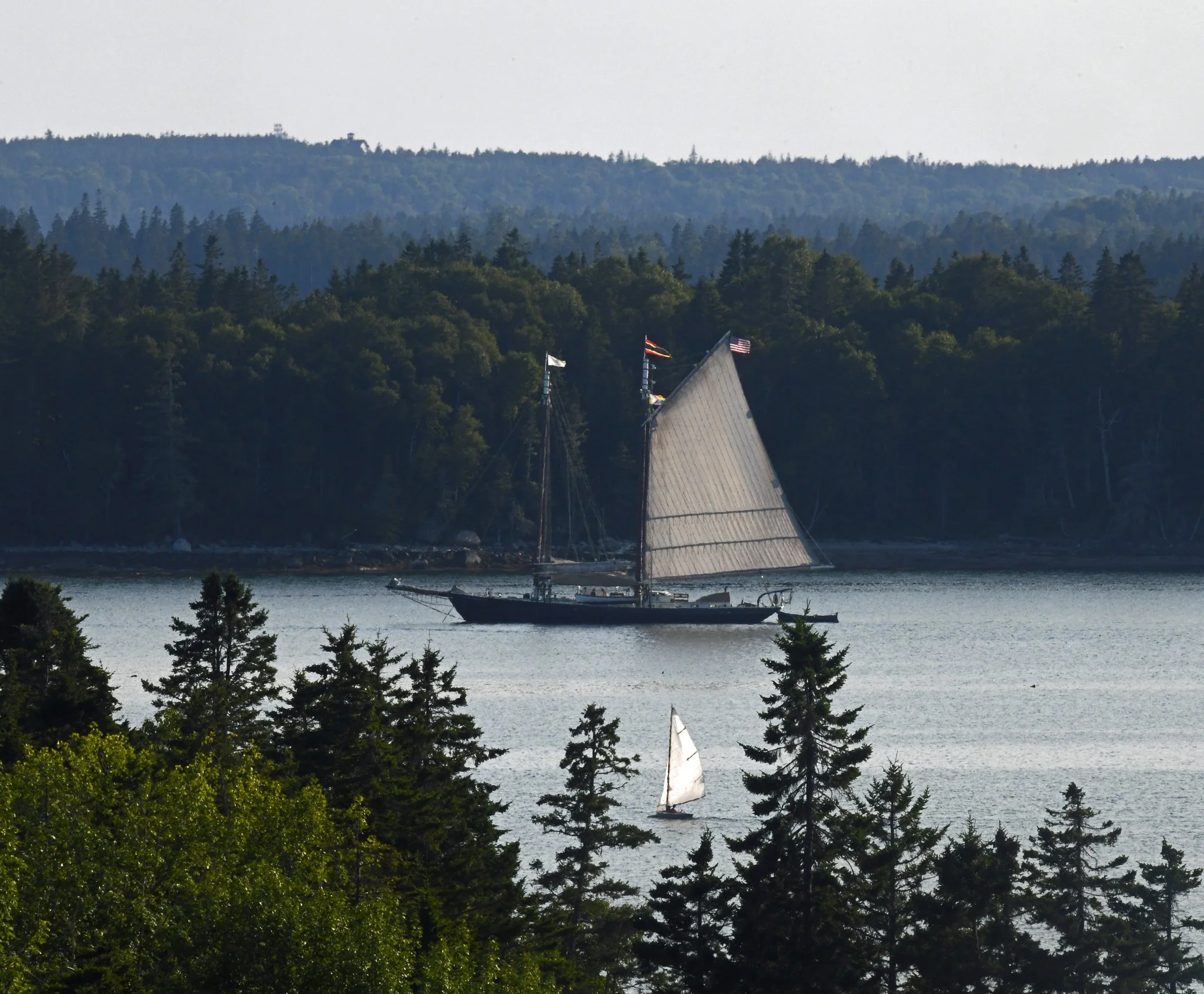
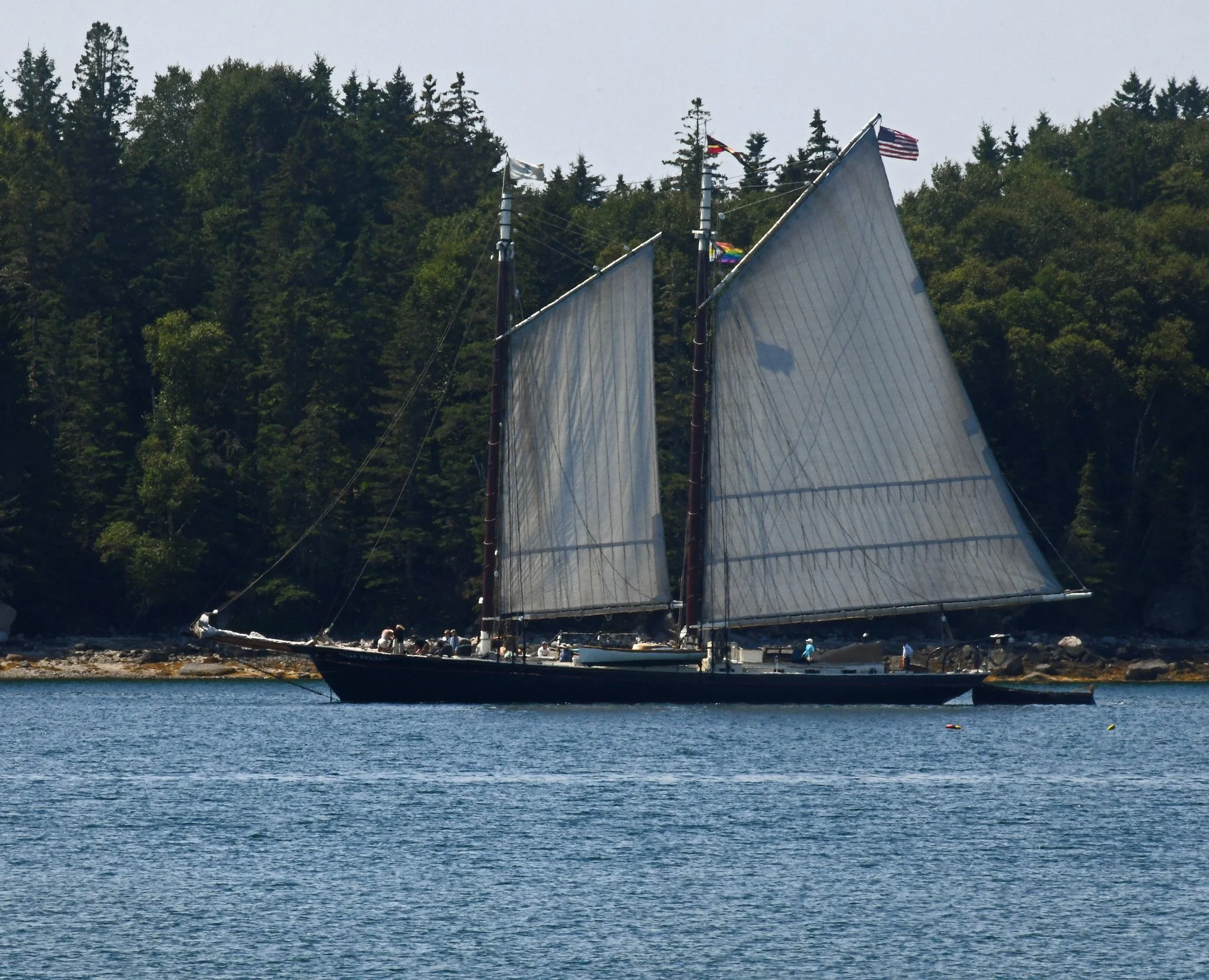
There was a 2-for-1 “Sail” here yesterday. It began Tuesday when the sleek J&E RIGGIN slid into Great Cove during a hazy dusk:

She anchored off Babson Island and spent the night. The following morning’s dawn light found her asleep in Great Cove. She soon woke up, raised sails, and headed out at mid-day:

As the RIGGIN was going out of the Cove, old STEPHEN TABER came in. They hailed each other in passing:

The TABER circled the Cove looking for a good acnchorage in the incoming tide. Her maneuvers were a joy to watch:

She stayed only a few hours in the Cove, perhaps to allow her passengers to tour the WoodenBoat School campus there.

The RIGGIN is a 120-foot schooner out of Rockport, Maine, that was launched in 1927. According to her schedule, she was on – don’t laugh – a “Maine Knitting Retreat.” (You’d be surprised at how many knitters, male and female, there are.)

The TABER is a 110-foot schooner out of Rockland that was launched in 1871. She reportedly was on a “Captain’s Choice” cruise of Co-Captain Noah Barnes’s favorite spots. (His wife Jane apparently is the other Captain.)

(Images taken in Brooklin, Maine, on August 7, 2025.)

Comment

Comment

In the Right Place: Feeling Very Zen

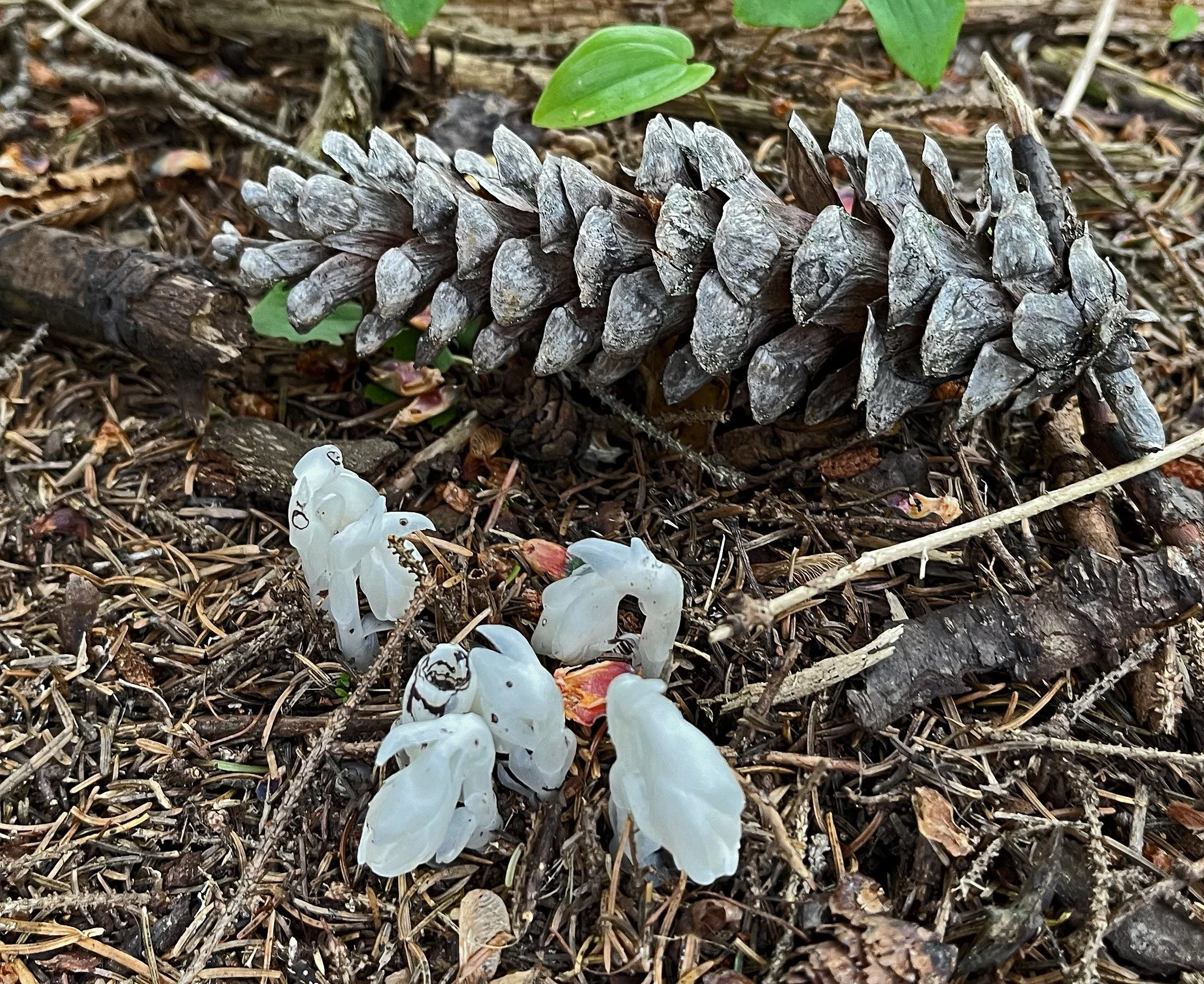
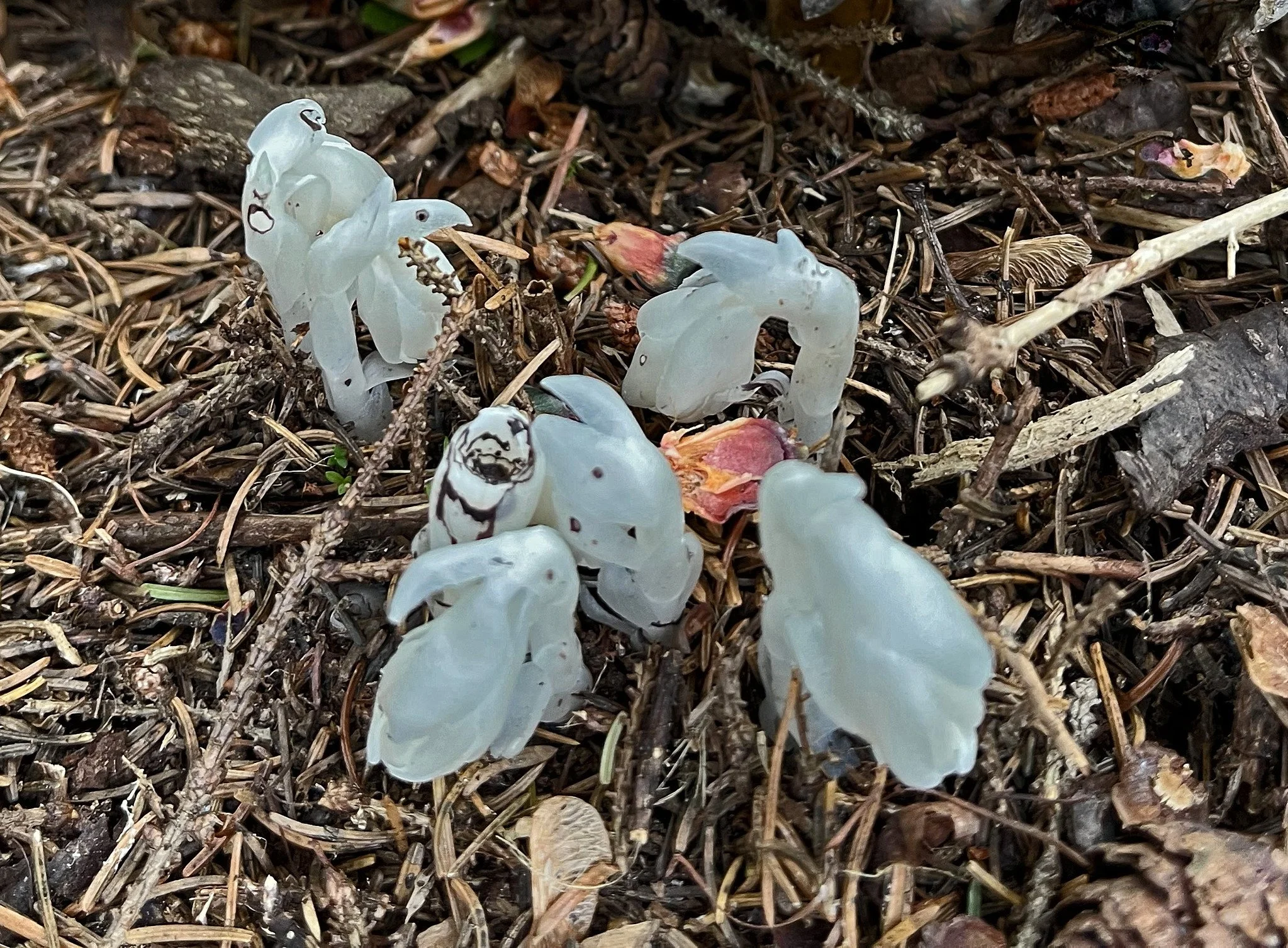
This colorless growth is uncommon, but not rare; it is mushroom-like, but is a plant; it was Emily Dickenson’s favorite wildflower, but was considered by Native Americans as spirits of the dead, and it recently has accumulated cultish followers who reportedly are causing a raging health controversy.

It’s Monotropa uniflora, more commonly called Indian pipe, ghost pipe, corpse pipe, corpse plant, ghost flower, and/or ice plant. It is a wildflower that amazingly survives without chlorophyll for photosynthesis. Instead, it gets its nutrients from a parasitic relationship with mycorrhizal fungi in the soil. It’s usually porcelain white, but sometimes grows pinkish or (rarely) reddish in certain soils.

According to a Native American legend, the plant was the ghosts of warring chiefs who smoked peace pipes, but refused to compromise and make peace. The Great Spirit turned them into a colorless group that didn’t warrant attention. But Emily paid attention to them by collecting them and considering them “the preferred flower of life” (whatever that means).

In May, the Washington Post published a lengthy report by Ashley Stimson on a raging debate in the social media among foragers and outdoors enthusiasts over Indian pipe’s benefits or lack thereof. The plant reportedly is being promoted as a nutrient supplement that will make you “feel very Zen,” kill pain, and treat anxiety, panic attacks, insomnia, migraines, and muscle spasms.

I’m not recommending that you consume it. (Images taken in Brooklin, Maine, on August 5, 2025.)

Comment

Comment

In the Right Place: Non-Video Games

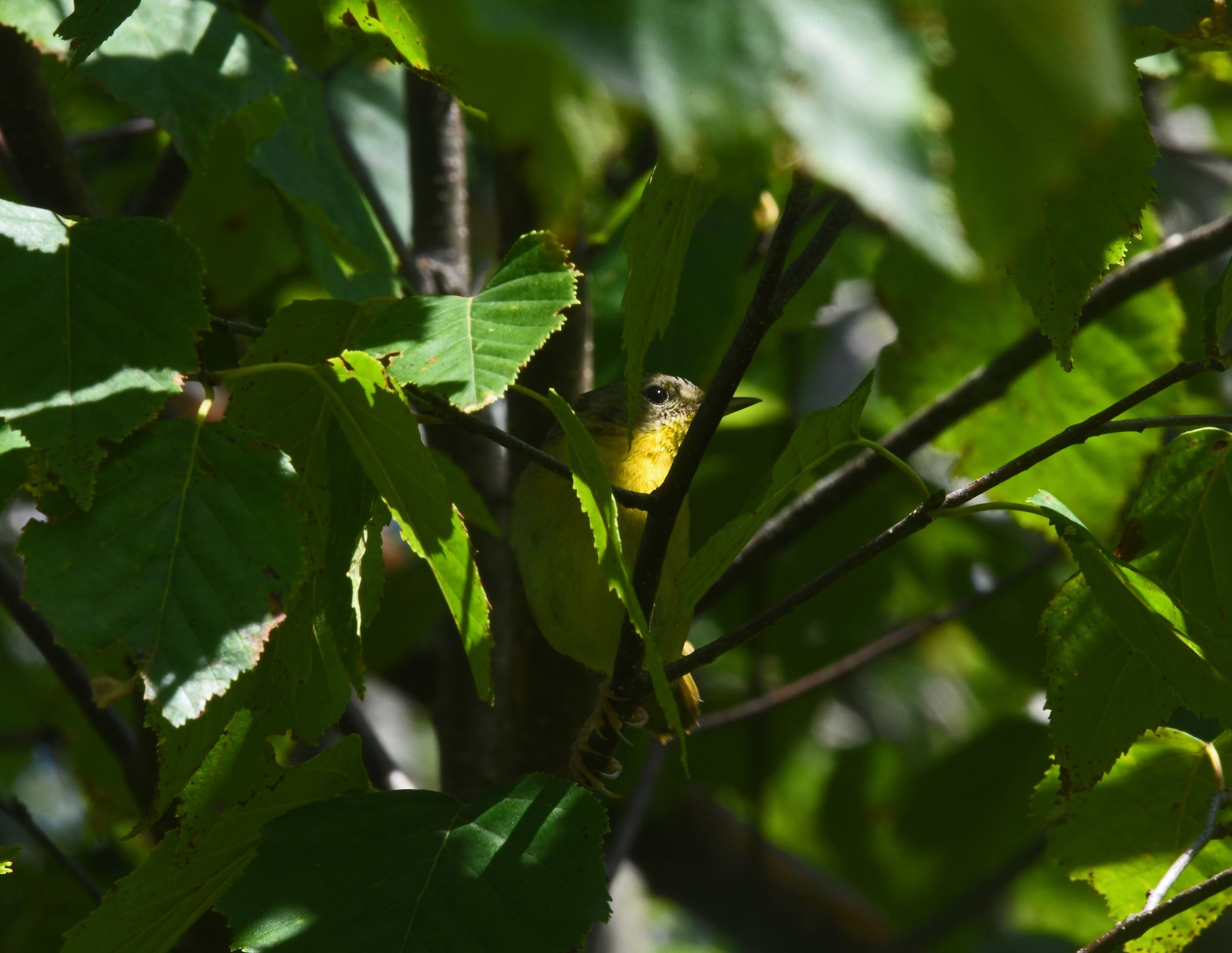
I’ve been playing a new game this week with Betty. She’s a summer resident here who lives down by the ponds, where the branches of the swamp maples and speckled alders overarch the path a bit. When I get there, I whisper in my best sexy voice, “Betty-Betty-Betty … Betty-Betty-Betty … Betty-Betty-Betty.” Then I wait to hear the rustling of leaves.

When the rustling stops, I know that Betty is looking at me, but hiding. I win the game if I can find her through my camera viewfinder and click-off a couple of shoots, after which she departs with another rustle. She wins if I can’t find her when the rustling stops and there is no other movement.

I forgot to mention that Betty is very hard to find in the overhanging leaves because she’s only about five inches long, usually exposes only her chest and head, and looks like a flash of sunlight coming through the leaves. I also forgot to tell you that she apparently is nesting close by or has already raised a family there.

As the birders who read this post will recognize from the images here, Betty is a common yellowthroat warbler that came up from the south. She’s also a poor loser, but I bet she’s a good mother. (Images taken in Brooklin, Maine, on August 2, 2025.)

Comment

Comment

In the Right Place: Windjammer Watch XIII

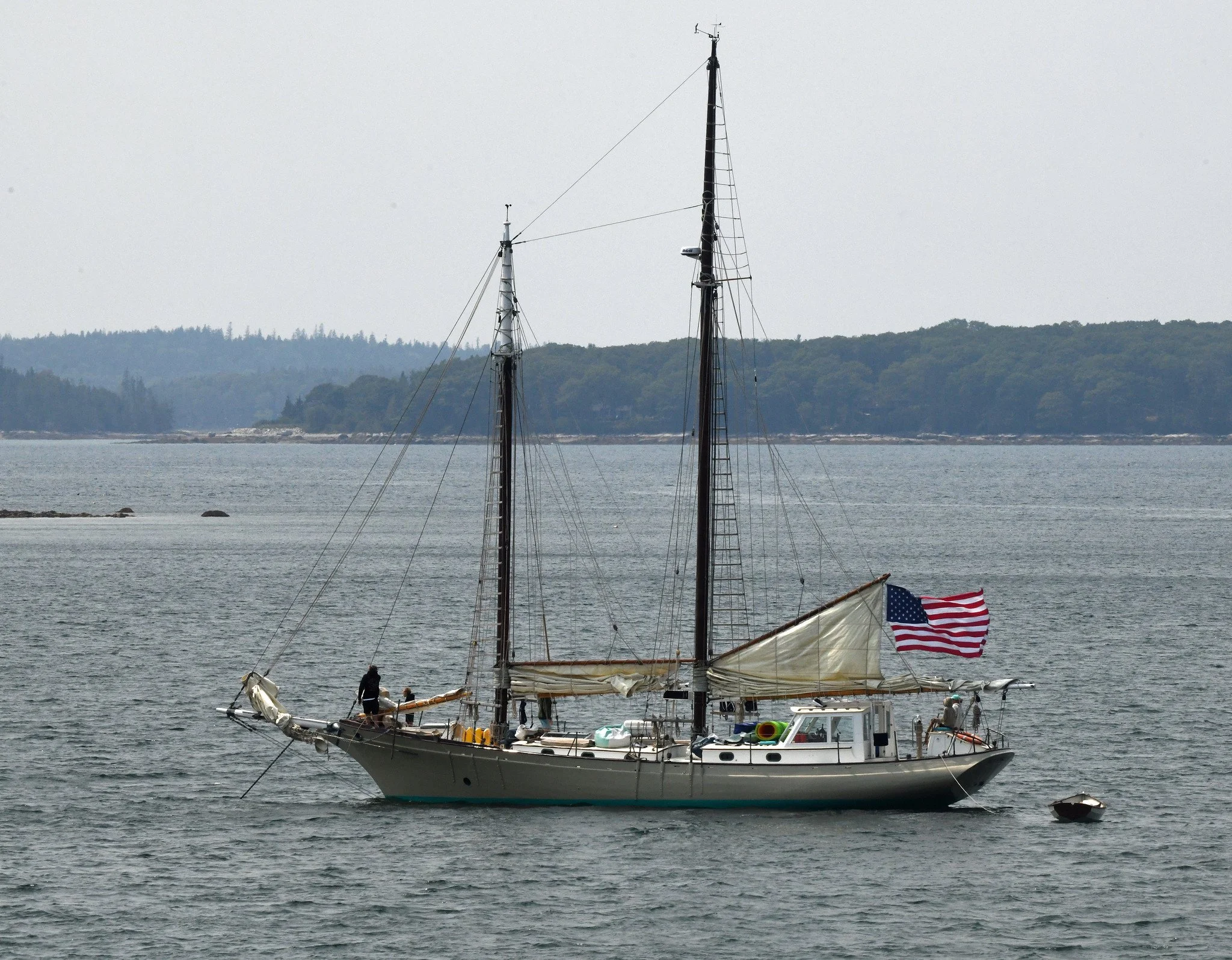
Here you see the 74-foot KOUKLA in Great Cove yesterday. She participated in Saturday’s Eggemoggin Reach Regatta here:

She’s a custom-built wooden schooner designed by George Stadel of Stamford, Connecticut, and built in Taiwan in1983. She now hails from Rockland, Maine. (Images taken in Brooklin, Maine, on August 2 and 3, 2025.)

Comment

Comment

In the Right Place: Memorable Days

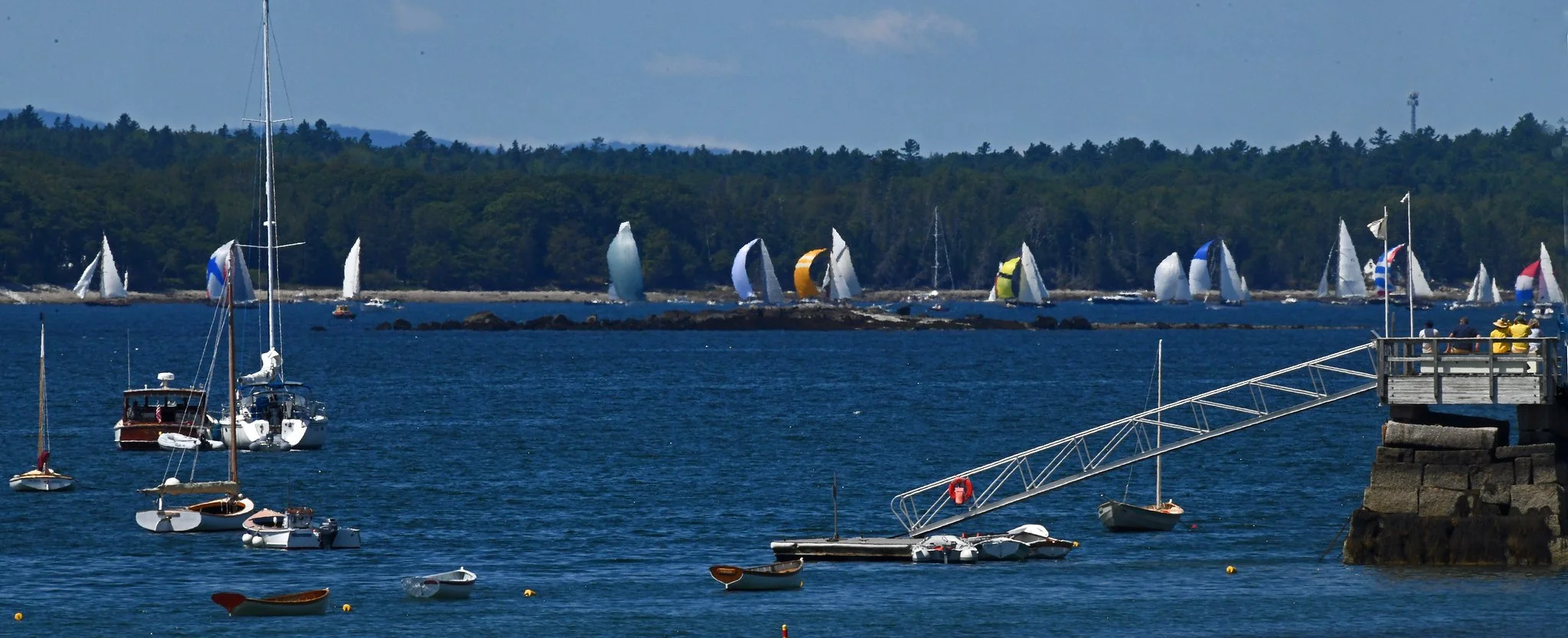
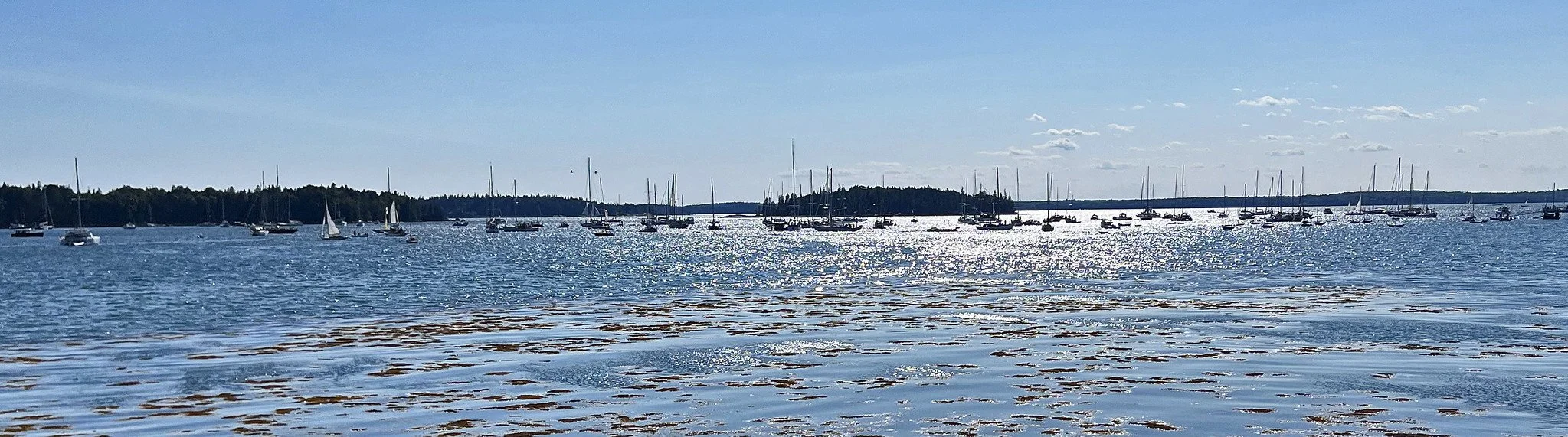
Here you see the first wave of sailboats in yesterday’s Annual Eggemoggin Reach Regatta. That’s the WoodenBoat pier and float in Great Cove. The boats sailed south down the Reach, circled around Halibut Rocks, and returned to finish just off Babson Island, which shelters the Cove’s south entrance. Then, most boats anchored in the Cove as the sun began to set:

The day was virtually perfect for sailing. The appare:ntly delicious dinner and merry party that followed on the WoodenBoat campus must have made the day a memorable occasion for participants.

The 15-mile race is billed as the largest wooden boat regatta in the world. It’s limited to wooden sailboats of 24 feet in length or larger and has sailed the same course since 1985. I took many photographs of the boats as they approached or crossed the finish line in the lowering sun, including this early finisher:

I may create a post on our website to show more of them and will send you a link if and when that happens.

(Images taken in Brooklin, Maine, on August 2, 2025.)

Comment