Comment

In the Right Place: Life with Bernie, VI

Well, it’s a mess down there around the pond that Bernie has claimed as his own. Here you see the state of the lodge that he’s building as of yesterday:
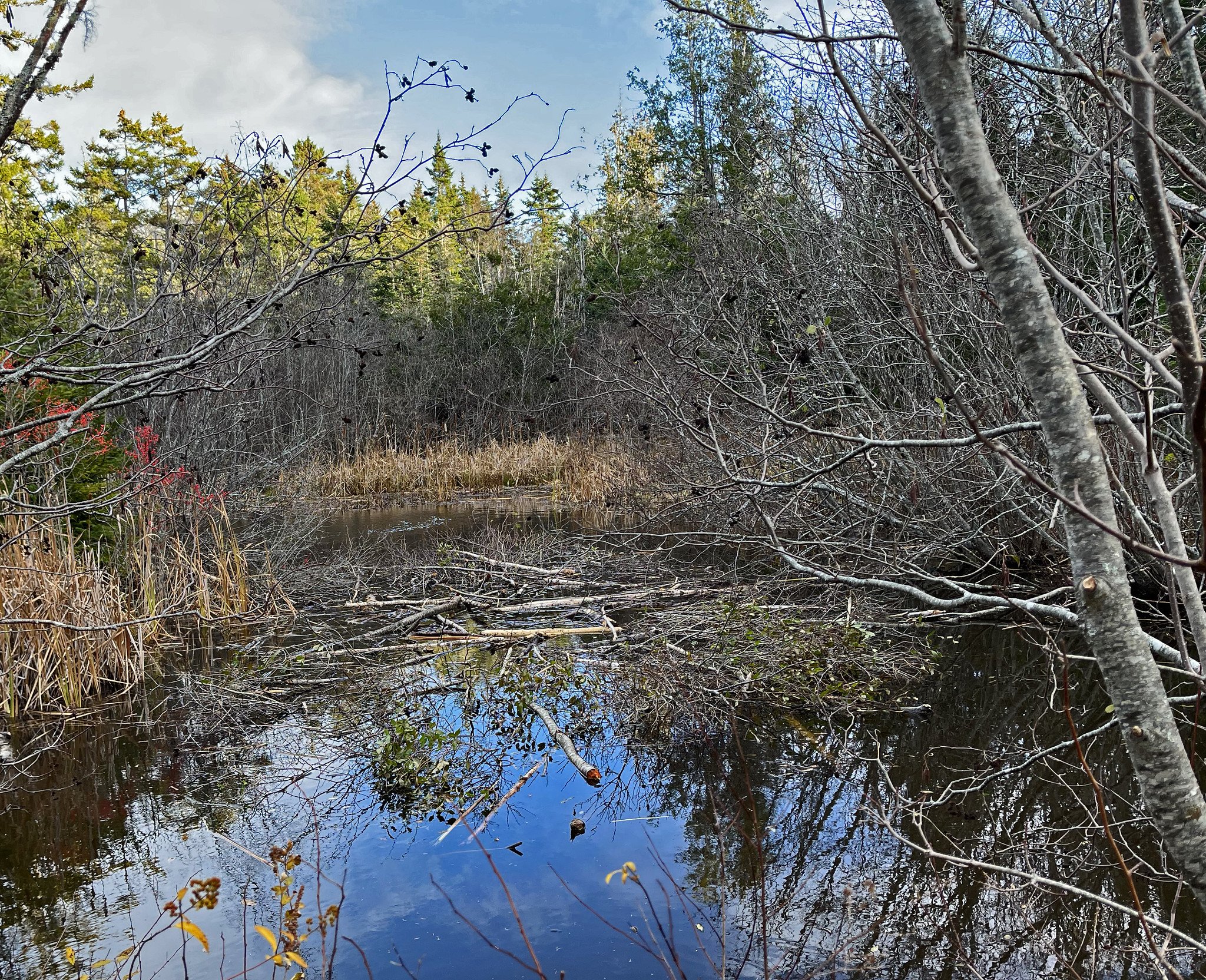

Frank Lloyd Wright he is NOT. And he better hurry up; it’s getting colder. (American beavers build their lodges by planting a few stabilizing logs in the mud and then just piling and piling on trunks and branches until they have a large pyramid or dome in which they can hollow out chambers and underwater accesses to them.)

More than 20 trees, ranging in diameter from 1 to 7 inches, have been felled by Bernie since he arrived in late September. He eats the inner bark and keeps his ever-growing teeth from becoming tusks by felling trees. He sometimes uses most of the tree for his lodge, at other times he uses only a small part of it and leaves most of the tree lying there. It looks almost random.

Now that the days are getting shorter, it’s harder and harder to see Bernie, who only works night shifts due to beaver union rules. The most excitement that we’ve had, beaver-wise, since our last Bernie report here was the appearance of a second beaver in an adjacent pond:
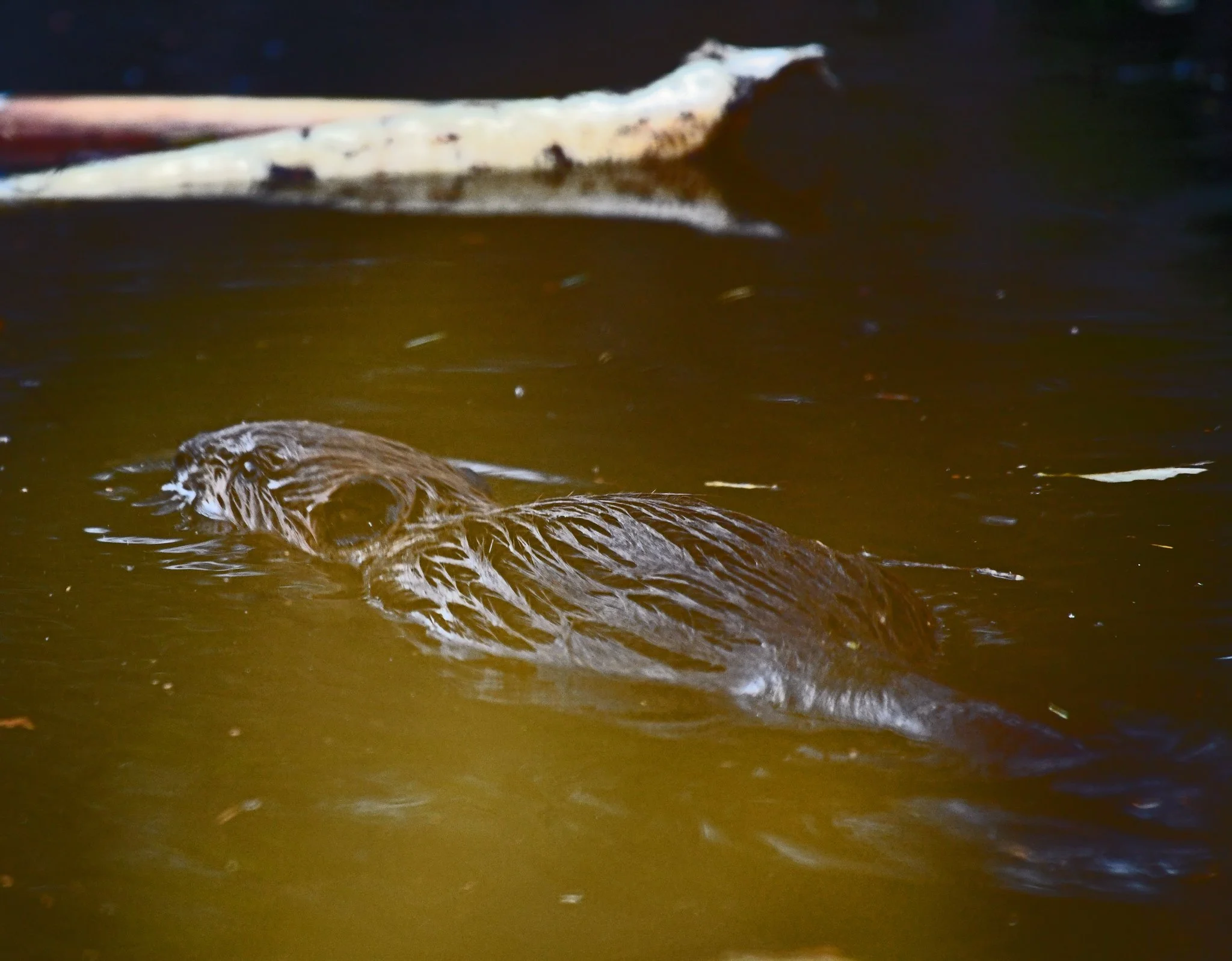
The newcomer was hard to see and almost impossible to photograph through the surrounding vegetation and in very low light. I’m leaning toward thinking it was an invading male (let’s call him Putin) that Bernie chased off, because I’ve not seen any sign of a second beaver since.

However, if it’s a female that is attracted to Bernie (let’s call her Bernice), our patch of paradise may be in trouble this spring. Beavers mate in the winter and usually have two to five kits in May or early June. The family usually starts a colony that needs a bigger lodge. We should be okay for this winter, though. Bernie’s three dams have not created a flood risk. Yet.

(Images taken in Brooklin, Maine, on November 6 and 17, 2025.)
Comment

Comment

In the Right Place: Rain and Fire

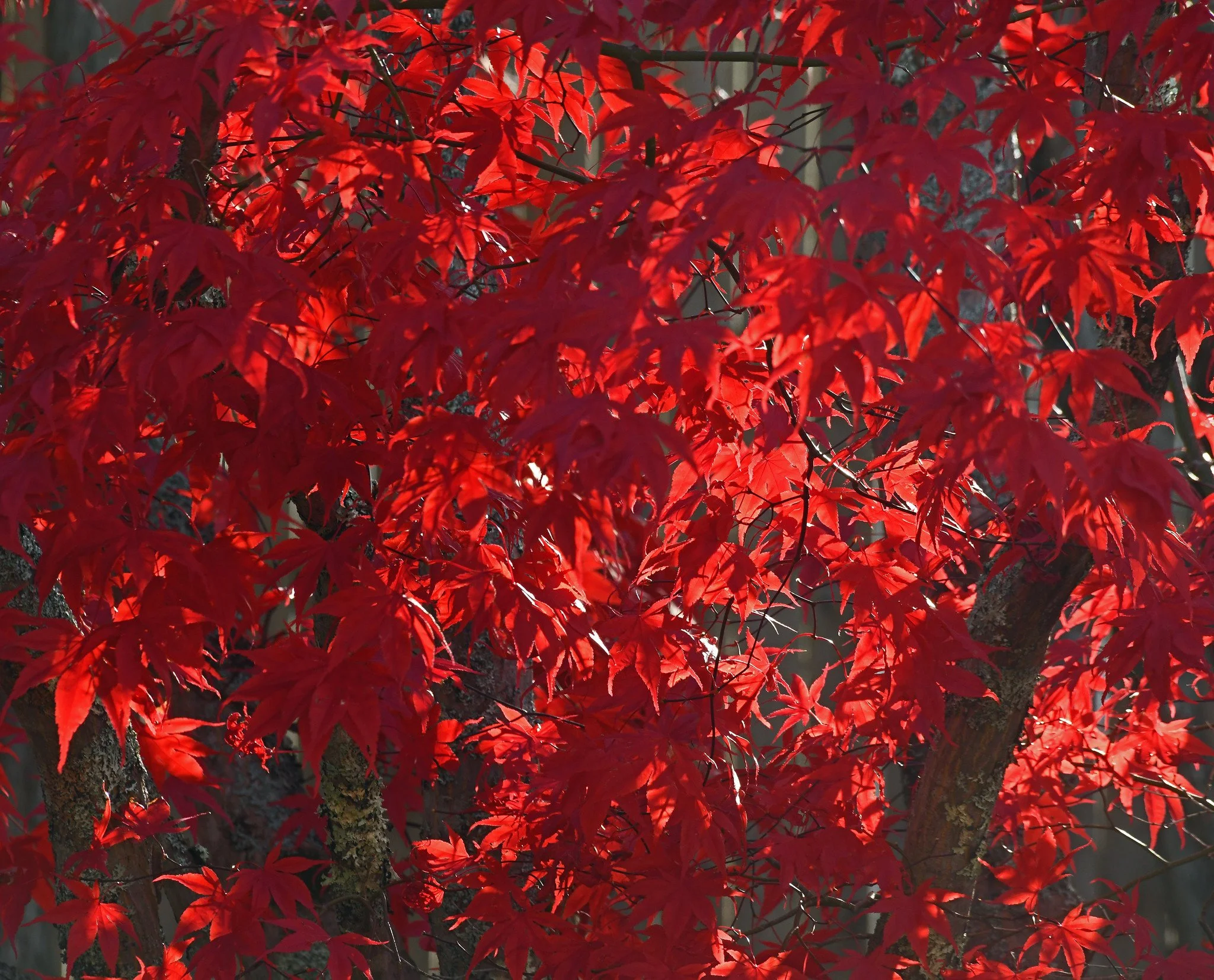
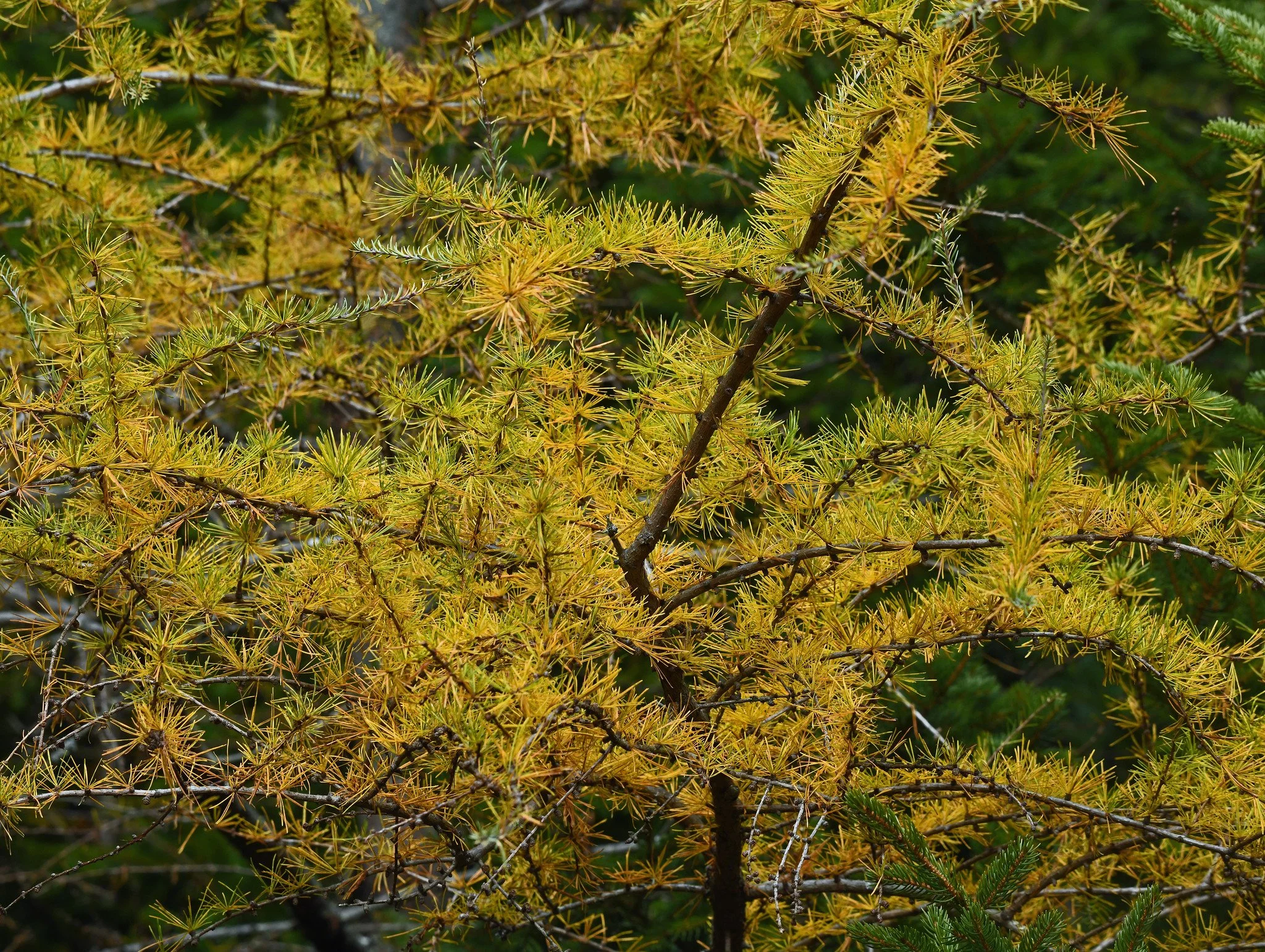
Climate change and a severe drought seem to have convinced November to try some of October’s tricks here. Especially impressive are the final performances of wild tamaracks (aka eastern larches, hackmatacks), shown above, and the cultivated Japanese maple trees, shown below:

As you probably know, the tamaracks (Larix laricina) are conifers (cone-bearing trees) with green needles in the spring and summer. From a distance in the warm months, they look like spruce, firs, and other conifers that are evergreen. But, in the cold fall or early winter, the tamaracks reveal their secret deciduous nature: their needles turn yellow and then fall like golden rain.

The Japanese maples (Acer palmatum), of course, are straight-forward deciduous (leaf-dropping) trees that come in many varieties. On some of these trees, just before their red leaves fall, they get even redder – they turn a fiery scarlet color. This is one of the reasons why they’re called “The Autumn-Welcoming Tree” in Japan, where they’re cherished and even digested. The ancient delicacy momiji tempura is made of tempura-battered, deep-fried maple leaves that have been preserved in salt.

(Images taken in Brooklin, Maine, on November 11 [tamarack] and 12 [maple], 2025.)

Comment

Comment

In the Right Place: Quieter Times

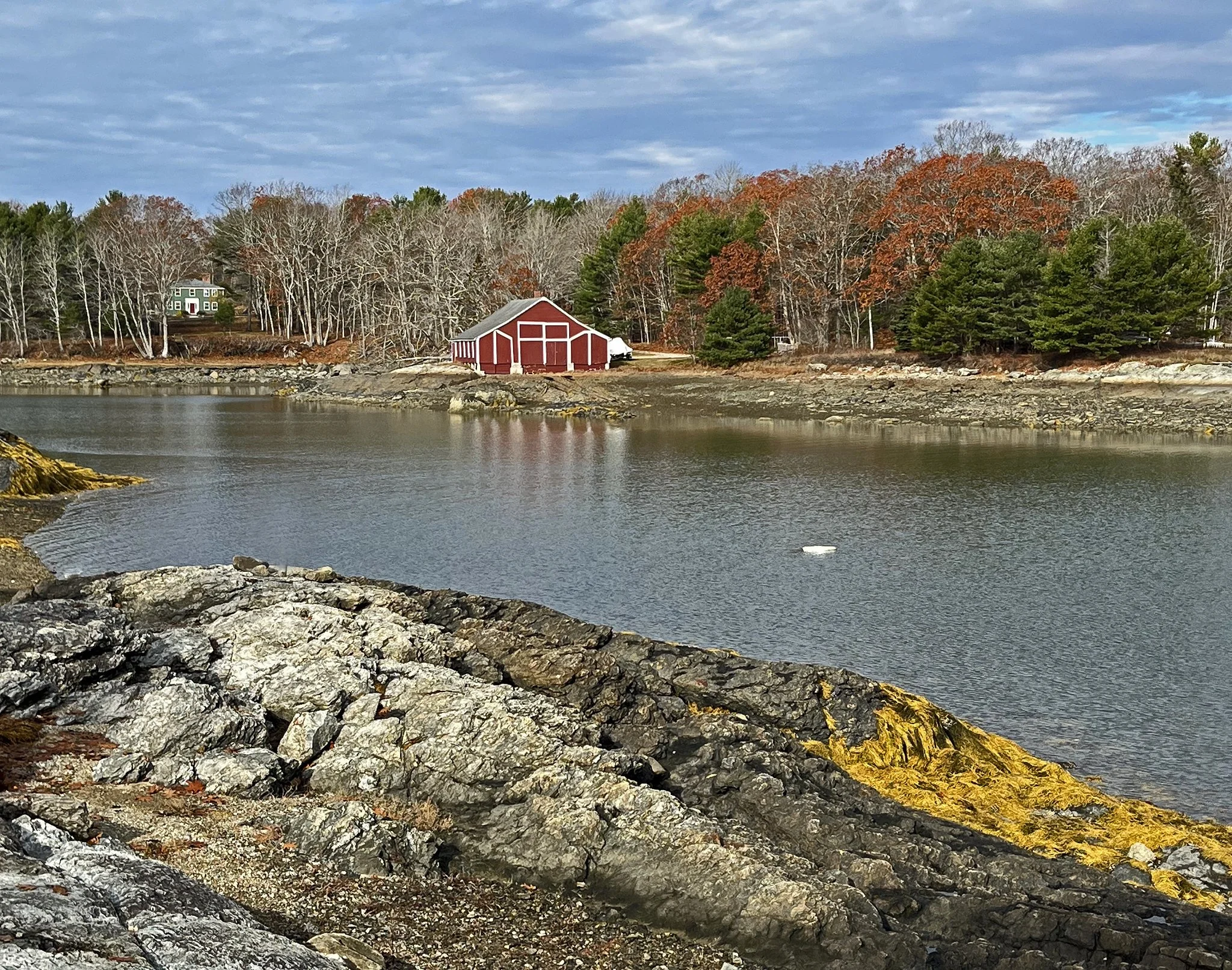
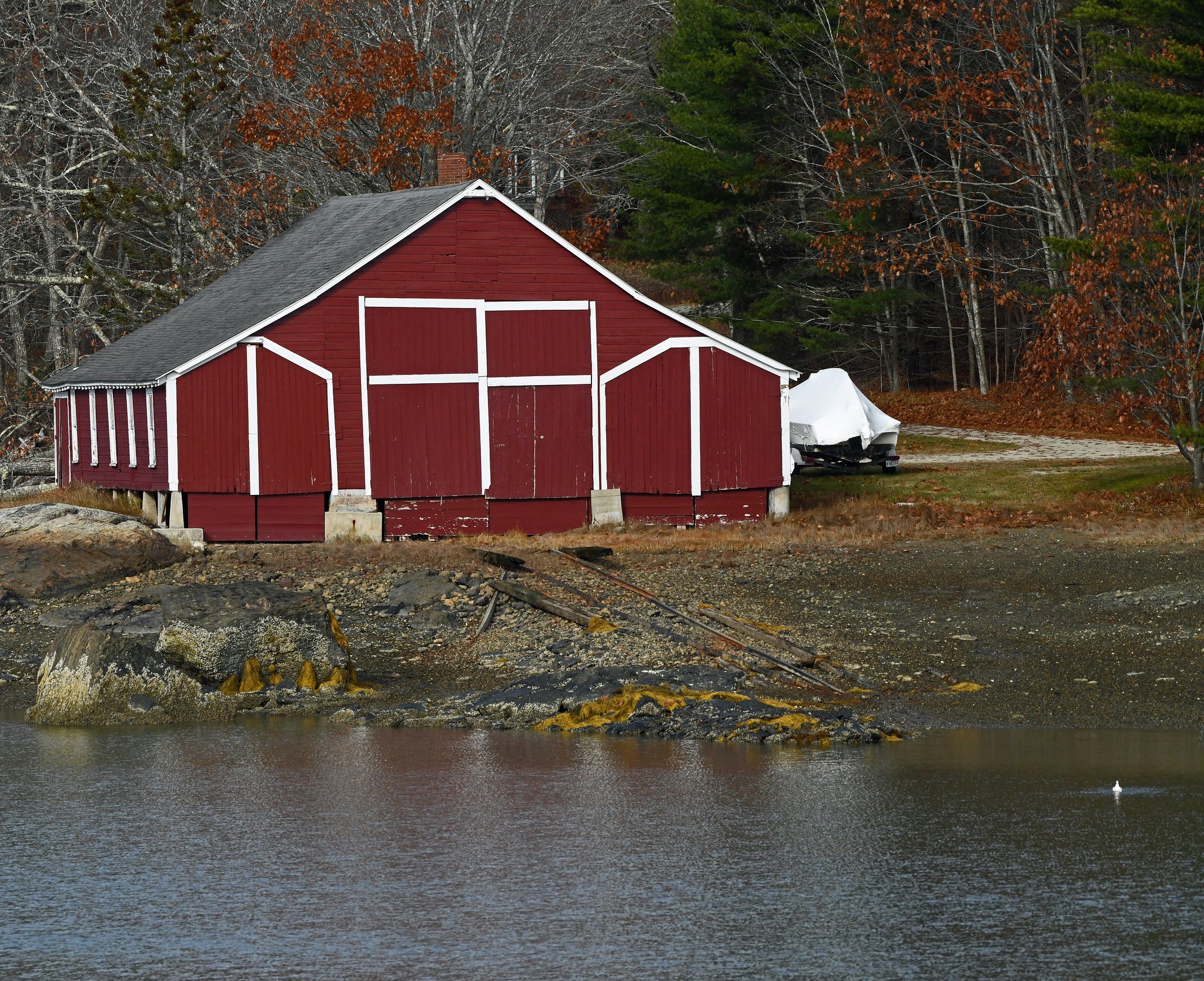
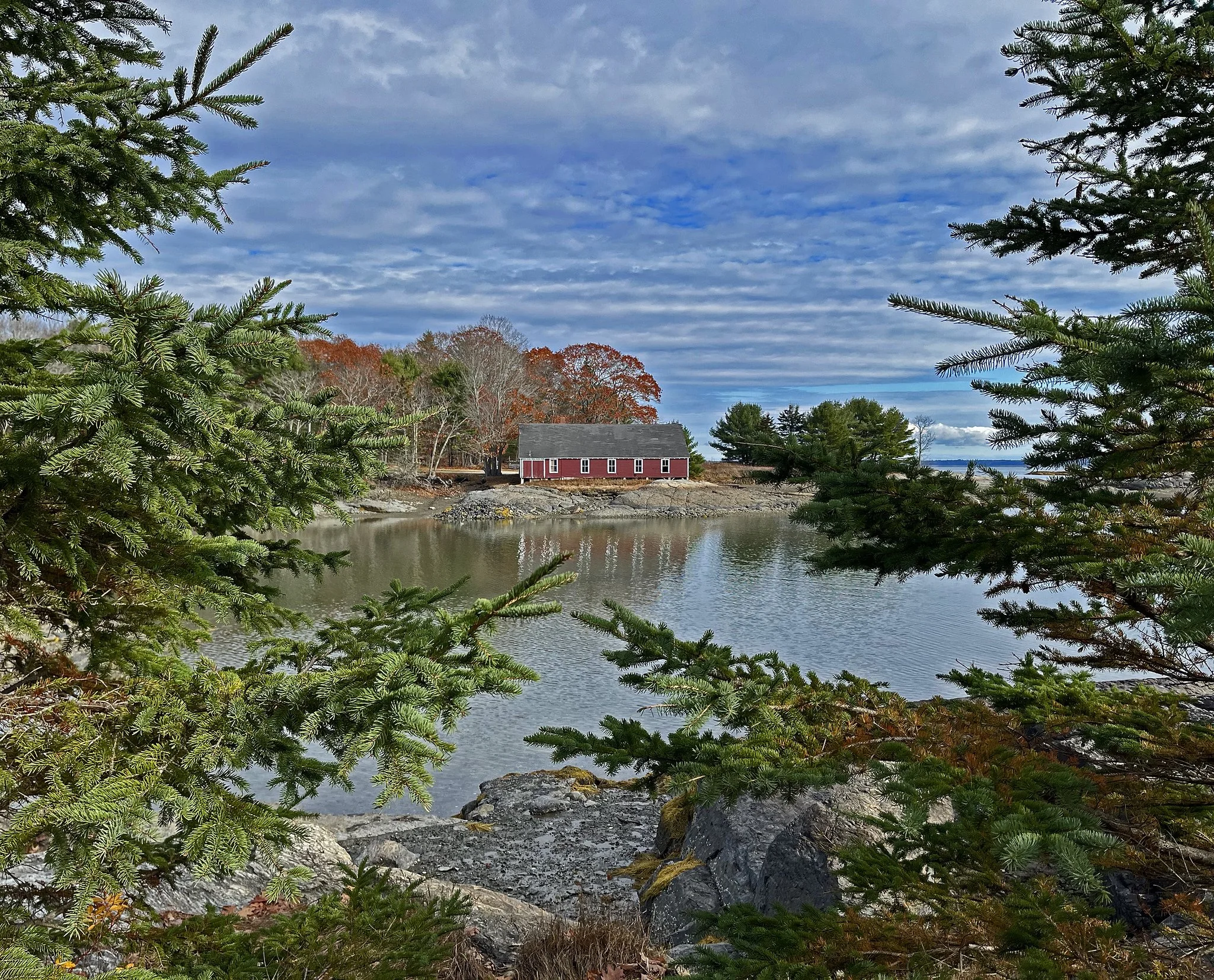
Here you see the tide lowering in the northwestern half of Conary Cove, where the historic boat house sits rockbound. This iconic scene was different in the last Century. The red structure was built in 1924 as a white boat house that eventually sprouted a pier into the Cove. In the 1940’s the second owner of the property kept more than his boat there. He reportedly moored his seaplane in this part of the Cove and often taxied it up onto a wooden platform on the rocky beach and parked it there. Things were a lot nosier then.

There has been no boat in the boathouse or seaplane in the Cove for many years. The current owners maintain the structure for its historical significance and ongoing utility as a workshop and storage space, according to reports. 

(Images taken in Blue Hill, Maine, on November 13, 2025.)

Comment

Comment

In the Right Place: Elderly Oddities Department

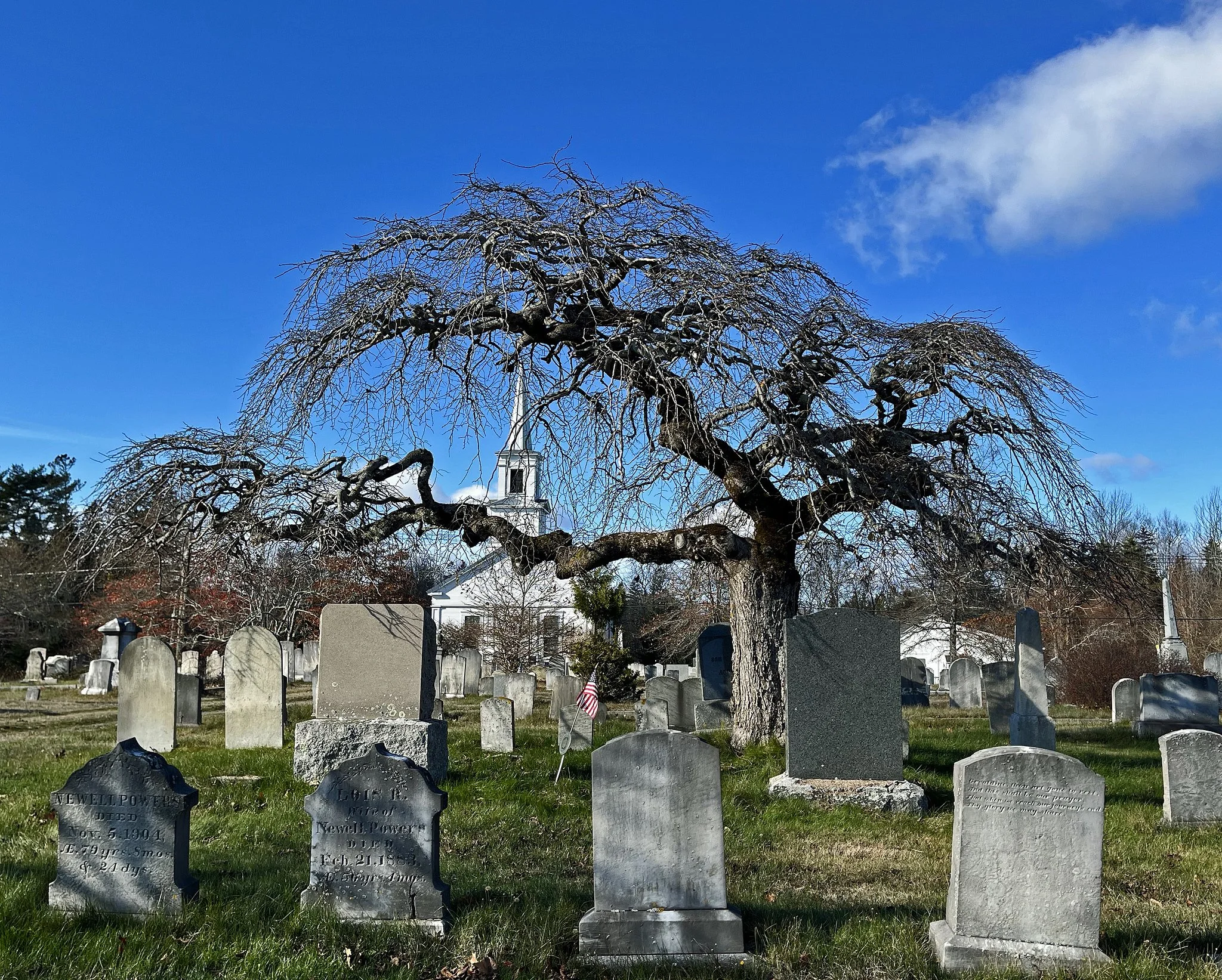
Below, you’ll see the Camperdown elm in the Brooklin Cemetery yesterday, bereft of her 2025 leaves. This uncommon Scottish cultivar must be well over 100 years old, but apparently there is no reliable record of how old she is or when she was planted there.

There is a clue, however: The elm principally shelters the grave of Rodney S. Blake, who went down with the side-wheeling passenger steamer “Portland” and everyone onboard in a huge November gale off Maine in 1892. The late 1800s and early 1900s reportedly were popular times for these articulated elms to be cultivated and planted in the U.S.

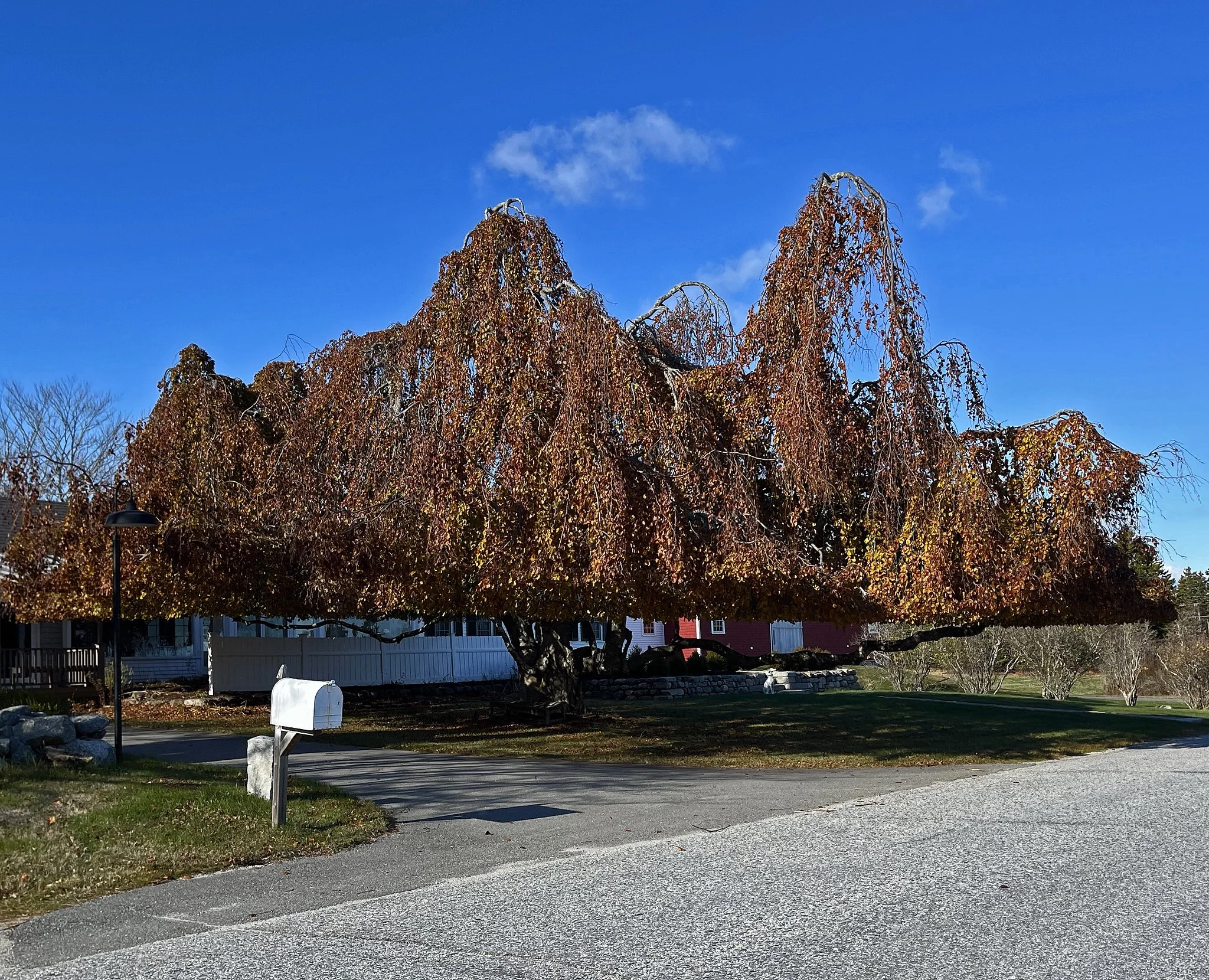
On the other hand, the uncommon weeping beech tree several miles away at Amen Farm still wore her leaves yesterday, although they were browning:

This pendulous specimen apparently is more than 70 years old, according to local sources. Weeping beeches were selectively bred from various beeches in England in 1836 and were introduced into the United States in 1847, according to the literature.

Beeches usually don’t lose all of their leaves in the fall or winter, a saving phenomenon called “marcescence”; this beech usually doesn’t lose most of her leaves until December or January; the remaining ones drop when new growth is ready to appear in the spring. (Images taken in Brooklin, Maine, on November 14, 2025.)
Comment

Comment

In the Right Place: Thorny Subjects

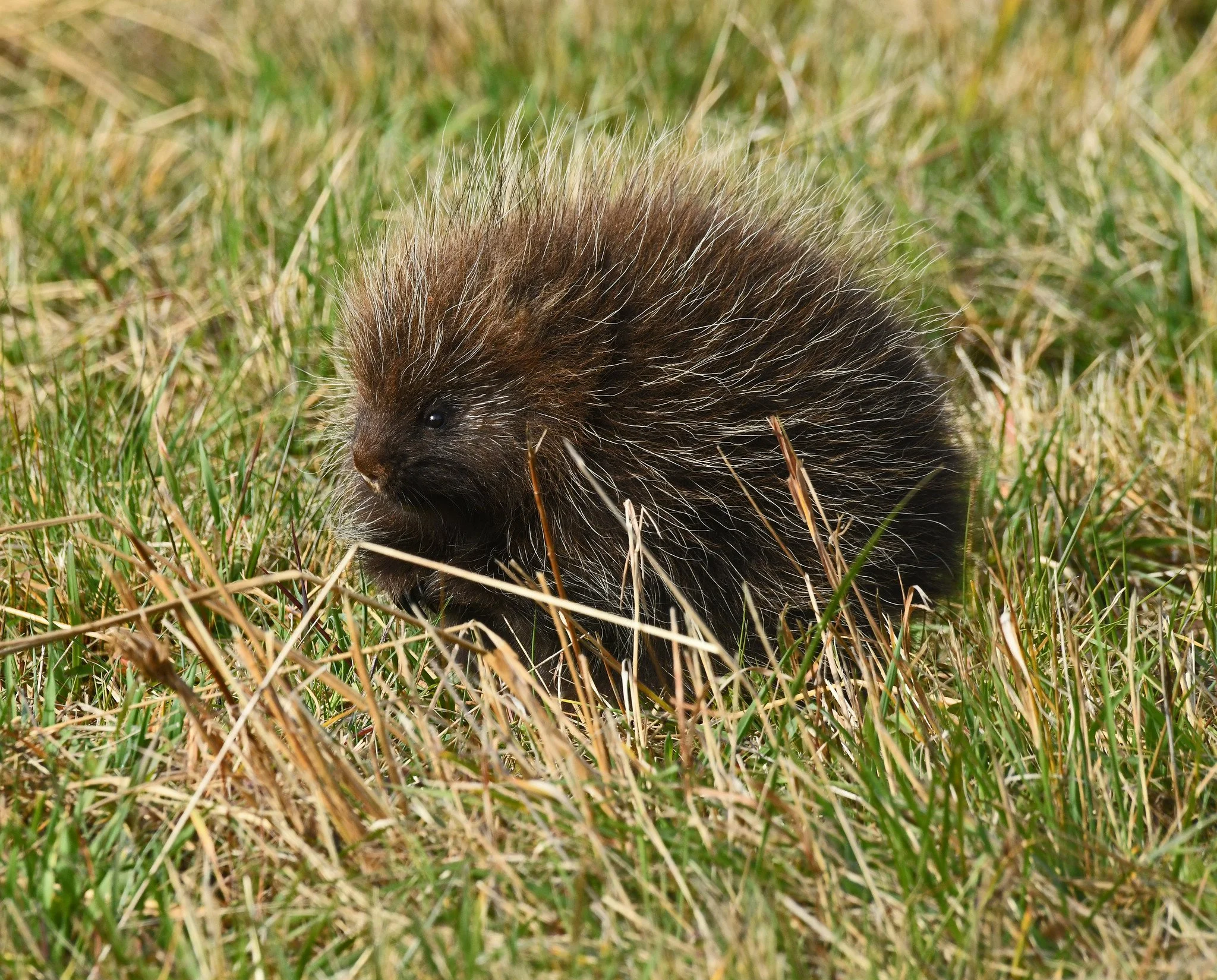
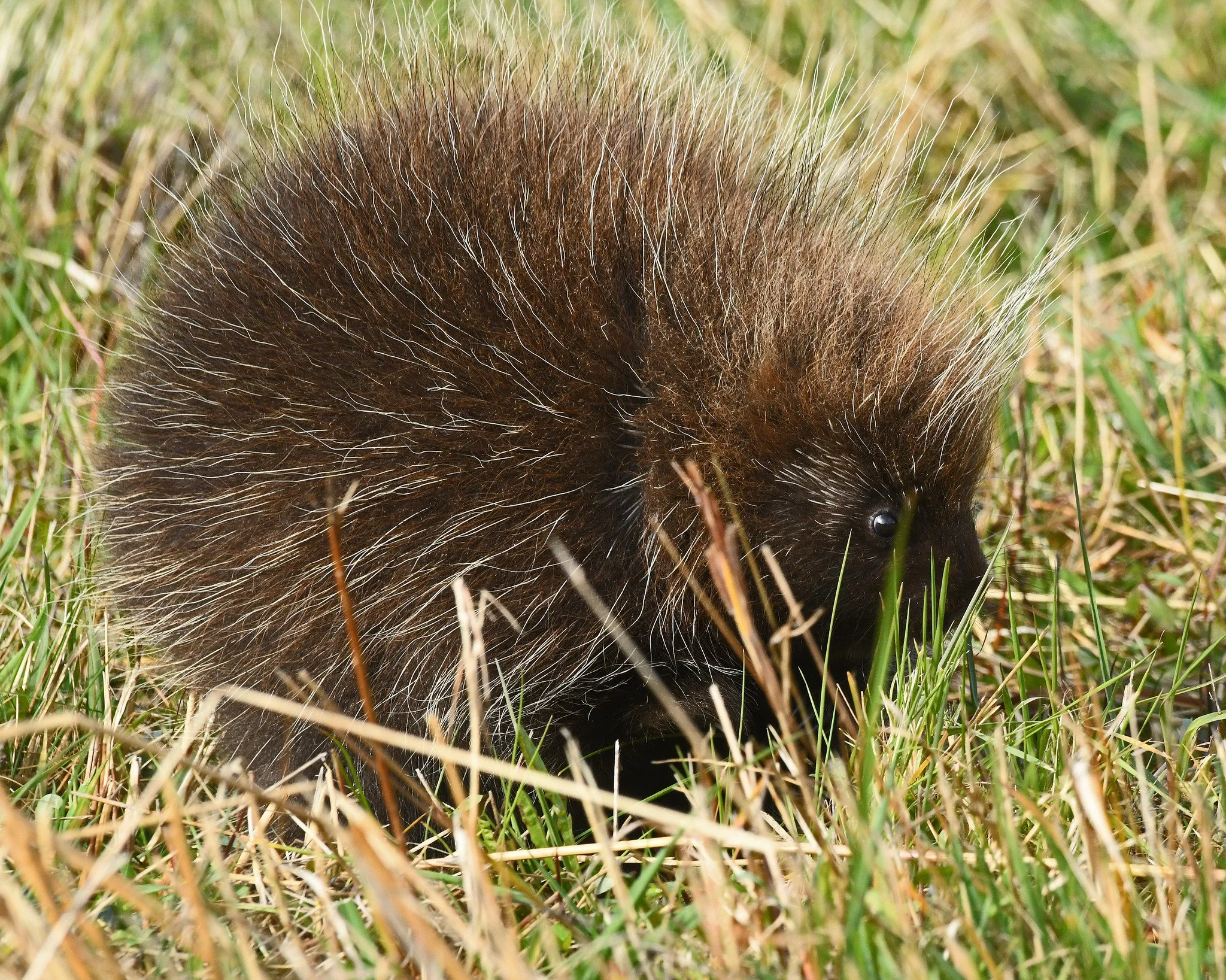
My path crossed with this little fellow’s yesterday, but I didn’t try to pet him. He is, of course, a young porcupine. His strange name reportedly derives from the Middle French words that mean “thorny hog” (or “spiny pig”), which were based on the Latin words “porcus” (pig) combined with “spina” (thorn).

Porcupines don’t hibernate, but they do hole up in very cold or nasty weather. They don’t shoot their quills, but they do swing their quilled tail like a spiked club with alarming force and effect. They’re considered cute and interesting by many people (including me), but they kill and wound valuable trees by girding them with their big teeth. They’re part of the grand natural scheme, but some people (including me) wonder whether the harm that they do outweighs their inherent value (if any) in today’s world.

(Images taken in Brooklin, Maine, on November 12, 2025; sex assumed.)

Comment

Comment

In the Right Place: Wet Views

November is proving to be a wet month, with plenty of rain and fog and – last night – our first snow (albeit only an unspectacular little sneezer). This winter wetness seems to add a darker, more seasonally New England-ish touch to familiar sights that we’ve seen almost daily throughout a usually dry and often sunny summer and fall.

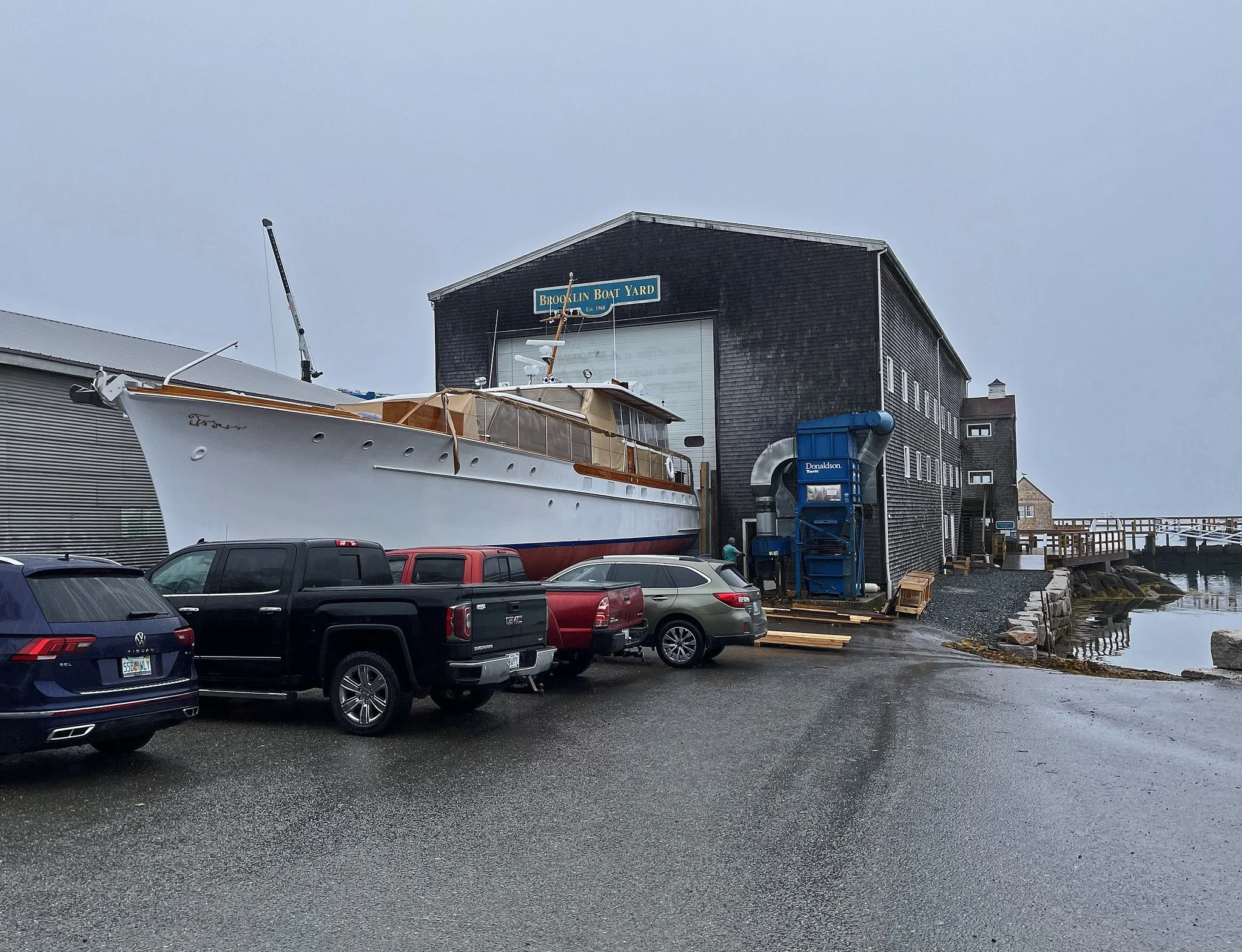
Above you see one familiar sight in dampened form: the renowned Brooklin Boat Yard. It’s one of the few places where you can park your car under a looming yacht and be overwhelmed by a huge “factory” building where large boats are built and restored, among other activities.

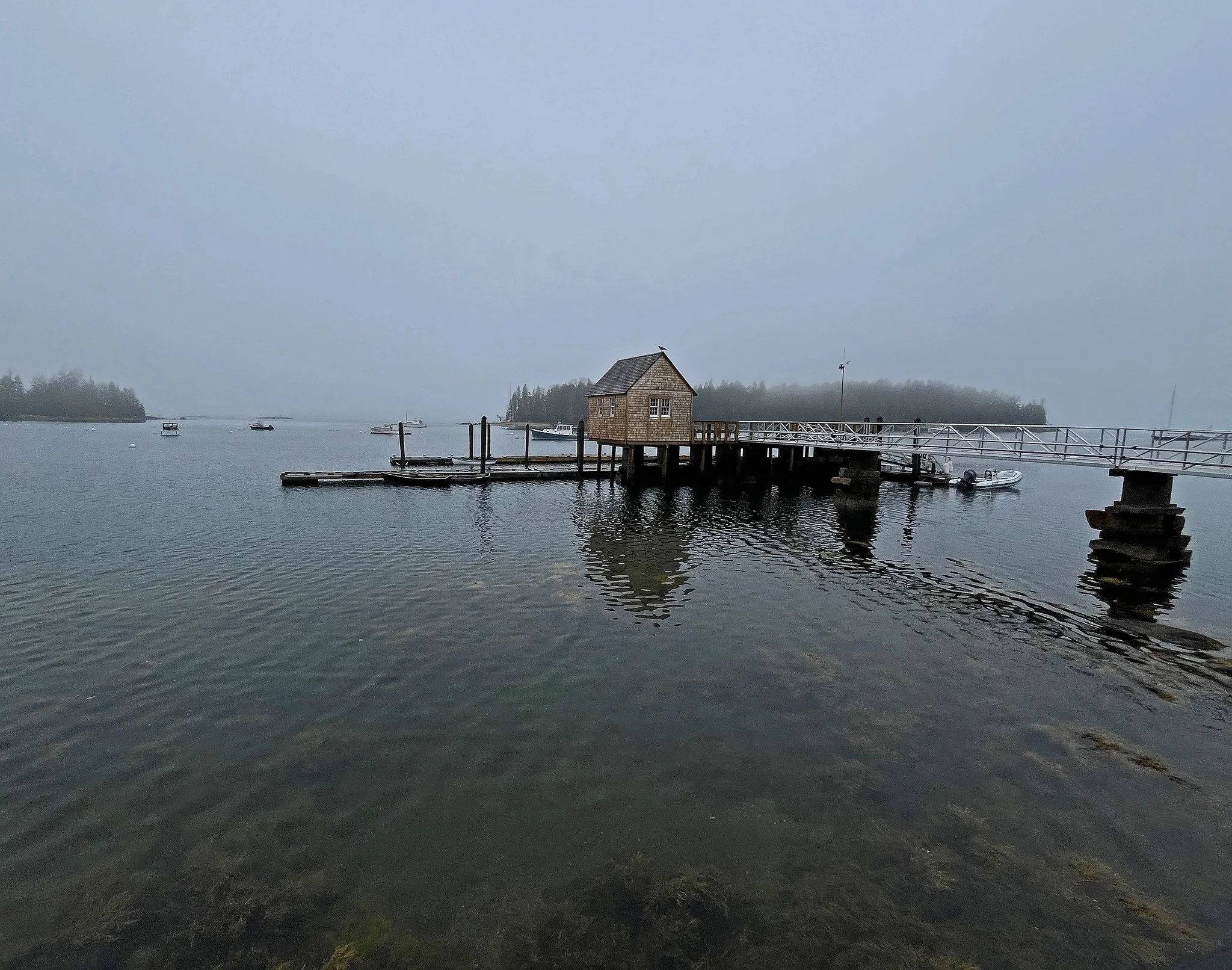
On the seaside end of BBY’s factory, the Yard’s fairly new pier extends out into Center Harbor to a perched shed and removable docking floats:

The prior BBY pier was destroyed by a massive storm surge and record high tides in January of 2024. (Images taken in Brooklin, Maine, on November 10, 2025.)

Comment

Comment

In the Right Place: Death and Disappearance

We’ve been getting some much-needed rain lately, which has made the darkening month of November even darker. But that’s okay. Much of November’s beauty seems to lie in the colors and poignance of her dying and disappearing leaves and fruits, which tend to glow in light rain. By mid-month, most of these jewels will be stolen by the angels of death or the hungry wildlife.

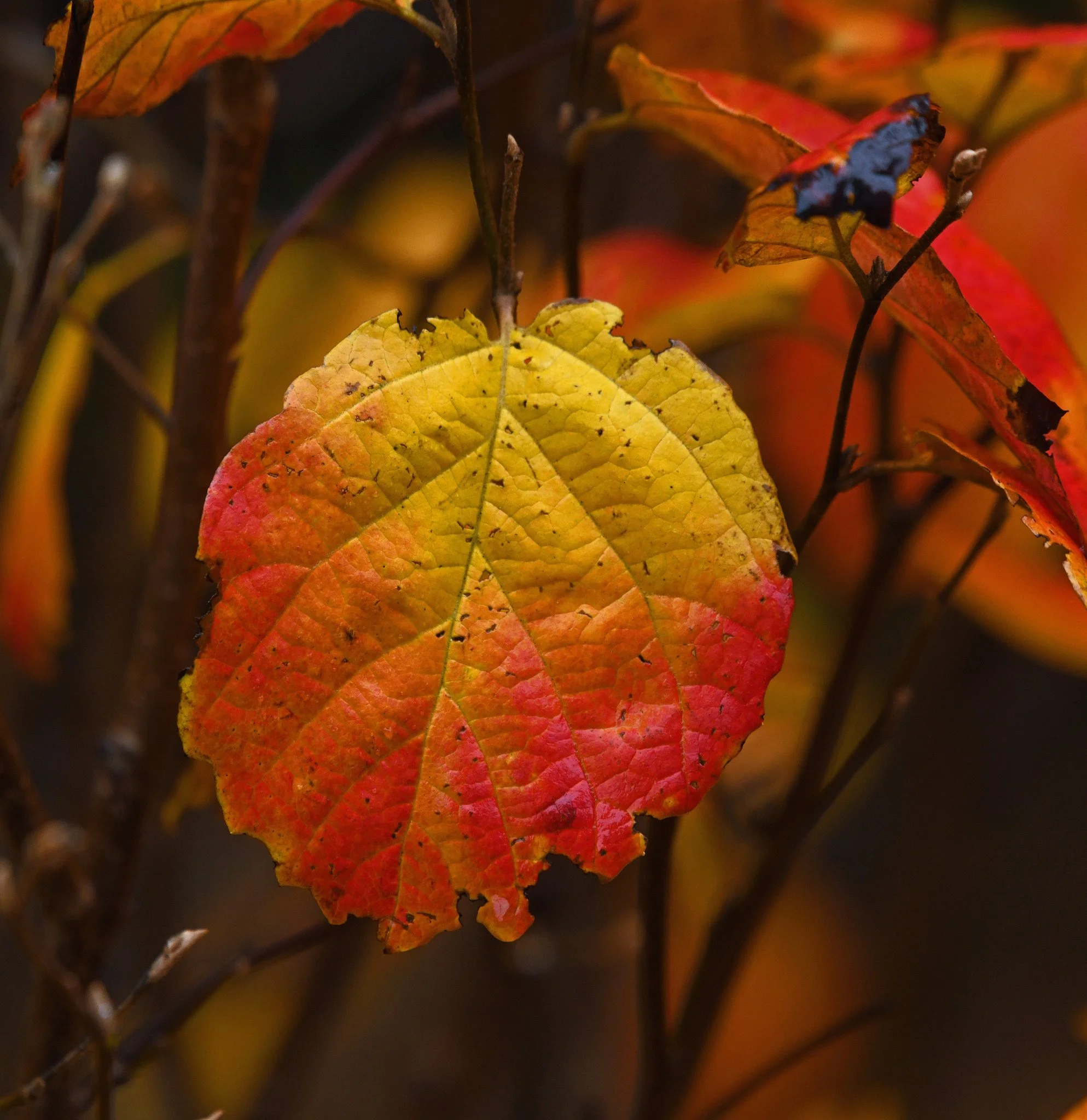
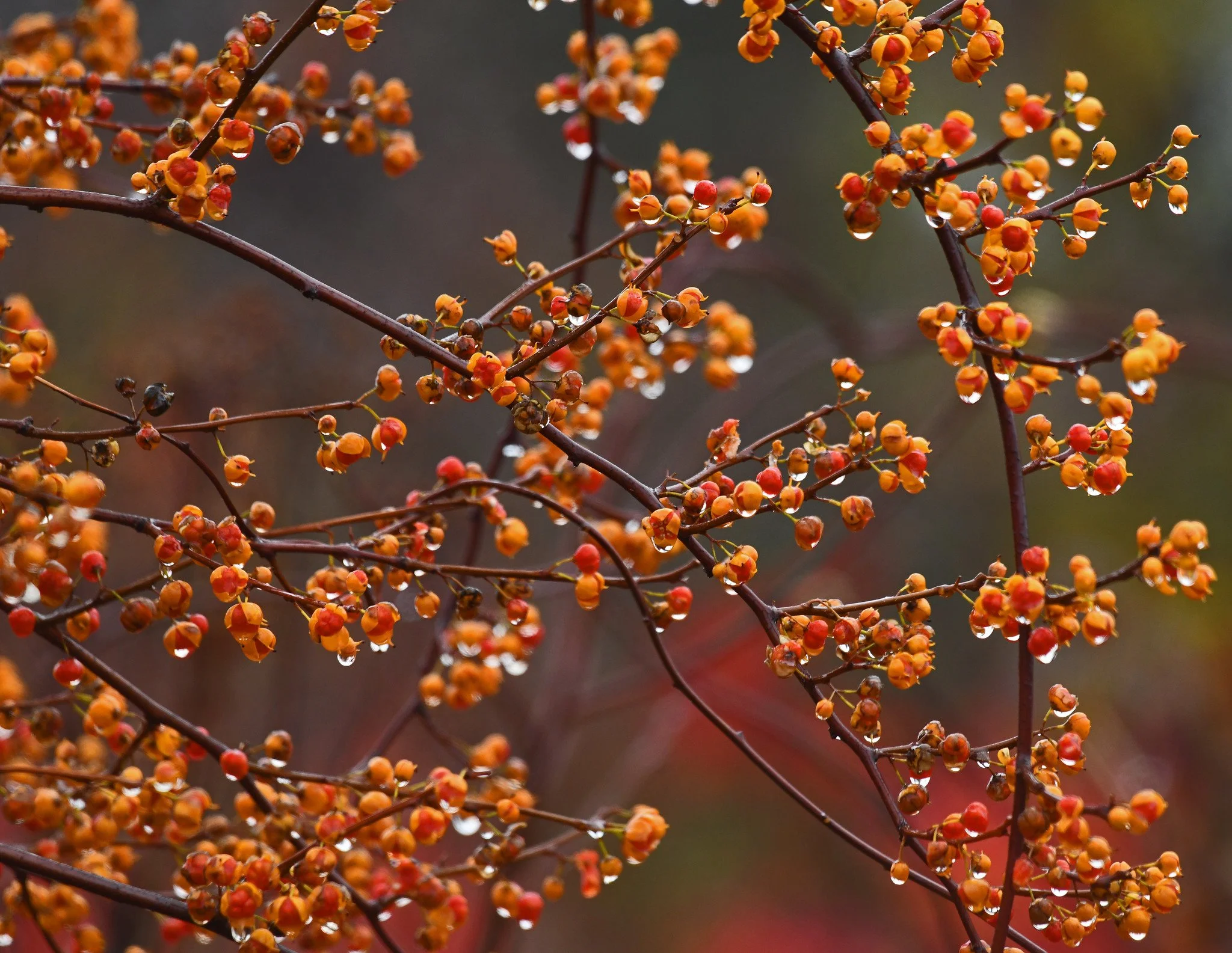
Above, you see the colorful death throes of a lonesome fothergilla leaf, once part of a green witch hazel family. Below, you’ll see the insidious emergence of the red fruits of an Asiatic (aka Oriental) bittersweet vine (aka snake), a god-awful killer that squeezes its hosts to death in the perennial fight for sunlight:

(Images taken in Brooklin, Maine, on November 10, 2025.)

Comment

Comment

In the Right Place: Not Too Sticky

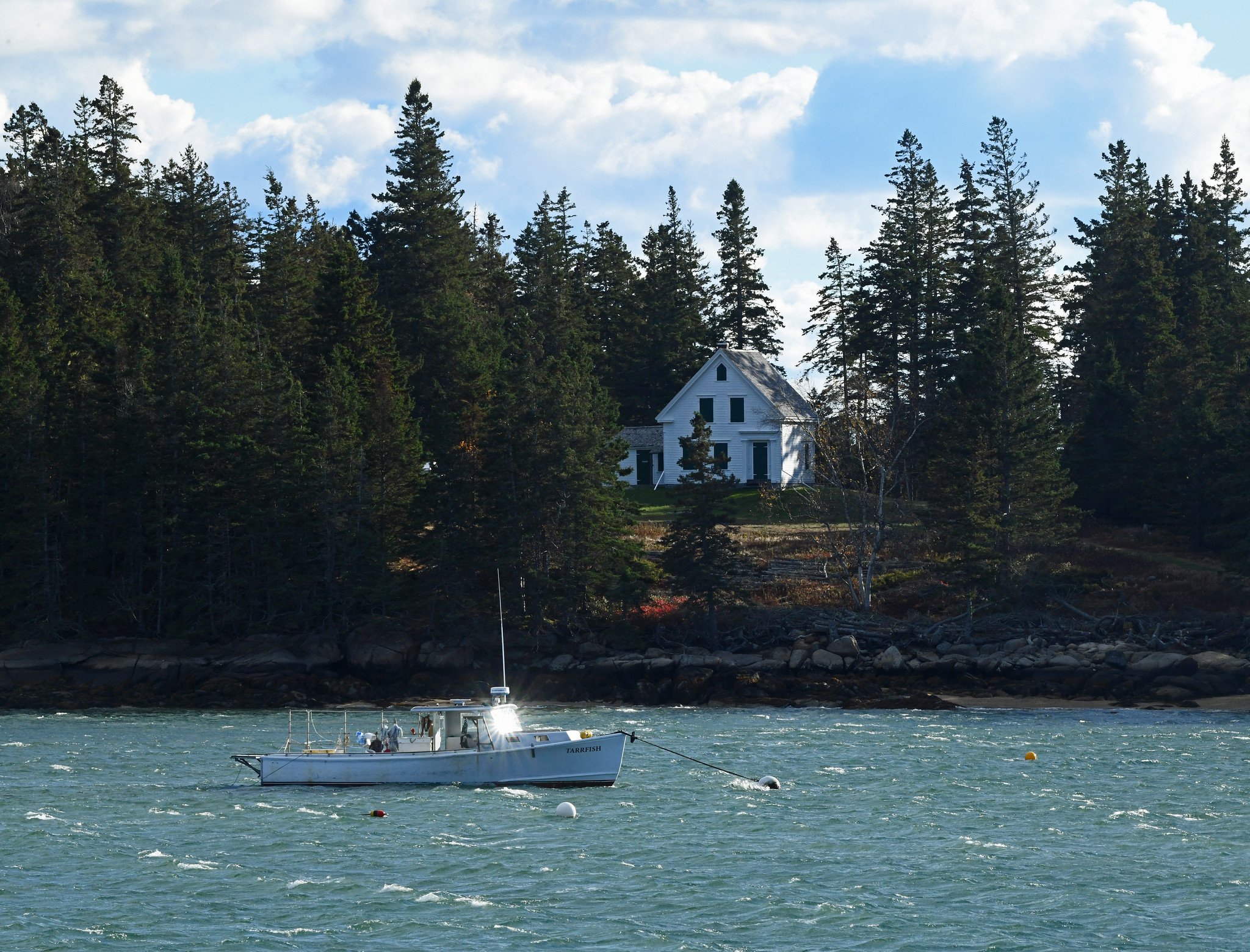
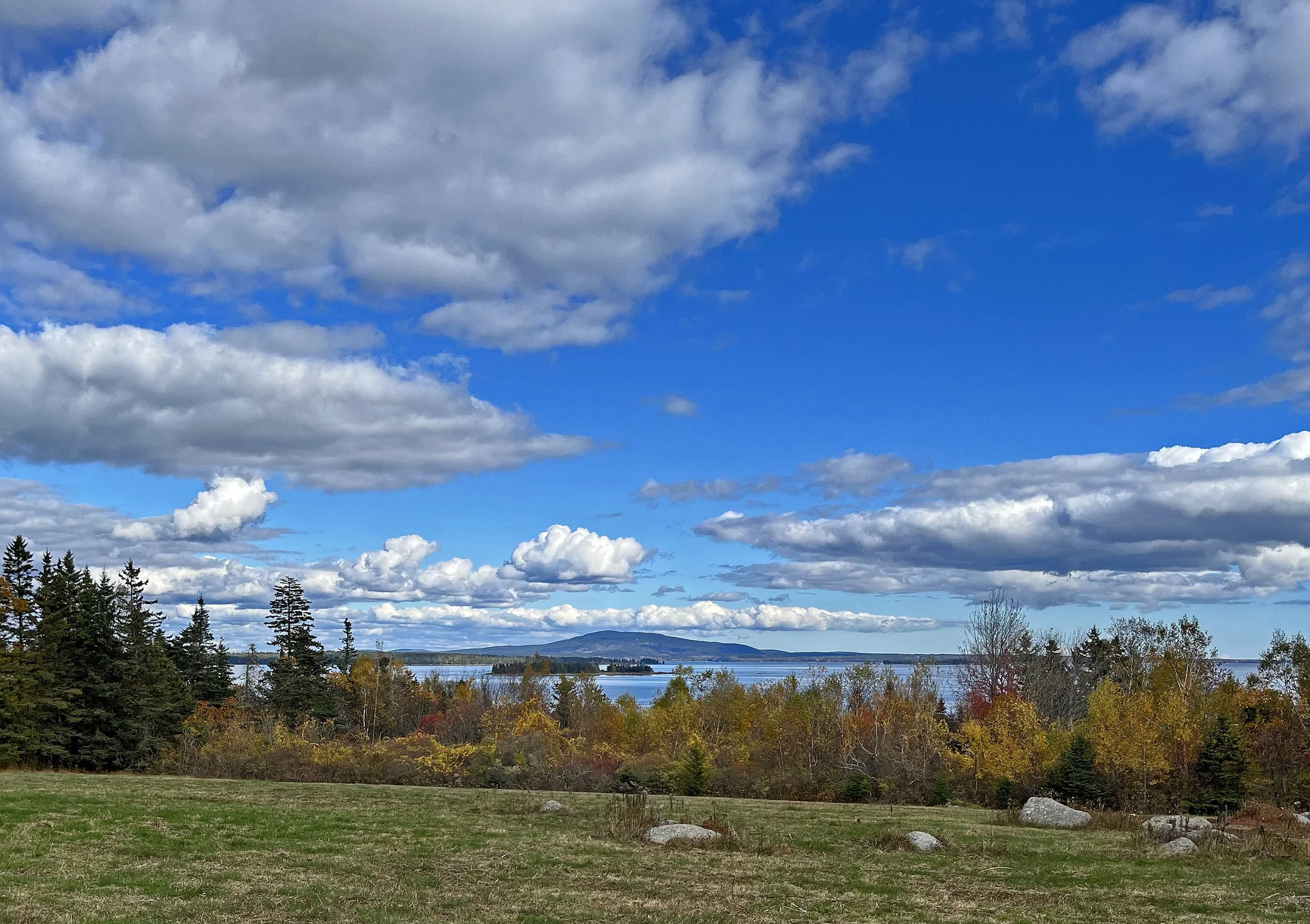
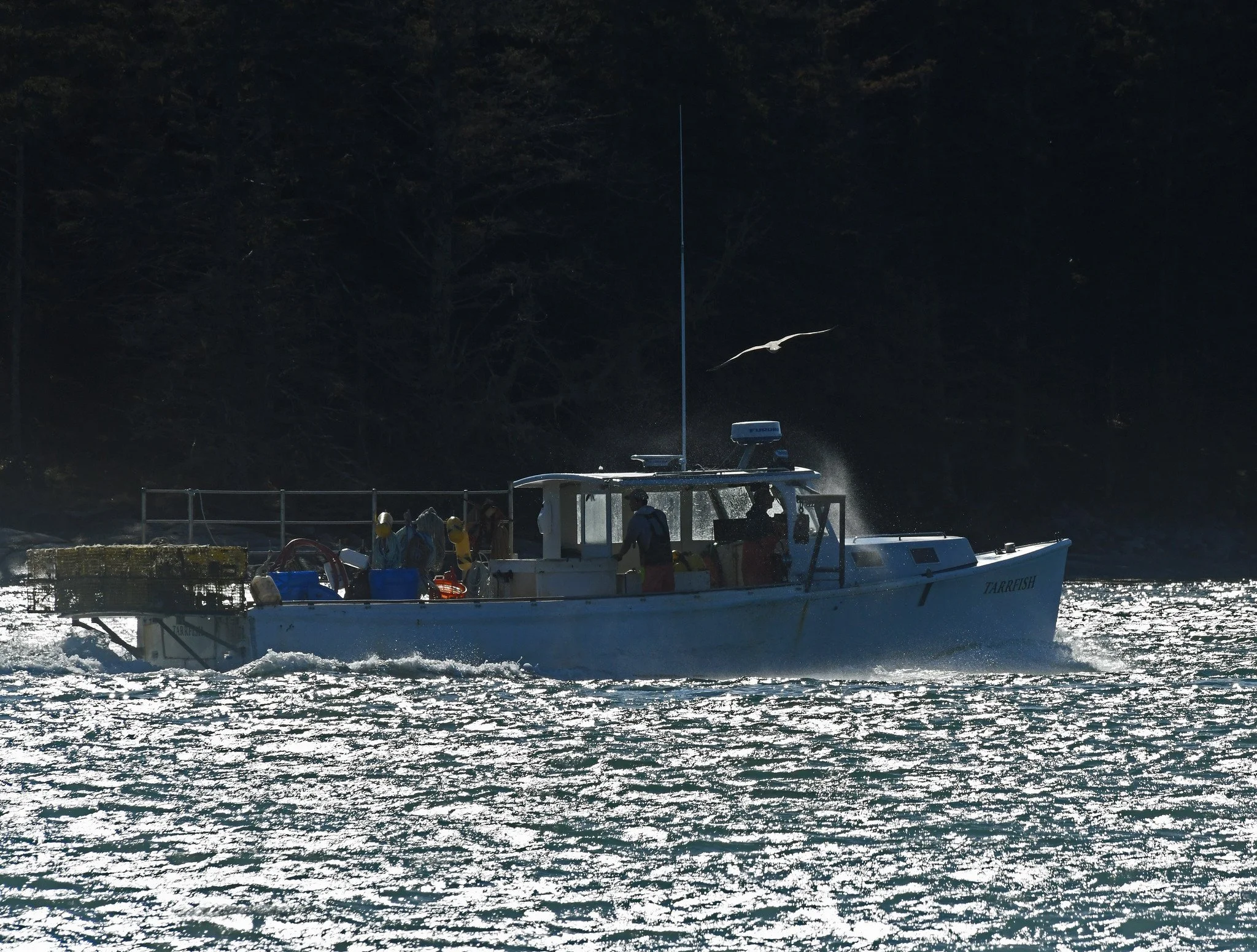
Here’s a little moment that became a little memory. It happened on Thursday, which was a fine day, with plenty of sun, big white clouds in a big blue sky, and earnest westerly wind gusts that whipped Naskeag Harbor’s waters into small whitecaps. The fishing vessels in the Harbor were rocking and tugging on their mooring lines like tethered horses awakened in the night.

As usual, Fishing Vessel TARRFISH – a curious name explained later – had pulled guard duty for the summer residence on Harbor Island. For a while, as she rose and plunged, the sun would catch the vessel’s cab windows and bounce pulsing star bursts off them. She looked like a warship sending a stream of silent signals with a blinker light.

As for that handsome vessel, a TARRFISH is not a sticky black fish that doesn’t spell well. She fishes for lobster in the summer and fall and scallops in the winter and early spring – and, she belongs to Brooklin’s David Tarr. (Image taken in Brooklin, Maine, on November 6, 2025.)
Comment

Comment

In the Right Place: Of Hairy Chests and Wet Noses

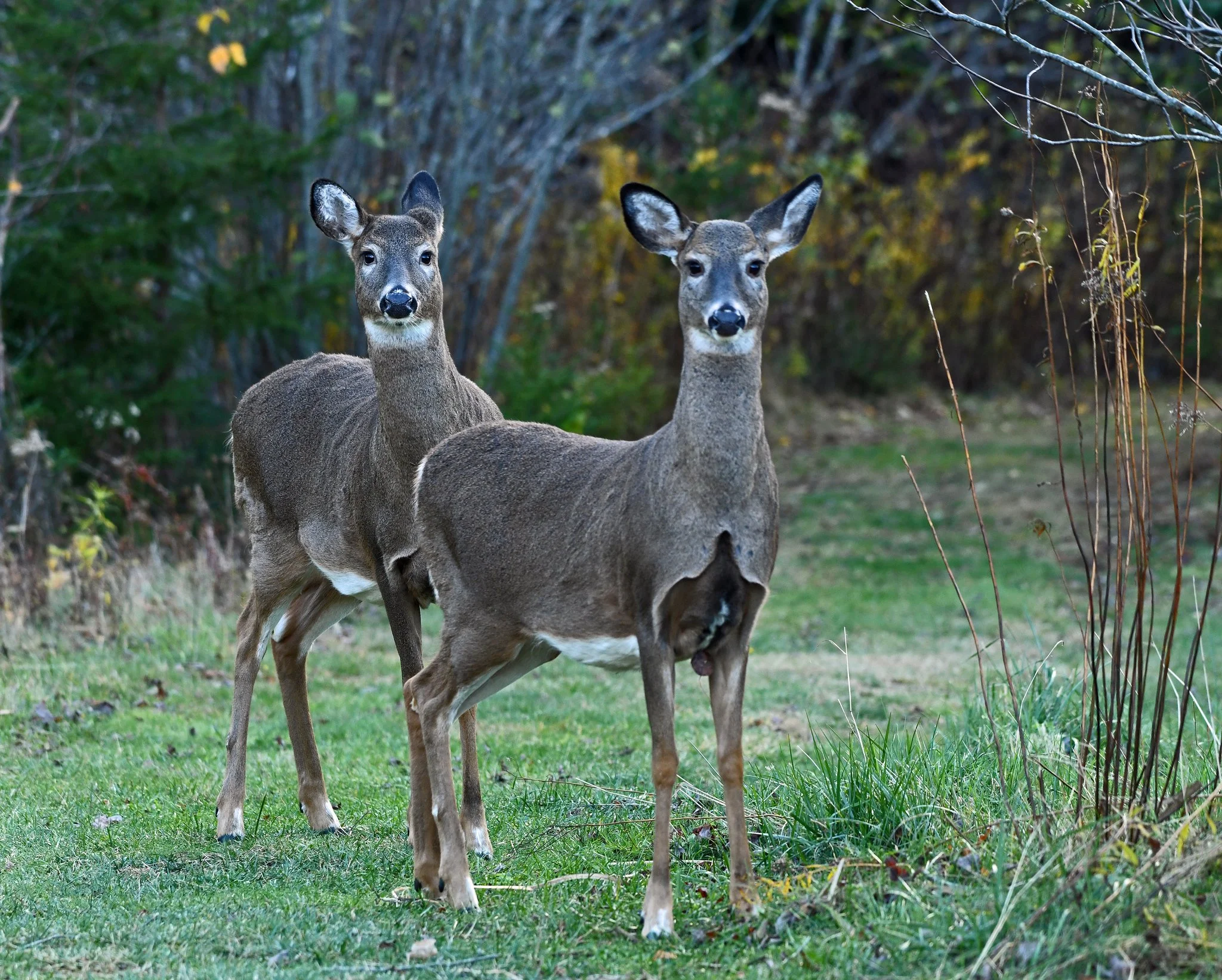
It looks like all of the white-tailed deer that co-own our property have shed their reddish summer sport coats and grown into their winter gray overcoats. The deer will blend into the woods better now and be much warmer.

Some of the deer are sporting winter fur vests on their chests that seem darker and more defined than in past years. But that impression may be the result of my increasingly poor memory. They don’t have that melanistic look; but I’m no vet, either.

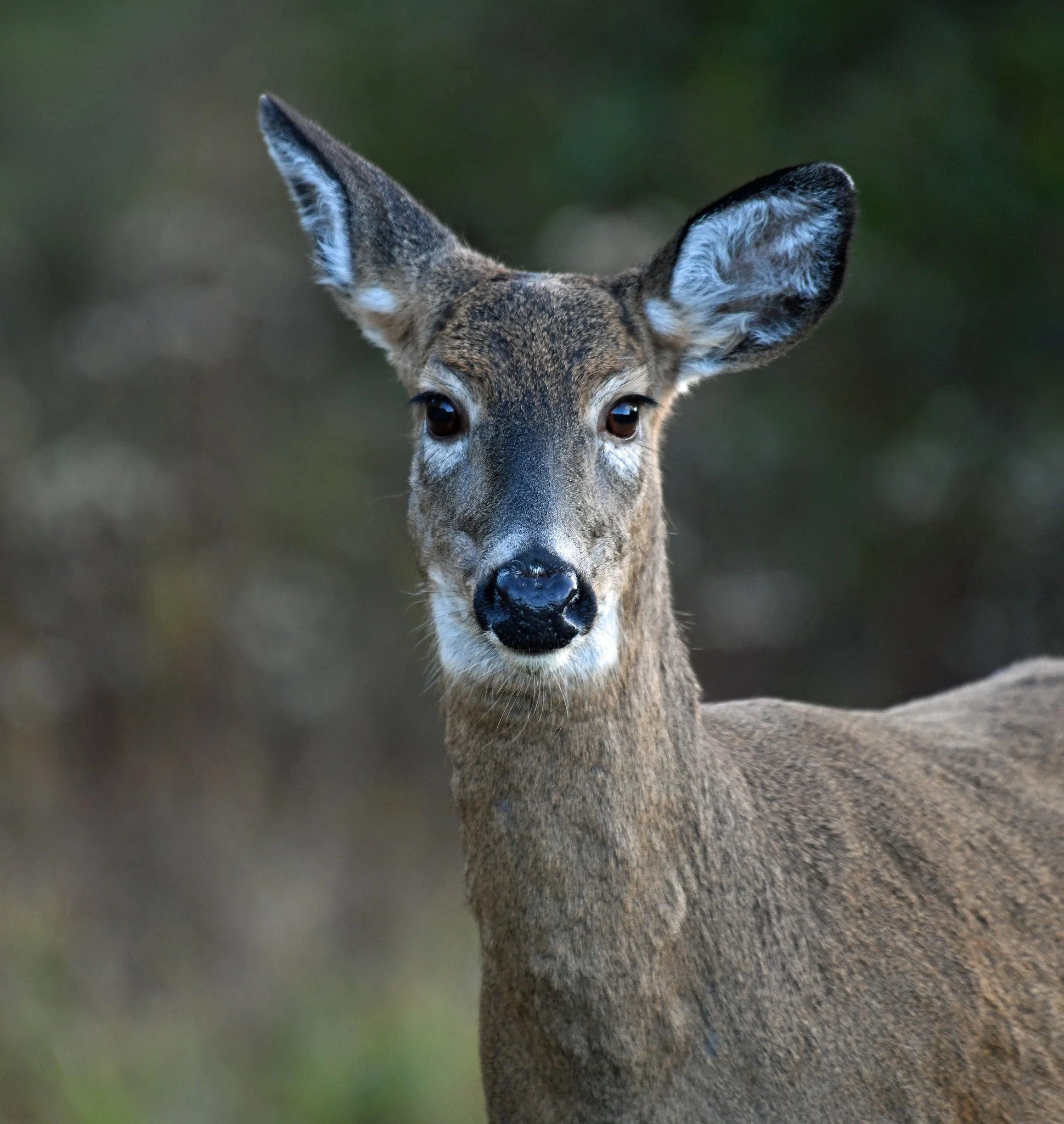
In fact, all the deer that I’ve seen this year have appeared to be robustly healthy – bright eyed, bushy-tailed, and wet-nosed:

Being wet-nosed is important to a deer. As you may know, that moist, furless skin around the nostrils of deer and other mammal's (their “rhinaria”) serves an important sensory function. The wetness enhances their sense of smell by trapping multitudes of scent molecules that are then mysteriously detected and differentiated into recognition by the deer.

(Images taken in Brooklin, Maine, on November 6, 2025.)
Comment

Comment

In the Right Place: Betwixt

November seems to have the thankless job of cleaning up after October’s carnival. She seems to need to becalm the outdoors to promote the glowing celebration of Thanksgiving indoors. It’s a work in progress at this point, which makes for a betwixt time.

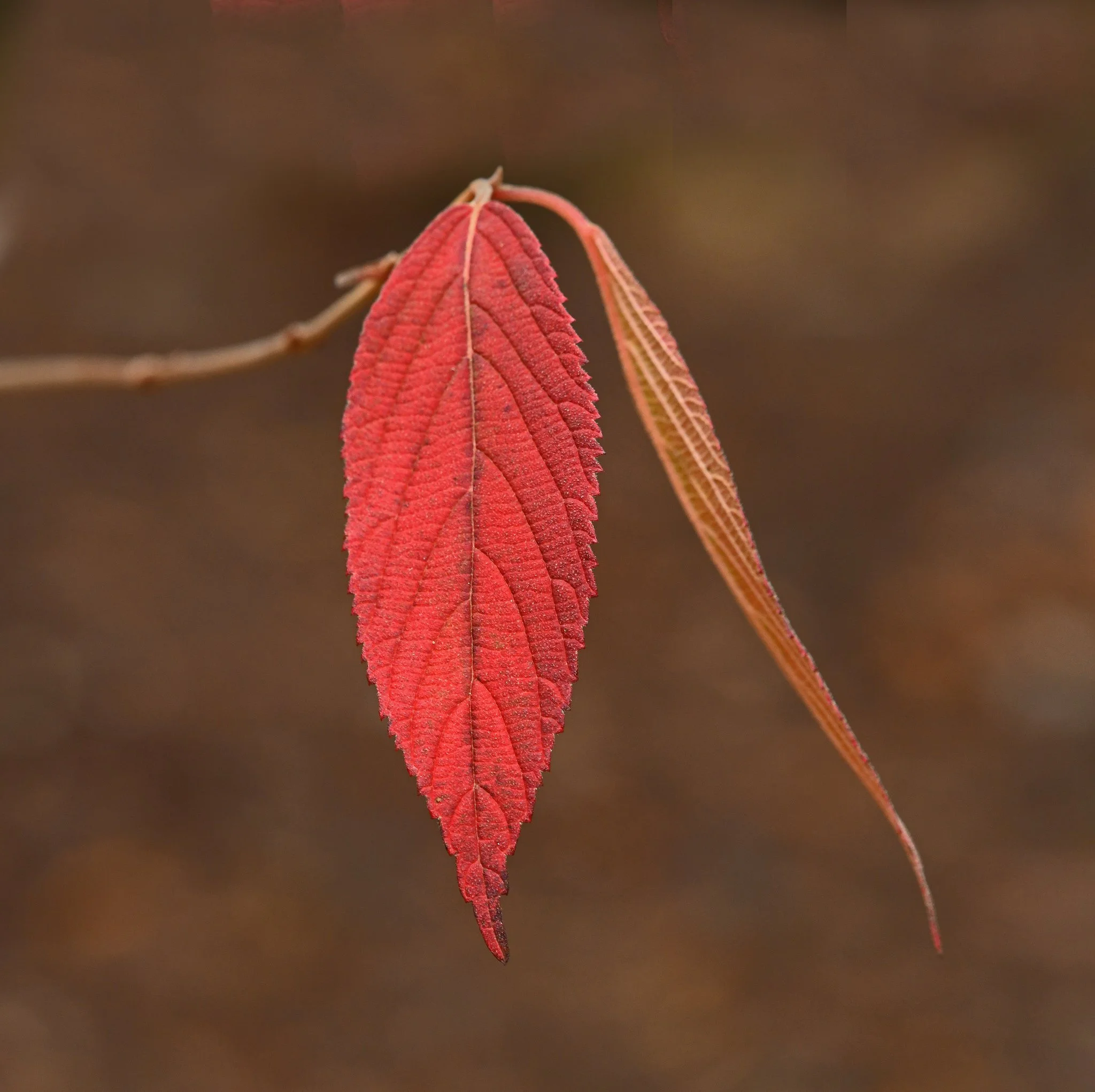
At this time, the fading makeup on viburnum leaves provokes memories of October’s Mardi-Gras-like parade. Yet, the bleaching blades and graying tufts of silver grass remind us that the mostly monochromatic drama of winter will be opening in a wood near us soon:

(Images taken in Brooklin, Maine, on November 3, 2025.)

Comment

Comment

In the Right Place: Great Escapes

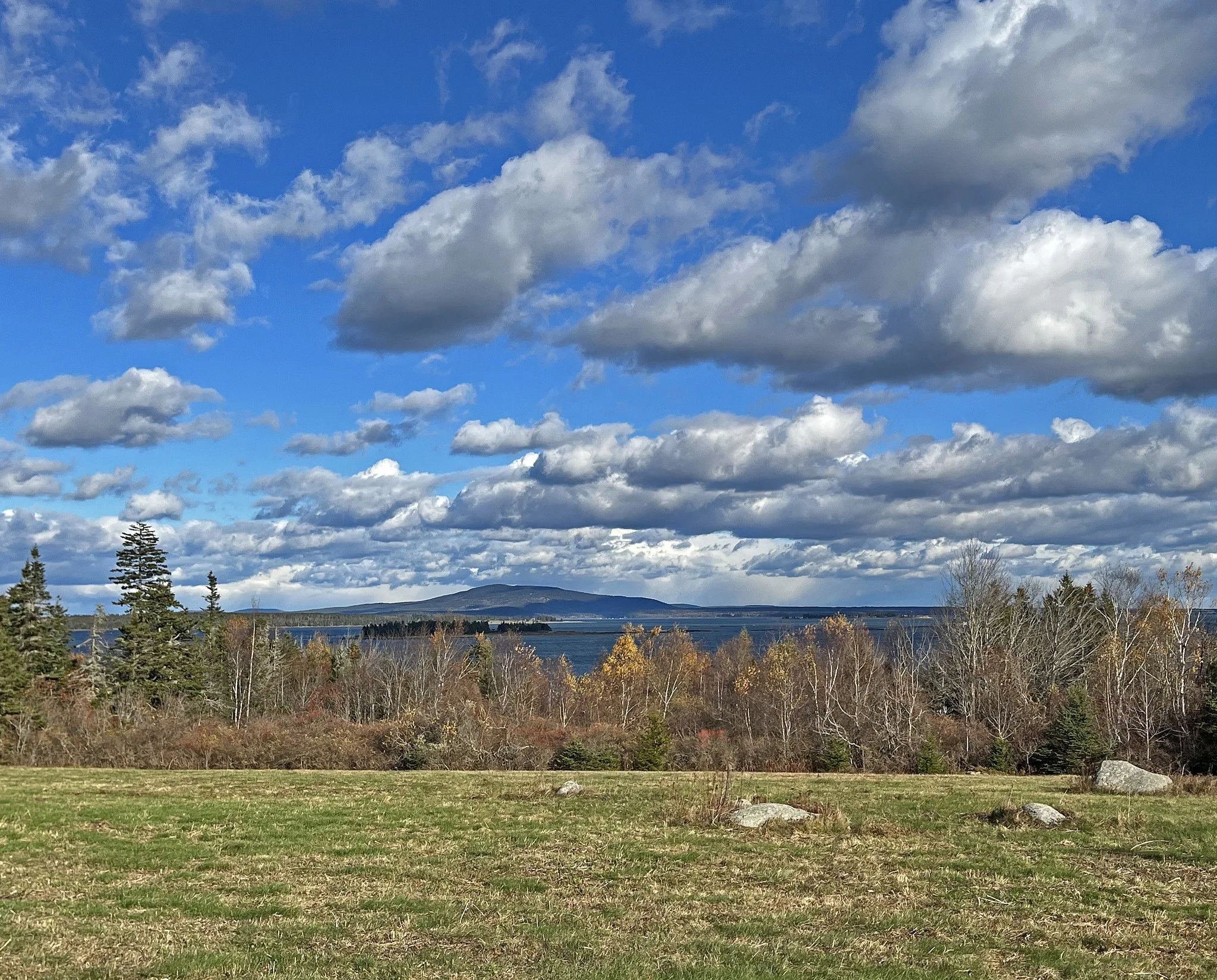
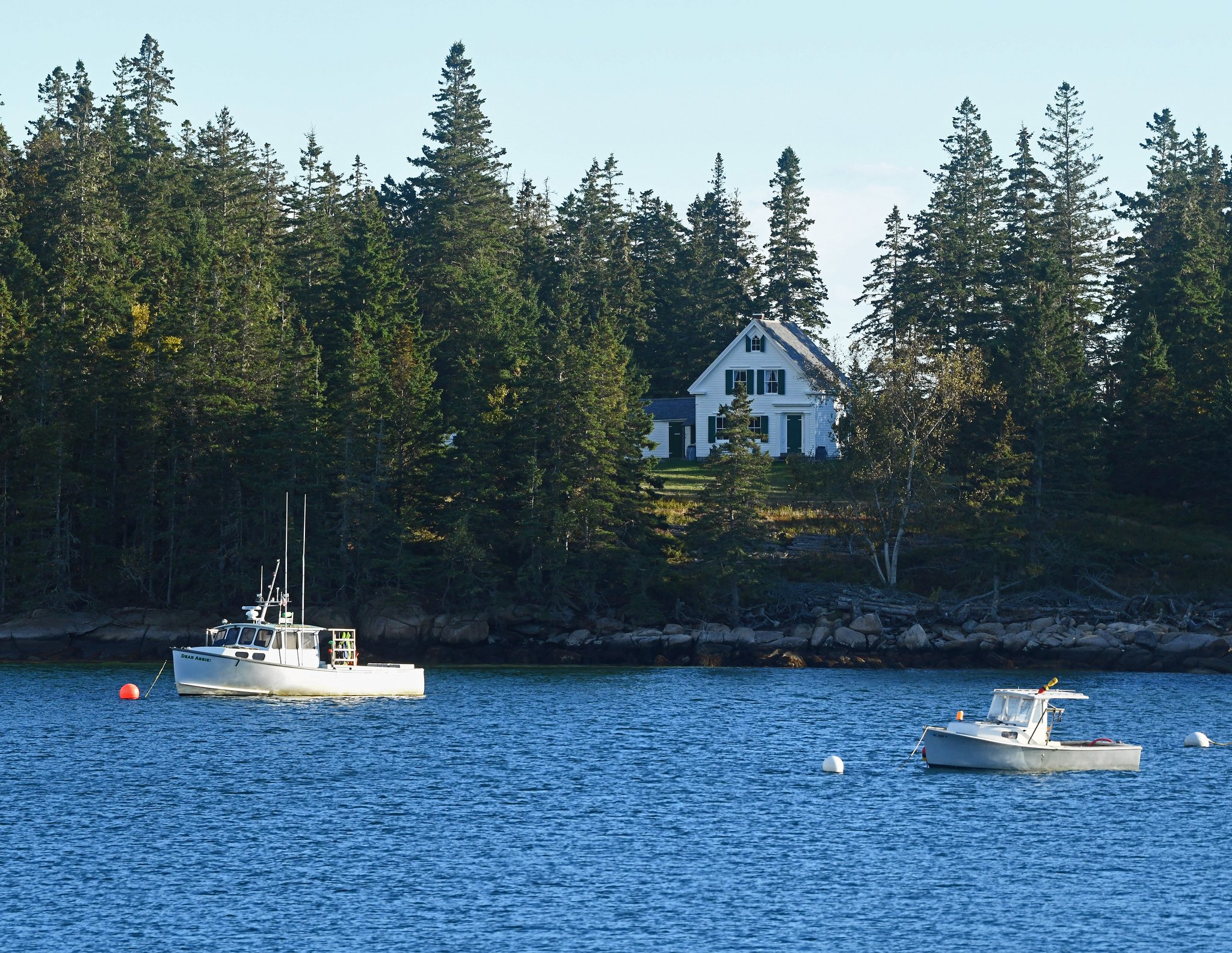
Yesterday, a large school of cloud fish were chased by great white shark clouds over the mountains of Mount Desert Island and the waters of Blue Hill and Jericho Bays. All fish temporarily escaped the sharks in their sky while one photographer temporarily escaped the sharks in his mind.

(Image taken in Brooklin, Maine, on November 6, 2025.)

Comment

Comment

In the Right Place: Of Moonlight and Beavers

Here you see the full moon as it appeared over Great Cove yesterday at about 1 a.m. It’s not THE full moon that was supposed to rise here yesterday at about 4 p.m., but was hidden by rain clouds. Nonetheless, the morning moon was as luminescent to the human eye as the afternoon one would have been, and we needed rain more than we needed a technically more luminescent moon.

As many of you know, November’s full moon traditionally is called the Beaver Moon because it comes when American beavers are most active building or reinforcing their winter dams and lodges and Native Americans were most active trapping these largest of our rodents.

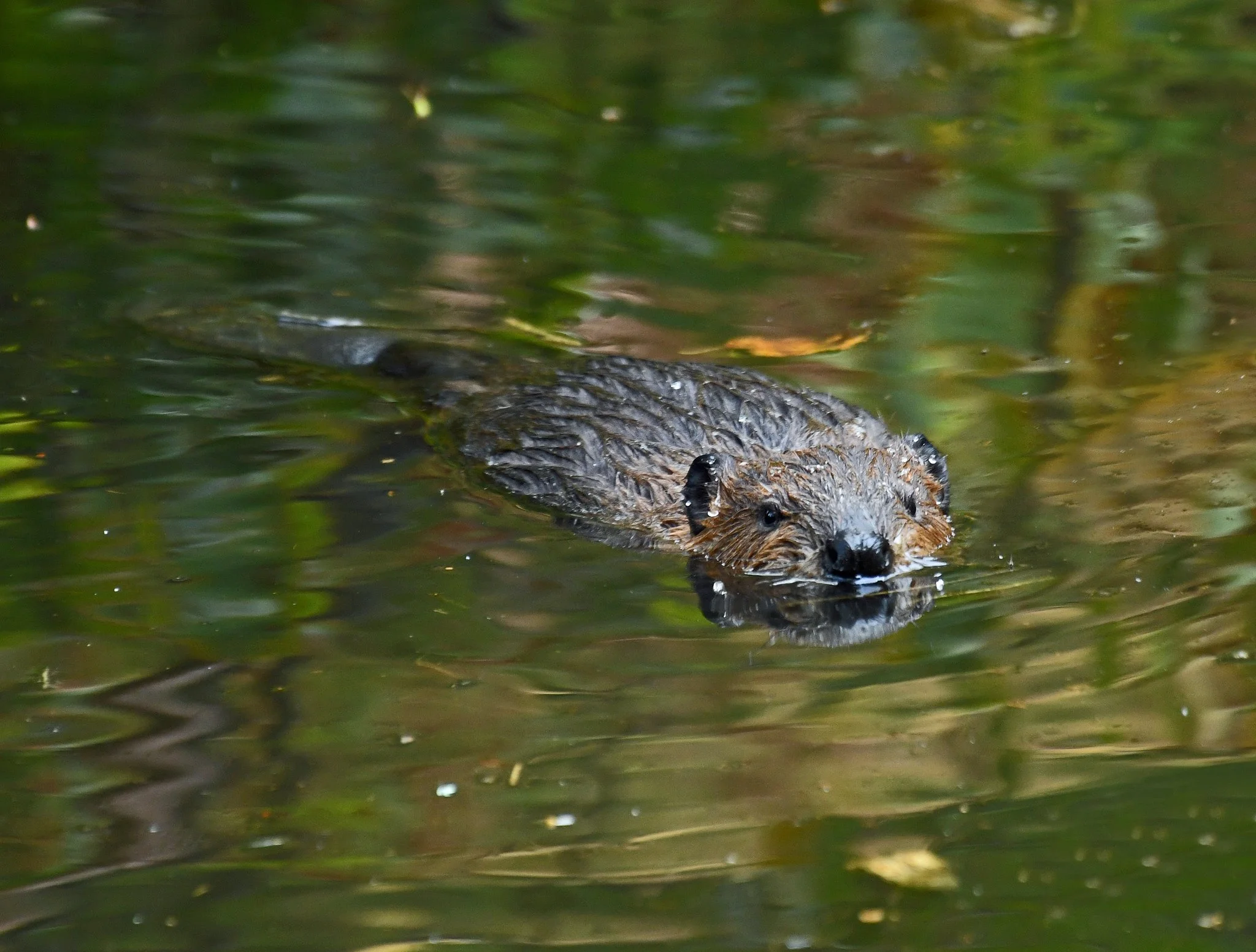
 As many of you also know from these ITRP posts, I don’t need to be reminded of how active beavers can be at this time of year.  Here’s a previously-taken image of Bernie, who adopted us this fall:

(Image of the moon taken in Brooklin, Maine, at 1:09 a.m. November 5, 2025.)
Comment

Comment

In the Right Place: Life with Bernie, V

Bernie, the American beaver who visited us in September, is still here, still gnawing down trees, and still building a lodge. He’s raised the water level in two bog ponds, but there is no danger of flooding. Yet. We’re still watching Bernie with a mixture of awe and apprehension. This is an image of his ongoing lodge construction, as of yesterday.:

I think that we’ll have to let him complete his lodge. Trapping and transporting him to the North Woods now may not give him enough time to create a protective winter shelter. Here’s the architect, himself:

Bernie is at the first stage of lodge construction, which consists of planting tree trunks in the mud of a pond and continuingly piling more on top. If he follows good beaver practices for building affordable housing at our expense, Bernie will keep piling on the wood until there is a good-sized dome- or pyramid-like structure above water level, which he’ll plaster with mud.

He’ll hollow out passageways and chambers above the waterline in the home for food storage and lodging luxury and probably put in an air vent somewhere. Perhaps most important for his protection, Bernie will create underwater entrances and exits in his new home.

(Images taken in Brooklin, Maine, on November 4 [lodge] and October 7 [Bernie], 2025.)

Comment

Comment

In the Right Place: Good and Evil Beauty

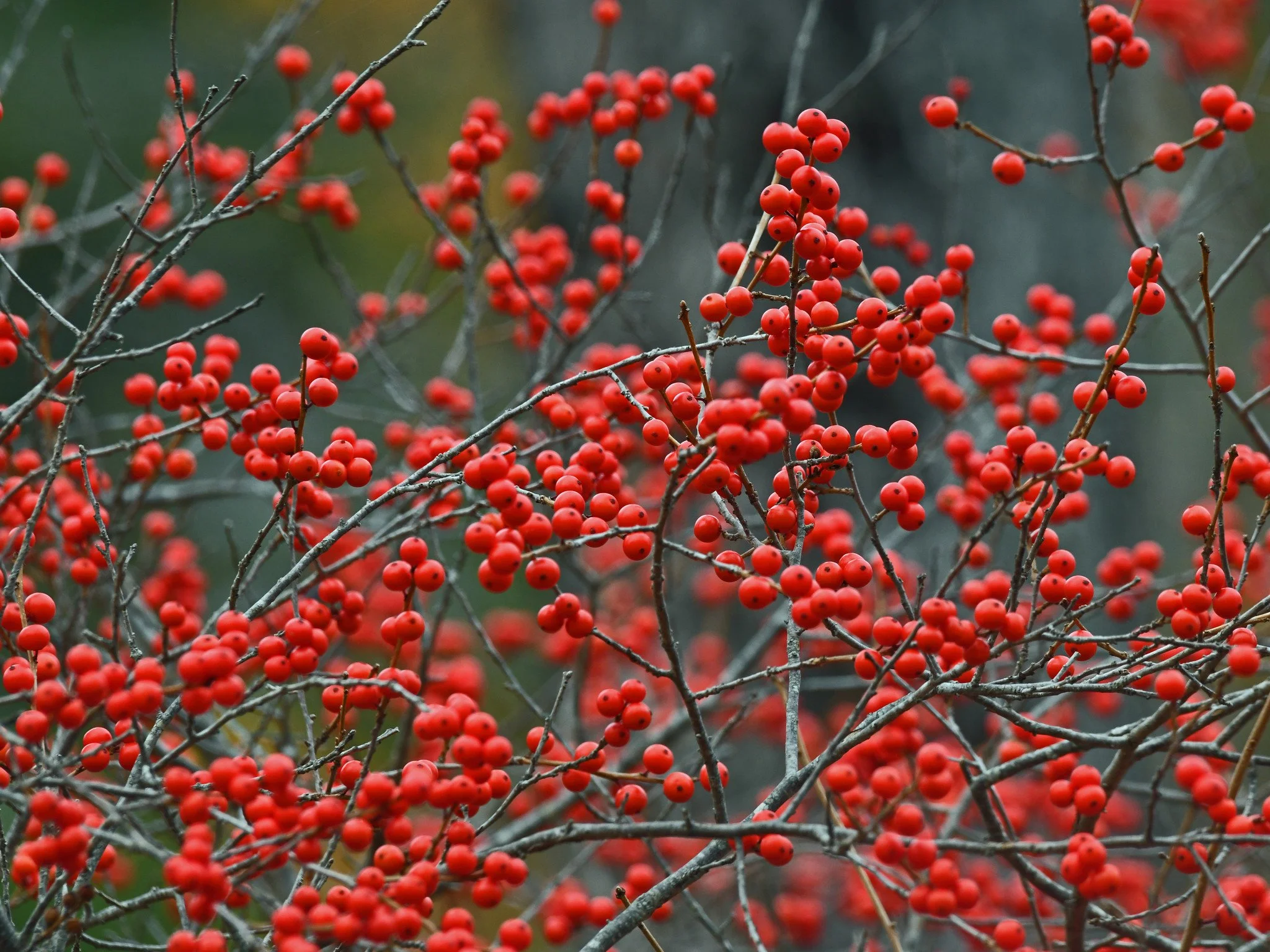
We’re having beautiful bumper crops of winterberries (the good galaxy of friendly red planets) and Asian bittersweet (the evil empire that invades and kills its neighbors). Here you see a winterberry galaxy alone and at peace, ready to serve hungry birds and small mammals:

Below, tou see an ongoing massacre of bittersweet vine invaders strangling their hosts:

Note that the red bittersweet seed pods (“arils”) have emerged from their yellow husks (“capsules”) and are ready to be eaten by hungry birds that will disperse the seed widely, complete with fertilizer:

(Images taken in Brooklin, Maine, on November 3, 2025.)

Comment

Comment

In the Right Place:  Swelled Head Department

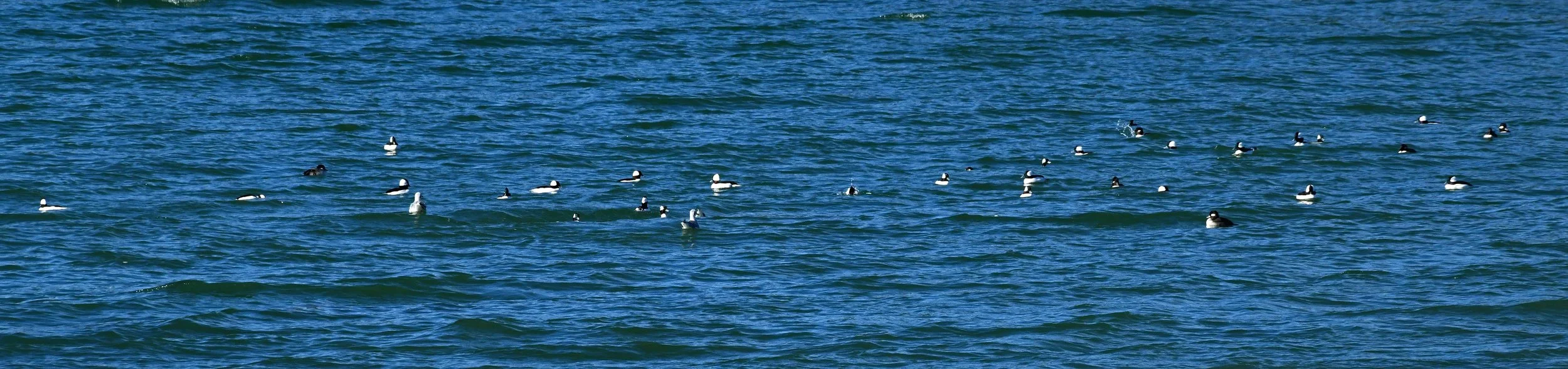
A flock of about 30 bufflehead ducks has been flying into Great Cove to play and hunt daily, usually between mid-tide and high tide. They’re North America’s smallest (and cutest, I think) diving ducks. They’re a little more than a foot long and reportedly weigh about a pound.

Buffleheads get their name from the swelled shape of their heads, which are somewhat similarly shaped to those of American buffalos (bison). Males sport white hoods and lower bodies; females wear a white cheek streak and mostly brown, gray, and black bodies:

These little ducks often hunt in groups, with one or two remaining on the surface while the others dive for food. They move quickly from spot to spot looking for food. In the winter, buffleheads reportedly eat mostly small fish, clams, mussels, crabs, snails, and a few aquatic plants. They nest in late winter and early spring, usually in abandoned woodpecker cavities. (Images taken October 24 and November 2, 2025.)

Comment

Comment

In the Right Place: Blue Sky Moon

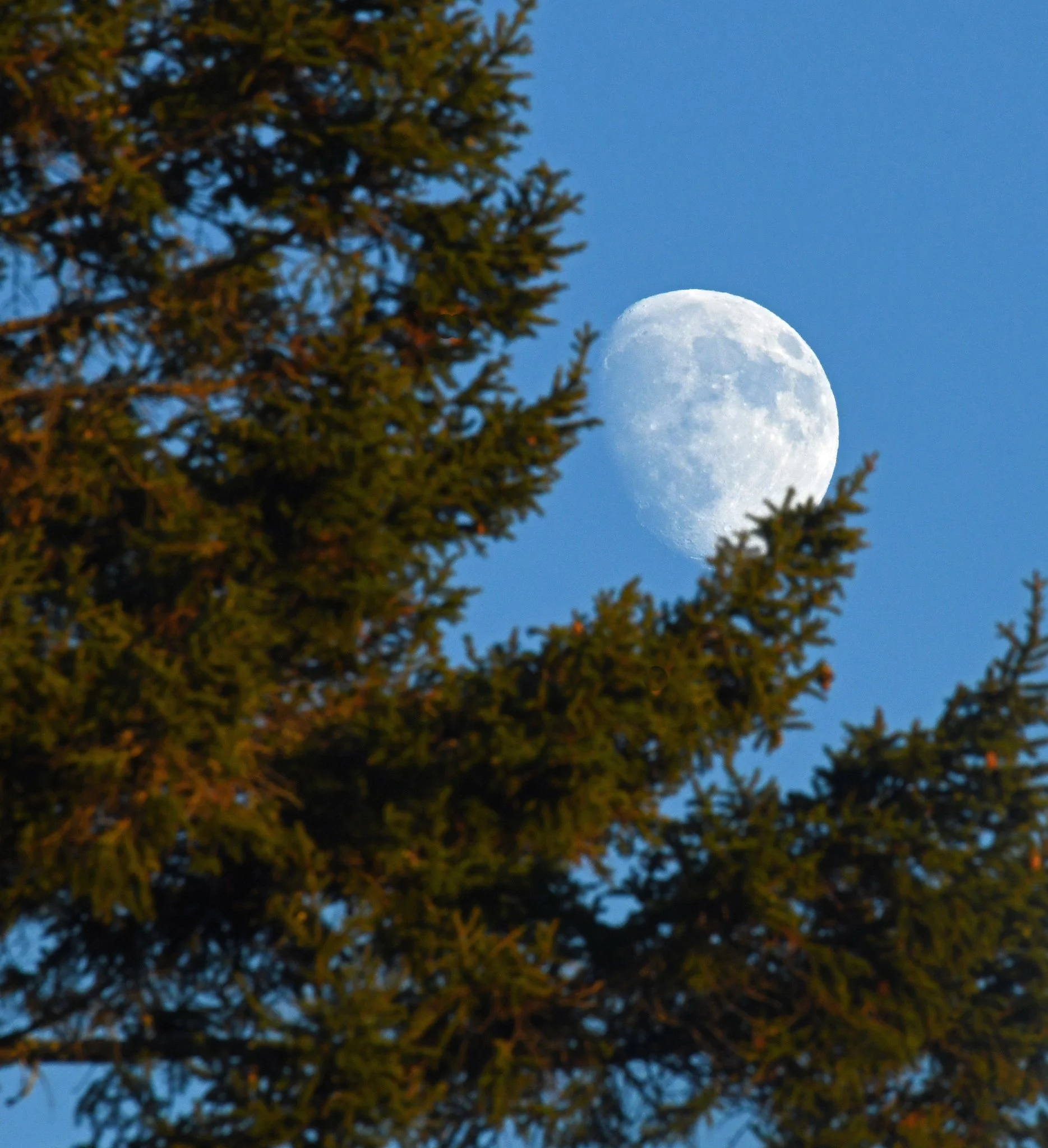
November debuted with a special performance yesterday afternoon: she sailed this ovoid moon over us through clear, blue, and windy heavens. Although more than 230,500 miles above, you could see the craters on our ancient companion’s face with the naked eye during daylight:

Technically, the moon was in one of its waxing gibbous phases, meaning that its illuminated side was more than 50 percent full and increasing (waxing) in size, while its shape was hunched or humpback (gibbous).

It will be fully illuminated November 5 and traditionally known then as the Beaver Full Moon. (Images taken in Brooklin, Maine, on November 1, 2025.)
Comment

October Postcards From Down East Maine

3 Comments

October Postcards From Down East Maine

October in Down East Maine is a a colorful interlude between the green and gold summer and the gray and white winter. It’s the last chance to see some favorite flora and fauna and other phenomena. It’s also the time to put on warmer clothes, to eat heartier foods, to see redder sunsets in earlier darkness, and, at the end, to celebrate the rising of the spirits of Halloween.

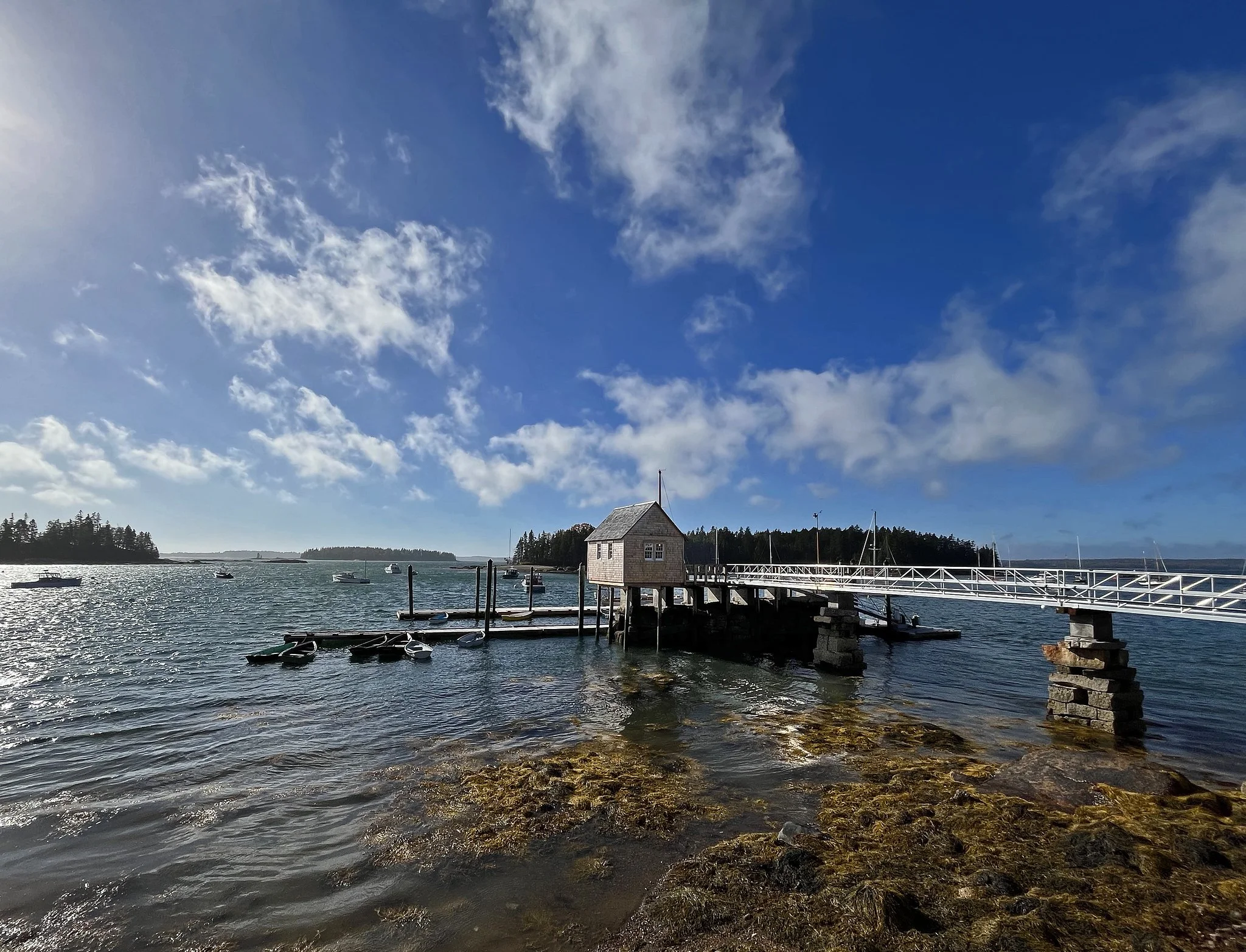
As usual, we’ll begin our “Wish-You-Were-Here” postcards with the four iconic views of coastal Maine that we record every month: the view of Mount Desert Island from Brooklin’s Amen Ridge; the “Harbor House” overlooking Brooklin’s Naskeag Harbor; the old red boat house in Blue Hill’s Conary Cove, and the view of that near-mountain called Blue Hill from across Blue Hill Bay:

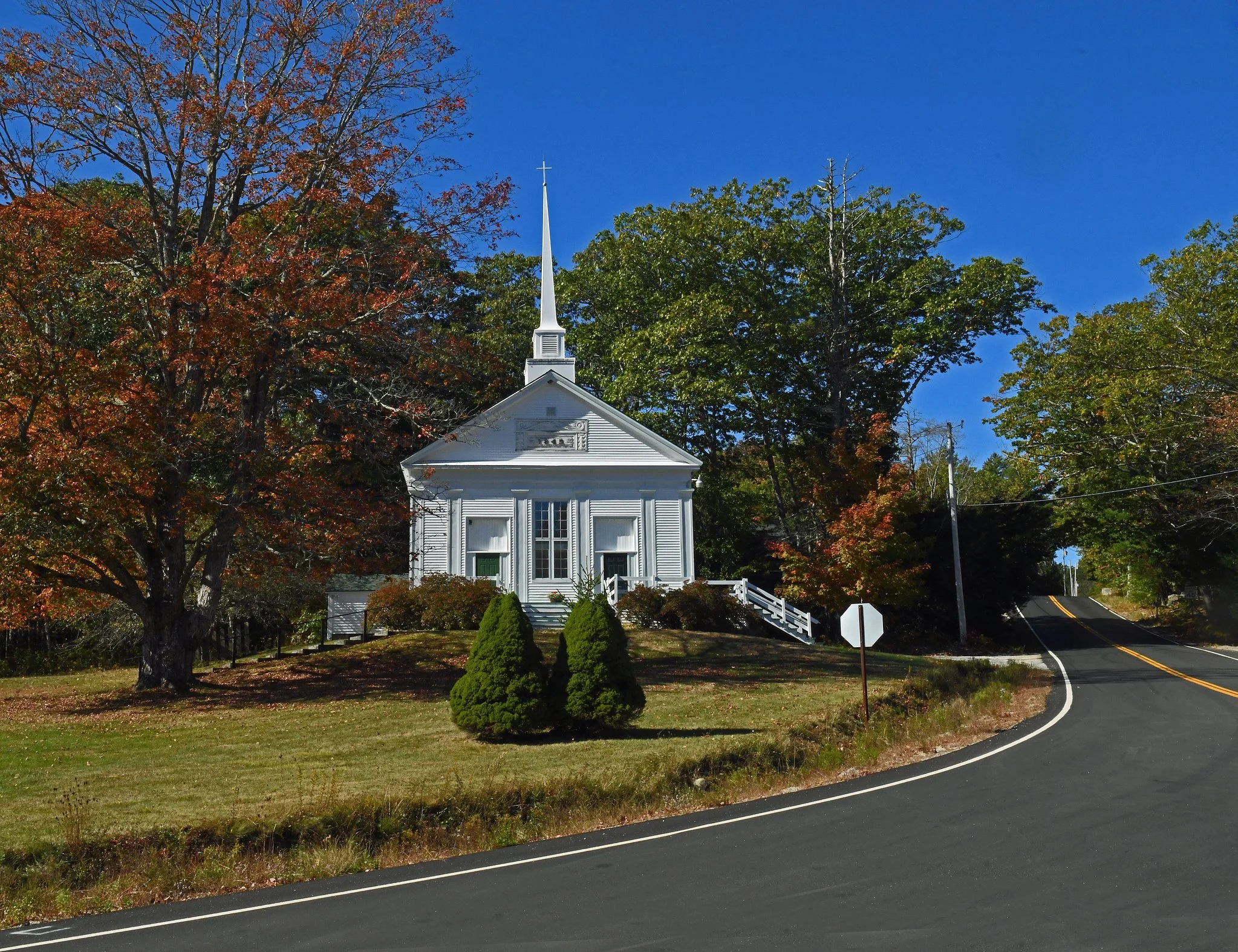
To those four national; favorites we add four local October favorites: a land view of the south face of Blue Hill; the floats and pier at the renowned Brooklin Boat Yard; the leaf-shedding Camperdown elm in the Brooklin Cemetery, and the Baptist Church beside a rising country road in North Sedgwick:

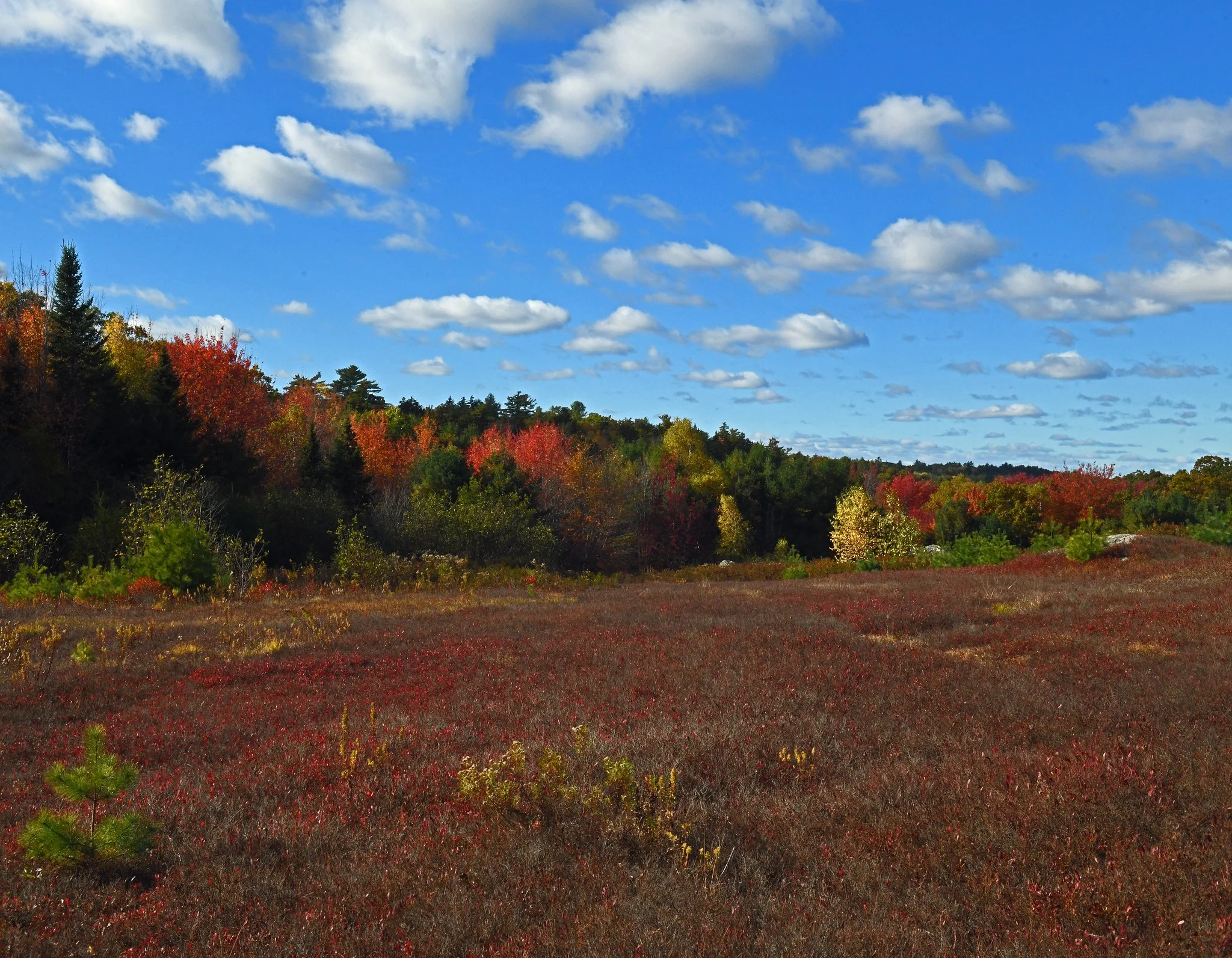
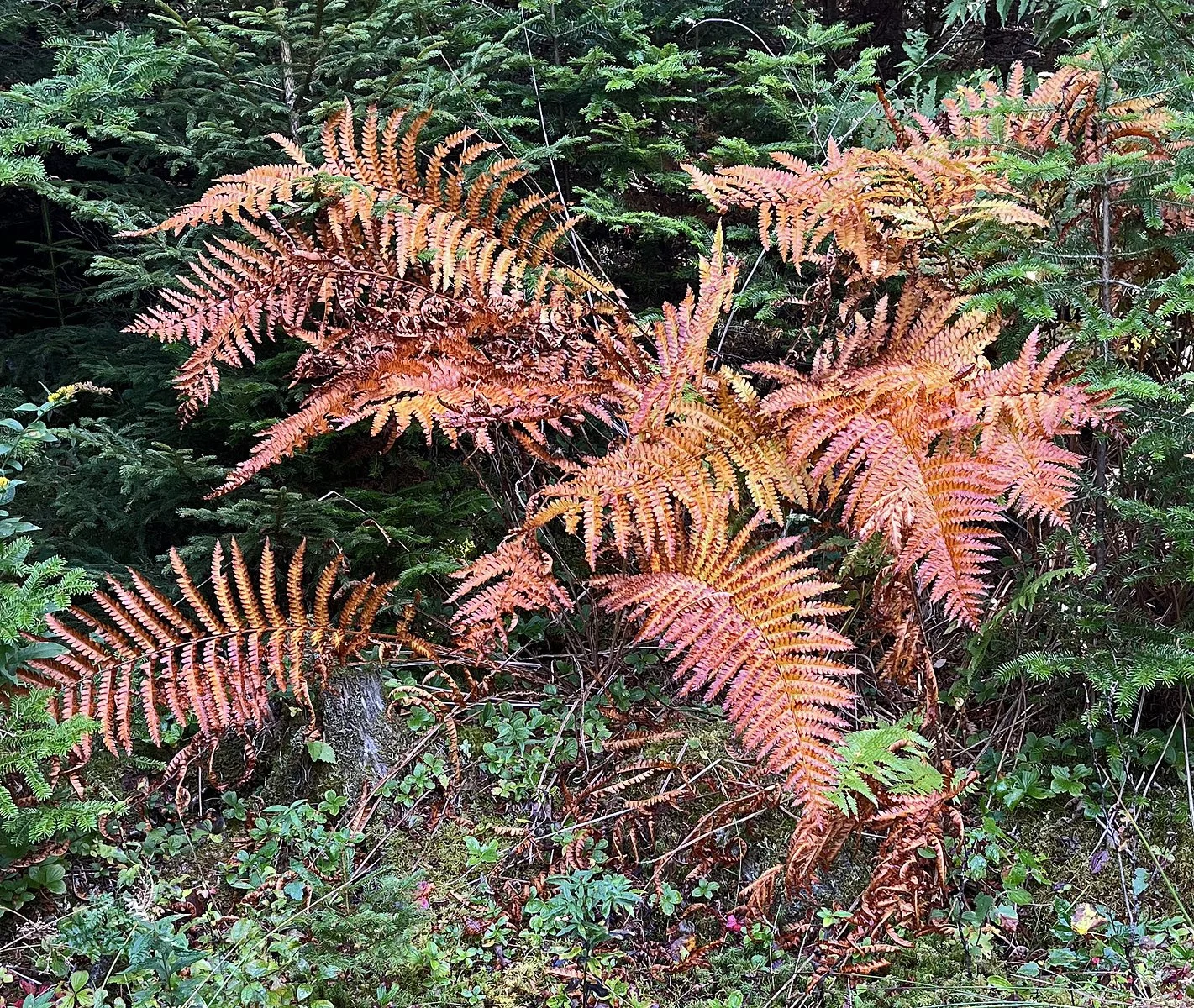
October is when the leaves of our flora give a glowing last hurrah in multiple shades of red, orange, yellow, purple, green, and bronze:

It’s a time of profusion for wild fruits and berries and cool weather fungi. Among the most interesting are the ancient, abandoned apple trees that drop their fruit in fallow fields:

There are also the differing forms of October fruit clustures offered by wild mountain ash, weeping crabapple, beautiful but invasive Asian bittersweet, and winterberry.

On the ground, the warm colored false chanterelles and squirrel-nibbled Russula mushrooms arise from the earth overnight like magic.

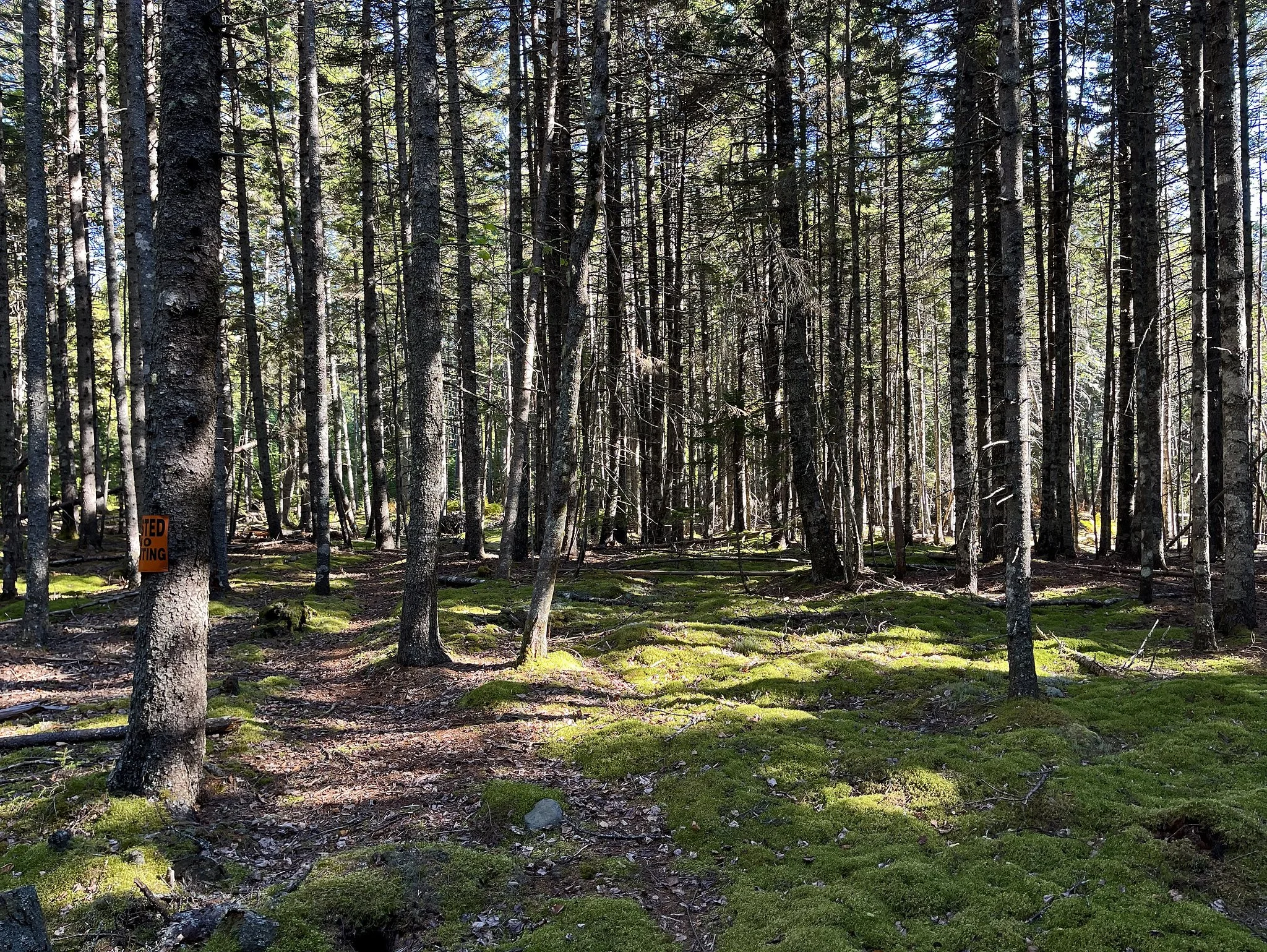
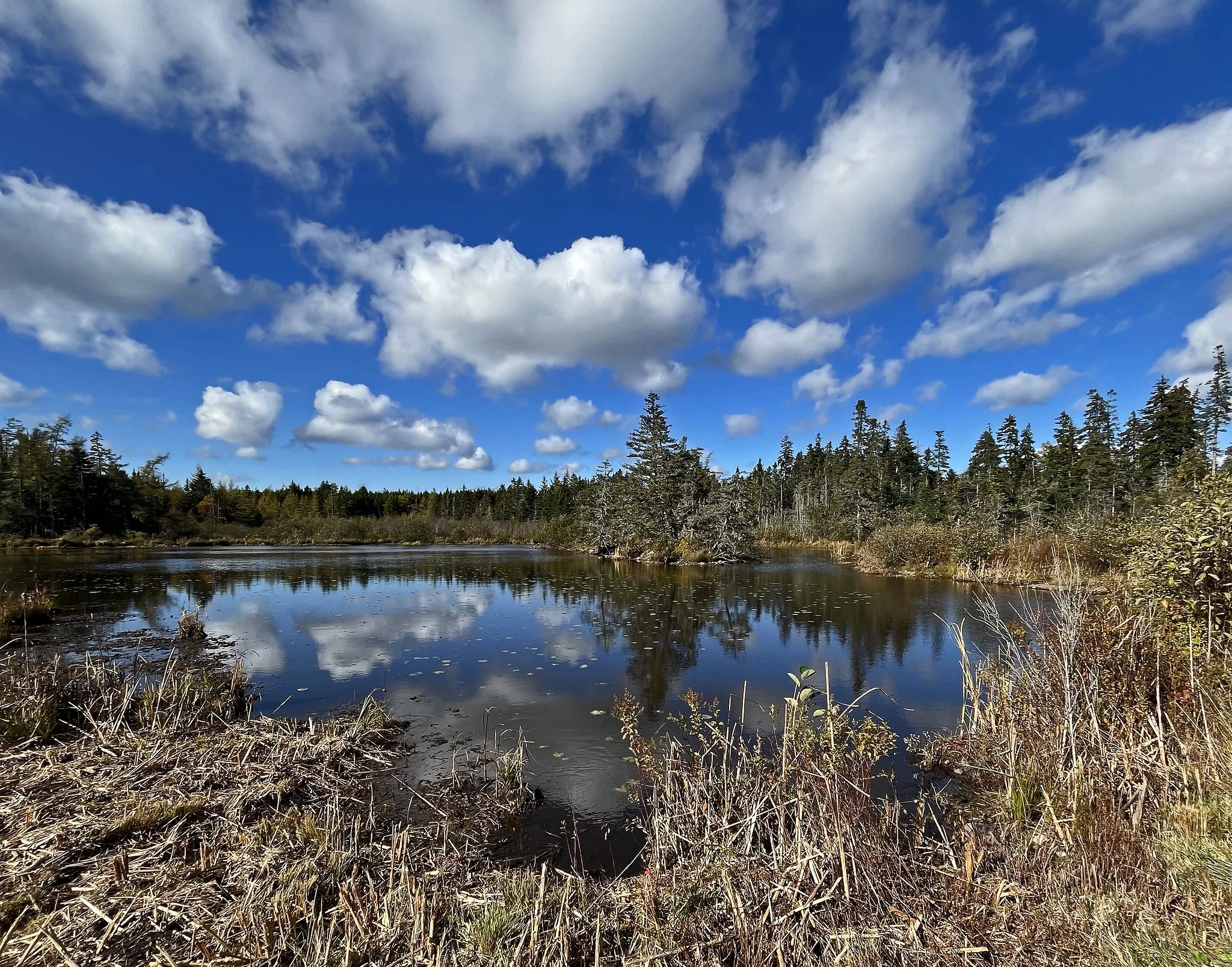
Our woods were dry and the ponds low this October because we’ve been in a severe drought that presents wildfire dangers. Nonetheless, wallking among the tall trees and viewing the ponds always is a visual and aromatic pleasure:

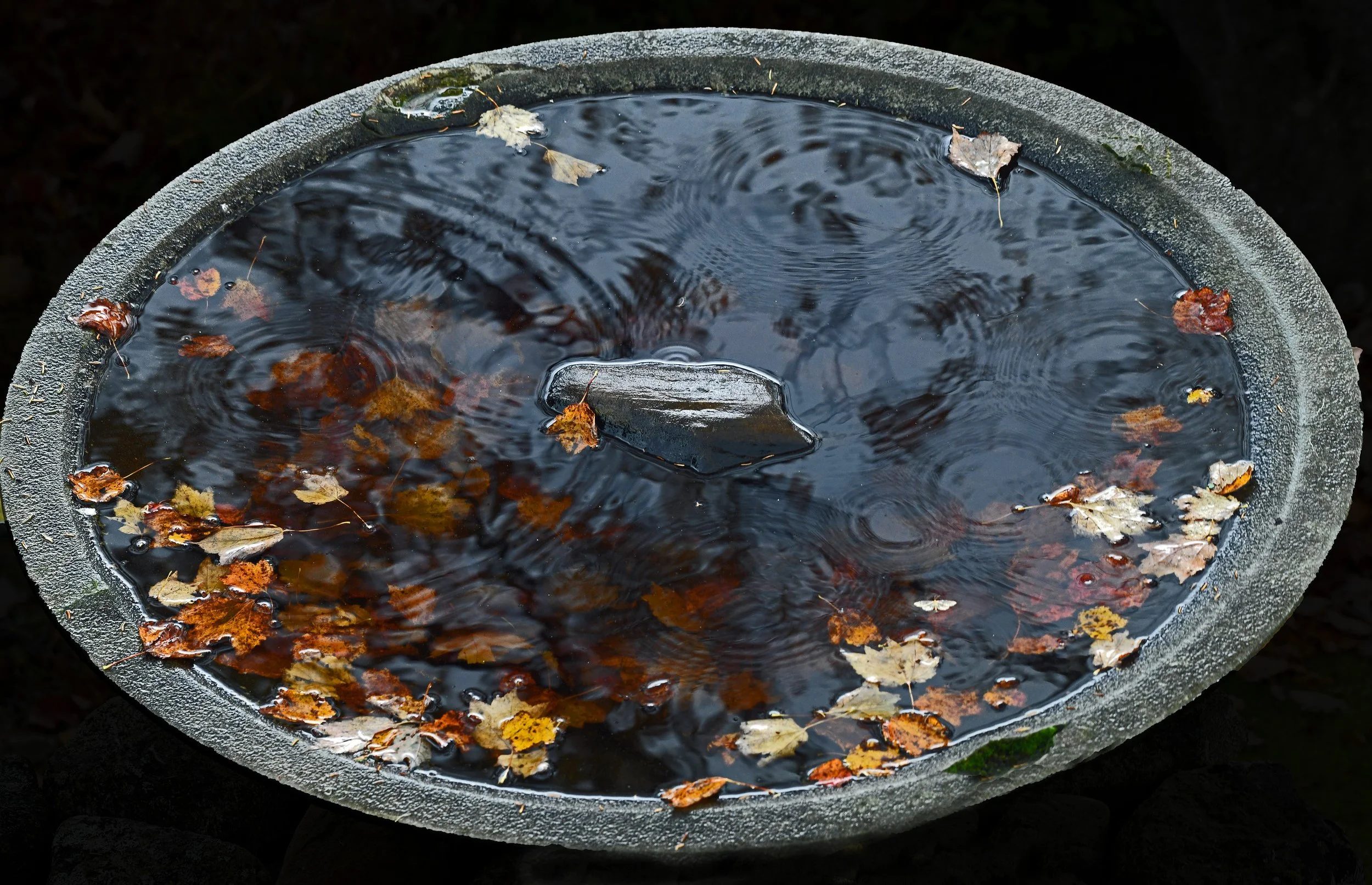
Of course the garden flora goes the way of all flora in October and provides interesting images. Here we see an out-the-window collection of trees and bushes; the last poppy and mini-sunflower; light rain in the bird bath, and store-bought fall flowers:

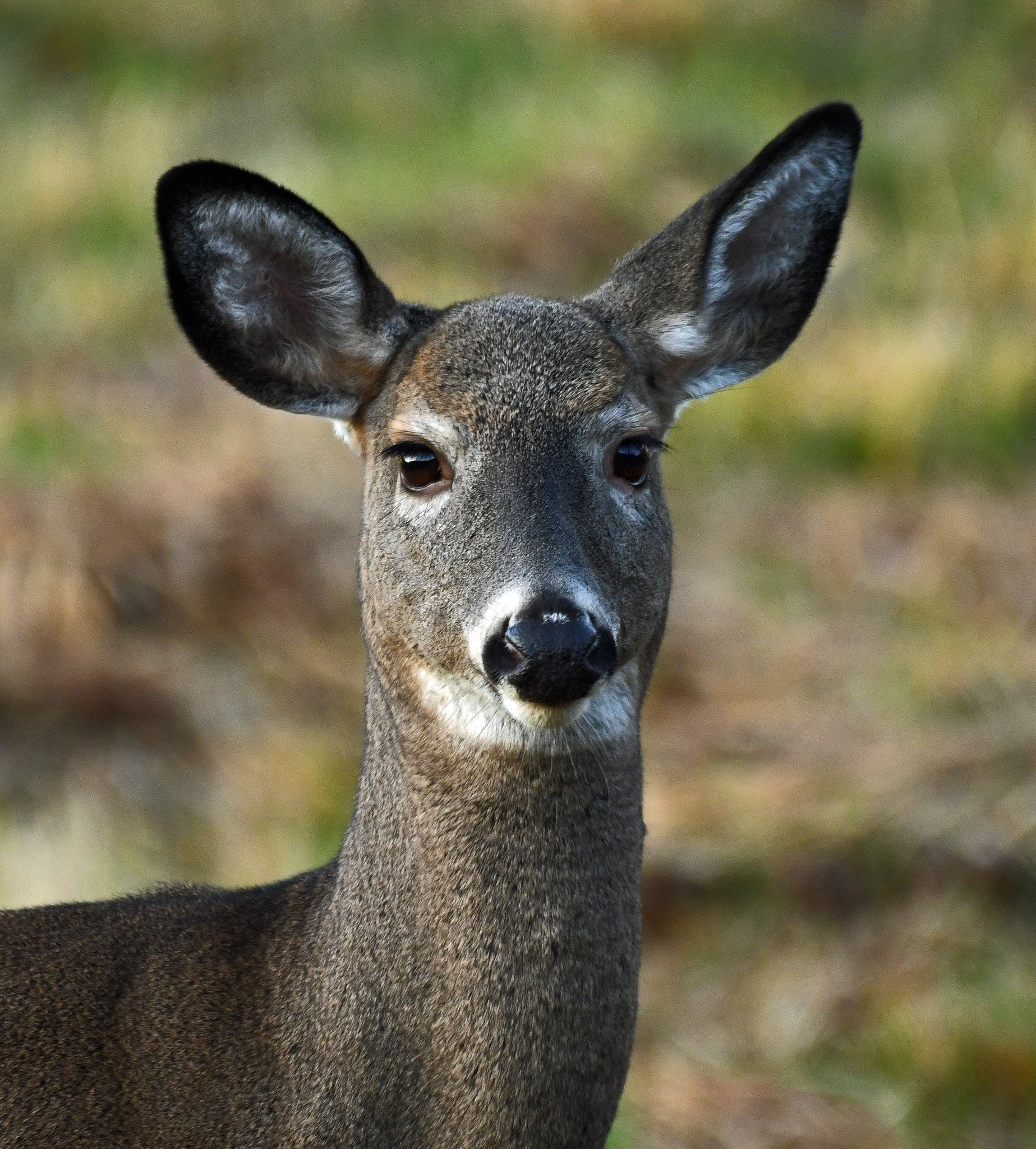
In the furry fall fauna category, our white-tailed deer grew into their gray winter coats and a pesky bachelor beaver (whom we’ve named Bernie) decided to build a house (and beaver ballroom, it looks like) in one of our ponds:

As for feathered fauna, we’re on the Atlantic Flyway and see many migrants on their way south in October, including wedges of Canada geese on the wing. On the ground, resident wild turkeys, both adults and first-year youngsters, are easier to see in the fall-mowed fields.

Resident downy woodpeckers carve out their individual winter shelters in October; resident herring gulls rest as much as possible, as usual; greater yellow legs sandpipers pause to peck through rockweed on their way south, and winter resident bufflehead ducks move in:

We should mention that October is the last month that we see bumblebees and monarch butterflies in action:

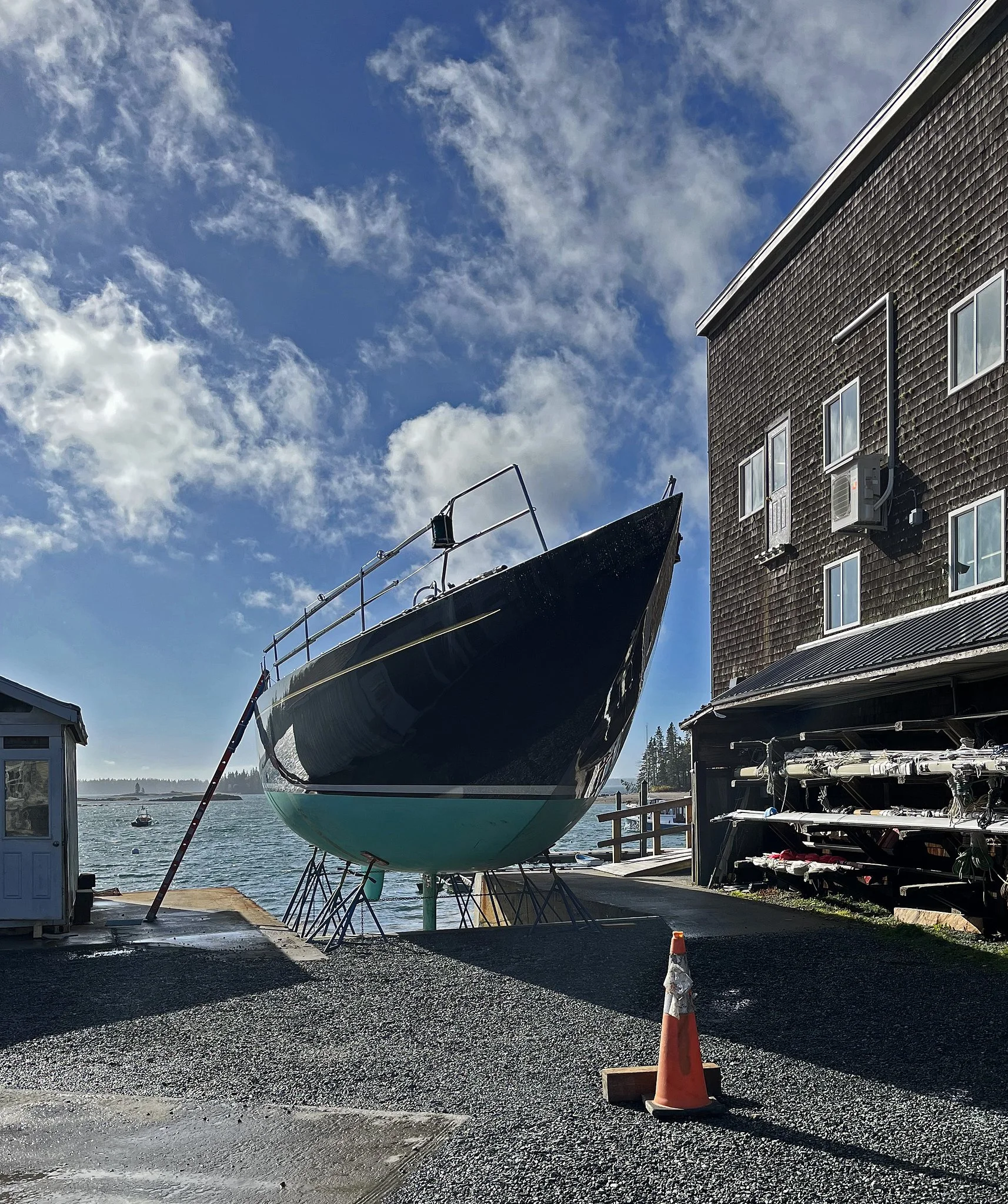
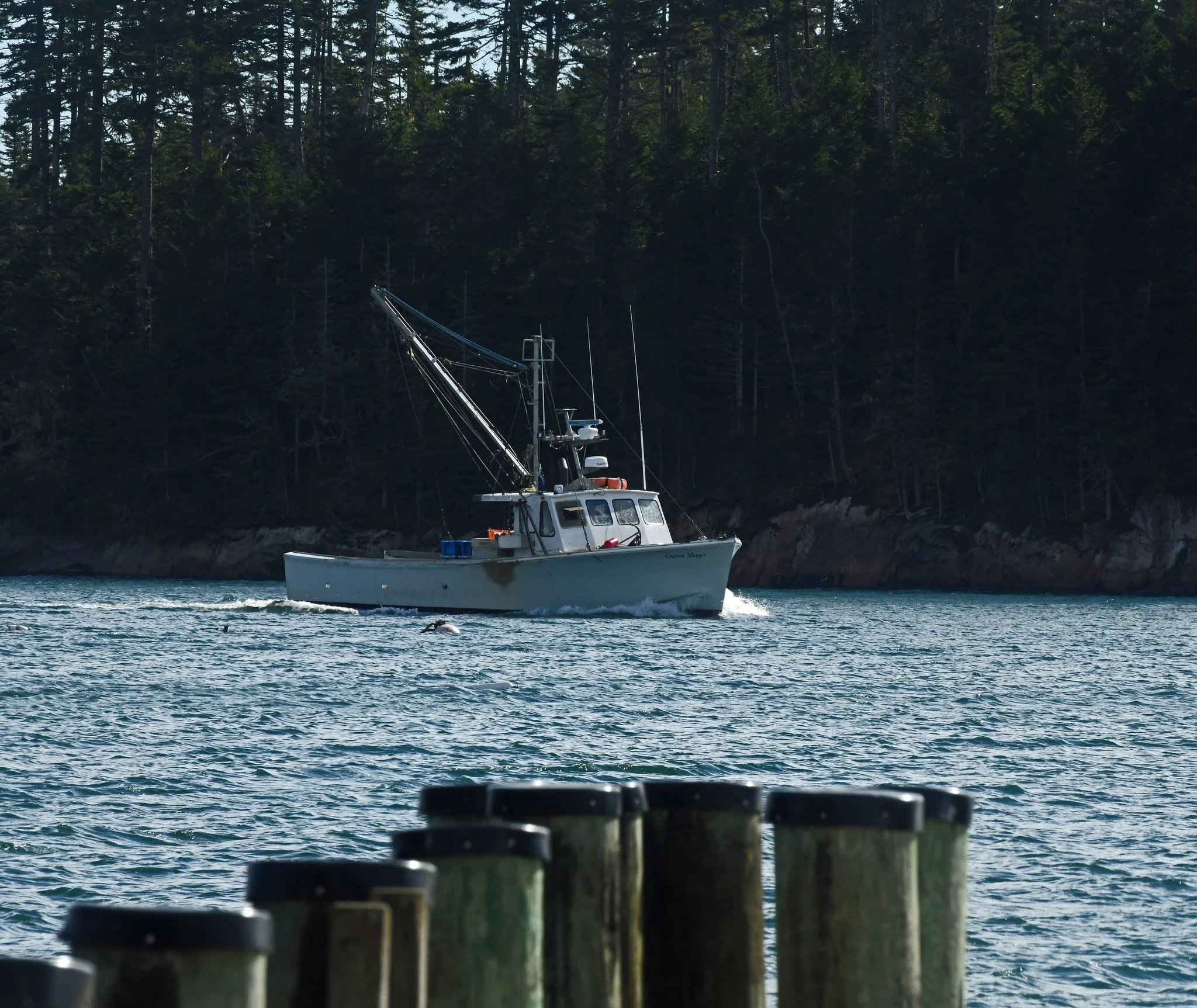
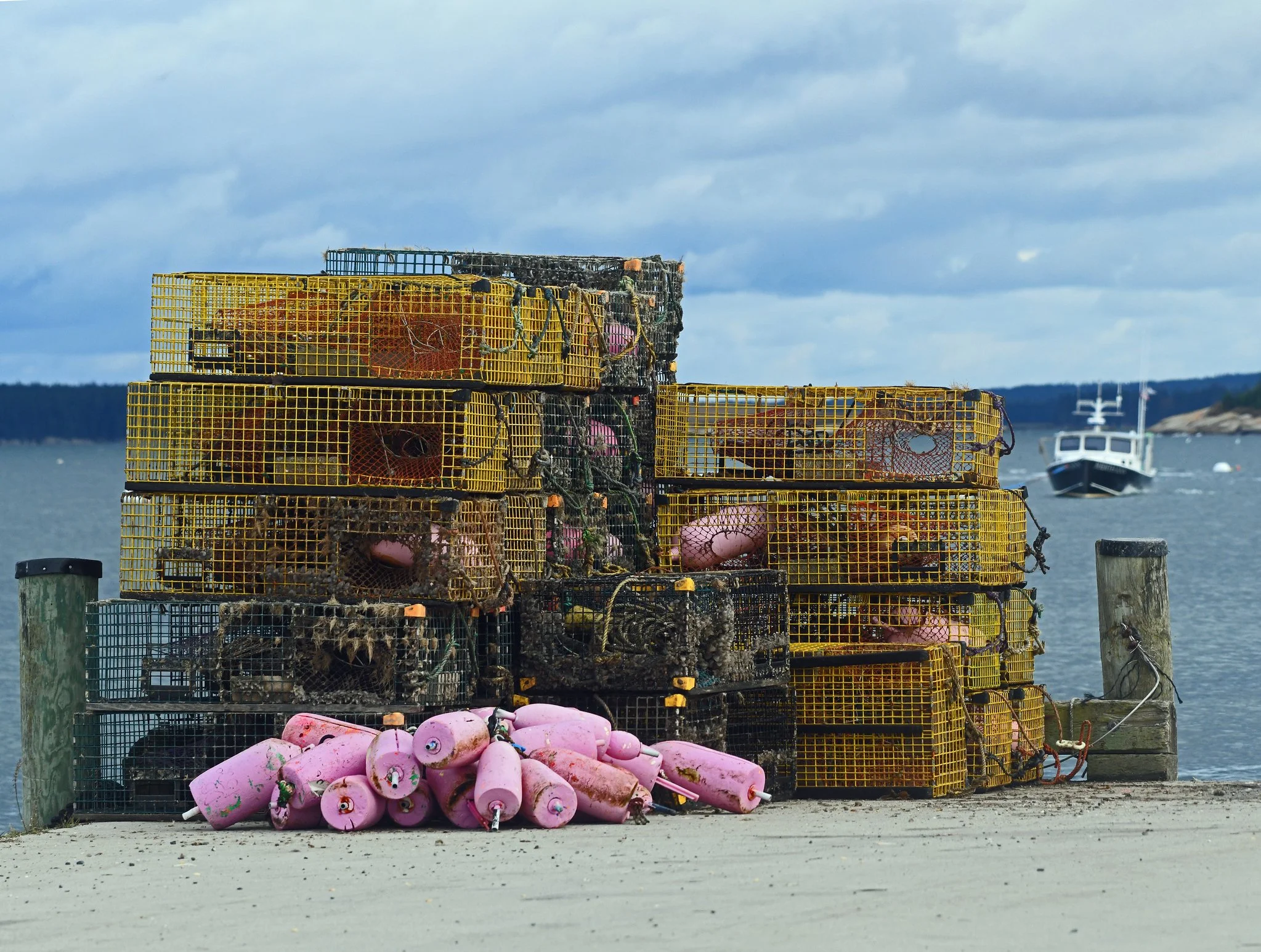
October also is a time of change on the waterfront. Many of the coastal lobster fishermen start to bring in their traps during the month because that fishing season ends for most of them in the fall. Recreational boats also are brought up “on the hard” during the month and can create traffic jams in the process.

Below are the last two boats of 2025 moored in Great Cove: EO, the 12 1/2-foot sailboat and LUCILLE, the refurbished lobster boat. They were brought out of the water in late October. Also below you’ll see VULCAN, the moorings boat, replacing summer ball mooring buoys with more ice-friendly winter stick buoys.

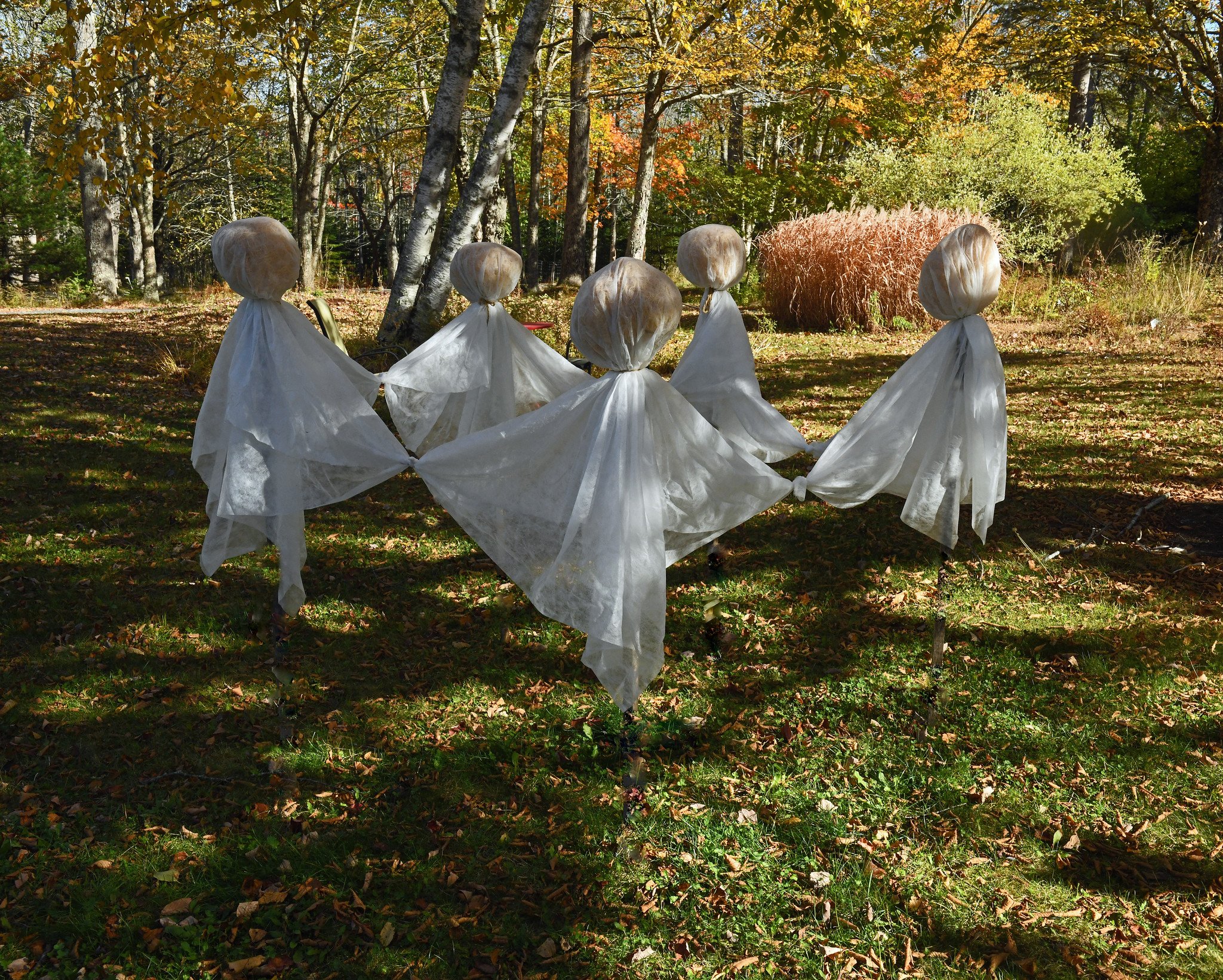
Of course, October ends on Halloween when the spirits are supposed to arise and join us. But those spirits and their wizards always come here a few days early to enjoy Vacationland and its bounty:

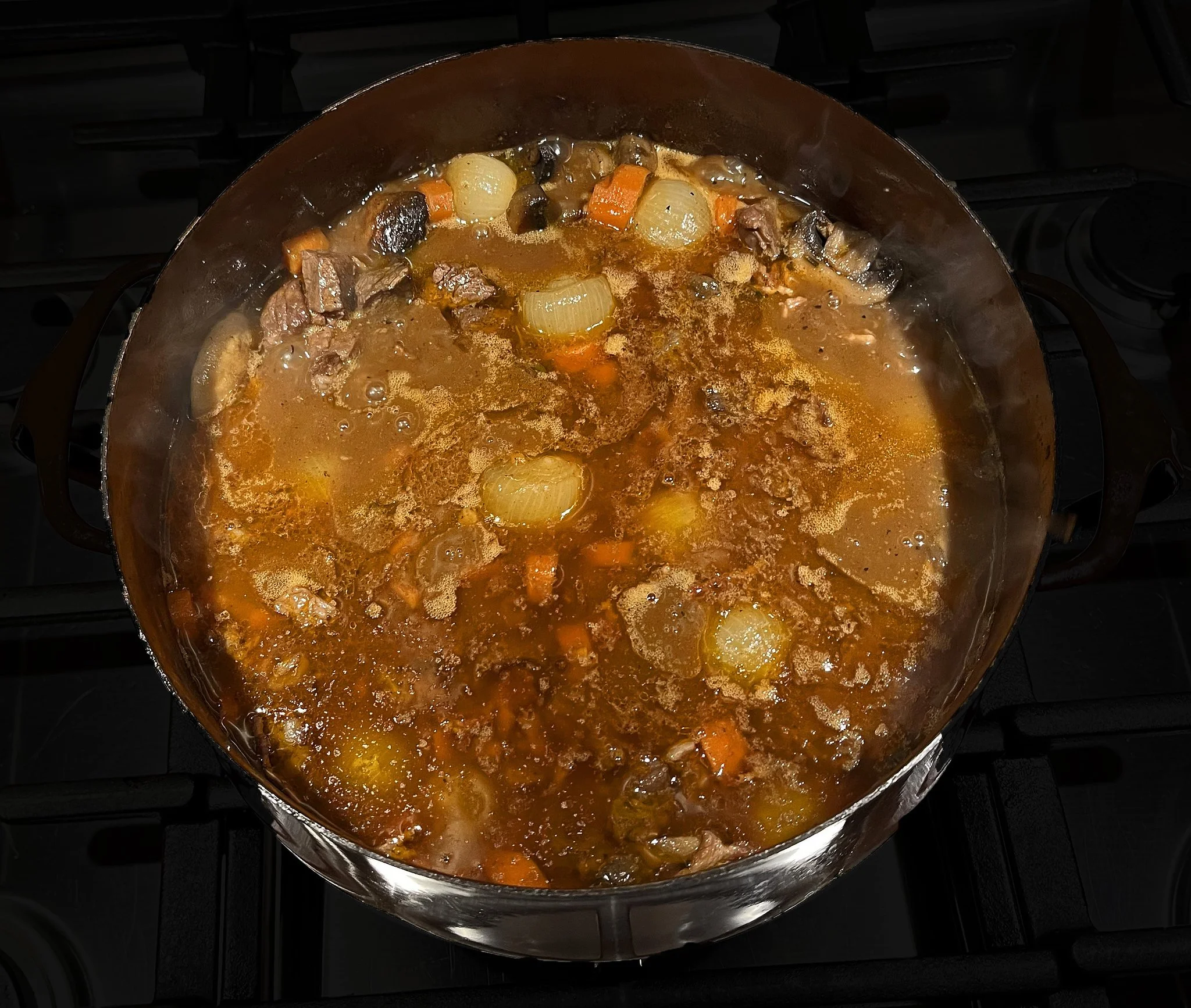
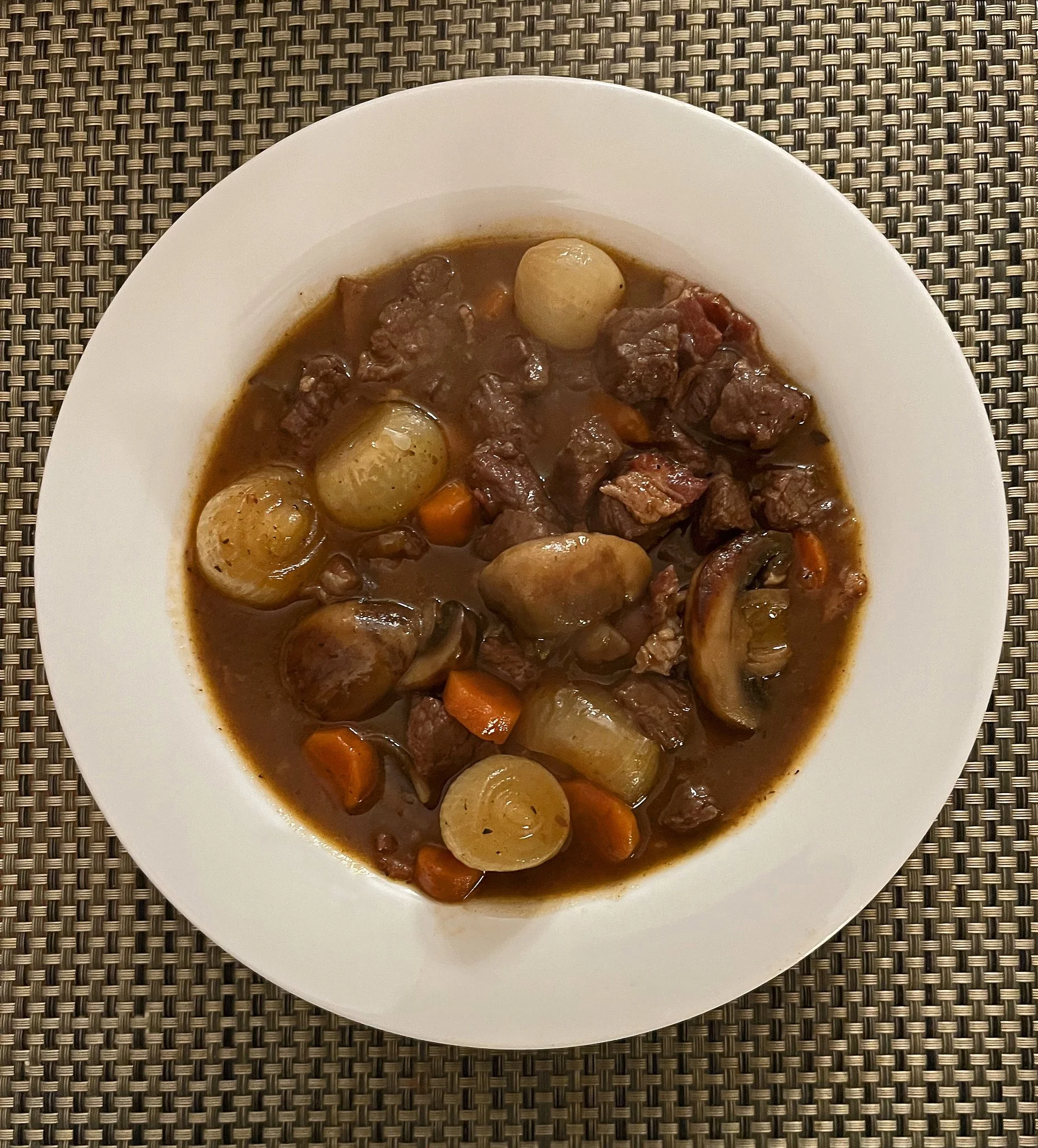
The guords above remind us that October also is the beginning of stew season and the time for other hearty foods, including lasanga. Tomatoes and squash fresh from the vines and a wide variety of fall apples were in ample supply here, ready for the picking in orchards and stores.

By a quirk in the calendar, this October’s full moon was both the Harvest Moon and the Hunters’ Moon. It rose molten red in the twilight and turned to pewter once it sailed high above our gritty atmosphere:

Finally, we leave you with an October sundown over Great Cove. As our view of the sun becomes more southerly, the sunsets get more and more spectacular, making up for the loss of color elsewhere. That’s always something to look forward to in winter.

(All images in this post were taken in Down East Maine during October of 2025.)
3 Comments

Comment

In the Right Place: From “Skeinny” to “Plump”

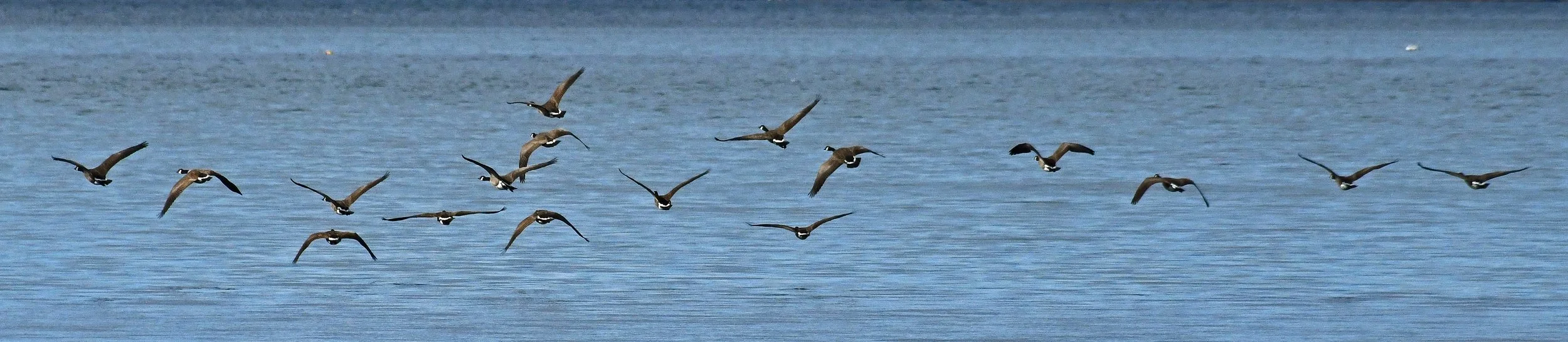
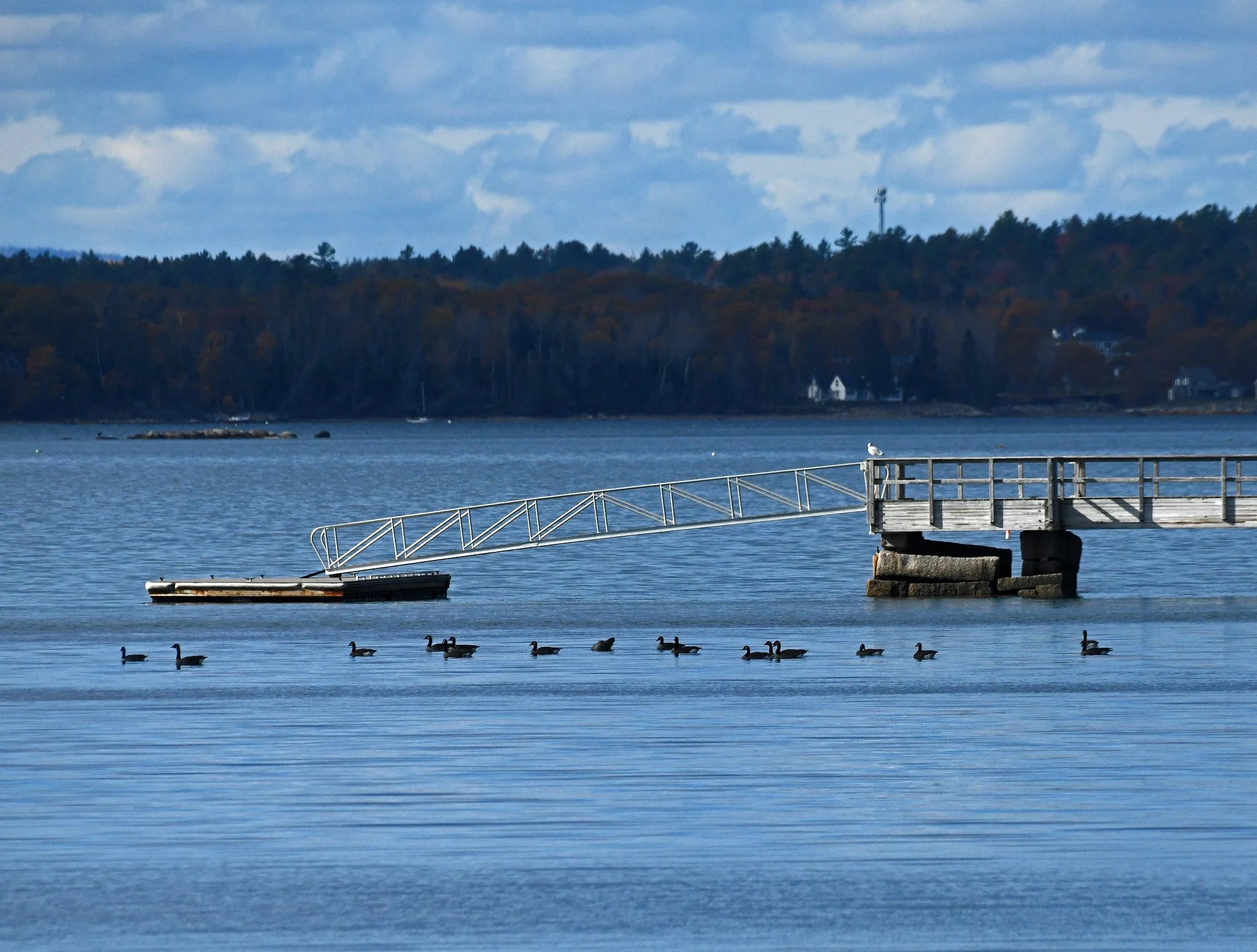
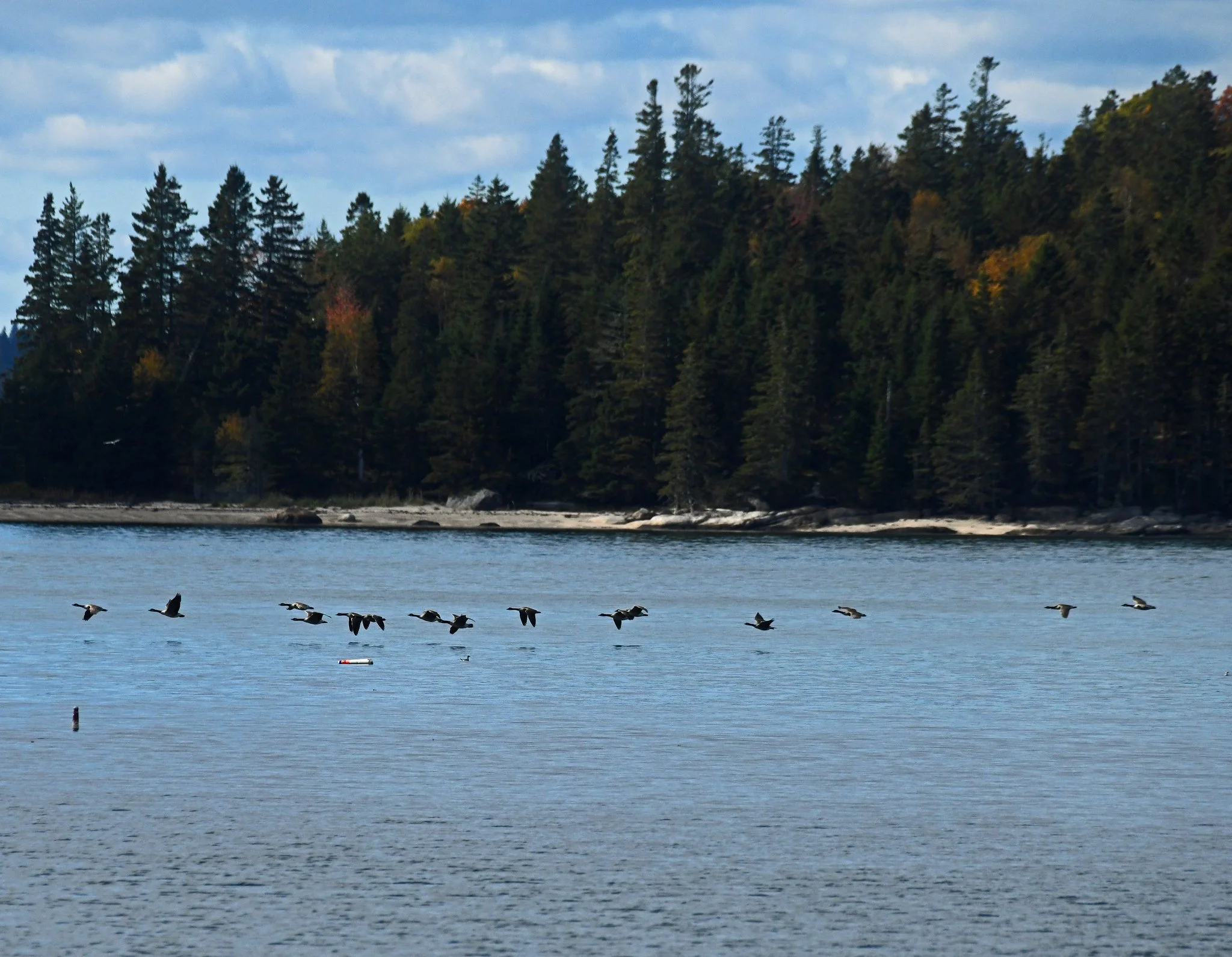
Here you see a skein of Canada Geese resuming their flight south over Great Cove last week. They spent the morning resting near the now-vacant WoodenBoat School docking float:

Once the Cove is mostly devoid of its considerable summer and fall boating activity, it becomes a popular stopover on the Atlantic Flyway for birds headed south from Canada and for winter resident waterfowl. (LUCILLE, a smart-looking reconstituted lobster boat that is/was the last boat in the Cove, is scheduled to be taken out early today.)

Curiously, groups of Canada geese are called different things depending on where they congregate and the predilections of observers. When flying in a V-formation or in a knotted group, the geese usually are known as a “skein.” When in that characteristic V-formation, they also can be called a “wedge” or “team.” When collected as a feathered flotilla in the water, Canada geese are known (inexplicably) as a “plump,” and, when grouped on the ground, they’re a “gaggle.” 

As global warming does its thing, more Canada geese are establishing year-long residences in some parts of Maine. However, I’m not aware of any of these brave souls overwintering in our part of Down East. (Images taken in Brooklin, Maine, on October 24, 2025.)

Comment