Comment

In the Right Place: Phew!

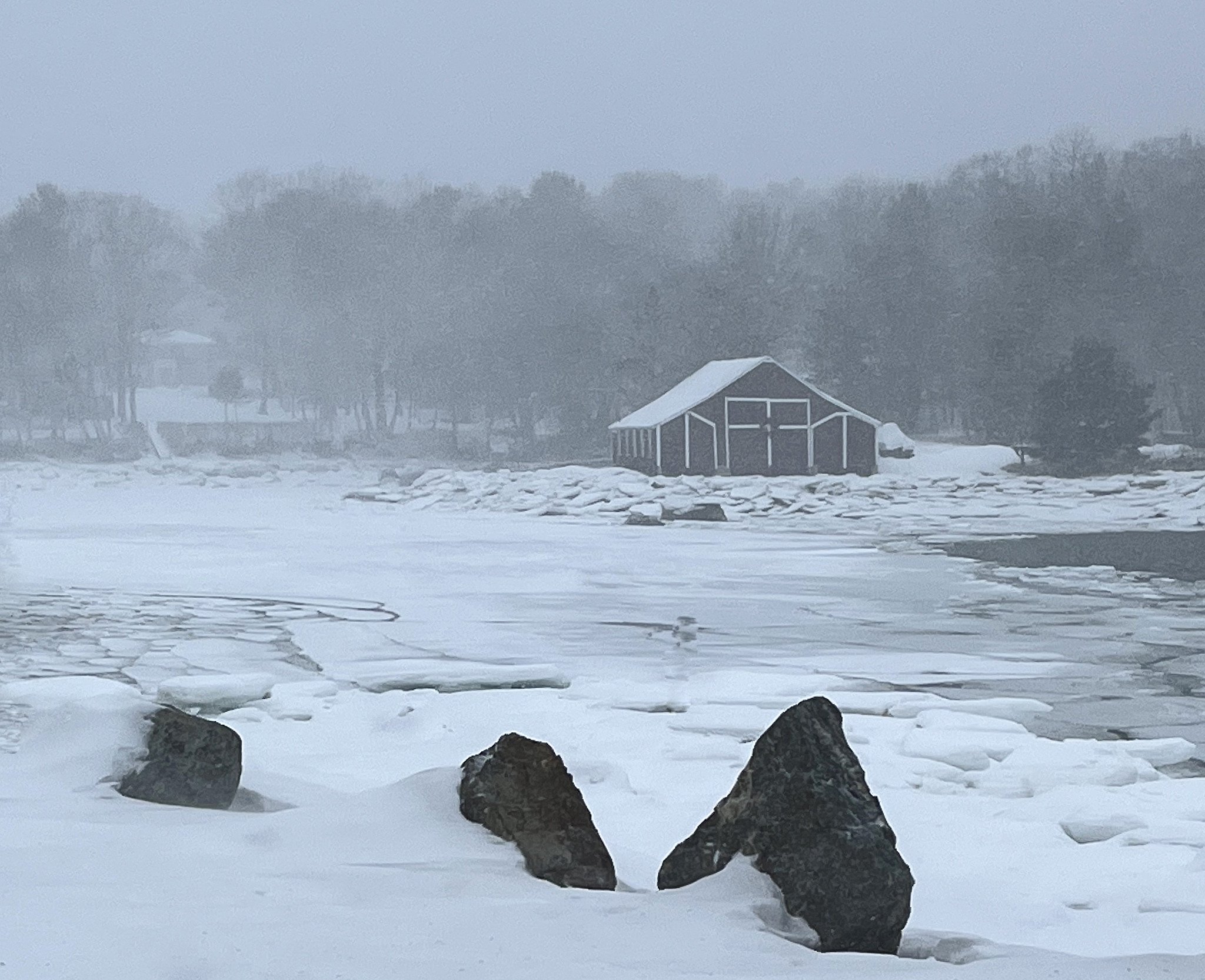
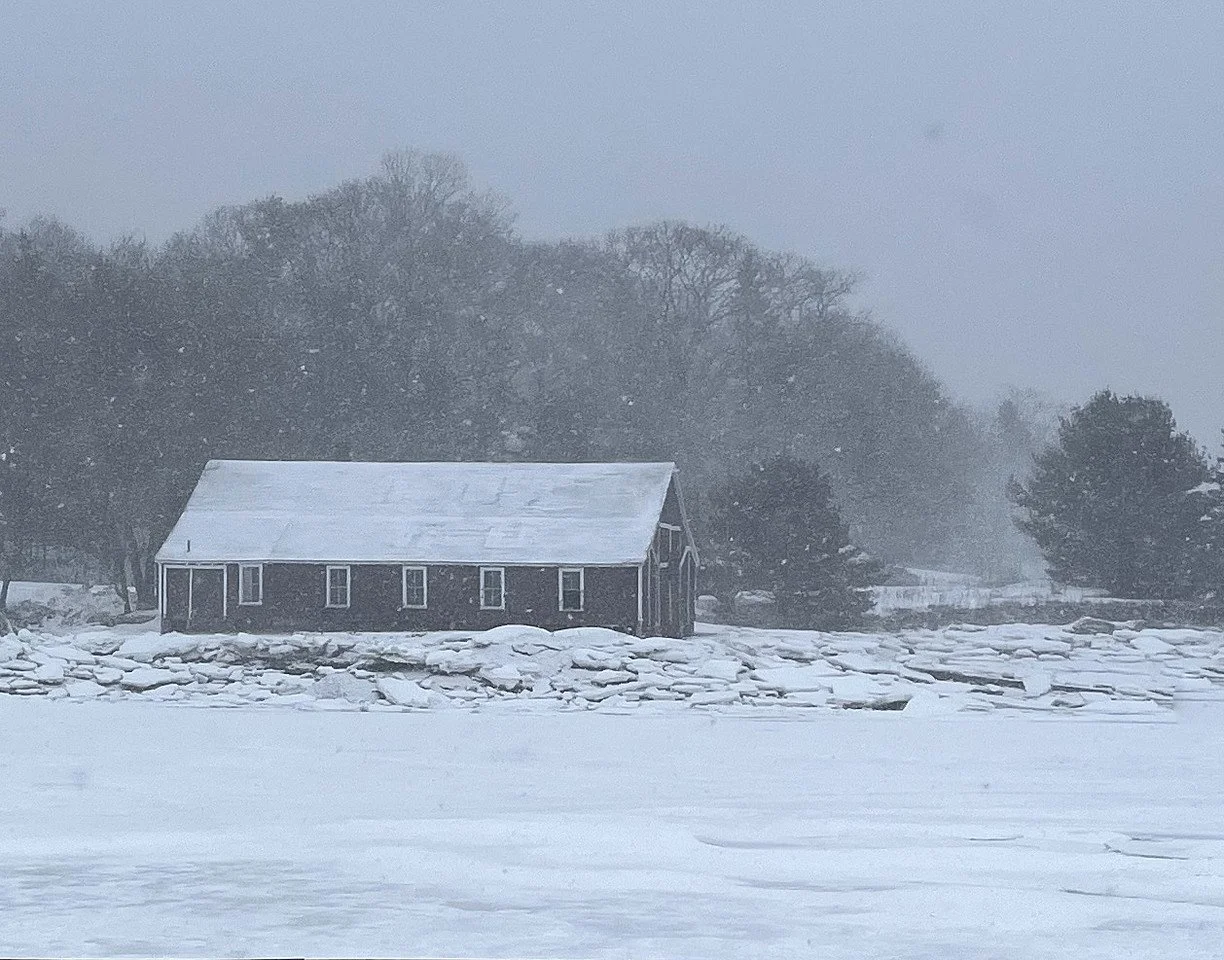
All’s calm on the eastern coast, everybody; thanks for the thoughts. It looks like we sidestepped the biggest punches of the Blizzard of ’26. The snowflakes were very fine and blew wildly around in gusty winds like a white dust storm. We lost power for less than an hour and our generator made sure that we were not inconvenienced.

The National Weather Service reported that snow accumulation in our Hancock County due to the blizzard ranged from 6.6 to 3.6 inches. Judging from what I can see around the house, we were at the lowest end of that range on the Brooklin coast.

Barbara and I got caught in Blue Hill when the snow started falling yesterday at about 11 a.m. and couldn’t leave there until 11:25. The visibility driving was terrible then; we crept home and praised our old all-wheel-drive car. These images of Conary Cove here weres taken at about 11:30 a.m. on our way back to Brooklin:
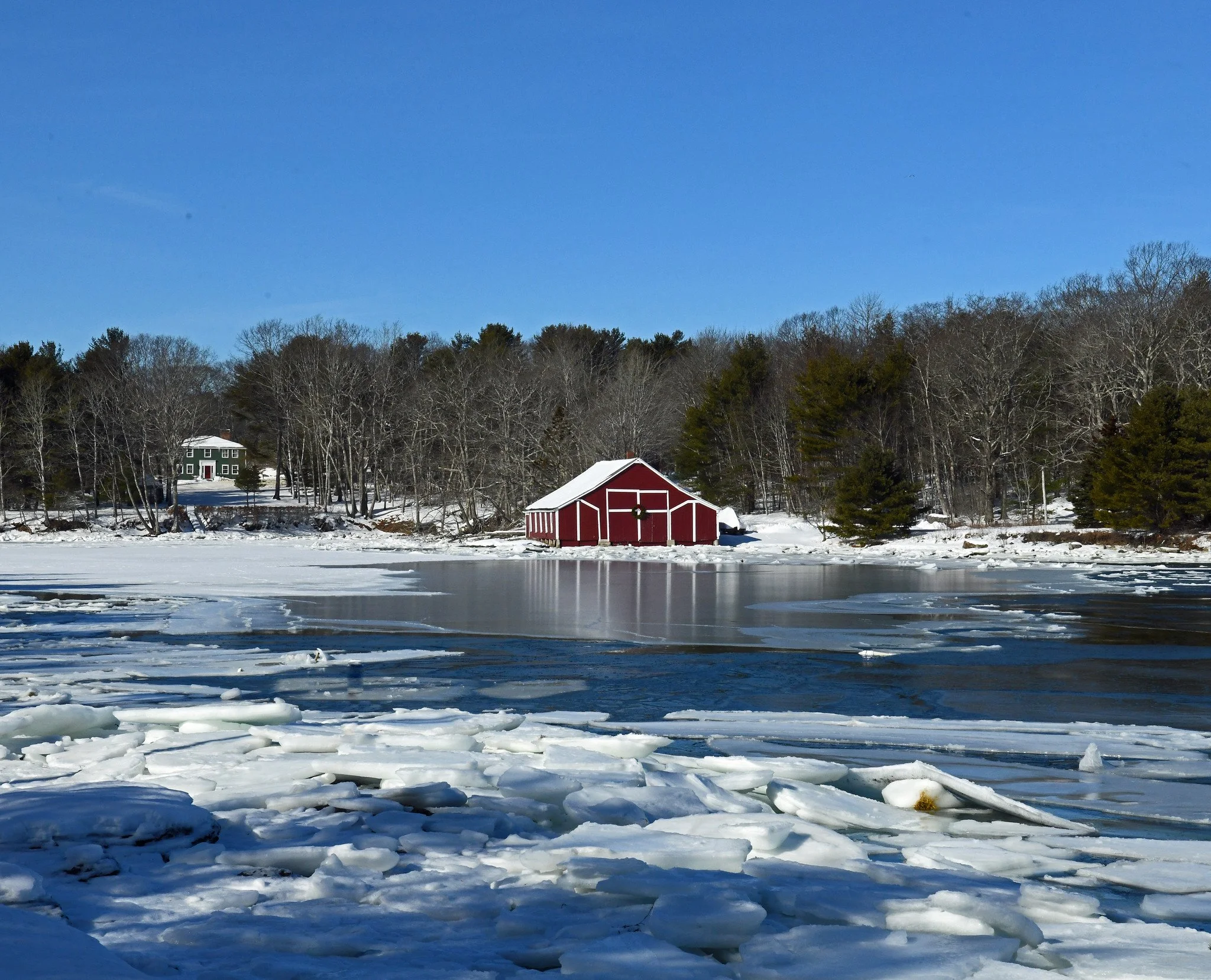
Compare those to this image taken early in February:
By the way, as you may know, a “blizzard” is officially defined by the National Weather Service by wind and visibility, not snow accumulation. More specifically, a “blizzard” is a severe storm with sustained winds or frequent gusts of 35 mph or greater, accompanied by considerable falling or blowing snow that reduces visibility to 1/4 mile or less for at least three consecutive hours.

(Images taken in Blue Hill, Maine, on February 2 [sun] and 23 [snow], 2026.)
Comment

Comment

In the Right Place: Bracing and Ducking

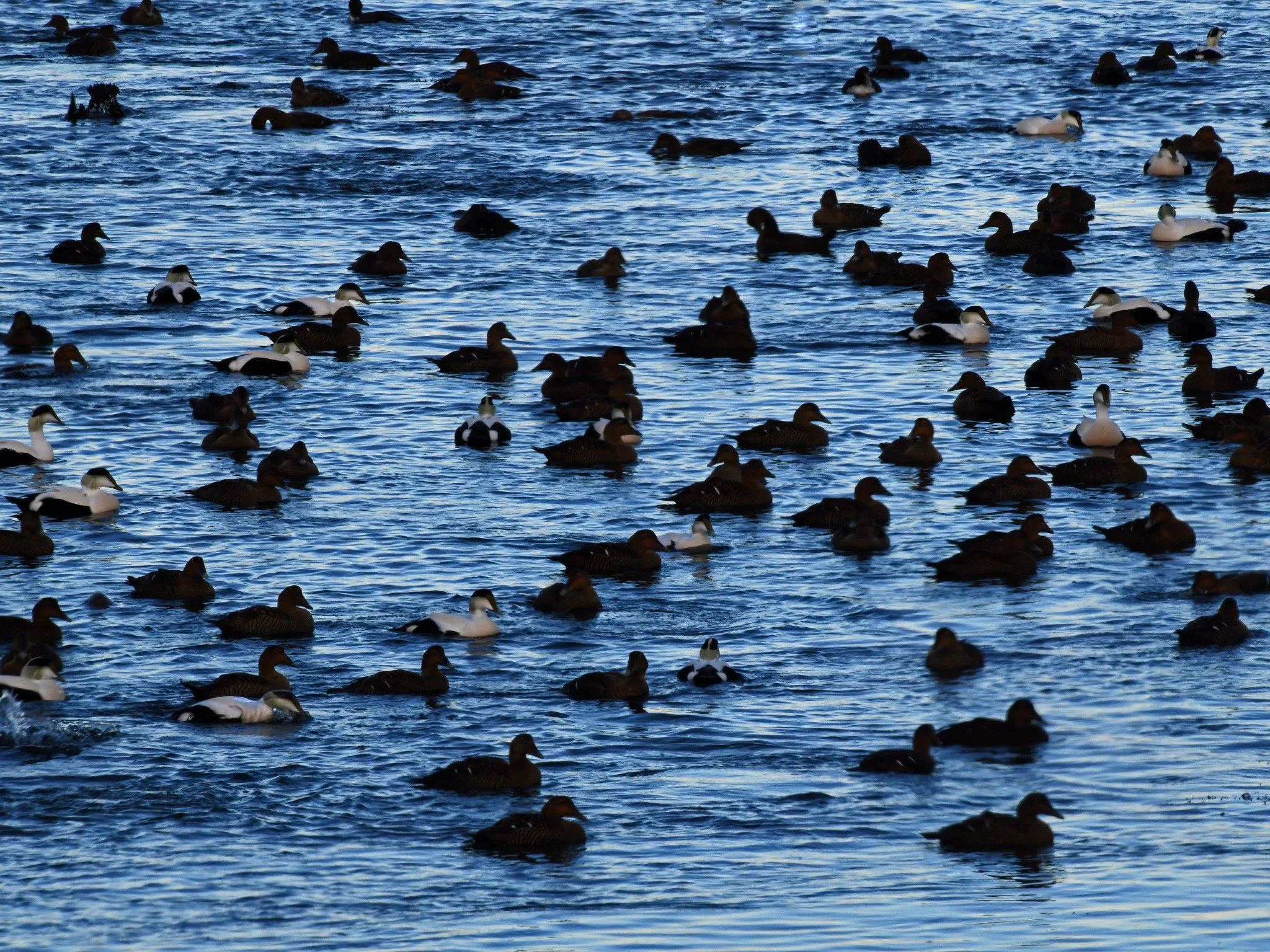
We’re bracing for the mother of all snowstorms, which is supposed to hit later this morning. The nor’ east wind here already is up to 24 mph as I write, and I’m wondering how the local common eiders, our largest native ducks, will fare today and tomorrow.

These birds, shown feeding here recently, are ever-diminishing attendees of the annual winter convention of common eiders at the Blue Hill Reversing Falls. A decade or so ago, close to a thousand eiders would dine in the cold, turbulent waters there in the winter. They would pluck blue mussels off rocks like grapes and gobble them whole; they’d also dive for other mollusks, starfish, and crabs. The fast-rushing waters at the Falls are virtually never frozen over.

The mussels are gone from most of our coastline now due to environmental factors and the birds’ voracious appetites. The eiders’ other prey also have been dwindling – and, seemingly proportionately, so has the annual convention attendance. We’re lucky to see more 100 eiders in a group (a “paddling”) there in recent winters. (Image taken in Blue Hill, Maine, on February 10, 2026.)

Comment

Comment

In the Right Place: Magical Interlude

I’m getting tired of being snowed upon and I’m definitely not looking forward to the “significant snowfall” predicted for here tomorrow.

However, I have to admit that Maine put on one of her most magical winter performances here yesterday when the snow stopped falling, the sun appeared big and strong in a bold blue sky and lit up the crystalized landscapes – all in cold, clear air that seemed drinkable.

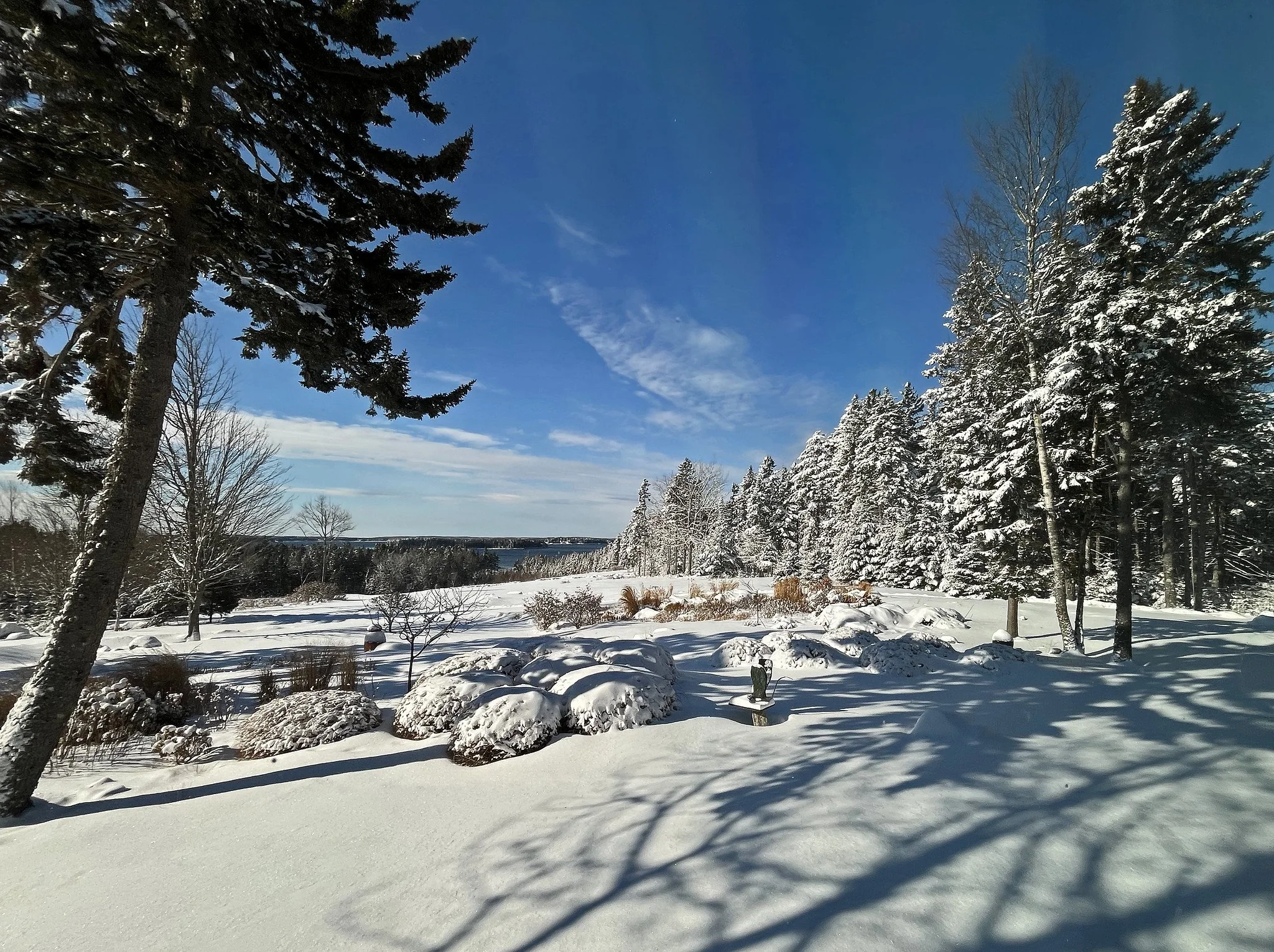
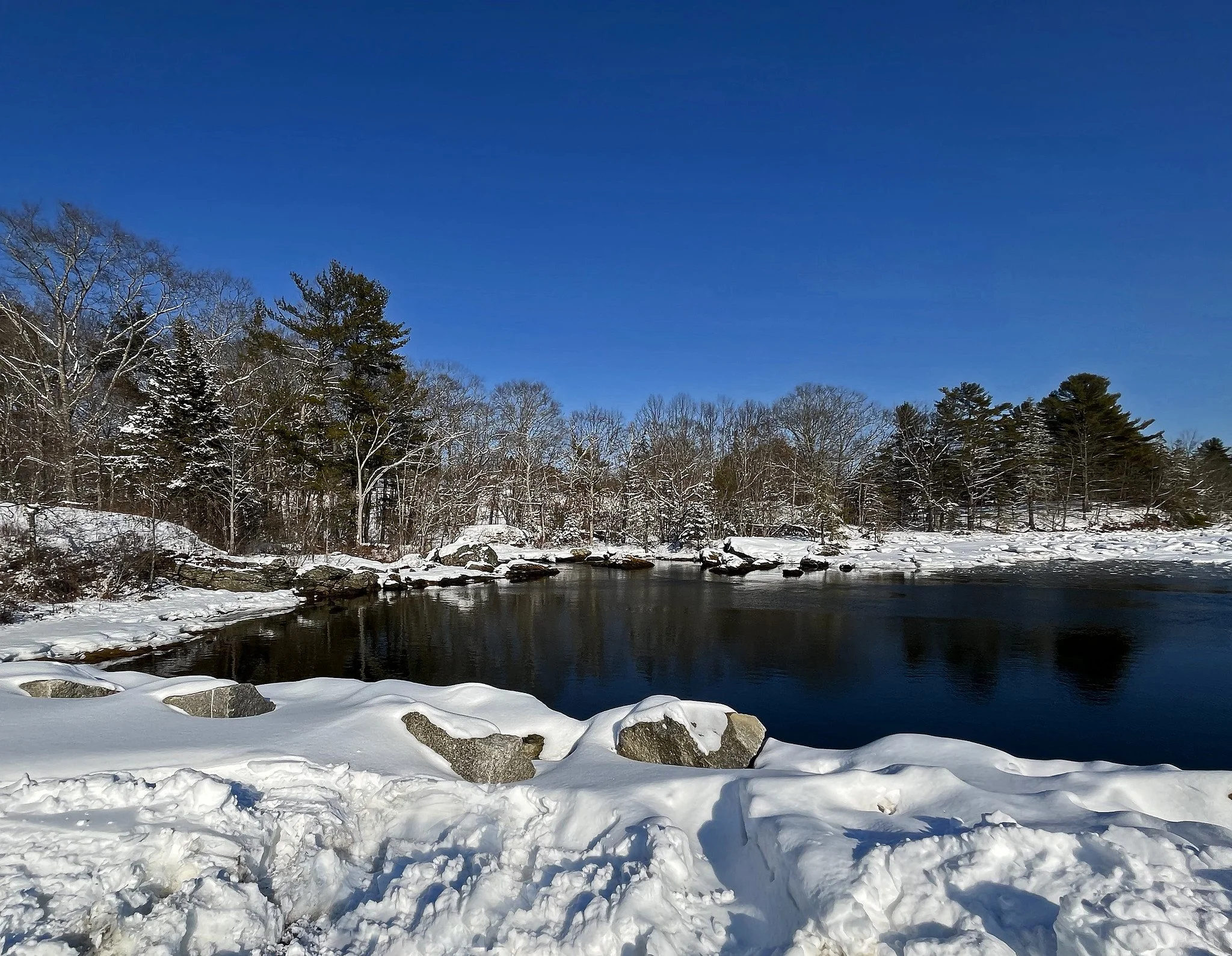
Above, you see our North Field yesterday, with her snowy slopes sliding down to Great Cove. Below,, you’ll see the mouth of Patten Stream at ebb tide yesterday, as its flowing fresh waters hold off the sea ice from totally closing-in Patten Bay:

(Images taken in Brooklin and Surry, Maine, on February 21, 2026.)

Comment

Comment

In the Right Place: Spiny but Tasty

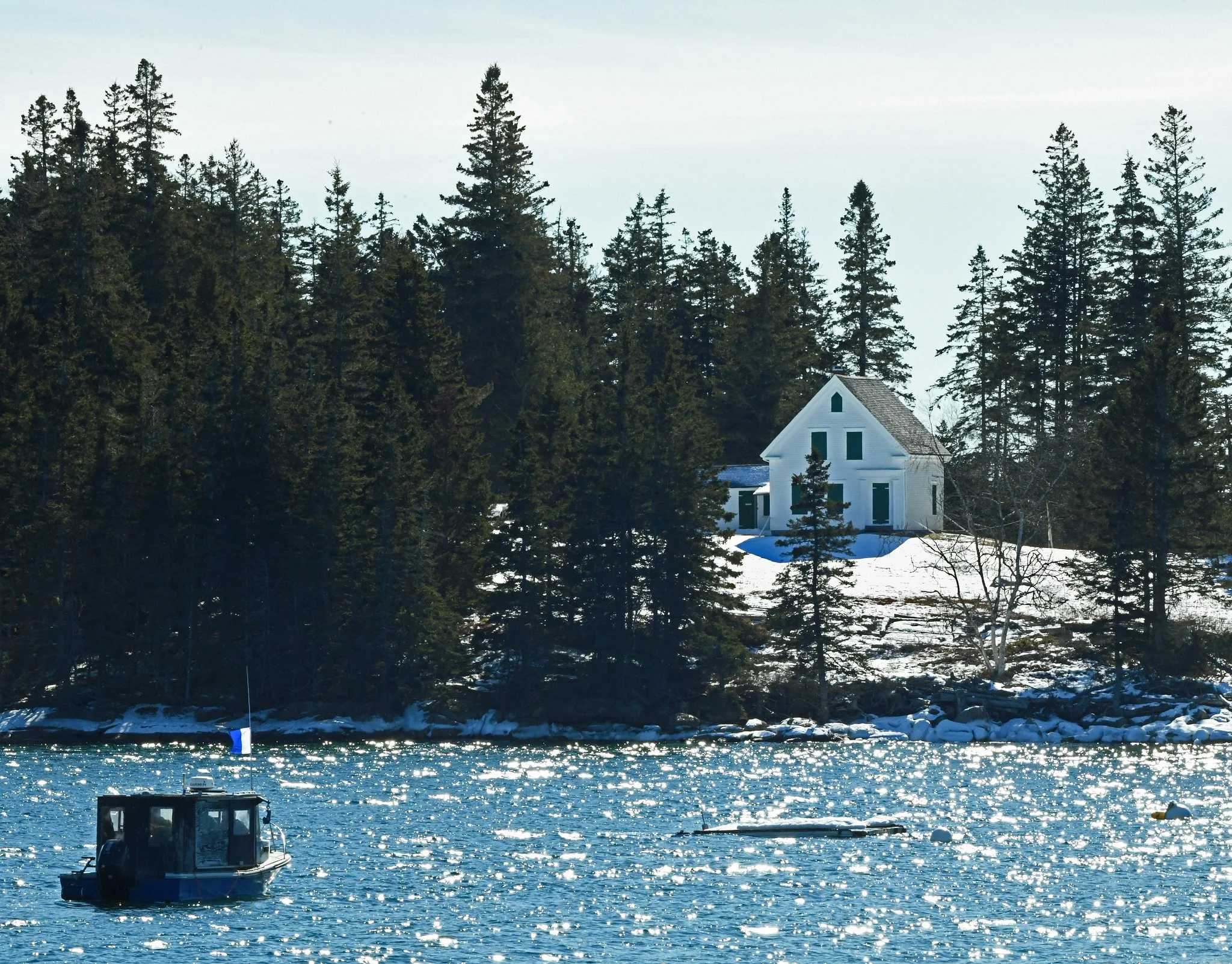
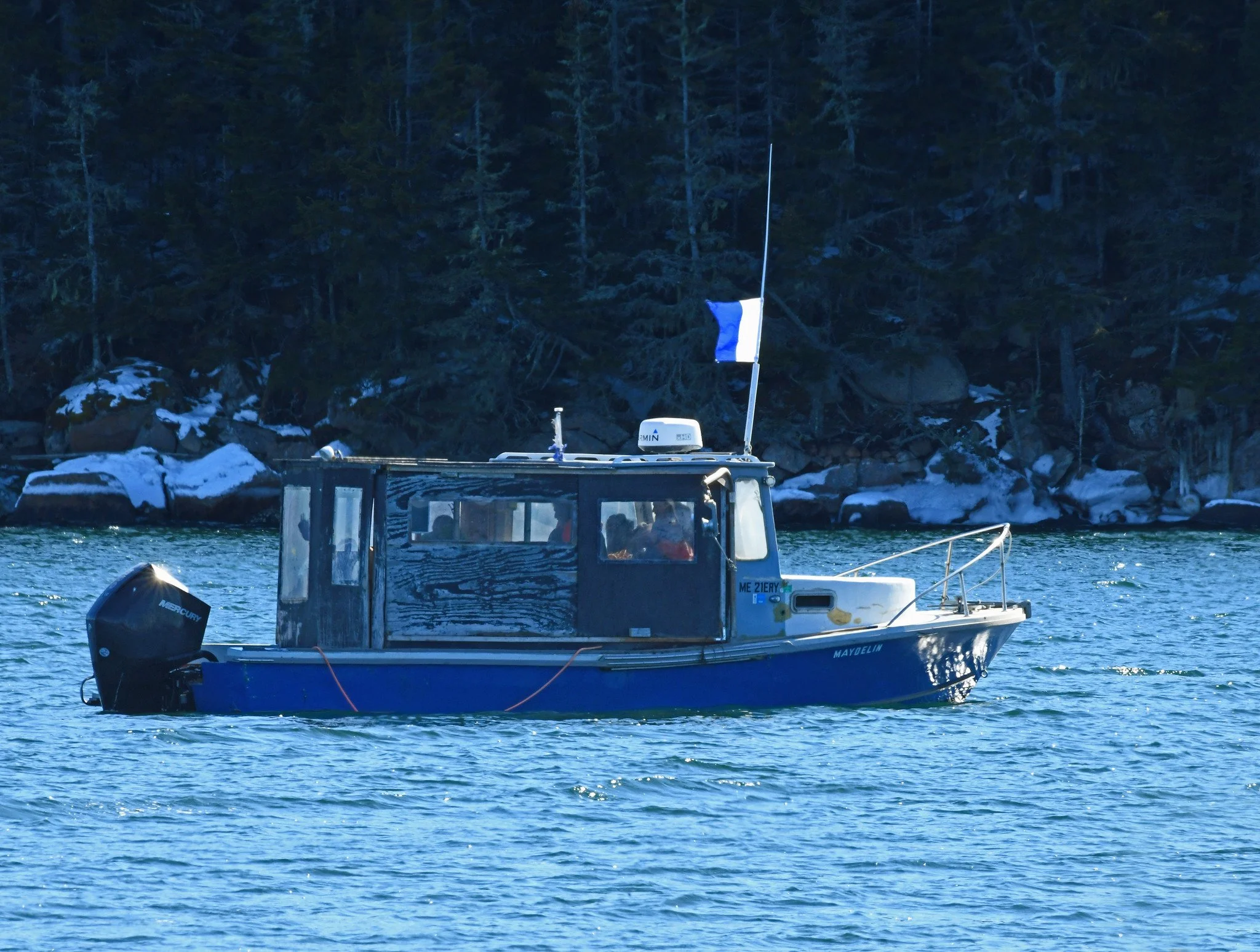
It looks like we got about 2 inches of new snow overnight here on the coast, but I’m trying my best to ignore it – too much of a good thing is becoming an annoying thing. Above is an image of Naskeag Harbor on very sunny Thursday. That’s MAYDELIN with her international diving flag hoisted in the left corner of that image.

We’re at the peak of Maine’s green sea urchin season when the spiny little cousins of starfish are mostly hand-harvested by divers in wetsuits and underwater breathing gear. (A few harvesters reportedly use small “drags” [dredges] to scoop them up.) Judging from her flag, MAYDELIN apparently is a diving vessel that other vessels must give wide berth to.

The green sea urchin (Strongylocentrotus droebachiensis) is a cold-water delicacy that’s loved by many for its bright yellow/orange reproductive organs, known as uni, which reportedly have a sweet, creamy, and intensely briny "ocean butter" flavor. They’re apparently enjoyed raw by many as sushi/sashimi or cooked with pasta or eggs. (Images taken in Brooklin, Maine, on February 19, 2026.)

Comment

Comment

In the Right Place: Slivered

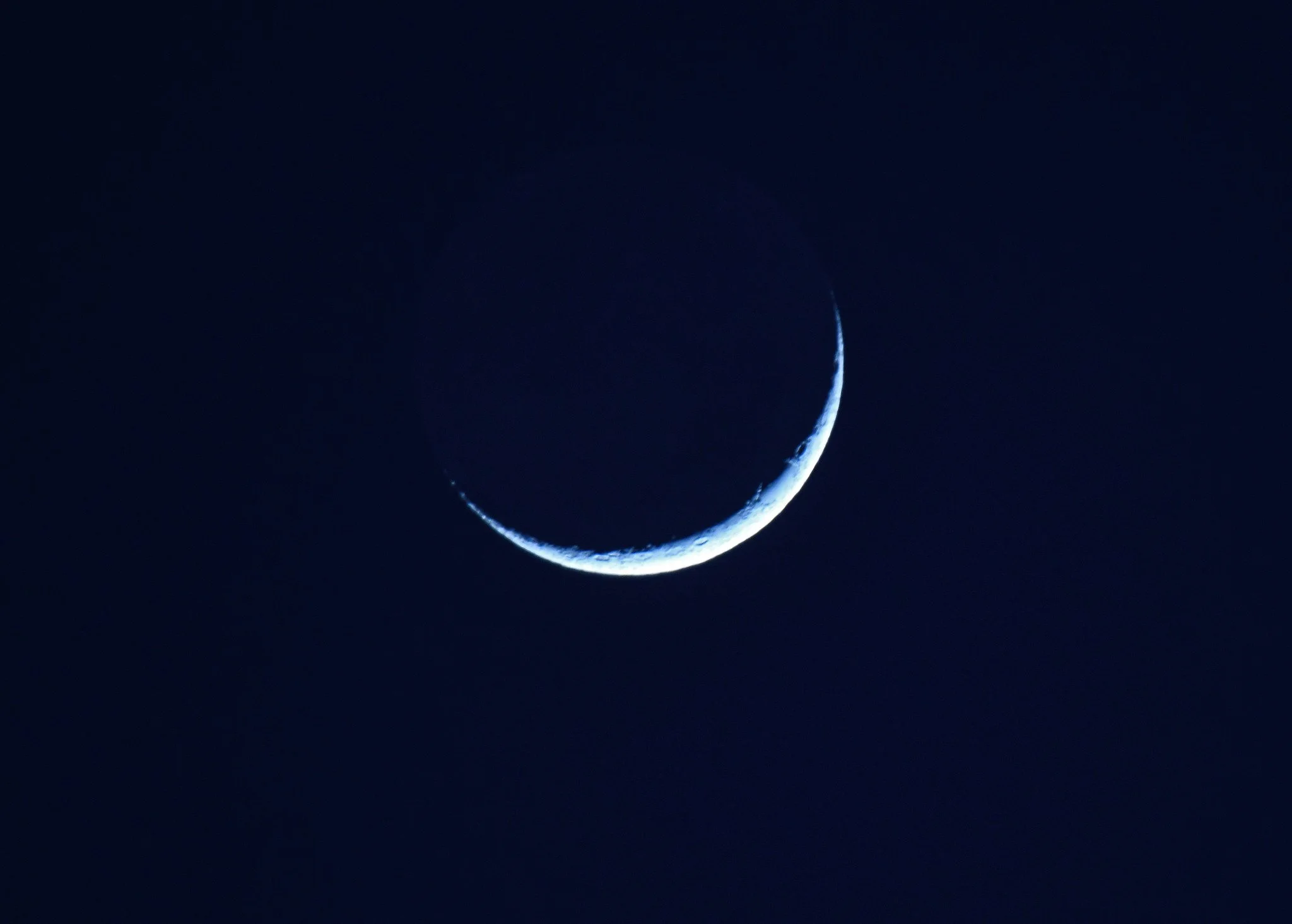
As my fellow lunatics know, the moon is in the early stages of gaining sunlight (“waxing”) now and is showing slivered crescents in the West shortly after sunset. Below, you’ll see last night’s waxing crescent moon over Great Cove at 5:37 p.m. It was at about 10 percent lunar illumination.

The next major lunar phase will be the First Quarter moon on February 24, 2026, followed by the Full “Worm Moon” on March 3, 2026. (Image taken in Brooklin, Maine, on February19, 2026.)

Comment

Comment

In the Right Place: A Proud Daughter Returns

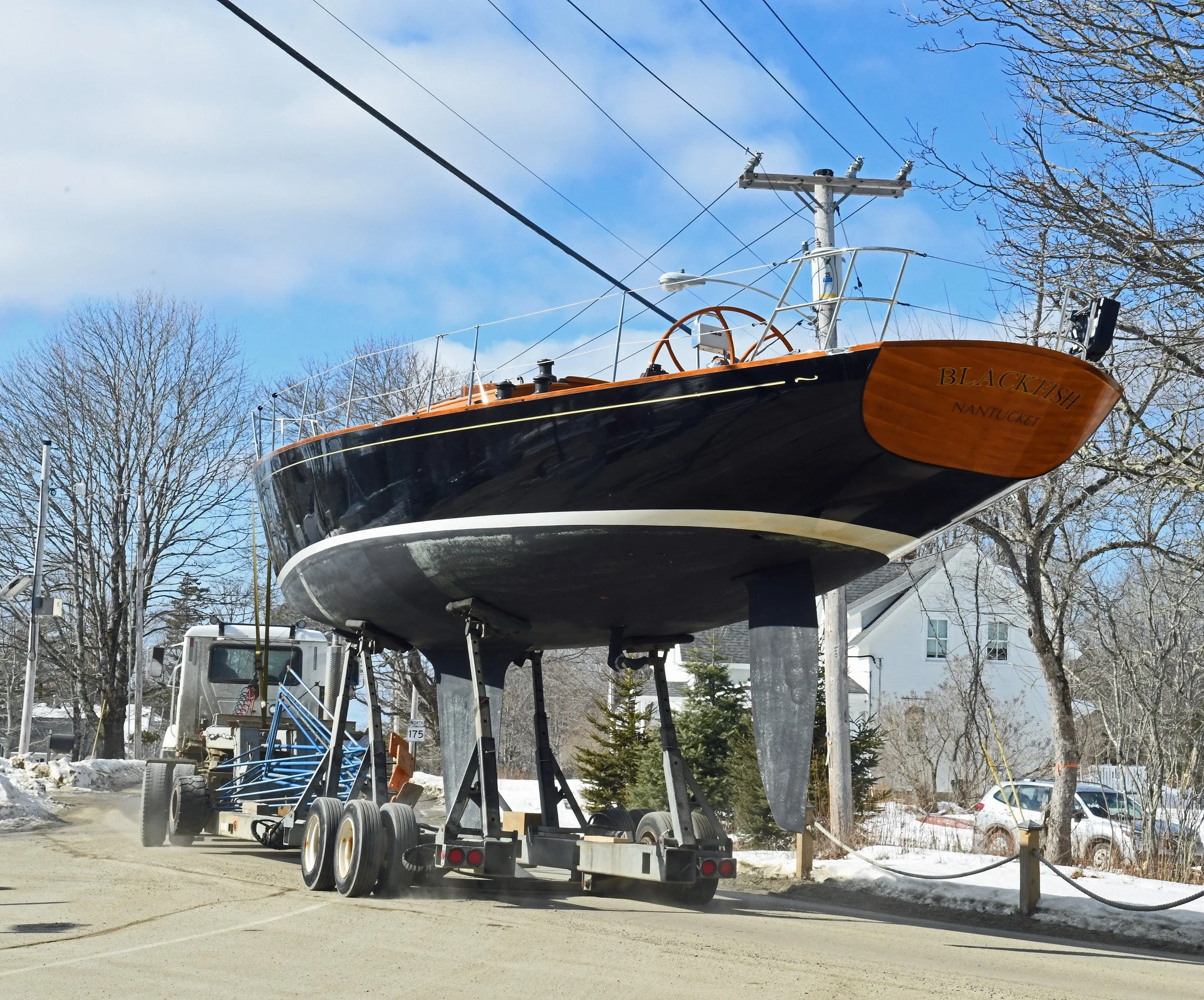
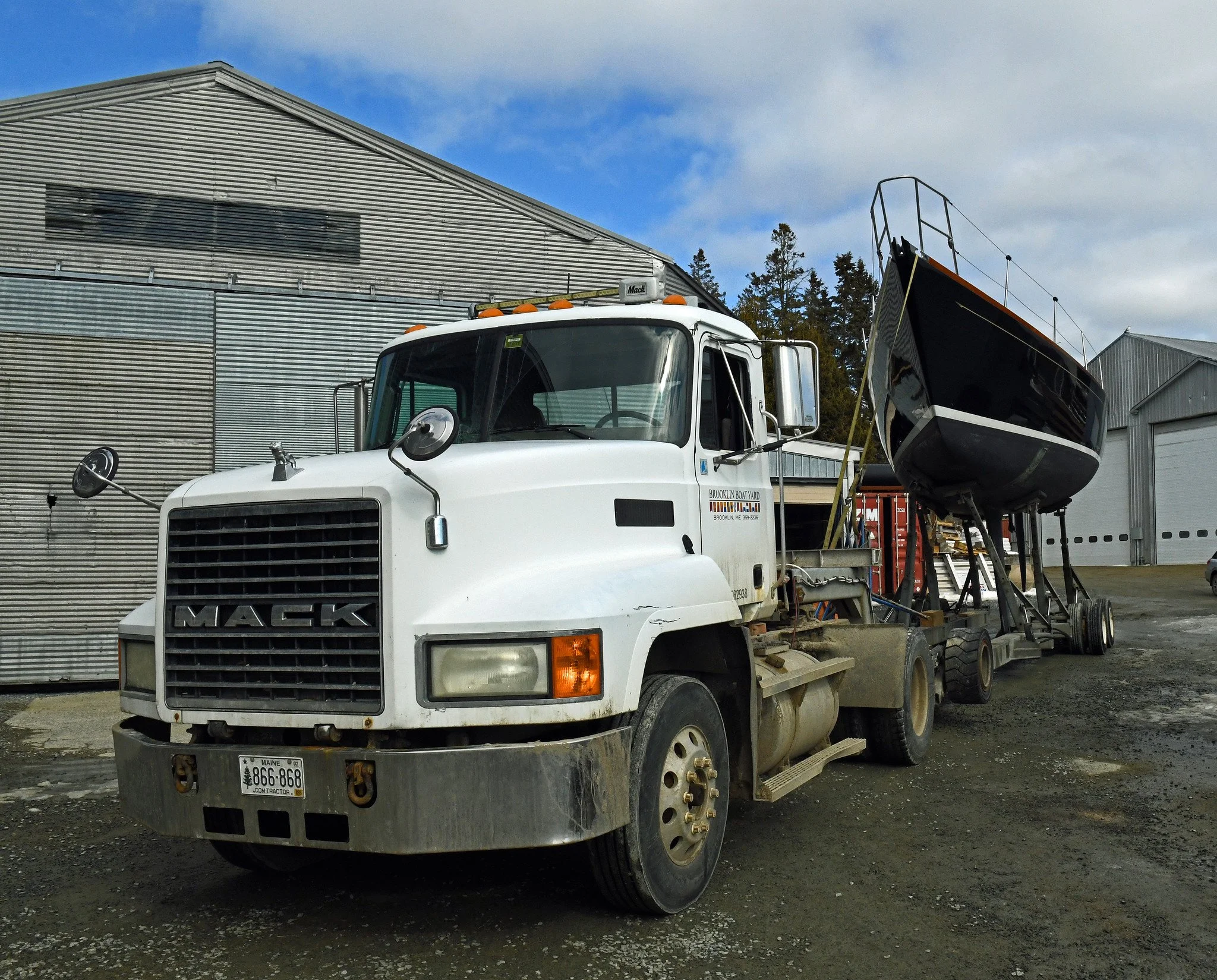
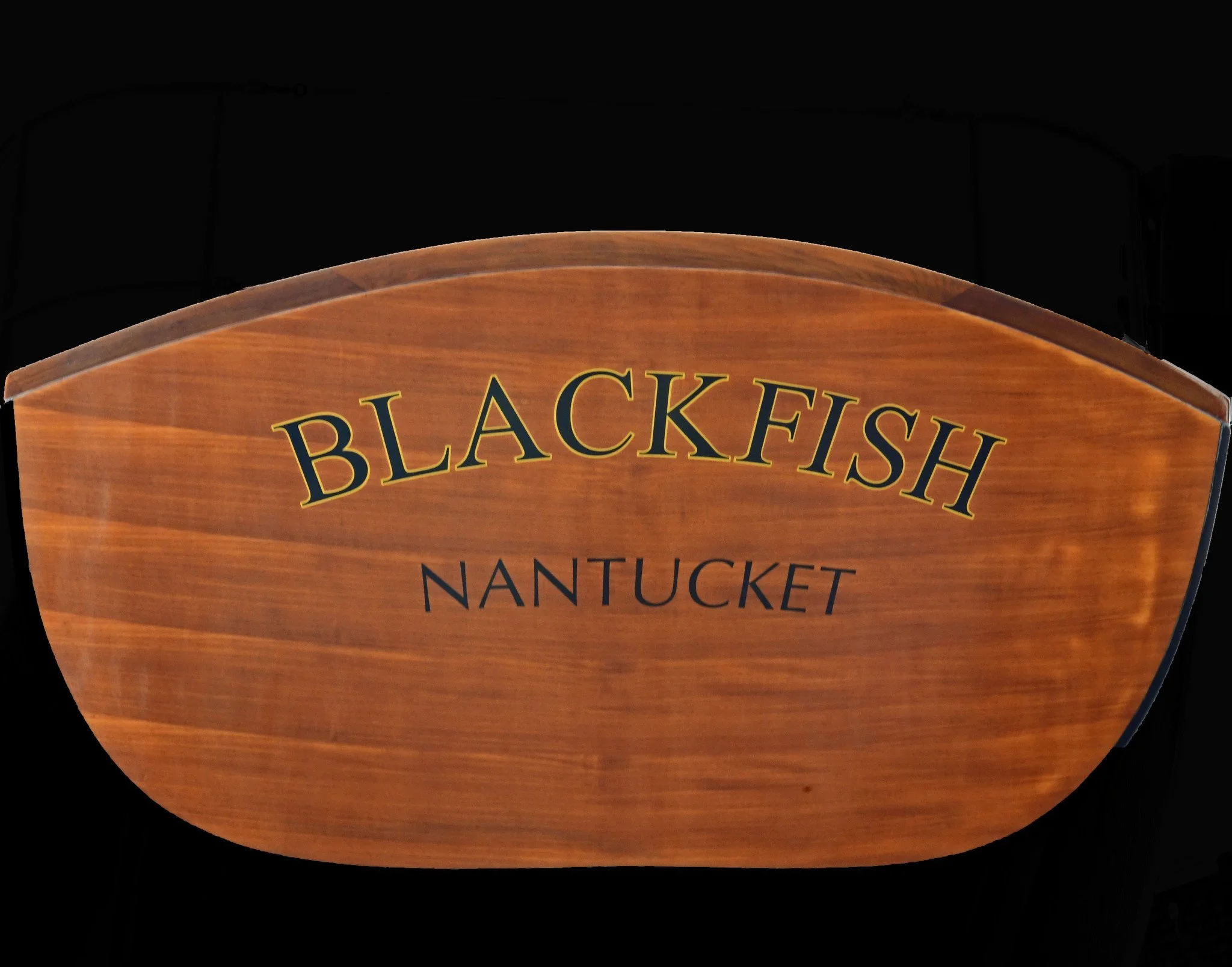
This is an unusual winter sight: BLACKFISH, a highly-regarded racing and cruising sailboat, is out of storage and on the move, apparently from Massachusetts. She was built here in the Brooklin Boat Yard in 2017 and is being transported back to her birthplace for a new paint and varnish job. She home ports in Nantucket. It was a joy to see her again.

BLACKFISH is well described in her WoodenBoat Profile: “While Blackfish has a modern keel, rudder and carbon fiber mast (faux painted [as wood]), designer Jim Taylor is proud that she accomplishes what she was specified to do and be: drop-dead gorgeous above and a race boat below.”

Here’s her data for you serious sailors: BLACKFISH’S length overall is 49’ and she’s 35’2” at the waterline, with a beam (widest part) of 11’7” and a weight of 16,600 pounds. She’s rigged as a sloop and has a sail area of 973 sq. ft. Her engine is a 45 hp Yanmar diesel. She races in the Spirit of Tradition Class and reportedly clubs at the New York Yacht Club.

(Images taken in Brooklin, Maine, on February 17, 2025.)

Comment

Comment

In the Right Place: (Snowy) Form Follows Function

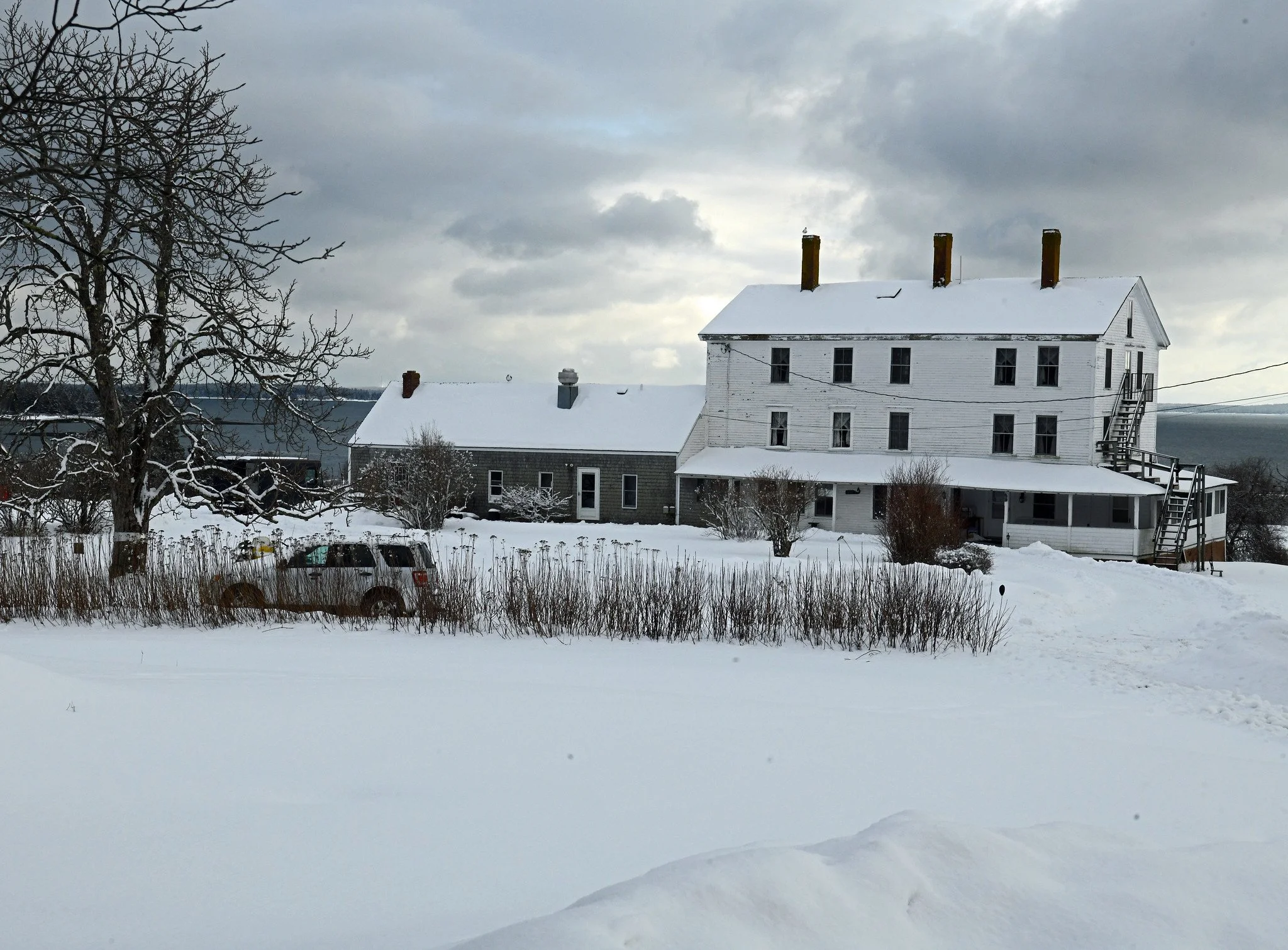
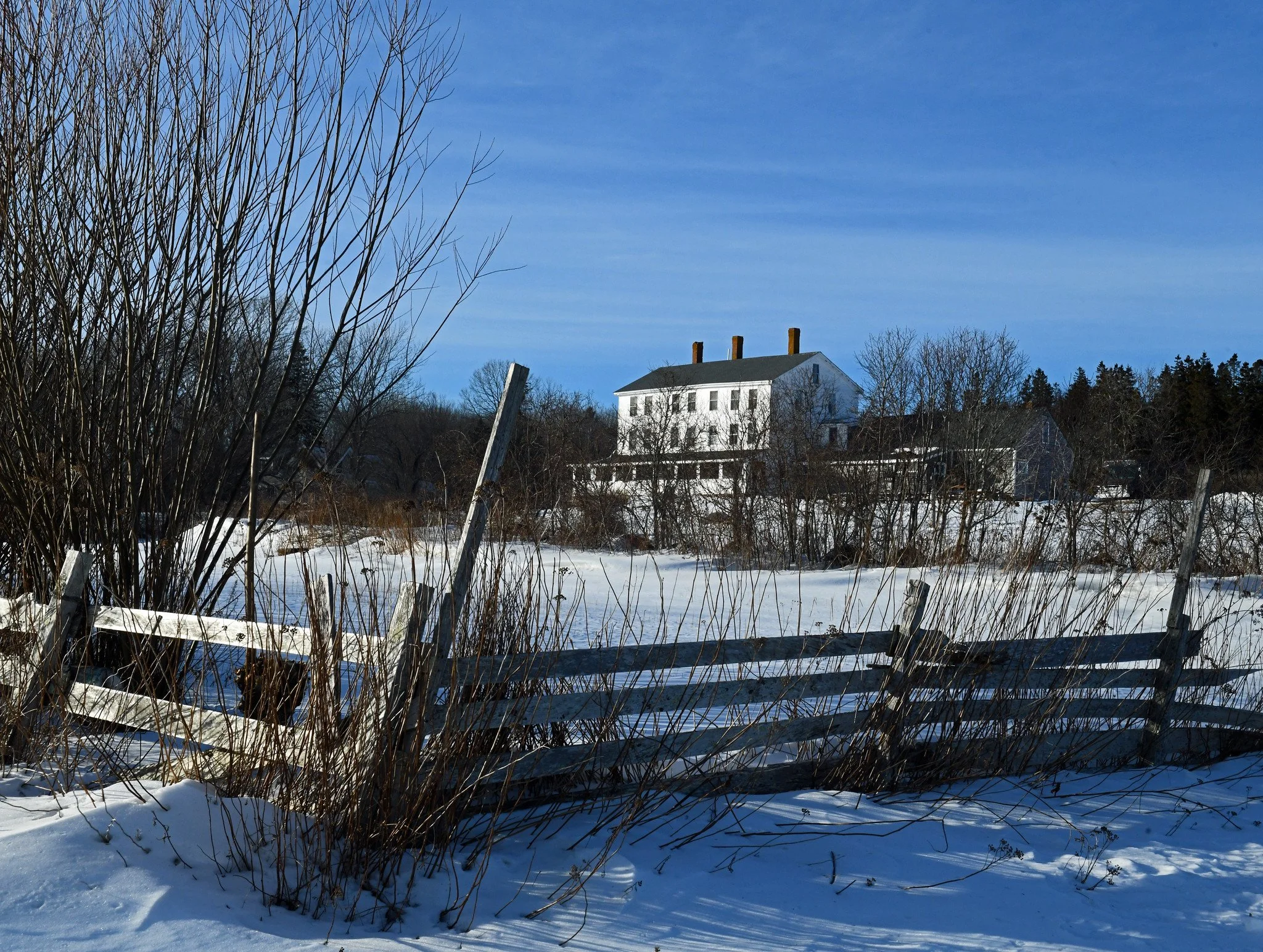
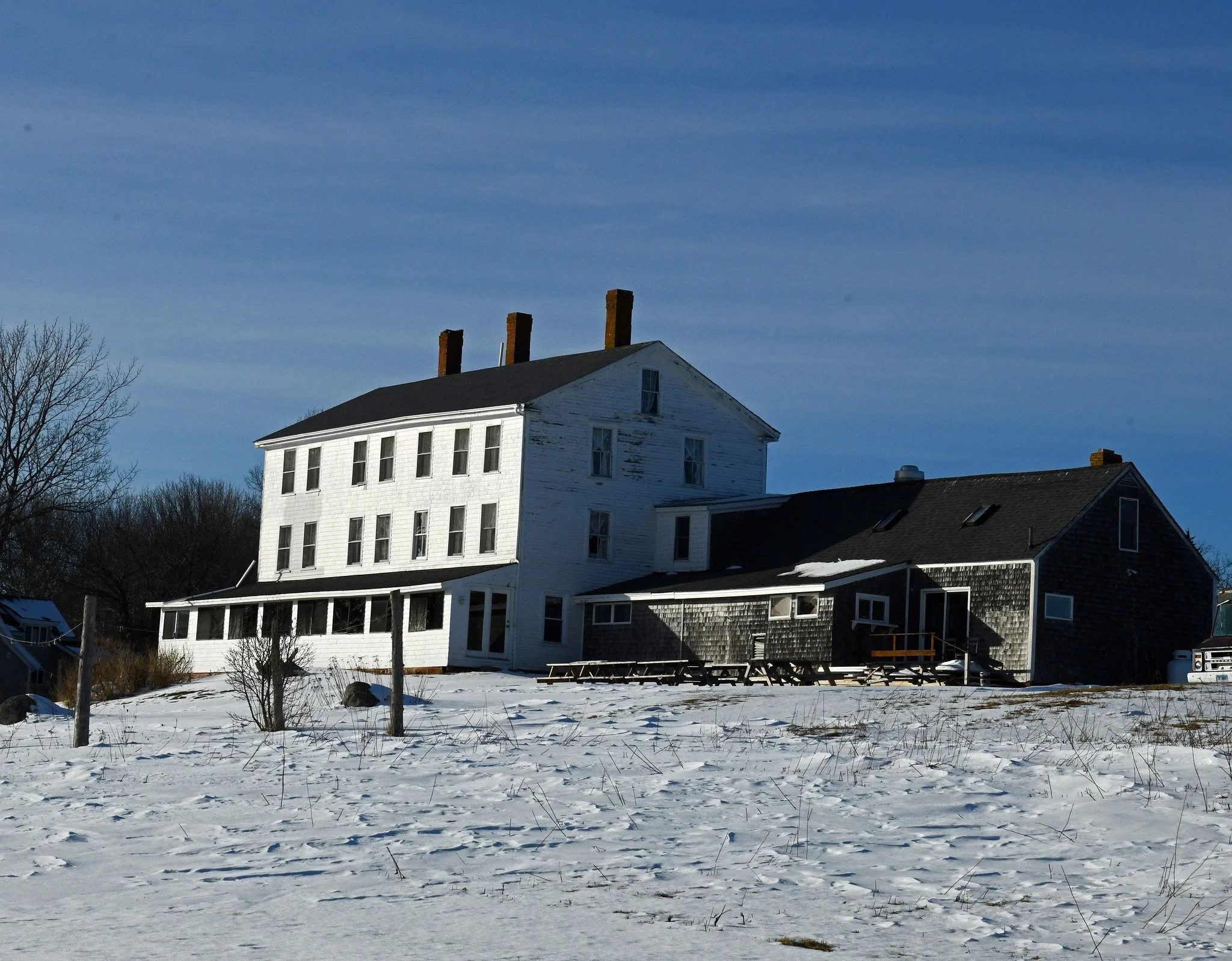
This post about three distinctive structures is the last of our Fantastic February Snow series. Here are the virtually imperceptible final flakes of the February 10-11 snowstorm falling on “The Lookout”; It’s an operational inn with parts built in the 18th and 19th centuries:

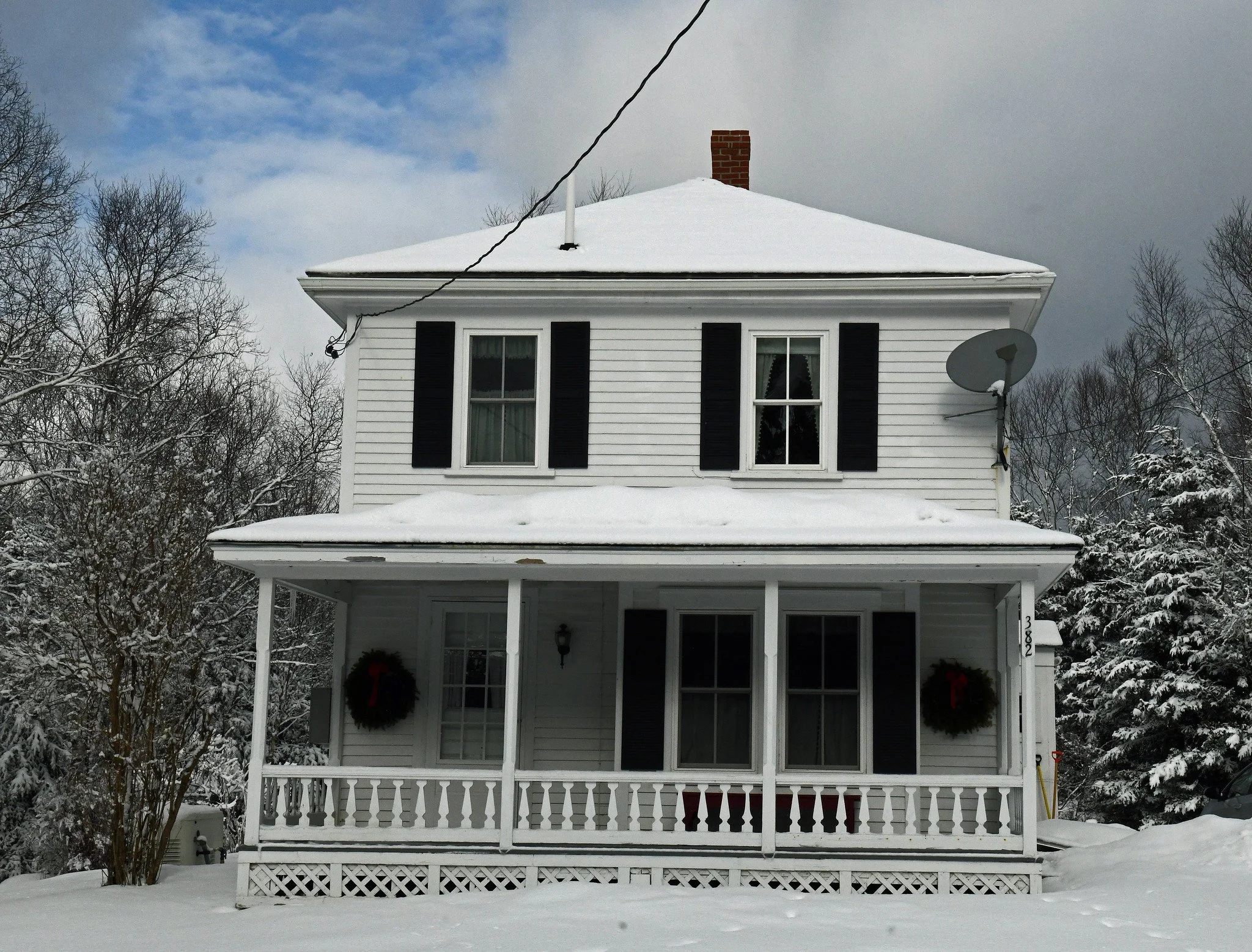
Below you’ll see an image taken as the snowfall was breaking up and the sky turning blue; it’s a residence that was built in 1899 and appears to be in the American Four-Square Arts and Crafts style:

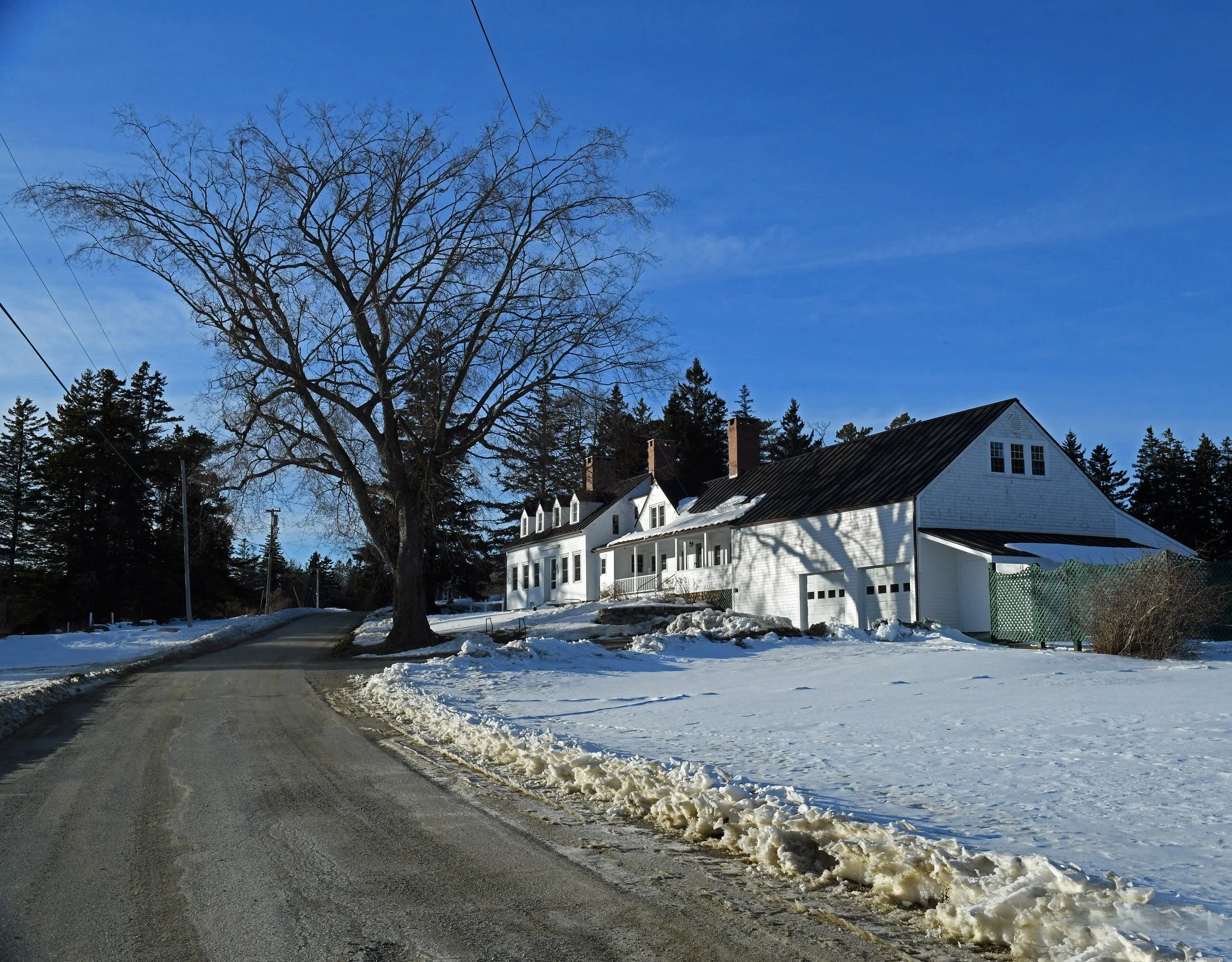
Finally, as a bonus, here’s an image of a large New England connected residence of unknown age; the image was taken on the last sunny day before the February 10-11 snowstorm started.:

(Images taken in Brooklin, Maine, on February 11 and 8 [connected house], 2026.) Click on the images to enlarge them.
Comment

Comment

In the Right Place: Enchanted Country Lanes

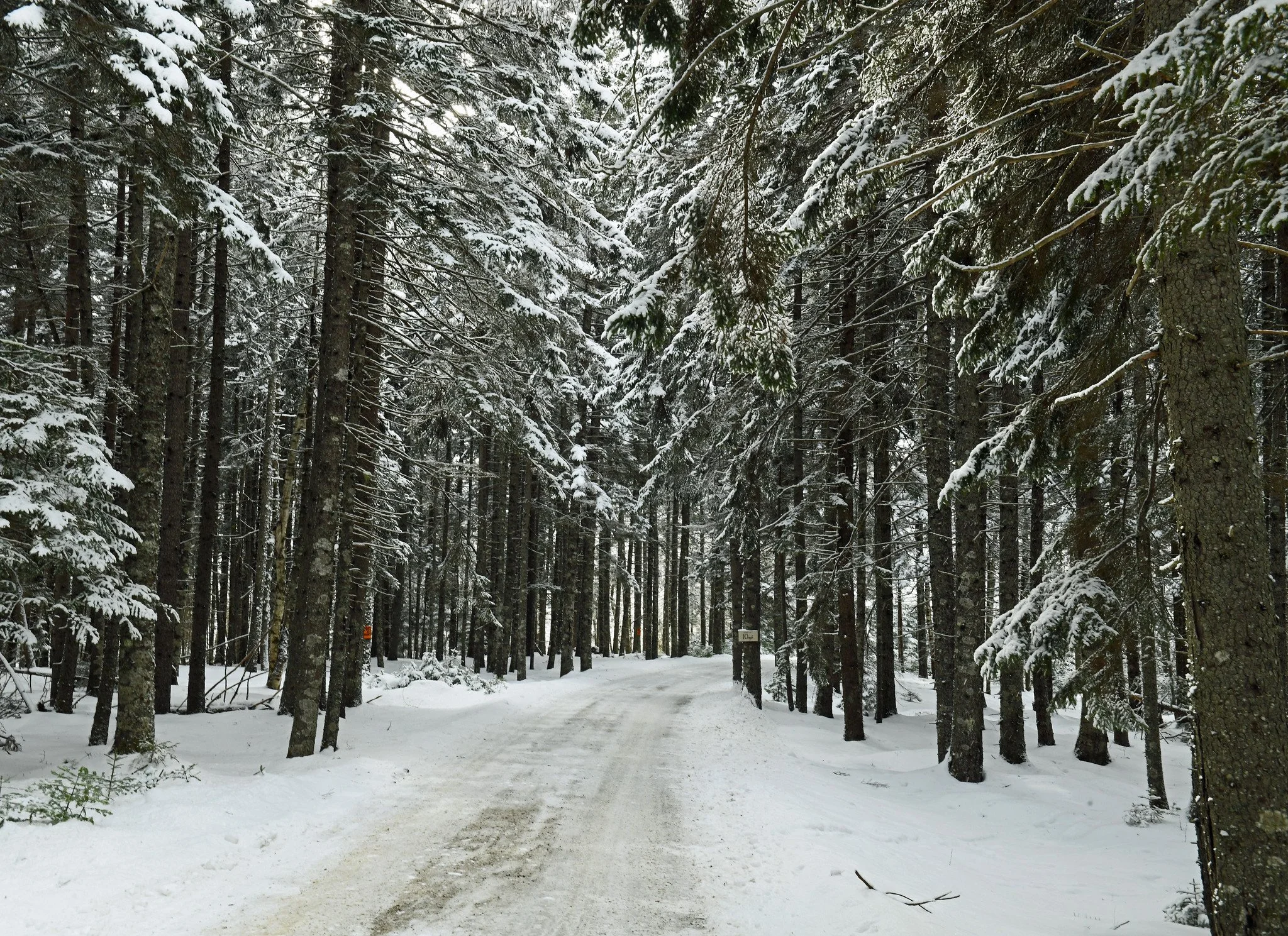
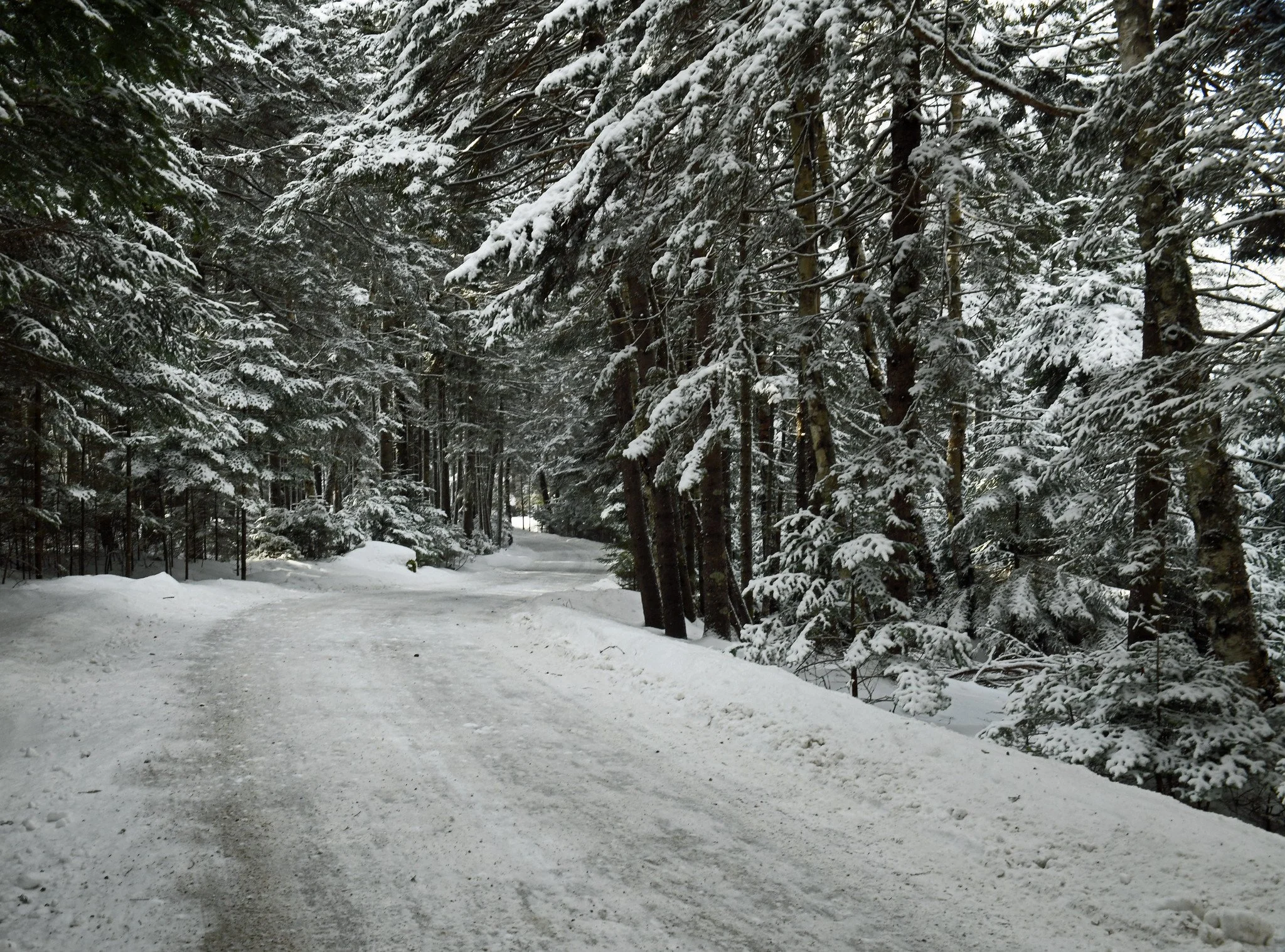
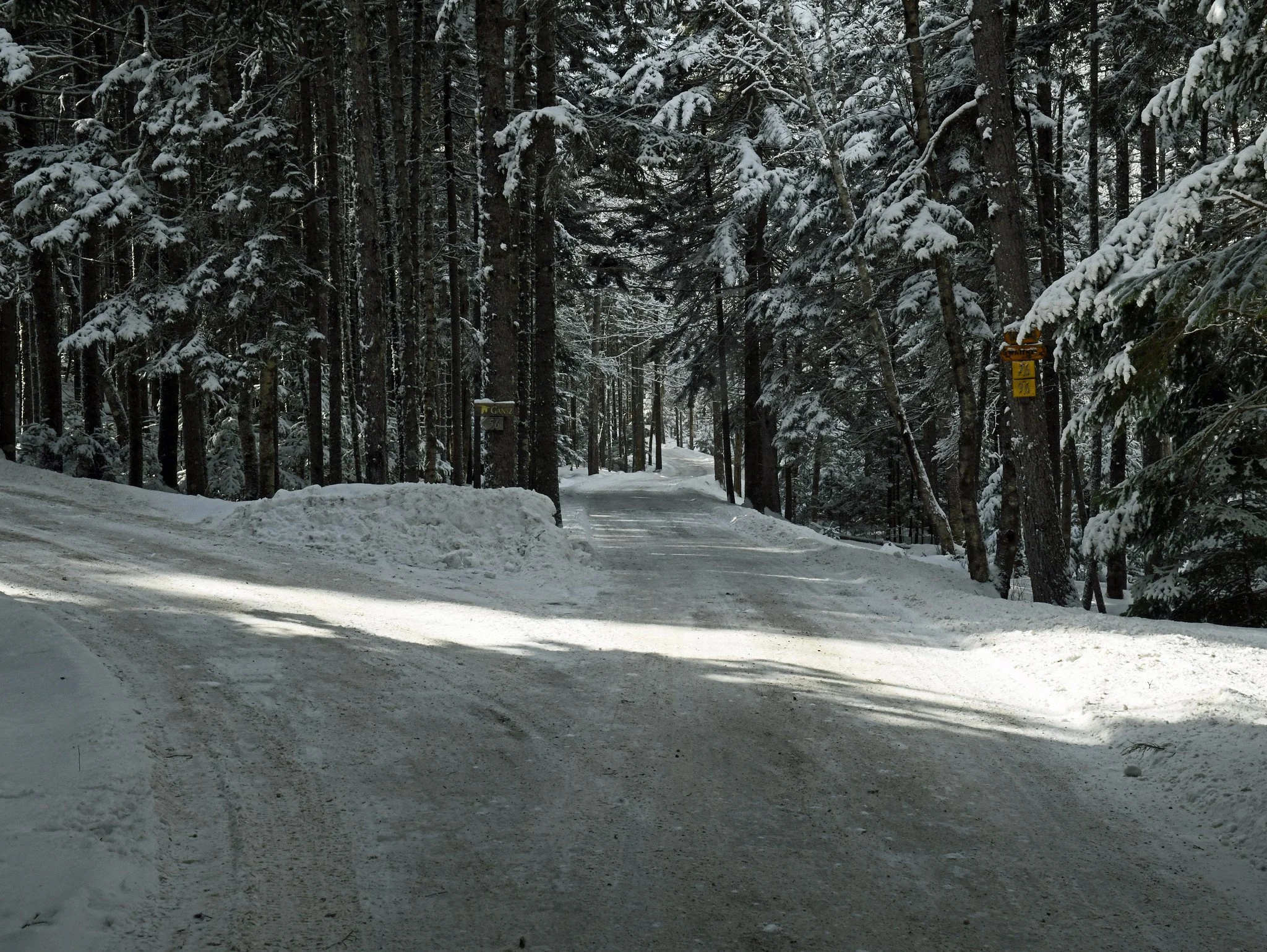
Continuing with our Fantastic February Snow series: Snowfalls can enchant the many private lanes that lead to hidden driveways of really hidden coastal residences here, and these lanes look good even after they’re plowed. Most seemed to be plowed almost immediately after a snowfall and sometimes during it. The images here are all from Hope Lane.

(Images taken in Brooklin, Maine, on February 11, 2026.)
Comment

Comment

In the Right Place: Split Personalities

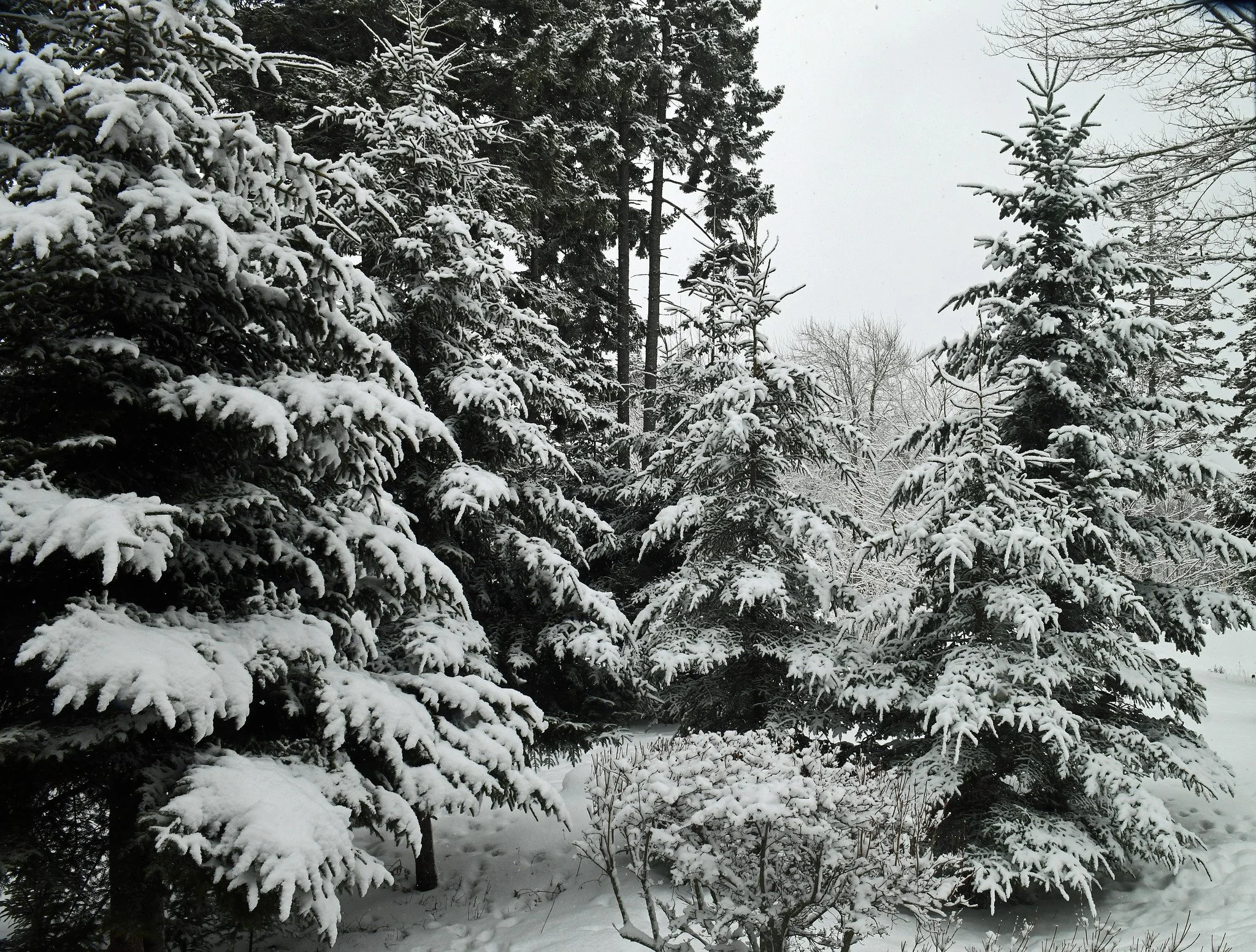
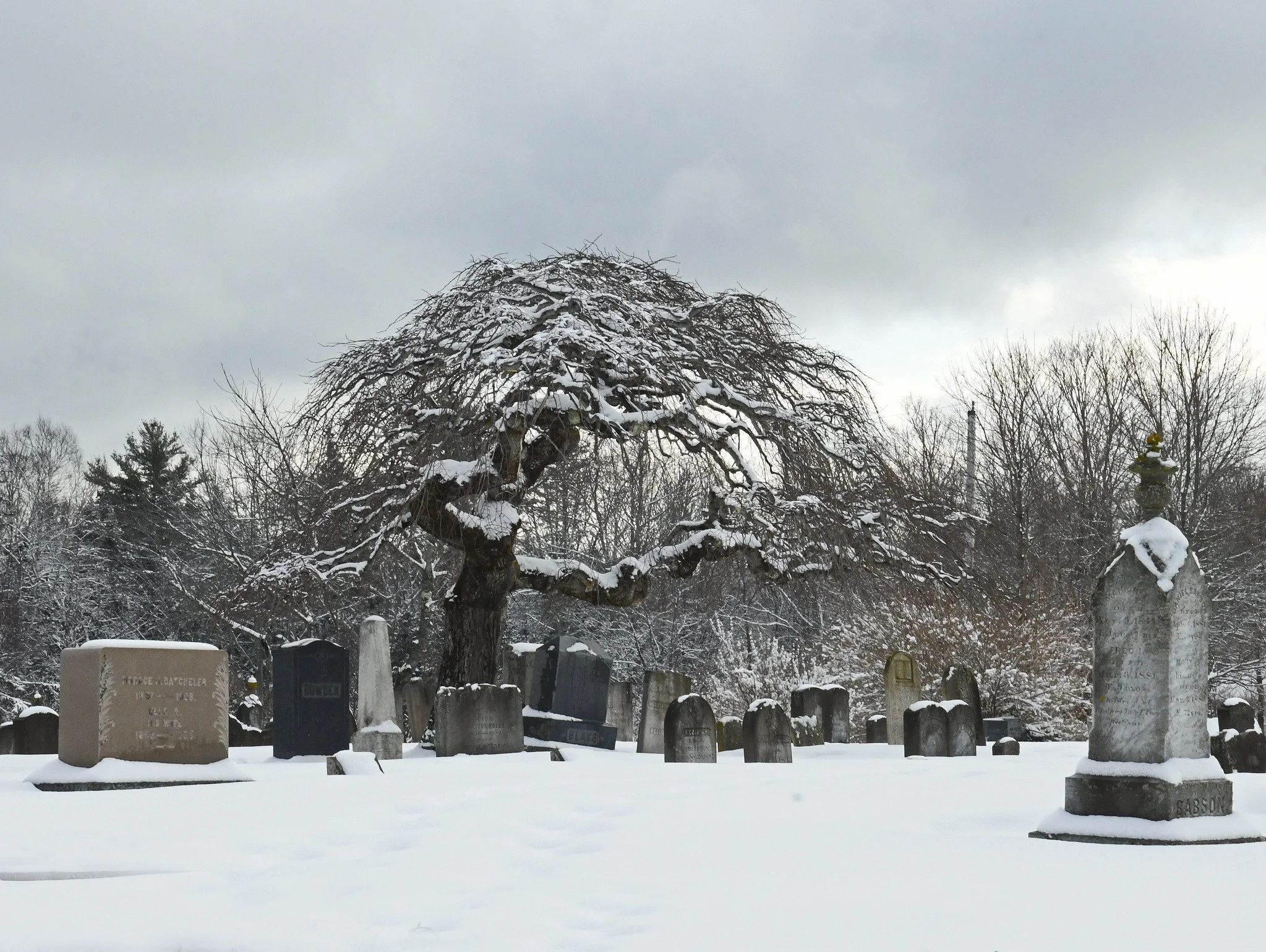
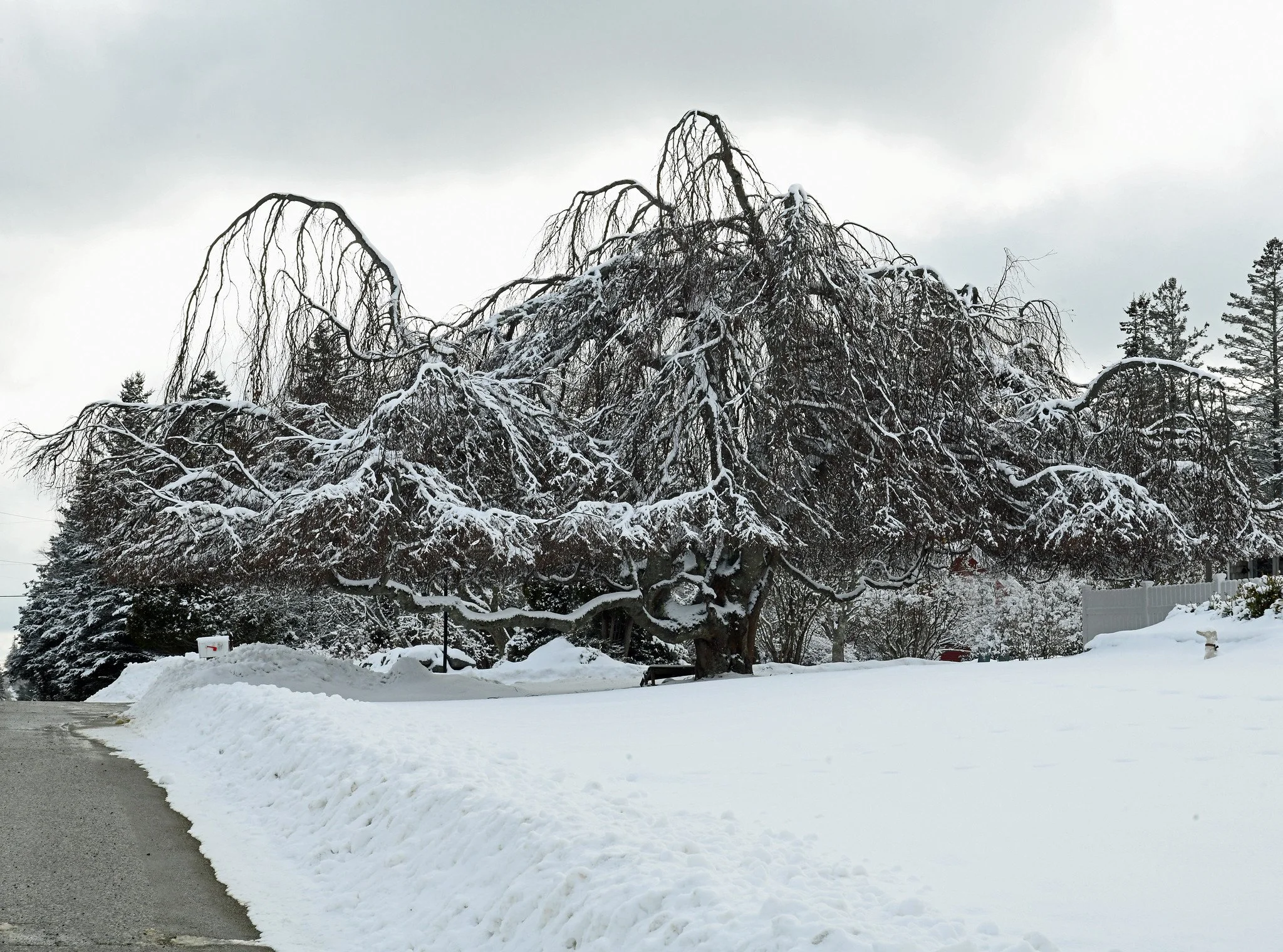
Continuing with our Fantastic February Snow series: A good snow seems to bring out the personalities of trees. Above you see the noble young spruce. Below, you’ll the caring old Camperdown elm and the tormented old weeping beech.

(Images taken in Brooklin, Maine, on February 11, 2026.) Click on the images to enlarge them.
Comment

Comment

In the Right Place: Red, White and Cold

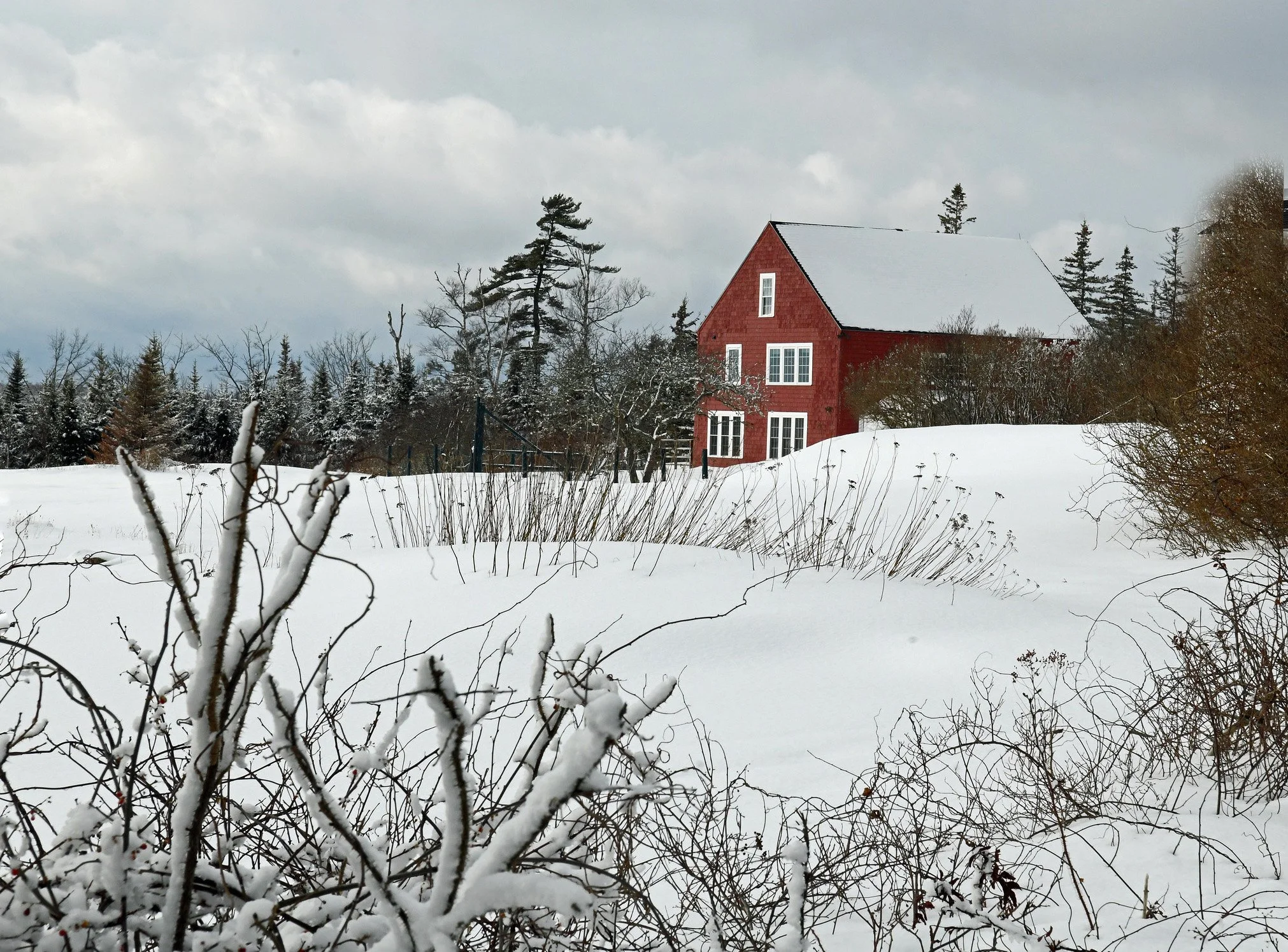
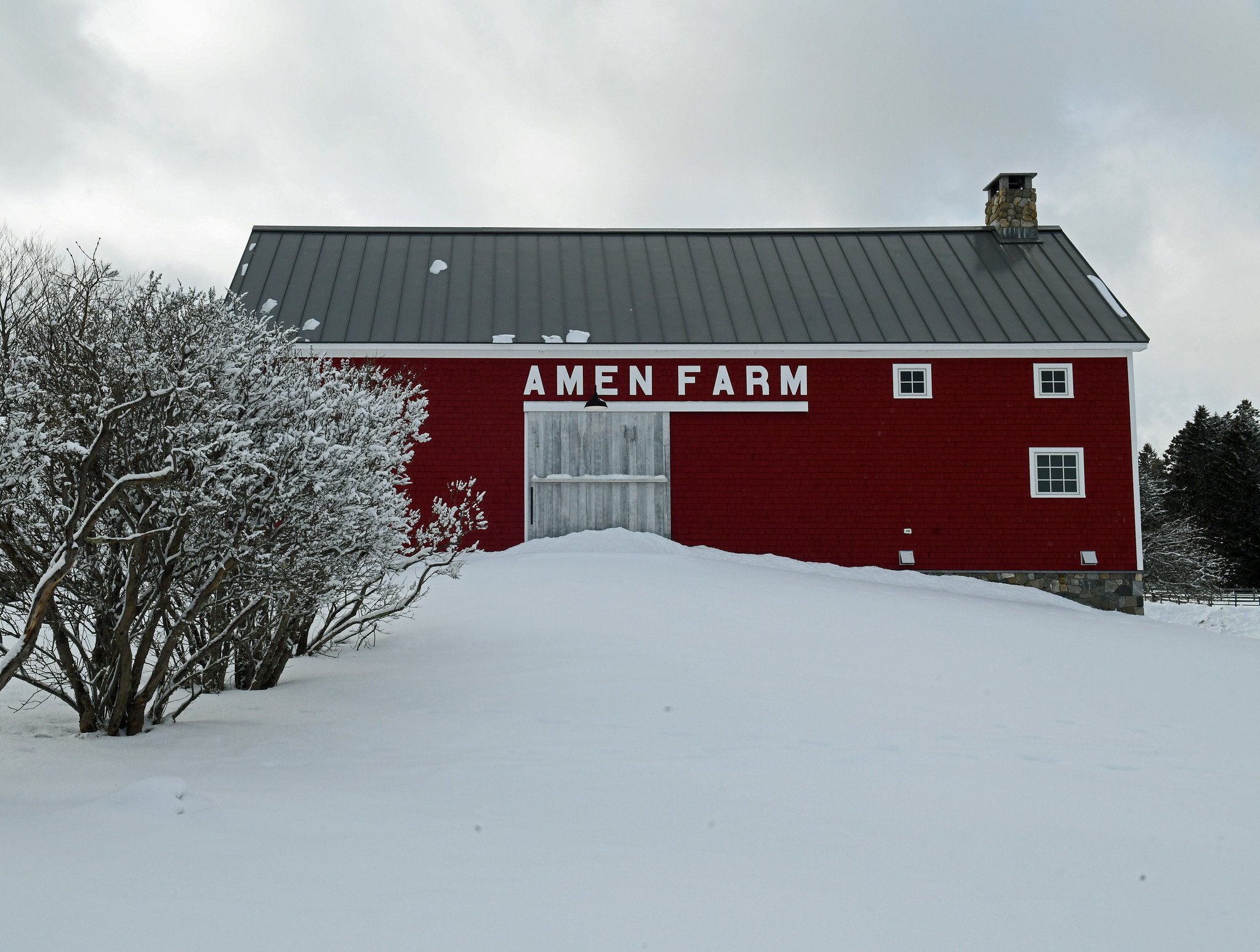
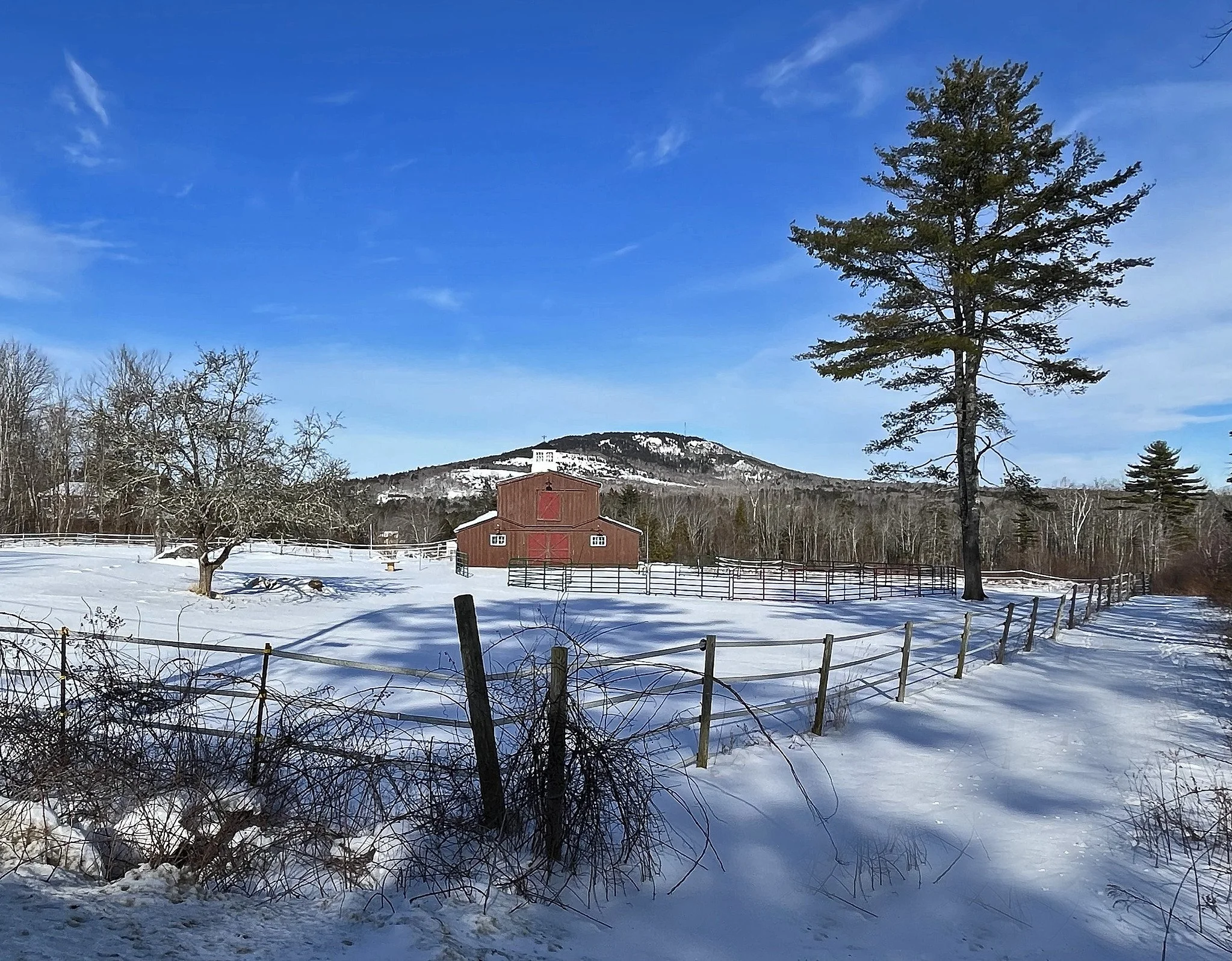
Continuing with our Fantastic February Snow series: Above and below are old red barns that have been converted into new living spaces and that look great in snow.

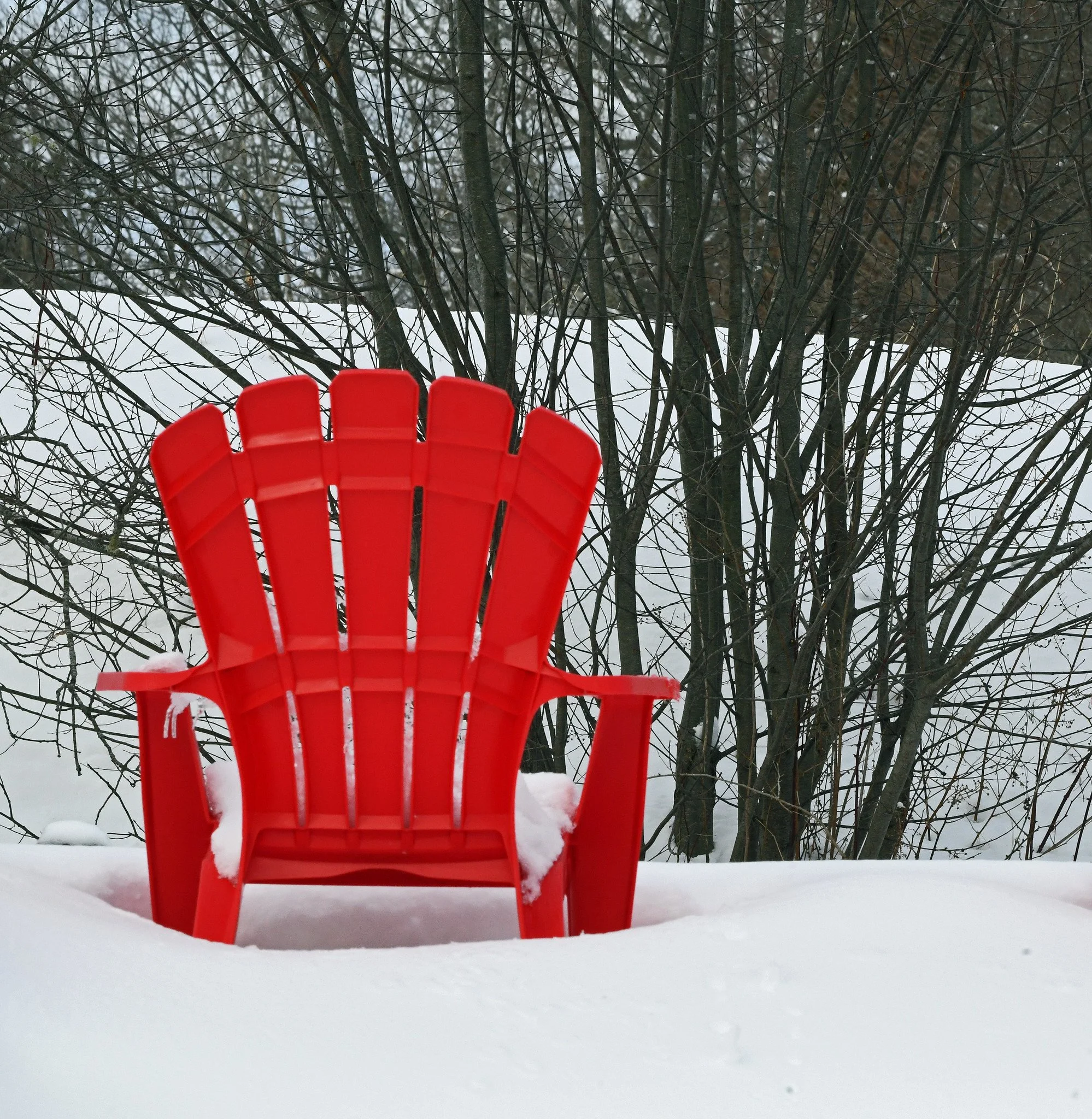
Below, you’ll see a hot seat (color-wise) in a cold place.

(Images taken in Brooklin, Maine, on February 11 and in Surry, Maine, [chair] on February 12, 2026.)
Comment

Comment

In the Right Place: Valentine Visitor

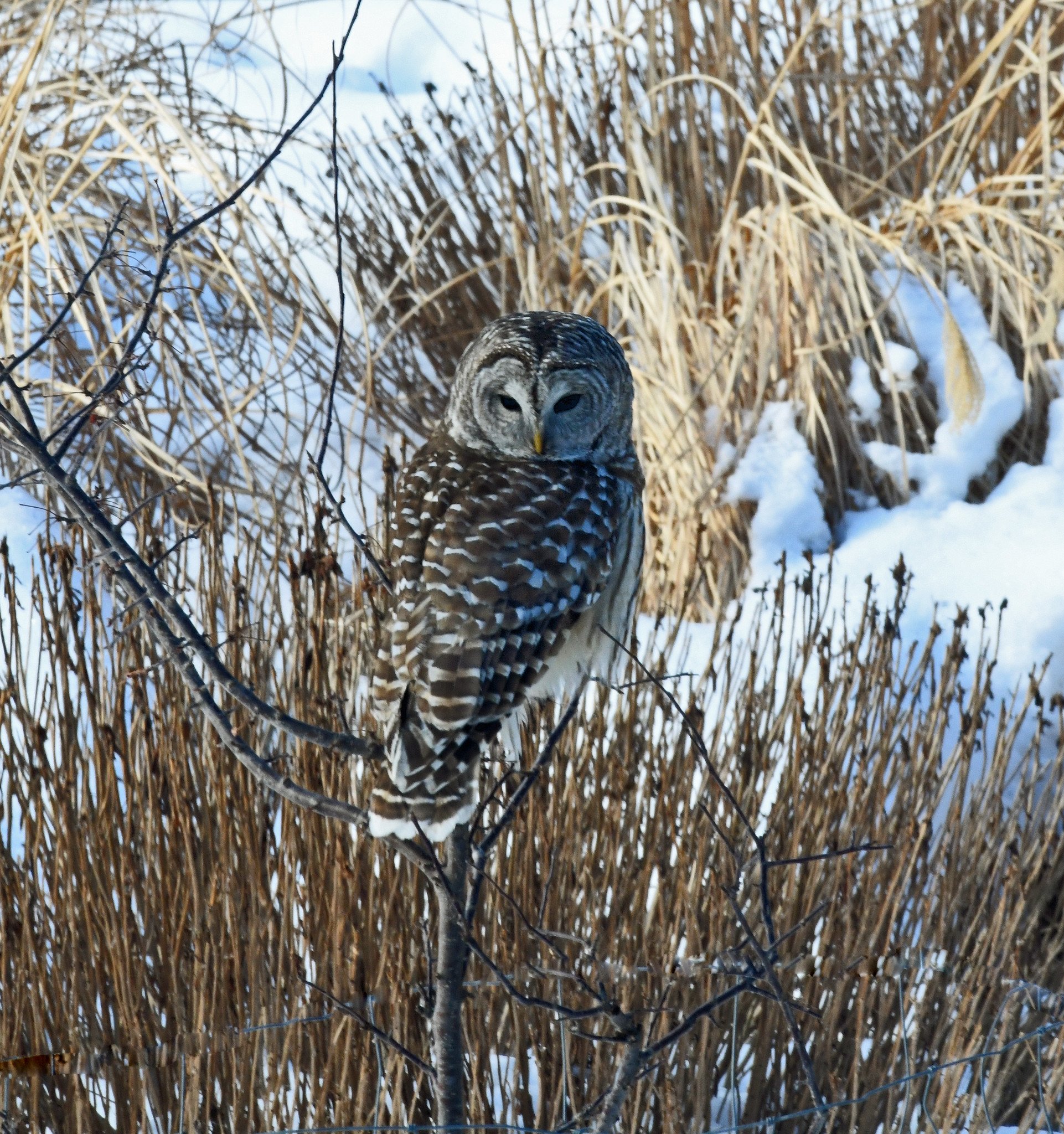
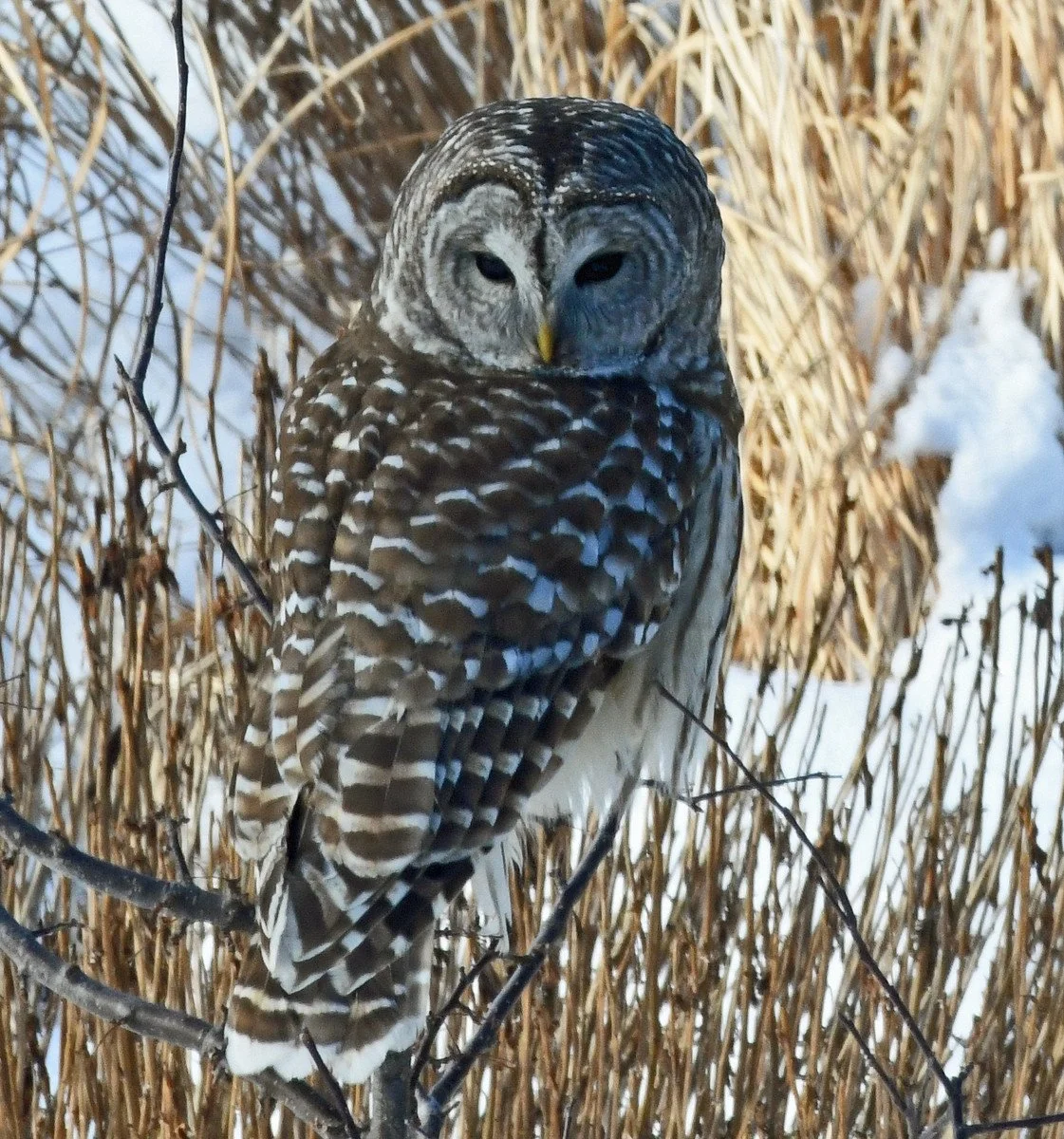
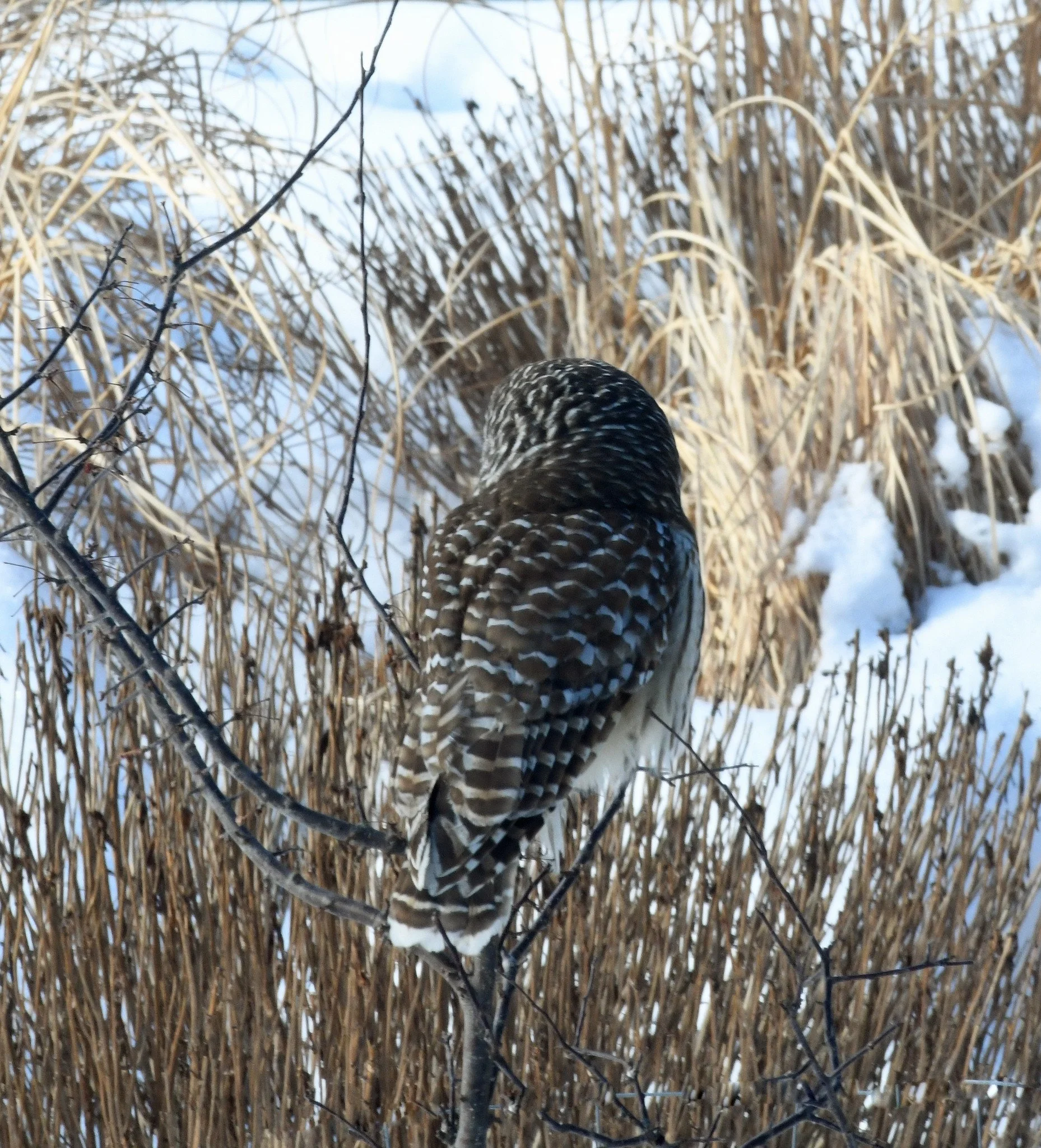
This handsome fellow paid us a visit on Valentine’s Day yesterday, but it wasn’t an act of love. He’s a barred owl, our only black-eyed owl. Owls his size (up to about two feet long) and smaller ones struggle to hunt in crusty/icy snow of the type that still blankets most of the land here.

This shy raptor apparently has been forced to take risks by not only hunting during the day, but by hunting in a garden near our house in bright sunlight where his movements caught Barbara’s eye as she glanced through a window. (“Dick, you’ll want to see this!”)

He looked thin and his impatient flitting from perch to perch indicated that he might have been desperately hungry. (Most owls that I’ve known sit Buddha-like on their perch during the day, only slowly moving their heads. They see more people than people see them.)

Barred owls can hear voles and other small mammals in their frozen tunnels up to two feet under light snow. However, a thick crust of ice or excessive snow depth apparently makes capturing their prey virtually impossible.

(Images taken in Brooklin, Maine, on February 14, 2024; sex assumed.)

Comment

Comment

In the Right Place: Snowy Boats and Pre-Boats

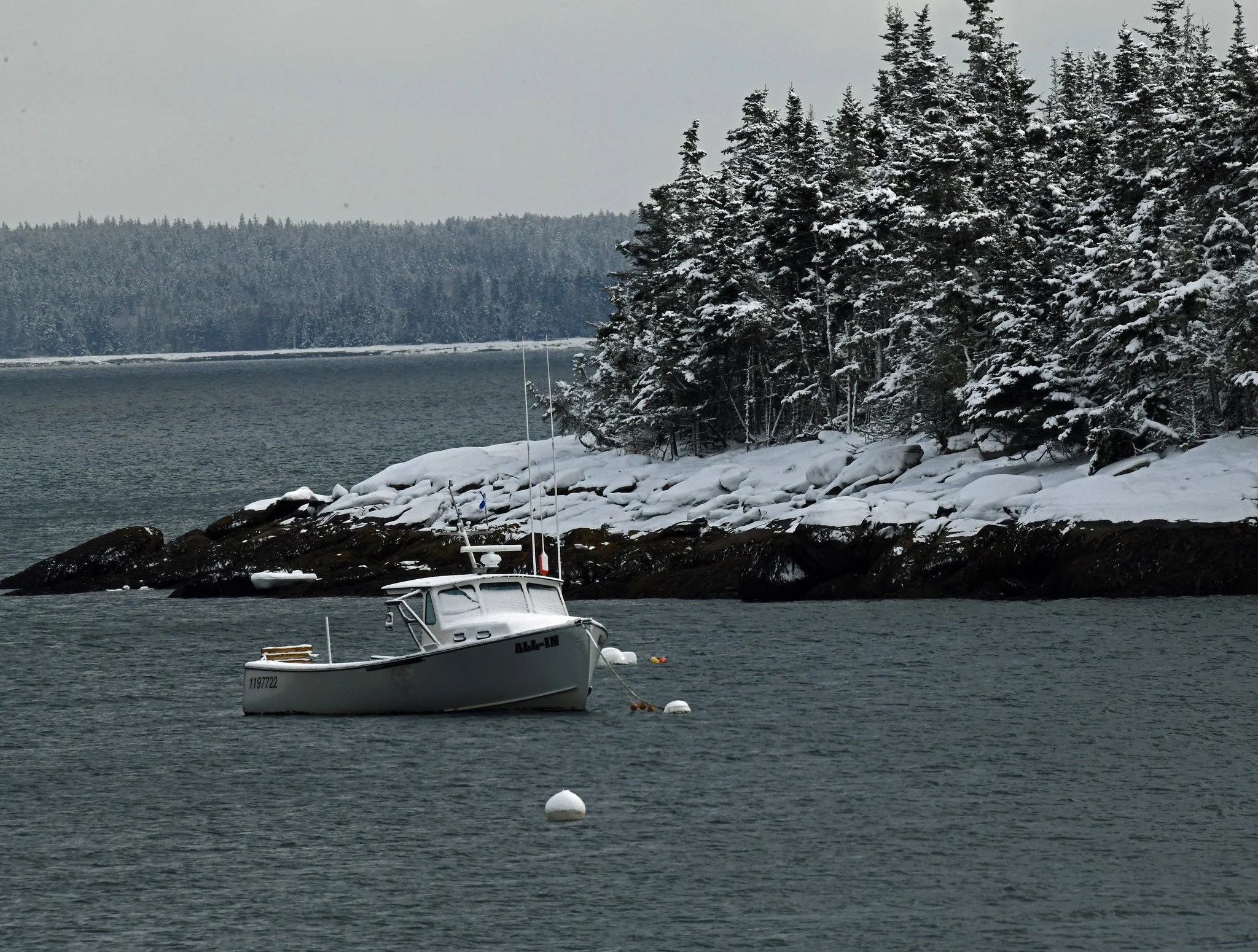
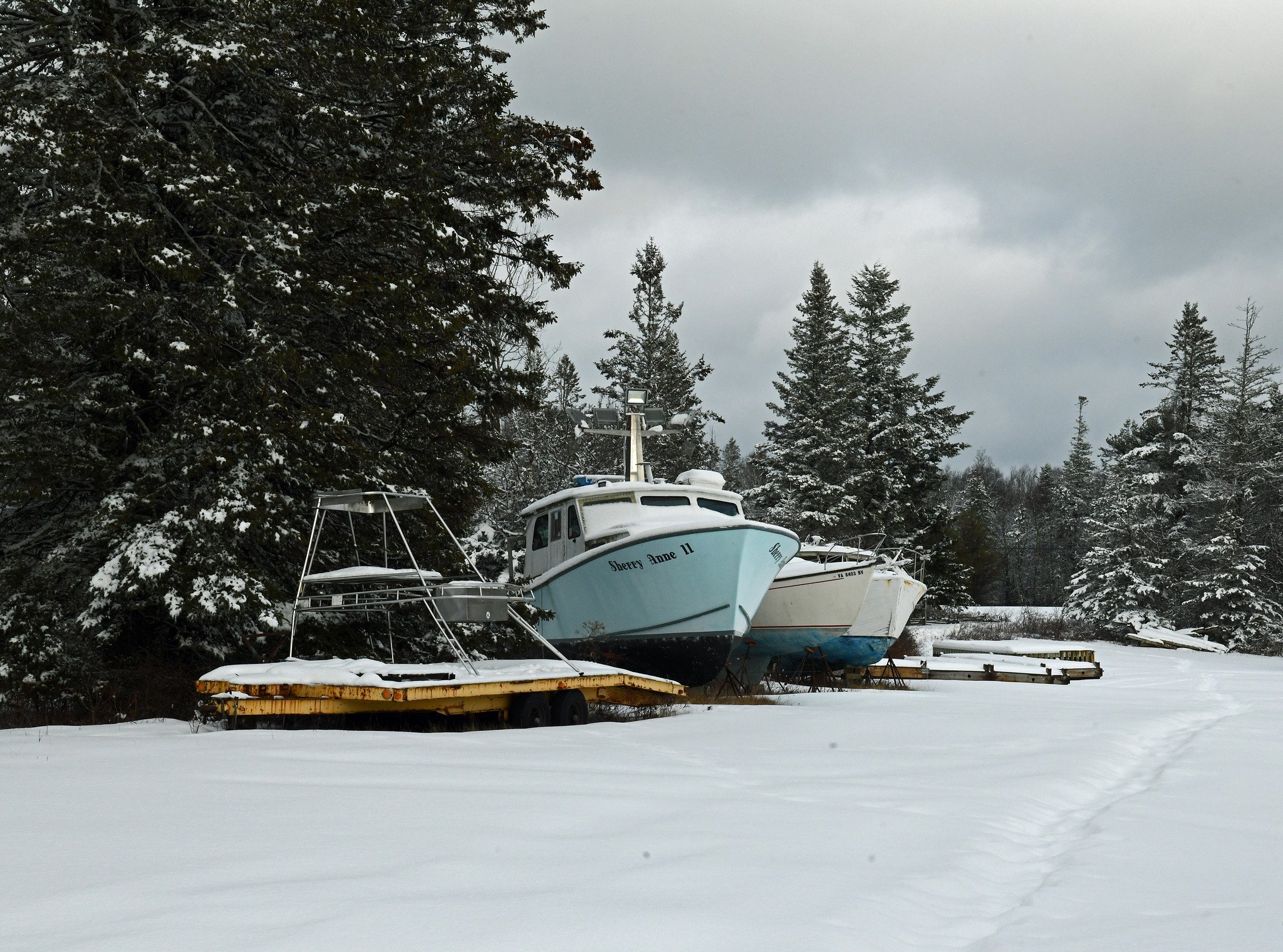
Continuing with our Fantastic February Snowfall series,above you see ALL-IN; she remains all in the waters of Naskeag Harbor. Below, you’ll see SHERRY-ANNE II and two friends who are not all in the water, but are “on the hard” at the Atlantic Boat Company:

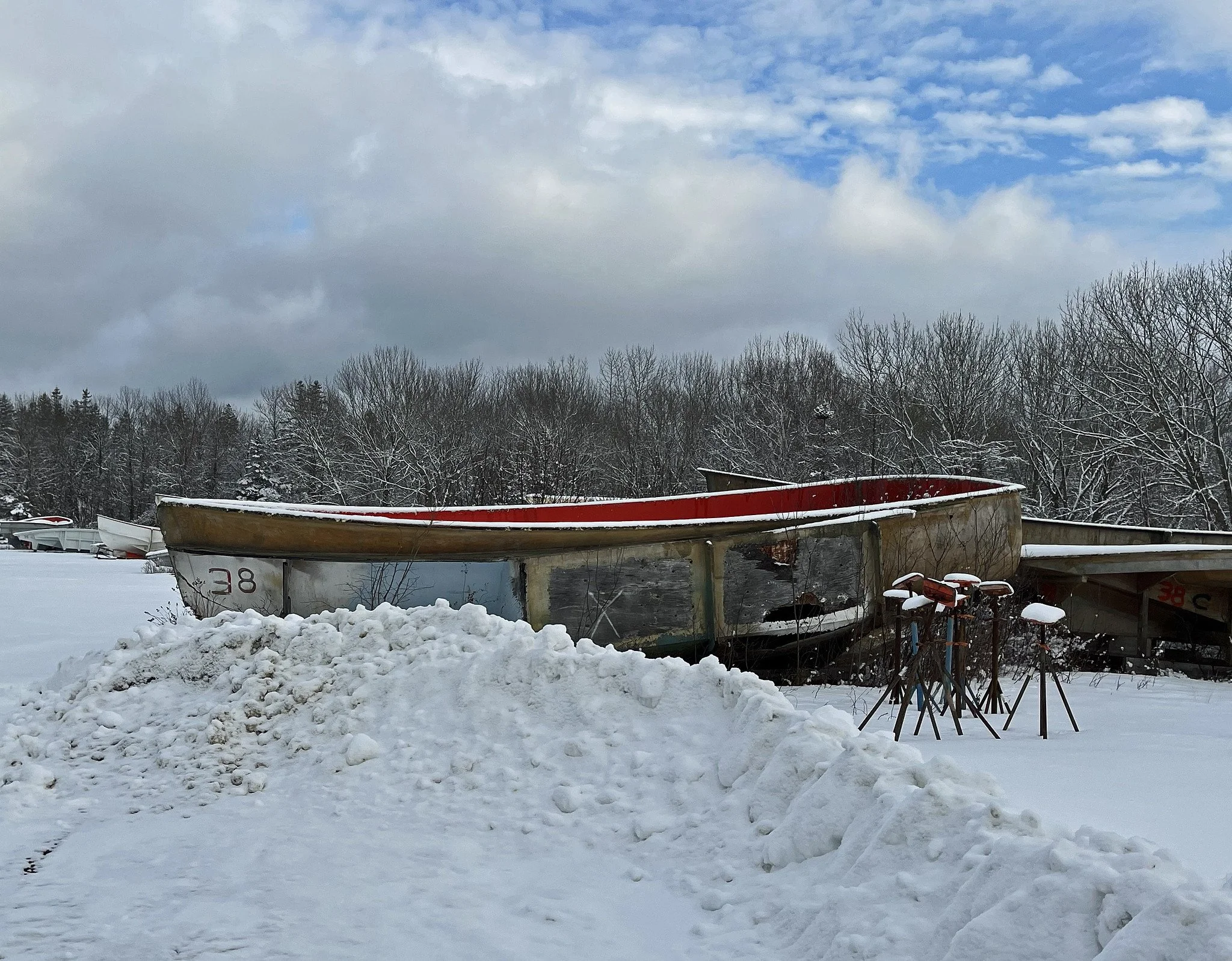
Also at ABC was what appears to be a 38-foot hull mold, perhaps a form for building a Duffy or Blue Hill Marine-style lobster boat:

(Images taken in Brooklin, Maine, on February 11, 2026.) Click on the images to enlarge them.
Comment

Comment

In the Right Place: Snowy Shops and Sheds

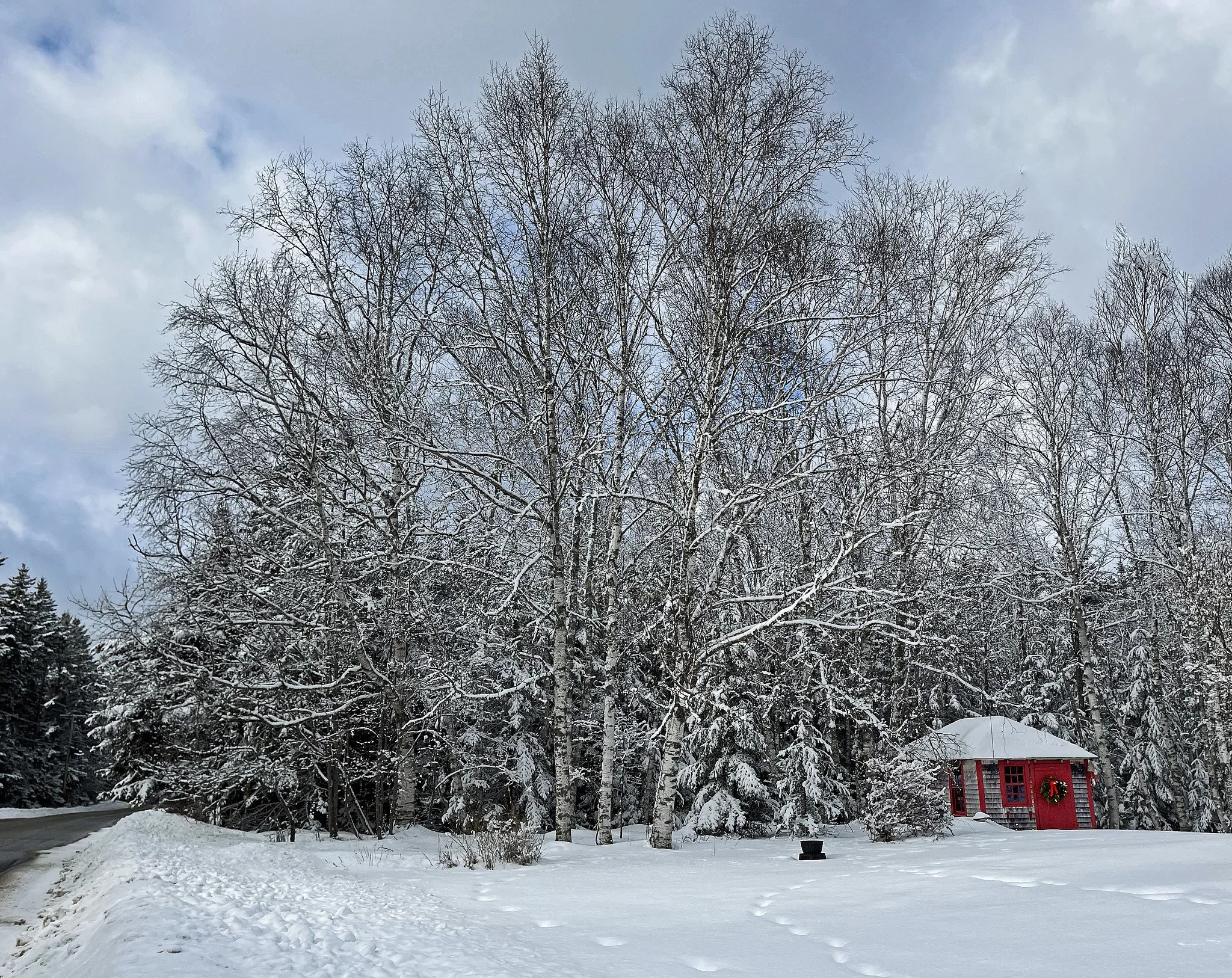
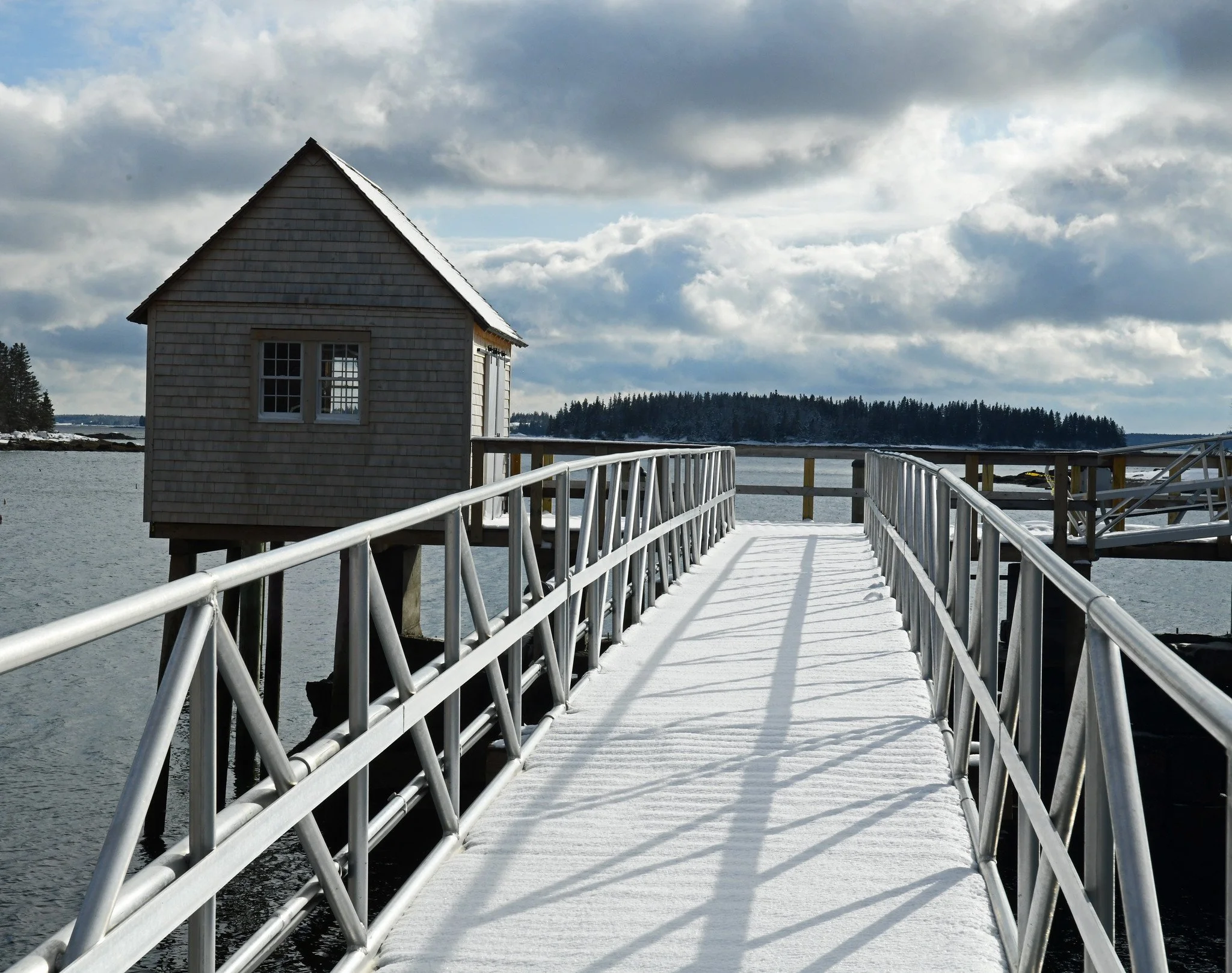
February’s first significant snowfall ended on Wednesday after having brightened our area nicely. This ITRP may be the first of a series of intermittent posts on that beautification. Above, you see an old workshop snuggling amid a stand of white birch. In the early 1900s, a wood carver made duck decoys there.

Here’s the Brooklin Boat Yard’s pier shed perched over Center Harbor; it replaced a much older equipment shed that was ruined by a nor’easter in 2024:

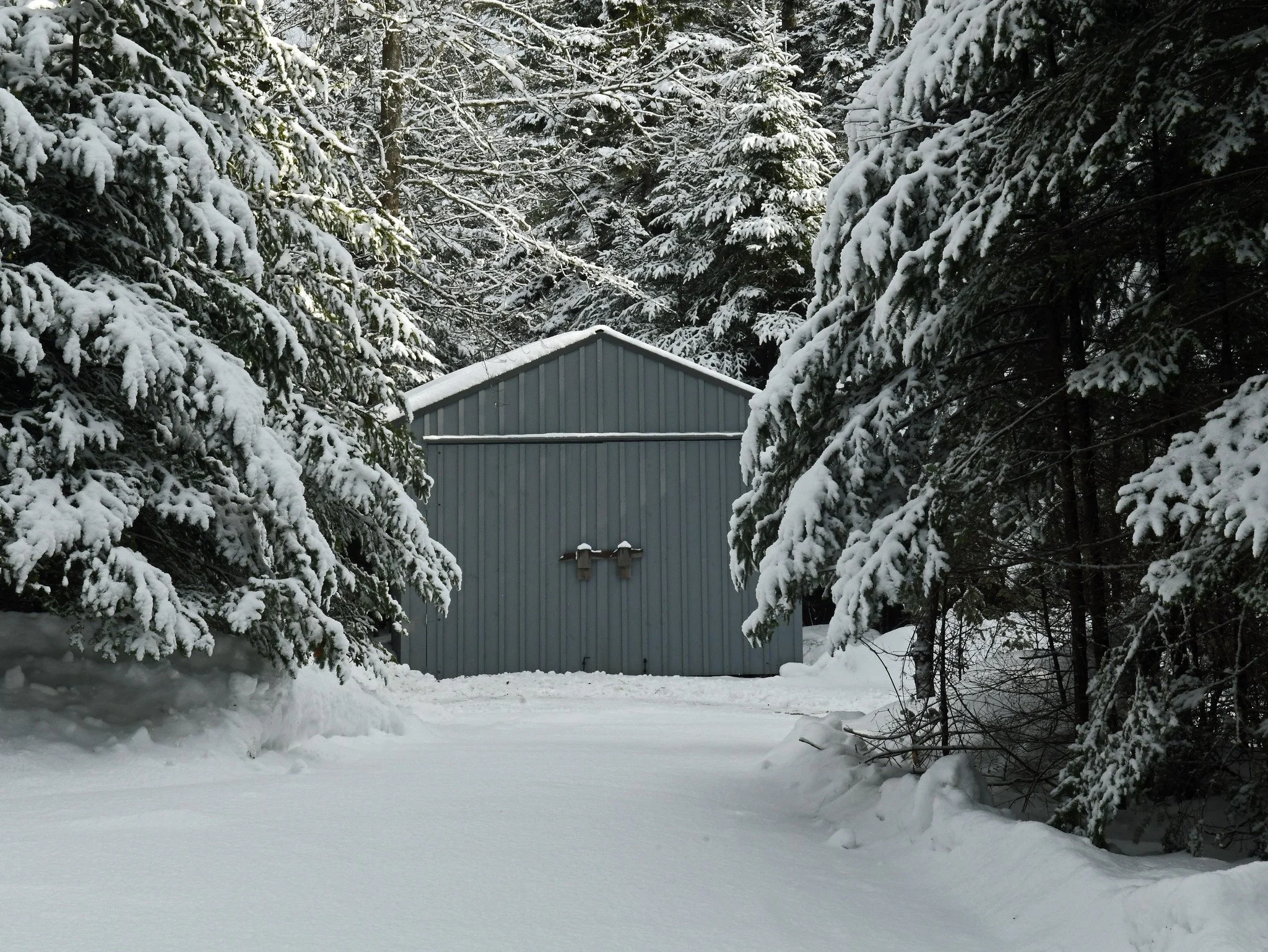
Below, you’ll see a little gray boat shed that seems to like hiding among a crowd of big, tough spruce trees. That shed was built in 2024 by a neighbor to store a small trimaran in winter.

(Images taken in Brooklin, Maine, on February 11, 2026.)
Comment

Comment

In the Right Place: “Smile, Though Your Heart Is Aching”

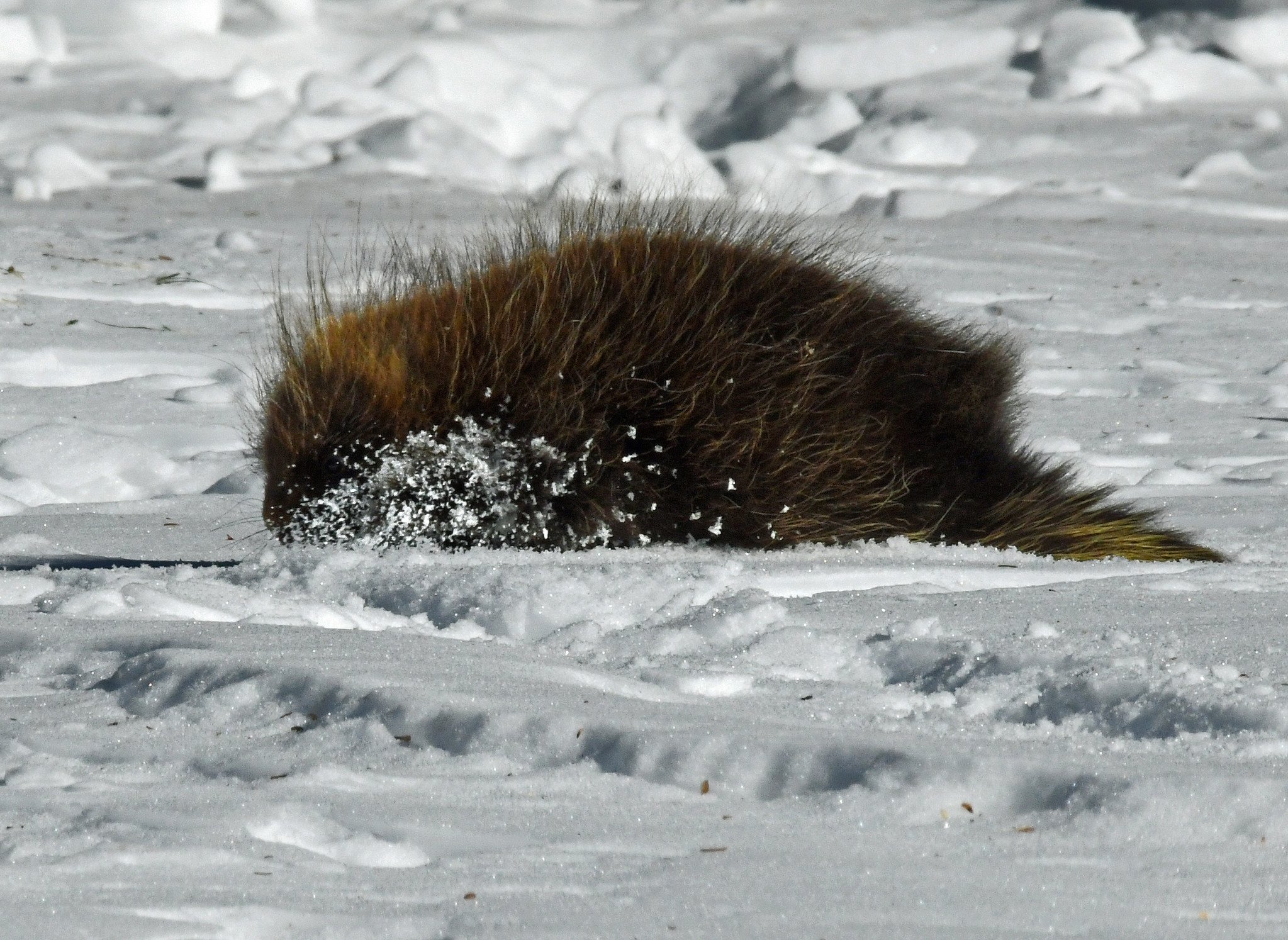
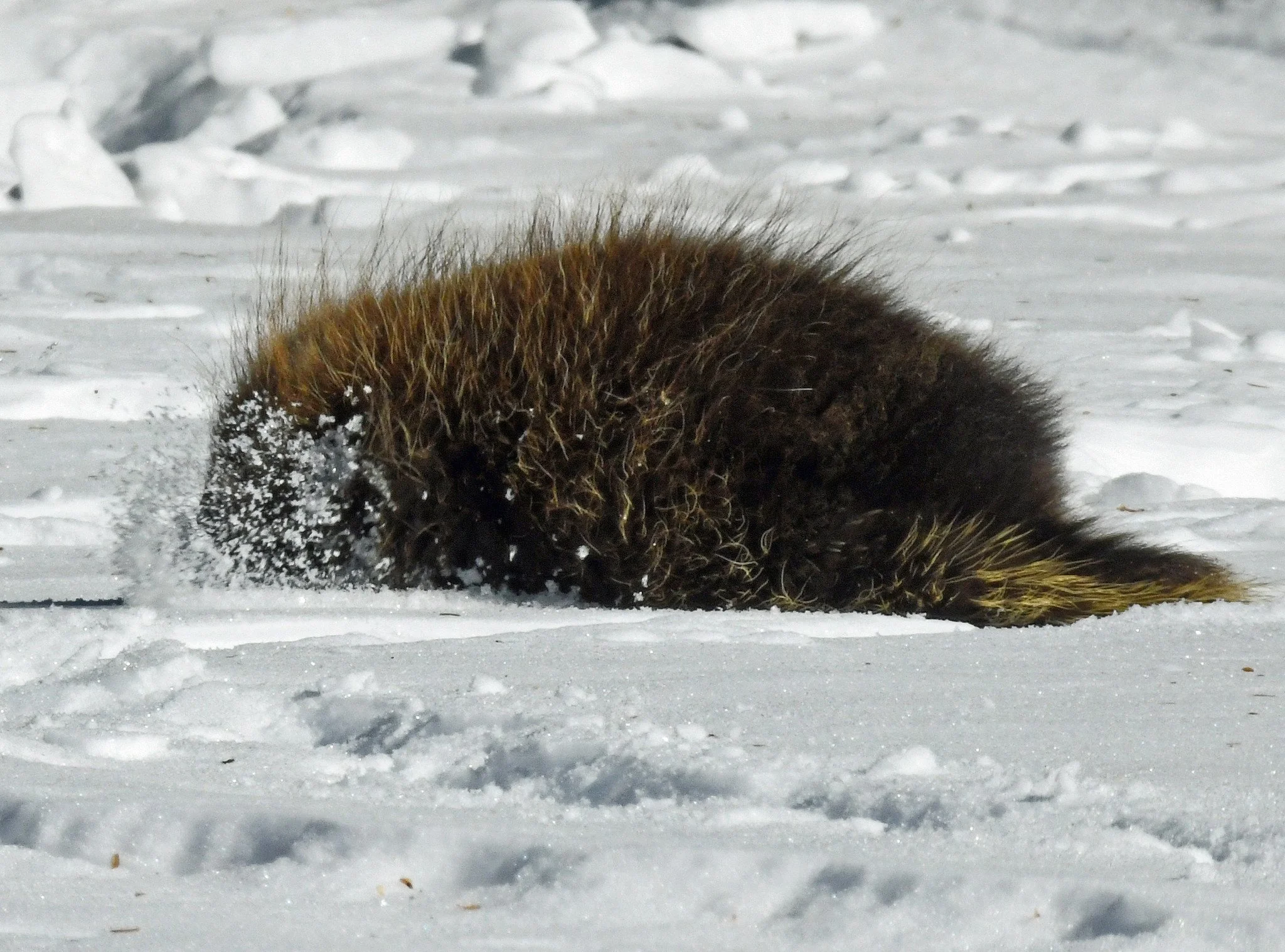
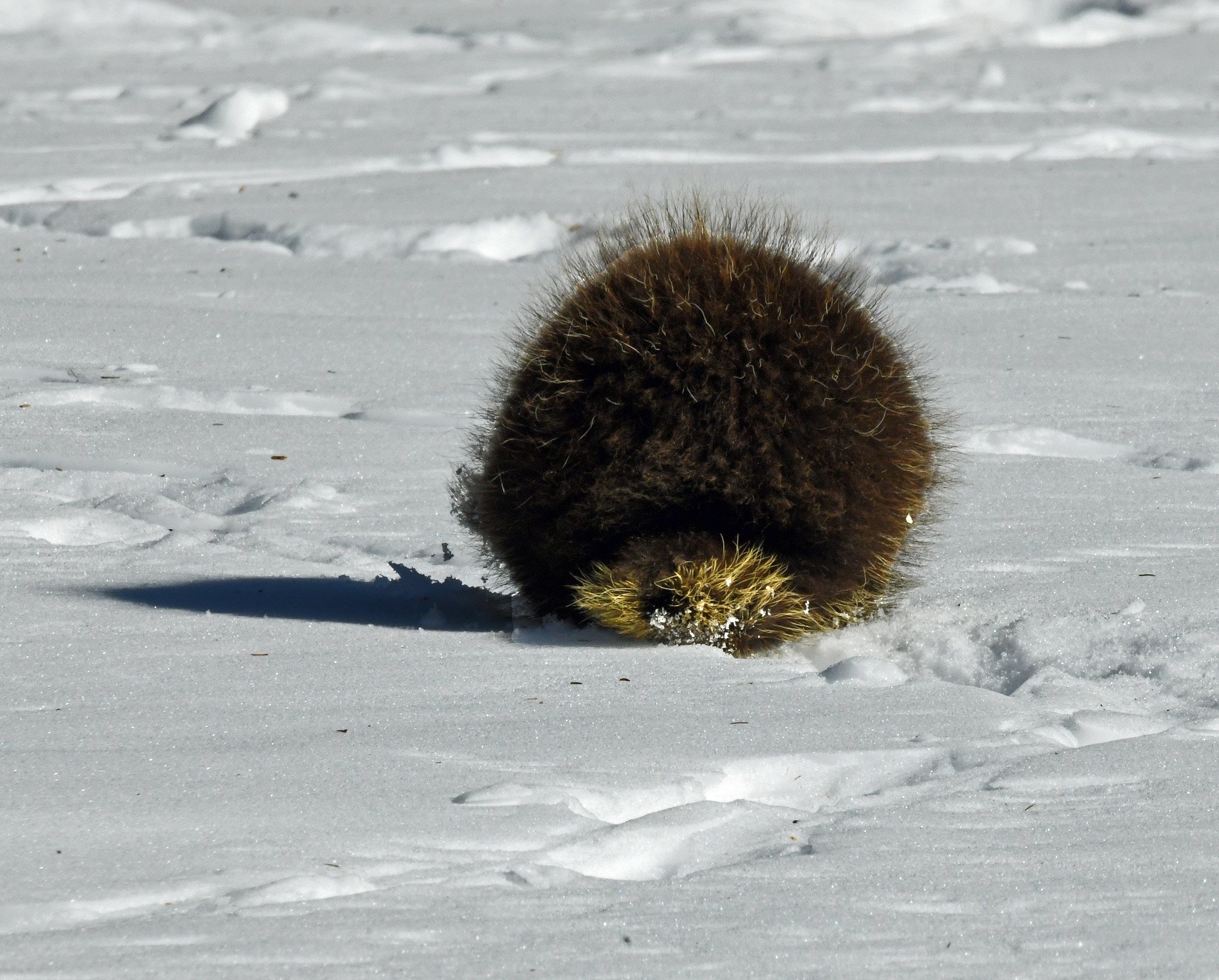
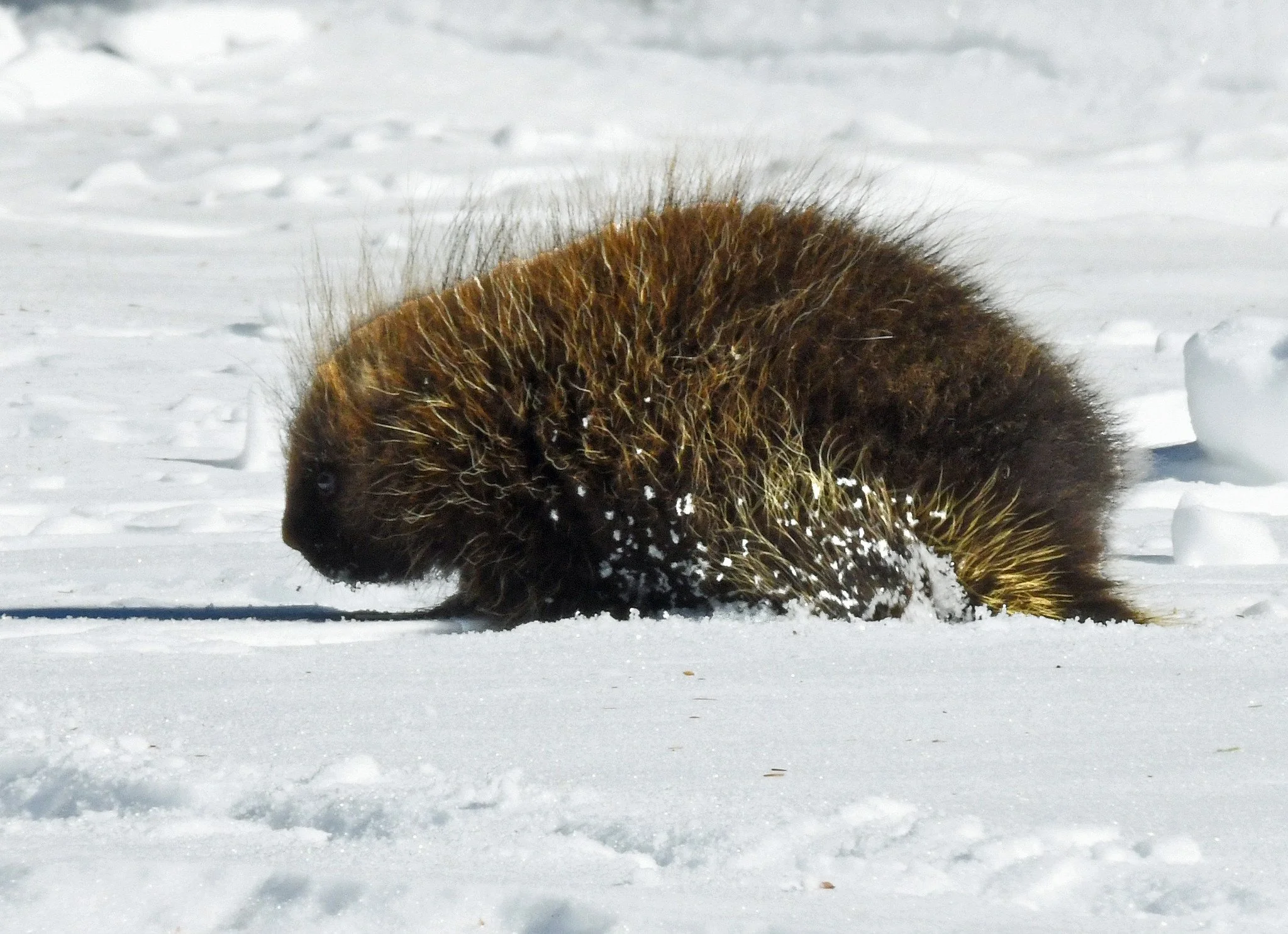
It’s been snowing again and I’m worried about Harry, the odd porcupine. Here you see him plowing crusty snow with great difficulty yesterday; he’s apparently looking for  greens and their roots.

 In the winter, porcupines are known for their adoption of a woody diet of bark and branches, especially eastern hemlock branches. Harry apparently isn’t following that regime and appears to be losing more weight than most porkies do in winter. (They all lose some most winters, according to the literature.)

It’s hard to make a case that porcupines are more needed than harmful in our ecosystem nowadays. We’re losing hemlocks and other trees to invasive insects as well as to porcupines now. Nonetheless, Harry sure can make you smile, and that must be worth something.

(Images taken in Brooklin, Maine, on February 10, 2026.)
Comment

Comment

In the Right Place: Limited Menus

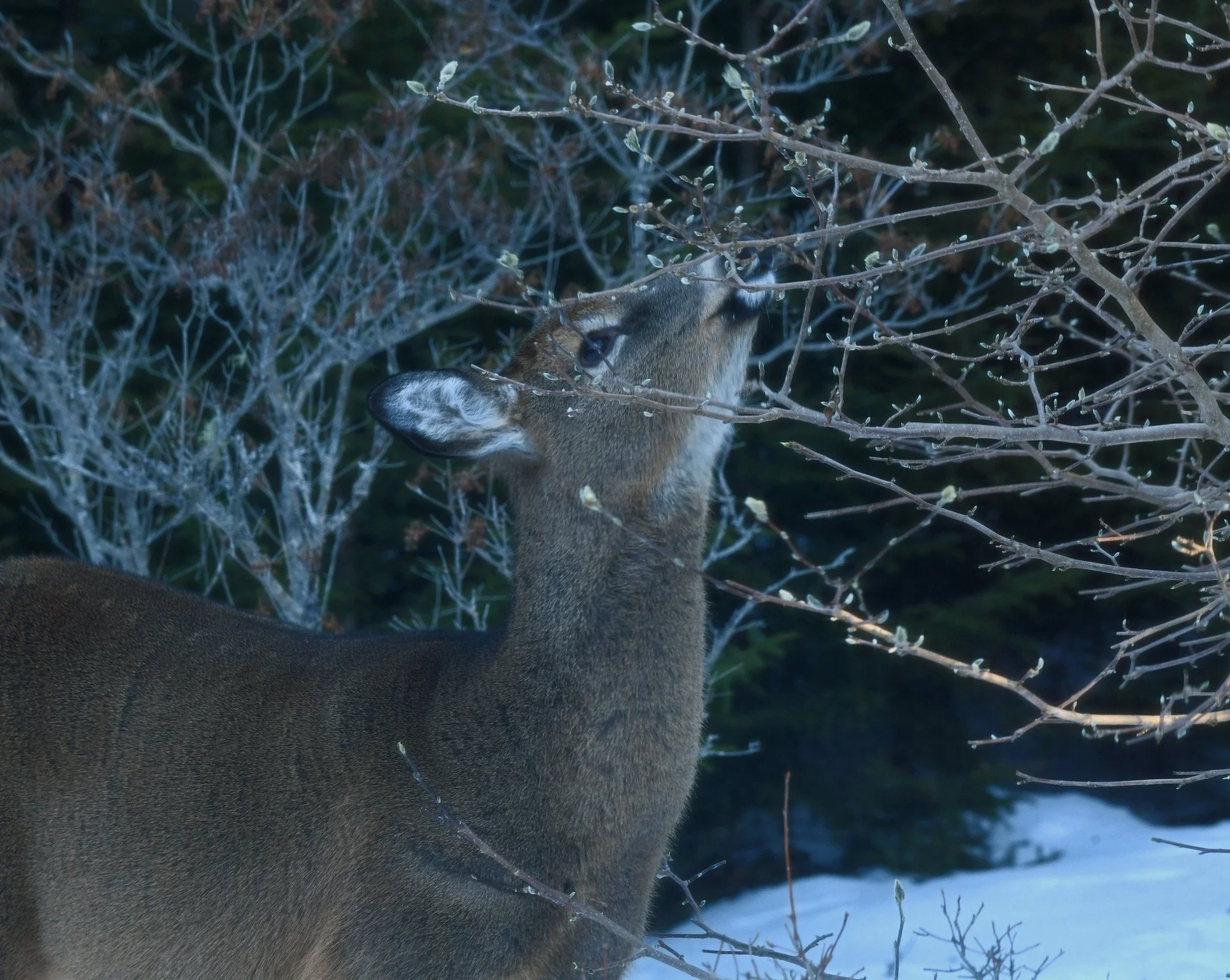
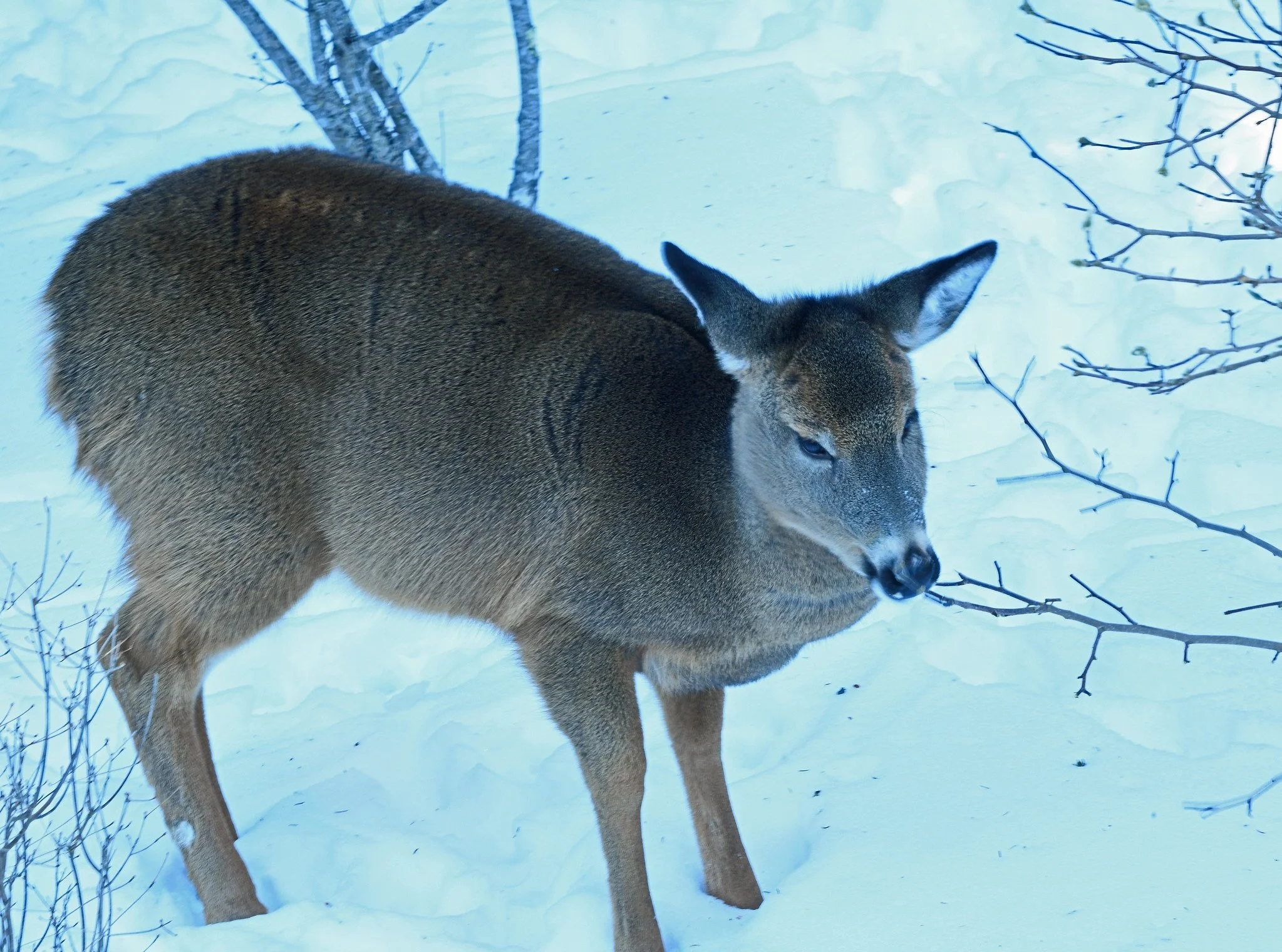
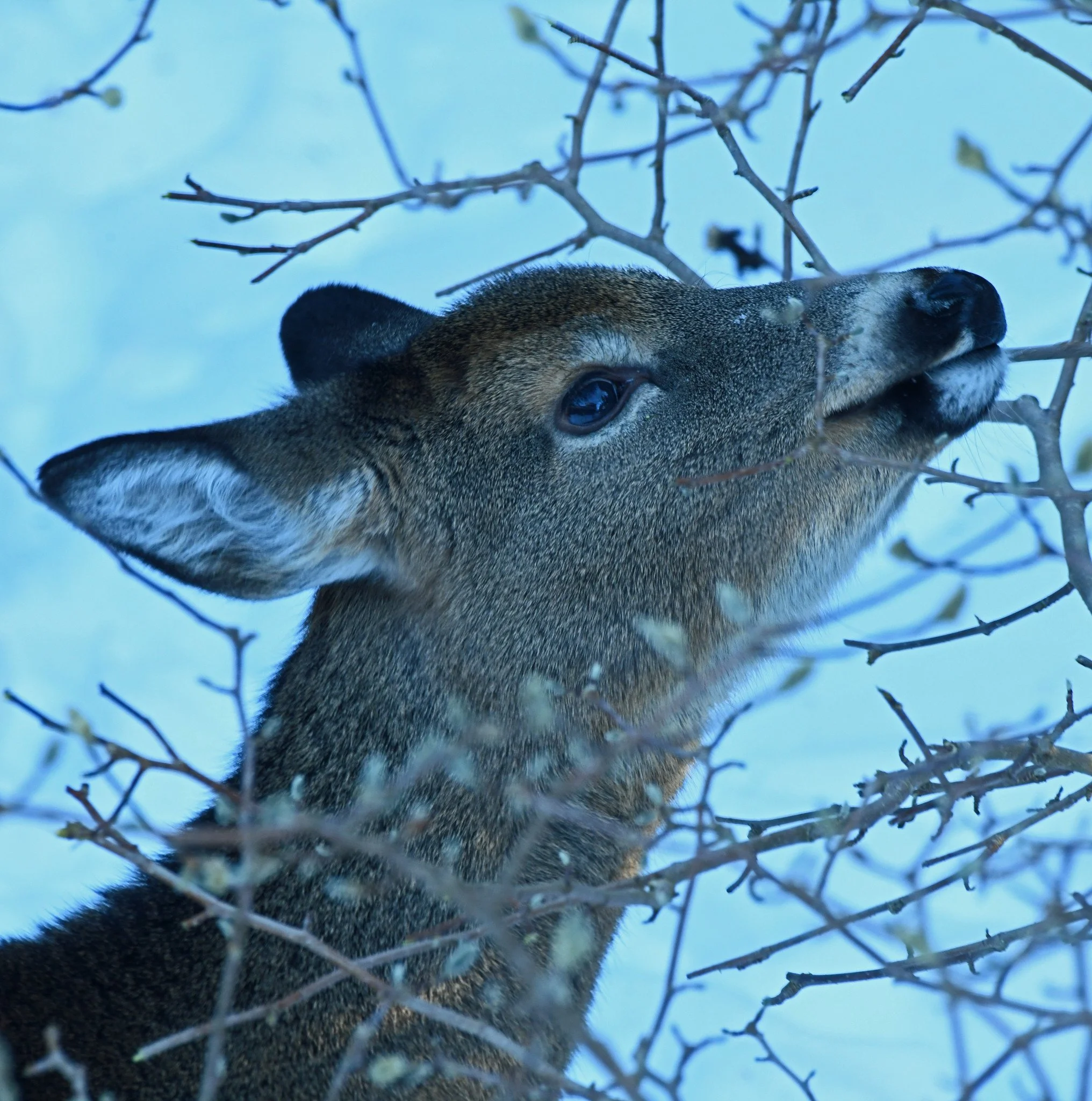
Here you see a white-tailed deer browsing on the branch tips and terminal buds of a star magnolia bush in freezing temperatures early yesterday. It’s probably not this yearling’s favorite meal, but she can’t be choosy during the kinds of cold winter spells that we’ve been having.

Lately, many of our deer have limited their movement and “yarded up” much of the time in communal deer yards within stands of dense, wind-breaking coniferous trees. We still have somewhat deep, frozen snow that hinders their movement, makes it harder for them to avoid predators, and covers their best food.

Harsh winters often are part of Nature’s way of culling deer herds by causing high mortality rates for fawns and bucks. (Yes, bucks: They lose a lot of their fat reserves during the rigorous rutting season, when their body weight plummets.) Frankly, our white-tail herd appears to have gotten too numerous for the animals’ own good and ours. (Images taken in Brooklin, Maine, on February 9, 2026.)
Comment

Comment

In the Right Place: Keeping Watch

Here’s “The Lookout,” still keeping watch yesterday over local bays and the Atlantic ocean beyond. It’s perhaps Brooklin’s most historic structure, with original sections that have sheltered people since about 1760.

It was a colonial sentry point that gave warning of unwelcome visitors from the sea, hence its name. The original house was expanded in the 1800s into an Inn and has remained one since then. Its fine restaurant is open to the public in the summer, and its extensive grounds with sea vistas are popular for weddings and other outdoor events.

(Images taken in Brooklin, Maine, on February 8, 2026.)

Comment

Comment

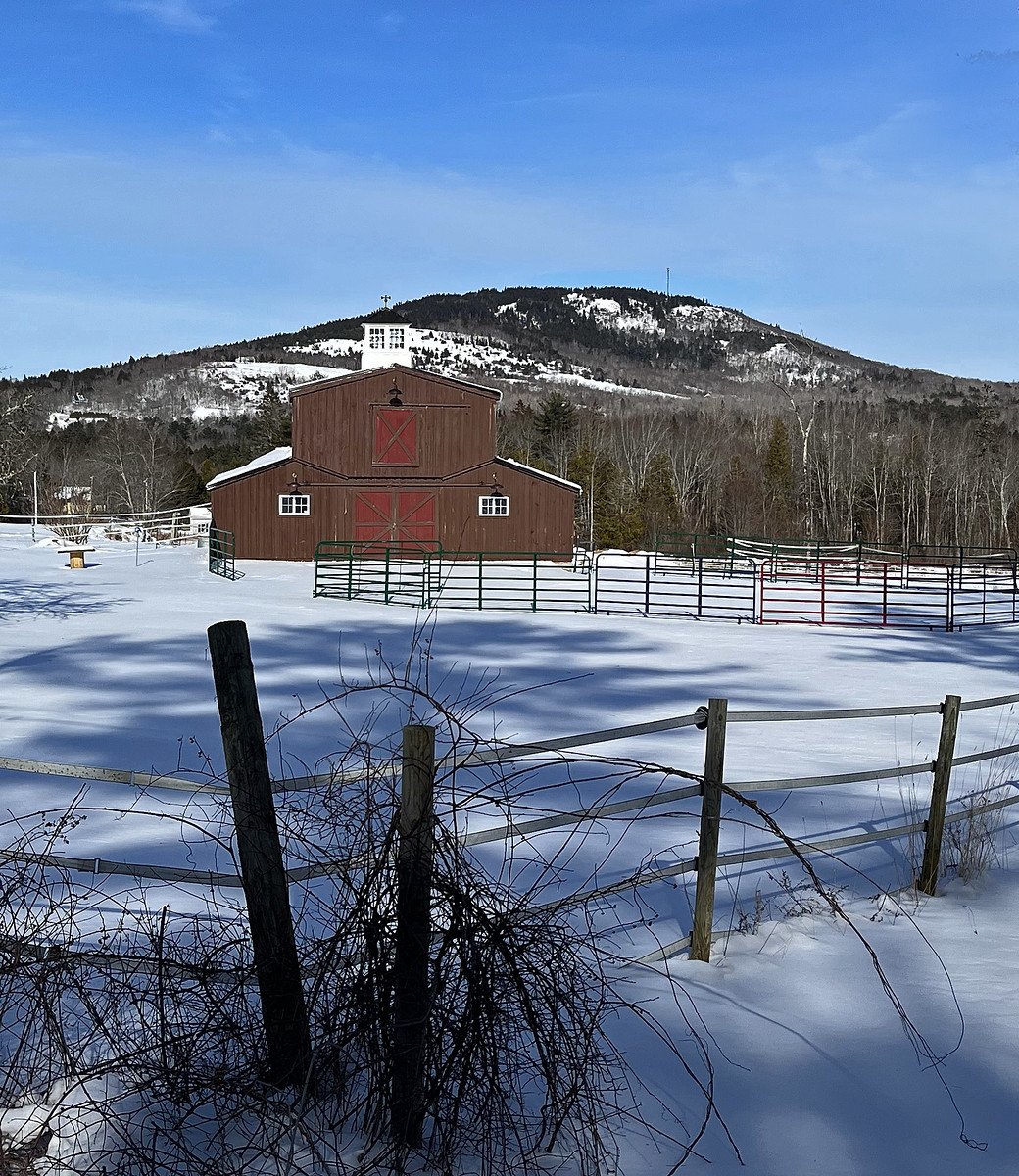
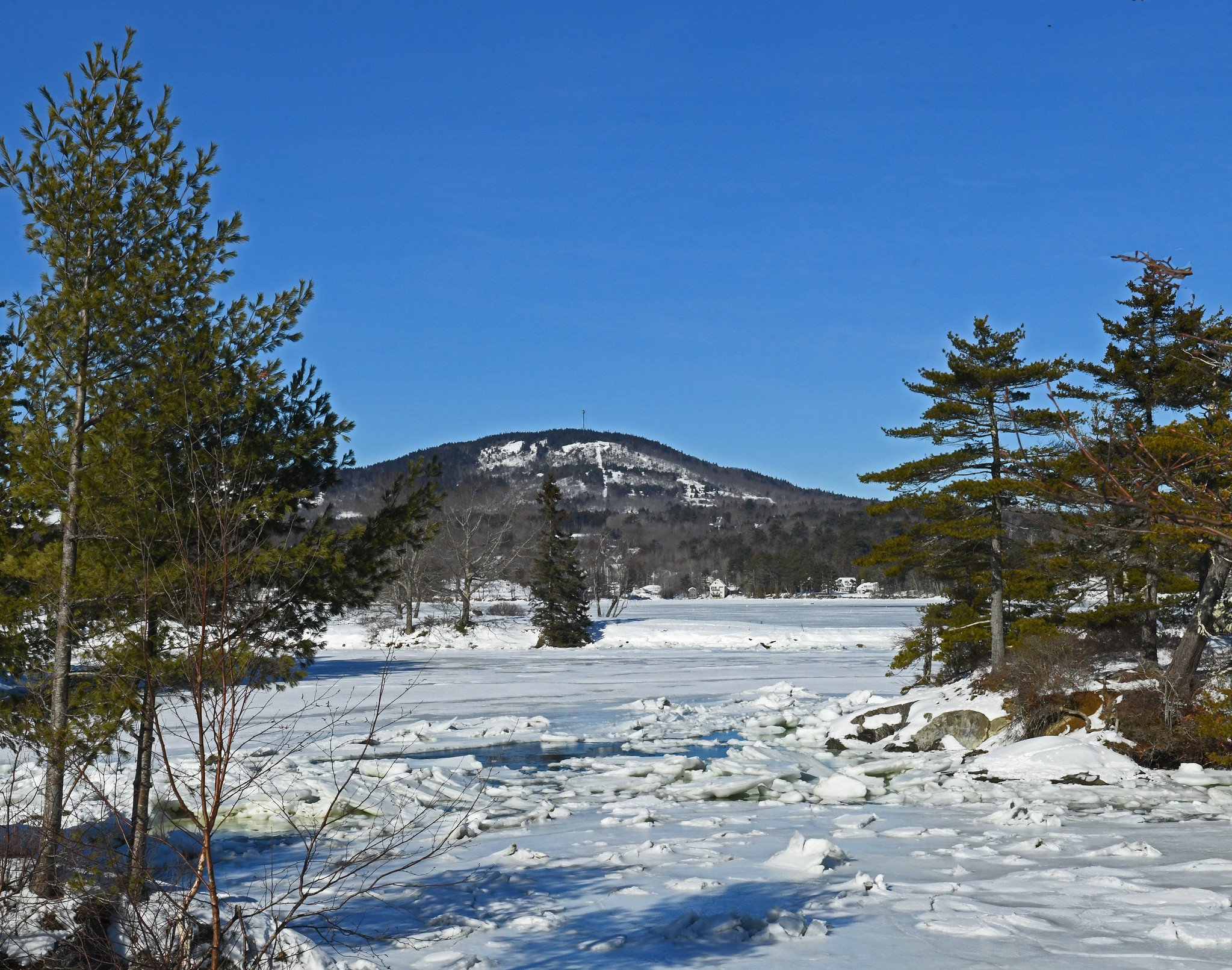
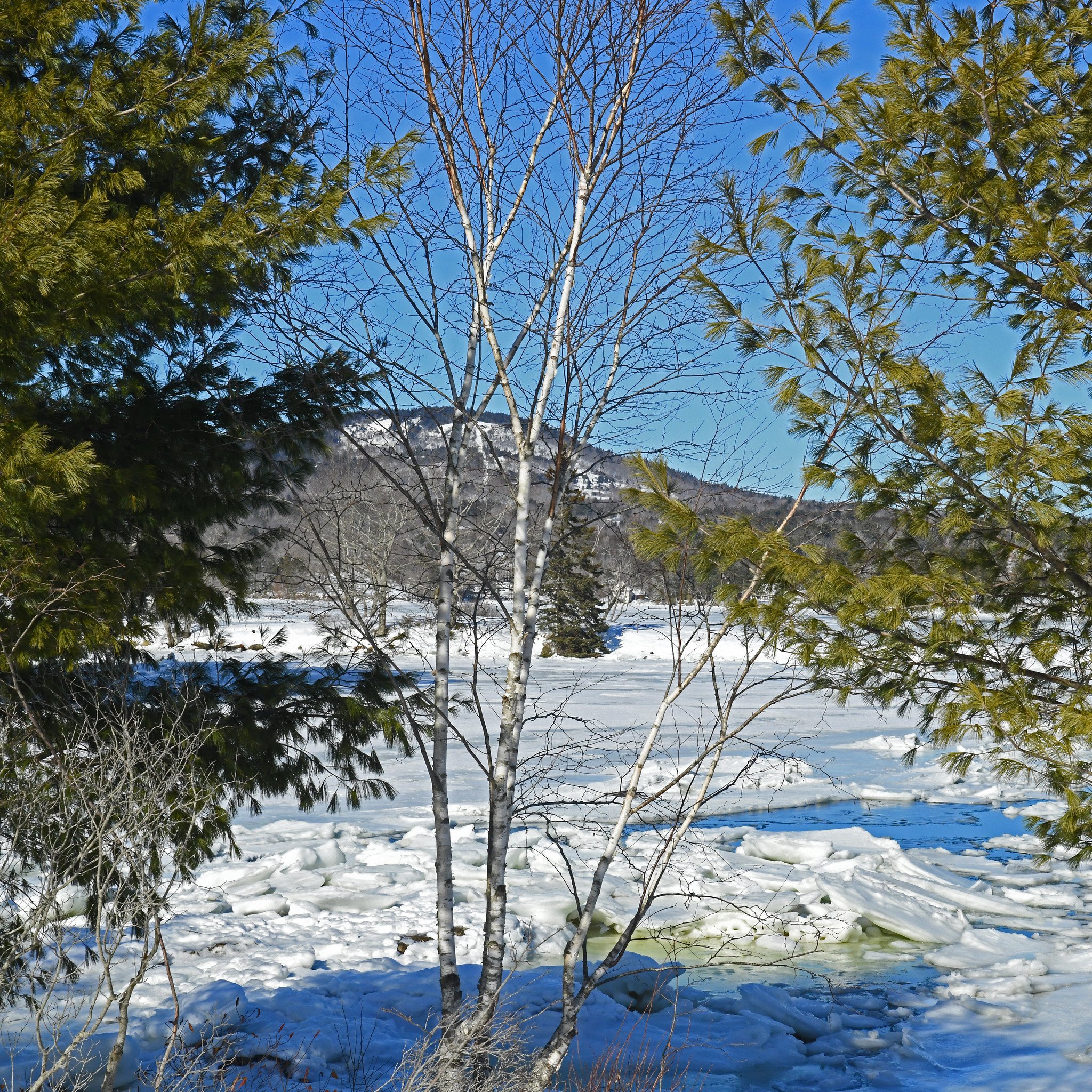
In the Right Place: Thoughts on White Magic

Snow is a transformative emotion in Maine’s winter moods. It comes happily on little white parachutes during somber gray days and creates a new, pure land.  When the cold winter sky turns blue and the sun shines after a good snowfall, the now-firm crystals seem to be trying to hold everything in place to prevent harmful change. Yet, there’s movement along the plowed and chemicalized roads, and the once-white silk parachutes become soiled mounds of our dirty laundry.

Above you see the snowy south face of the near-mountain called Blue Hill on Friday, as viewed from Beech Hill Road (Route 175). Two views of the face from across Blue Hill Bay, taken the same morning, are shown below We record these iconic views monthly for local records.

Snow in this area typically arrives in November and can continue into March. The snowiest season on record in the Blue Hill area apparently was 2014-2015, in which 150.8 inches of total snowfall were recorded here by the Blue Hill Conservatory & Science Center. During that winter of 2015, a still-held monthly record was set in February, when 79.9 inches of snow were recorded. 

(Images taken in Blue Hill, Maine, on February 6, 2026.)  GO PATS!

Comment

Comment

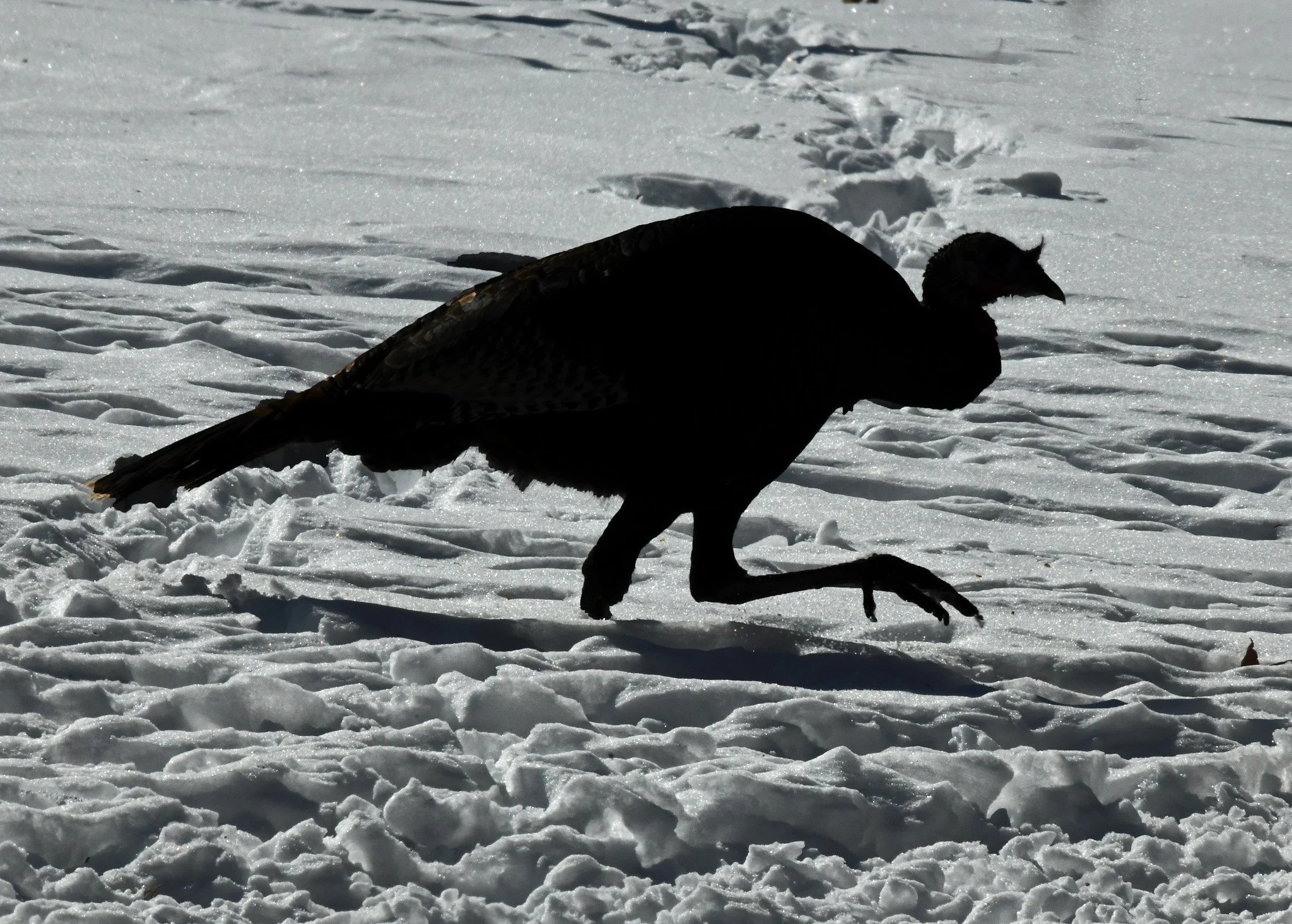
In the Right Place: High-Stepping

Pity the wild turkeys that have to high-step slowly through snow. These birds walk on their clawed toes rather than their shanks (feet) and keep at least one foot on the ground when they travel on the ground. They bend their legs in the middle at what looks like a knee, but really is an intertarsal joint (ankle). On solid ground, they can run up to 18-25 miles an hour; in snow, they creep.

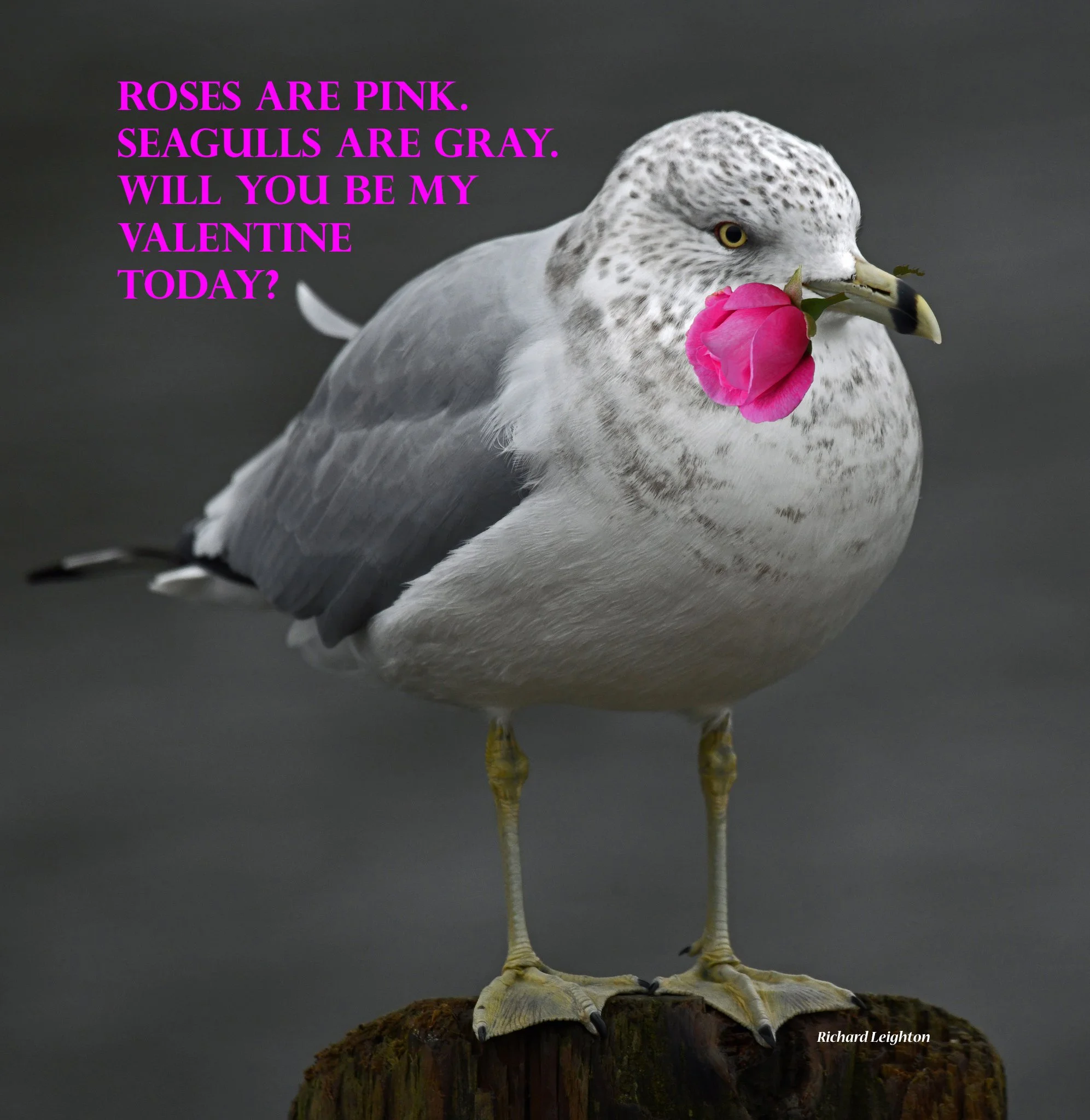
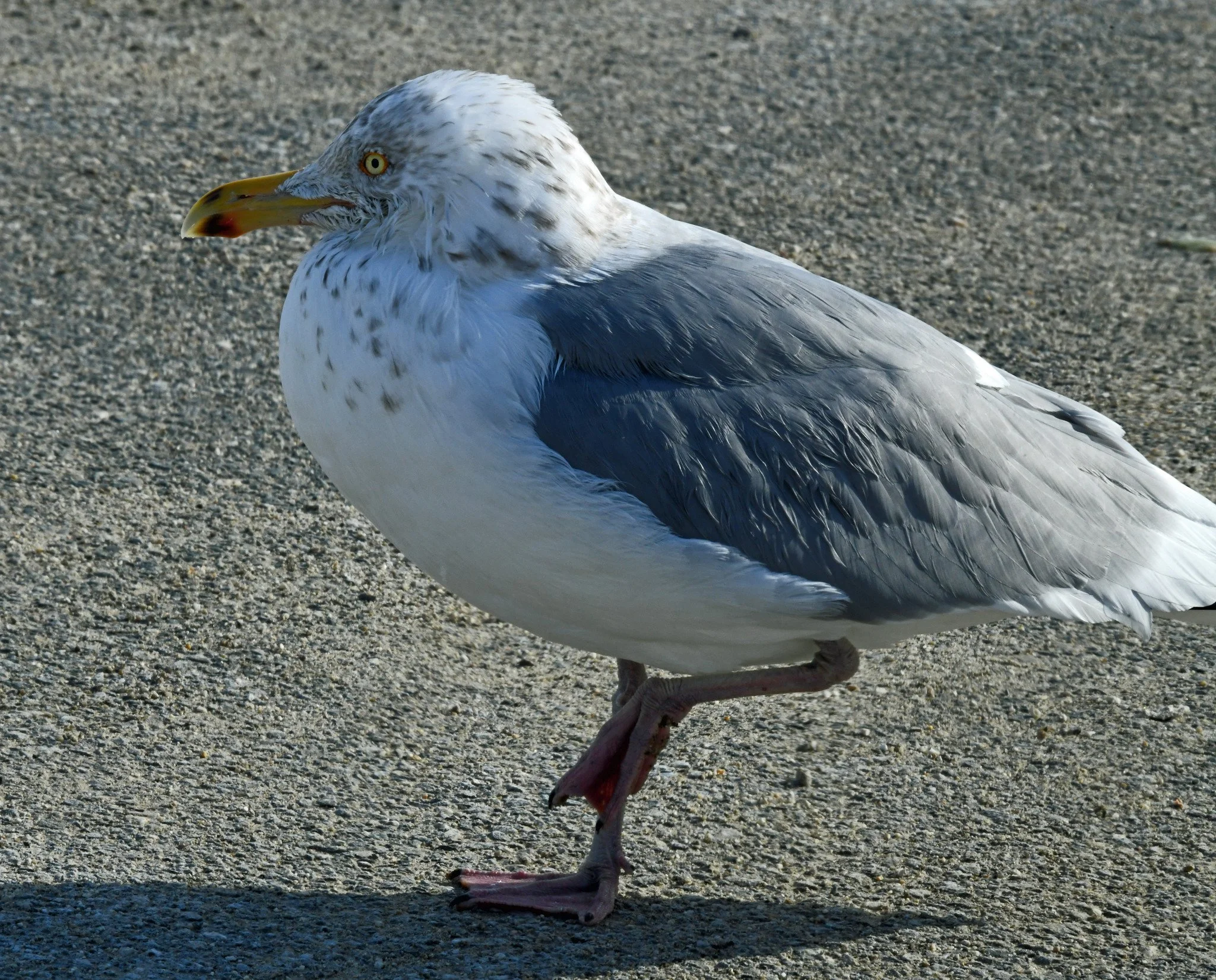
Also pity the high-stepping, slower-running herring gulls when their inshore sea territory turns to snow-covered ice. (See the image in the Comment space.) But seagulls have some advantages: their webbed feet can act like snowshoes in snow and slush, they’re more comfortable with populated spaces, and they’re smarter than turkeys. (What mammal or bird isn’t?) In very cold weather, seagulls often descend on roofs, parking lots, or other surfaces that absorb and give off heat. (Images taken in Brooklin and Blue Hill, Maine, on February 5 and 6, 2026, respectively.)

Comment